On this page
Quick Reference
Overview and Recommendations
Background
- •Nephrotic syndrome affects approximately 2-4 per 100,000 adults annually, with a higher incidence in children (1.15-16.9 per 100,000). It is a leading indication for kidney biopsy, accounting for ~30% of native biopsies. The syndrome carries significant morbidity from edema, infection, and thromboembolism, and untreated 5-year mortality can exceed 50% in certain subtypes.
- •The three dominant mechanistic axes are autoantibody-mediated podocytopathy (anti-PLA2R in , anti-nephrin in ), circulating permeability factors (primary ), and monogenic podocyte defects (NPHS2, TRPC6, APOL1). All converge on foot-process effacement and slit-diaphragm disruption.
- •Primary glomerulopathies are classified by histology: (MCD), normal light microscopy with diffuse foot-process effacement; (FSGS), segmental sclerosis with Columbia subtypes; (MN), subepithelial immune deposits with PLA2R antigen in 70-80%; and (MPGN), mesangial proliferation with double contours.
- •Secondary causes include , lupus nephritis, infections (hepatitis B/C, HIV), drugs (NSAIDs, pamidronate, immune checkpoint inhibitors), and malignancies. The pretest probability is dominated by age, ethnicity, and geography: MCD in young children, FSGS in African Americans (APOL1-driven), and MN in older white adults.
- •The paradigm shift in management includes the use of anti-CD20 therapy ( ) as first-line for MN and steroid-dependent nephrotic syndrome, and the addition of to RAAS blockade for nephroprotection. Genetic testing is now recommended for steroid-resistant nephrotic syndrome before age 25, identifying a monogenic cause in ~30%.
Evaluation
- •Suspect nephrotic syndrome in any patient presenting with periorbital or dependent edema, foamy urine, and weight gain over days to weeks. Ask about onset tempo (acute in MCD, insidious in MN/FSGS), preceding infections, drug exposures, family history of kidney disease, and systemic symptoms (rash, arthritis, fever) suggesting secondary causes.
- •Examine for pitting edema (periorbital, presacral, scrotal/labial), ascites, pleural effusions, and signs of thromboembolism (unilateral leg swelling, dyspnea, flank pain). Blood pressure is often low in the "underfill" state but may be elevated in secondary causes.
- •Order a first-morning urine protein-to-creatinine ratio (UPCR), a ratio ≥3.0-3.5 g/g confirms nephrotic-range proteinuria. A 24-hour urine collection for protein ≥3.5 g/1.73 m² is the gold standard but not always necessary.
- •Measure serum albumin (<3.0 g/dL confirms hypoalbuminemia), creatinine/eGFR, and a lipid panel (elevated total cholesterol and triglycerides). Check complement C3/C4, low levels suggest lupus nephritis, infection-related GN, or C3 glomerulopathy.
- •Order anti-PLA2R antibody testing in all adults with suspected membranous nephropathy. A titer >14 RU/mL has >95% specificity for primary MN and can obviate the need for biopsy in elderly or high-risk patients.
- •Perform a full serologic panel for secondary causes: ANA, anti-dsDNA, ANCA, anti-GBM, hepatitis B/C, HIV, serum protein electrophoresis with free light chains, and cryoglobulins. Tailor based on clinical context.
- •Obtain a renal ultrasound to exclude obstruction, assess kidney size, and evaluate for renal vein thrombosis with Doppler (especially in MN with heavy proteinuria).
- •Indications for kidney biopsy: all adults with nephrotic syndrome except those with a clear secondary cause or positive anti-PLA2R with typical presentation. In children, biopsy is reserved for steroid-resistant nephrotic syndrome (SRNS), frequent relapses on CNI, or atypical features.
- •Biopsy must be processed for light microscopy, immunofluorescence (IgG, IgA, IgM, C3, C1q, kappa/lambda, PLA2R), and electron microscopy. Key patterns: MCD (normal LM, negative IF, foot-process effacement on EM), FSGS (segmental sclerosis, IgM/C3 in sclerotic segments), MN (thickened GBM, granular IgG, subepithelial deposits).
- •In FSGS, differentiate primary (diffuse foot-process effacement) from secondary (segmental effacement, adaptive changes) and genetic forms. Consider genetic testing for SRNS in children and selected adults, especially if onset before age 25 or family history.
- •In MN that is PLA2R-negative, test for THSD7A, NELL1, EXT1/2, and other antigens by mass spectrometry if available. Rule out malignancy (colon, lung, prostate) per guidelines.
- •Also consider: urine sediment for oval fat bodies and fatty casts; serum albumin <2.0 g/dL increases thromboembolic risk; and in children, assess for congenital nephrotic syndrome if onset in first 3 months.
Management
- •Initiate supportive nephroprotection in all patients with proteinuria >0.5 g/day: start an ACE inhibitor or ARB (e.g., 10-40 mg daily or 50-100 mg daily), titrated to maximum tolerated dose. Add an SGLT2 inhibitor ( 10 mg daily or 10 mg daily) once eGFR ≥20 mL/min/1.73 m². Target proteinuria <0.5 g/day.
- •For minimal change disease (MCD) in adults: start 1 mg/kg/day (max 80 mg) for 4-16 weeks. In children: prednisolone 2 mg/kg/day (max 60 mg) for 4-6 weeks, then alternate-day taper. Over 80% achieve remission.
- •For steroid-dependent or frequently relapsing MCD: add a steroid-sparing agent. First-line is 375 mg/m² (single dose or two doses 2 weeks apart). Alternatives: 0.05-0.1 mg/kg/day (trough 5-10 ng/mL) or 2 mg/kg/day for 8-12 weeks.
- •For primary focal segmental glomerulosclerosis (FSGS): start prednisone 1 mg/kg/day for 4-16 weeks. If no remission, switch to a calcineurin inhibitor: 3-5 mg/kg/day (trough 100-150 ng/mL) or tacrolimus 0.05-0.1 mg/kg/day (trough 5-10 ng/mL). Rituximab has limited evidence but may be tried in CNI-resistant cases.
- •For membranous nephropathy (MN): first-line therapy is 1 g IV on days 1 and 15. If rituximab is contraindicated or ineffective, use cyclical
- corticosteroids (STARMEN protocol: alternating monthly cycles of cyclophosphamide 2.5 mg/kg/day PO for 3 months and prednisone). Alternative: tacrolimus for up to 12 months.
- •For IgA nephropathy with nephrotic-range proteinuria: optimize RAAS blockade and SGLT2 inhibition. If proteinuria remains >0.75 g/d despite maximal supportive care, consider corticosteroids ( 0.8 mg/kg/day, taper) or targeted-release budesonide 9 mg daily for 9 months.
- •In steroid-resistant nephrotic syndrome (SRNS): perform genetic testing before escalating immunosuppression. Patients with monogenic causes (NPHS1, NPHS2, WT1, TRPC6) do not benefit from immunosuppression; manage with supportive care and early transplant evaluation.
- •Anti-thrombotic prophylaxis: consider prophylactic anticoagulation in adults with membranous nephropathy and serum albumin <2.5 g/dL. Use 40 mg SC daily or (target INR 2-3). DOACs have lower bleeding risk but higher thrombotic events; use with caution.
- •Manage edema with sodium restriction (<2 g/day) and loop diuretics ( 20-80 mg daily, titrated to urine output). For diuretic resistance, add a thiazide ( 2.5-5 mg daily) or consider ultrafiltration.
- •Monitor for complications: check serum potassium, creatinine, and albumin monthly during induction. For patients on CNIs, monitor trough levels every 3 months. For rituximab, check CD19 count and IgG levels; consider IVIG if IgG <400 mg/dL and recurrent infections.
- •Vaccinate against pneumococcus (PCV20 or PPSV23), influenza annually, and COVID-19. Live vaccines (MMR, varicella) are safe during moderate corticosteroid therapy (<2 mg/kg/day or <20 mg/day prednisone).
- •What NOT to do: avoid NSAIDs in all nephrotic patients due to risk of AKI and sodium retention. Do not use albumin routinely for diuresis. Do not start finerenone in non-diabetic nephrotic syndrome. Avoid non-dihydropyridine CCBs (diltiazem, verapamil) as they worsen proteinuria.
- •When to refer: refer to nephrology for kidney biopsy, initiation of immunosuppression, and management of complications. Refer for transplant evaluation when eGFR <30 mL/min/1.73 m² or within 1 year of expected dialysis start.
- •For post-transplant recurrence of FSGS: start plasmapheresis (1.5 plasma volume exchanges, 3-5 sessions/week) and high-dose cyclosporine. Add rituximab 375 mg/m² weekly ×4 if refractory.
- •Discharge criteria for hospitalized patients: stable fluid balance with oral diuretics, no acute complications (thromboembolism, infection, AKI), and clear follow-up plan with nephrology within 1-2 weeks.
Board Review — High Yield
- •Minimal change disease, most common cause in children, steroid-sensitive, diffuse foot-process effacement on EM.
- •Anti-PLA2R antibodies, present in 70% of membranous nephropathy; titer correlates with disease activity and guides therapy.
- •APOL1 risk variants, increase risk of FSGS and HIV-associated nephropathy in African Americans; odds ratio 5-10.
- •Rituximab, first-line for membranous nephropathy and steroid-dependent nephrotic syndrome; reduces relapse rate by 73% (NNT=2).
- •Thromboembolism, highest risk in membranous nephropathy with albumin <2.5 g/dL; consider prophylactic anticoagulation.
- •Genetic testing, indicated in steroid-resistant nephrotic syndrome before age 25; 30% have monogenic cause (NPHS2, WT1, TRPC6).
- •KDIGO proteinuria target, <0.5 g/d for IgA nephropathy; <1.5 g/g for FSGS.
- •Congenital nephrotic syndrome, Finnish type due to NPHS1 mutation; presents in first 3 months; requires early nephrectomy and dialysis.
Deep Dive — Evidence Details
Definition, Classification and Nomenclature
- ▸Nephrotic syndrome is a clinical phenotype characterized by substantial proteinuria with hypoalbuminemia, edema and hyperlipidemia, not a single histopathologic disease. [397]
- ▸Childhood idiopathic NS is commonly associated with minimal change disease; focal segmental glomerulosclerosis represents a smaller but clinically important group. [23] [394]
- ▸Steroid-sensitive and steroid-resistant NS are treatment-response categories; strict pediatric SRNS assessment may require failure of a **6-week** steroid trial. [399]
- ▸FSGS is a histologic pattern with primary, secondary, genetic and undetermined causes, and should not automatically be equated with primary disease. [392]
- ▸IgM nephropathy remains controversial because diagnostic thresholds are inconsistent and its phenotype overlaps with minimal change disease and FSGS. [27]
- ▸Amyloidosis and paraprotein-mediated disease require precise deposit or fibril typing because the nephrotic phenotype does not identify the underlying cause. [18] [401]
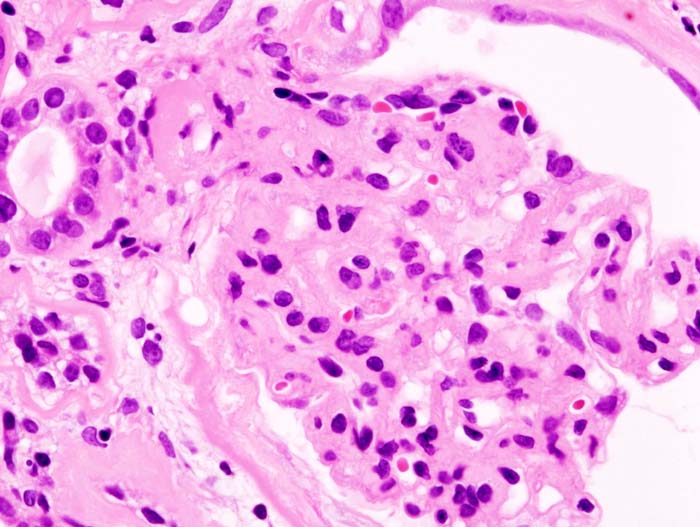
Definition
Nephrotic syndrome (NS) is a clinical syndrome caused by glomerular filtration-barrier dysfunction and characterized by substantial urinary protein loss, with the typical systemic manifestations of hypoalbuminemia, edema and hyperlipidemia. [397] The syndrome is therefore a phenotype rather than a single histopathologic diagnosis: similar nephrotic presentations may result from immune-mediated podocytopathy, genetic disease, secondary glomerular injury, amyloidosis, membranous nephropathy, paraprotein-associated disease or other lesions. [18]D5 [31]D5 In children, idiopathic NS is the most common glomerular disease, and most childhood cases are associated with minimal change disease (MCD), whereas a smaller proportion have focal segmental glomerulosclerosis (FSGS). [23]D5 [394]
Proteinuria may be quantified using a 24-hour urine collection or a spot urine protein-to-creatinine ratio (UPCR); evidence from AL amyloidosis supports the feasibility of using UPCR as an alternative for quantifying proteinuria, although the cited study addressed amyloidosis rather than all NS populations. [393] Diagnostic classification should consequently integrate the clinical phenotype, kidney function, serologic and secondary-cause evaluation, and—when indicated—kidney biopsy and genetic testing. [14]B2b [392]
Clinical classification
Idiopathic or primary NS refers to NS without an identified systemic, drug-related, infectious, malignant or genetic cause. In children, the clinically important treatment-response categories are steroid-sensitive NS (SSNS) and steroid-resistant NS (SRNS). [399]D SSNS denotes complete remission after corticosteroid treatment, whereas SRNS is defined clinically by failure to achieve complete remission after a steroid trial; one pediatric review describes strict SRNS assessment after a 6-week steroid trial. [399]D The duration and intensity of corticosteroid exposure are clinically relevant because prolonged or frequent treatment can suppress the hypothalamic–pituitary–adrenal axis and cause steroid-induced adrenal insufficiency. [23]D5
Secondary NS is associated with an underlying systemic, infectious, malignant, drug-related or other identifiable disorder. Membranous nephropathy may be primary or associated with drugs, systemic lupus erythematosus, hepatitis B virus infection or malignancy. [402]D Kidney amyloidosis may produce NS and includes AL amyloidosis, AA amyloidosis, ALECT2 amyloidosis and hereditary forms; renal involvement may also occur with modest or absent proteinuria. [18]D5 AA-type renal amyloidosis has been associated with chronic inflammatory or autoimmune disorders and, in some settings, injection heroin use. [17]B3b Paraprotein-mediated glomerular disease results from monoclonal immunoglobulin production and may be associated with a variety of organized or nonorganized deposits. [401]D
Genetic NS is caused by pathogenic variants affecting the glomerular filtration barrier, particularly podocyte-related pathways. [392] Monogenic disease is especially important in SRNS because it commonly predicts poor response to immunosuppression and may support avoidance of ineffective multidrug treatment. [399]D However, the proportion of monogenic cases depends on case definition: a pediatric cohort applying strict diagnostic criteria for NS found fewer monogenic variants than earlier broader SRNS cohorts that included patients with symptomatic proteinuria who did not meet strict NS criteria. [400]D
Histopathologic and mechanistic classification
MCD and primary FSGS are commonly grouped as diffuse podocytopathy, defined by diffuse podocyte foot-process effacement associated with NS. [31]D5 FSGS is a histologic pattern rather than a single disease and reflects segmental scarring in some glomeruli; its causes may be primary, secondary, genetic or undetermined. [392] These categories have different mechanisms and treatment implications, while histologic appearance alone may correlate imperfectly with clinical outcomes. [392]
Membranous nephropathy is characterized by global subepithelial immune deposits, typically staining most intensely for IgG on immunofluorescence. [4]C4 Segmental membranous glomerulopathy is a rare variant in which immune deposits are segmental rather than global; in a substantial subset, another predominant disease process may be present, emphasizing the need to distinguish a pattern from the underlying diagnosis. [4]C4 IgM nephropathy remains controversial: proposed definitions require dominant, diffuse and global mesangial IgM deposits, but diagnostic thresholds are inconsistently applied and the clinical phenotype overlaps with MCD and FSGS. [27]C4
Amyloid and paraprotein-associated lesions require precise deposit typing rather than reliance on the nephrotic phenotype alone. Amyloid deposits are generally Congo-red positive, but identification of the fibril protein is essential for classification and treatment. [18]D5 Paraprotein deposits are classified as organized—such as amyloidosis, immunotactoid glomerulopathy, fibrillary glomerulonephritis, cryoglobulinemic glomerulonephritis and monoclonal crystalline glomerulopathies—or nonorganized, including monoclonal immunoglobulin deposition disease and proliferative glomerulonephritis with monoclonal immunoglobulin deposits. [401]D
Lipoprotein glomerulopathy is another distinct clinicopathologic entity requiring biopsy confirmation; its evaluation incorporates light microscopy, immunostaining and electron microscopy, together with lipid and apolipoprotein abnormalities. [395]C Thus, nomenclature should state both the clinical syndrome—NS—and the most specific established cause, mechanism or histologic pattern, avoiding use of a histologic label as though it were an etiologic diagnosis. [392] [31]D5
Diagnostic nomenclature and terminology
The term “idiopathic NS” should be reserved for cases in which no secondary or genetic cause has been established, while “primary,” “secondary,” “genetic,” “steroid-sensitive” and “steroid-resistant” describe different dimensions of classification and should not be treated as interchangeable. [392] [399]D Electronic health-record research definitions may combine diagnosis codes, kidney-biopsy codes and transplant-procedure codes to identify children with glomerular disease, but such computable phenotypes are research ascertainment tools rather than substitutes for clinical diagnostic criteria. [14]B2b
| Classification axis | Categories and nomenclature | Key evidence |
|---|---|---|
| Clinical cause | Idiopathic/primary, secondary, genetic | [18]D5 [31]D5 [392] |
| Pediatric steroid response | Steroid-sensitive NS; steroid-resistant NS after failure of a 6-week steroid trial | [399]D |
| Podocytopathy pattern | Minimal change disease; primary FSGS; diffuse podocytopathy | [31]D5 [392] |
| Immune-complex or basement-membrane pattern | Membranous nephropathy; segmental membranous glomerulopathy; controversial IgM nephropathy | [4]C4 [27]C4 [402]D |
| Depositional or metabolic disease | AL, AA, ALECT2 and hereditary amyloidosis; paraprotein-mediated disease; lipoprotein glomerulopathy | [18]D5 [17]B3b [395]C [401]D |
Pathophysiology and Mechanism
- ▸NS is fundamentally a permeability disorder of the glomerular filtration barrier involving endothelial cells, basement membrane and podocyte slit diaphragms. [408][416][417]
- ▸Podocyte injury may involve ephrin-B1–Par6–Cdc42–calcineurin signaling, including a calcium-independent pathway. [420]
- ▸Humoral mechanisms include anti-nephrin antibodies, B-cell and plasma-cell activation, and potentially pathogenic hyposialylated IgM. [117][419][420]
- ▸Steroid-resistant NS may result from monogenic podocyte defects or mitochondrial CoQ10-biosynthesis disorders rather than immune-mediated disease. [399][406][409]
- ▸Secondary mechanisms include drug-associated glomerular endothelial injury and paraneoplastic immune-mediated MN. [411][414]
- ▸Inflammatory, nutritional, cardiovascular, musculoskeletal and functional abnormalities are important downstream consequences or modifiers of NS. [403][404][408][413][418]
Core lesion: failure of the glomerular filtration barrier
Nephrotic syndrome (NS) results from disruption of the glomerular filtration barrier, producing excessive urinary protein loss, hypoalbuminemia, edema and frequently dyslipidemia. The barrier comprises fenestrated glomerular endothelial cells, the glomerular basement membrane and podocyte slit diaphragms; podocyte injury, foot-process effacement and altered slit-diaphragm signaling increase albumin permeability. These abnormalities may occur in minimal change disease (MCD), focal segmental glomerulosclerosis (FSGS), membranous nephropathy (MN), immune-complex disease, drug-associated endothelial injury or genetically determined podocytopathies. [408][416][417]C
Proteinuria is mechanistically heterogeneous. The urinary protein selectivity index, calculated from serum and urinary immunoglobulin G and transferrin, reflects the size and charge selectivity of the filtration barrier; in primary MN, a retrospective study identified a PSI threshold of 0.303 associated with complete-remission prediction and differential response to rituximab. This supports PSI as a potential marker of barrier injury severity, although its prognostic value remains disease- and cohort-dependent. [405]
Podocyte cytoskeletal and slit-diaphragm mechanisms
Podocyte integrity depends on coordinated slit-diaphragm signaling, actin-cytoskeletal organization, cell adhesion, autophagy and resistance to inflammatory or metabolic stress. Experimental stimulation of ephrin-B1 induced phosphorylation of ephrin-B1 and nephrin, dissociation of ephrin-B1 from Par6, and subsequent Par6–Cdc42 interaction, activating a Cdc42–calcineurin pathway. This injury occurred without calcium influx, distinguishing it mechanistically from the calcium-dependent effects observed with anti-nephrin antibody stimulation. These findings implicate ephrin-B1, Par6, Cdc42 and calcineurin as a calcium-independent route to podocyte dysfunction. [420]D
Ultrastructural studies in children with MCD and FSGS have examined foot-process width, autophagosome abundance and glomerular CD36 and NLRP3 expression, linking podocyte structural damage to impaired cellular homeostasis and inflammasome-related signaling. [417]C In a puromycin aminonucleoside rat model, podocyte α2-adrenoceptors were investigated as a pathway through which noradrenaline may promote proteinuria; the α2-adrenoceptor antagonist yohimbine had previously reduced urinary protein excretion in a separate experimental CKD model. [410]
Immune and humoral mechanisms
The biology of primary podocytopathies extends beyond a purely T-cell-centered model. Evidence summarized in the updated immunological framework supports roles for B cells, plasma cells, circulating humoral factors and autoantibodies, including anti-nephrin antibodies, in podocyte injury. Extrafollicular B-cell activation and responses to B-cell-directed therapy further support this model, particularly in steroid-dependent disease. [419]D Anti-nephrin antibodies can phosphorylate nephrin and ephrin-B1, providing a mechanistic link between humoral immunity and slit-diaphragm signaling. [420]D
IgM quality may also influence podocyte vulnerability. In patients with idiopathic podocytopathies, investigators assessed IgM terminal N-glycan residues, including sialylation, and circulating ST6GAL1 and sialidase-related biology. The study was based on the hypothesis that cationic or hyposialylated IgM may be more injurious to podocytes; this mechanism was evaluated across podocytopathies, MN, lupus nephritis and healthy controls. [117]B3b In children with idiopathic NS, serum IL-38 and the rs7599662 polymorphism were investigated as potential modifiers of disease susceptibility and steroid-response phenotype, while TNF-α, IL-2 and IL-10 polymorphisms were examined in relation to susceptibility to steroid-sensitive and steroid-resistant NS. These findings support immune-genetic heterogeneity but do not establish that any single cytokine or polymorphism is independently causal. [407][416]
Genetic, mitochondrial and metabolic mechanisms
Steroid-resistant NS may reflect structural podocyte defects rather than immune-mediated injury. Genetic diagnostic strategies aim to identify monogenic disease early, distinguish potentially immune-responsive disease from multidrug-resistant forms, and reduce unnecessary immunosuppression. [399]D In a high-consanguinity pediatric cohort, monogenic variants were evaluated in relation to post-transplant recurrence risk, reflecting the principle that intrinsic podocyte defects generally have a different recurrence biology from circulating-factor disease. [406]C
Coenzyme Q10 nephropathy illustrates a metabolic mechanism: pathogenic defects in CoQ10 biosynthesis impair mitochondrial function and produce a form of steroid-resistant NS for which CoQ10 supplementation is disease-specific therapy. A Japanese observational cohort evaluated longitudinal changes in urinary protein-to-creatinine ratio and estimated glomerular filtration rate after supplementation. [409]C Oxidative and lipid-related mechanisms may also contribute; PON1, an HDL-associated antioxidant enzyme, has been studied in relation to redox homeostasis, lipid protection and pediatric NS-associated dyslipidemia. [415]
Secondary endothelial and systemic mechanisms
Drug- or disease-associated endothelial injury can produce nephrotic-range proteinuria through glomerular microangiopathy and secondary podocyte damage. Nintedanib-associated disease has been reported with glomerular endothelial injury, microangiopathic features, secondary collapsing FSGS, NS and kidney dysfunction; the reported case also considered a possible protective role for sodium-glucose cotransporter-2 inhibition. [411]C Paraneoplastic MN may arise through tumor-associated immune dysregulation; in mantle-cell lymphoma, antigen-negative MN remitted after lymphoma-directed therapy alone, supporting a causal relationship between the malignancy and glomerular disease. [414]C
Systemic consequences reflect the same barrier failure and treatment burden. Children with NS may exhibit altered right-ventricular function on conventional, tissue-Doppler, speckle-tracking and three-dimensional echocardiography, indicating possible cardiovascular involvement. [404] Reduced physical function during acute NS has prompted randomized evaluation of early exercise therapy, specifically addressing whether exercise worsens proteinuria, non-remission or kidney function. [403] Persistent protein loss, inflammation, nutritional depletion and steroid exposure may contribute to adverse outcomes; the Naples Prognostic Score combines albumin, cholesterol, neutrophil-to-lymphocyte ratio and lymphocyte-to-monocyte ratio to characterize inflammatory-nutritional status in adult idiopathic NS. [408] Prolonged glucocorticoid exposure may additionally cause bone fragility and reduced bone mineral density in steroid-resistant disease. [413]C Hearing dysfunction has also been prospectively assessed in pediatric idiopathic NS in relation to disease severity, relapse frequency and corticosteroid burden, although this represents a systemic association rather than a defined primary filtration-barrier mechanism. [418]C A rare pediatric autoimmune nodopathy has been reported in association with NS, underscoring that syndromic or extra-renal immune disease can coexist with nephrotic presentations. [412]C
| Domain | Principal mechanism | Representative evidence |
|---|---|---|
| Filtration barrier | Increased permeability with podocyte and endothelial injury | [408][416][417]C |
| Slit diaphragm | Ephrin-B1, nephrin, Par6, Cdc42 and calcineurin signaling | [420]D |
| Humoral immunity | Anti-nephrin antibodies, B/plasma-cell activation and altered IgM glycosylation | [117]B3b[419]D[420]D |
| Genetic/metabolic | Monogenic podocytopathy and impaired CoQ10-dependent mitochondrial function | [399]D[406]C[409]C |
| Secondary injury | Drug-associated endothelial microangiopathy or paraneoplastic MN | [411]C[414]C |
Epidemiology, Etiology and Risk Factors
- ▸Membranous nephropathy is identified as the most frequent cause of primary nephrotic syndrome in adults. [421]
- ▸Idiopathic nephrotic syndrome is the most frequent glomerular disease in children, with spatial, seasonal, pandemic-related, and infection-associated variation under investigation. [424,430,431]
- ▸Monogenic disease is an important cause of childhood steroid-resistant nephrotic syndrome and is associated with low post-transplant recurrence risk in the cited high-consanguinity cohort. [406]
- ▸In adults with IgA nephropathy and nephrotic-range proteinuria, overall antinephrin antibody seropositivity was 8%. [434]
- ▸Persistent hypogammaglobulinemia after rituximab occurred in 25% of children in one multicenter study, while anti-rituximab antibodies were detected in 33.3% of another pediatric cohort. [422,432]
- ▸Potential disease modifiers include respiratory infection exposure, household or adolescent substance exposure, age at onset, disease duration, geographic context, and consanguinity. [406,424,425,430,431,437]
Overview and epidemiologic spectrum
Nephrotic syndrome (NS) is a clinical syndrome characterized by heavy proteinuria, hypoalbuminemia, and associated edema; its causes vary substantially with age, geography, and clinical context. In adults, membranous nephropathy (MN) is described as the most frequent cause of primary nephrotic syndrome, and primary MN is an autoimmune glomerular disorder. [421] In children, idiopathic nephrotic syndrome (INS) is reported as the most frequent glomerular disease. [430] Pediatric INS is immunologically complex, and its incidence and clinical expression may vary with environmental exposures and healthcare access. [424]
A nationwide French cohort using near-complete national health data identified children and adolescents younger than 20 years with incident NS diagnosed during 2013–2023; prevalent cases were excluded using a 7-year wash-out period, and diagnoses were validated through oral corticosteroid dispensing. [430] The study specifically evaluated national incidence together with spatial and seasonal patterns, indicating that pediatric INS epidemiology is not necessarily geographically or temporally uniform. [430] Japanese multicenter data similarly examined new-onset NS, relapse, respiratory infections, acetaminophen prescriptions, and COVID-19 diagnoses in children aged 6 months to 15 years, comparing the prepandemic period with the first pandemic year. [431]
Etiology
Primary NS includes immune-mediated glomerular diseases such as MN and childhood INS. [421][424] MN is particularly important in adults because it is identified as the leading cause of primary adult NS in the cited evidence. [421] Within the spectrum of podocytopathies and related glomerular disease, minimal change disease (MCD), focal segmental glomerulosclerosis (FSGS), and IgA nephropathy (IgAN) may present with nephrotic-range proteinuria or NS. [433][434]C In adults with biopsy-proven IgAN and nephrotic-range proteinuria, circulating antinephrin antibodies were investigated because antinephrin autoantibodies have been described in podocytopathies such as MCD and primary FSGS. [434]C Among 234 Chinese adults with IgAN and proteinuria of at least 3.5 g/day, 105 had NS and 17 had concurrent MCD; overall antinephrin seropositivity was 8%, comprising 6% IgG positivity, although the available abstract does not provide all subgroup results. [434]C
Diabetes mellitus is another important clinical context in which nephrotic-range proteinuria may arise. In patients with type 2 diabetes undergoing kidney biopsy for nephrotic-range proteinuria, the underlying lesion may be diabetic nephropathy or non-diabetic glomerular disease; the cited Thai study evaluated clinical predictors to guide biopsy selection. [429] Cirrhosis can also coexist with nephrotic-range proteinuria and kidney injury. In a cohort of 408 adults with cirrhosis, severe acute kidney injury occurred more frequently with increasing Child–Pugh severity, from 18.4% in class A to 38.8% in class C; the study assessed whether the association between nephrotic-range proteinuria and severe acute kidney injury differed by disease stage. [436]
A genetic etiology is especially relevant in childhood steroid-resistant NS (SRNS). Monogenic variants were evaluated in a high-consanguinity pediatric cohort comprising SRNS, FSGS, congenital NS, or a pathogenic variant known to cause SRNS. [406]C Genetic SRNS was associated with a low risk of post-transplant recurrence in that cohort, supporting etiologic stratification when assessing recurrence risk after kidney transplantation. [406]C
Environmental and infectious factors
Respiratory infections and broader infection exposure have been associated with pediatric idiopathic NS. [431] During the COVID-19 pandemic, reductions in respiratory infections were studied alongside changes in new-onset NS and relapse rates in Japan. [431] A separate pediatric cohort compared pandemic and post-pandemic INS in 59 children—29 diagnosed during the pandemic and 30 afterward—and examined demographic, clinical, biological, and early treatment-response characteristics, including infection-related onset. [424] These studies support an association between changing infectious exposures and the observed epidemiology of pediatric INS, but they do not establish infection as a sufficient or universal cause. [424][431]
Environmental substance exposure is another potential modifier of disease course. A prospective cohort of children aged 1–18 years with NS, diagnosed from 1996–2023, assessed childhood and parental tobacco exposure, adolescent alcohol use, and recreational drug use as time-varying exposures. [425] Outcomes included relapse rate, initiation of steroid-sparing therapy, and hospitalization; the cited abstract indicates that longitudinal associations were evaluated but does not provide the complete effect estimates. [425]
Clinical and treatment-related risk factors relevant to disease burden
Disease phenotype and age at presentation influence the subsequent course of childhood steroid-sensitive NS. A large Israeli health-maintenance-organization analysis identified children with new INS diagnoses during 2000–2010 and examined factors associated with eventual long-term treatment-free remission, defined as more than 3 years from the last medication purchase; children with disease lasting less than 1 year or without long-term treatment-free remission were excluded. [437] Relapsing disease may require steroid-sparing agents, and the study evaluated whether eventual remission was related to puberty or disease duration. [437]
B-cell-directed therapy is relevant to difficult-to-treat pediatric NS but can produce persistent immune abnormalities. In a multicenter study of 109 children with steroid-dependent or frequently relapsing NS who had received rituximab at least 12 months earlier, persistent hypogammaglobulinemia was defined as IgG below 2 standard deviations for age for at least 12 months; 27 children (25%) met this definition. [422] A prospective Canadian cohort likewise assessed severe hypogammaglobulinemia, defined as IgG below 3 g/L, and prolonged hypogammaglobulinemia lasting at least 12 months, together with B-cell repopulation and relapse. [426] In adults receiving first rituximab across indications, baseline immunoglobulin testing was assessed because pre-existing hypogammaglobulinemia can complicate interpretation of post-treatment immune dysfunction. [427] In pediatric INS, anti-rituximab antibodies were detected in 33.3% (30/90) of treated patients, with positivity increasing after subsequent infusions, potentially affecting treatment efficacy and safety. [432]
Other cited studies address treatment response rather than primary etiology. Obinutuzumab has been studied for refractory MN in a single-arm meta-analysis, while comparative observational data evaluated obinutuzumab versus cyclosporine plus corticosteroids in primary MN. [421][428] Protein selectivity index was examined as a prognostic marker for remission and rituximab response in 73 patients with primary MN; a cutoff of 0.303 separated lower- and higher-index groups in that analysis. [405] In MCD associated with IgAN, anti-CD20 therapy produced remission rates comparable to prolonged full-dose steroids and a longer recurrence-free period in the cited retrospective cohort. [433] These findings concern prognosis or treatment selection and should not be interpreted as evidence that these therapies cause NS. [405][421][428][433]
Genetic, demographic, and contextual considerations
The available evidence indicates that NS is etiologically heterogeneous: immune-mediated disease predominates in many primary adult and pediatric presentations, whereas genetic disease, diabetic or non-diabetic glomerular disease, IgAN-associated podocytopathy, and systemic disease such as cirrhosis may produce overlapping nephrotic phenotypes. [406]C[421][429][433][434]C[436] Geographic setting, consanguinity, age, infection exposure, environmental substance exposure, disease duration, and prior B-cell-depleting therapy may modify presentation, relapse, complications, or recurrence risk. [406,424-427,430-432,437]
| Category | Examples or evidence |
|---|---|
| Primary immune-mediated disease | Membranous nephropathy in adults; idiopathic nephrotic syndrome in children. [421][424] |
| Podocytopathy or related glomerular disease | Minimal change disease, focal segmental glomerulosclerosis, and IgA nephropathy with nephrotic-range proteinuria. [433][434]C |
| Genetic disease | Monogenic steroid-resistant nephrotic syndrome, congenital nephrotic syndrome, and genetic FSGS. [406]C |
| Systemic or secondary context | Type 2 diabetes with possible diabetic or non-diabetic glomerular disease; cirrhosis with nephrotic-range proteinuria and acute kidney injury. [429][436] |
| Environmental or infectious modifiers | Respiratory infection exposure, pandemic-related changes, tobacco, alcohol, and recreational drug exposure. [424][425][431] |
Clinical Presentation
- ▸The defining clinical constellation is nephrotic-range proteinuria, hypoalbuminemia, and edema; nephrotic-range proteinuria is commonly **≥3.5 g/day**, while serum albumin **≤30 g/L** was used to distinguish nephrotic syndrome from isolated nephrotic-range proteinuria in a CKD cohort. [408][440]
- ▸Children may present with moderate-to-severe edema, and severe disease can produce generalized edema. [438][449]
- ▸Severe hypoalbuminemia in membranous nephropathy is often defined as **<2.5 g/dL** and occurs with substantial proteinuria and increased thromboembolic concern. [445]
- ▸Pediatric disease includes steroid-sensitive, steroid-dependent, and steroid-resistant phenotypes; one cohort reported approximately **50%**, **25%**, and **25%**, respectively. [407]
- ▸Hypertension with headache or seizures is a red flag for PRES in children with nephrotic syndrome, especially during glucocorticoid or immunosuppressive therapy. [443]
Core clinical phenotype
Nephrotic syndrome (NS) is clinically defined by the combination of heavy or nephrotic-range proteinuria, hypoalbuminemia, and edema resulting from glomerular filtration-barrier injury. In adults, nephrotic-range proteinuria is commonly defined as ≥3.5 g/day, while one recent chronic kidney disease cohort distinguished NS from isolated nephrotic-range proteinuria using serum albumin ≤30 g/L as the hypoalbuminemia threshold. [408][440] The presence of nephrotic-range proteinuria without hypoalbuminemia may therefore represent isolated nephrotic-range proteinuria rather than the full nephrotic syndrome phenotype. [440]
Edema is a prominent presenting manifestation, particularly in children with moderate-to-severe disease. A randomized pediatric trial enrolled children aged 1–14 years presenting with moderate-to-severe edema, confirming that clinically significant fluid accumulation is a common reason for hospital assessment in childhood NS. [438] Edema may become generalized in severe disease; a 17-year clinical case of fibronectin glomerulopathy described progression from longstanding proteinuria to NS with generalized edema. [449]C Lower-extremity edema was also the presenting complaint in an adult with NELL-1-positive membranous nephropathy associated with lung adenocarcinoma. [447]C
Associated laboratory and systemic findings
Hypoalbuminemia is central to the clinical phenotype and is also used to stratify complications. In membranous nephropathy cohorts evaluating thromboembolic risk, severe hypoalbuminemia was defined as serum albumin <2.5 g/dL; affected patients had marked proteinuria, with a median urine protein-to-creatinine ratio of 11.9 g/g in the reported cohort. [445]C The degree of hypoalbuminemia may not parallel proteinuria in all patients, because patients with chronic kidney disease and nephrotic-range proteinuria can present either with hypoalbuminemia or with relatively preserved albumin concentrations. [440]
NS has systemic effects beyond fluid retention and urinary protein loss. Adult acute NS has been associated with reduced physical function, which has prompted evaluation of early exercise therapy during glucocorticoid treatment. [403] Pediatric primary NS has also been investigated for possible cardiac involvement; a case-control study specifically evaluated right-ventricular function in children with steroid-sensitive and steroid-resistant disease using conventional echocardiography, tissue Doppler, speckle-tracking, and three-dimensional echocardiography. [404] These findings support clinical awareness of functional cardiovascular effects, although the cited study design does not establish that echocardiographic abnormalities occur in every child with NS. [404]
Age-related and disease-course features
Pediatric idiopathic NS is heterogeneous in presentation and early course. A single-center cohort compared demographic, clinical, biological, and early-evolution characteristics of children diagnosed during the COVID-19 pandemic and after the pandemic, reflecting potential variation in disease onset and severity across environmental and healthcare-access contexts. [424] A multicenter Japanese cohort similarly examined new-onset NS, relapse, and respiratory-tract infection patterns before and during the first pandemic year, based on the recognized association between infectious exposures and pediatric idiopathic NS. [431]
Treatment response is clinically relevant to presentation and subsequent classification. Pediatric idiopathic NS cohorts include steroid-sensitive, steroid-dependent, and steroid-resistant phenotypes; one biomarker study reported proportions of approximately 50% steroid-sensitive, 25% steroid-dependent, and 25% steroid-resistant disease among its enrolled patients. [407] A reported child initially had steroid-sensitive disease, later developed frequently relapsing/steroid-dependent disease, and subsequently developed persistent nephrotic-range proteinuria despite prednisone and tacrolimus, leading to classification as secondary steroid-resistant NS. [446]C
Secondary and atypical presentations
Secondary causes may present with the same nephrotic phenotype but require directed clinical evaluation. Syphilis-associated kidney disease is rare and has been reported predominantly in patients with active syphilis; its reported clinicopathologic spectrum includes heterogeneous renal presentations, requiring correlation with serology and clinical context. [439] In adults with type 2 diabetes and nephrotic-range proteinuria, diabetic nephropathy and non-diabetic glomerular disease may both be responsible; clinical predictors have been studied to help select patients for kidney biopsy. [429] Biopsy series in children emphasize that biopsy is often reserved for steroid resistance or atypical presentation, creating referral bias in reported clinicopathologic cohorts. [442]C
Several case reports illustrate uncommon secondary presentations. Mercury exposure from a skin-whitening cream caused minimal change disease with IgM deposition and nephrotic syndrome after four months of use. [448]C Fibronectin glomerulopathy may manifest initially with proteinuria, hematuria, and hypertension before later progression to nephrotic syndrome with generalized edema. [449]C NELL-1-positive membranous nephropathy may occur with malignancy, including lung adenocarcinoma, and can present with peripheral edema and nephrotic syndrome. [447]C
Important complications and red flags
Hypertension and neurological symptoms should prompt urgent assessment for posterior reversible encephalopathy syndrome (PRES), particularly in children receiving glucocorticoids or immunosuppressants. In a pediatric PRES series, 80% had hypertension and 60% had hypoalbuminemia; headache and seizures were among the principal neurological manifestations, and nephrotic syndrome was an underlying disease in three of ten cases. [443]C Severe hypoalbuminemia in membranous nephropathy is also clinically important because thromboembolic complications are a recognized concern in this high-risk phenotype, with anti-PLA2R antibody levels evaluated as a marker of thrombotic risk. [445]C
| Domain | Presentation clue | Evidence |
|---|---|---|
| Protein loss | Nephrotic-range proteinuria ≥3.5 g/day | [408] |
| Serum protein | Hypoalbuminemia; ≤30 g/L used to define the NS phenotype in one CKD cohort | [440] |
| Fluid retention | Peripheral, moderate-to-severe, or generalized edema | [438][447]C[449]C |
| Disease phenotype | Steroid-sensitive, steroid-dependent, or steroid-resistant courses | [407][446]C |
| Neurological warning signs | Hypertension, headache, and seizures suggesting possible PRES | [443]C |
| Secondary causes | Syphilis, diabetes-associated non-diabetic glomerular disease, mercury exposure, malignancy-associated membranous nephropathy, or fibronectin glomerulopathy | [439][429][448]C[447]C[449]C |
Diagnosis and Workup
- ▸Confirm the syndrome by documenting quantitative proteinuria together with hypoalbuminemia; **≥3.5 g/day** proteinuria without hypoalbuminemia may represent isolated nephrotic-range proteinuria rather than NS. [440]
- ▸Use anti-PLA2R as an etiologic aid in suspected MN, not as definitive proof of primary disease, because NSAID-associated secondary MN may also be PLA2R-positive. [452]
- ▸Consider biopsy for atypical presentation, AKI, suspected secondary disease, diabetes with possible non-diabetic glomerular disease, or steroid resistance. [429,442,452]
- ▸Consider genetic testing in early-onset, congenital, familial, consanguineous, syndromic, or steroid-resistant disease. [406,409,453]
- ▸Assess thromboembolic, neurological, pulmonary, infectious, and cardiac complications according to clinical presentation and severity. [404,445,450,451]
Diagnostic definition and initial assessment
Nephrotic syndrome (NS) should be evaluated as a clinical syndrome rather than equated with nephrotic-range proteinuria alone. In a 2026 CKD cohort, nephrotic-range proteinuria was defined as ≥3.5 g/day, whereas the NS phenotype was additionally characterized by serum albumin ≤30 g/L; patients with the same degree of proteinuria but without hypoalbuminemia were classified as having isolated nephrotic-range proteinuria. [440] Initial assessment should therefore document quantitative protein excretion, serum albumin, serum creatinine, estimated glomerular filtration rate, edema, blood pressure, and the presence of hematuria or systemic features. This distinction is clinically important because urinary tubular-injury biomarker profiles differed between patients with nephrotic-range proteinuria with and without hypoalbuminemia. [440]
Quantify proteinuria with a 24-hour urine collection or a urine protein-to-creatinine ratio (UPCR), and establish kidney function at presentation and during follow-up. In a randomized trial of hospitalized adults with acute NS, proteinuria at 6 weeks was used to define non-remission, with a threshold of ≥0.3 g/day, while peak oxygen uptake and kidney-function safety were monitored during treatment. [403] The same domains—proteinuria, albumin, creatinine/eGFR, and clinical volume status—are required to distinguish active NS from persistent proteinuria after partial improvement. [403][440]
Determine whether the presentation is primary, secondary, genetic, or drug-associated
The history should specifically address diabetes, autoimmune disease, infections, malignancy, medications, family history, consanguinity, age at onset, and extrarenal manifestations. In patients with type 2 diabetes and nephrotic-range proteinuria, non-diabetic glomerular disease may coexist with or replace presumed diabetic nephropathy; a retrospective biopsy study developed a clinical score to help select patients for biopsy, although its single-center design limits generalizability. [429]
Medication review is essential because NSAIDs can cause secondary membranous nephropathy (MN), sometimes with positive anti-phospholipase A2 receptor (PLA2R) antibodies. A reported patient with NSAID-associated MN had severe hypoalbuminemia, acute kidney injury, massive proteinuria, and positive anti-PLA2R; diagnosis was established only after kidney biopsy, demonstrating that PLA2R positivity does not by itself prove primary MN. [452]C Nintedanib has also been associated with glomerular endothelial injury, microangiopathic features, secondary collapsing focal segmental glomerulosclerosis, NS, and renal dysfunction; exposure history and biopsy may therefore be decisive in patients receiving this drug. [411]C
Serologic and disease-specific testing
Anti-PLA2R testing is useful when MN is suspected, but results must be interpreted with clinical and pathological context because positivity may occur in secondary MN. [452]C In MN with severe hypoalbuminemia, anti-PLA2R titers may also contribute to thromboembolic risk assessment: a multicenter cohort evaluated patients with albumin <2.5 g/dL, median UPCR 11.9 g/g, and measured anti-PLA2R activity at the time of marked hypoalbuminemia. [445]C
Protein selectivity may provide prognostic information in primary MN. In a retrospective cohort, the protein selectivity index (calculated from serum and urinary immunoglobulin G and transferrin) used a cutoff of 0.303 to assess the likelihood of complete remission and response to rituximab. [405] This is a prognostic adjunct rather than a substitute for etiologic evaluation or biopsy. [405]
When to pursue kidney biopsy
Biopsy is particularly informative when presentation is atypical, kidney function is impaired, secondary disease is suspected, or treatment resistance is present. In an Algerian pediatric biopsy cohort, biopsies were performed selectively for steroid resistance or atypical presentation, creating substantial referral bias; therefore, the reported clinicopathological predictors should not be generalized to all children with NS. [442]C In diabetic adults, biopsy selection should similarly be individualized rather than based solely on nephrotic-range proteinuria. [429]
Biopsy can identify conditions in which immunosuppression is inappropriate or potentially harmful. Lipoprotein glomerulopathy presents with steroid-resistant NS and progressive CKD; in a toddler with anemia, consanguinity, enlarged echogenic kidneys, and a family history of kidney disease, biopsy revealed lipoprotein thrombi and genetic testing identified homozygous APOE Kyoto disease. [453]C Immunosuppression was discontinued and lipid-lowering treatment was initiated because the disorder is inherited and immunosuppressive therapy is ineffective. [453]C Similarly, fibronectin glomerulopathy should be considered in patients with longstanding proteinuria, hematuria, hypertension, and later NS; an FN1 variant was identified in a patient with a 17-year course before generalized edema developed. [449]C
Genetic evaluation and pediatric workup
Genetic testing should be considered in children with congenital or early-onset NS, steroid resistance, syndromic features, consanguinity, a positive family history, or unexplained progression to kidney failure. A high-consanguinity pediatric transplant cohort classified steroid-resistant disease by next-generation sequencing and found that monogenic forms were associated with low post-transplant recurrence risk. [406]C CoQ10 nephropathy is another genetically confirmed cause of steroid-resistant NS for which disease-specific CoQ10 supplementation has been evaluated; a Japanese series followed UPCR, eGFR, and adverse events longitudinally after treatment. [409]C
Pediatric evaluation should also record infection-related onset and the response to corticosteroids. A comparative cohort of 59 children with idiopathic NS examined demographic, clinical, biological, and early evolutionary differences between pandemic and post-pandemic diagnoses and evaluated factors associated with infection-related onset and corticosteroid response. [424] Candidate biomarkers such as serum interleukin-38 and the rs7599662 polymorphism have been investigated in pediatric idiopathic NS, including steroid-sensitive, steroid-dependent, and steroid-resistant phenotypes, but these remain investigational rather than routine diagnostic tests. [407]
Complication-focused investigations
Patients with severe hypoalbuminemia and MN require assessment for venous or arterial thrombosis because thromboembolic risk may track with immunologic activity and anti-PLA2R levels. [445]C Neurological or respiratory symptoms in active lupus nephritis warrant urgent evaluation for posterior reversible encephalopathy syndrome and pulmonary hemorrhage; a reported patient developed severe PRES followed within 48 hours by fatal diffuse alveolar hemorrhage despite only mildly elevated blood pressure. [450] Children with primary NS may also have subclinical right-ventricular dysfunction detectable by conventional echocardiography, tissue Doppler, two-dimensional speckle tracking, and three-dimensional echocardiography, although these tests are not routine diagnostic requirements. [404]
Interpretation of emerging evidence
The Naples Prognostic Score, incorporating albumin, cholesterol, neutrophil-to-lymphocyte ratio, and lymphocyte-to-monocyte ratio, has been studied as an inflammatory and nutritional prognostic marker in 248 adults with idiopathic NS, but it should not replace etiologic testing. [408] Experimental α2-adrenoceptor research in puromycin aminonucleoside-induced rat NS suggests a possible podocyte pathway, but animal findings do not establish a human diagnostic test. [410] Finally, persistent proteinuria during immunosuppression should prompt reassessment of adherence, secondary causes, pathology, and complications; peripheral B-cell depletion after rituximab may not coincide temporally with renal remission. [446]C[451]C
| Domain | What to assess | Evidence-supported implication |
|---|---|---|
| Protein loss and albumin | 24-hour protein or UPCR; serum albumin | ≥3.5 g/day defines nephrotic-range proteinuria; albumin ≤30 g/L helped distinguish NS from isolated nephrotic-range proteinuria. [440] |
| Kidney function | Serum creatinine and eGFR, serially | Kidney function was a safety outcome during early exercise therapy in acute NS and is central to identifying drug-associated or secondary glomerular injury. [403][411]C |
| Etiology | Anti-PLA2R, medication and systemic review | PLA2R positivity may occur in NSAID-associated secondary MN. [452]C |
| Biopsy | Atypical disease, AKI, steroid resistance, suspected secondary disease | Biopsy identified lipoprotein glomerulopathy, NSAID-associated MN, and drug-associated endothelial injury in reported cases. [411]C[442]C[452]C[453]C |
| Genetics | Early onset, family history, consanguinity, steroid resistance | Genetic diagnoses inform recurrence risk and disease-specific treatment. [406]C[409]C[453]C |
Staging and Risk Stratification (KDIGO)
- ▸KDIGO risk stratification is multidimensional: response to therapy, relapse pattern, kidney function, pathology, genetics, and complications should be assessed together.[178][180][463][460]
- ▸The 2025 pediatric evidence supports defining treatment resistance by response to any appropriate immunosuppression and using IPNA criteria for frequent relapse.[238]
- ▸Approximately three quarters of children labeled steroid-resistant responded to another immunosuppressive treatment and had good kidney outcomes.[238]
- ▸Persistent proteinuria, reduced estimated GFR, AKI, CNI resistance, severe hypoalbuminemia, and thromboembolic risk identify higher-risk disease.[178][250][260][445][456][463]
- ▸Albumin thresholds relevant to complication assessment include **<30 g/L** in a Danish nephrotic-range albuminuria cohort and **<2.5 g/dL** in a membranous nephropathy thrombosis cohort.[260][445]
Scope and principle
KDIGO risk stratification in nephrotic syndrome is multidimensional rather than a single numeric stage. Assessment should integrate the clinical phenotype, response to glucocorticoids and other immunosuppression, relapse pattern, kidney function, histopathology, genetic information, and complications such as acute kidney injury and thrombosis.[178]A1c[180]D5[463][460] The 2025 KDIGO update for children adds an explicit algorithm to guide when kidney biopsy and/or genetic testing should be performed and which steroid-sparing therapy should be used after a complete glucocorticoid response.[178]A1c
Treatment-response categories in children
The principal clinical stratification is based on treatment response. Children who achieve complete remission with glucocorticoids are classified as steroid-sensitive; subsequent courses are then stratified as infrequently relapsing, frequently relapsing, or steroid-dependent.[178]A1c[238]B3b Children who do not achieve remission with initial glucocorticoid therapy are considered steroid-resistant under conventional definitions, but the 2025 evidence challenges defining resistance solely by glucocorticoid response.[238]B3b
In a 2025 multicenter analysis, approximately three quarters of children labeled steroid-resistant responded to another immunosuppressive treatment and had favorable kidney outcomes.[238]B3b This supports defining clinically meaningful treatment resistance by failure to respond to appropriate immunosuppression rather than by glucocorticoid response alone.[238]B3b The same study found that children classified as frequently relapsing by International Pediatric Nephrology Association criteria and those classified by KDIGO criteria had similar relapse rates and chronic kidney disease risk.[238]B3b The authors therefore support use of IPNA criteria for frequent relapse and assessment of response to any immunosuppression when determining treatment resistance.[238]B3b
Kidney function, biopsy, and genetic risk
Declining estimated glomerular filtration rate, persistent proteinuria, and acute kidney injury identify higher-risk disease independent of the relapse category.[178]A1c[463] In children with secondary steroid-resistant nephrotic syndrome, AKI was specifically evaluated using the 2012 KDIGO definition and classification, emphasizing that AKI should be staged separately from the underlying nephrotic phenotype.[463] The updated pediatric KDIGO algorithm links the decision for biopsy and genetic testing to the clinical course and treatment response, particularly when remission is not achieved or when the phenotype suggests a non–glucocorticoid-responsive disorder.[178]A1c
Histopathology refines prognosis but does not replace clinical response assessment. In international pediatric cohorts of steroid-resistant disease, focal segmental glomerulosclerosis was common, occurring in 57% of children in one rituximab-treated cohort and in 62% of children in a separate cohort of CNI-resistant disease.[250]B3b[456] These findings support considering biopsy findings, CNI response, and genetic status together rather than using histology alone to define risk.[178]A1c[250]B3b[456]
Steroid-resistant disease and CNI response
For pediatric steroid-resistant nephrotic syndrome, failure to respond to calcineurin inhibitors identifies a particularly high-risk subgroup. In an international cohort, children were categorized as CNI-resistant when they had received CNIs for at least 6 months before rituximab; those treated for less than 6 months formed a separate group.[250]B3b In another cohort restricted to children who did not respond to CNIs, the interval before rituximab was distributed as 0–3 months, 3–6 months, 6–12 months, or more than 12 months, allowing treatment exposure to be considered in outcome interpretation.[456]
Rituximab should not be interpreted as a staging criterion, but response to it may reclassify prognosis. International data evaluated complete or partial remission, kidney failure, and adverse events after rituximab in children with steroid-resistant disease.[250]B3b A two-year randomized, open-label, multicenter study also followed children with steroid-sensitive disease—including frequent relapsers and steroid-dependent patients—and steroid-resistant disease, supporting longitudinal reassessment rather than permanent classification from the initial presentation.[454] However, these studies do not establish rituximab as a universal rescue strategy or eliminate the prognostic importance of persistent proteinuria and reduced kidney function.[250]B3b[454][456]
Adult risk domains and complications
The 2021 KDIGO framework, as summarized by KDOQI, remains the relevant adult reference for disease-specific risk assessment, while recognizing ongoing uncertainty and subsequent therapeutic developments.[180]D5 In membranous nephropathy and other nephrotic disorders, thromboembolic risk should be assessed alongside kidney risk. A 2025 CureGN analysis specifically examined whether real-world prophylactic anticoagulation practice aligned with the 2021 KDIGO algorithm in adults and children with membranous nephropathy, focal segmental glomerulosclerosis, minimal change disease, and C1q nephropathy.[460]
Severe hypoalbuminemia and nephrotic-range albuminuria are clinically important risk markers even when edema is absent. A Danish multicenter cohort enrolled patients with albumin <30 g/L and nephrotic-range albuminuria to evaluate venous thromboembolism, kidney failure, and mortality.[260]B2b In membranous nephropathy, a separate cohort evaluated thrombotic risk among patients with albumin <2.5 g/dL and assessed anti-PLA2R levels as a marker of ongoing immunologic activity.[445]C These findings support incorporating albumin concentration, disease activity, proteinuria, bleeding risk, and comorbidities into individualized thrombosis assessment rather than relying on edema alone.[260]B2b[445]C[460]
Practical KDIGO-oriented risk summary
Risk is highest when nephrotic protein loss persists, remission is not achieved with appropriate immunosuppression, kidney function declines, AKI occurs, or major complications develop.[178]A1c[238]B3b[250]B3b[463] Conversely, steroid sensitivity, sustained remission, preserved kidney function, and response to steroid-sparing therapy generally indicate a more favorable trajectory, although frequent relapses and steroid dependence require ongoing reassessment.[178]A1c[238]B3b[454] Classification should therefore be updated at each major treatment milestone and should document both disease activity and treatment toxicity.[178]A1c[180]D5
| Domain | Lower-risk implication | Higher-risk implication |
|---|---|---|
| Glucocorticoid response | Complete remission and steroid sensitivity.[178]A1c | Failure to remit with initial therapy or persistent steroid resistance.[178]A1c[238]B3b |
| Relapse phenotype | Infrequent relapse.[178]A1c | Frequent relapse or steroid dependence; IPNA criteria are supported for frequent relapse.[178]A1c[238]B3b |
| Additional immunosuppression | Response to steroid-sparing treatment.[238]B3b[454] | Failure to respond to appropriate immunosuppression or CNI resistance.[238]B3b[250]B3b[456] |
| Kidney status | Preserved kidney function and no AKI.[178]A1c[463] | Declining eGFR, persistent proteinuria, or KDIGO-defined AKI.[178]A1c[463] |
| Complications | Less severe hypoalbuminemia and no thrombotic event.[260]B2b[460] | Albumin <30 g/L or <2.5 g/dL in the cited cohorts, nephrotic-range albuminuria, or thromboembolic risk.[260]B2b[445]C[460] |
| Diagnostic refinement | Clinical course compatible with steroid-sensitive disease.[178]A1c | Consider kidney biopsy and/or genetic testing according to the updated pediatric algorithm.[178]A1c |
Acute Management
- ▸Hospitalized children with NS had AKI in **18%** of admissions, and **75%** of episodes resolved within **48 hours**; two required kidney-replacement therapy. [277]
- ▸Severe AKI is particularly important in steroid-resistant NS, where **14.5%** of children required dialysis. [467]
- ▸Atypical NS with hemolysis, thrombocytopenia, hypocomplementemia, severe hypertension, or rapidly progressive AKI requires evaluation for HUS, thrombotic microangiopathy, C3 glomerulopathy, secondary disease, and genetic causes. [288, 465, 466, 469]
- ▸Rituximab evidence in NS with AKI is limited to a small prospective single-arm adult cohort and should not be treated as routine emergency therapy. [285]
- ▸PD can be used for kidney failure with NS, but acute modality selection must be individualized; pediatric PD requires vigilance for fungal peritonitis. [278, 291, 474]
Immediate assessment and monitoring
Acute deterioration in nephrotic syndrome (NS) should be managed as a potential nephrotic emergency, with repeated assessment of perfusion, fluid balance, urine output, serum creatinine, electrolytes, albumin, blood pressure, respiratory status, and evidence of infection or thrombosis. In a prospective cohort of hospitalized children with NS, acute kidney injury (AKI) occurred in 18% of admissions (95% CI 13–36%); 75% of AKI episodes resolved within 48 hours, two children required kidney-replacement therapy, and one died. [277]B2b AKI was also frequent in steroid-resistant NS: 25.8% of children developed severe AKI and 14.5% required dialysis. [467]C
Determine whether reduced kidney function reflects intravascular depletion, sepsis, nephrotoxic exposure, renal venous or other thrombosis, intrinsic glomerular disease, or a systemic thrombotic microangiopathy. Avoid reflexive fluid loading in patients with edema, pulmonary congestion, hypertension, or oliguria; conversely, suspected effective-volume depletion requires careful monitored correction because both under-resuscitation and fluid overload may worsen kidney injury. The available NS-specific studies establish the frequency and outcomes of AKI but do not provide a validated fluid or diuretic protocol. [277]B2b[467]C[470]
AKI, severe edema, and kidney-replacement therapy
Stop or adjust potentially nephrotoxic medicines, treat documented infection promptly, and involve nephrology early when AKI is progressive, severe, associated with refractory electrolyte or acid–base abnormalities, pulmonary edema, symptomatic uremia, or inability to maintain safe fluid balance. Dialysis was required in a minority of children with NS-associated AKI, but severe AKI in steroid-resistant disease carried a substantially higher dialysis burden. [277]B2b[467]C
Kidney-replacement therapy should be individualized to hemodynamic status, volume overload, solute abnormalities, and local expertise. Peritoneal dialysis (PD) is a possible chronic modality for kidney failure with NS: in a propensity-matched cohort of 53 patients with NS and 53 controls, median survival was comparable between groups, although the study was retrospective and did not define acute-care prescriptions. [278]B3b Pediatric chronic dialysis data from Saudi Arabia identified 419 children receiving dialysis, corresponding to 77.6 per million children; these data describe service burden rather than a specific acute NS strategy. [291]C4 If dialysis is discontinued after recovery, recurrence of dialysis dependence remains possible; in adults who had recovered from maintenance dialysis, the risk of dialysis reinitiation was examined over three years, but these findings cannot be directly extrapolated to pediatric NS. [158]D5
Identify secondary and atypical causes
Atypical findings—including nephritic features, marked hypertension, hemolysis, thrombocytopenia, low haptoglobin, rapidly progressive kidney dysfunction, systemic inflammation, persistent hypocomplementemia, or an unusual age or phenotype—should prompt evaluation for secondary disease and consideration of kidney biopsy or genetic testing. HUS may present with renal failure and requires urgent hematologic, complement, infectious, and, where appropriate, genetic assessment; a 30-case pediatric series specifically emphasized haptoglobin, complement factors, biopsy findings, genetic testing, treatment, and long-term kidney outcomes. [288]C4
C3 glomerulopathy in children has heterogeneous presentation and prognosis, and pediatric predictors of progression to CKD stage 5 have been studied in a multicenter cohort of 60 biopsy-proven cases. [465]C Renal thrombotic microangiopathy may occur in systemic lupus erythematosus without immune-complex deposits; biopsy characterization is important because glomerular, vascular, and combined lesions can occur and acute tubular-interstitial injury influences renal presentation. [469]C Renal involvement is also reported in Castleman disease, particularly multicentric disease, where manifestations included edema, NS, and acute renal failure; thrombotic microangiopathy was the most frequent pathology among reported biopsies, and 60% of patients with acute renal failure achieved complete recovery after treatment. [466]
Kidney biopsy may materially alter management when the diagnosis is uncertain or AKI is unexplained, but procedural risk must be considered. In patients older than 85 years, significant bleeding after biopsy occurred in 6.7%, with transfusion required in 3.8% and embolization in one patient; AKI and NS with AKI were common indications. [468] Atypical pediatric presentations may be genetic: a child with a novel NFKB2 variant presented with hypertensive emergency, new NS, acute-on-chronic kidney injury, and subsequent CKD 5D. [287]C4 Kidney injury associated with inflammatory bowel disease may likewise represent IgA nephropathy, tubulointerstitial nephritis, or another lesion, supporting targeted investigation rather than assuming primary NS. [473]C
Disease-directed treatment
Corticosteroid or immunosuppressive treatment should be guided by the established or strongly suspected NS subtype, infection status, kidney biopsy when indicated, and renal function. Adult-onset minimal-change disease is frequently complicated by AKI: 24 of 58 (41.4%) biopsy-proven patients developed AKI, with associations reported for age, urinary protein, weight change, and histopathologic findings. [470] In adults with primary NS and AKI, a prospective two-center study evaluated a low-dose, peripheral-B-cell–driven rituximab regimen in 23 patients with minimal-change disease, focal segmental glomerulosclerosis, membranous nephropathy, or IgA nephropathy; this evidence is limited by its single-arm design and does not establish rituximab as routine emergency therapy. [285]C4 Chronic histologic changes in adult minimal-change disease have also been associated with clinical presentation and outcomes, but these retrospective findings do not replace individualized treatment selection. [471]
Infection, nutrition, and follow-up
Evaluate fever, respiratory symptoms, abdominal pain, catheter symptoms, and atypical inflammatory findings promptly. In children with CKD and SARS-CoV-2 infection, nephrotic syndrome represented 50% of underlying disease; symptomatic and asymptomatic patients were both hospitalized, and renal and cardiopulmonary complications were reported. [464] COVID-19-associated collapsing glomerulopathy and other podocytopathies have been described predominantly in adults, particularly Black patients, and may cause severe kidney dysfunction; these data should not be directly generalized to children. [275]B3b
For patients receiving PD, fever or cloudy effluent requires urgent assessment for peritonitis. In a pediatric series, fungal peritonitis accounted for 5.6% of peritonitis episodes and occurred at 0.03 episodes per patient-year; 9 of 11 episodes were caused by Candida species. [474]C Severe NS is associated with protein-energy wasting and a hypercatabolic state even when eGFR is at least 45 mL/min/1.73 m²; nutritional assessment and adequate protein-energy intake should therefore accompany edema and AKI management. [472] Altered gut microbiota has also been documented in adults with idiopathic membranous nephropathy and NS, but this is observational and does not support microbiome-directed acute treatment. [475]
| Finding | Immediate implication |
|---|---|
| Rising creatinine, oliguria, or severe AKI | Intensify monitoring, review volume status and nephrotoxins, and involve nephrology early. [277]B2b[467]C |
| Pulmonary edema, refractory electrolyte or acid–base disorder, or symptomatic uremia | Assess urgently for kidney-replacement therapy. [277]B2b[467]C |
| Hemolysis, thrombocytopenia, low haptoglobin, or severe hypertension | Investigate HUS/TMA and secondary causes; consider biopsy or genetic testing when indicated. [288]C4[287]C4[469]C |
| Fever or cloudy PD effluent | Obtain urgent microbiologic evaluation for peritonitis, including fungal infection. [464][474]C |
Long-term and Definitive Management
- ▸Consider genetic testing in primary pediatric steroid-resistant nephrotic syndrome; monogenic disease may account for approximately 10–30% of cases, and one Indonesian cohort identified relevant findings in 15% of 60 children. [479]
- ▸CoQ10 nephropathy is a genetically defined steroid-resistant phenotype with disease-specific CoQ10 supplementation; monitor proteinuria and kidney function longitudinally. [409]
- ▸After rituximab, monitor immunoglobulins, blood counts, infections, B-cell repopulation, and relapse; severe hypogammaglobulinemia is defined as IgG <3 g/L and prolonged disease as lasting ≥12 months. [426]
- ▸MMF discontinuation after at least 2 years of sustained post-rituximab remission should be individualized and closely monitored for relapse. [435]
- ▸Obinutuzumab is an emerging specialist option for refractory membranous nephropathy, but current evidence is principally from single-arm and retrospective studies. [421][481]
- ▸For severe edema, furosemide plus metolazone has been tested against furosemide alone in children and requires electrolyte, volume-status, and kidney-function monitoring. [438]
- ▸Early, individualized exercise rehabilitation and structured growth surveillance may reduce functional and developmental consequences of nephrotic syndrome and its treatment. [403][480]
Management principles and disease classification
Long-term management should be individualized according to nephrotic-syndrome phenotype, age, relapse pattern, kidney function, biopsy findings, treatment response, and the likelihood of an underlying genetic or systemic disorder. In children with primary steroid-resistant nephrotic syndrome (SRNS), genetic evaluation is clinically relevant because approximately 10–30% of cases may be attributable to pathogenic monogenic variants. Identification can assist prognostication, treatment selection, and genetic counseling. [479]C In an Indonesian whole-exome-sequencing study, pathogenic or potentially relevant genetic findings were identified in 15% of 60 children with primary SRNS, although the specific mutation distribution and clinical correlations require interpretation within the limitations of a single-center study. [479]C
Genotype-directed treatment is particularly important when a disease-specific therapy exists. Coenzyme Q10 nephropathy is a genetically confirmed mitochondrial disorder that can present as steroid-resistant nephrotic syndrome; CoQ10 supplementation is therefore a disease-specific treatment rather than conventional immunosuppression. [409]C A Japanese observational study followed 12 genetically confirmed patients receiving CoQ10 and assessed longitudinal proteinuria, estimated glomerular filtration rate, and adverse events, supporting the need for sustained biochemical and kidney-function monitoring during treatment. [409]C
Immunomodulatory treatment in relapsing or refractory disease
For children with frequently relapsing or steroid-dependent disease, rituximab remains an important steroid-sparing strategy, but long-term surveillance is necessary. A prospective cohort study specifically evaluated post-rituximab hypogammaglobulinemia, hematologic complications, B-cell repopulation, and subsequent relapses in children aged 1–18 years who received rituximab between 2018 and 2023. Severe hypogammaglobulinemia was defined as IgG <3 g/L, while prolonged hypogammaglobulinemia was defined as persisting for ≥12 months. [426] These definitions emphasize the importance of serial immunoglobulin, blood-count, infection, and B-cell monitoring rather than relying on clinical relapse alone. [426]
In childhood-onset complicated frequently relapsing or steroid-dependent nephrotic syndrome, mycophenolate mofetil (MMF) may be used as maintenance after rituximab. A two-center retrospective study evaluated patients who had maintained remission for ≥2 years on MMF after rituximab and then tapered or discontinued MMF; relapse, need for additional therapy, and relapse predictors were assessed in 60 patients. [435] Thus, MMF withdrawal should be considered a monitored, individualized decision rather than an automatic consequence of prolonged remission. [435]
For children who fail to maintain remission after a single rituximab course, subsequent options include anti-CD20 retreatment, obinutuzumab, or non-anti-CD20 maintenance therapy. A retrospective comparative study evaluated these three strategies in refractory nephrotic syndrome, with the non-anti-CD20 group receiving corticosteroids and/or other immunosuppressants. [477] The evidence remains retrospective and should not be interpreted as establishing universal treatment superiority. [477]
Small studies also support consideration of rituximab in selected complex phenotypes. In eight children with IgA nephropathy combined with minimal-change-like lesions who remained steroid-dependent or frequently relapsed despite glucocorticoids and other immunosuppressants, rituximab reduced the annual relapse rate by 1.1 episodes per year, prolonged remission by 3.5 months, and extended the steroid-free interval by 7.4 months over 12–41 months of follow-up; 87.5% achieved the reported success outcome. [328]C4 These findings are based on a small retrospective case series and should be regarded as hypothesis-generating. [328]C4
Obinutuzumab and membranous nephropathy
Obinutuzumab is an emerging option for refractory primary membranous nephropathy (MN), particularly after inadequate response or failure of rituximab. A 2026 single-arm meta-analysis systematically assessed its efficacy and safety in refractory MN using studies available through November 12, 2025. [421] A separate retrospective cohort included patients with nephrotic-syndrome presentation treated predominantly with obinutuzumab 1 g on day 1 and day 28 and examined remission, predictors, and adverse effects. [481] Because the available evidence comprises single-arm synthesis and retrospective cohorts, obinutuzumab should be reserved for specialist-directed management and interpreted in the context of disease severity, prior anti-CD20 exposure, infection risk, immunoglobulin status, and kidney function. [421][481]
Supportive, functional, and complication-focused care
Edema treatment may require sequential nephron blockade when hypoalbuminemia limits the response to loop diuretics. In a randomized trial of 50 children aged 1–14 years with moderate-to-severe edema, early furosemide plus metolazone was compared with furosemide alone over 48 hours, with urine output, weight, kidney function, electrolytes, hematocrit, and hospital stay monitored. [438] Combination therapy should therefore be accompanied by close assessment for volume depletion, electrolyte disturbance, and renal deterioration. [438]
In adults hospitalized with acute nephrotic syndrome receiving glucocorticoids, a randomized trial evaluated early exercise therapy against standard care, measuring peak oxygen uptake at baseline and 6 weeks and non-remission defined as proteinuria ≥0.3 g/day at 6 weeks. [403] The study directly addressed concerns that exercise might worsen proteinuria or kidney function, supporting individualized physical rehabilitation rather than routine prolonged inactivity. [403]
Children with idiopathic nephrotic syndrome and spontaneous bacterial peritonitis require prompt antimicrobial treatment. A randomized non-inferiority trial compared intravenous ceftriaxone for 5 versus 7 days in 50 children aged 1–14 years, using resolution of fever, abdominal pain, and tenderness as the primary clinical-response outcome and a non-inferiority margin of −15%. [476] Duration should therefore follow clinical response, microbiology, local resistance patterns, and specialist assessment rather than routine extension without indication. [476]
Long-term follow-up should also address treatment toxicity and development. Growth impairment is recognized in children receiving glucocorticoids for nephrotic syndrome; a retrospective study of 129 children evaluated recombinant human growth hormone versus conventional care using height increment, height standard-deviation score, predicted adult height, and height velocity. [480] Growth surveillance and endocrine referral may be appropriate when persistent growth failure is present, while evidence for growth hormone remains observational. [480] Environmental risk assessment may also be incorporated: a prospective cohort studied childhood and parental tobacco, alcohol, and recreational-drug exposure in relation to relapse, steroid-sparing therapy, and hospitalization outcomes. [425]
| Clinical situation | Evidence-informed approach | Key monitoring or limitation |
|---|---|---|
| Primary pediatric SRNS | Genetic testing; consider genotype-directed treatment | Monogenic variants occur in approximately 10–30%; CoQ10 nephropathy may respond to CoQ10 supplementation. [479]C[409]C |
| Relapsing or steroid-dependent disease after rituximab | Consider MMF maintenance; evaluate carefully before withdrawal | Monitor relapse after MMF taper; assess IgG, infections, blood counts, and B-cell recovery after rituximab. [426][435] |
| Rituximab-refractory pediatric disease | Consider rituximab retreatment, obinutuzumab, or non-anti-CD20 therapy in specialist care | Comparative evidence is retrospective. [477] |
| Refractory primary MN | Consider obinutuzumab in selected patients | Evidence includes a single-arm meta-analysis and retrospective cohort; a commonly reported regimen was 1 g on days 1 and 28. [421][481] |
| Moderate-to-severe edema | Furosemide plus metolazone may be considered | Monitor urine output, weight, electrolytes, renal function, hematocrit, and volume status. [438] |
| Growth impairment | Consider endocrine assessment and selected growth-hormone evaluation | Evidence is retrospective; monitor height velocity and predicted adult height. [480] |
Renal Replacement Therapy, Transplantation and Electrolyte/Acid-Base Management
- ▸CKRT may be required for severe nephrotic-syndrome complications; a retrospective study evaluated 251 sessions in 122 patients and compared LMWH, RCA, and combined RCA plus LMWH. [360]
- ▸Primary FSGS recurs after transplantation in an estimated 10%–50% of cases, with recurrence potentially occurring within 1 day. [353,489]
- ▸Genetic testing should be prioritized in congenital and steroid-resistant nephrotic syndrome because recurrence risk is mechanism-dependent. [406,484]
- ▸MPGN recurrence has been reported at 11.8% at 5 years and 18.9% at 15 years after transplantation. [490]
- ▸Highly sensitized patients, including those with cPRA >99.9%, may require investigational desensitization strategies; current evidence is limited to case reports. [330,362]
- ▸No supplied reference provides disease-specific electrolyte or acid-base correction thresholds; citrate anticoagulation requires protocolized ionized-calcium and acid-base monitoring. [360]
Renal replacement therapy
Nephrotic syndrome may progress to kidney failure and require dialysis or transplantation, particularly in congenital, steroid-resistant, genetic, and secondary forms. In a nationwide pediatric analysis from Saudi Arabia, 419 children were receiving chronic dialysis, corresponding to 77.6 per million children, with data collected from all 23 pediatric dialysis centers; the study specifically described the underlying causes of kidney failure and the distribution of hemodialysis and peritoneal-dialysis modalities. [291]C4 These figures are epidemiologic and should not be extrapolated directly to other countries or nephrotic-syndrome populations. [291]C4
Patients with severe edema and other complications of nephrotic syndrome may require continuous kidney replacement therapy (CKRT). In a retrospective study of 251 CKRT sessions in 122 patients, anticoagulation was compared between low-molecular-weight heparin (LMWH), regional citrate anticoagulation (RCA), and RCA plus LMWH. The rationale for combined therapy was the marked thrombotic tendency associated with nephrotic syndrome and concern for circuit clotting despite RCA. [360]B2b RCA was described as the first-line strategy in the study, while the comparative effectiveness and safety of adding LMWH were evaluated retrospectively; treatment selection was therefore subject to confounding. [360]B2b Citrate-based protocols require protocolized monitoring of ionized calcium and systemic acid-base status, but this reference does not provide comparative electrolyte, citrate-accumulation, or acid-base results. [360]B2b
Kidney transplantation and recurrence risk
Transplantation is an important treatment for kidney failure caused by nephrotic syndrome, but recurrence risk depends strongly on disease mechanism. Primary FSGS is characterized by podocyte injury and may recur after transplantation in 10%–50% of recipients; circulating permeability factors are suspected, and recipient-derived induced-pluripotent-stem-cell podocytes have been used to model individual susceptibility to recurrent disease. [353]C4 A multicenter analysis of HLA antigens evaluated whether immunogenetic factors influence recurrent primary FSGS, which clinically begins with diffuse foot-process effacement and may later develop segmental sclerosis. [485]
Recurrent FSGS may occur extremely early: in a Japanese multicenter series of pediatric nonresponders, the median time to recurrence was 1 day after transplantation. [489]C Nonresponse after recurrence was associated with particularly poor graft outcomes in this selected cohort. [489]C Mechanistic work identified increased urokinase-type plasminogen activator receptor–formyl peptide receptor signaling in podocytes from patients with recurrent primary podocytopathies, supporting this pathway as a potential therapeutic target; the evidence remains preclinical or observational rather than a validated preventive treatment. [107]B3b Conversely, anti-nephrin antibodies were not enriched in cohorts with primary podocytopathy or post-transplant recurrence, arguing against their use as a standalone universal biomarker. [483]C
Genetic testing is essential before transplantation, especially in steroid-resistant or congenital disease. A high-consanguinity pediatric cohort classified patients according to next-generation-sequencing results and assessed post-transplant recurrence and graft survival in genetic versus non-genetic steroid-resistant nephrotic syndrome; the study was designed to clarify whether monogenic disease predicts lower recurrence risk. [406]C This principle is also relevant to NPHS2-associated disease, which can cause severe HLA sensitization and complicate retransplantation. [330]C4
Recurrence is not limited to FSGS. Membranoproliferative glomerulonephritis recurred in reported ranges of 11.8% at 5 years and 18.9% at 15 years after transplantation, and a single-center cohort evaluated risk factors, graft function, histology, and survival impact. [490]C Secondary and syndromic diseases require individualized assessment: AA amyloidosis predominantly affects the kidney and pregnancy in affected patients with chronic kidney disease carries risks of obstetric complications and worsening renal function. [348]C4 In sphingosine-1-phosphate lyase insufficiency syndrome, transplantation has been performed in some patients, while vitamin B6 supplementation and future targeted or gene therapies remain under consideration. [484]C
Special transplant situations and post-transplant complications
Primary mitochondrial disease can involve multiple organs, and a 2025 systematic review evaluated genetically confirmed cases undergoing kidney transplantation; the evidence base remains limited because available reports are heterogeneous and relatively sparse. [482]C CRB2-related congenital nephrotic syndrome may have multisystem manifestations, and a report of monozygotic twins emphasized severe post-transplant complications, reinforcing the need for genetic and extrarenal evaluation before transplantation. [363]C4
Native nephrectomy may be considered for severe polyuria, persistent proteinuria, or recurrent infection. A pediatric technical series described simultaneous ureteral ligation at transplantation as an alternative to native nephrectomy in selected patients; among 16 children, polyuria was the main indication in 12, and some had proteinuria associated with FSGS. [487]C Third and subsequent pediatric transplants remain technically and immunologically challenging; a program-level study reported outcomes from procedures performed between 2000 and 2024, including surgical complications, rejection history, graft loss, and survival. [488]C
Highly sensitized recipients may have prolonged access to transplantation. Experimental or case-based approaches include anti-CD19 CAR-T therapy in an adolescent with FSGS and prior recurrence, and BCMA-targeted T-cell engager therapy combined with B-cell depletion in an adult with NPHS2-related nephrotic syndrome and cPRA >99.9% after failure of prior desensitization. [362]C4[330]C4 These reports are not substitutes for validated desensitization protocols. Post-transplant surveillance must also include EBV-related disease and hyperinflammation; a child with congenital nephrotic syndrome developed EBV-positive post-transplant lymphoproliferative disorder followed by hemophagocytic lymphohistiocytosis despite multimodal treatment and cellular therapies. [211]C4
Electrolyte, acid-base, and supportive management
The supplied evidence does not establish nephrotic-syndrome-specific thresholds for potassium, bicarbonate, calcium, phosphate, or sodium correction. Electrolyte and acid-base treatment should therefore follow kidney-failure and CKRT protocols, with intensified monitoring when citrate anticoagulation is used. [360]B2b Transplant candidates and recipients also require multidisciplinary supportive care; oral-health abnormalities have been specifically studied across children with CKD, nephrotic syndrome, and kidney transplantation, supporting preventive dental assessment as part of longitudinal care. [486]
| Clinical issue | Evidence and implication |
|---|---|
| CKRT anticoagulation | RCA, LMWH, and RCA plus LMWH were retrospectively compared across 251 sessions in 122 patients; nephrotic hypercoagulability may increase circuit-clotting concerns. [360]B2b |
| Primary FSGS | Recurrence occurs in 10%–50%; recurrent disease may appear immediately after transplantation. [353]C4[489]C |
| Genetic SRNS/CNS | Monogenic disease is being evaluated as a predictor of low recurrence risk; SPLIS and mitochondrial disease require multisystem assessment. [406]C[482]C[484]C |
| MPGN | Reported recurrence rates were 11.8% at 5 years and 18.9% at 15 years. [490]C |
| Sensitization | CAR-T and BCMA-targeted approaches have been reported in highly sensitized patients, including cPRA >99.9%. [330]C4[362]C4 |
| Complex pediatric transplantation | Ureteral ligation, third-or-later transplantation, and management of EBV-associated complications require specialized programs. [487]C[488]C[211]C4 |
Complications
- ▸Moderate-to-severe edema may require combination furosemide–metolazone therapy, with monitoring of renal function and electrolytes. [438]
- ▸Spontaneous bacterial peritonitis is a life-threatening pediatric complication; a 5-day ceftriaxone course was tested against 7 days in a randomized trial. [476]
- ▸Severe hypoalbuminemia in membranous nephropathy is associated with thromboembolic concern, and anti-PLA2R activity may assist risk stratification. [445]
- ▸Combined immunosuppression can cause sequential opportunistic infections, including bacterial, viral, and Pneumocystis infections. [451]
- ▸PRES, heart failure, impaired growth, poor oral health, kidney failure, and post-transplant recurrence are clinically important complications or outcomes in selected NS populations. [450][493][480][492][406]
Overview
Nephrotic syndrome (NS) is complicated by consequences of urinary protein loss, severe hypoalbuminemia, edema, infection, thrombosis, treatment toxicity, cardiovascular dysfunction, impaired growth, and progressive kidney disease. The available updated evidence is heterogeneous and includes pediatric randomized trials, observational cohorts, systematic reviews, and case reports; therefore, several findings should be regarded as associations rather than universal risks. [438][476][404][445]C
Edema, fluid overload, and serous effusions
Generalized edema is a major presenting complication, and moderate-to-severe edema may require diuretic therapy. In a randomized pediatric trial of 50 children aged 1–14 years, early combined furosemide–metolazone therapy was compared with furosemide alone using urine output and weight over 48 hours; serum urea, creatinine, electrolytes, hematocrit, and hospital stay were also monitored. [438] The study supports consideration of combination diuresis when edema is substantial, but treatment requires close monitoring for intravascular depletion, acute kidney injury, and electrolyte disturbances, particularly in the presence of hypoalbuminemia. [438]
Pleural effusions may occur as part of severe fluid retention, although the cited indwelling-pleural-catheter study specifically excluded patients with NS and therefore does not establish a treatment strategy for nephrotic pleural effusions. [169]B2b
Infection and immunosuppression-related complications
Spontaneous bacterial peritonitis (SBP) is a life-threatening complication of idiopathic NS in children. [476] In an open-label randomized non-inferiority trial of 50 children aged 1–14 years with idiopathic NS and SBP, intravenous ceftriaxone for 5 days was compared with 7 days; the primary outcome was resolution of fever, abdominal pain, and tenderness at treatment completion, with a prespecified non-inferiority margin of −15%. [476] These data address antibiotic duration in a narrowly defined pediatric population and should not be generalized automatically to adults, secondary NS, resistant organisms, or clinically complicated infection. [476]
Intensive immunosuppression can produce severe opportunistic infection. A case of FSGS treated with high-dose prednisolone followed by cyclosporine developed sequential Listeria bacteremia and pneumonia, probable cytomegalovirus pneumonitis, herpesvirus reactivation compatible with varicella-zoster virus, Pneumocystis jirovecii pneumonia, oral infection, and intra-abdominal infection. [451]C The report emphasizes cumulative infectious risk during combined glucocorticoid and calcineurin-inhibitor therapy, although its case-report design cannot estimate incidence. [451]C
Thromboembolism
Severe hypoalbuminemia, heavy proteinuria, and active membranous nephropathy increase concern for venous or arterial thromboembolism. In a multicenter cohort of membranous nephropathy patients with serum albumin <2.5 g/dL, the investigators evaluated whether anti-PLA2R antibody levels during severe hypoalbuminemia were associated with first thrombotic events. [445]C The study supports anti-PLA2R activity as a potential risk-stratification marker, but the available abstract does not establish a universal antibody threshold or mandate prophylactic anticoagulation for all patients. [445]C
Cardiovascular and neurological complications
Cardiac involvement may extend beyond conventional left-ventricular assessment. In a case-control study of 40 children with primary NS, including steroid-sensitive and steroid-resistant disease, right-ventricular function was evaluated using conventional echocardiography, tissue Doppler, two-dimensional speckle tracking, and three-dimensional echocardiography. [404] These findings indicate that subclinical right-ventricular dysfunction may be an underrecognized systemic manifestation, although the observational design does not define its long-term prognostic significance. [404]
Children with end-stage kidney disease secondary to steroid-resistant NS may develop heart failure. A retrospective pediatric cohort diagnosed between 2014 and 2020 evaluated the incidence, clinical characteristics, and predictors of heart failure, including events during the first year of follow-up. [493] The abstract identifies this as an important outcome in advanced disease but does not provide sufficient numerical results to derive a clinical prediction rule. [493]
Posterior reversible encephalopathy syndrome (PRES) is an uncommon, potentially fatal complication described particularly in active lupus nephritis with intensive immunosuppression. [450] A reported patient with class III/V lupus nephritis, antiphospholipid antibodies, and profound hypoalbuminemia developed extensive PRES despite only mildly elevated blood pressure, followed within 48 hours by fatal diffuse alveolar hemorrhage. [450] New seizures, encephalopathy, visual symptoms, or severe headache in an immunosuppressed patient require urgent evaluation for PRES and other neurological or vascular complications. [450]
Relapse, treatment burden, growth, and oral health
Relapsing disease and prolonged immunosuppression are important morbidity drivers. In children with IgA nephropathy with minimal-change-like lesions, rituximab was associated with a reduction of 1.1 relapses per year, prolongation of remission by 3.5 months, and extension of the steroid-free interval by 7.4 months over 12–41 months in an eight-patient case series. [328]C4 These results are preliminary and cannot establish efficacy for broader NS populations. [328]C4
Environmental exposures may influence outcomes: a prospective cohort of children with NS assessed time-varying tobacco, alcohol, and recreational-drug exposure in relation to relapse, steroid-sparing therapy, and hospitalization. [425] The abstract supports evaluation of household and adolescent exposures but does not provide sufficient effect estimates here to quantify risk. [425]
Glucocorticoid-treated children may develop impaired growth. A retrospective study of 129 children with NS evaluated recombinant human growth hormone against conventional treatment using height increment, height standard-deviation score, predicted adult height, and height velocity. [480] NS was also associated with poorer oral-health indices than in age-matched controls in a case-control study of 151 children with NS and 151 controls, supporting dental surveillance and preventive care. [492]
Kidney failure, recurrence, and diagnostic complications
Steroid-resistant NS is a major cause of pediatric kidney failure. In a high-consanguinity pediatric transplant cohort, genetic SRNS was associated with a lower risk of post-transplant recurrence than non-genetic disease, although the cited abstract does not provide the complete recurrence estimates. [406]C
Nephrotic-range proteinuria does not always represent classic NS: a CKD study distinguished nephrotic-range proteinuria of ≥3.5 g/day with hypoalbuminemia from isolated nephrotic-range proteinuria and compared tubular-injury biomarkers. [440] Secondary causes require appropriate evaluation. Takayasu-associated glomerulonephritis was rare and dominated by mesangial and AA-amyloid lesions in a case-based review. [229]C4 IgA nephropathy occurring with SLE represents a rare biopsy-defined association. [491]C IBD-associated renal AA amyloidosis was reported in a multicenter cohort of 17 patients and carried substantial renal morbidity. [494]C NSAID-induced membranous nephropathy may be PLA2R-positive and can present with acute kidney injury, severe hypoalbuminemia (15.7 g/L), creatinine 3.98 mg/dL, and proteinuria 10.24 g/day, demonstrating a potentially reversible secondary cause that may mimic primary membranous nephropathy. [452]C
Key clinical priorities
Promptly assess severe edema for effective but safe diuresis, infection, thrombosis, kidney injury, and cardiopulmonary compromise. [438][445]C[476][493]
Screen for treatment-related infection when glucocorticoids are combined with calcineurin inhibitors or other immunosuppressants. [451]C
Investigate atypical, steroid-resistant, recurrent, or systemic presentations for genetic, autoimmune, inflammatory, amyloid, drug-induced, and other secondary causes. [406]C[229]C4[491]C[494]C[452]C
| Complication | Updated evidence | Clinical implication |
|---|---|---|
| Edema/fluid overload | Pediatric randomized trial of furosemide plus metolazone versus furosemide alone. [438] | Monitor weight, urine output, renal function, and electrolytes. [438] |
| Spontaneous bacterial peritonitis | Randomized pediatric trial comparing 5 versus 7 days of ceftriaxone. [476] | Treat urgently; duration evidence is population-specific. [476] |
| Thromboembolism | Membranous nephropathy cohort with albumin <2.5 g/dL evaluated anti-PLA2R-associated risk. [445]C | Individualize thrombotic-risk assessment. [445]C |
| Opportunistic infection | Sequential Listeria, CMV, VZV, Pneumocystis, oral, and intra-abdominal infections during dual immunosuppression. [451]C | Maintain high suspicion and preventive strategies. [451]C |
| Cardiovascular/neurological disease | Right-ventricular dysfunction, heart failure in pediatric ESKD, and PRES have been reported. [404][493][450] | Consider echocardiographic and neurological assessment when clinically indicated. [404][493][450] |
Prognosis and Natural History
- ▸Prognosis is disease-specific and is shaped by underlying pathology, steroid responsiveness, relapse pattern, proteinuria, kidney-function trajectory, and treatment response.[424][405][456]
- ▸In steroid-resistant pediatric NS, a cohort of 151 non-genetic patients who failed calcineurin inhibitors evaluated kidney survival after rituximab; 48% had normal kidney function and 31% had reduced kidney function at rituximab treatment.[456]
- ▸CoQ10 nephropathy is a genetically defined steroid-resistant NS in which disease-specific CoQ10 supplementation has been studied in 12 Japanese patients.[409]
- ▸In PMN, a protein selectivity index below 0.303 was associated with higher complete-remission rates than an index of 0.303 or greater in a single-center retrospective cohort.[405]
- ▸Post-transplant diffuse podocytopathy may recur and threaten allograft survival; nephrin antibodies were detected in 22 of 62 tested recipients in a systematic review.[498]
- ▸Evidence for obinutuzumab, rituximab, exercise therapy, infection-related trends, and urinary biomarkers is promising but limited by retrospective, single-arm, small-cohort, or incomplete outcome data.[421][403][424][428][499][500]
Overall prognostic framework
Nephrotic syndrome (NS) is a clinical syndrome rather than a single disease, so prognosis depends primarily on the underlying lesion, age, steroid responsiveness, relapse pattern, baseline kidney function, proteinuria burden, and treatment response. The updated evidence base includes pediatric idiopathic NS, primary membranous nephropathy (PMN), minimal change disease (MCD), focal segmental glomerulosclerosis (FSGS), genetically determined disease, infection-associated disease, and post-transplant or post-liver-transplant glomerular disease.[424][456][498]C[502]C
Pediatric idiopathic nephrotic syndrome
In childhood idiopathic NS, the clinical course remains strongly linked to corticosteroid responsiveness and relapse phenotype. Frequently relapsing NS (FRNS) and steroid-dependent NS (SDNS) require steroid-sparing therapy because repeated corticosteroid exposure creates cumulative toxicity; a pilot randomized trial directly compared mycophenolate mofetil with tacrolimus for maintenance of remission in children aged 2–18 years with FRNS or SDNS.[496]C The available abstract identifies relapse-free survival at 6 months as the primary outcome, but does not provide the comparative numerical result; therefore, the relative long-term prognostic advantage of either agent cannot be concluded from this report alone.[496]C
Environmental and epidemiologic conditions may influence disease onset and early evolution. A single-center cohort of 59 children compared pandemic and post-pandemic idiopathic NS, while a multicenter Japanese cohort examined children aged 6 months to 15 years before and during the first pandemic year; these studies evaluated new-onset disease, relapse, respiratory infections, and early clinical severity, but their abstracts do not provide sufficient numerical results to establish a durable change in long-term kidney prognosis.[424][431] These findings support an association between infection exposure and disease epidemiology without proving that pandemic-related changes altered lifetime kidney survival.[424][431]
Urinary albumin-creatinine ratio may help classify proteinuria when protein-creatinine ratio is unavailable. In children with steroid-sensitive NS, a 2026 study assessed correlation, agreement, and diagnostic thresholds between the two measurements; however, the abstract does not report the final thresholds or outcome performance, so ACR should not be treated as an independently validated predictor of long-term prognosis on the basis of this study alone.[500]
Steroid-resistant disease and genetic forms
Steroid-resistant NS has a less favorable renal trajectory, particularly when proteinuria persists and calcineurin inhibitors fail. In an international retrospective cohort of 151 children with non-genetic steroid-resistant NS who had failed calcineurin inhibitors and subsequently received rituximab, 48% had normal kidney function at rituximab treatment and 31% had reduced kidney function; the study specifically evaluated kidney survival, but the available abstract does not state the complete survival estimates or remission-associated outcomes.[456] Rituximab therefore represents an important studied intervention in this high-risk population, but these data do not establish uniform preservation of kidney function.[456]
Coenzyme Q10 nephropathy is a genetically confirmed, disease-specific form of steroid-resistant NS. In a Japanese retrospective study of 12 patients treated with CoQ10 supplementation, longitudinal changes in urinary protein-to-creatinine ratio and estimated glomerular filtration rate were assessed; the abstract reports a median follow-up framework but does not provide complete numerical results, preventing a precise estimate of response or kidney-survival benefit.[409]C Genetic diagnosis remains prognostically important because disease-specific supplementation may be more rational than escalating immunosuppression in this condition.[409]C
After kidney transplantation, diffuse podocytopathies—predominantly FSGS and, less often, MCD—may recur and threaten allograft survival. A systematic review including 63 recipients found nephrin antibodies in 22 of 62 tested patients; the cohort comprised 53 FSGS, 8 MCD, and 2 steroid-resistant NS cases, with 23 pediatric and 40 adult recipients.[498]C The available evidence supports investigation of circulating nephrin antibodies as a potential activity or recurrence marker, but the small, heterogeneous evidence base does not define a validated prognostic threshold.[498]C
Membranous nephropathy and adult NS
PMN has a variable natural history, ranging from spontaneous remission to persistent nephrotic proteinuria, treatment failure, infection, thrombotic complications, and progressive kidney dysfunction. A 2026 network meta-analysis synthesized randomized evidence for immunosuppressive and biologic therapies, including rituximab, with outcomes covering mortality, kidney failure, NS remission, decline in kidney function, infections, and adverse events; the abstract does not provide the comparative effect estimates, so treatment-specific prognostic rankings cannot be stated here.[497]
Obinutuzumab has been evaluated in refractory MN in a single-arm meta-analysis of studies available through November 12, 2025.[421] Additional observational evidence compared obinutuzumab with cyclosporine plus corticosteroids using propensity-score matching and at least 24 months of follow-up, with a composite outcome involving partial remission and other clinical endpoints.[428] A separate retrospective study of 82 patients with PMN or MCD examined whether baseline proteinuria modified obinutuzumab efficacy.[499] These studies suggest active investigation of anti-CD20 therapy in difficult-to-treat disease, but single-arm, retrospective, and propensity-matched designs limit causal inference about long-term kidney survival.[421][428][499]
Protein characteristics may refine prognostic assessment in PMN. In a retrospective cohort of 73 patients, a protein selectivity index cutoff of 0.303 was assessed for prediction of complete remission and rituximab response; patients with a low index (<0.303) had higher complete-remission rates than those with an index ≥0.303.[405] This finding is hypothesis-generating because it derives from a single center and does not establish that PSI should replace established clinical and serologic risk assessment.[405]
Secondary and uncommon causes
Syphilis-associated kidney disease is rare and is most often reported with active syphilis. A systematic review of case reports and case series published from 1990–2025 summarized pathology, treatment, and outcomes, but the evidence is inherently limited by reporting bias and lack of controlled comparisons.[439] NS after liver transplantation is likewise uncommon; in a biopsy series of 12 patients, mean eGFR was 40.1 ± 15.6 mL/min/1.73 m² and mean urinary protein-to-creatinine ratio was 6.74 ± 3.01 g/gCr at biopsy, indicating substantial kidney impairment and nephrotic-range proteinuria in this selected population.[502]C Light-chain amyloidosis can include musculoskeletal manifestations that complicate recognition of systemic disease, although the cited review does not quantify NS-specific kidney prognosis.[441]
Early exercise therapy appears unlikely to worsen short-term renal outcomes in hospitalized adults with acute NS receiving glucocorticoids. A randomized trial evaluated peak oxygen uptake and 6-week non-remission, defined as proteinuria ≥0.3 g/day, but the abstract does not report the final comparative estimates.[403] Finally, in PMN, an elevated neutrophil-to-lymphocyte ratio was investigated as a marker of early infection and subsequent mortality in a retrospective cohort of 138 patients followed for at least 12 months; the abstract reports 11 patients (7.97%) for a study outcome but does not provide enough detail to quantify prognostic discrimination.[503]C
Practical interpretation
The most reliable prognostic indicators remain persistent proteinuria, kidney-function trajectory, disease subtype, steroid or immunosuppressive response, and recurrence after transplantation; newer biomarkers and therapies are promising but require validation in larger prospective cohorts.[405][456][497][498]C
| Population or setting | Evidence relevant to prognosis |
|---|---|
| Pediatric FRNS/SDNS | MMF versus tacrolimus randomized pilot trial; relapse-free survival assessed at 6 months.[496]C |
| Pediatric non-genetic SRNS | 151 children treated with rituximab after calcineurin-inhibitor failure; kidney survival was the primary outcome.[456] |
| CoQ10 nephropathy | 12 genetically confirmed Japanese patients receiving CoQ10 supplementation; UPCR and eGFR were followed longitudinally.[409]C |
| PMN | PSI cutoff 0.303 evaluated for complete remission and rituximab response; PSI <0.303 was associated with higher complete-remission rates.[405] |
| Post-transplant podocytopathy | 63 recipients reviewed; nephrin antibodies detected in 22 of 62 tested.[498]C |
| Post-liver-transplant NS | 12 biopsied patients; mean eGFR 40.1 ± 15.6 mL/min/1.73 m² and mean UPCR 6.74 ± 3.01 g/gCr.[502]C |
Special Populations and Prevention
- ▸In children with moderate-to-severe edema, randomized evidence evaluates furosemide plus metolazone versus furosemide alone over 48 hours, with intensive monitoring of urine output, weight, electrolytes, and kidney function. [438]
- ▸For pediatric spontaneous bacterial peritonitis, a randomized trial tested 5 versus 7 days of intravenous ceftriaxone using a non-inferiority margin of **−15%**, but the supplied abstract does not report final results. [476]
- ▸Supervised early exercise is being evaluated in hospitalized adults with acute NS; non-remission was defined as proteinuria **≥0.3 g/day** at 6 weeks. [403]
- ▸Genetic testing is particularly relevant in pediatric steroid-resistant, congenital, familial, syndromic, or consanguineous disease; one cohort identified pathogenic variants in **15%** of children. [406][479]
- ▸After rituximab, monitor IgG, infections, blood counts, and B-cell recovery; severe hypogammaglobulinemia was defined as IgG **<3 g/L**, and prolonged hypogammaglobulinemia as **≥12 months**. [426]
- ▸Oral-health care, avoidance of tobacco and substance exposure, individualized relapse surveillance, and appropriate cardiovascular assessment are important preventive components of comprehensive NS care. [404][425][492]
Children with edema
Children aged 1–14 years with idiopathic nephrotic syndrome (NS) and moderate-to-severe edema were randomized to furosemide plus metolazone or furosemide alone, with urine volume and weight assessed twice daily for 48 hours and serum urea, creatinine, electrolytes, hematocrit, and hospital stay recorded as secondary outcomes. The trial randomized 50 children, 25 per group; the available abstract supports evaluation of early combination diuresis but does not provide the complete comparative results. [438] Combination treatment should therefore be considered an evidence-based inpatient strategy requiring close monitoring for volume depletion, electrolyte abnormalities, and kidney-function deterioration rather than routine unsupervised outpatient therapy. [438]
Infection prevention and spontaneous bacterial peritonitis
Spontaneous bacterial peritonitis (SBP) is a life-threatening complication of childhood idiopathic NS. [476] In a single-center, open-label randomized non-inferiority trial, 50 children aged 1–14 years with idiopathic NS and SBP received intravenous ceftriaxone for either 5 days or 7 days. [476] The primary outcome was clinical response at treatment completion, defined by resolution of fever, abdominal pain, and abdominal tenderness; the prespecified non-inferiority margin was −15%. [476] These findings are directly relevant to antibiotic stewardship, but the supplied abstract does not report the final bacteriological or clinical non-inferiority results; treatment duration should consequently remain individualized according to clinical response, microbiology, complications, and local protocols. [476]
Exercise and physical function in adults
Hospitalized adults with acute NS receiving glucocorticoids were randomized to early exercise therapy or standard care. [403] The trial assessed peak oxygen uptake at baseline and 6 weeks, with non-remission at 6 weeks defined as proteinuria ≥0.3 g/day. [403] Its purpose was to determine whether exercise improves physical function without increasing non-remission or worsening kidney function. [403] Early, supervised mobilization may therefore be considered during acute treatment when clinically stable, while monitoring edema, blood pressure, symptoms, proteinuria, and kidney function; the supplied abstract does not provide the numerical trial outcomes. [403]
Genetic and familial risk assessment
Integrative genetic analyses involving 2,440 childhood steroid-sensitive NS cases and 36,023 controls, together with IgA nephropathy data comprising 10,146 cases and 28,751 controls, investigated shared genetic architecture and identified interleukin-7 receptor (IL7R) as a key risk locus; findings were replicated in an independent Chinese cohort of 501 cases and 2,506 controls. [305]A1a These data strengthen biologic understanding of childhood steroid-sensitive NS and its relationship to immune-mediated glomerulopathies, but they do not establish IL7R testing as a routine clinical screening test. [305]A1a
In primary childhood steroid-resistant NS, whole-exome sequencing in an Indonesian referral cohort identified pathogenic variants in 9 of 60 children (15%). [479]C The study evaluated associations with age at onset, treatment response, biopsy findings, and kidney function. [479]C A separate high-consanguinity pediatric transplant cohort examined monogenic versus non-genetic steroid-resistant NS, including focal segmental glomerulosclerosis, congenital NS, and known pathogenic variants, with post-transplant recurrence and graft outcomes as primary endpoints. [406]C Genetic evaluation is particularly important in steroid-resistant, congenital, syndromic, familial, or consanguineous presentations because results can inform counseling, treatment expectations, and recurrence-risk assessment after transplantation. [406]C[479]C
Relapse, immunosuppression, and biologic safety
A prospective childhood NS cohort evaluated tobacco, alcohol, and recreational drug exposure as time-varying variables and examined associations with relapse rate, steroid-sparing medication initiation, and hospitalization. [425] The study specifically addressed childhood and parental smoking and substance use; the supplied abstract does not report the quantitative associations. [425] Avoidance of tobacco smoke and recreational drug exposure remains a prudent risk-reduction measure while awaiting fully reported outcome estimates. [425]
After rituximab treatment, childhood NS patients require monitoring of immunoglobulins, blood counts, infections, and B-cell recovery. [426] A prospective cohort of children aged 1–18 years treated with rituximab from 2018 to 2023 defined hypogammaglobulinemia as IgG ≥2 standard deviations below the age-specific mean, with severe disease defined as IgG <3 g/L and prolonged disease as lasting ≥12 months. [426] These thresholds identify children who may need intensified infection surveillance and immunologic follow-up. [426]
In complicated frequently relapsing or steroid-dependent childhood NS, a retrospective study examined discontinuation of mycophenolate mofetil after at least 2 years of sustained remission on maintenance therapy following rituximab; relapse, additional treatment, and relapse risk factors were assessed in 60 children. [435] The supplied abstract reports that 35 children experienced the stated outcome after tapering or discontinuation but is truncated before the complete results; withdrawal should therefore be individualized with a relapse-monitoring plan. [435] In children who fail to maintain remission after rituximab, another retrospective study compared anti-CD20-free maintenance therapy, rituximab retreatment, and obinutuzumab. [477] Because this was non-randomized comparative evidence, treatment selection should account for prior response, infection risk, immunoglobulin status, and cumulative immunosuppression. [477]
Monitoring, comorbidity, and emerging tools
Children with primary NS, including steroid-sensitive and steroid-resistant disease, demonstrated possible right-ventricular involvement in a case-control study using conventional echocardiography, tissue Doppler, speckle-tracking, and three-dimensional echocardiography. [404] Cardiac assessment may be appropriate when symptoms, persistent edema, hypertension, or other cardiovascular concerns are present, although the study design does not establish routine echocardiographic screening. [404]
Children with idiopathic NS had poorer oral-hygiene indices than healthy controls in a case-control study of 151 affected children and 151 controls aged 5–14 years. [492] Preventive dental care, oral-hygiene education, and attention to diet are therefore relevant components of long-term pediatric care. [492] Serum IL-38 levels and the rs7599662 polymorphism were also investigated in 88 children with idiopathic NS and 74 controls, including steroid-sensitive, steroid-dependent, and steroid-resistant groups; these remain investigational biomarkers rather than validated clinical tests. [407]
Machine-learning models have been developed from a prospective childhood NS cohort to predict frequent relapse or steroid dependence by 1 year, relapse by 1 year, and steroid-sparing medication use. [504] Such models may support risk stratification but require external validation before guiding individual treatment. [504] In adults with chronic kidney disease and nephrotic-range proteinuria, defined as ≥3.5 g/day, patients with hypoalbuminemia (≤30 g/L) were compared with those having isolated nephrotic-range proteinuria without hypoalbuminemia; urinary tubular-injury biomarkers differed between phenotypes. [440] This distinction may help characterize atypical presentations but does not replace clinical evaluation or biopsy when indicated. [440]
Other special diagnostic populations
In type 2 diabetes with nephrotic-range proteinuria, a retrospective biopsy cohort developed predictors of non-diabetic glomerular disease to help select patients for kidney biopsy. [429] In children undergoing biopsy for suspected steroid resistance or atypical disease, an Algerian retrospective study described regional clinicopathologic patterns but had strong referral and selection bias, limiting generalizability. [442]C Primary membranous nephropathy studies comparing PLA2R- and NELL1-associated disease found distinct complement-related profiles in small cohorts, but these findings remain mechanistic and do not yet define preventive therapy. [505]C Finally, rituximab was associated with fewer relapses and longer remission in a small series of eight children with IgA nephropathy and minimal change-like lesions, a rare condition; the uncontrolled design precludes definitive efficacy conclusions. [328]C4
| Population or issue | Evidence and practical implication |
|---|---|
| Pediatric edema | Furosemide plus metolazone versus furosemide alone; monitor urine output, weight, renal function, and electrolytes. [438] |
| Pediatric SBP | 5-day versus 7-day intravenous ceftriaxone trial; use clinical response and microbiology to individualize duration. [476] |
| Adults with acute NS | Supervised early exercise is under randomized evaluation; monitor proteinuria and kidney function. [403] |
| Steroid-resistant or familial pediatric NS | Consider genetic testing and counseling; monogenic disease may influence transplant recurrence risk. [406]C[479]C |
| Rituximab-treated children | Monitor IgG, infections, hematology, and B-cell repopulation. [426] |
| Long-term prevention | Address smoking/substance exposure, oral health, relapse surveillance, and selected cardiac assessment. [404][425][492] |
References
- [1]
Connor TM, Aiello V, Griffith M et al.. “The natural history of immunoglobulin M nephropathy in adults.” Nephrology, dialysis, transplantation : official publication of the European Dialysis and Transplant Association - European Renal Association (2017). PMID: 27190379 ↗
L4TRIAL_NONRANDOMCited in: Definition, Classification and Nomenclature - [2]
Di Paolo S, Fiorentino M, De Nicola L et al.. “Indications for renal biopsy in patients with diabetes. Joint position statement of the Italian Society of Nephrology and the Italian Diabetes Society.” Nutrition, metabolism, and cardiovascular diseases : NMCD (2020). PMID: 33239162 ↗
L5GUIDELINECited in: Definition, Classification and Nomenclature - [3]
Raina R, Jothi S, Haffner D et al.. “Post-transplant recurrence of focal segmental glomerular sclerosis: consensus statements.” Kidney international (2023). PMID: 38142038 ↗
L5REVIEW_NARRATIVECited in: Definition, Classification and Nomenclature, Epidemiology, Etiology and Risk Factors, Clinical Presentation, Diagnosis and Workup, Renal Replacement Therapy, Transplantation and Electrolyte/Acid-Base Management, Complications, Special Populations and Prevention - [4]
Kudose S, Santoriello D, Debiec H et al.. “The clinicopathologic spectrum of segmental membranous glomerulopathy.” Kidney international (2020). PMID: 32599086 ↗
L4OTHERCited in: Definition, Classification and Nomenclature - [5]
Thomas DB, Franceschini N, Hogan SL et al.. “Clinical and pathologic characteristics of focal segmental glomerulosclerosis pathologic variants.” Kidney international (2006). PMID: 16518352 ↗
L3OTHERCited in: Definition, Classification and Nomenclature - [6]
Stokes MB, Valeri AM, Markowitz GS et al.. “Cellular focal segmental glomerulosclerosis: Clinical and pathologic features.” Kidney international (2006). PMID: 17021605 ↗
L3OTHERCited in: Definition, Classification and Nomenclature, Staging and Risk Stratification (KDIGO) - [7]
Nasr SH, Dasari S, Hasadsri L et al.. “Novel Type of Renal Amyloidosis Derived from Apolipoprotein-CII.” Journal of the American Society of Nephrology : JASN (2016). PMID: 27297947 ↗
L4CASE_REPORTCited in: Definition, Classification and Nomenclature - [8]
Stoycheff N, Stevens LA, Schmid CH et al.. “Nephrotic syndrome in diabetic kidney disease: an evaluation and update of the definition.” American journal of kidney diseases : the official journal of the National Kidney Foundation (2009). PMID: 19556043 ↗
L4OTHERCited in: Definition, Classification and Nomenclature - [9]
Levey AS, Cattran D, Friedman A et al.. “Proteinuria as a surrogate outcome in CKD: report of a scientific workshop sponsored by the National Kidney Foundation and the US Food and Drug Administration.” American journal of kidney diseases : the official journal of the National Kidney Foundation (2009). PMID: 19577347 ↗
L5OTHERCited in: Definition, Classification and Nomenclature - [10]
Pasini A, Benetti E, Conti G et al.. “The Italian Society for Pediatric Nephrology (SINePe) consensus document on the management of nephrotic syndrome in children: Part I - Diagnosis and treatment of the first episode and the first relapse.” Italian journal of pediatrics (2017). PMID: 28427453 ↗
L5SR_OBSCited in: Definition, Classification and Nomenclature - [11]
De Vriese AS, Sethi S, Nath KA et al.. “Differentiating Primary, Genetic, and Secondary FSGS in Adults: A Clinicopathologic Approach.” Journal of the American Society of Nephrology : JASN (2018). PMID: 29321142 ↗
L5REVIEW_NARRATIVECited in: Definition, Classification and Nomenclature, Pathophysiology and Mechanism, Clinical Presentation, Diagnosis and Workup - [12]
Sealfon R, Mariani L, Avila-Casado C et al.. “Molecular Characterization of Membranous Nephropathy.” Journal of the American Society of Nephrology : JASN (2022). PMID: 35477557 ↗
L2OTHERCited in: Definition, Classification and Nomenclature, Pathophysiology and Mechanism - [13]
Korbet SM. “Treatment of primary FSGS in adults.” Journal of the American Society of Nephrology : JASN (2012). PMID: 22997260 ↗
L5REVIEW_NARRATIVECited in: Definition, Classification and Nomenclature, Clinical Presentation, Diagnosis and Workup, Long-term and Definitive Management - [14]
Denburg MR, Razzaghi H, Bailey LC et al.. “Using Electronic Health Record Data to Rapidly Identify Children with Glomerular Disease for Clinical Research.” Journal of the American Society of Nephrology : JASN (2019). PMID: 31732612 ↗
L2OTHERCited in: Definition, Classification and Nomenclature, Renal Replacement Therapy, Transplantation and Electrolyte/Acid-Base Management - [15]
Wiggins RC, Alpers CE, Holzman LB et al.. “Glomerular disease: looking beyond pathology.” Clinical journal of the American Society of Nephrology : CJASN (2014). PMID: 24700796 ↗
L5OTHERCited in: Definition, Classification and Nomenclature - [16]
Rheault MN, Zhang L, Selewski DT et al.. “AKI in Children Hospitalized with Nephrotic Syndrome.” Clinical journal of the American Society of Nephrology : CJASN (2015). PMID: 26450933 ↗
L3OTHERCited in: Definition, Classification and Nomenclature, Acute Management - [17]
Sharma A, Govindan P, Toukatly M et al.. “Heroin Use Is Associated with AA-Type Kidney Amyloidosis in the Pacific Northwest.” Clinical journal of the American Society of Nephrology : CJASN (2018). PMID: 29907621 ↗
L3OTHERCited in: Definition, Classification and Nomenclature - [18]
Allinovi M, Trivioli G, Gaudio C et al.. “The evolving spectrum of kidney amyloidosis: advances in diagnosis, typing and treatment.” Nephrology, dialysis, transplantation : official publication of the European Dialysis and Transplant Association - European Renal Association (2025). PMID: 40036358 ↗
L5REVIEW_NARRATIVECited in: Definition, Classification and Nomenclature, Clinical Presentation, Diagnosis and Workup, Prognosis and Natural History - [19]
Mariani LH, Kretzler M. “Pro: 'The usefulness of biomarkers in glomerular diseases'. The problem: moving from syndrome to mechanism--individual patient variability in disease presentation, course and response to therapy.” Nephrology, dialysis, transplantation : official publication of the European Dialysis and Transplant Association - European Renal Association (2015). PMID: 25994659 ↗
L5REVIEW_NARRATIVECited in: Definition, Classification and Nomenclature - [20]
Wu Q, Tanaka H, Hirukawa T et al.. “Characterization and quantification of proliferating cell patterns in endocapillary proliferation.” Nephrology, dialysis, transplantation : official publication of the European Dialysis and Transplant Association - European Renal Association (2012). PMID: 22431704 ↗
L4OTHERCited in: Definition, Classification and Nomenclature - [21]
Deegens JK, Steenbergen EJ, Borm GF et al.. “Pathological variants of focal segmental glomerulosclerosis in an adult Dutch population--epidemiology and outcome.” Nephrology, dialysis, transplantation : official publication of the European Dialysis and Transplant Association - European Renal Association (2007). PMID: 17704112 ↗
L3OTHERCited in: Definition, Classification and Nomenclature - [22]
Arias LF, Franco-Alzate C, Rojas SL. “Tip variant of focal segmental glomerulosclerosis: outcome and comparison to 'not otherwise specified' variant.” Nephrology, dialysis, transplantation : official publication of the European Dialysis and Transplant Association - European Renal Association (2010). PMID: 21068139 ↗
L3OTHERCited in: Definition, Classification and Nomenclature - [23]
Vardaki K, Maniadaki I, Galanakis E et al.. “Steroid-induced adrenal insufficiency in children with nephrotic syndrome: a systematic review.” Pediatric nephrology (Berlin, Germany) (2026). PMID: 41706127 ↗
L5SR_OBSCited in: Definition, Classification and Nomenclature - [24]
Saleem MA. “Molecular stratification of idiopathic nephrotic syndrome.” Nature reviews. Nephrology (2019). PMID: 31654044 ↗
L5REVIEW_NARRATIVECited in: Definition, Classification and Nomenclature, Pathophysiology and Mechanism - [25]
Stokman MF, Renkema KY, Giles RH et al.. “The expanding phenotypic spectra of kidney diseases: insights from genetic studies.” Nature reviews. Nephrology (2016). PMID: 27374918 ↗
L5REVIEW_NARRATIVECited in: Definition, Classification and Nomenclature, Clinical Presentation, Diagnosis and Workup - [26]
Maas RJ, Deegens JK, Smeets B et al.. “Minimal change disease and idiopathic FSGS: manifestations of the same disease.” Nature reviews. Nephrology (2016). PMID: 27748392 ↗
L5REVIEW_NARRATIVECited in: Definition, Classification and Nomenclature, Pathophysiology and Mechanism, Diagnosis and Workup - [27]
Ozcan SG, Ersoy Y, Karalı O et al.. “IgM nephropathy is a controversial entity: a distinct nephropathy or part of the podocytopathy spectrum? A systematic review of the literature.” BMC nephrology (2026). PMID: 41981519 ↗
L4SR_OBSCited in: Definition, Classification and Nomenclature, Clinical Presentation - [28]
Ma Y, Li T, Li X. “Waldenström macroglobulinemia complicated with AL λ - type amyloid nephropathy: a case report and literature review.” Frontiers in medicine (2026). PMID: 42063792 ↗
L4CASE_REPORTCited in: Definition, Classification and Nomenclature - [29]
Dong R, Sun J, Guo M et al.. “Trends, pathological classification of renal diseases proved by biopsy: A 10-year retrospective cohort study in an East Chinese Tertiary Center.” Medicine (2026). PMID: 42116397 ↗
L2COHORTCited in: Definition, Classification and Nomenclature, Clinical Presentation, Diagnosis and Workup - [30]
Xia X, Sun S, Wang J et al.. “Surface-enhanced Raman spectroscopy-based liquid biopsy for diagnosis and classification of lupus nephritis using urine biomarkers.” Frontiers in immunology (2026). PMID: 42164487 ↗
L3OTHERCited in: Definition, Classification and Nomenclature - [31]
Nuccitelli R, Toutoungis A, Martinelli E et al.. “Opportunities and challenges in recurrent diffuse podocytopathy post-transplantation: the critical value of the definition.” Frontiers in immunology (2026). PMID: 41659865 ↗
L5REVIEW_NARRATIVECited in: Definition, Classification and Nomenclature, Renal Replacement Therapy, Transplantation and Electrolyte/Acid-Base Management - [32]
Floege J, Barratt J, Cook HT et al.. “Executive summary of the KDIGO 2025 Clinical Practice Guideline for the Management of Immunoglobulin A Nephropathy (IgAN) and Immunoglobulin A Vasculitis (IgAV).” Kidney international (2025). PMID: 40975525 ↗
L1GUIDELINECited in: Pathophysiology and Mechanism, Clinical Presentation, Diagnosis and Workup, Staging and Risk Stratification (KDIGO), Long-term and Definitive Management, Complications, Prognosis and Natural History - [33]
Robinson CH, Ogome BJ, Selvathesan N et al.. “Kidney function and mortality in childhood nephrotic syndrome.” Nephrology, dialysis, transplantation : official publication of the European Dialysis and Transplant Association - European Renal Association (2025). PMID: 40600975 ↗
L2SR_OBSCited in: Pathophysiology and Mechanism, Epidemiology, Etiology and Risk Factors, Complications, Special Populations and Prevention - [34]
Ruggenenti P, Reinhard L, Ruggiero B et al.. “Anti-Phospholipase A2 Receptor 1 and Anti-Cysteine Rich Antibodies, Domain Recognition and Rituximab Efficacy in Membranous Nephropathy: A Prospective Cohort Study.” American journal of kidney diseases : the official journal of the National Kidney Foundation (2023). PMID: 38151224 ↗
L2COHORTCited in: Pathophysiology and Mechanism, Clinical Presentation, Diagnosis and Workup, Long-term and Definitive Management, Prognosis and Natural History, Special Populations and Prevention - [35]
Abdelghani E, Waller AP, Wolfgang KJ et al.. “Exploring the Role of Antithrombin in Nephrotic Syndrome-Associated Hypercoagulopathy: A Multi-Cohort Study and Meta-Analysis.” Clinical journal of the American Society of Nephrology : CJASN (2023). PMID: 36754010 ↗
L2SR_OBSCited in: Pathophysiology and Mechanism, Complications, Special Populations and Prevention - [36]
Zand L, Glassock RJ, De Vriese AS et al.. “What are we missing in the clinical trials of focal segmental glomerulosclerosis?” Nephrology, dialysis, transplantation : official publication of the European Dialysis and Transplant Association - European Renal Association (2017). PMID: 28391338 ↗
L5TRIAL_NONRANDOMCited in: Pathophysiology and Mechanism - [37]
Miao J, Zand J, Vaughan L et al.. “Clinical phenotypes and renal outcomes in PLA2R-associated membranous nephropathy: a multi-center cohort study with unsupervised cluster analysis.” Nephrology, dialysis, transplantation : official publication of the European Dialysis and Transplant Association - European Renal Association (2025). PMID: 40577236 ↗
L2COHORTCited in: Pathophysiology and Mechanism, Epidemiology, Etiology and Risk Factors, Special Populations and Prevention - [38]
Hoorn EJ, Ellison DH. “Diuretic Resistance.” American journal of kidney diseases : the official journal of the National Kidney Foundation (2016). PMID: 27814935 ↗
L5CASE_REPORTCited in: Pathophysiology and Mechanism, Clinical Presentation, Long-term and Definitive Management, Complications - [39]
George BA, Zhou XJ, Toto R. “Nephrotic syndrome after bevacizumab: case report and literature review.” American journal of kidney diseases : the official journal of the National Kidney Foundation (2007). PMID: 17261417 ↗
L4CASE_REPORTCited in: Pathophysiology and Mechanism, Clinical Presentation, Diagnosis and Workup, Special Populations and Prevention - [40]
Perico L, Mandalà M, Schieppati A et al.. “BRAF Signaling Pathway Inhibition, Podocyte Injury, and Nephrotic Syndrome.” American journal of kidney diseases : the official journal of the National Kidney Foundation (2017). PMID: 28242136 ↗
L4CASE_REPORTCited in: Pathophysiology and Mechanism, Special Populations and Prevention - [41]
Fang Z, Zhang C, Jin Y et al.. “Adult-Onset Focal Segmental Glomerulosclerosis With Steroid-Dependent Nephrotic Syndrome Caused by a Novel TBC1D8B Variant: A Case Report and Literature Review.” American journal of kidney diseases : the official journal of the National Kidney Foundation (2022). PMID: 35970429 ↗
L4CASE_REPORTCited in: Pathophysiology and Mechanism, Prognosis and Natural History - [42]
Lebedev L, Sapojnikov M, Wechsler A et al.. “Minimal Change Disease Following the Pfizer-BioNTech COVID-19 Vaccine.” American journal of kidney diseases : the official journal of the National Kidney Foundation (2021). PMID: 33839200 ↗
L4CASE_REPORTCited in: Pathophysiology and Mechanism, Epidemiology, Etiology and Risk Factors, Long-term and Definitive Management - [43]
Zhang Z, Gong T, Rennke HG et al.. “Duodenal Schwannoma as a Rare Association With Membranous Nephropathy: A Case Report.” American journal of kidney diseases : the official journal of the National Kidney Foundation (2018). PMID: 30454884 ↗
L4CASE_REPORTCited in: Pathophysiology and Mechanism, Special Populations and Prevention - [44]
Sala G, Badalamenti S, Ponticelli C. “The Renal Connexome and Possible Roles of Connexins in Kidney Diseases.” American journal of kidney diseases : the official journal of the National Kidney Foundation (2015). PMID: 26613807 ↗
L5CASE_REPORTCited in: Pathophysiology and Mechanism - [45]
Siddall EC, Radhakrishnan J. “The pathophysiology of edema formation in the nephrotic syndrome.” Kidney international (2012). PMID: 22718186 ↗
L5REVIEW_NARRATIVECited in: Pathophysiology and Mechanism, Epidemiology, Etiology and Risk Factors, Clinical Presentation, Diagnosis and Workup, Complications - [46]
Al-Aubodah TA, Piccirillo CA, Trachtman H et al.. “The autoimmune architecture of childhood idiopathic nephrotic syndrome.” Kidney international (2024). PMID: 39571906 ↗
L5REVIEW_NARRATIVECited in: Pathophysiology and Mechanism, Epidemiology, Etiology and Risk Factors, Long-term and Definitive Management, Prognosis and Natural History, Special Populations and Prevention - [47]
van de Logt AE, Fresquet M, Wetzels JF et al.. “The anti-PLA2R antibody in membranous nephropathy: what we know and what remains a decade after its discovery.” Kidney international (2019). PMID: 31611068 ↗
L5REVIEW_NARRATIVECited in: Pathophysiology and Mechanism, Clinical Presentation, Diagnosis and Workup - [48]
Nasr SH, Caza TN, Larsen CP et al.. “Dual-antigen membranous nephropathy.” Kidney international (2025). PMID: 41197955 ↗
L4OTHERCited in: Pathophysiology and Mechanism, Clinical Presentation, Diagnosis and Workup, Special Populations and Prevention - [49]
Hengel FE, Dehde S, Yilmaz A et al.. “Anti-nephrin autoantibodies in steroid-resistant nephrotic syndrome may inform treatment strategy.” Kidney international (2025). PMID: 39922375 ↗
L2OTHERCited in: Pathophysiology and Mechanism, Epidemiology, Etiology and Risk Factors, Diagnosis and Workup, Long-term and Definitive Management, Special Populations and Prevention - [50]
Nasr SH, Kudose S, Javaugue V et al.. “Pathological characteristics of light chain crystalline podocytopathy.” Kidney international (2022). PMID: 36581019 ↗
L4OTHERCited in: Pathophysiology and Mechanism, Prognosis and Natural History - [51]
Tomas NM, Schnarre A, Dehde S et al.. “Introduction of a novel chimeric active immunization mouse model of PLA2R1-associated membranous nephropathy.” Kidney international (2023). PMID: 37598854 ↗
L5OTHERCited in: Pathophysiology and Mechanism, Special Populations and Prevention - [52]
Meyrier A, Niaudet P. “Acute kidney injury complicating nephrotic syndrome of minimal change disease.” Kidney international (2018). PMID: 29980292 ↗
L5REVIEW_NARRATIVECited in: Pathophysiology and Mechanism, Diagnosis and Workup, Complications, Prognosis and Natural History - [53]
Skeby CK, Hummelgaard S, Gustafsen C et al.. “Proprotein convertase subtilisin/kexin type 9 targets megalin in the kidney proximal tubule and aggravates proteinuria in nephrotic syndrome.” Kidney international (2023). PMID: 37406929 ↗
L5OTHERCited in: Pathophysiology and Mechanism, Diagnosis and Workup, Complications - [54]
Torban E, Braun F, Wanner N et al.. “From podocyte biology to novel cures for glomerular disease.” Kidney international (2019). PMID: 31420194 ↗
L5REVIEW_NARRATIVECited in: Pathophysiology and Mechanism - [55]
Preston R, Chrisp R, Dudek M et al.. “The glomerular circadian clock temporally regulates basement membrane dynamics and the podocyte glucocorticoid response.” Kidney international (2024). PMID: 39515644 ↗
L5OTHERCited in: Pathophysiology and Mechanism - [56]
Alsharhan L, Beck LH. “Membranous Nephropathy: Core Curriculum 2021.” American journal of kidney diseases : the official journal of the National Kidney Foundation (2021). PMID: 33487481 ↗
L5REVIEW_NARRATIVECited in: Pathophysiology and Mechanism, Long-term and Definitive Management, Complications - [57]
Abdel-Hafez M, Shimada M, Lee PY et al.. “Idiopathic nephrotic syndrome and atopy: is there a common link?” American journal of kidney diseases : the official journal of the National Kidney Foundation (2009). PMID: 19556042 ↗
L5REVIEW_NARRATIVECited in: Pathophysiology and Mechanism, Complications - [58]
Francis JM, Beck LH, Salant DJ. “Membranous Nephropathy: A Journey From Bench to Bedside.” American journal of kidney diseases : the official journal of the National Kidney Foundation (2016). PMID: 27085376 ↗
L5REVIEW_NARRATIVECited in: Pathophysiology and Mechanism - [59]
Rood IM, Deegens JKJ, Lugtenberg D et al.. “Nephrotic Syndrome With Mutations in NPHS2: The Role of R229Q and Implications for Genetic Counseling.” American journal of kidney diseases : the official journal of the National Kidney Foundation (2018). PMID: 30241959 ↗
L5OTHERCited in: Pathophysiology and Mechanism - [60]
Watts AJB, Keller KH, Lerner G et al.. “Discovery of Autoantibodies Targeting Nephrin in Minimal Change Disease Supports a Novel Autoimmune Etiology.” Journal of the American Society of Nephrology : JASN (2021). PMID: 34732507 ↗
L3OTHERCited in: Pathophysiology and Mechanism, Epidemiology, Etiology and Risk Factors, Special Populations and Prevention - [61]
Sethi S. “New 'Antigens' in Membranous Nephropathy.” Journal of the American Society of Nephrology : JASN (2020). PMID: 33380523 ↗
L5REVIEW_NARRATIVECited in: Pathophysiology and Mechanism, Clinical Presentation, Diagnosis and Workup - [62]
Sadowski CE, Lovric S, Ashraf S et al.. “A single-gene cause in 29.5% of cases of steroid-resistant nephrotic syndrome.” Journal of the American Society of Nephrology : JASN (2014). PMID: 25349199 ↗
L2OTHERCited in: Pathophysiology and Mechanism, Epidemiology, Etiology and Risk Factors, Staging and Risk Stratification (KDIGO), Special Populations and Prevention - [63]
Zhang Y, Fukusumi Y, Yasuda H et al.. “Cdc42 Activation in Antinephrin Antibody-Induced Nephropathy.” Journal of the American Society of Nephrology : JASN (2025). PMID: 40459930 ↗
L5OTHERCited in: Pathophysiology and Mechanism - [64]
Macé C, Chugh SS. “Nephrotic syndrome: components, connections, and angiopoietin-like 4-related therapeutics.” Journal of the American Society of Nephrology : JASN (2014). PMID: 24854282 ↗
L5REVIEW_NARRATIVECited in: Pathophysiology and Mechanism, Clinical Presentation, Long-term and Definitive Management - [65]
Anders HJ, Steiger S, Romagnani P. “How to Cure Autoimmune GN and Podocytopathies.” Journal of the American Society of Nephrology : JASN (2025). PMID: 41071671 ↗
L5REVIEW_NARRATIVECited in: Pathophysiology and Mechanism - [66]
Das MK, Webb A, Yarram M et al.. “RNA Alternative Splicing and Polyadenylation and Regulation of the Glomerular Filtration Barrier.” Journal of the American Society of Nephrology : JASN (2025). PMID: 40397520 ↗
L5OTHERCited in: Pathophysiology and Mechanism - [67]
Schell C, Huber TB. “The Evolving Complexity of the Podocyte Cytoskeleton.” Journal of the American Society of Nephrology : JASN (2017). PMID: 28864466 ↗
L5REVIEW_NARRATIVECited in: Pathophysiology and Mechanism - [68]
Dickson LE, Wagner MC, Sandoval RM et al.. “The proximal tubule and albuminuria: really!” Journal of the American Society of Nephrology : JASN (2014). PMID: 24408874 ↗
L5REVIEW_NARRATIVECited in: Pathophysiology and Mechanism, Clinical Presentation, Diagnosis and Workup, Staging and Risk Stratification (KDIGO) - [69]
Bierzynska A, Soderquest K, Dean P et al.. “MAGI2 Mutations Cause Congenital Nephrotic Syndrome.” Journal of the American Society of Nephrology : JASN (2016). PMID: 27932480 ↗
L4OTHERCited in: Pathophysiology and Mechanism - [70]
Hengel FE, Dehde S, Lassé M et al.. “Autoantibodies Targeting Nephrin in Podocytopathies.” The New England journal of medicine (2024). PMID: 38804512 ↗
L3OTHERCited in: Pathophysiology and Mechanism, Epidemiology, Etiology and Risk Factors, Diagnosis and Workup, Special Populations and Prevention - [71]
Mele C, Iatropoulos P, Donadelli R et al.. “MYO1E mutations and childhood familial focal segmental glomerulosclerosis.” The New England journal of medicine (2011). PMID: 21756023 ↗
L4OTHERCited in: Pathophysiology and Mechanism, Special Populations and Prevention - [72]
Couser WG. “Primary Membranous Nephropathy.” Clinical journal of the American Society of Nephrology : CJASN (2017). PMID: 28550082 ↗
L5REVIEW_NARRATIVECited in: Pathophysiology and Mechanism, Epidemiology, Etiology and Risk Factors, Clinical Presentation, Diagnosis and Workup, Long-term and Definitive Management, Complications, Prognosis and Natural History - [73]
Vivarelli M, Massella L, Ruggiero B et al.. “Minimal Change Disease.” Clinical journal of the American Society of Nephrology : CJASN (2016). PMID: 27940460 ↗
L5REVIEW_NARRATIVECited in: Pathophysiology and Mechanism, Epidemiology, Etiology and Risk Factors, Clinical Presentation, Long-term and Definitive Management, Prognosis and Natural History, Special Populations and Prevention - [74]
Rosenberg AZ, Kopp JB. “Focal Segmental Glomerulosclerosis.” Clinical journal of the American Society of Nephrology : CJASN (2017). PMID: 28242845 ↗
L5REVIEW_NARRATIVECited in: Pathophysiology and Mechanism, Epidemiology, Etiology and Risk Factors, Long-term and Definitive Management, Complications - [75]
Marchel D, Trachtman H, Larkina M et al.. “The Significance of Hematuria in Podocytopathies.” Clinical journal of the American Society of Nephrology : CJASN (2023). PMID: 37733352 ↗
L2OTHERCited in: Pathophysiology and Mechanism, Epidemiology, Etiology and Risk Factors, Clinical Presentation, Diagnosis and Workup, Complications, Prognosis and Natural History, Special Populations and Prevention - [76]
Kerlin BA, Ayoob R, Smoyer WE. “Epidemiology and pathophysiology of nephrotic syndrome-associated thromboembolic disease.” Clinical journal of the American Society of Nephrology : CJASN (2012). PMID: 22344511 ↗
L5REVIEW_NARRATIVECited in: Pathophysiology and Mechanism, Epidemiology, Etiology and Risk Factors, Staging and Risk Stratification (KDIGO), Long-term and Definitive Management, Complications, Special Populations and Prevention - [77]
Ponticelli C, Glassock RJ. “Glomerular diseases: membranous nephropathy--a modern view.” Clinical journal of the American Society of Nephrology : CJASN (2013). PMID: 23813556 ↗
L5REVIEW_NARRATIVECited in: Pathophysiology and Mechanism, Epidemiology, Etiology and Risk Factors, Clinical Presentation, Diagnosis and Workup, Long-term and Definitive Management, Prognosis and Natural History - [78]
Liaukouskaya N, Hengel FE, Mühlig A et al.. “A New Hope for Treating Podocytopathies: Emerging Role of Anti-Nephrin Antibody.” Clinical journal of the American Society of Nephrology : CJASN (2026). PMID: 41563842 ↗
L5OTHERCited in: Pathophysiology and Mechanism, Epidemiology, Etiology and Risk Factors - [79]
Oosterveld MJ, Garrelfs MR, Hoppe B et al.. “Eculizumab in Pediatric Dense Deposit Disease.” Clinical journal of the American Society of Nephrology : CJASN (2015). PMID: 26316621 ↗
L4OTHERCited in: Pathophysiology and Mechanism, Diagnosis and Workup - [80]
Ghiggeri GM, Seitz-Polski B, Justino J et al.. “Multi-Autoantibody Signature and Clinical Outcome in Membranous Nephropathy.” Clinical journal of the American Society of Nephrology : CJASN (2020). PMID: 33257410 ↗
L2OTHERCited in: Pathophysiology and Mechanism - [81]
Gipson DS, Troost JP, Lafayette RA et al.. “Complete Remission in the Nephrotic Syndrome Study Network.” Clinical journal of the American Society of Nephrology : CJASN (2015). PMID: 26656320 ↗
L2OTHERCited in: Pathophysiology and Mechanism, Prognosis and Natural History - [82]
Trautmann A, Bodria M, Ozaltin F et al.. “Spectrum of steroid-resistant and congenital nephrotic syndrome in children: the PodoNet registry cohort.” Clinical journal of the American Society of Nephrology : CJASN (2015). PMID: 25635037 ↗
L2OTHERCited in: Pathophysiology and Mechanism, Renal Replacement Therapy, Transplantation and Electrolyte/Acid-Base Management - [83]
Becker-Cohen R, Bruschi M, Rinat C et al.. “Recurrent nephrotic syndrome in homozygous truncating NPHS2 mutation is not due to anti-podocin antibodies.” American journal of transplantation : official journal of the American Society of Transplantation and the American Society of Transplant Surgeons (2006). PMID: 17109732 ↗
L4CASE_REPORTCited in: Pathophysiology and Mechanism, Clinical Presentation, Diagnosis and Workup, Renal Replacement Therapy, Transplantation and Electrolyte/Acid-Base Management, Special Populations and Prevention - [84]
Kenan A, Kurien AA, Gonzalez M et al.. “Neural epidermal growth factor-like 1 protein-positive membranous nephropathy in renal allografts: A series of 6 patients.” American journal of transplantation : official journal of the American Society of Transplantation and the American Society of Transplant Surgeons (2024). PMID: 39613189 ↗
L4CASE_REPORTCited in: Pathophysiology and Mechanism, Diagnosis and Workup, Renal Replacement Therapy, Transplantation and Electrolyte/Acid-Base Management, Prognosis and Natural History - [85]
Gallon L, Chhabra D. “Anti-CD20 monoclonal antibody (rituximab) for the treatment of recurrent idiopathic membranous nephropathy in a renal transplant patient.” American journal of transplantation : official journal of the American Society of Transplantation and the American Society of Transplant Surgeons (2006). PMID: 17294527 ↗
L4CASE_REPORTCited in: Pathophysiology and Mechanism, Clinical Presentation, Diagnosis and Workup, Long-term and Definitive Management, Renal Replacement Therapy, Transplantation and Electrolyte/Acid-Base Management, Prognosis and Natural History - [86]
Vivarelli M, Gibson K, Sinha A et al.. “Childhood nephrotic syndrome.” Lancet (London, England) (2023). PMID: 37659779 ↗
L5REVIEW_NARRATIVECited in: Pathophysiology and Mechanism, Long-term and Definitive Management, Special Populations and Prevention - [87]
Noone DG, Iijima K, Parekh R. “Idiopathic nephrotic syndrome in children.” Lancet (London, England) (2018). PMID: 29910038 ↗
L5REVIEW_NARRATIVECited in: Pathophysiology and Mechanism, Epidemiology, Etiology and Risk Factors, Long-term and Definitive Management, Complications, Special Populations and Prevention - [88]
Ronco P, Debiec H. “Pathophysiological advances in membranous nephropathy: time for a shift in patient's care.” Lancet (London, England) (2015). PMID: 26090644 ↗
L5REVIEW_NARRATIVECited in: Pathophysiology and Mechanism - [89]
Dhakal AK, Shrestha D, Preston R et al.. “Acute post-streptococcal glomerulonephritis in children-treatment standard.” Nephrology, dialysis, transplantation : official publication of the European Dialysis and Transplant Association - European Renal Association (2025). PMID: 40650562 ↗
L5REVIEW_NARRATIVECited in: Pathophysiology and Mechanism, Epidemiology, Etiology and Risk Factors, Clinical Presentation, Diagnosis and Workup, Acute Management, Complications, Special Populations and Prevention - [90]
Schönenberger E, Ehrich JH, Haller H et al.. “The podocyte as a direct target of immunosuppressive agents.” Nephrology, dialysis, transplantation : official publication of the European Dialysis and Transplant Association - European Renal Association (2010). PMID: 20937691 ↗
L5REVIEW_NARRATIVECited in: Pathophysiology and Mechanism, Long-term and Definitive Management - [91]
Broek MVD, Smeets B, Schreuder MF et al.. “The podocyte as a direct target of glucocorticoids in nephrotic syndrome.” Nephrology, dialysis, transplantation : official publication of the European Dialysis and Transplant Association - European Renal Association (2022). PMID: 33515261 ↗
L5REVIEW_NARRATIVECited in: Pathophysiology and Mechanism, Long-term and Definitive Management, Prognosis and Natural History - [92]
Rohner K, Marlais M, Ahn YH et al.. “Outcome of immunosuppression in children with IgA vasculitis-related nephritis.” Nephrology, dialysis, transplantation : official publication of the European Dialysis and Transplant Association - European Renal Association (2024). PMID: 38211969 ↗
L3OTHERCited in: Pathophysiology and Mechanism, Clinical Presentation, Diagnosis and Workup, Long-term and Definitive Management, Complications, Prognosis and Natural History, Special Populations and Prevention - [93]
Lovric S, Ashraf S, Tan W et al.. “Genetic testing in steroid-resistant nephrotic syndrome: when and how?” Nephrology, dialysis, transplantation : official publication of the European Dialysis and Transplant Association - European Renal Association (2015). PMID: 26507970 ↗
L5REVIEW_NARRATIVECited in: Pathophysiology and Mechanism, Epidemiology, Etiology and Risk Factors, Clinical Presentation, Diagnosis and Workup - [94]
McAnallen SM, Elhassan EAE, Stoneman S et al.. “Genotype-phenotype correlations and clinical outcomes of genetic TRPC6 podocytopathies.” Nephrology, dialysis, transplantation : official publication of the European Dialysis and Transplant Association - European Renal Association (2025). PMID: 40388293 ↗
L3OTHERCited in: Pathophysiology and Mechanism, Diagnosis and Workup, Long-term and Definitive Management, Complications, Prognosis and Natural History - [95]
Fajol A, Li Q, Thomas SM et al.. “Nephrotic syndrome in mice elevates FGF23 levels and leads to cardiac hypertrophy in the absence of hyperphosphatemia.” Nephrology, dialysis, transplantation : official publication of the European Dialysis and Transplant Association - European Renal Association (2025). PMID: 41427917 ↗
L5OTHERCited in: Pathophysiology and Mechanism - [96]
Ollero M, Sahali D. “Inhibition of the VEGF signalling pathway and glomerular disorders.” Nephrology, dialysis, transplantation : official publication of the European Dialysis and Transplant Association - European Renal Association (2014). PMID: 25480873 ↗
L5REVIEW_NARRATIVECited in: Pathophysiology and Mechanism - [97]
Tian X, Ishibe S. “Targeting the podocyte cytoskeleton: from pathogenesis to therapy in proteinuric kidney disease.” Nephrology, dialysis, transplantation : official publication of the European Dialysis and Transplant Association - European Renal Association (2016). PMID: 26968197 ↗
L5REVIEW_NARRATIVECited in: Pathophysiology and Mechanism - [98]
Greenbaum LA, Benndorf R, Smoyer WE. “Childhood nephrotic syndrome--current and future therapies.” Nature reviews. Nephrology (2012). PMID: 22688744 ↗
L5REVIEW_NARRATIVECited in: Pathophysiology and Mechanism, Long-term and Definitive Management, Special Populations and Prevention - [99]
Perico L, Conti S, Benigni A et al.. “Podocyte-actin dynamics in health and disease.” Nature reviews. Nephrology (2016). PMID: 27573725 ↗
L5REVIEW_NARRATIVECited in: Pathophysiology and Mechanism - [100]
Novelli R, Benigni A, Remuzzi G. “The role of B7-1 in proteinuria of glomerular origin.” Nature reviews. Nephrology (2018). PMID: 29959373 ↗
L5REVIEW_NARRATIVECited in: Pathophysiology and Mechanism, Long-term and Definitive Management - [101]
Brinkkoetter PT, Ising C, Benzing T. “The role of the podocyte in albumin filtration.” Nature reviews. Nephrology (2013). PMID: 23609563 ↗
L5REVIEW_NARRATIVECited in: Pathophysiology and Mechanism, Clinical Presentation, Diagnosis and Workup, Staging and Risk Stratification (KDIGO) - [102]
Hofstra JM, Fervenza FC, Wetzels JF. “Treatment of idiopathic membranous nephropathy.” Nature reviews. Nephrology (2013). PMID: 23820815 ↗
L5REVIEW_NARRATIVECited in: Pathophysiology and Mechanism, Clinical Presentation, Diagnosis and Workup, Staging and Risk Stratification (KDIGO), Long-term and Definitive Management, Prognosis and Natural History - [103]
Karras A. “What nephrologists need to know about hemophagocytic syndrome.” Nature reviews. Nephrology (2009). PMID: 19424103 ↗
L5REVIEW_NARRATIVECited in: Pathophysiology and Mechanism, Complications - [104]
Ruggenenti P, Fervenza FC, Remuzzi G. “Treatment of membranous nephropathy: time for a paradigm shift.” Nature reviews. Nephrology (2017). PMID: 28669992 ↗
L5REVIEW_NARRATIVECited in: Pathophysiology and Mechanism, Long-term and Definitive Management, Prognosis and Natural History - [105]
Rees A, Kain R. “Nephrotic syndrome: a watershed in the understanding of membranous nephropathy.” Nature reviews. Nephrology (2009). PMID: 19855424 ↗
L5OTHERCited in: Pathophysiology and Mechanism - [106]
Nackenhorst MC, Milovanovic D, Schmidt A et al.. “Protocadherin FAT1-associated membranous nephropathy after hematopoietic stem cell transplantation-a cohort study with clinico-pathological correlations.” Clinical kidney journal (2026). PMID: 42022276 ↗
L4COHORTCited in: Pathophysiology and Mechanism, Prognosis and Natural History - [107]
Mattinzoli D, Ikehata M, D'Alonzo D et al.. “Potential targeting of urokinase-type plasminogen activator receptor-formyl peptide receptor signaling to prevent recurrence in posttransplant primary podocytopathies.” American journal of transplantation : official journal of the American Society of Transplantation and the American Society of Transplant Surgeons (2025). PMID: 40517817 ↗
L3OTHERCited in: Pathophysiology and Mechanism, Renal Replacement Therapy, Transplantation and Electrolyte/Acid-Base Management - [108]
Mannami M, Mannami R, Mitsuhata N et al.. “Last resort for renal transplant recipients, 'restored kidneys' from living donors/patients.” American journal of transplantation : official journal of the American Society of Transplantation and the American Society of Transplant Surgeons (2008). PMID: 18318781 ↗
L4OTHERCited in: Pathophysiology and Mechanism, Renal Replacement Therapy, Transplantation and Electrolyte/Acid-Base Management, Prognosis and Natural History, Special Populations and Prevention - [109]
Sun ZJ, Ng KH, Liao P et al.. “Genetic Interactions Between TRPC6 and NPHS1 Variants Affect Posttransplant Risk of Recurrent Focal Segmental Glomerulosclerosis.” American journal of transplantation : official journal of the American Society of Transplantation and the American Society of Transplant Surgeons (2015). PMID: 26147534 ↗
L3OTHERCited in: Pathophysiology and Mechanism, Epidemiology, Etiology and Risk Factors, Diagnosis and Workup, Renal Replacement Therapy, Transplantation and Electrolyte/Acid-Base Management, Prognosis and Natural History, Special Populations and Prevention - [110]
Krishna J, Khan Z, Chandra Y et al.. “Unveiling glomerulonephritis in the Pacific: a Fijian cohort study.” Journal of nephrology (2026). PMID: 41837788 ↗
L2COHORTCited in: Pathophysiology and Mechanism, Epidemiology, Etiology and Risk Factors, Diagnosis and Workup, Special Populations and Prevention - [111]
Zhang YZ, Yu R, Liu XM et al.. “Obinutuzumab for the treatment of podocytopathy with concurrent suspected but unconfirmed B-cell lymphoproliferative disorder: a case report and literature review.” Frontiers in immunology (2026). PMID: 42051494 ↗
L4CASE_REPORTCited in: Pathophysiology and Mechanism, Diagnosis and Workup, Acute Management, Long-term and Definitive Management, Prognosis and Natural History - [112]
Shen B, Peng C, Xiao W. “Evolution of idiopathic membranous nephropathy to class v lupus nephritis: a case report and literature review.” Frontiers in medicine (2026). PMID: 41948588 ↗
L4CASE_REPORTCited in: Pathophysiology and Mechanism - [113]
Angioi A, Piras D, Lepori N et al.. “Steroid-Resistant Focal Segmental Glomerulosclerosis with Alport-like Glomerular Basement Membrane Lesions Due to a MYO1E Mutation: A Pediatric Case Report.” International journal of molecular sciences (2026). PMID: 41898697 ↗
L4CASE_REPORTCited in: Pathophysiology and Mechanism, Long-term and Definitive Management - [114]
Morello W, Armaroli G, Milani D et al.. “ReNU Syndrome due to a de novo RNU4-2 Variant as a Novel Genetic Cause of Proteinuria.” Kidney medicine (2025). PMID: 41623289 ↗
L4CASE_REPORTCited in: Pathophysiology and Mechanism - [115]
Li L, Wu M, Yang X et al.. “Evaluation of thyroid dysfunction in patients with primary nephrotic syndrome: A single-center retrospective cohort study.” Clinical nephrology (2026). PMID: 41879483 ↗
L2COHORTCited in: Pathophysiology and Mechanism, Diagnosis and Workup, Complications - [116]
Varner JD, Lane BM, Gbadegesin RA. “Genetic Nephrotic Syndrome in Children and Adolescents: An Update.” Advances in kidney disease and health (2026). PMID: 42331440 ↗
L5REVIEW_NARRATIVECited in: Pathophysiology and Mechanism - [117]
Spinelli S, Gaudiano S, Garbarino A et al.. “IgM Hyposialylation Modulates Podocyte Vulnerability in Patients With Idiopathic Nephrotic Syndrome.” Kidney international reports (2026). PMID: 42318532 ↗
L3OTHERCited in: Pathophysiology and Mechanism - [118]
Burbelo PD, Howard L, Caza TN et al.. “Quantitative Serological Detection of NELL1 Autoantibodies in Membranous Nephropathy.” Kidney international (2026). PMID: 42315018 ↗
L3OTHERCited in: Pathophysiology and Mechanism - [119]
Li J, Liu X, Feng H. “Mechanisms of salvianolic acids in kidney disease therapy: advances and perspectives.” Frontiers in pharmacology (2026). PMID: 42222162 ↗
L5REVIEW_NARRATIVECited in: Pathophysiology and Mechanism - [120]
Gan Y, Yang X, Chan H et al.. “Biallelic pathogenic variants in FLNB are associated with paediatric steroid-resistant nephrotic syndrome via podocyte cytoskeletal dysfunction.” Journal of medical genetics (2026). PMID: 42209213 ↗
L3OTHERCited in: Pathophysiology and Mechanism - [121]
Laslandes M, Lorent M, Brilland B et al.. “Response to Rituximab as a Maintenance Therapy in Adult Idiopathic Nephrotic Syndrome: A French Multicenter Cohort Study.” American journal of kidney diseases : the official journal of the National Kidney Foundation (2025). PMID: 41360256 ↗
L2COHORTCited in: Epidemiology, Etiology and Risk Factors, Long-term and Definitive Management, Prognosis and Natural History - [122]
Debiec H, Dossier C, Letouzé E et al.. “Transethnic, Genome-Wide Analysis Reveals Immune-Related Risk Alleles and Phenotypic Correlates in Pediatric Steroid-Sensitive Nephrotic Syndrome.” Journal of the American Society of Nephrology : JASN (2018). PMID: 29903748 ↗
L1SR_OBSCited in: Epidemiology, Etiology and Risk Factors, Long-term and Definitive Management, Prognosis and Natural History, Special Populations and Prevention - [123]
Wu S, Kim C, Baer L et al.. “Bevacizumab increases risk for severe proteinuria in cancer patients.” Journal of the American Society of Nephrology : JASN (2010). PMID: 20538785 ↗
L1SR_OBSCited in: Epidemiology, Etiology and Risk Factors, Clinical Presentation, Diagnosis and Workup, Staging and Risk Stratification (KDIGO) - [124]
Hoxha E, Thiele I, Zahner G et al.. “Phospholipase A2 receptor autoantibodies and clinical outcome in patients with primary membranous nephropathy.” Journal of the American Society of Nephrology : JASN (2014). PMID: 24610926 ↗
L1SR_OBSCited in: Epidemiology, Etiology and Risk Factors, Special Populations and Prevention - [125]
Guo M, Sun T, Zhao R et al.. “Efficacy and safety of Bailing Capsule for the treatment of adult primary nephrotic syndrome: a systematic review and meta-analysis of randomized controlled trials.” Frontiers in pharmacology (2026). PMID: 42110559 ↗
L1SR_MA_RCTCited in: Epidemiology, Etiology and Risk Factors - [126]
Ronsin C, Georges M, Chapelet-Debout A et al.. “ANCA-Negative Pauci-immune Necrotizing Glomerulonephritis: A Case Series and a New Clinical Classification.” American journal of kidney diseases : the official journal of the National Kidney Foundation (2021). PMID: 34119564 ↗
L4CASE_REPORTCited in: Epidemiology, Etiology and Risk Factors - [127]
Kitchlu A, Fingrut W, Avila-Casado C et al.. “Nephrotic Syndrome With Cancer Immunotherapies: A Report of 2 Cases.” American journal of kidney diseases : the official journal of the National Kidney Foundation (2017). PMID: 28648302 ↗
L4CASE_REPORTCited in: Epidemiology, Etiology and Risk Factors, Long-term and Definitive Management - [128]
Shu Y, Huang J, Jiang L et al.. “Anti-nephrin antibodies in adult Chinese patients with minimal change disease and primary focal segmental glomerulosclerosis.” Kidney international (2025). PMID: 40147632 ↗
L2OTHERCited in: Epidemiology, Etiology and Risk Factors, Clinical Presentation, Diagnosis and Workup, Long-term and Definitive Management, Prognosis and Natural History - [129]
Lipska BS, Ranchin B, Iatropoulos P et al.. “Genotype-phenotype associations in WT1 glomerulopathy.” Kidney international (2014). PMID: 24402088 ↗
L3OTHERCited in: Epidemiology, Etiology and Risk Factors, Long-term and Definitive Management, Complications, Prognosis and Natural History - [130]
Thaunat O, Delahousse M, Fakhouri F et al.. “Nephrotic syndrome associated with hemophagocytic syndrome.” Kidney international (2006). PMID: 16557222 ↗
L4OTHERCited in: Epidemiology, Etiology and Risk Factors, Long-term and Definitive Management, Complications - [131]
Neves PD, Watanabe A, Watanabe EH et al.. “Idiopathic collapsing glomerulopathy is associated with APOL1 high-risk genotypes or Mendelian variants in most affected individuals in a highly admixed population.” Kidney international (2023). PMID: 38143038 ↗
L2OTHERCited in: Epidemiology, Etiology and Risk Factors - [132]
Wongboonsin J, Gibson KM, Ke J et al.. “Nephrotic syndrome genomic discovery in the Mass General Brigham Biobank identifies monoallelic MEFV variants as a risk factor for focal segmental glomerulosclerosis.” Kidney international (2025). PMID: 41453490 ↗
L3OTHERCited in: Epidemiology, Etiology and Risk Factors - [133]
Brown EJ, Pollak MR, Barua M. “Genetic testing for nephrotic syndrome and FSGS in the era of next-generation sequencing.” Kidney international (2014). PMID: 24599252 ↗
L5REVIEW_NARRATIVECited in: Epidemiology, Etiology and Risk Factors - [134]
Cattran DC, Brenchley PE. “Membranous nephropathy: integrating basic science into improved clinical management.” Kidney international (2017). PMID: 28065518 ↗
L5REVIEW_NARRATIVECited in: Epidemiology, Etiology and Risk Factors - [135]
Tu T, Ochoa A, Sood A et al.. “Polygenic risk scores and HLA class II variants are biomarkers of corticosteroid response in childhood nephrotic syndrome.” Kidney international (2026). PMID: 41748071 ↗
L3OTHERCited in: Epidemiology, Etiology and Risk Factors, Staging and Risk Stratification (KDIGO) - [136]
Cruz NM, Freedman BS. “CRISPR Gene Editing in the Kidney.” American journal of kidney diseases : the official journal of the National Kidney Foundation (2018). PMID: 29606501 ↗
L5REVIEW_NARRATIVECited in: Epidemiology, Etiology and Risk Factors, Staging and Risk Stratification (KDIGO), Renal Replacement Therapy, Transplantation and Electrolyte/Acid-Base Management - [137]
Watanabe A, Feltran LS, Sampson MG. “Genetics of Nephrotic Syndrome Presenting in Childhood: Core Curriculum 2019.” American journal of kidney diseases : the official journal of the National Kidney Foundation (2019). PMID: 30955946 ↗
L5REVIEW_NARRATIVECited in: Epidemiology, Etiology and Risk Factors, Diagnosis and Workup, Special Populations and Prevention - [138]
Varner JD, Matory A, Gbadegesin RA. “Genetic Basis of Health Disparity in Childhood Nephrotic Syndrome.” American journal of kidney diseases : the official journal of the National Kidney Foundation (2018). PMID: 30343718 ↗
L5REVIEW_NARRATIVECited in: Epidemiology, Etiology and Risk Factors, Staging and Risk Stratification (KDIGO) - [139]
Sadeghi-Alavijeh O, Chan MMY, Tzoumkas K et al.. “Quantifying APOL1, Human Leukocyte Antigen, and Other Genetic Contributions to Unexplained Kidney Failure.” American journal of kidney diseases : the official journal of the National Kidney Foundation (2025). PMID: 40967557 ↗
L3OTHERCited in: Epidemiology, Etiology and Risk Factors - [140]
Hodgin JB, Mariani LH, Zee J et al.. “Quantification of Glomerular Structural Lesions: Associations With Clinical Outcomes and Transcriptomic Profiles in Nephrotic Syndrome.” American journal of kidney diseases : the official journal of the National Kidney Foundation (2021). PMID: 34864148 ↗
L2OTHERCited in: Epidemiology, Etiology and Risk Factors, Diagnosis and Workup, Long-term and Definitive Management, Complications, Prognosis and Natural History - [141]
Jin K, Park BS, Kim YW et al.. “Plasma PCSK9 in nephrotic syndrome and in peritoneal dialysis: a cross-sectional study.” American journal of kidney diseases : the official journal of the National Kidney Foundation (2013). PMID: 24315769 ↗
L4OTHERCited in: Epidemiology, Etiology and Risk Factors, Acute Management, Renal Replacement Therapy, Transplantation and Electrolyte/Acid-Base Management - [142]
Ishigami J, Padula WV, Grams ME et al.. “Cost-effectiveness of Pneumococcal Vaccination Among Patients With CKD in the United States.” American journal of kidney diseases : the official journal of the National Kidney Foundation (2019). PMID: 30898360 ↗
L2OTHERCited in: Epidemiology, Etiology and Risk Factors, Prognosis and Natural History - [143]
Durand A, Winkler CA, Vince N et al.. “Identification of Novel Genetic Risk Factors for Focal Segmental Glomerulosclerosis in Children: Results From the Chronic Kidney Disease in Children (CKiD) Cohort.” American journal of kidney diseases : the official journal of the National Kidney Foundation (2023). PMID: 36623684 ↗
L3OTHERCited in: Epidemiology, Etiology and Risk Factors - [144]
Kamei K, Takahashi M, Fuyama M et al.. “Rituximab-associated agranulocytosis in children with refractory idiopathic nephrotic syndrome: case series and review of literature.” Nephrology, dialysis, transplantation : official publication of the European Dialysis and Transplant Association - European Renal Association (2014). PMID: 25085238 ↗
L4CASE_REPORTCited in: Epidemiology, Etiology and Risk Factors, Special Populations and Prevention - [145]
Chung J, Chung Z, Yu A et al.. “Rituximab-induced hypogammaglobulinemia in childhood nephrotic syndrome: a systematic review and meta-analysis.” European journal of pediatrics (2026). PMID: 41843217 ↗
L1SR_OBSCited in: Epidemiology, Etiology and Risk Factors, Long-term and Definitive Management, Special Populations and Prevention - [146]
Trevisan R, Dodesini AR, Lepore G. “Lipids and renal disease.” Journal of the American Society of Nephrology : JASN (2006). PMID: 16565240 ↗
L5REVIEW_NARRATIVECited in: Epidemiology, Etiology and Risk Factors, Clinical Presentation, Diagnosis and Workup, Long-term and Definitive Management, Complications, Prognosis and Natural History - [147]
Glassock RJ. “Prophylactic anticoagulation in nephrotic syndrome: a clinical conundrum.” Journal of the American Society of Nephrology : JASN (2007). PMID: 17599972 ↗
L5REVIEW_NARRATIVECited in: Epidemiology, Etiology and Risk Factors, Complications - [148]
Goodwin Davies AJ, Xiao R, Razzaghi H et al.. “Skeletal Outcomes in Children and Young Adults with Glomerular Disease.” Journal of the American Society of Nephrology : JASN (2022). PMID: 36171052 ↗
L2OTHERCited in: Epidemiology, Etiology and Risk Factors - [149]
Gbadegesin RA, Adeyemo A, Webb NJ et al.. “HLA-DQA1 and PLCG2 Are Candidate Risk Loci for Childhood-Onset Steroid-Sensitive Nephrotic Syndrome.” Journal of the American Society of Nephrology : JASN (2014). PMID: 25349203 ↗
L3OTHERCited in: Epidemiology, Etiology and Risk Factors - [150]
Go AS, Tan TC, Chertow GM et al.. “Primary Nephrotic Syndrome and Risks of ESKD, Cardiovascular Events, and Death: The Kaiser Permanente Nephrotic Syndrome Study.” Journal of the American Society of Nephrology : JASN (2021). PMID: 34362836 ↗
L2OTHERCited in: Epidemiology, Etiology and Risk Factors - [151]
Niculovic KM, Blume L, Wedekind H et al.. “Podocyte-Specific Sialylation-Deficient Mice Serve as a Model for Human FSGS.” Journal of the American Society of Nephrology : JASN (2019). PMID: 31040189 ↗
L5OTHERCited in: Epidemiology, Etiology and Risk Factors - [152]
Chen M, Yu F, Wang SX et al.. “Antineutrophil cytoplasmic autoantibody-negative Pauci-immune crescentic glomerulonephritis.” Journal of the American Society of Nephrology : JASN (2007). PMID: 17215440 ↗
L5OTHERCited in: Epidemiology, Etiology and Risk Factors - [153]
Kristensen T, Tougaard B, Thuesen AD et al.. “A randomized controlled non-inferiority trial examined lower dose prednisolone and activated vitamin D in adult minimal change podocytopathy.” Kidney international (2026). PMID: 41905593 ↗
L1RCTCited in: Epidemiology, Etiology and Risk Factors, Diagnosis and Workup, Long-term and Definitive Management, Prognosis and Natural History, Special Populations and Prevention - [154]
Ozimek A, Wasiak W, Albrecht P et al.. “Celiac Disease in Children with Idiopathic Nephrotic Syndrome-A Retrospective Cohort Study.” Journal of clinical medicine (2026). PMID: 41517577 ↗
L3COHORTCited in: Epidemiology, Etiology and Risk Factors - [155]
Warejko JK, Tan W, Daga A et al.. “Whole Exome Sequencing of Patients with Steroid-Resistant Nephrotic Syndrome.” Clinical journal of the American Society of Nephrology : CJASN (2017). PMID: 29127259 ↗
L5OTHERCited in: Epidemiology, Etiology and Risk Factors, Clinical Presentation, Diagnosis and Workup, Special Populations and Prevention - [156]
Sevillano AM, Diaz M, Caravaca-Fontán F et al.. “IgA Nephropathy in Elderly Patients.” Clinical journal of the American Society of Nephrology : CJASN (2019). PMID: 31311818 ↗
L5OTHERCited in: Epidemiology, Etiology and Risk Factors, Clinical Presentation, Diagnosis and Workup, Prognosis and Natural History, Special Populations and Prevention - [157]
Cremoni M, Agbekodo S, Teisseyre M et al.. “Toxic Occupational Exposures and Membranous Nephropathy.” Clinical journal of the American Society of Nephrology : CJASN (2022). PMID: 36283759 ↗
L5OTHERCited in: Epidemiology, Etiology and Risk Factors - [158]
Ku E, Hsu RK, McCulloch CE et al.. “Incidence and Risk Factors for Dialysis Reinitiation among Patients with a History of Dialysis Dependency.” Clinical journal of the American Society of Nephrology : CJASN (2022). PMID: 35953103 ↗
L5OTHERCited in: Epidemiology, Etiology and Risk Factors, Acute Management, Renal Replacement Therapy, Transplantation and Electrolyte/Acid-Base Management - [159]
Banh THM, Hussain-Shamsy N, Patel V et al.. “Ethnic Differences in Incidence and Outcomes of Childhood Nephrotic Syndrome.” Clinical journal of the American Society of Nephrology : CJASN (2016). PMID: 27445165 ↗
L5OTHERCited in: Epidemiology, Etiology and Risk Factors - [160]
Huang F, Fu C, Liu M et al.. “Comparative efficacy and safety of rituximab versus cyclophosphamide with steroids in primary membranous nephropathy: a systematic review and meta-analysis.” BMC nephrology (2026). PMID: 41840498 ↗
L2SR_OBSCited in: Epidemiology, Etiology and Risk Factors, Long-term and Definitive Management - [161]
Turner A, Jeyaratnam D, Haworth F et al.. “Measles-associated encephalopathy in children with renal transplants.” American journal of transplantation : official journal of the American Society of Transplantation and the American Society of Transplant Surgeons (2006). PMID: 16686771 ↗
L4CASE_REPORTCited in: Epidemiology, Etiology and Risk Factors, Diagnosis and Workup, Renal Replacement Therapy, Transplantation and Electrolyte/Acid-Base Management, Complications, Prognosis and Natural History, Special Populations and Prevention - [162]
Bérody S, Heidet L, Gribouval O et al.. “Treatment and outcome of congenital nephrotic syndrome.” Nephrology, dialysis, transplantation : official publication of the European Dialysis and Transplant Association - European Renal Association (2019). PMID: 29474669 ↗
L5OTHERCited in: Epidemiology, Etiology and Risk Factors, Long-term and Definitive Management, Complications, Prognosis and Natural History - [163]
Hirano D, Fujimaru T, Sako M et al.. “Recovery from rituximab-associated persistent hypogammaglobulinaemia in children with nephrotic syndrome.” Nephrology, dialysis, transplantation : official publication of the European Dialysis and Transplant Association - European Renal Association (2025). PMID: 39419779 ↗
L5OTHERCited in: Epidemiology, Etiology and Risk Factors, Complications, Special Populations and Prevention - [164]
Sethi S, Glassock RJ, Fervenza FC. “Focal segmental glomerulosclerosis: towards a better understanding for the practicing nephrologist.” Nephrology, dialysis, transplantation : official publication of the European Dialysis and Transplant Association - European Renal Association (2014). PMID: 24589721 ↗
L5REVIEW_NARRATIVECited in: Epidemiology, Etiology and Risk Factors, Diagnosis and Workup - [165]
Imbert C, Guettrot-Imbert G, Bruno J et al.. “Kidney biopsy during pregnancy: indications, complications, results and therapeutic impact.” Nephrology, dialysis, transplantation : official publication of the European Dialysis and Transplant Association - European Renal Association (2026). PMID: 42148809 ↗
L5OTHERCited in: Epidemiology, Etiology and Risk Factors - [166]
Sinha A, Bhatia D, Gulati A et al.. “Efficacy and safety of rituximab in children with difficult-to-treat nephrotic syndrome.” Nephrology, dialysis, transplantation : official publication of the European Dialysis and Transplant Association - European Renal Association (2014). PMID: 25121488 ↗
L5OTHERCited in: Epidemiology, Etiology and Risk Factors - [167]
Doe JY, Funk M, Mengel M et al.. “Nephrotic syndrome in African children: lack of evidence for 'tropical nephrotic syndrome'?” Nephrology, dialysis, transplantation : official publication of the European Dialysis and Transplant Association - European Renal Association (2005). PMID: 16326742 ↗
L5OTHERCited in: Epidemiology, Etiology and Risk Factors, Staging and Risk Stratification (KDIGO) - [168]
Schapiro D, Daga A, Lawson JA et al.. “Panel sequencing distinguishes monogenic forms of nephritis from nephrosis in children.” Nephrology, dialysis, transplantation : official publication of the European Dialysis and Transplant Association - European Renal Association (2019). PMID: 30295827 ↗
L5OTHERCited in: Epidemiology, Etiology and Risk Factors - [169]
Hussain A, John S, Thomas K et al.. “Indwelling Pleural Catheter as a Safe and Convenient Alternative to Serial Thoracentesis for the Management of Hepatic Hydrothorax: A Retrospective Propensity-Matched Cohort Study.” Journal of bronchology & interventional pulmonology (2026). PMID: 42307745 ↗
L3COHORTCited in: Epidemiology, Etiology and Risk Factors, Complications, Special Populations and Prevention - [170]
Phuphatrakun P, Khantee P, Sukkhum S et al.. “Clinical characteristics and antibiotic susceptibility of non-typhoidal Salmonella in immunocompromised children: a 15-year retrospective study in Thailand.” Journal of tropical pediatrics (2026). PMID: 42275632 ↗
L3COHORTCited in: Epidemiology, Etiology and Risk Factors, Long-term and Definitive Management, Special Populations and Prevention - [171]
Shinkawa K, Yoshida S, Nakao YM et al.. “Epidemiology of rehabilitation practices for inpatients with nephrotic syndrome: a retrospective cohort study using an administrative database.” Clinical and experimental nephrology (2026). PMID: 41733781 ↗
L3COHORTCited in: Epidemiology, Etiology and Risk Factors, Diagnosis and Workup, Complications - [172]
Meena P, Kumar N, Panda SK et al.. “A multicenter prospective real-world cohort study of direct oral anticoagulant use for venous thromboembolism prophylaxis in nephrotic syndrome.” BMC nephrology (2026). PMID: 41703478 ↗
L3COHORTCited in: Epidemiology, Etiology and Risk Factors - [173]
Wang J, Peng K, Li G et al.. “Monoclonal gammopathy of renal significance in western China: A large cohort study dominated by amyloidosis with distinct clinical outcomes.” Clinics (Sao Paulo, Brazil) (2026). PMID: 41671647 ↗
L3COHORTCited in: Epidemiology, Etiology and Risk Factors - [174]
Li X, Yao G, Sun Y et al.. “Rituximab monotherapy versus glucocorticoid therapy for adult minimal change disease: a retrospective study on noninferiority.” Frontiers in nephrology (2025). PMID: 41446027 ↗
L3COHORTCited in: Epidemiology, Etiology and Risk Factors - [175]
Vivante A, Hildebrandt F. “Exploring the genetic basis of early-onset chronic kidney disease.” Nature reviews. Nephrology (2016). PMID: 26750453 ↗
L5REVIEW_NARRATIVECited in: Epidemiology, Etiology and Risk Factors, Clinical Presentation, Diagnosis and Workup, Special Populations and Prevention - [176]
Dabade TS, Grande JP, Norby SM et al.. “Recurrent idiopathic membranous nephropathy after kidney transplantation: a surveillance biopsy study.” American journal of transplantation : official journal of the American Society of Transplantation and the American Society of Transplant Surgeons (2008). PMID: 18444918 ↗
L2OTHERCited in: Epidemiology, Etiology and Risk Factors, Diagnosis and Workup, Renal Replacement Therapy, Transplantation and Electrolyte/Acid-Base Management, Special Populations and Prevention - [177]
Rovin BH, Adler SG, Barratt J et al.. “Executive summary of the KDIGO 2021 Guideline for the Management of Glomerular Diseases.” Kidney international (2021). PMID: 34556300 ↗
L1GUIDELINECited in: Clinical Presentation, Diagnosis and Workup, Staging and Risk Stratification (KDIGO), Long-term and Definitive Management, Special Populations and Prevention - [178]
Floege J, Gibson KL, Vivarelli M et al.. “Executive summary of the KDIGO 2025 Clinical Practice Guideline for the Management of Nephrotic Syndrome in Children.” Kidney international (2025). PMID: 40254362 ↗
L1GUIDELINECited in: Clinical Presentation, Diagnosis and Workup, Staging and Risk Stratification (KDIGO), Long-term and Definitive Management, Prognosis and Natural History, Special Populations and Prevention - [179]
Drovandi S, Lipska-Ziętkiewicz BS, Ozaltin F et al.. “Variation of the clinical spectrum and genotype-phenotype associations in Coenzyme Q10 deficiency associated glomerulopathy.” Kidney international (2022). PMID: 35483523 ↗
L4SR_OBSCited in: Clinical Presentation, Diagnosis and Workup, Prognosis and Natural History - [180]
Beck LH, Ayoub I, Caster D et al.. “KDOQI US Commentary on the 2021 KDIGO Clinical Practice Guideline for the Management of Glomerular Diseases.” American journal of kidney diseases : the official journal of the National Kidney Foundation (2023). PMID: 37341661 ↗
L5GUIDELINECited in: Clinical Presentation, Diagnosis and Workup, Staging and Risk Stratification (KDIGO) - [181]
Ragy O, Abass W, Kanigicherla DAK et al.. “PLA2R autoantibodies, a multifaceted biomarker in nephrotic syndrome and membranous nephropathy.” Nephrology, dialysis, transplantation : official publication of the European Dialysis and Transplant Association - European Renal Association (2025). PMID: 39820570 ↗
L2SR_OBSCited in: Clinical Presentation, Diagnosis and Workup - [182]
Mariani LH, Trachtman H, Thompson A et al.. “Proteinuria as an End Point in Clinical Trials of Focal Segmental Glomerulosclerosis.” American journal of kidney diseases : the official journal of the National Kidney Foundation (2024). PMID: 39455047 ↗
L5TRIAL_NONRANDOMCited in: Clinical Presentation, Diagnosis and Workup, Long-term and Definitive Management, Complications, Prognosis and Natural History - [183]
Medjeral-Thomas NR, Lawrence C, Condon M et al.. “Randomized, Controlled Trial of Tacrolimus and Prednisolone Monotherapy for Adults with De Novo Minimal Change Disease: A Multicenter, Randomized, Controlled Trial.” Clinical journal of the American Society of Nephrology : CJASN (2020). PMID: 31953303 ↗
L1RCTCited in: Clinical Presentation, Diagnosis and Workup, Long-term and Definitive Management, Prognosis and Natural History, Special Populations and Prevention - [184]
Boyer O, Schaefer F, Haffner D et al.. “Management of congenital nephrotic syndrome: consensus recommendations of the ERKNet-ESPN Working Group.” Nature reviews. Nephrology (2021). PMID: 33514942 ↗
L1GUIDELINECited in: Clinical Presentation, Diagnosis and Workup, Complications - [185]
Ravani P, Bertelli E, Gill S et al.. “Clinical trials in minimal change disease.” Nephrology, dialysis, transplantation : official publication of the European Dialysis and Transplant Association - European Renal Association (2017). PMID: 28391333 ↗
L5TRIAL_NONRANDOMCited in: Clinical Presentation, Diagnosis and Workup, Long-term and Definitive Management, Complications, Prognosis and Natural History - [186]
Podestà MA, Trillini M, Portalupi V et al.. “Ofatumumab in Rituximab-Resistant and Rituximab-Intolerant Patients With Primary Membranous Nephropathy: A Case Series.” American journal of kidney diseases : the official journal of the National Kidney Foundation (2023). PMID: 37777061 ↗
L4CASE_REPORTCited in: Clinical Presentation, Diagnosis and Workup, Long-term and Definitive Management, Prognosis and Natural History - [187]
Anand A, Krishna GG, Sibley RK et al.. “Sjögren Syndrome and Cryoglobulinemic Glomerulonephritis.” American journal of kidney diseases : the official journal of the National Kidney Foundation (2015). PMID: 25661680 ↗
L4CASE_REPORTCited in: Clinical Presentation, Diagnosis and Workup, Complications, Prognosis and Natural History - [188]
Honda D, Okunaga I, Omote D et al.. “Anti-Neuron-Derived Neurotrophic Factor Antibodies in Secondary Membranous Nephropathy Caused by Syphilis: A Case Report.” American journal of kidney diseases : the official journal of the National Kidney Foundation (2024). PMID: 38522728 ↗
L4CASE_REPORTCited in: Clinical Presentation, Diagnosis and Workup, Long-term and Definitive Management, Complications, Prognosis and Natural History - [189]
Alexander MP, Dasari S, Vrana JA et al.. “Congophilic Fibrillary Glomerulonephritis: A Case Series.” American journal of kidney diseases : the official journal of the National Kidney Foundation (2018). PMID: 29866458 ↗
L4CASE_REPORTCited in: Clinical Presentation, Special Populations and Prevention - [190]
Onwuzuligbo O, Hendricks AR, Hassler J et al.. “Mercury Intoxication as a Rare Cause of Membranous Nephropathy in a Child.” American journal of kidney diseases : the official journal of the National Kidney Foundation (2018). PMID: 30041877 ↗
L4CASE_REPORTCited in: Clinical Presentation, Diagnosis and Workup, Staging and Risk Stratification (KDIGO), Long-term and Definitive Management, Complications, Prognosis and Natural History - [191]
Raglianti V, Angelotti ML, Cirillo L et al.. “Anti-slit diaphragm antibodies on kidney biopsy identify pediatric patients with steroid-resistant nephrotic syndrome responsive to second-line immunosuppressants.” Kidney international (2024). PMID: 39368741 ↗
L2OTHERCited in: Clinical Presentation, Diagnosis and Workup, Long-term and Definitive Management, Special Populations and Prevention - [192]
Has C, Spartà G, Kiritsi D et al.. “Integrin α3 mutations with kidney, lung, and skin disease.” The New England journal of medicine (2012). PMID: 22512483 ↗
L4CASE_REPORTCited in: Clinical Presentation, Diagnosis and Workup - [193]
Huang Y, Li W, Wang Y et al.. “Clinical characteristics, diagnosis, treatment, and prognosis of rituximab-induced serum sickness: a retrospective analysis of 39 reported cases.” Frontiers in immunology (2026). PMID: 42051532 ↗
L4SR_OBSCited in: Clinical Presentation, Diagnosis and Workup, Long-term and Definitive Management, Special Populations and Prevention - [194]
Chan EY, Yu ELM, Angeletti A et al.. “Long-Term Efficacy and Safety of Repeated Rituximab to Maintain Remission in Idiopathic Childhood Nephrotic Syndrome: An International Study.” Journal of the American Society of Nephrology : JASN (2022). PMID: 35354600 ↗
L2OTHERCited in: Clinical Presentation, Long-term and Definitive Management, Prognosis and Natural History, Special Populations and Prevention - [195]
Savige J, Huang M. “Autosomal Dominant Alport syndrome.” Journal of the American Society of Nephrology : JASN (2026). PMID: 42172079 ↗
L5OTHERCited in: Clinical Presentation - [196]
De Vriese AS, Glassock RJ, Nath KA et al.. “A Proposal for a Serology-Based Approach to Membranous Nephropathy.” Journal of the American Society of Nephrology : JASN (2016). PMID: 27777266 ↗
L5REVIEW_NARRATIVECited in: Clinical Presentation, Diagnosis and Workup, Renal Replacement Therapy, Transplantation and Electrolyte/Acid-Base Management - [197]
Chen HR, Tang H, Zhang M et al.. “Alfacalcidol plus calcium versus cholecalciferol in glucocorticoid-exposed children with nephrotic syndrome: a randomized controlled trial.” Clinical kidney journal (2026). PMID: 41948115 ↗
L1RCTCited in: Clinical Presentation, Prognosis and Natural History - [198]
Hladunewich MA, Steinberg G, Karumanchi SA et al.. “Angiogenic factor abnormalities and fetal demise in a twin pregnancy.” Nature reviews. Nephrology (2009). PMID: 19855426 ↗
L4CASE_REPORTCited in: Clinical Presentation, Diagnosis and Workup, Special Populations and Prevention - [199]
Savige J, Lipska-Zietkiewicz BS, Watson E et al.. “Guidelines for Genetic Testing and Management of Alport Syndrome.” Clinical journal of the American Society of Nephrology : CJASN (2021). PMID: 34930753 ↗
L1OTHERCited in: Clinical Presentation, Diagnosis and Workup - [200]
McCarthy ET, Sharma M, Savin VJ. “Circulating permeability factors in idiopathic nephrotic syndrome and focal segmental glomerulosclerosis.” Clinical journal of the American Society of Nephrology : CJASN (2010). PMID: 20966123 ↗
L5REVIEW_NARRATIVECited in: Clinical Presentation, Diagnosis and Workup, Renal Replacement Therapy, Transplantation and Electrolyte/Acid-Base Management, Complications - [201]
Li SJ, Zhang SH, Chen HP et al.. “Mercury-induced membranous nephropathy: clinical and pathological features.” Clinical journal of the American Society of Nephrology : CJASN (2010). PMID: 20089494 ↗
L4OTHERCited in: Clinical Presentation - [202]
Hildebrandt F. “Genetic kidney diseases.” Lancet (London, England) (2010). PMID: 20382325 ↗
L5REVIEW_NARRATIVECited in: Clinical Presentation, Diagnosis and Workup - [203]
Sethi S, Fervenza FC. “Membranous nephropathy-diagnosis and identification of target antigens.” Nephrology, dialysis, transplantation : official publication of the European Dialysis and Transplant Association - European Renal Association (2024). PMID: 37863839 ↗
L5REVIEW_NARRATIVECited in: Clinical Presentation, Diagnosis and Workup - [204]
Raglianti V, Angelotti ML, De Chiara L et al.. “Anti-nephrin, anti-podocin and anti-Kirrel1 antibodies: biological challenges and clinical implications.” Nephrology, dialysis, transplantation : official publication of the European Dialysis and Transplant Association - European Renal Association (2026). PMID: 40815258 ↗
L5REVIEW_NARRATIVECited in: Clinical Presentation, Diagnosis and Workup, Prognosis and Natural History - [205]
Glassock RJ, Fervenza FC, Hebert L et al.. “Nephrotic syndrome redux.” Nephrology, dialysis, transplantation : official publication of the European Dialysis and Transplant Association - European Renal Association (2014). PMID: 24723546 ↗
L5OTHERCited in: Clinical Presentation, Diagnosis and Workup - [206]
Ryšavá R. “AL amyloidosis: advances in diagnostics and treatment.” Nephrology, dialysis, transplantation : official publication of the European Dialysis and Transplant Association - European Renal Association (2019). PMID: 30299492 ↗
L5REVIEW_NARRATIVECited in: Clinical Presentation, Diagnosis and Workup, Prognosis and Natural History - [207]
Sethi S, Fervenza FC. “Antigens in membranous nephropathy: discovery and clinical implications.” Nature reviews. Nephrology (2025). PMID: 40691733 ↗
L5REVIEW_NARRATIVECited in: Clinical Presentation, Diagnosis and Workup - [208]
Groopman EE, Rasouly HM, Gharavi AG. “Genomic medicine for kidney disease.” Nature reviews. Nephrology (2018). PMID: 29307893 ↗
L5REVIEW_NARRATIVECited in: Clinical Presentation, Diagnosis and Workup - [209]
Gbadegesin RA, Winn MP, Smoyer WE. “Genetic testing in nephrotic syndrome--challenges and opportunities.” Nature reviews. Nephrology (2013). PMID: 23321566 ↗
L5REVIEW_NARRATIVECited in: Clinical Presentation, Diagnosis and Workup, Renal Replacement Therapy, Transplantation and Electrolyte/Acid-Base Management, Prognosis and Natural History, Special Populations and Prevention - [210]
Gong R. “The renaissance of corticotropin therapy in proteinuric nephropathies.” Nature reviews. Nephrology (2011). PMID: 22143333 ↗
L5REVIEW_NARRATIVECited in: Clinical Presentation, Diagnosis and Workup, Long-term and Definitive Management, Complications, Prognosis and Natural History - [211]
Ussowicz M, Jarmużek W, Rutynowska-Pronicka O et al.. “Case Report: Hyperinflammatory toxicities after Epstein-Barr virus-associated post-transplant lymphoproliferative disorder and hemophagocytic lymphohistiocytosis in a pediatric kidney transplant recipient.” Frontiers in immunology (2026). PMID: 42358947 ↗
L4CASE_REPORTCited in: Clinical Presentation, Diagnosis and Workup, Renal Replacement Therapy, Transplantation and Electrolyte/Acid-Base Management, Complications - [212]
Fang Y, Kang X, He A et al.. “Case report and literature review: neuropsychiatric systemic lupus erythematosus presenting as massive intracerebral hemorrhage.” Frontiers in immunology (2026). PMID: 42344911 ↗
L4CASE_REPORTCited in: Clinical Presentation, Diagnosis and Workup, Long-term and Definitive Management, Complications - [213]
Huang W, Xu Y, Jin X et al.. “Severe anaphylactic shock reaction upon rituximab rechallenge in membranous nephropathy: a case report and literature review.” Frontiers in pharmacology (2026). PMID: 42292807 ↗
L4CASE_REPORTCited in: Clinical Presentation, Prognosis and Natural History - [214]
Reznik EV, Iarovoi MD, Romanova TS et al.. “Prolonged Infections and Inflammatory Diseases in Common Variable Immune Deficiency as a Cause of AA Amyloidosis.” Journal of clinical medicine (2026). PMID: 42278892 ↗
L4CASE_REPORTCited in: Clinical Presentation - [215]
Zhang X, Niu D, Chen R et al.. “Autoimmune nodopathy associated with Sjögren's disease and nephrotic syndrome: a case report and literature review.” Frontiers in immunology (2026). PMID: 42245643 ↗
L4CASE_REPORTCited in: Clinical Presentation, Diagnosis and Workup, Complications - [216]
Huang H, Li Y, Li Y et al.. “Fulminant cerebral edema in the setting of acute dengue fever after mechanical thrombectomy in a patient with massive stroke and severe hypoalbuminemia: a case report.” Frontiers in medicine (2026). PMID: 42221120 ↗
L4CASE_REPORTCited in: Clinical Presentation - [217]
Miller S, Pallan S, Gangji AS et al.. “Mercury-associated nephrotic syndrome: a case report and systematic review of the literature.” American journal of kidney diseases : the official journal of the National Kidney Foundation (2013). PMID: 23602193 ↗
L1SR_OBSCited in: Diagnosis and Workup - [218]
Ruggenenti P, Cravedi P, Chianca A et al.. “Rituximab in idiopathic membranous nephropathy.” Journal of the American Society of Nephrology : JASN (2012). PMID: 22822077 ↗
L4TRIAL_NONRANDOMCited in: Diagnosis and Workup, Complications, Special Populations and Prevention - [219]
Meena J, Sinha A, Krishnasamy S et al.. “AsPNA Clinical Practice Guidelines for the management of infection-related glomerulonephritis.” Pediatric nephrology (Berlin, Germany) (2026). PMID: 41627401 ↗
L1GUIDELINECited in: Diagnosis and Workup, Long-term and Definitive Management, Complications, Special Populations and Prevention - [220]
Wang CS, Gbadegesin R. “KDOQI US Commentary on the KDIGO 2025 Clinical Practice Guideline for the Management of Nephrotic Syndrome in Children.” American journal of kidney diseases : the official journal of the National Kidney Foundation (2026). PMID: 41577383 ↗
L5GUIDELINECited in: Diagnosis and Workup, Staging and Risk Stratification (KDIGO), Special Populations and Prevention - [221]
Basford AW, Lewis J, Dwyer JP et al.. “Membranous nephropathy with crescents.” Journal of the American Society of Nephrology : JASN (2011). PMID: 21903992 ↗
L5CASE_REPORTCited in: Diagnosis and Workup, Complications - [222]
Cavanaugh C, Perazella MA. “Urine Sediment Examination in the Diagnosis and Management of Kidney Disease: Core Curriculum 2019.” American journal of kidney diseases : the official journal of the National Kidney Foundation (2018). PMID: 30249419 ↗
L5REVIEW_NARRATIVECited in: Diagnosis and Workup, Acute Management - [223]
Hogan JJ, Alexander MP, Leung N. “Dysproteinemia and the Kidney: Core Curriculum 2019.” American journal of kidney diseases : the official journal of the National Kidney Foundation (2019). PMID: 31331759 ↗
L5REVIEW_NARRATIVECited in: Diagnosis and Workup, Long-term and Definitive Management, Complications - [224]
Sethi S, Madden BJ, Debiec H et al.. “Exostosin 1/Exostosin 2-Associated Membranous Nephropathy.” Journal of the American Society of Nephrology : JASN (2019). PMID: 31061139 ↗
L3OTHERCited in: Diagnosis and Workup, Staging and Risk Stratification (KDIGO), Long-term and Definitive Management, Complications, Prognosis and Natural History - [225]
Zee J, Liu Q, Smith AR et al.. “Kidney Biopsy Features Most Predictive of Clinical Outcomes in the Spectrum of Minimal Change Disease and Focal Segmental Glomerulosclerosis.” Journal of the American Society of Nephrology : JASN (2022). PMID: 35581011 ↗
L2OTHERCited in: Diagnosis and Workup, Long-term and Definitive Management, Complications, Prognosis and Natural History - [226]
Floege J, Eitner F. “Current therapy for IgA nephropathy.” Journal of the American Society of Nephrology : JASN (2011). PMID: 21903997 ↗
L5REVIEW_NARRATIVECited in: Diagnosis and Workup, Long-term and Definitive Management, Renal Replacement Therapy, Transplantation and Electrolyte/Acid-Base Management, Complications - [227]
Brukamp K, Doyle AM, Bloom RD et al.. “Nephrotic syndrome after hematopoietic cell transplantation: do glomerular lesions represent renal graft-versus-host disease?” Clinical journal of the American Society of Nephrology : CJASN (2006). PMID: 17699273 ↗
L5REVIEW_NARRATIVECited in: Diagnosis and Workup - [228]
Moutzouris DA, Herlitz L, Appel GB et al.. “Renal biopsy in the very elderly.” Clinical journal of the American Society of Nephrology : CJASN (2009). PMID: 19443626 ↗
L3OTHERCited in: Diagnosis and Workup - [229]
Kardaş RC, Yıldırım D, Kaya B et al.. “Glomerulonephritis in Takayasu arteritis is dominated by mesangial and AA amyloid lesions and often arises during remission: a case-based review.” Rheumatology international (2026). PMID: 42283880 ↗
L4SR_OBSCited in: Diagnosis and Workup, Complications, Prognosis and Natural History - [230]
Cattran D, Brenchley P. “Membranous nephropathy: thinking through the therapeutic options.” Nephrology, dialysis, transplantation : official publication of the European Dialysis and Transplant Association - European Renal Association (2017). PMID: 28391348 ↗
L5REVIEW_NARRATIVECited in: Diagnosis and Workup, Long-term and Definitive Management, Complications, Prognosis and Natural History - [231]
Hofstra JM, Willems JL, Wetzels JF. “Estimated glomerular filtration rate in the nephrotic syndrome.” Nephrology, dialysis, transplantation : official publication of the European Dialysis and Transplant Association - European Renal Association (2010). PMID: 20660475 ↗
L3OTHERCited in: Diagnosis and Workup - [232]
Lien YH, Lai LW. “Pathogenesis, diagnosis and management of paraneoplastic glomerulonephritis.” Nature reviews. Nephrology (2010). PMID: 21151207 ↗
L5REVIEW_NARRATIVECited in: Diagnosis and Workup, Complications - [233]
Koshida T, Gohda T, Murakoshi M et al.. “A Case of Minimal Change Disease Superimposed on Stable Membranous Nephropathy Following the Third Dose of COVID-19 mRNA Vaccine in a Patient With Type 2 Diabetes.” Nephrology (Carlton, Vic.) (2026). PMID: 42047308 ↗
L4CASE_REPORTCited in: Diagnosis and Workup - [234]
Yamada K, Kijiya M, Koshida T et al.. “Minimal Change Nephrotic Syndrome Complicated by Classical Hodgkin Lymphoma During Prolonged Rituximab Maintenance Therapy: A Case Report.” Nephrology (Carlton, Vic.) (2026). PMID: 41987000 ↗
L4CASE_REPORTCited in: Diagnosis and Workup, Long-term and Definitive Management - [235]
Floege J, Ayoub I, Brix SR et al.. “Targeting B cells in immune-mediated kidney diseases: conclusions from a Kidney Disease: Improving Global Outcomes (KDIGO) Controversies Conference.” Kidney international (2026). PMID: 42034308 ↗
L1GUIDELINECited in: Staging and Risk Stratification (KDIGO), Prognosis and Natural History - [236]
Samuel S, Bitzan M, Zappitelli M et al.. “Canadian Society of Nephrology Commentary on the 2012 KDIGO clinical practice guideline for glomerulonephritis: management of nephrotic syndrome in children.” American journal of kidney diseases : the official journal of the National Kidney Foundation (2014). PMID: 24423782 ↗
L5GUIDELINECited in: Staging and Risk Stratification (KDIGO), Special Populations and Prevention - [237]
Cybulsky AV, Walsh M, Knoll G et al.. “Canadian Society of Nephrology Commentary on the 2012 KDIGO clinical practice guideline for glomerulonephritis: management of glomerulonephritis in adults.” American journal of kidney diseases : the official journal of the National Kidney Foundation (2014). PMID: 24423780 ↗
L5GUIDELINECited in: Staging and Risk Stratification (KDIGO) - [238]
Robinson CH, Aman N, Banh THM et al.. “Challenging Clinical Practice Guideline Definitions in Childhood Nephrotic Syndrome.” Clinical journal of the American Society of Nephrology : CJASN (2025). PMID: 41091558 ↗
L3GUIDELINECited in: Staging and Risk Stratification (KDIGO), Prognosis and Natural History - [239]
Dahan K, Debiec H, Plaisier E et al.. “Rituximab for Severe Membranous Nephropathy: A 6-Month Trial with Extended Follow-Up.” Journal of the American Society of Nephrology : JASN (2016). PMID: 27352623 ↗
L1RCTCited in: Staging and Risk Stratification (KDIGO), Long-term and Definitive Management, Prognosis and Natural History - [240]
Magnasco A, Ravani P, Edefonti A et al.. “Rituximab in children with resistant idiopathic nephrotic syndrome.” Journal of the American Society of Nephrology : JASN (2012). PMID: 22581994 ↗
L1RCTCited in: Staging and Risk Stratification (KDIGO) - [241]
Ravani P, Magnasco A, Edefonti A et al.. “Short-term effects of rituximab in children with steroid- and calcineurin-dependent nephrotic syndrome: a randomized controlled trial.” Clinical journal of the American Society of Nephrology : CJASN (2011). PMID: 21566104 ↗
L1RCTCited in: Staging and Risk Stratification (KDIGO) - [242]
Hofstra JM, Branten AJ, Wirtz JJ et al.. “Early versus late start of immunosuppressive therapy in idiopathic membranous nephropathy: a randomized controlled trial.” Nephrology, dialysis, transplantation : official publication of the European Dialysis and Transplant Association - European Renal Association (2009). PMID: 19666912 ↗
L1RCTCited in: Staging and Risk Stratification (KDIGO) - [243]
Senthil Nayagam L, Ganguli A, Rathi M et al.. “Mycophenolate mofetil or standard therapy for membranous nephropathy and focal segmental glomerulosclerosis: a pilot study.” Nephrology, dialysis, transplantation : official publication of the European Dialysis and Transplant Association - European Renal Association (2007). PMID: 17989103 ↗
L1RCTCited in: Staging and Risk Stratification (KDIGO) - [244]
Kapur G, Valentini RP, Imam AA et al.. “Treatment of severe edema in children with nephrotic syndrome with diuretics alone--a prospective study.” Clinical journal of the American Society of Nephrology : CJASN (2009). PMID: 19406963 ↗
L4TRIAL_NONRANDOMCited in: Staging and Risk Stratification (KDIGO) - [245]
Ballarin J, Poveda R, Ara J et al.. “Treatment of idiopathic membranous nephropathy with the combination of steroids, tacrolimus and mycophenolate mofetil: results of a pilot study.” Nephrology, dialysis, transplantation : official publication of the European Dialysis and Transplant Association - European Renal Association (2007). PMID: 17595183 ↗
L4TRIAL_NONRANDOMCited in: Staging and Risk Stratification (KDIGO) - [246]
Bose B, Carter SA, Abdy ME et al.. “CARI Guidelines Commentary on the KDIGO Clinical Practice Guideline for the Management of Glomerular Diseases.” Nephrology (Carlton, Vic.) (2025). PMID: 40955731 ↗
L5GUIDELINECited in: Staging and Risk Stratification (KDIGO) - [247]
Li J, Umakanathan M, P'ng CH et al.. “Cryoglobulinemic Glomerulonephritis Associated With Nodal and Renal Infiltration by T-Cell Lymphoma of T-Follicular Helper Phenotype: A Case Report.” American journal of kidney diseases : the official journal of the National Kidney Foundation (2018). PMID: 29784613 ↗
L4CASE_REPORTCited in: Staging and Risk Stratification (KDIGO) - [248]
Gallan AJ, Alexander E, Reid P et al.. “Renal Vasculitis and Pauci-immune Glomerulonephritis Associated With Immune Checkpoint Inhibitors.” American journal of kidney diseases : the official journal of the National Kidney Foundation (2019). PMID: 31204194 ↗
L4CASE_REPORTCited in: Staging and Risk Stratification (KDIGO) - [249]
Khalighi MA, Gallan AJ, Chang A et al.. “Collapsing Glomerulopathy in Lambda Light Chain Amyloidosis: A Report of 2 Cases.” American journal of kidney diseases : the official journal of the National Kidney Foundation (2018). PMID: 29908693 ↗
L4CASE_REPORTCited in: Staging and Risk Stratification (KDIGO), Acute Management, Renal Replacement Therapy, Transplantation and Electrolyte/Acid-Base Management - [250]
Chan EY, Sinha A, Yu ELM et al.. “An international, multi-center study evaluated rituximab therapy in childhood steroid-resistant nephrotic syndrome.” Kidney international (2024). PMID: 39395629 ↗
L3OTHERCited in: Staging and Risk Stratification (KDIGO), Long-term and Definitive Management, Prognosis and Natural History, Special Populations and Prevention - [251]
Lerner GB, Virmani S, Henderson JM et al.. “A conceptual framework linking immunology, pathology, and clinical features in primary membranous nephropathy.” Kidney international (2021). PMID: 33857571 ↗
L5REVIEW_NARRATIVECited in: Staging and Risk Stratification (KDIGO), Complications - [252]
Asfahani RI, Tahoun MM, Miller-Hodges EV et al.. “Activation of podocyte Notch mediates early Wt1 glomerulopathy.” Kidney international (2018). PMID: 29398135 ↗
L2OTHERCited in: Staging and Risk Stratification (KDIGO) - [253]
Weyer K, Andersen PK, Schmidt K et al.. “Abolishment of proximal tubule albumin endocytosis does not affect plasma albumin during nephrotic syndrome in mice.” Kidney international (2017). PMID: 29032953 ↗
L2OTHERCited in: Staging and Risk Stratification (KDIGO) - [254]
Zhao F, Zhu JY, Richman A et al.. “Mutations in NUP160 Are Implicated in Steroid-Resistant Nephrotic Syndrome.” Journal of the American Society of Nephrology : JASN (2019). PMID: 30910934 ↗
L3CASE_REPORTCited in: Staging and Risk Stratification (KDIGO) - [255]
Amann K, Bogdan C, Harrer T et al.. “Renal leishmaniasis as unusual cause of nephrotic syndrome in an HIV patient.” Journal of the American Society of Nephrology : JASN (2012). PMID: 22282598 ↗
L4CASE_REPORTCited in: Staging and Risk Stratification (KDIGO) - [256]
Lorenzen J, Shah R, Biser A et al.. “The role of osteopontin in the development of albuminuria.” Journal of the American Society of Nephrology : JASN (2008). PMID: 18443355 ↗
L2OTHERCited in: Staging and Risk Stratification (KDIGO) - [257]
Kerlin BA, Waller AP, Sharma R et al.. “Disease Severity Correlates with Thrombotic Capacity in Experimental Nephrotic Syndrome.” Journal of the American Society of Nephrology : JASN (2015). PMID: 25855774 ↗
L2OTHERCited in: Staging and Risk Stratification (KDIGO), Complications - [258]
Huang J, Yang Y, Wang Y et al.. “Effectiveness and safety of rituximab monotherapy versus conventional regimens for adult idiopathic membranous nephropathy: real-world retrospective study.” Frontiers in immunology (2025). PMID: 41306981 ↗
L3COHORTCited in: Staging and Risk Stratification (KDIGO) - [259]
Yu S, Tang W, Zhang D et al.. “Machine learning model for predicting severe infection in children with idiopathic nephrotic syndrome: multicenter retrospective study.” Italian journal of pediatrics (2025). PMID: 41291834 ↗
L2COHORTCited in: Staging and Risk Stratification (KDIGO) - [260]
Kelddal S, Tofig BJ, Hvas AM et al.. “Edema and Outcome in Patients with Nephrotic-Range Albuminuria and Hypoalbuminemia: A Danish Multicenter Cohort Study.” American journal of nephrology (2025). PMID: 40043694 ↗
L2COHORTCited in: Staging and Risk Stratification (KDIGO) - [261]
Glenn DA, Henderson CD, O'Shaughnessy M et al.. “Infection-Related Acute Care Events among Patients with Glomerular Disease.” Clinical journal of the American Society of Nephrology : CJASN (2020). PMID: 33082200 ↗
L2OTHERCited in: Staging and Risk Stratification (KDIGO) - [262]
Medjeral-Thomas N, Ziaj S, Condon M et al.. “Retrospective analysis of a novel regimen for the prevention of venous thromboembolism in nephrotic syndrome.” Clinical journal of the American Society of Nephrology : CJASN (2013). PMID: 24334865 ↗
L3OTHERCited in: Staging and Risk Stratification (KDIGO) - [263]
Santín S, Tazón-Vega B, Silva I et al.. “Clinical value of NPHS2 analysis in early- and adult-onset steroid-resistant nephrotic syndrome.” Clinical journal of the American Society of Nephrology : CJASN (2010). PMID: 20947785 ↗
L3OTHERCited in: Staging and Risk Stratification (KDIGO), Renal Replacement Therapy, Transplantation and Electrolyte/Acid-Base Management - [264]
Gigante M, Caridi G, Montemurno E et al.. “TRPC6 mutations in children with steroid-resistant nephrotic syndrome and atypical phenotype.” Clinical journal of the American Society of Nephrology : CJASN (2011). PMID: 21734084 ↗
L3OTHERCited in: Staging and Risk Stratification (KDIGO) - [265]
Kengne-Wafo S, Massella L, Diomedi-Camassei F et al.. “Risk factors for cyclosporin A nephrotoxicity in children with steroid-dependant nephrotic syndrome.” Clinical journal of the American Society of Nephrology : CJASN (2009). PMID: 19628686 ↗
L2OTHERCited in: Staging and Risk Stratification (KDIGO) - [266]
Zoccali C, Provenzano PF, Tripepi G et al.. “Reliability of GFR Estimated by Creatinine-Based Formulas in Moderate-to-Severe Proteinuria.” Clinical journal of the American Society of Nephrology : CJASN (2024). PMID: 39446487 ↗
L2OTHERCited in: Staging and Risk Stratification (KDIGO) - [267]
Hladunewich MA, Beanlands H, Herreshoff E et al.. “Provider perspectives on treatment decision-making in nephrotic syndrome.” Nephrology, dialysis, transplantation : official publication of the European Dialysis and Transplant Association - European Renal Association (2017). PMID: 28391336 ↗
L5OTHERCited in: Staging and Risk Stratification (KDIGO) - [268]
Mubarak M, Kazi JI, Lanewala A et al.. “Pathology of idiopathic nephrotic syndrome in children: are the adolescents different from young children?” Nephrology, dialysis, transplantation : official publication of the European Dialysis and Transplant Association - European Renal Association (2011). PMID: 21551090 ↗
L3OTHERCited in: Staging and Risk Stratification (KDIGO) - [269]
Caro J, Gutiérrez-Solís E, Rojas-Rivera J et al.. “Predictors of response and relapse in patients with idiopathic membranous nephropathy treated with tacrolimus.” Nephrology, dialysis, transplantation : official publication of the European Dialysis and Transplant Association - European Renal Association (2014). PMID: 25274748 ↗
L2OTHERCited in: Staging and Risk Stratification (KDIGO) - [270]
Hobbs DJ, Barletta GM, Rajpal JS et al.. “Severe paediatric systemic lupus erythematosus nephritis--a single-centre experience.” Nephrology, dialysis, transplantation : official publication of the European Dialysis and Transplant Association - European Renal Association (2009). PMID: 19755473 ↗
L3OTHERCited in: Staging and Risk Stratification (KDIGO) - [271]
Andersen RF, Nørgaard H, Hagstrøm S et al.. “High plasma aldosterone is associated with a risk of reversible decreased eGFR in childhood idiopathic nephrotic syndrome.” Nephrology, dialysis, transplantation : official publication of the European Dialysis and Transplant Association - European Renal Association (2013). PMID: 23322739 ↗
L2OTHERCited in: Staging and Risk Stratification (KDIGO) - [272]
Li X, Li H, Chen J et al.. “Tacrolimus as a steroid-sparing agent for adults with steroid-dependent minimal change nephrotic syndrome.” Nephrology, dialysis, transplantation : official publication of the European Dialysis and Transplant Association - European Renal Association (2007). PMID: 17911091 ↗
L2OTHERCited in: Staging and Risk Stratification (KDIGO) - [273]
Prasad GV, Vincent L, Hamilton R et al.. “Minimal change disease in association with fire coral (Millepora species) exposure.” American journal of kidney diseases : the official journal of the National Kidney Foundation (2006). PMID: 16377375 ↗
L4CASE_REPORTCited in: Acute Management - [274]
Niang A, Niang SE, Ka el HF et al.. “Collapsing glomerulopathy and haemophagocytic syndrome related to malaria: a case report.” Nephrology, dialysis, transplantation : official publication of the European Dialysis and Transplant Association - European Renal Association (2008). PMID: 18676345 ↗
L4CASE_REPORTCited in: Acute Management, Renal Replacement Therapy, Transplantation and Electrolyte/Acid-Base Management - [275]
Kudose S, Santoriello D, Bomback AS et al.. “Longitudinal Outcomes of COVID-19-Associated Collapsing Glomerulopathy and Other Podocytopathies.” Journal of the American Society of Nephrology : JASN (2021). PMID: 34670811 ↗
L3OTHERCited in: Acute Management, Renal Replacement Therapy, Transplantation and Electrolyte/Acid-Base Management - [276]
Ding WY, Koziell A, McCarthy HJ et al.. “Initial steroid sensitivity in children with steroid-resistant nephrotic syndrome predicts post-transplant recurrence.” Journal of the American Society of Nephrology : JASN (2014). PMID: 24511128 ↗
L4OTHERCited in: Acute Management, Renal Replacement Therapy, Transplantation and Electrolyte/Acid-Base Management - [277]
Ghosh S, Akhtar S, Pradhan SK et al.. “Incidence and risk factors of acute kidney injury among childhood nephrotic syndrome: a prospective cohort study.” European journal of pediatrics (2023). PMID: 36920554 ↗
L2COHORTCited in: Acute Management - [278]
Zhou SJ, Cong YK, Han QF et al.. “Peritoneal dialysis outcomes in patients with nephrotic syndrome: a propensity score-matched cohort study.” Renal failure (2020). PMID: 32686569 ↗
L3COHORTCited in: Acute Management - [279]
Amoura A, Moktefi A, Halfon M et al.. “Malaria, Collapsing Glomerulopathy, and Focal and Segmental Glomerulosclerosis.” Clinical journal of the American Society of Nephrology : CJASN (2020). PMID: 32444394 ↗
L4OTHERCited in: Acute Management, Renal Replacement Therapy, Transplantation and Electrolyte/Acid-Base Management, Complications - [280]
Lehnhardt A, Karnatz C, Ahlenstiel-Grunow T et al.. “Clinical and molecular characterization of patients with heterozygous mutations in wilms tumor suppressor gene 1.” Clinical journal of the American Society of Nephrology : CJASN (2015). PMID: 25818337 ↗
L4OTHERCited in: Acute Management, Renal Replacement Therapy, Transplantation and Electrolyte/Acid-Base Management - [281]
Laurin LP, Gasim AM, Derebail VK et al.. “Renal Survival in Patients with Collapsing Compared with Not Otherwise Specified FSGS.” Clinical journal of the American Society of Nephrology : CJASN (2016). PMID: 27445167 ↗
L3OTHERCited in: Acute Management, Renal Replacement Therapy, Transplantation and Electrolyte/Acid-Base Management - [282]
Li X, Xu N, Li H et al.. “Tacrolimus as rescue therapy for adult-onset refractory minimal change nephrotic syndrome with reversible acute renal failure.” Nephrology, dialysis, transplantation : official publication of the European Dialysis and Transplant Association - European Renal Association (2013). PMID: 23787554 ↗
L4OTHERCited in: Acute Management - [283]
van Rensburg BW, van Staden AM, Rossouw GJ et al.. “The profile of adult nephrology patients admitted to the Renal Unit of the Universitas Tertiary Hospital in Bloemfontein, South Africa from 1997 to 2006.” Nephrology, dialysis, transplantation : official publication of the European Dialysis and Transplant Association - European Renal Association (2009). PMID: 19875380 ↗
L4OTHERCited in: Acute Management, Renal Replacement Therapy, Transplantation and Electrolyte/Acid-Base Management - [284]
Laakkonen H, Hölttä T, Lönnqvist T et al.. “Peritoneal dialysis in children under two years of age.” Nephrology, dialysis, transplantation : official publication of the European Dialysis and Transplant Association - European Renal Association (2008). PMID: 18308772 ↗
L4OTHERCited in: Acute Management, Renal Replacement Therapy, Transplantation and Electrolyte/Acid-Base Management - [285]
Xu Y, Huang Y, Zhang C et al.. “Efficacy and safety of rituximab for primary nephrotic syndrome with acute kidney injury: A two-center prospective cohort study.” Clinical immunology (Orlando, Fla.) (2022). PMID: 36563945 ↗
L4COHORTCited in: Acute Management - [286]
Osei GN, Worae E, Ghartey BEA et al.. “Exploration of the pattern, clinical presentation and outcome of children with renal diseases: A 14-year retrospective study at a teaching hospital in Ghana.” PloS one (2025). PMID: 40279316 ↗
L4COHORTCited in: Acute Management, Renal Replacement Therapy, Transplantation and Electrolyte/Acid-Base Management - [287]
Nagata T, Nakagawa K, Tsurumi F et al.. “A case of novel NFKB2 variant with hypertensive emergency and nephrotic syndrome leading to CKD 5D.” Pediatric nephrology (Berlin, Germany) (2024). PMID: 38587560 ↗
L4CASE_REPORTCited in: Acute Management, Renal Replacement Therapy, Transplantation and Electrolyte/Acid-Base Management - [288]
Jiang Y, Liang Y, Fu Q et al.. “Clinical Characteristics of 30 Cases of Childhood Haemolytic Uremic Syndrome in a Single Centre.” Nephrology (Carlton, Vic.) (2026). PMID: 41793014 ↗
L4OTHERCited in: Acute Management, Renal Replacement Therapy, Transplantation and Electrolyte/Acid-Base Management - [289]
Zhang Y, Deng Q, Xu Y et al.. “ROS-responsive cellular vesicles with ferroptosis-targeting siACMSD delivery for acute kidney injury therapy.” Theranostics (2026). PMID: 41356196 ↗
L5OTHERCited in: Acute Management - [290]
Chen W, Zhang K, Cui H et al.. “Baicalin-2-ethoxyethyl ester alleviates gentamicin-induced acute kidney injury via NF-κB signaling pathway.” Biomedicine & pharmacotherapy = Biomedecine & pharmacotherapie (2024). PMID: 38377733 ↗
L5OTHERCited in: Acute Management - [291]
Alhasan K, Alsalmi AA, Almaiman W et al.. “Insight into prevalence, etiology, and modalities of pediatric chronic dialysis: a comprehensive nationwide analysis.” Pediatric nephrology (Berlin, Germany) (2023). PMID: 38091245 ↗
L4OTHERCited in: Acute Management - [292]
Bagang N, Gupta K, Singh G et al.. “Protease-activated receptors in kidney diseases: A comprehensive review of pathological roles, therapeutic outcomes and challenges.” Chemico-biological interactions (2023). PMID: 37011708 ↗
L5REVIEW_NARRATIVECited in: Acute Management - [293]
Fernández-Juárez G, Rojas-Rivera J, Logt AV et al.. “The STARMEN trial indicates that alternating treatment with corticosteroids and cyclophosphamide is superior to sequential treatment with tacrolimus and rituximab in primary membranous nephropathy.” Kidney international (2020). PMID: 33166580 ↗
L1RCTCited in: Long-term and Definitive Management, Prognosis and Natural History - [294]
Iijima K, Sako M, Oba M et al.. “Mycophenolate Mofetil after Rituximab for Childhood-Onset Complicated Frequently-Relapsing or Steroid-Dependent Nephrotic Syndrome.” Journal of the American Society of Nephrology : JASN (2021). PMID: 34880074 ↗
L1RCTCited in: Long-term and Definitive Management, Special Populations and Prevention - [295]
Khan T, Akhtar S, Mukherjee D et al.. “Single- versus Divided-Dose Prednisolone for the First Episode of Nephrotic Syndrome in Children: An Open-Label RCT.” Clinical journal of the American Society of Nephrology : CJASN (2023). PMID: 37335578 ↗
L1RCTCited in: Long-term and Definitive Management, Prognosis and Natural History, Special Populations and Prevention - [296]
Iijima K, Sako M, Nozu K et al.. “Rituximab for childhood-onset, complicated, frequently relapsing nephrotic syndrome or steroid-dependent nephrotic syndrome: a multicentre, double-blind, randomised, placebo-controlled trial.” Lancet (London, England) (2014). PMID: 24965823 ↗
L1RCTCited in: Long-term and Definitive Management, Prognosis and Natural History, Special Populations and Prevention - [297]
Chen J, Li R, Guo H et al.. “Intravenous methylprednisolone for nephrotic syndrome with minimal change lesions in adults: a randomized controlled trial.” Nephrology, dialysis, transplantation : official publication of the European Dialysis and Transplant Association - European Renal Association (2025). PMID: 39333014 ↗
L1RCTCited in: Long-term and Definitive Management, Complications, Prognosis and Natural History - [298]
Ruggenenti P, Ruggiero B, Cravedi P et al.. “Rituximab in steroid-dependent or frequently relapsing idiopathic nephrotic syndrome.” Journal of the American Society of Nephrology : JASN (2014). PMID: 24480824 ↗
L4TRIAL_NONRANDOMCited in: Long-term and Definitive Management, Complications, Prognosis and Natural History, Special Populations and Prevention - [299]
Benson MD. “LECT2 amyloidosis.” Kidney international (2010). PMID: 20393490 ↗
L5OTHERCited in: Long-term and Definitive Management - [300]
Barratt J, Feehally J. “Treatment of IgA nephropathy.” Kidney international (2006). PMID: 16641928 ↗
L5REVIEW_NARRATIVECited in: Long-term and Definitive Management, Complications, Prognosis and Natural History - [301]
Vaziri ND. “Disorders of lipid metabolism in nephrotic syndrome: mechanisms and consequences.” Kidney international (2016). PMID: 27165836 ↗
L5REVIEW_NARRATIVECited in: Long-term and Definitive Management, Complications - [302]
Colucci M, Angeletti A, Zotta F et al.. “Age and memory B cells at baseline are associated with risk of relapse and memory B-cell reappearance following anti-CD20 treatment in pediatric frequently-relapsing/steroid-dependent nephrotic syndrome.” Kidney international (2023). PMID: 37385541 ↗
L2OTHERCited in: Long-term and Definitive Management, Prognosis and Natural History, Special Populations and Prevention - [303]
Novak JE, Ellison DH. “Diuretics in States of Volume Overload: Core Curriculum 2022.” American journal of kidney diseases : the official journal of the National Kidney Foundation (2022). PMID: 35190215 ↗
L5REVIEW_NARRATIVECited in: Long-term and Definitive Management, Renal Replacement Therapy, Transplantation and Electrolyte/Acid-Base Management, Complications - [304]
Chen DP, Helmuth ME, Smith AR et al.. “Age of Onset and Disease Course in Biopsy-Proven Minimal Change Disease: An Analysis From the Cure Glomerulonephropathy Network.” American journal of kidney diseases : the official journal of the National Kidney Foundation (2023). PMID: 36608921 ↗
L2OTHERCited in: Long-term and Definitive Management, Complications, Prognosis and Natural History - [305]
Wang C, Jiang Y, Song Y et al.. “Identification of IL7R as a key genetic risk locus in childhood steroid-sensitive nephrotic syndrome and IgA nephropathy.” Frontiers in immunology (2026). PMID: 42292351 ↗
L1SR_OBSCited in: Long-term and Definitive Management - [306]
Ravani P, Colucci M, Bruschi M et al.. “Human or Chimeric Monoclonal Anti-CD20 Antibodies for Children with Nephrotic Syndrome: A Superiority Randomized Trial.” Journal of the American Society of Nephrology : JASN (2021). PMID: 34544820 ↗
L1OTHERCited in: Long-term and Definitive Management, Prognosis and Natural History, Special Populations and Prevention - [307]
Qiu Z, Pang X, Xiang Q et al.. “The Crosstalk between Nephropathy and Coagulation Disorder: Pathogenesis, Treatment, and Dilemmas.” Journal of the American Society of Nephrology : JASN (2023). PMID: 37487015 ↗
L5REVIEW_NARRATIVECited in: Long-term and Definitive Management, Complications - [308]
Hogan J, Radhakrishnan J. “The treatment of minimal change disease in adults.” Journal of the American Society of Nephrology : JASN (2013). PMID: 23431071 ↗
L5REVIEW_NARRATIVECited in: Long-term and Definitive Management - [309]
Chan EY, Yap DY, Colucci M et al.. “Use of Rituximab in Childhood Idiopathic Nephrotic Syndrome.” Clinical journal of the American Society of Nephrology : CJASN (2023). PMID: 36456193 ↗
L5REVIEW_NARRATIVECited in: Long-term and Definitive Management, Prognosis and Natural History, Special Populations and Prevention - [310]
Dossier C, Bonneric S, Baudouin V et al.. “Obinutuzumab in Frequently Relapsing and Steroid-Dependent Nephrotic Syndrome in Children.” Clinical journal of the American Society of Nephrology : CJASN (2023). PMID: 37678236 ↗
L4OTHERCited in: Long-term and Definitive Management, Prognosis and Natural History, Special Populations and Prevention - [311]
Campbell RE, Thurman JM. “The Immune System and Idiopathic Nephrotic Syndrome.” Clinical journal of the American Society of Nephrology : CJASN (2022). PMID: 36198505 ↗
L5REVIEW_NARRATIVECited in: Long-term and Definitive Management, Complications - [312]
Ravani P, Bonanni A, Rossi R et al.. “Anti-CD20 Antibodies for Idiopathic Nephrotic Syndrome in Children.” Clinical journal of the American Society of Nephrology : CJASN (2015). PMID: 26585985 ↗
L5REVIEW_NARRATIVECited in: Long-term and Definitive Management, Prognosis and Natural History - [313]
Sanchez-Rodriguez E, Southard CT, Kiryluk K. “GWAS-Based Discoveries in IgA Nephropathy, Membranous Nephropathy, and Steroid-Sensitive Nephrotic Syndrome.” Clinical journal of the American Society of Nephrology : CJASN (2020). PMID: 32680915 ↗
L5REVIEW_NARRATIVECited in: Long-term and Definitive Management - [314]
Shi L, Jiang M, Zhang X et al.. “Efficacy and Safety of Direct Oral Anticoagulants Versus Standard Anticoagulation for Thromboprophylaxis in Nephrotic Syndrome: A Systematic Review and Meta-Analysis.” Clinical and applied thrombosis/hemostasis : official journal of the International Academy of Clinical and Applied Thrombosis/Hemostasis (2026). PMID: 41949434 ↗
L2SR_OBSCited in: Long-term and Definitive Management, Complications - [315]
Bohorquez H, Velez JCQ, Lusco M et al.. “Hepatitis C-associated focal proliferative glomerulonephritis in an aviremic recipient of a hepatitis C-positive antibody donor liver.” American journal of transplantation : official journal of the American Society of Transplantation and the American Society of Transplant Surgeons (2021). PMID: 33721396 ↗
L4CASE_REPORTCited in: Long-term and Definitive Management, Complications - [316]
Xu M, Wang Y, Wu M et al.. “Obinutuzumab versus rituximab for the treatment of refractory primary membranous nephropathy.” Nephrology, dialysis, transplantation : official publication of the European Dialysis and Transplant Association - European Renal Association (2025). PMID: 39400696 ↗
L3OTHERCited in: Long-term and Definitive Management, Prognosis and Natural History, Special Populations and Prevention - [317]
Schmit D, Fliser D, Speer T. “Proprotein convertase subtilisin/kexin type 9 in kidney disease.” Nephrology, dialysis, transplantation : official publication of the European Dialysis and Transplant Association - European Renal Association (2019). PMID: 31190079 ↗
L5REVIEW_NARRATIVECited in: Long-term and Definitive Management, Complications - [318]
Coppo R. “Proteasome inhibitors in progressive renal diseases.” Nephrology, dialysis, transplantation : official publication of the European Dialysis and Transplant Association - European Renal Association (2014). PMID: 24493867 ↗
L5REVIEW_NARRATIVECited in: Long-term and Definitive Management, Complications - [319]
Busuioc RM, Covic A, Kanbay M et al.. “Protein convertase subtilisin/kexin type 9 biology in nephrotic syndrome: implications for use as therapy.” Nephrology, dialysis, transplantation : official publication of the European Dialysis and Transplant Association - European Renal Association (2020). PMID: 31157893 ↗
L5REVIEW_NARRATIVECited in: Long-term and Definitive Management - [320]
Mathew G, Madhavan R, Kompithra RZ et al.. “Safety and immunogenicity of live attenuated vaccines during corticosteroid therapy in children with nephrotic syndrome: protocol for an open-label, non-inferiority, randomised controlled trial (VACCINES trial: VAccines in Children on CorticosteroIds for NEphrotic Syndrome).” BMJ open (2026). PMID: 42091157 ↗
L1TRIAL_NONRANDOMCited in: Long-term and Definitive Management, Special Populations and Prevention - [321]
Agrawal S, Zaritsky JJ, Fornoni A et al.. “Dyslipidaemia in nephrotic syndrome: mechanisms and treatment.” Nature reviews. Nephrology (2017). PMID: 29176657 ↗
L5REVIEW_NARRATIVECited in: Long-term and Definitive Management, Complications, Prognosis and Natural History - [322]
Sinha A, Bagga A. “Rituximab therapy in nephrotic syndrome: implications for patients' management.” Nature reviews. Nephrology (2013). PMID: 23338210 ↗
L5REVIEW_NARRATIVECited in: Long-term and Definitive Management, Prognosis and Natural History - [323]
Sica DA. “Diuretic use in renal disease.” Nature reviews. Nephrology (2011). PMID: 22183505 ↗
L5REVIEW_NARRATIVECited in: Long-term and Definitive Management - [324]
Lemley KV, Mak RH. “Nephrotic syndrome: Efficacy of rituximab in challenging nephrotic syndrome.” Nature reviews. Nephrology (2015). PMID: 25752834 ↗
L5OTHERCited in: Long-term and Definitive Management - [325]
Fervenza FC, Sethi S. “Glomerular disease in 2014: advances in basic science and translational medicine.” Nature reviews. Nephrology (2015). PMID: 25584803 ↗
L5OTHERCited in: Long-term and Definitive Management - [326]
Atay İ, Eroz E, Korucu B et al.. “Obinutuzumab for membranous nephropathy: a systematic review using pooled case-level extraction analysis.” Acta clinica Belgica (2026). PMID: 41852044 ↗
L4SR_OBSCited in: Long-term and Definitive Management - [327]
Ma X, Li J, Yang X et al.. “Efficacy and safety of tacrolimus combined with low-dose glucocorticoids vs. high-dose glucocorticoids in initial treatment of adult-onset minimal change disease: a retrospective cohort study.” PeerJ (2026). PMID: 42004695 ↗
L2COHORTCited in: Long-term and Definitive Management, Prognosis and Natural History - [328]
Cheng Y, Fu Q, Cui X et al.. “The successful use of rituximab in children with IgA nephropathy and minimal change-like lesions: a case series.” Renal failure (2026). PMID: 42336628 ↗
L4CASE_REPORTCited in: Long-term and Definitive Management, Complications, Prognosis and Natural History - [329]
Benz MR, Sander A, Ehren R et al.. “Mycophenolate mofetil versus prednisone for the initial treatment of idiopathic steroid-sensitive nephrotic syndrome in children in Germany (INTENT): a multicentre, open-label, randomised, controlled, parallel-group, non-inferiority, phase 3 trial.” The Lancet. Child & adolescent health (2026). PMID: 41856160 ↗
L1RCTCited in: Long-term and Definitive Management - [330]
Leon J, Aubert O, Devriese M et al.. “B-cell maturation antigen-Targeted T-cell Engager Therapy Combined with B-cell Depletion for Treatment of Refractory HLA Sensitization.” Kidney international (2026). PMID: 41692345 ↗
L4CASE_REPORTCited in: Long-term and Definitive Management, Renal Replacement Therapy, Transplantation and Electrolyte/Acid-Base Management - [331]
Hamroun A, Gibier JB, Maanaoui M et al.. “Successful Reuse of Kidney Graft After Early Recurrence of Primary Focal and Segmental Glomerulosclerosis.” American journal of kidney diseases : the official journal of the National Kidney Foundation (2021). PMID: 34118304 ↗
L4CASE_REPORTCited in: Renal Replacement Therapy, Transplantation and Electrolyte/Acid-Base Management - [332]
Hommos M, Sinkey C, Haynes WG et al.. “Membranous nephropathy with renal salt wasting: role of neurohumoral factors in sodium retention.” American journal of kidney diseases : the official journal of the National Kidney Foundation (2012). PMID: 22516683 ↗
L4CASE_REPORTCited in: Renal Replacement Therapy, Transplantation and Electrolyte/Acid-Base Management - [333]
Santoriello D, Husain SA, De Serres SA et al.. “Donor APOL1 high-risk genotypes are associated with increased risk and inferior prognosis of de novo collapsing glomerulopathy in renal allografts.” Kidney international (2018). PMID: 30287079 ↗
L3OTHERCited in: Renal Replacement Therapy, Transplantation and Electrolyte/Acid-Base Management - [334]
Said SM, Sethi S, Valeri AM et al.. “Characterization and outcomes of renal leukocyte chemotactic factor 2-associated amyloidosis.” Kidney international (2014). PMID: 24451324 ↗
L3OTHERCited in: Renal Replacement Therapy, Transplantation and Electrolyte/Acid-Base Management - [335]
Kopp JB. “Global glomerulosclerosis in primary nephrotic syndrome: including age as a variable to predict renal outcomes.” Kidney international (2018). PMID: 29680021 ↗
L5OTHERCited in: Renal Replacement Therapy, Transplantation and Electrolyte/Acid-Base Management - [336]
Fila M, Debiec H, Perrochia H et al.. “Recurrence of Anti-Semaphorin 3B-Mediated Membranous Nephropathy after Kidney Transplantation.” Journal of the American Society of Nephrology : JASN (2022). PMID: 35017170 ↗
L4CASE_REPORTCited in: Renal Replacement Therapy, Transplantation and Electrolyte/Acid-Base Management, Special Populations and Prevention - [337]
Delville M, Baye E, Durrbach A et al.. “B7-1 Blockade Does Not Improve Post-Transplant Nephrotic Syndrome Caused by Recurrent FSGS.” Journal of the American Society of Nephrology : JASN (2015). PMID: 26701979 ↗
L4CASE_REPORTCited in: Renal Replacement Therapy, Transplantation and Electrolyte/Acid-Base Management - [338]
Bruneau S, Le Berre L, Hervé C et al.. “Potential role of soluble ST2 protein in idiopathic nephrotic syndrome recurrence following kidney transplantation.” American journal of kidney diseases : the official journal of the National Kidney Foundation (2009). PMID: 19520469 ↗
L3OTHERCited in: Renal Replacement Therapy, Transplantation and Electrolyte/Acid-Base Management - [339]
Kowalewska J, Smith KD, Hudkins KL et al.. “Membranous glomerulopathy with spherules: an uncommon variant with obscure pathogenesis.” American journal of kidney diseases : the official journal of the National Kidney Foundation (2006). PMID: 16731293 ↗
L4OTHERCited in: Renal Replacement Therapy, Transplantation and Electrolyte/Acid-Base Management - [340]
Dagan A, Cleper R, Krause I et al.. “Hypothyroidism in children with steroid-resistant nephrotic syndrome.” Nephrology, dialysis, transplantation : official publication of the European Dialysis and Transplant Association - European Renal Association (2011). PMID: 22167590 ↗
L4CASE_REPORTCited in: Renal Replacement Therapy, Transplantation and Electrolyte/Acid-Base Management - [341]
D'Amico G. “Statins and renal diseases: from primary prevention to renal replacement therapy.” Journal of the American Society of Nephrology : JASN (2006). PMID: 16565241 ↗
L5REVIEW_NARRATIVECited in: Renal Replacement Therapy, Transplantation and Electrolyte/Acid-Base Management, Complications - [342]
Mann N, Braun DA, Amann K et al.. “Whole-Exome Sequencing Enables a Precision Medicine Approach for Kidney Transplant Recipients.” Journal of the American Society of Nephrology : JASN (2019). PMID: 30655312 ↗
L2OTHERCited in: Renal Replacement Therapy, Transplantation and Electrolyte/Acid-Base Management - [343]
van den Brand JA, van Dijk PR, Hofstra JM et al.. “Long-term outcomes in idiopathic membranous nephropathy using a restrictive treatment strategy.” Journal of the American Society of Nephrology : JASN (2013). PMID: 24029426 ↗
L2OTHERCited in: Renal Replacement Therapy, Transplantation and Electrolyte/Acid-Base Management - [344]
Le Berre L, Bruneau S, Naulet J et al.. “Induction of T regulatory cells attenuates idiopathic nephrotic syndrome.” Journal of the American Society of Nephrology : JASN (2008). PMID: 19020006 ↗
L2OTHERCited in: Renal Replacement Therapy, Transplantation and Electrolyte/Acid-Base Management - [345]
Landini S, Mazzinghi B, Becherucci F et al.. “Reverse Phenotyping after Whole-Exome Sequencing in Steroid-Resistant Nephrotic Syndrome.” Clinical journal of the American Society of Nephrology : CJASN (2019). PMID: 31831576 ↗
L3OTHERCited in: Renal Replacement Therapy, Transplantation and Electrolyte/Acid-Base Management - [346]
Mason AE, Sen ES, Bierzynska A et al.. “Response to First Course of Intensified Immunosuppression in Genetically Stratified Steroid Resistant Nephrotic Syndrome.” Clinical journal of the American Society of Nephrology : CJASN (2020). PMID: 32317330 ↗
L3OTHERCited in: Renal Replacement Therapy, Transplantation and Electrolyte/Acid-Base Management - [347]
Letavernier E, Bruneval P, Mandet C et al.. “High sirolimus levels may induce focal segmental glomerulosclerosis de novo.” Clinical journal of the American Society of Nephrology : CJASN (2007). PMID: 17699432 ↗
L4OTHERCited in: Renal Replacement Therapy, Transplantation and Electrolyte/Acid-Base Management - [348]
Delplanque M, Savey L, Cognard N et al.. “Pregnancy occurring in AA amyloidosis: a series of 27 patients including 3 new French cases.” Journal of nephrology (2024). PMID: 39266930 ↗
L4SR_OBSCited in: Renal Replacement Therapy, Transplantation and Electrolyte/Acid-Base Management - [349]
Münch J, Krüger BM, Weimann A et al.. “Posttransplant nephrotic syndrome resulting from NELL1-positive membranous nephropathy.” American journal of transplantation : official journal of the American Society of Transplantation and the American Society of Transplant Surgeons (2021). PMID: 33866674 ↗
L4CASE_REPORTCited in: Renal Replacement Therapy, Transplantation and Electrolyte/Acid-Base Management, Prognosis and Natural History - [350]
Yabu JM, Ho B, Scandling JD et al.. “Rituximab failed to improve nephrotic syndrome in renal transplant patients with recurrent focal segmental glomerulosclerosis.” American journal of transplantation : official journal of the American Society of Transplantation and the American Society of Transplant Surgeons (2007). PMID: 17979998 ↗
L4CASE_REPORTCited in: Renal Replacement Therapy, Transplantation and Electrolyte/Acid-Base Management, Complications, Prognosis and Natural History, Special Populations and Prevention - [351]
Freedman BI, Nagaraj SK, Lin JJ et al.. “Potential donor-recipient MYH9 genotype interactions in posttransplant nephrotic syndrome after pediatric kidney transplantation.” American journal of transplantation : official journal of the American Society of Transplantation and the American Society of Transplant Surgeons (2009). PMID: 19764949 ↗
L4CASE_REPORTCited in: Renal Replacement Therapy, Transplantation and Electrolyte/Acid-Base Management, Special Populations and Prevention - [352]
Blosser CD, Ayalon R, Nair R et al.. “Very early recurrence of anti-Phospholipase A2 receptor-positive membranous nephropathy after transplantation.” American journal of transplantation : official journal of the American Society of Transplantation and the American Society of Transplant Surgeons (2012). PMID: 22390840 ↗
L4CASE_REPORTCited in: Renal Replacement Therapy, Transplantation and Electrolyte/Acid-Base Management - [353]
van den Berge BT, van den Broek M, Di Giovanni G et al.. “Personalized disease recurrence modeling using iPSC-derived podocytes in patients with idiopathic nephrotic syndrome.” Nephrology, dialysis, transplantation : official publication of the European Dialysis and Transplant Association - European Renal Association (2025). PMID: 40036883 ↗
L4OTHERCited in: Renal Replacement Therapy, Transplantation and Electrolyte/Acid-Base Management - [354]
Park E, Ahn YH, Kang HG et al.. “NUP107 mutations in children with steroid-resistant nephrotic syndrome.” Nephrology, dialysis, transplantation : official publication of the European Dialysis and Transplant Association - European Renal Association (2017). PMID: 27190346 ↗
L4OTHERCited in: Renal Replacement Therapy, Transplantation and Electrolyte/Acid-Base Management - [355]
McQuarrie EP, Stirling CM, Geddes CC. “Idiopathic membranous nephropathy and nephrotic syndrome: outcome in the era of evidence-based therapy.” Nephrology, dialysis, transplantation : official publication of the European Dialysis and Transplant Association - European Renal Association (2011). PMID: 21558430 ↗
L2OTHERCited in: Renal Replacement Therapy, Transplantation and Electrolyte/Acid-Base Management - [356]
Le Berre L, Bruneau S, Renaudin K et al.. “Development of initial idiopathic nephrotic syndrome and post-transplantation recurrence: evidence of the same biological entity.” Nephrology, dialysis, transplantation : official publication of the European Dialysis and Transplant Association - European Renal Association (2010). PMID: 20935016 ↗
L5OTHERCited in: Renal Replacement Therapy, Transplantation and Electrolyte/Acid-Base Management - [357]
Morgan C, Sis B, Pinsk M et al.. “Renal interstitial fibrosis in children treated with FK506 for nephrotic syndrome.” Nephrology, dialysis, transplantation : official publication of the European Dialysis and Transplant Association - European Renal Association (2011). PMID: 21303962 ↗
L4OTHERCited in: Renal Replacement Therapy, Transplantation and Electrolyte/Acid-Base Management - [358]
Pardon A, Audard V, Caillard S et al.. “Risk factors and outcome of focal and segmental glomerulosclerosis recurrence in adult renal transplant recipients.” Nephrology, dialysis, transplantation : official publication of the European Dialysis and Transplant Association - European Renal Association (2005). PMID: 16364987 ↗
L2OTHERCited in: Renal Replacement Therapy, Transplantation and Electrolyte/Acid-Base Management - [359]
Canaud G, Dion D, Zuber J et al.. “Recurrence of nephrotic syndrome after transplantation in a mixed population of children and adults: course of glomerular lesions and value of the Columbia classification of histological variants of focal and segmental glomerulosclerosis (FSGS).” Nephrology, dialysis, transplantation : official publication of the European Dialysis and Transplant Association - European Renal Association (2009). PMID: 19773419 ↗
L2OTHERCited in: Renal Replacement Therapy, Transplantation and Electrolyte/Acid-Base Management - [360]
Wang D, Yang M, Li S et al.. “Efficacy and safety of low-molecular-weight-heparin plus citrate in nephrotic syndrome during continuous kidney replacement therapy: retrospective study.” PeerJ (2025). PMID: 40028212 ↗
L2COHORTCited in: Renal Replacement Therapy, Transplantation and Electrolyte/Acid-Base Management - [361]
Hervé C, Le Berre L, Miqueu P et al.. “Blood T-cell repertoire in idiopathic nephrotic syndrome recurrence following kidney transplantation.” American journal of transplantation : official journal of the American Society of Transplantation and the American Society of Transplant Surgeons (2006). PMID: 16930396 ↗
L2OTHERCited in: Renal Replacement Therapy, Transplantation and Electrolyte/Acid-Base Management, Special Populations and Prevention - [362]
Guzzo I, Becilli M, Cappoli A et al.. “Anti-CD19 chimeric antigen receptor T-cell therapy in a highly sensitized patient with focal and segmental glomerulosclerosis.” Pediatric nephrology (Berlin, Germany) (2025). PMID: 40668377 ↗
L4CASE_REPORTCited in: Renal Replacement Therapy, Transplantation and Electrolyte/Acid-Base Management - [363]
Plonsky Toder M, Pollack S, Tibi R et al.. “Expanded CRB2-related disease phenotype: multisystem involvement and post-transplant complications in monozygotic twins.” Pediatric nephrology (Berlin, Germany) (2025). PMID: 40456931 ↗
L4CASE_REPORTCited in: Renal Replacement Therapy, Transplantation and Electrolyte/Acid-Base Management - [364]
Pei Y, Jiang M, Zhilang L et al.. “Exploring genotype-phenotype correlation in nucleoporin nephropathy.” Pediatric research (2025). PMID: 40128592 ↗
L4CASE_REPORTCited in: Renal Replacement Therapy, Transplantation and Electrolyte/Acid-Base Management - [365]
Oatley Z, Jaber D, Rayarakula N et al.. “Recurrence of focal segmental glomerulosclerosis: An updated review of pathophysiology, biomarkers, and therapeutic strategies.” Cell transplantation (2026). PMID: 41906863 ↗
L5REVIEW_NARRATIVECited in: Renal Replacement Therapy, Transplantation and Electrolyte/Acid-Base Management - [366]
Wang Y, Chen D, Hu R et al.. “Clinicopathological Characteristics of Light and Heavy Chain Deposition Disease: A Case Series.” American journal of kidney diseases : the official journal of the National Kidney Foundation (2024). PMID: 38750878 ↗
L4CASE_REPORTCited in: Complications, Special Populations and Prevention - [367]
Said SM, Leung N, Sethi S et al.. “Myeloproliferative neoplasms cause glomerulopathy.” Kidney international (2011). PMID: 21654720 ↗
L4OTHERCited in: Complications - [368]
Derebail VK, Rheault MN, Kerlin BA. “Role of direct oral anticoagulants in patients with kidney disease.” Kidney international (2019). PMID: 32107019 ↗
L5REVIEW_NARRATIVECited in: Complications - [369]
Royal V, Zee J, Liu Q et al.. “Ultrastructural Characterization of Proteinuric Patients Predicts Clinical Outcomes.” Journal of the American Society of Nephrology : JASN (2020). PMID: 32086276 ↗
L2OTHERCited in: Complications - [370]
Fofi C, Barberi S, Stoppacciaro A et al.. “Focal segmental glomerulosclerosis as a complication of graft-versus-host disease.” Nature reviews. Nephrology (2009). PMID: 19322189 ↗
L4CASE_REPORTCited in: Complications - [371]
Motwani SS, Herlitz L, Monga D et al.. “Paraprotein-Related Kidney Disease: Glomerular Diseases Associated with Paraproteinemias.” Clinical journal of the American Society of Nephrology : CJASN (2016). PMID: 27526706 ↗
L5REVIEW_NARRATIVECited in: Complications - [372]
Schrier RW, Masoumi A, Elhassan E. “Aldosterone: role in edematous disorders, hypertension, chronic renal failure, and metabolic syndrome.” Clinical journal of the American Society of Nephrology : CJASN (2010). PMID: 20448074 ↗
L5REVIEW_NARRATIVECited in: Complications - [373]
Jaffe JA, Kimmel PL. “Chronic nephropathies of cocaine and heroin abuse: a critical review.” Clinical journal of the American Society of Nephrology : CJASN (2006). PMID: 17699270 ↗
L5REVIEW_NARRATIVECited in: Complications - [374]
Hu W, Chen Y, Wang S et al.. “Clinical-Morphological Features and Outcomes of Lupus Podocytopathy.” Clinical journal of the American Society of Nephrology : CJASN (2016). PMID: 26983707 ↗
L2OTHERCited in: Complications - [375]
Wang Q, Basharat B, Sun K et al.. “Lupus podocytopathy: A systematic review of clinical evidence from cases and cohorts.” Lupus (2026). PMID: 41526329 ↗
L2SR_OBSCited in: Complications - [376]
Hladunewich MA, Bramham K, Jim B et al.. “Managing glomerular disease in pregnancy.” Nephrology, dialysis, transplantation : official publication of the European Dialysis and Transplant Association - European Renal Association (2017). PMID: 28391337 ↗
L5REVIEW_NARRATIVECited in: Complications, Special Populations and Prevention - [377]
Mu C, Zhang Y, Liang Y et al.. “Comorbidity characteristics and impact in patients with acute pulmonary thromboembolism: a retrospective study.” BMC pulmonary medicine (2025). PMID: 41331605 ↗
L4COHORTCited in: Complications - [378]
Ruggenenti P, Daina E, Gennarini A et al.. “C5 Convertase Blockade in Membranoproliferative Glomerulonephritis: A Single-Arm Clinical Trial.” American journal of kidney diseases : the official journal of the National Kidney Foundation (2019). PMID: 30929851 ↗
L4TRIAL_NONRANDOMCited in: Prognosis and Natural History, Special Populations and Prevention - [379]
Gauckler P, Matyjek A, Kapsia S et al.. “Long-Term Outcomes of Rituximab-Treated Adult Patients with Podocytopathies.” Journal of the American Society of Nephrology : JASN (2024). PMID: 39431468 ↗
L4OTHERCited in: Prognosis and Natural History - [380]
Scolari F, Delbarba E, Santoro D et al.. “Rituximab or Cyclophosphamide in the Treatment of Membranous Nephropathy: The RI-CYCLO Randomized Trial.” Journal of the American Society of Nephrology : JASN (2021). PMID: 33649098 ↗
L1OTHERCited in: Prognosis and Natural History - [381]
Pitcher D, Braddon F, Hendry B et al.. “Long-Term Outcomes in Nephrotic Syndrome by Kidney Biopsy Diagnosis and Proteinuria.” Journal of the American Society of Nephrology : JASN (2025). PMID: 40244693 ↗
L2OTHERCited in: Prognosis and Natural History - [382]
Hingorani S. “Chronic kidney disease in long-term survivors of hematopoietic cell transplantation: epidemiology, pathogenesis, and treatment.” Journal of the American Society of Nephrology : JASN (2006). PMID: 16723390 ↗
L5REVIEW_NARRATIVECited in: Prognosis and Natural History - [383]
Sinha A, Mathew G, Arushi A et al.. “Sequential rituximab therapy sustains remission of nephrotic syndrome but carries high risk of adverse effects.” Nephrology, dialysis, transplantation : official publication of the European Dialysis and Transplant Association - European Renal Association (2023). PMID: 36071552 ↗
L4OTHERCited in: Prognosis and Natural History - [384]
Arora S, Rojas-Rivera JE, Chung MS et al.. “Clinical Remission as a Function of Exposure to Cyclophosphamide in Patients with Primary Membranous Nephropathy: A One-Year Cohort Study.” Glomerular diseases (2026). PMID: 42294511 ↗
L3COHORTCited in: Prognosis and Natural History - [385]
Xue D, Ma X, Li X et al.. “Obinutuzumab for refractory minimal change disease in obese patients: a case series.” Frontiers in medicine (2026). PMID: 42221131 ↗
L4CASE_REPORTCited in: Prognosis and Natural History - [386]
De Saint Gilles D, Rafat C, Devaux JJ et al.. “Recurrent Neuro-Renal Syndrome With Acute Kidney Injury From Anti-Pan-Neurofascin Antibody Resurgence: A Case Report.” Kidney medicine (2026). PMID: 42206208 ↗
L4CASE_REPORTCited in: Prognosis and Natural History - [387]
Robinson CH, Heath A, Greenbaum LA et al.. “Steroid-sparing drugs in children and young adults with nephrotic syndrome: a target trial emulation.” Nephrology, dialysis, transplantation : official publication of the European Dialysis and Transplant Association - European Renal Association (2026). PMID: 41042242 ↗
L2RCTCited in: Special Populations and Prevention - [388]
Sachdeva M, Beck LH, Miller I et al.. “Phospholipase A2 Receptor Antibody-Positive Pregnancy: A Case Report.” American journal of kidney diseases : the official journal of the National Kidney Foundation (2020). PMID: 32093980 ↗
L4CASE_REPORTCited in: Special Populations and Prevention - [389]
Debiec H, Lefeu F, Kemper MJ et al.. “Early-childhood membranous nephropathy due to cationic bovine serum albumin.” The New England journal of medicine (2011). PMID: 21631322 ↗
L3OTHERCited in: Special Populations and Prevention - [390]
Wang C, Qu W, Chen Q et al.. “Primary nephrotic syndrome relapse within 1 year after glucocorticoid therapy in children is associated with gut microbiota composition at syndrome onset.” Nephrology, dialysis, transplantation : official publication of the European Dialysis and Transplant Association - European Renal Association (2023). PMID: 36815457 ↗
L2OTHERCited in: Special Populations and Prevention - [391]
Dossier C, Sellier-Leclerc AL, Simon T et al.. “Obinutuzumab versus Rituximab to maintain remission in children with steroid-dependent and frequently relapsing nephrotic syndrome: the OBIRINS study protocol, a double-blind randomised controlled trial.” BMJ open (2025). PMID: 41448676 ↗
L1TRIAL_NONRANDOMCited in: Special Populations and Prevention - [392]
Bonilla M, Efe O, Selvaskandan H et al.. “A Review of Focal Segmental Glomerulosclerosis Classification With a Focus on Genetic Associations.” Kidney medicine (2024). PMID: 38765809 ↗
L2bCited in: Definition, Classification and Nomenclature - [393]
Mendelson L, Sanchorawala V, Connors L et al.. “Correlation Between 24-Hour Urine Protein and Random Urine Protein-Creatinine Ratio in Amyloid Light-Chain Amyloidosis.” Kidney medicine (2022). PMID: 35342879 ↗
L3bCited in: Definition, Classification and Nomenclature - [394]
Alshami A, Roshan A, Catapang M et al.. “Indications for kidney biopsy in idiopathic childhood nephrotic syndrome.” Pediatric nephrology (Berlin, Germany) (2017). PMID: 28540445 ↗
L3bCited in: Definition, Classification and Nomenclature - [395]
Ouyang X, Han Y, Li M et al.. “Clinicopathological and ultrastructural characterization of lipoprotein glomerulopathy: a study of six cases.” International urology and nephrology (2026). PMID: 42932038 ↗
L4Cited in: Definition, Classification and Nomenclature - [396]
Nishino T, Tomori S, Ono S et al.. “Effect of proteinuria at relapse on shear wave velocity assessed using ultrasound elastography in children with idiopathic nephrotic syndrome.” Journal of medical ultrasonics (2001) (2024). PMID: 38613718 ↗
L4Cited in: Definition, Classification and Nomenclature - [397]
Onwuzo SS, Hitawala AA, Boustany A et al.. “Prevalence of non-alcoholic fatty liver disease in patients with nephrotic syndrome: A population-based study.” World journal of hepatology (2023). PMID: 36926242 ↗
L3bCited in: Definition, Classification and Nomenclature - [398]
Tan S, Qu T, Ai J et al.. “Lipid Profile Alterations Across Coronary Heart Disease, Metabolic Syndrome, and Nephrotic Syndrome.” Journal of clinical laboratory analysis (2026). PMID: 41787643 ↗
L3bCited in: Definition, Classification and Nomenclature - [399]
Sathik N, Parashar S, Grden A et al.. “Pediatric nephrotic syndrome: a mini-review of genetic diagnostic methods.” Pediatric research (2026). PMID: 42977790 ↗
L5Cited in: Definition, Classification and Nomenclature - [400]
Ichikawa Y, Sakakibara N, Nagano C et al.. “In steroid-resistant nephrotic syndrome that meets the strict definition, monogenic variants are less common than expected.” Pediatric nephrology (Berlin, Germany) (2024). PMID: 39093455 ↗
L5Cited in: Definition, Classification and Nomenclature - [401]
Miao J, Herrmann SM, Obaidi Z et al.. “Paraprotein-Mediated Glomerular Diseases.” Advances in kidney disease and health (2024). PMID: 39084761 ↗
L5Cited in: Definition, Classification and Nomenclature - [402]
Wang M, Yang J, Fang X et al.. “Membranous nephropathy: pathogenesis and treatments.” MedComm (2024). PMID: 38948114 ↗
L5Cited in: Definition, Classification and Nomenclature - [403]
Hirano Y, Fujikura T, Yamaguchi T et al.. “Early exercise therapy for acute nephrotic syndrome: a randomised clinical trial.” Journal of nephrology (2026). PMID: 42584019 ↗
L1bCited in: Pathophysiology and Mechanism - [404]
Hussein A, Rakha S, Bakr A et al.. “Evaluating the myocardial functions of the forgotten right ventricle in children with nephrotic syndrome utilizing traditional echocardiography, two-dimensional speckle tracking and three-dimensional echocardiography.” Italian journal of pediatrics (2026). PMID: 42764370 ↗
L3bCited in: Pathophysiology and Mechanism - [405]
Li H, Zhang Y, Ding X et al.. “Proteinuria selectivity index as a predictor of remission and rituximab efficacy in primary membranous nephropathy: a single-center retrospective analysis.” Renal failure (2026). PMID: 42535733 ↗
L3bCited in: Pathophysiology and Mechanism - [406]
ALQattan F, Azzam A, Alkanani H et al.. “Monogenic variants drive low recurrence risk in pediatric steroid-resistant nephrotic syndrome after kidney transplantation: a high-consanguinity cohort.” Pediatric nephrology (Berlin, Germany) (2026). PMID: 42350677 ↗
L4Cited in: Pathophysiology and Mechanism - [407]
Hussein SK, Morsi MH, Abdelaleem OO et al.. “Serum IL-38 and the rs7599662 polymorphism: novel biomarkers for pediatric idiopathic nephrotic syndrome.” Italian journal of pediatrics (2026). PMID: 42665855 ↗
L3bCited in: Pathophysiology and Mechanism - [408]
Oruç İ, Eynel E, Kutlar Dursun FŞ et al.. “The clinical significance of the naples prognostic score in adult idiopathic nephrotic syndrome: a retrospective study.” Irish journal of medical science (2026). PMID: 42671753 ↗
L3bCited in: Pathophysiology and Mechanism - [409]
Nagano C, Ushijima K, Tezuka Y et al.. “Kidney outcomes of coenzyme Q10 supplementation in patients with genetically confirmed CoQ10 nephropathy in Japan.” Clinical and experimental nephrology (2026). PMID: 42435122 ↗
L4Cited in: Pathophysiology and Mechanism - [410]
Shimokawa T, Iwamoto A, Tamura Y. “The role of α2-adrenoceptors in podocyte damage caused by puromycin aminonucleoside-induced nephrotic syndrome in rats.” European journal of pharmacology (2026). PMID: 42759757 ↗
L1bCited in: Pathophysiology and Mechanism - [411]
Furuto Y, Hashimoto H, Yoshino D et al.. “Nintedanib-Associated Glomerular Endothelial Injury With Secondary Collapsing Focal Segmental Glomerulosclerosis: Potential Role of Sodium-Glucose Cotransporter 2 Inhibition.” Nephrology (Carlton, Vic.) (2026). PMID: 42674550 ↗
L4Cited in: Pathophysiology and Mechanism - [412]
Anand K, Rallapalli A, Suthar R et al.. “Clinical Profile, Electrophysiology, and Short-Term Outcomes of Pediatric-Onset Autoimmune Nodopathy-A Case Series.” Pediatric neurology (2026). PMID: 42659713 ↗
L4Cited in: Pathophysiology and Mechanism - [413]
Aoyagi J, Kanai T, Ito T et al.. “Effects of Antiresorptive Treatment on Bone Mineral Density and Bone Turnover Markers in a Child With Steroid-Resistant Nephrotic Syndrome: A Case Report.” Nephrology (Carlton, Vic.) (2026). PMID: 42409586 ↗
L4Cited in: Pathophysiology and Mechanism - [414]
Lv D, Sun P, Li Y et al.. “Concurrent Mantle Cell Lymphoma and Paraneoplastic Membranous Nephropathy.” Kidney medicine (2026). PMID: 42375693 ↗
L4Cited in: Pathophysiology and Mechanism - [415]
Gohary AE, Shalaby SM, Bediar HM et al.. “Haplotype structure and functional genotype-phenotype interactions of PON1 (L55M/Q192R) variants in Egyptian children with nephrotic syndrome.” Molecular biology reports (2026). PMID: 42891870 ↗
L3bCited in: Pathophysiology and Mechanism - [416]
Venkatachalapathy Y, Kochuthakidiyel Suresh P, Venkatesan V et al.. “Associations of TNF-α, IL-2 and IL-10 gene polymorphisms in children with primary nephrotic syndrome.” International urology and nephrology (2026). PMID: 42680910 ↗
L3bCited in: Pathophysiology and Mechanism - [417]
Rodrigues BR, Ruy LF, da Costa MEG et al.. “Ultrastructural podocyte alterations and autophagosome number in pediatric podocytopathies: associations with CD36 and NLRP3 expression.” Tissue & cell (2026). PMID: 42628187 ↗
L4Cited in: Pathophysiology and Mechanism - [418]
Gupta S, Balakrishnan R, Neethu M et al.. “Auditory function in pediatric idiopathic nephrotic syndrome: Correlations with disease severity and corticosteroid burden.” International journal of pediatric otorhinolaryngology (2026). PMID: 42561621 ↗
L4Cited in: Pathophysiology and Mechanism - [419]
Cravedi P, Spennacchio A, Bigatti C et al.. “B- and plasma cell-targeting therapies for podocytopathies: state of the art and the New Gaslini protocol.” Clinical kidney journal (2026). PMID: 42959077 ↗
L5Cited in: Pathophysiology and Mechanism - [420]
Fukusumi Y, Zhang Y, Yasuda H et al.. “Direct Stimulation of Ephrin-B1 Induces Calcium-Independent Podocyte Injury through Cdc42-Calcineurin Activation.” The American journal of pathology (2026). PMID: 42869287 ↗
L5Cited in: Pathophysiology and Mechanism - [421]
Cong P, Wang J, Du X. “Efficacy and safety of obinutuzumab in refractory membranous nephropathy: a single-arm meta-analysis.” Frontiers in immunology (2026). PMID: 42553309 ↗
L1aCited in: Epidemiology, Etiology and Risk Factors - [422]
Saha S, Baranwal D, Sarkar S et al.. “Persistent hypogammaglobulinaemia after rituximab in children with difficult-to-treat nephrotic syndrome: a multicentre cross-sectional observational study.” BMJ paediatrics open (2026). PMID: 42971803 ↗
L2bCited in: Epidemiology, Etiology and Risk Factors - [423]
Jin J, Tan M, Zhao M et al.. “Additional B-Lymphocyte Stimulator Inhibitors Treatment Facilitated Glucocorticoid Withdrawal in Lupus Nephritis Patients: A Real-World Retrospective Observational Single-Center Cohort Study.” MedComm (2026). PMID: 42960000 ↗
L2bCited in: Epidemiology, Etiology and Risk Factors - [424]
Jechel E, Miron I, Gavrilovici C et al.. “Pandemic and post-pandemic shifts in onset and severity of pediatric nephrotic syndrome: a comparative cohort analysis.” Frontiers in immunology (2026). PMID: 42718803 ↗
L2bCited in: Epidemiology, Etiology and Risk Factors - [425]
Joshi T, Robinson CH, Aman N et al.. “Impact of childhood and parental smoking and substance use on nephrotic syndrome outcomes: a prospective cohort study.” Pediatric nephrology (Berlin, Germany) (2026). PMID: 42498857 ↗
L2bCited in: Epidemiology, Etiology and Risk Factors - [426]
Robinson CH, Gorgiev S, Aman N et al.. “Hypogammaglobulinemia and B cell repopulation after rituximab in childhood nephrotic syndrome.” Pediatric nephrology (Berlin, Germany) (2026). PMID: 42435047 ↗
L2bCited in: Epidemiology, Etiology and Risk Factors - [427]
Chong AC, Hough VF, Irene Yum JE et al.. “Pre-Rituximab Immunoglobulin Testing and Baseline Hypogammaglobulinemia Across Rituximab Indications in Adults: A Multisite Retrospective Study.” The journal of allergy and clinical immunology. In practice (2026). PMID: 42962919 ↗
L3bCited in: Epidemiology, Etiology and Risk Factors - [428]
Hu X, Zhang M, Xu L et al.. “Obinutuzumab Compared to Cyclosporine with Steroids for the Treatment of Primary Membranous Nephropathy: A Propensity Score-Matched Analysis.” Kidney360 (2026). PMID: 42684841 ↗
L3bCited in: Epidemiology, Etiology and Risk Factors - [429]
Tirasattayapitak S, Thammavaranucupt K, Limbutara K et al.. “Clinical Predictors of Non-Diabetic Glomerular Disease in Type 2 Diabetic Patients With Nephrotic-Range Proteinuria.” Nephrology (Carlton, Vic.) (2026). PMID: 42670193 ↗
L3bCited in: Epidemiology, Etiology and Risk Factors - [430]
Parmentier C, Bayer F, Merieau E et al.. “Spatial and seasonal patterns of pediatric idiopathic nephrotic syndrome in France.” Nephrology, dialysis, transplantation : official publication of the European Dialysis and Transplant Association - European Renal Association (2026). PMID: 42640586 ↗
L3bCited in: Epidemiology, Etiology and Risk Factors - [431]
Asakawa K, Iseri K, Nakano K et al.. “Pandemic-Related Reductions in Respiratory Infections and New-Onset Nephrotic Syndrome: A Multicenter Cohort Study in Japan.” Kidney medicine (2026). PMID: 42598054 ↗
L3bCited in: Epidemiology, Etiology and Risk Factors - [432]
Lu X, Wang J, Yao Q et al.. “Anti-rituximab antibodies: implications for clinical outcomes and safety in pediatric idiopathic nephrotic syndrome.” Pediatric nephrology (Berlin, Germany) (2026). PMID: 42565989 ↗
L3bCited in: Epidemiology, Etiology and Risk Factors - [433]
Liang Y, Yang Z, Yuan X et al.. “Anti-CD20 Therapies and Antinephrin Autoantibodies in IgA Nephropathy With Minimal Change Disease.” Kidney international reports (2026). PMID: 42440460 ↗
L3bCited in: Epidemiology, Etiology and Risk Factors - [434]
Si F, Shu Y, Tang C et al.. “Circulating Antinephrin Antibodies in Adult Chinese Patients With IgAN and Nephrotic-Range Proteinuria.” Kidney international reports (2026). PMID: 42404869 ↗
L4Cited in: Epidemiology, Etiology and Risk Factors - [435]
Nada T, Kamei K, Sasaki K et al.. “Discontinuation of mycophenolate mofetil as maintenance therapy after rituximab treatment in childhood-onset complicated frequently relapsing or steroid-dependent nephrotic syndrome.” Pediatric nephrology (Berlin, Germany) (2026). PMID: 42283831 ↗
L3bCited in: Epidemiology, Etiology and Risk Factors - [436]
Park GJ, Kim SG, Kwak SG. “Disease Stage-Dependent Association Between Nephrotic-Range Proteinuria and Severe Acute Kidney Injury in Patients with Liver Cirrhosis.” Journal of clinical medicine (2026). PMID: 42194566 ↗
L3bCited in: Epidemiology, Etiology and Risk Factors - [437]
Gurevich E, Landau D. “Relapsing childhood steroid sensitive nephrotic syndrome: what determines eventual remission?” Pediatric nephrology (Berlin, Germany) (2026). PMID: 42141295 ↗
L3bCited in: Epidemiology, Etiology and Risk Factors - [438]
Acharya S, John J, Satapathy AK. “Combination therapy with furosemide and metolazone as compared to furosemide alone for treatment of edema in children with nephrotic syndrome: a randomized controlled trial.” European journal of pediatrics (2026). PMID: 42801339 ↗
L1bCited in: Clinical Presentation - [439]
Long X, Lin W, Liu D. “Clinicopathologic Spectrum and Treatment Response of Syphilis-Associated Kidney Disease: A Systematic Review.” American journal of kidney diseases : the official journal of the National Kidney Foundation (2026). PMID: 42966598 ↗
L2aCited in: Clinical Presentation - [440]
Liu M, Liang Y, Zhang Z et al.. “Differences in urinary biomarker profiles in patients with nephrotic-range proteinuria with and without hypoalbuminemia: a single-center cross-sectional study.” Frontiers in endocrinology (2026). PMID: 42890038 ↗
L3bCited in: Clinical Presentation - [441]
Slouma M, Khrifech Y, Razgallah E et al.. “Musculoskeletal Manifestations of Light Chain Amyloidosis: A Systematic Review.” Current rheumatology reviews (2026). PMID: 42895145 ↗
L2aCited in: Clinical Presentation - [442]
Benziane A, Debchi L, Rafaa HD et al.. “Biopsy findings in a selected pediatric population in Algeria : a retrospective study of 82 cases.” BMC pediatrics (2026). PMID: 42983722 ↗
L4Cited in: Clinical Presentation - [443]
Huang H, Jiang S, Xu H et al.. “Clinical and radiological features of posterior reversible encephalopathy syndrome in children: a retrospective study.” Frontiers in pediatrics (2026). PMID: 42920612 ↗
L4Cited in: Clinical Presentation - [444]
Xu Z, Zhu L, Fang Y et al.. “Case Report: Iparomlimab and Tuvonralimab-based therapy for epithelioid malignant peritoneal mesothelioma: a three-case series.” Frontiers in oncology (2026). PMID: 42755633 ↗
L4Cited in: Clinical Presentation - [445]
Al Jurdi A, El Mouhayyar C, Yatim K et al.. “Anti-PLA2R antibody levels are associated with thromboembolism risk in individuals with membranous nephropathy and hypoalbuminemia.” Journal of nephrology (2026). PMID: 42598914 ↗
L4Cited in: Clinical Presentation - [446]
Hu S, Li Q, Qi H et al.. “Case Report: Temporal dissociation between peripheral B-cell pharmacodynamics and renal remission during sequential rituximab and telitacicept-containing therapy in childhood secondary steroid-resistant nephrotic syndrome.” Frontiers in immunology (2026). PMID: 42978644 ↗
L4Cited in: Clinical Presentation - [447]
Ikezawa M, Ikezawa Y, Eguchi M et al.. “Sustained remission of NELL-1-positive membranous nephropathy after lung adenocarcinoma resection and during subsequent atezolizumab therapy in a 68-year-old man: a case report.” Translational lung cancer research (2026). PMID: 42870828 ↗
L4Cited in: Clinical Presentation - [448]
Zhou WJ, Li XN, Zhang W et al.. “Mercury-associated minimal change disease induced by whitening cream: a case report.” Frontiers in medicine (2026). PMID: 42687981 ↗
L4Cited in: Clinical Presentation - [449]
Kanazawa N, Iyoda M, Abe K et al.. “Successful Control of Late-Onset Nephrotic Syndrome in FN1-Associated Fibronectin Glomerulopathy: A 17-Year Clinical Course.” Nephrology (Carlton, Vic.) (2026). PMID: 42675453 ↗
L4Cited in: Clinical Presentation - [450]
Ersoy Y, Ozcan SG, Tekgol C et al.. “Consecutive PRES and diffuse alveolar hemorrhage in a patient with active lupus nephritis and antiphospholipid antibodies: a case report and systematic literature review.” BMC nephrology (2026). PMID: 42410382 ↗
L2aCited in: Diagnosis and Workup - [451]
Wu CH, Lee JJ, Hwang DY et al.. “Cascade of opportunistic infections in focal segmental glomerulosclerosis under dual immunosuppressive therapy: a case report.” Frontiers in immunology (2026). PMID: 42591115 ↗
L4Cited in: Diagnosis and Workup - [452]
Li J, Zhang Q, Chen Z et al.. “Diagnostic pitfall: NSAID-induced membranous nephropathy with PLA2R positivity, IgG1-predominant deposits, C1q positivity, and concurrent acute interstitial nephritis-A case report.” Clinica chimica acta; international journal of clinical chemistry (2026). PMID: 42503368 ↗
L4Cited in: Diagnosis and Workup - [453]
Donald JS, McCarthy HJ, Moghimi A et al.. “Early-onset lipoprotein glomerulopathy in a 23-month-old boy with homozygous APOE Kyoto variant.” Pediatric nephrology (Berlin, Germany) (2026). PMID: 42417997 ↗
L4Cited in: Diagnosis and Workup - [454]
Ivanov D, Weber LT, Levtchenko E et al.. “Rituximab Administration to Treat Nephrotic Syndrome in Children: 2-Year Follow-Up.” Biomedicines (2024). PMID: 39595166 ↗
L1bCited in: Staging and Risk Stratification (KDIGO) - [455]
Yao YX, Tang C, Si FL et al.. “Glucagon-like peptide-1 receptor agonists, inflammation, and kidney diseases: evidence from Mendelian randomization.” Renal failure (2025). PMID: 40230199 ↗
L2aCited in: Staging and Risk Stratification (KDIGO) - [456]
Chan EY, Ho IY, Au CT et al.. “Kidney Survival in Children With Steroid-Resistant Nephrotic Syndrome Treated by Rituximab.” Kidney international reports (2026). PMID: 42437162 ↗
L3bCited in: Staging and Risk Stratification (KDIGO) - [457]
Bitó L, Lantos T, Jost K et al.. “Serum Protein Electrophoresis and the Albumin-to-Globulin Ratio in the Differential Diagnosis of Minimal Change Disease and Focal Segmental Glomerulosclerosis.” Biomedicines (2026). PMID: 41898363 ↗
L3bCited in: Staging and Risk Stratification (KDIGO) - [458]
Quang NC, Hung TD, Ngoc NTB et al.. “Nomogram-Based Admission Model to Predict Early Hypovolaemic Shock in Paediatric Nephrotic Syndrome: Derivation and Internal Validation.” Nephrology (Carlton, Vic.) (2026). PMID: 41656933 ↗
L3bCited in: Staging and Risk Stratification (KDIGO) - [459]
Liu Y, Ma X, Yu M et al.. “Renal tubulointerstitial lesions: a prognostic marker in idiopathic membranous nephropathy.” Renal failure (2025). PMID: 40404172 ↗
L3bCited in: Staging and Risk Stratification (KDIGO) - [460]
Tarragón B, Han H, Navarro-Torres M et al.. “Prophylactic anticoagulation in patients with nephrotic syndrome in the Cure Glomerulonephropathy (CureGN) cohort.” Clinical kidney journal (2025). PMID: 40357500 ↗
L3bCited in: Staging and Risk Stratification (KDIGO) - [461]
Wang L, Yao Q, Zhang Y et al.. “A nomogram to predict the risk of relapse in patients with minimal change disease: a retrospective cohort study.” Renal failure (2024). PMID: 39505492 ↗
L3bCited in: Staging and Risk Stratification (KDIGO) - [462]
Huang WY, Chang CW, Chen KH et al.. “Clinical characteristics and functional dependent risk of intracerebral hemorrhage in patients with nephrotic syndrome.” Journal of stroke and cerebrovascular diseases : the official journal of National Stroke Association (2024). PMID: 39332545 ↗
L3bCited in: Staging and Risk Stratification (KDIGO) - [463]
Yu N, Ouyang X, Li J et al.. “Risk factors and renal outcomes of AKI in children with secondary steroid-resistant nephrotic syndrome.” Renal failure (2024). PMID: 38383285 ↗
L3bCited in: Staging and Risk Stratification (KDIGO) - [464]
Krishnasamy S, Mantan M, Mishra K et al.. “SARS-CoV-2 infection in children with chronic kidney disease.” Pediatric nephrology (Berlin, Germany) (2021). PMID: 34519896 ↗
L3bCited in: Acute Management - [465]
Pınarbaşı AS, Dursun I, Gokce I et al.. “Predictors of poor kidney outcome in children with C3 glomerulopathy.” Pediatric nephrology (Berlin, Germany) (2020). PMID: 33130981 ↗
L4Cited in: Acute Management - [466]
Ling H, Wang L, Wang W et al.. “Retrospective cohort evaluation of renal involvement in non-HIV castleman disease patients from a single academic center in Beijing, China.” Annals of hematology (2026). PMID: 41535613 ↗
L3bCited in: Acute Management - [467]
Ishiwa S, Sato M, Kamei K et al.. “Risks and renal outcomes of severe acute kidney injury in children with steroid-resistant nephrotic syndrome.” Clinical and experimental nephrology (2022). PMID: 35254549 ↗
L4Cited in: Acute Management - [468]
Fedi M, Bobot M, Torrents J et al.. “Kidney biopsy in very elderly patients: indications, therapeutic impact and complications.” BMC nephrology (2021). PMID: 34727880 ↗
L3bCited in: Acute Management - [469]
Chen W, Liang S, Zuo K et al.. “Clinicopathological features and outcomes of SLE patients with renal injury characterised by thrombotic microangiopathy.” Clinical rheumatology (2021). PMID: 33543375 ↗
L4Cited in: Acute Management - [470]
Nishide K, Nakatani S, Mori K et al.. “Clinical and histopathological features of acute kidney injury in adult-onset minimal change nephrotic syndrome.” Clinical and experimental nephrology (2020). PMID: 33247826 ↗
L3bCited in: Acute Management - [471]
Stefan G, Busuioc R, Stancu S et al.. “Adult-onset minimal change disease: the significance of histological chronic changes for clinical presentation and outcome.” Clinical and experimental nephrology (2020). PMID: 33090339 ↗
L3bCited in: Acute Management - [472]
Matyjek A, Literacki S, Niemczyk S et al.. “Protein energy-wasting associated with nephrotic syndrome - the comparison of metabolic pattern in severe nephrosis to different stages of chronic kidney disease.” BMC nephrology (2020). PMID: 32795277 ↗
L3bCited in: Acute Management - [473]
Mansoor Y, O'Donnell JEM, Al-Dmour A et al.. “Kidney pathology findings in pediatric patients with kidney injury and inflammatory bowel disease: a case series.” Pediatric nephrology (Berlin, Germany) (2026). PMID: 41793461 ↗
L4Cited in: Acute Management - [474]
Alsuhaibani M, Aldosari E, Rahim KA et al.. “Fungal peritonitis in children on peritoneal dialysis at a tertiary care Centre.” BMC nephrology (2020). PMID: 32938414 ↗
L4Cited in: Acute Management - [475]
Zhang J, Luo D, Lin Z et al.. “Dysbiosis of gut microbiota in adult idiopathic membranous nephropathy with nephrotic syndrome.” Microbial pathogenesis (2020). PMID: 32599137 ↗
L3bCited in: Acute Management - [476]
Kherojit H, Dawman L, Vallabhaneni P et al.. “Efficacy and safety of 5-day versus 7-day antibiotic therapy for spontaneous bacterial peritonitis in children with idiopathic nephrotic syndrome: an open-label randomized controlled trial.” Journal of tropical pediatrics (2026). PMID: 42691062 ↗
L1bCited in: Long-term and Definitive Management - [477]
Zha H, Chen C, Tu J et al.. “Evaluation of the comparative efficacy and safety of obinutuzumab and other follow-up strategies after rituximab failure in refractory nephrotic syndrome.” Pediatric nephrology (Berlin, Germany) (2026). PMID: 42418000 ↗
L3bCited in: Long-term and Definitive Management - [478]
Qin C, Wu YB, Chen WJ et al.. “[Systematic review and Meta-analysis of efficacy and safety of Kunxian Capsules in treatment of glomerular diseases].” Zhongguo Zhong yao za zhi = Zhongguo zhongyao zazhi = China journal of Chinese materia medica (2026). PMID: 42693030 ↗
L1aCited in: Long-term and Definitive Management - [479]
Fahlevi R, Trihono PP, Muktiarti D et al.. “Genetic mutation patterns in Indonesian children with primary steroid-resistant nephrotic syndrome.” Pediatric nephrology (Berlin, Germany) (2026). PMID: 42420527 ↗
L4Cited in: Long-term and Definitive Management - [480]
Zhong F, Fan X, Zhang M et al.. “Impact of recombinant human growth hormone treatment in children with growth disorders secondary to nephrotic syndrome.” Journal of nephrology (2026). PMID: 42743045 ↗
L3bCited in: Long-term and Definitive Management - [481]
Jiang Z, Zhou S, Bao W et al.. “Retrospective study of treatment effectiveness and remission predictors of obinutuzumab in primary membranous nephropathy.” BMC nephrology (2026). PMID: 42366345 ↗
L3bCited in: Long-term and Definitive Management - [482]
Wong SW, Fung CW, Tomlin F et al.. “Kidney transplantation in mitochondrial diseases: a systematic review.” Pediatric nephrology (Berlin, Germany) (2025). PMID: 41307679 ↗
L4Cited in: Renal Replacement Therapy, Transplantation and Electrolyte/Acid-Base Management - [483]
Pecoraro F, Perico L, Casiraghi F et al.. “Anti-nephrin antibodies are not enriched in patients with primary and posttransplant recurrent podocytopathies.” The Journal of clinical investigation (2026). PMID: 42048157 ↗
L4Cited in: Renal Replacement Therapy, Transplantation and Electrolyte/Acid-Base Management - [484]
Keller N, Midgley J, Khalid E et al.. “Factors influencing survival in sphingosine phosphate lyase insufficiency syndrome: a retrospective cross-sectional natural history study of 76 patients.” Orphanet journal of rare diseases (2024). PMID: 39334450 ↗
L4Cited in: Renal Replacement Therapy, Transplantation and Electrolyte/Acid-Base Management - [485]
Batal I, Khairallah P, Weins A et al.. “The role of HLA antigens in recurrent primary focal segmental glomerulosclerosis.” Frontiers in immunology (2023). PMID: 36911713 ↗
L3bCited in: Renal Replacement Therapy, Transplantation and Electrolyte/Acid-Base Management - [486]
Beyer A, Ebach F, Reutter H et al.. “Oral health status in children with chronic kidney disease, kidney transplantation, and nephrotic syndrome: a cross-sectional study.” Pediatric nephrology (Berlin, Germany) (2025). PMID: 39904895 ↗
L3bCited in: Renal Replacement Therapy, Transplantation and Electrolyte/Acid-Base Management - [487]
Ryan RJ, Hanna C, Smith BH et al.. “Simultaneous Ureteral Ligation at the Time of Pediatric Kidney Transplantation: A Technical Report.” Pediatric transplantation (2026). PMID: 41792092 ↗
L4Cited in: Renal Replacement Therapy, Transplantation and Electrolyte/Acid-Base Management - [488]
Gander R, Molino JA, Royo GF et al.. “The challenge of third and subsequents kidney transplantion in children.” Journal of pediatric urology (2025). PMID: 40841200 ↗
L4Cited in: Renal Replacement Therapy, Transplantation and Electrolyte/Acid-Base Management - [489]
Ban H, Miura K, Ando T et al.. “Clinical Course of Nonresponders With Recurrent Focal Segmental Glomerulosclerosis After Pediatric Kidney Transplantation: A Retrospective Multicenter Study.” Pediatric transplantation (2024). PMID: 38853135 ↗
L4Cited in: Renal Replacement Therapy, Transplantation and Electrolyte/Acid-Base Management - [490]
de Paula LC, Mazzali M, de Sousa MV. “Recurrent Membranoproliferative Glomerulonephritis After Kidney Transplantation: Risk Factors and Impact on Graft Survival.” Annals of transplantation (2023). PMID: 37461201 ↗
L4Cited in: Renal Replacement Therapy, Transplantation and Electrolyte/Acid-Base Management - [491]
Zhao X, Li Z, Cai G et al.. “Clinicopathological characteristics and renal outcomes of IgA nephropathy in systemic lupus erythematosus: a case report and systematic literature review.” BMC nephrology (2026). PMID: 42216130 ↗
L4Cited in: Complications - [492]
Madhu S, V M, Olickal JJ et al.. “Comparison of oral health indices and parental awareness in children with and without idiopathic nephrotic syndrome. A case-control study.” Pediatric nephrology (Berlin, Germany) (2026). PMID: 42420529 ↗
L3bCited in: Complications - [493]
Wei M, Huang H, Shen Y et al.. “Predictors of Heart Failure in Pediatric Patients with End-Stage Kidney Disease Secondary to Nephrotic Syndrome.” Medicina (Kaunas, Lithuania) (2026). PMID: 42356143 ↗
L3bCited in: Complications - [494]
Zran N, Chargui S, Azzabi A et al.. “Renal AA amyloidosis associated with inflammatory bowel disease.” BMC nephrology (2026). PMID: 42143272 ↗
L4Cited in: Complications - [495]
Dastrevigne I, Terzic J, Lipsker D et al.. “Dual Remission of Atopic Dermatitis and Frequently Relapsing Nephrotic Syndrome With Dupilumab.” Pediatrics (2026). PMID: 42946004 ↗
L4Cited in: Complications - [496]
Naj M, Bhattacharjee K, Sk MH et al.. “Mycophenolate mofetil versus tacrolimus for maintenance of remission in children with frequently relapsing and steroid-dependent nephrotic syndrome: a pilot randomized controlled trial.” Pediatric nephrology (Berlin, Germany) (2026). PMID: 42704437 ↗
L4Cited in: Prognosis and Natural History - [497]
Takami R, Nishiwaki H, Tsujimoto Y et al.. “Systematic review and network meta-analysis for the 2026 update of the evidence-based clinical practice guidelines for the management with immunosuppressive therapies and biologic agents of membranous nephropathy.” Clinical and experimental nephrology (2026). PMID: 42762405 ↗
L1aCited in: Prognosis and Natural History - [498]
Aiumtrakul N, Thongprayoon C, Miao J et al.. “Circulating Nephrin Antibodies and Post-Transplant Recurrence of Diffuse Podocytopathies: A Systematic Review.” Kidney medicine (2026). PMID: 42959265 ↗
L4Cited in: Prognosis and Natural History - [499]
Li X, Zhang Y, Ke B. “Does baseline proteinuria affect the efficacy of obinutuzumab in patients with primary membranous nephropathy and minimal change disease? a single-center retrospective study.” Frontiers in pharmacology (2026). PMID: 42780839 ↗
L3bCited in: Prognosis and Natural History - [500]
Banerjee S, Sen A, Pathak I et al.. “Can urinary albumin-creatinine ratio be used as a surrogate for protein-creatinine ratio in the diagnosis and management of pediatric steroid sensitive nephrotic syndrome?” Pediatric nephrology (Berlin, Germany) (2026). PMID: 42709156 ↗
L3bCited in: Prognosis and Natural History - [501]
Anju Ashok AK, Saharia GK, Satapathy AK et al.. “Decoding Immune Dysregulation in Childhood Idiopathic Nephrotic Syndrome: Insights From Lymphocyte Subsets and Urinary Cytokine Analysis.” International journal of nephrology (2026). PMID: 42985455 ↗
L3bCited in: Prognosis and Natural History - [502]
Matsukuma Y, Ueki K, Yoshiya S et al.. “Clinicopathological analyses of nephrotic syndrome after liver transplantation.” Clinical and experimental nephrology (2026). PMID: 42730978 ↗
L4Cited in: Prognosis and Natural History - [503]
Zhao Y, Chen Z, Li J et al.. “Neutrophil-to-lymphocyte ratio as a biomarker for early infection and subsequent mortality in primary membranous nephropathy.” Journal of investigative medicine : the official publication of the American Federation for Clinical Research (2026). PMID: 42630041 ↗
L4Cited in: Prognosis and Natural History - [504]
Robinson CH, Joshi T, Samsel K et al.. “Machine learning prediction of childhood nephrotic syndrome outcomes.” Pediatric nephrology (Berlin, Germany) (2026). PMID: 42283830 ↗
L2bCited in: Special Populations and Prevention - [505]
Suzuki T, Dedong K, Kawanishi K et al.. “Distinct Complement Activation Profiles Between NELL1- and PLA2R-Associated Membranous Nephropathy: A Clinicopathological and Proteomic Study.” Nephrology (Carlton, Vic.) (2026). PMID: 42847324 ↗
L4Cited in: Special Populations and Prevention