On this page
Quick Reference
Overview and Recommendations
Background
- •Necrotizing fasciitis (NF) is a rapidly progressive, life-threatening infection of the deep soft tissues that spreads along fascial planes, causing necrosis of subcutaneous fat, fascia, and muscle, with relative sparing of overlying skin until late stages. Despite modern critical care, mortality remains 20-30% across contemporary series, with an age-adjusted mortality rate that has risen from 0.44 to 0.71 per 100,000 U.S. population over the past two decades. The critical paradigm shift in management is the recognition that early surgical debridement within 6 hours of presentation reduces mortality by nearly 60% compared to delays beyond 12 hours (NNT 9).
- •The disease is classified into four types based on microbiology and anatomic location: Type I (polymicrobial, most common, often in trunk/perineum), Type II (monomicrobial group A Streptococcus, rapid progression, may present with toxic shock syndrome), Type III (gram-negative, e.g., Vibrio vulnificus, associated with marine exposure), and Type IV (fungal, rare, in immunocompromised). The classification guides empiric antibiotic selection.
- •The pathophysiology involves a cascade: bacterial inoculation into the deep dermis, rapid proliferation within the avascular fascial plane, release of superantigens and cytotoxins, hyperinflammation, microvascular thrombosis, and tissue hypoperfusion creating an antibiotic-impenetrable nidus. This explains why antibiotics alone are insufficient and why surgical debridement must extend to viable, bleeding fascia.
- •Key risk factors include diabetes (44.5% prevalence), age >60 years (strongest independent mortality predictor, OR ~1.16 per year), immunosuppression, chronic kidney disease, cirrhosis, and peripheral vascular disease. Interhospital transfer doubles mortality (OR 2.04). In endemic regions, Vibrio vulnificus infection after seawater exposure in patients with liver disease is a particularly fulminant variant.
- •The most important diagnostic principle is that early diagnosis is missed in 85-100% of cases in large series, underscoring the need for a high index of suspicion. The Laboratory Risk Indicator for Necrotizing Fasciitis (LRINEC) score has poor sensitivity (68.2% at ≥6) and should not be used to rule out NF. The SIARI score and modified LRINEC (MLRINEC) show improved performance but require validation. The gold standard for diagnosis remains surgical exploration with triple diagnostics: macroscopic inspection, frozen-section histology, and microbiologic culture.
Evaluation
- •Suspect necrotizing fasciitis in any patient with acute soft tissue infection who presents with pain out of proportion to the visible cutaneous findings, this is the sentinel symptom. Other red flags include failure to improve despite broad-spectrum antibiotics, hemorrhagic bullae, crepitus on palpation, hypotension, and systemic toxicity (tachycardia, tachypnea, altered mental status).
- •Ask about recent trauma (58% of patients), insect bites, surgical wounds, water exposure (especially seawater or freshwater), and underlying conditions such as diabetes, immunosuppression, cirrhosis, or chronic kidney disease. The timeline of symptom progression is critical: NF worsens over hours, not days.
- •Examine for swelling (80.8%), erythema (70.7%), and pain. Assess for hemorrhagic bullae (specificity 95.8%, but sensitivity only 25.2%), purple or ecchymotic skin changes, and crepitus (gas on plain radiography in only 24.8%). Perform a focused neurological exam: loss of light touch sensation indicates neural involvement and mandates immediate operative exploration. Pain on passive range of motion of the adjacent joint is a sign of deep fascial involvement.
- •Order laboratory studies: complete blood count, C-reactive protein, serum creatinine, glucose, sodium, and lactate. Calculate the LRINEC score (C-reactive protein, WBC, hemoglobin, sodium, creatinine, glucose). A score ≥6 has sensitivity 68.2%, specificity 84.8%; a score ≥8 has specificity 94.9% but sensitivity 40.8%. Consider the MLRINEC score (adds lactate and liver disease; cut-off 12 gives sensitivity 91.8%, specificity 88.4%) or the SIARI score (site, immunosuppression, age, renal impairment, inflammatory markers). The Shock Index (heart rate/systolic blood pressure) >0.866 predicts mortality in Fournier's gangrene with AUC 0.952.
- •Obtain imaging: CT with IV contrast is the imaging modality of choice, with pooled sensitivity 88.5% and specificity 93.3% for detecting NF. CT findings include fascial thickening, gas in soft tissues, fluid collections, and lack of enhancement of deep fascia. However, a negative CT does not rule out NF, 11.5% of surgically confirmed cases have a normal CT. Do not delay surgical consultation while awaiting imaging.
- •The gold-standard diagnostic test is surgical exploration with triple diagnostics: macroscopic visual inspection (looking for gray, edematous, non-bleeding fascia with 'dishwater' fluid), frozen-section histology (necrosis, PMN infiltration, microvascular thrombosis, bacteria), and Gram stain/culture. This can be performed in the operating room or at the bedside if the patient is too unstable. A negative exploration (22% in one series) is acceptable morbidity compared to the risk of missed diagnosis.
- •Also consider alternative diagnoses: severe cellulitis (responds to antibiotics within 24-48 hours, no pain out of proportion), gas gangrene (clostridial myonecrosis, muscle necrosis), pyomyositis (focal muscle abscess), and deep vein thrombosis. The key differentiating action is surgical exploration if there is any doubt.
- •In populations with atypical presentations (e.g., peritonitis from GAS, centipede bites, scrotal abscess in elderly men with diabetes), maintain a high index of suspicion even without classic cutaneous signs. Immunocompromised patients may present with minimal local signs but rapid deterioration.
Management
- •Initiate immediate surgical consultation upon suspicion of necrotizing fasciitis. The definitive treatment is urgent surgical debridement. Aim for operating room within 6 hours of presentation; every hour of delay increases mortality. The median time to debridement in contemporary series is 8 hours (IQR 4-23). Surgery within 6 hours is associated with an odds ratio of 0.38 for mortality (NNT 9 to prevent one death). If the patient is too unstable for a radical operation, perform incision and drainage (I&D) as a life-saving temporizing measure, I&D is associated with lower amputation and mortality rates compared to upfront extensive debridement in critically ill patients.
- •Start empiric broad-spectrum antibiotics immediately after blood cultures are obtained, before surgical debridement. For Type I (polymicrobial, most common): Piperacillin-tazobactam 4.5 g IV q6h + clindamycin 600-900 mg IV q8h (to inhibit toxin production) + vancomycin 15-20 mg/kg IV q12h (for MRSA coverage). For Type II (group A Streptococcus): Penicillin G 4 million units IV q4h + clindamycin 600-900 mg IV q8h. For suspected Vibrio vulnificus (coastal exposure, bullous lesions): Doxycycline 100 mg IV q12h + ceftriaxone 2 g IV q24h. For patients with risk factors for multidrug-resistant organisms (recent hospitalization, immunosuppression, prior antibiotics), broaden coverage to a carbapenem (e.g., meropenem 1 g IV q8h) and consider an alternative anti-MRSA agent (daptomycin 6-10 mg/kg IV q24h). Adjust based on local antibiogram and culture results.
- •Admit all patients to the ICU for continuous monitoring and aggressive resuscitation. Target lactate clearance as a marker of resuscitation adequacy. Use balanced crystalloids (e.g., lactated Ringer's) for fluid resuscitation. Initiate vasopressors (norepinephrine first-line) to maintain MAP ≥65 mmHg if fluid resuscitation is insufficient. Correct electrolyte abnormalities and maintain glycemic control (target glucose 140-180 mg/dL).
- •Perform surgical debridement with the goal of removing all necrotic fascia and devitalized tissue until viable, bleeding fascia is encountered. Consider a skin-sparing approach if feasible: excise only frankly necrotic skin and fascia, preserving viable skin bridges, and plan for a second-look procedure within 24-48 hours. For perianal NF, a multiple skip incision technique can reduce need for skin grafting and anal stenosis. After initial debridement, apply negative pressure wound therapy (NPWT), a meta-analysis shows NPWT reduces mortality (OR 0.27, 95% CI 0.09-0.87) compared to conventional dressings. Continue NPWT with scheduled re-explorations every 24-48 hours until the wound is clean.
- •Administer adjunctive therapies on a case-by-case basis. Hyperbaric oxygen therapy (HBOT) is controversial: IDSA recommends against routine use, but Chinese expert consensus supports it as an adjunct. If used, HBOT should only be considered after initial surgical debridement and in centers with hyperbaric facilities; it must never delay surgery. Intravenous immunoglobulin (IVIG) may be considered for streptococcal toxic shock syndrome (e.g., 0.4 g/kg/day for 5 days), but evidence is limited. Hemopurification (CRRT, plasma exchange) may be considered in septic shock with multi-organ failure.
- •Monitor for complications: amputation (6-12% of extremity NF, in-hospital mortality 37%), renal failure requiring RRT (OR 3.9 for mortality), entero-atmospheric fistula (8% of open abdomen patients), and long-term functional impairment (fecal incontinence, sexual dysfunction in Fournier's survivors). Involve physical medicine and rehabilitation early for amputation patients. For wound coverage, consider free tissue transfer or local flaps (e.g., DEPAP flap for perineal defects) after infection control.
- •What NOT to do: Do not delay surgery for imaging or culture results. Do not rely on LRINEC score to rule out NF. Do not use HBOT as a substitute for surgical debridement. Do not assume that a negative CT excludes NF. Do not give corticosteroids without careful consideration. Do not discharge the patient until the wound is clean, infection is controlled, and the patient is hemodynamically stable without vasopressor support.
- •When to refer: Immediately to a surgeon for operative exploration. If the patient has septic shock or multi-organ dysfunction, refer to ICU. If the patient has Fournier's gangrene, involve urology or colorectal surgery. If the patient has cervical NF with descending mediastinitis, involve thoracic surgery for possible sternotomy or thoracotomy. For wound reconstruction, involve plastic surgery.
- •Discharge criteria: Resolution of sepsis, no further debridement required, wound healing with NPWT or closed, ability to tolerate oral intake, and adequate pain control. Arrange outpatient follow-up with wound care, physical therapy, and endocrinology if diabetic. Educate patient on signs of recurrence and seek immediate care if symptoms reappear.
Board Review — High Yield
- •Pain out of proportion, classic sentinel symptom of necrotizing fasciitis; warrants immediate suspicion.
- •LRINEC score, six lab values; pooled sensitivity 68.2% at ≥6; do not use to rule out NF.
- •Hemorrhagic bullae, specificity 95.8% for NF; blood-filled blisters indicate dermal infarction.
- •CT sensitivity 88.5%, but 11.5% of NF cases have negative CT; high clinical suspicion overrides negative imaging.
- •Triple diagnostics, gold standard: macroscopic inspection, frozen section, Gram stain/culture.
- •Surgery within 6 hours, associated with 0.38 odds ratio for mortality; NNT 9 to prevent one death.
- •Clindamycin, added to inhibit bacterial toxin production; essential in GAS and polymicrobial regimens.
- •Shock Index >0.866, bedside predictor of mortality in Fournier's gangrene (AUC 0.952).
- •Fournier's gangrene, perineal variant; treat with same urgency; consider fecal diversion.
- •Age >60 years, strongest independent mortality predictor; each year increases risk by ~6%.
- •Negative pressure wound therapy, reduces mortality (OR 0.27) vs conventional dressings; standard after debridement.
Deep Dive — Evidence Details
Definition, Classification and Surgical Nomenclature
- ▸Necrotizing fasciitis is a surgical emergency defined by fascial necrosis; early recognition is paramount as mortality increases with delay.
- ▸Classification into four types (I-IV) based on microbiology guides empiric antibiotic choice and prognostic assessment.
- ▸The term 'necrotizing soft tissue infection' (NSTI) is often used interchangeably, but necrotizing fasciitis specifically denotes fascial involvement.
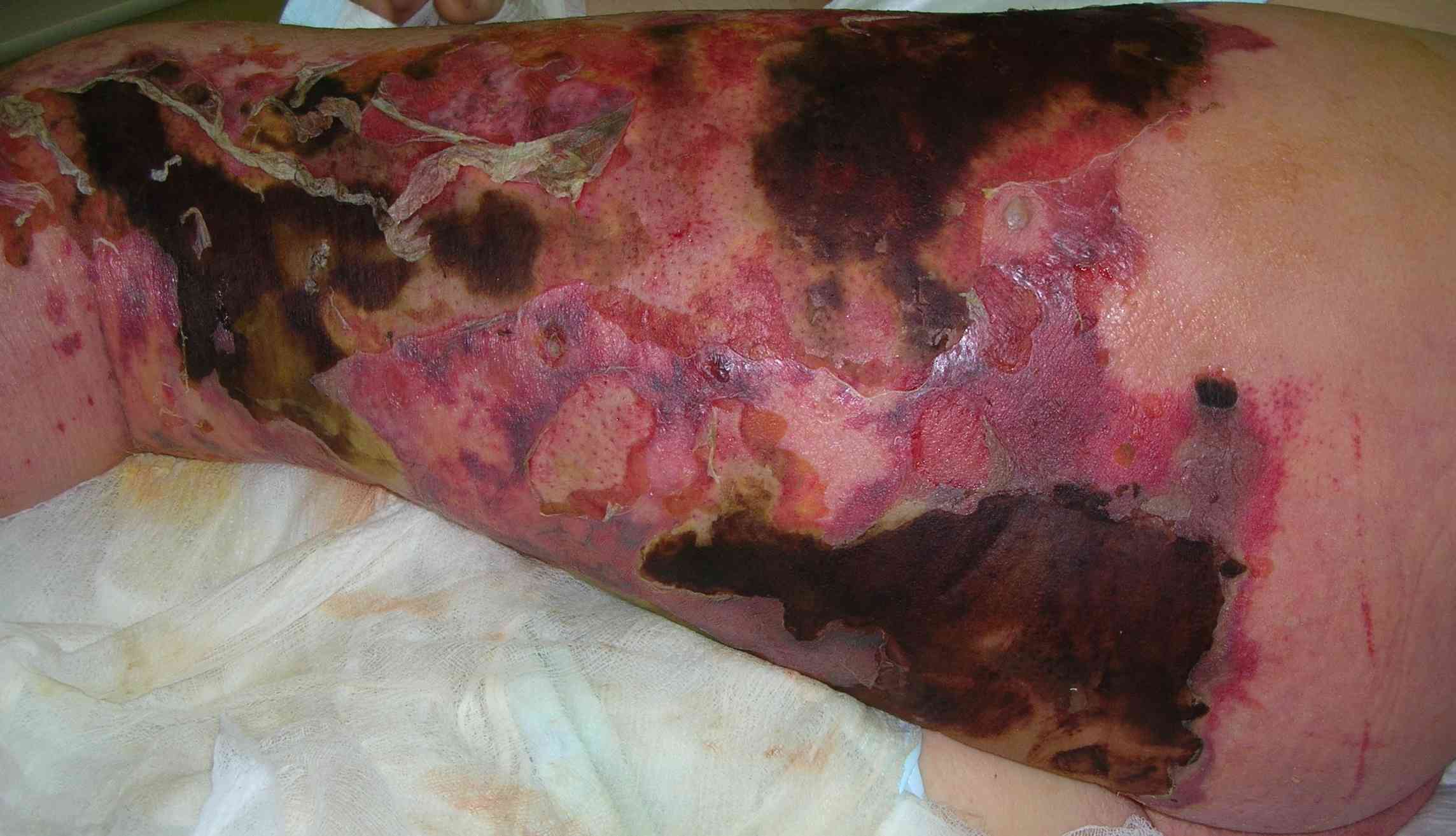
Necrotizing fasciitis is a rapidly progressive, life-threatening infection of the deep soft tissues that spreads along fascial planes, causing necrosis of subcutaneous fat, fascia, and muscle, with relative sparing of overlying skin until late stages [2]D5[8]D5. The term "necrotizing fasciitis" specifically denotes infection limited to the fascia, but the clinical entity often involves deeper tissues, leading to the broader designation "necrotizing soft tissue infection" (NSTI) [2]D5.
Also Called / Synonyms
- Necrotizing soft tissue infection (NSTI)
- Hemolytic streptococcal gangrene
- Hospital gangrene
- Fournier's gangrene (when involving the perineum)
- Synergistic necrotizing
Classification
Necrotizing fasciitis is classified into four types based on microbiology and anatomic location, which guides empiric antimicrobial therapy [8]D5[9]D5.
| Type | Microbiology | Key Features |
|---|---|---|
| I | Polymicrobial (aerobes + anaerobes) | Most common; occurs in trunk, perineum, extremities; often in immunocompromised patients |
| II | Monomicrobial ( , often with Staphylococcus aureus ) | Rapid progression; can occur in healthy individuals; may present with toxic shock syndrome |
| III | Gram-negative (e.g., Vibrio vulnificus, Aeromonas) | Associated with marine exposure or freshwater injury; rapid necrosis |
| IV | Fungal (e.g., Candida, Zygomycetes) | Rare; seen in immunocompromised or trauma patients |
Clinical Significance
Despite improved awareness, mortality remains 20- in contemporary series [2]D5. Upper extremity NSTIs carry a 30-day mortality of 11% and an amputation rate of 14% [1]B2b. Early diagnosis is missed or delayed in 85-100% of cases in large series, underscoring the need for a high index of suspicion [8]D5. The classification system not only informs antibiotic selection but also helps predict prognosis and guide surgical planning.
Surgical Nomenclature
The definitive treatment is surgical debridement of all necrotic tissue. The "surgical lesion" refers to the characteristic necrotic fascia encountered at operation, often described as "dishwater" fluid, thrombosed vessels, and easy separation of fascia from underlying muscle [8]D5. The extent of debridement is guided by intraoperative findings, and repeat exploration is often necessary.
Pearl: The single most important factor in reducing mortality is early and aggressive surgical debridement; a high index of suspicion is the clinician's best diagnostic tool [2]D5[8]D5.
Pathophysiology and the Surgical Lesion
- ▸Necrotizing fasciitis progresses through a predictable cascade: bacterial inoculation → virulence factor release → hyperinflammation → microvascular thrombosis → fascial necrosis → systemic toxicity.
- ▸Fascial necrosis creates a hypoperfused, antibiotic-impenetrable nidus, making surgical debridement the only definitive therapy.
- ▸Delayed surgery beyond 12 hours from presentation doubles mortality risk (25.6% vs. 14.6% for surgery within 6 hours) [23].
The surgical lesion, necrotic fascia, is not the primary event but the endpoint of a predictable cascade driven by bacterial virulence, host immune response, and tissue hypoperfusion [24]D5[25]D5. Understanding this cascade explains why early surgical debridement, not alone, is the definitive treatment.
The Pathogenic Cascade
The sequence from inoculation to fascial necrosis follows a stereotyped trajectory:
- Bacterial inoculation into the deep dermis or subcutaneous tissue, often through a breach in the skin (trauma, surgical wound, or even an occult portal) [10]C4[25]D5.
- Rapid proliferation within the avascular fascial plane, where host immune defenses are limited [24]D5.
- Release of virulence factors: Superantigens (e.g., streptococcal pyrogenic exotoxins), cytotoxins (streptolysin O, α-toxin), and proteases that directly damage fascia and endothelial cells [24]D5.
- Immune activation and dysregulation: Pattern-recognition receptors trigger a hyperinflammatory response, recruiting neutrophils that release reactive oxygen species and matrix metalloproteinases, amplifying tissue injury [24]D5.
- Microvascular thrombosis and tissue hypoperfusion: Endothelial damage, complement activation, and immunothrombosis occlude small vessels supplying the fascia, creating a zone of ischemia that is inaccessible to systemic antibiotics [24]D5[25]D5.
- Fascial necrosis: The combination of direct bacterial injury, neutrophil-mediated damage, and ischemia produces the characteristic gray, edematous, non-bleeding fascia seen at surgery [2]D5[25]D5.
- Systemic spillover: Toxins and inflammatory mediators enter the circulation, causing septic shock, multiorgan dysfunction, and, if unchecked, death [24]D5.
Microbial Virulence and Immune Evasion
(GAS) is the prototypical monomicrobial pathogen, but polymicrobial infections (often with gram-negative rods and anaerobes) are equally common [21]B2b[24]D5. Key virulence strategies include:
- Superantigens that bypass conventional antigen presentation, triggering massive T-cell activation and cytokine storm [24]D5.
- Cytotoxins (streptolysin O, Panton-Valentine leukocidin) that lyse neutrophils and impair bacterial clearance [24]D5.
- Immune-evasion proteins (e.g., M protein, C5a peptidase) that inhibit opsonization and complement-mediated killing [24]D5.
- Biofilm formation in polymicrobial infections, further limiting antibiotic penetration [25]D5.
Tissue Hypoperfusion and the Surgical Target
The critical pathophysiologic insight is that fascial necrosis creates a hypoperfused, antibiotic-impenetrable nidus [24]D5[25]D5. This explains why:
- Broad-spectrum antibiotics alone cannot sterilize the infected fascia [10]C4.
- Surgical debridement must extend until viable, bleeding fascia is encountered, the only reliable endpoint [2]D5[25]D5.
- Delayed surgery beyond 12 hours from presentation is associated with significantly higher mortality (25.6% vs. 14.6% for surgery within 6 hours) [23]B2b.
Mechanism Flowchart
The node highlighted in pink (fascial necrosis) is the surgical lesion, the point at which the infection becomes surgically incurable without excision.
Pearl: The surgical lesion is not the infection itself but the devitalized tissue that perpetuates it, debridement must extend until viable, bleeding fascia is encountered, as residual necrotic tissue guarantees progression despite antibiotics [2]D5[25]D5.
Epidemiology, Etiology and Risk Factors
- ▸Incidence 0.30-15 per 100,000; mortality 20-30%.
- ▸Diabetes is the most common comorbidity (44.5% of patients).
- ▸Age is the strongest independent predictor of mortality (OR 1.160 per year).
- ▸Interhospital transfer doubles mortality risk (OR 2.04).
- ▸First Nations populations in Australia have 88 times higher incidence.
From the surgical lesion described above, the clinical urgency of necrotizing fasciitis derives from its : a disease that strikes rapidly, with mortality rates that have remained stubbornly high despite advances in critical care. Understanding who gets this infection and why is the first step toward timely recognition.
Incidence and Demographics
Necrotizing fasciitis has a reported worldwide incidence of 0.30 to 15 per 100,000 population [33]B2b. Mortality remains 20-30% in most series [26]B2a[28]C4, ranging from 9.6% in some Fournier's cohorts [18]B2b to 23.4% in Latin America [17]B2b and 21% in the Netherlands [21]B2b. The disease affects all ages, but the median age at presentation is 50-70 years, and age is the strongest independent predictor of mortality (OR 1.160 per year) [34]B2a. Men are more frequently affected, especially in Fournier's gangrene, though gender is not an independent risk factor for death after adjustment [34]B2a.
Temporal Trends
Incidence appears stable or slightly increasing over recent decades, likely driven by the rising prevalence of diabetes and an aging population. However, mortality has not declined substantially, emphasizing the need for earlier diagnosis [21]B2b[33]B2b.
Risk Factors
A meta-analysis of 14 studies (26,242 patients) identified the strongest independent risk factors for mortality [34]B2a:
Individual studies confirm additional factors:
| Risk Factor | OR / RR | Evidence Level | Source |
|---|---|---|---|
| Diabetes mellitus | 44.5% prevalence (no adjusted OR) | 2b | [10]C4 |
| Septic shock | 34.2% prevalence, doubled mortality | 2b | [17]B2b |
| Serum lactate (per 1 mmol/L increase) | OR 1.117 (P = 0.0017) | 2b | [18]B2b |
Protective factors: Black race (OR 0.780) [34]B2a; prompt surgical intervention within 24 hours (P = 0.017) [15]B2b.
Geographic and Ethnic Considerations
Significant disparities exist. In Far North Queensland, Australia, First Nations people have an incidence 88 times higher than other ethnicities, with younger age at presentation (51.8 vs. 55.7 years) and higher rates of diabetes (86% vs. 34%) [31]B2b. In Latin America, necrotizing fasciitis carries a mortality of 23.4%, with polymicrobial infections predominating (74.8%) and high rates of carbapenemase-producing organisms (19.8%) [17]B2b.
Microbial Etiology
Group A Streptococcus is the most common single pathogen, cultured in 41% of cases [21]B2b. Polymicrobial infections occur in 74.8% [17]B2b. ESKAPE pathogens account for 31.8% of community-acquired necrotizing fasciitis, with 52% multidrug-resistant [30]C4. Vibrio vulnificus and Aeromonas species are important in coastal regions and patients with liver disease [10]C4[15]B2b.
Pearl: The combination of age >60 years, diabetes, and elevated serum creatinine should prompt aggressive surgical planning; Clostridium infection and interhospital transfer are particularly high-risk signals that mandate expedited care.
| Risk Factor | OR / RR | Evidence Level | Source |
|---|---|---|---|
| Septic shock | Prevalence 34.2% | 2b | [17]B2b |
| Serum lactate (per 1 mmol/L) | OR 1.117 (P = 0.0017) | 2b | [18]B2b |
Clinical Presentation and Focused Examination
- ▸Pain out of proportion to visible findings is the sentinel symptom; its absence does not rule out necrotizing fasciitis.
- ▸Hemorrhagic bullae and hypotension, when present, are highly specific but have low sensitivity (25.2% and 21.0%, respectively).
- ▸Hypoesthesia or anesthesia over the affected area signals neural involvement and mandates immediate operative exploration.
- ▸Atypical presentations (e.g., peritonitis, bite wounds, scrotal abscess) can mimic other conditions; a high index of suspicion is critical.
Pain out of proportion to the visible cutaneous findings is the sentinel symptom, a patient who describes agony despite a deceptively benign-looking wound demands immediate suspicion [10]C4. The top three early presenting features are swelling (80.8 %), pain (79.0 %), and erythema (70.7 %), but these are non-specific and lead to initial misdiagnosis in nearly three-quarters of patients [10]C4. The key is to recognise that the infection is spreading along fascial planes beneath intact skin; the external signs lag behind the deep tissue destruction.
Presenting Symptoms
- Pain: Severe, often described as "deep ache" or "burning"; worsens over hours. Pain that seems disproportionate to the erythema or swelling is a classic red flag [10]C4.
- Fever: Present in only 46.0 % of confirmed cases (pooled sensitivity) [35]B2a. Its absence does not rule out necrotising fasciitis.
- Systemic toxicity: Tachycardia, tachypnoea, altered mental status, or hypotension develop as the infection progresses. Hypotension has a specificity of 97.7 % for necrotising fasciitis when present, but sensitivity of only 21.0 % [35]B2a.
- History of trauma: Reported in 58 % of patients in one series [13]C4. Minor cuts, insect bites, or surgical wounds are common portals.
Neurological and Cutaneous Examination Findings
Tissue necrosis involves the superficial nerves, producing hypoesthesia or anaesthesia in the overlying skin, a sign of neural involvement that mandates immediate operative exploration without delay [2]D5. As the infection advances, cutaneous signs appear:
- Hemorrhagic bullae: Pooled sensitivity 25.2 %, specificity 95.8 % [35]B2a. Blood-filled blisters indicate dermal infarction.
- Purple or ecchymotic skin changes: Reflect vascular thrombosis and ischaemia [2]D5.
- Crepitus: Palpable gas in the subcutaneous tissue; present on plain radiography in 24.8 % of patients [10]C4.
- Wound drainage: May be thin, dark, or foul-smelling (“dishwater” fluid) in polymicrobial infections.
A focused neurological examination should assess for loss of light touch sensation in the region of erythema; this is a late but highly specific sign. Pain on passive range of motion of the adjacent joint (e.g., dorsiflexion of the ankle for a lower-extremity infection) indicates deep fascial involvement.
Phenotypic Variants
| Variant | Key Features | Frequency |
|---|---|---|
| Type I (polymicrobial) | Mixed aerobic/anaerobic flora; often involves gas in tissues; typically in trunk, perineum, or postoperative wounds | Most common in older adults with comorbidities |
| Type II ( ) | Rapid progression, often with toxic shock syndrome; may lack gas on imaging; can affect extremities | Up to 40-50% of cases in some series [21]B2b |
| Fournier’s gangrene | Perineal, scrotal, or perianal involvement; often indolent onset with scrotal swelling; high mortality | Accounts for a distinct subset; mortality 17.1% in one cohort [43]B2b |
| Type III (marine Vibrio) | After seawater exposure or ingestion of raw seafood in patients with liver disease; fulminant course | Endemic in coastal Asia [10]C4 |
Red Flags Requiring Urgent Action
- Pain out of proportion to the visual findings
- Failure to improve despite broad-spectrum [10]C4
- Hemorrhagic bullae or frank skin necrosis
- Hypotension (systolic BP < 90 mm Hg) or vasopressor requirement [42]B2b
- Crepitus or gas on plain radiography
- Systemic toxicity (tachycardia > 120/min, tachypnoea, altered mental status)
- Immunosuppression (diabetes, chronic kidney disease, cirrhosis) - these patients may present with minimal local signs but rapid deterioration [10]C4
Atypical Presentations
- Peritonitis from group A streptococcus: May present with diffuse abdominal pain, rebound tenderness, and toxic shock, without an obvious skin source [38]C4.
- Centipede or insect bites: Especially in patients with diabetes, a bite site can progress to necrotising fasciitis; in one series from Guadeloupe, 11.4 % of bite patients required hospitalisation and 48.8 % of those underwent surgery [39]C4.
- Scrotal abscess progressing to Fournier’s gangrene: Elderly men with diabetes and rectal or may present with isolated scrotal swelling that rapidly becomes necrotic, often due to Klebsiella pneumoniae in the Asian context [19]C4.
A high index of suspicion remains the single most important diagnostic tool. Because the absence of any one physical sign does not rule out necrotising fasciitis [35]B2a, early surgical consultation is warranted whenever the clinical picture is concerning. The focused examination guides the next step: immediate imaging and laboratory workup are detailed in the following section.
Pearl: Pain out of proportion is the most reliable early symptom; when present, obtain a CT scan immediately, CT has a pooled sensitivity of 88.5 % and specificity of 93.3 % for necrotising fasciitis [35]B2a. Do not delay surgical consultation while awaiting imaging.
Diagnosis and Workup
- ▸Triple diagnostics (surgical exploration, fresh-frozen section, Gram stain/culture) is the gold standard and should be performed when clinical suspicion is high.
- ▸LRINEC score has poor sensitivity (68.2% at ≥6) and should not be used to rule out NF; MLRINEC and SIARI scores show superior performance but require external validation.
- ▸CT is the imaging test of choice (sensitivity 88.5%, specificity 93.3%), but a negative CT does not exclude NF, particularly when clinical signs are compelling.
Once the focused examination raises suspicion for necrotizing fasciitis (NF), particularly when pain seems out of proportion to cutaneous findings or when systemic toxicity is unexplained, the next step is to confirm the diagnosis with the highest possible speed and certainty. The diagnosis is both clinical and surgical; no single blood test or imaging study can replace direct tissue inspection through surgical exploration.
Gold-Standard Diagnostic Test: Triple Diagnostics
The accepted gold standard for diagnosing NF is surgical exploration with triple diagnostics: macroscopic visual inspection of the deep fascia, microbiological culture and Gram stain of tissue, and histological examination of a fresh-frozen section (FSS) [2]D5[36]B2b. On direct visualization, the surgeon looks for loss of normal fascial integrity, dishwater-coloured exudate, and easy separation of the fascia from underlying muscle, the classic "dirty dishwater" sign [2]D5. The addition of FSS and Gram stain can confirm necrosis and identify the dominant pathogen within minutes, enabling immediate definitive debridement. In a 5-year implementation study, this protocolized approach yielded a 30-day mortality of 25%, with only 22% of explorations negative, and those diagnosed at an early stage had a significantly shorter ICU stay (2 vs. 6 days, p = 0.031) [36]B2b. Triple diagnostics should be performed in any patient with a high clinical suspicion, even if imaging and laboratory results are equivocal.
Laboratory Studies
Several laboratory-based scoring systems have been developed to aid diagnosis, but none can rule out NF when clinical suspicion is high.
LRINEC Score (Laboratory Risk Indicator for Necrotizing Fasciitis) uses six variables: C-reactive protein, total white cell count, haemoglobin, sodium, creatinine, and glucose. A score ≥6 has a pooled sensitivity of 68.2% and specificity of 84.8%; a score ≥8 trades sensitivity for specificity (40.8% and 94.9%, respectively) [35]B2a. The meta-analysis of 23 studies (n = 5982) concluded that LRINEC has poor sensitivity and should not be used to rule out NF [35]B2a. In a rural Kenyan cohort, higher LRINEC was associated with confirmed NF (p = 0.0006) and unfavourable outcome (p = 0.0157) [13]C4.
MLRINEC Score (Modified LRINEC) adds serum lactate and comorbid liver disease, and redefines cut-off values for three variables. A cut-off of 12 points yields a sensitivity of 91.8% and specificity of 88.4% (AUC 0.893) [37]B2b. Although promising, this score has not been externally validated in diverse populations.
SIARI Score was developed in a New Zealand cohort and outperformed LRINEC in both developmental (C-statistic 0.832 vs. 0.691) and validation (0.847 vs. 0.667) cohorts [14]B3b. The SIARI score awards points for: Site other than the lower limb, Immunosuppression, Age <60 years, Renal impairment (creatinine >141 μmol/L), and Inflammatory markers (CRP ≥150 mg/L, WCC >25 ×10⁹/L). It is a simplified, bedside-applicable tool, but still requires external validation.
| Test / Score | Key Finding | Sensitivity | Specificity | AUC |
|---|---|---|---|---|
| LRINEC ≥6 | Standard cut-off | 68.2% [35]B2a | 84.8% [35]B2a | , |
| LRINEC ≥8 | High-specificity cut-off | 40.8% [35]B2a | 94.9% [35]B2a | , |
| MLRINEC ≥12 | Add lactate and liver disease | 91.8% [37]B2b | 88.4% [37]B2b | 0.893 [37]B2b |
| SIARI score | Site, immunosuppression, age, renal, CRP/WCC | , | , | 0.832-0.847 [14]B3b |
Imaging
Computed tomography (CT) is the imaging modality of choice when the diagnosis is uncertain, because it has the highest sensitivity of any non-invasive test. In a meta-analysis, CT pooled sensitivity was 88.5% and specificity 93.3% for detecting NF [35]B2a. CT findings include fascial thickening, gas in soft tissues, fluid collections, and lack of enhancement of deep fascia after contrast. Plain radiography reveals soft-tissue gas in only 24.8% of patients (sensitivity 48.9%, specificity 94.0%) [35]B2a[10]C4. A negative CT does not rule out NF; the meta-analysis found that 11.5% of patients with surgically confirmed NF had a normal CT [35]B2a. Ultrasonography may show thickening of the deep fascia and fluid along fascial planes, but its diagnostic accuracy is less well established. MRI provides excellent soft-tissue contrast and can detect early fascial oedema, but its use is often limited by the patient's instability and the time required for acquisition. In the infant case report, MRI was used to confirm the diagnosis [51]C4, but for most acutely ill adults, CT is the practical first-line imaging.
Biopsy and Histology
When exploration is performed, a fresh-frozen section (FSS) of the deep fascia is the histologic gold standard [2]D5. The pathologist looks for necrosis of fascia, polymorphonuclear infiltration, thrombosis of microvasculature, and bacteria within the tissue. Gram stain of the exudate can identify the dominant organism (e.g., Gram-positive cocci in chains for , Gram-negative rods for mixed aerobic-anaerobic infections). This information guides initial antibiotic choice before culture results are available. In the triple-diagnostics algorithm, FSS and Gram stain are performed on the same biopsy specimen, providing a definitive diagnosis within 30-60 minutes [2]D5.
Diagnostic Algorithm
Step 1: Clinical suspicion is the starting point. Features that upgrade suspicion include pain out of proportion, hypotension, bullae, gas on plain film, and failure to improve on [10]C4[35]B2a. Step 2: In patients with low-to-intermediate suspicion, obtain laboratory scores and CT. A high MLRINEC (≥12) or SIARI score should prompt immediate exploration. Step 3: If CT is positive, proceed to exploration. If CT is negative but clinical suspicion remains high, do not delay exploration, CT misses up to 11.5% of cases [35]B2a. Step 4: Surgical exploration with triple diagnostics is the definitive step. If the fascia appears necrotic, the FSS confirms necrosis, or Gram stain shows bacteria, proceed with debridement. If exploration is negative, close the wound and treat as severe with close monitoring.
Differential Diagnosis
The primary differential is severe cellulitis or without necrosis. Differentiating features: cellulitis typically responds to antibiotics within 24-48 hours, does not cause pain out of proportion, and lacks systemic organ dysfunction. Other mimics include , gas gangrene ( ), and deep vein thrombosis. Pyomyositis presents with focal muscle pain and abscess, often without systemic toxicity. Gas gangrene shows muscle necrosis with gas on imaging and is distinguished by the presence of clostridia on Gram stain. The key differentiating action is surgical exploration, if there is any doubt, exploration is the safest course.
Pearl: A normal CT does not rule out necrotizing fasciitis; when clinical suspicion is high, go directly to surgical exploration, because the window for survival is measured in hours, not days.
Severity, Surgical Scoring and Risk Stratification
- ▸LRINEC has modest discriminative performance (C-statistic 0.679); SIARI and m-LRINEC may be superior for diagnosis.
- ▸Shock Index (threshold >0.866) outperforms FGSI, qSOFA, and LRINEC for mortality prediction in Fournier's gangrene (AUC 0.952).
- ▸Interhospital transfer independently increases mortality risk (OR 2.04), underscoring the need for early transfer protocols.
Once the diagnosis of necrotizing fasciitis is confirmed or strongly suspected, the next critical step is to quantify disease severity and stratify operative risk using validated scoring systems. Several tools have been developed, each with distinct strengths and limitations, and none should delay surgical intervention, rather, they guide resource allocation, ICU admission, and prognostication.
LRINEC and Its Modifications
The Laboratory Risk Indicator for Necrotizing Fasciitis (LRINEC) score, derived from six routine laboratory values (C-reactive protein, white blood cell count, hemoglobin, sodium, creatinine, glucose), stratifies patients into low (<6), moderate (6-7), and high (≥8) risk categories [27]C4. A score ≥6 was originally proposed to identify NF with high sensitivity, but subsequent validation has shown only modest discriminative performance. In a large case-control study, the area under the receiver operating characteristic curve (C-statistic) for LRINEC ≥6 was 0.679 [14]B3b. A prospective cohort in a resource-limited setting reported a positive predictive value of 95.42% and negative predictive value of 81.16% [56]B2b. However, a systematic review concluded that LRINEC has conflicting results and should be used as an adjunct, not a standalone diagnostic tool [54]D5.
The modified LRINEC (m-LRINEC) score adds comorbid diabetes and kidney disease, replaces CRP with high-sensitivity CRP, and redefines cutoffs. At a threshold of 17 points, m-LRINEC achieved sensitivity 93.2% and specificity 86.9% (AUC 0.935) [58]B3b.
Scores for Fournier's Gangrene
For Fournier's gangrene specifically, the Fournier's Gangrene Severity Index (FGSI) incorporates temperature, heart rate, respiratory rate, serum sodium, potassium, creatinine, bicarbonate, hematocrit, and white blood cell count. In a cohort of 153 patients, FGSI demonstrated sensitivity 70.3% and specificity 85.9% for mortality prediction (AUC 0.818) [45]B2b. The quick Sequential Organ Failure Assessment ( ) had higher specificity (94.6%) but lower sensitivity (62.2%) in the same cohort [45]B2b. The Shock Index (heart rate/systolic blood pressure) outperformed all other scores in a separate study, with an AUC of 0.952 and optimal threshold of 0.866 (sensitivity 92.6%, specificity 83.2%) [43]B2b.
SIARI and MNF Scores
The SIARI score (Site other than lower limb, Immunosuppression, Age <60 years, Renal impairment with creatinine >141, Inflammatory markers CRP ≥150 and WCC >25) demonstrated superior diagnostic ability compared to LRINEC in both developmental (C-statistic 0.832 vs 0.691) and validation cohorts (0.847 vs 0.667) [14]B3b.
The Mortality in Necrotizing Fasciitis (MNF) scoring system, derived from 1503 patients, includes six predictors: female gender, age >60 years, WBC ≤5000 or ≥35,000, creatinine ≥1.6 mg/dL, and pulse rate >130/min. The MNF score showed moderate predictive power (AuROC 76.18%) with good calibration [57]B3b.
Novel Predictors: and Transfer Status
The Model for End-Stage Liver Disease (MELD) score, calculated from bilirubin, creatinine, and INR, independently predicted 30-day mortality in NF patients (HR 1.61 per point) [59]B3b.
Interhospital transfer is itself a risk factor for mortality. In a nationwide analysis of 9,958 NF cases, transferred patients had higher unadjusted mortality (15.5% vs 8.7%) and adjusted odds of death (OR 2.04) [32]B2b.
Practical Application
No single score is perfect. A combined approach, using qSOFA for rapid bedside triage, FGSI or Shock Index for risk stratification, and LRINEC or SIARI for diagnostic support, may optimize clinical decision-making [45]B2b[43]B2b. These scores should not delay surgical intervention; rather, they guide resource allocation, ICU admission, and prognostication. The next section addresses acute and resuscitation, which must proceed in parallel with risk stratification.
Pearl: The Shock Index (heart rate/systolic blood pressure) is a simple, bedside-available tool that outperforms complex scoring systems for mortality prediction in Fournier's gangrene; a threshold >0.866 should prompt immediate escalation of care [43]B2b.
| Score | Components | Primary Use | Performance (AUC) | Key Threshold |
|---|---|---|---|---|
| LRINEC | CRP, WBC, Hb, Na, Cr, glucose | Diagnostic adjunct | 0.679 [14]B3b | ≥6 |
| m-LRINEC | Adds diabetes, kidney disease; uses hs-CRP | Diagnostic | 0.935 [58]B3b | ≥17 |
| SIARI | Site, immunosuppression, age, Cr, CRP, WBC | Diagnostic | 0.847 [14]B3b | Not specified |
| FGSI | Temp, HR, RR, Na, K, Cr, HCO3, Hct, WBC | Prognostic (mortality) | 0.818 [45]B2b | Not specified |
| qSOFA | RR, SBP, GCS | Prognostic (mortality) | 0.818 [45]B2b | ≥2 |
| Shock Index | HR/SBP | Prognostic (mortality) | 0.952 [43]B2b | >0.866 |
| MNF | Gender, age, WBC, Cr, pulse | Prognostic (mortality) | 0.762 [57]B3b | Low ≤2.5, high ≥7 |
| MELD | Bilirubin, Cr, INR | Prognostic (30-day mortality) | Not reported as AUC | Per point HR 1.61 [59]B3b |
Acute Management and Resuscitation
- ▸Immediate ICU admission with lactate-guided resuscitation is essential for all patients with suspected NF.
- ▸Empiric broad-spectrum antibiotics must cover polymicrobial (Type I) and monomicrobial (Type II) pathogens, with local resistance patterns guiding choice.
- ▸HBOT remains controversial and should not delay definitive surgical debridement.
In the patient with confirmed or high-suspicion necrotizing fasciitis, the pathway immediately transitions from diagnostic evaluation to a coordinated resuscitation-to-source-control protocol. The severity classification (Section 6) guides the intensity of resuscitation, antibiotic selection, and urgency of surgical consultation.
Step 1: Resuscitation and ICU Admission
All patients with confirmed or suspected necrotizing fasciitis require immediate ICU admission for continuous monitoring and aggressive resuscitation. In a Dutch multicenter cohort, 83% of patients required ICU care, with a median stay of 5 days (IQR 2-11) [21]B2b. Resuscitation is guided by serum lactate, a strong independent predictor of mortality (2.9. 1.8 mmol/L in survivors; AUC 0.719, 95%) [17]B2b. Target lactate clearance as a marker of resuscitation adequacy. Balanced crystalloids are preferred over 0.9% saline, consistent with general sepsis guidelines (though specific evidence in NF is limited). Vasopressor therapy ( first-line) is initiated to maintain mean arterial pressure ≥ 65 mmHg if fluid resuscitation is insufficient.
Step 2: Empiric Antibiotic Therapy
Empiric must be started immediately after blood cultures are obtained, before surgical debridement. The choice of regimen should cover the most likely pathogens based on the suspected type of infection and local resistance patterns. The table below summarizes recommended regimens.
| Regimen | Indication | Key considerations |
|---|---|---|
| + + | Polymicrobial (Type I) | Covers gram-negative, anaerobes, MRSA; clindamycin inhibits toxin production [20]C4[30]C4 |
| (high-dose) + | Type II ( ) | Clindamycin inhibits toxin synthesis; penicillin alone may be ineffective in high inoculum [46]C4 |
| + | Suspected (coastal exposure, bullous lesions) | Reduces mortality when combined with early surgery [15]B2b |
| Empiric antifungal ( or ) | Suspected fungal NF (immunocompromised, rapid progression, negative bacterial cultures) | Fungal NF has threefold higher mortality; early cultures are critical [47]C4 |
For patients with risk factors for multidrug-resistant organisms (recent hospitalization, immunosuppression, prior antibiotics), broaden coverage to include a carbapenem (e.g., ) and consider an anti-MRSA agent ( or ) [30]C4. Dosing should follow institutional antibiograms and drug labels; no specific doses were reported in the reviewed evidence.
Step 3: Adjunctive Therapies
Hyperbaric oxygen therapy (HBOT) remains the most studied adjunct. A meta-analysis of 13 retrospective studies in Fournier’s gangrene (322 HBOT patients, 366 controls) found HBOT associated with a significantly lower mortality rate; however, hospital length of stay and number of debridements did not differ significantly [64]B3a. A separate meta-analysis of NSTI patients found no significant difference in mortality or number of debridements [26]B2a. The Infectious Disease Society of America recommends against routine use; a Chinese expert consensus supports it as an adjunctive therapy [26]B2a. Given this equipoise, HBOT may be considered on a case-by-case basis after initial surgical debridement and in centers with available hyperbaric facilities, but it should never delay definitive surgical management. Intravenous immunoglobulin (IVIG) is sometimes used for , but evidence from the present review is insufficient to recommend routine use.
Step 4: Preparation for Surgical Debridement
Surgical debridement is the definitive treatment and should not be delayed pending resuscitation or imaging. The median time from hospital admission to debridement in a recent Dutch cohort was 8 hours (IQR 4-23) [21]B2b; shorter intervals are associated with improved survival. Preoperative optimization includes correction of electrolyte abnormalities, glycemic control (target glucose 140-180 mg/dL), and administration of the first dose of empiric antibiotics. The surgical team should be notified immediately upon suspicion to allow for rapid operative planning.
Controversies and Guideline Disagreement
| Question | Position A | Position B | Strength | Implication |
|---|---|---|---|---|
| Routine use of HBOT | IDSA recommends against routine use [26]B2a | Chinese expert consensus recommends HBO as adjunctive therapy [26]B2a | Strong (opposing recommendations) | HBOT may be considered in select cases after debridement, but should not delay surgery |
| Empiric antifungal coverage | No standard recommendation | Fungal NF is rare but lethal; early empiric antifungal may be considered in high-risk patients [47]C4 | Moderate (no official guideline) | In immunocompromised or rapidly progressive cases, add antifungals early |
Pearl: The most critical intervention for necrotizing fasciitis is early surgical debridement; resuscitation and empiric antibiotics are temporizing measures that must not delay the operative procedure.
Operative Decision-Making: Indications, Timing and the Operative-vs-Nonoperative Choice
- ▸Surgical exploration is indicated in any patient with suspected necrotizing fasciitis; a negative exploration is acceptable, but delayed diagnosis in a true case carries 20-50% mortality.
- ▸Surgery within 6 hours of presentation reduces mortality from 25.6% to 14.6% (NNT = 9); delays beyond 12 hours are associated with significantly worse outcomes (aOR 0.19 for death/amputation within 0-6 hours).
- ▸Nonoperative management is not an option; even a limited incision and drainage procedure is superior to waiting for a more extensive debridement and reduces both amputation and mortality (aOR 0.107 and 0.172, respectively).
The decision to operate is not a question of whether but of when. Once necrotizing fasciitis is suspected or confirmed, nonoperative is associated with near-universal mortality; the only realistic choice is between immediate surgical source control and a delay that worsens outcome. This section reviews the evidence that defines the urgency threshold and the comparative effectiveness of prompt operative intervention versus any medical-only approach.
Indications for Surgery
Surgical exploration is indicated in any patient with a clinical or diagnostic suspicion of necrotizing fasciitis. The classic teaching, "when in doubt, cut it out", is supported by the observation that misdiagnosis, particularly in early-stage disease, increases in-hospital mortality from 10% to 30% (p = 0.003) [21]B2b. In ambivalent presentations, triple diagnostics (incisional biopsy with macroscopic inspection, frozen-section histology, and microbiologic culture) can confirm the diagnosis and change treatment strategy in 60% of cases where macroscopic findings are equivocal [2]D5[36]B2b. A negative exploration (22% in one series) is acceptable morbidity; the alternative, delayed diagnosis in a patient who truly has the disease, carries a mortality risk of 20-50% [36]B2b[61]B3b.
Timing: The Evidence for a "Golden Window"
The time from hospital presentation to surgical debridement is the modifiable predictor most consistently linked to survival. A large Japanese cohort (n = 187) reported that patients undergoing surgery within 0-6 hours had a mortality rate of 14.6%, those operated in 6-12 hours had 16.1%, and those delayed beyond 12 hours had 25.6% [23]B2b. After adjustment, surgery within 6 hours was associated with a 0.38 odds ratio for mortality and a stronger, statistically significant reduction in the composite of death or amputation (**aOR 0.19, 95% **) [23]B2b. The absolute risk reduction for mortality alone between the 0-6 hour and >12 hour groups was 11%, yielding an NNT of 9 to prevent one death [23]B2b.
A Dutch multicenter cohort reported a median time to debridement of 8 hours (IQR 4-23), with one in five patients dying and one in eight undergoing major amputation [21]B2b. Interhospital transfer adds a further delay: patients transferred from another facility had mortality of 15.5% versus 8.7% for emergency-department admissions (OR 2.04), a difference that persisted after adjustment for severity [32]B2b. The implication is that every hour of avoidable delay, whether from diagnostic uncertainty, transfer logistics, or operating-room availability, costs lives.
Operative vs. Nonoperative: The Evidence Against Medical Management Alone
No randomized trial has compared surgery with medical management alone for necrotizing fasciitis; such a trial would be unethical. Observational data consistently show that patients who receive without surgical source control die. In a study of 119 patients with Vibrio vulnificus infections, treatment with surgery plus antibiotics was a protective factor (p = 0.038), and surgical intervention within 24 hours of admission was independently associated with survival (p = 0.017) [15]B2b. The presence of hemorrhagic bullae or overt necrotizing fasciitis increased the odds of death unless promptly debrided [15]B2b.
A more nuanced question is whether a less aggressive initial procedure, incision and drainage (I&D) rather than wide en bloc debridement, can serve as a temporizing strategy in critically ill or malnourished patients. A retrospective study of 116 patients found that early I&D was associated with a significant reduction in both amputation (aOR 0.107, 95% CI 0.022-0.511) and mortality (aOR 0.172, 95% CI 0.032-0.924) compared with upfront extensive debridement, even after adjusting for confounders such as advanced stage and hypoalbuminemia [70]B3b. This suggests that immediate operative source control, even if limited, is superior to waiting for a more radical operation, and that the key imperative is to decompress the infected fascial plane without delay.
Factors That Influence the Urgency of Operative Decision-Making
- Hemodynamic instability: Septic shock or organ dysfunction at presentation requires surgery within hours, not days. In a multivariate analysis, sepsis/organ dysfunction carried an odds ratio of 19.58 for mortality (p < 0.001) [63]B3b.
- Anatomical location: Cervical necrotizing fasciitis with descending mediastinitis demands immediate cervicotomy and, if the infection extends below the carina, sternotomy or thoracotomy [12]C4. Perianal and Fournier's gangrene can spread retroperitoneally and require urgent debridement [61]B3b.
- Microbiology: Vibrio vulnificus and group A Streptococcus are associated with particularly rapid progression; surgery within 24 hours is a proven protective factor [15]B2b[21]B2b.
- Comorbidities: ASA class ≥3 (OR 9.26 for mortality) and base deficit ≥3 meq/L (OR 10.53) identify patients who will not tolerate even a short delay [1]B2b.
Controversies and Guideline Disagreement
The single area of genuine disagreement is whether hyperbaric oxygen therapy (HBOT) can be an alternative or adjunct to surgery. The Infectious Diseases Society of America recommends against HBOT for necrotizing fasciitis [26]B2a. However, a meta-analysis of 10 studies found no clear mortality benefit when HBOT was added to standard care, and a large retrospective cohort showed that patients who were eligible for HBOT but could not receive it (due to contraindications) had a mortality of 36.4% versus in those who received it (p = 0.022) [63]B3b[26]B2a. These data are confounded by indication, sicker patients were more likely to be referred for HBOT, and do not support HBOT as a substitute for surgery. The consensus remains: surgery is the definitive treatment, and HBOT is at best an adjunct.
Pearl: Any delay beyond 12 hours from presentation to initial debridement doubles the odds of death or amputation; aim for incision within 6 hours, and if the patient is too unstable for a radical operation, perform immediate incision and drainage as a life-saving temporizing measure.
| Time from presentation to surgery | Mortality rate | Adjusted odds ratio for death/amputation (95% CI) | NNT to prevent one death vs. >12 h |
|---|---|---|---|
| 0-6 hours | 14.6% | 0.19 (0.05-0.62) | 9 |
| 6-12 hours | 16.1% | 0.23 (0.05-0.90) | 11 |
| >12 hours | 25.6% | (reference) | - |
Data from a single-center Japanese cohort (n = 187) [23]B2b. Mortality rates are crude; adjusted odds ratios are for the composite of death or amputation.
Operative Approach, Technique Selection and Perioperative Optimization
- ▸Early incision and drainage as a temporizing strategy reduces amputation (aOR 0.107) and mortality (aOR 0.172) compared with immediate extensive debridement in advanced NF.
- ▸Negative pressure wound therapy (NPWT) reduces mortality (OR 0.27), shortens antibiotic duration (by 2 days), and decreases hospital stay (by 3 days) in Fournier's gangrene.
- ▸Interhospital transfer doubles the odds of mortality (OR 2.04); rapid diagnosis and direct transfer to a surgical centre improve outcomes.
Once the decision to operate is made, the surgeon must choose the incision strategy, source-control technique, and perioperative bundle that maximizes survival while minimizing morbidity. The primary goal is immediate source control, removal of all necrotic fascia and devitalized tissue, while preserving as much viable skin and functional tissue as possible.
Surgical Approach: Incision and Drainage Versus Extensive Debridement
Conventional teaching has favoured single-stage-wide en bloc debridement excising all involved skin, subcutaneous tissue, and fascia. However, recent evidence suggests that a staged approach, initial incision and drainage (I&D) followed by scheduled re-exploration, may be superior, particularly in the critically ill or patients with advanced disease. In a retrospective study of 116 NF patients, those who underwent early I&D (rather than immediate extensive debridement) had a significantly lower amputation rate (adjusted odds ratio [aOR] 0.107, 95% CI 0.022-0.511) and lower mortality (aOR 0.172, 95% CI 0.032-0.924) after adjusting for confounders [70]B3b. The I&D group had more anaemia, hypoalbuminaemia, and abnormal creatinine on admission, yet still derived better outcomes. This strategy permits source control without the haemodynamic and metabolic stress of a large wound, allowing the patient to stabilise before definitive debridement.
For perianal necrotizing fasciitis (PNF), a multiple skip incision skin-sparing debridement technique has been described [61]B3b. This approach uses multiple small incisions to drain fascial planes and preserve perianal skin, reducing the need for skin grafting and the risk of anal stenosis or incontinence. The authors reported that this technique, compared with historical wide excision, decreases healing time and scar formation while achieving adequate drainage [61]B3b.
Skin-Sparing Versus En Bloc Debridement
A systematic review of skin-sparing debridement (SSd) versus en bloc debridement (EBd) for necrotizing soft-tissue infections found that SSd-treated patients had no increased mortality, length of stay, or complication rate compared with EBd, and a high rate (75%) of total delayed primary closure [74]B2a. SSd involves excising only frankly necrotic skin and fascia, preserving viable skin bridges, and returning for a second-look procedure. The evidence is of poor quality (all case series, Chambers criteria ‘poor’), but experienced teams may cautiously implement SSd under close monitoring [74]B2a.
| Technique | Key Features | Reported Outcomes | Evidence Level |
|---|---|---|---|
| En bloc debridement | Wide excision of skin, subcutaneous tissue, and fascia en bloc | Traditional approach; may leave large defects requiring skin grafting | Retrospective series [70]B3b |
| Skin-sparing debridement | Excision of only necrotic tissue; preserve viable skin | 75% total delayed primary closure; no increased mortality or LOS | Systematic review (poor quality) [74]B2a |
| Multiple skip incision | Several small incisions along fascial planes | Reduced need for grafting; less perianal stenosis | Retrospective study (PNF) [61]B3b |
Negative Pressure Wound Therapy
Negative pressure wound therapy (NPWT) is the standard of care for wound after surgical debridement. A meta-analysis of 7 controlled trials (249 participants) found that NPWT (vacuum-assisted closure) significantly reduced mortality compared with conventional dressings: OR 0.27, 95% CI 0.09-0.87 [73]A1a. The number of debridements, total hospital length of stay, and complication rate did not differ significantly between groups. In a randomised trial of odontogenic cervical NF, NPWT reduced operation frequency, treatment length, and cost, and lowered inflammatory markers (WBC, CRP, PCT, IL-6, TNF-α) while increasing VEGF and IL-10 [66]A1b.
For Fournier’s gangrene, vacuum sealing drainage (VSD) shortened time to leukocyte normalization by -1.8 days (90% CI -3.5 to -0.1), reduced antibiotic duration by -2.0 days (90% CI -3.7 to -0.4), and decreased hospital stay by -3.0 days (90% CI -5.7 to -0.4) after inverse probability of treatment weighting [55]B3b. Benefits were more pronounced in patients with high LRINEC scores or extensive infection.
Role of Amputation
Amputation is reserved for limbs with non-salvageable tissue destruction, but its timing affects survival. In a study of 582 NF patients, 35 underwent amputation; 7 were primary (within 3 days) and 28 were late (beyond 3 days). The mortality rate in the late amputation group was associated with advanced age, Vibrio or Aeromonas infection, liver cirrhosis, and hypotension [11]B2b. A systematic review of hip disarticulation and hemipelvectomy for infectious indications (including NF in 9% of 289 patients) reported an early mortality of 26.2% (37/141) when excluding the large registry cohort, and among survivors 62.7% remained wheelchair-dependent or bedbound [67]C4.
For the unstable patient unable to reach the operating room, a bedside guillotine amputation may be life-saving. A case report described a 54-year-old in septic shock with a pulseless, necrotic foot who underwent bedside foot-and-ankle amputation by the vascular surgeon and emergency physician, with subsequent ICU admission [77]C4. Although the patient ultimately died from goals-of-care decisions, the procedure allowed source control in a crashing patient.
Adjunctive Therapies
Hyperbaric oxygen therapy (HBOT) is used as an adjunct in some centres. A retrospective analysis of 10 years of NF and Fournier’s gangrene treatment stratified patients into those without HBOT, those treated with HBOT, and those ineligible despite indication. The study aimed to assess in-hospital mortality and outcome, but the abstract does not provide quantitative results [63]B3b. The evidence for HBOT in reducing mortality remains limited, and its use should be individualised per institutional protocols.
Hemopurification (e.g., continuous renal replacement therapy, plasma exchange) may be considered in septic shock with multi-organ failure. A paediatric case of Vibrio vulnificus NF with septic shock was successfully treated with early hemopurification, surgical debridement, and ; the child survived to discharge [79]C4.
Perioperative Optimization
- Timing: Every hour matters. A 75% mortality reduction has been reported if operated within 12 hours of onset [2]D5.
- Resuscitation: Aggressive fluid resuscitation with balanced crystalloids (e.g., lactated Ringer’s) is preferred to avoid hyperchloremic acidosis. Vasopressors (norepinephrine) are first-line for septic shock. Blood transfusion should be considered for haemoglobin <7 g/dL in the critically ill.
- Antibiotics: Broad-spectrum empiric therapy (e.g., + + clindamycin) should be started immediately, then tailored to culture results [77]C4.
- Open abdomen: For NF involving the abdominal wall or requiring laparotomy, the open abdomen with negative pressure therapy and mesh-mediated traction may be used. In a series of 118 open abdomen patients (7 with NF), the primary fascial closure rate was 84%, with median time to closure of 12 days (1-143) [69]B3b.
Pearl: In critically ill NF patients, initial incision and drainage with source control, followed by staged debridement and negative pressure wound therapy, is associated with lower mortality and amputation rates than single-stage extensive debridement, especially when the patient is too unstable for a prolonged procedure [70]B3b.
| Outcome | NPWT (VAC) | Conventional | Effect Size (95% CI) | Reference |
|---|---|---|---|---|
| Mortality | Lower | Higher | OR 0.27 (0.09-0.87) | [73]A1a |
| Time to leukocyte normalization | Shorter | Longer | -1.8 days (-3.5 to -0.1) | [55]B3b |
| Antibiotic duration | Shorter | Longer | -2.0 days (-3.7 to -0.4) | [55]B3b |
| Hospital stay | Shorter | Longer | -3.0 days (-5.7 to -0.4) | [55]B3b |
| Operation frequency (odontogenic CNF) | Lower | Higher | Significant reduction | [66]A1b |
Complications and Their Management
- ▸Amputation is required in 6-12% of NF patients and carries a 37% mortality rate.
- ▸Long-term morbidity after Fournier's gangrene includes fecal incontinence, sexual dysfunction, and psychosocial impairment.
- ▸Multidrug-resistant ESKAPE pathogens are common in community-acquired NF and should guide empiric therapy.
The aggressive surgical debridement required to control the infection leaves a wake of complications that must be anticipated and managed systematically.
Amputation and Limb Loss
Amputation is a major complication of NF, occurring in 12% of patients in a Dutch cohort and 6% in a Taiwanese series restricted to extremity NF [11]B2b[21]B2b. Among patients requiring amputation, in-hospital mortality reaches 37% [11]B2b. The risk of limb loss is highest when debridement is delayed beyond 3 days [11]B2b. For patients with refractory infection necessitating hip disarticulation or hemipelvectomy, early mortality is 26% (excluding registry data) and 63% of survivors remain wheelchair-dependent or bedbound [67]C4. requires early involvement of physical medicine and rehabilitation, prosthetic fitting, and psychosocial support.
Mortality and Organ Failure
In-hospital mortality ranges from 9% to 21% across contemporary cohorts [13]C4[21]B2b[31]B2b[82]B2b. Sepsis and multi-organ failure are the most common causes. In patients treated with open abdomen, renal failure requiring renal replacement therapy (OR 3.9) and abdominal compartment syndrome (OR 3.1) are independent predictors of mortality [69]B3b. Entero-atmospheric fistula, though a feared complication, was not associated with increased mortality; all 9 affected patients in the cited series survived [69]B3b.
Long-Term Functional and Quality of Life Impairment
Survivors of face substantial long-term morbidity. A systematic review of 291 patients found that in-hospital mortality ranged from 3% to 16% and long-term mortality from 5% to 21%; among survivors, fecal incontinence, sexual dysfunction, urinary symptoms, and psychosocial impairment were common [81]B2a. Quality-of-life data are sparse but consistently indicate a lasting burden.
Wound and Reconstructive Complications
After infection control, wound coverage is a challenge. is a viable option for lower extremity defects, with no flap loss in a small series, though it requires longer operative time (mean 332 vs 170 minutes) [84]B2b. For perineal defects, the deep external pudendal artery perforator (DEPAP) flap provides reliable single-stage reconstruction with minimal donor-site morbidity [83]C4. is widely used to manage open wounds before definitive closure.
Infectious Complications and Recurrence
pathogens are isolated in 32% of community-acquired NF, and 52% of these isolates are multidrug-resistant, 12% extensively drug-resistant [30]C4. Fungal necrotizing fasciitis, though rare, carries a mortality of 67% in a small case series; early fungal cultures and empirical antifungal therapy should be considered in immunocompromised patients [47]C4. Recurrence is uncommon but reported in patients with ongoing risk factors such as diabetes and peripheral vascular disease.
Management of Complications
All complications require a multidisciplinary approach: intensive care for organ failure, serial debridement for residual necrosis, staged reconstruction for wound coverage, and rehabilitation for functional loss. Antibiotic stewardship should be guided by local microbiology and resistance patterns [30]C4[69]B3b.
What NOT to Do
Do not delay reoperation when wound necrosis or sepsis persists despite initial debridement. Do not rely solely on CT imaging to exclude NF when gas is absent, as type II NF is gas-negative in 92% of cases [85]B2b. Do not assume that is a terminal event; with appropriate management, survival is possible [69]B3b.
| Complication | Incidence | Key Risk Factors | Management |
|---|---|---|---|
| Amputation (extremity NF) | 6-12% [11]B2b[21]B2b | Debridement delay >3 d, diabetes, skin necrosis | Primary or staged amputation; rehabilitation |
| In-hospital mortality | 9-21% [13]C4[21]B2b[31]B2b[82]B2b | Age >60, renal failure, hypotension, fungal infection | ICU support, source control |
| Renal failure requiring RRT | OR 3.9 for mortality in OAT [69]B3b | RRT, avoid nephrotoxins | |
| Entero-atmospheric fistula | 8% of OAT patients [69]B3b | Prolonged open abdomen | NPWT, staged closure, nutrition |
| Long-term QoL impairment (FG) | 5-21% long-term mortality; functional deficits common [81]B2a | Extent of initial debridement | Multidisciplinary rehabilitation, psych support |
Pearl: Amputation is a marker of advanced disease; the majority of patients requiring amputation die, and survivors face profound functional impairment, making early recognition and aggressive initial debridement the most effective complication-prevention strategy.
History and Evolution of Treatment
- ▸Early surgical debridement within 24 hours is the single most important determinant of survival, established by the 1984 frozen-section biopsy study [88].
- ▸The LRINEC score is a useful adjunct but has variable sensitivity and cannot replace clinical judgment or surgical exploration [86, 90].
- ▸Hyperbaric oxygen therapy has been abandoned as a replacement for surgery; it is not supported by mortality benefit evidence.
The preceding section detailed the complications that define this disease; understanding how the current treatment framework emerged requires tracing the key milestones that transformed necrotizing fasciitis from a uniformly fatal condition to one with a modifiable outcome. The therapeutic timeline is marked by a single, repeatedly confirmed principle: early surgical debridement is the cornerstone of survival.
Early Recognition and the Surgical Imperative
Although Hippocrates described the clinical picture in the fifth century BC [86]B2b, the term "necrotizing fasciitis" was not introduced until Wilson in 1952 [86]B2b. For decades, the diagnosis was made on clinical grounds alone, leading to fatal delays. The first transformative evidence came from Stamenkovic and Lew in 1984, who demonstrated that frozen-section soft-tissue biopsy performed within 0-4 days (average 21 hours) of symptom onset yielded a definitive diagnosis and immediate surgical debridement, reducing mortality from 8 of 11 in the clinically diagnosed group to 1 of 8 (P < 0.02) [88]C4. This study established frozen-section biopsy as the gold standard for early diagnosis and proved that surgical delay is the primary driver of death.
Subsequent large cohort studies confirmed that aggressive surgical debridement within 24 hours of presentation is independently associated with lower mortality [86]B2b[88]C4. The 1991 volcanic cataclysm in Armero, Colombia, produced a unique cohort of 38 patients with necrotizing fasciitis, including 8 with ; the overall mortality was 47.7% (80% for mucormycosis), underscoring the importance of prompt radical debridement even in disaster settings [87]C4.
The Diagnostic Revolution: LRINEC and Its Limitations
The Laboratory Risk Indicator for Necrotizing Fasciitis (LRINEC) score, introduced by Wong et al., provided a standardized tool to aid early recognition. Based on routine laboratory values, a score ≥6 had a positive predictive value of 92% and a negative predictive value of 96% in the derivation cohort [86]B2b. However, subsequent validation studies have shown variable sensitivity, and the score is not reliable as a standalone diagnostic tool [90]D5. The LRINEC score remains a useful adjunct but cannot replace clinical suspicion and surgical exploration, which remains the definitive diagnostic standard [86]B2b.
Antimicrobial Therapy Evolution
Empiric antibiotic regimens evolved from single-agent penicillin to broad-spectrum, pathogen-directed combinations. The recognition that toxin production (e.g., streptococcal pyrogenic exotoxins) drives systemic toxicity led to the inclusion of clindamycin, which inhibits bacterial protein synthesis and reduces toxin production, in standard regimens. For monomicrobial group A streptococcal infections, the addition of intravenous immunoglobulin (IVIG) has been used to neutralize circulating toxins, though evidence from randomized trials remains limited. The emergence of multidrug-resistant organisms, including hypervirulent Klebsiella pneumoniae ST23 and Aeromonas species, has forced continued adaptation of empiric therapy [19]C4[94]C4.
Abandoned Approaches: Hyperbaric Oxygen and Delayed Surgery
Hyperbaric oxygen therapy (HBOT) was once proposed as an alternative to surgery. However, no randomized trial has demonstrated a mortality benefit, and HBOT does not replace the necessity of adequate surgical debridement. It is now recognized that HBOT, if used at all, should be considered only as an adjunct after source control has been achieved, never as a substitute for surgery. Similarly, the practice of awaiting culture results or imaging confirmation before proceeding to the operating room has been abandoned; the clinical imperative is immediate exploration if necrotizing fasciitis is suspected.
The Modern Era: Multidisciplinary, Protocol-Driven Care
Current treatment is delivered through a multidisciplinary approach involving surgeons, intensivists, and microbiologists, with standardized protocols for resuscitation, empiric , and urgent surgical exploration [86]B2b. The evolution continues with the integration of next-generation sequencing for rapid pathogen identification and the use of negative-pressure wound therapy for wound [92]C4. The central lesson from the history of this disease is that the window for intervention is measured in hours, not days, and that the single most important therapeutic advance remains the principle established by Stamenkovic and Lew: when in doubt, explore.
Pearl: Hyperbaric oxygen therapy has been abandoned as a replacement for surgery; it is not supported by mortality benefit evidence.
| Year | Milestone | Impact |
|---|---|---|
| 5th century BC | Hippocrates first describes the condition [86]B2b | Earliest recorded recognition |
| 1952 | Wilson introduces the term "necrotizing fasciitis" [86]B2b | Standardized nomenclature |
| 1991 | Patiño et al. report 47.7% mortality in volcanic cataclysm cohort [87]C4 | Highlighted need for prompt radical debridement in disasters |
| 2004 | Wong et al. introduce the LRINEC score [86]B2b | Provided a standardized diagnostic tool with 92% PPV |
| 2000s | Clindamycin incorporated into empiric regimens for toxin suppression | Reduced toxin-mediated shock |
| 2010s | IVIG used for streptococcal toxic shock syndrome (limited evidence) | Adjunctive immunotherapy |
| 2020s | NGS-based rapid pathogen identification emerges [93]C4 | Faster targeted therapy; hyperbaric oxygen abandoned as sole therapy |
Prognosis and Natural History
- ▸In-hospital mortality remains 16-30% despite advances; US mortality rates have risen since 2014.
- ▸Time to surgical debridement is the dominant modifiable factor; each hour of delay increases mortality.
- ▸Survivors face high rates of amputation (6-14%), prolonged ICU stays, and need for reconstructive surgery.
Despite advances in surgical technique, antimicrobial therapy, and critical care, the mortality of necrotizing fasciitis (NF) has remained persistently high over the past two decades [99]B2c. The overall in-hospital mortality rate across contemporary series ranges from 16% to 30% [26]B2a[29]B2b[63]B3b[86]B2b[96]B2b[98]B2b, with the United States reporting 19,158 NF-related deaths from 2003 to 2020 and an age-adjusted mortality rate that rose from 0.44 to 0.71 per 100,000 population [99]B2c. Mortality varies by anatomical site, pathogen, and patient physiology: approximately 11% for upper-extremity NF [1]B2b, 15% for Fournier's gangrene in European series [27]C4, and 9.6% in a recent Fournier's cohort [18]B2b. The disease is lethal enough that even in a dedicated tertiary center using triple diagnostics, 30-day mortality was 25% and early NF-related mortality was 11% [36]B2b.
Natural History of Untreated Disease
NF progresses along fascial planes with alarming speed. The adage "time is fascia" reflects the observation that delay to surgical debridement directly worsens survival [65]B2a. Without intervention, the infection produces systemic toxicity within hours, evolving to septic shock, multi-organ dysfunction syndrome (MODS), and death. In one series of Vibrio vulnificus NF, 83% of deaths occurred within 72 hours of admission [15]B2b. The rapidity of decline underscores the need for immediate surgical consultation when the diagnosis is suspected.
Factors Associated with Mortality
| Predictor | Strength of Association | Representative Data |
|---|---|---|
| Age >60 years | Strongly associated | OR 3.80 (p=0.033) [98]B2b |
| Septic shock at presentation | Doubles risk | 34.2% vs 17.8% mortality [17]B2b; OR 14.27 for Fournier's [18]B2b |
| Serum lactate | Strong prognostic marker | AUC 0.719 [17]B2b; OR 1.117 per mmol/L [18]B2b |
| Hemorrhagic bullae | Surrogate for severe disease | OR 4.7 in late amputation group [11]B2b |
| LRINEC >8 | Associated with mortality in some series | OR 1.97 [11]B2b; but LRINEC is primarily diagnostic, not prognostic [17]B2b |
| Culture-negative infection | Strongly associated | OR 6.07 [17]B2b |
| ESKAPE pathogens | Higher mortality with MDR strains | 52% of isolates multidrug-resistant [30]C4 |
| Elevated procalcitonin | Admission PCT >2 ng/mL | p=0.033 [100]B2b |
Advanced age is the most robust predictor, with each year increasing the odds of in-hospital death by approximately 6% [29]B2b[17]B2b. The combination of age >70 years, septic shock, and lactate >4 mmol/L identifies patients with a mortality risk exceeding 50% [17]B2b[18]B2b.
Long-Term Morbidity and Functional Outcomes
Survivors face substantial morbidity. Amputation rates range from 6% overall [11]B2b to 14% for upper-extremity NF [1]B2b. Radical amputations, hip disarticulation or hemipelvectomy, carry an early mortality of 26% and leave 63% of survivors wheelchair-dependent or bedbound [67]C4. For patients who undergo open abdomen treatment, 68% survive to discharge, but the median ICU stay is 15 days and hospital stay 29 days [69]B3b. Perianal NF requires fecal diversion in many cases, with colostomy or fecal catheters showing comparable outcomes (mortality 14.8% overall) [101]B2b. Reconstructive procedures, skin grafts, flaps, vacuum-assisted closure, are nearly universal, and the number of debridements is itself associated with better survival (OR 0.83 per debridement) [63]B3b.
Controversies and Guideline Disagreement
| Question | Position A | Position B | Strength | Implication |
|---|---|---|---|---|
| Role of hyperbaric oxygen (HBO) | Supportive: HBO improves survival in critically ill patients [63]B3b | Against: IDSA recommends against routine use [29]B2b | Weak; no RCTs | HBO may be considered as adjunctive therapy in selected severe cases, but should never delay debridement |
| Prognostic value of LRINEC | Some studies find LRINEC >8 predicts mortality [11]B2b | Most studies show LRINEC is diagnostic only, not prognostic [17]B2b[35]B2a | Moderate | Do not rely on LRINEC for prognosis; use clinical severity scores ( , FGSI) |
Pearl: Age is the single most consistent predictor of mortality, with each year increasing risk by approximately 6% [29]B2b; a patient over 70 with septic shock and lactate >4 mmol/L carries a mortality risk exceeding 50%, this should trigger immediate escalation of care and frank discussion with the family.
| Study | Population | In-Hospital Mortality |
|---|---|---|
| [29]B2b (Italy, multicentre) | 379 NSTI patients | 16.7% |
| [96]B2b (Qatar, single centre) | 331 NF patients | 26% |
| [63]B3b (Germany, single centre) | 192 NF/Fournier's patients | 27.6% |
| [86]B2b (Netherlands, multicentre) | 58 ICU patients | 29.3% |
| [98]B2b (Switzerland, single centre) | 75 NF patients | 27% |
| [17]B2b (Colombia, single centre) | 111 NF patients | 23.4% |
| [27]C4 (Switzerland, Fournier's) | 20 Fournier's patients | 15% |
| [18]B2b (China, Fournier's) | 228 Fournier's patients | 9.6% |
| [1]B2b (USA, upper extremity) | 122 upper-extremity NSTI | 11% (30-day) |
| [32]B2b (USA, Nationwide Inpatient Sample) | 9,958 NF patients | ED: 8.7%, IT: 15.5% |
| [99]B2c (USA, CDC WONDER) | 19,158 NF deaths (2003-2020) | AAMR 0.44→0.71/100,000 |
Special Populations
- ▸Advanced age is the strongest independent predictor of mortality; each year increases odds by 6-7%.
- ▸Immunosuppression carries an OR of 4.06 for in-hospital mortality and is included in the SIARI diagnostic score.
- ▸Pediatric and pregnancy-specific evidence is limited; management follows adult principles with age- or weight-based adjustments.
Prognosis worsens across age extremes and immune compromise, where atypical presentations further delay diagnosis and worsen outcomes. Each population demands specific diagnostic and therapeutic adjustments.
Pediatrics
Necrotizing fasciitis occurs at any age, including in children [61]B3b. Pediatric-specific data are limited, but several considerations apply:
- Presentation: Early signs (fever, irritability, pain) may mimic or abscess, leading to diagnostic delay. The LRINEC and SIARI scores have not been validated in children [14]B3b.
- Imaging: Ultrasound or MRI is preferred over CT to minimize radiation exposure, though CT remains definitive when diagnosis is uncertain [61]B3b.
- Treatment: Surgical debridement is the cornerstone [61]B3b. Antibiotic doses are weight-based, following standard pediatric dosing for broad-spectrum agents (e.g., , clindamycin). No pediatric-specific trial data exist; is extrapolated from adult series.
- Prognosis: Limited evidence suggests that children without comorbidities may have lower mortality than adults, but this has not been quantified in the reviewed literature.
Pregnancy
Pregnancy-specific evidence for necrotizing fasciitis is absent from the reviewed literature. Management must be individualized with multidisciplinary input including obstetrics, neonatology, and infectious disease. General principles apply:
- Diagnosis: MRI is preferred over CT to avoid fetal radiation; bedside ultrasound may help. If CT is necessary, it should be performed with fetal shielding.
- : Use agents safe in pregnancy (e.g., penicillins, clindamycin, ). Avoid aminoglycosides if alternatives exist.
- Surgery: Debridement should not be delayed due to pregnancy; perioperative fetal monitoring is indicated after viability.
- Delivery: If the patient is near term, cesarean delivery may be considered before debridement if the infection does not involve the perineum, but this decision is case-dependent.
Elderly
Advanced age is the most consistent independent predictor of mortality in necrotizing fasciitis. Key modifications include:
- Risk stratification: Age >60 years is associated with higher mortality [11]B2b. Each additional year of age increases odds of death by approximately 6-7% [17]B2b[29]B2b. The FATAL-NSTI nomogram, based on age and serum creatinine, predicts in-hospital mortality (AUC 0.775) [29]B2b.
- Surgical risk: Higher ASA classification (≥3) is an independent risk factor for mortality (OR 9.26) [1]B2b. Interhospital transfer is associated with increased mortality (OR 2.04) [32]B2b, and elderly patients are more likely to be transferred.
- Prognosis: In-hospital mortality rates in elderly cohorts exceed 20% [21]B2b. Advanced age also predicts mortality in open abdomen treatment (OR 1.045) [69]B3b and in late amputation settings [11]B2b.
Immunocompromised
Immunosuppression is a signal for both increased risk and poorer outcomes:
- Risk factors: Diabetes, malignancy, alcohol dependence, and immunosuppressive therapy are established risk factors [61]B3b. The SIARI score includes immunosuppression as a predictor of necrotizing fasciitis [14]B3b.
- Microbiology: Immunocompromised patients are prone to polymicrobial infections, including gram-negative and carbapenem-resistant organisms, which require broader empiric coverage [18]B2b. Culture-negative infections are associated with higher mortality (OR 6.07) [17]B2b.
- Treatment: Early surgical debridement remains critical [61]B3b. Antibiotic regimens should cover resistant pathogens; a carbapenem or piperacillin-tazobactam plus clindamycin is a common empiric choice. No dose adjustments are required for immunosuppression itself, but renal function must guide dosing.
Pearl: In elderly patients, age >60 years and serum creatinine >2 mg/dL should trigger immediate aggressive resuscitation and early surgical consultation; in immunocompromised patients, a low threshold for surgical exploration is warranted even when signs are subtle.
Prevention, Screening & Surveillance
- ▸Primary prevention targets modifiable risk factors: diabetes control, obesity management, alcohol cessation, and scabies eradication in endemic areas.
- ▸Recurrence after iGAS NF occurs in some patients with immune deficiencies; prolonged antibiotic therapy (≥25 days) and immunologic workup are warranted.
- ▸No vaccine prevents NF, but tetanus vaccination is mandatory for all patients with open wounds, and routine immunizations reduce secondary infection risk.
The same risk factors that predispose to initial infection, diabetes, immunosuppression, alcoholism, obesity, define the targets for prevention [61]B3b.
Primary Prevention
Modifiable risk factors should be addressed systematically. Tight glycemic control, weight , and avoidance of alcohol abuse reduce the population burden of necrotizing fasciitis (NF). In -endemic settings, scabies control programs reduce prevalence (19.6% in Fiji, predominantly in children aged 5-9 years) and thereby lower the incidence of severe SSTIs including NF [103]B2b. In regions where monomicrobial Gram-negative NF is increasingly reported (Western Pacific, South-East Asia, Africa), empiric antimicrobial protocols should include Gram-negative coverage to complement surgical debridement [105]B2a. Surgical site infections can be minimized by proper perioperative antibiotic prophylaxis, sterile technique, and careful wound management, especially in immunocompromised patients .
Secondary Prevention (Preventing Recurrence)
Recurrence after NF is rare but documented. In a series of invasive Group A streptococcal (iGAS) infections, the median interval between initial episode and recurrence was 25.5 days, with a median antibiotic duration of 25 days for the first episode [107]C4. Host immune deficiencies (e.g., complement lectin pathway dysfunction, CD19+ lymphocyte deficiency) predispose to recurrence, emphasizing the need for immunologic evaluation after a first iGAS infection [107]C4. For Actinomyces europaeus NF, a three-month course of oral may prevent relapse [20]C4. Routine post-discharge follow-up at 2-4 weeks is recommended to assess wound healing and detect early signs of recrudescence.
Screening and Surveillance
No formal population screening for NF exists. However, high-risk individuals, those with diabetes, malignancy, chronic immunosuppression, or , should be counseled on the urgency of evaluating any rapidly worsening skin lesion. In resource-limited settings where scabies is endemic, mass drug administration (e.g., ivermectin) reduces scabies and impetigo burden, indirectly preventing NF [103]B2b. Surveillance for monomicrobial Gram-negative NF is warranted in high-prevalence WHO regions to guide empiric therapy and monitor emerging resistance [105]B2a.
Vaccine Considerations
No vaccine directly prevents NF. immunization is essential for all patients with open wounds, as tetanus remains a rare but serious complication of surgical procedures, including voluntary medical male in HIV-prevention programs [104]B2a. Routine vaccination against influenza and pneumococcus is recommended for patients with diabetes and immunosuppression to reduce the risk of secondary bacterial infections that can progress to NF.
Patient Education
Patients at risk should be taught the cardinal warning signs: pain out of proportion to examination, rapidly spreading erythema, swelling, fever, and systemic toxicity. A clear action plan to seek immediate emergency care may reduce diagnostic delay. Wound care hygiene, avoidance of water exposure in open wounds, and prompt treatment of any skin infection are essential preventive measures.
Pearl: The same triad, diabetes, immunosuppression, and alcoholism, that predicts mortality also identifies the patients most likely to benefit from intensive prevention counseling and early surveillance [61]B3b.
References
- [1]
Nawijn F, Verhiel SHWL, Lunn KN et al.. “Factors Associated with Mortality and Amputation Caused by Necrotizing Soft Tissue Infections of the Upper Extremity: A Retrospective Cohort Study.” World journal of surgery (2020). PMID: 31664494 ↗
L2COHORTCited in: Definition, Classification and Surgical Nomenclature, Epidemiology, Etiology and Risk Factors, Operative Decision-Making: Indications, Timing and the Operative-vs-Nonoperative Choice, Prognosis and Natural History, Special Populations & Pregnancy - [2]
Hietbrink F, Bode LG, Riddez L et al.. “Triple diagnostics for early detection of ambivalent necrotizing fasciitis.” World journal of emergency surgery : WJES (2016). PMID: 27766113 ↗
L5OTHERCited in: Definition, Classification and Surgical Nomenclature, Pathophysiology and the Surgical Lesion, Epidemiology, Etiology and Risk Factors, Clinical Presentation and Focused Examination, Diagnosis and Workup, Operative Decision-Making: Indications, Timing and the Operative-vs-Nonoperative Choice, Operative Approach, Technique Selection and Perioperative Optimization, Complications and Their Management, Prognosis and Natural History - [3]
Gilardi R, Galassi L, Del Bene M et al.. “Infective complications of cosmetic tourism: A systematic literature review.” Journal of plastic, reconstructive & aesthetic surgery : JPRAS (2023). PMID: 37320953 ↗
L4SR_OBSCited in: Definition, Classification and Surgical Nomenclature - [4]
Kim DH, Kim SW, Hwang SH. “Application of the laboratory risk indicator for necrotizing fasciitis score to the head and neck: a systematic review and meta-analysis.” ANZ journal of surgery (2022). PMID: 35014152 ↗
L2SR_OBSCited in: Definition, Classification and Surgical Nomenclature - [5]
Tarricone A, Mata K, Gee A et al.. “A Systematic Review and Meta-Analysis of the Effectiveness of LRINEC Score for Predicting Upper and Lower Extremity Necrotizing Fasciitis.” The Journal of foot and ankle surgery : official publication of the American College of Foot and Ankle Surgeons (2021). PMID: 34657810 ↗
L2SR_OBSCited in: Definition, Classification and Surgical Nomenclature - [6]
Kusumoto J, Iwata E, Huang W et al.. “Hematologic and inflammatory parameters for determining severity of odontogenic infections at admission: a retrospective study.” BMC infectious diseases (2022). PMID: 36503406 ↗
L3COHORTCited in: Definition, Classification and Surgical Nomenclature - [7]
Oud L, Watkins P. “Necrotizing Fasciitis Associated with Pregnancy: a Population-Based Cohort Study.” Infectious diseases and therapy (2014). PMID: 25069416 ↗
L2COHORTCited in: Definition, Classification and Surgical Nomenclature - [8]
Lancerotto L, Tocco I, Salmaso R et al.. “Necrotizing fasciitis: classification, diagnosis, and management.” The journal of trauma and acute care surgery (2012). PMID: 22491537 ↗
L5REVIEW_NARRATIVECited in: Definition, Classification and Surgical Nomenclature - [9]
Erickson BA, Flynn KJ. “Management of Necrotizing Soft Tissue Infections (Fournier's Gangrene) and Surgical Reconstruction of Debridement Wound Defects.” The Urologic clinics of North America (2022). PMID: 35931437 ↗
L5REVIEW_NARRATIVECited in: Definition, Classification and Surgical Nomenclature - [10]
Goh T, Goh LG, Ang CH et al.. “Early diagnosis of necrotizing fasciitis.” The British journal of surgery (2013). PMID: 24338771 ↗
L4SR_OBSCited in: Pathophysiology and the Surgical Lesion, Epidemiology, Etiology and Risk Factors, Clinical Presentation and Focused Examination, Diagnosis and Workup, Complications and Their Management, Prognosis and Natural History - [11]
Chang CP, Hsiao CT, Lin CN et al.. “Risk factors for mortality in the late amputation of necrotizing fasciitis: a retrospective study.” World journal of emergency surgery : WJES (2018). PMID: 30302124 ↗
L2COHORTCited in: Pathophysiology and the Surgical Lesion, Epidemiology, Etiology and Risk Factors, Operative Decision-Making: Indications, Timing and the Operative-vs-Nonoperative Choice, Operative Approach, Technique Selection and Perioperative Optimization, Complications and Their Management, Prognosis and Natural History, Special Populations & Pregnancy - [12]
Karkas A, Chahine K, Schmerber S et al.. “Optimal treatment of cervical necrotizing fasciitis associated with descending necrotizing mediastinitis.” The British journal of surgery (2010). PMID: 20169565 ↗
L4OTHERCited in: Pathophysiology and the Surgical Lesion, Epidemiology, Etiology and Risk Factors, Diagnosis and Workup, Acute Management and Resuscitation, Operative Decision-Making: Indications, Timing and the Operative-vs-Nonoperative Choice, Operative Approach, Technique Selection and Perioperative Optimization, Complications and Their Management, Prognosis and Natural History, Special Populations & Pregnancy, Prevention, Screening & Surveillance - [13]
Lunar J, Ranketi SS, Owino B et al.. “Necrotizing Fasciitis: A Predictable Burden in Rural Kenya.” World journal of surgery (2020). PMID: 32435826 ↗
L4OTHERCited in: Pathophysiology and the Surgical Lesion, Epidemiology, Etiology and Risk Factors, Clinical Presentation and Focused Examination, Diagnosis and Workup, Complications and Their Management, History and Evolution of Treatment, Prognosis and Natural History, Special Populations & Pregnancy - [14]
Cribb BI, Wang MTM, Kulasegaran S et al.. “The SIARI Score: A Novel Decision Support Tool Outperforms LRINEC Score in Necrotizing Fasciitis.” World journal of surgery (2019). PMID: 31214830 ↗
L3OTHERCited in: Pathophysiology and the Surgical Lesion, Epidemiology, Etiology and Risk Factors, Clinical Presentation and Focused Examination, Diagnosis and Workup, Severity, Surgical Scoring and Risk Stratification, Special Populations & Pregnancy - [15]
Kuo Chou TN, Chao WN, Yang C et al.. “Predictors of mortality in skin and soft-tissue infections caused by Vibrio vulnificus.” World journal of surgery (2010). PMID: 20151130 ↗
L2OTHERCited in: Pathophysiology and the Surgical Lesion, Epidemiology, Etiology and Risk Factors, Acute Management and Resuscitation, Operative Decision-Making: Indications, Timing and the Operative-vs-Nonoperative Choice, Prognosis and Natural History, Special Populations & Pregnancy - [16]
Gumma MEF, Wallace BK, Cohen AJ. “Association between SGLT2 inhibitor use and Fournier's gangrene after genital or perineal surgery: a retrospective cohort study.” World journal of urology (2026). PMID: 42258009 ↗
L2COHORTCited in: Pathophysiology and the Surgical Lesion, Epidemiology, Etiology and Risk Factors, Complications and Their Management, Special Populations & Pregnancy - [17]
Barrientos ML, Cordoba ASR, Valencia MDML et al.. “Risk factors and predictors of in-hospital mortality in necrotizing fasciitis: a five-year retrospective cohort study from a tertiary care center in Colombia.” European journal of trauma and emergency surgery : official publication of the European Trauma Society (2026). PMID: 42113249 ↗
L2COHORTCited in: Pathophysiology and the Surgical Lesion, Epidemiology, Etiology and Risk Factors, Acute Management and Resuscitation, Prognosis and Natural History, Special Populations & Pregnancy - [18]
Mou C, Xu W, Fang Y et al.. “Risk factors, microbiological resistance, and prognostic scoring in Fournier's gangrene: a retrospective cohort study.” BMC infectious diseases (2026). PMID: 41981496 ↗
L2COHORTCited in: Pathophysiology and the Surgical Lesion, Epidemiology, Etiology and Risk Factors, Clinical Presentation and Focused Examination, Diagnosis and Workup, Acute Management and Resuscitation, Prognosis and Natural History, Special Populations & Pregnancy - [19]
Jiang Y, Huang D, Wu H. “Scrotal abscess and Fournier gangrene caused by Klebsiella pneumoniae: a case series and literature review.” BMC infectious diseases (2026). PMID: 41742047 ↗
L4CASE_REPORTCited in: Pathophysiology and the Surgical Lesion, Clinical Presentation and Focused Examination, Diagnosis and Workup, Acute Management and Resuscitation, Operative Decision-Making: Indications, Timing and the Operative-vs-Nonoperative Choice, History and Evolution of Treatment - [20]
Qi R, Dong J, Pan H et al.. “Necrotizing fasciitis caused by Actinomyces europaeus: a case report and literature review.” BMC infectious diseases (2026). PMID: 41654754 ↗
L4CASE_REPORTCited in: Pathophysiology and the Surgical Lesion, Diagnosis and Workup, Acute Management and Resuscitation, Operative Decision-Making: Indications, Timing and the Operative-vs-Nonoperative Choice, Prevention, Screening & Surveillance - [21]
de Haan J, Neeter LMFH, Suijker J et al.. “Characteristics, treatments, and outcomes of patients with necrotizing soft tissue infections: a Dutch multicenter cohort study.” European journal of trauma and emergency surgery : official publication of the European Trauma Society (2025). PMID: 41148308 ↗
L2COHORTCited in: Pathophysiology and the Surgical Lesion, Epidemiology, Etiology and Risk Factors, Clinical Presentation and Focused Examination, Diagnosis and Workup, Acute Management and Resuscitation, Operative Decision-Making: Indications, Timing and the Operative-vs-Nonoperative Choice, Complications and Their Management, Special Populations & Pregnancy - [22]
Meloni M, Uccioli L, Andreadi A et al.. “Incidence and causes of major amputation in patients with diabetic foot ulcers: data from a retrospective study.” Acta diabetologica (2025). PMID: 40906200 ↗
L2COHORTCited in: Pathophysiology and the Surgical Lesion, Epidemiology, Etiology and Risk Factors, Operative Decision-Making: Indications, Timing and the Operative-vs-Nonoperative Choice, Special Populations & Pregnancy - [23]
Fujishima C, Matsuoka Y, Kinoshita H et al.. “Epidemiology and Early Surgical Intervention in Necrotizing Fasciitis: A Retrospective Cohort Study in Japan.” The Journal of dermatology (2025). PMID: 40452628 ↗
L2COHORTCited in: Pathophysiology and the Surgical Lesion, Operative Decision-Making: Indications, Timing and the Operative-vs-Nonoperative Choice - [24]
Yang S, Jin L, Liu L et al.. “Host-response trajectories in necrotizing fasciitis: host-pathogen interactions, immune evasion, and immunoparalysis.” Frontiers in cellular and infection microbiology (2026). PMID: 42459336 ↗
L5REVIEW_NARRATIVECited in: Pathophysiology and the Surgical Lesion - [25]
Larson NJ, Rogers FB, Dries DJ et al.. “Necrotizing Soft Tissue Infections: A Surgical Perspective.” Journal of intensive care medicine (2025). PMID: 41204123 ↗
L5REVIEW_NARRATIVECited in: Pathophysiology and the Surgical Lesion - [26]
Huang C, Zhong Y, Yue C et al.. “The effect of hyperbaric oxygen therapy on the clinical outcomes of necrotizing soft tissue infections: a systematic review and meta-analysis.” World journal of emergency surgery : WJES (2023). PMID: 36966323 ↗
L2SR_OBSCited in: Epidemiology, Etiology and Risk Factors, Acute Management and Resuscitation, Operative Decision-Making: Indications, Timing and the Operative-vs-Nonoperative Choice, Prognosis and Natural History - [27]
Wetterauer C, Ebbing J, Halla A et al.. “A contemporary case series of Fournier's gangrene at a Swiss tertiary care center-can scoring systems accurately predict mortality and morbidity?” World journal of emergency surgery : WJES (2018). PMID: 29977327 ↗
L4CASE_REPORTCited in: Epidemiology, Etiology and Risk Factors, Severity, Surgical Scoring and Risk Stratification, Complications and Their Management, Prognosis and Natural History, Special Populations & Pregnancy - [28]
Benjelloun el B, Souiki T, Yakla N et al.. “Fournier's gangrene: our experience with 50 patients and analysis of factors affecting mortality.” World journal of emergency surgery : WJES (2013). PMID: 23547796 ↗
L4OTHERCited in: Epidemiology, Etiology and Risk Factors - [29]
Podda M, Ceresoli M, Virdis F et al.. “Factors associated with in-hospital mortality in necrotising soft tissue infections. a multicentre retrospective cohort study.” European journal of trauma and emergency surgery : official publication of the European Trauma Society (2026). PMID: 42283768 ↗
L2COHORTCited in: Epidemiology, Etiology and Risk Factors, Prognosis and Natural History, Special Populations & Pregnancy - [30]
Radu-Adameşteanu MO, Dragu ER, Chioaru BL et al.. “Antimicrobial Resistance of ESKAPE Pathogens Identified in Patients with Necrotizing Fasciitis: A 10-Year Retrospective Study.” Medicina (Kaunas, Lithuania) (2026). PMID: 42075537 ↗
L4COHORTCited in: Epidemiology, Etiology and Risk Factors, Acute Management and Resuscitation, Complications and Their Management, Prognosis and Natural History - [31]
Whitehouse S, Cheong JY, Chiam HC. “Retrospective Cohort Study Comparing Outcomes and High-Risk Factors of Patients Presenting with Necrotizing Soft Tissue Infections in Far North Queensland-20 Years of Experience.” Tropical medicine and infectious disease (2025). PMID: 41150376 ↗
L2COHORTCited in: Epidemiology, Etiology and Risk Factors, Complications and Their Management - [32]
Holena DN, Mills AM, Carr BG et al.. “Transfer status: a risk factor for mortality in patients with necrotizing fasciitis.” Surgery (2011). PMID: 21783216 ↗
L2OTHERCited in: Epidemiology, Etiology and Risk Factors, Clinical Presentation and Focused Examination, Diagnosis and Workup, Severity, Surgical Scoring and Risk Stratification, Operative Decision-Making: Indications, Timing and the Operative-vs-Nonoperative Choice, Operative Approach, Technique Selection and Perioperative Optimization, Prognosis and Natural History, Special Populations & Pregnancy - [33]
Walwekar R, Ramalingam V, Walwekar A. “A prospective study to assess the prognosis of patients with necrotizing fasciitis using laboratory risk indicator for necrotizing fasciitis (LRINEC) scoring system in a tertiary care hospital.” Journal of basic and clinical physiology and pharmacology (2025). PMID: 41397428 ↗
L2COHORTCited in: Epidemiology, Etiology and Risk Factors, Clinical Presentation and Focused Examination, Severity, Surgical Scoring and Risk Stratification - [34]
Huang W, Wei J, Wu Y et al.. “Mortality risk factors among patients with necrotizing fasciitis: a systematic review and meta-analysis of cohort studies.” Postgraduate medicine (2025). PMID: 41404821 ↗
L2SR_OBSCited in: Epidemiology, Etiology and Risk Factors - [35]
Fernando SM, Tran A, Cheng W et al.. “Necrotizing Soft Tissue Infection: Diagnostic Accuracy of Physical Examination, Imaging, and LRINEC Score: A Systematic Review and Meta-Analysis.” Annals of surgery (2019). PMID: 29672405 ↗
L2SR_OBSCited in: Clinical Presentation and Focused Examination, Diagnosis and Workup, Prognosis and Natural History - [36]
Nawijn F, Houwert RM, van Wessem KPJ et al.. “A 5-Year Evaluation of the Implementation of Triple Diagnostics for Early Detection of Severe Necrotizing Soft Tissue Disease: A Single-Center Cohort Study.” World journal of surgery (2019). PMID: 30953197 ↗
L2COHORTCited in: Clinical Presentation and Focused Examination, Diagnosis and Workup, Operative Decision-Making: Indications, Timing and the Operative-vs-Nonoperative Choice, Prognosis and Natural History - [37]
Wu PH, Wu KH, Hsiao CT et al.. “Utility of modified Laboratory Risk Indicator for Necrotizing Fasciitis (MLRINEC) score in distinguishing necrotizing from non-necrotizing soft tissue infections.” World journal of emergency surgery : WJES (2021). PMID: 34039397 ↗
L2OTHERCited in: Clinical Presentation and Focused Examination, Diagnosis and Workup - [38]
Monneuse O, Tissot E, Gruner L et al.. “Diagnosis and treatment of spontaneous group A streptococcal peritonitis.” The British journal of surgery (2010). PMID: 20013929 ↗
L4OTHERCited in: Clinical Presentation and Focused Examination, Diagnosis and Workup, Acute Management and Resuscitation, History and Evolution of Treatment - [39]
Cathala L, Dumontier C, Bastard C et al.. “A retrospective study of centipede bites in Guadeloupe, West Indies: epidemiology, medical and surgical management.” Clinical toxicology (Philadelphia, Pa.) (2026). PMID: 41524529 ↗
L4COHORTCited in: Clinical Presentation and Focused Examination, Acute Management and Resuscitation, Special Populations & Pregnancy - [40]
Xu Z, Zhang R, Han Q et al.. “Explainable Machine Learning Models Using Routine Clinical Data for Early Prediction of Necrotizing Fasciitis: A Single-Center Retrospective Study.” ANZ journal of surgery (2025). PMID: 41277728 ↗
L2COHORTCited in: Clinical Presentation and Focused Examination, Diagnosis and Workup - [41]
Kayar R, Kayar K, Artuk İ et al.. “Diagnostic Accuracy of Red Cell Distribution Width-Derived Indices for Predicting In-Hospital Mortality in Scrotal Fournier's Gangrene: A Retrospective Cohort Study.” Surgical infections (2025). PMID: 41264355 ↗
L2COHORTCited in: Clinical Presentation and Focused Examination, Diagnosis and Workup - [42]
Algethamy HM, Alhazmi RN, Alghalayini FK et al.. “Predictors of sepsis, intensive care unit admission, and death in patients hospitalized for complicated skin and soft tissue infections: Retrospective study at a large tertiary-care center.” SAGE open medicine (2025). PMID: 40297785 ↗
L2COHORTCited in: Clinical Presentation and Focused Examination, History and Evolution of Treatment - [43]
Aytin YE, Ataçer MO, Öztürk OA et al.. “Prognostic value of the shock index in Fournier's gangrene: a retrospective cohort study comparing established mortality scoring systems.” Ulusal travma ve acil cerrahi dergisi = Turkish journal of trauma & emergency surgery : TJTES (2026). PMID: 42261857 ↗
L2COHORTCited in: Clinical Presentation and Focused Examination, Severity, Surgical Scoring and Risk Stratification - [44]
S R, Srinivas S, B D M. “Clinical Presentation, Risk Factors, and Clinical Outcomes of Patients Who Underwent Major Upper-Limb Amputation for Nontraumatic Indications: A Retrospective Study.” Cureus (2026). PMID: 42037928 ↗
L4COHORTCited in: Clinical Presentation and Focused Examination, Complications and Their Management - [45]
Bestari MG, Adi K, Mustafa A. “Quick sequential organ failure assessment and Fournier gangrene severity index as predictors for mortality in Fournier gangrene patients: A retrospective cohort study of 153 patients.” The American journal of emergency medicine (2025). PMID: 40112683 ↗
L2COHORTCited in: Diagnosis and Workup, Severity, Surgical Scoring and Risk Stratification - [46]
Li X, Xin J, Bao W et al.. “Case report: Necrotizing fasciitis involving the bilateral scrotum and right leg caused by Streptococcus pyogenes in a healthy male: a multidisciplinary diagnostic and therapeutic analysis.” BMC infectious diseases (2026). PMID: 41703483 ↗
L4CASE_REPORTCited in: Diagnosis and Workup, Acute Management and Resuscitation - [47]
Haider A, Virji SN, Dildar M et al.. “Time against tissue: case reports of fungal necrotizing fasciitis and the cost of delayed aggressive interventions.” BMC infectious diseases (2025). PMID: 41382032 ↗
L4CASE_REPORTCited in: Diagnosis and Workup, Acute Management and Resuscitation, Complications and Their Management - [48]
Sfaciotte RAP, Carniel F, Parussolo L et al.. “Fatal necrotizing fasciitis in a dog caused by NDM-producing extensively drug-resistant Acinetobacter baumannii: a case report.” European journal of clinical microbiology & infectious diseases : official publication of the European Society of Clinical Microbiology (2025). PMID: 41123792 ↗
L4CASE_REPORTCited in: Diagnosis and Workup, Acute Management and Resuscitation - [49]
Albedah K, Alotaibi A, Alelaiyan S et al.. “Unexpected necrotizing fasciitis in first day post laparoscopic hernia repair caused by rare species of Aeromonas; case report.” BMC infectious diseases (2025). PMID: 41068638 ↗
L4CASE_REPORTCited in: Diagnosis and Workup, Operative Approach, Technique Selection and Perioperative Optimization, History and Evolution of Treatment, Prevention, Screening & Surveillance - [50]
Lu RJ, Homer A, Lee M et al.. “MRSA Necrotizing Fasciitis of the Neck and Chest in a 3-Month-Old Infant.” The Laryngoscope (2025). PMID: 40919819 ↗
L4CASE_REPORTCited in: Diagnosis and Workup - [51]
Walther A, De Marco G, Vazquez O et al.. “Synchronous Multifocal Necrotizing Fasciitis in an Infant: A Case Report.” The Pediatric infectious disease journal (2025). PMID: 40526874 ↗
L4CASE_REPORTCited in: Diagnosis and Workup - [52]
Menier L, Balandraud A, Choufani C et al.. “Travel-related sepsis with colitis and necrotizing skin and soft tissue infection after oysters consumption.” European journal of clinical microbiology & infectious diseases : official publication of the European Society of Clinical Microbiology (2025). PMID: 40304897 ↗
L4CASE_REPORTCited in: Diagnosis and Workup, History and Evolution of Treatment - [53]
Silverii GA, Dicembrini I, Monami M et al.. “Fournier's gangrene and sodium-glucose co-transporter-2 inhibitors: A meta-analysis of randomized controlled trials.” Diabetes, obesity & metabolism (2019). PMID: 31637829 ↗
L1SR_MA_RCTCited in: Severity, Surgical Scoring and Risk Stratification - [54]
Keeling PA, Domes CM. “A Systematic Review of the Laboratory Risk Indicator for Necrotizing Fasciitis Score and Its Utility in Orthopedics for Diagnosing Necrotizing Fasciitis in Adults.” Orthopedics (2019). PMID: 30964538 ↗
L5SR_OBSCited in: Severity, Surgical Scoring and Risk Stratification - [55]
Li X, Zhang Y, Xiong F et al.. “Comparison between vacuum sealing drainage (VSD) and conventional dressing for fournier's gangrene: a single-centre retrospective study.” BMC surgery (2025). PMID: 41094492 ↗
L3COHORTCited in: Severity, Surgical Scoring and Risk Stratification, Acute Management and Resuscitation, Operative Decision-Making: Indications, Timing and the Operative-vs-Nonoperative Choice, Operative Approach, Technique Selection and Perioperative Optimization - [56]
Stallwood-Hall C, Binu V, Rajendran RK et al.. “Validating the laboratory risk indicator for necrotizing fasciitis (LRINEC) score: a prospective cohort study in a resource limited setting.” ANZ journal of surgery (2024). PMID: 38197526 ↗
L2COHORTCited in: Severity, Surgical Scoring and Risk Stratification - [57]
Khamnuan P, Chuayunan N, Duangjai A et al.. “Novel clinical risk scoring model for predicting mortality in patients with necrotizing fasciitis: The MNF scoring system.” Medicine (2021). PMID: 34941083 ↗
L3RCTCited in: Severity, Surgical Scoring and Risk Stratification - [58]
Wu H, Liu S, Li C et al.. “Modified Laboratory Risk Indicator for Necrotizing Fasciitis (m-LRINEC) Score System in Diagnosing Necrotizing Fasciitis: A Nested Case-Control Study.” Infection and drug resistance (2021). PMID: 34113137 ↗
L3CASE_CONTROLCited in: Severity, Surgical Scoring and Risk Stratification - [59]
Gambichler T, Rasched NA, Susok L et al.. “Model for End-Stage Liver Disease Is a Novel Potential Predictor of 30-Day Mortality in Patients With Necrotizing Fasciitis.” International journal of dermatology (2025). PMID: 41024368 ↗
L3OTHERCited in: Severity, Surgical Scoring and Risk Stratification - [60]
van Kempen EB, Tulling AJ, von Asmuth EGJ et al.. “Risk Factors for Severe Pediatric Invasive Group A Streptococcal Disease.” JAMA network open (2025). PMID: 40828532 ↗
L3OTHERCited in: Severity, Surgical Scoring and Risk Stratification - [61]
Long Q, Yue C, He B et al.. “Multiple skip incision skin-sparing debridement for perianal necrotizing fasciitis: a retrospective study.” World journal of emergency surgery : WJES (2025). PMID: 40770721 ↗
L3COHORTCited in: Acute Management and Resuscitation, Operative Decision-Making: Indications, Timing and the Operative-vs-Nonoperative Choice, Operative Approach, Technique Selection and Perioperative Optimization, Prognosis and Natural History, Special Populations & Pregnancy, Prevention, Screening & Surveillance - [62]
Roje Z, Roje Z, Matić D et al.. “Necrotizing fasciitis: literature review of contemporary strategies for diagnosing and management with three case reports: torso, abdominal wall, upper and lower limbs.” World journal of emergency surgery : WJES (2011). PMID: 22196774 ↗
L5CASE_REPORTCited in: Acute Management and Resuscitation - [63]
Mladenov A, Diehl K, Müller O et al.. “Outcome of necrotizing fasciitis and Fournier's gangrene with and without hyperbaric oxygen therapy: a retrospective analysis over 10 years.” World journal of emergency surgery : WJES (2022). PMID: 35932075 ↗
L3OTHERCited in: Acute Management and Resuscitation, Operative Decision-Making: Indications, Timing and the Operative-vs-Nonoperative Choice, Operative Approach, Technique Selection and Perioperative Optimization, Prognosis and Natural History - [64]
Patel A, Batura D. “Hyperbaric oxygen therapy and Fournier's gangrene: a systematic review and meta-analysis.” Medical gas research (2026). PMID: 41575004 ↗
L3SR_OBSCited in: Acute Management and Resuscitation - [65]
Nawijn F, Smeeing DPJ, Houwert RM et al.. “Time is of the essence when treating necrotizing soft tissue infections: a systematic review and meta-analysis.” World journal of emergency surgery : WJES (2020). PMID: 31921330 ↗
L2SR_OBSCited in: Operative Decision-Making: Indications, Timing and the Operative-vs-Nonoperative Choice, Prognosis and Natural History - [66]
Wang Q, Yang X, Wei Z et al.. “The Effect of NPWT on Odontogenic Cervical Necrotizing Fasciitis.” The Journal of craniofacial surgery (2024). PMID: 39283081 ↗
L1RCTCited in: Operative Decision-Making: Indications, Timing and the Operative-vs-Nonoperative Choice, Operative Approach, Technique Selection and Perioperative Optimization - [67]
Chernov D, Frappa N, Alben MG et al.. “Hip disarticulation and external hemipelvectomy for infectious indications: a systematic review.” European journal of orthopaedic surgery & traumatology : orthopedie traumatologie (2026). PMID: 42295459 ↗
L4SR_OBSCited in: Operative Decision-Making: Indications, Timing and the Operative-vs-Nonoperative Choice, Operative Approach, Technique Selection and Perioperative Optimization, Complications and Their Management, Prognosis and Natural History - [68]
Ferrara M, Romano V, Longo L et al.. “Life-threatening complications in ophthalmic surgery: a systematic review.” Eye (London, England) (2024). PMID: 39580602 ↗
L5SR_OBSCited in: Operative Decision-Making: Indications, Timing and the Operative-vs-Nonoperative Choice - [69]
Seternes A, Rekstad LC, Mo S et al.. “Open Abdomen Treated with Negative Pressure Wound Therapy: Indications, Management and Survival.” World journal of surgery (2017). PMID: 27541031 ↗
L3OTHERCited in: Operative Decision-Making: Indications, Timing and the Operative-vs-Nonoperative Choice, Operative Approach, Technique Selection and Perioperative Optimization, Complications and Their Management, Prognosis and Natural History, Special Populations & Pregnancy - [70]
Chai Z, Chen D, Fan Y et al.. “Efficacy analysis of early incision and drainage on necrotizing fasciitis, a retrospective study.” BMC infectious diseases (2026). PMID: 41965554 ↗
L3COHORTCited in: Operative Decision-Making: Indications, Timing and the Operative-vs-Nonoperative Choice, Operative Approach, Technique Selection and Perioperative Optimization, Prognosis and Natural History, Special Populations & Pregnancy - [71]
Chen SJ, Ji N, Chen YX et al.. “Effectiveness of negative pressure wound therapy in Ludwig's angina: a retrospective study of 18 cases.” BMC surgery (2025). PMID: 40399898 ↗
L3COHORTCited in: Operative Decision-Making: Indications, Timing and the Operative-vs-Nonoperative Choice, Prevention, Screening & Surveillance - [72]
McKinney JA, Vilchez G, Jowers A et al.. “Water birth: a systematic review and meta-analysis of maternal and neonatal outcomes.” American journal of obstetrics and gynecology (2024). PMID: 38462266 ↗
L2SR_OBSCited in: Operative Approach, Technique Selection and Perioperative Optimization - [73]
Zhang R, Zhang Y, Hou L et al.. “Vacuum-assisted closure versus conventional dressing in necrotizing fasciitis: a systematic review and meta-analysis.” Journal of orthopaedic surgery and research (2023). PMID: 36737764 ↗
L1SR_OBSCited in: Operative Approach, Technique Selection and Perioperative Optimization - [74]
Suijker J, Zheng KJ, Pijpe A et al.. “The Skin-Sparing Debridement Technique in Necrotizing Soft-Tissue Infections: A Systematic Review.” The Journal of surgical research (2021). PMID: 33845413 ↗
L2SR_OBSCited in: Operative Approach, Technique Selection and Perioperative Optimization - [75]
Passemard L, Hida S, Barrat A et al.. “Eyelid and periorbital necrotizing fasciitis, a severe preseptal infection, a systemic review of the literature and anatomical illustrations.” Journal of stomatology, oral and maxillofacial surgery (2023). PMID: 37178871 ↗
L4SR_OBSCited in: Operative Approach, Technique Selection and Perioperative Optimization - [76]
Paynter JA, Qin KR, Situ D et al.. “Fournier gangrene with concurrent multifocal necrotizing fasciitis: a systematic review and case report.” Annals of coloproctology (2022). PMID: 35615761 ↗
L4SR_OBSCited in: Operative Approach, Technique Selection and Perioperative Optimization - [77]
Joseph JF, Bischoff K. “Bedside guillotine foot and ankle amputation in the emergency department due to necrotizing fasciitis.” The American journal of emergency medicine (2025). PMID: 41076347 ↗
L4CASE_REPORTCited in: Operative Approach, Technique Selection and Perioperative Optimization, History and Evolution of Treatment - [78]
Welschmeyer A, Karasik D, Quereshy H et al.. “Complex Salvage Lower Lip Reconstruction Using Gracilis Free Flap.” Facial plastic surgery & aesthetic medicine (2026). PMID: 40127990 ↗
L4CASE_REPORTCited in: Operative Approach, Technique Selection and Perioperative Optimization, History and Evolution of Treatment - [79]
Pan Z, Guo X, Huang P et al.. “Early diagnosis and application of hemopurification combined with antibiotic therapy and surgical debridement for successful treatment of a child with Vibrio vulnificus necrotizing fasciitis and septic shock: a case report.” BMC infectious diseases (2025). PMID: 40016642 ↗
L4CASE_REPORTCited in: Operative Approach, Technique Selection and Perioperative Optimization - [80]
Taviloglu K, Yanar H. “Necrotizing fasciitis: strategies for diagnosis and management.” World journal of emergency surgery : WJES (2007). PMID: 17683625 ↗
L5OTHERCited in: Complications and Their Management, Prognosis and Natural History - [81]
Wimmer L, Fankhauser CD, Mattei A et al.. “The Forgotten Suffering of Patients who Survived Fournier's Gangrene: A Systematic Review of Long-term Outcomes and Quality of Life Impairment.” European urology focus (2026). PMID: 41982033 ↗
L2SR_OBSCited in: Complications and Their Management - [82]
O'Sullivan JL, Duchow AJ. “Necrotizing Fasciitis in the Kimberley: A Five-Year Retrospective Study From a Remote Australian Health Service.” Cureus (2026). PMID: 41536629 ↗
L2COHORTCited in: Complications and Their Management - [83]
Kim DG, Lee KA. “The Usefulness of DEPAP Flaps for Reconstructing Perineal Defects Caused by Fournier's Gangrene: A Case Report.” Journal of clinical medicine (2025). PMID: 41464632 ↗
L4CASE_REPORTCited in: Complications and Their Management, Prevention, Screening & Surveillance - [84]
Karamitros G, Grant MP, Henry S et al.. “Managing Necrotizing Soft Tissue Infections of the Lower Limb: Microsurgical Reconstruction and Hospital Resource Demands-A Case Series from a Tertiary Referral Center.” Journal of clinical medicine (2025). PMID: 40364028 ↗
L2CASE_REPORTCited in: Complications and Their Management - [85]
Dunbar D, Jain S, Berle L et al.. “Diagnosing necrotizing fasciitis: is there a difference between type I and type II with respect to computer tomography scan features?” Infectious diseases (London, England) (2026). PMID: 42434860 ↗
L2OTHERCited in: Complications and Their Management - [86]
van Stigt SF, de Vries J, Bijker JB et al.. “Review of 58 patients with necrotizing fasciitis in the Netherlands.” World journal of emergency surgery : WJES (2016). PMID: 27239222 ↗
L2REVIEW_NARRATIVECited in: History and Evolution of Treatment, Prognosis and Natural History - [87]
Patiño JF, Castro D, Valencia A et al.. “Necrotizing soft tissue lesions after a volcanic cataclysm.” World journal of surgery (1991). PMID: 2031361 ↗
L4OTHERCited in: History and Evolution of Treatment - [88]
Stamenkovic I, Lew PD. “Early recognition of potentially fatal necrotizing fasciitis. The use of frozen-section biopsy.” The New England journal of medicine (1984). PMID: 6727947 ↗
L4OTHERCited in: History and Evolution of Treatment - [89]
Viste A, Vindenes H, Gjerde S. “Herniation of the stomach and necrotizing chest wall infection following laparoscopic Nissen fundoplication.” Surgical endoscopy (1997). PMID: 9381343 ↗
L4CASE_REPORTCited in: History and Evolution of Treatment - [90]
Ji X, Li X, Lu Z. “Diagnostic strategies in necrotizing soft tissue infections: from clinical scores to multi-omics and machine learning.” Burns & trauma (2026). PMID: 42344314 ↗
L5REVIEW_NARRATIVECited in: History and Evolution of Treatment - [91]
Chen L, Li J, Gao M et al.. “Transesophageal echocardiography-guided anesthetic management of a patient with dilated cardiomyopathy, severe heart failure, and septic shock: a case report.” Frontiers in medicine (2026). PMID: 42445149 ↗
L4CASE_REPORTCited in: History and Evolution of Treatment - [92]
Yuan L, Sun Y, Yan J. “Case Report: A case of Fournier's gangrene of the scrotum.” Frontiers in medicine (2026). PMID: 42027829 ↗
L4CASE_REPORTCited in: History and Evolution of Treatment - [93]
Zhong D, He J, Jin J et al.. “Case Report: Fatal Streptococcus pyogenes infection secondary to closed femoral fracture.” Frontiers in medicine (2026). PMID: 41859151 ↗
L4CASE_REPORTCited in: History and Evolution of Treatment - [94]
Li X, Gu J, Zhang W et al.. “Fulminant necrotizing fasciitis secondary to Aeromonas dhakensis infection: a case report.” Frontiers in medicine (2025). PMID: 41267879 ↗
L4CASE_REPORTCited in: History and Evolution of Treatment - [95]
Gang J, Kim B. “The Usefulness and Limitations of Radiologic Findings for Diagnosis of Infectious Diseases: A Call for Antimicrobial Stewardship.” Infection & chemotherapy (2025). PMID: 41486435 ↗
L5REVIEW_NARRATIVECited in: History and Evolution of Treatment - [96]
Jabbour G, El-Menyar A, Peralta R et al.. “Pattern and predictors of mortality in necrotizing fasciitis patients in a single tertiary hospital.” World journal of emergency surgery : WJES (2016). PMID: 27508002 ↗
L2OTHERCited in: Prognosis and Natural History - [97]
Dong J, Li Q, Shao X et al.. “Association between the direct bilirubin to lymphocyte ratio and mortality in patients with necrotizing fasciitis: a retrospective cohort study.” Frontiers in medicine (2026). PMID: 42305957 ↗
L2COHORTCited in: Prognosis and Natural History - [98]
Fürer AMC, Papanikolaou A, Constantinescu M et al.. “Necrotizing Fasciitis in Switzerland: Risk Factors and Clinical Outcomes Based on a 12-Year Retrospective Study.” Journal of clinical medicine (2026). PMID: 42194654 ↗
L2COHORTCited in: Prognosis and Natural History - [99]
Khan S, Ahmad R, Munir A et al.. “Trends in Necrotizing Fasciitis-Associated Mortality in the United States 2003-2020: A CDC WONDER Database Population-Based Study.” World journal of surgery (2025). PMID: 40107846 ↗
L2OTHERCited in: Prognosis and Natural History, Special Populations & Pregnancy - [100]
Bingoel AS, Dastagir K, Schmitt N et al.. “Association between procalcitonin and mortality in patients with necrotizing fasciitis: A single-center retrospective study.” JPRAS open (2026). PMID: 41948778 ↗
L2COHORTCited in: Prognosis and Natural History - [101]
Karahan M, Hacıalioğlu C, Kaya S et al.. “Comparison of diverting colostomy and fecal management catheter in fournier gangrene: a retrospective cohort study.” Frontiers in surgery (2026). PMID: 41929388 ↗
L2COHORTCited in: Prognosis and Natural History - [102]
Lee JY, Jung H, Kwon H et al.. “Extended negative pressure wound therapy-assisted dermatotraction for the closure of large open fasciotomy wounds in necrotizing fasciitis patients.” World journal of emergency surgery : WJES (2014). PMID: 24731449 ↗
L4OTHERCited in: Prevention, Screening & Surveillance - [103]
Thean LJ, Jenney A, Engelman D et al.. “Hospital admissions for skin and soft tissue infections in a population with endemic scabies: A prospective study in Fiji, 2018-2019.” PLoS neglected tropical diseases (2020). PMID: 33296378 ↗
L2COHORTCited in: Prevention, Screening & Surveillance - [104]
Jindai K, Farley T, Awori Q et al.. “Systematic review: Safety of surgical male circumcision in context of HIV prevention public health programmes.” Gates open research (2023). PMID: 37089877 ↗
L2SR_OBSCited in: Prevention, Screening & Surveillance - [105]
Yeh YS, Chen PJ, Huang SC et al.. “Global epidemiology and mortality trends of necrotizing fasciitis: a systematic review and meta-analysis with a focus on monomicrobial Gram-negative infections.” International journal of surgery (London, England) (2026). PMID: 41586618 ↗
L2SR_OBSCited in: Prevention, Screening & Surveillance - [106]
Shang C, Zhang Y, Zhong S et al.. “Case Report: Post-traumatic Aeromonas infection causing severe lower limb soft tissue infection-a report of two surviving cases.” Frontiers in medicine (2026). PMID: 42040605 ↗
L4CASE_REPORTCited in: Prevention, Screening & Surveillance - [107]
Stefan M, Brajerova M, Prasad S et al.. “Recurrence following invasive GAS infections in adults: Triumph of virulence or failure of immunity?” Virulence (2025). PMID: 41017571 ↗
L4CASE_REPORTCited in: Prevention, Screening & Surveillance