On this page
Quick Reference
Overview and Recommendations
Background
- •Hip fracture refers to fractures of the proximal femur, including femoral neck (intracapsular), intertrochanteric, and subtrochanteric subtypes, each with distinct blood supply, healing potential, and treatment implications. The global burden is 1.5 million cases annually, with 340,000 in the United States, predominantly in women over 65 with osteoporosis.
- •The critical distinction is between intracapsular (femoral neck) and extracapsular fractures. Intracapsular fractures disrupt the retinacular blood supply, causing avascular necrosis in 10-11% of displaced fractures; extracapsular fractures have robust blood supply but risk medialization and collapse.
- •Mortality is substantial: 1-year mortality is 20-36% with surgery, rising to 84% without operative treatment. The paradigm has shifted from nonoperative management to early operative fixation, and from uncemented to cemented arthroplasty based on level I evidence.
- •The four pillars of modern care are: early surgery (<24 hours), cemented arthroplasty for displaced femoral neck, cephalomedullary nailing for unstable intertrochanteric, and orthogeriatric comanagement. This bundle reduces mortality and complications.
- •Risk factors include age, female sex, low BMD (T-score < -2.5), prior fragility fracture, dementia, and glucocorticoid use. The FRAX tool integrates these factors; a 10-year hip fracture risk ≥3% triggers pharmacotherapy.
- •The single most important secondary prevention is anti-osteoporotic therapy after a hip fracture, yet only 6% of patients receive it, and adherence is low.
Evaluation
- •Suspect a hip fracture in any elderly patient who presents after a fall with inability to bear weight, hip or groin pain, and a shortened, externally rotated leg. However, up to 21% of patients present with delirium as the sole feature, and 23% have silent myocardial injury with elevated troponin.
- •Ask about the mechanism of fall, prior fragility fractures, osteoporosis treatment, anticoagulant use, and baseline functional status. A history of dementia or frailty increases risk of poor outcomes.
- •Examine for tenderness over the hip or greater trochanter, painful passive internal rotation, and inability to straight leg raise. Always perform a neurovascular exam of the distal limb; a hip fracture alone does not cause neurovascular deficit.
- •Order an anteroposterior (AP) pelvis radiograph and a cross-table lateral view of the affected hip. Most fractures are visible on plain films. If radiographs are negative but clinical suspicion remains high (pain, inability to weight bear), obtain an MRI of the hip, the gold standard for occult fractures with near 100% sensitivity.
- •Classify the fracture using the Garden system (I-IV) for femoral neck fractures and AO/OTA classification (31A, B, C) for all proximal femur fractures. Garden I-II are nondisplaced, amenable to internal fixation; Garden III-IV are displaced, typically requiring arthroplasty in the elderly.
- •Also assess for red flags: delirium on arrival (assess with 4AT score) doubles inpatient mortality; check troponin on all patients because myocardial injury is common and accelerated surgery reduces mortality.
- •Consider additional workup: complete blood count, renal function, coagulation studies, and type and screen. Assess nutritional status (MUST score) and vitamin D level.
- •The diagnostic algorithm: Step 1, AP pelvis + lateral hip. If positive, classify and proceed. Step 2, if negative but high suspicion, MRI. Step 3, if MRI negative, fracture excluded.
- •Differential diagnoses include hip dislocation, pelvic fracture, pathologic fracture (cancer, infection), and referred pain from lumbar spine or knee.
Management
- •Initiate pain control immediately with a pericapsular nerve group (PENG) block under ultrasound guidance; this reduces pain by a median of 6 points on VNRS at 30 minutes, superior to IV morphine. Multimodal analgesia with scheduled acetaminophen and low-dose opioids as needed.
- •Reverse anticoagulation selectively: for vitamin K antagonists, give vitamin K 5-10 mg IV and/or prothrombin complex concentrate; for DOACs, hold for 24-48 hours depending on renal function. Do not routinely delay surgery for 5 days.
- •Aim for surgery within 24 hours of injury. Surgery within 24 hours reduces 30-day mortality (RR 0.86) and complications. For patients with troponin elevation, accelerated surgery (median 6 hours) reduces 90-day mortality from 23% to 10% (NNT=8).
- •Administer tranexamic acid (TXA) 1 g IV at induction and 1 g at closure. This reduces transfusion requirements by 50% without increasing thromboembolic events.
- •Choose the operative procedure based on fracture type: for displaced femoral neck fractures in elderly patients, perform cemented hemiarthroplasty or total hip arthroplasty; for undisplaced femoral neck fractures, internal fixation with cannulated screws (non-parallel configuration reduces osteonecrosis); for stable intertrochanteric fractures (AO/OTA 31A1), sliding hip screw; for unstable intertrochanteric fractures (31A2, A3, reverse obliquity), cephalomedullary nail; for subtrochanteric fractures, cephalomedullary nail.
- •Use spinal anesthesia when possible; it is preferred over general anesthesia.
- •Start oral nutritional supplementation (ONS) as soon as oral intake is safe. ONS reduces total complications (OR 0.57), infective complications (OR 0.54), and pressure ulcers (OR 0.54), and shortens length of stay by 2.4 days.
- •Mobilize the patient on the day of or day after surgery with full weight-bearing. Weight-bearing restrictions are not needed and are associated with higher mortality (RR 0.67 for unrestricted vs restricted). Elderly patients cannot comply with partial weight-bearing.
- •For postoperative pain, consider IV acetaminophen for the first 24 hours to reduce delirium (from 32.8% to 15.4%, NNT=6). Preoperative dexamethasone or methylprednisolone also reduces delirium (RR 0.84, NNT=7).
- •Provide VTE prophylaxis with factor Xa inhibitors (rivaroxaban or apixaban) for 28 days postoperatively. They reduce DVT compared with conventional prophylaxis (OR 0.59, NNT=33).
- •Monitor for complications: pneumonia (6% at 30 days), surgical site infection (1.7%), reoperation (2.3%), and myocardial injury. Check troponin and ECG postoperatively.
- •Refer to orthogeriatric service for comanagement; this reduces in-hospital mortality (RR 0.60) and long-term mortality (RR 0.83).
- •Initiate osteoporosis treatment during the index admission: start bisphosphonate (e.g., zoledronic acid 5 mg IV once yearly) or anabolic agent (teriparatide) if indicated. Ensure calcium and vitamin D supplementation.
- •Discharge criteria: pain controlled, mobilized with assistive device, no acute medical issues, cognitive status acceptable for safe discharge, and a plan for outpatient follow-up including bone health and fall prevention.
- •Do not use nonoperative management except in patients who are non-ambulatory, severely cognitively impaired, or at extremely high anesthetic risk with a palliative goal. Document shared decision-making.
- •Avoid non-dihydropyridine calcium channel blockers and NSAIDs in patients with perioperative myocardial injury or renal impairment.
Board Review — High Yield
- •Garden classification, Garden I-II (nondisplaced) amenable to internal fixation; Garden III-IV (displaced) require arthroplasty in elderly.
- •Avascular necrosis risk, Displaced femoral neck fractures have AVN risk of 10-11%; undisplaced risk 4.5%.
- •Tip-apex distance (TAD), TAD <25 mm reduces lag screw cutout in intertrochanteric fractures; low-center screw position can compensate.
- •PENG block, First-line analgesia in ED; reduces pain by 6 points on VNRS at 30 min, superior to IV morphine.
- •Surgery within 24 hours, Reduces 30-day mortality (RR 0.86) and improves mobility; for troponin-positive patients, accelerated surgery (median 6h) reduces 90-day mortality from 23% to 10%.
- •Cemented vs uncemented hemiarthroplasty, Cemented stems reduce periprosthetic fracture and reoperation without increasing cardiopulmonary complications.
- •Unrestricted weight-bearing, Elderly cannot comply with partial weight-bearing; unrestricted weight-bearing lowers long-term mortality (RR 0.67).
- •Orthogeriatric comanagement, Reduces in-hospital mortality by 40% (RR 0.60) and long-term mortality by 17% (RR 0.83).
- •Osteoporosis treatment gap, Only 6% of patients receive anti-osteoporotic therapy after hip fracture; start during admission.
- •Delirium and myocardial injury, 21% present with delirium, 23% with elevated troponin; both independently increase mortality, and accelerated surgery benefits the latter.
Deep Dive — Evidence Details
Definition, Classification & Nomenclature
- ▸Use hip fracture as the umbrella term, while specifying femoral neck, trochanteric, or broader proximal femur location [34][368][373][377].
- ▸OTA 31A/B is the formal classification explicitly used in the supplied evidence [365].
- ▸Geriatric status is a clinical-context descriptor; study thresholds vary between ≥65 and ≥70 years [365][373].
- ▸Unrestricted, full, and restricted weight bearing describe postoperative protocols, not fracture morphology [34][377].
- ▸Primary, secondary, and contralateral hip fracture describe timing or laterality rather than anatomy [365][37].
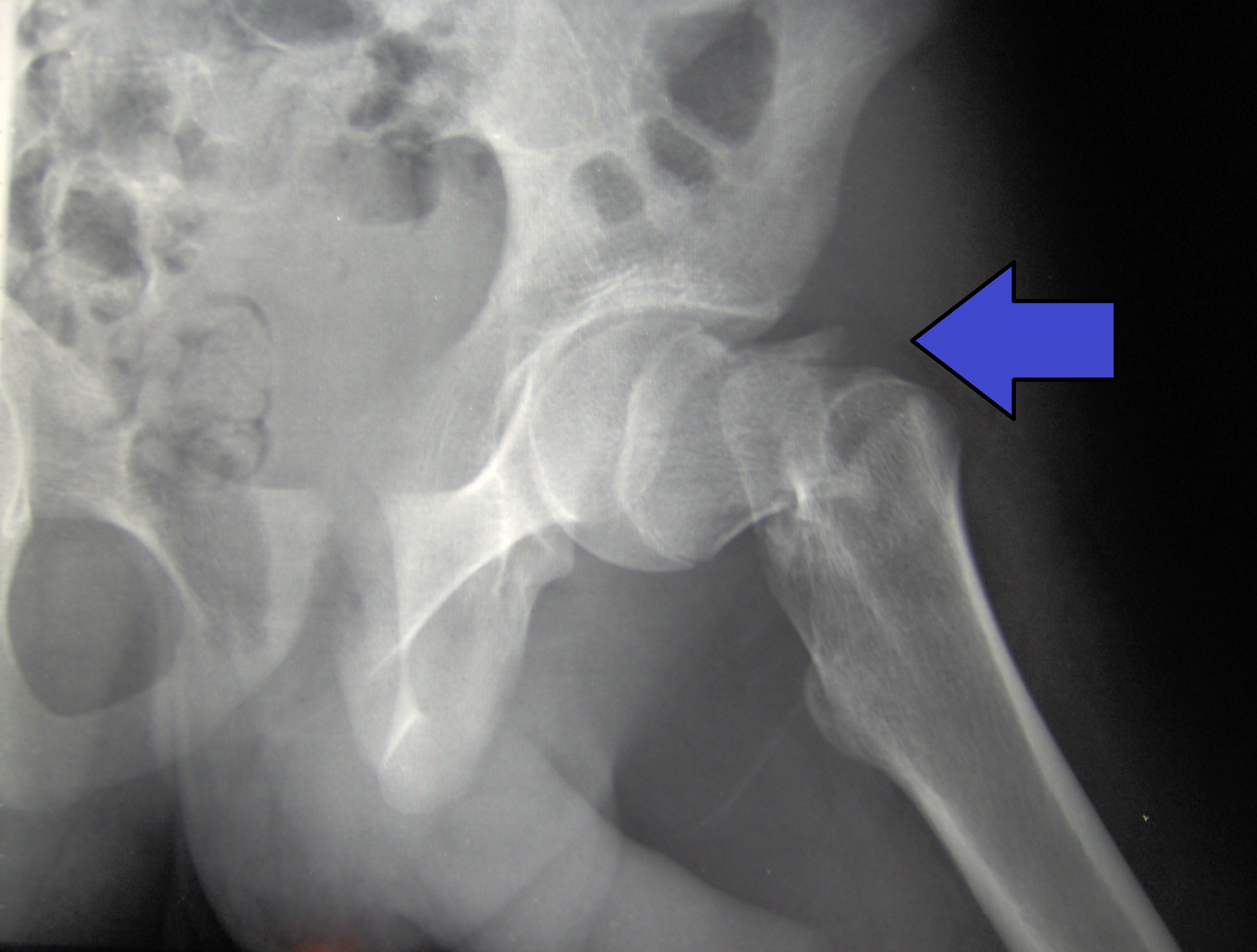
Definition
For this page, hip fracture is used as the umbrella clinical term for an acute fracture of the proximal femur requiring urgent assessment and, commonly, operative treatment. The contemporary literature also uses proximal femur fracture and femoral fracture as near-synonymous broader terms, although individual studies may restrict inclusion to particular anatomical or operative subgroups [34]A1a[373][379]. This terminology should not be confused with fractures of the acetabulum, pelvis, or femoral shaft, which are outside the operational scope of this section.
A hip fracture is best described using three complementary dimensions: anatomical location, fracture pattern, and clinical context. The principal anatomical terms encountered in the supplied evidence are femoral neck fracture and trochanteric femoral fracture; studies also use the broader term proximal femoral fracture when both groups are included [377]. Trochanteric fractures are separately described as a major hip-fracture subgroup and as commonly treated with intramedullary nailing [368].
Classification
Anatomical and operative classification
Femoral neck fractures are commonly reported as a distinct subgroup and may be managed with hip arthroplasty or internal fixation, depending on fracture and patient characteristics; the supplied evidence specifically includes patients undergoing arthroplasty for proximal femur fracture and cohorts containing femoral-neck fractures [377][378]. Trochanteric fractures are another major subgroup, with intramedullary nailing explicitly represented in the postoperative pain literature [368]. When a study does not separate these patterns, “proximal femur fracture” is the preferred inclusive term [373][379].
The clearest formal classification label in the supplied references is the Orthopaedic Trauma Association classification OTA 31A/B, used to identify first and contralateral geriatric hip fractures in a longitudinal hospitalisation study [365]. In this context, OTA 31A/B should be interpreted as a study eligibility classification rather than as a complete description of every clinically relevant hip-fracture subtype [365].
Treatment-related nomenclature should be recorded separately from fracture classification. “Hip arthroplasty for proximal femur fracture” identifies a procedure-fracture combination rather than a fracture morphology [378]. Similarly, intramedullary nailing identifies the treatment used for the included trochanteric fractures, not a separate fracture class [368]. Postoperative weight-bearing terms—including unrestricted, full, or restricted weight bearing—describe rehabilitation protocols and should not be used as fracture classifications [34]A1a[377].
Fragility and geriatric context
The supplied studies predominantly concern older adults, but age thresholds vary: some define geriatric cohorts as ≥65 years, whereas registry research uses ≥70 years [365][373]. Therefore, “geriatric hip fracture” is a clinical-context descriptor, not a universal anatomical definition [365][373].
A hip fracture may also be described as a fragility fracture when it occurs in the setting of skeletal fragility or low-trauma injury; however, the supplied references do not provide a single validated trauma threshold or diagnostic definition for that label. They do establish the relevance of osteoporosis, osteopenia, sarcopenia, and osteosarcopenia to hip-fracture susceptibility and risk stratification [372]C[375][376]. Osteosarcopenia denotes the coexistence of low bone density or osteoporosis with sarcopenia in the cited prospective research, but its predictive definition may vary according to sarcopenia-specific bone-density cut-offs [375].
Related but distinct nomenclature
“Primary hip fracture” refers to the first fracture event in a patient, whereas a secondary, contralateral, or “second” hip fracture refers to a subsequent fracture affecting the opposite hip; the latter terms are used in studies examining recurrence after an initial fracture [365][37]B2a. These are temporal or laterality descriptors, not anatomical classifications [365][37]B2a.
The term “hip fracture surgery” encompasses heterogeneous procedures and should be specified whenever possible, particularly fixation, intramedullary nailing, or arthroplasty [368][377][378]. Likewise, “postoperative hip-fracture pain,” “postoperative infection,” “deep-vein thrombosis,” fear of falling, impaired mobility, and sarcopenia describe associated complications, symptoms, or functional states rather than fracture types [24]A1a[36]B2a[366][367][370]. Periprosthetic joint infection is specifically a complication after arthroplasty for proximal femur fracture and should not be used as a synonym for infection of the original fracture [378].
The evidence supplied for analgesia, anesthesia, tranexamic acid, nutritional support, rehabilitation, supplementation, vascular imaging, and prediction models addresses management, prognosis, or risk assessment rather than the definition of hip fracture itself [24]A1a[35]A1a[366][367][369][370][373][374]C[377][379]. These studies nevertheless reinforce the need to document fracture site, laterality, formal classification where available, treatment, and the patient’s geriatric or fragility context [24]A1a[34]A1a[35]A1a[365][366][367][369][370][373][374]C[377][379].
Practical nomenclature standard
The preferred record format is: side + anatomical subtype + formal classification (if available) + displacement/stability description (if reported) + treatment + context. For example: “right proximal femur fracture, OTA 31A, surgically treated, geriatric patient,” or “left trochanteric femoral fracture treated with intramedullary nailing.” A contralateral event should additionally be labelled as a second or secondary hip fracture [365][368].
| Dimension | Preferred terms | Interpretation |
|---|---|---|
| Broad anatomical term | Proximal femur fracture; hip fracture | Inclusive terms used when the precise subtype is not separated [34]A1a[373][379] |
| Anatomical subtype | Femoral neck fracture; trochanteric femoral fracture | Distinct subgroups represented in clinical and rehabilitation studies [368][377] |
| Formal classification | OTA 31A/B | Classification label used for geriatric hip-fracture hospitalisations [365] |
| Temporal/laterality descriptor | Primary, secondary, contralateral, second fracture | Describes first versus subsequent opposite-hip events [365][37]B2a |
| Treatment descriptor | Fixation, intramedullary nailing, arthroplasty | Procedure terminology; not fracture morphology [368][377][378] |
| Rehabilitation descriptor | Unrestricted/full or restricted weight bearing | Postoperative loading protocol, not anatomical classification [34]A1a[377] |
| Context descriptor | Geriatric, fragility, osteoporosis, sarcopenia, osteosarcopenia | Patient or risk context requiring separate documentation [365][372]C[375][376] |
Pathophysiology & Biomechanics of Injury
- ▸Hip fracture occurs when impact loading exceeds the mechanical tolerance of an ageing or otherwise vulnerable proximal femur; fracture pattern varies with geometry, bone quality, metabolic factors, and fall mechanics.[380][387]
- ▸Dynamic finite-element analysis proposes critical velocity (Vc) as the minimum impact velocity producing simulated fracture, complementing bone-density-based risk assessment.[387]
- ▸Sarcopenia, malnutrition, and systemic inflammation contribute to impaired balance, reduced shock absorption, poorer rehabilitation, and worse clinical outcomes.[66][381]
- ▸Remote ischemic conditioning is an investigational strategy with potential anti-inflammatory and perfusion-related effects, but it is not established routine therapy for fracture healing.[67]
- ▸Post-fracture delirium and neurological injury may involve systemic inflammation, cell-free DNA, neutrophil extracellular traps, synaptic dysfunction, and pre-existing Alzheimer-type pathology.[388][389][390]
Overview
Hip fracture is the end result of interaction between an injurious fall or impact and a proximal femur whose mechanical resistance has been reduced by ageing, osteoporosis, sarcopenia, altered loading, or systemic disease. Contemporary evidence supports viewing the event as both a structural failure and a systemic stressor, with consequences extending beyond the fracture site to inflammation, muscle loss, nutrition, cognition, and bone healing.[66]D5[381]
Bone vulnerability and fracture pattern
Low-energy falls are the predominant mechanism in older adults, but fracture pattern is influenced by femoral geometry, bone quality, metabolic status, and the direction and magnitude of applied force.[380] Intracapsular fractures involve the femoral neck, whereas extracapsular injuries include intertrochanteric and subtrochanteric regions; the distinction is clinically important because fracture morphology and local vascular environment influence stability and healing.[40]A1b[380] A retrospective analysis specifically examined geometric, nutritional, and metabolic factors associated with intracapsular versus extracapsular patterns after low-energy falls, underscoring that apparently similar falls may produce different fracture types in different patients.[380]
Dynamic finite-element work further emphasizes that fracture risk is not fully represented by areal bone mineral density. A proposed critical velocity (Vc) is the minimum initial impact velocity in a dynamic model that produces simulated fracture, providing an interpretable measure of the interaction between impact dynamics, bone strength, and whole-body mechanics.[387] This approach complements virtual femur strength and fragility-ratio measures, which may be difficult to measure or interpret clinically.[387]
Fall mechanics and load transfer
A fall produces fracture when impact energy and the resulting proximal femoral stresses exceed the bone’s failure tolerance. Hip protectors and compliant flooring reduce injury by attenuating impact forces, although their benefit depends on the biomechanical outcome being assessed; a systematic quantitative analysis found that protective efficacy was outcome-dependent rather than uniform across all measures of impact attenuation.[391] Lower-limb alignment and pre-existing joint disease may also modify load transfer. In a retrospective study, greater knee osteoarthritis severity was evaluated in relation to proximal femoral biomechanics and pertrochanteric fracture instability, supporting a possible association between degenerative knee-related changes, altered loading, and unstable fracture patterns.[393]
Sarcopenia, nutrition, and systemic vulnerability
Sarcopenia is mechanistically relevant because reduced muscle mass and strength impair balance, protective responses, shock absorption, and post-fracture mobility. Research in orthopaedic surgery has increasingly concentrated on the relationship between sarcopenia and outcomes, reflecting its importance as a cross-cutting determinant of recovery.[381] Malnutrition commonly coexists with sarcopenia and systemic inflammation; it is associated with postoperative complications, prolonged hospitalization, functional decline, and mortality in older hip-fracture patients.[66]D5
Potentially modifiable nutritional mechanisms include inadequate protein and substrate availability for muscle repair, immune function, and callus formation. A randomized trial in adults aged ≥60 years with surgically treated proximal femoral fractures evaluated a creatine- and HMB-enriched protein supplement against placebo, with mobility, nutritional markers, mortality, and postoperative complications as outcomes.[46]A1b A separate randomized, double-blinded trial in traumatic extracapsular fractures treated with internal fixation compared bovine colostrum with whey protein and assessed radiographic union using the Radiographic Union Score for Hip, together with Harris hip and Short Musculoskeletal Functional Assessment scores during the first 3 months after surgery.[40]A1b These trials address biological recovery, but their designs should not be interpreted as proof that supplementation changes fracture mechanics before results are fully considered.[40]A1b[46]A1b
Inflammation, perfusion, and healing
Fracture initiates local tissue injury, vascular disruption, inflammation, and subsequent remodeling. Ischemia–reperfusion, inflammatory signaling, and impaired perfusion may influence cellular survival and bone repair. Remote ischemic conditioning—repeated, controlled transient ischemia and reperfusion, usually in an upper or lower limb—has been investigated because of potential anti-inflammatory and cardiovascular-protective effects; a systematic review identified preclinical and clinical randomized evidence concerning fracture healing and orthopaedic surgery, but characterized the field as requiring synthesis rather than established routine treatment.[67]B2a
Inflammatory and immune pathways may also affect long-term skeletal health. A nationwide cohort study reported that splenectomy was associated with increased fracture risk, particularly hip fracture, with the strongest association after traumatic splenectomy, supporting a role for the immune–bone axis in bone quality.[384] Serum E-, L-, and P-selectins, molecules involved in cell adhesion, inflammation, hematopoiesis, and bone remodeling, are being evaluated as prognostic biomarkers after hip-fracture surgery in a 3-year observational cohort; this represents association-based evidence, not proof of causality.[382]
Consequences of the acute injury
Hip fracture can amplify systemic inflammation and neurological vulnerability. In multicentre studies, cell-free DNA and markers related to neutrophil extracellular traps were investigated in serum and cerebrospinal fluid in relation to delirium and neuronal injury, while cerebrospinal-fluid neurogranin was examined as a marker of synaptic dysfunction.[389][390] Alzheimer-type biomarkers, including amyloid-beta and tau-related measures, have likewise been studied in hip-fracture patients with delirium, reflecting the interaction between pre-existing neurodegeneration and acute injury stress.[388]
Comorbidity may further increase skeletal vulnerability. In advanced COPD, a multitask deep-survival model identified clinical and biomarker predictors of incident hip fracture while simultaneously modeling exacerbation frequency, linking respiratory disease burden with fracture risk.[394] Finally, incomplete intertrochanteric occult fractures that spare the medial cortex illustrate the importance of fracture morphology: they may be radiographically occult, may coexist with greater-trochanter fractures, and have been managed with approaches ranging from fixation to immediate full weight bearing.[385] Early gait studies show that postoperative force distribution, step duration, and three-dimensional hip, knee, and ankle kinematics change during mobilization, providing a functional expression of altered biomechanics after repair.[386]
Practical synthesis
The biomechanical threshold for fracture is therefore determined by impact velocity and direction, protective soft tissues and external energy attenuation, lower-limb alignment, and the strength and geometry of the proximal femur. Biological outcome then depends on perfusion, inflammation, immune status, nutrition, muscle reserve, comorbidity, and fracture stability.[66]D5[67]B2a[380][387][391]
| Mechanistic domain | Relevant evidence | Clinical implication |
|---|---|---|
| Impact mechanics | Critical velocity and dynamic finite-element modeling relate impact velocity to simulated fracture.[387] | Risk is not captured completely by areal bone mineral density alone. |
| Energy attenuation | Hip protectors and compliant flooring attenuate impact, with outcome-dependent efficacy.[391] | Prevention effectiveness depends on the measured biomechanical endpoint. |
| Bone and joint geometry | Geometric and metabolic factors may distinguish intracapsular from extracapsular injury; knee osteoarthritis may influence proximal femoral loading and instability.[380][393] | Similar falls may produce different fracture patterns and stability. |
| Muscle and nutrition | Sarcopenia and malnutrition are associated with functional decline, complications, and mortality.[66]D5[381] | Muscle and nutritional reserve are central to recovery. |
| Inflammation and immunity | RIC, selectins, splenectomy, and inflammatory biomarkers are being studied in healing or skeletal vulnerability.[67]B2a[382][384] | Biological recovery is influenced by systemic as well as local factors. |
Epidemiology, Etiology & Risk Factors
- ▸Hip-fracture risk is concentrated in older adults, particularly those aged **≥65 years**, and is influenced by residence in long-term care, sex, ethnicity, skeletal fragility, and falls. [371][406][408]
- ▸Low birth weight (**<2500 g**), lower BMD, impaired balance, slow gait, reduced strength, and previous falls are relevant markers of skeletal or functional vulnerability. [397][405]
- ▸Walking intensity has been studied using purposeful walking (**≥40 steps/min**) versus incidental walking (**<40 steps/min**) in relation to falls and hip fracture. [404]
- ▸Older men may have a substantial fragility-fracture burden despite lower osteoporosis prevalence than women. [410]
- ▸Nutrition and bone-health medication are especially relevant to frailty and secondary prevention after fracture, but the supplied studies do not establish all treatment exposures as primary causes or preventers of initial hip fracture. [396][398][407]
Epidemiology and population burden
Hip fracture is predominantly a disease of older adults, with incidence and clinical burden concentrated in people aged ≥65 years and increasing vulnerability in advanced age. Recent population studies have examined community-dwelling adults, long-term-care residents, and older surgical cohorts, confirming that hip fracture is a major geriatric health event rather than an isolated orthopedic injury. [371][408][411]
The burden is not uniform across populations. In a British Columbia cohort of 33,739 residents aged ≥65 years newly admitted to 305 long-term-care facilities, hip-fracture incidence was evaluated over time using linked administrative and facility-level data, emphasizing the importance of institutional residence and resident-level characteristics in risk assessment. [408] A large Israeli cohort of adults aged ≥50 years without previous hip fracture assessed incidence according to sex and ethnicity, specifically comparing Arab and Jewish populations within a universal healthcare system. [406] The study was designed to identify ethnic and sex-related differences in incidence and outcomes, but the supplied evidence does not provide the corresponding effect estimates. [406]
Sex differences remain clinically important. Hip fracture is generally associated with postmenopausal bone loss in women, but men also experience a substantial fragility-fracture burden. In older Taiwanese adults, men had a lower prevalence of osteoporosis than age-matched women but a relatively comparable burden of fragility fractures, illustrating that fracture risk cannot be inferred from osteoporosis prevalence alone. [410] The Israeli cohort likewise specifically evaluated sex differences in hip-fracture incidence and outcomes. [406]
Etiology and skeletal vulnerability
Most fragility hip fractures result from the interaction of skeletal weakness and a fall or other low-energy trauma. Bone mineral density (BMD), bone quality, physical performance, and fall propensity should therefore be considered complementary components of risk rather than interchangeable measures. [405][410]
Early-life skeletal development may influence later risk. In the population-based OSTPRE cohort of postmenopausal women, low birth weight (<2500 g) was investigated in relation to BMD trajectories and fracture occurrence; the rationale was that impaired skeletal development and lower peak bone mass may persist into later life. [397] The supplied abstract reports an association between low birth weight and later skeletal outcomes, including an 18% difference in fracture-related risk, although the excerpt does not provide the complete estimate or confidence interval. [397]
Functional impairment and falls are major proximal determinants. Among 85-year-old women, failed one-leg balance was associated with hip fracture and any fracture independently of femoral-neck areal BMD; gait speed and previous falls had associations with fracture risk of similar magnitude to femoral-neck BMD. [405] These findings support incorporating balance, gait, lower-limb strength, and prior falls into risk assessment. [405] A population-based cohort of 94,422 participants examined purposeful walking (≥40 steps/min) and incidental walking (<40 steps/min) in relation to incident falls and, secondarily, incident hip fracture, highlighting that the intensity and pattern of ambulation may influence risk rather than total steps alone. [404]
The built environment may modify exposure to activity and falls. In older community-dwelling U.S. adults from the Cardiovascular Health Study, neighborhood walkability and satellite-derived green-space coverage were evaluated using 1-km residential buffers in relation to incident hip fracture, including potential sex differences. [371] The study addresses environmental context as a potentially modifiable population-level determinant, although the supplied abstract does not provide the direction or magnitude of the associations. [371]
Medical, nutritional, and treatment-related factors
Malnutrition is common among older adults undergoing hip-fracture surgery and is a clinically relevant marker of frailty, impaired reserve, and potentially poorer recovery. A randomized pilot trial enrolled adults aged ≥65 years to quantify malnutrition and assess the feasibility of comprehensive nutritional optimization compared with standard care; outcomes included readmission, reoperation, and mortality. [396]C Because this was a perioperative intervention study, it does not establish malnutrition as an independent cause of fracture, but it supports nutritional status as an important accompanying vulnerability. [396]C
Medication-related skeletal effects remain an evolving area. A nationwide active-comparator new-user cohort compared individual angiotensin-receptor blockers (ARBs) for osteoporosis and osteoporotic-fracture outcomes, with particular interest in telmisartan because of its partial PPAR-γ agonist activity. [398] The supplied evidence establishes the research question and comparative design but does not provide the study’s final comparative estimates; no specific ARB should therefore be considered protective on the basis of this abstract alone. [398]
After a first fragility hip fracture, the risk of another hip fracture is clinically important. A database study of more than one million cases evaluated whether no bone-health medication, medication documented at admission, or initiation within 6 months after the index fracture was associated with second hip fracture risk at 1-, 2-, and 5-year horizons. [407] This addresses secondary prevention and treatment gaps rather than primary etiology, but it demonstrates that fracture risk remains ongoing after the initial event. [407]
Factors associated with outcomes rather than initial fracture occurrence
Several supplied studies concern complications or recovery after hip fracture and should not be misclassified as causes of the fracture itself. Preoperative systemic immune-inflammation index and prognostic nutritional index were evaluated as predictors of postoperative delirium in older adults with intertrochanteric fractures, not as determinants of fracture incidence. [412] Similarly, early regional anesthesia was studied for postoperative delirium and perioperative stress response, and postoperative sleep disturbance was examined in relation to functional recovery. [395][399] Surgical timing, anesthesia technique, tranexamic acid, tamsulosin, and nonoperative analgesic strategies address perioperative management or outcomes rather than the underlying epidemiology and etiology of hip fracture. [373][400][401][402][403]C
| Risk domain | Evidence from supplied studies |
|---|---|
| Age and setting | Older age, community residence, and long-term-care residence are central epidemiologic contexts. [371][408] |
| Sex and ethnicity | Israeli data were designed to assess ethnic and sex differences; Taiwanese data show substantial fragility-fracture burden in men despite lower osteoporosis prevalence. [406][410] |
| Skeletal development | Low birth weight (<2500 g) was associated with later BMD and fracture outcomes in postmenopausal women. [397] |
| Falls and performance | Balance failure, gait speed, physical performance, and previous falls were associated with fracture risk. [405] |
| Activity and environment | Walking intensity, neighborhood walkability, and green space were evaluated as potentially relevant exposure contexts. [371][404] |
| Frailty and nutrition | Malnutrition was investigated in older surgical patients as an important accompanying vulnerability. [396]C |
| Secondary fracture risk | Bone-health medication use or initiation within 6 months was studied after an initial hip fracture. [407] |
Clinical Presentation
- ▸Acute pain, impaired weight-bearing, and loss of mobility are central presenting features; assess pain at rest and with passive movement. [414][419]
- ▸Document pre-fracture mobility, falls, gait or balance, handgrip strength, calf circumference, and sarcopenia-related functional limitations. [367][405][420]
- ▸Assess cognition and delirium risk because cognitive impairment can compromise symptom reporting and everyday function, while postoperative delirium is an important complication. [413][423][427]
- ▸Screen for deep-vein thrombosis, pulmonary infection, cardiovascular risk, hyponatremia, nutritional deficiency, vitamin D deficiency, and muscle loss. [415][416][418][421][422][423][424][425]
- ▸A low-energy hip fracture is a clinical manifestation of osteoporosis; coexisting sarcopenia indicates osteosarcopenia and increased vulnerability. [375][421]
Overview
Hip fracture typically presents in an older adult after a low-energy fall or other minor trauma, with acute hip or proximal-thigh pain, inability or marked difficulty bearing weight, and impaired mobility. The supplied evidence includes older surgical cohorts defined by age thresholds of ≥60 years, ≥65 years, or ≥70 years, as well as adults with fresh fractures admitted within ≤24 hours of injury. [416][418][420][421][423][425][426] A low-energy hip fracture is considered a clinical manifestation of osteoporosis; when it occurs with sarcopenia, the resulting osteosarcopenia is associated with greater clinical vulnerability. [421][375]
Pain and functional impairment
Pain is clinically important at rest and during passive movement and may limit examination, transfers, and early mobilisation. In a randomized trial of newly admitted patients, both resting and passive-movement pain were measurable before analgesic intervention, supporting assessment in both positions rather than relying only on resting symptoms. [414] Regional analgesia studies likewise frame hip fracture as a condition associated with substantial perioperative pain, delayed mobilisation, and increased opioid requirements. [419] Functional limitation should be documented at presentation and reassessed after analgesia, because postoperative recovery is closely linked to baseline muscle strength, sarcopenia status, and mobility. [367][420]
Mobility, falls, strength, and sarcopenia
The history should establish the mechanism of injury, preceding falls, pre-fracture walking ability, need for walking assistance, and ability to rise from a chair, climb stairs, and perform usual activities. In older adults with hip fracture, handgrip strength, calf circumference, and the SARC-F questionnaire have been evaluated as indicators associated with early postoperative ambulation and longer-term walking recovery. [420] Integrated rehabilitation benefits have also been examined according to baseline handgrip strength and sarcopenia status, emphasizing that weakness and muscle loss are clinically relevant components of presentation rather than postoperative findings alone. [367]
Physical-performance measures may identify fracture risk and vulnerability that are not captured by bone density alone. In 85-year-old women, failed one-leg balance was associated with hip and any fracture independently of femoral-neck areal bone mineral density, while gait speed and previous falls showed associations with fracture risk of a magnitude similar to femoral-neck bone density. [405] These findings support documenting recent falls, gait speed or walking capacity when feasible, balance, and lower-limb strength.
Cognitive and psychosocial presentation
Cognitive impairment may complicate history-taking, pain reporting, adherence, and rehabilitation. Mild cognitive impairment is characterized by deficits in executive function and cognitive-motor integration that can compromise everyday functioning, and cognitively demanding movement interventions have been studied in older adults with mild cognitive impairment. [413]C In a patient with hip fracture, clinicians should therefore assess baseline cognition, communication ability, delirium risk, and the reliability of symptom history; the supplied evidence also identifies postoperative delirium as an important early outcome in geriatric hip-fracture surgery. [423][427]
Medical comorbidity and admission assessment
Presentation should include assessment for cardiopulmonary, metabolic, nutritional, and inflammatory vulnerability. Older adults with hip fracture are described as vulnerable to postoperative major adverse cardiovascular events, for which preoperative risk models have been developed using routinely available variables. [418] Preoperative hyponatremia is clinically relevant: it was categorized as mild at 130–134 mmol/L and moderate-to-severe at <130 mmol/L in a large geriatric cohort evaluating postoperative complications and short- and long-term mortality. [425] Nutritional, inflammatory, and metabolic markers—including the prognostic nutritional index, systemic immune-inflammation index, and triglyceride-glucose index—have been investigated in relation to 30-day mortality and postoperative delirium. [423]
Vitamin D deficiency is common in fracture-liaison-service patients; in one prospective cohort it was defined as serum 25-hydroxyvitamin D <50 nmol/L and affected 53.6% of 934 patients. [424] Low phase angle on bioimpedance analysis and reduced quadriceps muscle thickness on ultrasonography have been evaluated as potentially useful indicators of 30-day mortality risk when conventional sarcopenia assessment is difficult because of immobility or cognitive impairment. [421]
Thromboembolic and pulmonary complications
The lower limbs should be examined for swelling, tenderness, asymmetry, and other features suggesting deep-vein thrombosis, while recognizing that thrombosis may be clinically silent. Continuous ultrasound research in newly admitted patients without thrombosis on admission evaluated the timing and distribution of perioperative thrombosis under anticoagulant and mechanical prophylaxis strategies. [416] A separate study developed preoperative prediction models for deep-vein thrombosis using routinely collected clinical data in elderly hip-fracture patients. [415] Systemic inflammatory indexes, including SII and SIRI, have also been studied as predictors of thromboembolic events, delirium, and mortality after hip fracture and major orthopedic surgery. [427]
Respiratory status should be documented at presentation and monitored perioperatively because postoperative pulmonary infection is a serious complication in older adults undergoing hip-fracture surgery; routine blood-test models have been developed to predict this outcome. [422]C The assessment should also identify dehydration, frailty, anaemia or other laboratory abnormalities, and pre-existing cardiopulmonary disease when present, because these findings may influence perioperative risk stratification. [418][423][425]
Bone and fracture-risk context
The clinical history should include prior fragility fractures, osteoporosis treatment, nutritional status, vitamin D status, birth and developmental factors when relevant, and family or personal fracture history. Low birth weight was associated with lower bone mineral density and fracture occurrence in postmenopausal women in a population-based cohort, providing a potential life-course risk marker rather than an acute presenting sign. [397] Osteosarcopenia-specific, sex-specific bone-density thresholds have been investigated to improve prediction of hip fracture beyond conventional osteoporosis definitions. [375] Artificial-intelligence tools are being evaluated for fracture-risk prediction, imaging diagnosis, clinical decision support, and postoperative monitoring, but their role should complement—not replace—clinical assessment and imaging. [417]C
Prognostic examination
Initial assessment should record cognition, pain, pre-fracture function, mobility, falls, muscle strength, nutritional status, hydration, cardiopulmonary status, neurological findings, limb perfusion, and signs of venous thrombosis. Mortality-prediction models have been developed and externally validated across short- to long-term follow-up, but systematic-review evidence indicates that prognostic models require attention to validation quality and risk of bias before routine adoption. [361]B2a
| Domain | Suggested documentation | Evidence |
|---|---|---|
| Pain and function | Resting and passive-movement pain, weight-bearing ability, transfers, pre-fracture walking status | [414][419][420] |
| Falls and strength | Mechanism, previous falls, gait or balance, handgrip strength, calf circumference, SARC-F features | [405][420] |
| Cognition | Baseline cognition, communication, executive function, delirium risk | [413]C[423][427] |
| Systemic risk | Cardiovascular status, nutrition, inflammation, glucose-metabolic risk, sodium concentration | [418][423][425] |
| Complications | Limb asymmetry or swelling, respiratory findings, suspected thrombosis or pulmonary infection | [415][416][422]C[427] |
| Bone health | Prior fragility fracture, osteoporosis, vitamin D, sarcopenia, fracture-risk factors | [375][397][421][424] |
Diagnosis & Workup (Special Tests, X-ray/MRI, Classification)
- ▸The supplied evidence does not directly establish the diagnostic performance or preferred sequencing of hip radiography, CT, and MRI for the fracture itself. [414–433]
- ▸Venous ultrasound is relevant for DVT assessment; continuous admission surveillance was used in a randomized hip-fracture thrombosis study. [416]
- ▸A low-energy hip fracture is treated as a clinical manifestation of osteoporosis in the cited evidence, and osteosarcopenia should be considered when low bone strength coexists with sarcopenia. [421]
- ▸DXA assessment should consider spine–hip discordance; hip-only screening missed 680 vertebral fractures in one cohort. [376]
- ▸CT and ultrasound can provide adjunctive muscle and frailty information, but these applications do not replace dedicated fracture imaging. [421,428,432]
- ▸Machine-learning and laboratory-based models may support DVT, pulmonary infection, delirium, and mortality risk stratification but require external validation before routine use. [412,415,422,430,433]
Diagnostic approach
Hip-fracture assessment should combine confirmation of the proximal femoral injury with evaluation of its consequences, operative risk, and underlying skeletal and functional vulnerability. The supplied evidence does not directly compare acute plain radiography, CT, or MRI protocols for diagnosing the fracture itself; therefore, no modality-specific superiority claim can be made from these references. The evidence does, however, support targeted use of ultrasonography, CT, DXA, body-composition testing, and laboratory assessment as adjuncts to the initial workup. [414–433]
Initial clinical and laboratory workup
Document the mechanism, timing of injury, preinjury mobility, cognitive status, comorbidities, medications, anticoagulant exposure, and baseline functional reserve. Older-adult cohorts in the cited studies used thresholds ranging from age ≥60 years to age ≥70 years, reflecting the population in which hip fractures and their complications are most frequently studied. [420–422, 428, 430, 432, 433] Assess nutritional and inflammatory status because the prognostic nutritional index (PNI), systemic immune-inflammation index (SII), and routine blood parameters have been investigated as predictors of postoperative delirium, pulmonary infection, and mortality. [412][422]C[430][433]
Routine admission blood testing can support risk stratification but does not establish the fracture diagnosis. A model developed in 1,881 older patients used admission laboratory variables to predict 90-day mortality, while another study used routine hematology data from 3,944 surgical patients to predict postoperative pulmonary infection. These models were developed retrospectively and require local validation before clinical adoption. [422]C[433] In patients aged ≥80 years, age, sex, comorbidity burden, operative factors, and laboratory variables were incorporated into a 1-year mortality nomogram; this is a prognostic tool, not a fracture-classification system. [430]
Ultrasound-based special tests
Lower-limb venous ultrasonography is relevant when swelling, pain disproportionate to the fracture, delayed surgery, or thromboembolic risk raises concern for deep-vein thrombosis (DVT). A randomized trial performed continuous ultrasound surveillance in newly admitted patients with fresh hip fractures and excluded those with thrombosis on admission ultrasound before assigning thromboprophylaxis. [416] A separate study developed a web-based machine-learning calculator for preoperative DVT using 18 clinical parameters in 538 elderly patients; because it was retrospectively derived, the calculator should complement, rather than replace, clinical assessment and diagnostic ultrasound. [415]
Ultrasound can also be used for procedure-related assessment and analgesia. In a randomized trial of 60 newly admitted patients, ultrasound-guided pericapsular nerve group (PENG) block and femoral nerve block were compared using post-block pain and procedural measures, including time to optimal ultrasound imaging. PENG produced lower resting and passive-movement pain scores at 30 minutes in the reported comparison. [414] A retrospective cohort of 186 patients undergoing hemiarthroplasty similarly compared ultrasound-guided fascia iliaca compartment block with PENG block for postoperative analgesia. These blocks are analgesic adjuncts and do not replace structural imaging of the hip. [419]
X-ray, CT, and MRI considerations
The supplied references do not provide direct evidence for sensitivity, specificity, or indications for plain radiographs versus MRI in suspected occult hip fracture. Accordingly, a negative or equivocal radiograph should not be interpreted using thresholds derived from these studies, and MRI recommendations cannot be updated from the supplied evidence alone. [414–433]
CT has an important adjunctive role when it is already available for evaluating muscle quality or frailty. Opportunistic CT was used to quantify gluteal and thigh-muscle cross-sectional area and density in 590 adults aged ≥65 years with hip fractures; gluteal muscle density, rather than muscle size, was independently associated with fall risk. [428] CT-defined sarcopenia was also assessed by measuring skeletal-muscle area at the third lumbar vertebra on abdominal CT obtained within 1 year before fracture; this retrospective study evaluated its relationship with early postoperative mortality. [432] These findings support extraction of prognostic muscle information from clinically indicated CT but do not justify CT as a substitute for dedicated fracture imaging.
Bone-health classification and secondary assessment
A low-energy hip fracture is treated in the cited literature as a clinical manifestation of osteoporosis, and coexistence of low bone strength with sarcopenia may be described as osteosarcopenia. [421] DXA remains central to bone-mineral assessment in the cited cohorts. In 4,059 postmenopausal Asian women, spine–hip T-score discordance was present in 41.3%; hip-only assessment missed 680 vertebral fractures, and each 1-SD increase in T-score offset was associated with a 28% increase in hip-fracture odds. [376] T-score interpretation should therefore consider both hip and spine measurements rather than relying on a single skeletal site. [376]
Osteosarcopenia classification is not uniform. A prospective cohort of 4,000 community-dwelling older adults evaluated sex-specific, sarcopenia-adjusted T-score cut-offs against conventional osteosarcopenia and osteoporosis-only definitions. [375] Functional and muscle assessment may include handgrip strength, calf circumference, and the SARC-F questionnaire; these measures were examined as predictors of mobility and functional recovery in 430 adults aged ≥70 years after hip fracture. [420] In bedridden or cognitively impaired patients, phase angle from bioimpedance analysis and quadriceps-muscle thickness by ultrasound were evaluated as potential 30-day mortality markers. [421] Additional frailty characterization can include gait speed, one-leg balance, knee-extension force, fall history, and volumetric or areal BMD, all of which were associated with fracture risk in very old women. [405]
Practical classification summary
Classify the case by: (1) confirmed proximal femoral fracture and anatomical pattern on the available structural imaging; (2) low- versus higher-energy mechanism and suspected fragility status; (3) bone-health category using hip and spine DXA, with attention to discordance; (4) sarcopenia or frailty status using strength, anthropometric, functional, CT, or ultrasound measures; and (5) complication and perioperative-risk status, including DVT, pulmonary infection, delirium, nutritional risk, and mortality risk. The cited prediction models should be regarded as adjunctive risk-stratification instruments rather than replacements for clinical examination or definitive fracture imaging. [375,376,405,412,415,420–422,428,430,432,433]
| Assessment | Evidence-supported use | Important limitation |
|---|---|---|
| Venous duplex/continuous ultrasound | Admission and perioperative DVT detection and surveillance. [416] | Does not diagnose the hip fracture. |
| Ultrasound-guided regional block assessment | Procedural imaging and analgesia evaluation for PENG, femoral, or fascia iliaca blocks. [414][419] | Analgesic adjunct; not structural fracture imaging. |
| Opportunistic CT | Muscle density, muscle area, and CT-defined sarcopenia assessment. [428][432] | Prognostic/frailty information; not validated here as the primary fracture test. |
| DXA | Hip and spine BMD and T-score assessment after fragility fracture. [375][376][410] | T-score discordance can alter risk interpretation. |
| Blood tests and prediction models | Risk estimation for delirium, pulmonary infection, DVT, and mortality. [412][415][422]C[430][433] | Retrospective models require external validation and do not confirm fracture. |
| Functional and muscle assessment | Handgrip strength, calf circumference, SARC-F, gait speed, balance, BIA, and quadriceps ultrasound. [405][420][421] | Results may be affected by pain, cognition, immobility, and timing. |
Severity, Staging & Surgical Risk Stratification
- ▸Use multidomain staging: fracture characteristics, physiological reserve, acute medical instability, and recovery potential [417,440].
- ▸Frailty modifies early mortality risk differently across fixation strategies; age alone is insufficient for operative-risk estimation [440].
- ▸In patients aged **≥80 years**, assess comorbidity burden, delirium risk, nutrition, and laboratory abnormalities explicitly [430,439].
- ▸Consider muscle status and function: phase angle, quadriceps ultrasound, gait speed, balance, and previous falls may add prognostic information [421,405].
- ▸Assess bone fragility beyond hip BMD when indicated; forearm BMD and spine–hip discordance can provide incremental risk information [434,376].
- ▸Preoperative assessment should include cardiovascular events, DVT, nutrition, inflammation, and 90-day or 1-year mortality risk [418,415,437,436,433].
- ▸Prediction models and AI tools are adjuncts requiring external validation and should not replace individualized clinical judgment [417,441].
Clinical severity framework
Hip-fracture severity should be assessed across four interacting domains: fracture pattern and treatment requirements, physiological reserve, acute medical instability, and recovery potential. The cited evidence does not establish a new universal anatomical staging system; therefore, fracture classification should remain based on imaging and standard fracture descriptors, while perioperative staging should explicitly document frailty, comorbidity, nutrition, muscle status, cardiovascular risk, thrombotic risk, cognition, and baseline function. Machine-learning and prediction-model studies support risk stratification as an adjunct to—not a replacement for—clinical assessment, particularly because most available models are retrospective and require local validation [417]C.
Frailty, age, and functional reserve
Frailty is a central determinant of operative risk. A large ACS-NSQIP analysis evaluated age–frailty interactions for 30-day mortality separately by fixation strategy—intramedullary nailing, hemiarthroplasty, and plate fixation—using a validated 5-item modified frailty index; the study specifically challenges the assumption that age and frailty contribute independently and uniformly across procedures [440]. In patients aged ≥80 years, retrospective models have identified age, comorbidity burden, and perioperative or laboratory variables as candidate predictors of 1-year mortality, and a prognostic-nutritional-index nomogram was developed for intensified monitoring [430]. A separate cohort of 666 patients aged ≥80 years developed a perioperative update model for postoperative delirium using demographic, comorbidity, perioperative, and routine laboratory data [439].
Muscle depletion and sarcopenia may further increase risk. In a prospective cohort of adults aged >60 years with low-energy proximal femoral fractures, bioimpedance phase angle and ultrasonographic quadriceps thickness were investigated as practical markers associated with 30-day mortality, particularly when conventional sarcopenia testing is difficult because of immobility or cognitive impairment [421]. Physical performance also adds information: in 85-year-old women, failed one-leg balance was associated with hip and any-fracture risk independently of femoral-neck areal BMD, while gait speed and previous falls had associations of similar magnitude to femoral-neck BMD [405].
Bone fragility and secondary-fracture staging
A low-energy hip fracture should trigger assessment for osteoporosis and imminent secondary-fracture risk. Meta-analysis of 307,205 men and women from 53 cohorts found femoral-neck BMD to be an important predictor of fracture, particularly hip fracture, supporting its continued role in fracture-risk assessment and FRAX updating [435]. Forearm BMD also predicted fracture independently of FRAX in 35,121 participants from 11 cohorts, indicating that peripheral measurements may provide incremental information when hip or spine assessment is unavailable or discordant [434]. In 4,059 postmenopausal Asian women, spine–hip T-score discordance was present in 41.3%, and each 1-SD increase in the T-score offset increased hip-fracture odds by 28%; hip-only screening missed 680 vertebral fractures [376].
After the index fracture, secondary-fracture surveillance is part of severity assessment. An updated sex-specific systematic review and meta-analysis evaluated the incidence and risk factors of secondary hip fracture in older adults using GRADE and population-attributable-fraction methods [37]B2a. A separate study of five CHARLS waves involving 7,105 adults aged ≥60 years found that dynamic frailty trajectories and multidimensional resilience were associated with incident hip-fracture risk in competing-risk analyses [189]B2b. These findings support documenting prior fracture, falls, frailty trajectory, and modifiable risk factors rather than treating the fracture as an isolated event [37]B2a[189]B2b.
Acute surgical-risk domains
Cardiovascular risk should be assessed before surgery using routinely available data. A two-center study developed and externally validated a preoperative model for in-hospital major adverse cardiovascular events after hip-fracture surgery in adults aged ≥60 years, using a 935-patient development cohort and a 168-patient external-validation cohort [418]. Thrombotic risk is also clinically relevant: a web-based machine-learning calculator for preoperative DVT used 18 basic clinical parameters in 538 elderly patients, with a development cohort of 405 patients and a temporally separate validation cohort of 133 patients; LASSO was used for feature selection before modeling [415].
Nutritional and inflammatory status should be incorporated into perioperative review. In a prospective cohort of patients aged ≥65 years, admission GNRI was categorized as ≤96, 96–101, 101–104, and >104 and evaluated against mortality, mobility recovery, and health-related quality of life at 30 days, 120 days, 1 year, and 3 years [437]. Higher systemic inflammation response index was independently associated with incident fracture risk in 2,965 women aged 75–80 years, beyond clinical risk factors and BMD, although its role as a surgical decision tool remains investigational [436].
Integrated risk tools and limitations
Several new tools have been proposed: a 90-day mortality nomogram based on admission blood parameters was developed from 1,881 older patients [433]; the DOORS-GHF system was developed from 4,417 geriatric operative patients across multiple hospitals to improve postoperative outcome prediction [441]; and a model of patients with a second contralateral fracture found the “second” hip-fracture admission to be associated with substantially greater inpatient complication burden than the first, described as approximately twice the risk in the study title [365]. AI applications across fragility-fracture imaging, risk prediction, decision support, and postoperative monitoring are promising, but systematic-review evidence emphasizes heterogeneity, limited external validation, and translation gaps [417]C.
Accordingly, operative risk should be reported as a multidimensional profile rather than a single score: anatomical complexity; age and frailty; cardiopulmonary and thrombotic risk; delirium risk; nutrition and sarcopenia; inflammatory burden; BMD and prior fracture; baseline mobility and falls; and anticipated discharge needs. Risk calculators can support shared decision-making and targeted prevention, but they should not independently determine whether surgery is offered or delayed [418][415][430][439][441].
| Domain | Examples of evidence-supported variables | Clinical implication |
|---|---|---|
| Frailty and reserve | Modified frailty index, age–frailty interaction, mobility, balance, gait speed | Refine mortality and discharge-risk estimation [440][405] |
| Bone fragility | Femoral-neck BMD, forearm BMD, spine–hip discordance, prior fracture | Identify osteoporosis and secondary-fracture risk [435][434][376][37]B2a |
| Cardiovascular and thrombotic risk | Preoperative MACE predictors; DVT model variables | Intensify monitoring and prophylaxis planning [418][415] |
| Nutrition and muscle | GNRI, phase angle, quadriceps thickness | Identify impaired recovery or mortality risk [437][421] |
| Cognition and complications | Delirium predictors, second-fracture status | Target delirium prevention and complication surveillance [439][365] |
| Mortality prediction | Admission blood parameters, prognostic nutritional index, DOORS-GHF | Support—not replace—shared decision-making [433][430][441] |
Acute Management & Orthopedic Emergencies
- ▸Assess frailty, cognition, comorbidity, residence, and goals of care at presentation; frailty interacts with procedure-specific mortality risk. [408][440][455]
- ▸Use individualized anesthesia and analgesia planning; regional blocks, regional anesthesia, and general anesthesia have all been studied, but the supplied abstracts do not establish a universal technique. [379][419][452]
- ▸Consider TXA within local blood-management protocols, but do not infer a dose or universal eligibility rule from the supplied abstract. [442]
- ▸Cemented versus uncemented stems require individualized selection in elderly patients with displaced femoral-neck fractures. [206]
- ▸Inspect postoperative reduction and lateral-wall integrity after cephalomedullary nailing. [451]
- ▸Use orthogeriatric co-management, structured discharge planning, medication review, and secondary fracture prevention. [443][444][450][456]
Immediate assessment and risk stratification
Hip fracture requires coordinated assessment of injury, physiological reserve, cognition, comorbidity, medication exposure, and operative candidacy. Frailty is clinically important because it modifies perioperative risk; a study of 522 adults aged ≥65 years undergoing hip-fracture surgery specifically evaluated the association between frailty, measured with the 11-item modified Frailty Index, and intraoperative hypotension. [454] Fixation-specific mortality modeling likewise examined interactions between age, frailty, and procedure type for 30-day mortality after intramedullary nailing, hemiarthroplasty, or plate fixation. [440] These findings support documenting frailty early and using procedure-specific risk assessment rather than age alone, although the supplied abstracts do not provide thresholds for withholding surgery. [440][454]
Prehospital residence, altered cognition at presentation, increasing age, male sex, comorbidity burden, and surgical timing or delay were evaluated as predictors of 30-day and 1-year mortality in the Australian and New Zealand Hip Fracture Registry. [455] Patients from long-term-care settings represent a particularly vulnerable population; a population-based British Columbia cohort studied hip-fracture incidence among 33,739 residents aged ≥65 years newly admitted to 305 facilities. [408] These data support early identification of baseline dependency, cognitive impairment, residence, and goals of care during emergency admission. [408][455]
Analgesia, anesthesia, and perioperative optimization
Multimodal analgesia should be considered to facilitate comfort and mobilization while limiting avoidable opioid exposure. A retrospective cohort of 186 patients undergoing hemiarthroplasty compared ultrasound-guided fascia iliaca compartment block with pericapsular nerve group block under spinal anesthesia and assessed postoperative analgesic outcomes. [419] Because this was a single-center observational comparison, it supports consideration of either regional technique according to expertise and patient factors rather than establishing one block as superior. [419]
Regional and general anesthesia have been compared in a meta-analysis of 15 studies involving 6,829 participants, with outcomes including 30-day mortality, delirium, cardiovascular events, blood loss, hospital stay, and pain. [379] A separate database study examined general versus spinal anesthesia in frail patients undergoing hip-fracture fixation and focused on postoperative morbidity and mortality. [452] The available evidence therefore supports individualized anesthetic selection that explicitly considers frailty and cardiovascular or cognitive vulnerability; the supplied abstracts do not provide sufficient numerical results to mandate a universal anesthetic technique. [379][452]
Intraoperative hypotension is an important emergency to prevent, recognize, and treat promptly, particularly in frail older adults. [454] Preoperative fasting blood glucose was studied as a predictor of 1-year Harris Hip Score after hip-fracture surgery in a multicenter cohort, with adjustment for 28 prespecified clinical and perioperative covariates. [448] This association is prognostic rather than a validated acute glucose-treatment threshold, so glucose management should remain individualized. [448]
Tranexamic acid (TXA) is used to reduce blood loss during hemiarthroplasty. An updated systematic review and meta-analysis searched randomized trials and cohort studies through February 2026, evaluating total blood loss, transfusion-related outcomes, and thromboembolic safety. [442] The supplied abstract does not include pooled effect estimates; therefore, TXA may be considered within local blood-management and thrombosis-risk protocols, but a dose or universal eligibility rule cannot be derived from this evidence alone. [442]
Operative fixation and arthroplasty emergencies
For displaced femoral-neck fractures in elderly patients treated with hemiarthroplasty or total hip arthroplasty, a systematic review and meta-analysis of randomized controlled trials compared cemented with uncemented femoral stems. [206]A1a The review addressed mortality, periprosthetic fracture, dislocation, and other fixation-related outcomes, reflecting the trade-off between immediate cemented fixation and concerns about cement-related perioperative complications versus potential mechanical instability of uncemented stems in osteoporotic bone. [206]A1a Stem selection should therefore incorporate bone quality, fracture pattern, physiological reserve, and surgeon experience; the supplied abstract does not provide the pooled estimates needed to declare one fixation strategy universally preferred. [206]A1a
For extracapsular fractures treated with cephalomedullary nails, postoperative lateral-wall status was investigated in an ambispective cohort restricted to patients achieving excellent or acceptable reduction. [451] This evidence emphasizes that reduction quality and postoperative lateral-wall integrity should be assessed on postoperative imaging because fixation failure may occur despite apparently satisfactory reduction. [451] The study is observational and does not establish a revision threshold or a specific implant choice. [451]
Orthogeriatric care and transition from hospital
Orthogeriatric co-management was evaluated in hospitalized older adults with proximal femoral fractures. Implementation increased secondary-prevention prescribing, including osteoporosis and anemia management, reduced intramuscular haloperidol use, and was associated with an in-hospital mortality reduction from 8.6% to 3.2% in the reported observational analysis. [456] These findings support early geriatric involvement, medication review, delirium-risk reduction, anemia and osteoporosis assessment, and coordinated perioperative care, while recognizing that the study design cannot prove causality. [456]
Structured discharge-planning services were evaluated in a systematic review and meta-analysis of randomized controlled trials for discharge readiness, functional recovery, and complication reduction after hip fracture. [443] Discharge planning should begin early and address self-care capacity, lower-extremity function, medication reconciliation, caregiver support, rehabilitation, and follow-up because the postdischarge transition is a high-risk period. [443]
Secondary prevention and medication safety
Anticholinergic medication burden was examined in a systematic review and meta-analysis of adults aged ≥65 years after hip fracture; higher burden was studied in relation to medium- and long-term all-cause mortality, with cognitive impairment and delirium identified as clinically relevant concerns. [444] Acute medication reconciliation should therefore identify and reduce unnecessary anticholinergic exposure when clinically feasible, especially in patients with delirium or cognitive vulnerability. [444]
Frailty and osteoporosis are interrelated, and a systematic review evaluated the effectiveness and safety of anti-fracture pharmacological therapies in frail adults aged ≥60 years with osteoporosis. [450] Secondary fracture prevention should be initiated or arranged during the fracture episode when medically appropriate. [450] Additional observational evidence examined pitavastatin versus other statins for incident osteoporosis and osteoporotic fractures, while a population-based cohort found increased hip-fracture risk in Cushing syndrome, particularly near diagnosis. [445][453] These findings support review of endocrine and skeletal risk factors after stabilization, but neither study establishes an acute fracture-treatment protocol. [445][453]
Psychological recovery also warrants attention: early postoperative anxiety was studied in relation to achievement of minimal clinically important differences in patient-reported physical function and recovery. [449] Discharge and rehabilitation plans should consequently include psychological screening and support alongside physical rehabilitation. [449]
| Domain | Practical priority | Evidence |
|---|---|---|
| Risk assessment | Document frailty, cognition, comorbidities, residence, and delay factors | [408][440][454][455] |
| Analgesia | Consider multimodal analgesia and ultrasound-guided regional blocks | [419] |
| Anesthesia | Individualize regional versus general anesthesia, especially with frailty | [379][452] |
| Blood management | Consider TXA while assessing thromboembolic risk and local protocol | [442] |
| Fixation | Individualize cemented versus uncemented stem choice; assess reduction and lateral wall | [206]A1a[451] |
| Transition | Begin coordinated discharge planning and orthogeriatric secondary prevention early | [443][450][456] |
Definitive Management: Conservative vs Operative
- ▸The supplied references do not directly compare conservative treatment with operative treatment; conservative care should therefore be reserved for carefully selected, goal-concordant situations [206].
- ▸For medically suitable elderly patients with displaced femoral neck fractures, arthroplasty is the operative pathway represented by the updated evidence [206].
- ▸Cemented stems provide immediate fixation, whereas uncemented stems avoid cement-related complications but may be less mechanically reliable in osteoporotic bone; the supplied abstract does not provide numerical comparative results [206].
- ▸Integrated rehabilitation, nutritional assessment, and consideration of sarcopenia or muscle strength are important after surgery [367,459].
- ▸Pericapsular nerve group block reduced early pain compared with femoral nerve block in a randomized trial of newly admitted hip-fracture patients [414].
- ▸Anesthesia, thromboprophylaxis, urinary-catheter use, skin antisepsis, delirium prevention, and family-support interventions should be individualized within a coordinated perioperative pathway [103,395,416,457,458,463].
Evidence scope
The supplied updated evidence primarily addresses perioperative management and rehabilitation after surgery; it does not directly compare nonoperative treatment with operative treatment in randomized trials. The strongest treatment-specific evidence concerns cemented versus uncemented femoral stems in elderly patients undergoing hemiarthroplasty or total hip arthroplasty for displaced femoral neck fractures [206]A1a. Therefore, conservative care should be reserved for carefully selected patients in whom the goals of treatment, physiological reserve, or previously expressed preferences make surgery inappropriate, rather than presented as an equivalent alternative supported by the cited evidence [206]A1a.
Operative management
For an elderly patient with a displaced femoral neck fracture who is medically suitable for surgery, arthroplasty is the operative pathway directly represented in the updated evidence base [206]A1a. The choice between hemiarthroplasty and total hip arthroplasty remains individualized; the cited systematic review evaluated femoral-stem fixation in both procedures but the supplied abstract does not provide outcome estimates that would justify a new preference between hemiarthroplasty and total hip arthroplasty [206]A1a.
Cemented and uncemented stems have different theoretical advantages: cemented fixation provides immediate fixation, whereas uncemented fixation avoids cement-related complications but may be mechanically less reliable in osteoporotic bone [206]A1a. The 2026 systematic review and meta-analysis included randomized controlled trials and examined mortality, periprosthetic fracture, dislocation, and other outcomes after arthroplasty for displaced femoral neck fractures; definitive numerical results are not available in the supplied abstract, so fixation should be selected according to bone quality, implant design, surgeon expertise, and perioperative risk rather than an unsupported universal rule [206]A1a.
Surgery should be integrated with early, multidisciplinary recovery rather than considered an isolated procedure. In older adults after hip-fracture surgery, integrated rehabilitation was compared with conventional rehabilitation, and its effects were specifically examined according to sarcopenia and handgrip strength [367]. A separate prospective cohort found that nutritional status modified the association between integrated rehabilitation and functional recovery, supporting formal nutritional assessment and targeted nutritional intervention during rehabilitation [459]. These findings are postoperative rehabilitation evidence and should not be interpreted as evidence that rehabilitation can replace fracture stabilization [367][459].
Perioperative measures that support operative care
Analgesia should facilitate positioning, mobilization, and participation in rehabilitation. In a randomized trial of newly admitted patients with hip fractures, a pericapsular nerve group block produced lower resting and passive-movement pain scores at 30 minutes than a femoral nerve block [414]. A systematic review in total hip arthroplasty found that pericapsular nerve group block was evaluated for analgesic and motor-sparing benefits, although those findings are not specific to hip-fracture surgery [461]. A retrospective hip-fracture hemiarthroplasty cohort also compared fascia iliaca compartment block with pericapsular nerve group block, but its observational design limits causal interpretation [419].
The choice of anesthetic technique should be individualized. In the multicentre iHOPE randomized trial of patients aged ≥65 years undergoing hip-fracture surgery, spinal and general anesthesia were compared for mortality and new serious cardiac or pulmonary complications; the supplied abstract does not report the final comparative estimates [457]. A retrospective study of frail patients undergoing hip-fracture fixation associated general anesthesia with higher postoperative morbidity and mortality, but this finding is vulnerable to confounding and should not be treated as proof of causation [452]. Early regional anesthesia was also studied in patients undergoing primary total hip arthroplasty for hip fracture: an anterior iliopsoas muscle space block administered either the day before surgery or 1 hour before surgery was compared for postoperative delirium and related outcomes [395].
Additional supportive measures include infection prevention, urinary-catheter stewardship, thromboprophylaxis, and delirium prevention. A randomized three-arm trial evaluated different povidone-iodine and chlorhexidine skin-preparation sequences before hip-fracture arthroplasty, but the supplied abstract does not provide comparative infection results [458]. A prospective randomized trial in patients aged >65 years evaluated catheter use against urinary-tract infection and renal outcomes after hip-fracture surgery [103]A1b. A randomized trial enrolled patients with fresh fractures admitted within 24 hours, excluded those with thrombosis on admission ultrasound, and compared nadroparin plus intermittent plantar-pressure-pump prophylaxis with mechanical prophylaxis alone while tracking the development and distribution of deep-vein thrombosis [416]. Flexible family visitation was tested in a randomized orthopedic intensive-care-unit trial for postoperative delirium, infection, length of stay, and cost, although the study population included heterogeneous orthopedic procedures [463].
Conservative management
Nonoperative treatment may be appropriate when surgery is inconsistent with the patient’s goals, when expected operative burden outweighs the anticipated benefit, or during a palliative approach; however, none of the supplied references quantifies outcomes for conservative treatment or establishes validated selection thresholds [206]A1a[367][459]. It should therefore involve explicit shared decision-making, documentation of goals of care, analgesia, pressure-injury prevention, venous-thromboembolism assessment, delirium prevention, and mobilization as tolerated [103]A1b[416][463]. Conservative care should be reviewed if pain, inability to mobilize, skin complications, thromboembolism, or changing goals make the original plan unacceptable [103]A1b[416].
Practical conclusion
For medically appropriate patients with displaced femoral neck fractures, operative arthroplasty remains the evidence-represented definitive pathway, while conservative care is a goal-concordant alternative for selected patients rather than a routinely equivalent strategy [206]A1a. Stem fixation, anesthesia, regional analgesia, thromboprophylaxis, catheter use, infection prevention, delirium prevention, nutrition, and rehabilitation should be individualized and coordinated across the perioperative pathway [103]A1b[206]A1a[367][395][414][416][457][458][459][461][463].
| Clinical situation | Preferred approach | Evidence and limitations |
|---|---|---|
| Medically suitable patient with displaced femoral neck fracture | Operative arthroplasty | Directly represented by the stem-fixation systematic review; the supplied evidence does not establish a universal choice between hemiarthroplasty and total hip arthroplasty [206]A1a |
| Patient whose goals or physiological status make surgery inappropriate | Individualized conservative or palliative care | No cited study directly quantifies conservative-versus-operative outcomes or provides selection thresholds [206]A1a |
| Osteoporotic bone or concern about early implant stability | Consider cemented fixation | Cemented fixation provides immediate fixation; uncemented fixation may be mechanically less reliable in osteoporotic bone, but numerical comparative results are unavailable in the supplied abstract [206]A1a |
| Postoperative functional vulnerability, malnutrition, sarcopenia, or weak grip | Integrated, multidisciplinary rehabilitation with nutritional assessment | Benefits and effect modification were evaluated in postoperative studies; these interventions do not replace fracture stabilization [367][459] |
History and Evolution of Treatment
- ▸Contemporary treatment has expanded beyond fracture surgery to integrated perioperative, rehabilitative, preventive, and long-term care.[457][367][450][411]
- ▸PENG block reduced early resting and movement pain compared with femoral nerve block in a randomised trial of 60 patients.[414]
- ▸Anaesthesia, thromboprophylaxis, catheterisation, skin antisepsis, delirium prevention, nutrition, and sarcopenia are active targets of treatment refinement.[457][103][458][416][395][459][367]
- ▸Rehabilitation increasingly includes cognitive-motor training, tele-nursing, family involvement, and stratification by nutritional and muscle status.[413][323][463][459][367]
- ▸Secondary prevention now incorporates antifracture medication, functional fall-risk assessment, muscle-density assessment, and monitoring of long-term care dependency.[450][405][428][411]
From fracture surgery to multidomain geriatric care
Modern hip-fracture treatment has evolved from an operation-centred model toward coordinated perioperative, rehabilitative, preventive, and post-discharge care. The recent evidence base reflects this shift: studies now evaluate anaesthesia, regional analgesia, thromboprophylaxis, urinary catheter policy, infection prevention, nutrition, sarcopenia, cognition, delirium, osteoporosis treatment, and longer-term care needs alongside fracture surgery itself.[457][414][103]A1b[416][459][367][450][411] Because the supplied studies are contemporary and do not describe earlier historical practice, they support an account of the current evolution of treatment rather than a dated chronology of specific implants or fixation techniques.
Perioperative anaesthesia and analgesia
Anaesthetic choice remains a major area of refinement. The multicentre iHOPE randomised trial in Germany compared spinal anaesthesia with general anaesthesia in patients aged 65 years or older undergoing hip-fracture surgery; its primary endpoint combined all-cause mortality with new serious cardiac or pulmonary complications.[457] This trial addresses whether neuraxial anaesthesia should replace general anaesthesia as the preferred default, although the abstract supplied here does not report the final comparative outcome.[457]
Regional analgesia has similarly progressed from reliance on systemic analgesics toward anatomically targeted blocks. In a randomised trial of 60 newly admitted patients, pericapsular nerve group (PENG) block produced lower resting and passive-movement pain at 30 minutes than femoral nerve block, with statistically significant differences for both outcomes.[414] The trial also assessed imaging time, procedure duration, time to rescue analgesia, 24-hour rescue-analgesic consumption, recovery quality, vital signs, and adverse events, reflecting the modern emphasis on analgesic effectiveness together with procedural feasibility and safety.[414] Early timing may also matter: among older patients undergoing fracture-related total hip arthroplasty under spinal anaesthesia, a randomised trial compared anterior iliopsoas muscle space block administered the day before surgery with administration 1 hour before surgery, using postoperative delirium within 7 days as the primary endpoint.[395]
Opioid-sparing pharmacotherapy is another component of this evolution. A retrospective multicentre TriNetX cohort of adults aged ≥65 years undergoing fixation or hemiarthroplasty evaluated perioperative ketorolac in relation to 90-day mortality, medical complications, and 2-year surgical complications.[466] The study reported an association between perioperative ketorolac exposure and lower mortality, but its observational design means that the finding is associative rather than proof of a causal treatment benefit.[466]
Prevention of perioperative complications
Treatment has expanded to include active prevention of avoidable hospital complications. A randomised trial of 150 patients aged >65 years with surgically treated proximal femur fractures examined whether urinary catheterisation affected postoperative urinary-tract infection and renal outcomes; the study was designed specifically to address the common practice of catheter use during preoperative immobilisation.[103]A1b Likewise, a three-arm randomised trial in 108 patients undergoing arthroplasty for hip fracture compared different sequences of povidone-iodine and chlorhexidine skin preparation, targeting superficial surgical-site infection and the subsequent delay in mobilisation or prolonged hospitalisation that infection may cause.[458]
Thromboprophylaxis has also moved toward earlier surveillance and combined strategies. In a randomised clinical trial of patients with fresh hip fractures admitted within 24 hours and without thrombosis on admission ultrasound, the anticoagulation group received daily nadroparin plus intermittent plantar-pressure-pump therapy, whereas the comparison group received mechanical prophylaxis; continuous ultrasound evaluated when deep-vein thrombosis developed, its distribution, and prognosis.[416] The study illustrates a shift from treating thrombosis only after clinical recognition toward monitoring its perioperative formation.
Integrated rehabilitation and recovery
Rehabilitation is increasingly multidisciplinary and individually stratified. A secondary analysis of a multicentre randomised trial examined Fragility Fracture Integrated Rehabilitation Management (FIRM) versus conventional rehabilitation according to baseline handgrip strength and sarcopenia status, reflecting recognition that muscle weakness may modify recovery.[367] A related prospective cohort assessed integrated versus conventional rehabilitation and tested whether nutritional status, classified using Global Leadership Initiative on Malnutrition criteria, modified functional recovery measured by the modified Barthel Index at admission, discharge, and 3 and 6 months.[459]
Recovery programmes are also extending beyond physical therapy. In older adults with mild cognitive impairment, an external pilot randomised trial tested Cognitive Orientation to daily Occupational Performance combined with graded creative dance against CO-OP alone; the intervention specifically joined occupation-centred strategy training with cognitively demanding movement.[413]C Post-discharge support has likewise become more continuous: a randomised study of 60 older surgical patients compared three online video consultations, three telephone calls, and an educational booklet with no additional intervention, assessing quality of life and functional independence.[323]A1b Flexible family visitation is another non-pharmacological strategy under evaluation; a randomised trial in patients aged ≥60 years admitted to an orthopaedic intensive care unit examined delirium, sedative use, infection, length of stay, and cost, while exploring whether effects differed by surgical type.[463]
Secondary fracture prevention and long-term outcomes
The treatment pathway now extends to osteoporosis and frailty management. A systematic review and meta-analysis evaluated the effectiveness and safety of antifracture pharmacological therapies in adults aged ≥60 years with frailty and osteoporosis.[450] Risk assessment is also becoming more functional: in prospective data from 85-year-old women, balance failure, gait speed, physical performance, falls, and volumetric or areal bone-density measures were examined as predictors of fracture risk.[405] Cardiometabolic multimorbidity—defined as at least two of heart disease, diabetes, stroke, and hypertension—was studied prospectively as a risk factor for hip fracture in the CHARLS cohort.[465]
Long-term success is no longer defined solely by radiographic union or discharge. A population-based cohort of 6,556 day-180 survivors aged ≥75 years examined three-year worsening in care-need level after hip-fracture surgery, with death treated as a competing event.[411] Muscle composition may further inform prevention and rehabilitation: opportunistic CT analysis in 590 older adults found that gluteal muscle density, rather than muscle size, was independently associated with fall risk.[428] Finally, treatment pathways must distinguish pathological fractures, which were evaluated separately for 30-day mortality and postoperative complications in a national surgical database study.[468]
Current direction
Taken together, the evidence portrays hip-fracture treatment as a continuum: timely surgery supported by tailored anaesthesia and regional analgesia, systematic prevention of thrombosis, infection, urinary complications, and delirium, followed by nutrition-sensitive and strength-sensitive rehabilitation, remote follow-up, osteoporosis therapy, and long-term fall and care-dependency prevention.[457][414][395][103]A1b[458][416][367][459][323]A1b[463][450][405][411][428] The evidence also underscores uncertainty: several newer interventions are supported by pilot, observational, or single-centre studies, so adoption should consider the strength and applicability of the individual evidence rather than assume universal superiority.[413]C[395][466][458][459]
| Treatment domain | Contemporary direction | Evidence |
|---|---|---|
| Anaesthesia and analgesia | Comparative spinal versus general anaesthesia; PENG and other regional blocks; early block timing; opioid-sparing analgesia | [457][414][395][466] |
| Complication prevention | Catheter stewardship, antisepsis protocols, ultrasound-informed thromboprophylaxis, delirium-focused care | [103]A1b[458][416][395][463] |
| Rehabilitation | Integrated multidisciplinary care adapted to sarcopenia, strength, nutrition, cognition, and post-discharge needs | [367][459][413]C[323]A1b |
| Secondary prevention | Antifracture therapy, functional and CT-based fall-risk assessment, cardiometabolic risk recognition | [450][405][428][465] |
| Long-term outcomes | Care-need transitions, mortality, complications, and distinction of pathological fractures | [411][468] |
Operative Technique: Fixation Constructs, Implants, Grafts and Approach
- ▸Cemented and uncemented stems have different theoretical advantages; available evidence evaluates mortality, periprosthetic fracture, and dislocation but the supplied abstract does not report pooled results [206].
- ▸Dual- versus single-antibiotic-loaded cement has been evaluated in 56,434 cemented hip arthroplasties for proximal femoral fracture [474].
- ▸Parallel and non-parallel cannulated-screw configurations have both been studied; the supplied evidence does not establish a universal preferred configuration [217].
- ▸No supplied reference supports routine bone grafting or a specific graft substitute in acute hip fracture fixation.
- ▸Direct anterior, posterior, and direct lateral approaches have been compared observationally in hemiarthroplasty, including outcomes in patients aged ≥75 years [460][464].
- ▸Aim for surgery within 48 hours when clinically appropriate, without sacrificing medical optimization or operative safety [473].
Scope and construct selection
Operative reconstruction should be individualized according to fracture pattern, displacement, biological age, bone quality, pre-injury function, cognitive status, comorbidity, and the anticipated ability to comply with postoperative precautions. The supplied evidence primarily concerns displaced femoral neck fractures in older adults and compares arthroplasty fixation methods, cannulated-screw configurations, and surgical approaches; it does not establish a universal implant or approach for every hip-fracture subtype [206]A1a[217]A1a[460][464].
For displaced femoral neck fractures in elderly patients, arthroplasty may be performed as hemiarthroplasty or total hip arthroplasty (THA), with the femoral component fixed using either cemented or uncemented techniques [206]A1a. A 2026 systematic review and meta-analysis of randomized controlled trials specifically evaluated mortality, periprosthetic fracture, and dislocation, among other outcomes, in cemented versus uncemented stems [206]A1a. The abstract supplied here does not report the pooled effect estimates; therefore, it supports consideration of these outcomes during implant selection but does not justify claiming superiority of one fixation method from the available information [206]A1a.
Femoral stem fixation and cement
Cemented fixation provides immediate fixation, whereas uncemented stems avoid cement-related complications but may be vulnerable to mechanical instability in osteoporotic bone [206]A1a. In frail patients with poor proximal femoral bone stock, the balance between immediate implant stability and cement-associated perioperative risk should be explicitly assessed, including the risk of intraoperative or postoperative periprosthetic fracture and early instability [206]A1a.
When cement is used, antibiotic-loaded bone cement is an implant-related option. A Dutch Arthroplasty Register cohort of 56,434 cemented hip arthroplasties for proximal femoral fracture compared single- versus dual-antibiotic-loaded cement and assessed all-cause revision, revision for infection, and mortality [474]. Because this was a registry cohort rather than a randomized comparison, cement-antibiotic strategy should be interpreted in the context of local microbiology, cement handling, antimicrobial stewardship, and patient-specific infection risk [474].
Asymptomatic bacteriuria is a separate perioperative issue from cement choice. A systematic review and meta-analysis of 16 studies involving 49,627 joints evaluated the relationship between preoperative asymptomatic bacteriuria and periprosthetic joint infection after hip or knee arthroplasty [469]. The review included both observational studies and randomized trials and examined procedure type and concordance between urinary and intraoperative isolates [469]. The supplied abstract does not provide the pooled estimates; routine alteration of the implant construct solely because of asymptomatic bacteriuria cannot therefore be inferred from this reference [469].
Internal fixation constructs
For femoral neck fractures treated with cannulated screws, construct geometry remains relevant. A systematic review and meta-analysis compared parallel fixation configuration with non-parallel fixation configuration and evaluated femoral-head necrosis, nonunion, and other efficacy and safety outcomes [217]A1a. The available abstract does not provide the comparative pooled results, so the evidence supplied does not establish that parallel or non-parallel placement is categorically preferred [217]A1a. Screw number, trajectory, purchase in the femoral head, inferior calcar support, and avoidance of joint penetration should consequently be guided by fracture morphology and imaging rather than by an unsupported universal configuration rule [217]A1a.
The supplied references do not provide direct evidence supporting routine structural or cancellous bone grafting, fibular grafts, augmentation, or a specific graft substitute for acute hip fracture fixation. Graft use should therefore be reserved for selected biological or mechanical indications and documented as an individualized decision rather than a standard component of the operative technique.
Surgical approach
Approach selection is procedure-specific. In a retrospective cohort of bipolar hemiarthroplasty for displaced femoral neck fractures, the direct anterior approach (DAA) was compared with posterior and direct lateral approaches for functional recovery and hospital length of stay [460]. A separate national registry study evaluated one-year mortality after DAA versus conventional approaches in patients aged ≥75 years undergoing hemiarthroplasty [464]. These observational studies can inform discussion of recovery, length of stay, and mortality but cannot eliminate confounding by surgeon selection, patient characteristics, or institutional practice [460][464].
The approach should permit accurate preparation of the femoral canal and acetabulum, reliable restoration of leg length and offset, stable implant positioning, and repair of violated soft tissues. In patients receiving THA, Parkinson’s disease has been examined in a systematic review and meta-analysis addressing mortality, infection, revision, fracture, aseptic loosening, dislocation, and readmission [295]B2a. The supplied abstract does not report the pooled results; neurological disease should therefore prompt individualized assessment of stability, rehabilitation capacity, and dislocation risk rather than automatic exclusion from THA [295]B2a.
Perioperative technique considerations
Preoperative skin antisepsis has been studied specifically in hip-fracture arthroplasty. A three-arm randomized trial compared sequential protocols using povidone-iodine and chlorhexidine gluconate, including different scrub-versus-paint sequences, with superficial surgical-site infection as a clinically relevant outcome [458]. The available abstract does not provide comparative results, so the local validated antisepsis protocol should be followed [458].
A randomized trial of intravenous tranexamic acid in patients aged ≥65 years undergoing arthroplasty or fixation for hip fracture was terminated early after interim futility analysis while evaluating postoperative transfusion rates [244]A1b. The supplied evidence therefore does not demonstrate a transfusion benefit for a particular operative construct [244]A1b. Regional analgesia studies—including anterior iliopsoas muscle space block timing, fascia iliaca versus pericapsular nerve group block, and pericapsular nerve group block for THA—address pain, motor preservation, or postoperative delirium rather than implant selection [395][419][461]. Early surgery is also associated with improved outcomes in a large retrospective analysis when performed within 48 hours, but timing should not compromise medical optimization or technical readiness [473].
| Decision | Evidence addressed | Practical interpretation |
|---|---|---|
| Cemented versus uncemented stem | Randomized-trial systematic review; mortality, periprosthetic fracture, dislocation [206]A1a | Balance immediate fixation against cement-related and mechanical risks; pooled results are not supplied [206]A1a |
| Single versus dual antibiotic-loaded cement | Registry cohort of 56,434 arthroplasties [474] | Consider local infection policy and stewardship; observational evidence does not prove causality [474] |
| Cannulated-screw configuration | Parallel versus non-parallel meta-analysis [217]A1a | Select geometry according to fracture morphology; no universal preference is established in the supplied abstract [217]A1a |
| Surgical approach | DAA versus posterior/direct lateral cohort and national registry study [460][464] | Use the approach that permits accurate reconstruction and stable implant positioning; observational comparisons are confounded [460][464] |
| Bone grafting | No direct supporting reference supplied | Not routine on the basis of the available evidence |
Rehabilitation, Weight-Bearing Progression and Return to Function/Sport
- ▸Use individualized loading instructions; unrestricted weight-bearing was compared with restricted weight-bearing in geriatric patients, but pooled estimates are not available in the supplied abstract. [34]
- ▸Aim for early mobilisation and consider the cited standard of **2 hours of physiotherapy in the first postoperative week**, while recognizing that evidence for increasing therapy dose remains under evaluation. [309]
- ▸Screen for frailty, sarcopenia, malnutrition, sleep disturbance, anxiety, and low baseline function because these factors are associated with rehabilitation needs or recovery trajectories. [420][459][478][399][449]
- ▸Coordinate discharge planning, education, home safety, follow-up, and secondary fracture prevention. [443][323][475]
- ▸No study supplied here defines a universal return-to-sport timeline; use individualized functional and safety criteria. [34][367][420]
Principles and goals
Rehabilitation after hip-fracture surgery should begin early, be multidisciplinary, and be directed toward restoration of transfers, standing balance, walking, self-care, and the patient’s pre-fracture living situation. Recovery is heterogeneous: population data show an immediate increase in activities-of-daily-living difficulty after fracture followed by gradual recovery, while older age modifies the recovery trajectory. [476] Frailty is associated with worse health-related outcomes during the first 2 years after surgery, and baseline frailty, strength, cognition, nutrition, psychological status, sleep, and pre-fracture function should therefore inform goals and discharge planning. [478][420][449][399]
Early mobilisation and weight-bearing
Weight-bearing should be prescribed according to fracture pattern, fixation or arthroplasty stability, bone quality, wound status, pain, balance, cognition, and the surgeon’s operative findings. The 2026 systematic review and meta-analysis directly compared unrestricted with restricted weight-bearing in geriatric hip-fracture patients because early unrestricted loading may improve function and reduce bed-related complications, whereas restriction is commonly used because of concerns about implant stability and failure. Its stated outcomes included mortality, complications, reoperation, and length of stay; the available abstract does not provide the pooled effect estimates. [34]A1a Consequently, the evidence supports individualized, explicitly documented loading instructions rather than an assumption that every patient requires prolonged restriction.
Mobilisation should include bed mobility, sitting, transfers, standing, gait practice, and progressive strengthening as soon as medically and surgically safe. UK rehabilitation standards cited in the WHiTE 15: INITIATE study recommend 2 hours of physiotherapy in the first postoperative week; the study was designed to evaluate whether increasing therapy frequency and duration improves recovery, discharge, and return to the pre-injury residence, but the cited abstract does not report trial results. [309]D5 Additional exercise delivered by nursing students and allied-health assistants was evaluated for feasibility, uptake, safety, effectiveness, and acceptability in a subacute ward among patients able to weight-bear, including patients with hip fracture; the abstract does not provide definitive comparative outcome estimates. [477]C
Integrated rehabilitation and progression of function
Integrated rehabilitation should combine physiotherapy, occupational therapy, nursing, medical review, falls prevention, nutritional management, medication review, and discharge coordination. In a prospective cohort, integrated versus conventional rehabilitation was evaluated using the modified Barthel Index at admission, discharge, and 3 and 6 months; nutritional status was assessed using GLIM criteria specifically to determine whether malnutrition modified rehabilitation effectiveness. [459] A secondary analysis of a multicentre randomized trial similarly examined whether the benefit of Fragility Fracture Integrated Rehabilitation Management differed according to sarcopenia and handgrip strength. [367] These findings support screening for malnutrition, sarcopenia, and weakness and intensifying support for patients with limited physiological reserve, although treatment effects should be interpreted from the full reports rather than from the abstracts alone.
Handgrip strength, calf circumference, and SARC-F were studied as predictors of early mobilisation and longer-term mobility in older adults with hip fracture; these measures can help identify patients likely to need closer supervision and targeted strengthening. [420] Sleep disturbance was followed longitudinally for up to 13 months using the Pittsburgh Sleep Quality Index and Barthel Index because postoperative sleep quality may influence functional recovery. [399] Early postoperative anxiety was examined in relation to achieving a clinically important improvement in patient-reported physical function, supporting assessment and management of psychological barriers alongside physical rehabilitation. [449]
Discharge, continuity, and secondary prevention
Discharge planning should start early and include assessment of transfer safety, walking aids, stairs, cognition, continence, medication management, caregiver capacity, home hazards, follow-up, and access to outpatient or community therapy. A systematic review and meta-analysis of randomized trials evaluated structured discharge-planning services for discharge readiness, functional recovery, and complication reduction. [443] Post-discharge telenursing, consisting of video consultations, telephone calls, and an educational booklet, was tested in a randomized study of older surgical patients using quality-of-life and functional-independence outcomes. [323]A1b Education and remote follow-up may therefore complement, but should not replace, hands-on rehabilitation and clinical reassessment.
Secondary fracture prevention is part of functional rehabilitation. A network meta-analysis evaluated anti-osteoporosis medications after fragility hip-fracture surgery for refracture, hip bone mineral density, Harris Hip Score, and pain, including sensitivity analyses and RCT-only analyses where networks were connected; the abstract supplied here does not state comparative rankings or effect sizes. [475] Medication selection should therefore follow a formal fracture-risk assessment, renal and calcium/vitamin-D evaluation, adherence considerations, and local guidance rather than inference from the study title alone.
Return to function and sport
The principal benchmark is return to the patient’s pre-fracture level of independence and residence, not simply radiographic healing. Recovery should be measured with repeated walking, transfer, balance, strength, and activities-of-daily-living assessments, with reassessment at discharge and during the first 3, 6, and 12 months when clinically appropriate. [309]D5[459][448] A 1-year cohort found that preoperative fasting blood glucose was evaluated as a predictor of satisfactory versus unsatisfactory Harris Hip Score recovery, illustrating the importance of medical optimization as well as exercise. [448] Health-behaviour measures such as Life’s Essential 8 and Life’s Crucial 9 were also studied as prognostic indicators for mortality and functional recovery after surgery. [446]
The cited evidence does not establish a specific timetable or validated criteria for return to running, jumping, contact sport, or high-impact recreational activity after hip fracture. Return to sport should therefore be individualized and considered only after medical and surgical review, adequate healing or stable arthroplasty function, minimal pain, safe gait, near-symmetrical strength and balance, and the ability to perform sport-specific tasks without instability or a compensatory gait. Low-impact activities are generally a more realistic initial target for older adults, with escalation guided by symptoms, objective function, fall risk, and the treating team. [34]A1a[367][420]
| Phase | Core assessment or intervention | Evidence link |
|---|---|---|
| Early postoperative period | Mobilisation, transfers, standing, gait, pain and loading review; consider the first postoperative week physiotherapy target | [309]D5[34]A1a |
| Discharge preparation | Walking-aid assessment, self-care, cognition, home hazards, caregiver support, and coordinated transition planning | [443][323]A1b |
| Early recovery | Reassess activities of daily living, nutrition, strength, sarcopenia, sleep, anxiety, and adherence | [459][367][420][399][449] |
| Longer-term recovery | Review function at 3, 6, and 12 months and address falls and refracture prevention | [459][448][475] |
| Sport or high-impact activity | Individual medical clearance and objective assessment; no universal timetable is established in the supplied evidence | [34]A1a[367][420] |
Complications
- ▸Serious cardiac, pulmonary and mortality outcomes are central complications studied after hip fracture surgery, with randomised evidence comparing spinal and general anaesthesia in patients aged **≥65 years**. [457]
- ▸DVT can arise early after injury; serial ultrasound and randomised thromboprophylaxis evidence address anticoagulation, mechanical prevention and thrombus distribution. [416]
- ▸CMVT should be reported separately from other distal DVT because its incidence, risk factors and clinical outcomes have been specifically analysed after fracture surgery. [482]
- ▸SSI prevention evidence includes randomised comparisons of povidone-iodine/chlorhexidine sequences and observational comparisons of full-body versus local disinfection. [458][481]
- ▸Delirium, sleep disturbance and cognitive vulnerability are important complications, particularly in patients with dementia, inflammatory or nutritional risk factors. [395][399][412][483]
- ▸Sarcopenia, reduced muscle strength and low phase angle or quadriceps-muscle thickness identify patients at risk of poor functional recovery or mortality. [367][421]
Overview
Hip fracture surgery in older adults is associated with clinically important cardiopulmonary, thromboembolic, infectious, neurological, analgesic, functional and mortality-related complications. The available evidence indicates that risk is influenced by frailty, sarcopenia, dementia, nutritional status, anaesthetic technique, thromboprophylaxis, perioperative timing and the type of operation performed. [457][416][418][421][483]
Cardiopulmonary complications and mortality
Serious new-onset cardiac or pulmonary complications and all-cause mortality are important perioperative outcomes in older adults undergoing hip fracture surgery. The multicentre iHOPE randomised trial directly compared spinal and general anaesthesia in patients aged ≥65 years, with a composite primary outcome of mortality and new serious cardiac or pulmonary complications. [457] Retrospective studies have also examined whether anaesthetic modality is associated with adverse outcomes: one trauma-database study compared regional with general anaesthesia in patients aged ≥65 years with isolated, moderate-to-severe blunt hip fractures, while another NSQIP analysis specifically evaluated whether general anaesthesia was associated with greater morbidity and mortality in frail patients undergoing fixation. [484][452] These observational findings should be interpreted separately from the randomised evidence because treatment selection and baseline health may differ between anaesthetic groups. [457][484][452]
Preoperative cardiovascular risk stratification may help identify patients at increased risk of in-hospital major adverse cardiovascular events (MACE). A two-centre retrospective study developed and externally validated a model using routinely available preoperative variables in adults aged ≥60 years undergoing surgery for traumatic hip fracture. [418] The model is intended for early risk assessment rather than diagnosis of a postoperative event. [418]
Surgery performed outside regular working hours has also been evaluated as a potential risk marker. A Norwegian registry cohort of 98,607 patients aged ≥65 years compared evening and night-time surgery with daytime surgery for one-year reoperation, 30-day mortality and intraoperative complications. [403]C Because this was a registry-based cohort study, associations may reflect case complexity, staffing, transfer patterns or other differences in patients treated after hours. [403]C
Venous thromboembolism
Deep-vein thrombosis (DVT) may develop early after hip fracture. A randomised clinical trial used serial ultrasound in newly admitted patients with fresh fractures and no thrombosis on admission to examine the timing, distribution and prognosis of perioperative lower-limb DVT with nadroparin plus intermittent plantar-pressure-pump prophylaxis versus mechanical prophylaxis alone. [416] The study enrolled patients within 24 hours of injury-to-admission and therefore addresses thrombosis formation from the earliest hospital phase. [416]
Calf muscle vein thrombosis (CMVT) is a distinct distal thrombotic complication that is often grouped with other forms of distal DVT. A systematic review and meta-analysis evaluated its occurrence, associated factors and clinical outcomes after hip or lower-limb fracture surgery, using random-effects methods across eligible studies. [482] The evidence supports considering CMVT separately when reporting postoperative thrombotic complications, although its clinical consequences and management may differ from proximal DVT or pulmonary embolism. [482]
Surgical-site infection and wound complications
Superficial surgical-site infection (SSI) can delay mobilisation and prolong hospitalisation after arthroplasty for hip fracture. [458] A three-arm randomised trial compared different sequential povidone-iodine and chlorhexidine-gluconate skin-preparation sequences in patients undergoing hip arthroplasty for fracture, reflecting uncertainty about the optimal order of scrub and paint protocols. [458] A separate non-randomised study of 844 patients compared full-body 4% chlorhexidine-gluconate disinfection with local 2% hip disinfection and followed patients for 90 days to assess SSI. [481] These studies address antiseptic strategy rather than eliminating the underlying infection risk associated with urgent surgery, frailty and impaired recovery. [458][481]
Delirium, cognitive complications and sleep disturbance
Postoperative delirium (POD) is a relevant complication after hip fracture surgery, particularly in older patients with cognitive vulnerability. A randomised trial of patients aged ≥65 years undergoing primary total hip arthroplasty for fracture compared anterior iliopsoas muscle-space block administered the day before surgery with administration one hour before surgery; POD incidence within 7 days was the primary outcome. [395] A separate cohort evaluated systemic immune-inflammation index and prognostic nutritional index as predictors of POD after proximal femoral nail antirotation fixation in patients aged ≥60 years. [412]
Pre-existing Alzheimer disease and related dementias (ADRD) have also been examined in a retrospective cohort of patients aged ≥65 years undergoing operative treatment. [483] In addition, a prospective longitudinal cohort of 323 patients without preoperative sleep disturbance followed sleep quality and functional status for up to 13 months, evaluating sleep disturbance as a potential contributor to impaired recovery. [399]
Pain, opioid exposure and mobilisation
Persistent or undertreated postoperative pain may hinder mobilisation and increase analgesic requirements. A retrospective cohort of 186 patients undergoing hemiarthroplasty under spinal anaesthesia compared ultrasound-guided fascia iliaca compartment block with pericapsular nerve-group block for postoperative analgesic outcomes. [419] A systematic review of randomised trials in total hip arthroplasty evaluated whether pericapsular nerve-group block provides analgesic benefit while preserving quadriceps motor function, which is relevant to early ambulation. [461] For patients with severe frailty managed non-operatively, a prospective multicentre cohort evaluated phenol neurolysis delivered through a pericapsular nerve-group approach for pain, analgesic use, mobility and quality of life. [400]
Functional decline, sarcopenia and death
Sarcopenia, low muscle strength and osteosarcopenia are associated with poor recovery after hip fracture. [367][421] A secondary analysis of a multicentre randomised trial assessed whether integrated rehabilitation produced different ambulatory outcomes according to baseline sarcopenia and handgrip strength. [367] A prospective study examined phase angle from bioimpedance analysis and quadriceps-muscle thickness measured by ultrasound as potential predictors of 30-day mortality in older adults with low-energy proximal femoral fractures. [421] These measures may help identify patients at risk, but they are prognostic assessments rather than established causes of mortality. [421]
Periprosthetic proximal femoral fracture is another important complication in patients with previous total hip arthroplasty. A high-volume-centre comparison across two consecutive 8-year periods evaluated changes in incidence, management, comorbidity, mortality and reoperation, recognising periprosthetic fracture as a major source of reoperation after arthroplasty. [470]C
Practical interpretation
Risk assessment should integrate age, frailty, dementia, sarcopenia, cardiovascular status, nutritional or inflammatory markers, thrombotic risk, infection-prevention strategy, analgesic plan and anticipated rehabilitation needs. [418][421][412][483][367] Evidence for anaesthetic choice is evolving: randomised, retrospective and frailty-stratified studies address overlapping outcomes but differ substantially in design and population, so anaesthesia should be individualised rather than selected solely on the basis of age. [457][452][484]
| Complication domain | Evidence addressed |
|---|---|
| Cardiac, pulmonary and mortality outcomes | Randomised anaesthesia trial; perioperative MACE prediction; registry analyses of timing and anaesthesia [457][418][403]C[452][484] |
| Venous thromboembolism | Early serial-ultrasound thrombosis trial and CMVT meta-analysis [416][482] |
| SSI and wound complications | Randomised skin-preparation trial and 90-day disinfection cohort [458][481] |
| Delirium, cognition and sleep | Regional-block timing trial; inflammatory/nutritional predictors; ADRD and longitudinal sleep cohorts [395][412][483][399] |
| Pain, mobilisation and rehabilitation | FICB versus PENG cohort, PENG systematic review, non-operative neurolysis cohort and integrated rehabilitation analysis [419][461][400][367] |
| Sarcopenia-related decline and death | Muscle-strength rehabilitation analysis and prognostic body-composition studies [367][421] |
| Periprosthetic fracture and reoperation | Long-term comparison of periprosthetic proximal femoral fracture management and outcomes [470]C |
Prognosis & Natural History
- ▸One-year mortality was **17.3%** in a 1,796-patient prospective surgical cohort. [446]
- ▸Hip fracture caused an immediate increase of **0.580 ADL difficulties**, followed by gradual recovery; age modified the trajectory. [476]
- ▸Sarcopenia, weak handgrip, poor nutritional or inflammatory status, dementia, sleep disturbance, vitamin D deficiency, and adverse metabolic profiles are clinically relevant prognostic considerations. [367][399][412][420][423][424][448][483]
- ▸Patients remain at risk of refracture and impaired bone density and function after surgery; anti-osteoporosis treatment is part of long-term prognosis management. [475]
- ▸Mortality prediction models and AI/ML tools are promising but require careful attention to external validation, calibration, reporting quality, and clinical readiness. [361][485]
- ▸Recovery is multidimensional: mortality, delirium, pain, complications, mobility, ADLs, cognition, independence, and refracture risk should be followed over time. [361][379][399][443][475][476]
Overall prognosis
Hip fracture in older adults is associated with substantial mortality, complications, prolonged hospitalization, impaired mobility, and loss of independence. Prognosis is heterogeneous and reflects baseline frailty, cognition, sarcopenia, nutritional and inflammatory status, metabolic health, fracture and surgical characteristics, and the quality of postoperative rehabilitation. [485][361]B2a In a multicenter prospective cohort of 1,796 surgically treated patients aged ≥50 years, 311 deaths occurred during 1-year follow-up (17.3%), demonstrating the continuing post-fracture mortality burden despite operative treatment. [446]
Mortality and prognostic assessment
Validated mortality models have been developed for short-, intermediate-, and long-term outcomes, but systematic review evidence indicates that their applicability depends on appropriate external validation, calibration, and low risk of bias. [361]B2a Artificial-intelligence and machine-learning models have most commonly predicted mortality; other modeled outcomes include delirium, medical complications, resource use, rehabilitation outcomes, and surgical failure. However, clinical readiness is limited by variation in validation, reporting quality, and study methodology. [485]
Global health behaviors and risk-factor profiles may provide additional prognostic information. In the 1,796-patient prospective cohort, Life’s Crucial 9 and Life’s Essential 8 were evaluated for mortality and functional recovery using data obtained on the first hospital day; Life’s Crucial 9 showed prognostic discrimination in the reported analyses. [446] These measures should complement—not replace—clinical assessment of frailty, comorbidity, cognition, nutrition, mobility, and goals of care. [361]B2a[446]
Dementia is an important adverse prognostic marker. A multicenter retrospective cohort specifically examined Alzheimer disease and related dementias in patients aged ≥65 years undergoing operative treatment, comparing postoperative outcomes, hospital quality measures, and mortality according to dementia status. [483] Because this evidence is observational, associations should not be interpreted as proof that dementia itself causes each adverse outcome. [483]
Functional recovery and natural history
Recovery is often incomplete and prolonged. In a 9-year longitudinal analysis of 25,873 Chinese adults, including 719 with incident hip fracture, fracture was associated with an immediate increase of 0.580 ADL difficulties, followed by gradual annual improvement; age modified the recovery trajectory. [476] Thus, early gains do not necessarily imply return to pre-fracture independence, particularly in older adults.
Muscle reserve is a major determinant of mobility. In a prospective cohort of 430 adults aged ≥70 years followed for 1 year, handgrip strength, calf circumference, and the SARC-F questionnaire were evaluated in relation to early ambulation and walking recovery. [420] Sarcopenia and impaired muscle strength are common after hip fracture and are associated with poorer functional recovery. [367][420] A secondary analysis of a multicenter randomized trial examined whether Fragility Fracture Integrated Rehabilitation Management produced different functional benefits according to baseline sarcopenia and handgrip strength, directly addressing whether rehabilitation response varies by muscle reserve. [367]
Sleep may track functional recovery. In a 13-month prospective cohort of 323 patients without preoperative sleep disturbance, postoperative sleep quality and Barthel Index scores were repeatedly assessed to characterize their longitudinal relationship. [399] Persistent or newly developing sleep disturbance should therefore be considered during follow-up when recovery appears slower than expected. [399]
Modifiable contributors to recovery
Structured discharge planning is relevant to the high-risk transition from hospital to home. A systematic review and meta-analysis of randomized trials evaluated discharge-planning services for discharge readiness, functional recovery, and complication reduction. [443] Coordinated transition planning is particularly pertinent when self-care capacity and lower-extremity function remain limited after discharge. [443]
Bone-directed secondary prevention remains central because patients who undergo surgery for fragility hip fracture remain at risk of refracture, low bone mineral density, pain, and poor functional recovery. A systematic review and Bayesian network meta-analysis compared commonly used anti-osteoporosis medications for refracture risk, hip bone mineral density, Harris Hip Score, and pain measured by visual analog scale; randomized-trial-only analyses were performed for functional and pain outcomes when networks were connected. [475] Treatment selection should therefore be incorporated into the long-term prognosis plan rather than treating surgery as the endpoint. [475]
Nutritional, inflammatory, metabolic, and endocrine abnormalities may identify patients at elevated risk. A matched retrospective study evaluated the prognostic nutritional index, systemic immune-inflammation index, and triglyceride-glucose index in relation to 30-day mortality and postoperative delirium. [423] Another cohort assessed systemic immune-inflammation index and prognostic nutritional index as predictors of postoperative delirium after fixation of intertrochanteric fractures and tested whether adding them to clinical variables improved discrimination. [412] Vitamin D deficiency, defined as serum 25-hydroxyvitamin D <50 nmol/L, affected 53.6% of 934 patients enrolled in a Fracture Liaison Service cohort; the study evaluated predictors of deficiency and 12-month outcomes. [424] Preoperative fasting blood glucose was also examined as a predictor of 1-year Harris Hip Score, with recovery categorized as satisfactory at HHS ≥70 versus unsatisfactory at HHS <70. [448]
Perioperative factors influencing early recovery
Pain, delirium, infection, and delayed mobilization can worsen the early recovery trajectory. Randomized evidence comparing pericapsular nerve group block with femoral nerve block assessed post-block pain, rescue analgesia, recovery quality, and adverse events. [414] A separate observational comparison evaluated fascia iliaca versus pericapsular nerve group block for postoperative analgesia after hemiarthroplasty. [419] Regional anesthesia and general anesthesia have also been compared in a meta-analysis of 15 studies involving 6,829 patients, with outcomes including 30-day mortality, delirium, cardiovascular events, blood loss, hospital stay, and pain. [379] Observational trauma data likewise compared these anesthetic approaches for in-hospital mortality and complications in older adults with isolated hip fractures. [484]
In arthroplasty for hip fracture, a randomized trial of 108 patients compared three sequences of povidone-iodine and chlorhexidine skin preparation because superficial surgical-site infection may delay mobilization and prolong hospitalization. [458] Surgical approach may also influence recovery: a retrospective registry cohort compared direct anterior, posterior, and direct lateral approaches for bipolar hemiarthroplasty using functional independence and hospital stay outcomes. [460]
Practical prognostic synthesis
The expected course is an early period of high medical risk, followed by variable functional improvement over months; some patients regain substantial independence, whereas others experience persistent ADL limitation, recurrent fracture, cognitive or sleep-related complications, and long-term dependency. [361]B2a[475][476] Prognosis should be reassessed serially using survival risk, cognition, strength, nutrition, vitamin D and metabolic status, pain, sleep, ambulation, ADLs, and social support rather than relying on age or fracture type alone. [361]B2a[367][399][420][423][424][446][448]
| Domain | Evidence-informed considerations |
|---|---|
| Mortality | Baseline frailty, comorbidity, cognition, nutrition, inflammation, metabolic health, and validated risk models are relevant. [361]B2a[423][446][483] |
| Function | Recovery is gradual and may remain incomplete; age, sarcopenia, handgrip strength, sleep, and discharge support influence the trajectory. [367][399][420][443][476] |
| Bone health | Refracture and low bone mineral density remain concerns after surgery; anti-osteoporosis medication comparisons include refracture, BMD, HHS, and pain outcomes. [475] |
| Early complications | Delirium, pain, cardiovascular events, surgical-site infection, and delayed mobilization can affect recovery. [379][412][414][458][419] |
| Long-term monitoring | Assess ADLs, walking, independence, cognition, sleep, nutrition, vitamin D, glucose, and secondary fracture prevention. [399][424][448][475][476] |
Special Populations and Pregnancy
The prognosis after hip fracture, heavily influenced by age, comorbidity, and physiologic reserve, varies substantially across patient groups, each requiring distinct adjustments to the diagnostic and treatment pathway.
Elderly Patients
The geriatric population constitutes the vast majority of hip fracture patients. follows the AAOS Clinical Practice Guideline for adults aged ≥55 years (median ≥65 years) [341]A1c. Comorbidity burden is the dominant determinant: patients with ASA grade ≥III face higher risks of prosthetic dislocation (HR 2.19), reoperation (HR 1.35), and surgical site infection (HR 1.26) [80]B2b. Every 1-year increase in age raises the hazard of acute kidney injury (HR 1.04), lower respiratory tract infection (HR 1.02), and urinary tract infection (HR 1.02) [80]B2b. Surgery within 24 hours is associated with improved mobility, fewer complications, lower costs, and reduced mortality; delay beyond 48 hours worsens all outcomes [195]B2a. Patients on preoperative opioids (36.0% of one cohort) are more likely to continue opioids at 6 months (59.5% of prolonged users), and previous opioid exposure predicts 6-month mortality [73]B2b. Postoperative delirium occurs in 26.7% of controls; preoperative steroids decrease this to 12.9% (RR 0.84; NNT = 7) without increasing infection [71]A1a. Accelerated surgery is especially valuable for patients with myocardial injury at presentation: the HIP ATTACK substudy found mortality fell from 23% to 10% (HR 0.43; 95% CI 0.24-0.77) when surgery occurred a median of 6 hours vs 29 hours [111]A1b. Orthogeriatric shared-care models reduce in-hospital mortality (RR 0.60) and long-term mortality (RR 0.83) [197]B2a. Oral nutritional supplementation nearly halves infective complications (OR 0.54), pressure ulcers (OR 0.54), and total complications (OR 0.57), while reducing length of stay by 2.4 days [193]A1a. Cemented hemiarthroplasty is preferred over uncemented for femoral neck fractures: reoperation risk is lower (HRR 1.5 for uncemented, driven by periprosthetic fracture HRR 5.1) [30]B2b, and cardiopulmonary complications do not increase [191]B2b. In patients aged ≥80 years or ASA III, revision risk does not differ between hemiarthroplasty and total hip arthroplasty, but in younger or healthier patients THA has lower revision risk [12]B2b.
Pediatric Patients
Hip fracture in children is rare and typically results from high-energy trauma. Diagnosis requires a high index of suspicion: the physis and ossific nucleus may be misinterpreted as injury. The Salter-Harris classification guides management of physeal fractures. Avascular necrosis is the main concern after displaced femoral neck fractures in children because the blood supply to the femoral is tenuous; emergent reduction and internal fixation (often with cannulated screws) is standard. Age-adjusted weight-bearing restrictions apply. Long-term surveillance for growth disturbance, leg-length discrepancy, and AVN is essential. No pediatric-specific outcomes data were reported in the cited literature.
Pregnancy
Hip fracture during pregnancy is exceptionally rare. Physiologic ligamentous laxity and altered balance increase fall risk in the third trimester. Fetal radiation exposure must be minimized: limit pelvis/hip radiographs, use abdominal shielding, and consider MRI for fracture assessment. Surgical treatment follows the same principles as in non-pregnant adults but with modifications: regional anesthesia is preferred to avoid general anesthesia risks to the fetus. Perioperative fetal monitoring is recommended for viable gestations. Teratogenicity of osteoporosis medications (bisphosphonates, teriparatide) is a concern; teriparatide 20 μg/day for 6 months did not improve fracture healing in a pooled analysis of two phase 3 trials [49]A1b and is contraindicated in pregnancy. Postoperative thromboprophylaxis with low-molecular-weight is safe during pregnancy and . Breastfeeding women can use standard analgesics (acetaminophen, NSAIDs short-term) with caution. Delivery planning should involve obstetric consultation; vaginal delivery is not contraindicated after healed hip fracture.
Immunocompromised Patients
Patients on immunosuppressive therapy (glucocorticoids, biologics, post-transplant regimens) have higher fracture risk due to bone loss and impaired healing. Steroid use is a risk factor for MRSA surgical site infection [82]B2b. Preoperative screening for MRSA and decolonization protocols reduce MRSA SSI from 69 to 15 cases in a 17-year cohort [82]B2b. Deep SSI one-year mortality remains approximately 45-50% even after screening [82]B2b. Wound surveillance should be extended, and antibiotic prophylaxis may need adjustment for drug interactions (e.g., with calcineurin inhibitors). Pathologic fractures from primary or metastatic bone tumors carry worse outcomes: odds of prolonged stay (OR 1.57), pulmonary embolism (OR 3.67), 30-day readmission (OR 1.43), and 30-day mortality (OR 2.66) compared to native hip fractures [203]B2b. Multidisciplinary oncology input is mandatory.
Pearl: For geriatric patients on dual antiplatelet therapy, surgical delay does not reduce transfusion need but increases major complications and 30-day mortality (OR 1.32 per hour); proceed to surgery without waiting for platelet recovery [99]B2b.
Prevention, Screening & Surveillance
- ▸Use clinical risk assessment and DXA-based evaluation, while considering spine–hip BMD discordance rather than relying only on hip BMD.[376][490]
- ▸Treat AI, retinal biomarkers, cortical indices, and prediction models as adjunctive until externally validated and clinically integrated.[372][417][487][489][492]
- ▸Assess venous thromboembolism risk promptly and combine pharmacological and mechanical prophylaxis according to bleeding and operative risk.[416]
- ▸Do not routinely screen or treat asymptomatic bacteriuria solely to prevent surgical-site infection; current evidence is sparse.[360]
- ▸Screen for delirium, nutritional risk, functional dependence, sarcopenia, cardiovascular risk, sleep disturbance, and secondary fracture risk throughout recovery.[418][420][486][488][489][399]
Scope and priorities
Hip-fracture prevention should combine population risk identification, osteoporosis assessment, fall-risk reduction, perioperative complication surveillance, and structured post-fracture secondary-prevention care. The available updated evidence includes randomized trials, systematic reviews, cohort studies, and prediction-model research, but several tools remain investigational or require external validation before routine implementation.[417]C[361]B2a[489]
Primary fracture-risk screening
Population-level risk stratification can be supported by clinical decision-support models that use routinely collected information and do not require an in-person assessment. In a Swedish nationwide cohort of 3,542,647 adults aged ≥50 years without recent osteoporosis medication, 142,327 hip fractures occurred during follow-up; the resulting tool was designed to predict hip-fracture risk over short and long time horizons.[490]C This supports systematic case-finding, but the study’s population and health-system context should be considered before extrapolation to other settings.[490]C
Bone-health assessment should not rely exclusively on hip BMD. In 4,059 postmenopausal Asian women, spine–hip T-score discordance was present in 41.3%, and hip-only screening missed 680 vertebral fractures; each 1-SD increase in T-score discordance was independently associated with a 28% increase in hip-fracture odds.[376] DXA and clinical fracture-risk assessment therefore remain central, while interpretation should consider discordance between skeletal sites.[376] Cadaveric work comparing cortical indices with DXA and FRAX found that cortical measurements of the metacarpal, radius, and femur may provide complementary information about bone fragility, but this evidence is experimental and does not establish a replacement for validated clinical assessment.[372]C
Emerging approaches include deep-learning analysis of retinal photographs. In the PIONEER cohort, a retinal biological-age measure was evaluated against DXA-derived BMD, T-scores, and osteoporosis outcomes; the investigators reported associations with bone status and prospective osteoporosis risk.[487] Artificial intelligence is also being studied for fracture-risk prediction, imaging diagnosis, clinical decision support, and postoperative monitoring, but systematic-review evidence identifies limitations in validation, generalizability, and clinical translation.[417]C These technologies should therefore be regarded as adjunctive and investigational rather than substitutes for DXA, clinical assessment, or radiographic diagnosis.[417]C[487]
Patients with specific secondary causes of bone loss warrant targeted surveillance. A population-based cohort found a modestly increased hip-fracture risk in Cushing syndrome, particularly soon after diagnosis, supporting early osteoporosis evaluation and timely fracture-prevention measures.[453] Patients receiving dialysis have approximately a fivefold higher skeletal-fracture risk than the general population; the Dial-Frac study developed a competing-risk prediction tool incorporating demographic, comorbidity, and laboratory data, although this tool requires context-specific validation before adoption.[492]
Perioperative prevention and surveillance
Patients admitted with a fresh hip fracture should be assessed promptly for venous thromboembolism risk. A randomized trial enrolled adults admitted within 24 hours of injury who had no thrombosis on admission ultrasound and compared nadroparin calcium 3,800 IU/0.4 mL subcutaneously once daily plus intermittent plantar-pressure mechanical prophylaxis with mechanical prophylaxis without anticoagulation; continuous ultrasound was used to evaluate thrombus timing, distribution, and prognosis.[416] The study supports ultrasound-based surveillance in research and high-risk clinical pathways, while the choice and duration of prophylaxis must account for bleeding risk, operative timing, renal function, and local protocols.[416]
Preoperative pain is a modifiable target. A JBI- and PRISMA-informed evidence summary synthesized guidance and research on pain management in older adults with hip fracture, covering pharmacological and nonpharmacological approaches during the preoperative period.[369] Pain assessment and reassessment should be integrated into urgent care, with treatment individualized to frailty, cognition, respiratory status, renal function, and delirium risk.[369]
Routine screening and treatment of asymptomatic bacteriuria remains uncertain. A systematic review and meta-analysis identified only three studies involving 247 patients examining perioperative asymptomatic bacteriuria, surgical-site infection, and the effect of treatment in hip-fracture patients.[360]B2a The limited evidence does not establish that screening or treating asymptomatic bacteriuria prevents surgical-site infection; indiscriminate testing and antibiotics should therefore be avoided unless clinically indicated or required by a separate procedural indication.[360]B2a
Risk surveillance should include delirium and cardiovascular complications. A simplified bedside model using age, NRS-2002 nutritional risk, and ADL dependence was developed and internally validated for postoperative delirium in adults aged ≥60 years, offering a potentially practical emergency-setting screen.[486] Flexible family visitation reduced delirium-related risk in a randomized orthopedic intensive-care-unit trial of patients aged ≥60 years, although effects varied by surgical type and the study was single-center.[463] A separate two-center study developed and externally validated a preoperative model for in-hospital major adverse cardiovascular events after hip-fracture surgery using routinely available variables.[418] These models may support triage and prevention bundles but should complement, not replace, clinical assessment.[486][463][418]
Postoperative and long-term surveillance
Secondary fracture prevention should begin before discharge and continue longitudinally. In 4,418 adults aged ≥65 years undergoing surgery for a first low-energy hip fracture, investigators identified risk factors for secondary fragility fracture and internally validated an interpretable machine-learning model for 3-year refracture risk.[489] Follow-up should address osteoporosis treatment, adherence, nutrition, mobility, falls, and rehabilitation needs, while recognizing that internal validation alone does not prove transportability.[489]
Nutritional, inflammatory, immune, and metabolic status may help identify patients at increased postoperative risk. A systematic review and meta-analysis evaluated multidimensional composite biomarkers in older hip-fracture patients, but such markers should be considered prognostic adjuncts until standardized thresholds and treatment-responsive pathways are established.[488] Sarcopenia-oriented screening is also relevant: in a one-year prospective cohort of 430 adults aged ≥70 years, handgrip strength, calf circumference, and the SARC-F questionnaire were examined in relation to early mobilization and rehabilitation outcomes.[420]
Surveillance should extend beyond union and discharge. In a 13-month prospective cohort of 323 patients without preoperative sleep disturbance, postoperative sleep quality and functional recovery were tracked with PSQI and Barthel Index measures, supporting assessment of sleep as part of functional follow-up.[399] Mortality prediction models have been systematically reviewed across short- to long-term follow-up; because model bias and validation varied, these tools should inform—not determine—goals-of-care discussions and follow-up intensity.[361]B2a
Service-level prevention also matters. Delays, failures in diagnosis, expedited surgery, and high-risk inpatient management were recurring domains in a systematic review of malpractice claims, reinforcing the importance of reliable pathways, documentation, communication, and timely escalation.[146]C4 Preoperative waiting time has also been studied in relation to intraoperative transfusion and transfusion volume in older patients, supporting active perioperative blood-management surveillance while avoiding conclusions that the observational association alone establishes a causal threshold.[491]
| Domain | Evidence-informed surveillance focus |
|---|---|
| Bone fragility | DXA, clinical risk assessment, and evaluation of spine–hip discordance; consider secondary causes such as Cushing syndrome and dialysis-related bone disease.[376][453][492] |
| Thromboembolism | Early risk assessment; pharmacological plus mechanical prophylaxis when appropriate; ultrasound surveillance in selected pathways.[416] |
| Infection stewardship | Avoid routine asymptomatic-bacteriuria testing or treatment solely for surgical-site-infection prevention.[360]B2a |
| Delirium and cardiovascular risk | Bedside delirium-risk assessment and preoperative MACE risk stratification; use family engagement where feasible.[418][463][486] |
| Recovery and refracture | Monitor nutrition, sarcopenia, mobility, sleep, function, osteoporosis care, and 3-year secondary-fracture risk.[399][420][488][489] |
References
- [1]
Schemitsch EH, Sprague S, Heetveld MJ et al.. “Loss of Independence After Operative Management of Femoral Neck Fractures.” Journal of orthopaedic trauma (2019). PMID: 30801388 ↗
L2RCTCited in: Definition, Classification & Nomenclature, History and Evolution of Treatment, Rehabilitation, Weight-Bearing Progression and Return to Function/Sport - [2]
Sellan M, Bryant D, Tieszer C et al.. “Short Versus Long InterTAN Fixation for Geriatric Intertrochanteric Hip Fractures: A Multicentre Head-to-Head Comparison.” Journal of orthopaedic trauma (2019). PMID: 30893216 ↗
L2RCTCited in: Definition, Classification & Nomenclature - [3]
. “Management and outcomes of femoral periprosthetic fractures at the hip : data from the characteristics, outcomes and management of periprosthetic fracture service evaluation (COMPOSE) cohort study.” The bone & joint journal (2022). PMID: 35909379 ↗
L2COHORTCited in: Definition, Classification & Nomenclature - [4]
. “Epidemiology and characteristics of femoral periprosthetic fractures : data from the characteristics, outcomes and management of periprosthetic fracture service evaluation (COMPOSE) cohort study.” The bone & joint journal (2022). PMID: 35909377 ↗
L2COHORTCited in: Definition, Classification & Nomenclature - [5]
Patel R, Judge A, Johansen A et al.. “Reoperation in the year following a hip fracture : a nationwide cohort study in England.” The bone & joint journal (2026). PMID: 42061877 ↗
L2COHORTCited in: Definition, Classification & Nomenclature - [6]
Agius C, Cole E, Mifsud MG et al.. “The Use of Tranexamic Acid in Hip Fracture Surgery-A Systematic Review and Meta-analysis.” Journal of orthopaedic trauma (2022). PMID: 36399681 ↗
L1SR_OBSCited in: Definition, Classification & Nomenclature, Acute Management & Orthopedic Emergencies - [7]
Hoang-Kim A, Beaton D, Bhandari M et al.. “The need to standardize functional outcome in randomized trials of hip fracture: a review using the ICF framework.” Journal of orthopaedic trauma (2013). PMID: 22534689 ↗
L5SR_OBSCited in: Definition, Classification & Nomenclature - [8]
Dahl OE, Pripp AH. “Does the Risk of Death Within 48 Hours of Hip Hemiarthroplasty Differ Between Patients Treated with Cemented and Cementless Implants? A Meta-analysis of Large, National Registries.” Clinical orthopaedics and related research (2022). PMID: 34491939 ↗
L2SR_OBSCited in: Definition, Classification & Nomenclature, Epidemiology, Etiology & Risk Factors, Operative Technique: Fixation Constructs, Implants, Grafts and Approach - [9]
Ryan SP, Kildow BJ, Tan TL et al.. “Is There a Difference in Infection Risk Between Single and Multiple Doses of Prophylactic Antibiotics? A Meta-analysis.” Clinical orthopaedics and related research (2019). PMID: 30811357 ↗
L5SR_OBSCited in: Definition, Classification & Nomenclature, Epidemiology, Etiology & Risk Factors, Definitive Management: Conservative vs Operative, Complications, Prognosis & Natural History - [10]
Orabona N, Bove A, Smeraglia F et al.. “The Impact of Hemodialysis on Mortality and Personal Independence After Hip Fracture. A Prospective Matched Cohort Study.” Journal of orthopaedic trauma (2019). PMID: 31188256 ↗
L2COHORTCited in: Definition, Classification & Nomenclature, Rehabilitation, Weight-Bearing Progression and Return to Function/Sport - [11]
Dy CJ, Lane JM, Pan TJ et al.. “Racial and Socioeconomic Disparities in Hip Fracture Care.” The Journal of bone and joint surgery. American volume (2016). PMID: 27194496 ↗
L2OTHERCited in: Definition, Classification & Nomenclature, Epidemiology, Etiology & Risk Factors, Complications, Special Populations & Pregnancy - [12]
Okike K, Prentice HA, Chan PH et al.. “Unipolar Hemiarthroplasty, Bipolar Hemiarthroplasty, or Total Hip Arthroplasty for Hip Fracture in Older Individuals.” The Journal of bone and joint surgery. American volume (2023). PMID: 37973035 ↗
L2OTHERCited in: Definition, Classification & Nomenclature, Definitive Management: Conservative vs Operative, Operative Technique: Fixation Constructs, Implants, Grafts and Approach, Special Populations & Pregnancy - [13]
Okike K, Chang RN, Fang AS et al.. “Helical Blade Versus Lag Screw Fixation in the Cephalomedullary Nailing of Geriatric Hip Fractures.” The Journal of bone and joint surgery. American volume (2025). PMID: 41183152 ↗
L2OTHERCited in: Definition, Classification & Nomenclature, Epidemiology, Etiology & Risk Factors, Acute Management & Orthopedic Emergencies, Operative Technique: Fixation Constructs, Implants, Grafts and Approach - [14]
Holt G, Smith R, Duncan K et al.. “Outcome after sequential hip fracture in the elderly.” The Journal of bone and joint surgery. American volume (2012). PMID: 23032591 ↗
L2OTHERCited in: Definition, Classification & Nomenclature, Pathophysiology & Biomechanics of Injury, Clinical Presentation, Diagnosis & Workup (Special Tests, X-ray/MRI, Classification), Severity, Staging & Surgical Risk Stratification - [15]
Lambers A, Rieger B, Kop A et al.. “Implant Fracture Analysis of the TFNA Proximal Femoral Nail.” The Journal of bone and joint surgery. American volume (2019). PMID: 31045668 ↗
L4OTHERCited in: Definition, Classification & Nomenclature, Diagnosis & Workup (Special Tests, X-ray/MRI, Classification), Prevention, Screening & Surveillance - [16]
Bohl DD, Shen MR, Hannon CP et al.. “Serum Albumin Predicts Survival and Postoperative Course Following Surgery for Geriatric Hip Fracture.” The Journal of bone and joint surgery. American volume (2017). PMID: 29257017 ↗
L2OTHERCited in: Definition, Classification & Nomenclature, Diagnosis & Workup (Special Tests, X-ray/MRI, Classification) - [17]
Radcliff TA, Henderson WG, Stoner TJ et al.. “Patient risk factors, operative care, and outcomes among older community-dwelling male veterans with hip fracture.” The Journal of bone and joint surgery. American volume (2008). PMID: 18171955 ↗
L2OTHERCited in: Definition, Classification & Nomenclature, Pathophysiology & Biomechanics of Injury, Severity, Staging & Surgical Risk Stratification, Rehabilitation, Weight-Bearing Progression and Return to Function/Sport - [18]
Borton Z, Firth AM, Arnold SJ et al.. “The Nottingham Hip Fracture Score : beyond the hip.” The bone & joint journal (2025). PMID: 41173030 ↗
L4OTHERCited in: Definition, Classification & Nomenclature, Severity, Staging & Surgical Risk Stratification - [19]
Zheng Z, Ryu BY, Kim SE et al.. “Deep learning for automated hip fracture detection and classification : achieving superior accuracy.” The bone & joint journal (2025). PMID: 39889758 ↗
L4OTHERCited in: Definition, Classification & Nomenclature, Diagnosis & Workup (Special Tests, X-ray/MRI, Classification) - [20]
Masters J, Metcalfe D, Parsons NR et al.. “Interpreting and reporting fracture classification and operation type in hip fracture: implications for research studies and routine national audits.” The bone & joint journal (2019). PMID: 31564146 ↗
L4OTHERCited in: Definition, Classification & Nomenclature, Pathophysiology & Biomechanics of Injury, Diagnosis & Workup (Special Tests, X-ray/MRI, Classification) - [21]
Gibbs VN, McCulloch RA, Dhiman P et al.. “Modifiable risk factors for mortality in revision total hip arthroplasty for periprosthetic fracture.” The bone & joint journal (2020). PMID: 32349604 ↗
L4OTHERCited in: Definition, Classification & Nomenclature - [22]
Arshi A, Iglesias BC, Zambrana LE et al.. “Postacute Care Utilization in Postsurgical Orthogeriatric Hip Fracture Care.” The Journal of the American Academy of Orthopaedic Surgeons (2020). PMID: 31764201 ↗
L2OTHERCited in: Definition, Classification & Nomenclature, Epidemiology, Etiology & Risk Factors, Acute Management & Orthopedic Emergencies, Definitive Management: Conservative vs Operative, Rehabilitation, Weight-Bearing Progression and Return to Function/Sport - [23]
Hecht G, Slee CA, Goodell PB et al.. “Predictive Modeling for Geriatric Hip Fracture Patients: Early Surgery and Delirium Have the Largest Influence on Length of Stay.” The Journal of the American Academy of Orthopaedic Surgeons (2019). PMID: 30358636 ↗
L2OTHERCited in: Definition, Classification & Nomenclature - [24]
Wang W, Zhang P, Cui F et al.. “Fascia iliaca compartment block for postoperative hip fracture pain: a systematic review and meta-analysis of randomized controlled trials.” BMC anesthesiology (2026). PMID: 42151795 ↗
L1SR_MA_RCTCited in: Definition, Classification & Nomenclature, Epidemiology, Etiology & Risk Factors, Complications - [25]
Brammar A, Nicholson A, Trivella M et al.. “Perioperative fluid volume optimization following proximal femoral fracture.” The Cochrane database of systematic reviews (2013). PMID: 24027162 ↗
L1SR_OBSCited in: Definition, Classification & Nomenclature - [26]
Lewis SR, Butler AR, Brammar A et al.. “Perioperative fluid volume optimization following proximal femoral fracture.” The Cochrane database of systematic reviews (2016). PMID: 26976366 ↗
L1SR_OBSCited in: Definition, Classification & Nomenclature - [27]
Bryant DM, Sanders DW, Coles CP et al.. “Selection of outcome measures for patients with hip fracture.” Journal of orthopaedic trauma (2009). PMID: 19550231 ↗
L5REVIEW_NARRATIVECited in: Definition, Classification & Nomenclature, Operative Technique: Fixation Constructs, Implants, Grafts and Approach, Rehabilitation, Weight-Bearing Progression and Return to Function/Sport, Prognosis & Natural History - [28]
van der Steenhoven TJ, Staffhorst B, Van de Velde SK et al.. “Complications and institutionalization are almost doubled after second hip fracture surgery in the elderly patient.” Journal of orthopaedic trauma (2015). PMID: 25210832 ↗
L4OTHERCited in: Definition, Classification & Nomenclature - [29]
Beksaç B, González Della Valle A, Salvati EA. “Thromboembolic disease after total hip arthroplasty: who is at risk?” Clinical orthopaedics and related research (2006). PMID: 17006373 ↗
L5REVIEW_NARRATIVECited in: Definition, Classification & Nomenclature, Epidemiology, Etiology & Risk Factors, Definitive Management: Conservative vs Operative, History and Evolution of Treatment, Operative Technique: Fixation Constructs, Implants, Grafts and Approach, Prevention, Screening & Surveillance - [30]
Kristensen TB, Dybvik E, Kristoffersen M et al.. “Cemented or Uncemented Hemiarthroplasty for Femoral Neck Fracture? Data from the Norwegian Hip Fracture Register.” Clinical orthopaedics and related research (2020). PMID: 31855192 ↗
L2OTHERCited in: Definition, Classification & Nomenclature, Definitive Management: Conservative vs Operative, Operative Technique: Fixation Constructs, Implants, Grafts and Approach, Complications, Special Populations & Pregnancy - [31]
Varady NH, Gillinov SM, Yeung CM et al.. “The Charlson and Elixhauser Scores Outperform the American Society of Anesthesiologists Score in Assessing 1-year Mortality Risk After Hip Fracture Surgery.” Clinical orthopaedics and related research (2021). PMID: 33930000 ↗
L2OTHERCited in: Definition, Classification & Nomenclature - [32]
Khan IA, Magnuson JA, Ciesielka KA et al.. “Patients From Distressed Communities Who Undergo Surgery for Hip Fragility Fractures Are Less Likely to Have Advanced Care Planning Documents in Their Electronic Medical Record.” Clinical orthopaedics and related research (2022). PMID: 35973119 ↗
L2OTHERCited in: Definition, Classification & Nomenclature - [33]
Varady NH, Ameen BT, Chen AF. “Is Delayed Time to Surgery Associated with Increased Short-term Complications in Patients with Pathologic Hip Fractures?” Clinical orthopaedics and related research (2020). PMID: 31702689 ↗
L2OTHERCited in: Definition, Classification & Nomenclature - [34]
Xu S, Gao F, Chen Y et al.. “Impact of Postoperative Weight-Bearing Protocols on Prognosis in Geriatric Hip Fracture Patients: A Systematic Review and Meta-Analysis.” Journal of clinical medicine (2026). PMID: 42194870 ↗
L1SR_OBSCited in: Definition, Classification & Nomenclature, Rehabilitation, Weight-Bearing Progression and Return to Function/Sport - [35]
Massé O, Mercurio CM, Dupuis S et al.. “Calcium, vitamin D, or combined supplementation to prevent fractures and falls: systematic review and meta-analysis.” BMJ (Clinical research ed.) (2026). PMID: 42161415 ↗
L1SR_OBSCited in: Definition, Classification & Nomenclature - [36]
Ren J, Sun H, Wu K et al.. “Fear of falling risk after hip surgery in older adults: an updated sex-specific systematic review with GRADE and PAF assessment.” BMC geriatrics (2026). PMID: 42010500 ↗
L2SR_OBSCited in: Definition, Classification & Nomenclature, Severity, Staging & Surgical Risk Stratification, History and Evolution of Treatment - [37]
Ren J, Liu M, Wang B et al.. “Secondary fracture risk after hip fracture in older patients: an updated sex-specific systematic review and meta analysis with GRADE and PAF assessment.” Osteoporosis international : a journal established as result of cooperation between the European Foundation for Osteoporosis and the National Osteoporosis Foundation of the USA (2026). PMID: 41817742 ↗
L2SR_OBSCited in: Definition, Classification & Nomenclature - [38]
Ballarin RS, Lazzarin T, Minicucci MF et al.. “Vegetarian and Vegan Diets and the Risk of Hip Fracture in Adults: A Systematic Review and Meta-analysis.” Nutrition reviews (2025). PMID: 41275510 ↗
L2SR_OBSCited in: Definition, Classification & Nomenclature - [39]
Mohammed J, Mili-Schmidt V, Wadsten M et al.. “Re‑fracture risk following implant removal in consolidated hip fractures: a multicenter retrospective cohort study of 575 patients.” European journal of trauma and emergency surgery : official publication of the European Trauma Society (2026). PMID: 42406115 ↗
L2COHORTCited in: Definition, Classification & Nomenclature, Epidemiology, Etiology & Risk Factors, Acute Management & Orthopedic Emergencies, Operative Technique: Fixation Constructs, Implants, Grafts and Approach, Special Populations & Pregnancy - [40]
Gouhari F, Shariatpanahi ZV, Talebi S et al.. “Therapeutic Effects of Bovine Colostrum on Bone Healing, Rehabilitation, and Postoperative Complications: A Prospective, Randomized, Double-Blinded Comparative Trial.” The Journal of bone and joint surgery. American volume (2025). PMID: 40249794 ↗
L1RCTCited in: Pathophysiology & Biomechanics of Injury, Acute Management & Orthopedic Emergencies, Definitive Management: Conservative vs Operative, History and Evolution of Treatment, Operative Technique: Fixation Constructs, Implants, Grafts and Approach, Complications, Special Populations & Pregnancy - [41]
Aspenberg P, Malouf J, Tarantino U et al.. “Effects of Teriparatide Compared with Risedronate on Recovery After Pertrochanteric Hip Fracture: Results of a Randomized, Active-Controlled, Double-Blind Clinical Trial at 26 Weeks.” The Journal of bone and joint surgery. American volume (2016). PMID: 27852903 ↗
L1RCTCited in: Pathophysiology & Biomechanics of Injury, History and Evolution of Treatment - [42]
Chesser TJ, Fox R, Harding K et al.. “The administration of intermittent parathyroid hormone affects functional recovery from trochanteric fractured neck of femur: a randomised prospective mixed method pilot study.” The bone & joint journal (2016). PMID: 27235530 ↗
L1RCTCited in: Pathophysiology & Biomechanics of Injury - [43]
Masters J, Cook J, Achten J et al.. “A feasibility study of standard dressings versus negative-pressure wound therapy in the treatment of adult patients having surgical incisions for hip fractures: the WHISH randomized controlled trial.” The bone & joint journal (2021). PMID: 33789474 ↗
L1RCTCited in: Pathophysiology & Biomechanics of Injury, History and Evolution of Treatment - [44]
Parker MJ, Cawley S. “Sliding hip screw versus the Targon PFT nail for trochanteric hip fractures: a randomised trial of 400 patients.” The bone & joint journal (2017). PMID: 28860402 ↗
L1RCTCited in: Pathophysiology & Biomechanics of Injury, History and Evolution of Treatment, Rehabilitation, Weight-Bearing Progression and Return to Function/Sport - [45]
Edwards BJ, Bunta AD, Lane J et al.. “Bisphosphonates and nonhealing femoral fractures: analysis of the FDA Adverse Event Reporting System (FAERS) and international safety efforts: a systematic review from the Research on Adverse Drug Events And Reports (RADAR) project.” The Journal of bone and joint surgery. American volume (2013). PMID: 23426763 ↗
L5SR_OBSCited in: Pathophysiology & Biomechanics of Injury, Epidemiology, Etiology & Risk Factors - [46]
Kalantar SH, Poursalehian M, Donyazad M et al.. “Protein Supplementation for Hip Fracture Recovery in Elderly Patients: A Randomized Controlled Trial.” Journal of orthopaedic trauma (2026). PMID: 41665352 ↗
L1RCTCited in: Pathophysiology & Biomechanics of Injury, Definitive Management: Conservative vs Operative, History and Evolution of Treatment, Rehabilitation, Weight-Bearing Progression and Return to Function/Sport, Prognosis & Natural History, Special Populations & Pregnancy - [47]
Bretherton CP, Parker MJ. “Femoral Medialization, Fixation Failures, and Functional Outcome in Trochanteric Hip Fractures Treated With Either a Sliding Hip Screw or an Intramedullary Nail From Within a Randomized Trial.” Journal of orthopaedic trauma (2016). PMID: 27875489 ↗
L1RCTCited in: Pathophysiology & Biomechanics of Injury, Rehabilitation, Weight-Bearing Progression and Return to Function/Sport - [48]
Kalsbeek JH, van Walsum ADP, Vroemen JPAM et al.. “Displaced femoral neck fractures in patients 60 years of age or younger: results of internal fixation with the dynamic locking blade plate.” The bone & joint journal (2018). PMID: 29629591 ↗
L4TRIAL_NONRANDOMCited in: Pathophysiology & Biomechanics of Injury - [49]
Bhandari M, Jin L, See K et al.. “Does Teriparatide Improve Femoral Neck Fracture Healing: Results From A Randomized Placebo-controlled Trial.” Clinical orthopaedics and related research (2016). PMID: 26932738 ↗
L1RCTCited in: Pathophysiology & Biomechanics of Injury, Clinical Presentation, Diagnosis & Workup (Special Tests, X-ray/MRI, Classification), Acute Management & Orthopedic Emergencies, Definitive Management: Conservative vs Operative, History and Evolution of Treatment, Operative Technique: Fixation Constructs, Implants, Grafts and Approach, Rehabilitation, Weight-Bearing Progression and Return to Function/Sport, Complications, Special Populations & Pregnancy - [50]
Parker M, Cawley S, Palial V. “Internal fixation of intracapsular fractures of the hip using a dynamic locking plate: Two-year follow-up of 320 patients.” The bone & joint journal (2013). PMID: 24078540 ↗
L4OTHERCited in: Pathophysiology & Biomechanics of Injury - [51]
Fang C, Lau TW, Wong TM et al.. “Sliding hip screw versus sliding helical blade for intertrochanteric fractures: a propensity score-matched case control study.” The bone & joint journal (2015). PMID: 25737525 ↗
L3OTHERCited in: Pathophysiology & Biomechanics of Injury - [52]
VanTienderen RJ, Fernandez I, Reich MS et al.. “Walking Greater Than 5 Feet After Hip Fracture Surgery Is Associated With Fewer Complications, Including Death.” The Journal of the American Academy of Orthopaedic Surgeons (2021). PMID: 32694327 ↗
L2OTHERCited in: Pathophysiology & Biomechanics of Injury - [53]
Griffin XL, Wallace D, Parsons N et al.. “Platelet rich therapies for long bone healing in adults.” The Cochrane database of systematic reviews (2012). PMID: 22786528 ↗
L1SR_OBSCited in: Pathophysiology & Biomechanics of Injury, Definitive Management: Conservative vs Operative - [54]
Bhandari M, Chiavaras M, Ayeni O et al.. “Assessment of radiographic fracture healing in patients with operatively treated femoral neck fractures.” Journal of orthopaedic trauma (2013). PMID: 23287749 ↗
L4OTHERCited in: Pathophysiology & Biomechanics of Injury - [55]
Gausden EB, Sin D, Levack AE et al.. “Gait Analysis After Intertrochanteric Hip Fracture: Does Shortening Result in Gait Impairment?” Journal of orthopaedic trauma (2018). PMID: 30239477 ↗
L2OTHERCited in: Pathophysiology & Biomechanics of Injury - [56]
Mitchell SM, Chung AS, Walker JB et al.. “Delay in Hip Fracture Surgery Prolongs Postoperative Hospital Length of Stay but Does Not Adversely Affect Outcomes at 30 Days.” Journal of orthopaedic trauma (2018). PMID: 30299378 ↗
L2OTHERCited in: Pathophysiology & Biomechanics of Injury - [57]
Kempegowda H, Richard R, Borade A et al.. “The Role of Radiographs and Office Visits in the Follow-Up of Healed Intertrochanteric Hip Fractures: An Economic Analysis.” Journal of orthopaedic trauma (2016). PMID: 27763962 ↗
L2OTHERCited in: Pathophysiology & Biomechanics of Injury - [58]
Keil DS, Gross S, Seymour RB et al.. “Mortality After High-Energy Pelvic Fractures in Patients of Age 65 Years or Older.” Journal of orthopaedic trauma (2018). PMID: 28990979 ↗
L2OTHERCited in: Pathophysiology & Biomechanics of Injury - [59]
Zügner R, Tranberg R, Sharegi B et al.. “Gait pattern in patients treated with a total hip arthroplasty due to an acute displaced cervical neck fracture: a randomised comparison between 29 cases with a cemented femoral stem and 16 cases with an uncemented femoral stem.” Hip international : the journal of clinical and experimental research on hip pathology and therapy (2023). PMID: 38087800 ↗
L1RCTCited in: Pathophysiology & Biomechanics of Injury - [60]
Besnard M, Léger J, Babusiaux D et al.. “Comparison of bleeding during trochanteric fracture fixation with mini-invasive or conventional side plate fixation: A randomized controlled trial.” Orthopaedics & traumatology, surgery & research : OTSR (2023). PMID: 37474020 ↗
L1RCTCited in: Pathophysiology & Biomechanics of Injury - [61]
Frank T, Osterhoff G, Sprague S et al.. “The Radiographic Union Score for Hip (RUSH) Identifies Radiographic Nonunion of Femoral Neck Fractures.” Clinical orthopaedics and related research (2016). PMID: 26728521 ↗
L4OTHERCited in: Pathophysiology & Biomechanics of Injury, Diagnosis & Workup (Special Tests, X-ray/MRI, Classification) - [62]
Kane P, Vopat B, Heard W et al.. “Is tip apex distance as important as we think? A biomechanical study examining optimal lag screw placement.” Clinical orthopaedics and related research (2014). PMID: 24760583 ↗
L5OTHERCited in: Pathophysiology & Biomechanics of Injury - [63]
Dy CJ, Lamont LE, Ton QV et al.. “Sex and gender considerations in male patients with osteoporosis.” Clinical orthopaedics and related research (2011). PMID: 21400003 ↗
L5REVIEW_NARRATIVECited in: Pathophysiology & Biomechanics of Injury, Prognosis & Natural History, Special Populations & Pregnancy, Prevention, Screening & Surveillance - [64]
Chin RP, Ho CH, Cheung LP. “Scheduled analgesic regimen improves rehabilitation after hip fracture surgery.” Clinical orthopaedics and related research (2013). PMID: 23543417 ↗
L2OTHERCited in: Pathophysiology & Biomechanics of Injury, Clinical Presentation, Diagnosis & Workup (Special Tests, X-ray/MRI, Classification), Rehabilitation, Weight-Bearing Progression and Return to Function/Sport - [65]
Buecking B, Wack C, Oberkircher L et al.. “Do concomitant fractures with hip fractures influence complication rate and functional outcome?” Clinical orthopaedics and related research (2012). PMID: 22707068 ↗
L2OTHERCited in: Pathophysiology & Biomechanics of Injury - [66]
Meermans G, van Egmond JC. “Malnutrition in Older Hip Fracture Patients: Prevalence, Pathophysiology, Clinical Outcomes, and Treatment-A Systematic Review.” Journal of clinical medicine (2025). PMID: 40869488 ↗
L5SR_OBSCited in: Pathophysiology & Biomechanics of Injury - [67]
Buck A, Wang T, Baig SS et al.. “Role of remote ischaemic conditioning in fracture healing and orthopaedic surgery-a systematic review and narrative synthesis.” Journal of orthopaedic surgery and research (2025). PMID: 40336073 ↗
L2SR_OBSCited in: Pathophysiology & Biomechanics of Injury - [68]
Ratanasermsub N, Amarase C, Jongsukkijpanich P et al.. “Impact of limited intramedullary reaming versus unreamed technique in short proximal femoral nail anti-rotation for intertrochanteric fractures: a matched retrospective study.” European journal of orthopaedic surgery & traumatology : orthopedie traumatologie (2026). PMID: 42371224 ↗
L2COHORTCited in: Pathophysiology & Biomechanics of Injury, Acute Management & Orthopedic Emergencies, Operative Technique: Fixation Constructs, Implants, Grafts and Approach, Complications, Prognosis & Natural History, Special Populations & Pregnancy - [69]
Fernandez MA, Henshaw F, Carlos WJ et al.. “Haemodynamic measurements during hip hemiarthroplasty surgery for hip fracture.” The bone & joint journal (2025). PMID: 39740680 ↗
L1RCTCited in: Epidemiology, Etiology & Risk Factors, Acute Management & Orthopedic Emergencies, Definitive Management: Conservative vs Operative, History and Evolution of Treatment, Operative Technique: Fixation Constructs, Implants, Grafts and Approach - [70]
Shi L, Ye P, Peng W et al.. “Dexmedetomidine Combined With Propofol in Hip Fracture Surgery and Its Effect on Postoperative Pain and Hemodynamics.” The Journal of the American Academy of Orthopaedic Surgeons (2025). PMID: 41570176 ↗
L2RCTCited in: Epidemiology, Etiology & Risk Factors, Clinical Presentation, Diagnosis & Workup (Special Tests, X-ray/MRI, Classification), Definitive Management: Conservative vs Operative, History and Evolution of Treatment - [71]
Baumann AN, Talaski GM, Uhler MA et al.. “The Utilization of Preoperative Steroids Safely Decreases the Risk of Postoperative Delirium in Geriatric Patients After Hip Fracture Surgery: A Systematic Review and Meta-analysis of Randomized Controlled Trials.” Journal of orthopaedic trauma (2024). PMID: 38300234 ↗
L1SR_MA_RCTCited in: Epidemiology, Etiology & Risk Factors, Complications, Special Populations & Pregnancy - [72]
Mazarello Paes V, Ting A, Masters J et al.. “A systematic review of the association between early comprehensive geriatric assessment and outcomes in hip fracture care for older people.” The bone & joint journal (2025). PMID: 40449538 ↗
L2SR_OBSCited in: Epidemiology, Etiology & Risk Factors - [73]
Stone JM, Pujari A, Garlich J et al.. “A Retrospective Cohort Study on Chronic Opioid Use After Geriatric Hip Fracture Surgery-Risk Factors, Trends, and Outcomes.” The Journal of the American Academy of Orthopaedic Surgeons (2023). PMID: 36595589 ↗
L2COHORTCited in: Epidemiology, Etiology & Risk Factors, History and Evolution of Treatment, Complications, Special Populations & Pregnancy - [74]
Swart E, Vasudeva E, Makhni EC et al.. “Dedicated Perioperative Hip Fracture Comanagement Programs are Cost-effective in High-volume Centers: An Economic Analysis.” Clinical orthopaedics and related research (2015). PMID: 26260393 ↗
L2SR_OBSCited in: Epidemiology, Etiology & Risk Factors, Clinical Presentation, Acute Management & Orthopedic Emergencies, Definitive Management: Conservative vs Operative, Prognosis & Natural History, Special Populations & Pregnancy - [75]
Farey JE, Masters J, Cuthbert AR et al.. “Do Dual-mobility Cups Reduce Revision Risk in Femoral Neck Fractures Compared With Conventional THA Designs? An International Meta-analysis of Arthroplasty Registries.” Clinical orthopaedics and related research (2022). PMID: 35767813 ↗
L2SR_OBSCited in: Epidemiology, Etiology & Risk Factors, Acute Management & Orthopedic Emergencies, Definitive Management: Conservative vs Operative, Operative Technique: Fixation Constructs, Implants, Grafts and Approach, Complications - [76]
Unnanuntana A, Gladnick BP, Donnelly E et al.. “The assessment of fracture risk.” The Journal of bone and joint surgery. American volume (2010). PMID: 20194335 ↗
L5REVIEW_NARRATIVECited in: Epidemiology, Etiology & Risk Factors, Diagnosis & Workup (Special Tests, X-ray/MRI, Classification), Severity, Staging & Surgical Risk Stratification, Complications - [77]
Sheehan KJ, Sobolev B, Guy P. “Mortality by Timing of Hip Fracture Surgery: Factors and Relationships at Play.” The Journal of bone and joint surgery. American volume (2017). PMID: 29040134 ↗
L5REVIEW_NARRATIVECited in: Epidemiology, Etiology & Risk Factors, Acute Management & Orthopedic Emergencies, Definitive Management: Conservative vs Operative, Prognosis & Natural History - [78]
Rabenda V, Vanoverloop J, Fabri V et al.. “Low incidence of anti-osteoporosis treatment after hip fracture.” The Journal of bone and joint surgery. American volume (2008). PMID: 18829912 ↗
L2OTHERCited in: Epidemiology, Etiology & Risk Factors - [79]
Comeau-Gauthier M, Zura RD, Bzovsky S et al.. “Heterotopic Ossification Following Arthroplasty for Femoral Neck Fracture.” The Journal of bone and joint surgery. American volume (2021). PMID: 33764913 ↗
L2OTHERCited in: Epidemiology, Etiology & Risk Factors, Clinical Presentation, Severity, Staging & Surgical Risk Stratification, Definitive Management: Conservative vs Operative, Operative Technique: Fixation Constructs, Implants, Grafts and Approach, Prognosis & Natural History - [80]
Goh EL, Png ME, Metcalfe D et al.. “Risk factors associated with the development of complications after a hip fracture.” The bone & joint journal (2025). PMID: 40887053 ↗
L2OTHERCited in: Epidemiology, Etiology & Risk Factors, Complications, Special Populations & Pregnancy - [81]
Goh EL, Png ME, Metcalfe D et al.. “The risk of complications after hip fracture.” The bone & joint journal (2025). PMID: 40020726 ↗
L2OTHERCited in: Epidemiology, Etiology & Risk Factors, Severity, Staging & Surgical Risk Stratification, Complications - [82]
Craxford S, Marson BA, Oderuth E et al.. “Methicillin-resistant Staphylococcus aureus in hip fracture.” The bone & joint journal (2021). PMID: 33380201 ↗
L2OTHERCited in: Epidemiology, Etiology & Risk Factors, Acute Management & Orthopedic Emergencies, Complications, Special Populations & Pregnancy, Prevention, Screening & Surveillance - [83]
Uzoigwe CE, O'Leary L, Nduka J et al.. “Factors associated with delirium and cognitive decline following hip fracture surgery.” The bone & joint journal (2020). PMID: 33249907 ↗
L2OTHERCited in: Epidemiology, Etiology & Risk Factors, Clinical Presentation, Severity, Staging & Surgical Risk Stratification, Operative Technique: Fixation Constructs, Implants, Grafts and Approach, Prevention, Screening & Surveillance - [84]
Mahmood A, Rashid F, Limb R et al.. “Coronavirus infection in hip fractures (CHIP) study.” The bone & joint journal (2021). PMID: 33507811 ↗
L2OTHERCited in: Epidemiology, Etiology & Risk Factors, Clinical Presentation, Prognosis & Natural History - [85]
Roberts KC, Brox WT, Jevsevar DS et al.. “Management of hip fractures in the elderly.” The Journal of the American Academy of Orthopaedic Surgeons (2015). PMID: 25624365 ↗
L1REVIEW_NARRATIVECited in: Epidemiology, Etiology & Risk Factors, Acute Management & Orthopedic Emergencies, Definitive Management: Conservative vs Operative, Operative Technique: Fixation Constructs, Implants, Grafts and Approach, Special Populations & Pregnancy - [86]
Sheth NP, Dattilo JR, Schwarzkopf R. “Evaluation and Management of Failed Hemiarthroplasty.” The Journal of the American Academy of Orthopaedic Surgeons (2018). PMID: 30138292 ↗
L5OTHERCited in: Epidemiology, Etiology & Risk Factors, Clinical Presentation, Definitive Management: Conservative vs Operative, Operative Technique: Fixation Constructs, Implants, Grafts and Approach, Complications, Prognosis & Natural History - [87]
Mekkawy KL, Chaudhry YP, Rao SS et al.. “Predictors of Hospice Discharge After Surgical Fixation of Hip Fractures.” The Journal of the American Academy of Orthopaedic Surgeons (2022). PMID: 36394941 ↗
L2OTHERCited in: Epidemiology, Etiology & Risk Factors - [88]
Olsen AA, Crawford E, Pusateri C et al.. “Urinary Retention in Orthopaedic Surgery: An Evidence-based Algorithm.” The Journal of the American Academy of Orthopaedic Surgeons (2025). PMID: 41337682 ↗
L5REVIEW_NARRATIVECited in: Epidemiology, Etiology & Risk Factors, Clinical Presentation, Definitive Management: Conservative vs Operative, Complications - [89]
Chan MY, Center JR, Eisman JA et al.. “Bone mineral density and association of osteoarthritis with fracture risk.” Osteoarthritis and cartilage (2014). PMID: 25042553 ↗
L2OTHERCited in: Epidemiology, Etiology & Risk Factors, Clinical Presentation, Diagnosis & Workup (Special Tests, X-ray/MRI, Classification), Severity, Staging & Surgical Risk Stratification, Complications, Special Populations & Pregnancy - [90]
Guay J, Kopp S. “Peripheral nerve blocks for hip fractures in adults.” The Cochrane database of systematic reviews (2020). PMID: 33238043 ↗
L1SR_OBSCited in: Epidemiology, Etiology & Risk Factors, Clinical Presentation, Diagnosis & Workup (Special Tests, X-ray/MRI, Classification), Acute Management & Orthopedic Emergencies, Rehabilitation, Weight-Bearing Progression and Return to Function/Sport, Complications, Special Populations & Pregnancy - [91]
Kendrick D, Kumar A, Carpenter H et al.. “Exercise for reducing fear of falling in older people living in the community.” The Cochrane database of systematic reviews (2014). PMID: 25432016 ↗
L1SR_OBSCited in: Epidemiology, Etiology & Risk Factors, Acute Management & Orthopedic Emergencies, Rehabilitation, Weight-Bearing Progression and Return to Function/Sport, Special Populations & Pregnancy - [92]
Gillespie WJ, Gillespie LD, Parker MJ. “Hip protectors for preventing hip fractures in older people.” The Cochrane database of systematic reviews (2010). PMID: 20927724 ↗
L1SR_OBSCited in: Epidemiology, Etiology & Risk Factors - [93]
Santesso N, Carrasco-Labra A, Brignardello-Petersen R. “Hip protectors for preventing hip fractures in older people.” The Cochrane database of systematic reviews (2014). PMID: 24687239 ↗
L1SR_OBSCited in: Epidemiology, Etiology & Risk Factors - [94]
Smith TO, Hameed YA, Cross JL et al.. “Enhanced rehabilitation and care models for adults with dementia following hip fracture surgery.” The Cochrane database of systematic reviews (2015). PMID: 26074478 ↗
L1SR_OBSCited in: Epidemiology, Etiology & Risk Factors, Complications - [95]
Parker MJ, Livingstone V, Clifton R et al.. “Closed suction surgical wound drainage after orthopaedic surgery.” The Cochrane database of systematic reviews (2007). PMID: 17636687 ↗
L1SR_OBSCited in: Epidemiology, Etiology & Risk Factors, Definitive Management: Conservative vs Operative, Complications - [96]
Avenell A, Smith TO, Curtain JP et al.. “Nutritional supplementation for hip fracture aftercare in older people.” The Cochrane database of systematic reviews (2016). PMID: 27898998 ↗
L1SR_OBSCited in: Epidemiology, Etiology & Risk Factors - [97]
Sanzone AG. “Current Challenges in Pain Management in Hip Fracture Patients.” Journal of orthopaedic trauma (2016). PMID: 27101319 ↗
L5REVIEW_NARRATIVECited in: Epidemiology, Etiology & Risk Factors, Diagnosis & Workup (Special Tests, X-ray/MRI, Classification), Complications, Prognosis & Natural History, Special Populations & Pregnancy - [98]
Slobogean GP, Giannoudis PV, Frihagen F et al.. “Bigger Data, Bigger Problems.” Journal of orthopaedic trauma (2015). PMID: 26584266 ↗
L5OTHERCited in: Epidemiology, Etiology & Risk Factors, Prognosis & Natural History - [99]
Tarrant SM, Kim RG, McGregor KL et al.. “Dual Antiplatelet Therapy and Surgical Timing in Geriatric Hip Fracture.” Journal of orthopaedic trauma (2020). PMID: 32304474 ↗
L2OTHERCited in: Epidemiology, Etiology & Risk Factors, Complications, Special Populations & Pregnancy - [100]
Chaudhry YP, Rao SS, Puvanesarajah V et al.. “Complications and 30-Day Mortality Rate After Hip Fracture Surgery in Superobese Patients.” Journal of orthopaedic trauma (2021). PMID: 33165206 ↗
L2OTHERCited in: Epidemiology, Etiology & Risk Factors, Diagnosis & Workup (Special Tests, X-ray/MRI, Classification) - [101]
Lott A, Pflug EM, Parola R et al.. “Predicting the Subsequent Contralateral Hip Fracture: Is FRAX the Answer?” Journal of orthopaedic trauma (2022). PMID: 36399671 ↗
L2OTHERCited in: Epidemiology, Etiology & Risk Factors - [102]
Karres J, Zwiers R, Eerenberg JP et al.. “Mortality Prediction in Hip Fracture Patients: Physician Assessment Versus Prognostic Models.” Journal of orthopaedic trauma (2022). PMID: 35605101 ↗
L2OTHERCited in: Epidemiology, Etiology & Risk Factors, Severity, Staging & Surgical Risk Stratification - [103]
Serttas MF, Uysal A, Deği̇rmenci̇ A et al.. “The impact of urinary catheterization on urinary tract infection and renal function in elderly patients undergoing hip fracture surgery: A prospective randomized controlled trial.” Injury (2026). PMID: 42296627 ↗
L1RCTCited in: Epidemiology, Etiology & Risk Factors, History and Evolution of Treatment - [104]
Dong Y, Zhang Y, Song K et al.. “What was the Epidemiology and Global Burden of Disease of Hip Fractures From 1990 to 2019? Results From and Additional Analysis of the Global Burden of Disease Study 2019.” Clinical orthopaedics and related research (2022). PMID: 36374576 ↗
L2OTHERCited in: Epidemiology, Etiology & Risk Factors, Prevention, Screening & Surveillance - [105]
Sterling RS. “Gender and race/ethnicity differences in hip fracture incidence, morbidity, mortality, and function.” Clinical orthopaedics and related research (2011). PMID: 21161737 ↗
L5REVIEW_NARRATIVECited in: Epidemiology, Etiology & Risk Factors, Rehabilitation, Weight-Bearing Progression and Return to Function/Sport, Prognosis & Natural History, Special Populations & Pregnancy - [106]
Buršík D, Romanová T, Lečbychová K et al.. “Low-Dose Morphine Intrathecal Analgesia in Elderly Patients with Hip Fracture Undergoing Single Spinal Anesthesia: A Randomized Controlled Trial.” Local and regional anesthesia (2026). PMID: 42152855 ↗
L1RCTCited in: Epidemiology, Etiology & Risk Factors - [107]
Haugen KG, Hansen CM, Jensen SS et al.. “Incidence of medical and surgical complications, and subsequent mortality, after hip fracture surgery : a nationwide cohort study from 2010 to 2021.” The bone & joint journal (2026). PMID: 42379576 ↗
L2COHORTCited in: Epidemiology, Etiology & Risk Factors, Complications, Special Populations & Pregnancy - [108]
Park J, Kwon BT, Han K et al.. “Weight changes after smoking cessation and the risk of hip fractures: a nationwide population-based cohort study.” Osteoporosis international : a journal established as result of cooperation between the European Foundation for Osteoporosis and the National Osteoporosis Foundation of the USA (2026). PMID: 42321476 ↗
L2COHORTCited in: Epidemiology, Etiology & Risk Factors - [109]
Okazawa Y, Fukasawa T, Yoshiyama T et al.. “Major Adverse Cardiovascular Events After Hip Fracture Surgery with Remimazolam or Propofol Total Intravenous Anesthesia: A Retrospective Cohort Study Emulating a Target Trial.” Anesthesia and analgesia (2026). PMID: 42295178 ↗
L2COHORTCited in: Epidemiology, Etiology & Risk Factors - [110]
Adair C, Swart E, Seymour R et al.. “Clinical Practice Guidelines Decrease Unnecessary Echocardiograms Before Hip Fracture Surgery.” The Journal of bone and joint surgery. American volume (2017). PMID: 28419035 ↗
L2GUIDELINECited in: Clinical Presentation, Diagnosis & Workup (Special Tests, X-ray/MRI, Classification) - [111]
Borges FK, Guerra-Farfan E, Bhandari M et al.. “Myocardial Injury in Patients with Hip Fracture: A HIP ATTACK Randomized Trial Substudy.” The Journal of bone and joint surgery. American volume (2024). PMID: 39052767 ↗
L1RCTCited in: Clinical Presentation, Definitive Management: Conservative vs Operative, History and Evolution of Treatment, Complications, Special Populations & Pregnancy - [112]
Reindl R, Harvey EJ, Berry GK et al.. “Intramedullary Versus Extramedullary Fixation for Unstable Intertrochanteric Fractures: A Prospective Randomized Controlled Trial.” The Journal of bone and joint surgery. American volume (2015). PMID: 26631990 ↗
L1RCTCited in: Clinical Presentation, History and Evolution of Treatment - [113]
Dagher T, Dwyer EP, Baker HP et al.. “"Dr. AI Will See You Now": How Do ChatGPT-4 Treatment Recommendations Align With Orthopaedic Clinical Practice Guidelines?” Clinical orthopaedics and related research (2024). PMID: 39246048 ↗
L5GUIDELINECited in: Clinical Presentation, Diagnosis & Workup (Special Tests, X-ray/MRI, Classification) - [114]
Sheth U, Simunovic N, Tornetta P et al.. “Poor citation of prior evidence in hip fracture trials.” The Journal of bone and joint surgery. American volume (2011). PMID: 22262379 ↗
L5SR_OBSCited in: Clinical Presentation, Diagnosis & Workup (Special Tests, X-ray/MRI, Classification), Acute Management & Orthopedic Emergencies, Definitive Management: Conservative vs Operative, Operative Technique: Fixation Constructs, Implants, Grafts and Approach, Prognosis & Natural History - [115]
Tarrant SM, Hardy BM, Byth PL et al.. “Preventable mortality in geriatric hip fracture inpatients.” The bone & joint journal (2014). PMID: 25183587 ↗
L2TRIAL_NONRANDOMCited in: Clinical Presentation, Acute Management & Orthopedic Emergencies - [116]
Modig K, Erdefelt A, Mellner C et al.. “"Obesity Paradox" Holds True for Patients with Hip Fracture: A Registry-Based Cohort Study.” The Journal of bone and joint surgery. American volume (2019). PMID: 31094980 ↗
L2COHORTCited in: Clinical Presentation, Diagnosis & Workup (Special Tests, X-ray/MRI, Classification), Rehabilitation, Weight-Bearing Progression and Return to Function/Sport - [117]
Ikram A, Norrish AR, Marson BA et al.. “Can the Clinical Frailty Scale on admission predict 30-day survival, postoperative complications, and institutionalization in patients with fragility hip fracture? : a cohort study of 1,255 patients.” The bone & joint journal (2022). PMID: 35909371 ↗
L2COHORTCited in: Clinical Presentation - [118]
Mroczek TJ, Prodromidis AD, Pearce A et al.. “Perioperative Hypothermia Is Associated With Increased 30-Day Mortality in Hip Fracture Patients in the United Kingdom: Α Systematic Review and Meta-analysis.” Journal of orthopaedic trauma (2022). PMID: 34941601 ↗
L1SR_OBSCited in: Clinical Presentation, Diagnosis & Workup (Special Tests, X-ray/MRI, Classification), Complications - [119]
Su EP, Su SL. “Femoral neck fractures: a changing paradigm.” The bone & joint journal (2014). PMID: 25381407 ↗
L5REVIEW_NARRATIVECited in: Clinical Presentation, Diagnosis & Workup (Special Tests, X-ray/MRI, Classification), Severity, Staging & Surgical Risk Stratification, Acute Management & Orthopedic Emergencies, Definitive Management: Conservative vs Operative, Operative Technique: Fixation Constructs, Implants, Grafts and Approach - [120]
Penfold RS, Farrow L, Hall AJ et al.. “Delirium on presentation with a hip fracture is associated with adverse outcomes : a multicentre observational study of 18,040 patients using national clinical registry data.” The bone & joint journal (2025). PMID: 40164178 ↗
L2OTHERCited in: Clinical Presentation - [121]
Hall AJ, Clement ND, Farrow L et al.. “IMPACT-Scot report on COVID-19 and hip fractures.” The bone & joint journal (2020). PMID: 32634029 ↗
L2OTHERCited in: Clinical Presentation, Diagnosis & Workup (Special Tests, X-ray/MRI, Classification), Severity, Staging & Surgical Risk Stratification - [122]
Gloystein TK, Gerhardinger LJ, Johnson JP et al.. “Defining a Hip Fracture: Surveying Orthopaedic Surgeons to Better Characterize the Injury.” The Journal of the American Academy of Orthopaedic Surgeons (2025). PMID: 40627830 ↗
L5OTHERCited in: Clinical Presentation - [123]
Ekman EF. “The role of the orthopaedic surgeon in minimizing mortality and morbidity associated with fragility fractures.” The Journal of the American Academy of Orthopaedic Surgeons (2010). PMID: 20435878 ↗
L5REVIEW_NARRATIVECited in: Clinical Presentation, Severity, Staging & Surgical Risk Stratification, Complications - [124]
Monir JG, Kuhn MZ, Vasilopoulos T et al.. “Routine 2-Week Postoperative Radiographs After Geriatric Hip Fracture Fixation: Low Utility and High Cost.” The Journal of the American Academy of Orthopaedic Surgeons (2024). PMID: 38723254 ↗
L2OTHERCited in: Clinical Presentation, Diagnosis & Workup (Special Tests, X-ray/MRI, Classification), Acute Management & Orthopedic Emergencies, Definitive Management: Conservative vs Operative, Operative Technique: Fixation Constructs, Implants, Grafts and Approach - [125]
Fisher ND, Parola R, Anil U et al.. “A Good Tip-Apex Distance Does Not Make Up For a Poor Reduction in Intertrochanteric Hip Fractures Treated with an Cephalomedullary Nail: The Utility of the Neck-Shaft Angle in Preventing Fixation Failure.” The Journal of the American Academy of Orthopaedic Surgeons (2023). PMID: 37748038 ↗
L2OTHERCited in: Clinical Presentation, Diagnosis & Workup (Special Tests, X-ray/MRI, Classification), Acute Management & Orthopedic Emergencies - [126]
Guay J, Parker MJ, Griffiths R et al.. “Peripheral nerve blocks for hip fractures.” The Cochrane database of systematic reviews (2017). PMID: 28494088 ↗
L1SR_OBSCited in: Clinical Presentation, Diagnosis & Workup (Special Tests, X-ray/MRI, Classification), Acute Management & Orthopedic Emergencies, Complications, Special Populations & Pregnancy - [127]
Harrison JK, Stott DJ, McShane R et al.. “Informant Questionnaire on Cognitive Decline in the Elderly (IQCODE) for the early diagnosis of dementia across a variety of healthcare settings.” The Cochrane database of systematic reviews (2016). PMID: 27869298 ↗
L2SR_OBSCited in: Clinical Presentation, Diagnosis & Workup (Special Tests, X-ray/MRI, Classification), Prevention, Screening & Surveillance - [128]
Handoll HH, Sherrington C. “Mobilisation strategies after hip fracture surgery in adults.” The Cochrane database of systematic reviews (2007). PMID: 17253462 ↗
L1SR_OBSCited in: Clinical Presentation, Diagnosis & Workup (Special Tests, X-ray/MRI, Classification), Rehabilitation, Weight-Bearing Progression and Return to Function/Sport - [129]
Handoll HH, Sherrington C, Mak JC. “Interventions for improving mobility after hip fracture surgery in adults.” The Cochrane database of systematic reviews (2011). PMID: 21412873 ↗
L1SR_OBSCited in: Clinical Presentation, Diagnosis & Workup (Special Tests, X-ray/MRI, Classification) - [130]
Burton JK, Stott DJ, McShane R et al.. “Informant Questionnaire on Cognitive Decline in the Elderly (IQCODE) for the early detection of dementia across a variety of healthcare settings.” The Cochrane database of systematic reviews (2021). PMID: 34275145 ↗
L2SR_OBSCited in: Clinical Presentation, Diagnosis & Workup (Special Tests, X-ray/MRI, Classification), Prevention, Screening & Surveillance - [131]
Cavalheri V, Burtin C, Formico VR et al.. “Exercise training undertaken by people within 12 months of lung resection for non-small cell lung cancer.” The Cochrane database of systematic reviews (2019). PMID: 31204439 ↗
L1SR_OBSCited in: Clinical Presentation, Diagnosis & Workup (Special Tests, X-ray/MRI, Classification), Rehabilitation, Weight-Bearing Progression and Return to Function/Sport - [132]
Liporace FA, Yoon RS. “Nail Plate Combination Technique for Native and Periprosthetic Distal Femur Fractures.” Journal of orthopaedic trauma (2019). PMID: 30277982 ↗
L5OTHERCited in: Clinical Presentation, Diagnosis & Workup (Special Tests, X-ray/MRI, Classification), Acute Management & Orthopedic Emergencies, Definitive Management: Conservative vs Operative, Operative Technique: Fixation Constructs, Implants, Grafts and Approach, Rehabilitation, Weight-Bearing Progression and Return to Function/Sport, Special Populations & Pregnancy - [133]
Fabi DW. “Multimodal Analgesia in the Hip Fracture Patient.” Journal of orthopaedic trauma (2016). PMID: 27101321 ↗
L5REVIEW_NARRATIVECited in: Clinical Presentation, Diagnosis & Workup (Special Tests, X-ray/MRI, Classification), Acute Management & Orthopedic Emergencies, Definitive Management: Conservative vs Operative, Operative Technique: Fixation Constructs, Implants, Grafts and Approach, Complications - [134]
Sanzone AG. “Use of Nonopioid Analgesics and the Impact on Patient Outcomes.” Journal of orthopaedic trauma (2016). PMID: 27101320 ↗
L5REVIEW_NARRATIVECited in: Clinical Presentation, Diagnosis & Workup (Special Tests, X-ray/MRI, Classification), Definitive Management: Conservative vs Operative, Operative Technique: Fixation Constructs, Implants, Grafts and Approach, Complications, Special Populations & Pregnancy - [135]
Rozell JC, Donegan DJ. “Periprosthetic Femur Fractures Around a Loose Femoral Stem.” Journal of orthopaedic trauma (2019). PMID: 31404038 ↗
L5REVIEW_NARRATIVECited in: Clinical Presentation, Diagnosis & Workup (Special Tests, X-ray/MRI, Classification), Definitive Management: Conservative vs Operative, Operative Technique: Fixation Constructs, Implants, Grafts and Approach - [136]
Bhandari M, Sprague S, Schemitsch EH. “Resolving controversies in hip fracture care: the need for large collaborative trials in hip fractures.” Journal of orthopaedic trauma (2009). PMID: 19550238 ↗
L5REVIEW_NARRATIVECited in: Clinical Presentation - [137]
Olson SA, Schemitsch G, Morwood M et al.. “Hot Topics in Biomechanics: Hip Fracture Fixation.” Journal of orthopaedic trauma (2015). PMID: 26584258 ↗
L5REVIEW_NARRATIVECited in: Clinical Presentation, Acute Management & Orthopedic Emergencies, Definitive Management: Conservative vs Operative, Operative Technique: Fixation Constructs, Implants, Grafts and Approach, Prognosis & Natural History - [138]
Wang M, Liu T, Shao J et al.. “Efficacy and safety of combined supra-inguinal fascia iliaca compartment block and sacral plexus block versus spinal anesthesia in elderly patients undergoing hip fracture surgery: a prospective randomized controlled trial.” Journal of orthopaedic surgery and research (2026). PMID: 42010689 ↗
L1RCTCited in: Clinical Presentation, Diagnosis & Workup (Special Tests, X-ray/MRI, Classification), Definitive Management: Conservative vs Operative, History and Evolution of Treatment, Complications, Prognosis & Natural History - [139]
Nygaard KH, Schmidt NH, Eriksen L et al.. “Intraoperative single-dose methadone significantly affects postoperative morphine consumption in older patients with a hip fracture: the MetaHip randomized controlled trial.” Acta orthopaedica (2026). PMID: 41989305 ↗
L1RCTCited in: Clinical Presentation, Diagnosis & Workup (Special Tests, X-ray/MRI, Classification), Definitive Management: Conservative vs Operative, History and Evolution of Treatment, Complications, Prognosis & Natural History - [140]
Mafizer M, Kavak Akelma F, Nalbant B. “Impact of bupivacaine dose on haemodynamics in elderly hip surgery: a randomized controlled trial.” BMC geriatrics (2026). PMID: 41882562 ↗
L1RCTCited in: Clinical Presentation, Definitive Management: Conservative vs Operative, History and Evolution of Treatment - [141]
Dai Z, Ye Z. “Effect of Posterolateral Mini-incision Hip Hemiarthroplasty on Pain Scores and Hip Function in Elderly Patients With Hip Fractures.” Journal of the American Academy of Orthopaedic Surgeons. Global research & reviews (2026). PMID: 41818445 ↗
L1RCTCited in: Clinical Presentation, Diagnosis & Workup (Special Tests, X-ray/MRI, Classification), Definitive Management: Conservative vs Operative, History and Evolution of Treatment, Operative Technique: Fixation Constructs, Implants, Grafts and Approach, Rehabilitation, Weight-Bearing Progression and Return to Function/Sport, Prognosis & Natural History - [142]
Cauley JA. “Defining ethnic and racial differences in osteoporosis and fragility fractures.” Clinical orthopaedics and related research (2011). PMID: 21431462 ↗
L5REVIEW_NARRATIVECited in: Clinical Presentation, History and Evolution of Treatment, Prevention, Screening & Surveillance - [143]
Oosterhoff JHF, Oberai T, Karhade AV et al.. “Does the SORG Orthopaedic Research Group Hip Fracture Delirium Algorithm Perform Well on an Independent Intercontinental Cohort of Patients With Hip Fractures Who Are 60 Years or Older?” Clinical orthopaedics and related research (2022). PMID: 35561268 ↗
L2OTHERCited in: Clinical Presentation, Rehabilitation, Weight-Bearing Progression and Return to Function/Sport - [144]
Lee KH, Ha YC, Lee YK et al.. “Frequency, risk factors, and prognosis of prolonged delirium in elderly patients after hip fracture surgery.” Clinical orthopaedics and related research (2011). PMID: 21327416 ↗
L2OTHERCited in: Clinical Presentation, Severity, Staging & Surgical Risk Stratification, Operative Technique: Fixation Constructs, Implants, Grafts and Approach - [145]
Zhang W, Fang N, Wang X et al.. “Individualized blood pressure management and postoperative organ dysfunction in older hip fracture patients: a study protocol for a single-center, randomized, controlled trial.” BMC geriatrics (2026). PMID: 42069524 ↗
L5TRIAL_NONRANDOMCited in: Clinical Presentation, Diagnosis & Workup (Special Tests, X-ray/MRI, Classification), Complications, Special Populations & Pregnancy - [146]
Box MW, Sancilio C, Puga TB et al.. “Malpractice and compensation claims after hip fracture care: A systematic review of cross-jurisdiction trends and predictors of plaintiff success.” Injury (2026). PMID: 42054931 ↗
L4SR_OBSCited in: Clinical Presentation, Prevention, Screening & Surveillance - [147]
Gómez-Hoyos J, Schröder R, Reddy M et al.. “Femoral Neck Anteversion and Lesser Trochanteric Retroversion in Patients With Ischiofemoral Impingement: A Case-Control Magnetic Resonance Imaging Study.” Arthroscopy : the journal of arthroscopic & related surgery : official publication of the Arthroscopy Association of North America and the International Arthroscopy Association (2015). PMID: 26358634 ↗
L3CASE_CONTROLCited in: Diagnosis & Workup (Special Tests, X-ray/MRI, Classification) - [148]
Kadri A, Binkley N, Daffner SD et al.. “Fracture in Patients with Normal Bone Mineral Density: An Evaluation of the American Orthopaedic Association's Own the Bone Registry.” The Journal of bone and joint surgery. American volume (2022). PMID: 36575157 ↗
L3OTHERCited in: Diagnosis & Workup (Special Tests, X-ray/MRI, Classification), Severity, Staging & Surgical Risk Stratification - [149]
Portegijs E, Rantanen T, Kallinen M et al.. “Lower-limb pain, disease, and injury burden as determinants of muscle strength deficit after hip fracture.” The Journal of bone and joint surgery. American volume (2009). PMID: 19571095 ↗
L3OTHERCited in: Diagnosis & Workup (Special Tests, X-ray/MRI, Classification) - [150]
Farrow L, Zhong M, Ashcroft GP et al.. “Interpretation and reporting of predictive or diagnostic machine-learning research in Trauma & Orthopaedics.” The bone & joint journal (2021). PMID: 34847720 ↗
L5REVIEW_NARRATIVECited in: Diagnosis & Workup (Special Tests, X-ray/MRI, Classification) - [151]
Gill JR, Kiliyanpilakkill B, Parker MJ. “Management and outcome of the dislocated hip hemiarthroplasty.” The bone & joint journal (2018). PMID: 30499311 ↗
L4OTHERCited in: Diagnosis & Workup (Special Tests, X-ray/MRI, Classification) - [152]
Chang JS, Ravi B, Jenkinson RJ et al.. “Impact of preoperative echocardiography on surgical delays and outcomes among adults with hip fracture.” The bone & joint journal (2021). PMID: 33517719 ↗
L2OTHERCited in: Diagnosis & Workup (Special Tests, X-ray/MRI, Classification) - [153]
van Embden D, Stollenwerck GA, Koster LA et al.. “The stability of fixation of proximal femoral fractures: a radiostereometric analysis.” The bone & joint journal (2015). PMID: 25737524 ↗
L4OTHERCited in: Diagnosis & Workup (Special Tests, X-ray/MRI, Classification) - [154]
Shafafy R, Valsamis EM, Luck J et al.. “Predictors of mortality in the elderly patient with a fracture of the odontoid process.” The bone & joint journal (2019). PMID: 30813791 ↗
L3OTHERCited in: Diagnosis & Workup (Special Tests, X-ray/MRI, Classification), Severity, Staging & Surgical Risk Stratification - [155]
Kim AG, Grits D, Zhong J et al.. “5-Factor Modified Frailty Index as a Predictor of Outcomes After Hemiarthroplasty or Total Hip Arthroplasty for Femoral Neck Fracture.” The Journal of the American Academy of Orthopaedic Surgeons (2024). PMID: 38569220 ↗
L3OTHERCited in: Diagnosis & Workup (Special Tests, X-ray/MRI, Classification), Operative Technique: Fixation Constructs, Implants, Grafts and Approach, Complications, Prognosis & Natural History - [156]
Christian MW, Griffith C, Schoonover C et al.. “Construct Validation of a Novel Hip Fracture Fixation Surgical Simulator.” The Journal of the American Academy of Orthopaedic Surgeons (2018). PMID: 30138293 ↗
L4OTHERCited in: Diagnosis & Workup (Special Tests, X-ray/MRI, Classification), Acute Management & Orthopedic Emergencies, Operative Technique: Fixation Constructs, Implants, Grafts and Approach - [157]
Gowd AK, Beck EC, Agarwalla A et al.. “Machine Learning Algorithms Exceed Comorbidity Indices in Prediction of Short-Term Complications After Hip Fracture Surgery.” The Journal of the American Academy of Orthopaedic Surgeons (2024). PMID: 39602701 ↗
L3OTHERCited in: Diagnosis & Workup (Special Tests, X-ray/MRI, Classification), Severity, Staging & Surgical Risk Stratification - [158]
Chen CH, Chen CL, Li YA et al.. “Prognostic Role of BUN-to-Albumin Ratio, Albumin-to-ALP Ratio, and Mortality in Critically Ill Patients With Hip Fracture: Analysis of the MIMIC-IV Database, 2008 to 2019.” The Journal of the American Academy of Orthopaedic Surgeons (2025). PMID: 41481860 ↗
L3OTHERCited in: Diagnosis & Workup (Special Tests, X-ray/MRI, Classification) - [159]
Karres J, Kieviet N, Eerenberg JP et al.. “Predicting Early Mortality After Hip Fracture Surgery: The Hip Fracture Estimator of Mortality Amsterdam.” Journal of orthopaedic trauma (2018). PMID: 28906306 ↗
L3OTHERCited in: Diagnosis & Workup (Special Tests, X-ray/MRI, Classification), Severity, Staging & Surgical Risk Stratification - [160]
Ban I, Palm H, Birkelund L et al.. “Implementing, adapting, and validating an evidence-based algorithm for hip fracture surgery.” Journal of orthopaedic trauma (2014). PMID: 24477241 ↗
L3OTHERCited in: Diagnosis & Workup (Special Tests, X-ray/MRI, Classification) - [161]
Pereira SR, Puts MT, Portela MC et al.. “The impact of prefracture and hip fracture characteristics on mortality in older persons in Brazil.” Clinical orthopaedics and related research (2009). PMID: 19936861 ↗
L2OTHERCited in: Diagnosis & Workup (Special Tests, X-ray/MRI, Classification), Rehabilitation, Weight-Bearing Progression and Return to Function/Sport - [162]
Ali I, Vattigunta S, Jang JM et al.. “Racial Disparities are Present in the Timing of Radiographic Assessment and Surgical Treatment of Hip Fractures.” Clinical orthopaedics and related research (2020). PMID: 31855593 ↗
L3OTHERCited in: Diagnosis & Workup (Special Tests, X-ray/MRI, Classification) - [163]
Wong JK, Kim TE, Mudumbai SC et al.. “Are Case Volume and Facility Complexity Level Associated With Postoperative Complications After Hip Fracture Surgery in the Veterans Affairs Healthcare System?” Clinical orthopaedics and related research (2019). PMID: 30179946 ↗
L3OTHERCited in: Diagnosis & Workup (Special Tests, X-ray/MRI, Classification), History and Evolution of Treatment - [164]
Dunn RH, Ahn J, Bernstein J. “End-of-life Care Planning and Fragility Fractures of the Hip: Are We Missing a Valuable Opportunity?” Clinical orthopaedics and related research (2015). PMID: 26689582 ↗
L3OTHERCited in: Diagnosis & Workup (Special Tests, X-ray/MRI, Classification) - [165]
Matre K, Havelin LI, Gjertsen JE et al.. “Intramedullary nails result in more reoperations than sliding hip screws in two-part intertrochanteric fractures.” Clinical orthopaedics and related research (2012). PMID: 23224796 ↗
L3OTHERCited in: Diagnosis & Workup (Special Tests, X-ray/MRI, Classification) - [166]
Guo Y, Zhang Y, Jiao TT. “Application value of FRAX in high-altitude areas in China: a systematic review and meta-analysis.” Frontiers in endocrinology (2026). PMID: 41767399 ↗
L1SR_OBSCited in: Diagnosis & Workup (Special Tests, X-ray/MRI, Classification), Severity, Staging & Surgical Risk Stratification, Prevention, Screening & Surveillance - [167]
Shah A, Patel NA, Udiaver R et al.. “Human Growth Hormone as a Therapeutic Treatment Option in Orthopaedics: A Systematic Review of Dosing, Side Effects, and Clinical Outcomes.” JBJS reviews (2026). PMID: 41557825 ↗
L2SR_OBSCited in: Diagnosis & Workup (Special Tests, X-ray/MRI, Classification), Prognosis & Natural History - [168]
Wang X, Cui Z, Tong M et al.. “Multivariate Analysis of Shock Risk and Model Development and Validation in Elderly Patients Following Hip Fracture Surgery in the Intensive Care Unit (ICU): A Retrospective Cohort Study.” Clinical interventions in aging (2026). PMID: 42078010 ↗
L3COHORTCited in: Diagnosis & Workup (Special Tests, X-ray/MRI, Classification), Severity, Staging & Surgical Risk Stratification - [169]
Zhong G, Huang X, Li C et al.. “Integrated High-Throughput Targeted Metabolomics and Machine Learning for Early Prediction and Prevention of Postoperative Delirium in Older Adult Surgical Patients: Prospective Multicenter Cohort Study.” JMIR aging (2026). PMID: 42060542 ↗
L2COHORTCited in: Diagnosis & Workup (Special Tests, X-ray/MRI, Classification) - [170]
Yoon BH, Ko YS, Jang SH et al.. “Feasibility of Hip Fracture Surgery Using a No Transfusion Protocol in Elderly Patients: A Propensity Score-Matched Cohort Study.” Journal of orthopaedic trauma (2017). PMID: 28459771 ↗
L3COHORTCited in: Severity, Staging & Surgical Risk Stratification - [171]
Donegan DJ, Gay AN, Baldwin K et al.. “Use of medical comorbidities to predict complications after hip fracture surgery in the elderly.” The Journal of bone and joint surgery. American volume (2010). PMID: 20360502 ↗
L3OTHERCited in: Severity, Staging & Surgical Risk Stratification - [172]
De Bruijn K, den Hartog D, Tuinebreijer W et al.. “Reliability of predictors for screw cutout in intertrochanteric hip fractures.” The Journal of bone and joint surgery. American volume (2012). PMID: 22810396 ↗
L4OTHERCited in: Severity, Staging & Surgical Risk Stratification - [173]
Kayani B, Onochie E, Patil V et al.. “The effects of COVID-19 on perioperative morbidity and mortality in patients with hip fractures.” The bone & joint journal (2020). PMID: 32634023 ↗
L3OTHERCited in: Severity, Staging & Surgical Risk Stratification - [174]
Shelton T, Hecht G, Slee C et al.. “A Comparison of Geriatric Hip Fracture Databases.” The Journal of the American Academy of Orthopaedic Surgeons (2019). PMID: 30216245 ↗
L3OTHERCited in: Severity, Staging & Surgical Risk Stratification, Special Populations & Pregnancy - [175]
Konda SR, Lott A, Egol KA. “Development of a Value-based Algorithm for Inpatient Triage of Elderly Hip Fracture Patients.” The Journal of the American Academy of Orthopaedic Surgeons (2020). PMID: 31567901 ↗
L2OTHERCited in: Severity, Staging & Surgical Risk Stratification, Prognosis & Natural History - [176]
Endo A, Baer HJ, Nagao M et al.. “Prediction Model of In-Hospital Mortality After Hip Fracture Surgery.” Journal of orthopaedic trauma (2018). PMID: 29076984 ↗
L2OTHERCited in: Severity, Staging & Surgical Risk Stratification - [177]
Cohn MR, Levack AE, Trivedi NN et al.. “The Hip Fracture Patient on Warfarin: Evaluating Blood Loss and Time to Surgery.” Journal of orthopaedic trauma (2017). PMID: 28445186 ↗
L2OTHERCited in: Severity, Staging & Surgical Risk Stratification - [178]
Pugely AJ, Martin CT, Gao Y et al.. “A risk calculator for short-term morbidity and mortality after hip fracture surgery.” Journal of orthopaedic trauma (2014). PMID: 23872716 ↗
L2OTHERCited in: Severity, Staging & Surgical Risk Stratification - [179]
Ganta A, Merrell LA, Herbosa C et al.. “Benefit of Expedited Time to Hip Fracture Surgery Differs Based on Patient Risk Profile.” Journal of orthopaedic trauma (2025). PMID: 39601534 ↗
L2OTHERCited in: Severity, Staging & Surgical Risk Stratification - [180]
Harris AHS, Trickey AW, Eddington HS et al.. “A Tool to Estimate Risk of 30-day Mortality and Complications After Hip Fracture Surgery: Accurate Enough for Some but Not All Purposes? A Study From the ACS-NSQIP Database.” Clinical orthopaedics and related research (2022). PMID: 35901441 ↗
L2OTHERCited in: Severity, Staging & Surgical Risk Stratification, Operative Technique: Fixation Constructs, Implants, Grafts and Approach - [181]
Malik AT, Bonsu JM, Roser M et al.. “What Is the Quality of Surgical Care for Patients with Hip Fractures at Critical Access Hospitals?” Clinical orthopaedics and related research (2021). PMID: 32833925 ↗
L2OTHERCited in: Severity, Staging & Surgical Risk Stratification - [182]
Hirose J, Ide J, Irie H et al.. “New equations for predicting postoperative risk in patients with hip fracture.” Clinical orthopaedics and related research (2009). PMID: 19495895 ↗
L4OTHERCited in: Severity, Staging & Surgical Risk Stratification - [183]
Molina CS, Thakore RV, Blumer A et al.. “Use of the National Surgical Quality Improvement Program in orthopaedic surgery.” Clinical orthopaedics and related research (2015). PMID: 24706043 ↗
L5OTHERCited in: Severity, Staging & Surgical Risk Stratification - [184]
Streubel PN, Ricci WM, Wong A et al.. “Mortality after distal femur fractures in elderly patients.” Clinical orthopaedics and related research (2010). PMID: 20830542 ↗
L2OTHERCited in: Severity, Staging & Surgical Risk Stratification, Acute Management & Orthopedic Emergencies, History and Evolution of Treatment - [185]
Hundersmarck D, Groot OQ, Schuijt HJ et al.. “Hip Fractures in Patients With Liver Cirrhosis: Worsening Liver Function Is Associated with Increased Mortality.” Clinical orthopaedics and related research (2021). PMID: 34978539 ↗
L2OTHERCited in: Severity, Staging & Surgical Risk Stratification - [186]
Schini M, Johansson H, Harvey NC et al.. “A meta-analysis of smoking and fracture risk to update the FRAX® tool.” Osteoporosis international : a journal established as result of cooperation between the European Foundation for Osteoporosis and the National Osteoporosis Foundation of the USA (2026). PMID: 41779026 ↗
L2SR_OBSCited in: Severity, Staging & Surgical Risk Stratification - [187]
Rolls C, Bastiani O, Antuna M et al.. “What is the association between physical activity and fracture risk in middle-aged adults (aged 30-60): a systematic review and synthesis without meta-analysis (SWIM).” Osteoporosis international : a journal established as result of cooperation between the European Foundation for Osteoporosis and the National Osteoporosis Foundation of the USA (2025). PMID: 41251755 ↗
L2SR_OBSCited in: Severity, Staging & Surgical Risk Stratification - [188]
Rossum du Chattel AMV, Laane DWPM, Aydin FB et al.. “Frailty as defined by the comprehensive geriatric assessment frailty index (CGA-FI) is associated with in-hospital complications and mortality in geriatric hip fracture patients, A retrospective cohort study.” Injury (2026). PMID: 42085909 ↗
L2COHORTCited in: Severity, Staging & Surgical Risk Stratification - [189]
Chen J, Xie F, Ke M et al.. “Dynamic frailty trajectories, multidimensional resilience, and risk of incident hip fracture: A prospective cohort study with competing risk analysis.” Archives of gerontology and geriatrics (2026). PMID: 42035716 ↗
L2COHORTCited in: Severity, Staging & Surgical Risk Stratification - [190]
Eneroth M, Olsson UB, Thorngren KG. “Nutritional supplementation decreases hip fracture-related complications.” Clinical orthopaedics and related research (2006). PMID: 16770284 ↗
L1RCTCited in: Acute Management & Orthopedic Emergencies, Definitive Management: Conservative vs Operative, History and Evolution of Treatment, Complications, Special Populations & Pregnancy - [191]
Righolt CH, Borges FK, Sniderman J et al.. “Cemented Fixation in Arthroplasty for Hip Fractures Does Not Increase Cardiopulmonary Complications: A Secondary Analysis of the HIP ATTACK Trial.” Clinical orthopaedics and related research (2025). PMID: 40828989 ↗
L2RCTCited in: Acute Management & Orthopedic Emergencies, Definitive Management: Conservative vs Operative, History and Evolution of Treatment, Operative Technique: Fixation Constructs, Implants, Grafts and Approach, Complications, Prognosis & Natural History, Special Populations & Pregnancy - [192]
Goodnough LH, Chang RN, Fasig BH et al.. “Risk of Revision After Hip Fracture Fixation Using DePuy Synthes Trochanteric Fixation Nail or Trochanteric Fixation Nail Advanced: A Cohort Study of 7,979 Patients.” The Journal of bone and joint surgery. American volume (2022). PMID: 35333793 ↗
L2COHORTCited in: Acute Management & Orthopedic Emergencies, Operative Technique: Fixation Constructs, Implants, Grafts and Approach, Complications - [193]
Chen B, Zhang JH, Duckworth AD et al.. “Effect of oral nutritional supplementation on outcomes in older adults with hip fractures and factors influencing compliance.” The bone & joint journal (2023). PMID: 37907073 ↗
L1SR_OBSCited in: Acute Management & Orthopedic Emergencies, Complications, Special Populations & Pregnancy - [194]
You D, Xu Y, Ponich B et al.. “Effect of oral anticoagulant use on surgical delay and mortality in hip fracture.” The bone & joint journal (2021). PMID: 33517730 ↗
L2SR_OBSCited in: Acute Management & Orthopedic Emergencies, Definitive Management: Conservative vs Operative, Complications, Prognosis & Natural History - [195]
Mazarello Paes V, Ting A, Paes MVI et al.. “What is the association between time to surgery and patient outcome after hip fracture? : a systematic review.” The bone & joint journal (2026). PMID: 41475363 ↗
L2SR_OBSCited in: Acute Management & Orthopedic Emergencies, Complications, Prognosis & Natural History, Special Populations & Pregnancy - [196]
Welford P, Jones CS, Davies G et al.. “The association between surgical fixation of hip fractures within 24 hours and mortality : a systematic review and meta-analysis.” The bone & joint journal (2021). PMID: 34192937 ↗
L2SR_OBSCited in: Acute Management & Orthopedic Emergencies, Operative Technique: Fixation Constructs, Implants, Grafts and Approach - [197]
Grigoryan KV, Javedan H, Rudolph JL. “Orthogeriatric care models and outcomes in hip fracture patients: a systematic review and meta-analysis.” Journal of orthopaedic trauma (2014). PMID: 23912859 ↗
L2SR_OBSCited in: Acute Management & Orthopedic Emergencies, Prognosis & Natural History, Special Populations & Pregnancy - [198]
Kuzyk PR, Guy P, Kreder HJ et al.. “Minimally invasive hip fracture surgery: are outcomes better?” Journal of orthopaedic trauma (2009). PMID: 19550233 ↗
L2SR_OBSCited in: Acute Management & Orthopedic Emergencies, Definitive Management: Conservative vs Operative, Operative Technique: Fixation Constructs, Implants, Grafts and Approach, Prognosis & Natural History - [199]
Chlebeck JD, Birch CE, Blankstein M et al.. “Nonoperative Geriatric Hip Fracture Treatment Is Associated With Increased Mortality: A Matched Cohort Study.” Journal of orthopaedic trauma (2019). PMID: 30844953 ↗
L2COHORTCited in: Acute Management & Orthopedic Emergencies, Definitive Management: Conservative vs Operative, History and Evolution of Treatment, Prognosis & Natural History - [200]
Wagner BC, Oliver WM, Bell KR et al.. “Outcomes for Younger Patients with Femoral Neck Fractures.” The Journal of bone and joint surgery. American volume (2024). PMID: 39715295 ↗
L4OTHERCited in: Acute Management & Orthopedic Emergencies, Definitive Management: Conservative vs Operative, Operative Technique: Fixation Constructs, Implants, Grafts and Approach, Complications, Prognosis & Natural History - [201]
Shaw J, Patel RG, Sculco PK et al.. “Cement Mantle Screws in Periprosthetic Hip Fracture Fixation Near Well-Fixed Femoral Stems May Not Impact Short-Term Femoral Stem Survivorship.” The Journal of bone and joint surgery. American volume (2025). PMID: 40763211 ↗
L4OTHERCited in: Acute Management & Orthopedic Emergencies, Operative Technique: Fixation Constructs, Implants, Grafts and Approach - [202]
Pincus D, Wasserstein D, Ravi B et al.. “Medical Costs of Delayed Hip Fracture Surgery.” The Journal of bone and joint surgery. American volume (2018). PMID: 30106820 ↗
L2OTHERCited in: Acute Management & Orthopedic Emergencies, Definitive Management: Conservative vs Operative, Special Populations & Pregnancy - [203]
Malik AT, Alexander JH, Khan SN et al.. “Where Will Pathologic Hip Fractures Go in a Value-based Hip Fracture Bundle?” The Journal of the American Academy of Orthopaedic Surgeons (2020). PMID: 32011546 ↗
L2OTHERCited in: Acute Management & Orthopedic Emergencies, Definitive Management: Conservative vs Operative, Operative Technique: Fixation Constructs, Implants, Grafts and Approach, Prognosis & Natural History, Special Populations & Pregnancy - [204]
Kaplan K, Miyamoto R, Levine BR et al.. “Surgical management of hip fractures: an evidence-based review of the literature. II: intertrochanteric fractures.” The Journal of the American Academy of Orthopaedic Surgeons (2008). PMID: 18978289 ↗
L5REVIEW_NARRATIVECited in: Acute Management & Orthopedic Emergencies, Operative Technique: Fixation Constructs, Implants, Grafts and Approach, Prognosis & Natural History - [205]
Dutcher LT, Helal A, Doucet DW et al.. “The Effect of Resident Involvement in Hip Fracture Surgery: An Analysis of a Single Institution Before and After the Addition of an Orthopaedic Surgical Residency.” The Journal of the American Academy of Orthopaedic Surgeons (2023). PMID: 37167608 ↗
L2OTHERCited in: Acute Management & Orthopedic Emergencies, Definitive Management: Conservative vs Operative - [206]
Malki AT, Babtain HW, Alharbi DM et al.. “Cemented versus uncemented femoral stem fixation in hip arthroplasty for displaced femoral neck fractures in elderly patients: A systematic review and meta-analysis of randomized controlled trials.” Injury (2026). PMID: 42259040 ↗
L1SR_MA_RCTCited in: Acute Management & Orthopedic Emergencies - [207]
Fairhall NJ, Dyer SM, Mak JC et al.. “Interventions for improving mobility after hip fracture surgery in adults.” The Cochrane database of systematic reviews (2022). PMID: 36070134 ↗
L1SR_OBSCited in: Acute Management & Orthopedic Emergencies, Rehabilitation, Weight-Bearing Progression and Return to Function/Sport, Special Populations & Pregnancy - [208]
Lewis SR, Macey R, Parker MJ et al.. “Arthroplasties for hip fracture in adults.” The Cochrane database of systematic reviews (2022). PMID: 35156194 ↗
L1SR_OBSCited in: Acute Management & Orthopedic Emergencies, Definitive Management: Conservative vs Operative, Operative Technique: Fixation Constructs, Implants, Grafts and Approach, Rehabilitation, Weight-Bearing Progression and Return to Function/Sport, Special Populations & Pregnancy - [209]
Aung K, Htay T. “Thiazide diuretics and the risk of hip fracture.” The Cochrane database of systematic reviews (2011). PMID: 21975748 ↗
L2SR_OBSCited in: Acute Management & Orthopedic Emergencies - [210]
Parker MJ, Das A. “Extramedullary fixation implants and external fixators for extracapsular hip fractures in adults.” The Cochrane database of systematic reviews (2013). PMID: 23450528 ↗
L1SR_OBSCited in: Acute Management & Orthopedic Emergencies, Definitive Management: Conservative vs Operative, Operative Technique: Fixation Constructs, Implants, Grafts and Approach - [211]
Parker MJ, Handoll HH. “Extramedullary fixation implants and external fixators for extracapsular hip fractures in adults.” The Cochrane database of systematic reviews (2006). PMID: 16437422 ↗
L1SR_OBSCited in: Acute Management & Orthopedic Emergencies - [212]
Angelini M, McKee MD, Waddell JP et al.. “Salvage of failed hip fracture fixation.” Journal of orthopaedic trauma (2009). PMID: 19550237 ↗
L5REVIEW_NARRATIVECited in: Acute Management & Orthopedic Emergencies, Definitive Management: Conservative vs Operative, Operative Technique: Fixation Constructs, Implants, Grafts and Approach, Complications - [213]
Sri-On J, Fusakul Y, Phisaiphun K et al.. “Ultrasound-guided pericapsular nerve group block versus intravenous morphine for pain management in older adults with hip fractures: a randomised controlled trial in the emergency department.” Emergency medicine journal : EMJ (2026). PMID: 41856550 ↗
L1RCTCited in: Acute Management & Orthopedic Emergencies - [214]
Burlet N, Reginster JY. “Strontium ranelate: the first dual acting treatment for postmenopausal osteoporosis.” Clinical orthopaedics and related research (2006). PMID: 16462426 ↗
L5REVIEW_NARRATIVECited in: Acute Management & Orthopedic Emergencies, Complications, Prognosis & Natural History - [215]
Chen F, Wang Z, Bhattacharyya T. “Convergence of outcomes for hip fracture fixation by nails and plates.” Clinical orthopaedics and related research (2012). PMID: 23184670 ↗
L2OTHERCited in: Acute Management & Orthopedic Emergencies, Definitive Management: Conservative vs Operative, Operative Technique: Fixation Constructs, Implants, Grafts and Approach, Prognosis & Natural History - [216]
Eldemrdash A, Zaher Z, Hammad S et al.. “Comparative analysis of prespinal analgesic techniques for enhancing spinal anesthesia quality in fractured neck of femur: a randomized clinical trial.” Anaesthesiology intensive therapy (2026). PMID: 41524122 ↗
L1RCTCited in: Acute Management & Orthopedic Emergencies, Operative Technique: Fixation Constructs, Implants, Grafts and Approach - [217]
Jia M, Ding C, Han X et al.. “Parallel versus non-parallel cannulated screw fixation for femoral neck fractures: a systematic review and meta-analysis.” Journal of orthopaedic surgery and research (2026). PMID: 41827005 ↗
L1SR_OBSCited in: Acute Management & Orthopedic Emergencies, Operative Technique: Fixation Constructs, Implants, Grafts and Approach, Prognosis & Natural History - [218]
Chen Y, Li X, Zhang S. “Synergistic effects of robot-assisted surgery and enhanced recovery after surgery protocols on outcomes of femoral neck fracture fixation: a comparative cohort study.” Journal of robotic surgery (2026). PMID: 42324410 ↗
L2COHORTCited in: Acute Management & Orthopedic Emergencies, Operative Technique: Fixation Constructs, Implants, Grafts and Approach, Special Populations & Pregnancy - [219]
Van Marle L, Peters RM, Van Steenbergen LN et al.. “Salvage total hip arthroplasty after internal fixation compared with acute total hip arthroplasty for fracture: a cohort study based on 32,960 cases from the Dutch Arthroplasty Register.” Acta orthopaedica (2026). PMID: 42283491 ↗
L2COHORTCited in: Acute Management & Orthopedic Emergencies - [220]
Butler M, Forte ML, Joglekar SB et al.. “Evidence summary: systematic review of surgical treatments for geriatric hip fractures.” The Journal of bone and joint surgery. American volume (2011). PMID: 21776547 ↗
L1SR_OBSCited in: Definitive Management: Conservative vs Operative, Prognosis & Natural History, Special Populations & Pregnancy - [221]
Tohidi M, Mann SM, McIsaac MA et al.. “Comparative Effectiveness of Total Hip Arthroplasty and Hemiarthroplasty for Femoral Neck Fracture: A Propensity-Score-Matched Cohort Study.” The Journal of bone and joint surgery. American volume (2023). PMID: 36758068 ↗
L2COHORTCited in: Definitive Management: Conservative vs Operative, Operative Technique: Fixation Constructs, Implants, Grafts and Approach - [222]
Nantha Kumar N, Kunutsor SK, Fernandez MA et al.. “Effectiveness and safety of cemented and uncemented hemiarthroplasty in the treatment of intracapsular hip fractures.” The bone & joint journal (2020). PMID: 32862675 ↗
L1SR_OBSCited in: Definitive Management: Conservative vs Operative, Operative Technique: Fixation Constructs, Implants, Grafts and Approach, Rehabilitation, Weight-Bearing Progression and Return to Function/Sport, Complications, Prognosis & Natural History - [223]
You D, Sepehri A, Kooner S et al.. “Outcomes of total hip arthroplasty using dual mobility components in patients with a femoral neck fracture.” The bone & joint journal (2020). PMID: 32600134 ↗
L2SR_OBSCited in: Definitive Management: Conservative vs Operative, Operative Technique: Fixation Constructs, Implants, Grafts and Approach - [224]
Flynn ME, Cohen MF, O'Brien EJ et al.. “Perioperative Testosterone Supplementation Improves Outcomes of Orthopaedic Surgeries: A Systematic Review of Heterogeneous Studies.” Arthroscopy : the journal of arthroscopic & related surgery : official publication of the Arthroscopy Association of North America and the International Arthroscopy Association (2024). PMID: 39732210 ↗
L1SR_OBSCited in: Definitive Management: Conservative vs Operative, Prognosis & Natural History - [225]
Menge TJ, Briggs KK, Rahl MD et al.. “Hip Arthroscopy for Femoroacetabular Impingement in Adolescents: 10-Year Patient-Reported Outcomes.” The American journal of sports medicine (2020). PMID: 33259224 ↗
L4OTHERCited in: Definitive Management: Conservative vs Operative, Rehabilitation, Weight-Bearing Progression and Return to Function/Sport, Prognosis & Natural History - [226]
Rogmark C, Leonardsson O. “Hip arthroplasty for the treatment of displaced fractures of the femoral neck in elderly patients.” The bone & joint journal (2016). PMID: 26920951 ↗
L5REVIEW_NARRATIVECited in: Definitive Management: Conservative vs Operative, Operative Technique: Fixation Constructs, Implants, Grafts and Approach - [227]
Fernandez MA, Griffin XL, Costa ML. “Hip fracture surgery: improving the quality of the evidence base.” The bone & joint journal (2015). PMID: 26130339 ↗
L5REVIEW_NARRATIVECited in: Definitive Management: Conservative vs Operative - [228]
Socci AR, Casemyr NE, Leslie MP et al.. “Implant options for the treatment of intertrochanteric fractures of the hip: rationale, evidence, and recommendations.” The bone & joint journal (2017). PMID: 28053268 ↗
L5REVIEW_NARRATIVECited in: Definitive Management: Conservative vs Operative, Operative Technique: Fixation Constructs, Implants, Grafts and Approach - [229]
Børsheim S, Kristensen TB, Hallan G et al.. “Periprosthetic femoral fracture following hip arthroplasty : which component design and fixation method has the lowest risk of reoperation?” The bone & joint journal (2025). PMID: 40887059 ↗
L2OTHERCited in: Definitive Management: Conservative vs Operative, Operative Technique: Fixation Constructs, Implants, Grafts and Approach - [230]
Goh EL, Png ME, Metcalfe D et al.. “Clinical outcomes following treatment of extracapsular hip fractures with long compared with short cephalomedullary nails.” The bone & joint journal (2025). PMID: 41319704 ↗
L2OTHERCited in: Definitive Management: Conservative vs Operative, Prognosis & Natural History - [231]
Macaulay W, Pagnotto MR, Iorio R et al.. “Displaced femoral neck fractures in the elderly: hemiarthroplasty versus total hip arthroplasty.” The Journal of the American Academy of Orthopaedic Surgeons (2006). PMID: 16675622 ↗
L5REVIEW_NARRATIVECited in: Definitive Management: Conservative vs Operative, Operative Technique: Fixation Constructs, Implants, Grafts and Approach, Prognosis & Natural History - [232]
McHugh MA, Wilson JL, Schaffer NE et al.. “Preoperative Comorbidities Associated With Early Mortality in Hip Fracture Patients: A Multicenter Study.” The Journal of the American Academy of Orthopaedic Surgeons (2023). PMID: 36580049 ↗
L2OTHERCited in: Definitive Management: Conservative vs Operative, Operative Technique: Fixation Constructs, Implants, Grafts and Approach - [233]
Schmerler J, Haft M, Nelson S et al.. “Payer Status and Racial Disparities in Time to Surgery for Emergent Orthopaedic Procedures.” The Journal of the American Academy of Orthopaedic Surgeons (2024). PMID: 38996182 ↗
L2OTHERCited in: Definitive Management: Conservative vs Operative - [234]
Ruzbarsky JJ, Comfort SM, Fukase N et al.. “Timing From Symptom Onset to Hip Arthroscopy Does Not Affect Patient-Reported Outcome Measures for the Treatment of Femoroacetabular Impingement in Adolescent Patients.” Arthroscopy : the journal of arthroscopic & related surgery : official publication of the Arthroscopy Association of North America and the International Arthroscopy Association (2023). PMID: 37100216 ↗
L2OTHERCited in: Definitive Management: Conservative vs Operative, History and Evolution of Treatment, Rehabilitation, Weight-Bearing Progression and Return to Function/Sport, Prognosis & Natural History - [235]
Kim KW, Baek JH, Ha YC. “Prevalence and locations of acetabular labral sulcus in patients undergoing arthroplasty for hip fracture.” Arthroscopy : the journal of arthroscopic & related surgery : official publication of the Arthroscopy Association of North America and the International Arthroscopy Association (2012). PMID: 22796142 ↗
L4OTHERCited in: Definitive Management: Conservative vs Operative, Operative Technique: Fixation Constructs, Implants, Grafts and Approach, Special Populations & Pregnancy - [236]
Sedlár M, Kudrnová Z, Trca S et al.. “Inflammatory response in patients undergoing hip surgery due to osteoarthrosis or different types of hip fractures.” Osteoarthritis and cartilage (2007). PMID: 17689272 ↗
L2OTHERCited in: Definitive Management: Conservative vs Operative, Operative Technique: Fixation Constructs, Implants, Grafts and Approach, Special Populations & Pregnancy - [237]
Handoll HH, Parker MJ. “Conservative versus operative treatment for hip fractures in adults.” The Cochrane database of systematic reviews (2008). PMID: 18646065 ↗
L1SR_OBSCited in: Definitive Management: Conservative vs Operative - [238]
Handoll HH, Queally JM, Parker MJ. “Pre-operative traction for hip fractures in adults.” The Cochrane database of systematic reviews (2011). PMID: 22161361 ↗
L1SR_OBSCited in: Definitive Management: Conservative vs Operative - [239]
Parker MJ, Handoll HH. “Pre-operative traction for fractures of the proximal femur in adults.” The Cochrane database of systematic reviews (2006). PMID: 16855952 ↗
L1SR_OBSCited in: Definitive Management: Conservative vs Operative - [240]
Parker MJ, Handoll HH. “Replacement arthroplasty versus internal fixation for extracapsular hip fractures in adults.” The Cochrane database of systematic reviews (2006). PMID: 16625528 ↗
L1SR_OBSCited in: Definitive Management: Conservative vs Operative, Operative Technique: Fixation Constructs, Implants, Grafts and Approach - [241]
Parker MJ, Gurusamy KS, Azegami S. “Arthroplasties (with and without bone cement) for proximal femoral fractures in adults.” The Cochrane database of systematic reviews (2010). PMID: 20556753 ↗
L1SR_OBSCited in: Definitive Management: Conservative vs Operative, Operative Technique: Fixation Constructs, Implants, Grafts and Approach, Prognosis & Natural History - [242]
Parker MJ, Gurusamy K. “Arthroplasties (with and without bone cement) for proximal femoral fractures in adults.” The Cochrane database of systematic reviews (2006). PMID: 16855974 ↗
L1SR_OBSCited in: Definitive Management: Conservative vs Operative, Operative Technique: Fixation Constructs, Implants, Grafts and Approach, Prognosis & Natural History - [243]
Schmidt AH, Leighton R, Parvizi J et al.. “Optimal arthroplasty for femoral neck fractures: is total hip arthroplasty the answer?” Journal of orthopaedic trauma (2009). PMID: 19550230 ↗
L5REVIEW_NARRATIVECited in: Definitive Management: Conservative vs Operative, Operative Technique: Fixation Constructs, Implants, Grafts and Approach - [244]
Sullivan M, Perea LL, Bradburn E et al.. “The Effect of Preoperative Tranexamic Acid on Blood Transfusions in Geriatric Hip Fracture Surgery: A Randomized Controlled Trial.” Journal of orthopaedic trauma (2026). PMID: 41837612 ↗
L1RCTCited in: Definitive Management: Conservative vs Operative, History and Evolution of Treatment, Operative Technique: Fixation Constructs, Implants, Grafts and Approach, Prognosis & Natural History - [245]
Liu L, Tian N, Sun Y et al.. “Effects of perioperative probiotic supplementation on postoperative gastrointestinal recovery in elderly hip fracture patients: a randomized controlled trial.” BMC anesthesiology (2026). PMID: 41792631 ↗
L1RCTCited in: Definitive Management: Conservative vs Operative, History and Evolution of Treatment - [246]
Li X, Xu ZZ, Li YT et al.. “Impact of preoperative continuous supra-inguinal fascia iliaca block or anterior quadratus lumborum block versus conventional analgesia on quality of recovery after hip fracture surgery: a three-arm randomized clinical trial.” BMC anesthesiology (2026). PMID: 41724951 ↗
L1RCTCited in: Definitive Management: Conservative vs Operative, History and Evolution of Treatment - [247]
Kulachote N, Chatareeyagul P, Sirisreetreerux N et al.. “Leg compression for preventing hypotension after spinal anesthesia in elderly hip fracture patients.” European journal of orthopaedic surgery & traumatology : orthopedie traumatologie (2026). PMID: 41627571 ↗
L1RCTCited in: Definitive Management: Conservative vs Operative, History and Evolution of Treatment - [248]
Lurie JD, Bell JE, Weinstein J. “What rate of utilization is appropriate in musculoskeletal care?” Clinical orthopaedics and related research (2009). PMID: 19452236 ↗
L5REVIEW_NARRATIVECited in: Definitive Management: Conservative vs Operative, Rehabilitation, Weight-Bearing Progression and Return to Function/Sport, Prognosis & Natural History, Special Populations & Pregnancy - [249]
Haentjens P, Autier P, Collins J et al.. “Colles fracture, spine fracture, and subsequent risk of hip fracture in men and women. A meta-analysis.” The Journal of bone and joint surgery. American volume (2003). PMID: 14563801 ↗
L2SR_OBSCited in: History and Evolution of Treatment - [250]
Gardner MJ, Brophy RH, Demetrakopoulos D et al.. “Interventions to improve osteoporosis treatment following hip fracture. A prospective, randomized trial.” The Journal of bone and joint surgery. American volume (2005). PMID: 15634808 ↗
L1RCTCited in: History and Evolution of Treatment - [251]
Parker MJ. “Iron supplementation for anemia after hip fracture surgery: a randomized trial of 300 patients.” The Journal of bone and joint surgery. American volume (2010). PMID: 20124051 ↗
L1RCTCited in: History and Evolution of Treatment - [252]
Kang H, Ha YC, Kim JY et al.. “Effectiveness of multimodal pain management after bipolar hemiarthroplasty for hip fracture: a randomized, controlled study.” The Journal of bone and joint surgery. American volume (2013). PMID: 23302898 ↗
L1RCTCited in: History and Evolution of Treatment - [253]
Weber A, Domes C, Christian M et al.. “Effect of Training Modules on Hip Fracture Surgical Skills Simulation Performance: Early Validation of the AAOS/OTA Simulator.” The Journal of bone and joint surgery. American volume (2019). PMID: 31764368 ↗
L1RCTCited in: History and Evolution of Treatment - [254]
Griffin XL, Parsons N, Achten J et al.. “the Targon femoral neck hip screw versus cannulated screws for internal fixation of intracapsular fractures of the hip: a randomised controlled trial.” The bone & joint journal (2014). PMID: 24788501 ↗
L1RCTCited in: History and Evolution of Treatment - [255]
Parker MJ, Cawley S. “Cemented or uncemented hemiarthroplasty for displaced intracapsular fractures of the hip: a randomized trial of 400 patients.” The bone & joint journal (2020). PMID: 31888358 ↗
L1RCTCited in: History and Evolution of Treatment - [256]
Nikolaou VS, Masouros P, Floros T et al.. “Single dose of tranexamic acid effectively reduces blood loss and transfusion rates in elderly patients undergoing surgery for hip fracture: a randomized controlled trial.” The bone & joint journal (2021). PMID: 33641430 ↗
L1RCTCited in: History and Evolution of Treatment - [257]
Griffin XL, Achten J, O'Connor HM et al.. “Effect on health-related quality of life of the X-Bolt dynamic plating system versus the sliding hip screw for the fixation of trochanteric fractures of the hip in adults: the WHiTE Four randomized clinical trial.” The bone & joint journal (2021). PMID: 33390029 ↗
L1RCTCited in: History and Evolution of Treatment - [258]
Parker MJ, Cawley S. “Short (175 mm) versus standard (220 mm) length intramedullary nail for trochanteric hip fractures: a randomized trial of 229 patients.” The bone & joint journal (2020). PMID: 32114812 ↗
L1RCTCited in: History and Evolution of Treatment - [259]
Griffin XL, Parsons N, Achten J et al.. “A randomised feasibility study comparing total hip arthroplasty with and without dual mobility acetabular component in the treatment of displaced intracapsular fractures of the proximal femur : The Warwick Hip Trauma Evaluation Two : WHiTE Two.” The bone & joint journal (2016). PMID: 27803216 ↗
L1RCTCited in: History and Evolution of Treatment - [260]
Griffin XL, Parsons N, McArthur J et al.. “The Warwick Hip Trauma Evaluation One: a randomised pilot trial comparing the X-Bolt Dynamic Hip Plating System with sliding hip screw fixation in complex extracapsular hip fractures: WHiTE (One).” The bone & joint journal (2016). PMID: 27143742 ↗
L1RCTCited in: History and Evolution of Treatment - [261]
Inngul C, Blomfeldt R, Ponzer S et al.. “Cemented versus uncemented arthroplasty in patients with a displaced fracture of the femoral neck: a randomised controlled trial.” The bone & joint journal (2015). PMID: 26530648 ↗
L1RCTCited in: History and Evolution of Treatment, Rehabilitation, Weight-Bearing Progression and Return to Function/Sport - [262]
Sims AL, Parsons N, Achten J et al.. “A randomized controlled trial comparing the Thompson hemiarthroplasty with the Exeter polished tapered stem and Unitrax modular head in the treatment of displaced intracapsular fractures of the hip: the WHiTE 3: HEMI Trial.” The bone & joint journal (2018). PMID: 29589786 ↗
L1RCTCited in: History and Evolution of Treatment - [263]
Ihejirika-Lomedico R, Solasz S, Lorentz N et al.. “Effects of Intraoperative Local Pain Cocktail Injections on Early Function and Patient-Reported Outcomes: A Randomized Controlled Trial.” Journal of orthopaedic trauma (2023). PMID: 37199438 ↗
L1RCTCited in: History and Evolution of Treatment - [264]
Thompson J, Long M, Rogers E et al.. “Fascia Iliaca Block Decreases Hip Fracture Postoperative Opioid Consumption: A Prospective Randomized Controlled Trial.” Journal of orthopaedic trauma (2020). PMID: 31469752 ↗
L1RCTCited in: History and Evolution of Treatment - [265]
DeAngelis RD, Minutillo GT, Stein MK et al.. “Who Did the Arthroplasty? Hip Fracture Surgery Reoperation Rates are Not Affected by Type of Training-An Analysis of the HEALTH Database.” Journal of orthopaedic trauma (2020). PMID: 33027168 ↗
L3RCTCited in: History and Evolution of Treatment - [266]
Mayman D, Vasarhelyi EM, Long W et al.. “Computer-assisted guidewire insertion for hip fracture fixation.” Journal of orthopaedic trauma (2005). PMID: 16247305 ↗
L5RCTCited in: History and Evolution of Treatment - [267]
Jørgensen PS, Knudsen JB, Broeng L et al.. “The thromboprophylactic effect of a low-molecular-weight heparin (Fragmin) in hip fracture surgery. A placebo-controlled study.” Clinical orthopaedics and related research (1992). PMID: 1314147 ↗
L1RCTCited in: History and Evolution of Treatment - [268]
Haentjens P, Autier P, Barette M et al.. “The economic cost of hip fractures among elderly women. A one-year, prospective, observational cohort study with matched-pair analysis. Belgian Hip Fracture Study Group.” The Journal of bone and joint surgery. American volume (2001). PMID: 11315777 ↗
L2COHORTCited in: History and Evolution of Treatment - [269]
Brunskill SJ, Millette SL, Shokoohi A et al.. “Red blood cell transfusion for people undergoing hip fracture surgery.” The Cochrane database of systematic reviews (2015). PMID: 25897628 ↗
L1SR_OBSCited in: History and Evolution of Treatment, Rehabilitation, Weight-Bearing Progression and Return to Function/Sport, Prognosis & Natural History - [270]
Cameron ID, Handoll HH, Finnegan TP et al.. “WITHDRAWN: Co-ordinated multidisciplinary approaches for inpatient rehabilitation of older patients with proximal femoral fractures.” The Cochrane database of systematic reviews (2009). PMID: 19821265 ↗
L1SR_OBSCited in: History and Evolution of Treatment, Prognosis & Natural History - [271]
Lane JM, Russell L, Khan SN. “Osteoporosis.” Clinical orthopaedics and related research (2000). PMID: 10738423 ↗
L5REVIEW_NARRATIVECited in: History and Evolution of Treatment - [272]
Mallon ZO, Prentice HA, Schlauch AM et al.. “Femoral Neck System Compared with 3 Cannulated Screws in the Treatment of Femoral Neck Fracture in Patients Aged 60 and Older: A Multicenter Registry-Based Study.” The Journal of bone and joint surgery. American volume (2025). PMID: 40153479 ↗
L3OTHERCited in: History and Evolution of Treatment - [273]
Tohidi M, Grammatopoulos G, Mann SM et al.. “Patient Factors Associated with 10-Year Survival After Arthroplasty for Hip Fracture: A Population-Based Study in Ontario, Canada.” The Journal of bone and joint surgery. American volume (2024). PMID: 39292763 ↗
L3OTHERCited in: History and Evolution of Treatment - [274]
Amin RM, DeMario VM, Best MJ et al.. “A Restrictive Hemoglobin Transfusion Threshold of Less Than 7 g/dL Decreases Blood Utilization Without Compromising Outcomes in Patients With Hip Fractures.” The Journal of the American Academy of Orthopaedic Surgeons (2019). PMID: 30829898 ↗
L4OTHERCited in: History and Evolution of Treatment, Prognosis & Natural History - [275]
Egol KA, Konda SR, Bird ML et al.. “Increased Mortality and Major Complications in Hip Fracture Care During the COVID-19 Pandemic: A New York City Perspective.” Journal of orthopaedic trauma (2020). PMID: 32482976 ↗
L2OTHERCited in: History and Evolution of Treatment - [276]
Wilson JM, Boissonneault AR, Schwartz AM et al.. “Frailty and Malnutrition Are Associated With Inpatient Postoperative Complications and Mortality in Hip Fracture Patients.” Journal of orthopaedic trauma (2019). PMID: 30570618 ↗
L2OTHERCited in: History and Evolution of Treatment - [277]
Debbi EM, Garlich JM, Yalamanchili DR et al.. “Fascia Iliaca Regional Anesthesia in Hip Fracture Patients Revisited: Which Fractures and Surgical Procedures Benefit Most?” Journal of orthopaedic trauma (2020). PMID: 32815833 ↗
L2OTHERCited in: History and Evolution of Treatment - [278]
Cornell CN, Schwartz S, Bansal M et al.. “Quantification of osteopenia in hip fracture patients.” Journal of orthopaedic trauma (1988). PMID: 3225706 ↗
L3OTHERCited in: History and Evolution of Treatment - [279]
Bogoch ER, Elliot-Gibson V, Escott BG et al.. “The osteoporosis needs of patients with wrist fracture.” Journal of orthopaedic trauma (2008). PMID: 18753893 ↗
L4OTHERCited in: History and Evolution of Treatment - [280]
Michelson JD, Myers A, Jinnah R et al.. “Epidemiology of hip fractures among the elderly. Risk factors for fracture type.” Clinical orthopaedics and related research (1995). PMID: 7634567 ↗
L4OTHERCited in: History and Evolution of Treatment - [281]
Restrepo C, Mortazavi SM, Brothers J et al.. “Hip dislocation: are hip precautions necessary in anterior approaches?” Clinical orthopaedics and related research (2011). PMID: 21076896 ↗
L4OTHERCited in: History and Evolution of Treatment, Rehabilitation, Weight-Bearing Progression and Return to Function/Sport - [282]
Dwyer T, Wadey V, Archibald D et al.. “Cognitive and Psychomotor Entrustable Professional Activities: Can Simulators Help Assess Competency in Trainees?” Clinical orthopaedics and related research (2016). PMID: 26394640 ↗
L2OTHERCited in: History and Evolution of Treatment - [283]
Porter SB, Spaulding AC, Duncan CM et al.. “Tranexamic Acid Was Not Associated with Increased Complications in High-Risk Patients with Intertrochanteric Fracture.” The Journal of bone and joint surgery. American volume (2022). PMID: 35775092 ↗
L2REVIEW_NARRATIVECited in: Operative Technique: Fixation Constructs, Implants, Grafts and Approach, Complications - [284]
Farey JE, Li A, Adie S et al.. “The cumulative incidence of dislocation and revision surgery following total hip arthroplasty for hip fracture in New South Wales : a data linkage study.” The bone & joint journal (2025). PMID: 41027612 ↗
L2OTHERCited in: Operative Technique: Fixation Constructs, Implants, Grafts and Approach - [285]
Okike K, Chan PH, Reddy NC et al.. “Association Between the Femoral Stem Design Type and the Risk of Aseptic Revision After Hemiarthroplasty.” The Journal of the American Academy of Orthopaedic Surgeons (2022). PMID: 35061631 ↗
L2OTHERCited in: Operative Technique: Fixation Constructs, Implants, Grafts and Approach, Prognosis & Natural History - [286]
Lewis SR, Macey R, Eardley WG et al.. “Internal fixation implants for intracapsular hip fractures in older adults.” The Cochrane database of systematic reviews (2021). PMID: 33687067 ↗
L1SR_OBSCited in: Operative Technique: Fixation Constructs, Implants, Grafts and Approach, Prognosis & Natural History - [287]
Morrell AT, Lindsay SE, Schabel K et al.. “Surgical approaches for inserting hemiarthroplasty of the hip in people with hip fractures.” The Cochrane database of systematic reviews (2025). PMID: 40511667 ↗
L1SR_OBSCited in: Operative Technique: Fixation Constructs, Implants, Grafts and Approach, Complications - [288]
Parker MJ, Handoll HH. “Osteotomy, compression and other modifications of surgical techniques for internal fixation of extracapsular hip fractures.” The Cochrane database of systematic reviews (2009). PMID: 19370559 ↗
L1SR_OBSCited in: Operative Technique: Fixation Constructs, Implants, Grafts and Approach - [289]
Lewis SR, Macey R, Gill JR et al.. “Cephalomedullary nails versus extramedullary implants for extracapsular hip fractures in older adults.” The Cochrane database of systematic reviews (2022). PMID: 35080771 ↗
L1SR_OBSCited in: Operative Technique: Fixation Constructs, Implants, Grafts and Approach - [290]
Salazar CA, Basilio Flores JE, Malaga G et al.. “Direct factor Xa inhibitors versus low molecular weight heparins or vitamin K antagonists for prevention of venous thromboembolism in elective primary hip or knee replacement or hip fracture repair.” The Cochrane database of systematic reviews (2025). PMID: 39868562 ↗
L1SR_OBSCited in: Operative Technique: Fixation Constructs, Implants, Grafts and Approach - [291]
Darbandi AD, Saadat GH, Butler BA et al.. “Clinical Outcomes and Surgical Complications Among Patients with Bleeding Disorders After Acute Hip Fracture Surgery.” Journal of orthopaedic trauma (2022). PMID: 35061653 ↗
L2OTHERCited in: Operative Technique: Fixation Constructs, Implants, Grafts and Approach - [292]
Esser JL, Tol MCJM, Willigenburg NW et al.. “Comparing the posterolateral and the direct lateral approach for cemented hemiarthroplasty after femoral neck fracture: a cost-effectiveness analysis.” Acta orthopaedica (2025). PMID: 41410383 ↗
L1RCTCited in: Operative Technique: Fixation Constructs, Implants, Grafts and Approach - [293]
Eberle S, Gerber C, von Oldenburg G et al.. “Type of hip fracture determines load share in intramedullary osteosynthesis.” Clinical orthopaedics and related research (2009). PMID: 19333673 ↗
L5OTHERCited in: Operative Technique: Fixation Constructs, Implants, Grafts and Approach - [294]
Gurunathan U, Bright M, Mullany D et al.. “Impact of extended duration pharmacological thromboprophylaxis on venous thromboembolism after hip and knee arthroplasty and hip fracture surgery: a systematic review and meta-analysis of randomised controlled trials.” Journal of thrombosis and thrombolysis (2025). PMID: 41364287 ↗
L1SR_MA_RCTCited in: Operative Technique: Fixation Constructs, Implants, Grafts and Approach - [295]
Liu Y, Wang J. “Does Parkinson's disease increase the risk of adverse outcomes in patients undergoing total hip arthroplasty? A systematic review and meta-analysis.” Orthopaedics & traumatology, surgery & research : OTSR (2026). PMID: 42431259 ↗
L2SR_OBSCited in: Operative Technique: Fixation Constructs, Implants, Grafts and Approach - [296]
Al-Ani AN, Samuelsson B, Tidermark J et al.. “Early operation on patients with a hip fracture improved the ability to return to independent living. A prospective study of 850 patients.” The Journal of bone and joint surgery. American volume (2008). PMID: 18594090 ↗
L2COHORTCited in: Rehabilitation, Weight-Bearing Progression and Return to Function/Sport - [297]
Piziak VK, Rajab MH. “An effective team approach to improve postoperative hip fracture care.” Journal of orthopaedic trauma (2011). PMID: 21245708 ↗
L4TRIAL_NONRANDOMCited in: Rehabilitation, Weight-Bearing Progression and Return to Function/Sport - [298]
Griffin XL, Parsons N, Achten J et al.. “Recovery of health-related quality of life in a United Kingdom hip fracture population. The Warwick Hip Trauma Evaluation--a prospective cohort study.” The bone & joint journal (2015). PMID: 25737522 ↗
L4COHORTCited in: Rehabilitation, Weight-Bearing Progression and Return to Function/Sport - [299]
Diong J, Allen N, Sherrington C. “Structured exercise improves mobility after hip fracture: a meta-analysis with meta-regression.” British journal of sports medicine (2015). PMID: 26036676 ↗
L1SR_OBSCited in: Rehabilitation, Weight-Bearing Progression and Return to Function/Sport - [300]
Mariconda M, Costa GG, Cerbasi S et al.. “Factors Predicting Mobility and the Change in Activities of Daily Living After Hip Fracture: A 1-Year Prospective Cohort Study.” Journal of orthopaedic trauma (2016). PMID: 26817573 ↗
L4COHORTCited in: Rehabilitation, Weight-Bearing Progression and Return to Function/Sport - [301]
Fukui N, Watanabe Y, Nakano T et al.. “Predictors for ambulatory ability and the change in ADL after hip fracture in patients with different levels of mobility before injury: a 1-year prospective cohort study.” Journal of orthopaedic trauma (2012). PMID: 21918484 ↗
L2COHORTCited in: Rehabilitation, Weight-Bearing Progression and Return to Function/Sport - [302]
Kammerlander C, Pfeufer D, Lisitano LA et al.. “Inability of Older Adult Patients with Hip Fracture to Maintain Postoperative Weight-Bearing Restrictions.” The Journal of bone and joint surgery. American volume (2018). PMID: 29870444 ↗
L2OTHERCited in: Rehabilitation, Weight-Bearing Progression and Return to Function/Sport - [303]
Laflamme GY, Rouleau DM, Leduc S et al.. “The Timed Up and Go test is an early predictor of functional outcome after hemiarthroplasty for femoral neck fracture.” The Journal of bone and joint surgery. American volume (2012). PMID: 22760384 ↗
L2OTHERCited in: Rehabilitation, Weight-Bearing Progression and Return to Function/Sport - [304]
Söderqvist A, Miedel R, Ponzer S et al.. “The influence of cognitive function on outcome after a hip fracture.” The Journal of bone and joint surgery. American volume (2006). PMID: 17015586 ↗
L2OTHERCited in: Rehabilitation, Weight-Bearing Progression and Return to Function/Sport, Prognosis & Natural History - [305]
Ng JPH, Ho SWL, Yam MGJ et al.. “Functional Outcomes of Patients with Schizophrenia After Hip Fracture Surgery: A 1-Year Follow-up from an Institutional Hip Fracture Registry.” The Journal of bone and joint surgery. American volume (2021). PMID: 33770021 ↗
L3OTHERCited in: Rehabilitation, Weight-Bearing Progression and Return to Function/Sport - [306]
Gjertsen JE, Vinje T, Engesaeter LB et al.. “Internal screw fixation compared with bipolar hemiarthroplasty for treatment of displaced femoral neck fractures in elderly patients.” The Journal of bone and joint surgery. American volume (2010). PMID: 20194320 ↗
L2OTHERCited in: Rehabilitation, Weight-Bearing Progression and Return to Function/Sport - [307]
Haywood KL, Griffin XL, Achten J et al.. “Developing a core outcome set for hip fracture trials.” The bone & joint journal (2014). PMID: 25086115 ↗
L5OTHERCited in: Rehabilitation, Weight-Bearing Progression and Return to Function/Sport - [308]
Johansen A, Hall AJ, Ojeda-Thies C et al.. “Standardization of global hip fracture audit could facilitate learning, improve quality, and guide evidence-based practice.” The bone & joint journal (2023). PMID: 37652448 ↗
L5OTHERCited in: Rehabilitation, Weight-Bearing Progression and Return to Function/Sport - [309]
Kearney RS, Costa ML. “Increasing mobility in hospital after hip fracture.” The bone & joint journal (2026). PMID: 42219168 ↗
L5REVIEW_NARRATIVECited in: Rehabilitation, Weight-Bearing Progression and Return to Function/Sport, Prognosis & Natural History - [310]
Goubar A, Martin FC, Potter C et al.. “The 30-day survival and recovery after hip fracture by timing of mobilization and dementia : a UK database study.” The bone & joint journal (2021). PMID: 34192935 ↗
L3OTHERCited in: Rehabilitation, Weight-Bearing Progression and Return to Function/Sport - [311]
Richardson C, Bretherton CP, Raza M et al.. “The Fragility Fracture Postoperative Mobilisation multicentre audit : the reality of weightbearing practices following operations for lower limb fragility fractures.” The bone & joint journal (2022). PMID: 35909372 ↗
L2OTHERCited in: Rehabilitation, Weight-Bearing Progression and Return to Function/Sport - [312]
Morriss NJ, Kerr DL, Cunningham DJ et al.. “Peripheral Nerve Block Delays Mobility and Increases Length of Stay in Patients With Geriatric Hip Fracture.” The Journal of the American Academy of Orthopaedic Surgeons (2023). PMID: 37162437 ↗
L3OTHERCited in: Rehabilitation, Weight-Bearing Progression and Return to Function/Sport - [313]
Heiden JJ, Goodin SR, Mormino MA et al.. “Early Ambulation After Hip Fracture Surgery Is Associated With Decreased 30-Day Mortality.” The Journal of the American Academy of Orthopaedic Surgeons (2021). PMID: 32694326 ↗
L3OTHERCited in: Rehabilitation, Weight-Bearing Progression and Return to Function/Sport - [314]
Handoll HH, Cameron ID, Mak JC et al.. “Multidisciplinary rehabilitation for older people with hip fractures.” The Cochrane database of systematic reviews (2021). PMID: 34766330 ↗
L1SR_OBSCited in: Rehabilitation, Weight-Bearing Progression and Return to Function/Sport, Special Populations & Pregnancy - [315]
Smith TO, Gilbert AW, Sreekanta A et al.. “Enhanced rehabilitation and care models for adults with dementia following hip fracture surgery.” The Cochrane database of systematic reviews (2020). PMID: 32031676 ↗
L1SR_OBSCited in: Rehabilitation, Weight-Bearing Progression and Return to Function/Sport, Complications, Special Populations & Pregnancy - [316]
Rice J, Falck RS, Seo YS et al.. “Home-based exercise reduces fall risk in older adults with mild cognitive impairment who have sustained a hip fracture: A 6-month randomized controlled trial.” Maturitas (2026). PMID: 41548385 ↗
L1RCTCited in: Rehabilitation, Weight-Bearing Progression and Return to Function/Sport - [317]
Williams NH, Busse M, Cooper R et al.. “A community-based rehabilitation package following hip fracture: FEMuR III a multi-centre RCT, economic and process evaluation.” Health technology assessment (Winchester, England) (2025). PMID: 41424298 ↗
L1RCTCited in: Rehabilitation, Weight-Bearing Progression and Return to Function/Sport - [318]
Dirven TLA, Becker AS, van den Brandeler HA et al.. “Cost-Effectiveness of Music for Preventing Postoperative Delirium in Elderly Hip Fracture Patients.” The Journal of surgical research (2025). PMID: 41422628 ↗
L1RCTCited in: Rehabilitation, Weight-Bearing Progression and Return to Function/Sport, Prevention, Screening & Surveillance - [319]
Gu Q, Koenig L, Mather RC et al.. “Surgery for hip fracture yields societal benefits that exceed the direct medical costs.” Clinical orthopaedics and related research (2014). PMID: 25091223 ↗
L2OTHERCited in: Rehabilitation, Weight-Bearing Progression and Return to Function/Sport - [320]
Dubljanin-Raspopović E, Marković-Denić L, Marinković J et al.. “Does early functional outcome predict 1-year mortality in elderly patients with hip fracture?” Clinical orthopaedics and related research (2013). PMID: 23546850 ↗
L2OTHERCited in: Rehabilitation, Weight-Bearing Progression and Return to Function/Sport - [321]
Wang H, Zhao S, Liao J et al.. “Observation of the efficacy of acupuncture in promoting recovery after hip fracture surgery: a study protocol for a randomized controlled trial.” Journal of orthopaedic surgery and research (2025). PMID: 41291817 ↗
L5TRIAL_NONRANDOMCited in: Rehabilitation, Weight-Bearing Progression and Return to Function/Sport - [322]
Segura-Ruiz R, Ruiz-Cañete M, Muñoz-Alonso A et al.. “Effectiveness of a home-based physical exercise intervention in patients with fragility fractures on functional independence and hospital readmissions: a protocol for a randomised controlled trial.” BMJ open (2025). PMID: 41248369 ↗
L5TRIAL_NONRANDOMCited in: Rehabilitation, Weight-Bearing Progression and Return to Function/Sport - [323]
Üçpunar E, Yalçınöz Baysal H. “The effect of post-discharge education provided via telenursing on the quality of life and functional independence levels of elderly patients undergoing hip fracture surgery: a randomized controlled trial.” Health education research (2026). PMID: 42054013 ↗
L1RCTCited in: Rehabilitation, Weight-Bearing Progression and Return to Function/Sport, Special Populations & Pregnancy - [324]
Goh EL, Khatri A, Costa AB et al.. “Prevalence of complications in older adults after hip fracture surgery : a systematic review and meta-analysis.” The bone & joint journal (2025). PMID: 39889748 ↗
L1SR_OBSCited in: Complications, Special Populations & Pregnancy - [325]
Wæver D, Lewis D, Saksø H et al.. “The Effectiveness and Safety of Direct Oral Anticoagulants Following Lower Limb Fracture Surgery: A Systematic Review and Meta-analysis.” Journal of orthopaedic trauma (2021). PMID: 32956205 ↗
L1SR_OBSCited in: Complications - [326]
Pincus D, Desai SJ, Wasserstein D et al.. “Outcomes of After-Hours Hip Fracture Surgery.” The Journal of bone and joint surgery. American volume (2017). PMID: 28590376 ↗
L3OTHERCited in: Complications, Prognosis & Natural History, Special Populations & Pregnancy - [327]
Cunningham DJ, Paniagua A, LaRose M et al.. “Hip Fracture Surgery: Regional Anesthesia and Opioid Demand.” The Journal of the American Academy of Orthopaedic Surgeons (2022). PMID: 35312633 ↗
L3OTHERCited in: Complications - [328]
Kammien AJ, Ratnasamy PP, Caruana DL et al.. “Timing of Adverse Events Within 90 Days of Hip Fracture Surgery: A Database Study.” The Journal of the American Academy of Orthopaedic Surgeons (2023). PMID: 36821080 ↗
L3OTHERCited in: Complications - [329]
Connolly KP, Kleinman RS, Stevenson KL et al.. “Delirium Reduced With Intravenous Acetaminophen in Geriatric Hip Fracture Patients.” The Journal of the American Academy of Orthopaedic Surgeons (2020). PMID: 31393314 ↗
L3OTHERCited in: Complications - [330]
Guay J, Parker MJ, Gajendragadkar PR et al.. “Anaesthesia for hip fracture surgery in adults.” The Cochrane database of systematic reviews (2016). PMID: 26899415 ↗
L1SR_OBSCited in: Complications, Special Populations & Pregnancy - [331]
Avenell A, Handoll HH. “Nutritional supplementation for hip fracture aftercare in older people.” The Cochrane database of systematic reviews (2006). PMID: 17054146 ↗
L1SR_OBSCited in: Complications - [332]
Hirose J, Mizuta H, Ide J et al.. “E-PASS for predicting postoperative risk with hip fracture: a multicenter study.” Clinical orthopaedics and related research (2008). PMID: 18663551 ↗
L3OTHERCited in: Complications - [333]
Arrieta J, De La Herran G, Mínguez Cabeza LA et al.. “Randomised, double-blind clinical trial protocol to evaluate whether early and perioperative tranexamic acid administration reduces transfusion rates and blood loss of patients undergoing hip fracture surgery in Spain.” BMJ open (2026). PMID: 42285569 ↗
L5TRIAL_NONRANDOMCited in: Complications, Special Populations & Pregnancy - [334]
Baji P, Gregson CL, Patel R et al.. “Hospital costs attributable to further fracture, reoperation, and death during the first year following hip fracture in England : a nationwide cohort study.” The bone & joint journal (2026). PMID: 42379565 ↗
L3COHORTCited in: Complications, Special Populations & Pregnancy - [335]
Gu WJ, Gu XP, Wu XD et al.. “Restrictive Versus Liberal Strategy for Red Blood-Cell Transfusion: A Systematic Review and Meta-Analysis in Orthopaedic Patients.” The Journal of bone and joint surgery. American volume (2018). PMID: 29664857 ↗
L1SR_OBSCited in: Prognosis & Natural History - [336]
Kjærvik C, Gjertsen JE, Stensland E et al.. “Patient-reported outcome measures in hip fracture patients.” The bone & joint journal (2024). PMID: 38555952 ↗
L3OTHERCited in: Prognosis & Natural History, Special Populations & Pregnancy - [337]
Coughlin TA, Nightingale JM, Myint Y et al.. “Patient-reported outcomes in young patients with isolated fracture of the hip.” The bone & joint journal (2020). PMID: 32475240 ↗
L3OTHERCited in: Prognosis & Natural History - [338]
Handoll HH, Cameron ID, Mak JC et al.. “Multidisciplinary rehabilitation for older people with hip fractures.” The Cochrane database of systematic reviews (2009). PMID: 19821396 ↗
L1SR_OBSCited in: Prognosis & Natural History - [339]
Eamer G, Taheri A, Chen SS et al.. “Comprehensive geriatric assessment for older people admitted to a surgical service.” The Cochrane database of systematic reviews (2018). PMID: 29385235 ↗
L1SR_OBSCited in: Prognosis & Natural History - [340]
Bernstein J, Weintraub S, Morris T et al.. “Randomized Controlled Trials for Geriatric Hip Fracture Are Rare and Underpowered: A Systematic Review and a Call for Greater Collaboration.” The Journal of bone and joint surgery. American volume (2019). PMID: 31567688 ↗
L1SR_MA_RCTCited in: Special Populations & Pregnancy - [341]
O'Connor MI, Switzer JA. “AAOS Clinical Practice Guideline Summary: Management of Hip Fractures in Older Adults.” The Journal of the American Academy of Orthopaedic Surgeons (2022). PMID: 36200817 ↗
L1GUIDELINECited in: Special Populations & Pregnancy - [342]
Baker HP, Portney DA, Schroedl LM et al.. “The Effect of Fascia Iliaca Compartment Blockade on Mortality in Patients With Hip Fractures: Systematic Review and Meta-analysis of Randomized Controlled Trials.” The Journal of the American Academy of Orthopaedic Surgeons (2022). PMID: 35772091 ↗
L1SR_MA_RCTCited in: Special Populations & Pregnancy - [343]
Ruckle DE, Dahan A, Jesurajan J et al.. “A Look Into How the "Blue Zone" Lifestyle May Affect Patients' Lives Before and After Hip Fracture: A Propensity-Matched Cohort Study.” The Journal of the American Academy of Orthopaedic Surgeons (2024). PMID: 38833726 ↗
L3COHORTCited in: Special Populations & Pregnancy - [344]
Goh EL, Png ME, Metcalfe D et al.. “The impact of complications on quality of life and mortality after hip fracture.” The bone & joint journal (2025). PMID: 41027598 ↗
L2OTHERCited in: Special Populations & Pregnancy - [345]
Costa ML, Greenwood C, Nixon J. “Preventing pressure sores after hip fracture.” The bone & joint journal (2025). PMID: 39891510 ↗
L5OTHERCited in: Special Populations & Pregnancy - [346]
Zuelzer DA, Weaver D, Zuelzer AP et al.. “Current Strategies in Medical Management of the Geriatric Hip Fracture Patient.” The Journal of the American Academy of Orthopaedic Surgeons (2023). PMID: 37184459 ↗
L5REVIEW_NARRATIVECited in: Special Populations & Pregnancy - [347]
Rollín R, Marco F, Camafeita E et al.. “Differential proteome of bone marrow mesenchymal stem cells from osteoarthritis patients.” Osteoarthritis and cartilage (2008). PMID: 18222713 ↗
L3OTHERCited in: Special Populations & Pregnancy - [348]
O'Hara NN, Wu J, Rolle N et al.. “Hip Fracture With Elevated Troponin: Harbinger of Mortality or Need for Accelerated Surgery?” Journal of orthopaedic trauma (2022). PMID: 36037426 ↗
L3OTHERCited in: Special Populations & Pregnancy - [349]
Smith CT, Barton DW, Piple AS et al.. “Pelvic Fragility Fractures: An Opportunity to Improve the Undertreatment of Osteoporosis.” The Journal of bone and joint surgery. American volume (2021). PMID: 33269895 ↗
L3OTHERCited in: Prevention, Screening & Surveillance - [350]
O'Leary L, Jayatilaka L, Leader R et al.. “Poor nutritional status correlates with mortality and worse postoperative outcomes in patients with femoral neck fractures.” The bone & joint journal (2021). PMID: 33380184 ↗
L3OTHERCited in: Prevention, Screening & Surveillance - [351]
Rashid F, Mahmood A, Hawkes DH et al.. “Coronavirus in hip fractures (CHIP) 4 : has vaccination improved mortality outcomes in hip fracture patients?” The bone & joint journal (2022). PMID: 36453043 ↗
L2OTHERCited in: Prevention, Screening & Surveillance - [352]
Prentice HA, Chan PH, Champsi JH et al.. “Temporal Trends in Deep Surgical Site Infections After Six Orthopaedic Procedures Over a 12-year Period Within a US-based Healthcare System.” The Journal of the American Academy of Orthopaedic Surgeons (2022). PMID: 36084332 ↗
L2OTHERCited in: Prevention, Screening & Surveillance - [353]
Earp BE, Kallini JR, Collins JE et al.. “Correlation of Hounsfield Unit Measurements on Computed Tomography of the Shoulder With Dual-Energy X-ray Absorptiometry Scans and Fracture Risk Assessment Tool Scores: A Potential for Opportunistic Screening.” Journal of orthopaedic trauma (2021). PMID: 33177427 ↗
L4OTHERCited in: Prevention, Screening & Surveillance - [354]
Radcliff KE, Curry EP, Trimba R et al.. “High Incidence of Undiagnosed Cervical Myelopathy in Patients With Hip Fracture Compared With Controls.” Journal of orthopaedic trauma (2016). PMID: 26562581 ↗
L3OTHERCited in: Prevention, Screening & Surveillance - [355]
Faucett SC, Genuario JW, Tosteson AN et al.. “Is prophylactic fixation a cost-effective method to prevent a future contralateral fragility hip fracture?” Journal of orthopaedic trauma (2010). PMID: 20101129 ↗
L2OTHERCited in: Prevention, Screening & Surveillance - [356]
Roy A, Heckman MG, O'Connor MI. “Optimizing screening for osteoporosis in patients with fragility hip fracture.” Clinical orthopaedics and related research (2011). PMID: 21387105 ↗
L2OTHERCited in: Prevention, Screening & Surveillance - [357]
Lansdown DA, Whitaker A, Wustrack R et al.. “A Resident-led Initiative Improves Screening and Treatment for Vitamin D Deficiency in Patients with Hip Fractures.” Clinical orthopaedics and related research (2016). PMID: 27549989 ↗
L2OTHERCited in: Prevention, Screening & Surveillance - [358]
Dy CJ, Dossous PM, Ton QV et al.. “Does a multidisciplinary team decrease complications in male patients with hip fractures?” Clinical orthopaedics and related research (2011). PMID: 21350887 ↗
L2OTHERCited in: Prevention, Screening & Surveillance - [359]
Tsantes AG, Papadopoulos DV, Trikoupis IG et al.. “Rotational Thromboelastometry Findings Are Associated with Symptomatic Venous Thromboembolic Complications after Hip Fracture Surgery.” Clinical orthopaedics and related research (2021). PMID: 34076610 ↗
L2OTHERCited in: Prevention, Screening & Surveillance - [360]
Nair RR, Ahmed E, Suen KFK et al.. “The relationship between asymptomatic bacteriuria and surgical site infection in hip fracture patients: a systematic review and meta-analysis.” The Journal of hospital infection (2026). PMID: 42409269 ↗
L2SR_OBSCited in: Prevention, Screening & Surveillance - [361]
Miyata K, Tamura S, Kobayashi S et al.. “Models for predicting short- to long-term mortality in older adults with hip fractures in clinical practice: a systematic review and meta-analysis.” BMC geriatrics (2026). PMID: 42337400 ↗
L2SR_OBSCited in: Prevention, Screening & Surveillance - [362]
Sheng W, Yang X, Zhang Q. “Barriers and facilitators to rehabilitation exercise adherence in older adults with hip fractures: a mixed-methods systematic review.” BMC geriatrics (2026). PMID: 41851635 ↗
L5SR_OBSCited in: Prevention, Screening & Surveillance - [363]
Haibier A, Maimaitiniyazi M, Lin H et al.. “Aspirin vs. enoxaparin for thromboprophylaxis after total hip arthroplasty, total knee arthroplasty, or hip fracture surgery-a systematic review and meta-analysis.” Frontiers in medicine (2026). PMID: 41737388 ↗
L2SR_OBSCited in: Prevention, Screening & Surveillance - [364]
Box MW, O'Connor KP, Major J et al.. “Anabolic-steroid therapy after geriatric proximal femur fracture: a level I evidence systematic review and meta-analysis of bone density, functional recovery, and safety.” Osteoporosis international : a journal established as result of cooperation between the European Foundation for Osteoporosis and the National Osteoporosis Foundation of the USA (2025). PMID: 41249634 ↗
L1SR_OBSCited in: Prevention, Screening & Surveillance - [365]
Herbosa CF, Pettit C, Ganta A et al.. “The terrible 2s: twice the risk of inpatient complications in 2nd geriatric hip fractures.” Hip international : the journal of clinical and experimental research on hip pathology and therapy (2026). PMID: 41948907 ↗
L1bCited in: Definition, Classification & Nomenclature - [366]
Liu P, Shu T, Liu M et al.. “Validation of the Caprini risk assessment model and efficacy of perioperative nutritional support + preventive nursing in reducing DVT among high-risk older adults undergoing hip fracture surgery: a two-phase study.” Frontiers in medicine (2026). PMID: 41846882 ↗
L1bCited in: Definition, Classification & Nomenclature - [367]
Lim SK, Lim JY. “Integrated rehabilitation and ambulatory recovery in older adults with hip fracture according to muscle strength and sarcopenia status: a secondary analysis of a randomized controlled trial.” European geriatric medicine (2026). PMID: 42622994 ↗
L1bCited in: Definition, Classification & Nomenclature - [368]
Sivro M, Hodžić F, Branković T. “The Influence of Vitamin C on Postoperative Pain in Patients with Trochanteric Femur Fracture.” Anesthesiology and pain medicine (2026). PMID: 42158168 ↗
L1bCited in: Definition, Classification & Nomenclature - [369]
Tu Z, Ouyang Y, Zhang Y et al.. “Best Evidence Summary for Preoperative Pain Management in Elderly Patients with Hip Fracture.” Clinical interventions in aging (2026). PMID: 43021816 ↗
L2aCited in: Definition, Classification & Nomenclature - [370]
Pan J, Shi J, Ai Y et al.. “Risk prediction models for postoperative infections in patients with hip fractures: a systematic review and critical appraisal.” Frontiers in medicine (2026). PMID: 42577074 ↗
L2aCited in: Definition, Classification & Nomenclature - [371]
Elam RE, Bůžková P, Fink HA et al.. “Neighborhood walkability, green space, and incident hip fracture among older U.S. adults: The cardiovascular health study.” Environmental research (2026). PMID: 42858845 ↗
L2bCited in: Definition, Classification & Nomenclature - [372]
Yosick AJ, Turbide SL, Berger AJ et al.. “Cortical indices, DXA, and FRAX as indicators of bone fragility: a comparative human cadaveric study.” JBMR plus (2026). PMID: 42836200 ↗
L4Cited in: Definition, Classification & Nomenclature - [373]
Bökeler U, Liener U, Schmidt H et al.. “Efficacy of Tranexamic Acid in a Large Population with Proximal Femur Fractures-A Matched Pair Study of 7394 Patients from the Registry for Geriatric Trauma (ATR-DGU).” Journal of clinical medicine (2026). PMID: 42795921 ↗
L2bCited in: Definition, Classification & Nomenclature - [374]
Yiğitbay A, Demircan EC, Civan MF et al.. “Femoral Arterial Calcification, Atherogenic Index of Plasma, and 1-Year Mortality After Hip Fracture: A Retrospective Cohort Study.” Journal of clinical medicine (2026). PMID: 42795792 ↗
L4Cited in: Definition, Classification & Nomenclature - [375]
Lu AZ, Lam FMH, Leung J et al.. “Improving Hip Fracture Prediction by Using Sarcopenia-Specific Cut-Offs of T-Scores for Osteosarcopenia: A Prospective Cohort Study.” Journal of cachexia, sarcopenia and muscle (2026). PMID: 42455118 ↗
L2bCited in: Definition, Classification & Nomenclature - [376]
Huang YC, Chang KH, Kao SW et al.. “Spine-hip bone mineral density discordance in postmenopausal Asian women: fracture burden and incremental risk stratification beyond hip BMD.” Archives of osteoporosis (2026). PMID: 42234246 ↗
L2bCited in: Definition, Classification & Nomenclature - [377]
Pachmann F, Keppler AM, Hofmann J et al.. “Association of Charlson Comorbidity Index and ASA Score with Postoperative Mobility in Geriatric Hip Fracture Patients.” Journal of clinical medicine (2026). PMID: 41899219 ↗
L2bCited in: Definition, Classification & Nomenclature - [378]
Biavardi NG, Pezone F, Morlini F et al.. “Early Prediction of 90-Day Periprosthetic Joint Infection After Hip Arthroplasty for Proximal Femur Fracture Using Machine Learning: Development and Temporal Validation of a Predictive Model.” Journal of clinical medicine (2026). PMID: 41753355 ↗
L2bCited in: Definition, Classification & Nomenclature - [379]
Li P, Han L, Lv L. “Regional versus general anesthesia for femur and hip fracture surgery: A meta-analysis of postoperative outcomes and complications.” The Journal of international medical research (2026). PMID: 42363795 ↗
L1aCited in: Definition, Classification & Nomenclature - [380]
Xia SJ, Sun ZS, Qiao WX et al.. “Factors associated with intracapsular versus extracapsular hip fracture patterns in elderly patients following low-energy falls: a retrospective analysis from a single tertiary-care center in China.” Frontiers in medicine (2026). PMID: 42806980 ↗
L2bCited in: Pathophysiology & Biomechanics of Injury - [381]
Li R, Ge Y, Chen Y et al.. “Research hotspots and trends of sarcopenia in orthopaedic surgery: a bibliometric analysis from 2003 to 2023.” Frontiers in surgery (2025). PMID: 40395747 ↗
L2aCited in: Pathophysiology & Biomechanics of Injury - [382]
Wang S, Li S, Chen D et al.. “Association of serum selectins with outcomes in older adults following hip fracture surgery: a 3-year follow-up study.” Frontiers in medicine (2026). PMID: 43011150 ↗
L3bCited in: Pathophysiology & Biomechanics of Injury - [383]
Wang J, McGowan E, Horani K et al.. “Preoperative Proton Pump Inhibitor Use Was Associated With Increased Risk of Revision Surgery and Impaired Bone Healing After Pelvic Fracture Fixation: A Retrospective Cohort Study.” Journal of orthopaedic trauma (2026). PMID: 42085470 ↗
L3bCited in: Pathophysiology & Biomechanics of Injury - [384]
Kang S, Choi NJ, Han K et al.. “Impact of splenectomy on fracture risk via the bone-immune axis: A nationwide Korean cohort study.” Osteoporosis international : a journal established as result of cooperation between the European Foundation for Osteoporosis and the National Osteoporosis Foundation of the USA (2026). PMID: 41857385 ↗
L3bCited in: Pathophysiology & Biomechanics of Injury - [385]
Amit D, Natan S, Mohammed AT et al.. “Outcomes of immediate full weight bearing protocol for incomplete intertrochanteric occult hip fractures.” Injury (2025). PMID: 40816062 ↗
L3bCited in: Pathophysiology & Biomechanics of Injury - [386]
Hecht GA, Senden R, Marcellis R et al.. “Early Postoperative Gait Analysis in Elderly Patients Following Hip Fracture Surgery.” Sensors (Basel, Switzerland) (2025). PMID: 40293021 ↗
L2bCited in: Pathophysiology & Biomechanics of Injury - [387]
Baker A, Galliker ES, Schileo E et al.. “Critical velocity metric derived from dynamic finite element analysis classifies hip fracture risk in a clinical cohort.” Journal of biomechanics (2026). PMID: 42247942 ↗
L3bCited in: Pathophysiology & Biomechanics of Injury - [388]
Henjum K, Neerland BE, Blennow K et al.. “Biomarkers of Alzheimer's disease pathophysiology and delirium.” EBioMedicine (2026). PMID: 41966730 ↗
L3bCited in: Pathophysiology & Biomechanics of Injury - [389]
Hella MNP, Halaas NB, Soennesyn H et al.. “Neurogranin in cerebrospinal fluid as a marker of synaptic dysfunction in hip fracture patients with delirium: a multicentre cross-sectional study.” BMJ open (2025). PMID: 41218946 ↗
L3bCited in: Pathophysiology & Biomechanics of Injury - [390]
Bratseth V, Watne LO, Neerland BE et al.. “Increased cell-free DNA in CSF and serum of hip fracture patients with delirium.” Brain communications (2024). PMID: 39737468 ↗
L3bCited in: Pathophysiology & Biomechanics of Injury - [391]
Lim K, Park J, Lee S et al.. “Biomechanical benefits of hip protectors and compliant flooring for hip fracture prevention: A systematic and quantitative analysis.” Clinical biomechanics (Bristol, Avon) (2026). PMID: 42019109 ↗
L2aCited in: Pathophysiology & Biomechanics of Injury - [392]
Herak I, Košanski T, Vincek V et al.. “Patterns of Falls and Fractures Among Older Adults Undergoing Rehabilitation After Fall-Related Fractures: A Retrospective Study in Croatia.” Geriatrics (Basel, Switzerland) (2026). PMID: 42930018 ↗
L3bCited in: Pathophysiology & Biomechanics of Injury - [393]
Hashemi SA, Abedini B, Hosseini H et al.. “Knee Osteoarthritis (KOA) Severity Influences Proximal Femoral Biomechanics and Predicts Pertrochanteric Fracture Instability: A Retrospective Radiographic Study.” Medicina (Kaunas, Lithuania) (2026). PMID: 41901552 ↗
L3bCited in: Pathophysiology & Biomechanics of Injury - [394]
Xu P, Wang X, Li Z. “Multi-task deep survival analysis links acute exacerbation frequency to hip fracture risk in advanced COPD.” Heart & lung : the journal of critical care (2025). PMID: 41136262 ↗
L3bCited in: Pathophysiology & Biomechanics of Injury - [395]
Zeng R, Li J, Wei Z et al.. “Effect of early regional anesthesia on postoperative cognitive function and the perioperative stress response in patients with hip fractures: a randomized controlled trial.” PeerJ (2026). PMID: 42829712 ↗
L1bCited in: Epidemiology, Etiology & Risk Factors - [396]
Jodoin Z, Almeida G, Allegretti AL et al.. “Nutritional optimization for older adults undergoing hip fracture surgery: a randomized controlled pilot trial.” OTA international : the open access journal of orthopaedic trauma (2026). PMID: 42708110 ↗
L4Cited in: Epidemiology, Etiology & Risk Factors - [397]
Kuitunen I, Sankilampi U, Manninen EM et al.. “Association of Low Birth Weight with Bone Mineral Density and Fracture Occurrence in Postmenopausal Women.” Calcified tissue international (2026). PMID: 43009598 ↗
L2bCited in: Epidemiology, Etiology & Risk Factors - [398]
Wu HM, Wu WT, Tsai CT et al.. “Comparative Effectiveness of Individual Angiotensin Receptor Blockers on Osteoporosis and Osteoporotic Fracture Risk: A Nationwide Active-Comparator New-User Cohort Study.” Calcified tissue international (2026). PMID: 42944858 ↗
L2bCited in: Epidemiology, Etiology & Risk Factors - [399]
Wang Z, Feng P, Liu J et al.. “Postoperative Sleep Disturbance and Functional Recovery Following Hip Fracture Surgery: A 13-Month Prospective Longitudinal Cohort Study.” Orthopaedic surgery (2026). PMID: 42767649 ↗
L2bCited in: Epidemiology, Etiology & Risk Factors - [400]
Smits RJH, Lommerse MI, Wijnen HH et al.. “Pericapsular nerve group block with phenol for non-operative hip fracture management in patients living with frailty: a prospective multicentre cohort study.” Anaesthesia (2026). PMID: 42711957 ↗
L2bCited in: Epidemiology, Etiology & Risk Factors - [401]
Tripathy SK, Varghese P, Khan S et al.. “Efficacy and Safety of Tamsulosin in the Prevention of Postoperative Urinary Retention in Hip Fractures (TamPOUR-Hip Trial): A Randomized, Double-Blind Placebo-Controlled Study.” Indian journal of orthopaedics (2026). PMID: 42871280 ↗
L1bCited in: Epidemiology, Etiology & Risk Factors - [402]
Sridharan H, Parthasarathy A. “Fractionated versus Conventional Spinal Anesthesia for Prevention of Hypotension in Elderly Hip Fracture Surgery: A Randomized Controlled Study.” Annals of African medicine (2026). PMID: 42784447 ↗
L1bCited in: Epidemiology, Etiology & Risk Factors - [403]
Boutera AT, Dybvik E, Engesæter LB et al.. “After-hours hip fracture surgery-influence on reoperation risk, mortality, and surgical complications: a cohort study of 98,607 patients from the Norwegian Hip Fracture Register.” Acta orthopaedica (2026). PMID: 43037242 ↗
L4Cited in: Epidemiology, Etiology & Risk Factors - [404]
Hu Y, Cao C, He H et al.. “Association of intensity-based walking steps and incident falls: a population-based cohort study.” Journal of global health (2026). PMID: 43023582 ↗
L3bCited in: Epidemiology, Etiology & Risk Factors - [405]
Wihlborg A, Åkesson KE, Gerdhem P. “Fracture risk in 85-year-old women: associations with volumetric bone mineral density, physical performance and falls.” Archives of osteoporosis (2026). PMID: 43018821 ↗
L3bCited in: Epidemiology, Etiology & Risk Factors - [406]
Iraqi HM, Tsvetov G, Dandeker E et al.. “Ethnic and gender differences in hip fracture risk among older adults: implications for prevention in a universal healthcare system.” BMC public health (2026). PMID: 43015744 ↗
L3bCited in: Epidemiology, Etiology & Risk Factors - [407]
Laurore C, Lezak BA, Xie J et al.. “Osteoporosis treatment gaps and risk of recurrent hip fracture following initial fragility fracture: Insights from over one million cases.” Injury (2026). PMID: 42994068 ↗
L3bCited in: Epidemiology, Etiology & Risk Factors - [408]
Muhammad O, Whiting SJ, Rostami M et al.. “Incidence, Temporal Trends, and Associated Characteristics of Hip Fracture in Long-Term Care Residents: A Population-Based Cohort Study in British Columbia.” Journal of the American Medical Directors Association (2026). PMID: 42987451 ↗
L3bCited in: Epidemiology, Etiology & Risk Factors - [409]
Grellinger ED, So A, Keeley T et al.. “American Indian and Alaska Native Patients Undergoing Hip Fracture Surgery: A National Retrospective Cohort Study Between 2016 and 2022.” Journal of the American Academy of Orthopaedic Surgeons. Global research & reviews (2026). PMID: 42970414 ↗
L3bCited in: Epidemiology, Etiology & Risk Factors - [410]
Lee YY, Huang YC, Kao SW et al.. “The osteoporosis-fracture paradox in older Taiwanese men: lower osteoporosis prevalence but comparable fragility fracture burden.” Archives of osteoporosis (2026). PMID: 42965625 ↗
L3bCited in: Epidemiology, Etiology & Risk Factors - [411]
Sasaki K, Takahashi Y, Nishikawa Y et al.. “Care-Need Level Worsening After Hip Fracture Surgery in Kyoto, Japan: Population-Based Cohort Study.” Journal of the American Medical Directors Association (2026). PMID: 42956453 ↗
L3bCited in: Epidemiology, Etiology & Risk Factors - [412]
Yan X, Zhang T, Lin M. “Incremental Predictive Value of Preoperative Systemic Immune-Inflammation Index and Prognostic Nutritional Index for Postoperative Delirium in Older Patients with Intertrochanteric Fractures.” Clinical interventions in aging (2026). PMID: 42953749 ↗
L3bCited in: Epidemiology, Etiology & Risk Factors - [413]
Sigirtmac IC, Günay S, Şahin T et al.. “A creative dance-supported CO-OP intervention for older adults with mild cognitive impairment: an assessor-blinded, external pilot randomised controlled trial.” BMC geriatrics (2026). PMID: 42958051 ↗
L4Cited in: Clinical Presentation - [414]
Liu W, Zhang X, Zheng J et al.. “Pericapsular Nerve Group Block Versus Femoral Nerve Block for Analgesia in Newly Admitted Patients With Hip Fractures: A Randomized Controlled Trial.” The Clinical journal of pain (2026). PMID: 42427231 ↗
L1bCited in: Clinical Presentation - [415]
Zhang S, Zhou J, Han Y et al.. “A Web-Based Machine Learning Calculator for Predicting Preoperative Deep Vein Thrombosis in Elderly Hip Fractures Patients.” Clinical interventions in aging (2026). PMID: 42376184 ↗
L1bCited in: Clinical Presentation - [416]
Fei C, Xu F, Fan W et al.. “Formation and Development of Deep Vein Thrombosis in Hip Fracture Patients With and Without Anticoagulation.” Clinical and applied thrombosis/hemostasis : official journal of the International Academy of Clinical and Applied Thrombosis/Hemostasis (2026). PMID: 42747331 ↗
L1bCited in: Clinical Presentation - [417]
Liu X, Chui ECS, Wu X et al.. “Artificial intelligence in the evaluation and treatment of osteoporotic and fragility fractures: A systematic review.” Injury (2026). PMID: 42551086 ↗
L4Cited in: Clinical Presentation - [418]
Luo R, Yang J, Du J et al.. “Development and external validation of a preoperative prediction model for in-hospital major adverse cardiovascular events after hip fracture surgery in older adults: a retrospective two-center study.” BMC geriatrics (2026). PMID: 42907950 ↗
L2bCited in: Clinical Presentation - [419]
Karataş SŞ, Öner SF. “Postoperative analgesic outcomes of fascia iliaca compartment block versus pericapsular nerve group block in hip fracture surgery: a retrospective observational study.” BMC anesthesiology (2026). PMID: 42760509 ↗
L2bCited in: Clinical Presentation - [420]
Pehkonen LM, Blomqvist M, Stenholm S et al.. “Predicting Mobility and Functional Recovery After Hip Fracture With Handgrip Strength, Calf Circumference, and the SARC-F Questionnaire.” Journal of the American Medical Directors Association (2026). PMID: 42696807 ↗
L2bCited in: Clinical Presentation - [421]
Piccoli TCS, Soares VM, de Souza JT et al.. “Phase angle and ultrasonographic muscle thickness are potential methods to assess 30-day mortality risk in older adults with hip fractures.” The journal of nutrition, health & aging (2026). PMID: 42585867 ↗
L2bCited in: Clinical Presentation - [422]
Xu Z, Liu J, Chen F et al.. “Development and validation of a routine blood test-based model to predict in-hospital postoperative pulmonary infection in older patients with hip fracture.” BMC geriatrics (2026). PMID: 42464137 ↗
L4Cited in: Clinical Presentation - [423]
Bulum YE, Karataş ME, Çiçek N et al.. “Integrated assessment of preoperative nutritional, inflammatory, and metabolic biomarkers and early outcomes in geriatric hip fracture surgery: a retrospective matched study.” BMC geriatrics (2026). PMID: 42393570 ↗
L2bCited in: Clinical Presentation - [424]
Arcidiacono GP, Torres MO, Ceolin C et al.. “Prevalence, predictors, and clinical impact of vitamin D deficiency on 12-month outcomes in hip fracture patients.” Journal of endocrinological investigation (2026). PMID: 42364060 ↗
L2bCited in: Clinical Presentation - [425]
Xi C, Wan M, Wu H et al.. “Preoperative hyponatremia is associated with increased postoperative complications and short- to long-term mortality in geriatric hip fracture patients: a retrospective cohort study.” BMC geriatrics (2026). PMID: 42323552 ↗
L2bCited in: Clinical Presentation - [426]
Liu P, Shi X, Hu J et al.. “A retrospective study on the application of unilateral epidural anesthesia in older patients with hip fracture.” BMC geriatrics (2026). PMID: 42321686 ↗
L2bCited in: Clinical Presentation - [427]
Park S, Park KT, Kang N et al.. “Systemic Inflammatory Indexes as Predictors of Delirium, Thromboembolic Events, and Mortality After Hip Fracture and Major Orthopedic Surgery: A Meta-Analysis.” Journal of Korean medical science (2026). PMID: 42444379 ↗
L2aCited in: Clinical Presentation - [428]
Ge Y, Li R, Tao X et al.. “Gluteal muscle density, but not size, is independently associated with fall risk in older adults with hip fractures: A cross-sectional study using opportunistic CT imaging.” Maturitas (2026). PMID: 42247814 ↗
L2bCited in: Diagnosis & Workup (Special Tests, X-ray/MRI, Classification) - [429]
Rodriguez AJ, Buzkova P, Mukamal KJ et al.. “Association of blood pressure variability with bone mineral density and incident hip fracture: the Cardiovascular Health Study.” Bone (2026). PMID: 42208751 ↗
L2bCited in: Diagnosis & Workup (Special Tests, X-ray/MRI, Classification) - [430]
Li S, Lu S, Zhang L et al.. “Analysis of Risk Factors and Development of a Predictive Model for 1-Year Mortality After Acute Hip Fracture Surgery in Patients Aged ≥80 Years: The Prognostic Nutritional Index as a Potential Predictor.” Clinical interventions in aging (2026). PMID: 42928863 ↗
L3bCited in: Diagnosis & Workup (Special Tests, X-ray/MRI, Classification) - [431]
Amin H, Bukhari M. “Is trabecular bone score associated with multiple fragility fractures? Evidence from a large observational cohort study.” Rheumatology (Oxford, England) (2026). PMID: 42826504 ↗
L3bCited in: Diagnosis & Workup (Special Tests, X-ray/MRI, Classification) - [432]
Sachdeva V, Walcot B, Nightingale J et al.. “CT-defined sarcopenia as a predictor of early mortality following hip fracture: a retrospective cohort study.” European journal of orthopaedic surgery & traumatology : orthopedie traumatologie (2026). PMID: 42814243 ↗
L3bCited in: Diagnosis & Workup (Special Tests, X-ray/MRI, Classification) - [433]
Gao B, Zhou Q, Chen X et al.. “Development and internal validation of prediction model for 90-day mortality in older patients with hip fracture using admission blood parameters.” BMC geriatrics (2026). PMID: 42791507 ↗
L3bCited in: Diagnosis & Workup (Special Tests, X-ray/MRI, Classification) - [434]
Kanis JA, Johansson H, Harvey NC et al.. “Forearm BMD predicts fracture independently of FRAX.” Osteoporosis international : a journal established as result of cooperation between the European Foundation for Osteoporosis and the National Osteoporosis Foundation of the USA (2026). PMID: 42024269 ↗
L2aCited in: Severity, Staging & Surgical Risk Stratification - [435]
Kanis JA, McCloskey EV, Johansson H et al.. “Predictive value of BMD for hip and other fractures: a meta-analysis to update FRAX.” Osteoporosis international : a journal established as result of cooperation between the European Foundation for Osteoporosis and the National Osteoporosis Foundation of the USA (2026). PMID: 41820630 ↗
L2aCited in: Severity, Staging & Surgical Risk Stratification - [436]
Jaiswal R, Zoulakis M, Axelsson KF et al.. “The systemic inflammation response index is independently associated with incident fracture risk in older women.” Osteoporosis international : a journal established as result of cooperation between the European Foundation for Osteoporosis and the National Osteoporosis Foundation of the USA (2026). PMID: 42008164 ↗
L2bCited in: Severity, Staging & Surgical Risk Stratification - [437]
Peng K, Chen Y, Ge Y et al.. “The association between the geriatric nutritional risk index (GNRI) and postoperative outcomes after hip fracture in older adults: a prospective cohort study.” BMC geriatrics (2026). PMID: 41963844 ↗
L2bCited in: Severity, Staging & Surgical Risk Stratification - [438]
Yang Q, Zeng B, Zheng J et al.. “Association of physical activity with fracture: a prospective cohort study of 387,307 Chinese participants.” Osteoporosis international : a journal established as result of cooperation between the European Foundation for Osteoporosis and the National Osteoporosis Foundation of the USA (2026). PMID: 41848860 ↗
L2bCited in: Severity, Staging & Surgical Risk Stratification - [439]
Zhao F, Sai H, Peng S et al.. “Development and Validation of a Perioperative Risk Update Model for Postoperative Delirium in Patients Aged ≥ 80 Years Undergoing Hip Fracture Surgery: A Retrospective Cohort Study.” Clinics in orthopedic surgery (2026). PMID: 42877361 ↗
L3bCited in: Severity, Staging & Surgical Risk Stratification - [440]
Joachim K, Lin A, Gettleman B et al.. “Fixation-specific modeling of age-frailty interactions to predict early mortality after hip fracture surgery.” Injury (2026). PMID: 42822406 ↗
L3bCited in: Severity, Staging & Surgical Risk Stratification - [441]
Gong Z, Wang Y, Zhu W et al.. “Development and Validation of Daping Orthopedics Operative Risk Scoring System for Geriatric Hip Fracture (DOORS-GHF) for Predicting Postoperative Outcomes in Geriatric Hip Fracture Patients: A Multicenter Retrospective Comparative Study.” Orthopaedic surgery (2026). PMID: 42802133 ↗
L3bCited in: Severity, Staging & Surgical Risk Stratification - [442]
Alam U, Asif MA, Mainka FNU et al.. “Efficacy and safety of tranexamic acid in patients undergoing hip hemiarthroplasty: an updated systematic review and meta-analysis.” Journal of thrombosis and thrombolysis (2026). PMID: 42693320 ↗
L1aCited in: Acute Management & Orthopedic Emergencies - [443]
Yan C, Zheng D, Chen Y et al.. “Discharge planning services for safe transition after hip fracture: a systematic review and meta-analysis of discharge readiness, functional recovery, and complication reduction.” PeerJ (2026). PMID: 42299152 ↗
L1aCited in: Acute Management & Orthopedic Emergencies - [444]
Valcuende-Rosique A, Tercero EG, Bono AN et al.. “Higher anticholinergic burden is associated with increased medium- and long-term mortality following hip fracture: A systematic review and meta-analysis.” British journal of clinical pharmacology (2026). PMID: 42596767 ↗
L2aCited in: Acute Management & Orthopedic Emergencies - [445]
Chang CM, Wu WT, Tsai CT et al.. “Pitavastatin use and risk of osteoporosis and osteoporotic fractures: A nationwide retrospective cohort study.” Therapeutic advances in musculoskeletal disease (2026). PMID: 43036377 ↗
L2bCited in: Acute Management & Orthopedic Emergencies - [446]
Yang C, Liu M, Zhao Z et al.. “Life's Essential 8 and Life's Crucial 9 as Prognostic Indicators for Hip Fracture Outcomes: A Multicenter Prospective Cohort Study.” Clinical interventions in aging (2026). PMID: 42928905 ↗
L2bCited in: Acute Management & Orthopedic Emergencies - [447]
Hoskins W, Wong V, Gusho C et al.. “Frailty Predicts Mortality While Fracture Complexity and Reduction Predict Failure After Surgery for Tibial Plateau Fractures in Elderly Patients: A Two-decade Cohort Study.” The journal of knee surgery (2026). PMID: 42810380 ↗
L2bCited in: Acute Management & Orthopedic Emergencies - [448]
Liu H, Liao J, Li J et al.. “Association of preoperative fasting blood glucose with 1-year Harris Hip Score after hip fracture in older adults: a multicenter retrospective cohort study.” Frontiers in endocrinology (2026). PMID: 42723963 ↗
L2bCited in: Acute Management & Orthopedic Emergencies - [449]
Achebe C, Cureton R, Rothberg D et al.. “Early postoperative anxiety is associated with patient-reported recovery after hip fracture: A PROMIS-based longitudinal cohort study.” Injury (2026). PMID: 42263519 ↗
L2bCited in: Acute Management & Orthopedic Emergencies - [450]
Freire AJLR, Gazoni FM, Carvalho EH et al.. “Effectiveness and Safety of Pharmacological Therapy for Osteoporosis in Frail Elderly Individuals: Systematic Review and Meta-Analysis.” Health science reports (2026). PMID: 42835888 ↗
L2aCited in: Acute Management & Orthopedic Emergencies - [451]
Wang M, Zuo C, Zhang Z et al.. “Postoperative lateral-wall status and fixation failure after cephalomedullary nailing of extracapsular hip fractures: an ambispective cohort study.” Frontiers in medicine (2026). PMID: 43016502 ↗
L3bCited in: Acute Management & Orthopedic Emergencies - [452]
Sasaki J, Koltenyuk V, Mrazik S et al.. “General anesthesia is associated with increased postoperative morbidity and mortality in frail patients undergoing hip fracture fixation.” Injury (2026). PMID: 42925671 ↗
L3bCited in: Acute Management & Orthopedic Emergencies - [453]
Masri-Iraqi H, Rudman Y, Shochat T et al.. “Hip fracture risk in patients with Cushing's syndrome: a population-based cohort study.” Osteoporosis international : a journal established as result of cooperation between the European Foundation for Osteoporosis and the National Osteoporosis Foundation of the USA (2026). PMID: 42911249 ↗
L3bCited in: Acute Management & Orthopedic Emergencies - [454]
Sutthibenjakul K, Leelarujijaroen N, Benjhawaleemas P et al.. “Frailty and intraoperative hypotension in older adults undergoing hip fracture surgery: a retrospective cohort study.” BMC geriatrics (2026). PMID: 42902188 ↗
L3bCited in: Acute Management & Orthopedic Emergencies - [455]
Marasco S, Wong Z, Cheok T et al.. “Risk Factors for 30- and 1-year mortality in the Australian Hip Fracture Cohort: insights from the Australian and New Zealand Hip Fracture Registry.” Hip international : the journal of clinical and experimental research on hip pathology and therapy (2026). PMID: 42811746 ↗
L3bCited in: Acute Management & Orthopedic Emergencies - [456]
Mendes-Piteira S, Reis FF, Ferreira HA et al.. “Impact of orthogeriatric care: prescription patterns in hospitalized older adults.” Osteoporosis international : a journal established as result of cooperation between the European Foundation for Osteoporosis and the National Osteoporosis Foundation of the USA (2026). PMID: 42806170 ↗
L3bCited in: Acute Management & Orthopedic Emergencies - [457]
Kowark A, Schoenen S, Schmidt R et al.. “Spinal versus general anaesthesia and serious complications in older patients undergoing hip fracture surgery in Germany: a multicentre randomised clinical trial.” The lancet. Healthy longevity (2026). PMID: 42685733 ↗
L1bCited in: Definitive Management: Conservative vs Operative - [458]
Park C, Choi SC, Kim SG et al.. “Comparison of Clinical Outcomes According to Preoperative Skin Preparation in Hip Arthroplasty for Hip Fracture: A 3-Arm Randomized Controlled Trial.” Clinics in orthopedic surgery (2026). PMID: 42558178 ↗
L1bCited in: Definitive Management: Conservative vs Operative - [459]
Lim SK, Lim JY. “Nutritional status modifies the effect of rehabilitation strategy on functional recovery after hip fracture in older adults.” Maturitas (2026). PMID: 42250394 ↗
L1bCited in: Definitive Management: Conservative vs Operative - [460]
Tham SYY, Ng JPH, Zhang X et al.. “Functional Outcomes After Bipolar Hip Hemiarthroplasty by Using the Direct Anterior Approach Versus Posterior and Direct Lateral Approaches: A Retrospective Cohort Study.” Journal of orthopaedic trauma (2026). PMID: 42390361 ↗
L2bCited in: Definitive Management: Conservative vs Operative - [461]
Bravo D, Arancibia H, Manzanilla M et al.. “Pericapsular nerve group block for total hip arthroplasty: A systematic review.” The Journal of international medical research (2026). PMID: 42640316 ↗
L1aCited in: Definitive Management: Conservative vs Operative - [462]
Murphy LEE. “Integration of Clinical Case Scenarios With Anatomical Dissection Teaching-Is Recall Improved Among Medical Students?” The clinical teacher (2026). PMID: 42621840 ↗
L1bCited in: Definitive Management: Conservative vs Operative - [463]
Ke Z, He T, Luo P et al.. “Flexible family visitation and postoperative delirium in an orthopedic intensive care unit: A randomized trial examining surgical-type heterogeneity and cost outcomes.” The Journal of international medical research (2026). PMID: 42432993 ↗
L1bCited in: Definitive Management: Conservative vs Operative - [464]
de Koningh TJM, Bosch TP, Poolman RW et al.. “One-year mortality of the anterior approach compared with other approaches in elderly patients with hip fracture treated with hemiarthroplasty: a national registry study.” Journal of orthopaedics and traumatology : official journal of the Italian Society of Orthopaedics and Traumatology (2026). PMID: 43009671 ↗
L3bCited in: Definitive Management: Conservative vs Operative - [465]
Tian P, Du S, Tian R et al.. “Cardiometabolic Multimorbidity Increases the Risk of Hip Fracture: A Longitudinal Cohort Study Based on CHARLS.” Orthopaedic surgery (2026). PMID: 42504003 ↗
L2bCited in: History and Evolution of Treatment - [466]
Perle SJ, Bank NC, Morningstar JL et al.. “Perioperative Ketorolac Is Associated With Lower Mortality After Surgically Treated Hip Fracture in Older Adults.” Journal of the American Academy of Orthopaedic Surgeons. Global research & reviews (2026). PMID: 42307625 ↗
L2bCited in: History and Evolution of Treatment - [467]
Magnier M, Jouffroy P, Couzigou C et al.. “What role does blood transfusion play in early infection risk for elderly patients with fractures of the proximal extremity of the femur treated surgically? A single center cohort study.” Orthopaedics & traumatology, surgery & research : OTSR (2026). PMID: 42034163 ↗
L2bCited in: History and Evolution of Treatment - [468]
Thomas G, Njoku-Austin CO, Almeida ND et al.. “Predictors of 30-day mortality and complications following surgical treatment of pathologic hip fractures.” Injury (2026). PMID: 42956476 ↗
L3bCited in: History and Evolution of Treatment - [469]
Roy V, Van Brenk A, Benaroch LR et al.. “Asymptomatic Bacteriuria and Periprosthetic Joint Infection Risk: A Systematic Review and Meta-Analysis.” The Journal of arthroplasty (2026). PMID: 41865808 ↗
L1aCited in: Operative Technique: Fixation Constructs, Implants, Grafts and Approach - [470]
Toner E, Madden-McKee C, Goodland C et al.. “How have management and outcomes of periprosthetic proximal femoral fractures changed? A comparison of two 8 year time periods in a high volume centre.” Injury (2026). PMID: 42914721 ↗
L4Cited in: Operative Technique: Fixation Constructs, Implants, Grafts and Approach - [471]
Campenfeldt P, Hedström M, Olofsson O et al.. “Association of treatment method with mortality and functional outcome in patients with displaced femoral neck fracture: a cohort study of 60-69-year-old patients from the Swedish Hip Fracture Register.” Acta orthopaedica (2026). PMID: 42690129 ↗
L3bCited in: Operative Technique: Fixation Constructs, Implants, Grafts and Approach - [472]
Rust BD, Pereira DE, Barton DW et al.. “Prophylactic femoral neck fixation in distal femur fractures: evaluating protection against ipsilateral hip fracture.” European journal of orthopaedic surgery & traumatology : orthopedie traumatologie (2026). PMID: 42627380 ↗
L4Cited in: Operative Technique: Fixation Constructs, Implants, Grafts and Approach - [473]
Moskal M, Feulner S, Grimm A et al.. “Preoperative stay under 48 h after admission for proximal femur fractures is linked to fewer complications and better outcomes.” European journal of trauma and emergency surgery : official publication of the European Trauma Society (2026). PMID: 42606717 ↗
L3bCited in: Operative Technique: Fixation Constructs, Implants, Grafts and Approach - [474]
Yoon SJ, Van Marle L, Van Steenbergen LN et al.. “Single versus dual antibiotic-loaded bone cement in hip fracture arthroplasty: a cohort study of 56,434 hip arthroplasties from the Dutch Arthroplasty Register.” Acta orthopaedica (2026). PMID: 42590963 ↗
L3bCited in: Operative Technique: Fixation Constructs, Implants, Grafts and Approach - [475]
Tian J, Zhang H, Lu Y et al.. “Effects of different anti-osteoporosis medications on re-fracture risk, bone mineral density, and functional recovery following hip fragility fracture surgery: a systematic review and network meta-analysis.” Frontiers in endocrinology (2026). PMID: 42978610 ↗
L1aCited in: Rehabilitation, Weight-Bearing Progression and Return to Function/Sport - [476]
Chen B, Yang Y, Cao R et al.. “Age and Gender Differences in Functional Recovery Trajectories After Hip Fracture Among Chinese Older Adults: A 9-Year Longitudinal Study.” Journal of the American Medical Directors Association (2026). PMID: 42721595 ↗
L2bCited in: Rehabilitation, Weight-Bearing Progression and Return to Function/Sport - [477]
Radhakrishnan S, Eagleton C, Pham M et al.. “Can nursing students boost exercise therapy in a subacute ward? An implementation study.” BMJ open (2026). PMID: 42624578 ↗
L4Cited in: Rehabilitation, Weight-Bearing Progression and Return to Function/Sport - [478]
Hsu YH, Liang J, Tseng MY et al.. “Relationships between frailty and health-related outcomes over the first two years after hip-fracture surgery: A prospective cohort study.” Geriatric nursing (New York, N.Y.) (2026). PMID: 42561825 ↗
L2bCited in: Rehabilitation, Weight-Bearing Progression and Return to Function/Sport - [479]
Tummala S, Mittal MM, Sambandam SN et al.. “Differential complication risks in diabetic and non-diabetic geriatric patients following distal femur fracture surgery.” European journal of orthopaedic surgery & traumatology : orthopedie traumatologie (2026). PMID: 42550286 ↗
L2bCited in: Rehabilitation, Weight-Bearing Progression and Return to Function/Sport - [480]
Hu H, Deng F, Chen B. “Physical frailty and functional resilience after hip fracture in older adults: a risk-set matched longitudinal study.” The Journal of frailty & aging (2026). PMID: 42747959 ↗
L3bCited in: Rehabilitation, Weight-Bearing Progression and Return to Function/Sport - [481]
Sterner EM, Häbel H, Edman GV et al.. “Full-Body Versus Local Wipe Disinfection With Chlorhexidine Gluconate: No Difference in Surgical Site Infection After Acute Hip Fracture Surgery.” International wound journal (2026). PMID: 42764157 ↗
L2bCited in: Complications - [482]
Jin X, Dong Z, Li J et al.. “Calf Muscle Vein Thrombosis After Hip and Lower-Limb Fracture Surgery: A Systematic Review and Meta-Analysis.” Clinical and applied thrombosis/hemostasis : official journal of the International Academy of Clinical and Applied Thrombosis/Hemostasis (2026). PMID: 42606384 ↗
L2aCited in: Complications - [483]
Vu NH, Esper GW, Pettit C et al.. “Association between Alzheimer's disease and related dementias and postoperative outcomes after geriatric hip fracture surgery.” European journal of orthopaedic surgery & traumatology : orthopedie traumatologie (2026). PMID: 43013143 ↗
L3bCited in: Complications - [484]
Nasef Y, Prashar S, Brown A et al.. “Evaluating clinical outcomes associated with regional versus general anesthesia approach in blunt geriatric trauma patients undergoing major operative procedures for hip fractures.” European journal of orthopaedic surgery & traumatology : orthopedie traumatologie (2026). PMID: 42975714 ↗
L3bCited in: Complications - [485]
Jha G, Chadalavada G, Shahid Z et al.. “Artificial Intelligence and Machine Learning for Outcome Prediction After Osteoporotic Hip Fracture: A Systematic Review and Meta-analysis of Prediction Model Performance.” Current osteoporosis reports (2026). PMID: 42771090 ↗
L2aCited in: Prognosis & Natural History - [486]
Chen Q, Chen S, Guan L et al.. “A simplified bedside model using age, NRS-2002, and ADL to predict postoperative delirium in elderly hip fracture patients: a retrospective cohort study.” Frontiers in psychiatry (2026). PMID: 42974212 ↗
L2bCited in: Prevention, Screening & Surveillance - [487]
Peng Q, Xue CC, Chua K et al.. “Retinal biological age correlates with bone mineral density and fracture risk score and predicts incident osteoporosis.” PLOS digital health (2026). PMID: 42133570 ↗
L2bCited in: Prevention, Screening & Surveillance - [488]
Sun Y, Wang L, Sun L et al.. “Association of multidimensional biomarkers of immune, nutritional, inflammatory, and metabolic status with postoperative outcomes in older hip fracture patients: a systematic review and meta-analysis.” Frontiers in nutrition (2026). PMID: 42688107 ↗
L2aCited in: Prevention, Screening & Surveillance - [489]
He S, Wu D, Jiang D et al.. “Secondary fragility fractures after hip fracture surgery in four thousand, four hundred and eighteen older adults: risk factors and internal validation of an interpretable machine-learning model.” International orthopaedics (2026). PMID: 42706453 ↗
L3bCited in: Prevention, Screening & Surveillance - [490]
Axelsson KF, Litsne H, Konstantinou K et al.. “A clinical decision support tool for accurate hip fracture prediction: A nationwide cohort study.” PLoS medicine (2026). PMID: 42658839 ↗
L4Cited in: Prevention, Screening & Surveillance - [491]
Wang NJ, Zhang WS, Liu L et al.. “Impact of Preoperative Waiting Time on Intraoperative Blood Transfusion in Older Patients with Hip Fracture: A Retrospective Cohort Study.” Journal of clinical medicine (2026). PMID: 42652597 ↗
L3bCited in: Prevention, Screening & Surveillance - [492]
Cowan ACJ, Kang Y, Dixon SN et al.. “Fracture Risk Prediction in Patients Receiving Dialysis.” Journal of bone and mineral research : the official journal of the American Society for Bone and Mineral Research (2026). PMID: 42616053 ↗
L3bCited in: Prevention, Screening & Surveillance