On this page
Quick Reference
Overview and Recommendations
Background
- •Graves disease is an autoimmune disorder in which thyrotropin receptor antibodies (TRAb) mimic TSH, driving unregulated thyroid hormone synthesis and release, the quintessential cause of primary hyperthyroidism. It accounts for approximately 70% of hyperthyroidism cases in iodine-sufficient regions, with a global prevalence of 0.2-1.3%.
- •Annual incidence in Sweden is 21.0 per 100,000 with a female-to-male ratio of 4.2:1; pediatric incidence in the US is 3.33 per 100,000, highest among adolescents. Incidence doubled in the UK over two decades (2000-2019), a trend not explained by diagnostic changes alone.
- •TRAb binds to the TSHR on thyrocytes, constitutively activating Gs-adenylyl cyclase-cAMP signaling and bypassing normal negative feedback. The same receptor is expressed on orbital fibroblasts and preadipocytes, where TSHR-IGF-1R complex signaling triggers inflammation and remodeling underlying Graves orbitopathy (TED).
- •Key clinical variants include classic GD with diffuse goiter, Graves orbitopathy (TED) in up to 50% of patients, Graves dermopathy (<5%), and rare forms such as IgG4-related GD, Marine-Lenhart syndrome, and alemtuzumab-induced GD. Up to two-thirds develop at least mild TED, which significantly impacts quality of life.
- •Genetic susceptibility (HLA-DR, CTLA-4), female sex, smoking, iodine excess, and environmental triggers (e.g., viral infections, postpartum state) cooperate to break immune tolerance. Smoking is the strongest modifiable risk factor and doubles the risk of relapse and TED progression.
Evaluation
- •Suspect Graves disease in any patient with symptoms of hypermetabolism: weight loss despite increased appetite, heat intolerance, palpitations, fine tremor, hyperdefecation, irritability, and proximal muscle weakness. Elderly patients may present with atrial fibrillation, dyspnea, or apathetic hyperthyroidism.
- •Ask about family history of autoimmune disease (thyroid, type 1 diabetes, Addison's), smoking status, recent viral illness or vaccination, pregnancy planning, and prior thyroid or autoimmune conditions.
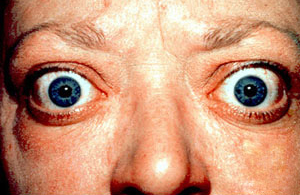
- •Examine for a symmetrically enlarged, firm thyroid with a palpable bruit (hypervascularity). Look for ocular signs of TED: lid retraction (Dalrymple sign), lid lag (von Graefe sign), proptosis, conjunctival injection, periorbital edema, and assess extraocular movements for diplopia.
- •Examine the skin: warm, moist skin, pretibial myxedema (pink or brown indurated plaques on shins), and rarely acropachy (digital clubbing). Check for fine resting tremor, hyperreflexia with rapid relaxation, and proximal myopathy.
- •Order TSH as the first-line screening test. If suppressed (<0.4 mIU/L), measure free T4 and free T3 from the same sample. Overt hyperthyroidism is defined by suppressed TSH with elevated FT4 and/or FT3.
- •Confirm etiology with TRAb measurement using a second- or third-generation immunoassay. A positive TRAb (>6 IU/L in most assays) confirms Graves disease with >95% sensitivity and ~100% specificity when hyperthyroidism is present, and obviates the need for thyroid scintigraphy in most patients.
- •If TRAb is negative, perform thyroid ultrasound to assess goiter size, vascularity ("thyroid inferno" on color Doppler), and rule out nodules. Scintigraphy (⁹⁹ᵐTc or ¹²³I) is reserved for TRAb-negative cases to distinguish high-uptake GD from low-uptake thyroiditis or focal toxic nodule.
- •At diagnosis, document baseline severity: FT4 ≥40 pmol/L, TBII >6 U/L, goiter ≥WHO grade 2 predict higher relapse risk. Assess for TED using the Clinical Activity Score (CAS): ≥4 indicates active disease and warrants ophthalmology referral.
- •Consider additional testing: TPOAb (elevated in ~80%, supportive but not diagnostic), electrocardiogram to screen for atrial fibrillation, and baseline CBC/LFT before starting antithyroid drugs. In pregnancy, use ultrasound + TRAb (scintigraphy contraindicated).
- •Red flags for thyroid storm: fever >38.5°C, tachycardia >140/min, altered mental status, GI symptoms. Suspect dysthyroid optic neuropathy if acute vision loss or color desaturation, requires emergent ophthalmic assessment.
Management
- •Initiate methimazole (MMI) as first-line antithyroid drug (ATD) at 10-40 mg PO once daily, titrated to FT4 within 4-8 weeks, then reduce to maintenance 2.5-10 mg daily. Propylthiouracil (PTU) 100-300 mg daily in 3 divided doses is reserved for first-trimester pregnancy or MMI intolerance.
- •Add beta-blocker for symptom control: propranolol 20-40 mg every 6-8 hours or atenolol 25-100 mg daily until euthyroid. Titrate to heart rate <90 bpm.
- •Standard ATD course is 12-18 months; withdraw if euthyroid with normalized TRAb. Relapse occurs in ~50% after withdrawal. Long-term ATD (≥5 years) is safe and effective, with remission rates approaching 75%, discuss this option especially in young adults with moderate disease who wish to avoid lifelong hypothyroidism.
- •For relapse after ATD withdrawal, options include a second course (especially with low-dose taper to MMI 2.5 mg every other day and high-normal TSH at withdrawal yields higher remission) or proceed to definitive therapy.
- •Radioactive iodine (RAI, ¹³¹I 10-15 mCi) achieves euthyroidism/hypothyroidism in 50-90% within 6-12 months. Counsel lifelong levothyroxine replacement. Mandatory steroid prophylaxis (prednisone 0.4-0.5 mg/kg/day tapered over 3 months) if given with mild active TED or risk factors (smoking, high TRAb).
- •Total thyroidectomy is recommended for large goiter (≥80 g), compressive symptoms, moderate-to-severe TED, or when RAI is contraindicated. Preoperative preparation: achieve euthyroidism with ATD, then Lugol's iodine 5-10 drops daily for 10 days to reduce vascularity. Perform by high-volume surgeon.
- •For active moderate-to-severe TED: first-line teprotumumab (10 mg/kg first IV dose, then 20 mg/kg every 3 weeks for 8 total infusions). Alternatives: intravenous glucocorticoids ± mycophenolate, or tocilizumab 8 mg/kg IV every 4 weeks for 4 doses in glucocorticoid-resistant cases.
- •Thyroid storm management: simultaneous blockade of four pathways, beta blocker (propranolol), antithyroid drug (MMI or PTU loading), corticosteroid (hydrocortisone 100 mg IV q8h or dexamethasone), and iodine (SSKI or Lugol's) given at least 1 hour after ATD loading. Admit to ICU; monitor HR, temperature, mental status, and end-organ function hourly.
- •Monitor: check FT4, TSH, CBC, LFT at 4-6 week intervals during ATD titration. After RAI or surgery, check thyroid function at 4-6 weeks then every 3-6 months; start levothyroxine 1.6 μg/kg daily if hypothyroid, targeting TSH 0.5-2.5 mIU/L.
- •Avoid: giving iodine before ATD loading in storm; using RAI without steroid prophylaxis in active TED; using methimazole in first trimester without switching to PTU; attempting surgery without achieving euthyroidism.
Board Review — High Yield
- •TRAb (TSH receptor antibody), hallmark of Graves disease; present in >95% of untreated patients; levels predict relapse and neonatal risk.
- •Thyroid inferno, diffuse increased vascularity on color Doppler ultrasound; classic for Graves disease.
- •Clinical Activity Score (CAS) ≥4, indicates active Graves orbitopathy; threshold for initiating immunosuppression (teprotumumab or corticosteroids).
- •Methimazole 10-40 mg daily, first-line antithyroid drug; PTU reserved for first-trimester pregnancy due to teratogenicity concerns.
- •Block-replace vs titration, titration preferred due to fewer adverse events; no difference in remission rates.
- •Thyroid storm, life-threatening emergency; treat with beta blocker + ATD + corticosteroid + iodine (after ATD) simultaneously.
- •Smoking, strongest modifiable risk factor for both relapse and progression of Graves orbitopathy; counsel cessation.
- •Long-term ATD (≥5 years), safe alternative to definitive therapy with remission rates approaching 75%; major complication rate only 1.5%.
- •Teprotumumab, first-line for moderate-to-severe active TED; proptosis response ~69% vs 20% placebo; given as IV infusion every 3 weeks x 8 doses.
- •Postpartum Graves disease, de novo GD can present in first year after delivery; ATD choice: PTU in first trimester then switch to MMI.
Deep Dive — Evidence Details
Definition, Classification and Axis Nomenclature
- ▸Use GD for the autoimmune thyroid disorder, GO/TED for the orbital phenotype, TRAb for receptor-binding antibody assays, and TSI for functional receptor-stimulation bioassays. [249][253][254]
- ▸Classify patients by biochemical state, etiology, antibody status, orbital activity/severity, and disease course rather than treating hyperthyroidism and GD as synonyms. [14][249][253]
- ▸Use CAS for orbital activity and EUGOGO terminology for severity; MRI is adjunctive. [249][255]
- ▸Document refractory GD separately from newly diagnosed, persistent, or relapsed disease. [14]
- ▸Pregnancy requires explicit TRAb/TSI reporting and pregnancy-appropriate interpretation. [254]
Definition
Graves disease (GD) is an autoimmune thyroid disorder in which thyroid-stimulating autoimmunity produces endogenous hyperthyroidism; the supplied literature identifies thyrotropin-receptor antibodies (TRAb) as the principal diagnostic autoimmune marker and describes GD as the cause of associated thyroid eye disease (TED), also termed Graves orbitopathy (GO). [249][253][254] GD should therefore be distinguished from the broader biochemical syndrome of overt hyperthyroidism, which requires etiologic classification rather than being treated as a synonym for GD. [253][256]
The preferred diagnostic nomenclature is GD for the systemic thyroid disorder, GO/TED for the associated orbital phenotype, and TRAb for receptor-directed antibodies measured by immunoassay. [249][253] When a bioassay specifically measures antibody-mediated receptor stimulation, the term thyroid-stimulating immunoglobulin (TSI) is appropriate; TSI and TRAb are related but are not interchangeable analytical labels because TRAb immunoassays detect receptor-binding antibodies, whereas stimulation bioassays quantify functional activity. [254] In pregnancy, TRAb is used diagnostically, while pregnancy-specific interpretation of TSI may be required because the commonly recommended nonpregnant-adult TSI cutoff is 0.0241 IU/L. [254]
Classification by diagnostic axis
The diagnostic axis should be recorded in the following order: biochemical state, etiology, antibody status, and extrathyroidal phenotype. In patients with overt hyperthyroidism, a TRAb-first strategy has been evaluated against thyroid ultrasonography and scintigraphy, with scintigraphy used as the functional reference standard; this supports TRAb as an initial etiologic test when GD is suspected, with imaging reserved for unresolved or discordant cases. [253] Thyroid scintigraphy can also distinguish GD from subacute thyroiditis, thyroid tumors, and normal thyroid findings, although the reported deep-learning study evaluated image classification rather than replacing clinical diagnosis. [256]
Biochemical classification should use overt hyperthyroidism when thyroid hormone excess is clinically and biochemically established, while avoiding the unsupported assumption that every patient coded or labeled as GD has the same biochemical severity. [14]B2b[253] The literature also identifies refractory GD/refractory hyperthyroidism as a clinically useful treatment-response category. One prospective cohort defined refractory GD using recurrence together with sustained TRAb positivity and reported that younger age, Graves' ophthalmopathy, and early treatment characteristics contributed to prediction models. [14]B2b This category is distinct from newly diagnosed GD and should not be used as a synonym for severe disease without documenting treatment failure or relapse. [14]B2b
Classification of orbital and extrathyroidal phenotypes
GO/TED is classified independently from thyroid biochemical status by activity and severity. Activity is commonly assessed with the Clinical Activity Score (CAS), whereas severity is classified using the European Group on Graves' Orbitopathy (EUGOGO) framework. [249][255] MRI provides an adjunctive assessment of orbital tissue and extraocular-muscle changes and has evolved from qualitative interpretation toward quantitative characterization, but imaging should complement rather than replace clinical activity and severity assessment. [249] Inactive mild and inactive moderate-to-severe GO remain distinct clinical groups; ocular-surface irritation may occur even in the absence of corneal damage, and its reported associations include CAS, upper-eyelid lag, and extraocular-muscle involvement. [255]
The term TED is increasingly useful when describing the orbital disease phenotype, while GO remains a widely used synonym in clinical literature. [249][251] Facial-image deep learning has been investigated for automated TED detection, but this represents diagnostic-support research and does not redefine the disease or establish a new clinical classification. [251] Epidemiologic studies have evaluated GO occurrence separately from GD and report associations with age, sex, income, smoking-related or metabolic factors, and medication exposure; these are risk modifiers, not diagnostic criteria. [3]B2b[258]
Population and context qualifiers
GD should be further qualified by age and physiologic context because pediatric, adult, and pregnancy populations are not interchangeable. Pediatric GD is the leading cause of hyperthyroidism in children and adolescents, and United States claims data showed changing incidence patterns across age, sex, geographic, residence, and insurance strata. [8]B2b Pregnancy requires explicit TRAb/TSI nomenclature and pregnancy-specific interpretation. [254] Familial or autoimmune context may also be relevant: offspring of mothers with alopecia areata have been studied for thyroid outcomes, but such epidemiologic associations do not establish GD in an individual patient. [257] Long-term air-pollution exposure has likewise been investigated as a risk factor for autoimmune thyroid disease in children and adolescents, not as a defining diagnostic feature. [13]B2b
Axis nomenclature and scope boundaries
The term “thyroid axis” should not be used alone to imply etiology. A complete record should separately state: thyroid function state (for example, overt hyperthyroidism), etiology (GD supported by TRAb/TSI and compatible imaging), orbital phenotype (TED/GO with CAS and severity category), and course (new, persistent, relapsed, or refractory). [14]B2b[249][253][254] Bone loss and increased serum calcium are recognized consequences associated with GD in pooled evidence, but they are complications or associated findings rather than axes of disease classification. [248] Similarly, thymic enlargement or ectopic thymoma, operative hemorrhage risk, and treatment-related outcomes should be documented as comorbid, procedural, or management issues rather than incorporated into the definition of GD. [1]C4[250][252]C[159]B2b Methimazole plus traditional Chinese medicine has been studied as a treatment comparison, but therapeutic response does not alter the underlying diagnostic definition or nomenclature of GD. [247]
| Axis | Preferred terminology | Evidence-based qualifier |
|---|---|---|
| Biochemical state | Overt hyperthyroidism | Describe the biochemical syndrome separately from etiology. [14]B2b[253] |
| Etiology | Graves disease (GD) | Autoimmune hyperthyroidism supported by TRAb/TSI and compatible evaluation. [249][253][254] |
| Antibody assay | TRAb or TSI | TRAb denotes receptor-binding assays; TSI denotes functional stimulation bioassays. [254] |
| Orbital phenotype | TED/GO | Record activity with CAS and severity with EUGOGO terminology. [249][255] |
| Disease course | New, persistent, relapsed, or refractory | Refractory disease has been operationalized using recurrence and sustained TRAb positivity. [14]B2b |
| Context | Pediatric, adult, or pregnancy | Age and pregnancy alter epidemiologic and antibody-interpretation context. [8]B2b[13]B2b[254] |
Axis Physiology, Pathophysiology and Biochemical Signature
- ▸The core biochemical signature of Graves hyperthyroidism is elevated FT3/FT4 or TT3/TT4, suppressed TSH, and positive TRAb, with diffuse radionuclide uptake supporting active receptor stimulation. [260] [277] [278]
- ▸Systemic inflammation is reflected by hs-CRP, ferritin, hepcidin, and composite leukocyte-derived indices in studied GD cohorts. [264] [279]
- ▸Maternal third-trimester TRAb is clinically relevant to neonatal thyroid function at 7–14 days and neurodevelopment assessed at 24 months. [265]
- ▸Biochemical euthyroidism, remission after antithyroid-drug withdrawal, and durable autoimmune remission are distinct outcomes. [261] [262] [267]
- ▸Cognitive, autonomic, orbital, and neurobehavioral manifestations may accompany thyroid-axis dysregulation. [260] [269] [270] [276]
Physiologic axis and autoimmune activation
The hypothalamic–pituitary–thyroid axis is clinically represented by circulating thyrotropin (TSH), free and total thyroid hormones, and the thyroid-stimulating hormone receptor antibody (TRAb) profile. In Graves disease (GD), TRAb-mediated stimulation of the TSH receptor is the defining autoimmune mechanism, producing diffuse thyroid hyperfunction rather than the pattern of destructive thyroiditis. [264] [277]C Positive TRAb together with diffusely increased radionuclide uptake supported GD in a patient who developed thyrotoxicosis after withdrawal of immunosuppression and SARS-CoV-2 infection. [277]C
Biochemically, untreated or newly diagnosed GD is characterized by increased free thyroxine (FT4) and free triiodothyronine (FT3), with suppressed TSH and usually positive TRAb; studies additionally evaluated total T4 (TT4) and total T3 (TT3). [260] [268]C [271] [278] In children with newly diagnosed untreated GD, FT4, FT3, TRAb, high-sensitivity C-reactive protein (hs-CRP), ferritin, iron, and hepcidin were specifically assessed, with higher hs-CRP, TRAb, hepcidin, and ferritin reported than in healthy controls. [279] The biochemical phenotype therefore includes both thyroid-axis overactivity and measurable systemic inflammatory or acute-phase activation. [264] [279]
Pathophysiology and inflammatory signature
GD is an organ-specific autoimmune disorder accompanied by persistent immune and inflammatory activation. [264] Peripheral inflammatory indices studied in GD include the neutrophil-to-lymphocyte ratio, monocyte-to-lymphocyte ratio, systemic immune-inflammation index, systemic inflammation response index, and pan-immune-inflammation value. [264] These indices were examined across thyroid functional states and in relation to liver biochemical abnormalities and hyperthyroid relapse, indicating that the biochemical signature extends beyond thyroid hormones and autoantibodies. [264]
Additional immune-related biomarkers have been investigated. Serum chitotriosidase, the CHIT1 24-base-pair duplication variant, TPO antibodies, TRAb, and complete thyroid hormone profiles were evaluated in treatment-naive autoimmune thyroid disease, including GD and Hashimoto thyroiditis. [278] Vitamin D and vitamin-D-receptor polymorphisms were also studied in autoimmune thyroid disease; the reported autoimmune-thyroid-disease cohort had lower mean vitamin-D concentrations than controls, while the GD subgroup was small. [268]C These findings support investigation of immune-modulatory and inflammatory correlates, but they do not establish vitamin D, CHIT1, or inflammatory indices as diagnostic replacements for thyroid function testing and TRAb. [264] [268]C [278]
Systemic biochemical and neurocognitive consequences
Thyroid hormone excess may be accompanied by neurocognitive manifestations. A randomized prospective study enrolled 124 newly diagnosed patients with GD hyperthyroidism whose baseline Montreal Cognitive Assessment score was <26 and compared conventional treatment with conventional treatment plus selenium over 12 weeks. [260] Cognitive and biochemical assessments were performed at baseline and at 4, 8, and 12 weeks, including blood selenium, TT3, TT4, FT3, FT4, TSH, and TRAb-related measures. [260] The study directly links the biochemical thyroid state with cognitive assessment, while its design does not imply that selenium deficiency is the cause of GD. [260]
Neurobehavioral and autonomic correlates have also been explored. A pilot study of 11 people with GD examined glutamate/GABA balance, dopamine-transporter availability, and mindfulness-related changes, but its single-arm design limits causal interpretation. [269]C Pupillometry in 51 GD patients and 45 controls assessed static pupil diameter and mean pupil-dilation speed in relation to thyroid function, thyroid hormone concentrations, clinical activity, TRAb, and orbitopathy. [270] These observations indicate that GD-associated physiology may involve autonomic and central nervous system correlates in addition to circulating hormone abnormalities. [269]C [270]
Pregnancy, neonatal, and developmental axis effects
Maternal GD-related variables include TSH, FT4, TRAb, and antithyroid-drug exposure during pregnancy. [265] Maternal third-trimester TRAb was investigated in relation to neonatal thyroid function at 7–14 days after birth and offspring neurodevelopment at 24 months, with neonatal thyroid function examined as a possible intermediate factor. [265] The fetal and neonatal axis can therefore be influenced by transplacental maternal thyroid autoimmunity, making maternal TRAb clinically relevant even when the mother’s thyroid measurements are being treated. [265]
Disease persistence, relapse, and treatment-related biochemical states
Persistent or recurrent hyperthyroidism after antithyroid-drug therapy remains a clinically important expression of ongoing autoimmune activity. [267]C A prospective study of 45 patients with persistent or recurrent GD evaluated bilateral microwave ablation while antithyroid drugs were continued and assessed remission and predictors of post-ablation remission. [267]C A systematic review and meta-analysis evaluated ultrasound-guided radiofrequency or microwave thermal ablation as alternatives for patients unresponsive to antithyroid drugs, using euthyroidism at 1 year as the principal outcome. [261] A retrospective cohort of 654 adults who achieved remission after at least 12 months of antithyroid-drug treatment examined baseline predictors of relapse within 1 year after withdrawal. [262] These studies emphasize that biochemical remission, euthyroidism, and durable immunologic remission are related but distinct outcomes. [261] [262] [267]C
Immune reconstitution can precede or accompany GD. GD developed after withdrawal of immunosuppression and SARS-CoV-2 infection in a failed kidney-allograft recipient, while delayed autoimmune GD has also been described after immune reconstitution during HIV care. [277]C [276]C Alemtuzumab-treated patients with multiple sclerosis were monitored for subsequent autoimmune thyroid dysfunction, demonstrating that immune-modifying therapies can alter thyroid-axis status. [272]C
Associated biochemical and clinical contexts
Iron-regulatory biology may change during untreated GD: children with new GD had higher hepcidin and ferritin together with increased hs-CRP and TRAb. [279] Severe dengue occurring in an adolescent with longstanding GD illustrates that infection can complicate interpretation of fever, tachycardia, and other overlapping systemic manifestations. [273]C Rare syndromic autoimmunity may include GD alongside type 1 diabetes and congenital hypoparathyroidism, as reported in Sanjad–Sakati syndrome. [274]C A case involving a transthyretin-variant carrier demonstrated that suppressed TSH and elevated thyroid hormones can produce neurologic symptoms that mimic or confound another disease process. [275]C
Thyroid eye disease represents an extrathyroidal autoimmune phenotype; refractory disease has been treated by targeting IGF-1 receptor signaling in orbital fibroblast activation. [276]C Thyroid vascularity and positive TRAb supported GD in a pediatric syndromic case, followed by hypothyroidism requiring levothyroxine. [274]C Post-thyroidectomy hypocalcemia and hypoparathyroidism are treatment-related biochemical complications rather than components of the native GD axis, with risk characterized in large thyroidectomy cohorts, including pediatric patients. [263] [266]
| Domain | Measures or findings | Evidence |
|---|---|---|
| Thyroid axis | TSH, FT3, FT4, TT3, TT4 | [260] [268]C [271] |
| Autoimmunity | TRAb, TPO antibodies, thyroid vascularity, diffuse radionuclide uptake | [264] [274]C [277]C [278] |
| Inflammation and iron metabolism | hs-CRP, ferritin, hepcidin, iron, NLR, MLR, SII, SIRI, PIV | [264] [279] |
| Neurocognitive/autonomic correlates | MoCA <26, glutamate/GABA, dopamine-transporter availability, pupillometry | [260] [269]C [270] |
| Maternal–neonatal axis | Maternal third-trimester TRAb; neonatal testing at 7–14 days; development at 24 months | [265] |
| Disease-course markers | Euthyroidism at 1 year, relapse within 1 year after drug withdrawal, remission after ablation | [261] [262] [267]C |
Epidemiology, Etiology and Risk Factors
- ▸GD is a multifactorial autoimmune disorder in which genetic susceptibility interacts with environmental exposures. [286]
- ▸In the supplied pediatric cohort, 75% of treated hyperthyroidism cases were female and the median age at diagnosis was 15.1 years. [120]
- ▸Current smoking was associated with approximately twofold higher odds of Graves orbitopathy; former smoking also remained associated with increased odds. [284]
- ▸COVID-19, antibiotic exposure, neonatal vitamin D status, childhood tonsillectomy/adenoidectomy, and digit ratio have been investigated as possible associations, but the supplied abstracts do not establish GD-specific causal effects. [82][84][98][280][286][287]
- ▸Several cited studies address orbitopathy, treatment adverse effects, surgery, malignancy, or alternative thyroid disorders rather than GD etiology. [250][281][282][285][288][289][291]
Epidemiology
Graves disease (GD) is an autoimmune cause of hyperthyroidism and is described as the predominant cause of hyperthyroidism globally. Its occurrence reflects interaction between genetic susceptibility and environmental exposures. [283][286] Pediatric GD is uncommon: in a large health-maintenance-organization cohort of 5,111,304 insured children followed across diagnoses from 2000–2019, 518 children met the study criteria for hyperthyroidism requiring at least 6 months of antithyroid-drug treatment; 75% were female, and the median age at diagnosis was 15.1 years (interquartile range, 13.0–16.5 years). [120]B3b The reported pediatric cohort represents treated hyperthyroidism rather than a population-based incidence estimate for GD alone. [120]B3b
The available studies also indicate that GD may occur alongside other autoimmune conditions. Thyroid eye disease (TED) can present as isolated GD or in the context of autoimmune polyglandular syndromes; a retrospective Italian multicenter study specifically evaluated GD patients with moderate-to-severe, active TED requiring high-dose intravenous steroids according to whether associated autoimmune disease was present. [290]C The supplied abstract does not provide the comparative prevalence or severity results, so the magnitude of this association cannot be quantified from this reference. [290]C
Etiology and immune triggers
GD is multifactorial: inherited susceptibility is thought to interact with environmental exposures, while alterations in the gut microbiota have been reported in association with GD. [286] A 2026 Korean population-based cohort study of 311,911 adults aged ≥40 years evaluated whether antibiotic exposure during the preceding 5 years was associated with subsequent GD, categorizing cumulative prescriptions as none, 1–14, 15–60, or ≥61 days and also assessing the number of antibiotic classes used. [286] The supplied abstract identifies the study design and exposure thresholds but does not report the hazard ratios or whether a statistically significant exposure–response relationship was observed; therefore, antibiotic use should be considered an investigated potential environmental association rather than an established causal risk factor. [286]
Viral infection is another proposed trigger of thyroid autoimmunity. [280][98]C4 A systematic review of autoimmune thyroid disease after COVID-19 examined clinical manifestations, laboratory findings, and outcomes reported between 2020 and 2025, including GD and Hashimoto thyroiditis; it concluded that the mechanisms by which SARS-CoV-2 may trigger these disorders remain incompletely understood. [98]C4 A multicenter propensity-score-matched cohort study specifically examined adults with type 2 diabetes who had documented COVID-19 between January 2020 and June 2022 versus matched uninfected controls, with the outcome of incident autoimmune thyroid disease over the longer term. [280] Because the supplied abstract does not include the cohort’s effect estimate or confidence interval, it does not establish the size of any post-COVID GD risk. [280]
Other immune-related exposures have also been investigated. A Danish population-based cohort measured neonatal 25-hydroxyvitamin D and vitamin D-binding protein, together with genetic predictors, and examined subsequent risk of nine autoimmune disorders, including GD and autoimmune thyroiditis. [84]B3b The provided abstract does not report the GD-specific hazard ratio, so neonatal vitamin D status cannot be classified as a confirmed GD risk factor from this evidence alone. [84]B3b A nationwide Korean cohort examined whether childhood tonsillectomy and/or adenoidectomy was associated with later autoimmune disease among children aged 0–12 years treated for tonsillar or adenoid disease; the supplied abstract does not provide the GD-specific outcome estimate. [287] Accordingly, the study supports investigation of early-life immune-system exposures but does not quantify their effect on GD. [287]
A systematic review and meta-analysis investigated the second-to-fourth digit ratio (2D:4D) as a possible marker associated with autoimmune disease. It included 20 studies from 14 publications and 6,958 patients, with diseases including osteoarthritis, multiple sclerosis, and systemic lupus erythematosus; the supplied abstract does not identify a GD-specific subgroup or provide a GD-specific pooled estimate. [82]A1a Thus, 2D:4D cannot currently be treated as an established epidemiologic or causal GD risk factor on the basis of this reference. [82]A1a
Risk factors and associated phenotypes
Smoking is the best quantified modifiable risk factor in the supplied evidence, specifically for Graves orbitopathy rather than for the initial development of GD. A systematic review and meta-analysis of 22 studies found that, compared with GD patients without orbitopathy, current smokers had approximately twofold higher odds of orbitopathy (OR 2.00, 95% CI 1.47–2.72), while former smokers also had increased odds (OR 1.77, 95% CI 1.33–2.37). [284] The same review reported that thyroidectomy was associated with higher odds of GD without orbitopathy, a finding interpreted as supporting a potentially protective association against orbitopathy; this observational association should not be interpreted as evidence that thyroidectomy prevents GD itself. [284]
Several supplied studies concern complications, treatment outcomes, or differential diagnoses rather than GD etiology. Methimazole-associated neutropenia and agranulocytosis were evaluated in 432 pediatric patients with GD during 12 months of treatment, and 104 patients (24.1%) experienced the reported adverse outcome category in the supplied abstract; these are treatment-related risks, not causes of GD. [281] Studies of postoperative hemorrhage, recurrent laryngeal nerve palsy, hypoparathyroidism, and surgical techniques address risks of thyroid surgery rather than GD susceptibility. [250][282]C[266] A surgical cohort examining thyroid malignancy in GD included 206 thyroidectomized patients, of whom 42 had malignancy; thyroid nodules were identified as an established risk factor, but the supplied abstract does not provide the independent body-mass-index results. [288] Reports on fetal goiter, subacute thyroiditis, and immune-checkpoint-inhibitor-associated thyroid adverse events describe alternative or treatment-associated thyroid conditions and should not be conflated with the natural etiology of GD. [289]C[285][291]C
Evidence limitations
The current evidence supports a multifactorial model involving susceptibility, immune dysregulation, and possible environmental triggers, but several supplied studies provide incomplete GD-specific effect estimates or address orbitopathy, treatment toxicity, surgery, or alternative thyroid disorders rather than incident GD. [82]A1a[84]B3b[98]C4[250][280][281][282]C[284][285][287][288][289]C[290]C[291]C Associations should therefore be distinguished from causation, particularly for post-COVID autoimmune thyroid disease, antibiotic exposure, neonatal vitamin D status, and childhood surgery. [84]B3b[98]C4[280][287]
| Factor or association | Evidence | Interpretation |
|---|---|---|
| Sex and age in pediatric disease | 75% female; median diagnosis age 15.1 years in a treated pediatric hyperthyroidism cohort | Descriptive epidemiology; not a population incidence estimate for GD alone. [120]B3b |
| Smoking | Current smoking: OR 2.00; former smoking: OR 1.77 for orbitopathy versus GD without orbitopathy | Strongest quantified modifiable association, primarily for orbitopathy rather than GD onset. [284] |
| SARS-CoV-2 infection | Long-term autoimmune thyroid disease risk was evaluated in adults with type 2 diabetes | Potential trigger under investigation; effect estimate not provided in the supplied abstract. [280] |
| Antibiotic exposure | Cumulative exposure categorized as none, 1–14, 15–60, or ≥61 days over 5 years | Possible microbiome-related association; causality and effect size are not established here. [286] |
| Neonatal vitamin D | Neonatal 25-hydroxyvitamin D, vitamin D-binding protein, and genetic predictors were assessed | GD-specific association not reported in the supplied abstract. [84]B3b |
| Childhood tonsillectomy/adenoidectomy | Nationwide cohort evaluated later autoimmune disease after surgery at ages 0–12 years | GD-specific outcome estimate not reported. [287] |
Clinical Presentation
- ▸Pediatric GD commonly presents in adolescence and is more frequent in females; one 25-year cohort reported a median age of 13.8 years and 79.7% female patients. [292]
- ▸Cardiovascular complications, including tachycardia, stress cardiomyopathy, and myocardial infarction with non-obstructive coronary arteries, may dominate presentation in severe thyrotoxicosis. [296][297]
- ▸Pediatric TED is uncommon and often milder than adult disease, but it can cause functional and psychological morbidity. [99]
- ▸Current smoking was associated with TED with an adjusted odds ratio of 1.41 in a Japanese retrospective study. [293]
- ▸Among 432 children receiving methimazole, 24.1% developed neutropenia or agranulocytosis during 12 months of follow-up. [281]
- ▸COVID-19, systemic infection, immune-checkpoint therapy, and non-thyroid disorders can complicate or mimic the clinical presentation of GD. [98][273][291][295]
Typical clinical pattern
Graves disease (GD) is an autoimmune cause of thyrotoxicosis whose presentation varies with age, disease duration, hormone excess, and the presence of extrathyroidal disease. In a 25-year pediatric cohort, affected children had a median age of 13.8 years (interquartile range, 10.0–15.6), and 79.7% were female, supporting the predominance of adolescent and female presentations in pediatric practice. [292] A separate multicenter Saudi pediatric study evaluated 93 patients younger than 18 years with hyperthyroidism and collected clinical, biochemical, and imaging features, confirming that GD in children is commonly assessed through an integrated clinical and laboratory presentation rather than symptoms alone. [299]C
Common presenting symptoms include palpitations, fatigue, heat intolerance, tremor, anxiety, sleep disturbance, weight loss despite preserved or increased appetite, exercise intolerance, and menstrual disturbance; the intensity of these symptoms may be disproportionate to the biochemical severity. A case of an adolescent with GD and Carney complex illustrates that palpitations and worsening fatigue over 2 months may be the dominant complaints, even when the patient has other clinically important findings such as pigmentation and a cardiac myxoma. [102]C4 Severe or prolonged thyrotoxicosis may present through cardiovascular complications rather than classic constitutional symptoms, including sinus tachycardia, electrocardiographic abnormalities, stress cardiomyopathy, coronary vasospasm, or myocardial infarction with non-obstructive coronary arteries. [296]C[297]C
Thyroid and extrathyroidal findings
Examination may reveal diffuse thyroid enlargement, a thyroid bruit, tachycardia, widened pulse pressure, hyperreflexia, fine tremor, warm moist skin, and proximal muscle weakness. These clinical features should be interpreted with thyroid biochemistry and disease-specific antibodies because other causes of thyrotoxicosis can produce overlapping findings. A prospective study of 300 patients with biochemically confirmed thyrotoxicosis used clinical assessment together with 24-hour radioactive iodine uptake, technetium-99m thyroid imaging, and biochemical data to distinguish subacute thyroiditis from other etiologies. [285]
Thyroid eye disease (TED) is the characteristic extrathyroidal manifestation of GD and may occur with eyelid retraction, periorbital edema, conjunctival injection, ocular surface discomfort, proptosis, restrictive diplopia, impaired eye movements, and, rarely, sight-threatening optic neuropathy. Pediatric TED is uncommon and generally milder than adult disease, but it can still cause functional and psychological morbidity. [99]A1a Smoking is clinically important: in a Japanese retrospective study of 12,038 individuals, current smoking was associated with TED compared with controls after adjustment for age, sex, thyroid-stimulating antibody levels, and family history, with an adjusted odds ratio of 1.41; smoking was also investigated in relation to diplopia among patients with TED. [293]
TED may also appear in unusual immune settings. A patient with HIV developed GD and active moderate-to-severe TED 5 years after HIV diagnosis, in the context of a proposed delayed autoimmune manifestation following antiretroviral therapy and immune reconstitution. [276]C These observations do not establish that HIV or antiretroviral therapy causes GD, but they broaden the clinical context in which TED may be encountered. [276]C
Pediatric presentation and treatment-related hematologic findings
Children and adolescents may present with behavioral or school-performance changes, accelerated growth initially, advanced skeletal maturation, weight loss, tachycardia, goiter, or eye findings; the available pediatric cohorts emphasize the importance of combining symptoms, examination, biochemical testing, and imaging in diagnosis. [292][299]C Methimazole remains a commonly used first-line treatment in pediatric GD, but hematologic abnormalities may complicate the early clinical course. In a cohort of 432 children treated with methimazole, 104 (24.1%) developed methimazole-associated neutropenia or agranulocytosis during the 12-month follow-up period; the study evaluated patients at predefined intervals from 0.5 through 12 months and examined risk factors for neutropenia. [281] Fever, sore throat, oral ulceration, or other infection-like symptoms during antithyroid-drug treatment therefore warrant prompt blood-count assessment, although these symptoms are not specific to GD itself. [281]
Important mimics and atypical presentations
COVID-19 has been reported in association with new or exacerbated autoimmune thyroid disease, including GD, and a systematic review examined post-infection clinical manifestations, laboratory findings, and outcomes; the review emphasizes that the temporal relationship should be considered without assuming causality in an individual patient. [98]C4 Conversely, systemic infection may obscure or amplify thyrotoxic symptoms: a reported 17-year-old with pre-existing GD and severe dengue had overlapping manifestations that complicated diagnosis and management. [273]C
Several case reports illustrate diagnostic pitfalls. An adult with mucopolysaccharidosis I was initially diagnosed with hyperthyroidism in the setting of anasarca and severe albuminuria, but subsequent clinical, enzymatic, and genetic evaluation established the lysosomal storage disorder. [295]C Pretibial lesions resembling pretibial myxedema were reported in a patient with lepromatous leprosy despite absent evidence of hyperthyroidism, demonstrating that characteristic-appearing skin findings are not pathognomonic. [103]C4 Profoundly suppressed thyroid-stimulating hormone and elevated thyroid hormones may also be discovered during evaluation of apparently neurologic symptoms, as illustrated by a transthyretin-variant carrier whose neuropathic and gastrointestinal complaints prompted broader investigation. [275]C
Finally, thyroid dysfunction after immune-checkpoint inhibitor therapy is a recognized thyroid immune-related adverse-event context, but pharmacovigilance, retrospective, and single-cell analyses do not by themselves establish conventional GD as the cause in every patient. [291]C Clinical presentation should therefore integrate medication exposure, antibody testing, imaging, and the broader differential diagnosis of thyrotoxicosis. [285][291]C
| Context | Clinical relevance |
|---|---|
| Pediatric GD | Adolescent and predominantly female presentation; diagnosis integrates clinical, biochemical, and imaging findings. [292][299]C |
| Thyroid eye disease | May cause ocular surface symptoms, proptosis, diplopia, and functional or psychological morbidity, including in children. [99]A1a |
| Smoking | Associated with TED; adjusted odds ratio 1.41 in a Japanese study. [293] |
| Subacute thyroiditis | A competing cause of thyrotoxicosis requiring biochemical, uptake, and radionuclide-imaging assessment. [285] |
| Infection or post-infection states | COVID-19 and dengue may coincide with or obscure autoimmune thyroid disease and thyrotoxic manifestations. [98]C4[273]C |
| Drug or systemic disease mimics | Immune-checkpoint therapy, mucopolysaccharidosis, leprosy, and neurologic disease may produce overlapping clinical scenarios. [103]C4[275]C[291]C[295]C |
Diagnosis and Workup: Paired Hormones, Dynamic Testing and Localization
- ▸Pair TSH with free T4 when confirming thyrotoxicosis; biochemical thyrotoxicosis does not by itself establish Graves disease. [265][275][285]
- ▸TRAb is the principal autoimmune test for suspected Graves disease and is especially important in pregnancy because maternal antibodies can affect neonatal thyroid function. [265]
- ▸TPOAb may support autoimmune thyroid disease but should not substitute for TRAb; its prognostic value in Graves disease remains uncertain. [283]
- ▸When the cause of thyrotoxicosis is unclear, an integrated assessment using clinical data, 24-hour RAIU, and technetium-99m imaging is supported by prospective evidence. [285]
- ▸Subtraction ultra-micro angiography with a CPP index is an emerging adjunct for distinguishing untreated Graves disease from chronic autoimmune thyroiditis when routine Doppler overlaps. [303]
- ▸TED assessment remains clinical; CAS ≥3 was the activity threshold in the cited cohort, while IgG4 and transcriptomic biomarkers are investigational. [308][302][309]
Biochemical confirmation: use paired thyroid hormones
The initial biochemical assessment of suspected Graves disease (GD) should document thyrotropin (TSH) together with free thyroxine (free T4), rather than interpreting either result in isolation. In pregnancy-associated GD research, investigators followed TSH, free T4, thyrotropin-receptor antibodies (TRAb), and antithyroid-drug exposure longitudinally, supporting the use of these measurements as the core biochemical variables across pregnancy. [265] A clinical case of a patient initially evaluated for neurologic symptoms illustrates the importance of considering thyrotoxicosis when TSH is profoundly suppressed and thyroid hormone excess is identified during a broader diagnostic workup. [275]C
A low or suppressed TSH with elevated circulating thyroid hormone concentrations establishes biochemical thyrotoxicosis, but does not by itself identify GD as the cause. [285] In a prospective cohort of 300 patients with biochemically confirmed thyrotoxicosis, etiology was determined through an integrated clinical assessment, biochemical testing, 24-hour radioactive iodine uptake (RAIU), and technetium-99m thyroid imaging. [285] This approach is particularly important when thyroiditis, toxic nodular disease, exogenous hormone exposure, or other causes remain plausible; the cited study specifically evaluated subacute thyroiditis (SAT) among patients presenting with thyrotoxicosis. [285]
Antibody testing: TRAb first; TPOAb is supportive but prognostically uncertain
TRAb testing is central when GD is suspected because it directly evaluates the autoimmune receptor target and is also clinically relevant during pregnancy. Maternal third-trimester TRAb was assessed in relation to neonatal thyroid function, and neonatal thyroid testing was performed at 7–14 days after birth, demonstrating the importance of maternal antibody status for fetal and neonatal risk assessment. [265] TRAb and thyroid-stimulating antibody measurements have also been included in studies evaluating thyroid eye disease (TED), including adjustment for TSAb in analyses of smoking-related TED risk. [293]
Thyroid peroxidase antibodies (TPOAb) may support an autoimmune thyroid diagnosis, but they should not be treated as a specific diagnostic substitute for TRAb in GD. A 2026 systematic review was designed to evaluate whether baseline TPOAb status, longitudinal titre changes, and treatment outcomes are associated in GD treated with antithyroid drugs, radioactive iodine, or thyroidectomy; the review’s stated rationale was that the clinical relevance of TPOAb in GD remains unclear despite frequent positivity. [283] Accordingly, TPOAb positivity should be recorded as an autoimmune marker while diagnostic attribution to GD should rely on the complete biochemical, antibody, clinical, and localization profile. [283]
Dynamic and etiologic testing
Radioisotope testing is useful when the biochemical diagnosis of thyrotoxicosis is clear but its etiology is uncertain. The prospective SAT study used 24-hour RAIU and technetium-99m thyroid imaging as part of the etiologic reference assessment. [285] These tests provide functional information that complements hormone and antibody measurements, particularly when clinical features and routine laboratory findings overlap among diffuse autoimmune disease, thyroiditis, and other causes of thyrotoxicosis. [285]
The available evidence does not establish a universal numeric RAIU cutoff, a single optimal stimulation or suppression protocol, or a mandatory dynamic-test sequence for every patient. Therefore, dynamic or functional testing should be selected according to the unresolved diagnostic question, local expertise, pregnancy status, and radiation considerations; these contextual principles are consistent with the integrated testing strategy used in the prospective cohort. [285]
Ultrasound and microvascular localization
Thyroid ultrasound is a structural and vascular adjunct, not a replacement for biochemical confirmation. A prospective single-center study evaluated conventional B-mode ultrasound followed by subtraction ultra-micro angiography (sUMA) in 179 participants: 84 healthy controls, 74 patients with newly diagnosed untreated chronic autoimmune thyroiditis, and 21 patients with newly diagnosed untreated GD. [303] The study quantified microvascularity with a color pixel percentage (CPP) index and was designed to determine whether sUMA could distinguish chronic autoimmune thyroiditis from GD and healthy thyroid tissue when conventional Doppler findings overlap. [303]
sUMA may therefore be considered an emerging localization or phenotyping tool when diffuse autoimmune thyroid disease is difficult to separate on routine ultrasound. [303] However, the evidence is prospective but single-center and comparatively small for the GD subgroup, so sUMA should be regarded as complementary rather than definitive. [303]
Ophthalmic localization and adjunctive biomarkers
Every patient with suspected or established GD should undergo targeted assessment for TED because eye disease may be clinically important even when thyroid findings dominate the presentation. Current evidence supports clinical ophthalmic assessment rather than reliance on a single serum biomarker: a cross-sectional cohort compared 23 GD patients with TED and 23 without TED using ophthalmologic, biochemical, and autoantibody assessments, with activity defined using Clinical Activity Score (CAS) ≥3 and severity classified clinically. [308]
Serum IgG4 is investigational. A 2026 meta-analysis evaluated its association with the presence, risk, and activity of Graves’ ophthalmopathy, while a separate cohort measured total IgG, IgG4, and the IgG4/IgG ratio in GD patients with and without TED. [302][308] Peripheral-blood transcriptomic work has also identified immune-related genes as candidate biomarkers for the development, progression, and severity assessment of Graves’ ophthalmopathy, but the discovery study involved only 16 GO patients and six healthy controls, with validation in independent cohorts. [309] These findings justify research use or carefully interpreted adjunctive testing, not replacement of clinical examination, CAS-based assessment, thyroid biochemistry, or orbital evaluation. [302][308][309]
Practical diagnostic sequence
- Confirm thyrotoxicosis with paired TSH and free T4, adding the relevant thyroid hormone measurement when clinically indicated. [265][275]C
- Test TRAb when GD is suspected, and document pregnancy because maternal TRAb has fetal and neonatal implications. [265]
- Use TPOAb as supportive autoimmune information, recognizing that its diagnostic and prognostic role in GD remains incompletely defined. [283]
- If etiology remains uncertain, use 24-hour RAIU and/or technetium-99m imaging within an integrated clinical assessment. [285]
- Add ultrasound for anatomy and vascular assessment; consider sUMA only as an emerging adjunct where conventional Doppler is inconclusive. [303]
- Screen for TED clinically; CAS ≥3 identifies the activity threshold used in the cited cohort, while IgG4 and molecular biomarkers remain complementary or investigational. [308][302][309]
| Modality | Main role | Evidence and limitations |
|---|---|---|
| TSH plus free T4 | Confirm biochemical thyrotoxicosis | Core paired assessment used across pregnancy-related GD research; interpret with etiology testing. [265][285] |
| TRAb | Support autoimmune attribution to GD; assess pregnancy risk | Relevant to maternal, fetal, neonatal, and TED evaluation. [265][293] |
| TPOAb | Support autoimmune context; possible prognostic marker | Frequent in GD, but diagnostic and prognostic relevance remains uncertain. [283] |
| 24-hour RAIU and technetium-99m imaging | Resolve uncertain thyrotoxicosis etiology | Used in a prospective 300-patient thyrotoxicosis cohort including SAT evaluation. [285] |
| Ultrasound and sUMA | Structural and microvascular characterization | sUMA/CPP was studied in 179 participants; evidence is single-center and emerging. [303] |
| Ophthalmic examination and CAS | Identify and grade TED activity | CAS ≥3 defined activity in the cited cohort; serum biomarkers are adjunctive. [308] |
Severity, Staging and Risk Stratification
- ▸Use multidimensional risk assessment; biochemical hormone elevation alone does not define GD severity. [124][16]
- ▸There are no universally validated 2026 biochemical cutoffs for mild, moderate, or severe GD. [124]
- ▸Smoking exposure, relapse history, antibody profile, TED, pregnancy, pediatric status, nodules, and treatment hazards should be assessed separately. [185][283][311][314]
- ▸TRAb-mediated fetal and neonatal risk is pregnancy-specific and may require trimester- and assay-aware interpretation. [16][185]
- ▸FUMO and IgG4 are investigational or complementary ocular-risk tools, not standalone TED staging systems. [308][315]
- ▸Genetic markers and traditional Chinese medicine plus methimazole do not currently provide validated GD severity classifications. [133][247]
Scope and principles
Graves disease (GD) should be risk-stratified multidimensionally rather than by thyroid hormone elevation alone. Relevant domains include biochemical severity, clinical decompensation, thyroid size and nodularity, thyroid eye disease (TED), smoking exposure, antibody profile, anticipated treatment response, relapse risk, age, pregnancy, and treatment-related hazards. The 2026 evidence base is heterogeneous: the most informative studies include prospective multicenter pregnancy data and systematic reviews, whereas several newer prognostic studies are retrospective, single-center, or surgical-cohort analyses. [16]A1c[185]B2b[283][314]
Biochemical and clinical severity
Initial disease severity (IDS) is clinically relevant because it is associated with methimazole dose requirements and the subsequent rate of thyrotoxicosis control, although the available evidence comes from a retrospective cohort of 152 adults and should not be interpreted as a validated staging system. [124]B3b A practical severity assessment should therefore document suppressed TSH, free or total thyroid hormone concentrations, symptom burden, heart rate, blood pressure, body weight, goiter size, and complications such as atrial arrhythmia, heart failure, hepatic dysfunction, or suspected thyroid storm. The supplied 2026 studies do not establish universally accepted biochemical cutoffs for mild, moderate, or severe GD. [124]B3b
The inflammatory burden index may assist in distinguishing GD from subacute thyroiditis, because it was markedly higher in patients with subacute thyroiditis than in patients with GD and healthy controls in a retrospective analysis of 357 subacute-thyroiditis patients, 412 GD patients, and 633 controls. It is primarily a diagnostic discriminator and has not been established as a GD severity score. [312]
Relapse and remission risk after antithyroid-drug therapy
Risk assessment should be repeated at antithyroid-drug (ATD) discontinuation rather than relying only on baseline findings. A long-term retrospective cohort of 1,508 patients followed for a median of 11.3 years evaluated thyroid-related parameters at ATD withdrawal and developed logistic-regression and gradient-boosting prediction models for relapse. These findings support individualized relapse counselling, but the abstract does not provide a validated bedside threshold or justify replacing clinical assessment with machine learning. [311]
Smoking should be treated as a modifiable adverse prognostic exposure. In a UK cohort of 991 newly diagnosed adults, smoking exposure was examined in relation to disease severity, autoimmunity, and relapse after ATD cessation; 663 patients contributed at least 12 months of post-cessation follow-up and 712 contributed long-term relapse data. The study specifically evaluated dose-dependent associations, supporting documentation of current smoking, former smoking, and cumulative exposure during risk assessment. [314]
TPO antibodies are common in GD, but their prognostic role remains uncertain. A 2026 systematic review evaluated baseline TPO-antibody status, longitudinal titre changes, and outcomes after ATDs, radioactive iodine, or thyroidectomy. TPO antibodies should therefore be recorded as an autoimmune phenotype marker, but the supplied evidence does not support a single TPO-antibody cutoff for staging or treatment selection. [283]
Orbitopathy and extrathyroidal severity
TED should be staged independently from thyroid biochemical severity. Patients should be assessed for activity, severity, visual function, motility restriction, proptosis, corneal exposure, and dysthyroid optic neuropathy. A prospective observational study of 156 GD patients without clinically apparent orbitopathy tested the FUMO score, combining visual-function and orbital-ultrasound findings, to predict overt orbitopathy over 24 months. The tool is promising for identifying subclinical ocular risk but is not yet a universally validated staging system. [315]
Among patients with TED requiring high-dose intravenous steroids for moderate-to-severe active disease, a multicenter retrospective study compared GD occurring alone with GD associated with autoimmune polyglandular syndromes; its purpose was to determine whether autoimmune comorbidity patterns influence TED severity. [290]C Serum IgG4 has also been investigated as a complementary biomarker: a cross-sectional study of 46 GD patients, including 23 with TED and 23 without TED, examined associations with TED presence, activity, and severity using clinical activity assessment. The small sample and cross-sectional design preclude use of IgG4 as a standalone severity classifier. [308]
Pregnancy and fetal/neonatal risk
Pregnancy requires a separate maternal–fetal risk category. The 2026 ATA guideline addresses preconception, pregnancy, and postpartum thyroid disease using updated systematic evidence and multidisciplinary recommendations. [16]A1c In women with current or previous GD, maternal TSH-receptor antibodies (TRAb) are important because they cross the placenta and may cause fetal or neonatal thyroid dysfunction. [185]B2b
A prospective multicenter cohort of pregnancies with a history of GD evaluated trimester-specific TRAb concentrations and assay-specific cutoffs using the TRAK human assay on the BRAHMS Kryptor Compact Plus platform. Its findings directly challenge uncritical application of one universal threshold across all gestational ages and assay platforms. [185]B2b Fetal goiter should be regarded as a potentially life-threatening manifestation requiring specialized multidisciplinary assessment; a four-case tertiary-center series reported substantial diagnostic and management challenges and poor outcomes despite intensive care. [289]C
Pediatric, structural, and treatment-related risk
Children and adolescents represent a higher-complexity group because treatment response, adherence, growth, relapse, and definitive-treatment choices differ from adults. A two-decade cohort identified 518 children with hyperthyroidism among more than 5.1 million insured children; participants were aged 2–18 years, predominantly female, and had received ATDs for at least six months. [120]B3b For pediatric definitive therapy, a 2026 systematic review and meta-analysis of cohort studies compared surgery with radioactive iodine for cure and relapse outcomes, but the supplied abstract does not provide pooled estimates; decisions should therefore incorporate age, gland anatomy, ophthalmopathy, patient preference, and access to experienced care rather than a single risk score. [132]B2a
Thyroid nodules increase concern for malignancy in GD. In a surgical cohort of 206 patients, 42 had malignancy, all reported as papillary thyroid carcinoma; the study evaluated BMI and other preoperative predictors but does not establish BMI as a general-population screening threshold. [288] If thyroidectomy is selected, postoperative hemorrhage is a rare but potentially life-threatening complication, reported in the surgical literature at approximately 0.6–4%; a case-control study of 9,158 thyroidectomies developed an exploratory stratified random-forest model, which requires external validation before routine use. [250]
Practical risk categories
Higher-risk GD includes severe or rapidly progressive thyrotoxicosis, cardiovascular or hepatic complications, moderate-to-severe or sight-threatening TED, substantial smoking exposure, pregnancy with elevated or rising TRAb, fetal goiter, suspicious nodules, pediatric disease requiring definitive therapy, or substantial perioperative risk. [16]A1c[185]B2b[250][289]C[290]C[314]
Intermediate-risk GD includes marked biochemical disease without organ complications, persistent antibody positivity, clinically relevant ocular abnormalities without sight-threatening disease, recurrent disease after ATDs, or important comorbidity. [283][311][315]
Lower-risk GD refers only to patients with clinically stable, uncomplicated disease, no concerning ocular or structural findings, and a favorable individualized follow-up profile; no supplied 2026 study validates a universal numerical definition for this category. [124]B3b[283][311]
Genetic predisposition and autoimmune comorbidity may modify background susceptibility, but an umbrella review found heterogeneity, population-specific effects, and variable credibility across genetic meta-analyses; genetic testing is therefore not a routine severity-staging tool. [133]D5 The evidence supplied does not show that adding traditional Chinese medicine to methimazole creates a validated severity or risk-stratification framework, despite a 2026 network meta-analysis evaluating thyroid function and antibody outcomes. [247]
| Domain | Higher-risk indicators | Evidence or limitation |
|---|---|---|
| Biochemical/clinical | Marked or rapidly progressive thyrotoxicosis; cardiovascular, hepatic, or systemic complications | IDS correlates with methimazole titration and control, but no universal staging cutoffs are established. [124]B3b |
| Relapse | Relapse after ATD, unfavorable parameters at discontinuation, persistent autoimmune activity | Long-term prediction models are investigational and require individualized interpretation. [283][311] |
| Ocular | Active moderate-to-severe TED, visual dysfunction, progressive ocular findings | FUMO and IgG4 may complement assessment but are not definitive staging tools. [290]C[308][315] |
| Pregnancy/fetus | Elevated or rising TRAb, fetal/neonatal thyroid risk, fetal goiter | Thresholds may be trimester- and assay-specific; fetal goiter can be life-threatening. [16]A1c[185]B2b[289]C |
| Structural/treatment | Suspicious nodule, pediatric definitive-treatment decision, operative hemorrhage risk | Surgical cohorts and models require clinical judgment and external validation. [132]B2a[250][288] |
| Modifiers | Smoking, autoimmune comorbidity, genetic susceptibility | Smoking is potentially modifiable; genetic associations are heterogeneous. [133]D5[290]C[314] |
Acute Management and Endocrine Emergencies
- ▸Cardiac emergencies reported with uncontrolled Graves disease include Takotsubo cardiomyopathy and spontaneous coronary artery dissection with myocardial infarction and non-obstructive coronary arteries. [296][297]
- ▸Thyrotoxic periodic paralysis may cause acute proximal weakness with potassium as low as **2.3 mEq/L** in reported Graves disease. [319]
- ▸Lithium bridging during ATD withdrawal through **7 days after RAI**, with a serum target of **0.6–1.0 mmol/L**, was evaluated retrospectively in severe Graves disease; biochemical thyroid status was assessed at **6 months**. [143]
- ▸Pregnancy-associated uncontrolled overt hyperthyroidism is linked to preeclampsia, thyroid storm, fetal growth restriction, and fetal or neonatal thyrotoxicosis. [318]
- ▸Rapid preoperative protocols and multimodal preparation may be needed when ATDs fail or are not tolerated, but severe pediatric cases demonstrate risks of hepatotoxicity, neutropenia, metabolic instability, and paradoxical worsening. [320][321]
Scope and immediate priorities
Acute care in Graves disease should focus on recognizing uncontrolled thyrotoxicosis, identifying organ-threatening complications, and selecting a temporizing strategy when antithyroid drugs (ATDs) are ineffective, contraindicated, or must be interrupted. Recent reports describe clinically important cardiovascular, neuromuscular, infectious, hepatic, hematologic, pregnancy-related, and treatment-associated emergencies. [273]C[296]C[297]C[319]C[320]C[321]C
Thyrotoxicosis may coexist with or mimic systemic illness. In a reported adolescent with longstanding Graves disease, severe dengue complicated assessment because fever and other systemic manifestations could overlap with thyrotoxicosis; the case emphasizes the diagnostic difficulty created by simultaneous severe infection and Graves disease. [273]C SARS-CoV-2 infection has also been associated with persistent thyroid complications, although the supplied systematic-review abstract does not establish a specific acute-management protocol. [144]B2a Graves disease may develop after immune reconstitution: a kidney-allograft recipient developed overt Graves hyperthyroidism after immunosuppression withdrawal and SARS-CoV-2 infection, with weight loss, tremor, tachycardia, diffuse goiter, positive thyrotropin-receptor antibodies, and diffusely increased radionuclide uptake. [277]C
Cardiovascular emergencies
Severe or uncontrolled Graves disease can present with acute cardiac injury. A young man developed thyrotoxicosis and Takotsubo cardiomyopathy after SARS-CoV-2 infection, with sinus tachycardia, anterior ST-segment elevation, regional wall-motion abnormalities, and coronary angiography without obstructive coronary disease. [296]C A separate case involved uncontrolled Graves disease presenting as ST-elevation myocardial infarction; angiography demonstrated spontaneous coronary artery dissection and a myocardial infarction with non-obstructive coronary arteries phenotype. [297]C These cases support urgent electrocardiography, cardiac biomarkers, echocardiography, and coronary evaluation when chest pain, ischemic ECG changes, hemodynamic instability, or acute heart failure accompanies thyrotoxicosis. [296]C[297]C
Thyrotoxic hypokalemic periodic paralysis
Thyrotoxic periodic paralysis is a reversible but potentially severe emergency caused predominantly by intracellular potassium redistribution. A Colombian patient with Graves disease had recurrent nocturnal proximal quadriparesis, preserved deep-tendon reflexes, biochemical thyrotoxicosis, and potassium of 2.3 mEq/L; the report also reviewed 14 previously published Colombian cases. [319]C Acute evaluation should include serum potassium, electrocardiography, thyroid-function assessment, and exclusion of other causes of flaccid weakness; the cited report characterizes the disorder but does not provide a universal replacement regimen. [319]C
Rapid preparation for surgery or radioiodine
When ATDs cannot provide timely control or are not tolerated, rapid multimodal preparation may be required before thyroidectomy. The Sheffield Perioperative Rapid Optimization in Graves' Disease protocol was developed for poorly controlled Graves disease when surgery cannot wait and was adapted as an entirely outpatient alternative to the conventional 10- to 14-day admission; the supplied abstract does not report definitive comparative outcomes. [321]C A pediatric case illustrates the complexity of this approach: methimazole escalation improved control but caused hepatotoxicity, dose reduction led to recurrent poor control, severe neutropenia required discontinuation, and metabolic crises from maple syrup urine disease further complicated management. [320]C Preoperative treatment included Lugol iodine, hydrocortisone, and propranolol, but hyperthyroidism paradoxically worsened, demonstrating that rapid preparation may fail in high-risk settings. [320]C
Short-term lithium bridging has been studied during the high-risk interval after ATD withdrawal before radioiodine (RAI). In a retrospective cohort of adults with severe Graves disease undergoing RAI, 46 patients received lithium from ATD withdrawal until 7 days after RAI, targeting a serum lithium concentration of 0.6–1.0 mmol/L, while 100 received routine management without lithium bridging; the primary endpoint was biochemical thyroid status at 6 months. [143]C4 Because this was a single-center retrospective cohort, lithium bridging should be regarded as an evidence-generating strategy rather than a universally established standard. [143]C4
Pregnancy and treatment-associated endocrine complications
Overt maternal hyperthyroidism unrelated to gestational transient thyrotoxicosis is associated with preeclampsia, thyroid storm, fetal growth restriction, and fetal or neonatal thyrotoxicosis. Management requires balancing maternal euthyroidism against fetal drug exposure; the pregnancy review identifies propylthiouracil as part of Graves disease management but the supplied abstract does not provide a complete trimester-specific dosing algorithm. [318]D Alemtuzumab-associated Graves disease may involve both stimulating and blocking thyrotropin-receptor antibodies, producing fluctuating hyperthyroidism and hypothyroidism; pregnancy management in the reported series required maintaining euthyroidism to reduce maternal, fetal, and neonatal risk. [316]D
Immune checkpoint inhibitor therapy can cause thyroid immune-related adverse events in patients with non-small-cell lung cancer. A 2026 investigation combined pharmacovigilance analysis, a retrospective case-control study, and single-cell RNA-sequencing data to characterize drug-specific signals, clinical factors, and immune features, but the supplied abstract does not provide a treatment algorithm. [291]C Rare treatment toxicity also matters: teprotumumab-associated encephalopathy has been reported as an acute progressive neuropsychiatric complication in thyroid eye disease, requiring early recognition and evaluation for drug-related central nervous system toxicity. [300]D
Additional systemic and autoimmune considerations
DRESS is a severe drug reaction characterized by rash, eosinophilia, and organ involvement; long-term follow-up in a German registry found reported sequelae involving skin, organs, and autoimmune disease, with all analyzed respondents experiencing long-term complications. [85]B3b In children with newly diagnosed Graves disease, increased hs-CRP, ferritin, hepcidin, and thyrotropin-receptor antibodies were reported compared with controls, indicating inflammatory and altered iron-homeostasis findings that may accompany untreated disease. [279] Graves disease may also coexist with other autoimmune disease: in a pediatric type 1 diabetes cohort, autoimmune polyglandular syndrome type 3a occurred in 23.5%, and Graves disease represented 4.0% of autoimmune thyroid disease cases. [317]D Relapsing Guillain–Barré syndrome has additionally been reported with Graves disease and papillary thyroid carcinoma, with immune abnormalities including B-cell expansion and elevated interleukin-6 and interleukin-8. [146]C4
Practical emergency checklist
Urgently assess airway, breathing, circulation, temperature, mental status, hydration, rhythm, potassium, hepatic and hematologic status, pregnancy status, medication exposure, and infectious triggers. [273]C[296]C[297]C[318]D[319]C[320]C Escalate to monitored or intensive care when thyrotoxicosis is accompanied by cardiovascular instability, acute neurologic deterioration, severe hypokalemic weakness, suspected thyroid storm, severe infection, or serious ATD toxicity. [273]C[296]C[297]C[300]D[318]D[319]C[320]C
| Presentation | Reported features | Immediate priority |
|---|---|---|
| Cardiovascular injury | Takotsubo cardiomyopathy after COVID-19; SCAD-associated STEMI in uncontrolled Graves disease | ECG, biomarkers, echocardiography, and urgent coronary assessment when indicated [296]C[297]C |
| Hypokalemic paralysis | Proximal quadriparesis with potassium 2.3 mEq/L | Cardiac monitoring, potassium assessment, and urgent thyroid evaluation [319]C |
| ATD toxicity or intolerance | Hepatotoxicity and severe neutropenia in a child receiving methimazole | Stop or reassess the offending ATD and pursue specialist-directed definitive preparation [320]C |
| Pregnancy | Risk of thyroid storm, preeclampsia, fetal growth restriction, and fetal/neonatal thyrotoxicosis | Trimester-aware specialist management aimed at maternal euthyroidism with minimal fetal exposure [318]D |
| Drug-related neurologic toxicity | Progressive encephalopathy reported with teprotumumab | Prompt recognition, neurologic evaluation, and review of treatment causality [300]D |
Long-term Management: Treat-to-Target (Replacement, Suppression, Definitive)
- ▸Use biochemical control, symptoms, cognition, quality of life, ophthalmopathy status, adherence, and adverse-event surveillance as longitudinal treatment targets [260][309][324].
- ▸After ATD withdrawal, relapse prediction may be improved by baseline clinical variables and early treatment response, but available models do not replace individualized clinical judgment [262][328].
- ▸TPO antibodies may have prognostic value, but no treatment-changing threshold is established in the supplied evidence [283].
- ▸Radioactive iodine targets thyroid functional remission; it should not be represented as an ocular cure in patients with thyroid-associated ophthalmopathy [322].
- ▸Total thyroidectomy offers definitive treatment with rapid control, followed by thyroid-hormone replacement and surveillance for hypocalcemia [304][324][329].
- ▸Microwave ablation remains supported by single-arm or retrospective evidence and should not be considered equivalent to established definitive therapies [252][267].
Treatment goals and longitudinal assessment
Long-term management should define the target explicitly: durable biochemical control, relief of disease burden, prevention of treatment toxicity, and management of ophthalmopathy and other persistent manifestations. The available 2026 evidence evaluates remission, drug-free euthyroidism, symptom recovery, cognitive function, quality of life, and treatment-related complications rather than a single universal biochemical endpoint [260][322][324]. Follow-up should therefore combine thyroid-function testing with assessment of symptoms, cognition, health-related quality of life, ophthalmopathy activity, treatment adherence, and adverse effects [260][309][324].
Antithyroid-drug treatment and remission surveillance
Antithyroid drugs (ATDs) remain a principal nondefinitive treatment strategy, but relapse after withdrawal is clinically important. In a retrospective cohort of 654 adults who had achieved remission after at least 12 months of ATD therapy and then stopped treatment, investigators developed a baseline-predictor nomogram for relapse within 1 year [262]. A separate study of 578 adults found that baseline characteristics combined with 3-month treatment indicators and Graves-disease susceptibility variants predicted refractory hyperthyroidism; the integrated model had an area under the curve of 0.841 in development and 0.805 in temporal validation [328]. These findings support early reassessment of response and individualized decisions about continued ATD therapy versus definitive treatment, while recognizing that both studies are observational or model-development evidence rather than proof that biomarker-guided treatment improves outcomes [262][328].
TPO-antibody measurement may contribute to prognostic assessment, but its clinical role should not be overstated. A 2026 systematic review specifically evaluated baseline TPO-antibody status, longitudinal titre changes, and outcomes after ATDs, radioactive iodine, or thyroidectomy; the abstract identifies the prognostic question but does not establish a single treatment-changing threshold [283]. TPO antibodies should therefore be interpreted alongside clinical course and other disease markers rather than used alone to determine remission or definitive treatment [283].
Safety monitoring remains essential during prolonged ATD exposure. ATD-induced agranulocytosis is described as rare but severe; high-resolution major-histocompatibility-complex sequencing identified additional genetic risk variants in affected patients [325]. In a 12-year retrospective series, 89.6% of patients with severe ATD-induced agranulocytosis had a neutrophil nadir of ≤0.1 × 10⁹/L, and recovery characteristics were examined in relation to granulocyte-colony-stimulating-factor treatment [326]C. Patients receiving ATDs require clear instructions to seek urgent assessment for fever or sore throat; suspected agranulocytosis warrants prompt blood-count evaluation and specialist management [325][326]C.
Adjunctive and replacement-oriented care
Cognitive symptoms may persist during active Graves hyperthyroidism. In a randomized prospective study of 124 newly diagnosed patients with baseline Montreal Cognitive Assessment scores <26, conventional treatment was compared with conventional treatment plus selenium, with assessments at 4, 8, and 12 weeks; outcomes included MoCA, selenium concentration, thyroid hormones, and TSH [260]. Selenium should therefore be considered only as a studied adjunct in an appropriately selected patient context, not as a replacement for thyroid-directed therapy, because the supplied abstract does not establish long-term remission or definitive-treatment benefit [260].
After definitive thyroid ablation or total thyroidectomy, management transitions to thyroid-hormone replacement and biochemical titration. Total thyroidectomy produced progressive symptom resolution and health-related quality-of-life assessment through at least 6 months in a prospective study of 48 patients [324]. Postoperative care must also include surveillance for hypocalcemia and hypoparathyroidism: a pediatric case developed profound, treatment-resistant hypocalcemia after total thyroidectomy and improved after off-label palopegteriparatide was introduced following calcium and calcitriol failure [329]C. This is case-report evidence and does not support routine use, but it highlights the need for rapid recognition of severe postoperative calcium disorders [329]C.
Definitive treatment: radioactive iodine and surgery
Radioactive iodine (¹³¹I) is a definitive option, but functional remission is not equivalent to ocular cure. In 153 patients with Graves disease and thyroid-associated ophthalmopathy followed for at least 12 months after ¹³¹I, the primary endpoint was thyroid functional remission; pretreatment nocturnal sleep duration and Clinical Activity Score were examined as predictors [322]. The study included 20 patients who received prednisone before ¹³¹I and 133 who did not, with prednisone discontinued at least 3 days before therapy; no thyroid-directed or immunosuppressive treatment was given during follow-up [322]. Ophthalmopathy activity and risk should therefore be assessed separately when selecting ¹³¹I [322].
Total thyroidectomy provides rapid definitive control and is associated with postoperative symptom and quality-of-life improvement [304][324]. Surgical planning should account for Graves-related technical complexity and postoperative risks, including hypocalcemia [323][329]C. A 2026 systematic review evaluated transoral endoscopic thyroidectomy vestibular approach versus open thyroidectomy in Graves disease, but the supplied abstract does not provide pooled effect estimates; accordingly, the transoral approach should be regarded as a specialized option requiring appropriate expertise rather than a universally preferred procedure [323].
Nonstandard ablation approaches
Ultrasound-guided microwave ablation has emerging but lower-certainty evidence. A single-arm prospective study enrolled 45 patients with persistent or recurrent Graves hyperthyroidism receiving continuous ATDs and evaluated remission after bilateral microwave ablation [267]C. A separate retrospective study treated 60 patients with refractory hyperthyroidism using bilateral thyroid-lobe and isthmus “near-total ablation”; 57 remained in follow-up for 6–36 months, with a mean follow-up of 10.6 ± 4.6 months, and postoperative drug-free euthyroidism and hypothyroidism were assessed [252]C. These studies do not establish equivalence to ¹³¹I or thyroidectomy; microwave ablation should therefore remain a carefully selected, specialist, investigational or locally regulated alternative [252]C[267]C.
| Strategy | Treat-to-target focus | Evidence and limitations |
|---|---|---|
| Continued ATD | Durable control, early response, relapse-risk assessment, and toxicity surveillance | Relapse nomogram after ≥12 months of therapy and early-response prediction models are available, but are not prospectively validated treatment algorithms [262][328]. |
| Selenium adjunct | Cognitive outcome in newly diagnosed patients with MoCA <26 | Randomized 12-week study; does not establish long-term remission or replacement of thyroid-directed therapy [260]. |
| Radioactive iodine | Thyroid functional remission with separate ophthalmopathy assessment | Retrospective cohort followed ≥12 months; functional remission was the endpoint, not ocular cure [322]. |
| Total thyroidectomy | Rapid definitive control, symptom and quality-of-life recovery, then hormone replacement | Prospective symptom/QoL data and surgical cohort evidence; postoperative calcium complications require surveillance [304][324][329]C. |
| Microwave ablation | Drug-free euthyroidism or remission in selected refractory/persistent disease | Single-arm and retrospective studies with follow-up up to 36 months; comparative efficacy remains uncertain [252]C[267]C. |
History and Evolution of Treatment
- ▸Modern Graves disease treatment is individualized among antithyroid drugs, radioactive iodine, and surgery, with pregnancy, age, relapse risk, and ophthalmopathy influencing selection.[16][262][299][322]
- ▸Relapse prediction after antithyroid-drug withdrawal is increasingly based on baseline and discontinuation parameters rather than treatment duration alone.[262][311]
- ▸Radioactive iodine studies now distinguish thyroid functional remission from ocular outcomes and investigate predictors of response.[119][322]
- ▸Smoking cessation and ophthalmic assessment are important components of management because smoking is associated with thyroid eye disease and diplopia.[9][293]
- ▸Pregnancy and postpartum care require dedicated, updated guideline-based management, while fetal goiter demands specialized multidisciplinary care.[16][289]
From symptom control to disease modification
Treatment of Graves disease (GD) has progressively evolved from controlling thyrotoxic symptoms to selecting among antithyroid drugs (ATDs), radioactive iodine (RAI), surgery, and disease-specific management according to relapse risk, ophthalmopathy, age, pregnancy status, and patient preference. The supplied 2026 American Thyroid Association guideline specifically revisits thyroid disease care before conception, during pregnancy, and postpartum in light of evidence accumulated since the 2017 guideline, confirming that treatment selection must be individualized across reproductive stages.[16]A1c
Beta-adrenergic symptom control remains a supportive component of treatment, whereas ATDs, RAI, and thyroidectomy are the principal approaches directed at the underlying hyperthyroidism. Contemporary practice increasingly emphasizes shared decision-making and long-term planning because biochemical remission after ATD withdrawal is variable and relapse can occur years after treatment discontinuation.[262][311]
Antithyroid drugs and the shift toward risk-stratified duration
ATDs remain an established initial treatment strategy, particularly when avoidance of permanent hypothyroidism is important or when pregnancy makes RAI inappropriate. Recent prognostic studies illustrate the movement toward individualized rather than fixed-duration therapy. A retrospective cohort developed a baseline nomogram for relapse within one year after ATD withdrawal among 654 adults who had achieved remission after at least 12 months of treatment.[262] A separate long-term cohort followed patients for a median of 11.3 years and examined thyroid-related parameters at ATD discontinuation in relation to relapse, using multivariable survival models and machine-learning prediction methods.[311] These studies support measuring disease activity and thyroid-related parameters at treatment withdrawal rather than relying solely on elapsed treatment duration.[262][311]
Pediatric treatment has also become more explicitly preference- and context-dependent. A multicenter Saudi Arabian study of 93 patients younger than 18 years diagnosed between 2010 and 2021 documented clinical characteristics, laboratory findings, imaging, management approaches, and outcomes, highlighting the need to account for age-specific presentation and treatment priorities in children.[299]C Surgery remains relevant when definitive treatment is preferred or when clinical circumstances make prolonged medical therapy unsuitable; however, pediatric thyroidectomy carries a recognized risk of postoperative hypocalcemia, illustrated by a case of profound hypoparathyroidism after total thyroidectomy for GD that required intravenous calcium, high-dose oral calcium, calcitriol, and subsequently off-label palopegteriparatide.[329]C
Radioactive iodine and refinement of treatment selection
RAI has remained a major definitive treatment for GD, but contemporary evidence increasingly examines predictors of response and the interaction between RAI and thyroid-associated ophthalmopathy (TAO). A retrospective study of 153 patients with GD and TAO assessed whether pretreatment nocturnal sleep duration and Clinical Activity Score predicted thyroid functional remission after 131I therapy; the primary endpoint was thyroid functional remission rather than ocular cure.[322] Another retrospective cohort of 83 adults with GD, toxic adenoma, or toxic multinodular goiter evaluated hormone changes and clinical outcomes after fixed-dose RAI, with ATDs stopped before treatment according to institutional protocol.[119]B3b These studies reflect the modern emphasis on post-RAI biochemical surveillance and on distinguishing thyroid remission from ophthalmic outcomes.[119]B3b[322]
Diagnostic technology has also evolved alongside definitive treatment. A prospective multicenter noninferiority trial involving 152 patients with thyrotoxicosis evaluated artificial-intelligence-derived, CT-free quantitative thyroid SPECT against conventional SPECT/CT for diagnosing GD.[117]B2b If validated in broader populations, such methods could simplify etiologic confirmation and help select patients for RAI or other definitive treatment while reducing dependence on hybrid CT imaging.[117]B2b
Ophthalmopathy, smoking, and adjunctive care
Management has increasingly recognized TAO as a disease requiring parallel assessment rather than an incidental complication of thyroid dysfunction. Mild TED may constitute up to approximately two-thirds of TED presentations, although prevalence varies with assessment expertise and diagnostic criteria; symptoms commonly involve eyelid changes, soft-tissue disease, and ocular-surface disease.[9]D5 Smoking is a clinically important modifiable risk factor: in a Japanese retrospective study of 12,038 individuals, current smoking was associated with TED and was also evaluated in relation to diplopia among affected patients.[293] Thus, smoking cessation and ophthalmic risk assessment have become integral to treatment planning, particularly when RAI is considered.[293][322]
Pregnancy and broader autoimmune context
The modern treatment pathway places particular emphasis on preconception counseling and coordinated management during pregnancy and postpartum, as reflected in the 2026 ATA guideline update.[16]A1c Fetal goiter is a potentially life-threatening condition requiring specialized prenatal and postnatal diagnostic and therapeutic management; a four-case series emphasized that prognosis may remain poor despite early recognition and intensive interdisciplinary care.[289]C
Finally, treatment evolution is occurring within a broader understanding of GD as an immune-mediated disorder. Research has examined viral triggers, including long-term incident autoimmune thyroid disease after COVID-19 in adults with type 2 diabetes,[280] immune-regulatory genetic variants involving TIGIT,[332] sex-related mechanisms underlying the marked female predominance of autoimmune thyroid disease,[333]D and gut microbiota–SCFA pathways as possible future therapeutic targets.[60]D5 These findings remain mechanistic or observational rather than established replacements for ATDs, RAI, or surgery.[60]D5[280][332][333]D Case reports also demonstrate that GD may coexist with uncommon disorders such as dengue infection or Carney complex, reinforcing the need to distinguish recurrent thyrotoxicosis from intercurrent systemic disease.[273]C[102]C4
Current direction
The contemporary trajectory is therefore toward individualized, evidence-informed treatment: ATDs with relapse-risk assessment, RAI with attention to ophthalmopathy and follow-up, surgery when definitive therapy is appropriate, and multidisciplinary management in pregnancy, childhood, and severe ocular disease.[16]A1c[262][289]C[299]C[311][322]
| Treatment era or priority | Contemporary emphasis | Supporting evidence |
|---|---|---|
| Symptom control | Control thyrotoxic manifestations while definitive therapy is planned | [16]A1c[299]C |
| Antithyroid-drug therapy | Assess remission probability and relapse risk before withdrawal; cohorts used at least 12 months of therapy and long-term follow-up | [262][311] |
| Radioactive iodine | Evaluate biochemical remission, ophthalmopathy, and post-treatment surveillance; ATDs may be stopped before treatment according to protocol | [119]B3b[322] |
| Surgery | Use definitive thyroidectomy selectively, including pediatric cases, while anticipating hypocalcemia risk | [299]C[329]C |
| Special populations | Coordinate treatment across pregnancy, postpartum, childhood, and fetal disease | [16]A1c[289]C[299]C |
| Future direction | Investigate immune, genetic, microbiome, and viral influences without replacing established therapies | [60]D5[280][332][333]D |
Multiglandular Syndromes, Genetic Context and Co-Axis Effects
- ▸GD may form part of APS, especially alongside T1DM or another autoimmune disease; longitudinal surveillance is more appropriate than a single comorbidity screen. [313][338]
- ▸TBCE-associated Sanjad–Sakati syndrome can coexist with antibody-positive T1DM and subsequent TRAb-positive GD, but causality is unproven. [274]
- ▸Carney complex, MPS I, and Marine–Lenhart syndrome can complicate interpretation of thyroid and multisystem presentations. [102][104][295]
- ▸Post-COVID thyroid dysfunction includes autoimmune and destructive disorders; TRAb testing and radionuclide uptake can help distinguish GD from destructive thyroiditis when clinically appropriate. [144][277][334]
- ▸Alemtuzumab-associated GD may fluctuate because stimulating and blocking TRAb can coexist, creating special management challenges during pregnancy. [316]
- ▸Coexisting neurological, cardiovascular, reproductive, infectious, and endocrine conditions may mimic or magnify thyrotoxic symptoms and should be assessed in context. [86][275][276][296][337]
Autoimmune polyglandular clustering
Graves’ disease (GD) should be assessed as a possible component of autoimmune polyglandular syndrome (APS), particularly when another organ-specific autoimmune disorder is present. In a 2026 tertiary-centre cohort of patients with autoimmune thyroid disease and at least one additional autoimmune disease fulfilling APS criteria, autoimmune comorbidity patterns and their temporal development differed between Hashimoto’s thyroiditis and GD, supporting an individualized, longitudinal search for additional autoimmune disease rather than a one-time assessment. [313] Type 1 diabetes mellitus (T1DM) and autoimmune thyroid disease may coexist as APS type 3; a cross-sectional study specifically evaluated GD, Hashimoto’s thyroiditis, T1DM, and APS3, with APS3 representing the combined phenotype. [338]
In stiff-person syndrome spectrum disorder (SPSD), autoimmune comorbidities are sufficiently frequent to warrant consideration when neurological symptoms coexist with GD or other autoimmune disease; the 2026 systematic review and meta-analysis quantified pooled autoimmune-comorbidity frequency and examined differences by SPSD subtype and GAD65-antibody status. [45]B2a The available reference abstract establishes the purpose and design of this evidence synthesis but does not provide numerical pooled estimates; therefore, no specific prevalence threshold should be inferred from it. [45]B2a
Thyroid eye disease (TED) may occur as isolated GD or as GD associated with autoimmune polyglandular syndromes. A multicentre retrospective study evaluated patients with moderate-to-severe active TED requiring high-dose intravenous steroids and compared isolated with autoimmune-associated GD, including the spectrum of accompanying autoimmune conditions. [290]C Because this was a retrospective, referral-centre study of steroid-treated TED, its findings should not be generalized to all patients with GD or interpreted as proof that APS independently causes more severe orbitopathy. [290]C
Genetic and syndromic context
A genetic diagnosis can coexist with GD and may alter the interpretation of multisystem findings. Sanjad–Sakati syndrome is an autosomal-recessive disorder caused by TBCE variants and characterized by congenital hypoparathyroidism, severe growth retardation, developmental delay, and dysmorphic features. [274]C In the reported child, a homozygous 12-bp TBCE deletion was associated with early hypocalcemic seizures, subsequent antibody-positive T1DM, and later TRAb-positive GD with increased thyroid vascularity; hypothyroidism subsequently required levothyroxine. [274]C This case illustrates that congenital calcium-regulatory disease and later autoimmune endocrine disease may coexist, but it does not establish a causal relationship between the TBCE variant and GD. [274]C
Carney complex is an autosomal-dominant multiple-neoplasia syndrome characterized by spotty skin pigmentation, cardiac myxomas, and endocrine overactivity; thyroid follicular adenomas are common in this syndrome. [102]C4 A reported patient had Carney complex features, a left atrial myxoma, and GD-related hyperthyroidism, representing a rare coexistence whose pathogenic relationship remains uncertain. [102]C4 Mucopolysaccharidosis type I, caused by IDUA variants and lysosomal α-L-iduronidase deficiency, can produce multiorgan disease that may complicate assessment of apparent endocrine presentations. [295]C A case of MPS I with severe albuminuria and anasarca was initially diagnosed as hyperthyroidism, emphasizing that systemic manifestations and biochemical thyroid findings should be reassessed when a broader inherited disorder is suspected. [295]C
Marine–Lenhart syndrome can produce a hyperfunctioning thyroid nodule in the setting of GD; a reported case also contained papillary thyroid carcinoma, demonstrating that a “hot” nodule does not eliminate the need for structural risk assessment. [104]C4 In patients with GD and nodules, ultrasound risk stratification and tissue diagnosis may therefore remain necessary despite radionuclide evidence of autonomous activity. [104]C4
Immune triggers and treatment-associated co-axis effects
Long-term thyroid dysfunction has been reported after SARS-CoV-2 infection, with proposed mechanisms including direct viral injury and autoimmune-mediated dysfunction; a 2026 systematic review evaluated new, persistent thyroid complications after COVID-19. [144]B2a Severe COVID-19 has also been associated with autoimmune thyroiditis, subacute thyroiditis, and non-thyroidal illness syndrome; an immunological study linked thyroid dysfunction during severe infection with altered autoreactivity and antibody afucosylation. [334]C Case reports describe GD after withdrawal of immunosuppression in a failed kidney allograft recipient who developed SARS-CoV-2 infection, with TRAb positivity and diffuse radionuclide uptake supporting GD rather than destructive thyroiditis. [277]C Hyperthyroidism following COVID-19 may amplify cardiovascular stress; a reported young man developed Takotsubo cardiomyopathy two weeks after infection with biochemical and imaging evidence of thyrotoxicosis. [296]C
Alemtuzumab for multiple sclerosis frequently induces GD and may produce coexisting stimulating and blocking TRAb, leading to fluctuating thyroid function or TRAb-positive hypothyroidism. [316]D Pregnancy requires particularly careful management in this setting because maintaining euthyroidism is important for maternal, fetal, and neonatal outcomes; a case series described four pregnancies and reviewed seven additional published cases. [316]D More broadly, a UK cohort of five million pregnancies evaluated associations between 17 maternal autoimmune diseases and 12 pregnancy outcomes, providing population-level context for pregnancy risk assessment in women with autoimmune disease, although the supplied abstract does not report GD-specific effect estimates. [86]B3b
Other immune or endocrine axes may confound symptom attribution. GD has been reported as a delayed autoimmune manifestation of immune-reconstitution inflammatory syndrome after antiretroviral therapy in a person with HIV, who developed active moderate-to-severe TED refractory to several treatments before teprotumumab was used. [276]C TRAb IgG elevations have also been investigated in endometriosis, in which TSH receptors are overexpressed in ectopic endometrium, although the study primarily addressed assay recognition rather than a proven GD association. [335]C Fibromyalgia cohorts show increased endocrine comorbidity compared with matched controls, but this does not establish that GD causes fibromyalgia symptoms. [337] SIGLEC1 mRNA was studied as an interferon-inducible marker across autoimmune thyroid disease, T1DM, and APS3, reflecting a potential shared interferon-related immune axis rather than a validated diagnostic test for GD. [338] TSH suppression from thyrotoxicosis can mimic or worsen neuropathic symptoms in genetically predisposed individuals, as illustrated by a TTR-variant carrier whose symptoms prompted discovery of marked thyroid dysfunction. [275]C Finally, systematic-review evidence suggests that traditional Chinese medicine formulations may influence thyroid and immune outcomes in GD, but the cited review notes limitations in robust evidence and mechanistic definition. [336]
Practical synthesis
The presence of GD should prompt review of calcium-regulatory disease, diabetes, adrenal or other autoimmune manifestations, inherited syndromic features, medication exposures, pregnancy status, recent infection, and competing systemic explanations for symptoms. [86]B3b[144]B2a[274]C[276]C[277]C[313] Syndromic diagnoses and immune triggers should be treated as contextual modifiers—not automatic explanations for GD—because most cited evidence consists of retrospective studies, systematic reviews with incompletely reported abstract data, or individual case reports. [45]B2a[102]C4[104]C4[144]B2a[290]C[295]C[316]D
| Context | Evidence-based implication |
|---|---|
| APS/T1DM | GD may coexist with T1DM within an APS3 phenotype; evaluate for additional autoimmune disease over time. [313][338] |
| TBCE/Sanjad–Sakati syndrome | Congenital hypoparathyroidism may precede antibody-positive T1DM and TRAb-positive GD. [274]C |
| Carney complex | GD-related hyperthyroidism may coexist with pigmentation and cardiac myxoma; association remains uncertain. [102]C4 |
| MPS I/IDUA | Multiorgan inherited disease can complicate or initially obscure endocrine diagnosis. [295]C |
| Marine–Lenhart syndrome | A hyperfunctioning nodule may coexist with papillary thyroid carcinoma; structural evaluation remains necessary. [104]C4 |
| COVID-19 or immune reconstitution | Thyroid dysfunction or GD may follow infection or withdrawal of immunosuppression; distinguish GD from destructive thyroiditis. [144]B2a[277]C[334]C |
| Alemtuzumab | Mixed stimulating and blocking TRAb may cause alternating hyperthyroidism and hypothyroidism, especially consequential in pregnancy. [316]D |
Complications and Long-term Sequelae
- ▸Uncontrolled Graves disease may cause atrial fibrillation and heart failure; evidence linking reverse triiodothyronine to these outcomes remains observational [345].
- ▸Takotsubo cardiomyopathy and spontaneous coronary artery dissection have been reported as rare cardiovascular presentations in severe or uncontrolled hyperthyroidism, but case reports cannot establish causality [296][297].
- ▸Subclinical hyperthyroidism was associated with reduced spirometric parameters in an asymptomatic cross-sectional cohort [330].
- ▸Post-thyroidectomy hypoparathyroidism is a major short- and long-term sequela; permanent disease is confirmed beyond **12 months** [266].
- ▸Early postoperative markers associated with transient hypoparathyroidism include PTH **<15 pg/mL** and symptomatic calcium **<8.0 mg/dL** [343].
- ▸Transient hypocalcemia occurred in **13.5%** of patients in one robotic transaxillary Graves disease series [340].
- ▸Microwave ablation is being studied for refractory or persistent Graves disease, but current supplied studies are retrospective or single-arm [252][267].
- ▸COVID-19-related autoimmune thyroid disease has been systematically reviewed and evaluated in a large matched cohort, but causality and Graves-specific risk remain uncertain [98][280].
Cardiovascular and systemic complications
Poorly controlled Graves disease can be complicated by atrial fibrillation and heart failure; a 2026 analysis specifically classified both outcomes as direct cardiac complications of uncontrolled thyrotoxicosis. In hospitalized patients, reverse triiodothyronine was investigated as a marker associated with these cardiac complications, although the available evidence is cross-sectional and does not establish causality or a treatment threshold [345]. Rare, severe cardiovascular presentations have also been reported. A case report described Takotsubo cardiomyopathy with hyperthyroidism after recent SARS-CoV-2 infection, illustrating a possible interaction between viral illness, autoimmune thyroid disease, and cardiovascular stress [296]C. Another case report described spontaneous coronary artery dissection presenting as myocardial infarction with non-obstructive coronary arteries in uncontrolled Graves disease; this suggests possible coronary vulnerability during severe thyrotoxicosis but cannot establish a population-level association [297]C.
Respiratory and functional effects
Even subclinical hyperthyroidism may have measurable pulmonary consequences. In a cross-sectional study of asymptomatic adults with confirmed subclinical hyperthyroidism—defined as TSH <0.4 mIU/L on two measurements at least 3 months apart with normal free thyroxine and free triiodothyronine—spirometric parameters were reduced compared with euthyroid controls, after evaluation of potential anthropometric confounders and stratification by etiology [330]. Because the study was observational and cross-sectional, the persistence, reversibility, and clinical significance of these changes remain uncertain [330].
Postoperative complications and permanent sequelae
Total thyroidectomy provides definitive treatment but exposes patients to postoperative hypoparathyroidism, which is described as the most common complication of total thyroidectomy and an important surgical-quality indicator [266]. In a cohort of 1,914 patients undergoing primary total thyroidectomy for Graves disease or differentiated thyroid carcinoma, permanent hypoparathyroidism was confirmed biochemically beyond 12 months, consistent with contemporary consensus definitions [266]. The same study identified pediatric patients as a higher-risk group and evaluated age-dependent variation in transient and permanent hypoparathyroidism [266]. Early postoperative parathyroid hormone and calcium measurements may help identify transient hypoparathyroidism; one preliminary cohort defined transient disease using postoperative-day-1 intact PTH <15 pg/mL and/or symptomatic calcium <8.0 mg/dL, when supplementation was required and the abnormality resolved within 6 months [343]C.
Postoperative neck hematoma is another clinically important complication. Analysis of 53,091 thyroidectomies from the American College of Surgeons National Surgical Quality Improvement Program evaluated whether neck hematoma was associated with postoperative hypocalcemia and identified high-risk patients, supporting the need for surveillance for both complications after surgery [263]. Graves disease may make surgery more technically challenging because of increased vascularity and gland inflammation [340]C. A single-center cohort also examined whether markedly elevated preoperative TSH—≥10.0 μIU/mL—was associated with greater operative difficulty in patients undergoing total thyroidectomy for Graves disease [156]B2b.
Remote-access robotic thyroidectomy may avoid an anterior cervical scar but does not eliminate endocrine complications. In a 74-patient Graves disease series, transient hypocalcemia occurred in 13.5% of patients undergoing robotic transaxillary thyroidectomy [340]C. A pediatric robotic series of 40 patients, including four with Graves disease, assessed postoperative complications and scar-related quality of life; its small, retrospective design limits generalization [159]B2b.
Nonsurgical ablation and hypothyroidism
Ultrasound-guided microwave ablation has been investigated for refractory or persistent Graves hyperthyroidism. A retrospective study of 60 patients evaluated bilateral near-total ablation, postoperative drug-free euthyroidism, and hypothyroidism over 6–36 months of follow-up, but the available report does not provide sufficient outcome detail to define long-term comparative efficacy [252]C. A prospective single-arm study enrolled 45 patients with persistent or recurrent Graves disease receiving continuous antithyroid-drug therapy and assessed remission after bilateral microwave ablation; its uncontrolled design prevents comparison with surgery, radioiodine, or continued medication [267]C.
Autoimmune and post-infectious considerations
Systematic reviews have examined autoimmune thyroid disease after COVID-19, including Graves disease and Hashimoto thyroiditis, and have summarized reported clinical manifestations, laboratory findings, and outcomes after infection [98]C4. A separate propensity-score-matched cohort study evaluated the long-term risk of incident autoimmune thyroid disease after documented COVID-19 in adults with type 2 diabetes, reflecting concern about delayed immune-mediated thyroid disease but not proving that SARS-CoV-2 causes Graves disease [280]. Other supplied studies address autoimmune comorbidity in stiff-person-spectrum disorder and thyroid disease in idiopathic inflammatory myopathies; they may inform autoimmune clustering but do not establish additional Graves-specific complications [45]B2a[341]C. Similarly, a DRESS cohort reported long-term skin, organ, and autoimmune sequelae after severe drug reactions, but the available evidence does not identify antithyroid drugs specifically or quantify DRESS risk in Graves disease [85]B3b.
Rare syndromic associations
Graves-related hyperthyroidism has been reported in a patient with Carney complex, cardiac myxoma, and spotty skin pigmentation. This rare case highlights diagnostic complexity when hyperthyroidism coexists with a multisystem neoplasia syndrome, but it does not establish a causal relationship between Graves disease and Carney complex [102]C4.
| Domain | Evidence and clinical implication |
|---|---|
| Cardiac | Atrial fibrillation and heart failure in uncontrolled Graves disease; rare reports of Takotsubo cardiomyopathy and coronary dissection [345][296]C[297]C |
| Pulmonary | Reduced spirometric parameters reported in asymptomatic subclinical hyperthyroidism [330] |
| Surgery | Transient or permanent hypoparathyroidism, hypocalcemia, and neck hematoma are key postoperative risks [266][263][343]C |
| Robotic surgery | Transient hypocalcemia occurred in 13.5% in one Graves disease cohort [340]C |
| Ablation | Microwave ablation has been studied for refractory or persistent disease, but comparative long-term evidence is limited [252]C[267]C |
| Autoimmune/post-infectious | COVID-19-associated autoimmune thyroid disease is under investigation; current evidence does not prove causation [98]C4[280] |
Prognosis, Natural History and Prevention
- ▸Relapse after ATD withdrawal remains a major long-term outcome; prediction models have been developed for relapse within **1 year**, but they require external validation [262,311].
- ▸GD is associated with lower bone mineral density and higher serum calcium; pooled bone mineral density mean difference was **−0.09** versus controls [248].
- ▸Smoking is a modifiable GO risk factor: OR **2.00** for current smokers and **1.77** for former smokers versus GD patients without orbitopathy [284].
- ▸Serum IgG4 is under investigation in GO, but available evidence does not yet establish it as a stand-alone biomarker [302].
- ▸Maternal TRAb and thyroid status are relevant to neonatal thyroid function and 24-month offspring neurodevelopment [265].
Overall prognosis and disease course
Graves disease (GD) is a chronic, relapsing autoimmune disorder whose prognosis depends on sustained biochemical control, thyroid-directed treatment, extrathyroidal manifestations, age at onset, and treatment response. Recent evidence continues to support individualized prediction rather than a single universal remission trajectory. A retrospective cohort of 1,508 patients followed for a median of 11.3 years evaluated relapse after discontinuation of low-dose antithyroid drugs (ATDs) and assessed thyroid-related parameters at treatment withdrawal as prognostic markers [311]. A separate single-center cohort of 654 adults who achieved remission after at least 12 months of ATD treatment developed and tested a baseline prediction model for relapse within 1 year after withdrawal; the model used routinely available clinical characteristics and was evaluated for discrimination, calibration, and clinical utility [262]. These models should be regarded as supportive tools because the evidence is retrospective and predominantly single-center [262][311].
In children, prolonged ATD treatment has become increasingly favored over the past 25 years. A tertiary-center cohort of 128 children diagnosed between 1999 and 2024 examined treatment strategy, remission, relapse, definitive therapy, and adverse events [292]. A larger population-based pediatric cohort included 518 children treated with ATDs for at least 6 months and followed through 2024, evaluating secular changes and long-term outcomes over two decades [120]B3b. These studies indicate that pediatric prognosis is best assessed over extended follow-up, but the supplied data do not establish a single preferred duration of ATD therapy or a universal remission rate [120]B3b[292].
Long-term skeletal and quality-of-life consequences
Untreated or inadequately controlled thyrotoxicosis has clinically important skeletal implications. A meta-analysis of 14 studies including 3,643 participants found that patients with GD had significantly lower bone mineral density than controls, with a pooled mean difference of −0.09 (95% CI −0.10 to −0.07; P<0.001), and higher serum calcium, with a pooled standardized mean difference of 0.37 (95% CI 0.18–0.57; P=0.023) [248]. The accompanying UK Biobank analysis adjusted for age, body mass index, lifestyle factors, vitamin D, calcium, and sex, supporting evaluation of skeletal risk alongside biochemical thyroid control and other bone-health determinants [248].
GD also substantially affects health-related quality of life (HRQoL). In a prospective study of 48 patients undergoing total thyroidectomy, symptoms and HRQoL were assessed before surgery and during at least 6 months of postoperative follow-up to characterize the time course of recovery [324]. Total thyroidectomy is therefore associated with a period of postoperative symptom and HRQoL change rather than an assumption of immediate normalization; the study was observational and small [324].
Graves orbitopathy: prognosis and prevention
Graves orbitopathy (GO), also termed thyroid-associated ophthalmopathy, is a major determinant of morbidity. A 2026 meta-analysis specifically evaluated serum immunoglobulin G4 (IgG4) concentrations in relation to GO, including differences between patients with and without GO and associations with GO risk and activity [302]. Because the supplied abstract does not provide the pooled effect estimates, IgG4 should not yet be treated as a stand-alone diagnostic, prognostic, or activity biomarker [302].
Smoking is the clearest modifiable risk factor identified in the updated prevention evidence. Compared with patients with GD without orbitopathy, current smokers had approximately twice the odds of GO (OR 2.00, 95% CI 1.47–2.72), while former smokers retained an elevated risk (OR 1.77, 95% CI 1.33–2.37) [284]. Smoking cessation should therefore be recommended at diagnosis and reinforced throughout follow-up [284]. The same meta-analysis found an association between thyroidectomy and a higher likelihood of GD without orbitopathy, supporting a potentially protective association; however, this was an observational association and does not establish thyroidectomy as a universal GO-prevention strategy [284].
Definitive treatment and remission
Radioactive iodine (RAI) remains an established definitive treatment, but outcomes vary with patient and thyroid characteristics. In 153 patients with GD and concomitant ophthalmopathy followed for at least 12 months after RAI, pretreatment nocturnal sleep duration and Clinical Activity Score were examined as predictors of thyroid functional remission; the endpoint was thyroid remission, not ocular cure [322]. Thyroid size also influences RAI efficacy: a multicenter cohort of 612 initially treated patients from 888 records modeled the non-linear relationship between scintigraphy-derived thyroid weight and treatment response [346]. Another study of 236 patients examined volume-specific RAI activity and the minimum activity associated with at least 75% remission, as well as the balance between remission and adverse effects [347]C.
Ultrasound-guided thermal ablation, including radiofrequency and microwave ablation, has been proposed for ATD-unresponsive GD. A systematic review and meta-analysis evaluated euthyroidism at 1 year, but emphasized that evidence for effectiveness and safety remains limited [261]. A retrospective study of 60 patients with refractory hyperthyroidism assessed bilateral thyroid and isthmus microwave “near-total ablation,” with follow-up of 6–36 months and a mean of 10.6±4.6 months; it focused on drug-free euthyroidism and hypothyroidism after treatment [252]C. These approaches remain specialized alternatives requiring careful patient selection and long-term monitoring [252]C[261].
Additional preventive and prognostic considerations
A Korean population-based cohort of 311,911 adults aged at least 40 years investigated whether cumulative antibiotic exposure during the preceding 5 years and the number of antibiotic classes prescribed were associated with subsequent GD risk [286]. This observational design can identify associations but does not justify antibiotic avoidance when antibiotics are clinically indicated [286].
During pregnancy, maternal GD-related factors remain relevant to neonatal and developmental prognosis. A bidirectional cohort assessed maternal TSH, free T4, thyrotropin-receptor antibodies (TRAb), and ATD exposure, neonatal thyroid function at 7–14 days, and offspring neurodevelopment at 24 months; maternal third-trimester TRAb was specifically examined in relation to neonatal thyroid dysfunction and development [265]. Pregnancies complicated by GD therefore require coordinated maternal, fetal, and neonatal surveillance [265].
| Domain | Updated evidence | Clinical implication |
|---|---|---|
| Relapse | Cohorts evaluated long-term relapse after ATD withdrawal and prediction within 1 year [262][311] | Use clinical and biochemical features to individualize follow-up; prediction models are not yet universally validated [262][311] |
| Bone health | Meta-analysis: bone mineral density mean difference −0.09; calcium SMD 0.37 [248] | Assess skeletal risk and restore euthyroidism [248] |
| Orbitopathy prevention | Current smoking OR 2.00; former smoking OR 1.77 [284] | Strongly recommend smoking cessation [284] |
| RAI prognosis | Efficacy relates to thyroid weight and treatment activity; studies examined thresholds including ≥75% remission [346][347]C | Consider thyroid volume when planning RAI [346][347]C |
| Pregnancy | Maternal TRAb and thyroid factors were linked to neonatal and developmental outcomes [265] | Coordinate antenatal, neonatal, and developmental surveillance [265] |
Special Populations, Pregnancy and Fertility
- ▸Methimazole is the principal first-line antithyroid drug for pediatric Graves disease, but pediatric neutropenia or agranulocytosis occurred in 24.1% of a 432-patient cohort during 12 months of follow-up. [281]
- ▸Reported pediatric remission varies with definitions and follow-up; one cohort reported 41.6% remission, while another required at least 24 months of euthyroidism after drug withdrawal. [349,352]
- ▸TRAb assessment is essential before and during pregnancy in women with current or previous Graves disease because transplacental antibodies can cause fetal or neonatal thyroid dysfunction. [185]
- ▸Radioactive iodine may be followed by a thyroid-stimulating-antibody surge, so pregnancy planning should consider antibody-mediated fetal and neonatal risk in addition to the usual 6-month contraception interval. [351]
- ▸Pediatric thyroid eye disease may be milder than adult disease but can produce functional and psychological morbidity and requires specialist ophthalmologic assessment. [99,350]
Children and adolescents
Graves disease (GD) in childhood requires specialist pediatric endocrine care because treatment decisions must account for age, growth, adherence, psychosocial effects, thyroid eye disease, and the longer time horizon for relapse and definitive therapy. A 2026 cohort of 518 children aged 2–18 years with hyperthyroidism found that 75% were female and that the median age at diagnosis was 15.1 years; the study evaluated antithyroid-drug treatment, long-term outcomes, and changes in management through 2024. [120]B3b A separate 25-year tertiary-center cohort included 128 children, 79.7% female, with a median diagnostic age of 13.8 years, and assessed changing use of methimazole, definitive treatment, remission, relapse, and adverse events. [292]
Methimazole (MMI) remains the principal first-line antithyroid drug in pediatric GD. [281] In a cohort of 432 children treated with MMI, 104 patients (24.1%) experienced MMI-associated neutropenia or agranulocytosis during the first 12 months; the study used serial follow-up from 0.5 through 12 months and investigated associated risk factors. [281] Children and families should therefore receive explicit instructions to stop MMI and obtain urgent blood-count assessment if fever, sore throat, or other infection symptoms develop; this safety approach is clinically prudent in the context of the documented pediatric hematologic adverse-event burden. [281]
The likelihood of remission is variable. In a Korean retrospective cohort of 113 pediatric patients, 47 (41.6%) achieved remission, defined as maintaining euthyroidism for more than 6 months after stopping antithyroid drugs; the investigators also evaluated predictors of relapse and persistent need for higher-dose MMI. [349]C In another pediatric study of 41 children, remission required at least 24 months of euthyroidism after antithyroid-drug withdrawal, and TRAb reduction was evaluated as a possible predictor; only 8 patients met the remission definition. [352]C These differing remission definitions and cohort sizes mean that reported remission proportions should not be directly compared. [349]C[352]C
When prolonged medical therapy is unsuccessful, poorly tolerated, or impractical, definitive treatment is individualized between thyroidectomy and radioactive iodine (RAI). A 2026 systematic review and meta-analysis of pediatric cohort studies published from 1985–2023 compared cure and relapse after surgery versus RAI, reflecting continuing controversy influenced by patient and physician preference and access to surgical or radioactive-iodine services. [132]B2a Pediatric thyroidectomy carries age-related risks: in a 1,914-patient cohort, including 87 patients younger than 18 years, investigators specifically assessed transient and permanent post-thyroidectomy hypoparathyroidism, with permanent disease confirmed biochemically beyond 12 months. [266]
Pediatric thyroid eye disease (TED) is uncommon and generally milder than adult disease but may cause functional and psychological morbidity. [99]A1a A 2026 systematic review and meta-analysis evaluated treatment outcomes in patients aged 18 years or younger and highlighted concerns about treatment-related growth suppression. [99]A1a A prospective study of 24 children with newly diagnosed hyperthyroidism assessed ocular findings using 2021 EUGOGO criteria and the Clinical Activity Score, together with thyroid autoimmunity and short-term ophthalmic outcomes. [350]C
Preconception and pregnancy
The 2026 American Thyroid Association guideline addresses thyroid disease before conception, during pregnancy, and postpartum, updating the 2017 guidance after new evidence, stakeholder input, a global needs assessment, and systematic literature searches supported by a medical librarian. [16]A1c The supplied abstract does not provide the individual recommendation text; pregnancy management should therefore follow the complete guideline rather than extrapolation from the abstract alone. [16]A1c
Preconception counseling should include review of current thyroid control, antithyroid-drug exposure, TRAb status, definitive-treatment history, and pregnancy timing. [16]A1c RAI has implications beyond radiation precautions because thyroid-stimulating antibody concentrations may rise after treatment. A retrospective study of 82 patients identified predictors of 6-month TSAb trajectories after RAI and specifically evaluated implications for pregnancy planning; it noted that the commonly recommended contraception interval of 6 months is based primarily on radiation safety and may not fully reflect antibody-mediated fetal and neonatal risk. [351]
Women with current or previous GD require TRAb assessment during pregnancy because maternal TRAbs cross the placenta and can cause fetal or neonatal thyroid dysfunction. [185]B2b In a prospective, multicenter observational cohort from 2010–2023, maternal TRAb levels were evaluated using the TRAK human assay on the BRAHMS Kryptor Compact Plus analyzer to investigate trimester-specific and assay-specific prediction of fetal or neonatal thyroid dysfunction. [185]B2b The study was designed to test whether a universal TRAb threshold is adequate, because the predictive value may vary by gestational age and assay platform. [185]B2b
Maternal GD-related factors may also affect neonatal thyroid function and later development. A bidirectional cohort study of pregnancies with GD examined maternal TSH, free T4, TRAbs, and antithyroid-drug exposure, assessed neonatal thyroid function at 7–14 days after birth, and evaluated offspring neurodevelopment at 24 months. [265] A prospective cohort similarly examined whether maternal TRAb levels predict fetal or neonatal hyperthyroidism. [185]B2b These findings support coordinated maternal-fetal, neonatal, and pediatric follow-up, particularly when maternal TRAbs remain elevated or antithyroid-drug therapy is required. [185]B2b[265]
Fetal goiter is a potentially life-threatening manifestation of fetal thyroid dysfunction. A four-case tertiary-center series described diagnosis during targeted second- or third-trimester ultrasound and emphasized the need for intensive interdisciplinary prenatal and postnatal assessment; despite early diagnosis and specialized treatment, outcomes remained poor in the reported cases. [289]C
Pregnancy outcomes and postpartum care
Autoimmune disease broadly is associated with adverse pregnancy outcomes in population data. A UK population-based cohort of approximately five million pregnancies from 2000–2022 assessed 17 autoimmune diseases and 12 pregnancy outcomes using linked primary-care and hospital data. [86]B3b Because this study evaluated autoimmune diseases collectively rather than GD-specific treatment pathways, its findings should inform risk awareness but not replace GD-specific thyroid and fetal surveillance. [86]B3b Postpartum planning should include neonatal thyroid assessment when maternal TRAbs are elevated or fetal risk has been identified, and reassessment of the mother for changing thyroid requirements or postpartum thyroid dysfunction. [16]A1c[185]B2b[265]
| Population or issue | Evidence-based consideration |
|---|---|
| Children and adolescents | Use specialist care; MMI is first-line, with vigilance for neutropenia/agranulocytosis. [281] |
| Definitive pediatric treatment | Surgery and RAI remain competing options; selection depends on clinical factors, preferences, and access. [132]B2a |
| Pediatric surgery | Assess for transient and permanent hypoparathyroidism, including risk persisting beyond 12 months. [266] |
| Preconception after RAI | Observe the recommended 6-month contraception interval and consider post-RAI TSAb/TRAb behavior before conception. [351] |
| Pregnancy after current or prior GD | Measure and trend TRAbs; coordinate fetal surveillance and neonatal assessment when risk is present. [185]B2b[265] |
| Fetal goiter | Requires urgent multidisciplinary prenatal and postnatal management because prognosis may be poor. [289]C |
References
- [1]
Nemiroff S, Chai R, Fan J et al.. “Ectopic Cervical Thymoma in a Patient Diagnosed With Graves Disease: A Systematic Literature Review.” The Journal of clinical endocrinology and metabolism (2024). PMID: 37897424 ↗
L4SR_OBSCited in: Definition, Classification and Axis Nomenclature - [2]
van Lieshout JM, Mooij CF, van Trotsenburg ASP et al.. “Methimazole-induced remission rates in pediatric Graves' disease: a systematic review.” European journal of endocrinology (2021). PMID: 34061770 ↗
L2SR_OBSCited in: Definition, Classification and Axis Nomenclature, Long-term Management: Treat-to-Target (Replacement, Suppression, Definitive), Prognosis, Natural History and Prevention, Special Populations, Pregnancy and Fertility - [3]
Chou YT, Lai CC, Li CY et al.. “Statin Use and the Risk of Graves' Orbitopathy: A Nationwide Population-Based Cohort Study.” Thyroid : official journal of the American Thyroid Association (2025). PMID: 39804287 ↗
L2COHORTCited in: Definition, Classification and Axis Nomenclature, Epidemiology, Etiology and Risk Factors, Severity, Staging and Risk Stratification, Long-term Management: Treat-to-Target (Replacement, Suppression, Definitive), Prognosis, Natural History and Prevention - [4]
Suzuki N, Watanabe N, Noh JY et al.. “The Relationship Between Primary Thyroid Lymphoma and Various Types of Thyroid Autoimmunity: A Retrospective Cohort Study of 498 Cases, Including 9 Cases with Graves' Disease.” Thyroid : official journal of the American Thyroid Association (2022). PMID: 35229626 ↗
L2COHORTCited in: Definition, Classification and Axis Nomenclature, Clinical Presentation - [5]
Vera-Lastra O, Ordinola Navarro A, Cruz Domiguez MP et al.. “Two Cases of Graves' Disease Following SARS-CoV-2 Vaccination: An Autoimmune/Inflammatory Syndrome Induced by Adjuvants.” Thyroid : official journal of the American Thyroid Association (2021). PMID: 33858208 ↗
L4CASE_REPORTCited in: Definition, Classification and Axis Nomenclature, Acute Management and Endocrine Emergencies, Multiglandular Syndromes, Genetic Context and Co-Axis Effects - [6]
Smith TJ, Holt RJ, Fu Q et al.. “Assessment of Hearing Dysfunction in Patients With Graves' Disease and Thyroid Eye Disease Without or With Teprotumumab.” The Journal of clinical endocrinology and metabolism (2025). PMID: 39138817 ↗
L2OTHERCited in: Definition, Classification and Axis Nomenclature, Acute Management and Endocrine Emergencies - [7]
Minich WB, Dehina N, Welsink T et al.. “Autoantibodies to the IGF1 receptor in Graves' orbitopathy.” The Journal of clinical endocrinology and metabolism (2012). PMID: 23264397 ↗
L3OTHERCited in: Definition, Classification and Axis Nomenclature - [8]
Polkampally S, Halagur AS, Green A et al.. “Incidence of Pediatric Graves' Disease in the United States: An Epidemiological Analysis of 2007-2022 Outpatient Insurance Claims.” Thyroid : official journal of the American Thyroid Association (2025). PMID: 40982291 ↗
L2OTHERCited in: Definition, Classification and Axis Nomenclature, Epidemiology, Etiology and Risk Factors, Special Populations, Pregnancy and Fertility - [9]
Burlacu MC, Bednarczuk T, Lee V et al.. “Mild Thyroid Eye Disease-The Most Common yet the Least Studied Presentation of Thyroid Eye Disease.” Thyroid : official journal of the American Thyroid Association (2026). PMID: 42370743 ↗
L5REVIEW_NARRATIVECited in: Definition, Classification and Axis Nomenclature, Diagnosis and Workup: Paired Hormones, Dynamic Testing and Localization, Severity, Staging and Risk Stratification, History and Evolution of Treatment - [10]
Edmunds MR, Denniston AK, Boelaert K et al.. “Patient information in Graves' disease and thyroid-associated ophthalmopathy: readability assessment of online resources.” Thyroid : official journal of the American Thyroid Association (2013). PMID: 24040878 ↗
L4OTHERCited in: Definition, Classification and Axis Nomenclature - [11]
Rotondi M, Carbone A, Coperchini F et al.. “DIAGNOSIS OF ENDOCRINE DISEASE: IgG4-related thyroid autoimmune disease.” European journal of endocrinology (2019). PMID: 30889549 ↗
L5REVIEW_NARRATIVECited in: Definition, Classification and Axis Nomenclature, Epidemiology, Etiology and Risk Factors, Clinical Presentation, Diagnosis and Workup: Paired Hormones, Dynamic Testing and Localization - [12]
Toro-Tobon D, Stan MN. “The evolving landscape of thyroid eye disease: present and future.” European journal of endocrinology (2025). PMID: 40794607 ↗
L5REVIEW_NARRATIVECited in: Definition, Classification and Axis Nomenclature, Axis Physiology, Pathophysiology and Biochemical Signature, Severity, Staging and Risk Stratification, Long-term Management: Treat-to-Target (Replacement, Suppression, Definitive) - [13]
Choi JE, Oh J, Song DK et al.. “Air pollution and risk of autoimmune thyroid diseases in children and adolescents: Findings from a nationwide cohort study in Korea.” Ecotoxicology and environmental safety (2026). PMID: 41601047 ↗
L2COHORTCited in: Definition, Classification and Axis Nomenclature, Epidemiology, Etiology and Risk Factors, Severity, Staging and Risk Stratification - [14]
Wang X, Li T, Li Y et al.. “Enhanced predictive validity of integrative models for refractory hyperthyroidism considering baseline and early therapy characteristics: a prospective cohort study.” Journal of translational medicine (2024). PMID: 38553734 ↗
L2COHORTCited in: Definition, Classification and Axis Nomenclature - [15]
Chatproedprai S, Tiasiri N, Chantawarangkul K et al.. “Pediatric drug reaction with eosinophilia and systemic symptoms: A 12-year retrospective study in a tertiary center.” The Journal of dermatology (2024). PMID: 38214543 ↗
L4COHORTCited in: Definition, Classification and Axis Nomenclature - [16]
Korevaar TIM, Leung AM, Alexander EK et al.. “American Thyroid Association 2026 Guidelines for Thyroid Disease in Preconception, Pregnancy, and Postpartum.” Thyroid : official journal of the American Thyroid Association (2026). PMID: 42219800 ↗
L1GUIDELINECited in: Axis Physiology, Pathophysiology and Biochemical Signature, Diagnosis and Workup: Paired Hormones, Dynamic Testing and Localization, Severity, Staging and Risk Stratification, History and Evolution of Treatment, Special Populations, Pregnancy and Fertility - [17]
Bartalena L, Kahaly GJ, Baldeschi L et al.. “The 2021 European Group on Graves' orbitopathy (EUGOGO) clinical practice guidelines for the medical management of Graves' orbitopathy.” European journal of endocrinology (2021). PMID: 34297684 ↗
L1GUIDELINECited in: Axis Physiology, Pathophysiology and Biochemical Signature, Epidemiology, Etiology and Risk Factors, Diagnosis and Workup: Paired Hormones, Dynamic Testing and Localization, Severity, Staging and Risk Stratification, Long-term Management: Treat-to-Target (Replacement, Suppression, Definitive), History and Evolution of Treatment - [18]
Douglas RS, Couch S, Wester ST et al.. “Efficacy and Safety of Teprotumumab in Patients With Thyroid Eye Disease of Long Duration and Low Disease Activity.” The Journal of clinical endocrinology and metabolism (2023). PMID: 37925673 ↗
L1RCTCited in: Axis Physiology, Pathophysiology and Biochemical Signature, Acute Management and Endocrine Emergencies, Long-term Management: Treat-to-Target (Replacement, Suppression, Definitive), History and Evolution of Treatment - [19]
Laurberg P, Wallin G, Tallstedt L et al.. “TSH-receptor autoimmunity in Graves' disease after therapy with anti-thyroid drugs, surgery, or radioiodine: a 5-year prospective randomized study.” European journal of endocrinology (2008). PMID: 18166819 ↗
L1RCTCited in: Axis Physiology, Pathophysiology and Biochemical Signature, History and Evolution of Treatment, Prognosis, Natural History and Prevention - [20]
Kahaly GJ, Subramanian PS, Conrad E et al.. “Long-Term Efficacy of Teprotumumab in Thyroid Eye Disease: Follow-Up Outcomes in Three Clinical Trials.” Thyroid : official journal of the American Thyroid Association (2024). PMID: 38824618 ↗
L2TRIAL_NONRANDOMCited in: Axis Physiology, Pathophysiology and Biochemical Signature, Clinical Presentation, Long-term Management: Treat-to-Target (Replacement, Suppression, Definitive) - [21]
Kahaly GJ, Douglas RS, Holt RJ et al.. “Teprotumumab for patients with active thyroid eye disease: a pooled data analysis, subgroup analyses, and off-treatment follow-up results from two randomised, double-masked, placebo-controlled, multicentre trials.” The lancet. Diabetes & endocrinology (2021). PMID: 33865501 ↗
L1RCTCited in: Axis Physiology, Pathophysiology and Biochemical Signature, Diagnosis and Workup: Paired Hormones, Dynamic Testing and Localization, Severity, Staging and Risk Stratification, Long-term Management: Treat-to-Target (Replacement, Suppression, Definitive), History and Evolution of Treatment - [22]
Smith TJ, Kahaly GJ, Ezra DG et al.. “Teprotumumab for Thyroid-Associated Ophthalmopathy.” The New England journal of medicine (2017). PMID: 28467880 ↗
L1RCTCited in: Axis Physiology, Pathophysiology and Biochemical Signature, Long-term Management: Treat-to-Target (Replacement, Suppression, Definitive), History and Evolution of Treatment - [23]
Besançon A, Beltrand J, Le Gac I et al.. “Management of neonates born to women with Graves' disease: a cohort study.” European journal of endocrinology (2014). PMID: 24670885 ↗
L2COHORTCited in: Axis Physiology, Pathophysiology and Biochemical Signature, Diagnosis and Workup: Paired Hormones, Dynamic Testing and Localization, Long-term Management: Treat-to-Target (Replacement, Suppression, Definitive), Complications and Long-term Sequelae, Special Populations, Pregnancy and Fertility - [24]
Okosieme OE, Taylor PN, Evans C et al.. “Primary therapy of Graves' disease and cardiovascular morbidity and mortality: a linked-record cohort study.” The lancet. Diabetes & endocrinology (2019). PMID: 30827829 ↗
L2COHORTCited in: Axis Physiology, Pathophysiology and Biochemical Signature, Diagnosis and Workup: Paired Hormones, Dynamic Testing and Localization, Long-term Management: Treat-to-Target (Replacement, Suppression, Definitive), History and Evolution of Treatment, Complications and Long-term Sequelae, Prognosis, Natural History and Prevention - [25]
Azizi F, Mehran L, Abdi H et al.. “Approach to the Patient Considering Long-term Antithyroid Drug Therapy for Graves' Disease.” The Journal of clinical endocrinology and metabolism (2024). PMID: 39018185 ↗
L5CASE_REPORTCited in: Axis Physiology, Pathophysiology and Biochemical Signature, Long-term Management: Treat-to-Target (Replacement, Suppression, Definitive), Prognosis, Natural History and Prevention - [26]
Léger J, Delcour C, Carel JC. “Fetal and Neonatal Thyroid Dysfunction.” The Journal of clinical endocrinology and metabolism (2022). PMID: 34636892 ↗
L5CASE_REPORTCited in: Axis Physiology, Pathophysiology and Biochemical Signature, Diagnosis and Workup: Paired Hormones, Dynamic Testing and Localization, Severity, Staging and Risk Stratification, Long-term Management: Treat-to-Target (Replacement, Suppression, Definitive), History and Evolution of Treatment, Prognosis, Natural History and Prevention - [27]
Kahaly GJ. “Management of Graves Thyroidal and Extrathyroidal Disease: An Update.” The Journal of clinical endocrinology and metabolism (2020). PMID: 32929476 ↗
L5REVIEW_NARRATIVECited in: Axis Physiology, Pathophysiology and Biochemical Signature, Clinical Presentation, Diagnosis and Workup: Paired Hormones, Dynamic Testing and Localization, Long-term Management: Treat-to-Target (Replacement, Suppression, Definitive), Complications and Long-term Sequelae, Special Populations, Pregnancy and Fertility - [28]
Barbesino G, Salvi M, Freitag SK. “Future Projections in Thyroid Eye Disease.” The Journal of clinical endocrinology and metabolism (2022). PMID: 36346684 ↗
L5REVIEW_NARRATIVECited in: Axis Physiology, Pathophysiology and Biochemical Signature, Acute Management and Endocrine Emergencies, Long-term Management: Treat-to-Target (Replacement, Suppression, Definitive) - [29]
Stan MN, Toro-Tobon D. “Graves' disease: a new era of pathophysiology-guided therapeutics.” The Journal of clinical endocrinology and metabolism (2026). PMID: 41530911 ↗
L5REVIEW_NARRATIVECited in: Axis Physiology, Pathophysiology and Biochemical Signature, Long-term Management: Treat-to-Target (Replacement, Suppression, Definitive), Prognosis, Natural History and Prevention - [30]
Villagelin D, Cooper DS, Burch HB. “A 2023 International Survey of Clinical Practice Patterns in the Management of Graves Disease: A Decade of Change.” The Journal of clinical endocrinology and metabolism (2024). PMID: 38577717 ↗
L5OTHERCited in: Axis Physiology, Pathophysiology and Biochemical Signature, Diagnosis and Workup: Paired Hormones, Dynamic Testing and Localization, Special Populations, Pregnancy and Fertility - [31]
Biscarini F, Masetti G, Muller I et al.. “Gut Microbiome Associated With Graves Disease and Graves Orbitopathy: The INDIGO Multicenter European Study.” The Journal of clinical endocrinology and metabolism (2023). PMID: 36683389 ↗
L3OTHERCited in: Axis Physiology, Pathophysiology and Biochemical Signature, Diagnosis and Workup: Paired Hormones, Dynamic Testing and Localization, Severity, Staging and Risk Stratification - [32]
Bao Y, Kim D, Cho YH et al.. “Cre-loxP System-Based Mouse Model for Investigating Graves' Disease and Associated Orbitopathy.” Thyroid : official journal of the American Thyroid Association (2023). PMID: 37624749 ↗
L5OTHERCited in: Axis Physiology, Pathophysiology and Biochemical Signature, Diagnosis and Workup: Paired Hormones, Dynamic Testing and Localization - [33]
Sawin CT, Cooper DS. “The Origin of Antithyroid Drugs.” Thyroid : official journal of the American Thyroid Association (2023). PMID: 37594736 ↗
L5OTHERCited in: Axis Physiology, Pathophysiology and Biochemical Signature, Long-term Management: Treat-to-Target (Replacement, Suppression, Definitive) - [34]
Xiang P, Latif R, Davies TF. “The Thyrotropin Receptor Antibody Reactome Determines Thyroid and Retro-orbital Responsiveness.” Thyroid : official journal of the American Thyroid Association (2025). PMID: 40654270 ↗
L5OTHERCited in: Axis Physiology, Pathophysiology and Biochemical Signature, Diagnosis and Workup: Paired Hormones, Dynamic Testing and Localization - [35]
Rapoport B, McLachlan SM. “The thyrotropin receptor in Graves' disease.” Thyroid : official journal of the American Thyroid Association (2007). PMID: 17822379 ↗
L5REVIEW_NARRATIVECited in: Axis Physiology, Pathophysiology and Biochemical Signature - [36]
McLachlan SM, Alpi K, Rapoport B. “Review and hypothesis: does Graves' disease develop in non-human great apes?” Thyroid : official journal of the American Thyroid Association (2011). PMID: 22066476 ↗
L5REVIEW_NARRATIVECited in: Axis Physiology, Pathophysiology and Biochemical Signature, Diagnosis and Workup: Paired Hormones, Dynamic Testing and Localization, History and Evolution of Treatment - [37]
Lehmann GM, Feldon SE, Smith TJ et al.. “Immune mechanisms in thyroid eye disease.” Thyroid : official journal of the American Thyroid Association (2008). PMID: 18752427 ↗
L5REVIEW_NARRATIVECited in: Axis Physiology, Pathophysiology and Biochemical Signature - [38]
Piekiełko-Witkowska A, Elisei R, Leger J et al.. “EndoCompass project: research roadmap for thyroid endocrinology.” European journal of endocrinology (2025). PMID: 41104474 ↗
L5OTHERCited in: Axis Physiology, Pathophysiology and Biochemical Signature, Long-term Management: Treat-to-Target (Replacement, Suppression, Definitive), Prognosis, Natural History and Prevention - [39]
Benlarbi H, Simon D, Rosenblatt J et al.. “Prevalence and course of thyroid dysfunction in neonates at high risk of Graves' disease or with non-autoimmune hyperthyroidism.” European journal of endocrinology (2021). PMID: 33465046 ↗
L2OTHERCited in: Axis Physiology, Pathophysiology and Biochemical Signature, Epidemiology, Etiology and Risk Factors, Diagnosis and Workup: Paired Hormones, Dynamic Testing and Localization, Special Populations, Pregnancy and Fertility - [40]
Laurberg P. “Remission of Graves' disease during anti-thyroid drug therapy. Time to reconsider the mechanism?” European journal of endocrinology (2006). PMID: 17132745 ↗
L5REVIEW_NARRATIVECited in: Axis Physiology, Pathophysiology and Biochemical Signature, Long-term Management: Treat-to-Target (Replacement, Suppression, Definitive), Prognosis, Natural History and Prevention - [41]
Harvengt J, Boizeau P, Chevenne D et al.. “Triiodothyronine-predominant Graves' disease in childhood: detection and therapeutic implications.” European journal of endocrinology (2015). PMID: 25766047 ↗
L2OTHERCited in: Axis Physiology, Pathophysiology and Biochemical Signature, Diagnosis and Workup: Paired Hormones, Dynamic Testing and Localization, Special Populations, Pregnancy and Fertility - [42]
Wiersinga WM, Poppe KG, Effraimidis G. “Hyperthyroidism: aetiology, pathogenesis, diagnosis, management, complications, and prognosis.” The lancet. Diabetes & endocrinology (2023). PMID: 36848916 ↗
L5REVIEW_NARRATIVECited in: Axis Physiology, Pathophysiology and Biochemical Signature, Epidemiology, Etiology and Risk Factors, Diagnosis and Workup: Paired Hormones, Dynamic Testing and Localization, Severity, Staging and Risk Stratification, Acute Management and Endocrine Emergencies, Long-term Management: Treat-to-Target (Replacement, Suppression, Definitive), Complications and Long-term Sequelae, Prognosis, Natural History and Prevention - [43]
Wiersinga WM. “Advances in treatment of active, moderate-to-severe Graves' ophthalmopathy.” The lancet. Diabetes & endocrinology (2016). PMID: 27346786 ↗
L5REVIEW_NARRATIVECited in: Axis Physiology, Pathophysiology and Biochemical Signature, Long-term Management: Treat-to-Target (Replacement, Suppression, Definitive) - [44]
Chaker L, Cooper DS, Walsh JP et al.. “Hyperthyroidism.” Lancet (London, England) (2024). PMID: 38278171 ↗
L5REVIEW_NARRATIVECited in: Axis Physiology, Pathophysiology and Biochemical Signature, Diagnosis and Workup: Paired Hormones, Dynamic Testing and Localization, Long-term Management: Treat-to-Target (Replacement, Suppression, Definitive) - [45]
Hu Y, Wen M, Wen L et al.. “Comorbid autoimmune disease in stiff-person syndrome spectrum disorder: a systematic review and meta-analysis.” Journal of neurology (2026). PMID: 42390536 ↗
L2SR_OBSCited in: Axis Physiology, Pathophysiology and Biochemical Signature, Multiglandular Syndromes, Genetic Context and Co-Axis Effects, Complications and Long-term Sequelae, Prognosis, Natural History and Prevention - [46]
Ugradar S, Malkhasyan E, Douglas RS. “Teprotumumab for the Treatment of Thyroid Eye Disease.” Endocrine reviews (2024). PMID: 38838219 ↗
L5REVIEW_NARRATIVECited in: Axis Physiology, Pathophysiology and Biochemical Signature, Acute Management and Endocrine Emergencies, Long-term Management: Treat-to-Target (Replacement, Suppression, Definitive) - [47]
Lane LC, Cheetham TD, Perros P et al.. “New Therapeutic Horizons for Graves' Hyperthyroidism.” Endocrine reviews (2020). PMID: 32845332 ↗
L5REVIEW_NARRATIVECited in: Axis Physiology, Pathophysiology and Biochemical Signature, Long-term Management: Treat-to-Target (Replacement, Suppression, Definitive) - [48]
Smith TJ, Janssen JAMJL. “Insulin-like Growth Factor-I Receptor and Thyroid-Associated Ophthalmopathy.” Endocrine reviews (2019). PMID: 30215690 ↗
L5REVIEW_NARRATIVECited in: Axis Physiology, Pathophysiology and Biochemical Signature, Severity, Staging and Risk Stratification, Long-term Management: Treat-to-Target (Replacement, Suppression, Definitive) - [49]
Rapoport B, McLachlan SM. “TSH Receptor Cleavage Into Subunits and Shedding of the A-Subunit; A Molecular and Clinical Perspective.” Endocrine reviews (2016). PMID: 26799472 ↗
L5REVIEW_NARRATIVECited in: Axis Physiology, Pathophysiology and Biochemical Signature - [50]
McLachlan SM, Rapoport B. “Breaking tolerance to thyroid antigens: changing concepts in thyroid autoimmunity.” Endocrine reviews (2013). PMID: 24091783 ↗
L5REVIEW_NARRATIVECited in: Axis Physiology, Pathophysiology and Biochemical Signature, Clinical Presentation, Long-term Management: Treat-to-Target (Replacement, Suppression, Definitive) - [51]
Rotondi M, Chiovato L, Romagnani S et al.. “Role of chemokines in endocrine autoimmune diseases.” Endocrine reviews (2007). PMID: 17475924 ↗
L5REVIEW_NARRATIVECited in: Axis Physiology, Pathophysiology and Biochemical Signature - [52]
Liu ZW, Masterson L, Fish B et al.. “Thyroid surgery for Graves' disease and Graves' ophthalmopathy.” The Cochrane database of systematic reviews (2015). PMID: 26606533 ↗
L1SR_OBSCited in: Axis Physiology, Pathophysiology and Biochemical Signature, Clinical Presentation, Diagnosis and Workup: Paired Hormones, Dynamic Testing and Localization, Long-term Management: Treat-to-Target (Replacement, Suppression, Definitive), Complications and Long-term Sequelae - [53]
Kang S, Hamed Azzam S, Minakaran N et al.. “Rituximab for thyroid-associated ophthalmopathy.” The Cochrane database of systematic reviews (2022). PMID: 35709102 ↗
L1SR_OBSCited in: Axis Physiology, Pathophysiology and Biochemical Signature, Severity, Staging and Risk Stratification, Long-term Management: Treat-to-Target (Replacement, Suppression, Definitive), Multiglandular Syndromes, Genetic Context and Co-Axis Effects - [54]
Minakaran N, Ezra DG. “Rituximab for thyroid-associated ophthalmopathy.” The Cochrane database of systematic reviews (2013). PMID: 23728689 ↗
L1SR_OBSCited in: Axis Physiology, Pathophysiology and Biochemical Signature, Long-term Management: Treat-to-Target (Replacement, Suppression, Definitive) - [55]
Rymuza J, Kuś A, Nedeljković Beleslin B et al.. “Tocilizumab in Active, Moderate-to-Severe, Glucocorticoid-Resistant Thyroid Eye Disease: An Open-Label Prospective Study in Two Independent Cohorts.” Thyroid : official journal of the American Thyroid Association (2026). PMID: 42117357 ↗
L2COHORTCited in: Axis Physiology, Pathophysiology and Biochemical Signature, Long-term Management: Treat-to-Target (Replacement, Suppression, Definitive) - [56]
Lishinsky-Fischer N, Pollack R, Gur Z. “Teprotumumab-Associated Hyperglycemia: A Large-Scale Multinational Cohort Study.” Thyroid : official journal of the American Thyroid Association (2026). PMID: 41954033 ↗
L2COHORTCited in: Axis Physiology, Pathophysiology and Biochemical Signature, Epidemiology, Etiology and Risk Factors, Prognosis, Natural History and Prevention - [57]
Park JY, Yoo SW, Kim SS et al.. “Hyperfunctioning distant metastases in high-grade differentiated thyroid carcinoma arising from HRAS-mutated follicular thyroid carcinoma: a case report and literature review.” Frontiers in endocrinology (2026). PMID: 41993975 ↗
L4CASE_REPORTCited in: Axis Physiology, Pathophysiology and Biochemical Signature - [58]
Hamadi D, Saad-Omer S, Toro-Tobon D et al.. “Beyond the Eyes: Is Teprotumumab Effective for Thyroid Dermopathy?” Thyroid : official journal of the American Thyroid Association (2026). PMID: 41791882 ↗
L4CASE_REPORTCited in: Axis Physiology, Pathophysiology and Biochemical Signature - [59]
Xiang P, Mezei M, Latif R et al.. “Stimulating Thyrotropin Receptor Antibodies Enhance the Expression of Both Thyrotropin Receptors and Insulin-Like Growth Factor 1 Receptors in Fibroblasts.” Thyroid : official journal of the American Thyroid Association (2026). PMID: 42374926 ↗
L5OTHERCited in: Axis Physiology, Pathophysiology and Biochemical Signature - [60]
Shen S, Zhang J, Qi X. “The role of short-chain fatty acids as key mediators of gut microbiota - host crosstalk in thyroid diseases.” Autoimmunity reviews (2026). PMID: 42320851 ↗
L5REVIEW_NARRATIVECited in: Axis Physiology, Pathophysiology and Biochemical Signature, History and Evolution of Treatment - [61]
Ross DS, Burch HB, Cooper DS et al.. “2016 American Thyroid Association Guidelines for Diagnosis and Management of Hyperthyroidism and Other Causes of Thyrotoxicosis.” Thyroid : official journal of the American Thyroid Association (2016). PMID: 27521067 ↗
L1GUIDELINECited in: Epidemiology, Etiology and Risk Factors, Diagnosis and Workup: Paired Hormones, Dynamic Testing and Localization, Severity, Staging and Risk Stratification, Long-term Management: Treat-to-Target (Replacement, Suppression, Definitive), History and Evolution of Treatment - [62]
Liu J, Sun W, Dong W et al.. “Risk factors for post-thyroidectomy haemorrhage: a meta-analysis.” European journal of endocrinology (2017). PMID: 28179452 ↗
L2SR_OBSCited in: Epidemiology, Etiology and Risk Factors, Long-term Management: Treat-to-Target (Replacement, Suppression, Definitive) - [63]
Struja T, Fehlberg H, Kutz A et al.. “Can we predict relapse in Graves' disease? Results from a systematic review and meta-analysis.” European journal of endocrinology (2016). PMID: 27780830 ↗
L2SR_OBSCited in: Epidemiology, Etiology and Risk Factors, Long-term Management: Treat-to-Target (Replacement, Suppression, Definitive) - [64]
Gorshtein A, Turjeman A, Duskin-Bitan H et al.. “Graves' Disease Following COVID-19 Vaccination: A Population-based, Matched Case-control Study.” The Journal of clinical endocrinology and metabolism (2024). PMID: 37815523 ↗
L3CASE_CONTROLCited in: Epidemiology, Etiology and Risk Factors, Diagnosis and Workup: Paired Hormones, Dynamic Testing and Localization - [65]
Conrad N, Misra S, Verbakel JY et al.. “Incidence, prevalence, and co-occurrence of autoimmune disorders over time and by age, sex, and socioeconomic status: a population-based cohort study of 22 million individuals in the UK.” Lancet (London, England) (2023). PMID: 37156255 ↗
L2COHORTCited in: Epidemiology, Etiology and Risk Factors, Diagnosis and Workup: Paired Hormones, Dynamic Testing and Localization, Multiglandular Syndromes, Genetic Context and Co-Axis Effects - [66]
Stagnaro-Green A. “Approach to the patient with postpartum thyroiditis.” The Journal of clinical endocrinology and metabolism (2012). PMID: 22312089 ↗
L5CASE_REPORTCited in: Epidemiology, Etiology and Risk Factors, Clinical Presentation, Special Populations, Pregnancy and Fertility - [67]
Bartalena L, Smith TJ. “Treatment of Hyperthyroidism in Graves' Disease Complicated by Thyroid Eye Disease.” The Journal of clinical endocrinology and metabolism (2025). PMID: 39787151 ↗
L5REVIEW_NARRATIVECited in: Epidemiology, Etiology and Risk Factors, Long-term Management: Treat-to-Target (Replacement, Suppression, Definitive) - [68]
Kopp PA, Giordani I, Feldt-Rasmussen U et al.. “Approach to the patient with thyroid storm.” The Journal of clinical endocrinology and metabolism (2026). PMID: 41655224 ↗
L5REVIEW_NARRATIVECited in: Epidemiology, Etiology and Risk Factors, Diagnosis and Workup: Paired Hormones, Dynamic Testing and Localization, Acute Management and Endocrine Emergencies, Complications and Long-term Sequelae - [69]
Nakhleh A, Robenshtok E, Adler L et al.. “Clinical Characteristics and Outcomes of Graves' Disease in Individuals with Prior Hypothyroidism.” The Journal of clinical endocrinology and metabolism (2026). PMID: 40709412 ↗
L2OTHERCited in: Epidemiology, Etiology and Risk Factors, Clinical Presentation, Diagnosis and Workup: Paired Hormones, Dynamic Testing and Localization - [70]
Meling Stokland AE, Ueland G, Lima K et al.. “Autoimmune Thyroid Disorders in Autoimmune Addison Disease.” The Journal of clinical endocrinology and metabolism (2022). PMID: 35226748 ↗
L2OTHERCited in: Epidemiology, Etiology and Risk Factors, Diagnosis and Workup: Paired Hormones, Dynamic Testing and Localization, Multiglandular Syndromes, Genetic Context and Co-Axis Effects, Prognosis, Natural History and Prevention - [71]
Peng R, Xie P, Jin Z et al.. “Significance of Thyroid-Stimulating Immunoglobulin and Thyrotropin Receptor Antibody in Graves Disease.” The Journal of clinical endocrinology and metabolism (2025). PMID: 39715350 ↗
L2OTHERCited in: Epidemiology, Etiology and Risk Factors, Clinical Presentation, Severity, Staging and Risk Stratification, History and Evolution of Treatment, Prognosis, Natural History and Prevention - [72]
Li Y, Teng D, Ba J et al.. “Efficacy and Safety of Long-Term Universal Salt Iodization on Thyroid Disorders: Epidemiological Evidence from 31 Provinces of Mainland China.” Thyroid : official journal of the American Thyroid Association (2020). PMID: 32075540 ↗
L2OTHERCited in: Epidemiology, Etiology and Risk Factors - [73]
Chou YT, Lai CC, Li CY et al.. “Early Statin Use Following Diagnosis of Graves' Disease Is Associated with a Reduced Risk of Moderate-to-Severe Graves' Orbitopathy in Middle-Aged Adults: Evidence from a Nationwide Taiwanese Cohort.” Thyroid : official journal of the American Thyroid Association (2025). PMID: 40803364 ↗
L2OTHERCited in: Epidemiology, Etiology and Risk Factors, Diagnosis and Workup: Paired Hormones, Dynamic Testing and Localization, Long-term Management: Treat-to-Target (Replacement, Suppression, Definitive) - [74]
Khamisi S, Udumyan R, Sjölin G et al.. “Fracture Incidence in Graves' Disease: A Population-Based Study.” Thyroid : official journal of the American Thyroid Association (2023). PMID: 37725590 ↗
L2OTHERCited in: Epidemiology, Etiology and Risk Factors - [75]
Laurberg P, Andersen SL. “ENDOCRINOLOGY IN PREGNANCY: Pregnancy and the incidence, diagnosing and therapy of Graves' disease.” European journal of endocrinology (2016). PMID: 27280373 ↗
L5REVIEW_NARRATIVECited in: Epidemiology, Etiology and Risk Factors, Long-term Management: Treat-to-Target (Replacement, Suppression, Definitive), Special Populations, Pregnancy and Fertility - [76]
Abraham-Nordling M, Byström K, Törring O et al.. “Incidence of hyperthyroidism in Sweden.” European journal of endocrinology (2011). PMID: 21908653 ↗
L2OTHERCited in: Epidemiology, Etiology and Risk Factors, Diagnosis and Workup: Paired Hormones, Dynamic Testing and Localization - [77]
Zimmermann MB, Boelaert K. “Iodine deficiency and thyroid disorders.” The lancet. Diabetes & endocrinology (2015). PMID: 25591468 ↗
L5REVIEW_NARRATIVECited in: Epidemiology, Etiology and Risk Factors - [78]
Bahn RS. “Graves' ophthalmopathy.” The New England journal of medicine (2010). PMID: 20181974 ↗
L5REVIEW_NARRATIVECited in: Epidemiology, Etiology and Risk Factors, Clinical Presentation, History and Evolution of Treatment - [79]
De Leo S, Lee SY, Braverman LE. “Hyperthyroidism.” Lancet (London, England) (2016). PMID: 27038492 ↗
L5REVIEW_NARRATIVECited in: Epidemiology, Etiology and Risk Factors, Acute Management and Endocrine Emergencies, Long-term Management: Treat-to-Target (Replacement, Suppression, Definitive), Multiglandular Syndromes, Genetic Context and Co-Axis Effects, Special Populations, Pregnancy and Fertility - [80]
Franklyn JA, Boelaert K. “Thyrotoxicosis.” Lancet (London, England) (2012). PMID: 22394559 ↗
L5REVIEW_NARRATIVECited in: Epidemiology, Etiology and Risk Factors, Long-term Management: Treat-to-Target (Replacement, Suppression, Definitive), Prognosis, Natural History and Prevention - [81]
Hemminki K, Li X, Sundquist J et al.. “Familial association between type 1 diabetes and other autoimmune and related diseases.” Diabetologia (2009). PMID: 19543881 ↗
L3OTHERCited in: Epidemiology, Etiology and Risk Factors - [82]
Ma Y, Wang Y, Mao YM et al.. “The relationship between digit ratio (2D:4D) and autoimmune diseases: A systematic review and meta-analysis.” Early human development (2026). PMID: 42034071 ↗
L1SR_OBSCited in: Epidemiology, Etiology and Risk Factors - [83]
Ma C, Kuang A, Xie J et al.. “Radioiodine treatment for pediatric Graves' disease.” The Cochrane database of systematic reviews (2008). PMID: 18646146 ↗
L1SR_OBSCited in: Epidemiology, Etiology and Risk Factors, Long-term Management: Treat-to-Target (Replacement, Suppression, Definitive), Complications and Long-term Sequelae, Special Populations, Pregnancy and Fertility - [84]
Horsdal HT, Heitmann B, Boelt SG et al.. “Neonatal vitamin D levels and autoimmune disorders: a Danish population-based cohort study.” European journal of epidemiology (2026). PMID: 42418142 ↗
L3COHORTCited in: Epidemiology, Etiology and Risk Factors - [85]
Lipinski A, Paulmann M, Müller S et al.. “"Drug Reaction with Eosinophilia and Systemic Symptoms" (DRESS): Long-term Outcomes Based on Severity - A Cohort Study.” Acta dermato-venereologica (2026). PMID: 42328995 ↗
L3COHORTCited in: Epidemiology, Etiology and Risk Factors, Diagnosis and Workup: Paired Hormones, Dynamic Testing and Localization, Severity, Staging and Risk Stratification, Acute Management and Endocrine Emergencies, Complications and Long-term Sequelae - [86]
Singh M, Subramanian A, Wambua S et al.. “Autoimmune diseases and risk of adverse pregnancy outcomes: a population-based cohort study of five million pregnancies in the UK.” BMC medicine (2026). PMID: 42169116 ↗
L3COHORTCited in: Epidemiology, Etiology and Risk Factors, Multiglandular Syndromes, Genetic Context and Co-Axis Effects, Special Populations, Pregnancy and Fertility - [87]
Shih YH, Lu CH, Lung CC. “Risk of thyroid disorders after diagnosis of endometriosis: A 20-year retrospective cohort study.” Maturitas (2026). PMID: 41520457 ↗
L3COHORTCited in: Epidemiology, Etiology and Risk Factors, History and Evolution of Treatment, Complications and Long-term Sequelae - [88]
Scappaticcio L, Longo M, Maiorino MI et al.. “Abnormal Liver Blood Tests in Patients with Hyperthyroidism: Systematic Review and Meta-Analysis.” Thyroid : official journal of the American Thyroid Association (2021). PMID: 33327837 ↗
L1SR_OBSCited in: Clinical Presentation - [89]
Edmunds MR, Mellington F, Ford RL et al.. “Clinical challenges of thyroid eye disease in HIV-positive patients on highly active antiretroviral therapy.” The Journal of clinical endocrinology and metabolism (2015). PMID: 25584718 ↗
L4CASE_REPORTCited in: Clinical Presentation, Severity, Staging and Risk Stratification - [90]
Hoang TD, Mai VQ, Clyde PW et al.. “Simultaneous occurrence of subacute thyroiditis and Graves' disease.” Thyroid : official journal of the American Thyroid Association (2011). PMID: 22136271 ↗
L4CASE_REPORTCited in: Clinical Presentation - [91]
Eliades M, El-Maouche D, Choudhary C et al.. “Takotsubo cardiomyopathy associated with thyrotoxicosis: a case report and review of the literature.” Thyroid : official journal of the American Thyroid Association (2013). PMID: 23560557 ↗
L4CASE_REPORTCited in: Clinical Presentation, Acute Management and Endocrine Emergencies, Multiglandular Syndromes, Genetic Context and Co-Axis Effects - [92]
Yamauchi I, Sakane Y, Fukuda Y et al.. “Clinical Features of Nivolumab-Induced Thyroiditis: A Case Series Study.” Thyroid : official journal of the American Thyroid Association (2017). PMID: 28537531 ↗
L4CASE_REPORTCited in: Clinical Presentation - [93]
Regelmann MO, Miloh T, Arnon R et al.. “Graves' disease presenting with severe cholestasis.” Thyroid : official journal of the American Thyroid Association (2012). PMID: 22458973 ↗
L4CASE_REPORTCited in: Clinical Presentation, Acute Management and Endocrine Emergencies - [94]
di Filippo L, Castellino L, Allora A et al.. “Distinct Clinical Features of Post-COVID-19 Vaccination Early-onset Graves' Disease.” The Journal of clinical endocrinology and metabolism (2022). PMID: 36130234 ↗
L3OTHERCited in: Clinical Presentation, Multiglandular Syndromes, Genetic Context and Co-Axis Effects - [95]
Yin Q, Zhu T, Song D et al.. “Soluble Immune Checkpoints Associated With Disease Activity and Treatment Response in GD and TED.” The Journal of clinical endocrinology and metabolism (2025). PMID: 39475457 ↗
L2OTHERCited in: Clinical Presentation - [96]
De Luca F, Corrias A, Salerno M et al.. “Peculiarities of Graves' disease in children and adolescents with Down's syndrome.” European journal of endocrinology (2009). PMID: 19955260 ↗
L3OTHERCited in: Clinical Presentation, History and Evolution of Treatment, Multiglandular Syndromes, Genetic Context and Co-Axis Effects - [97]
Carlé A, Knudsen N, Pedersen IB et al.. “Determinants of serum T4 and T3 at the time of diagnosis in nosological types of thyrotoxicosis: a population-based study.” European journal of endocrinology (2013). PMID: 23935127 ↗
L2OTHERCited in: Clinical Presentation - [98]
Messova AM, Ganiyeva I, Abdrakhmanova ST et al.. “Autoimmune Thyroid Diseases After COVID-19 Infection: A Systematic Review of Clinical Manifestation and Outcomes.” International journal of environmental research and public health (2026). PMID: 42354220 ↗
L4SR_OBSCited in: Clinical Presentation, Diagnosis and Workup: Paired Hormones, Dynamic Testing and Localization, Long-term Management: Treat-to-Target (Replacement, Suppression, Definitive), Complications and Long-term Sequelae - [99]
Lai AC, Yu CW, Golrokhian-Sani AA et al.. “Management and presentation of pediatric thyroid eye disease: A systematic review and meta-analysis.” European journal of ophthalmology (2026). PMID: 41989129 ↗
L1SR_OBSCited in: Clinical Presentation, Special Populations, Pregnancy and Fertility - [100]
Tran E, Hadi A, Nair G et al.. “Incidence of Alemtuzumab-Induced Thyroid-Associated Orbitopathy: A Systematic Review and Meta-Analysis.” Ophthalmic plastic and reconstructive surgery (2025). PMID: 41082928 ↗
L1SR_OBSCited in: Clinical Presentation - [101]
Patera B, Zaffaroni A, Louka S et al.. “Graves' orbitopathy following Alemtuzumab treatment for multiple sclerosis: a systematic review and real-world insights.” Thyroid research (2025). PMID: 41345962 ↗
L2SR_OBSCited in: Clinical Presentation - [102]
Pan D, Ding S, Fang S et al.. “Case Report: Hyperthyroidism in a patient with spotty skin pigmentation and atrial myxoma (Carney complex): coincidence, association or cause?” Frontiers in cardiovascular medicine (2026). PMID: 41982221 ↗
L4CASE_REPORTCited in: Clinical Presentation, Diagnosis and Workup: Paired Hormones, Dynamic Testing and Localization - [103]
Zhang X, Hamal K, Liu D. “Pretibial myxedema-like lesions in a 74-Year-old male with lepromatous leprosy and type 2 lepra reaction.” BMC infectious diseases (2026). PMID: 41882550 ↗
L4CASE_REPORTCited in: Clinical Presentation, Diagnosis and Workup: Paired Hormones, Dynamic Testing and Localization - [104]
Zhuang Y, Lin W, Cai Q et al.. “Marine-Lenhart syndrome combined with papillary thyroid carcinoma: a case report.” Frontiers in endocrinology (2026). PMID: 41809533 ↗
L4CASE_REPORTCited in: Clinical Presentation - [105]
Bahn Chair RS, Burch HB, Cooper DS et al.. “Hyperthyroidism and other causes of thyrotoxicosis: management guidelines of the American Thyroid Association and American Association of Clinical Endocrinologists.” Thyroid : official journal of the American Thyroid Association (2011). PMID: 21510801 ↗
L1GUIDELINECited in: Diagnosis and Workup: Paired Hormones, Dynamic Testing and Localization, Severity, Staging and Risk Stratification, Long-term Management: Treat-to-Target (Replacement, Suppression, Definitive), History and Evolution of Treatment - [106]
Sun L, Goh HJ, Verma S et al.. “Metabolic effects of brown fat in transitioning from hyperthyroidism to euthyroidism.” European journal of endocrinology (2021). PMID: 34342595 ↗
L2TRIAL_NONRANDOMCited in: Diagnosis and Workup: Paired Hormones, Dynamic Testing and Localization - [107]
Salvi M, Vannucchi G, Campi I et al.. “Treatment of Graves' disease and associated ophthalmopathy with the anti-CD20 monoclonal antibody rituximab: an open study.” European journal of endocrinology (2007). PMID: 17218723 ↗
L2TRIAL_NONRANDOMCited in: Diagnosis and Workup: Paired Hormones, Dynamic Testing and Localization, Severity, Staging and Risk Stratification - [108]
Abraham-Nordling M, Lönn S, Wallin G et al.. “Hyperthyroidism and suicide: a retrospective cohort study in Sweden.” European journal of endocrinology (2009). PMID: 19131505 ↗
L3COHORTCited in: Diagnosis and Workup: Paired Hormones, Dynamic Testing and Localization, History and Evolution of Treatment, Complications and Long-term Sequelae - [109]
Lee SY, Pearce EN. “Testing, Monitoring, and Treatment of Thyroid Dysfunction in Pregnancy.” The Journal of clinical endocrinology and metabolism (2021). PMID: 33349844 ↗
L5CASE_REPORTCited in: Diagnosis and Workup: Paired Hormones, Dynamic Testing and Localization, Long-term Management: Treat-to-Target (Replacement, Suppression, Definitive), Special Populations, Pregnancy and Fertility - [110]
Laurberg P, Bournaud C, Karmisholt J et al.. “Management of Graves' hyperthyroidism in pregnancy: focus on both maternal and foetal thyroid function, and caution against surgical thyroidectomy in pregnancy.” European journal of endocrinology (2008). PMID: 18849306 ↗
L5CASE_REPORTCited in: Diagnosis and Workup: Paired Hormones, Dynamic Testing and Localization, Prognosis, Natural History and Prevention, Special Populations, Pregnancy and Fertility - [111]
Ueland GÅ, Ueland HO, Stokland AM et al.. “Prevalence, Risk Factors, and Clinical and Biochemical Characteristics of Alemtuzumab-Induced Graves Disease.” The Journal of clinical endocrinology and metabolism (2024). PMID: 37708353 ↗
L3OTHERCited in: Diagnosis and Workup: Paired Hormones, Dynamic Testing and Localization, Complications and Long-term Sequelae, Special Populations, Pregnancy and Fertility - [112]
Daniels GH, Ross DS. “Radioactive Iodine: A Living History.” Thyroid : official journal of the American Thyroid Association (2023). PMID: 37307104 ↗
L5OTHERCited in: Diagnosis and Workup: Paired Hormones, Dynamic Testing and Localization, Long-term Management: Treat-to-Target (Replacement, Suppression, Definitive) - [113]
Haider U, Richards P, Gianoukakis AG. “Thymic Hyperplasia Associated with Graves' Disease: Pathophysiology and Proposed Management Algorithm.” Thyroid : official journal of the American Thyroid Association (2017). PMID: 28578595 ↗
L5REVIEW_NARRATIVECited in: Diagnosis and Workup: Paired Hormones, Dynamic Testing and Localization - [114]
Stan MN, Bahn RS. “Risk factors for development or deterioration of Graves' ophthalmopathy.” Thyroid : official journal of the American Thyroid Association (2010). PMID: 20578901 ↗
L5REVIEW_NARRATIVECited in: Diagnosis and Workup: Paired Hormones, Dynamic Testing and Localization - [115]
van Megen KM, Spindler MP, Keij FM et al.. “Relapsing/remitting type 1 diabetes.” Diabetologia (2017). PMID: 28835984 ↗
L4CASE_REPORTCited in: Diagnosis and Workup: Paired Hormones, Dynamic Testing and Localization, Long-term Management: Treat-to-Target (Replacement, Suppression, Definitive) - [116]
Cooper DS, Laurberg P. “Hyperthyroidism in pregnancy.” The lancet. Diabetes & endocrinology (2013). PMID: 24622372 ↗
L5REVIEW_NARRATIVECited in: Diagnosis and Workup: Paired Hormones, Dynamic Testing and Localization, Long-term Management: Treat-to-Target (Replacement, Suppression, Definitive), Special Populations, Pregnancy and Fertility - [117]
Chung HW, Cho SG, Oh D et al.. “CT-Free Quantitative Thyroid SPECT Based on Artificial Intelligence: A Prospective Multicenter Noninferiority Clinical Trial.” Thyroid : official journal of the American Thyroid Association (2026). PMID: 41944102 ↗
L2TRIAL_NONRANDOMCited in: Diagnosis and Workup: Paired Hormones, Dynamic Testing and Localization, History and Evolution of Treatment - [118]
Ma C, Xie J, Wang H et al.. “Radioiodine therapy versus antithyroid medications for Graves' disease.” The Cochrane database of systematic reviews (2016). PMID: 26891370 ↗
L1SR_OBSCited in: Diagnosis and Workup: Paired Hormones, Dynamic Testing and Localization, Long-term Management: Treat-to-Target (Replacement, Suppression, Definitive), Complications and Long-term Sequelae, Prognosis, Natural History and Prevention - [119]
Hussain A, Noor A, Saadullah M et al.. “Pre- and Post-Radioactive Iodine Therapy Hormonal Changes and Clinical Outcomes in Hyperthyroid Patients: A Retrospective Cohort Study.” Pakistan journal of medical sciences (2026). PMID: 42369934 ↗
L3COHORTCited in: Diagnosis and Workup: Paired Hormones, Dynamic Testing and Localization, Long-term Management: Treat-to-Target (Replacement, Suppression, Definitive) - [120]
Oron T, Yackobovitch-Gavan M, Lazar L et al.. “Trends in Management and Outcomes of Pediatric Hyperthyroidism Over Two Decades.” Thyroid : official journal of the American Thyroid Association (2026). PMID: 42347684 ↗
L3OTHERCited in: Diagnosis and Workup: Paired Hormones, Dynamic Testing and Localization, Long-term Management: Treat-to-Target (Replacement, Suppression, Definitive) - [121]
Burman KD, Schmeltz LR, Momoyama Y et al.. “Analytical and clinical performance of the updated Elecsys Anti-TPO II assay for the detection of antibodies against thyroid peroxidase to aid in the diagnosis of autoimmune thyroid diseases.” Clinical chemistry and laboratory medicine (2026). PMID: 42259764 ↗
L4OTHERCited in: Diagnosis and Workup: Paired Hormones, Dynamic Testing and Localization - [122]
Liu X, Qiang W, Liu X et al.. “A second course of antithyroid drug therapy for recurrent Graves' disease: an experience in endocrine practice.” European journal of endocrinology (2014). PMID: 25468954 ↗
L1RCTCited in: Severity, Staging and Risk Stratification, Long-term Management: Treat-to-Target (Replacement, Suppression, Definitive), History and Evolution of Treatment, Prognosis, Natural History and Prevention - [123]
Alves Junior JM, Bernardo W, Villagelin D. “Effectiveness of Different Treatment Modalities in Initial and Chronic Phases of Thyroid Eye Disease: A Systematic Review With Meta-analysis.” The Journal of clinical endocrinology and metabolism (2024). PMID: 39076015 ↗
L1SR_OBSCited in: Severity, Staging and Risk Stratification, Long-term Management: Treat-to-Target (Replacement, Suppression, Definitive) - [124]
Smith AH, Priscu A, Morkos M. “Initial Disease Severity and Methimazole Titration for Graves' Disease: A Retrospective Longitudinal Cohort Study.” The Journal of clinical endocrinology and metabolism (2026). PMID: 41886602 ↗
L3COHORTCited in: Severity, Staging and Risk Stratification - [125]
Thomas D, Moisidis A, Tsiakalos A et al.. “Antithyroid drug-induced aplastic anemia.” Thyroid : official journal of the American Thyroid Association (2008). PMID: 18816182 ↗
L4CASE_REPORTCited in: Severity, Staging and Risk Stratification, Complications and Long-term Sequelae - [126]
Fallahi P, Ferrari SM, Ragusa F et al.. “Th1 Chemokines in Autoimmune Endocrine Disorders.” The Journal of clinical endocrinology and metabolism (2020). PMID: 31863667 ↗
L5REVIEW_NARRATIVECited in: Severity, Staging and Risk Stratification - [127]
Degen H, Gavvovidis I, Blankenstein T et al.. “Thyrotropin Receptor-Specific Lymphocytes in Adenovirus-TSHR-Immunized Native and Human Leukocyte Antigen-DR3-Transgenic Mice and in Graves' Disease Patient Blood.” Thyroid : official journal of the American Thyroid Association (2021). PMID: 33208049 ↗
L5OTHERCited in: Severity, Staging and Risk Stratification - [128]
Vassallo E, Péporté A, McQueen A et al.. “ESR Essentials: thyroid imaging-practice recommendations by the European Society of Head and Neck Radiology.” European radiology (2025). PMID: 41258456 ↗
L1GUIDELINECited in: Severity, Staging and Risk Stratification - [129]
Léger J, Carel JC. “MANAGEMENT OF ENDOCRINE DISEASE: Arguments for the prolonged use of antithyroid drugs in children with Graves' disease.” European journal of endocrinology (2017). PMID: 28381452 ↗
L5REVIEW_NARRATIVECited in: Severity, Staging and Risk Stratification, Prognosis, Natural History and Prevention, Special Populations, Pregnancy and Fertility - [130]
Matsumoto C, Ito M, Yamada H et al.. “Genes that characterize T3-predominant Graves' thyroid tissues.” European journal of endocrinology (2013). PMID: 23109646 ↗
L5OTHERCited in: Severity, Staging and Risk Stratification - [131]
Mohlin E, Filipsson Nyström H, Eliasson M. “Long-term prognosis after medical treatment of Graves' disease in a northern Swedish population 2000-2010.” European journal of endocrinology (2014). PMID: 24366943 ↗
L4OTHERCited in: Severity, Staging and Risk Stratification - [132]
He GS, Ling Chia JL, Hao TT et al.. “Outcomes of Surgery Versus Radioactive Iodine as Definitive Therapy in Pediatric Graves' Disease: A Systematic Review and Meta-Analysis of Cohort Studies.” World journal of surgery (2026). PMID: 41665506 ↗
L2SR_OBSCited in: Severity, Staging and Risk Stratification, Complications and Long-term Sequelae, Prognosis, Natural History and Prevention, Special Populations, Pregnancy and Fertility - [133]
Shibi Anilkumar A, Ajay N, Veerabathiran R. “Genetic Risk Factors in Autoimmune Thyroid Diseases: An Umbrella Review of Meta-Analyses and Evidence Credibility.” Immunological investigations (2026). PMID: 42003381 ↗
L5SR_OBSCited in: Severity, Staging and Risk Stratification - [134]
Fung MHM, Luk Y, Yuen KKW et al.. “The Two-Year Results of Using Radiofrequency Ablation as a Novel Treatment for Persistent or Relapsed Graves' Disease: A Prospective Study.” Thyroid : official journal of the American Thyroid Association (2024). PMID: 38836419 ↗
L4TRIAL_NONRANDOMCited in: Acute Management and Endocrine Emergencies, Long-term Management: Treat-to-Target (Replacement, Suppression, Definitive), History and Evolution of Treatment, Complications and Long-term Sequelae, Prognosis, Natural History and Prevention, Special Populations, Pregnancy and Fertility - [135]
Xiong X, Wong CKH, Au ICH et al.. “Safety of Inactivated and mRNA COVID-19 Vaccination Among Patients Treated for Hypothyroidism: A Population-Based Cohort Study.” Thyroid : official journal of the American Thyroid Association (2022). PMID: 35216517 ↗
L4COHORTCited in: Acute Management and Endocrine Emergencies - [136]
Chee YJ, Liew H, Hoi WH et al.. “SARS-CoV-2 mRNA Vaccination and Graves' Disease: A Report of 12 Cases and Review of the Literature.” The Journal of clinical endocrinology and metabolism (2022). PMID: 35235663 ↗
L4CASE_REPORTCited in: Acute Management and Endocrine Emergencies, Multiglandular Syndromes, Genetic Context and Co-Axis Effects - [137]
Chong HW, See KC, Phua J. “Thyroid storm with multiorgan failure.” Thyroid : official journal of the American Thyroid Association (2010). PMID: 20146655 ↗
L4CASE_REPORTCited in: Acute Management and Endocrine Emergencies - [138]
Yang M, Qu H, Deng HC. “Acute pancreatitis induced by methimazole in a patient with Graves' disease.” Thyroid : official journal of the American Thyroid Association (2011). PMID: 22136208 ↗
L4CASE_REPORTCited in: Acute Management and Endocrine Emergencies - [139]
Kim HJ, Jung TS, Hahm JR et al.. “Thyrotoxicosis-induced acute myocardial infarction due to painless thyroiditis.” Thyroid : official journal of the American Thyroid Association (2011). PMID: 21875344 ↗
L4CASE_REPORTCited in: Acute Management and Endocrine Emergencies - [140]
Ueland HO, Ulvik A, Løvås K et al.. “Systemic Activation of the Kynurenine Pathway in Graves Disease With and Without Ophthalmopathy.” The Journal of clinical endocrinology and metabolism (2023). PMID: 36611247 ↗
L3OTHERCited in: Acute Management and Endocrine Emergencies - [141]
Rivkees SA, Dinauer C. “An optimal treatment for pediatric Graves' disease is radioiodine.” The Journal of clinical endocrinology and metabolism (2007). PMID: 17341574 ↗
L5REVIEW_NARRATIVECited in: Acute Management and Endocrine Emergencies, Special Populations, Pregnancy and Fertility - [142]
Oğuz SH, Şendur SN, İremli BG et al.. “SARS-CoV-2 Vaccine-induced Thyroiditis: Safety of Revaccinations and Clinical Follow-up.” The Journal of clinical endocrinology and metabolism (2022). PMID: 35100622 ↗
L4OTHERCited in: Acute Management and Endocrine Emergencies - [143]
Gao X, Chang W, Sun K et al.. “Lithium carbonate bridging and outcomes of radioiodine therapy in severe Graves' disease: a retrospective cohort study.” Frontiers in endocrinology (2026). PMID: 42181214 ↗
L4COHORTCited in: Acute Management and Endocrine Emergencies, Long-term Management: Treat-to-Target (Replacement, Suppression, Definitive) - [144]
Hommos L, Gohil H, Rob M et al.. “Long-Term Thyroid Complications Post-COVID-19: A Systematic Review.” Microorganisms (2026). PMID: 41900303 ↗
L2SR_OBSCited in: Acute Management and Endocrine Emergencies, History and Evolution of Treatment, Multiglandular Syndromes, Genetic Context and Co-Axis Effects, Prognosis, Natural History and Prevention - [145]
Newman C, Saqlain M, Mohammed IA et al.. “Iopanoic acid rapidly restores euthyroidism in refractory thyrotoxicosis pre-thyroidectomy: a retrospective study.” European thyroid journal (2026). PMID: 41738978 ↗
L4COHORTCited in: Acute Management and Endocrine Emergencies, Special Populations, Pregnancy and Fertility - [146]
Jiang Y, Pang R, Dai S et al.. “Relapsing Guillain-Barré syndrome associated with Graves' disease and papillary thyroid carcinoma: a case report and literature review.” Frontiers in immunology (2026). PMID: 42233015 ↗
L4CASE_REPORTCited in: Acute Management and Endocrine Emergencies - [147]
Gigliotti BJ, Chauhan D, Ma J et al.. “Epidemiology and Risk Factors of Hyperglycemic Events and Complications Among Patients With Graves' Disease or Thyroid Eye Disease in the United States.” Endocrine practice : official journal of the American College of Endocrinology and the American Association of Clinical Endocrinologists (2026). PMID: 41713693 ↗
L4OTHERCited in: Acute Management and Endocrine Emergencies - [148]
Adegboye C, Dasuri VS, Makogonov N et al.. “Immunoglobulin therapy for the fetus and neonate.” Archives of disease in childhood. Fetal and neonatal edition (2026). PMID: 41672754 ↗
L5REVIEW_NARRATIVECited in: Acute Management and Endocrine Emergencies - [149]
Xie P, Shen L, Peng R et al.. “Effects of Low-dose Methotrexate With Methimazole in Patients With Graves' Disease: Results of a Randomized Clinical Trial.” The Journal of clinical endocrinology and metabolism (2025). PMID: 38994582 ↗
L1RCTCited in: Long-term Management: Treat-to-Target (Replacement, Suppression, Definitive), History and Evolution of Treatment - [150]
Struja T, Guebelin L, Kutz A et al.. “Does Immunosuppressive Therapy Improve Outcomes in Graves' Disease? A Systematic Review and Meta-Analysis.” Thyroid : official journal of the American Thyroid Association (2016). PMID: 26953215 ↗
L1SR_OBSCited in: Long-term Management: Treat-to-Target (Replacement, Suppression, Definitive) - [151]
Groeneweg S, Peeters RP, Moran C et al.. “Effectiveness and safety of the tri-iodothyronine analogue Triac in children and adults with MCT8 deficiency: an international, single-arm, open-label, phase 2 trial.” The lancet. Diabetes & endocrinology (2019). PMID: 31377265 ↗
L4TRIAL_NONRANDOMCited in: Long-term Management: Treat-to-Target (Replacement, Suppression, Definitive), Multiglandular Syndromes, Genetic Context and Co-Axis Effects, Complications and Long-term Sequelae - [152]
Gillard P, Huurman V, Van der Auwera B et al.. “Graves hyperthyroidism after stopping immunosuppressive therapy in type 1 diabetic Islet cell recipients with pretransplant TPO autoantibodies.” Diabetes care (2009). PMID: 19549735 ↗
L4OTHERCited in: Long-term Management: Treat-to-Target (Replacement, Suppression, Definitive), History and Evolution of Treatment - [153]
Fenneman AC, Bruinstroop E, Nieuwdorp M et al.. “A Comprehensive Review of Thyroid Hormone Metabolism in the Gut and Its Clinical Implications.” Thyroid : official journal of the American Thyroid Association (2023). PMID: 36322786 ↗
L5REVIEW_NARRATIVECited in: Long-term Management: Treat-to-Target (Replacement, Suppression, Definitive) - [154]
Bonnema SJ, Hegedüs L. “Radioiodine therapy in benign thyroid diseases: effects, side effects, and factors affecting therapeutic outcome.” Endocrine reviews (2012). PMID: 22961916 ↗
L5REVIEW_NARRATIVECited in: Long-term Management: Treat-to-Target (Replacement, Suppression, Definitive) - [155]
Cirocchi R, Arezzo A, D'Andrea V et al.. “Intraoperative neuromonitoring versus visual nerve identification for prevention of recurrent laryngeal nerve injury in adults undergoing thyroid surgery.” The Cochrane database of systematic reviews (2019). PMID: 30659577 ↗
L1SR_OBSCited in: Long-term Management: Treat-to-Target (Replacement, Suppression, Definitive), Complications and Long-term Sequelae, Prognosis, Natural History and Prevention - [156]
Sasaki T, Kihara M, Fujishima M et al.. “Markedly Elevated Preoperative Thyroid-Stimulating Hormone Levels and Greater Operative Difficulty in Graves' Disease: A Single-Center Cohort Study.” Thyroid : official journal of the American Thyroid Association (2026). PMID: 42126184 ↗
L2COHORTCited in: Long-term Management: Treat-to-Target (Replacement, Suppression, Definitive), Complications and Long-term Sequelae, Special Populations, Pregnancy and Fertility - [157]
Yin P, Wu J, Zhao H et al.. “Early Transient Hypothyroidism Is Associated With Long-Term Outcomes of 131I Treatment in Graves' Disease: A Retrospective Cohort Study.” Clinical endocrinology (2026). PMID: 42098592 ↗
L2COHORTCited in: Long-term Management: Treat-to-Target (Replacement, Suppression, Definitive) - [158]
Negeri B, Merdassa E, Fite MB et al.. “Time to euthyroidism and its predictors among thyrotoxicosis patients on antithyroid drugs at tertiary hospitals, Western Oromia, Ethiopia: a retrospective cohort study.” Thyroid research (2026). PMID: 42243972 ↗
L2COHORTCited in: Long-term Management: Treat-to-Target (Replacement, Suppression, Definitive) - [159]
Airaudo O, Luscan R, Aidan P et al.. “Pediatric robotic thyroid surgery and scar-related quality of life: A retrospective cohort of 40 patients.” Journal of pediatric surgery (2026). PMID: 42349544 ↗
L2OTHERCited in: Long-term Management: Treat-to-Target (Replacement, Suppression, Definitive) - [160]
Chen Q, Deng Z, Deng Q et al.. “Construction and clinical application of a predictive model for the efficacy of ¹³¹I therapy in refractory Graves' disease in children and adolescents.” EJNMMI research (2026). PMID: 42337195 ↗
L2OTHERCited in: Long-term Management: Treat-to-Target (Replacement, Suppression, Definitive) - [161]
Marcocci C, Bartalena L, Bogazzi F et al.. “Relationship between Graves' ophthalmopathy and type of treatment of Graves' hyperthyroidism.” Thyroid : official journal of the American Thyroid Association (1992). PMID: 1525588 ↗
L5RCTCited in: History and Evolution of Treatment - [162]
Kahaly GJ, Riedl M, König J et al.. “Double-Blind, Placebo-Controlled, Randomized Trial of Selenium in Graves Hyperthyroidism.” The Journal of clinical endocrinology and metabolism (2017). PMID: 29092078 ↗
L1RCTCited in: History and Evolution of Treatment - [163]
Allannic H, Fauchet R, Orgiazzi J et al.. “Antithyroid drugs and Graves' disease: a prospective randomized evaluation of the efficacy of treatment duration.” The Journal of clinical endocrinology and metabolism (1990). PMID: 1689737 ↗
L1RCTCited in: History and Evolution of Treatment - [164]
Törring O, Tallstedt L, Wallin G et al.. “Graves' hyperthyroidism: treatment with antithyroid drugs, surgery, or radioiodine--a prospective, randomized study. Thyroid Study Group.” The Journal of clinical endocrinology and metabolism (1996). PMID: 8768863 ↗
L1RCTCited in: History and Evolution of Treatment - [165]
Raber W, Kmen E, Waldhäusl W et al.. “Medical therapy of Graves' disease: effect on remission rates of methimazole alone and in combination with triiodothyronine.” European journal of endocrinology (2000). PMID: 10664518 ↗
L1RCTCited in: History and Evolution of Treatment - [166]
Nedrebo BG, Holm PI, Uhlving S et al.. “Predictors of outcome and comparison of different drug regimens for the prevention of relapse in patients with Graves' disease.” European journal of endocrinology (2002). PMID: 12444889 ↗
L1RCTCited in: History and Evolution of Treatment - [167]
Taïeb D, Bournaud C, Eberle MC et al.. “Quality of life, clinical outcomes and safety of early prophylactic levothyroxine administration in patients with Graves' hyperthyroidism undergoing radioiodine therapy: a randomized controlled study.” European journal of endocrinology (2016). PMID: 26772985 ↗
L1RCTCited in: History and Evolution of Treatment, Complications and Long-term Sequelae - [168]
Bartalena L, Marcocci C, Bogazzi F et al.. “Relation between therapy for hyperthyroidism and the course of Graves' ophthalmopathy.” The New England journal of medicine (1998). PMID: 9420337 ↗
L1RCTCited in: History and Evolution of Treatment - [169]
Hashizume K, Ichikawa K, Sakurai A et al.. “Administration of thyroxine in treated Graves' disease. Effects on the level of antibodies to thyroid-stimulating hormone receptors and on the risk of recurrence of hyperthyroidism.” The New England journal of medicine (1991). PMID: 1900575 ↗
L1RCTCited in: History and Evolution of Treatment - [170]
Tallstedt L, Lundell G, Tørring O et al.. “Occurrence of ophthalmopathy after treatment for Graves' hyperthyroidism. The Thyroid Study Group.” The New England journal of medicine (1992). PMID: 1489388 ↗
L1RCTCited in: History and Evolution of Treatment - [171]
Bartalena L, Marcocci C, Bogazzi F et al.. “Use of corticosteroids to prevent progression of Graves' ophthalmopathy after radioiodine therapy for hyperthyroidism.” The New England journal of medicine (1989). PMID: 2811943 ↗
L1RCTCited in: History and Evolution of Treatment - [172]
McIver B, Rae P, Beckett G et al.. “Lack of effect of thyroxine in patients with Graves' hyperthyroidism who are treated with an antithyroid drug.” The New England journal of medicine (1996). PMID: 8531998 ↗
L1RCTCited in: History and Evolution of Treatment - [173]
Mohamed A, Tzoulis P, Kossler AL et al.. “New Onset or Deterioration of Thyroid Eye Disease After mRNA SARS-CoV-2 Vaccines: Report of 2 Cases and Literature Review.” The Journal of clinical endocrinology and metabolism (2023). PMID: 36251747 ↗
L4CASE_REPORTCited in: History and Evolution of Treatment, Prognosis, Natural History and Prevention - [174]
Wilkin TJ, Gunn A, Isles TE et al.. “Short-term triiodothyronine in prevention of temporary hypothyroidism after subtotal thyroidectomy for Graves' disease.” Lancet (London, England) (1979). PMID: 87965 ↗
L2RCTCited in: History and Evolution of Treatment - [175]
Markou K, Georgopoulos N, Kyriazopoulou V et al.. “Iodine-Induced hypothyroidism.” Thyroid : official journal of the American Thyroid Association (2001). PMID: 11396709 ↗
L5REVIEW_NARRATIVECited in: History and Evolution of Treatment - [176]
Zimmerman D. “Fetal and neonatal hyperthyroidism.” Thyroid : official journal of the American Thyroid Association (1999). PMID: 10447021 ↗
L5REVIEW_NARRATIVECited in: History and Evolution of Treatment - [177]
Wiersinga WM, Bartalena L. “Epidemiology and prevention of Graves' ophthalmopathy.” Thyroid : official journal of the American Thyroid Association (2002). PMID: 12487767 ↗
L5REVIEW_NARRATIVECited in: History and Evolution of Treatment - [178]
Smith TJ. “Controversies Surrounding IGF-I Receptor Involvement in Thyroid-Associated Ophthalmopathy.” Thyroid : official journal of the American Thyroid Association (2025). PMID: 39909461 ↗
L5REVIEW_NARRATIVECited in: History and Evolution of Treatment - [179]
Wartofsky L. “Has the use of antithyroid drugs for Graves' disease become obsolete?” Thyroid : official journal of the American Thyroid Association (1993). PMID: 7509673 ↗
L5REVIEW_NARRATIVECited in: History and Evolution of Treatment - [180]
Sklenar I, Wilkin TJ, Diaz JL et al.. “Spontaneous hypoglycemia associated with autoimmunity specific to human insulin.” Diabetes care (1987). PMID: 3556103 ↗
L4CASE_REPORTCited in: History and Evolution of Treatment - [181]
Wilkin TJ. “Receptor autoimmunity in endocrine disorders.” The New England journal of medicine (1990). PMID: 2170843 ↗
L5REVIEW_NARRATIVECited in: History and Evolution of Treatment - [182]
Bohbot NL, Young J, Orgiazzi J et al.. “Interferon-alpha-induced hyperthyroidism: a three-stage evolution from silent thyroiditis towards Graves' disease.” European journal of endocrinology (2006). PMID: 16498048 ↗
L4CASE_REPORTCited in: History and Evolution of Treatment - [183]
Siddiqi A, Monson JP, Wood DF et al.. “Serum cytokines in thyrotoxicosis.” The Journal of clinical endocrinology and metabolism (1999). PMID: 10022397 ↗
L2OTHERCited in: History and Evolution of Treatment - [184]
Kim HJ, Hong G, Hwang J et al.. “Familial Risk of Graves Disease Among First-Degree Relatives and Interaction With Smoking: A Population-Based Study.” The Journal of clinical endocrinology and metabolism (2023). PMID: 36808421 ↗
L2OTHERCited in: History and Evolution of Treatment - [185]
Saleh L, Schreurs MWJ, Boersma E et al.. “Maternal TSH-receptor antibodies predict fetal/neonatal hyperthyroidism in pregnancies with a history of Graves' disease.” The Journal of clinical endocrinology and metabolism (2026). PMID: 41846542 ↗
L2OTHERCited in: History and Evolution of Treatment - [186]
Uldall-Torp NM, Pedersen IB, Carlé A et al.. “Antithyroid drug treatment in pregnancy: A first report from the Danish PRETHYR multicenter study.” The Journal of clinical endocrinology and metabolism (2026). PMID: 41790746 ↗
L2OTHERCited in: History and Evolution of Treatment, Complications and Long-term Sequelae - [187]
Rees Smith B, McLachlan SM, Furmaniak J. “Autoantibodies to the thyrotropin receptor.” Endocrine reviews (1988). PMID: 3286231 ↗
L5REVIEW_NARRATIVECited in: History and Evolution of Treatment - [188]
Carlé A, Pedersen IB, Knudsen N et al.. “Epidemiology of subtypes of hyperthyroidism in Denmark: a population-based study.” European journal of endocrinology (2011). PMID: 21357288 ↗
L2OTHERCited in: History and Evolution of Treatment - [189]
Vos XG, Smit N, Endert E et al.. “Variation in phenotypic appearance of Graves' disease: effect of genetic anticipation and duration of complaints.” European journal of endocrinology (2009). PMID: 19423562 ↗
L4OTHERCited in: History and Evolution of Treatment - [190]
Shahbazian HB, Sarvghadi F, Azizi F. “Prevalence and characteristics of postpartum thyroid dysfunction in Tehran.” European journal of endocrinology (2001). PMID: 11580995 ↗
L4OTHERCited in: History and Evolution of Treatment - [191]
Yeung A, Siddiqui MS, Mirtorabi N et al.. “Immunomodulators in Graves' ophthalmopathy: a systematic review.” Frontiers in endocrinology (2026). PMID: 41743555 ↗
L1SR_OBSCited in: History and Evolution of Treatment - [192]
Momotani N, Noh J, Oyanagi H et al.. “Antithyroid drug therapy for Graves' disease during pregnancy. Optimal regimen for fetal thyroid status.” The New England journal of medicine (1986). PMID: 2423874 ↗
L2OTHERCited in: History and Evolution of Treatment - [193]
Shine B, Fells P, Edwards OM et al.. “Association between Graves' ophthalmopathy and smoking.” Lancet (London, England) (1990). PMID: 1971331 ↗
L3OTHERCited in: History and Evolution of Treatment - [194]
Cramon PK, Winther KH, Boesen VB et al.. “Selenium supplementation in individuals with newly diagnosed Graves' hyperthyroidism: a double-blind, multi-centre RCT.” European thyroid journal (2026). PMID: 41384622 ↗
L1RCTCited in: History and Evolution of Treatment, Prognosis, Natural History and Prevention - [195]
Tabriz N, Fried D, Uslar V et al.. “Impact of Preoperative Calcium and Magnesium Supplementation on Quality of Life and Hypocalcemia Post-Thyroidectomy.” Endocrinology, diabetes & metabolism (2026). PMID: 41319240 ↗
L1RCTCited in: History and Evolution of Treatment, Complications and Long-term Sequelae - [196]
Teliti M, Gallo M, Costa P et al.. “Management of alemtuzumab-induced Graves' disease in pregnancy: a case report and literature review.” Frontiers in immunology (2025). PMID: 41607779 ↗
L4CASE_REPORTCited in: History and Evolution of Treatment - [197]
Murugan AK, Alzahrani AS. “COVID-19 vaccine-induced autoimmune hyperthyroidism: Graves' disease.” Frontiers in immunology (2025). PMID: 41415293 ↗
L5REVIEW_NARRATIVECited in: History and Evolution of Treatment - [198]
Li S, Xu Q, Wang S et al.. “Recent advances of trace elements in autoimmune thyroid disease.” Frontiers in immunology (2025). PMID: 41383597 ↗
L5REVIEW_NARRATIVECited in: History and Evolution of Treatment - [199]
Sinha A, Abinun M, Gennery AR et al.. “Graves' immune reconstitution inflammatory syndrome in childhood.” Thyroid : official journal of the American Thyroid Association (2013). PMID: 23556479 ↗
L4CASE_REPORTCited in: Multiglandular Syndromes, Genetic Context and Co-Axis Effects - [200]
Teale E, Gouldesbrough DR, Peacey SR. “Graves' disease and coexisting struma ovarii: struma expression of thyrotropin receptors and the presence of thyrotropin receptor stimulating antibodies.” Thyroid : official journal of the American Thyroid Association (2006). PMID: 16910883 ↗
L4CASE_REPORTCited in: Multiglandular Syndromes, Genetic Context and Co-Axis Effects - [201]
Sriphrapradang C, Srichomkwun P, Refetoff S et al.. “A Novel Thyroid Hormone Receptor Beta Gene Mutation (G251V) in a Thai Patient with Resistance to Thyroid Hormone Coexisting with Pituitary Incidentaloma.” Thyroid : official journal of the American Thyroid Association (2016). PMID: 27758132 ↗
L4CASE_REPORTCited in: Multiglandular Syndromes, Genetic Context and Co-Axis Effects - [202]
Nishihara E, Chen CR, Higashiyama T et al.. “Subclinical nonautoimmune hyperthyroidism in a family segregates with a thyrotropin receptor mutation with weakly increased constitutive activity.” Thyroid : official journal of the American Thyroid Association (2010). PMID: 20929407 ↗
L4CASE_REPORTCited in: Multiglandular Syndromes, Genetic Context and Co-Axis Effects - [203]
Shaheen D, Kim CS. “Myositis associated with the decline of thyroid hormone levels in thyrotoxicosis: a syndrome?” Thyroid : official journal of the American Thyroid Association (2009). PMID: 19916866 ↗
L4CASE_REPORTCited in: Multiglandular Syndromes, Genetic Context and Co-Axis Effects - [204]
Pham-Dobor G, Kaltenecker P, Temesfoi V et al.. “Systematic Analysis and Network Mapping of Disease Associations in Autoimmune Polyglandular Syndrome.” The Journal of clinical endocrinology and metabolism (2025). PMID: 39378147 ↗
L3OTHERCited in: Multiglandular Syndromes, Genetic Context and Co-Axis Effects, Complications and Long-term Sequelae - [205]
Schunter JA, Löffler D, Wiesner T et al.. “A novel FoxD3 Variant Is Associated With Vitiligo and Elevated Thyroid Auto-Antibodies.” The Journal of clinical endocrinology and metabolism (2015). PMID: 26267147 ↗
L3OTHERCited in: Multiglandular Syndromes, Genetic Context and Co-Axis Effects - [206]
Smith TJ. “Potential Roles of CD34+ Fibrocytes Masquerading as Orbital Fibroblasts in Thyroid-Associated Ophthalmopathy.” The Journal of clinical endocrinology and metabolism (2019). PMID: 30445529 ↗
L5REVIEW_NARRATIVECited in: Multiglandular Syndromes, Genetic Context and Co-Axis Effects - [207]
Prinz N, Tittel SR, Bachran R et al.. “Characteristics of Patients with Type 1 Diabetes and Additional Autoimmune Disease in the DPV Registry.” The Journal of clinical endocrinology and metabolism (2021). PMID: 34061946 ↗
L2OTHERCited in: Multiglandular Syndromes, Genetic Context and Co-Axis Effects - [208]
Fichna M, Małecki PP, Młodzikowska M et al.. “Increased risk of endocrine autoimmunity in first-degree relatives of patients with autoimmune Addison's disease.” European journal of endocrinology (2020). PMID: 32487775 ↗
L3OTHERCited in: Multiglandular Syndromes, Genetic Context and Co-Axis Effects - [209]
Lin L, Shan Y, Lei F et al.. “Cardiovascular Health, Genetic Susceptibility, and the Risk of Incident Autoimmune Disorders in the UK Biobank: A Prospective Cohort Study.” Journal of the American Heart Association (2025). PMID: 40371604 ↗
L2COHORTCited in: Multiglandular Syndromes, Genetic Context and Co-Axis Effects - [210]
Ouled Toumi R, Kassaw C, Demareva V. “Gender disparities in cognitive impairment across neurological autoimmune disorders: a systematic review.” Frontiers in neurology (2025). PMID: 40337166 ↗
L2SR_OBSCited in: Multiglandular Syndromes, Genetic Context and Co-Axis Effects - [211]
Piovani E, Gozzoli GI, Della Pina SEL et al.. “A case-control study on autoimmune polyendocrine syndromes in patients with systemic lupus erythematosus.” Rheumatology (Oxford, England) (2025). PMID: 40495344 ↗
L3CASE_CONTROLCited in: Multiglandular Syndromes, Genetic Context and Co-Axis Effects - [212]
Lin TM, Chang YS, Shen YC et al.. “Severe cutaneous adverse reactions and risk of autoimmune disease, including psoriasis and inflammatory bowel disease: a cohort study.” Clinical and experimental dermatology (2025). PMID: 40721277 ↗
L3COHORTCited in: Multiglandular Syndromes, Genetic Context and Co-Axis Effects - [213]
Sundaresh V, Brito JP, Wang Z et al.. “Comparative effectiveness of therapies for Graves' hyperthyroidism: a systematic review and network meta-analysis.” The Journal of clinical endocrinology and metabolism (2013). PMID: 23824415 ↗
L1SR_OBSCited in: Complications and Long-term Sequelae - [214]
Banga JP, Nielsen CH, Gilbert JA et al.. “Application of new therapies in Graves' disease and thyroid-associated ophthalmopathy: animal models and translation to human clinical trials.” Thyroid : official journal of the American Thyroid Association (2008). PMID: 18752425 ↗
L5TRIAL_NONRANDOMCited in: Complications and Long-term Sequelae - [215]
Azizi F, Malboosbaf R. “Long-Term Antithyroid Drug Treatment: A Systematic Review and Meta-Analysis.” Thyroid : official journal of the American Thyroid Association (2017). PMID: 28699478 ↗
L1SR_OBSCited in: Complications and Long-term Sequelae, Prognosis, Natural History and Prevention - [216]
Shi WJ, Liu W, Zhou XY et al.. “Associations of Helicobacter pylori infection and cytotoxin-associated gene A status with autoimmune thyroid diseases: a meta-analysis.” Thyroid : official journal of the American Thyroid Association (2013). PMID: 23544831 ↗
L3SR_OBSCited in: Complications and Long-term Sequelae - [217]
Chen YK, Lin CL, Chang YJ et al.. “Cancer risk in patients with Graves' disease: a nationwide cohort study.” Thyroid : official journal of the American Thyroid Association (2013). PMID: 23421548 ↗
L3COHORTCited in: Complications and Long-term Sequelae - [218]
Xu Y, Li C, Wang W et al.. “Gestational and Postpartum Complications in Patients with First Trimester Thyrotoxicosis: A Prospective Multicenter Cohort Study from Northeast China.” Thyroid : official journal of the American Thyroid Association (2023). PMID: 37051708 ↗
L2COHORTCited in: Complications and Long-term Sequelae - [219]
Cooper DS. “Approach to the patient with subclinical hyperthyroidism.” The Journal of clinical endocrinology and metabolism (2007). PMID: 17209221 ↗
L5CASE_REPORTCited in: Complications and Long-term Sequelae - [220]
Kim BW. “Does Radioactive Iodine Therapy for Hyperthyroidism Cause Cancer?” The Journal of clinical endocrinology and metabolism (2022). PMID: 34555150 ↗
L5REVIEW_NARRATIVECited in: Complications and Long-term Sequelae - [221]
Donovan PJ, McLeod DS, Little R et al.. “Cost-utility analysis comparing radioactive iodine, anti-thyroid drugs and total thyroidectomy for primary treatment of Graves' disease.” European journal of endocrinology (2016). PMID: 27634939 ↗
L5OTHERCited in: Complications and Long-term Sequelae - [222]
Schwensen CF, Brandt F, Hegedüs L et al.. “Mortality in Graves' orbitopathy is increased and influenced by gender, age and pre-existing morbidity: a nationwide Danish register study.” European journal of endocrinology (2017). PMID: 28258132 ↗
L3OTHERCited in: Complications and Long-term Sequelae - [223]
O'Sullivan AJ, Lewis M, Diamond T. “Amiodarone-induced thyrotoxicosis: left ventricular dysfunction is associated with increased mortality.” European journal of endocrinology (2006). PMID: 16556715 ↗
L3OTHERCited in: Complications and Long-term Sequelae - [224]
Mirallié E, Borel F, Tresallet C et al.. “Impact of total thyroidectomy on quality of life at 6 months: the prospective ThyrQoL multicentre trial.” European journal of endocrinology (2020). PMID: 31804967 ↗
L2OTHERCited in: Complications and Long-term Sequelae - [225]
Pazaitou-Panayiotou K, Perros P, Boudina M et al.. “Mortality from thyroid cancer in patients with hyperthyroidism: the Theagenion Cancer Hospital experience.” European journal of endocrinology (2008). PMID: 18819945 ↗
L4OTHERCited in: Complications and Long-term Sequelae - [226]
Haroon AM, Ghani A, Ayesh AR et al.. “The effect of iodine solution in total thyroidectomy for patients with Graves disease: A meta-analysis.” Surgery (2025). PMID: 41351925 ↗
L2SR_OBSCited in: Complications and Long-term Sequelae, Special Populations, Pregnancy and Fertility - [227]
Krassas GE, Poppe K, Glinoer D. “Thyroid function and human reproductive health.” Endocrine reviews (2010). PMID: 20573783 ↗
L5REVIEW_NARRATIVECited in: Complications and Long-term Sequelae, Special Populations, Pregnancy and Fertility - [228]
Mao XM, Li HQ, Li Q et al.. “Prevention of relapse of Graves' disease by treatment with an intrathyroid injection of dexamethasone.” The Journal of clinical endocrinology and metabolism (2009). PMID: 19850691 ↗
L1RCTCited in: Prognosis, Natural History and Prevention - [229]
Cheetham TD, Cole M, Abinun M et al.. “Adjuvant Rituximab-Exploratory Trial in Young People With Graves Disease.” The Journal of clinical endocrinology and metabolism (2022). PMID: 34687316 ↗
L4TRIAL_NONRANDOMCited in: Prognosis, Natural History and Prevention - [230]
Rochau U, Qerimi Rushaj V, Schaffner M et al.. “Decision-Analytic Modeling Studies in Prevention and Treatment of Iodine Deficiency and Thyroid Disorders: A Systematic Overview.” Thyroid : official journal of the American Thyroid Association (2020). PMID: 31964247 ↗
L5SR_OBSCited in: Prognosis, Natural History and Prevention - [231]
Razvi S, Vaidya B, Perros P et al.. “What is the evidence behind the evidence-base? The premature death of block-replace antithyroid drug regimens for Graves' disease.” European journal of endocrinology (2006). PMID: 16728536 ↗
L5SR_OBSCited in: Prognosis, Natural History and Prevention - [232]
Kahaly GJ, Wolf J, Luffy M et al.. “Euthyroidism and Long-Term Remission of Graves' Hyperthyroidism Following Treatment With an FcRn Blocker: A Case Report.” Thyroid : official journal of the American Thyroid Association (2026). PMID: 41684304 ↗
L4CASE_REPORTCited in: Prognosis, Natural History and Prevention - [233]
Tomer Y. “Genetic susceptibility to autoimmune thyroid disease: past, present, and future.” Thyroid : official journal of the American Thyroid Association (2010). PMID: 20604685 ↗
L5REVIEW_NARRATIVECited in: Prognosis, Natural History and Prevention - [234]
Ponto KA, Zang S, Kahaly GJ. “The tale of radioiodine and Graves' orbitopathy.” Thyroid : official journal of the American Thyroid Association (2010). PMID: 20578895 ↗
L5REVIEW_NARRATIVECited in: Prognosis, Natural History and Prevention - [235]
Moreno Watashi D, Sehgal A, Tejada Frisancho F et al.. “Efficacy and Safety of Adjunctive Bile Acid Sequestrant Therapy for Thyrotoxicosis: A Systematic Review and Meta-Analysis of Randomized Controlled Trials.” Thyroid : official journal of the American Thyroid Association (2025). PMID: 41467975 ↗
L1SR_MA_RCTCited in: Prognosis, Natural History and Prevention - [236]
Suzuki K, Kobayashi T, Izuchi T et al.. “Increased risk of hyperthyroidism induced by immune checkpoint inhibitors in patients with existing or prior Graves' disease: a nested prospective cohort study with propensity score matching.” Frontiers in endocrinology (2025). PMID: 41404503 ↗
L3COHORTCited in: Prognosis, Natural History and Prevention - [237]
Yen HC, Lin CH, Lin MC. “Maternal Autoimmune Disease and Childhood-Onset Type 1 Diabetes: A Nationwide Population-Based Nested Case-Control Study.” Pediatric diabetes (2026). PMID: 41573056 ↗
L3CASE_CONTROLCited in: Prognosis, Natural History and Prevention - [238]
Grove-Laugesen D, Ebbehoj E, Watt T et al.. “Effect of Vitamin D Supplementation on Graves' Disease: The DAGMAR Trial.” Thyroid : official journal of the American Thyroid Association (2023). PMID: 37218433 ↗
L1RCTCited in: Special Populations, Pregnancy and Fertility - [239]
van Dijk MM, Smits IH, Fliers E et al.. “Maternal Thyrotropin Receptor Antibody Concentration and the Risk of Fetal and Neonatal Thyrotoxicosis: A Systematic Review.” Thyroid : official journal of the American Thyroid Association (2018). PMID: 29325496 ↗
L2SR_OBSCited in: Special Populations, Pregnancy and Fertility - [240]
Cohen-Sela E, Brener A, Raviv O et al.. “Outcomes in Maternal Graves' Disease: A Population-Based Mother-Infant Dyad Cohort Study.” Thyroid : official journal of the American Thyroid Association (2023). PMID: 38009210 ↗
L3COHORTCited in: Special Populations, Pregnancy and Fertility - [241]
Bauer AJ. “Approach to the pediatric patient with Graves' disease: when is definitive therapy warranted?” The Journal of clinical endocrinology and metabolism (2011). PMID: 21378220 ↗
L5CASE_REPORTCited in: Special Populations, Pregnancy and Fertility - [242]
Uldall Torp NM, Bruun NH, Christensen PA et al.. “Thyrotropin Receptor Antibodies in Early Pregnancy.” The Journal of clinical endocrinology and metabolism (2022). PMID: 35737956 ↗
L2OTHERCited in: Special Populations, Pregnancy and Fertility - [243]
Hou X, Guan H, Sun S et al.. “Outcomes of Early-Pregnancy Antithyroid Drug Withdrawal in Graves' Disease: A Preliminary Prospective Follow-Up Study.” Thyroid : official journal of the American Thyroid Association (2022). PMID: 35651276 ↗
L2OTHERCited in: Special Populations, Pregnancy and Fertility - [244]
McLachlan SM, Rapoport B. “Thyrotropin-blocking autoantibodies and thyroid-stimulating autoantibodies: potential mechanisms involved in the pendulum swinging from hypothyroidism to hyperthyroidism or vice versa.” Thyroid : official journal of the American Thyroid Association (2013). PMID: 23025526 ↗
L5REVIEW_NARRATIVECited in: Special Populations, Pregnancy and Fertility - [245]
Le Moal J, Chesneau J, Goria S et al.. “Spatiotemporal variation of childhood hyperthyroidism: a 10-year nationwide study.” European journal of endocrinology (2022). PMID: 36074933 ↗
L2OTHERCited in: Special Populations, Pregnancy and Fertility - [246]
Yamashita H, Yoshimoto K, Okamura M et al.. “Perioperative endocrine dynamics in euthyroid versus hyperthyroid patients with Graves' disease undergoing total thyroidectomy: a prospective cohort study.” BMC surgery (2026). PMID: 41904519 ↗
L2COHORTCited in: Special Populations, Pregnancy and Fertility - [247]
Kuan T, Tian W, Wang P et al.. “Efficacy of methimazole combined with traditional Chinese medicine in the treatment of Graves' disease: a systematic review and network meta-analysis.” Frontiers in endocrinology (2026). PMID: 42523574 ↗
L1aCited in: Definition, Classification and Axis Nomenclature - [248]
Wu M, Wang J, Lu Y et al.. “Graves' disease and bone mineral density: a meta-analysis and UK Biobank.” Frontiers in endocrinology (2026). PMID: 42698428 ↗
L2aCited in: Definition, Classification and Axis Nomenclature - [249]
Song C, Luo Y, Yu G et al.. “Current insights of applying MRI in Graves' ophthalmopathy.” Frontiers in endocrinology (2022). PMID: 36267571 ↗
L2aCited in: Definition, Classification and Axis Nomenclature - [250]
Smaxwil C, Naddaf A, Busch M et al.. “Risk Factors for Postoperative Hemorrhage Following Thyroid Surgery: Results of a Case-Control Study and Development of a Stratified Risk Model Using Random Forest Analysis.” Journal of clinical medicine (2026). PMID: 42513310 ↗
L2bCited in: Definition, Classification and Axis Nomenclature - [251]
Sui X, Lai KKH, Choy RWC et al.. “Explainable Deep Learning System for Automatic Detection of Thyroid Eye Disease Using Facial Images.” American journal of ophthalmology (2025). PMID: 40441501 ↗
L2bCited in: Definition, Classification and Axis Nomenclature - [252]
Wu F, Song S, Xue J et al.. “Efficacy and safety of ultrasound-guided microwave "Near-Total Ablation" for refractory hyperthyroidism: a retrospective study.” Frontiers in endocrinology (2026). PMID: 42870906 ↗
L4Cited in: Definition, Classification and Axis Nomenclature - [253]
Petranović Ovčariček P, Campennì A, D'Aurizio F et al.. “A TRAb-First Diagnostic Strategy for Overt Hyperthyroidism: Diagnostic Performance and Implications for Reflex Testing.” Journal of clinical medicine (2026). PMID: 41598383 ↗
L3bCited in: Definition, Classification and Axis Nomenclature - [254]
Uldall-Torp NM, Andersen L, Kim HJ et al.. “Stimulating thyrotropin receptor antibodies in early pregnancy.” Clinical chemistry and laboratory medicine (2024). PMID: 38634229 ↗
L3bCited in: Definition, Classification and Axis Nomenclature - [255]
Yu Y, Hu YX, Lu MX et al.. “Risk Factors for Ocular Surface Irritation Symptoms in Inactive Mild and Moderate-to-Severe Graves' Orbitopathy.” Ophthalmology and therapy (2024). PMID: 38376797 ↗
L3bCited in: Definition, Classification and Axis Nomenclature - [256]
Zhao H, Zheng C, Zhang H et al.. “Diagnosis of thyroid disease using deep convolutional neural network models applied to thyroid scintigraphy images: a multicenter study.” Frontiers in endocrinology (2023). PMID: 37635985 ↗
L3bCited in: Definition, Classification and Axis Nomenclature - [257]
Lee JY, Ju HJ, Han JH et al.. “Autoimmune, Inflammatory, Atopic, Thyroid, and Psychiatric Outcomes of Offspring Born to Mothers With Alopecia Areata.” JAMA dermatology (2023). PMID: 37223925 ↗
L3bCited in: Definition, Classification and Axis Nomenclature - [258]
Lee J, Kang J, Ahn HY et al.. “Sex-specific risk factors associated with graves' orbitopathy in Korean patients with newly diagnosed graves' disease.” Eye (London, England) (2023). PMID: 37041348 ↗
L3bCited in: Definition, Classification and Axis Nomenclature - [259]
Hu M, Asami C, Iwakura H et al.. “Development and preliminary validation of a machine learning system for thyroid dysfunction diagnosis based on routine laboratory tests.” Communications medicine (2022). PMID: 35603277 ↗
L4Cited in: Definition, Classification and Axis Nomenclature - [260]
Huang J, Liu L, Tao W et al.. “Effects of selenium supplementation on cognitive function in patients with hyperthyroidism caused by Graves' disease: A randomized prospective study.” Journal of investigative medicine : the official publication of the American Federation for Clinical Research (2026). PMID: 42844756 ↗
L1bCited in: Axis Physiology, Pathophysiology and Biochemical Signature - [261]
Gatta E, Morandi R, Casella C et al.. “Ultrasound-guided thermal ablation in patients affected by Graves' disease: a systematic review and meta-analysis.” Endocrine (2026). PMID: 42570056 ↗
L2aCited in: Axis Physiology, Pathophysiology and Biochemical Signature - [262]
Dai R, Li M, Chen Y et al.. “A nomogram based on baseline predictors for Graves' disease relapse after antithyroid drug withdrawal: a retrospective study.” Frontiers in endocrinology (2026). PMID: 42991291 ↗
L3bCited in: Axis Physiology, Pathophysiology and Biochemical Signature - [263]
Karneris A, Forchetti M, Sim NE et al.. “Association between neck hematoma and postoperative hypocalcemia: Analysis of 53,091 thyroidectomies from the American College of Surgeons-National Surgical Quality Improvement Program database.” Surgery (2026). PMID: 42791097 ↗
L3bCited in: Axis Physiology, Pathophysiology and Biochemical Signature - [264]
Sun W, Chen H. “Peripheral blood inflammatory indices across thyroid functional states in Graves' disease: associations with liver biochemical abnormalities and hyperthyroid relapse.” Frontiers in endocrinology (2026). PMID: 42698483 ↗
L3bCited in: Axis Physiology, Pathophysiology and Biochemical Signature - [265]
Zhang J, Wang Y, Sun G et al.. “Maternal Third-Trimester TRAb Is Associated with Neonatal Thyroid Dysfunction and 24-Month Offspring Neurodevelopment: A Bidirectional Cohort Study.” Thyroid : official journal of the American Thyroid Association (2026). PMID: 42546086 ↗
L3bCited in: Axis Physiology, Pathophysiology and Biochemical Signature - [266]
Maggiore R, Licata L, Barbieri D et al.. “Pediatric Increased Risk and Nonlinear Age-Dependent Risk of Hypoparathyroidism After Total Thyroidectomy: A 1914-Patient Cohort Study.” World journal of surgery (2026). PMID: 42541763 ↗
L3bCited in: Axis Physiology, Pathophysiology and Biochemical Signature - [267]
Liu L, Chen Y, Zhao Y et al.. “Association between microwave ablation and remission in patients with Graves' hyperthyroidism receiving continuous antithyroid drug treatment: a single-arm prospective study.” Quantitative imaging in medicine and surgery (2026). PMID: 42861210 ↗
L4Cited in: Axis Physiology, Pathophysiology and Biochemical Signature - [268]
Tout FS, Batayneh S, Alsaheb Y. “Vitamin D deficiency is common in Hashimoto's thyroiditis, while VDR FokI shows subtype-specific association with gravis disease in Jordan: a case-control study.” Clinica chimica acta; international journal of clinical chemistry (2026). PMID: 42603581 ↗
L4Cited in: Axis Physiology, Pathophysiology and Biochemical Signature - [269]
Lin SH, Abdullah M, Tseng HH et al.. “Probing the Effect of Mindfulness Training on Glutamate/GABA Ratio and Its Association with Dopamine Availability: A Preliminary Single-arm Pilot Study.” Clinical psychopharmacology and neuroscience : the official scientific journal of the Korean College of Neuropsychopharmacology (2026). PMID: 42947597 ↗
L4Cited in: Axis Physiology, Pathophysiology and Biochemical Signature - [270]
Güvenç U, Soyugelen G, Açar DD et al.. “Pupillometric alterations in Graves' disease: Beyond thyroid functional status.” Graefe's archive for clinical and experimental ophthalmology = Albrecht von Graefes Archiv fur klinische und experimentelle Ophthalmologie (2026). PMID: 42776255 ↗
L3bCited in: Axis Physiology, Pathophysiology and Biochemical Signature - [271]
Boz Aksoy S, Özçelik S, Gokkaya N et al.. “Comparison of the clinical characteristics of new onset Graves' disease before and during the Coronavirus disease 2019 era.” Experimental and clinical endocrinology & diabetes : official journal, German Society of Endocrinology [and] German Diabetes Association (2026). PMID: 42710542 ↗
L3bCited in: Axis Physiology, Pathophysiology and Biochemical Signature - [272]
Flynn DO, Kennedy F, Hughes S et al.. “Incidence, Patterns and Predictors of Alemtuzumab-Induced Thyroid Dysfunction in Patients With Multiple Sclerosis: A Northern Ireland Cohort Study.” Clinical endocrinology (2026). PMID: 42592679 ↗
L4Cited in: Axis Physiology, Pathophysiology and Biochemical Signature - [273]
Lai L, Huang Q, Tan W et al.. “Severe dengue in an adolescent with graves' disease: a case report.” Frontiers in medicine (2026). PMID: 43021864 ↗
L4Cited in: Axis Physiology, Pathophysiology and Biochemical Signature - [274]
Almasri G, Almubayedh AA, Zaitoun M et al.. “Types 1 diabetes mellitus and Graves' disease in Sanjad-Sakati syndrome: a case report in Saudi Arabia.” Frontiers in endocrinology (2026). PMID: 42876469 ↗
L4Cited in: Axis Physiology, Pathophysiology and Biochemical Signature - [275]
Maximiano-Alves G, Lavigne-Moreira C, Hemerly MC et al.. “Do not stop at the variant: a reversible cause of small-fiber neuropathy symptoms in an ATTRv carrier.” Neurological sciences : official journal of the Italian Neurological Society and of the Italian Society of Clinical Neurophysiology (2026). PMID: 42749944 ↗
L4Cited in: Axis Physiology, Pathophysiology and Biochemical Signature - [276]
Zheng M, Cao J, Zhang F et al.. “Case Report: Teprotumumab treatment in an HIV-infected patient with refractory thyroid eye disease: clinical and quantitative MRI evidence.” Frontiers in immunology (2026). PMID: 42688166 ↗
L4Cited in: Axis Physiology, Pathophysiology and Biochemical Signature - [277]
Yang N, Wu X, Zhao L et al.. “Graves' disease following immunosuppression withdrawal and SARS-CoV-2 infection in a failed kidney allograft recipient: a case report on immune reconstitution.” Frontiers in immunology (2026). PMID: 42643355 ↗
L4Cited in: Axis Physiology, Pathophysiology and Biochemical Signature - [278]
Nasser M, Sheir RE, Selim NM et al.. “Association of serum chitotriosidase enzyme levels with 24-base pair duplication variant and autoimmune thyroid disease.” The Egyptian journal of immunology (2026). PMID: 42929167 ↗
L2bCited in: Axis Physiology, Pathophysiology and Biochemical Signature - [279]
Metwalley KA, Farghaly HS, Shalaby AM et al.. “Assessment of hepcidin and iron status in children with untreated newly diagnosed graves' hyperthyroidism.” BMC pediatrics (2026). PMID: 42972269 ↗
L3bCited in: Axis Physiology, Pathophysiology and Biochemical Signature - [280]
Hung KC, Weng HL, Lai YC et al.. “Long-term risk of incident autoimmune thyroid disease after COVID-19 in patients with type 2 diabetes: a multicenter propensity score-matched cohort study.” Frontiers in endocrinology (2026). PMID: 42682562 ↗
L2bCited in: Epidemiology, Etiology and Risk Factors - [281]
Tang S, Zhang F, Zhu W et al.. “Methimazole-Associated Neutropenia and Agranulocytosis in Pediatric Patients with Graves' Disease: A Chinese Cohort Study.” Thyroid : official journal of the American Thyroid Association (2026). PMID: 42478504 ↗
L2bCited in: Epidemiology, Etiology and Risk Factors - [282]
Uen YH, Wu CW, Wen KS et al.. “Clinical outcomes of percutaneous versus peroral intraoperative neuromonitoring strategies in transoral endoscopic thyroidectomy vestibular approach: A retrospective analysis of 2,201 patients.” Surgery (2026). PMID: 42475946 ↗
L4Cited in: Epidemiology, Etiology and Risk Factors - [283]
Jacobs A, Schoofs A, Poppe K et al.. “The prognostic role of TPO antibodies in Graves' hyperthyroidism: a systematic review.” European thyroid journal (2026). PMID: 43023842 ↗
L2aCited in: Epidemiology, Etiology and Risk Factors - [284]
Cheidde L, Amaral DC, Aleksander-Ivanov Y et al.. “Risk factors for graves' orbitopathy: A systematic review and meta-analysis.” European journal of ophthalmology (2026). PMID: 42496198 ↗
L2aCited in: Epidemiology, Etiology and Risk Factors - [285]
Pazhouhan A, Vasheghani M, Poorolajal J. “Prevalence and Clinical Predictors of Subacute Thyroiditis in Patients with thyrotoxicosis: A Prospective Study.” Endocrine practice : official journal of the American College of Endocrinology and the American Association of Clinical Endocrinologists (2026). PMID: 42994755 ↗
L3bCited in: Epidemiology, Etiology and Risk Factors - [286]
Son Y, Park SJ, Kang JH et al.. “Association between antibiotic use and Graves' disease: a cohort study.” European journal of endocrinology (2026). PMID: 42673515 ↗
L3bCited in: Epidemiology, Etiology and Risk Factors - [287]
Chang YS, Park EJ, Jeon CH et al.. “Association between childhood tonsillectomy and increased risk of autoimmune disease: a nationwide population-based cohort study.” Frontiers in medicine (2026). PMID: 42643288 ↗
L3bCited in: Epidemiology, Etiology and Risk Factors - [288]
Caliskan O, Unlu MT, Cetinoglu I et al.. “Predictors of Thyroid Malignancy in Graves' Disease: The Role of Body Mass Index in a Surgical Cohort.” The Laryngoscope (2026). PMID: 42638231 ↗
L3bCited in: Epidemiology, Etiology and Risk Factors - [289]
Scharf JL, Gembicki M, Welp A et al.. “Life-threatening fetal goiter: diagnosis and outcomes in four consecutive cases with critical appraisal-why this diagnosis is not obviously trivial.” Archives of gynecology and obstetrics (2026). PMID: 42572068 ↗
L4Cited in: Epidemiology, Etiology and Risk Factors - [290]
Croce L, Gatta E, Gallo M et al.. “Thyroid eye disease in the context of autoimmune polyglandular syndromes: comparative clinical insights from a retrospective study.” Frontiers in endocrinology (2026). PMID: 42568487 ↗
L4Cited in: Epidemiology, Etiology and Risk Factors - [291]
Li X, Xiang Q, Gong Y et al.. “Thyroid Immune-related Adverse Events Following Immune Checkpoint Inhibitors in NSCLC: Insights From Pharmacovigilance Data, a Retrospective Case-control Study, and Single-cell RNA Sequencing Dataset.” Clinical therapeutics (2026). PMID: 42532761 ↗
L4Cited in: Epidemiology, Etiology and Risk Factors - [292]
Anchel N, Fisch-Shvalb N, Yakobovtich-Gavan M et al.. “Secular Trends in the Management of Pediatric Graves' Disease: A 25-Year Cohort.” Hormone research in paediatrics (2026). PMID: 42616687 ↗
L3bCited in: Clinical Presentation - [293]
Kozaki A, Inoue R, Watanabe N et al.. “Association of smoking with thyroid eye disease and related diplopia in a Japanese population: a retrospective study.” Japanese journal of ophthalmology (2026). PMID: 42640366 ↗
L3bCited in: Clinical Presentation - [294]
Nagayama Y, Tachibana S, Fukuda T et al.. “Multiple thyroid cysts: a benign and stable clinical entity based on longitudinal data.” Endocrine journal (2026). PMID: 41951398 ↗
L4Cited in: Clinical Presentation - [295]
Dong K, Peng JJ, Zhou X et al.. “A case of mucopolysaccharidosis I with severely increased albuminuria and Graves' disease, and functional analysis of previously uncharacterized variant.” Orphanet journal of rare diseases (2026). PMID: 42989325 ↗
L4Cited in: Clinical Presentation - [296]
Lin L, Liu S, Fang Y et al.. “Takotsubo cardiomyopathy concurrent with hyperthyroidism following COVID-19-a case report and literature review.” Frontiers in cardiovascular medicine (2026). PMID: 42488535 ↗
L4Cited in: Clinical Presentation - [297]
Pan Y, Han H, Chen J et al.. “Case Report: Spontaneous coronary artery dissection presenting as MINOCA in uncontrolled Graves' disease.” Frontiers in cardiovascular medicine (2026). PMID: 42465536 ↗
L4Cited in: Clinical Presentation - [298]
Haldar AK, Roy A, Dastidar R et al.. “Vitamin D receptor (ApaI/BsmI) polymorphisms, human leukocyte antigen-DQB2/DRB3 sub-alleles, and endoplasmic reticulum stress: unravelling their interplay in the pathogenesis of Graves' disease in a tertiary care centre.” Molecular biology reports (2026). PMID: 41989523 ↗
L3bCited in: Clinical Presentation - [299]
Al Shaikh A, AlNoaim K, Al Dubayee M et al.. “Clinical Pattern of Graves' Disease and Management Preferences Among Pediatric Endocrinologists in Saudi Arabia, A Decade of Experience.” Clinical medicine insights. Endocrinology and diabetes (2026). PMID: 41918969 ↗
L4Cited in: Clinical Presentation - [300]
Cheng ZJ, Zhou SX, He ZY et al.. “Rapidly progressive cognitive decline and drug-induced encephalopathy secondary to teprotumumab for thyroid eye disease: a case report and narrative literature review.” Frontiers in immunology (2026). PMID: 42991816 ↗
L5Cited in: Clinical Presentation - [301]
Conzo G, Noviello C, Romano M et al.. “Thyroid surgery in children: a single pediatric center experience.” Updates in surgery (2026). PMID: 42791478 ↗
L5Cited in: Clinical Presentation - [302]
Zhang R, Huo Y, Guo Y et al.. “Association between serum immunoglobulin G4 levels and Graves' ophthalmopathy: a meta-analysis.” Frontiers in endocrinology (2026). PMID: 42787010 ↗
L2aCited in: Diagnosis and Workup: Paired Hormones, Dynamic Testing and Localization - [303]
Bunceanu S, Bena A, Neagoe OC et al.. “Microvascular imaging in diffuse thyroid disease: diagnostic performance of subtraction ultra-micro angiography.” Frontiers in endocrinology (2026). PMID: 43010891 ↗
L2bCited in: Diagnosis and Workup: Paired Hormones, Dynamic Testing and Localization - [304]
Alexander R, Akinola K, Swaminathan N et al.. “Time to surgery following graves' disease diagnosis vary by race.” American journal of surgery (2026). PMID: 42759455 ↗
L3bCited in: Diagnosis and Workup: Paired Hormones, Dynamic Testing and Localization - [305]
Yu EH, Lee HJ, Han YM et al.. “Association Between Endometriosis and Autoimmune Thyroid Disease Using a Multicenter Observational Medical Outcomes Partnership (OMOP) Common Data Model.” Journal of clinical medicine (2026). PMID: 42739921 ↗
L3bCited in: Diagnosis and Workup: Paired Hormones, Dynamic Testing and Localization - [306]
Dao J, Lalu T, Leung B et al.. “Limited English Proficiency and Definitive Management for Graves' Disease.” The Journal of surgical research (2026). PMID: 42628249 ↗
L3bCited in: Diagnosis and Workup: Paired Hormones, Dynamic Testing and Localization - [307]
Gewert K, Udumyan R, Sjölin G et al.. “Disease burden and long-term psychosocial outcomes in children and young adults with Graves' disease.” European thyroid journal (2026). PMID: 42814008 ↗
L4Cited in: Diagnosis and Workup: Paired Hormones, Dynamic Testing and Localization - [308]
Mengeş D, Yılmaz A, Doğan Ö et al.. “Relationship between serum IgG4 levels and clinical activity of ophthalmopathy in Graves' disease.” BMC ophthalmology (2026). PMID: 42736549 ↗
L2bCited in: Diagnosis and Workup: Paired Hormones, Dynamic Testing and Localization - [309]
Song C, Xing C, Cheng J et al.. “Identification and Validation of Biomarkers in the Development and Progression of Graves' Ophthalmopathy.” Investigative ophthalmology & visual science (2026). PMID: 42808831 ↗
L3bCited in: Diagnosis and Workup: Paired Hormones, Dynamic Testing and Localization - [310]
Sy CB, Bao L, Barone PD et al.. “A unique case of thymic indolent T-lymphoblastic proliferation: Redefining the extrathymic boundaries.” Pathobiology : journal of immunopathology, molecular and cellular biology (2026). PMID: 42945444 ↗
L4Cited in: Diagnosis and Workup: Paired Hormones, Dynamic Testing and Localization - [311]
Suzuki N, Inoue K, Watanabe N et al.. “Remission, Relapse, and Thyroid-Related Parameters Measurement at Discontinuation of Low-Dose Anti-Thyroid Drugs in Graves' Disease.” Endocrinology and metabolism (Seoul, Korea) (2026). PMID: 42136380 ↗
L3bCited in: Severity, Staging and Risk Stratification - [312]
Wang S, Lu J, Guo R et al.. “Value of the Inflammatory Burden Index in the Diagnosis and Prognosis of Subacute Thyroiditis.” Endocrinology and metabolism (Seoul, Korea) (2026). PMID: 42087540 ↗
L3bCited in: Severity, Staging and Risk Stratification - [313]
Gatta E, Pirola I, Virili C et al.. “Different clinical autoimmune polyglandular syndrome phenotypes among patients with thyroid diseases.” Journal of endocrinological investigation (2026). PMID: 41770450 ↗
L3bCited in: Severity, Staging and Risk Stratification - [314]
Forbes S, Loo M, Tee SA et al.. “Cigarette smoking exposure and clinical outcomes in Graves' disease.” The Journal of clinical endocrinology and metabolism (2026). PMID: 41676894 ↗
L3bCited in: Severity, Staging and Risk Stratification - [315]
Lanzolla G, Saba F, Corrias S et al.. “Subclinical ocular alterations in Graves' disease: The FUMO score, a new tool to predict Graves' orbitopathy progression.” The Journal of clinical endocrinology and metabolism (2026). PMID: 41628174 ↗
L3bCited in: Severity, Staging and Risk Stratification - [316]
Crapella F, Muller I. “Management of pregnancy in patients with Graves' disease secondary to alemtuzumab: a case series and literature review.” Frontiers in endocrinology (2026). PMID: 42865923 ↗
L5Cited in: Acute Management and Endocrine Emergencies - [317]
Giza S, Tsinopoulou VR, Kotanidou EP et al.. “Beyond glycaemic control: autoimmune polyglandular syndrome type 3 as an emerging distinct entity rather than a mere comorbidity in paediatric type 1 diabetes.” Diabetes & metabolism (2026). PMID: 42815825 ↗
L5Cited in: Acute Management and Endocrine Emergencies - [318]
Gummalla S, Kesara MR, Maraka S. “Management of Hyperthyroidism in Pregnancy.” Endocrine practice : official journal of the American College of Endocrinology and the American Association of Clinical Endocrinologists (2026). PMID: 42667960 ↗
L5Cited in: Acute Management and Endocrine Emergencies - [319]
Nati-Castillo HA, Abreu Lomba A, Urrea Ospina JD et al.. “Thyrotoxic Hypokalemic Periodic Paralysis in Colombia: From a Single Case to a Review of the National Experience.” Diseases (Basel, Switzerland) (2026). PMID: 42783238 ↗
L4Cited in: Acute Management and Endocrine Emergencies - [320]
Ghandora H, Alzahrani MK, Alsharif RL et al.. “Case Report: Graves' disease in a toddler with maple syrup urine disease: therapeutic challenges and surgical resolution.” Frontiers in pediatrics (2026). PMID: 42199498 ↗
L4Cited in: Acute Management and Endocrine Emergencies - [321]
Tan HW, Seegoolam MZ, Goonoo MS et al.. “Evaluating an Outpatient Rapid Preoperative Optimization Protocol for Poorly Controlled Graves' Disease: A Retrospective Cohort Study.” Cureus (2026). PMID: 42964670 ↗
L4Cited in: Acute Management and Endocrine Emergencies - [322]
Liao K, Wei X, Chen Y et al.. “Nocturnal sleep duration, clinical activity score, and thyroid functional remission after radioactive iodine therapy in Graves' disease with thyroid-associated ophthalmopathy.” Frontiers in endocrinology (2026). PMID: 42964047 ↗
L2bCited in: Long-term Management: Treat-to-Target (Replacement, Suppression, Definitive) - [323]
de Paiva MECB, Abud TH, Trindade MLU et al.. “Transoral Endoscopic Thyroidectomy Vestibular Approach Versus Open Thyroidectomy for Graves' Disease: A Systematic Review and Meta-Analysis.” Journal of laparoendoscopic & advanced surgical techniques. Part A (2026). PMID: 42914575 ↗
L2aCited in: Long-term Management: Treat-to-Target (Replacement, Suppression, Definitive) - [324]
Caliskan O, Mermertas N, Unlu MT et al.. “Time Course of Symptom Resolution and Changes in Quality of Life Following Total Thyroidectomy for Graves' Disease: A Prospective Study.” World journal of surgery (2026). PMID: 42768958 ↗
L3bCited in: Long-term Management: Treat-to-Target (Replacement, Suppression, Definitive) - [325]
Miao X, Jiang Y, Zhao M et al.. “High-resolution MHC sequencing reveals novel genetic risk variants underlying antithyroid drug-induced agranulocytosis.” The Journal of clinical endocrinology and metabolism (2026). PMID: 42944636 ↗
L3bCited in: Long-term Management: Treat-to-Target (Replacement, Suppression, Definitive) - [326]
Luo Y, Fan X, Yang Q et al.. “Neutrophil recovery characteristics in patients with severe antithyroid drug-induced agranulocytosis: A 12-year retrospective study.” Endocrine (2026). PMID: 42803895 ↗
L4Cited in: Long-term Management: Treat-to-Target (Replacement, Suppression, Definitive) - [327]
Wang X, Shi X, Zhang B et al.. “Case Report: A rare case of biopsy-proven lupus nephritis complicated by Graves' disease in a 39-year-old man.” Frontiers in immunology (2026). PMID: 43017147 ↗
L4Cited in: Long-term Management: Treat-to-Target (Replacement, Suppression, Definitive) - [328]
Wang X, Gong M, Wang J et al.. “Genetic polymorphisms and early responses predict refractory hyperthyroidism during antithyroid drug therapy.” iScience (2026). PMID: 42894817 ↗
L1bCited in: Long-term Management: Treat-to-Target (Replacement, Suppression, Definitive) - [329]
Pérez Reyes P, Rebollo Román Á, Alhambra Expósito MR et al.. “Off-label palopegteriparatide for severe pediatric postsurgical hypocalcemia.” European journal of endocrinology (2026). PMID: 42789535 ↗
L4Cited in: Long-term Management: Treat-to-Target (Replacement, Suppression, Definitive) - [330]
Karatepe BA, Çil BÖ, Karagöz ZK et al.. “Subclinical hyperthyroidism is associated with reduced spirometric parameters in asymptomatic adults: a cross-sectional observational study with etiology-stratified analysis.” BMC pulmonary medicine (2026). PMID: 42855689 ↗
L3bCited in: History and Evolution of Treatment - [331]
Li Y, Zhang K, Chai X et al.. “Differential diagnosis of familial dysalbuminemic hyperthyroxinemia , RTH, and TSHomas: A single-center retrospective analysis.” Endocrine (2026). PMID: 41920220 ↗
L4Cited in: History and Evolution of Treatment - [332]
Guo HQ, Zhang XW, Chen X et al.. “Immune checkpoint gene TIGIT related trans-eQTL polymorphisms confer risk of autoimmune thyroid diseases: a case-control study.” Human immunology (2026). PMID: 42950596 ↗
L3bCited in: History and Evolution of Treatment - [333]
Ruggeri RM, Scala R, Scalise S et al.. “Role of sex and gender in autoimmune thyroid diseases: mechanisms and knowledge gaps.” Reviews in endocrine & metabolic disorders (2026). PMID: 42766068 ↗
L5Cited in: History and Evolution of Treatment - [334]
Pesce E, Gobbini A, Bombaci M et al.. “Antibody afucosylation and enhanced autoreactive antibody response are associated with thyroid dysfunction during severe SARS-CoV-2 infection.” Frontiers in immunology (2026). PMID: 42973736 ↗
L4Cited in: Multiglandular Syndromes, Genetic Context and Co-Axis Effects - [335]
Petersson A, Roth B, Becker C et al.. “Elevated levels of TRAb IgG autoantibodies are not recognized in endometriosis by the current clinical methods.” Frontiers in medicine (2025). PMID: 41058620 ↗
L4Cited in: Multiglandular Syndromes, Genetic Context and Co-Axis Effects - [336]
Li SS, Chen SW, Gan D et al.. “Efficacy and safety evaluation of traditional Chinese medicine formulations in treating graves' disease by improving immune function: A systematic review and meta-analysis.” Journal of ethnopharmacology (2026). PMID: 41956233 ↗
L1aCited in: Multiglandular Syndromes, Genetic Context and Co-Axis Effects - [337]
Magen E, Tolkin L, Aamar S et al.. “Endocrine Comorbidities in Fibromyalgia.” Clinical endocrinology (2025). PMID: 41288203 ↗
L3bCited in: Multiglandular Syndromes, Genetic Context and Co-Axis Effects - [338]
Gamo-Kawasaki M, Kawai S, Takei A et al.. “The clinical significance of SIGLEC1 mRNA levels derived from peripheral leukocytes in autoimmune thyroid diseases and type 1 diabetes.” Endocrine journal (2026). PMID: 42236230 ↗
L3bCited in: Multiglandular Syndromes, Genetic Context and Co-Axis Effects - [339]
Joo JH, Talcott KE, Singh RP et al.. “Systemic Conditions Associated with Primary Open-Angle Glaucoma and Normal Tension Glaucoma in a Large US Adult Cohort.” Ophthalmic epidemiology (2026). PMID: 41800544 ↗
L3bCited in: Multiglandular Syndromes, Genetic Context and Co-Axis Effects - [340]
Shukrun MS, Najjar E, Elmograbi A et al.. “Robotic transaxillary thyroidectomy in Graves' disease: a single-institution experience with surgical outcomes and complications.” Journal of robotic surgery (2026). PMID: 42138764 ↗
L4Cited in: Complications and Long-term Sequelae - [341]
Carli L, Diomedi M, Cardelli C et al.. “Thyroid disorders in idiopathic inflammatory myopathies: prevalence and related clinical scenarios.” BMC endocrine disorders (2026). PMID: 42062978 ↗
L4Cited in: Complications and Long-term Sequelae - [342]
Zhang D, Brucchi F, Colombo C et al.. “Short, thick neck phenotype as an anatomical determinant of thyroidectomy complexity: A prospective single-center observational study.” American journal of otolaryngology (2026). PMID: 42508189 ↗
L2bCited in: Complications and Long-term Sequelae - [343]
Marian M, Rosu M, Tarta C et al.. “Early Detection of Transient Hypoparathyroidism After Total Thyroidectomy: A Single-Center Preliminary Study.” Medicina (Kaunas, Lithuania) (2026). PMID: 42356149 ↗
L4Cited in: Complications and Long-term Sequelae - [344]
Abdi H, Takyar M, Mehran L et al.. “Sustained Control of Hyperthyroidism in Graves' Disease: Comparison of Thyroidectomy and Long-Term Antithyroid Treatment.” International journal of endocrinology and metabolism (2026). PMID: 42158601 ↗
L4Cited in: Complications and Long-term Sequelae - [345]
Feng X, Hu Y, Yan S et al.. “Association between reverse triiodothyronine and cardiac complications in patients with uncontrolled Graves' disease.” The American journal of the medical sciences (2026). PMID: 42342032 ↗
L3bCited in: Complications and Long-term Sequelae - [346]
Lu L, Zhang L, Meng D et al.. “Non-linear association between thyroid scintigraphy-derived thyroid weight and I-131 treatment efficacy in graves' disease: a multicenter restricted cubic spline and threshold analysis.” Frontiers in endocrinology (2026). PMID: 42539455 ↗
L3bCited in: Prognosis, Natural History and Prevention - [347]
Keeratitanont K, Limchareon S, Kongpromsuk S et al.. “Preliminary volume-based optimization of radioactive iodine dose without radioactive iodine uptake in Graves' disease.” Frontiers in endocrinology (2026). PMID: 42222089 ↗
L4Cited in: Prognosis, Natural History and Prevention - [348]
Calderon-Hernandez CC, Cahuapaza-Gutierrez NL, Villavicencio-Escudero TV et al.. “Endocrine disorders following SARS-CoV-2 vaccination: a comprehensive systematic review.” Clinical and experimental vaccine research (2025). PMID: 41660215 ↗
L2aCited in: Special Populations, Pregnancy and Fertility - [349]
Shin DY, Kang E, Nam HK et al.. “Predictors of Treatment Outcomes in Pediatric Graves' Disease.” Journal of Korean medical science (2026). PMID: 42333396 ↗
L4Cited in: Special Populations, Pregnancy and Fertility - [350]
Tepe D, Deligozoglu D, Baskan C et al.. “Clinical course of Graves' orbitopathy in children with newly diagnosed hyperthyroidism: a prospective observational study.” Journal of pediatric endocrinology & metabolism : JPEM (2026). PMID: 42153771 ↗
L4Cited in: Special Populations, Pregnancy and Fertility - [351]
Tachibana S, Nagayama Y, Fukuda T et al.. “Early predictors of 6-month thyroid-stimulating antibody levels after radioactive iodine therapy for Graves' disease: implications for pregnancy planning.” Endocrine journal (2026). PMID: 41951399 ↗
L3bCited in: Special Populations, Pregnancy and Fertility - [352]
Terashita S, Nagamori M, Naiki Y et al.. “Clinical utility of TRAb reduction in predicting remission in pediatric Graves' disease.” Clinical pediatric endocrinology : case reports and clinical investigations : official journal of the Japanese Society for Pediatric Endocrinology (2026). PMID: 41923796 ↗
L4Cited in: Special Populations, Pregnancy and Fertility