On this page
Quick Reference
Overview and Recommendations
Background
- •COPD, chronic obstructive pulmonary disease, is a common, preventable, and treatable chronic respiratory disease defined by persistent airflow limitation due to small airway disease and parenchymal destruction (emphysema). It affects approximately 392 million people globally (10.3% of adults aged 30-79) and is the third leading cause of death worldwide, causing 3.2 million deaths in 2015.
- •The dominant risk factor is cigarette smoking (OR 3.2), but occupational exposures (14% attributable fraction), household air pollution from biomass, and ambient air pollution (PM2.5 per 5 μg/m³ increase OR 1.52) contribute significantly, especially in low- and middle-income countries where over 80% of cases reside.
- •Genetic susceptibility amplifies risk: alpha-1 antitrypsin deficiency (Pi*ZZ genotype) causes early-onset emphysema; CFTR variants increase chronic bronchitis risk (OR 1.53); and a high polygenic risk score combined with smoking yields a hazard ratio of 11.62 for COPD.
- •The disease encompasses several clinically relevant phenotypes: chronic bronchitis (cough and sputum ≥3 months/year for 2 years), emphysema (parenchymal destruction with reduced DLCO), frequent exacerbator (≥2 exacerbations/year), asthma-COPD overlap (variable obstruction with eosinophilic inflammation), and eosinophilic phenotype (blood eosinophils ≥300 cells/μL), each with distinct treatment implications.
- •Pathophysiology involves chronic neutrophilic inflammation driven by inhaled particles, with protease-antiprotease imbalance (neutrophil elastase, MMP-9), oxidative stress, and cellular senescence. A subset (20-40%) exhibits type 2 inflammation with eosinophils, IL-5, IL-13, and epithelial alarmins, which is targetable by biologics.
- •The natural history is characterized by accelerated FEV1 decline (mean 30-60 mL/year), with exacerbations, acute worsening of symptoms, accelerating progression and increasing mortality. The median survival after first hospitalization for COPD is 3.6 years, with mortality peaking in the first week post-exacerbation.
Evaluation
- •Suspect COPD in any patient ≥40 years with exertional dyspnea, chronic cough, sputum production, and/or a history of smoking (≥10 pack-years) or other exposure to noxious particles (biomass, occupational dusts/fumes).
- •Ask about the modified Medical Research Council (mMRC) dyspnea scale (grade ≥2 indicates significant symptoms), cough frequency, sputum volume and purulence, and number of exacerbations in the past year (including those requiring antibiotics, steroids, or hospitalization).
- •Examine for signs of hyperinflation: barrel chest, hyperresonance to percussion, diminished breath sounds, prolonged expiration, and wheezing. In advanced disease, look for pursed-lip breathing, use of accessory muscles, tripod positioning, cyanosis, and signs of cor pulmonale (peripheral edema, elevated jugular venous pressure).
- •Order post-bronchodilator spirometry as the gold-standard diagnostic test: a ratio of forced expiratory volume in 1 second to forced vital capacity (FEV1/FVC) <0.70 confirms persistent airflow limitation. Perform spirometry 15-30 minutes after 400 μg inhaled salbutamol.
- •Grade severity by FEV1 percent predicted: GOLD 1 (≥80%), GOLD 2 (50-79%), GOLD 3 (30-49%), GOLD 4 (<30%). Also assess symptom burden using the COPD Assessment Test (CAT ≥10 indicates high symptoms) or mMRC (≥2).
- •Classify exacerbation risk: high risk if ≥2 moderate exacerbations or ≥1 hospitalization for exacerbation in the prior year. This drives escalation to triple therapy and consideration of additional agents.
- •Measure blood eosinophil count at least once to identify type 2 inflammation: ≥300 cells/μL predicts benefit from inhaled corticosteroids and eligibility for biologic therapy (dupilumab, mepolizumab).
- •Order additional pulmonary function tests: lung volumes (body plethysmography) to detect hyperinflation (increased TLC, elevated RV/TLC ratio) and diffusing capacity for carbon monoxide (DLCO) to quantify gas transfer defect indicative of emphysema; DLCO <80% predicted is a strong predictor of mortality.
- •Obtain high-resolution CT (HRCT) of the chest for phenotyping (emphysema, airway wall thickening, bronchiectasis), excluding alternative diagnoses (interstitial lung disease, bronchiectasis, lung cancer), and evaluating candidates for lung volume reduction.
- •Test all patients for alpha-1 antitrypsin deficiency at diagnosis: measure serum AAT level; if <23 μmol/L, proceed to genotyping. Severe deficiency (AAT <11 μmol/L) qualifies for augmentation therapy.
- •Order arterial blood gas if FEV1 <50% predicted or if signs of respiratory failure (cyanosis, confusion, use of accessory muscles): chronic hypoxemia (PaO2 <60 mmHg) and/or hypercapnia (PaCO2 >45 mmHg) guide long-term oxygen therapy and home NIV.
- •Evaluate for common comorbidities: cardiovascular disease (ECG, echocardiogram if suspected), osteoporosis (DEXA scan if risk factors), anxiety and depression (screening questionnaires), and lung cancer (low-dose CT if eligible per screening criteria).
- •For acute exacerbation diagnosis, use clinical criteria: increased dyspnea, increased sputum volume, and/or sputum purulence. Point-of-care CRP >20 mg/L supports antibiotic use. The Roth score (≥9.95 seconds) and Dyspnea Severity Score (≤5) can aid safe discharge decisions from the emergency department.
- •Consider alternative diagnoses if atypical features: asthma (variable obstruction, younger age, atopy), bronchiectasis (copious purulent sputum, clubbing), interstitial lung disease (crackles, restrictive pattern), heart failure (orthopnea, edema, BNP elevation), tuberculosis (endemic areas, hemoptysis).
Management
- •Initiate smoking cessation for all patients who smoke: combine pharmacotherapy (varenicline 1 mg twice daily, bupropion 150 mg twice daily, or nicotine replacement therapy) with behavioral counseling. Cytisinicline 3 mg three times daily for 6-12 weeks is an alternative.
- •Start first-line maintenance therapy with a long-acting muscarinic antagonist (LAMA) / long-acting β2-agonist (LABA) combination for symptomatic patients (mMRC ≥2 or CAT ≥10): umeclidinium/vilanterol 62.5/25 μg once daily, or indacaterol/glycopyrronium 110/50 μg once daily, or tiotropium/olodaterol 2.5/2.5 μg two puffs once daily.
- •For patients with low symptom burden (mMRC 0-1, CAT <10) and low exacerbation risk, LAMA or LABA monotherapy is acceptable: tiotropium 18 μg once daily or indacaterol 75 μg once daily.
- •Escalate to triple therapy (ICS/LAMA/LABA) in patients with ≥1 exacerbation in the past year despite dual bronchodilation, especially if blood eosinophils ≥300 cells/μL: fluticasone furoate/umeclidinium/vilanterol 100/62.5/25 μg once daily, or budesonide/glycopyrrolate/formoterol 320/18/9.6 μg twice daily. Triple therapy reduces moderate/severe exacerbations by 15-25% versus dual therapy and, in ETHOS, reduced all-cause mortality (HR 0.51).
- •For patients with persistent exacerbations despite triple therapy and blood eosinophils ≥300 cells/μL, add a biologic: dupilumab 300 mg subcutaneously every 2 weeks (reduces exacerbations by 30%, improves FEV1 by 83 mL) or mepolizumab 100 mg subcutaneously every 4 weeks (reduces exacerbations by 21%).
- •For frequent exacerbators (≥2 exacerbations/year) despite optimal inhaled therapy, consider add-on azithromycin 250 mg daily or 500 mg three times weekly. Monitor QTc interval and hearing; hearing decrements occur in 25% of patients.
- •For patients with chronic bronchitis phenotype and frequent exacerbations, consider roflumilast 500 μg once daily (PDE4 inhibitor). Monitor for weight loss and gastrointestinal side effects; reduces exacerbations by 12-16%.
- •For acute exacerbation: administer short-acting bronchodilators, albuterol 2.5 mg via nebulizer every 20 minutes for three doses, then every 2-4 hours as needed. Add ipratropium 0.5 mg if inadequate response.
- •Give systemic corticosteroids: prednisolone 30-40 mg orally once daily for 5 days (or IV methylprednisolone equivalent). Do not extend beyond 5 days; longer courses increase hyperglycemia risk (NNH=5).
- •Start antibiotics only if sputum is purulent or CRP >20 mg/L: amoxicillin-clavulanate 875/125 mg twice daily for 5 days, or azithromycin 500 mg on day 1 then 250 mg daily for 4 days if penicillin-allergic.
- •Provide supplemental oxygen to target SpO2 88-92% during exacerbation. Use Venturi mask (24-28% FiO2). Avoid hyperoxia (SpO2 >92%) to reduce risk of hypercapnic respiratory failure.
- •Initiate noninvasive ventilation (NIV) if pH <7.35 and PaCO2 >45 mmHg despite medical therapy: BiPAP mode, start IPAP 10-12 cmH2O, EPAP 4-5 cmH2O, titrate to tidal volume 6-8 mL/kg and respiratory rate <25/min. Recheck ABG after 1-2 hours; if no improvement, escalate to invasive ventilation.
- •For severe exacerbation with NIV failure (no pH improvement), hemodynamic instability, or altered mental status, proceed to invasive mechanical ventilation. Use lung-protective ventilation strategies.
- •Prescribe long-term oxygen therapy (LTOT) for patients with chronic severe resting hypoxemia: PaO2 ≤55 mmHg or SpO2 ≤88% on room air. Use at least 15 hours/day to improve survival.
- •Consider nocturnal NIV for patients with chronic stable hypercapnia (PaCO2 ≥52 mmHg) after optimization of medical therapy. High-intensity NIV targeted to reduce PaCO2 by ≥20% improves 1-year survival (NNT=5).
- •Refer all symptomatic patients to pulmonary rehabilitation: improves exercise capacity (6-minute walk distance +57 m), reduces hospital readmissions (OR 0.48), and improves quality of life. Start within 3 weeks of exacerbation discharge.
- •Ensure up-to-date vaccinations: influenza vaccine annually, pneumococcal vaccine (PCV13 followed by PPSV23 at least 8 weeks later), COVID-19 vaccine, and consider pertussis and RSV vaccines per local guidelines.
- •Avoid: maintenance oral corticosteroids (poor risk-benefit), theophylline (narrow therapeutic window), benzodiazepines (respiratory depression), and beta-blockers without a separate cardiovascular indication (metoprolol increased exacerbation hospitalizations in BLOCK COPD trial).
- •Refer for bronchoscopic lung volume reduction (endobronchial valves) in patients with heterogeneous emphysema, hyperinflation (RV >175% predicted), and no collateral ventilation. Zephyr valves improved FEV1 by 106 mL, 6MWD by 39 m, and SGRQ by 7 points; pneumothorax risk 26.6%.
- •Refer for lung volume reduction surgery or lung transplantation in selected patients with advanced disease (GOLD 3-4, BODE index 7-10, progressive despite maximal therapy).
Board Review — High Yield
- •GOLD criteria, COPD diagnosis requires post-bronchodilator FEV1/FVC <0.70.
- •FLAME trial, LAMA/LABA (indacaterol/glycopyrronium) superior to ICS/LABA for exacerbation prevention.
- •IMPACT/ETHOS trials, Triple therapy reduces exacerbations and, in ETHOS, all-cause mortality vs LAMA/LABA.
- •BODE index, Multidimensional prognostic score (BMI, Obstruction, Dyspnea, Exercise) predicts mortality better than FEV1 alone.
- •Blood eosinophils, ≥300 cells/μL predicts ICS benefit and eligibility for biologics (dupilumab, mepolizumab).
- •NIV in acute exacerbation, Reduces intubation (RR 0.36) and mortality (RR 0.46) when pH <7.35 and PaCO2 >45.
- •Azithromycin, Reduces exacerbations in frequent exacerbators; monitor QTc and hearing.
- •Alpha-1 antitrypsin deficiency, Test all COPD patients at diagnosis; severe deficiency (AAT <11 μmol/L) qualifies for augmentation therapy.
- •Pulmonary rehabilitation, Reduces hospital readmissions (OR 0.48) and improves exercise capacity.
- •Smoking cessation, Single most effective intervention; pharmacotherapy + counseling triples quit rates.
Deep Dive — Evidence Details
Definition, Classification and Nomenclature
- ▸COPD is defined by a post-bronchodilator FEV1/FVC < 0.70, belonging to the obstructive class of lung disease.
- ▸The disease is a syndrome with multiple phenotypes (chronic bronchitis, emphysema, eosinophilic, frequent exacerbator, AATD, ACO) that require different management strategies.
- ▸Pre-COPD and young COPD represent early stages where intervention may alter disease trajectory.
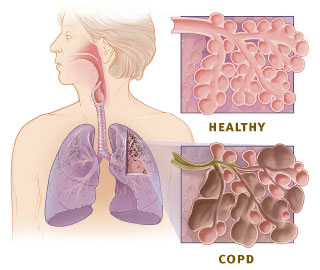
Chronic obstructive pulmonary disease ( ) is a common, preventable, and treatable chronic respiratory disease characterised by persistent airflow limitation that is usually progressive and associated with an enhanced chronic inflammatory response in the airways and the lung to noxious particles or gases [3]A1c. The diagnosis requires spirometric confirmation: a post-bronchodilator ratio of forced expiratory volume in 1 second to forced vital capacity (FEV1/FVC) < 0.70 [3]A1c. This defines the obstructive physiologic class that anchors all subsequent evaluation and .
Also Called / Synonyms: Chronic obstructive lung disease (COLD), chronic obstructive airway disease (COAD). The historical terms "chronic bronchitis" and "emphysema" are not synonyms but rather distinct phenotypes within the COPD spectrum.
Phases and Stages
- Stable COPD: No acute worsening of symptoms.
- Exacerbation (AECOPD): Acute worsening of respiratory symptoms requiring additional therapy [5]A1c.
- Pre-COPD: Symptomatic individuals with normal spirometry (FEV1/FVC ≥ 0.70) but with structural abnormalities (emphysema >5% on CT, bronchial thickening, or reduced diffusing capacity) or accelerated lung function decline in those < 50 years with >10 pack-year smoking history [68]D5[77]B2c.
- Young COPD: FEV1/FVC < 0.70 in individuals ≤ 50 years of age [77]B2c.
Classification of Types and Variants
| Name | Key Distinguishing Feature | Associated Marker/Subtype |
|---|---|---|
| Chronic bronchitis (CB) | Cough and sputum production for ≥3 months in 2 consecutive years | Mucus hypersecretion, goblet cell hyperplasia [23]D5 |
| Emphysema | CT evidence of parenchymal destruction; reduced diffusing capacity | Alpha-1 antitrypsin deficiency (AATD) in a subset [8]A1c[51]A1c |
| Frequent exacerbator phenotype | ≥2 moderate/severe exacerbations per year | History of prior exacerbations is the strongest predictor [36]B2b |
| Asthma-COPD overlap (ACO) | Persistent airflow obstruction with features of both asthma and COPD | Eosinophilic inflammation, variable airway obstruction [67]D5 |
| Eosinophilic phenotype | Blood eosinophil count ≥ 300 cells/μL | Responsive to inhaled corticosteroids and anti-IL-5 therapies [12]A1b[13]A1b[39]D5 |
| Alpha-1 antitrypsin deficiency (AATD) | Severely reduced AAT level (< 11 μmol/L) and emphysema | Genotype (PiZZ, PiSZ) [8]A1c[51]A1c |
| Preserved ratio impaired spirometry (PRISm) | FEV1/FVC ≥ 0.70 but FEV1 < 80% predicted; not COPD | Higher cardiometabolic risk (diabetes, , obesity) [48]B2a |
Clinical Significance
COPD is a leading cause of morbidity and mortality worldwide. In 2015, it caused 3.2 million deaths and was the third leading cause of death globally [32]B2c. The global prevalence among adults aged 30-79 years is 10.3% (GOLD definition), translating to 391.9 million affected individuals, with more than 80% living in low- and middle-income countries [15]B2c. The disease is underdiagnosed; many patients with symptomatic COPD remain undetected until advanced stages [68]D5.
Pearl: The diagnosis of COPD hinges on a single spirometric threshold (post-bronchodilator FEV1/FVC < 0.70), but the disease encompasses multiple phenotypes with distinct biology, treatment responses, and prognoses. The frequent exacerbator phenotype is the most clinically actionable, it predicts future exacerbation risk and guides escalation of inhaled therapy [36]B2b.
2. Pathophysiology and Mechanism
- ▸COPD involves interacting airway, parenchymal, immune, microbial, vascular, muscular, and sensorimotor mechanisms rather than a single pathological pathway. [693][694][697][701]
- ▸Smoke-associated neutrophil–macrophage crosstalk and epithelial inflammatory signaling are emerging mechanistic targets. [695][696]
- ▸Interleukin-4 and interleukin-13 may define an eosinophilic or type-2 inflammatory component, but their clinical significance remains controversial. [690]
- ▸Dysbiosis, impaired secretion clearance, and respiratory viral infection may contribute to exacerbation biology and tissue remodeling. [685][700][702]
- ▸Experimental angiotensin-(1–7) and ferroptosis-related interventions provide mechanistic hypotheses, but the cited evidence is predominantly preclinical. [683][692]
Overview
Chronic obstructive pulmonary disease (COPD) is a heterogeneous pulmonary disorder characterized by persistent respiratory symptoms and airflow limitation, with important inflammatory, structural, infectious, vascular, neuromuscular, and systemic components. Recent evidence emphasizes that COPD pathophysiology is not confined to the conducting airways: it includes airway inflammation and remodeling, emphysematous parenchymal destruction, impaired secretion clearance, immune dysregulation, pulmonary vascular abnormalities, skeletal-muscle dysfunction, and extrapulmonary sensorimotor impairment. [693]D[694]D[697]D[701]D
Airway inflammation and immune dysregulation
Cigarette smoke is a major driver of COPD, accounting for an estimated 80–90% of cases in the study cited, and promotes coordinated inflammatory interactions among epithelial cells, macrophages, neutrophils, and other immune populations. [695]D Single-cell analyses identified smoke-associated neutrophil–macrophage crosstalk as a potentially targetable mechanism, supporting the concept that reciprocal signaling between innate immune cells amplifies tissue injury and disease progression. [695]D Neutrophils are implicated in both stable COPD and acute exacerbations, while macrophage activation can increase production of pro-inflammatory mediators and neutrophil-attracting chemokines. [697]D[699]D
Persistent epithelial inflammation is another mechanistic component. Immediate early response 3 has been investigated as a smoke-responsive regulator of airway epithelial inflammation and as a potential therapeutic target, although the supplied evidence does not establish clinical efficacy of targeting this pathway. [696]D Adaptive immune remodeling and T-cell dysregulation are also increasingly studied in relation to persistent inflammation, tissue injury, and progression, but bibliometric evidence primarily documents research trends rather than proving a specific causal pathway. [694]D
COPD may contain overlapping inflammatory phenotypes. Interleukin-4 and interleukin-13 are T-helper-2 cytokines associated with eosinophilic airway inflammation and airway remodeling; however, their clinical and prognostic significance in COPD remains controversial, particularly in acute exacerbations and the frequent-exacerbator phenotype. [690] Fractional exhaled nitric oxide may provide complementary information about airway-inflammatory phenotypes, but differences in repeatability and agreement among analyzers mean that measurements from different devices should not automatically be treated as interchangeable. [686]
Structural remodeling, emphysema, and oxidative injury
Chronic inflammatory injury can produce airway remodeling and destruction of distal lung structures, contributing to established emphysema and impaired pulmonary architecture. In a murine elastase-induced emphysema model, oral angiotensin-(1–7) initiated after emphysema had been established attenuated structural alterations and subsequently protected against ovalbumin-induced allergic airway inflammation; treatment was given for four weeks and discontinued before allergen sensitization and challenge. [683] These findings support a possible modulatory role for the angiotensin-(1–7) pathway in experimental structural injury and inflammatory susceptibility, but they do not establish equivalent disease modification in humans. [683]
Oxidative stress and regulated cell injury are additional proposed mechanisms. In a cigarette-smoke/lipopolysaccharide rat model, Jiangxinwei Compound was investigated through the glycogen synthase kinase-3β/nuclear factor erythroid 2-related factor 2/glutathione peroxidase 4 axis and prostaglandin-endoperoxide synthase 2, with reported aims of suppressing ferroptosis and enhancing antioxidant capacity. [692] Because this evidence derives from network pharmacology and experimental validation, it supports mechanistic hypotheses rather than a proven clinical treatment mechanism. [692]
Infection, microbiota, and exacerbation biology
The respiratory microbiota is a dynamic, low-biomass ecosystem shaped by microbial immigration, elimination, local growth conditions, and host–environment interactions. In COPD, ecological equilibrium may shift toward dysbiosis, instability, and enrichment of pathobionts; the biological effect depends on community structure, microbial function, and host context rather than on the presence of a single organism alone. [700]D Respiratory syncytial virus and human metapneumovirus are described as important causes of respiratory disease in children, and recurrent early-life infections may be associated with later chronic pulmonary disease; in adults, these viruses can increase symptom burden in COPD and promote chronic inflammatory responses that modify lung tissue and remodeling. [702]D
Airway secretion retention worsens gas exchange and atelectasis and can precipitate failure of non-invasive respiratory support, prolong invasive ventilation, and increase respiratory complications in critically ill adults. [685] This provides a mechanistic link between impaired airway clearance, acute decompensation, and adverse outcomes, although the systematic review addressed high-frequency chest-wall oscillation in intensive care rather than the fundamental cause of COPD. [685]
Vascular, systemic, and neuromuscular mechanisms
Obstructive ventilatory defects can occur in patients with pulmonary arterial hypertension or chronic thromboembolic pulmonary hypertension even outside clearly defined obstructive lung disease, indicating that airflow obstruction and pulmonary vascular disease may coexist through incompletely understood mechanisms. [687] Prior cytomegalovirus infection has also been investigated as a possible contributor to impaired lung function in liver-transplant recipients, using spirometric airflow limitation and FEV1 as outcomes after adjustment for age, sex, cumulative smoking, and inhaled medication use; the supplied abstract does not provide the study’s final association estimates. [688]
COPD-associated skeletal-muscle dysfunction contributes substantially to exercise limitation and quality-of-life impairment and independently predicts mortality. Upregulation of the RANK/RANKL pathway has been proposed as a mediator of COPD-related musculoskeletal pathology, linking muscle and bone signaling to systemic disease manifestations. [701]D Respiratory, muscular, sensory, cognitive, and behavioral constraints may also interact to produce balance impairment; however, direct evidence for virtual-reality-based balance rehabilitation in stable COPD remains sparse. [693]D
Biomarkers and emerging mechanisms
Plasma bone morphogenetic protein 2 has been investigated as a potential COPD biomarker in a single-center cross-sectional study comparing patients with COPD and healthy participants, including correlation, logistic-regression, and receiver-operating-characteristic analyses. [689]C Small extracellular vesicles may mediate bidirectional communication in asthma and COPD by transferring proteins, lipids, and nucleic acids that influence inflammation, immunity, remodeling, and tissue repair; their cargo may also have potential as a liquid-biopsy signal or therapeutic vehicle. [698]D These emerging mechanisms remain candidates for further validation rather than established clinical determinants. [689]C[698]D
Clinical integration
The combined evidence supports COPD as a network disorder in which smoke or other exposures, epithelial injury, innate and adaptive immune activation, oxidative and ferroptotic stress, microbial dysbiosis, impaired mucus clearance, vascular disease, and systemic muscle dysfunction reinforce one another. [692][694]D[695]D[700]D[701]D During acute exacerbation, these processes may converge to increase airway inflammation, secretion retention, gas-exchange impairment, and ventilatory failure. [685][690][702]D Pharmacological and supportive interventions therefore address selected components of the disease network rather than reversing all established structural injury; even bronchodilator delivery during non-invasive ventilation concerns drug administration strategy, not correction of the underlying pathobiology. [684]
| Domain | Mechanistic signal | Evidence context |
|---|---|---|
| Innate immunity | Smoke-associated neutrophil–macrophage crosstalk; macrophage-derived inflammatory mediators and chemokines | Single-cell and experimental studies [695]D[699]D |
| Adaptive/type-2 immunity | T-cell remodeling; IL-4/IL-13-associated eosinophilic inflammation and remodeling | Bibliometric and systematic-review evidence [690][694]D |
| Structural injury | Established emphysema and pulmonary structural alteration | Murine elastase model; Ang-(1–7) intervention [683] |
| Oxidative/cell injury | NRF2/GPX4-related antioxidant signaling and ferroptosis hypothesis | Rat model and network pharmacology [692] |
| Infection and clearance | Dysbiosis, viral-associated inflammation, secretion retention, atelectasis | Reviews and critical-care evidence [685][700]D[702]D |
| Systemic disease | Skeletal-muscle dysfunction and RANK/RANKL signaling; balance impairment | Review and narrative evidence [693]D[701]D |
3. Epidemiology, Etiology and Risk Factors
- ▸COPD is described as a leading cause of mortality, particularly in low- and middle-income countries. [704] [706] [711]
- ▸COPD was present in 18.9% of a selected HFrEF cohort, but this is not a general-population prevalence estimate. [719]
- ▸The supplied references do not quantify the relative contributions of smoking, occupational exposure, biomass fuel, ambient pollution, infection, or genetic susceptibility to COPD. [703] [720]
- ▸Age, sex, and diabetes severity were prespecified effect modifiers in a T2DM target-trial emulation, but the supplied abstract does not report their COPD-specific effect estimates. [703]
- ▸Cannabis-related respiratory risk cannot be interpreted as COPD causation from the supplied abstract because no COPD-specific effect estimate is reported. [720]
- ▸The supplied studies confirm substantial COPD comorbidity and disease burden but provide limited new evidence on primary COPD etiology. [709] [711] [719]
Epidemiological importance
COPD is consistently characterized in the supplied literature as a major cause of morbidity, disability, and mortality, and is described as a leading cause of mortality, particularly in low- and middle-income countries (LMICs). [704] [706] [711] The available references do not provide a new population-based global prevalence or incidence estimate for COPD; instead, they address selected clinical populations, comorbidities, treatment cohorts, and prognostic outcomes. [704] [706] [709] [719]
A retrospective study of patients with heart failure with reduced ejection fraction (HFrEF) reported COPD in 71 of 375 participants (18.9%). [719] This estimate applies to a selected HFrEF cohort and should not be interpreted as prevalence in the general population. [719] The same study examined treatment optimization, mortality, and heart-failure readmissions, illustrating the substantial overlap between COPD and cardiovascular disease in clinical practice. [719]
Etiology and causal evidence
The supplied references do not establish a new causal model for COPD or quantify the relative contributions of tobacco smoking, occupational exposure, household air pollution, biomass fuel, ambient pollution, infection, or genetic susceptibility. [703] [704] [706] [720] The evidence base provided is therefore insufficient to calculate population-attributable fractions or to rank individual etiologic exposures. [703] [720]
A large emergency-department database study compared patients with cannabis-related disorders with patients categorized according to cigarette-smoking status and evaluated mortality, cardiovascular outcomes, lung and bronchus cancer, suicide, and reactive airway disease. [720] Although this study is relevant to respiratory exposure epidemiology, the supplied abstract does not report a COPD-specific effect estimate; cannabis use should therefore not be presented as an established independent cause of COPD on the basis of this reference alone. [720]
A study of patients with pulmonary arterial hypertension or chronic thromboembolic pulmonary hypertension found that obstructive ventilatory defects may occur even outside formally defined obstructive lung disease. [687] Because that study was a small, single-centre, retrospective cross-sectional analysis of 46 patients with pulmonary arterial hypertension and 45 with chronic thromboembolic pulmonary hypertension, it does not establish COPD etiology or population risk. [687]
Demographic and clinical risk modifiers
A target-trial-emulation study in adults with type 2 diabetes mellitus (T2DM) evaluated incident chronic lower respiratory disease and five subtypes, including COPD and emphysema, among new users of sodium-glucose cotransporter-2 inhibitors compared with glucagon-like peptide-1 receptor agonists or dipeptidyl peptidase-4 inhibitors. [703] The investigators specifically examined possible effect modification by age, sex, and diabetes severity. [703] However, the supplied abstract does not provide the corresponding effect estimates or confirm whether any of these variables materially modified COPD risk. [703] Accordingly, T2DM, age, sex, and diabetes severity should be regarded as prespecified clinical strata in this evidence—not as quantified independent COPD risk factors based on the information available here. [703]
The coexistence of COPD with other chronic respiratory and systemic disorders is clinically important. [709] A systematic review and meta-analysis specifically investigated osteoporosis prevalence and associated factors in adults with objectively diagnosed COPD, reflecting the recognized burden of skeletal comorbidity in this population. [709] The supplied abstract does not report the pooled prevalence or the magnitude of associations for the selected factors, so no numerical osteoporosis-risk estimate can be reliably reproduced here. [709] A separate multicentre analysis addressed osteoporosis and fragility fractures in bronchiectasis rather than COPD and should not be used to infer COPD-specific epidemiology. [710]
Interpretation and evidence limitations
Several supplied studies concern established COPD rather than the development of COPD, including prediction of future acute exacerbations, treatment of refractory dyspnea, health-related quality of life, hospitalized exacerbation mortality, invasive pulmonary aspergillosis, and inhaled-therapy comparisons. [704] [706] [711] [712] [714]C [715] These studies inform disease burden and prognosis but do not identify primary causes of COPD. [704] [706] [711] [712] [714]C [715]
The evidence is also geographically and clinically heterogeneous, encompassing Indian adults with COPD, Turkish patients with COPD or acute exacerbations, Chinese patients with T2DM or COPD-associated invasive aspergillosis, and selected European or multinational clinical cohorts. [703] [704] [705] [712] [714]C [715] [719] Results from these selected populations should not be generalized automatically to all regions or healthcare settings. [703] [704] [712] [719]
Overall, the supplied evidence supports COPD as a major global health problem with frequent cardiovascular, skeletal, and respiratory comorbidity, but it does not provide updated quantitative estimates for general-population prevalence, incidence, or the relative contribution of established environmental and genetic causes. [704] [706] [709] [719]
| Evidence domain | Findings from supplied references | Interpretation |
|---|---|---|
| Global importance | COPD is described as a leading cause of mortality and morbidity, especially in LMICs. [704] [706] [711] | Supports major disease burden; no new global prevalence estimate is provided. |
| Cardiovascular comorbidity | COPD occurred in 71/375 patients with HFrEF (18.9%). [719] | Applies to a selected HFrEF cohort, not the general population. |
| Diabetes and respiratory disease | SGLT-2 inhibitors were compared with GLP-1RA and DPP-4i for incident CLRD and COPD-related subtypes; age, sex, and diabetes severity were examined as modifiers. [703] | Direction and magnitude of COPD associations are not available in the supplied abstract. |
| Cannabis and cigarettes | A large ED study evaluated cannabis-related disorders, cigarette smoking, and several outcomes, including reactive airway disease. [720] | No COPD-specific estimate is reported in the supplied abstract. |
| COPD comorbidity | Osteoporosis prevalence and associated factors were systematically reviewed in objectively diagnosed COPD. [709] | Numerical pooled results are not available in the supplied abstract. |
4. Clinical Presentation
- ▸COPD may present with persistent airflow limitation, chronic inflammation, dyspnea, exercise limitation, and impaired quality of life. [722][711]
- ▸CAT, mMRC, SGRQ, 6-minute walk distance, exacerbation history, and functional status are clinically relevant measures of presentation and burden. [712][727][729]
- ▸AECOPD may require hospitalization or ventilatory support and can be complicated by secretion retention, impaired gas exchange, atelectasis, and increased mortality risk. [685][731][732][733]
- ▸COPD–OSA overlap is associated with greater nocturnal apnea, oxygen desaturation, and time with oxygen saturation below 90% than OSA with asthma in the cited comparative study. [726]
- ▸Assessment should consider skeletal-muscle impairment, pulmonary hypertension, diabetes, metabolic dysfunction-associated steatotic liver disease, adherence, and social or geographic context. [724][725][728][731][732][736]
Overview
COPD presents as a chronic respiratory syndrome characterized by persistent airflow limitation, chronic airway or systemic inflammation, oxidative stress, progressive functional impairment, and reduced quality of life. [722] Clinical expression is heterogeneous and may include chronic respiratory symptoms, exercise limitation, recurrent exacerbations, skeletal-muscle impairment, sleep-disordered breathing, and clinically important comorbidities. [722][725][726][736]
Chronic respiratory symptoms and functional limitation
The dominant patient experience is persistent respiratory impairment with reduced functional capacity and disease-related symptom burden. Dyspnea is a clinically important symptom, particularly in advanced disease, where it may remain refractory despite conventional treatment. [711] Exercise capacity is commonly evaluated using the 6-minute walk distance (6MWD), while dyspnea and health status can be quantified with the modified Medical Research Council scale (mMRC), COPD Assessment Test (CAT), and St. George’s Respiratory Questionnaire (SGRQ). [727][729] In a Turkish meta-analysis, the pooled mean baseline SGRQ total score was 51.22, illustrating substantial health-related quality-of-life impairment among studied patients, although estimates varied between studies. [712]
Functional limitation may be compounded by skeletal-muscle abnormalities. In hospitalized patients with acute exacerbation of COPD (AECOPD), computed-tomography-derived measures of the erector spinae, rectus abdominis, pectoral, and other thoracic muscles were investigated alongside routine clinical variables because post-exacerbation readmission risk remains high. [725] These findings support assessment of nutritional, muscular, and physical-function status when evaluating patients with advanced or recently exacerbated disease. [725]
Exacerbations and acute presentation
AECOPD is a clinically significant worsening of COPD that frequently leads to hospital admission and may be associated with respiratory compromise, impaired gas exchange, and increased short- and long-term risk. [731][733][737] Infection is a frequent trigger considered in studies of exacerbation prevention, and bacterial lysates have been evaluated specifically because COPD exacerbations are often infection-related. [721] In critically ill patients, airway-secretion retention may worsen gas exchange and atelectasis, precipitate failure of noninvasive respiratory support, prolong invasive ventilation, and increase respiratory complications and mortality. [685]
Acute severity is reflected not only by symptoms but also by the need for hospitalization, ventilatory support, and the presence of pulmonary hypertension. [732] Clinical-radiological models have been developed to estimate in-hospital mortality in severe AECOPD using clinical variables together with quantitative CT metrics, reflecting the prognostic value of integrating physiological and imaging information during acute illness. [733] After an exacerbation, patients may remain vulnerable to recurrent admission; a retrospective cohort therefore examined one-year readmission using CT-derived muscle metrics and routine clinical features. [725]
Sleep-related and respiratory comorbidity
Obstructive sleep apnea may coexist with COPD as the COPD–OSA overlap syndrome. Compared with patients with OSA and asthma, patients with COPD–OSA overlap in one clinical study had higher apnea–hypopnea index and oxygen-desaturation index values and spent more time with oxygen saturation below 90% during sleep. [726] Nocturnal symptoms, witnessed apneas, excessive sleepiness, and disproportionate nocturnal desaturation should therefore prompt assessment for coexisting sleep-disordered breathing in appropriate patients. [726]
Pulmonary hypertension is another clinically relevant phenotype, particularly among critically ill patients with COPD, in whom it is associated with a distinct high-risk population requiring mortality-risk assessment. [732] COPD also commonly coexists with type 2 diabetes; this combination has been associated with increased morbidity, systemic inflammation, impaired exercise capacity, and reduced quality of life. [728] Metabolic dysfunction-associated steatotic liver disease has likewise been investigated in older adults with COPD in relation to disease severity and functional measures, including spirometry and the 6-minute walk test. [736]
Patient-reported burden and treatment-related clinical signals
Clinical presentation includes how patients perceive symptoms, use treatment, and function in daily life. Poor inhaled-medication adherence is a recognized impediment to effective COPD management, and electronic monitoring with behavioral support has been studied to improve adherence and symptom-related outcomes. [724]C In routine care, treatment response is commonly tracked through CAT, SGRQ, treatment satisfaction, and annualized exacerbation rates. [729] Heterogeneity in exacerbation risk and response to inhaled corticosteroid-containing therapy may be related to blood eosinophil count and other patient characteristics, indicating that similar symptoms may reflect biologically different phenotypes. [723]
Population and contextual considerations
Clinical presentation may vary by social, geographic, and ethnic context. A study from remote northern Australia documented a substantial burden of AECOPD admissions among Aboriginal patients, including frequent remote air retrievals, underscoring the influence of access, remoteness, and health-system context on observed acute presentation. [731] Family-based case finding among smokers and cohabiting relatives has been used to identify previously undiagnosed COPD and characterize smoking-related clinical profiles, supporting consideration of spirometric assessment in at-risk individuals. [735]
Clinical assessment priorities
Assessment should combine symptom burden, exacerbation history, spirometry, exercise capacity, functional status, health-related quality of life, treatment adherence, comorbidities, and—when clinically indicated—sleep testing, CT-derived muscle or lung measures, and evaluation for pulmonary hypertension. [723][724]C[725][726][729][732][733] Following exacerbation, pulmonary rehabilitation studies have focused on improving exercise capacity, dyspnea, pulmonary function, and quality of life, while systematic evidence specifically evaluates subsequent admissions, mortality, HRQL, and exercise capacity. [727][737] In advanced disease with refractory dyspnea, opioid therapy has been investigated as a symptom-control option, but its role belongs to individualized, specialist palliative assessment rather than routine treatment of all COPD presentations. [711]
| Domain | Examples of relevant measures or features |
|---|---|
| Symptoms and health status | Dyspnea, CAT, mMRC, SGRQ, treatment satisfaction [711][712][729] |
| Functional capacity | 6-minute walk distance, exercise limitation, skeletal-muscle metrics [725][727][728] |
| Exacerbation severity | Hospitalization, ventilatory support, secretion retention, gas-exchange impairment, mortality risk [685][731][732][733] |
| Comorbid phenotypes | COPD–OSA overlap, pulmonary hypertension, diabetes, metabolic dysfunction-associated steatotic liver disease [726][728][732][736] |
| Longitudinal risk and care | Exacerbation recurrence, readmission, adherence, rehabilitation needs, and contextual barriers [721][724]C[725][737] |
5. Diagnosis and Workup (Pulmonary Function, Bronchoscopy and Imaging Anchored)
- ▸Anchor diagnosis in quality-assured post-bronchodilator spirometry and verify the original report rather than relying on an EHR diagnosis label. [742]
- ▸Recognize PRISm as **FEV1/FVC ≥0.70 with FEV1 <80% predicted**; it is not synonymous with COPD. [739]
- ▸Consider lower-limit-of-normal interpretation, repeat testing, lung volumes, DLCO, exercise assessment, and evaluation for cardiovascular or pulmonary vascular disease when findings are atypical. [687,739,743]
- ▸Use CT selectively to define emphysema, bronchiectasis, alternative disease, or procedural anatomy; routine bronchoscopy is not supported by the supplied evidence. [710,745]
- ▸Assess for OSA, bronchiectasis, pulmonary vascular disease, and relevant systemic comorbidity when symptoms or physiology are disproportionate. [687,710,726]
Diagnostic principle
COPD assessment should be anchored in objective pulmonary function testing, clinical context, and exclusion of alternative or coexisting disease. The supplied evidence does not establish a new diagnostic algorithm; it instead reinforces the importance of correctly captured and interpreted spirometry, recognition of non-obstructive patterns, and targeted assessment of structural and extrapulmonary contributors. [742]
Pulmonary function testing
Spirometry remains the central physiologic test. The post-bronchodilator FEV1/FVC ratio is particularly important because preserved ratio impaired spirometry (PRISm) is defined as post-bronchodilator FEV1/FVC ≥0.70 with post-bronchodilator FEV1 <80% predicted. [739] PRISm is heterogeneous and may precede COPD, so a low FEV1 with a preserved ratio should not automatically be labelled COPD; longitudinal reassessment and evaluation for cardiovascular and other comorbidity are appropriate. [739]
Spirometric interpretation should also consider the lower limit of normal rather than relying exclusively on a fixed ratio, because cohort analyses of PRISm and restrictive patterns incorporated individual FEV1/FVC lower-limit-of-normal thresholds in sensitivity analyses. [743] A restrictive-appearing pattern on spirometry requires confirmation with lung volumes when clinically indicated, because spirometry alone cannot establish restriction. This distinction is especially relevant when assessing patients with cardiovascular disease, obesity, neuromuscular disease, or parenchymal lung disease; the supplied COPD studies do not provide a validated diagnostic threshold for these differential diagnoses. [739][743]
Quality and availability of the actual pulmonary function report are practical diagnostic issues. In an inpatient electronic health-record cohort, pulmonary function reports could be stored in outpatient or laboratory systems rather than in the inpatient extract, and investigators therefore evaluated report capture and rule-based indexing of literal report terms. [742] A COPD diagnosis recorded in an EHR should consequently be verified against the original spirometry report whenever possible rather than inferred from an administrative label alone. [742]
PFTs also help characterize phenotype and comorbidity. In patients with COPD and type 2 inflammation enrolled in BOREAS and NOTUS, dupilumab-associated improvement was assessed using both pre- and post-bronchodilator FEV1 and FVC, illustrating the value of recording measurements in both states when treatment response or airway reversibility is clinically relevant. [738] However, these therapeutic findings do not establish diagnostic criteria for type 2 inflammation or COPD. [738]
Obstruction is not specific to COPD. Obstructive ventilatory defects were observed in patients with pulmonary arterial hypertension and chronic thromboembolic pulmonary hypertension even outside defined obstructive lung disease, supporting consideration of pulmonary vascular disease when symptoms, diffusion impairment, or hemodynamics are disproportionate to spirometry. [687] PRISm and restrictive spirometric patterns have also been investigated as cardiovascular-risk phenotypes, including incident atrial fibrillation and longitudinal respiratory outcomes. [739][743]
Additional physiologic and functional assessment
Diffusing capacity can be useful when emphysema, pulmonary vascular disease, or unexplained exercise limitation is suspected; the supplied PAH/CTEPH study specifically collected DLCO alongside PFTs and right-heart catheterization data. [687] Exercise testing may complement spirometry. Studies in COPD used the 6-minute-walk distance together with lung function and symptom measures to assess functional impairment or response to rehabilitation and other interventions. [727][730][741] These measures are supportive of severity and impact, not stand-alone diagnostic tests. [727][730][741]
Sleep-related breathing disorders should be considered when nocturnal symptoms, hypoxaemia, obesity, or disproportionate daytime impairment are present. In a clinical comparison, patients with COPD–OSA overlap had higher apnea–hypopnea index, oxygen desaturation index, and time with oxygen saturation below 90% than patients with asthma–OSA overlap; all participants underwent home sleep-apnea testing and spirometry. [726]
Imaging
Chest imaging is used to identify emphysema, hyperinflation, bronchiectasis, alternative diagnoses, and complications, and to support procedural planning. In a pilot study of severe emphysema treated with endoscopic coils, CT was obtained at baseline and 6 months, while pulmonary function, 6-minute-walk distance, symptoms, and adverse events were followed for 1 year. [745]C This supports CT-based structural characterization in selected advanced disease, but the study was nonrandomized, single-centre, and included only 15 patients; it does not define routine imaging thresholds. [745]C
Bronchiectasis should be considered when there is chronic productive cough, recurrent infection, or an atypical exacerbation pattern; the supplied population study identified bronchiectasis using ICD-10 code J47 while excluding cystic fibrosis, but did not provide a COPD-specific imaging algorithm. [710] Ultrasound and laboratory evaluation may be appropriate for important comorbidities such as metabolic dysfunction-associated steatotic liver disease, which was studied in COPD using liver ultrasound, spirometry, a 6-minute-walk test, and laboratory parameters; these tests are not diagnostic tests for COPD itself. [736]
Bronchoscopy
None of the supplied references validates bronchoscopy for routine COPD diagnosis. Bronchoscopy should therefore be reserved for a specific indication—such as suspected endobronchial obstruction, malignancy, unusual infection, foreign body, or another diagnosis requiring tissue or airway sampling—rather than used as a routine confirmation test; these indications are clinical principles and were not directly tested in the cited studies. [738][742][745]C
Evidence boundaries
Several supplied studies concern treatment, rehabilitation, metabolic comorbidity, postoperative pneumonia, fracture risk, or health-resource outcomes rather than diagnostic workup; they should not be used to redefine COPD diagnostic thresholds. [710][713][727][728][730][731][741][744] Cannabis exposure, diabetes-related small-airway dysfunction, and liver-transplant-associated lung-function impairment may complicate interpretation of respiratory symptoms or PFTs, but the cited studies do not establish COPD diagnostic criteria for these populations. [720][746][688]
| Finding | Definition or evidence anchor | Practical implication |
|---|---|---|
| Airflow obstruction | Interpret post-bronchodilator FEV1/FVC using clinical context and, where appropriate, LLN-based thresholds. [743] | Confirm technical quality and exclude alternative causes of obstruction. |
| PRISm | FEV1/FVC ≥0.70 and FEV1 <80% predicted post-bronchodilator. [739] | Do not label automatically as COPD; reassess longitudinally and evaluate comorbidity. |
| Possible restriction | Reduced FVC with preserved ratio; spirometry does not by itself prove restriction. [739][743] | Confirm with lung volumes when clinically indicated. |
| Disproportionate dyspnoea or low DLCO | Obstruction may occur in PAH/CTEPH and DLCO was assessed with hemodynamics. [687] | Consider pulmonary vascular disease and targeted cardiopulmonary evaluation. |
| Nocturnal desaturation | COPD–OSA overlap showed higher AHI, ODI, and T90 than asthma–OSA overlap. [726] | Consider home sleep-apnea testing when clinically suspected. |
6. Severity, Staging and Risk Stratification
- ▸COPD severity should be assessed multidimensionally using symptoms, health-related quality of life, exercise capacity, lung function, exacerbation history, acute respiratory failure, skeletal-muscle reserve, frailty, and comorbidities. [706][712][714][725]
- ▸Prior exacerbations, particularly hospitalised exacerbations, are important indicators of future readmission and mortality risk, but prediction models require cautious interpretation because validation and generalisability remain limited. [706][714][725][749]
- ▸Respiratory acidosis and hypoxaemic-hypercapnic respiratory failure identify acute high-risk disease and should prompt arterial blood-gas assessment and consideration of guideline-based non-invasive ventilation. [747]
- ▸Secretion retention, atelectasis, and failure of non-invasive support are critical-care severity markers, although high-frequency chest-wall oscillation is not an established staging method. [685]
- ▸CT-derived skeletal-muscle metrics, body composition, inflammatory indices, osteoporosis, and frailty may refine prognostic assessment but do not have universally validated staging thresholds. [709][714][725]
- ▸The cited evidence does not establish a new universal spirometric or composite COPD staging system. [706][709][712][714][725]
Scope and principles
The references supplied do not provide a replacement for established spirometric COPD staging systems or a complete validated severity classification. They instead support a multidimensional approach in which physiological impairment, symptoms, exacerbation history, acute respiratory failure, functional status, nutritional and skeletal-muscle reserve, comorbidity burden, and patient-centred outcomes are assessed together. [706][712][714]C[725] Risk stratification should therefore distinguish stable disease severity, future exacerbation risk, and short-term risk during or after acute exacerbation. [706][725][747]
Stable COPD: domains of severity
Symptoms and health-related quality of life are clinically important severity domains because COPD substantially affects respiratory health status; in a Turkish meta-analysis, pooled St George’s Respiratory Questionnaire scores were reported as a disease-burden measure, although the supplied abstract does not provide the complete numerical results. [712] Exercise limitation should be assessed alongside symptoms and lung function; pulmonary-rehabilitation trials in acute COPD evaluated six-minute walking distance, dyspnoea, pulmonary function, and COPD Assessment Test scores as complementary outcomes rather than relying on a single physiological measurement. [727]
Systemic consequences and comorbidities can identify patients with reduced reserve and potentially higher risk. Osteoporosis is sufficiently prevalent in COPD to warrant consideration during comprehensive assessment, and the updated systematic review specifically examined associated clinical factors and sources of heterogeneity across studies. [709] CT-derived skeletal-muscle measurements—including thoracic erector-spinae, abdominal, pectoral, and thoracic muscle areas—were investigated as markers that may improve prediction of one-year readmission after acute exacerbation beyond clinical variables alone. [725] These findings support documenting frailty, body composition, exercise capacity, and skeletal-muscle depletion when estimating risk, while recognising that the cited studies do not establish universal cut-offs for staging. [709][725]
Exacerbation-based risk stratification
A history of exacerbations remains central to future-risk assessment, but prediction should not depend on a single variable. A systematic review and meta-analysis evaluated multivariable models for future acute exacerbations and pooled their discrimination, while also assessing methodological quality and validation; the abstract indicates uncertainty in both predictive performance and model quality. [706] Prior-year hospitalised exacerbations were specifically examined as predictors of 90-day readmission in patients with eosinophilic acute exacerbations, and a preliminary single-centre model was developed in this subgroup. [749] Because that model was retrospective, single-centre, and restricted to 157 eosinophilic-criteria patients, it should not be generalised as a universal COPD staging instrument. [749]
Post-exacerbation risk is also influenced by muscle reserve and acute illness severity. A retrospective cohort of 192 inpatients with acute exacerbation developed and internally evaluated a one-year readmission model using CT-derived muscle metrics plus routine clinical variables; repeated five-fold cross-validation, discrimination, calibration, and decision-curve analysis were used to evaluate performance. [725] Hospitalised acute exacerbation carries substantial longer-term mortality risk, and a separate cohort examined whether combining CT-derived body composition with inflammatory indices improved one-year mortality prediction; the study was single-centre and retrospective, with 336 patients contributing to the primary follow-up cohort. [714]C
Acute respiratory failure and critical severity
Acute COPD severity should be escalated when exacerbation is accompanied by hypoxaemic-hypercapnic respiratory failure, respiratory acidosis, inability to maintain gas exchange, or need for ventilatory support. In a prospective multicentre cohort, ERS/ATS adherence to non-invasive ventilation recommendations was classified according to pH-based indications in patients with acute hypoxaemic-hypercapnic respiratory failure; underuse and overuse were evaluated in relation to in-hospital death or endotracheal intubation. [747] This supports arterial blood-gas assessment, particularly pH and carbon dioxide retention, when acute severity is uncertain. [747]
Airway secretion retention is an additional marker of critical illness because it can impair gas exchange, promote atelectasis, precipitate failure of non-invasive respiratory support, prolong invasive ventilation, and increase respiratory complications and mortality. [685] High-frequency chest-wall oscillation has been studied as a non-invasive airway-clearance technique in adult intensive-care patients, but the systematic review concluded that its precise ICU role remains uncertain; it should therefore not be used as a validated severity-staging tool. [685]
Comorbidity and treatment-context modifiers
Risk assessment should include clinically relevant comorbidities and competing risks. COPD commonly coexists with type 2 diabetes, and observational studies have examined whether empagliflozin affects pulmonary function, inflammatory markers, exercise capacity, and COPD-related symptoms, although the cited prospective study included only 31 participants and used a single-arm before-and-after design. [728] Separate target-trial emulations assessed incident chronic lower respiratory disease and COPD outcomes among people with type 2 diabetes initiating sodium-glucose cotransporter-2 inhibitors versus glucagon-like peptide-1 receptor agonists or dipeptidyl peptidase-4 inhibitors, with potential modification by age, sex, and diabetes severity. [703] These studies inform comorbidity-related risk research but do not alter COPD stage definitions. [703][728]
Infectious and treatment-related complications may further increase risk in advanced or hospitalised disease. Adult RSV burden in emerging-market countries has been systematically reviewed and modelled, supporting attention to viral respiratory infection as a potential precipitant of deterioration, although the cited abstract does not provide COPD-specific staging thresholds. [708] Invasive pulmonary aspergillosis treatment, therapeutic-drug monitoring, and CYP2C19 genotyping have also been evaluated in patients with COPD, reflecting the importance of recognising serious pulmonary infection in selected high-risk patients rather than treating all respiratory deterioration as routine exacerbation. [715]
Practical risk categories
A practical assessment can classify patients as: stable lower risk, when symptoms, function, comorbidity burden, and exacerbation history are limited; high future-risk, when exacerbations—especially hospitalised events—recur or when muscle depletion, frailty, severe symptoms, or major comorbidity are present; and acute high-risk, when respiratory acidosis, hypoxaemic-hypercapnic failure, secretion retention, ventilatory-support requirement, or marked systemic compromise occurs. [706][714]C[725][747] These categories are clinical descriptors rather than validated replacements for formal guideline staging, because the supplied evidence consists largely of systematic reviews, observational cohorts, and prediction-model studies with variable populations and limited external validation. [706][714]C[725][749]
Evidence limitations
Prediction models should be used to support—not replace—clinical assessment. The available evidence includes internally validated models, single-centre cohorts, retrospective designs, subgroup-specific populations, and heterogeneous outcome definitions. [706][714]C[725][749] No cited study establishes universal thresholds combining spirometry, symptoms, exacerbation frequency, CT body composition, inflammatory biomarkers, or comorbidities into one definitive COPD severity score. [706][709][712][714]C[725]
| Domain | Findings or indicators supported by the cited evidence | Interpretation |
|---|---|---|
| Symptoms and health status | Dyspnoea, COPD Assessment Test, SGRQ, and functional limitation | Quantify patient burden and treatment response; not sufficient alone for prognosis. [712][727] |
| Exacerbation risk | Recurrent or hospitalised exacerbations; eosinophilic exacerbation subgroup | Supports higher future-readmission risk, but models remain population-specific. [706][749] |
| Acute severity | Respiratory acidosis, hypoxaemic-hypercapnic respiratory failure, NIV requirement | Indicates high short-term risk and need for blood-gas-guided escalation. [747] |
| Physical reserve | Six-minute walking distance, frailty, osteoporosis, CT-derived muscle area | May identify vulnerability and improve readmission or mortality prediction. [709][714]C[725][727] |
| Critical-care complications | Secretion retention, atelectasis, impaired gas exchange, ventilatory-support failure | Indicates critical illness; airway-clearance intervention evidence remains uncertain. [685] |
| Comorbidity and infection | Diabetes, RSV, invasive pulmonary aspergillosis, systemic inflammation | Modifies risk and differential diagnosis but does not redefine COPD stage. [703][708][715][728] |
7. Acute Management and Exacerbation Rescue
- ▸Acute hypercapnia with respiratory acidosis requires urgent evaluation for non-invasive respiratory support; HFNO versus NIV evidence is emerging, but the supplied abstract does not report pooled outcomes [751].
- ▸NIV or HFNO requires continuous reassessment, with escalation to invasive ventilation when clinical or physiological deterioration persists [751].
- ▸Secretion retention and mucus plugging can worsen gas exchange and precipitate non-invasive support failure; HFCWO may be considered selectively, but definitive ICU outcome estimates are not provided [685][753].
- ▸Blood eosinophils may help identify heterogeneous benefit from ICS-containing maintenance therapy, but no validated threshold or acute rescue effect is supplied [723].
- ▸Patients with baseline PaCO2 **45–52 mmHg** after hypercapnic hospitalization may remain hypercapnic at **3 months**; structured follow-up is warranted [755].
- ▸Prior admissions, eosinophilic phenotype, skeletal-muscle depletion, adherence, comorbid osteoporosis, diabetes, and OSA overlap should inform post-exacerbation planning [703][709][725][726][728][749].
Scope and immediate assessment
An acute exacerbation of COPD (AECOPD) should be treated as a time-critical deterioration requiring assessment of respiratory effort, mental status, gas exchange, secretion burden, precipitating illness, and need for escalation of respiratory support. The supplied evidence base does not provide a complete pharmacological rescue algorithm; therefore, treatment decisions should be individualized according to clinical severity and local protocols. Prediction models may support risk stratification but should not replace bedside assessment: systematic reviews have identified conventional and machine-learning models for future exacerbation risk, while methodological quality, calibration, and applicability remain important limitations [706][752].
Particular attention is required when acute hypercapnia is accompanied by respiratory acidosis, because this population commonly requires ventilatory support. A 2026 systematic review and meta-analysis of randomized trials was specifically designed to compare high-flow nasal oxygen (HFNO) with non-invasive ventilation (NIV), using intubation or invasive mechanical ventilation as the primary outcome and evaluating mortality, crossover, length of stay, physiological parameters, and adverse events as secondary outcomes [751]. The abstract supplied here does not report the pooled effect estimates; consequently, it does not justify replacing NIV with HFNO or establishing equivalence between the modalities. NIV and HFNO should be selected with continuous reassessment of clinical response, tolerance, gas exchange, and readiness for invasive ventilation if deterioration occurs [751].
Respiratory support and escalation
NIV remains the principal comparator in the available evidence for acute hypercapnic exacerbation with respiratory acidosis, whereas HFNO is an alternative non-invasive modality under evaluation [751]. Failure of non-invasive support should be suspected when respiratory distress, worsening acidosis or hypercapnia, impaired consciousness, refractory hypoxaemia, or inability to clear secretions persists; these clinical triggers are consistent with the outcomes selected in the comparative evidence base, although the supplied abstract does not specify operational thresholds [751]. Intubation and invasive mechanical ventilation should therefore be considered when non-invasive support is ineffective, contraindicated, or poorly tolerated, with decisions individualized to reversibility, comorbidity, functional status, and goals of care [751].
Airway secretion retention is clinically important because it can impair gas exchange and promote atelectasis, precipitate failure of non-invasive respiratory support, and prolong invasive ventilation [685]. A systematic review of high-frequency chest-wall oscillation (HFCWO) in adult intensive-care patients evaluated efficacy and safety through December 2025, but the supplied abstract does not report the direction or magnitude of pooled outcomes [685]. HFCWO should therefore be regarded as an adjunctive airway-clearance option in selected patients with clinically important secretion retention, rather than a universal replacement for standard secretion-management measures [685]. Mucus plugging is reported across chronic respiratory diseases, including COPD, and a systematic review assessed its prevalence, clinical characteristics, and associations with outcomes; the supplied abstract does not provide the COPD-specific estimates [753].
Pharmacological and phenotype-guided rescue
The supplied references do not provide comparative acute-care results for short-acting bronchodilators, systemic corticosteroids, antibiotics, or oxygen titration; those interventions should therefore follow current institutional and guideline-based protocols rather than be inferred from the studies listed here. Inhaled corticosteroid (ICS) decisions are relevant to exacerbation prevention and subsequent rescue planning: causal machine-learning analyses of the IMPACT trial were designed to examine heterogeneity in the effect of fluticasone furoate/umeclidinium/vilanterol versus umeclidinium on time to first exacerbation and exacerbation rate, with blood eosinophils identified as a potential response marker [723]. These data support individualized reassessment of ICS-containing therapy, but the supplied abstract does not provide treatment-effect estimates or a validated eosinophil threshold [723].
Patients with COPD and type 2 diabetes require attention to comorbidity and medication safety. Target-trial emulations evaluated SGLT-2 inhibitors versus GLP-1 receptor agonists and DPP-4 inhibitors for incident chronic lower respiratory disease and COPD-related outcomes, but the supplied abstract does not report the effect estimates [703]. A prospective, single-arm study of 31 patients assessed empagliflozin for three months in coexisting COPD and diabetes, including pulmonary function, inflammatory markers, exercise capacity, and symptoms; its design cannot establish acute rescue efficacy or causality [728].
Recovery, discharge, and relapse prevention
Early rehabilitation during or after AECOPD may aid recovery. A systematic review and meta-analysis of 11 randomized trials evaluated nursing-coordinated pulmonary rehabilitation against routine care using six-minute-walk distance, lung function, dyspnoea, and COPD Assessment Test outcomes [727]. The supplied abstract does not report pooled estimates, so rehabilitation should be considered a recovery intervention rather than an acute substitute for respiratory support [727]. External diaphragm pacing combined with breathing training was studied in a randomized cohort of 97 patients and included pulmonary function and arterial blood-gas outcomes, but the abstract does not establish its role in emergency rescue [741].
Readmission prevention should begin before discharge. Prior hospitalized exacerbations were examined as predictors of 90-day readmission in 157 patients meeting eosinophilic criteria, while a separate retrospective study developed a one-year readmission model using CT-derived skeletal-muscle metrics and routine variables in 192 inpatients [749][725]. Persistent hypercapnia after discharge is also clinically relevant: among patients hospitalized with hypercapnic exacerbation, inpatient PaCO2 and prior hospitalization data were used to predict persistent hypercapnia at three months; in the reported training cohort, 59% of patients with baseline PaCO2 45–52 mmHg had persistent hypercapnia [755]. These findings support structured follow-up of patients with severe exacerbations, hypercapnia, recurrent admissions, or reduced muscle reserve [725][749][755].
Multidisciplinary care may improve continuity of post-exacerbation management. A seven-year Taiwanese analysis evaluated a LINE-based multidisciplinary model across the COVID-19 era, including treatment delivery, psychological well-being, health-related quality of life, length of stay, readmissions, and one-year survival [756]. Digital therapeutic programs combining electronic inhaler monitoring with behavioral support were also evaluated in a pilot randomized trial targeting adherence and symptom outcomes [724]C. Osteoporosis, which is common in COPD, should be assessed during recovery planning because a 2026 global meta-analysis evaluated its prevalence and associated factors [709]. OSA-COPD overlap may worsen nocturnal respiratory burden, with higher apnoea-hypopnoea index, oxygen-desaturation index, and time below 90% oxygen saturation reported in one comparative study [726].
Safety and evidence limitations
The cited studies provide important updates but do not constitute a single acute-care pathway. HFCWO, HFNO, rehabilitation, digital adherence support, diaphragm pacing, and multidisciplinary models require selection according to patient phenotype, resources, and clinical stability [685][727][741][724]C[756]. Propolis added to standard chlorhexidine oral care was studied in 60 critically ill patients with COPD for prevention of oral mucositis, but this intervention is supportive rather than an exacerbation-rescue treatment [754].
| Clinical issue | Evidence-supported implication |
|---|---|
| Hypercapnic respiratory acidosis | Compare and individualize HFNO versus NIV; monitor for failure and need for intubation [751] |
| Secretion retention or mucus plugging | Consider targeted airway-clearance strategies; HFCWO evidence in ICU remains incompletely defined [685][753] |
| Recurrent exacerbation risk | Use clinical history and validated models cautiously; prediction tools should complement, not replace, assessment [706][752] |
| Persistent hypercapnia | Arrange follow-up, particularly with inpatient PaCO2 45–52 mmHg or prior hospitalization [755] |
| Readmission prevention | Assess skeletal muscle, eosinophilic phenotype, adherence, rehabilitation needs, and multidisciplinary support [724]C[725][727][749][756] |
8. Long-term and Definitive Management
- ▸Use longitudinal reassessment of symptoms, exacerbations, HRQoL, inhaler technique, adherence, comorbidities, and adverse effects.[724][729][758]
- ▸LABA/LAMA combinations and device selection remain important maintenance-treatment considerations; the available randomized evidence compares formulations over 12 weeks.[704]
- ▸Reserve ICS-containing treatment for patients with a plausible exacerbation-prevention benefit, using eosinophil count and clinical history as part of individualized assessment; no validated machine-learning threshold is established by the supplied evidence.[723]
- ▸Digital inhaler monitoring, behavioral support, and standardized education are evidence-informed strategies for improving adherence.[724][758]
- ▸Pulmonary rehabilitation, multidisciplinary follow-up, and carefully selected supportive interventions may improve long-term outcomes, but much of the newer evidence is observational or exploratory.[730][741][756]
- ▸Evaluate cardiovascular, metabolic, pulmonary vascular, transplant-related, and infection-related comorbidities when symptoms or physiology are atypical.[687][688][703][719][760]
Management objectives and reassessment
Long-term COPD management should be directed toward reducing exacerbations, preserving function, improving health-related quality of life (HRQoL), and supporting sustained adherence. These outcomes are clinically important because COPD is associated with substantial symptom burden, impaired HRQoL, recurrent acute exacerbations, hospitalisation, and mortality.[712][752][756] The St George’s Respiratory Questionnaire (SGRQ) has been used extensively to quantify disease-related HRQoL; a meta-analysis of 54 Turkish studies involving 4,561 patients reported a pooled mean SGRQ score of 51.22, although this estimate was derived from study-level observational data.[712]
Treatment should be reviewed longitudinally rather than prescribed as a static regimen. Reassessment should include symptoms, exacerbation history, inhaler technique, adherence, adverse effects, comorbidities, functional status, and patient-reported outcomes.[724]C[729][758] In a prospective real-world study of 571 patients with moderate-to-severe COPD receiving budesonide/glycopyrronium/formoterol (BGF), the primary outcome was change in COPD Assessment Test score at 3 months, with SGRQ, treatment satisfaction, and annualised exacerbation rate assessed over 12 months.[729]
Maintenance inhaled pharmacotherapy
Long-acting bronchodilation remains central to maintenance treatment. Two randomized phase III trials in Indian adults evaluated vilanterol/umeclidinium delivered by metered-dose and dry-powder inhalers against vilanterol/glycopyrronium over 12 weeks, using trough FEV1 and a prespecified non-inferiority margin of −100 mL.[704] These trials support evaluation of device platform, local availability, and patient ability to use the inhaler correctly when selecting a LABA/LAMA combination; the supplied evidence does not establish superiority of one formulation over another.[704]
Inhaled corticosteroids (ICS) should be targeted to patients likely to benefit rather than used indiscriminately. High blood eosinophil counts are recognized predictors of enhanced ICS response, and causal machine-learning analyses of the IMPACT trial were designed to identify heterogeneity in the effects of fluticasone furoate/umeclidinium/vilanterol versus umeclidinium/vilanterol on time to first exacerbation and exacerbation rate.[723] The study’s rationale supports individualized ICS decisions, but the supplied abstract does not provide a validated treatment threshold or permit routine use of machine-learning predictions in clinical practice.[723]
Real-world evidence also supports assessing triple therapy as an option for selected moderate-to-severe patients. The prospective RECORD study evaluated BGF for symptom scores, HRQoL, treatment satisfaction, and exacerbation outcomes, but its single-arm observational design limits causal inference and does not establish superiority over alternative inhaled regimens.[729] Removal of prior authorization for LAMA coverage in British Columbia was examined as a population-level strategy to improve guideline-concordant maintenance inhaler use, while ICS/LABA coverage was restricted; this evidence highlights the influence of prescribing policy and medication access on treatment selection.[759]
Adherence, education, and digital support
Adherence is a modifiable determinant of maintenance-treatment effectiveness. A pilot randomized trial evaluated a multicomponent digital therapeutic combining electronic inhaler monitoring with behavioral support to improve inhaled-medication adherence and symptom-related outcomes.[724]C A multicenter prospective pre-post study further examined whether standardized COPD education and improvements in specific knowledge domains were associated with better inhaled-medication adherence.[758] These interventions should complement, not replace, inhaler-technique assessment, shared decision-making, and review of affordability and access.[724]C[758][759]
Pulmonary rehabilitation and supportive therapies
Pulmonary rehabilitation remains an important long-term nonpharmacological strategy. A retrospective cohort compared conventional rehabilitation with a sequential program involving 12 months of negative-pressure ventilation followed by hospital-based rehabilitation with lower-limb exercise twice weekly; the study was specifically designed to examine long-term effects, but its retrospective design limits certainty about efficacy.[730] A randomized study of 97 patients evaluated external diaphragm pacing added to breathing training and assessed pulmonary function, arterial blood gases, and quality of life.[741] These approaches are promising adjuncts, but neither study establishes them as replacements for established rehabilitation or standard respiratory support pathways.[730][741]
Exacerbation prevention and advanced risk stratification
Preventing acute exacerbations requires identification of high-risk patients and coordinated follow-up. A systematic review evaluated machine-learning and deep-learning models for predicting acute exacerbations using studies published from 2021 to 6 May 2026, with methodological quality and applicability assessed using PROBAST+AI.[752] Because prediction performance and external validity vary between models, such tools should be considered investigational unless locally validated and shown to improve clinical decisions.[752]
A seven-year Taiwanese analysis examined multidisciplinary-team care after hospitalization for acute exacerbation, including pharmacological and nonpharmacological treatment, psychological well-being, HRQoL, length of stay, readmissions, and 1-year survival.[756] This supports coordinated, multidisciplinary follow-up as a practical framework, while the retrospective design prevents attributing outcomes solely to the team model.[756]
Comorbidity, safety, and individualized care
Comorbid cardiovascular disease requires coordinated management. In a retrospective cohort of patients with heart failure with reduced ejection fraction, COPD coexisted with differences in treatment optimization, mortality, and heart-failure readmission outcomes; inhaled treatment and heart-failure therapies therefore need joint review.[719] In patients with COPD and type 2 diabetes, two active-comparator target-trial emulations evaluated SGLT-2 inhibitors versus GLP-1 receptor agonists and DPP-4 inhibitors for incident chronic lower respiratory disease and COPD-related subtypes, including emphysema.[703] These findings are relevant to integrated cardiometabolic prescribing, although the supplied abstract does not report the effect estimates.
When airflow obstruction occurs in patients with pulmonary hypertension, it may not represent conventional COPD; obstructive ventilatory defects were described in cohorts with pulmonary arterial hypertension and chronic thromboembolic pulmonary hypertension.[687] Diagnostic reassessment is therefore appropriate when physiology or clinical course is atypical. Similarly, prior CMV infection was investigated in a nationwide cohort of liver-transplant recipients with impaired lung function, underscoring the importance of transplant-specific causes and comorbidity assessment rather than assuming all obstruction is COPD.[688]
In critically ill patients with COPD, a randomized trial evaluated propolis gargling added to standard chlorhexidine oral care for prevention of oral mucositis over 15 days; this is an ICU oral-care intervention and should not be generalized to routine outpatient COPD management.[754] Genetic variants may influence response to LABA, LAMA, and combination inhalers, but the available evidence is a systematic review of heterogeneous pharmacogenetic studies and is insufficient to support routine genetic testing.[757] Finally, GLP-1 receptor agonists and DPP-4 inhibitors have been compared for sepsis outcomes in COPD with type 2 diabetes, emphasizing that infection risk and metabolic treatment should be considered together.[760]
| Domain | Updated evidence | Main limitation |
|---|---|---|
| Bronchodilation | Vilanterol/umeclidinium was evaluated against vilanterol/glycopyrronium by MDI and DPI over 12 weeks.[704] | Formulation-specific evidence; no basis for universal product preference.[704] |
| ICS/triple therapy | Causal machine learning examined heterogeneous ICS effects in IMPACT; BGF was assessed prospectively in routine care.[723][729] | No validated treatment threshold; BGF study was single-arm.[723][729] |
| Adherence | Electronic monitoring plus behavioral support and standardized education were evaluated.[724]C[758] | Pilot or observational/pre-post designs.[724]C[758] |
| Rehabilitation/support | Long-term negative-pressure ventilation plus rehabilitation and external diaphragm pacing were studied.[730][741] | Retrospective or small randomized evidence; uncertain generalizability.[730][741] |
| Exacerbation prevention | ML/DL prediction and multidisciplinary follow-up were investigated.[752][756] | External validation and causal benefit remain limited.[752][756] |
History and Evolution of Treatment
- ▸Current COPD treatment is evolving from symptom control toward phenotype-guided, exacerbation-preventive, device-adapted, and digitally supported care. [723][724][761][763][765]
- ▸ICS benefit is heterogeneous; blood eosinophils and other patient characteristics may help identify greater responders. [723]
- ▸Nebulized glycopyrronium/formoterol/budesonide was non-inferior to metered-dose-inhaler triple therapy for trough FEV1 at week 12 in 314 patients. [761]
- ▸Dupilumab targets IL-4 receptor-α and reduced moderate or severe exacerbations by approximately 30%–34% in eosinophil-enriched patients receiving triple inhaled therapy. [765]
- ▸Digital adherence programs, readmission prediction, functional assessment, comorbidity management, and social-context evaluation are increasingly integrated into COPD care. [724][762][764][744][767][768]
From symptom relief to multidimensional disease management
The contemporary evolution of COPD treatment is represented by a shift from symptom-focused bronchodilation toward phenotype-guided, exacerbation-preventive, device-adapted, and digitally supported care. The supplied evidence does not provide a continuous historical account of early COPD therapies; instead, it documents the direction of current treatment development in 2026. Across these studies, treatment is increasingly selected according to exacerbation history, eosinophilic or type 2 inflammation, inhaler capability, functional impairment, comorbidity, and risk of readmission. [723][749][762][763][765]
Inhaled bronchodilators and triple therapy
Inhaled long-acting bronchodilators remain the pharmacological foundation against which newer strategies are evaluated. The IMPACT trial data were used to investigate whether the benefit of inhaled corticosteroid (ICS)-containing fluticasone furoate/umeclidinium/vilanterol (FF/U/V) differs among patients when compared with umeclidinium/vilanterol (U/V). The associated causal-machine-learning analysis specifically sought heterogeneous effects on time to first exacerbation and exacerbation rate, extending treatment selection beyond a single average trial effect. [723]
The evidence also supports a more individualized approach to ICS use. Blood eosinophil counts are recognized as predictors of enhanced ICS response, while the newer analysis explored whether additional clinical characteristics could identify patients who derive greater or lesser benefit. [723] This is particularly relevant in patients with recurrent exacerbations, including those meeting eosinophilic criteria, in whom prior-year hospitalized exacerbations were investigated as predictors of 90-day readmission. [749]
Device choice has become part of treatment evolution. A randomized trial in 314 patients found that nebulized glycopyrronium/formoterol/budesonide was non-inferior to the corresponding metered-dose inhaler triple combination for change in trough FEV1 at week 12. The study addresses patients unable to use metered-dose or dry-powder inhalers effectively and indicates that nebulized triple therapy may extend access to combination treatment when inhaler technique is a limiting factor. [761]
Precision anti-inflammatory and biologic treatment
Treatment has progressed from broad anti-inflammatory therapy toward biologic targeting of defined inflammatory endotypes. Type 2 inflammation is described as affecting approximately 20%–40% of patients with COPD and is characterized by elevated blood eosinophils, increased fractional exhaled nitric oxide, and activation of the interleukin-4/interleukin-13 pathway. [765] Dupilumab, which blocks the shared IL-4 receptor-α subunit, is identified as the first biologic approved for COPD after the BOREAS and NOTUS phase 3 trials. In eosinophil-enriched patients already receiving triple inhaled therapy, those trials demonstrated approximately 30%–34% reductions in moderate or severe exacerbations. [765]
This development changes the treatment sequence for selected patients: persistent exacerbations despite optimized inhaled triple therapy may prompt inflammatory phenotyping and consideration of targeted biologic therapy rather than indiscriminate escalation of corticosteroids. However, the supplied source is a precision-targeting review rather than a direct treatment trial, so candidate selection and implementation should be interpreted within the described eosinophilic and type 2 profile. [765]
Rehabilitation, breathing support, and functional treatment
Nonpharmacological treatment has also evolved from general advice toward structured, measurable interventions. A randomized study of 97 patients evaluated external diaphragm pacing added to breathing training and assessed pulmonary function, arterial blood gases, quality of life, and related outcomes. This supports continued investigation of respiratory-muscle and breathing-based interventions as complements to medication, although the study design and setting limit conclusions about long-term routine-care effectiveness. [741]
Functional capacity is increasingly treated as a clinically meaningful outcome rather than relying only on spirometry. A retrospective study of 75 adults compared an absolute six-minute-walk threshold of ≤350 m with a relative threshold of ≤80% of predicted distance and examined their relationship with resting hypoxemia. [764]C Community-based data further show that mild-to-moderate COPD is heterogeneous, with phenotypes based on symptoms, exacerbations, emphysema, air trapping, and airway remodeling having differing prognostic implications over 3 years. [763]
Digital adherence and risk-directed care
The treatment model now includes adherence technology and post-discharge risk management. A pilot randomized trial evaluated a multicomponent digital therapeutic combining electronic inhaler monitoring with behavioral support to improve inhaled-medication adherence and symptom-related outcomes. [724]C Machine-learning approaches have likewise been developed to predict 3-month unplanned readmission after hospitalization for moderate-to-severe COPD, supporting earlier targeting of follow-up and transitional care. [762]
Treatment planning increasingly incorporates comorbidity and social context. Cardiovascular events such as myocardial infarction or stroke were studied as time-varying exposures in relation to mortality and hospital resource use in COPD. [744] Body mass index was evaluated against in-hospital and 30-, 90-, and 360-day mortality in hospitalized COPD-coded patients. [767] Social activity restriction was examined in relation to acute exacerbations and 4-year mortality, indicating that social participation may be relevant to comprehensive disease management. [768]
Emerging and supportive therapies
Several approaches remain investigational or supportive rather than established COPD standards. Oral angiotensin-(1-7) attenuated structural alterations in established elastase-induced emphysema in mice and was tested for protection against subsequent allergic airway inflammation; these findings are preclinical and cannot be assumed to establish human efficacy. [683] Sodium-glucose cotransporter-2 inhibitors are being evaluated in people with type 2 diabetes through active-comparator target-trial emulations against GLP-1 receptor agonists and DPP-4 inhibitors, with incident chronic lower respiratory disease and COPD among the outcomes; this represents observational comparative-effectiveness research rather than COPD-directed treatment evidence. [703]
Other studies address supportive care and treatment delivery rather than disease modification. Propolis added to standard chlorhexidine oral care was tested for oral mucositis prevention in critically ill patients with COPD. [754] Electronic health-record work has highlighted incomplete capture of pulmonary-function reports, an important limitation for treatment eligibility assessment and COPD research. [742] Finally, studies of nebulizer efficiency in emergency asthma care excluded patients with COPD and therefore should not be generalized to COPD treatment. [748]C Obstructive patterns in pulmonary hypertension populations may also occur without established COPD, reinforcing the need to confirm the underlying diagnosis before applying COPD treatment pathways. [687]
Current trajectory
The overall trajectory is toward individualized treatment: long-acting inhaled therapy remains central; ICS is increasingly guided by eosinophilic risk and predicted response; biologics target selected type 2 inflammation; nebulization accommodates impaired device use; rehabilitation and functional assessment complement pharmacotherapy; and digital monitoring, predictive analytics, comorbidity management, and social assessment extend treatment beyond the inhaler. [723][724]C[741][761][762][763][765][768]
| Treatment domain | Current direction | Evidence or threshold |
|---|---|---|
| Inhaled therapy | Average treatment effects are supplemented by response prediction and phenotype selection | ICS heterogeneity analyzed using IMPACT data; eosinophils are an important response marker [723] |
| Triple therapy delivery | Device selection is adapted to patient ability | Nebulized triple therapy non-inferior to MDI at week 12 in 314 patients [761] |
| Biologic therapy | Type 2 inflammation is targeted in selected patients | Approximately 20%–40% may have T2 features; exacerbations reduced approximately 30%–34% with dupilumab in cited phase 3 evidence [765] |
| Rehabilitation and function | Breathing interventions and walking capacity complement spirometry | 6MWT thresholds of ≤350 m and ≤80% predicted evaluated [741][764]C |
| Care systems | Adherence, readmission, comorbidity, and social risk are monitored | Digital adherence support and 3-month readmission prediction investigated [724]C[762] |
9. Respiratory Support, Procedures & Interventional Pulmonology (Specialty-Distinctive)
- ▸PR remains the foundation for functional recovery and should be tailored to hyperinflation, fatigue, chronic respiratory failure, falls risk, behavioral adaptation, and access constraints. [774][775][776][778]
- ▸Digital rehabilitation, mind-body exercise, WBVT, and complementary therapies are supported by randomized evidence but should be considered adjuncts to—not replacements for—comprehensive PR. [769][770][771]
- ▸NPV, bronchoscopic cryospray, and reversible coil-based lung-volume reduction are emerging specialist interventions with evidence ranging from retrospective cohort data to early feasibility studies. [730][745][773]
- ▸Advanced COPD requires timely specialist referral for transplantation assessment and careful evaluation of perioperative and donor-related risks. [779][780]
- ▸Bronchoscopy may provide clinically important phenotyping in unusual airway infection and should be interpreted alongside pulmonary function and haemodynamic data when pulmonary hypertension coexists. [687][781]
Scope and clinical positioning
Respiratory support and interventional pulmonology in COPD should be integrated with pulmonary rehabilitation (PR), exacerbation prevention, symptom surveillance, and assessment for advanced therapies. Recent evidence reinforces PR as a central non-pharmacological intervention, while also identifying selected roles for non-invasive ventilatory support, bronchoscopic therapies, lung-volume-reduction procedures, and transplantation. [769][770][771][776]
Pulmonary rehabilitation and supported exercise
PR can influence more than exercise tolerance. A 2026 systematic review and meta-analysis evaluated its effects on static and dynamic hyperinflation, using inspiratory capacity (IC) as the primary outcome and residual volume, the residual-volume/total-lung-capacity ratio, and other hyperinflation measures as secondary outcomes. [776] Nursing-coordinated PR has also been assessed during acute COPD exacerbations in 11 randomized controlled trials, with outcomes including 6-minute walking distance, FEV1, FVC, FEV1/FVC, mMRC dyspnea, and CAT scores. [727]
Adjunctive exercise approaches include whole-body vibration training (WBVT), evaluated in 15 randomized controlled trials for functional capacity, five-repetition sit-to-stand performance, muscle strength, pulmonary function, and quality of life. [769] Complementary therapies—including yoga, tai chi/qigong, music therapy, cognitive behavioral therapy, relaxation techniques, and water-based exercise—were examined in 36 randomized controlled trials involving 3,148 participants. [770] A network meta-analysis compared synchronous telerehabilitation, composite digital interventions, tai chi, Baduanjin, and yoga against usual care using 6-minute walking distance, FEV1, FVC, SGRQ, and CAT as outcomes. [771]
PR delivery should be individualized for advanced disease and chronic respiratory failure. A multicentre randomized placebo-controlled trial studied L-arginine plus liposomal vitamin C during a standardized 28-day PR program in stable COPD with chronic respiratory failure receiving long-term oxygen therapy; fatigue was assessed with the Fatigue Severity Scale. [774] A prospective observational study examined dietary intake and leptin during a 6-week PR program, including exploratory analyses according to achievement of high-intensity exercise training defined as at least 80% of prescribed intensity. [777] In older patients with GOLD III-IV disease, a 3-week multidisciplinary PR program was studied in 102 participants, with functional response assessed by change in 6-minute walking distance and exploratory analyses of behavioral adaptation and coping. [778]
Balance, gait, and neuromuscular impairment are relevant to supported rehabilitation because a systematic review of 25 studies involving 1,295 participants examined their associations with falls and fall-related outcomes in COPD. [775] Monitoring during maintenance PR may also support early exacerbation recognition: a prospective multicentre study followed 128 stable patients and repeatedly recorded CAT, mBorg dyspnea, and endurance exercise performance in MET-minutes to evaluate prediction of severe exacerbations. [782]
Non-invasive and negative-pressure respiratory support
Negative-pressure ventilation (NPV) remains an emerging rather than established COPD intervention. A retrospective cohort of 125 patients compared a sequential program consisting of 12 months of NPV followed by hospital-based PR with PR alone; the exercise component included lower-limb training twice weekly. [730] Because this evidence was retrospective, NPV should be regarded as investigational and selected for specialist assessment rather than routinely substituted for established ventilatory strategies. [730]
Bronchoscopic and endoscopic interventions
For COPD with chronic bronchitis, metered-dose liquid-nitrogen cryospray was evaluated in the prospective, sham-controlled SPRAY-CB trial. Eligible patients were randomized 2:1 to two bronchoscopies performed 30–60 days apart, each including therapeutic mucus clearance, with or without RejuvenAir metered cryospray. Safety and clinical effectiveness were assessed at 12 months. [773] The intervention is intended to treat bronchial-airway disease and stimulate regeneration of healthier epithelium; its role should therefore be distinguished from airway clearance alone and considered within specialist interventional-pulmonology programs. [773]
Endoscopic lung-volume reduction remains relevant for carefully selected patients with severe emphysema. A first-in-human, prospective, nonrandomized single-centre pilot evaluated a Lung Volume Reduction Reverser system in 15 patients, with sequential treatment of the most affected lobes using coils; pulmonary function, 6-minute walking distance, questionnaires, adverse events, and CT were followed to 1 year, with CT also obtained at 6 months. [745]C The study was exploratory and safety/feasibility focused, so it does not establish comparative efficacy. [745]C
Advanced referral, transplantation, and procedural safety
Lung transplantation remains an advanced option for appropriately selected end-stage COPD, but outcomes are influenced by procedure and perioperative factors. A retrospective cohort examined graft laterality and outcomes after single-lung transplantation in adults with COPD or interstitial lung disease; the COPD subgroup included 95 of 319 eligible transplant recipients. [779] A separate dual-centre study assessed donor PaO2/FiO2 below the commonly used 300 threshold in relation to primary graft dysfunction, rejection, chronic lung allograft dysfunction-free survival, and overall survival. [780]
Bronchoscopy also has diagnostic and prognostic relevance when infection or unusual airway disease is suspected. Invasive tracheobronchial aspergillosis without classic immunosuppression was studied retrospectively using bronchoscopic lesion phenotype and an airway-involvement score in relation to in-hospital mortality. [781] Obstructive ventilatory defects may also occur in pulmonary arterial hypertension and chronic thromboembolic pulmonary hypertension; a retrospective study evaluated pulmonary function, DLCO, haemodynamics, pre-existing COPD, treatment, and adverse outcomes in these populations. [687]
Equity and implementation
Access to specialist respiratory support, diagnostic bronchoscopy, rehabilitation, oxygen, and advanced procedures is constrained by health-system capacity and geographic inequity, particularly in Africa. The EQUI-RESP-AFRICA project uses data-driven, interdisciplinary approaches across Nigeria, Kenya, Cameroon, Côte d’Ivoire, and South Africa to improve equity in respiratory disease outcomes. [772] Real-world multidisciplinary care analyses during acute COPD exacerbation and studies of Aboriginal and non-Aboriginal patients in remote Australia further demonstrate that guideline alignment, access, and outcomes vary across health systems and populations. [756][731]
| Intervention or pathway | Current evidence and practical interpretation |
|---|---|
| Comprehensive PR | Evidence includes meta-analysis of hyperinflation outcomes, acute-exacerbation nursing PR trials, and multidisciplinary programs in advanced COPD. [727][776][778] |
| WBVT and complementary therapies | Randomized evidence evaluates WBVT, yoga, tai chi/qigong, CBT, relaxation, music therapy, and water-based exercise as adjuncts. [769][770] |
| Digital rehabilitation | Network meta-analysis compares synchronous telerehabilitation and composite digital interventions with traditional mind-body exercises and usual care. [771] |
| NPV | Retrospective comparison of 12 months of NPV before PR versus PR alone; investigational. [730] |
| Metered cryospray | Prospective sham-controlled chronic-bronchitis trial with two bronchoscopies 30–60 days apart and 12-month assessment. [773] |
| Endoscopic lung-volume reduction | First-in-human feasibility study of a reversible coil system in 15 patients with severe emphysema. [745]C |
| Transplantation | Advanced referral pathway requiring consideration of graft laterality, donor oxygenation, primary graft dysfunction, and long-term allograft outcomes. [779][780] |
10. Complications
- ▸AECOPD may progress to acute respiratory failure requiring NIV or intubation; NIV failure requiring intubation is reported in **10–25%** of patients with type II respiratory failure treated with NIV. [786][792]
- ▸NIV use should be aligned with ERS/ATS pH-based recommendations, because both underuse and overuse occur in practice. [747]
- ▸Persistent hypercapnia after hospitalization is common; **59%** of patients with inpatient PaCO₂ of 45–52 mmHg in one prognostic cohort remained hypercapnic at 3 months. [755]
- ▸Airway secretion retention can impair gas exchange, cause atelectasis, precipitate NIV failure, and prolong invasive ventilation. [685]
- ▸Pulmonary fungal infection and invasive tracheobronchial aspergillosis should be considered during severe or atypical AECOPD, including in patients without classic immunosuppression. [790][781]
- ▸Pulmonary hypertension, prolonged mechanical ventilation, postoperative respiratory infection, and 28-day mortality are important complications or outcome risks in severe COPD. [732][779][789][791]
Acute respiratory failure and ventilatory support
Acute exacerbations of COPD (AECOPD) may be complicated by acute hypoxaemic, hypercapnic, or mixed respiratory failure requiring non-invasive ventilation (NIV), invasive mechanical ventilation, or intensive-care management. A systematic review and meta-analysis of Chinese patients found that respiratory failure is a clinically important in-hospital complication of AECOPD and evaluated demographic, clinical, and comorbidity-associated risk factors using multivariable-adjusted data. [786]C In patients with AECOPD and type II respiratory failure treated with NIV, NIV failure requiring intubation occurred in 10–25% of patients in the cited clinical context. [792]
NIV is recommended for exacerbations complicated by respiratory acidosis, but real-world implementation may involve both underuse and overuse relative to ERS/ATS pH-based recommendations. [747] In a prospective multicentre Italian cohort, adherence to these recommendations was assessed according to whether NIV was appropriately used, underused, or overused, and the relationship with in-hospital death or endotracheal intubation was examined. [747] Persistent hypercapnia after discharge is another important complication: in a prognostic model derived from patients hospitalized with hypercapnic COPD exacerbations, 59% of patients whose inpatient PaCO₂ was 45–52 mmHg had persistent hypercapnia at 3 months. [755]
The risk of NIV failure is associated with the patient’s clinical and biochemical trajectory rather than a single baseline measurement. A two-centre retrospective cohort specifically evaluated 24-hour post-treatment PaCO₂ and its dose–response relationship with NIV failure using multivariable regression and restricted cubic-spline analysis. [792] Once NIV has stabilized acute hypercapnic respiratory failure, withdrawal strategy may influence the duration of ventilatory support and resource use; a randomized trial compared immediate withdrawal with gradual reduction in NIV duration or pressure in 105 patients. [785]
Airway secretion retention, atelectasis, and prolonged ventilation
Retention of airway secretions is a clinically important complication in critically ill patients with COPD and other respiratory disorders because it can impair gas exchange, promote atelectasis, precipitate failure of non-invasive respiratory support, and prolong invasive mechanical ventilation. [685] A systematic review of high-frequency chest-wall oscillation (HFCWO) in adult intensive-care patients evaluated its efficacy and safety as a non-invasive airway-clearance technique, although the review noted that its role in the ICU remains uncertain. [685]
Mechanical ventilation itself may be prolonged in severe disease or during acute respiratory failure. In mechanically ventilated COPD patients with acute respiratory failure, a randomized pilot study evaluated once-daily nebulized revefenacin against ipratropium administered every 6 hours for up to 7 days, with safety and feasibility as the primary outcomes and ventilator-derived respiratory mechanics as exploratory outcomes. [784] The study supports investigation of alternative bronchodilator-delivery schedules in intubated patients but does not establish revefenacin as superior routine therapy. [784]
During NIV, drug-delivery failure or reduced aerosol deposition may compromise bronchodilator treatment. A randomized pharmacokinetic trial in hypercapnic AECOPD compared ipratropium delivered by pressurized metered-dose inhaler through a modified NIV mask with jet nebulization integrated into the inspiratory limb; serum ipratropium concentration at 30 minutes was the primary bioequivalence endpoint. [684]
Infectious complications
Pulmonary fungal infection is an increasingly recognized complication among patients hospitalized with AECOPD. In a retrospective study of 729 inpatients, investigators assessed the association between admission peak expiratory flow (PEF) and pulmonary fungal infection using clinical, microbiological, radiological, and pathological criteria and multivariable logistic regression. [790] Invasive tracheobronchial aspergillosis can also occur without classic immunosuppression; a retrospective cohort evaluated bronchoscopic lesion patterns, the anatomical extent of airway involvement, and their association with in-hospital mortality. [781]
Pulmonary vascular and cardiac complications
Pulmonary hypertension may coexist with COPD and contribute to adverse outcomes, particularly in patients with severe gas-exchange impairment. A multicentre cohort compared patients with combined pulmonary fibrosis and emphysema-associated pulmonary hypertension, COPD-associated pulmonary hypertension, and idiopathic interstitial-pneumonia-associated pulmonary hypertension using haemodynamic, physiological, imaging, pathological, treatment-response, and survival data. [789] Obstructive ventilatory defects may also be observed in patients with pulmonary arterial hypertension or chronic thromboembolic pulmonary hypertension without established obstructive lung disease; a retrospective European cohort examined their physiological and prognostic relevance. [687]
Critically ill patients with COPD and pulmonary hypertension have substantial short-term mortality risk. A multicentre machine-learning study developed and externally validated 28-day mortality models in ICU patients with both conditions using MIMIC-IV and eICU data. [732]
Perioperative and long-term complications
COPD increases vulnerability to postoperative respiratory complications. In a retrospective CABG cohort, prolonged mechanical ventilation occurred in 8.9% of 1,702 patients, and COPD was more frequent among patients who developed prolonged ventilation than among those who did not. [791] Following single-lung transplantation, a retrospective cohort including patients with COPD or interstitial lung disease evaluated graft laterality in relation to survival, postoperative respiratory infection, and longitudinal FEV₁; outcomes differed by procedure and respiratory infection was modelled as a postoperative complication. [779]
COPD frequently coexists with type 2 diabetes, and medication choice may affect exacerbation risk. A propensity-matched retrospective cohort compared tirzepatide with SGLT2 inhibitors, DPP-4 inhibitors, and GLP-1 receptor agonists for COPD exacerbations in patients with both conditions. [788] These observational findings are hypothesis-generating and do not establish that tirzepatide prevents COPD complications. [788]
Clinical implications
Complications should be anticipated through early assessment of gas exchange, mental status, secretion burden, infection, pulmonary hypertension, and response to NIV. NIV failure, persistent hypercapnia, secretion-related atelectasis, fungal infection, pulmonary hypertension, prolonged ventilation, and postoperative respiratory infection represent distinct risk domains requiring reassessment and escalation when clinically indicated. [685][747][755][779][790][792]
| Complication | Evidence-supported consideration |
|---|---|
| Acute respiratory failure | May require NIV or invasive ventilation; NIV failure is reported in 10–25% of patients with AECOPD-related type II respiratory failure treated with NIV. [792] |
| Persistent hypercapnia | 59% of patients with inpatient PaCO₂ 45–52 mmHg in one cohort had persistent hypercapnia at 3 months. [755] |
| Secretion retention and atelectasis | May impair gas exchange, precipitate NIV failure, and prolong invasive ventilation. [685] |
| Pulmonary fungal infection | Associated with hospitalized AECOPD and investigated in relation to admission PEF. [790] |
| Pulmonary hypertension | COPD-associated and combined pulmonary fibrosis–emphysema-associated pulmonary hypertension are linked to important physiological and prognostic concerns. [687][789] |
| Prolonged ventilation | COPD was more frequent among patients developing prolonged ventilation after CABG. [791] |
11. Prognosis and Natural History
- ▸COPD prognosis is heterogeneous and should be reassessed over time using exacerbation history, acute respiratory failure, functional status, body composition, inflammation, and comorbidity [706][714].
- ▸Hospitalized AECOPD is associated with clinically important longer-term risk, including evaluation of one-year mortality using CT-derived body composition and inflammatory markers [714].
- ▸Prior exacerbations and patient characteristics are central to future-exacerbation prediction, but no single universally validated prediction threshold is established by the supplied evidence [706][752].
- ▸Eosinophilic AECOPD has been specifically studied for 90-day readmission prediction, although available evidence remains preliminary and single-center [749].
- ▸COPD with HFrEF is a clinically important overlap state associated with assessment of mortality and heart-failure readmissions, but the supplied abstract does not provide adjusted hazard estimates [719].
- ▸Interventions studied for symptoms or function—including pulmonary rehabilitation, nutritional formulations, opioids, and empagliflozin—cannot be considered proven disease-modifying or survival-improving treatments from the reported abstracts [711][722][727][728].
Overview
COPD prognosis is heterogeneous and is shaped by exacerbation history, acute respiratory failure, nutritional and body-composition status, systemic inflammation, comorbidity, and the ability to maintain effective long-term treatment. Recent evidence emphasizes that prognosis should be assessed dynamically rather than inferred from spirometry alone, because different patients have markedly different risks of exacerbation, readmission, functional decline, and death [706][714]C. The available updated literature is weighted toward short- and intermediate-term outcomes after acute exacerbation; it does not provide a new universal survival estimate for all patients with stable COPD.
Exacerbations and readmission
Acute exacerbations remain a central determinant of COPD morbidity and future risk. A systematic review and meta-analysis of multivariable prediction models evaluated tools designed to estimate future acute exacerbations, reflecting the clinical importance of prior events and other routinely available predictors; however, the supplied abstract does not report a single model or threshold that can be recommended for universal use [706]. A separate systematic review examined machine-learning and deep-learning models for predicting acute exacerbations and assessed methodological quality, risk of bias, and applicability using PROBAST+AI, indicating that these approaches are promising but require careful external validation before routine prognostic deployment [752].
Hospitalized exacerbations carry important longer-term consequences. In a retrospective cohort of hospitalized AECOPD patients, investigators evaluated whether chest CT-derived body-composition measures combined with inflammatory indices improved prediction of one-year all-cause mortality; the cohort included 380 consecutive admissions, with 336 patients available for complete one-year follow-up [714]C. The study specifically incorporated measures such as C-reactive protein, albumin, lactate dehydrogenase-to-albumin ratio, and radiological body-composition variables, supporting a multidimensional approach to post-exacerbation risk assessment [714]C.
Readmission risk may be particularly concentrated in clinically defined subgroups. In 157 patients with AECOPD meeting eosinophilic criteria, a single-center retrospective study evaluated predictors of unplanned 90-day readmission and developed a preliminary prediction model [749]. Because this was a single-center study and the supplied abstract does not provide the final predictor estimates, its model should be regarded as exploratory rather than a validated general-population risk score [749].
Acute respiratory failure and near-term mortality
Respiratory acidosis during COPD exacerbation is a clinically important marker of severity and is the setting in which non-invasive ventilation is recommended by ERS/ATS guidance [747]. A prospective multicenter Italian cohort assessed real-world adherence to these recommendations among patients with acute hypoxemic-hypercapnic respiratory failure and classified care as guideline-adherent, NIV underuse, or NIV overuse according to pH-based criteria [747]. The study examined the association of these patterns with in-hospital death or endotracheal intubation, but the supplied abstract does not provide the corresponding effect estimates; therefore, it supports evaluation of guideline-concordant ventilatory management without establishing a definitive mortality benefit for any category [747].
Airway secretion retention is also relevant in critically ill adults because it can impair gas exchange, promote atelectasis, precipitate failure of non-invasive respiratory support, prolong invasive ventilation, and increase respiratory complications and mortality [685]. A systematic review evaluated high-frequency chest-wall oscillation in adult ICU patients, but the available abstract does not establish that this technique improves COPD-specific survival or long-term natural history [685].
Comorbidity and longer-term outlook
Cardiovascular disease can compound COPD prognosis. In a retrospective cohort of patients with heart failure with reduced ejection fraction, COPD was present in 71 of 375 participants (18.9%), and the study compared treatment optimization, mortality, and heart-failure readmissions between patients with and without COPD [719]. The supplied abstract identifies the coexistence of COPD and HFrEF as clinically important but does not provide the adjusted outcome estimates; consequently, COPD-HFrEF overlap should be treated as a prognostic concern requiring integrated management rather than assigned a specific mortality hazard from this study alone [719].
Type 2 diabetes is another frequent comorbidity. A prospective single-arm study followed 31 patients with coexisting COPD and diabetes for three months while receiving empagliflozin and assessed lung function, inflammatory markers, exercise capacity, and COPD symptoms [728]. This design can describe within-person changes but cannot establish that empagliflozin alters COPD natural history or survival [728]. In parallel, two target-trial emulations compared SGLT-2 inhibitors with GLP-1 receptor agonists and DPP-4 inhibitors for incident chronic lower respiratory disease and COPD-related subtypes in people with type 2 diabetes; the supplied abstract does not report the outcome estimates, so no prognostic treatment conclusion can be drawn here [703].
Functional trajectory and symptom burden
Functional capacity and health status are important components of prognosis because they capture consequences of COPD not fully represented by airflow measurements. A systematic review and meta-analysis of 11 randomized trials evaluated nursing-coordinated pulmonary rehabilitation during AECOPD using six-minute walking distance, pulmonary function, dyspnea, and COPD Assessment Test outcomes [727]. The available abstract does not provide pooled effect sizes, and therefore supports assessment of these domains without allowing a quantified survival claim [727]. A randomized trial of an optimized beta-glucan, broccoli-extract, and quercetin formulation assessed symptoms, functional capacity, and systemic inflammation in stable COPD after a 12-week intervention; the supplied abstract does not report clinical results, and this intervention should not be considered proven to modify disease progression [722].
For advanced COPD with refractory dyspnea, a systematic review and meta-analysis evaluated opioid therapy in randomized trials [711]. The supplied abstract establishes the treatment question but does not report pooled efficacy or safety estimates; opioids therefore cannot be assigned a disease-modifying prognostic effect on the available evidence [711].
Prognostic interpretation
Current evidence supports serial assessment of exacerbations, readmissions, respiratory-acid–base status, exercise capacity, symptoms, nutritional/body composition, inflammation, and major comorbidities [706][714]C[727][747][749]. Predictive models—including machine-learning systems—may improve individualized risk estimation, but methodological limitations and incomplete external validation remain important constraints [706][752]. Several supplied studies concern related respiratory or non-COPD populations and do not directly define COPD natural history, including adult RSV burden in emerging-market countries, emergency-department nebulizer performance in patients excluding COPD, and postoperative inflammation after cardiac surgery [708][748]C[717].
| Domain | Evidence relevant to prognosis | Interpretation |
|---|---|---|
| Future exacerbation | Systematic reviews of conventional and machine-learning prediction models [706][752] | Useful for individualized risk assessment, but external validation and applicability remain limitations [706][752] |
| One-year mortality after hospitalization | CT-derived body composition plus inflammatory indices in hospitalized AECOPD [714]C | Supports multidimensional post-exacerbation assessment [714]C |
| 90-day readmission | Preliminary model in eosinophilic AECOPD [749] | Exploratory evidence; not yet a universal risk tool [749] |
| Acute respiratory failure | NIV use assessed using pH-based ERS/ATS criteria [747] | Guideline-concordant assessment is relevant to in-hospital outcomes [747] |
| Comorbidity | COPD identified in 18.9% of an HFrEF cohort [719] | COPD-HFrEF overlap warrants integrated prognostic evaluation [719] |
| Function and symptoms | Rehabilitation trials assessed 6MWD, dyspnea, CAT, and lung function [727] | Important outcome domains, although supplied data do not quantify survival benefit [727] |
12. Special Populations & Pregnancy
- ▸COPD may contribute to postoperative delirium risk, but the supplied meta-analysis abstract does not provide a pooled estimate or establish causality. [794]
- ▸In CABG patients, COPD was more frequent among those with prolonged mechanical ventilation (**9.9% vs 5.4%**), supporting individualized ventilatory planning. [791]
- ▸Frailty, anemia, and baseline functional reserve should be assessed in older adults undergoing major surgery, although the cited studies do not provide COPD-specific thresholds. [750,796]
- ▸Influenza, RSV, and pneumococcal disease are relevant preventive-care considerations in older adults with COPD, but the supplied abstracts do not provide COPD-specific effect estimates for influenza or RSV, or numerical PPSV23 effectiveness estimates. [795,799,803]
- ▸No supplied reference provides pregnancy-specific COPD outcomes, medication safety, or lactation evidence. [794,795,799,803]
Older adults and frailty
Older adults with COPD frequently present with multimorbidity and may have increased vulnerability to infection-related deterioration, postoperative complications, and functional decline. In a 2026 systematic review and meta-analysis, COPD was evaluated as a potential risk factor for postoperative delirium (POD), a common and serious surgical complication; the analysis included observational studies and randomized trials of surgical patients with COPD, although the supplied abstract does not provide the pooled effect estimate or identify a definitive causal relationship. [794] Therefore, older adults with COPD should undergo preoperative delirium-risk assessment, medication review, optimization of respiratory status, and postoperative monitoring for cognitive change, while recognizing that the magnitude of COPD-attributable risk remains incompletely quantified in the available abstract. [794]
Frailty and baseline functional reserve are particularly relevant when major surgery is contemplated. A retrospective study of elderly patients undergoing fenestrated-branched endovascular repair of pararenal or thoracoabdominal aortic aneurysms specifically examined quality of life and the effect of frailty, but the supplied abstract does not report COPD-specific results. [796] Similarly, a retrospective study of elderly patients with hip fracture and preoperative anemia developed an internally validated model for postoperative pneumonia; COPD-specific performance and effect estimates were not reported in the supplied abstract. [750] These studies support individualized assessment of frailty, anemia, pulmonary reserve, and postoperative respiratory risk, but they do not establish COPD-specific thresholds for surgical contraindication. [750][796]
Perioperative respiratory and neurological risk
COPD is associated with clinically important perioperative respiratory vulnerability. In a cohort of 1,702 patients undergoing isolated coronary artery bypass grafting, 151 patients (8.9%) developed prolonged mechanical ventilation; COPD was more frequent among patients with prolonged ventilation than among those without it (9.9% vs 5.4%, P=0.034). [791] This association was observational and does not prove that COPD independently causes prolonged ventilation, but it supports careful preoperative pulmonary-function assessment and explicit planning for ventilatory weaning. [791]
Postoperative delirium should be considered alongside respiratory complications, particularly in older or medically complex patients. The COPD–POD meta-analysis was designed to resolve inconsistent findings across previous studies, but the supplied abstract does not provide subgroup results by age, disease severity, anesthetic technique, or procedure type. [794] Delirium surveillance should therefore be incorporated into postoperative care without assuming that COPD alone is sufficient to predict an individual patient’s outcome. [794]
Infection prevention and infection-related risk
Influenza outcomes are influenced by host risk factors, and a 2026 systematic review and meta-analysis was undertaken to identify factors associated with hospital admission and all-cause mortality in laboratory-confirmed seasonal influenza across patients of any age. [795] The supplied abstract does not state the COPD-specific pooled estimates; consequently, it supports recognition of COPD as a potentially relevant comorbidity but does not permit a quantified COPD-specific influenza prognosis from the provided evidence. [795]
In older adults, respiratory viral infection may produce substantial healthcare burden. A population-based English cohort examined adults aged ≥60 years hospitalized with respiratory syncytial virus (RSV) infection and evaluated comorbidity, healthcare utilization, and mortality; the supplied abstract does not provide COPD-specific outcome estimates. [803] COPD should therefore be considered when assessing eligibility for recommended respiratory-virus prevention strategies and when planning early evaluation of respiratory deterioration, while avoiding unsupported claims about COPD-specific vaccine effectiveness from this study. [803]
Pneumococcal prevention may be relevant to older adults with COPD. A real-world retrospective cohort of adults aged ≥60 years evaluated 23-valent pneumococcal polysaccharide vaccination against all-cause, pneumonia-related, and COPD-related mortality using propensity-score matching and time-dependent Cox models. [799] The supplied abstract describes the design and outcomes but does not report the resulting hazard ratios or vaccine-effectiveness estimates; no numerical benefit should therefore be inferred from the available information. [799]
Advanced disease and transplantation
Single-lung transplantation remains a treatment context for selected patients with advanced COPD. A retrospective cohort included 95 COPD recipients among 319 adults undergoing single-lung transplantation and evaluated survival, postoperative respiratory infection, and longitudinal FEV₁ according to graft laterality and underlying disease. [779] The supplied abstract indicates that survival differed by procedure and that analyses compared right- versus left-sided grafts, but it does not provide the COPD-specific estimates needed to recommend one graft side over another. [779]
Pregnancy
None of the supplied references specifically studied pregnant patients with COPD, pregnancy outcomes, fetal safety, medication selection during pregnancy, or lactation. [794][795][799][803] Accordingly, this evidence set cannot support pregnancy-specific treatment recommendations, trimester-specific risk estimates, or medication safety conclusions. [794][795][799][803]
Other population considerations
A multinational-trial meta-analysis compared adverse-event incidence between Japanese and non-Japanese participants across rheumatoid arthritis, COPD, and atrial fibrillation or venous thromboembolism trials. [705] The supplied abstract reports the overall comparative objective and methods but does not provide the COPD-specific adverse-event estimates; ethnicity-specific treatment modifications should therefore not be derived from the available abstract. [705]
A study of long-term inhaled corticosteroid exposure in COPD used UK primary-care data to investigate incident open-angle glaucoma, but the supplied abstract does not report the effect estimate. [800] Clinicians should therefore remain alert to ocular comorbidity during long-term ICS treatment without asserting a quantified glaucoma risk from this source alone. [800]
The remaining supplied studies do not provide direct evidence for COPD special populations or pregnancy: one nebulizer study excluded patients with COPD, [748]C one lung-cancer surgical meta-analysis addressed severe emphysema but its supplied abstract does not provide pregnancy or general special-population recommendations, [797] one dysphagia cohort examined hospitalized COPD exacerbations, [798] one study concerned rheumatoid arthritis rather than COPD, [801] one lung-adenocarcinoma model excluded COPD, [802] one study examined active smoking during complex aortic repair rather than COPD-specific outcomes, [805] one registry addressed complex aortic repair without reported COPD-specific findings, [806]C and one study examined Moraxella catarrhalis respiratory specimens without providing a COPD-special-population management recommendation. [807]
| Population or setting | Evidence from supplied references | Clinical implication |
|---|---|---|
| Older surgical patients | COPD was investigated in relation to postoperative delirium; pooled numerical results were not supplied. [794] | Screen for delirium risk and optimize perioperative care. |
| CABG | Prolonged mechanical ventilation occurred in 8.9% overall; COPD prevalence was 9.9% with prolonged ventilation versus 5.4% without. [791] | Assess pulmonary reserve and plan weaning. |
| Older adults with infection risk | Influenza, RSV, and pneumococcal outcomes were studied, but COPD-specific estimates were incompletely reported in the supplied abstracts. [795][799][803] | Emphasize prevention and early assessment of deterioration. |
| Pregnancy | No pregnancy-specific COPD evidence was identified in the supplied references. [794][795][799][803] | Do not extrapolate these data to pregnancy-specific recommendations. |
13. Prevention, Screening & Surveillance
- ▸Prioritize smoking prevention and cessation; verify reported cessation when feasible with exhaled carbon monoxide. [808]
- ▸Prevent smoking initiation particularly before age **24 years** and reduce cumulative exposure, including exposure above **20 pack-years**. [820]
- ▸Promote influenza, pneumococcal, and jurisdiction-appropriate RSV vaccination, especially in older adults and those with chronic respiratory disease. [799] [803] [809]
- ▸Use targeted case finding in adults aged **>40 years** with symptoms or major respiratory risk factors rather than assuming universal asymptomatic spirometric screening. [815]
- ▸Confirm airflow obstruction with post-bronchodilator spirometry and document PRISm when **FEV1/FVC ≥0.70** and **FEV1 <80%**. [815] [816]
- ▸Maintain accurate, timely spirometry and COPD registry documentation. [817]
- ▸Use multidisciplinary post-exacerbation care and monitor equity of guideline implementation. [731] [756]
- ▸Consider selected surveillance for ICU-associated thrombosis risk, treatment-related airway inflammation, and respiratory outcomes during cancer survivorship. [810] [813] [814]
Smoking prevention and cessation
Smoking cessation remains the most important modifiable intervention for altering the clinical course of COPD. In a multicentre randomised cessation trial subgroup, 172 of 220 enrolled smokers with COPD completed one-year follow-up; 21.8% were lost to follow-up, and cessation was assessed by structured interview with exhaled-carbon-monoxide verification among reported quitters. The study evaluated immediate referral to a smoking-cessation clinic versus usual care and examined characteristics associated with quitting at one year. [808] These findings support systematic documentation of smoking status, prompt referral to behavioural and pharmacological cessation services, and biochemical verification where feasible. [808]
Smoking prevention should begin before adulthood and alveolar maturation. A large analysis incorporating US National Health and Nutrition Examination Survey and UK Biobank data evaluated smoking initiation at ≤24 years versus after 24 years, cumulative exposure above or below 20 pack-years, cardiopulmonary disease, multimorbidity, and mortality. [820] The results support prevention of initiation during adolescence and early adulthood, alongside reduction of cumulative exposure across the life course. [820] Active smoking is also relevant when patients undergo major procedures: a retrospective study of fenestrated-branched endovascular repair compared active smokers, former smokers, and never-smokers, defining cessation within 6 weeks before surgery as active smoking. [805]
Melatonin should not be considered established standard cessation therapy on the basis of current COPD evidence. A triple-blind randomised trial enrolled 60 male smokers with COPD and compared melatonin 5 mg with placebo over 180 days, assessing nicotine dependence, psychological outcomes, and hospitalisation. [811] The trial provides exploratory evidence but is limited by its small, male-only population and should not replace evidence-based cessation support. [811]
Vaccination and infection prevention
Influenza vaccination should be actively promoted in people with COPD. A cohort study emulating a randomised trial used English primary-care data, matched vaccinated and unvaccinated adults with COPD aged ≥40 years by vaccination week and time-conditional propensity score, and examined hospitalisation outcomes. [809] The design specifically addressed residual confounding and immortal-time bias, strengthening interpretation of vaccine-effectiveness estimates compared with conventional observational analyses. [809]
Pneumococcal vaccination is another important preventive measure, particularly in older adults. A propensity-score-matched retrospective cohort from Guangzhou followed adults aged ≥60 years from 2020 to 2025 and evaluated 23-valent pneumococcal polysaccharide vaccine (PPSV23) associations with all-cause, pneumonia-related, and COPD-related mortality; influenza vaccination status was included in matching, and a traffic-accident mortality outcome served as a negative control. [799] Because the evidence is observational, PPSV23 effectiveness estimates should be interpreted as supportive rather than definitive causal evidence. [799]
RSV prevention should be incorporated into individualized vaccination discussions as recommendations evolve. A systematic review and modelling analysis assessed RSV burden in adults aged ≥18 years in emerging-market countries and adjusted for underascertainment related to clinical sampling and diagnostic testing before random-effects meta-analysis. [708] In England, a retrospective cohort of adults aged ≥60 years hospitalized with RSV quantified clinical burden, healthcare use, and mortality; contemporary UK eligibility included adults aged ≥75 years, those aged 65–74 years with chronic respiratory disease or immunosuppression, and care-home residents. [803] These data support prioritizing older adults and people with chronic respiratory disease, while recognizing that eligibility remains jurisdiction-specific. [803] Respiratory-virus surveillance remains necessary because influenza A, SARS-CoV-2, and other seasonal-virus detection patterns changed across post-pandemic seasons in hospitalized adults with pneumonia, COPD exacerbation, or asthma exacerbation. [812]
Case finding and diagnostic screening
Routine spirometric screening of asymptomatic populations is not established by the supplied evidence; instead, targeted case finding is supported for people aged >40 years with respiratory symptoms or major risk factors. In Romanian primary care, active case finding used the COPD Assessment Test, modified Medical Research Council dyspnoea scale, and post-bronchodilator spirometry in proactively selected adults aged over 40 years with at least one major respiratory risk factor. [815] A family-based programme in Spain combined COPD detection with smoking cessation among index smokers and cohabiting family members; 217 participants across eight primary-care centres underwent clinical assessment and spirometric evaluation. [735]
Preserved-ratio impaired spirometry (PRISm) should be recorded rather than dismissed as normal. A Lebanese cross-sectional study classified PRISm as post-bronchodilator FEV1/FVC ≥0.70 with FEV1 <80%, and evaluated prevalence, associated factors, and quality of life. [816] Such individuals may require risk-factor intervention and longitudinal reassessment, although the supplied cross-sectional evidence does not establish a surveillance interval or prove progression to COPD. [816]
Screening programmes should also address awareness and access. Among 574 community-dwelling older adults in two Chinese provinces, investigators assessed COPD awareness and intention to undergo screening after COPD was incorporated into the National Basic Public Health Service Program. [818] These findings support public education and shared decision-making, but local survey results should not be generalized directly to other populations. [818]
Longitudinal surveillance and quality systems
Confirmed COPD should be monitored through symptoms, exacerbations, treatment use, functional status, smoking exposure, vaccination status, and spirometry when clinically indicated. COPD reporting systems can support surveillance and quality improvement, but a Chongqing analysis showed that missing spirometry documentation and delayed data entry compromise data quality. [817] Diagnostic-basis documentation and timely reporting should therefore be treated as quality indicators. [817]
After hospitalisation, multidisciplinary follow-up can improve implementation of preventive care. A seven-year Taiwanese analysis of 568 patients hospitalised for acute exacerbation evaluated a multidisciplinary team model across the COVID-19 era, including guideline-based pharmacological and nonpharmacological care, psychological outcomes, health-related quality of life, length of stay, readmissions, and one-year survival. [756] Equity audits are also required: in Northern Australia, admissions involving Aboriginal patients included substantial remote air retrieval, and the study examined alignment with COPD-X recommendations in Aboriginal and non-Aboriginal populations. [731]
Surveillance should extend to selected complications and comorbid contexts. An explainable machine-learning model for deep-vein thrombosis was developed in critically ill ICU patients with COPD using MIMIC-IV and externally validated in MIMIC-III and eICU cohorts, with discrimination, calibration, and clinical utility assessed. [810] This is a prediction-model study, not evidence that universal DVT screening improves outcomes. Patients receiving PD-1/PD-L1 inhibitors for lung cancer may develop altered eosinophilic inflammation or airway disease; a retrospective case series of 127 patients evaluated eosinophil counts, lung function, imaging, and exacerbations. [813]C Cancer survivors also warrant attention because linked English records showed risks of new or exacerbated chronic respiratory disease, including COPD, across survivorship compared with matched cancer-free individuals. [814] Finally, national and regional burden surveillance remains important: GBD 2023 analyses quantified US COPD prevalence, mortality, disability-adjusted life-years, risk factors, regional disparities, and projected prevalence through 2050. [819]
| Domain | Practical priority | Supporting evidence |
|---|---|---|
| Tobacco | Ask, document, counsel, refer, and verify cessation when feasible | [808] |
| Early-life prevention | Prevent initiation at ≤24 years and reduce cumulative exposure | [820] |
| Vaccination | Influenza, PPSV23 or locally recommended pneumococcal schedule, and RSV vaccination according to eligibility | [799] [803] [809] |
| Case finding | Target adults >40 years with symptoms or major risk factors; use post-bronchodilator spirometry | [815] [735] |
| PRISm | Record FEV1/FVC ≥0.70 with FEV1 <80% and reassess clinically | [816] |
| Registry quality | Ensure spirometry documentation and timely data entry | [817] |
| Complex surveillance | Assess post-hospitalisation, ICU thrombosis, cancer-treatment, and survivorship risks | [756] [810] [813]C [814] |
References
- [1]
Rochester CL, Alison JA, Carlin B et al.. “Pulmonary Rehabilitation for Adults with Chronic Respiratory Disease: An Official American Thoracic Society Clinical Practice Guideline.” American journal of respiratory and critical care medicine (2023). PMID: 37581410 ↗
L1GUIDELINECited in: 1. Definition, Classification and Nomenclature, History and Evolution of Treatment, 9. Respiratory Support, Procedures & Interventional Pulmonology (Specialty-Distinctive), 10. Complications - [2]
Spruit MA, Singh SJ, Garvey C et al.. “An official American Thoracic Society/European Respiratory Society statement: key concepts and advances in pulmonary rehabilitation.” American journal of respiratory and critical care medicine (2013). PMID: 24127811 ↗
L1GUIDELINECited in: 1. Definition, Classification and Nomenclature, History and Evolution of Treatment, 9. Respiratory Support, Procedures & Interventional Pulmonology (Specialty-Distinctive) - [3]
Vogelmeier CF, Criner GJ, Martinez FJ et al.. “Global Strategy for the Diagnosis, Management, and Prevention of Chronic Obstructive Lung Disease 2017 Report. GOLD Executive Summary.” American journal of respiratory and critical care medicine (2017). PMID: 28128970 ↗
L1GUIDELINECited in: 1. Definition, Classification and Nomenclature, 4. Clinical Presentation, 5. Diagnosis and Workup (Pulmonary Function, Bronchoscopy and Imaging Anchored), History and Evolution of Treatment - [4]
Macrea M, Oczkowski S, Rochwerg B et al.. “Long-Term Noninvasive Ventilation in Chronic Stable Hypercapnic Chronic Obstructive Pulmonary Disease. An Official American Thoracic Society Clinical Practice Guideline.” American journal of respiratory and critical care medicine (2020). PMID: 32795139 ↗
L1GUIDELINECited in: 1. Definition, Classification and Nomenclature, 7. Acute Management and Exacerbation Rescue, 8. Long-term and Definitive Management, 10. Complications - [5]
Wedzicha JA, Miravitlles M, Hurst JR et al.. “Management of COPD exacerbations: a European Respiratory Society/American Thoracic Society guideline.” The European respiratory journal (2017). PMID: 28298398 ↗
L1GUIDELINECited in: 1. Definition, Classification and Nomenclature, 7. Acute Management and Exacerbation Rescue, History and Evolution of Treatment, 9. Respiratory Support, Procedures & Interventional Pulmonology (Specialty-Distinctive), 10. Complications - [6]
Bakke PS, Rönmark E, Eagan T et al.. “Recommendations for epidemiological studies on COPD.” The European respiratory journal (2011). PMID: 22130763 ↗
L1GUIDELINECited in: 1. Definition, Classification and Nomenclature - [7]
Bourbeau J, Bhutani M, Hernandez P et al.. “2023 Canadian Thoracic Society Guideline on Pharmacotherapy in Patients With Stable COPD.” Chest (2023). PMID: 37690008 ↗
L1GUIDELINECited in: 1. Definition, Classification and Nomenclature, 3. Epidemiology, Etiology and Risk Factors, 4. Clinical Presentation, 5. Diagnosis and Workup (Pulmonary Function, Bronchoscopy and Imaging Anchored), 6. Severity, Staging and Risk Stratification, 7. Acute Management and Exacerbation Rescue, 8. Long-term and Definitive Management, History and Evolution of Treatment, 11. Prognosis and Natural History - [8]
Hernandez P, Bossé Y, Bush P et al.. “Alpha-1-Antitrypsin Deficiency Targeted Testing and Augmentation Therapy: A Canadian Thoracic Society Meta-Analysis and Clinical Practice Guideline.” Chest (2025). PMID: 39880301 ↗
L1GUIDELINECited in: 1. Definition, Classification and Nomenclature, 5. Diagnosis and Workup (Pulmonary Function, Bronchoscopy and Imaging Anchored), History and Evolution of Treatment - [9]
Uzun S, Djamin RS, Kluytmans JA et al.. “Azithromycin maintenance treatment in patients with frequent exacerbations of chronic obstructive pulmonary disease (COLUMBUS): a randomised, double-blind, placebo-controlled trial.” The Lancet. Respiratory medicine (2014). PMID: 24746000 ↗
L1RCTCited in: 1. Definition, Classification and Nomenclature, 5. Diagnosis and Workup (Pulmonary Function, Bronchoscopy and Imaging Anchored), 7. Acute Management and Exacerbation Rescue, 8. Long-term and Definitive Management, History and Evolution of Treatment - [10]
Hardinge M, Annandale J, Bourne S et al.. “British Thoracic Society guidelines for home oxygen use in adults.” Thorax (2015). PMID: 25870317 ↗
L1GUIDELINECited in: 1. Definition, Classification and Nomenclature, 4. Clinical Presentation, 7. Acute Management and Exacerbation Rescue - [11]
Halbert RJ, Natoli JL, Gano A et al.. “Global burden of COPD: systematic review and meta-analysis.” The European respiratory journal (2006). PMID: 16611654 ↗
L2SR_OBSCited in: 1. Definition, Classification and Nomenclature - [12]
Sciurba FC, Criner GJ, Christenson SA et al.. “Mepolizumab to Prevent Exacerbations of COPD with an Eosinophilic Phenotype.” The New England journal of medicine (2025). PMID: 40305712 ↗
L1RCTCited in: 1. Definition, Classification and Nomenclature, 3. Epidemiology, Etiology and Risk Factors, 4. Clinical Presentation, 7. Acute Management and Exacerbation Rescue, 8. Long-term and Definitive Management, History and Evolution of Treatment - [13]
Pavord ID, Chanez P, Criner GJ et al.. “Mepolizumab for Eosinophilic Chronic Obstructive Pulmonary Disease.” The New England journal of medicine (2017). PMID: 28893134 ↗
L1RCTCited in: 1. Definition, Classification and Nomenclature, 2. Pathophysiology and Mechanism, 7. Acute Management and Exacerbation Rescue, 8. Long-term and Definitive Management, History and Evolution of Treatment - [14]
Han MK, Muellerova H, Curran-Everett D et al.. “GOLD 2011 disease severity classification in COPDGene: a prospective cohort study.” The Lancet. Respiratory medicine (2012). PMID: 24321803 ↗
L2TRIAL_NONRANDOMCited in: 1. Definition, Classification and Nomenclature - [15]
Adeloye D, Song P, Zhu Y et al.. “Global, regional, and national prevalence of, and risk factors for, chronic obstructive pulmonary disease (COPD) in 2019: a systematic review and modelling analysis.” The Lancet. Respiratory medicine (2022). PMID: 35279265 ↗
L2SR_OBSCited in: 1. Definition, Classification and Nomenclature, 3. Epidemiology, Etiology and Risk Factors, 6. Severity, Staging and Risk Stratification, 11. Prognosis and Natural History - [16]
Karloh M, Fleig Mayer A, Maurici R et al.. “The COPD Assessment Test: What Do We Know So Far?: A Systematic Review and Meta-Analysis About Clinical Outcomes Prediction and Classification of Patients Into GOLD Stages.” Chest (2016). PMID: 26513112 ↗
L2SR_OBSCited in: 1. Definition, Classification and Nomenclature, 3. Epidemiology, Etiology and Risk Factors, 4. Clinical Presentation, 6. Severity, Staging and Risk Stratification, 11. Prognosis and Natural History - [17]
Postma DS, Brightling C, Baldi S et al.. “Exploring the relevance and extent of small airways dysfunction in asthma (ATLANTIS): baseline data from a prospective cohort study.” The Lancet. Respiratory medicine (2019). PMID: 30876830 ↗
L2COHORTCited in: 1. Definition, Classification and Nomenclature, 4. Clinical Presentation, 5. Diagnosis and Workup (Pulmonary Function, Bronchoscopy and Imaging Anchored), 6. Severity, Staging and Risk Stratification, 8. Long-term and Definitive Management, 11. Prognosis and Natural History - [18]
Gedebjerg A, Szépligeti SK, Wackerhausen LH et al.. “Prediction of mortality in patients with chronic obstructive pulmonary disease with the new Global Initiative for Chronic Obstructive Lung Disease 2017 classification: a cohort study.” The Lancet. Respiratory medicine (2018). PMID: 29331311 ↗
L2COHORTCited in: 1. Definition, Classification and Nomenclature, 10. Complications - [19]
Rhee CK, Chau NQ, Yunus F et al.. “Management of COPD in Asia: A position statement of the Asian Pacific Society of Respirology.” Respirology (Carlton, Vic.) (2019). PMID: 31276272 ↗
L1GUIDELINECited in: 1. Definition, Classification and Nomenclature, History and Evolution of Treatment - [20]
Kennedy CC, Novotny PJ, LeBrasseur NK et al.. “Frailty and Clinical Outcomes in Chronic Obstructive Pulmonary Disease.” Annals of the American Thoracic Society (2019). PMID: 30433830 ↗
L3RCTCited in: 1. Definition, Classification and Nomenclature - [21]
Mathioudakis AG, Moberg M, Janner J et al.. “Outcomes reported on the management of COPD exacerbations: a systematic survey of randomised controlled trials.” ERJ open research (2019). PMID: 31111041 ↗
L1RCTCited in: 1. Definition, Classification and Nomenclature - [22]
Singh D, Han MK, Bhatt SP et al.. “Is Disease Stability an Attainable Chronic Obstructive Pulmonary Disease Treatment Goal?” American journal of respiratory and critical care medicine (2025). PMID: 39680953 ↗
L5REVIEW_NARRATIVECited in: 1. Definition, Classification and Nomenclature, 4. Clinical Presentation, 5. Diagnosis and Workup (Pulmonary Function, Bronchoscopy and Imaging Anchored), 11. Prognosis and Natural History - [23]
Kim V, Criner GJ. “Chronic bronchitis and chronic obstructive pulmonary disease.” American journal of respiratory and critical care medicine (2012). PMID: 23204254 ↗
L5REVIEW_NARRATIVECited in: 1. Definition, Classification and Nomenclature, 2. Pathophysiology and Mechanism, 3. Epidemiology, Etiology and Risk Factors, 6. Severity, Staging and Risk Stratification, 9. Respiratory Support, Procedures & Interventional Pulmonology (Specialty-Distinctive), 10. Complications, 11. Prognosis and Natural History - [24]
Barnes PJ, Baker J, Donnelly LE. “Cellular Senescence as a Mechanism and Target in Chronic Lung Diseases.” American journal of respiratory and critical care medicine (2019). PMID: 30860857 ↗
L5REVIEW_NARRATIVECited in: 1. Definition, Classification and Nomenclature, 2. Pathophysiology and Mechanism, History and Evolution of Treatment - [25]
Bhatt SP, Nakhmani A, Fortis S et al.. “FEV1/FVC Severity Stages for Chronic Obstructive Pulmonary Disease.” American journal of respiratory and critical care medicine (2023). PMID: 37339502 ↗
L2OTHERCited in: 1. Definition, Classification and Nomenclature, 3. Epidemiology, Etiology and Risk Factors, 5. Diagnosis and Workup (Pulmonary Function, Bronchoscopy and Imaging Anchored), 6. Severity, Staging and Risk Stratification, 8. Long-term and Definitive Management, 9. Respiratory Support, Procedures & Interventional Pulmonology (Specialty-Distinctive), 11. Prognosis and Natural History - [26]
Adir Y, Humbert M, Chaouat A. “Sleep-related breathing disorders and pulmonary hypertension.” The European respiratory journal (2021). PMID: 32747397 ↗
L5REVIEW_NARRATIVECited in: 1. Definition, Classification and Nomenclature, 2. Pathophysiology and Mechanism, 3. Epidemiology, Etiology and Risk Factors, 5. Diagnosis and Workup (Pulmonary Function, Bronchoscopy and Imaging Anchored), 6. Severity, Staging and Risk Stratification, 7. Acute Management and Exacerbation Rescue, 8. Long-term and Definitive Management, 9. Respiratory Support, Procedures & Interventional Pulmonology (Specialty-Distinctive), 10. Complications - [27]
Brightling C, Greening N. “Airway inflammation in COPD: progress to precision medicine.” The European respiratory journal (2019). PMID: 31073084 ↗
L5REVIEW_NARRATIVECited in: 1. Definition, Classification and Nomenclature, 2. Pathophysiology and Mechanism, 3. Epidemiology, Etiology and Risk Factors, 6. Severity, Staging and Risk Stratification, 11. Prognosis and Natural History - [28]
Zhou JS, Li ZY, Xu XC et al.. “Cigarette smoke-initiated autoimmunity facilitates sensitisation to elastin-induced COPD-like pathologies in mice.” The European respiratory journal (2020). PMID: 32366484 ↗
L5OTHERCited in: 1. Definition, Classification and Nomenclature, 2. Pathophysiology and Mechanism, 11. Prognosis and Natural History - [29]
Thomson NC. “Asthma and smoking-induced airway disease without spirometric COPD.” The European respiratory journal (2017). PMID: 28461294 ↗
L5REVIEW_NARRATIVECited in: 1. Definition, Classification and Nomenclature, 4. Clinical Presentation, History and Evolution of Treatment, 13. Prevention, Screening & Surveillance - [30]
Polverino E, Dimakou K, Hurst J et al.. “The overlap between bronchiectasis and chronic airway diseases: state of the art and future directions.” The European respiratory journal (2018). PMID: 30049739 ↗
L5REVIEW_NARRATIVECited in: 1. Definition, Classification and Nomenclature, 5. Diagnosis and Workup (Pulmonary Function, Bronchoscopy and Imaging Anchored) - [31]
Zhang M, Yan R, Lou L et al.. “Effects of Concurrent Strength and Aerobic Exercise Training on Cognitive Health in Adults With Physiological or Neurocognitive Disorders: Systematic Review With Meta-analysis of Randomized Controlled Trials.” Sports health (2026). PMID: 42358083 ↗
L1SR_MA_RCTCited in: 1. Definition, Classification and Nomenclature - [32]
. “Global, regional, and national deaths, prevalence, disability-adjusted life years, and years lived with disability for chronic obstructive pulmonary disease and asthma, 1990-2015: a systematic analysis for the Global Burden of Disease Study 2015.” The Lancet. Respiratory medicine (2017). PMID: 28822787 ↗
L2OTHERCited in: 1. Definition, Classification and Nomenclature, 5. Diagnosis and Workup (Pulmonary Function, Bronchoscopy and Imaging Anchored) - [33]
Aung HWW, Vermeersch K, McAuley HJC et al.. “Multidimensional prognostic risk stratification of COPD exacerbations: the baseline, acuity, and trigger (BAt) model.” The Lancet. Respiratory medicine (2025). PMID: 41314222 ↗
L5REVIEW_NARRATIVECited in: 1. Definition, Classification and Nomenclature, 6. Severity, Staging and Risk Stratification - [34]
Du Berry C, Gray DM, Bates A et al.. “Trajectories of prematurity-associated lung disease: lifelong lung health.” The Lancet. Respiratory medicine (2025). PMID: 41319659 ↗
L5REVIEW_NARRATIVECited in: 1. Definition, Classification and Nomenclature - [35]
Dilektasli AG, Porszasz J, Casaburi R et al.. “A Novel Spirometric Measure Identifies Mild COPD Unidentified by Standard Criteria.” Chest (2016). PMID: 27452770 ↗
L4OTHERCited in: 1. Definition, Classification and Nomenclature, 3. Epidemiology, Etiology and Risk Factors, 4. Clinical Presentation, 5. Diagnosis and Workup (Pulmonary Function, Bronchoscopy and Imaging Anchored), 6. Severity, Staging and Risk Stratification - [36]
Hurst JR, Vestbo J, Anzueto A et al.. “Susceptibility to exacerbation in chronic obstructive pulmonary disease.” The New England journal of medicine (2010). PMID: 20843247 ↗
L2OTHERCited in: 1. Definition, Classification and Nomenclature - [37]
Woodruff PG, Barr RG, Bleecker E et al.. “Clinical Significance of Symptoms in Smokers with Preserved Pulmonary Function.” The New England journal of medicine (2016). PMID: 27168432 ↗
L4OTHERCited in: 1. Definition, Classification and Nomenclature, 5. Diagnosis and Workup (Pulmonary Function, Bronchoscopy and Imaging Anchored) - [38]
Washko GR, Hunninghake GM, Fernandez IE et al.. “Lung volumes and emphysema in smokers with interstitial lung abnormalities.” The New England journal of medicine (2011). PMID: 21388308 ↗
L4OTHERCited in: 1. Definition, Classification and Nomenclature, 5. Diagnosis and Workup (Pulmonary Function, Bronchoscopy and Imaging Anchored) - [39]
David B, Bafadhel M, Koenderman L et al.. “Eosinophilic inflammation in COPD: from an inflammatory marker to a treatable trait.” Thorax (2020). PMID: 33122447 ↗
L5REVIEW_NARRATIVECited in: 1. Definition, Classification and Nomenclature, 2. Pathophysiology and Mechanism - [40]
Çolak Y, Afzal S, Marott JL et al.. “Type-2 inflammation and lung function decline in chronic airway disease in the general population.” Thorax (2024). PMID: 38195642 ↗
L2OTHERCited in: 1. Definition, Classification and Nomenclature, 3. Epidemiology, Etiology and Risk Factors, History and Evolution of Treatment, 11. Prognosis and Natural History - [41]
Donaldson GC, Wedzicha JA. “COPD exacerbations .1: Epidemiology.” Thorax (2006). PMID: 16443707 ↗
L5REVIEW_NARRATIVECited in: 1. Definition, Classification and Nomenclature, History and Evolution of Treatment - [42]
Stoleriu MG, Ansari M, Strunz M et al.. “COPD basal cells are primed towards secretory to multiciliated cell imbalance driving increased resilience to environmental stressors.” Thorax (2024). PMID: 38286613 ↗
L5OTHERCited in: 1. Definition, Classification and Nomenclature - [43]
Marsh SE, Travers J, Weatherall M et al.. “Proportional classifications of COPD phenotypes.” Thorax (2008). PMID: 18728201 ↗
L4OTHERCited in: 1. Definition, Classification and Nomenclature, 2. Pathophysiology and Mechanism, 5. Diagnosis and Workup (Pulmonary Function, Bronchoscopy and Imaging Anchored) - [44]
Postma DS, Brusselle G, Bush A et al.. “I have taken my umbrella, so of course it does not rain.” Thorax (2011). PMID: 21873323 ↗
L5REVIEW_NARRATIVECited in: 1. Definition, Classification and Nomenclature, 5. Diagnosis and Workup (Pulmonary Function, Bronchoscopy and Imaging Anchored) - [45]
Sapey E, Bafadhel M, Bolton CE et al.. “Building toolkits for COPD exacerbations: lessons from the past and present.” Thorax (2019). PMID: 31273049 ↗
L5REVIEW_NARRATIVECited in: 1. Definition, Classification and Nomenclature, History and Evolution of Treatment - [46]
Vásquez-Andrade R, Alcaraz-Serrano V, Buekers J et al.. “Development of an artificial intelligence prediction model for moderate-to-severe COPD exacerbations using continuous multiple unobtrusive sensors: protocol of a multicentre prospective observational study.” BMJ open respiratory research (2026). PMID: 42242832 ↗
L5TRIAL_NONRANDOMCited in: 1. Definition, Classification and Nomenclature - [47]
Wan X, Du Y, Zhang C et al.. “Outcomes of pulmonary rehabilitation in older adults with chronic obstructive pulmonary disease: a systematic review.” BMC geriatrics (2026). PMID: 42387413 ↗
L2SR_OBSCited in: 1. Definition, Classification and Nomenclature, 3. Epidemiology, Etiology and Risk Factors, 6. Severity, Staging and Risk Stratification, 9. Respiratory Support, Procedures & Interventional Pulmonology (Specialty-Distinctive), 11. Prognosis and Natural History - [48]
Deng HY, Ran XY, Qian R. “Cardiometabolic risk and mortality in PRISm versus COPD: a systematic review and meta-analysis.” NPJ primary care respiratory medicine (2026). PMID: 42324268 ↗
L2SR_OBSCited in: 1. Definition, Classification and Nomenclature - [49]
de Victoria Carazo JM, Guirao Arrabal E, Montero-Alonso MÁ et al.. “Incidence, mortality and risk factors in COVID-19-associated pulmonary aspergillosis (CAPA): an umbrella review and meta-meta-analyses (2020-2025).” Respiratory medicine (2026). PMID: 42302999 ↗
L2SR_OBSCited in: 1. Definition, Classification and Nomenclature - [50]
Xie S, Xie M, Li G et al.. “The relationship between traditional Chinese medicine constitution and indexes in chronic obstructive pulmonary disease patients: a systematic review and network meta-analysis.” Frontiers in medicine (2026). PMID: 42254404 ↗
L2SR_OBSCited in: 1. Definition, Classification and Nomenclature - [51]
Calle Rubio M, López-Campos JL, Casas Maldonado F et al.. “Spanish Clinical Practice Guidelines for the Diagnosis and Management of Alpha-1 Antitrypsin Deficiency: 2026 Update.” Archivos de bronconeumologia (2026). PMID: 42392940 ↗
L1GUIDELINECited in: 1. Definition, Classification and Nomenclature, 5. Diagnosis and Workup (Pulmonary Function, Bronchoscopy and Imaging Anchored), History and Evolution of Treatment - [52]
Donovan T, Milan SJ, Wang R et al.. “Anti-IL-5 therapies for chronic obstructive pulmonary disease.” The Cochrane database of systematic reviews (2020). PMID: 33295032 ↗
L1SR_OBSCited in: 1. Definition, Classification and Nomenclature, History and Evolution of Treatment - [53]
Lenferink A, Brusse-Keizer M, van der Valk PD et al.. “Self-management interventions including action plans for exacerbations versus usual care in patients with chronic obstructive pulmonary disease.” The Cochrane database of systematic reviews (2017). PMID: 28777450 ↗
L1SR_OBSCited in: 1. Definition, Classification and Nomenclature, 7. Acute Management and Exacerbation Rescue, 9. Respiratory Support, Procedures & Interventional Pulmonology (Specialty-Distinctive), 13. Prevention, Screening & Surveillance - [54]
Janjua S, Banchoff E, Threapleton CJ et al.. “Digital interventions for the management of chronic obstructive pulmonary disease.” The Cochrane database of systematic reviews (2021). PMID: 33871065 ↗
L1SR_OBSCited in: 1. Definition, Classification and Nomenclature, 8. Long-term and Definitive Management, 9. Respiratory Support, Procedures & Interventional Pulmonology (Specialty-Distinctive) - [55]
Ram FS, Rodriguez-Roisin R, Granados-Navarrete A et al.. “Antibiotics for exacerbations of chronic obstructive pulmonary disease.” The Cochrane database of systematic reviews (2006). PMID: 16625602 ↗
L1SR_OBSCited in: 1. Definition, Classification and Nomenclature - [56]
Ram FS, Rodriguez-Roisin R, Granados-Navarrete A et al.. “WITHDRAWN: Antibiotics for exacerbations of chronic obstructive pulmonary disease.” The Cochrane database of systematic reviews (2011). PMID: 21249661 ↗
L1SR_OBSCited in: 1. Definition, Classification and Nomenclature, History and Evolution of Treatment - [57]
Kopsaftis Z, Carson-Chahhoud KV, Austin MA et al.. “Oxygen therapy in the pre-hospital setting for acute exacerbations of chronic obstructive pulmonary disease.” The Cochrane database of systematic reviews (2020). PMID: 31934729 ↗
L1SR_OBSCited in: 1. Definition, Classification and Nomenclature, 5. Diagnosis and Workup (Pulmonary Function, Bronchoscopy and Imaging Anchored) - [58]
Usmani ZA, Carson KV, Cheng JN et al.. “Pharmacological interventions for the treatment of anxiety disorders in chronic obstructive pulmonary disease.” The Cochrane database of systematic reviews (2011). PMID: 22071851 ↗
L1SR_OBSCited in: 1. Definition, Classification and Nomenclature - [59]
Kew KM, Seniukovich A. “Inhaled steroids and risk of pneumonia for chronic obstructive pulmonary disease.” The Cochrane database of systematic reviews (2014). PMID: 24615270 ↗
L1SR_OBSCited in: 1. Definition, Classification and Nomenclature, 5. Diagnosis and Workup (Pulmonary Function, Bronchoscopy and Imaging Anchored) - [60]
Pu J, Yu M, Wei H et al.. “Clinical and prognostic differences in mild to moderate AECOPD with and without emphysema: a 3-year multicenter prospective study.” Frontiers in medicine (2026). PMID: 42422826 ↗
L2COHORTCited in: 1. Definition, Classification and Nomenclature, 3. Epidemiology, Etiology and Risk Factors, 6. Severity, Staging and Risk Stratification, 7. Acute Management and Exacerbation Rescue, 8. Long-term and Definitive Management, 10. Complications, 11. Prognosis and Natural History - [61]
MacLeod M, Papi A, Contoli M et al.. “Chronic obstructive pulmonary disease exacerbation fundamentals: Diagnosis, treatment, prevention and disease impact.” Respirology (Carlton, Vic.) (2021). PMID: 33893708 ↗
L5REVIEW_NARRATIVECited in: 1. Definition, Classification and Nomenclature, 3. Epidemiology, Etiology and Risk Factors, 4. Clinical Presentation, 5. Diagnosis and Workup (Pulmonary Function, Bronchoscopy and Imaging Anchored), 6. Severity, Staging and Risk Stratification, 8. Long-term and Definitive Management, 9. Respiratory Support, Procedures & Interventional Pulmonology (Specialty-Distinctive), 11. Prognosis and Natural History - [62]
Lange P, Ahmed E, Lahmar ZM et al.. “Natural history and mechanisms of COPD.” Respirology (Carlton, Vic.) (2021). PMID: 33506971 ↗
L5REVIEW_NARRATIVECited in: 1. Definition, Classification and Nomenclature, 2. Pathophysiology and Mechanism, 3. Epidemiology, Etiology and Risk Factors, 5. Diagnosis and Workup (Pulmonary Function, Bronchoscopy and Imaging Anchored), 6. Severity, Staging and Risk Stratification, History and Evolution of Treatment, 10. Complications, 11. Prognosis and Natural History - [63]
Sheikh K, Coxson HO, Parraga G. “This is what COPD looks like.” Respirology (Carlton, Vic.) (2015). PMID: 26333307 ↗
L5REVIEW_NARRATIVECited in: 1. Definition, Classification and Nomenclature, 2. Pathophysiology and Mechanism, 5. Diagnosis and Workup (Pulmonary Function, Bronchoscopy and Imaging Anchored) - [64]
Cobb K, Kenyon J, Lu J et al.. “COPD is associated with increased cardiovascular disease risk independent of phenotype.” Respirology (Carlton, Vic.) (2024). PMID: 39019777 ↗
L2OTHERCited in: 1. Definition, Classification and Nomenclature - [65]
Zeng G, Sun B, Zhong N. “Non-smoking-related chronic obstructive pulmonary disease: a neglected entity?” Respirology (Carlton, Vic.) (2012). PMID: 22845669 ↗
L5REVIEW_NARRATIVECited in: 1. Definition, Classification and Nomenclature, 2. Pathophysiology and Mechanism - [66]
Margaritopoulos GA, Harari S, Caminati A et al.. “Smoking-related idiopathic interstitial pneumonia: A review.” Respirology (Carlton, Vic.) (2015). PMID: 26138798 ↗
L5REVIEW_NARRATIVECited in: 1. Definition, Classification and Nomenclature, 5. Diagnosis and Workup (Pulmonary Function, Bronchoscopy and Imaging Anchored) - [67]
Tho NV, Park HY, Nakano Y. “Asthma-COPD overlap syndrome (ACOS): A diagnostic challenge.” Respirology (Carlton, Vic.) (2015). PMID: 26450153 ↗
L5REVIEW_NARRATIVECited in: 1. Definition, Classification and Nomenclature, 5. Diagnosis and Workup (Pulmonary Function, Bronchoscopy and Imaging Anchored) - [68]
Labaki WW, Han MK. “Improving Detection of Early Chronic Obstructive Pulmonary Disease.” Annals of the American Thoracic Society (2018). PMID: 30759006 ↗
L5REVIEW_NARRATIVECited in: 1. Definition, Classification and Nomenclature, 3. Epidemiology, Etiology and Risk Factors, 4. Clinical Presentation, 5. Diagnosis and Workup (Pulmonary Function, Bronchoscopy and Imaging Anchored), 6. Severity, Staging and Risk Stratification, History and Evolution of Treatment, 11. Prognosis and Natural History, 13. Prevention, Screening & Surveillance - [69]
Shin S, Poliwoda J, Whitmore GA et al.. “Cough in Adults with Undiagnosed Respiratory Symptoms.” Annals of the American Thoracic Society (2025). PMID: 40788604 ↗
L2OTHERCited in: 1. Definition, Classification and Nomenclature, 4. Clinical Presentation, 5. Diagnosis and Workup (Pulmonary Function, Bronchoscopy and Imaging Anchored), 6. Severity, Staging and Risk Stratification, History and Evolution of Treatment, 13. Prevention, Screening & Surveillance - [70]
Garudadri S, Woodruff PG. “Targeting Chronic Obstructive Pulmonary Disease Phenotypes, Endotypes, and Biomarkers.” Annals of the American Thoracic Society (2018). PMID: 30758998 ↗
L5REVIEW_NARRATIVECited in: 1. Definition, Classification and Nomenclature - [71]
Bhat TA, Panzica L, Kalathil SG et al.. “Immune Dysfunction in Patients with Chronic Obstructive Pulmonary Disease.” Annals of the American Thoracic Society (2015). PMID: 26595735 ↗
L5REVIEW_NARRATIVECited in: 1. Definition, Classification and Nomenclature, 2. Pathophysiology and Mechanism, 6. Severity, Staging and Risk Stratification - [72]
Bui KL, Nyberg A, Maltais F et al.. “Functional Tests in Chronic Obstructive Pulmonary Disease, Part 2: Measurement Properties.” Annals of the American Thoracic Society (2017). PMID: 28244801 ↗
L5REVIEW_NARRATIVECited in: 1. Definition, Classification and Nomenclature - [73]
Mall MA. “Unplugging Mucus in Cystic Fibrosis and Chronic Obstructive Pulmonary Disease.” Annals of the American Thoracic Society (2016). PMID: 27115954 ↗
L5REVIEW_NARRATIVECited in: 1. Definition, Classification and Nomenclature - [74]
Hiemstra PS. “Altered macrophage function in chronic obstructive pulmonary disease.” Annals of the American Thoracic Society (2013). PMID: 24313770 ↗
L5REVIEW_NARRATIVECited in: 1. Definition, Classification and Nomenclature - [75]
Øie MR, Dahlslett SB, Sue-Chu M et al.. “Rhinosinusitis without nasal polyps in COPD.” ERJ open research (2020). PMID: 32665943 ↗
L2OTHERCited in: 1. Definition, Classification and Nomenclature, 3. Epidemiology, Etiology and Risk Factors, 4. Clinical Presentation, 5. Diagnosis and Workup (Pulmonary Function, Bronchoscopy and Imaging Anchored), 6. Severity, Staging and Risk Stratification, 11. Prognosis and Natural History - [76]
Celli BR, Agustí A. “COPD: time to improve its taxonomy?” ERJ open research (2018). PMID: 29707563 ↗
L5OTHERCited in: 1. Definition, Classification and Nomenclature, 2. Pathophysiology and Mechanism, 4. Clinical Presentation, 5. Diagnosis and Workup (Pulmonary Function, Bronchoscopy and Imaging Anchored) - [77]
Cosío BG, Casanova C, Soler-Cataluña JJ et al.. “Unravelling young COPD and pre-COPD in the general population.” ERJ open research (2023). PMID: 36814553 ↗
L2OTHERCited in: 1. Definition, Classification and Nomenclature, 3. Epidemiology, Etiology and Risk Factors, 4. Clinical Presentation, 5. Diagnosis and Workup (Pulmonary Function, Bronchoscopy and Imaging Anchored) - [78]
Divo MJ, Marin Oto M, Casanova Macario C et al.. “Somatotypes trajectories during adulthood and their association with COPD phenotypes.” ERJ open research (2020). PMID: 32963991 ↗
L4OTHERCited in: 1. Definition, Classification and Nomenclature, 5. Diagnosis and Workup (Pulmonary Function, Bronchoscopy and Imaging Anchored) - [79]
Bhattarai P, Lu W, Gaikwad AV et al.. “Arterial remodelling in smokers and in patients with small airway disease and COPD: implications for lung physiology and early origins of pulmonary hypertension.” ERJ open research (2022). PMID: 36478915 ↗
L3OTHERCited in: 1. Definition, Classification and Nomenclature, 10. Complications - [80]
Reddel HK, Gerhardsson de Verdier M, Agustí A et al.. “Prospective observational study in patients with obstructive lung disease: NOVELTY design.” ERJ open research (2019). PMID: 30723727 ↗
L5OTHERCited in: 1. Definition, Classification and Nomenclature - [81]
Waeijen-Smit K, Jacobsen PA, Houben-Wilke S et al.. “All-cause admissions following a first ever exacerbation-related hospitalisation in COPD.” ERJ open research (2023). PMID: 36605904 ↗
L2OTHERCited in: 1. Definition, Classification and Nomenclature - [82]
Yousuf AJ, Mohammed S, Carr L et al.. “Astegolimab, an anti-ST2, in chronic obstructive pulmonary disease (COPD-ST2OP): a phase 2a, placebo-controlled trial.” The Lancet. Respiratory medicine (2022). PMID: 35339234 ↗
L1RCTCited in: 2. Pathophysiology and Mechanism, 7. Acute Management and Exacerbation Rescue, 8. Long-term and Definitive Management, History and Evolution of Treatment - [83]
Rabe KF, Watz H, Baraldo S et al.. “Anti-inflammatory effects of roflumilast in chronic obstructive pulmonary disease (ROBERT): a 16-week, randomised, placebo-controlled trial.” The Lancet. Respiratory medicine (2018). PMID: 30224319 ↗
L1RCTCited in: 2. Pathophysiology and Mechanism - [84]
Brightling CE, Bleecker ER, Panettieri RA et al.. “Benralizumab for chronic obstructive pulmonary disease and sputum eosinophilia: a randomised, double-blind, placebo-controlled, phase 2a study.” The Lancet. Respiratory medicine (2014). PMID: 25208464 ↗
L1RCTCited in: 2. Pathophysiology and Mechanism - [85]
Zheng JP, Wen FQ, Bai CX et al.. “Twice daily N-acetylcysteine 600 mg for exacerbations of chronic obstructive pulmonary disease (PANTHEON): a randomised, double-blind placebo-controlled trial.” The Lancet. Respiratory medicine (2014). PMID: 24621680 ↗
L1RCTCited in: 2. Pathophysiology and Mechanism - [86]
Chalmers JD, Chotirmall SH. “Bronchiectasis: new therapies and new perspectives.” The Lancet. Respiratory medicine (2018). PMID: 29478908 ↗
L2SR_OBSCited in: 2. Pathophysiology and Mechanism, 11. Prognosis and Natural History - [87]
Shoemark A, Johnson ED, Shuttleworth M et al.. “Azurocidin-1 as a mediator of bronchiectasis severity, epithelial defence, and target of dipeptidyl peptidase-1 inhibition: an international, multicohort study.” The Lancet. Respiratory medicine (2026). PMID: 42044645 ↗
L2COHORTCited in: 2. Pathophysiology and Mechanism, 4. Clinical Presentation - [88]
Mohamed MMG, Kamel G, Charbek E. “Role of Monoclonal Antibodies in the Management of Eosinophilic Chronic Obstructive Pulmonary Disease: A Meta-analysis of Randomized Controlled Trials.” Annals of the American Thoracic Society (2025). PMID: 39589286 ↗
L1SR_MA_RCTCited in: 2. Pathophysiology and Mechanism, 3. Epidemiology, Etiology and Risk Factors, 6. Severity, Staging and Risk Stratification, History and Evolution of Treatment, 10. Complications, 11. Prognosis and Natural History - [89]
Daynes E, Greening N, Sidiqqui S et al.. “A randomised controlled trial to investigate the use of high-frequency airway oscillations as training to improve dyspnoea in COPD.” ERJ open research (2019). PMID: 31367635 ↗
L5RCTCited in: 2. Pathophysiology and Mechanism - [90]
Rabe KF, Rennard S, Martinez FJ et al.. “Targeting Type 2 Inflammation and Epithelial Alarmins in Chronic Obstructive Pulmonary Disease: A Biologics Outlook.” American journal of respiratory and critical care medicine (2023). PMID: 37348121 ↗
L5REVIEW_NARRATIVECited in: 2. Pathophysiology and Mechanism, 3. Epidemiology, Etiology and Risk Factors, 4. Clinical Presentation, 6. Severity, Staging and Risk Stratification, 8. Long-term and Definitive Management, 11. Prognosis and Natural History - [91]
Barnes PJ. “Theophylline.” American journal of respiratory and critical care medicine (2013). PMID: 23672674 ↗
L5REVIEW_NARRATIVECited in: 2. Pathophysiology and Mechanism, 7. Acute Management and Exacerbation Rescue, 8. Long-term and Definitive Management - [92]
Verleden SE, Hendriks JMH, Snoeckx A et al.. “Small Airway Disease in Pre-Chronic Obstructive Pulmonary Disease with Emphysema: A Cross-Sectional Study.” American journal of respiratory and critical care medicine (2024). PMID: 38055196 ↗
L3OTHERCited in: 2. Pathophysiology and Mechanism, 5. Diagnosis and Workup (Pulmonary Function, Bronchoscopy and Imaging Anchored) - [93]
Maltais F, Decramer M, Casaburi R et al.. “An official American Thoracic Society/European Respiratory Society statement: update on limb muscle dysfunction in chronic obstructive pulmonary disease.” American journal of respiratory and critical care medicine (2014). PMID: 24787074 ↗
L1REVIEW_NARRATIVECited in: 2. Pathophysiology and Mechanism, 9. Respiratory Support, Procedures & Interventional Pulmonology (Specialty-Distinctive) - [94]
Bafadhel M, McKenna S, Terry S et al.. “Acute exacerbations of chronic obstructive pulmonary disease: identification of biologic clusters and their biomarkers.” American journal of respiratory and critical care medicine (2011). PMID: 21680942 ↗
L2OTHERCited in: 2. Pathophysiology and Mechanism - [95]
Celli BR, Christenson SA, Rabe KF et al.. “Current Smoker: A Clinical Chronic Obstructive Pulmonary Disease Phenotype Affecting Disease Progression and Response to Therapy.” American journal of respiratory and critical care medicine (2025). PMID: 39938077 ↗
L5REVIEW_NARRATIVECited in: 2. Pathophysiology and Mechanism - [96]
Ryan EM, Sadiku P, Coelho P et al.. “NRF2 Activation Reprograms Defects in Oxidative Metabolism to Restore Macrophage Function in Chronic Obstructive Pulmonary Disease.” American journal of respiratory and critical care medicine (2023). PMID: 36724365 ↗
L5OTHERCited in: 2. Pathophysiology and Mechanism - [97]
Booth S, Hsieh A, Mostaco-Guidolin L et al.. “A Single-Cell Atlas of Small Airway Disease in Chronic Obstructive Pulmonary Disease: A Cross-Sectional Study.” American journal of respiratory and critical care medicine (2023). PMID: 37406359 ↗
L3OTHERCited in: 2. Pathophysiology and Mechanism - [98]
Strickson S, Houslay KF, Negri VA et al.. “Oxidised IL-33 drives COPD epithelial pathogenesis via ST2-independent RAGE/EGFR signalling complex.” The European respiratory journal (2023). PMID: 37442582 ↗
L5OTHERCited in: 2. Pathophysiology and Mechanism - [99]
Barnes PJ, Celli BR. “Systemic manifestations and comorbidities of COPD.” The European respiratory journal (2009). PMID: 19407051 ↗
L5REVIEW_NARRATIVECited in: 2. Pathophysiology and Mechanism, 3. Epidemiology, Etiology and Risk Factors, 6. Severity, Staging and Risk Stratification, 7. Acute Management and Exacerbation Rescue, 11. Prognosis and Natural History - [100]
Meiners S, Eickelberg O, Königshoff M. “Hallmarks of the ageing lung.” The European respiratory journal (2015). PMID: 25657021 ↗
L5REVIEW_NARRATIVECited in: 2. Pathophysiology and Mechanism, 3. Epidemiology, Etiology and Risk Factors - [101]
Mall MA, Hartl D. “CFTR: cystic fibrosis and beyond.” The European respiratory journal (2014). PMID: 24925916 ↗
L5OTHERCited in: 2. Pathophysiology and Mechanism - [102]
Dempsey JA, Smith CA. “Pathophysiology of human ventilatory control.” The European respiratory journal (2014). PMID: 24925922 ↗
L5REVIEW_NARRATIVECited in: 2. Pathophysiology and Mechanism - [103]
Burtin C, Decramer M, Gosselink R et al.. “Rehabilitation and acute exacerbations.” The European respiratory journal (2011). PMID: 21719481 ↗
L5REVIEW_NARRATIVECited in: 2. Pathophysiology and Mechanism, 4. Clinical Presentation, 9. Respiratory Support, Procedures & Interventional Pulmonology (Specialty-Distinctive) - [104]
Doyle AD, Mukherjee M, LeSuer WE et al.. “Eosinophil-derived IL-13 promotes emphysema.” The European respiratory journal (2019). PMID: 30728205 ↗
L4OTHERCited in: 2. Pathophysiology and Mechanism - [105]
Yang IA, Jenkins CR, Salvi SS. “Chronic obstructive pulmonary disease in never-smokers: risk factors, pathogenesis, and implications for prevention and treatment.” The Lancet. Respiratory medicine (2022). PMID: 35427530 ↗
L5REVIEW_NARRATIVECited in: 2. Pathophysiology and Mechanism, 3. Epidemiology, Etiology and Risk Factors, 4. Clinical Presentation - [106]
Agustí A, Melén E, DeMeo DL et al.. “Pathogenesis of chronic obstructive pulmonary disease: understanding the contributions of gene-environment interactions across the lifespan.” The Lancet. Respiratory medicine (2022). PMID: 35427533 ↗
L5REVIEW_NARRATIVECited in: 2. Pathophysiology and Mechanism, 3. Epidemiology, Etiology and Risk Factors, 4. Clinical Presentation - [107]
Budden KF, Shukla SD, Rehman SF et al.. “Functional effects of the microbiota in chronic respiratory disease.” The Lancet. Respiratory medicine (2019). PMID: 30975495 ↗
L5REVIEW_NARRATIVECited in: 2. Pathophysiology and Mechanism - [108]
Cho MH, Hobbs BD, Silverman EK. “Genetics of chronic obstructive pulmonary disease: understanding the pathobiology and heterogeneity of a complex disorder.” The Lancet. Respiratory medicine (2022). PMID: 35427534 ↗
L5REVIEW_NARRATIVECited in: 2. Pathophysiology and Mechanism - [109]
Balbirsingh V, Mohammed AS, Turner AM et al.. “Cardiovascular disease in chronic obstructive pulmonary disease: a narrative review.” Thorax (2022). PMID: 35772939 ↗
L5REVIEW_NARRATIVECited in: 2. Pathophysiology and Mechanism, 5. Diagnosis and Workup (Pulmonary Function, Bronchoscopy and Imaging Anchored), 6. Severity, Staging and Risk Stratification - [110]
O'Donnell DE, Parker CM. “COPD exacerbations . 3: Pathophysiology.” Thorax (2006). PMID: 16565268 ↗
L5REVIEW_NARRATIVECited in: 2. Pathophysiology and Mechanism, 4. Clinical Presentation, History and Evolution of Treatment, 10. Complications - [111]
Naesilla N, Quint JK, Zuber V. “Understanding the bidirectional relationship between chronic respiratory disease and cardiovascular disease using genetic evidence.” Thorax (2026). PMID: 41241414 ↗
L2OTHERCited in: 2. Pathophysiology and Mechanism, 4. Clinical Presentation - [112]
Ng-Blichfeldt JP, Gosens R, Dean C et al.. “Regenerative pharmacology for COPD: breathing new life into old lungs.” Thorax (2019). PMID: 30940772 ↗
L5REVIEW_NARRATIVECited in: 2. Pathophysiology and Mechanism - [113]
Franssen FM, O'Donnell DE, Goossens GH et al.. “Obesity and the lung: 5. Obesity and COPD.” Thorax (2008). PMID: 19020276 ↗
L5REVIEW_NARRATIVECited in: 2. Pathophysiology and Mechanism - [114]
Paredi P, Barnes PJ. “The airway vasculature: recent advances and clinical implications.” Thorax (2009). PMID: 19401490 ↗
L5REVIEW_NARRATIVECited in: 2. Pathophysiology and Mechanism - [115]
Vestbo J, Hogg JC. “Convergence of the epidemiology and pathology of COPD.” Thorax (2005). PMID: 16227325 ↗
L5REVIEW_NARRATIVECited in: 2. Pathophysiology and Mechanism - [116]
Persson C, Uller L. “Transepithelial exit of leucocytes: inflicting, reflecting or resolving airway inflammation?” Thorax (2010). PMID: 20688768 ↗
L5REVIEW_NARRATIVECited in: 2. Pathophysiology and Mechanism, 13. Prevention, Screening & Surveillance - [117]
Liu X, Yu X, Yang Q et al.. “Association of asthma and COPD with pertussis risk: A systematic review and meta-analysis.” Respiratory medicine (2026). PMID: 42309234 ↗
L2SR_OBSCited in: 2. Pathophysiology and Mechanism, 13. Prevention, Screening & Surveillance - [118]
Holland AE, Hill CJ, Jones AY et al.. “Breathing exercises for chronic obstructive pulmonary disease.” The Cochrane database of systematic reviews (2012). PMID: 23076942 ↗
L1SR_OBSCited in: 2. Pathophysiology and Mechanism - [119]
Chong J, Leung B, Poole P. “Phosphodiesterase 4 inhibitors for chronic obstructive pulmonary disease.” The Cochrane database of systematic reviews (2013). PMID: 24190161 ↗
L1SR_OBSCited in: 2. Pathophysiology and Mechanism, 13. Prevention, Screening & Surveillance - [120]
Janjua S, Fortescue R, Poole P. “Phosphodiesterase-4 inhibitors for chronic obstructive pulmonary disease.” The Cochrane database of systematic reviews (2020). PMID: 32356609 ↗
L1SR_OBSCited in: 2. Pathophysiology and Mechanism, 7. Acute Management and Exacerbation Rescue, 8. Long-term and Definitive Management, 10. Complications, 13. Prevention, Screening & Surveillance - [121]
Chong J, Leung B, Poole P. “Phosphodiesterase 4 inhibitors for chronic obstructive pulmonary disease.” The Cochrane database of systematic reviews (2017). PMID: 28922692 ↗
L1SR_OBSCited in: 2. Pathophysiology and Mechanism, 13. Prevention, Screening & Surveillance - [122]
Chong J, Poole P, Leung B et al.. “Phosphodiesterase 4 inhibitors for chronic obstructive pulmonary disease.” The Cochrane database of systematic reviews (2011). PMID: 21563134 ↗
L1SR_OBSCited in: 2. Pathophysiology and Mechanism, 13. Prevention, Screening & Surveillance - [123]
Struik FM, Lacasse Y, Goldstein R et al.. “Nocturnal non-invasive positive pressure ventilation for stable chronic obstructive pulmonary disease.” The Cochrane database of systematic reviews (2013). PMID: 23766138 ↗
L1SR_OBSCited in: 2. Pathophysiology and Mechanism - [124]
Huang T, Sun R, Sun Z et al.. “Immune-inflammatory vulnerability index for risk stratification in older adults with acute exacerbations of COPD: a prospective cohort study.” BMC geriatrics (2026). PMID: 42374311 ↗
L2COHORTCited in: 2. Pathophysiology and Mechanism, 7. Acute Management and Exacerbation Rescue, 11. Prognosis and Natural History - [125]
Adler R, Kozlov M, Kriplani K et al.. “IL-17 inhibitor therapy and risk of chronic obstructive pulmonary disease and related pulmonary outcomes in patients with psoriasis: A real-world cohort study.” Respiratory medicine (2026). PMID: 42314776 ↗
L2COHORTCited in: 2. Pathophysiology and Mechanism, 10. Complications - [126]
Thawanaphong S, Nair P. “Contemporary Concise Review 2024: Chronic Obstructive Pulmonary Disease.” Respirology (Carlton, Vic.) (2025). PMID: 40437348 ↗
L5REVIEW_NARRATIVECited in: 2. Pathophysiology and Mechanism, 3. Epidemiology, Etiology and Risk Factors, History and Evolution of Treatment, 13. Prevention, Screening & Surveillance - [127]
Murgia N, Gambelunghe A. “Occupational COPD-The most under-recognized occupational lung disease?” Respirology (Carlton, Vic.) (2022). PMID: 35513770 ↗
L5REVIEW_NARRATIVECited in: 2. Pathophysiology and Mechanism, 3. Epidemiology, Etiology and Risk Factors, 5. Diagnosis and Workup (Pulmonary Function, Bronchoscopy and Imaging Anchored), History and Evolution of Treatment, 13. Prevention, Screening & Surveillance - [128]
O'Donnell DE, Neder JA, Elbehairy AF. “Physiological impairment in mild COPD.” Respirology (Carlton, Vic.) (2015). PMID: 26333038 ↗
L5REVIEW_NARRATIVECited in: 2. Pathophysiology and Mechanism, 5. Diagnosis and Workup (Pulmonary Function, Bronchoscopy and Imaging Anchored) - [129]
Shukla SD, Walters EH, Simpson JL et al.. “Hypoxia-inducible factor and bacterial infections in chronic obstructive pulmonary disease.” Respirology (Carlton, Vic.) (2019). PMID: 31663668 ↗
L5REVIEW_NARRATIVECited in: 2. Pathophysiology and Mechanism, 4. Clinical Presentation - [130]
Jones B, Donovan C, Liu G et al.. “Animal models of COPD: What do they tell us?” Respirology (Carlton, Vic.) (2016). PMID: 27731525 ↗
L5REVIEW_NARRATIVECited in: 2. Pathophysiology and Mechanism, 4. Clinical Presentation, 6. Severity, Staging and Risk Stratification - [131]
Leung JM, Tiew PY, Mac Aogáin M et al.. “The role of acute and chronic respiratory colonization and infections in the pathogenesis of COPD.” Respirology (Carlton, Vic.) (2017). PMID: 28342288 ↗
L5REVIEW_NARRATIVECited in: 2. Pathophysiology and Mechanism - [132]
Blanco I, Piccari L, Barberà JA. “Pulmonary vasculature in COPD: The silent component.” Respirology (Carlton, Vic.) (2016). PMID: 27028849 ↗
L5REVIEW_NARRATIVECited in: 2. Pathophysiology and Mechanism, 10. Complications - [133]
Whitsett JA. “Airway Epithelial Differentiation and Mucociliary Clearance.” Annals of the American Thoracic Society (2018). PMID: 30431340 ↗
L5REVIEW_NARRATIVECited in: 2. Pathophysiology and Mechanism, 4. Clinical Presentation - [134]
Lee AS, Lee JS, He Z et al.. “Reflux-Aspiration in Chronic Lung Disease.” Annals of the American Thoracic Society (2020). PMID: 31697575 ↗
L5REVIEW_NARRATIVECited in: 2. Pathophysiology and Mechanism, 3. Epidemiology, Etiology and Risk Factors, 4. Clinical Presentation - [135]
Bush A. “Lung Development and Aging.” Annals of the American Thoracic Society (2016). PMID: 28005431 ↗
L5REVIEW_NARRATIVECited in: 2. Pathophysiology and Mechanism, 3. Epidemiology, Etiology and Risk Factors, 5. Diagnosis and Workup (Pulmonary Function, Bronchoscopy and Imaging Anchored), 11. Prognosis and Natural History - [136]
Ward SA, Grocott MPW, Levett DZH. “Exercise Testing, Supplemental Oxygen, and Hypoxia.” Annals of the American Thoracic Society (2017). PMID: 28590162 ↗
L5REVIEW_NARRATIVECited in: 2. Pathophysiology and Mechanism, 7. Acute Management and Exacerbation Rescue - [137]
MacNee W. “Is Chronic Obstructive Pulmonary Disease an Accelerated Aging Disease?” Annals of the American Thoracic Society (2016). PMID: 28005421 ↗
L5REVIEW_NARRATIVECited in: 2. Pathophysiology and Mechanism, 6. Severity, Staging and Risk Stratification, 11. Prognosis and Natural History - [138]
Lomas DA. “Does Protease-Antiprotease Imbalance Explain Chronic Obstructive Pulmonary Disease?” Annals of the American Thoracic Society (2016). PMID: 27115947 ↗
L5REVIEW_NARRATIVECited in: 2. Pathophysiology and Mechanism - [139]
Ritchie AI, Farne HA, Singanayagam A et al.. “Pathogenesis of Viral Infection in Exacerbations of Airway Disease.” Annals of the American Thoracic Society (2015). PMID: 26595727 ↗
L5REVIEW_NARRATIVECited in: 2. Pathophysiology and Mechanism - [140]
Kelsen SG. “The Unfolded Protein Response in Chronic Obstructive Pulmonary Disease.” Annals of the American Thoracic Society (2016). PMID: 27115948 ↗
L5REVIEW_NARRATIVECited in: 2. Pathophysiology and Mechanism - [141]
Fieldes M, Bourguignon C, Assou S et al.. “Targeted therapy in eosinophilic chronic obstructive pulmonary disease.” ERJ open research (2021). PMID: 33855061 ↗
L5REVIEW_NARRATIVECited in: 2. Pathophysiology and Mechanism, 3. Epidemiology, Etiology and Risk Factors, 6. Severity, Staging and Risk Stratification, 8. Long-term and Definitive Management, 11. Prognosis and Natural History - [142]
Baines KJ, Wright TK, Gibson PG et al.. “Azithromycin treatment modifies airway and blood gene expression networks in neutrophilic COPD.” ERJ open research (2018). PMID: 30406125 ↗
L1OTHERCited in: 2. Pathophysiology and Mechanism - [143]
Zaigham S, Persson M, Jujic A et al.. “Measures of lung function and their relationship with advanced glycation end-products.” ERJ open research (2020). PMID: 32523964 ↗
L2OTHERCited in: 2. Pathophysiology and Mechanism - [144]
Vanfleteren LEGW, Weidner J, Franssen FME et al.. “Biomarker-based clustering of patients with chronic obstructive pulmonary disease.” ERJ open research (2023). PMID: 36755966 ↗
L4OTHERCited in: 2. Pathophysiology and Mechanism - [145]
Vogiatzis I, Marvisi M, Coolen J et al.. “Clinical highlights: messages from Munich.” ERJ open research (2015). PMID: 27730129 ↗
L5OTHERCited in: 2. Pathophysiology and Mechanism - [146]
Hayman YA, Sadofsky LR, Williamson JD et al.. “The effects of exogenous lipid on THP-1 cells: an in vitro model of airway aspiration?” ERJ open research (2017). PMID: 28344981 ↗
L5OTHERCited in: 2. Pathophysiology and Mechanism - [147]
Dvorkin-Gheva A, Vanderstocken G, Yildirim AÖ et al.. “Total particulate matter concentration skews cigarette smoke's gene expression profile.” ERJ open research (2016). PMID: 27995131 ↗
L5OTHERCited in: 2. Pathophysiology and Mechanism - [148]
Zhao P, Ding Y, Huang X et al.. “Endothelial injury biomarker EASIX predicts mortality risk in adults with chronic obstructive pulmonary disease: A retrospective cohort study.” Medicine (2026). PMID: 42432898 ↗
L2COHORTCited in: 2. Pathophysiology and Mechanism - [149]
Long M, Qiu A, Jiang W et al.. “Time-series transcriptomic analysis of cigarette smoke-associated lung responses reveals COPD-related inflammatory and epithelial remodeling modules in murine models.” Frontiers in medicine (2026). PMID: 42422855 ↗
L5OTHERCited in: 2. Pathophysiology and Mechanism - [150]
Yang J, Liu Y, Meng Y et al.. “Qingre-Huatan-Liqi formula attenuates FPM-induced lung injury via modulation of MAPK signaling and NETs formation.” Frontiers in pharmacology (2026). PMID: 42422088 ↗
L5OTHERCited in: 2. Pathophysiology and Mechanism - [151]
Adhikari H, Sultana N, Goswami AM et al.. “The CHRNA5 rs16969968 variant is associated with MMP-9 expression and inflammatory signaling in COPD in a West Bengal population, India.” Frontiers in pharmacology (2026). PMID: 42422064 ↗
L3OTHERCited in: 2. Pathophysiology and Mechanism - [152]
Wang MY, Chen TT, Kang JY et al.. “LDHA-mediated H3K14 lactylation promotes LRP5 transcription to damage airway epithelial barrier in chronic obstructive pulmonary disease.” Free radical biology & medicine (2026). PMID: 42413667 ↗
L5OTHERCited in: 2. Pathophysiology and Mechanism - [153]
Xu A, Lv Y, Li S et al.. “SPG7-Mediated Regulation of mPTP and Mitochondrial Flickering in COPD: A Bioinformatics-Based Prediction of Mechanistic Framework.” International journal of chronic obstructive pulmonary disease (2026). PMID: 42404999 ↗
L5OTHERCited in: 2. Pathophysiology and Mechanism - [154]
Lin C, Huang S, Yang L et al.. “Macrophage spatiotemporal plasticity in pulmonary diseases: decoding the niche at single-cell resolution.” Frontiers in immunology (2026). PMID: 42396453 ↗
L5REVIEW_NARRATIVECited in: 2. Pathophysiology and Mechanism - [155]
Zanaboni P, Dinesen B, Hoaas H et al.. “Long-term Telerehabilitation or Unsupervised Training at Home for Patients with Chronic Obstructive Pulmonary Disease: A Randomized Controlled Trial.” American journal of respiratory and critical care medicine (2023). PMID: 36480957 ↗
L1RCTCited in: 3. Epidemiology, Etiology and Risk Factors, 4. Clinical Presentation, 7. Acute Management and Exacerbation Rescue, 8. Long-term and Definitive Management, History and Evolution of Treatment, 9. Respiratory Support, Procedures & Interventional Pulmonology (Specialty-Distinctive), 11. Prognosis and Natural History - [156]
Martinez FJ, Rabe KF, Ferguson GT et al.. “Reduced All-Cause Mortality in the ETHOS Trial of Budesonide/Glycopyrrolate/Formoterol for Chronic Obstructive Pulmonary Disease. A Randomized, Double-Blind, Multicenter, Parallel-Group Study.” American journal of respiratory and critical care medicine (2021). PMID: 33252985 ↗
L1RCTCited in: 3. Epidemiology, Etiology and Risk Factors, 6. Severity, Staging and Risk Stratification, 7. Acute Management and Exacerbation Rescue, 8. Long-term and Definitive Management, History and Evolution of Treatment, 11. Prognosis and Natural History - [157]
Singh D, Martinez FJ, Hurst JR et al.. “Effect of Triple Therapy on Cardiovascular and Severe Cardiopulmonary Events in Chronic Obstructive Pulmonary Disease: A Post Hoc Analysis of a Randomized, Double-Blind, Phase 3 Clinical Trial (ETHOS).” American journal of respiratory and critical care medicine (2025). PMID: 39213002 ↗
L1RCTCited in: 3. Epidemiology, Etiology and Risk Factors, 6. Severity, Staging and Risk Stratification, 7. Acute Management and Exacerbation Rescue, 8. Long-term and Definitive Management, History and Evolution of Treatment, 11. Prognosis and Natural History - [158]
Bhatt SP, Rabe KF, Hanania NA et al.. “Dupilumab for chronic obstructive pulmonary disease with type 2 inflammation: a pooled analysis of two phase 3, randomised, double-blind, placebo-controlled trials.” The Lancet. Respiratory medicine (2025). PMID: 39900091 ↗
L1RCTCited in: 3. Epidemiology, Etiology and Risk Factors, 4. Clinical Presentation, 7. Acute Management and Exacerbation Rescue, 8. Long-term and Definitive Management, History and Evolution of Treatment - [159]
Ferguson GT, Rabe KF, Martinez FJ et al.. “Triple therapy with budesonide/glycopyrrolate/formoterol fumarate with co-suspension delivery technology versus dual therapies in chronic obstructive pulmonary disease (KRONOS): a double-blind, parallel-group, multicentre, phase 3 randomised controlled trial.” The Lancet. Respiratory medicine (2018). PMID: 30232048 ↗
L1RCTCited in: 3. Epidemiology, Etiology and Risk Factors, 7. Acute Management and Exacerbation Rescue, 8. Long-term and Definitive Management, History and Evolution of Treatment - [160]
Rabe KF, Celli BR, Wechsler ME et al.. “Safety and efficacy of itepekimab in patients with moderate-to-severe COPD: a genetic association study and randomised, double-blind, phase 2a trial.” The Lancet. Respiratory medicine (2021). PMID: 34302758 ↗
L1RCTCited in: 3. Epidemiology, Etiology and Risk Factors, 7. Acute Management and Exacerbation Rescue, 8. Long-term and Definitive Management, History and Evolution of Treatment, 11. Prognosis and Natural History - [161]
Saferali A, Qiao D, Kim W et al.. “C FTR variants are associated with chronic bronchitis in smokers.” The European respiratory journal (2022). PMID: 34996830 ↗
L3SR_OBSCited in: 3. Epidemiology, Etiology and Risk Factors, History and Evolution of Treatment - [162]
Bhatt SP, Rabe KF, Hanania NA et al.. “Dupilumab for COPD with Blood Eosinophil Evidence of Type 2 Inflammation.” The New England journal of medicine (2024). PMID: 38767614 ↗
L1RCTCited in: 3. Epidemiology, Etiology and Risk Factors, 6. Severity, Staging and Risk Stratification, 7. Acute Management and Exacerbation Rescue, 8. Long-term and Definitive Management, History and Evolution of Treatment - [163]
Lipson DA, Barnhart F, Brealey N et al.. “Once-Daily Single-Inhaler Triple versus Dual Therapy in Patients with COPD.” The New England journal of medicine (2018). PMID: 29668352 ↗
L1RCTCited in: 3. Epidemiology, Etiology and Risk Factors, 7. Acute Management and Exacerbation Rescue, 8. Long-term and Definitive Management, History and Evolution of Treatment, 11. Prognosis and Natural History - [164]
Yndigegn T, Lindahl B, Mars K et al.. “Beta-Blockers after Myocardial Infarction and Preserved Ejection Fraction.” The New England journal of medicine (2024). PMID: 38587241 ↗
L1RCTCited in: 3. Epidemiology, Etiology and Risk Factors, 5. Diagnosis and Workup (Pulmonary Function, Bronchoscopy and Imaging Anchored), 7. Acute Management and Exacerbation Rescue, 8. Long-term and Definitive Management, History and Evolution of Treatment - [165]
Rabe KF, Martinez FJ, Ferguson GT et al.. “Triple Inhaled Therapy at Two Glucocorticoid Doses in Moderate-to-Very-Severe COPD.” The New England journal of medicine (2020). PMID: 32579807 ↗
L1RCTCited in: 3. Epidemiology, Etiology and Risk Factors, 7. Acute Management and Exacerbation Rescue, 8. Long-term and Definitive Management, History and Evolution of Treatment - [166]
Wedzicha JA, Banerji D, Chapman KR et al.. “Indacaterol-Glycopyrronium versus Salmeterol-Fluticasone for COPD.” The New England journal of medicine (2016). PMID: 27181606 ↗
L1RCTCited in: 3. Epidemiology, Etiology and Risk Factors, 7. Acute Management and Exacerbation Rescue, 8. Long-term and Definitive Management, History and Evolution of Treatment, 11. Prognosis and Natural History - [167]
Aaron SD, Vandemheen KL, Whitmore GA et al.. “Early Diagnosis and Treatment of COPD and Asthma - A Randomized, Controlled Trial.” The New England journal of medicine (2024). PMID: 38767248 ↗
L1RCTCited in: 3. Epidemiology, Etiology and Risk Factors, 4. Clinical Presentation, 5. Diagnosis and Workup (Pulmonary Function, Bronchoscopy and Imaging Anchored), 6. Severity, Staging and Risk Stratification, 7. Acute Management and Exacerbation Rescue, 8. Long-term and Definitive Management, History and Evolution of Treatment, 11. Prognosis and Natural History, 13. Prevention, Screening & Surveillance - [168]
Zhou Y, Zhong NS, Li X et al.. “Tiotropium in Early-Stage Chronic Obstructive Pulmonary Disease.” The New England journal of medicine (2017). PMID: 28877027 ↗
L1RCTCited in: 3. Epidemiology, Etiology and Risk Factors, 4. Clinical Presentation, 6. Severity, Staging and Risk Stratification, 7. Acute Management and Exacerbation Rescue, 8. Long-term and Definitive Management, History and Evolution of Treatment - [169]
Han MK, Ye W, Wang D et al.. “Bronchodilators in Tobacco-Exposed Persons with Symptoms and Preserved Lung Function.” The New England journal of medicine (2022). PMID: 36066078 ↗
L1RCTCited in: 3. Epidemiology, Etiology and Risk Factors, 4. Clinical Presentation, 5. Diagnosis and Workup (Pulmonary Function, Bronchoscopy and Imaging Anchored), 6. Severity, Staging and Risk Stratification, 11. Prognosis and Natural History - [170]
Lacasse Y, Sériès F, Corbeil F et al.. “Randomized Trial of Nocturnal Oxygen in Chronic Obstructive Pulmonary Disease.” The New England journal of medicine (2020). PMID: 32937046 ↗
L1RCTCited in: 3. Epidemiology, Etiology and Risk Factors, 6. Severity, Staging and Risk Stratification, 9. Respiratory Support, Procedures & Interventional Pulmonology (Specialty-Distinctive), 11. Prognosis and Natural History - [171]
Verstraete K, Gyselinck I, Huts H et al.. “Identifying azithromycin responders with an individual treatment effect model in COPD.” Thorax (2025). PMID: 40610208 ↗
L2RCTCited in: 3. Epidemiology, Etiology and Risk Factors, 4. Clinical Presentation, 7. Acute Management and Exacerbation Rescue, 8. Long-term and Definitive Management, History and Evolution of Treatment - [172]
Chen W, Thomas J, Sadatsafavi M et al.. “Risk of cardiovascular comorbidity in patients with chronic obstructive pulmonary disease: a systematic review and meta-analysis.” The Lancet. Respiratory medicine (2015). PMID: 26208998 ↗
L1SR_OBSCited in: 3. Epidemiology, Etiology and Risk Factors, 5. Diagnosis and Workup (Pulmonary Function, Bronchoscopy and Imaging Anchored) - [173]
Burns KEA, Stevenson J, Laird M et al.. “Non-invasive ventilation versus invasive weaning in critically ill adults: a systematic review and meta-analysis.” Thorax (2021). PMID: 34716282 ↗
L1SR_OBSCited in: 3. Epidemiology, Etiology and Risk Factors, 6. Severity, Staging and Risk Stratification, 10. Complications, 11. Prognosis and Natural History - [174]
Jenkins AR, Burtin C, Camp PG et al.. “Do pulmonary rehabilitation programmes improve outcomes in patients with COPD posthospital discharge for exacerbation: a systematic review and meta-analysis.” Thorax (2024). PMID: 38350731 ↗
L1SR_OBSCited in: 3. Epidemiology, Etiology and Risk Factors, 6. Severity, Staging and Risk Stratification, 9. Respiratory Support, Procedures & Interventional Pulmonology (Specialty-Distinctive), 11. Prognosis and Natural History - [175]
Barr RG, Bourbeau J, Camargo CA et al.. “Tiotropium for stable chronic obstructive pulmonary disease: A meta-analysis.” Thorax (2006). PMID: 16844726 ↗
L1SR_OBSCited in: 3. Epidemiology, Etiology and Risk Factors, 4. Clinical Presentation, 5. Diagnosis and Workup (Pulmonary Function, Bronchoscopy and Imaging Anchored), 6. Severity, Staging and Risk Stratification, 8. Long-term and Definitive Management, 11. Prognosis and Natural History - [176]
Wang X, Chen L, Cai M et al.. “Air pollution associated with incidence and progression trajectory of chronic lung diseases: a population-based cohort study.” Thorax (2023). PMID: 36732083 ↗
L2COHORTCited in: 3. Epidemiology, Etiology and Risk Factors, 6. Severity, Staging and Risk Stratification, 11. Prognosis and Natural History - [177]
Simonds AK. “Home Mechanical Ventilation: An Overview.” Annals of the American Thoracic Society (2016). PMID: 27560387 ↗
L5SR_OBSCited in: 3. Epidemiology, Etiology and Risk Factors, 4. Clinical Presentation, 7. Acute Management and Exacerbation Rescue, 8. Long-term and Definitive Management, History and Evolution of Treatment, 9. Respiratory Support, Procedures & Interventional Pulmonology (Specialty-Distinctive), 10. Complications, 11. Prognosis and Natural History - [178]
Morgan AD, Sharma C, Rothnie KJ et al.. “Chronic Obstructive Pulmonary Disease and the Risk of Stroke.” Annals of the American Thoracic Society (2017). PMID: 28459623 ↗
L5SR_OBSCited in: 3. Epidemiology, Etiology and Risk Factors, History and Evolution of Treatment - [179]
Wang L, Cai Y, Garssen J et al.. “The Bidirectional Gut-Lung Axis in Chronic Obstructive Pulmonary Disease.” American journal of respiratory and critical care medicine (2023). PMID: 36883945 ↗
L5REVIEW_NARRATIVECited in: 3. Epidemiology, Etiology and Risk Factors - [180]
Bhatt SP, Agusti A, Bafadhel M et al.. “Phenotypes, Etiotypes, and Endotypes of Exacerbations of Chronic Obstructive Pulmonary Disease.” American journal of respiratory and critical care medicine (2023). PMID: 37560988 ↗
L5REVIEW_NARRATIVECited in: 3. Epidemiology, Etiology and Risk Factors, 6. Severity, Staging and Risk Stratification, 8. Long-term and Definitive Management, History and Evolution of Treatment, 11. Prognosis and Natural History - [181]
Chalmers JD, Aliberti S, Filonenko A et al.. “Characterization of the "Frequent Exacerbator Phenotype" in Bronchiectasis.” American journal of respiratory and critical care medicine (2018). PMID: 29357265 ↗
L2OTHERCited in: 3. Epidemiology, Etiology and Risk Factors, 6. Severity, Staging and Risk Stratification, 8. Long-term and Definitive Management, 11. Prognosis and Natural History - [182]
Divo M, Cote C, de Torres JP et al.. “Comorbidities and risk of mortality in patients with chronic obstructive pulmonary disease.” American journal of respiratory and critical care medicine (2012). PMID: 22561964 ↗
L2OTHERCited in: 3. Epidemiology, Etiology and Risk Factors - [183]
Parvizian MK, Dhaliwal M, Li J et al.. “Relationship between dietary patterns and COPD: a systematic review and meta-analysis.” ERJ open research (2020). PMID: 32420316 ↗
L2SR_OBSCited in: 3. Epidemiology, Etiology and Risk Factors - [184]
Arif R, Pandey A, Zhao Y et al.. “Treatment of pulmonary hypertension associated with COPD: a systematic review.” ERJ open research (2022). PMID: 35198628 ↗
L2SR_OBSCited in: 3. Epidemiology, Etiology and Risk Factors, 6. Severity, Staging and Risk Stratification, 7. Acute Management and Exacerbation Rescue, 8. Long-term and Definitive Management, 9. Respiratory Support, Procedures & Interventional Pulmonology (Specialty-Distinctive), 10. Complications, 11. Prognosis and Natural History - [185]
Park SL, Lichtensztajn D, Yang J et al.. “Ambient Air Pollution and Chronic Obstructive Pulmonary Disease: The Multiethnic Cohort Study.” Annals of the American Thoracic Society (2025). PMID: 39847697 ↗
L2COHORTCited in: 3. Epidemiology, Etiology and Risk Factors, 8. Long-term and Definitive Management, History and Evolution of Treatment - [186]
Wijnant SRA, De Roos E, Kavousi M et al.. “Trajectory and mortality of preserved ratio impaired spirometry: the Rotterdam Study.” The European respiratory journal (2020). PMID: 31601717 ↗
L2OTHERCited in: 3. Epidemiology, Etiology and Risk Factors, 5. Diagnosis and Workup (Pulmonary Function, Bronchoscopy and Imaging Anchored), 6. Severity, Staging and Risk Stratification, 11. Prognosis and Natural History - [187]
Schols AM, Ferreira IM, Franssen FM et al.. “Nutritional assessment and therapy in COPD: a European Respiratory Society statement.” The European respiratory journal (2014). PMID: 25234804 ↗
L1OTHERCited in: 3. Epidemiology, Etiology and Risk Factors, 11. Prognosis and Natural History - [188]
Han YY, Yan Q, Chen W et al.. “Child maltreatment, anxiety and depression, and asthma among British adults in the UK Biobank.” The European respiratory journal (2022). PMID: 35301250 ↗
L4OTHERCited in: 3. Epidemiology, Etiology and Risk Factors, 5. Diagnosis and Workup (Pulmonary Function, Bronchoscopy and Imaging Anchored) - [189]
Doiron D, de Hoogh K, Probst-Hensch N et al.. “Air pollution, lung function and COPD: results from the population-based UK Biobank study.” The European respiratory journal (2019). PMID: 31285306 ↗
L4OTHERCited in: 3. Epidemiology, Etiology and Risk Factors, 6. Severity, Staging and Risk Stratification, 11. Prognosis and Natural History - [190]
Zhang PD, Zhang XR, Zhang A et al.. “Associations of genetic risk and smoking with incident COPD.” The European respiratory journal (2022). PMID: 34172472 ↗
L2OTHERCited in: 3. Epidemiology, Etiology and Risk Factors, 6. Severity, Staging and Risk Stratification - [191]
Egerod L, Ter Haar EAMD, Karsdal MA et al.. “Comorbidity profiles in chronic obstructive pulmonary disease: a multicohort study.” ERJ open research (2025). PMID: 41158484 ↗
L4COHORTCited in: 3. Epidemiology, Etiology and Risk Factors, 6. Severity, Staging and Risk Stratification, 11. Prognosis and Natural History - [192]
Engel RM, de Luca K, Graham PL et al.. “Predictors of chronic obstructive pulmonary disease in women who have never smoked: a cohort study.” ERJ open research (2022). PMID: 35586447 ↗
L2COHORTCited in: 3. Epidemiology, Etiology and Risk Factors, 4. Clinical Presentation - [193]
Olsson KM, Corte TJ, Kamp JC et al.. “Pulmonary hypertension associated with lung disease: new insights into pathomechanisms, diagnosis, and management.” The Lancet. Respiratory medicine (2023). PMID: 37591300 ↗
L5REVIEW_NARRATIVECited in: 3. Epidemiology, Etiology and Risk Factors, 5. Diagnosis and Workup (Pulmonary Function, Bronchoscopy and Imaging Anchored), 6. Severity, Staging and Risk Stratification, 7. Acute Management and Exacerbation Rescue, 8. Long-term and Definitive Management, 10. Complications, 11. Prognosis and Natural History - [194]
de Oca MM, Perez-Padilla R, Celli B et al.. “The global burden of COPD: epidemiology and effect of prevention strategies.” The Lancet. Respiratory medicine (2025). PMID: 40684784 ↗
L5REVIEW_NARRATIVECited in: 3. Epidemiology, Etiology and Risk Factors - [195]
Fabbri LM, Celli BR, Agustí A et al.. “COPD and multimorbidity: recognising and addressing a syndemic occurrence.” The Lancet. Respiratory medicine (2023). PMID: 37696283 ↗
L5REVIEW_NARRATIVECited in: 3. Epidemiology, Etiology and Risk Factors, 5. Diagnosis and Workup (Pulmonary Function, Bronchoscopy and Imaging Anchored), 6. Severity, Staging and Risk Stratification, 10. Complications - [196]
Menon AA, Putman RK, Sanders JL et al.. “Interstitial Lung Abnormalities, Emphysema, and Spirometry in Smokers.” Chest (2021). PMID: 34742688 ↗
L4OTHERCited in: 3. Epidemiology, Etiology and Risk Factors, 5. Diagnosis and Workup (Pulmonary Function, Bronchoscopy and Imaging Anchored) - [197]
Citgez E, Zuur-Telgen M, van der Palen J et al.. “Stable-State Midrange Proadrenomedullin Is Associated With Severe Exacerbations in COPD.” Chest (2018). PMID: 29475034 ↗
L2OTHERCited in: 3. Epidemiology, Etiology and Risk Factors, 6. Severity, Staging and Risk Stratification, 11. Prognosis and Natural History - [198]
de-Torres JP, Marín JM, Casanova C et al.. “Identification of COPD Patients at High Risk for Lung Cancer Mortality Using the COPD-LUCSS-DLCO.” Chest (2016). PMID: 26513409 ↗
L2OTHERCited in: 3. Epidemiology, Etiology and Risk Factors, 4. Clinical Presentation, 5. Diagnosis and Workup (Pulmonary Function, Bronchoscopy and Imaging Anchored), 6. Severity, Staging and Risk Stratification, 11. Prognosis and Natural History - [199]
Forsslund H, Mikko M, Karimi R et al.. “Distribution of T-cell subsets in BAL fluid of patients with mild to moderate COPD depends on current smoking status and not airway obstruction.” Chest (2014). PMID: 24264182 ↗
L4OTHERCited in: 3. Epidemiology, Etiology and Risk Factors - [200]
Suissa S, Dell'Aniello S, Ernst P. “Long-term natural history of chronic obstructive pulmonary disease: severe exacerbations and mortality.” Thorax (2012). PMID: 22684094 ↗
L3OTHERCited in: 3. Epidemiology, Etiology and Risk Factors, 6. Severity, Staging and Risk Stratification, 8. Long-term and Definitive Management, History and Evolution of Treatment, 11. Prognosis and Natural History - [201]
Angelini ED, Yang J, Balte PP et al.. “Pulmonary emphysema subtypes defined by unsupervised machine learning on CT scans.” Thorax (2023). PMID: 37268414 ↗
L3OTHERCited in: 3. Epidemiology, Etiology and Risk Factors, 4. Clinical Presentation, 5. Diagnosis and Workup (Pulmonary Function, Bronchoscopy and Imaging Anchored), 6. Severity, Staging and Risk Stratification, 11. Prognosis and Natural History - [202]
Zhang Y, Ye Z, Yang S et al.. “Proteomics-based risk prediction and drug targets identification for chronic obstructive pulmonary disease.” Thorax (2026). PMID: 40992936 ↗
L2OTHERCited in: 3. Epidemiology, Etiology and Risk Factors, 6. Severity, Staging and Risk Stratification, 11. Prognosis and Natural History - [203]
Pollock J, Polverino E, Dhar R et al.. “Use of inhaled corticosteroids in bronchiectasis: data from the European Bronchiectasis Registry (EMBARC).” Thorax (2025). PMID: 40122611 ↗
L2OTHERCited in: 3. Epidemiology, Etiology and Risk Factors, 6. Severity, Staging and Risk Stratification, History and Evolution of Treatment, 11. Prognosis and Natural History - [204]
Yang LF, Yang Z. “Associations of the systemic immune-inflammation index and systemic inflammatory response index with chronic obstructive pulmonary disease: a systematic review and meta-analysis.” Frontiers in medicine (2026). PMID: 42434011 ↗
L3SR_OBSCited in: 3. Epidemiology, Etiology and Risk Factors, 6. Severity, Staging and Risk Stratification, 10. Complications, 11. Prognosis and Natural History - [205]
Qin C, Lin S, Pang L et al.. “Risk factors for sepsis: a systematic review and meta-analysis.” Frontiers in public health (2026). PMID: 42433399 ↗
L3SR_OBSCited in: 3. Epidemiology, Etiology and Risk Factors, 6. Severity, Staging and Risk Stratification, 7. Acute Management and Exacerbation Rescue, History and Evolution of Treatment, 13. Prevention, Screening & Surveillance - [206]
Xu J, Zhang P, Wang Y et al.. “Association between extreme temperature exposure and COPD health outcomes in China: study protocol for a systematic review.” Frontiers in medicine (2026). PMID: 42428276 ↗
L5SR_OBSCited in: 3. Epidemiology, Etiology and Risk Factors, 6. Severity, Staging and Risk Stratification, 11. Prognosis and Natural History - [207]
Wang Y, Ding C, Liu Y et al.. “Bidirectional association between COPD and AF: a systematic review and meta-analysis.” Frontiers in cardiovascular medicine (2026). PMID: 42403902 ↗
L3SR_OBSCited in: 3. Epidemiology, Etiology and Risk Factors, 6. Severity, Staging and Risk Stratification, 8. Long-term and Definitive Management, 11. Prognosis and Natural History - [208]
Wang Y, Liang Q, Li X et al.. “Adherence to pulmonary rehabilitation in COPD: determinants and development of a parsimonious risk model. A systematic review.” European journal of physical and rehabilitation medicine (2026). PMID: 42394545 ↗
L3SR_OBSCited in: 3. Epidemiology, Etiology and Risk Factors, 7. Acute Management and Exacerbation Rescue, 9. Respiratory Support, Procedures & Interventional Pulmonology (Specialty-Distinctive) - [209]
Schrijver J, Lenferink A, Brusse-Keizer M et al.. “Self-management interventions for people with chronic obstructive pulmonary disease.” The Cochrane database of systematic reviews (2022). PMID: 35001366 ↗
L1SR_OBSCited in: 3. Epidemiology, Etiology and Risk Factors, 6. Severity, Staging and Risk Stratification, 8. Long-term and Definitive Management, 11. Prognosis and Natural History - [210]
Raveling T, Vonk J, Struik FM et al.. “Chronic non-invasive ventilation for chronic obstructive pulmonary disease.” The Cochrane database of systematic reviews (2021). PMID: 34368950 ↗
L1SR_OBSCited in: 3. Epidemiology, Etiology and Risk Factors, 6. Severity, Staging and Risk Stratification, 7. Acute Management and Exacerbation Rescue, 10. Complications, 11. Prognosis and Natural History - [211]
Puhan MA, Gimeno-Santos E, Cates CJ et al.. “Pulmonary rehabilitation following exacerbations of chronic obstructive pulmonary disease.” The Cochrane database of systematic reviews (2016). PMID: 27930803 ↗
L1SR_OBSCited in: 3. Epidemiology, Etiology and Risk Factors, 4. Clinical Presentation, 6. Severity, Staging and Risk Stratification, 9. Respiratory Support, Procedures & Interventional Pulmonology (Specialty-Distinctive), 11. Prognosis and Natural History - [212]
Edgar K, Iliffe S, Doll HA et al.. “Admission avoidance hospital at home.” The Cochrane database of systematic reviews (2024). PMID: 38438116 ↗
L1SR_OBSCited in: 3. Epidemiology, Etiology and Risk Factors, 6. Severity, Staging and Risk Stratification, 11. Prognosis and Natural History - [213]
Osadnik CR, Tee VS, Carson-Chahhoud KV et al.. “Non-invasive ventilation for the management of acute hypercapnic respiratory failure due to exacerbation of chronic obstructive pulmonary disease.” The Cochrane database of systematic reviews (2017). PMID: 28702957 ↗
L1SR_OBSCited in: 3. Epidemiology, Etiology and Risk Factors, 4. Clinical Presentation, 6. Severity, Staging and Risk Stratification, 7. Acute Management and Exacerbation Rescue, 10. Complications, 11. Prognosis and Natural History - [214]
Ni H, Aye SZ, Naing C. “Magnesium sulfate for acute exacerbations of chronic obstructive pulmonary disease.” The Cochrane database of systematic reviews (2022). PMID: 35616126 ↗
L1SR_OBSCited in: 3. Epidemiology, Etiology and Risk Factors, 5. Diagnosis and Workup (Pulmonary Function, Bronchoscopy and Imaging Anchored), 6. Severity, Staging and Risk Stratification, 7. Acute Management and Exacerbation Rescue, 11. Prognosis and Natural History - [215]
Poole P, Sathananthan K, Fortescue R. “Mucolytic agents versus placebo for chronic bronchitis or chronic obstructive pulmonary disease.” The Cochrane database of systematic reviews (2019). PMID: 31107966 ↗
L1SR_OBSCited in: 3. Epidemiology, Etiology and Risk Factors, 4. Clinical Presentation, 6. Severity, Staging and Risk Stratification, 7. Acute Management and Exacerbation Rescue, History and Evolution of Treatment, 11. Prognosis and Natural History - [216]
Poot CC, Meijer E, Kruis AL et al.. “Integrated disease management interventions for patients with chronic obstructive pulmonary disease.” The Cochrane database of systematic reviews (2021). PMID: 34495549 ↗
L1SR_OBSCited in: 3. Epidemiology, Etiology and Risk Factors, 4. Clinical Presentation, 7. Acute Management and Exacerbation Rescue, 8. Long-term and Definitive Management, 11. Prognosis and Natural History - [217]
Janjua S, Mathioudakis AG, Fortescue R et al.. “Prophylactic antibiotics for adults with chronic obstructive pulmonary disease: a network meta-analysis.” The Cochrane database of systematic reviews (2021). PMID: 33448349 ↗
L1SR_OBSCited in: 3. Epidemiology, Etiology and Risk Factors, 4. Clinical Presentation, 8. Long-term and Definitive Management, History and Evolution of Treatment, 11. Prognosis and Natural History - [218]
Janjua S, Carter D, Threapleton CJ et al.. “Telehealth interventions: remote monitoring and consultations for people with chronic obstructive pulmonary disease (COPD).” The Cochrane database of systematic reviews (2021). PMID: 34693988 ↗
L1SR_OBSCited in: 3. Epidemiology, Etiology and Risk Factors, 4. Clinical Presentation, 8. Long-term and Definitive Management, 11. Prognosis and Natural History - [219]
Rasmussen DB, Meteran H, Lamberts M et al.. “Beta-blockers and mortality after myocardial infarction in patients with and without chronic obstructive pulmonary disease - A Danish nationwide cohort study of 96,567 patients.” Respiratory medicine (2026). PMID: 42431469 ↗
L2COHORTCited in: 3. Epidemiology, Etiology and Risk Factors, 6. Severity, Staging and Risk Stratification, 11. Prognosis and Natural History - [220]
Zhang Z, Sun X, Ren J et al.. “Independent and interactive effects of personal light exposure and air pollution on incident COPD: A prospective cohort study with 13 million hours of light sensor data.” Environmental pollution (Barking, Essex : 1987) (2026). PMID: 42413849 ↗
L2COHORTCited in: 3. Epidemiology, Etiology and Risk Factors - [221]
Drick N, Valtin C, Fuge J. “Effectiveness of treatment with tezepelumab in patients with severe asthma, smoking asthmatics and patients with severe Asthma and COPD: A real-world cohort study.” The journal of allergy and clinical immunology. In practice (2026). PMID: 42386154 ↗
L2COHORTCited in: 3. Epidemiology, Etiology and Risk Factors, 5. Diagnosis and Workup (Pulmonary Function, Bronchoscopy and Imaging Anchored), 7. Acute Management and Exacerbation Rescue, 8. Long-term and Definitive Management, History and Evolution of Treatment - [222]
Calverley PMA, Walker PP. “Contemporary Concise Review 2022: Chronic obstructive pulmonary disease.” Respirology (Carlton, Vic.) (2023). PMID: 36922031 ↗
L5REVIEW_NARRATIVECited in: 3. Epidemiology, Etiology and Risk Factors, 5. Diagnosis and Workup (Pulmonary Function, Bronchoscopy and Imaging Anchored), 6. Severity, Staging and Risk Stratification, 9. Respiratory Support, Procedures & Interventional Pulmonology (Specialty-Distinctive), 11. Prognosis and Natural History - [223]
Ko FW, Chan KP, Hui DS et al.. “Acute exacerbation of COPD.” Respirology (Carlton, Vic.) (2016). PMID: 27028990 ↗
L5REVIEW_NARRATIVECited in: 3. Epidemiology, Etiology and Risk Factors, 5. Diagnosis and Workup (Pulmonary Function, Bronchoscopy and Imaging Anchored), 6. Severity, Staging and Risk Stratification, 7. Acute Management and Exacerbation Rescue, 8. Long-term and Definitive Management, History and Evolution of Treatment, 9. Respiratory Support, Procedures & Interventional Pulmonology (Specialty-Distinctive), 10. Complications - [224]
Negewo NA, Gibson PG, McDonald VM. “COPD and its comorbidities: Impact, measurement and mechanisms.” Respirology (Carlton, Vic.) (2015). PMID: 26374280 ↗
L5REVIEW_NARRATIVECited in: 3. Epidemiology, Etiology and Risk Factors, 11. Prognosis and Natural History - [225]
López-Campos JL, Tan W, Soriano JB. “Global burden of COPD.” Respirology (Carlton, Vic.) (2015). PMID: 26494423 ↗
L5REVIEW_NARRATIVECited in: 3. Epidemiology, Etiology and Risk Factors, 6. Severity, Staging and Risk Stratification, 11. Prognosis and Natural History - [226]
Lan CC, Su WL, Yang MC et al.. “Predictive role of neutrophil-percentage-to-albumin, neutrophil-to-lymphocyte and eosinophil-to-lymphocyte ratios for mortality in patients with COPD: Evidence from NHANES 2011-2018.” Respirology (Carlton, Vic.) (2023). PMID: 37655985 ↗
L2OTHERCited in: 3. Epidemiology, Etiology and Risk Factors, 6. Severity, Staging and Risk Stratification, 11. Prognosis and Natural History - [227]
Nambiar S, Bong How S, Gummer J et al.. “Metabolomics in chronic lung diseases.” Respirology (Carlton, Vic.) (2019). PMID: 30907495 ↗
L5REVIEW_NARRATIVECited in: 3. Epidemiology, Etiology and Risk Factors - [228]
Suen AO, Iyer AS, Cenzer I et al.. “National Prevalence of Social Isolation and Loneliness in Adults with Chronic Obstructive Pulmonary Disease.” Annals of the American Thoracic Society (2023). PMID: 37463307 ↗
L4OTHERCited in: 3. Epidemiology, Etiology and Risk Factors, 7. Acute Management and Exacerbation Rescue - [229]
Yen FS, Wei JC, Huang YH et al.. “SGLT-2 Inhibitors and the Risk of Chronic Obstructive Pulmonary Disease Exacerbations and Mortality in Chronic Obstructive Pulmonary Disease Patients.” Annals of the American Thoracic Society (2025). PMID: 39938066 ↗
L2OTHERCited in: 3. Epidemiology, Etiology and Risk Factors, 6. Severity, Staging and Risk Stratification, 11. Prognosis and Natural History - [230]
George MP, Masur H, Norris KA et al.. “Infections in the immunosuppressed host.” Annals of the American Thoracic Society (2014). PMID: 25148427 ↗
L5REVIEW_NARRATIVECited in: 3. Epidemiology, Etiology and Risk Factors, 6. Severity, Staging and Risk Stratification, 8. Long-term and Definitive Management, 9. Respiratory Support, Procedures & Interventional Pulmonology (Specialty-Distinctive), 10. Complications, 11. Prognosis and Natural History - [231]
Khor YH, Renzoni EA, Visca D et al.. “Oxygen therapy in COPD and interstitial lung disease: navigating the knowns and unknowns.” ERJ open research (2019). PMID: 31544111 ↗
L5REVIEW_NARRATIVECited in: 3. Epidemiology, Etiology and Risk Factors, 7. Acute Management and Exacerbation Rescue, 8. Long-term and Definitive Management, 9. Respiratory Support, Procedures & Interventional Pulmonology (Specialty-Distinctive) - [232]
Butler SJ, Li LSK, Ellerton L et al.. “Prevalence of comorbidities and impact on pulmonary rehabilitation outcomes.” ERJ open research (2019). PMID: 31832430 ↗
L2OTHERCited in: 3. Epidemiology, Etiology and Risk Factors, 9. Respiratory Support, Procedures & Interventional Pulmonology (Specialty-Distinctive) - [233]
Agustí A, Celli B. “Natural history of COPD: gaps and opportunities.” ERJ open research (2017). PMID: 29255718 ↗
L5OTHERCited in: 3. Epidemiology, Etiology and Risk Factors, 6. Severity, Staging and Risk Stratification, 11. Prognosis and Natural History, 13. Prevention, Screening & Surveillance - [234]
Nici L, Mammen MJ, Charbek E et al.. “Pharmacologic Management of Chronic Obstructive Pulmonary Disease. An Official American Thoracic Society Clinical Practice Guideline.” American journal of respiratory and critical care medicine (2020). PMID: 32283960 ↗
L1GUIDELINECited in: 4. Clinical Presentation, 8. Long-term and Definitive Management - [235]
Anzueto A, Barjaktarevic IZ, Siler TM et al.. “Ensifentrine, a Novel Phosphodiesterase 3 and 4 Inhibitor for the Treatment of Chronic Obstructive Pulmonary Disease: Randomized, Double-Blind, Placebo-controlled, Multicenter Phase III Trials (the ENHANCE Trials).” American journal of respiratory and critical care medicine (2023). PMID: 37364283 ↗
L1RCTCited in: 4. Clinical Presentation, 7. Acute Management and Exacerbation Rescue, 8. Long-term and Definitive Management, History and Evolution of Treatment - [236]
Criner GJ, Sue R, Wright S et al.. “A Multicenter Randomized Controlled Trial of Zephyr Endobronchial Valve Treatment in Heterogeneous Emphysema (LIBERATE).” American journal of respiratory and critical care medicine (2018). PMID: 29787288 ↗
L1RCTCited in: 4. Clinical Presentation, 7. Acute Management and Exacerbation Rescue, 8. Long-term and Definitive Management, History and Evolution of Treatment, 10. Complications, 11. Prognosis and Natural History - [237]
Griffith DE, Eagle G, Thomson R et al.. “Amikacin Liposome Inhalation Suspension for Treatment-Refractory Lung Disease Caused by Mycobacterium avium Complex (CONVERT). A Prospective, Open-Label, Randomized Study.” American journal of respiratory and critical care medicine (2018). PMID: 30216086 ↗
L1RCTCited in: 4. Clinical Presentation, 7. Acute Management and Exacerbation Rescue - [238]
Ramakrishnan S, Russell REK, Mahmood HR et al.. “Treating eosinophilic exacerbations of asthma and COPD with benralizumab (ABRA): a double-blind, double-dummy, active placebo-controlled randomised trial.” The Lancet. Respiratory medicine (2024). PMID: 39615502 ↗
L1RCTCited in: 4. Clinical Presentation, 7. Acute Management and Exacerbation Rescue, 8. Long-term and Definitive Management, History and Evolution of Treatment - [239]
Jenkins CR, Martin A, Chang CL et al.. “Bisoprolol to prevent adverse cardiac events (PACE) in COPD: a multicentre, double-blind, randomised, controlled, phase 3 trial.” The Lancet. Respiratory medicine (2026). PMID: 41579873 ↗
L1RCTCited in: 4. Clinical Presentation - [240]
Tse HN, Raiteri L, Wong KY et al.. “High-dose N-acetylcysteine in stable COPD: the 1-year, double-blind, randomized, placebo-controlled HIACE study.” Chest (2013). PMID: 23348146 ↗
L1RCTCited in: 4. Clinical Presentation, 6. Severity, Staging and Risk Stratification, 7. Acute Management and Exacerbation Rescue, 8. Long-term and Definitive Management, 11. Prognosis and Natural History - [241]
He LX, Yang L, Xiao ZK et al.. “Effects of a Novel Dual Phosphodiesterase 3 and 4 Inhibitor TQC3721 in Patients With COPD in China (PACER-II): A Phase 2, Multicenter, Randomized, Double-Anonymized, Placebo-Controlled Trial.” Chest (2026). PMID: 41812987 ↗
L1RCTCited in: 4. Clinical Presentation, 5. Diagnosis and Workup (Pulmonary Function, Bronchoscopy and Imaging Anchored), 6. Severity, Staging and Risk Stratification, 7. Acute Management and Exacerbation Rescue, 8. Long-term and Definitive Management, History and Evolution of Treatment - [242]
Celli B, Crater G, Kilbride S et al.. “Once-daily umeclidinium/vilanterol 125/25 mcg in COPD: a randomized, controlled study.” Chest (2014). PMID: 24385182 ↗
L1RCTCited in: 4. Clinical Presentation, 7. Acute Management and Exacerbation Rescue, 8. Long-term and Definitive Management, History and Evolution of Treatment - [243]
Yang M, Li Y, Jiang Y et al.. “Combination therapy with long-acting bronchodilators and the risk of major adverse cardiovascular events in patients with COPD: a systematic review and meta-analysis.” The European respiratory journal (2023). PMID: 36137586 ↗
L1SR_OBSCited in: 4. Clinical Presentation, 8. Long-term and Definitive Management, 11. Prognosis and Natural History - [244]
Bhatt SP, Rabe KF, Hanania NA et al.. “Dupilumab for COPD with Type 2 Inflammation Indicated by Eosinophil Counts.” The New England journal of medicine (2023). PMID: 37272521 ↗
L1RCTCited in: 4. Clinical Presentation, 6. Severity, Staging and Risk Stratification, 7. Acute Management and Exacerbation Rescue, 8. Long-term and Definitive Management, History and Evolution of Treatment - [245]
Vogelmeier C, Hederer B, Glaab T et al.. “Tiotropium versus salmeterol for the prevention of exacerbations of COPD.” The New England journal of medicine (2011). PMID: 21428765 ↗
L1RCTCited in: 4. Clinical Presentation - [246]
Magnussen H, Disse B, Rodriguez-Roisin R et al.. “Withdrawal of inhaled glucocorticoids and exacerbations of COPD.” The New England journal of medicine (2014). PMID: 25196117 ↗
L1RCTCited in: 4. Clinical Presentation - [247]
Sciurba FC, Ernst A, Herth FJ et al.. “A randomized study of endobronchial valves for advanced emphysema.” The New England journal of medicine (2010). PMID: 20860505 ↗
L1RCTCited in: 4. Clinical Presentation, 10. Complications - [248]
Peters SP, Kunselman SJ, Icitovic N et al.. “Tiotropium bromide step-up therapy for adults with uncontrolled asthma.” The New England journal of medicine (2010). PMID: 20979471 ↗
L1RCTCited in: 4. Clinical Presentation - [249]
Machado A, Dias C, Paixão C et al.. “Short-term effects of home-based pulmonary rehabilitation during outpatient-managed exacerbations of COPD: a randomised controlled trial.” Thorax (2025). PMID: 39689939 ↗
L1RCTCited in: 4. Clinical Presentation, 5. Diagnosis and Workup (Pulmonary Function, Bronchoscopy and Imaging Anchored), 7. Acute Management and Exacerbation Rescue, 8. Long-term and Definitive Management, History and Evolution of Treatment, 9. Respiratory Support, Procedures & Interventional Pulmonology (Specialty-Distinctive) - [250]
Puzzolo E, Fleeman N, Lorenzetti F et al.. “Estimated health effects from domestic use of gaseous fuels for cooking and heating in high-income, middle-income, and low-income countries: a systematic review and meta-analyses.” The Lancet. Respiratory medicine (2024). PMID: 38310914 ↗
L2SR_OBSCited in: 4. Clinical Presentation, 5. Diagnosis and Workup (Pulmonary Function, Bronchoscopy and Imaging Anchored) - [251]
Xu JF, Zheng HZ, Lu HW et al.. “Baseline characteristics of patients in the Chinese Bronchiectasis Registry (BE-China): a multicentre prospective cohort study.” The Lancet. Respiratory medicine (2025). PMID: 39805296 ↗
L2COHORTCited in: 4. Clinical Presentation, History and Evolution of Treatment - [252]
Kawachi S, Hoffman M, Holland AE. “Clinical Features Associated With Fatigue in People With Fibrotic Interstitial Lung Disease: Cross-Sectional Study.” Respirology (Carlton, Vic.) (2025). PMID: 40685600 ↗
L4RCTCited in: 4. Clinical Presentation - [253]
Heslop-Marshall K, Baker C, Carrick-Sen D et al.. “Randomised controlled trial of cognitive behavioural therapy in COPD.” ERJ open research (2018). PMID: 30479999 ↗
L1RCTCited in: 4. Clinical Presentation, 7. Acute Management and Exacerbation Rescue - [254]
Zhang J, Perret JL, Chang AB et al.. “Risk factors for chronic cough in adults: A systematic review and meta-analysis.” Respirology (Carlton, Vic.) (2021). PMID: 34658107 ↗
L2SR_OBSCited in: 4. Clinical Presentation - [255]
Vestbo J, Hurd SS, Agustí AG et al.. “Global strategy for the diagnosis, management, and prevention of chronic obstructive pulmonary disease: GOLD executive summary.” American journal of respiratory and critical care medicine (2012). PMID: 22878278 ↗
L1REVIEW_NARRATIVECited in: 4. Clinical Presentation, 5. Diagnosis and Workup (Pulmonary Function, Bronchoscopy and Imaging Anchored), 6. Severity, Staging and Risk Stratification, History and Evolution of Treatment - [256]
Singh D, Agusti A, Anzueto A et al.. “Global Strategy for the Diagnosis, Management, and Prevention of Chronic Obstructive Lung Disease: the GOLD science committee report 2019.” The European respiratory journal (2019). PMID: 30846476 ↗
L1REVIEW_NARRATIVECited in: 4. Clinical Presentation, 5. Diagnosis and Workup (Pulmonary Function, Bronchoscopy and Imaging Anchored), 8. Long-term and Definitive Management, History and Evolution of Treatment - [257]
Derom E, van Weel C, Liistro G et al.. “Primary care spirometry.” The European respiratory journal (2008). PMID: 18166597 ↗
L5REVIEW_NARRATIVECited in: 4. Clinical Presentation, 5. Diagnosis and Workup (Pulmonary Function, Bronchoscopy and Imaging Anchored), 13. Prevention, Screening & Surveillance - [258]
Zielinski J, Bednarek M, Górecka D et al.. “Increasing COPD awareness.” The European respiratory journal (2006). PMID: 16585092 ↗
L4OTHERCited in: 4. Clinical Presentation, 5. Diagnosis and Workup (Pulmonary Function, Bronchoscopy and Imaging Anchored), 13. Prevention, Screening & Surveillance - [259]
Mannino DM, Watt G, Hole D et al.. “The natural history of chronic obstructive pulmonary disease.” The European respiratory journal (2006). PMID: 16507865 ↗
L5REVIEW_NARRATIVECited in: 4. Clinical Presentation, 5. Diagnosis and Workup (Pulmonary Function, Bronchoscopy and Imaging Anchored), History and Evolution of Treatment - [260]
Cho PSP, Fletcher HV, Patel IS et al.. “Cough hypersensitivity and suppression in COPD.” The European respiratory journal (2021). PMID: 33303553 ↗
L3OTHERCited in: 4. Clinical Presentation - [261]
Bulpa P, Dive A, Sibille Y. “Invasive pulmonary aspergillosis in patients with chronic obstructive pulmonary disease.” The European respiratory journal (2007). PMID: 17906086 ↗
L5REVIEW_NARRATIVECited in: 4. Clinical Presentation, 5. Diagnosis and Workup (Pulmonary Function, Bronchoscopy and Imaging Anchored), 9. Respiratory Support, Procedures & Interventional Pulmonology (Specialty-Distinctive) - [262]
Pradere P, Gauvain C, Danel C et al.. “Airway-Centered Fibroelastosis: A Distinct Entity.” Chest (2016). PMID: 26836939 ↗
L4OTHERCited in: 4. Clinical Presentation, 8. Long-term and Definitive Management, 9. Respiratory Support, Procedures & Interventional Pulmonology (Specialty-Distinctive), 10. Complications - [263]
Smallwood N, Pascoe A, Goh N et al.. “The SINFONIA Study: A Randomised Controlled Trial to Determine Feasibility and Effectiveness of Online Group Singing for People With COPD or ILD and Breathlessness.” Respirology (Carlton, Vic.) (2026). PMID: 42413924 ↗
L1RCTCited in: 4. Clinical Presentation, 6. Severity, Staging and Risk Stratification, 11. Prognosis and Natural History - [264]
Philip J, Chang YK, Collins A et al.. “Consensus palliative care referral criteria for people with chronic obstructive pulmonary disease.” Thorax (2024). PMID: 39174326 ↗
L5OTHERCited in: 4. Clinical Presentation - [265]
Duvoix A, Dickens J, Haq I et al.. “Blood fibrinogen as a biomarker of chronic obstructive pulmonary disease.” Thorax (2012). PMID: 22744884 ↗
L5REVIEW_NARRATIVECited in: 4. Clinical Presentation - [266]
Lunardi AC, Marques DA Silva CC, Censo CM et al.. “The addition of motivational interventions to pulmonary rehabilitation does not improve physical and psychosocial outcomes in patients with chronic obstructive pulmonary disease: a systematic review with metanalyses.” European journal of physical and rehabilitation medicine (2026). PMID: 42394544 ↗
L1SR_OBSCited in: 4. Clinical Presentation, 8. Long-term and Definitive Management, 9. Respiratory Support, Procedures & Interventional Pulmonology (Specialty-Distinctive) - [267]
Ammous O, Feki W, Lotfi T et al.. “Inspiratory muscle training, with or without concomitant pulmonary rehabilitation, for chronic obstructive pulmonary disease (COPD).” The Cochrane database of systematic reviews (2023). PMID: 36606682 ↗
L1SR_OBSCited in: 4. Clinical Presentation, 6. Severity, Staging and Risk Stratification, 9. Respiratory Support, Procedures & Interventional Pulmonology (Specialty-Distinctive) - [268]
van Geffen WH, Tan DJ, Walters JA et al.. “Inhaled corticosteroids with combination inhaled long-acting beta2-agonists and long-acting muscarinic antagonists for chronic obstructive pulmonary disease.” The Cochrane database of systematic reviews (2023). PMID: 38054551 ↗
L1SR_OBSCited in: 4. Clinical Presentation, 8. Long-term and Definitive Management, History and Evolution of Treatment - [269]
Kelly C, Grundy S, Lynes D et al.. “Self-management for bronchiectasis.” The Cochrane database of systematic reviews (2018). PMID: 29411860 ↗
L1SR_OBSCited in: 4. Clinical Presentation, 5. Diagnosis and Workup (Pulmonary Function, Bronchoscopy and Imaging Anchored), 8. Long-term and Definitive Management, 9. Respiratory Support, Procedures & Interventional Pulmonology (Specialty-Distinctive) - [270]
Cochrane B, Akhunji MZ, Xuan W et al.. “Breathlessness Matters - Australian Cohort Study Evaluating the Impact of a Multidisciplinary, Home-Based Breathlessness Intervention Service Targeting Patients with Chronic Obstructive Pulmonary Disease (COPD).” International journal of chronic obstructive pulmonary disease (2026). PMID: 42367347 ↗
L2COHORTCited in: 4. Clinical Presentation, 5. Diagnosis and Workup (Pulmonary Function, Bronchoscopy and Imaging Anchored) - [271]
Ye X, Le S, Han S et al.. “Risk Factors and Prediction of Chronic Obstructive Pulmonary Disease After Pulmonary Tuberculosis: A Prospective Cohort Study.” International journal of chronic obstructive pulmonary disease (2026). PMID: 42328419 ↗
L2COHORTCited in: 4. Clinical Presentation, 8. Long-term and Definitive Management, 10. Complications, 13. Prevention, Screening & Surveillance - [272]
Singh D. “Pharmacological treatment of stable chronic obstructive pulmonary disease.” Respirology (Carlton, Vic.) (2021). PMID: 33829619 ↗
L5REVIEW_NARRATIVECited in: 4. Clinical Presentation, 8. Long-term and Definitive Management, History and Evolution of Treatment, 11. Prognosis and Natural History - [273]
Armstrong M, Vogiatzis I. “Personalized exercise training in chronic lung diseases.” Respirology (Carlton, Vic.) (2019). PMID: 31270909 ↗
L5REVIEW_NARRATIVECited in: 4. Clinical Presentation - [274]
Ko FW, Hui DS. “Air pollution and chronic obstructive pulmonary disease.” Respirology (Carlton, Vic.) (2012). PMID: 22142380 ↗
L5REVIEW_NARRATIVECited in: 4. Clinical Presentation, 6. Severity, Staging and Risk Stratification, 7. Acute Management and Exacerbation Rescue - [275]
Owens RL, Macrea MM, Teodorescu M. “The overlaps of asthma or COPD with OSA: A focused review.” Respirology (Carlton, Vic.) (2017). PMID: 28677827 ↗
L5REVIEW_NARRATIVECited in: 4. Clinical Presentation - [276]
Neder JA, Berton DC, Müller PT et al.. “Ventilatory Inefficiency and Exertional Dyspnea in Early Chronic Obstructive Pulmonary Disease.” Annals of the American Thoracic Society (2017). PMID: 28345959 ↗
L5REVIEW_NARRATIVECited in: 4. Clinical Presentation - [277]
Tighe RM, Torres LR, Miller R. “Evaluating Deployment-related Respiratory Diseases in Military Veterans.” Annals of the American Thoracic Society (2025). PMID: 40632889 ↗
L5REVIEW_NARRATIVECited in: 4. Clinical Presentation, 5. Diagnosis and Workup (Pulmonary Function, Bronchoscopy and Imaging Anchored), 8. Long-term and Definitive Management, History and Evolution of Treatment - [278]
Mahler DA, Halpin DMG. “Personalizing Selection of Inhaled Delivery Systems in Chronic Obstructive Pulmonary Disease.” Annals of the American Thoracic Society (2023). PMID: 37499210 ↗
L5REVIEW_NARRATIVECited in: 4. Clinical Presentation, 8. Long-term and Definitive Management - [279]
Bodduluri S, Reinhardt JM, Hoffman EA et al.. “Recent Advances in Computed Tomography Imaging in Chronic Obstructive Pulmonary Disease.” Annals of the American Thoracic Society (2018). PMID: 28812906 ↗
L5REVIEW_NARRATIVECited in: 4. Clinical Presentation, 5. Diagnosis and Workup (Pulmonary Function, Bronchoscopy and Imaging Anchored) - [280]
Wang Q, Ma Q. “Number Needed to Treat with Biologics in Type-2 Inflammation COPD: A Systematic Review and Meta-Analysis.” COPD (2026). PMID: 42405817 ↗
L1SR_OBSCited in: 4. Clinical Presentation - [281]
Shati A, Abdulmutaali A, Alsaeed N. “Respiratory Disease Detection: A Systematic Review of AI-Based Approaches, from Audio and Visual Unimodal Methods to Multimodal Integration.” Diagnostics (Basel, Switzerland) (2026). PMID: 42351549 ↗
L5SR_OBSCited in: 4. Clinical Presentation - [282]
Roche N, Devillier P, Berger P et al.. “Individual trajectory-based care for COPD: getting closer, but not there yet.” ERJ open research (2021). PMID: 34912881 ↗
L5REVIEW_NARRATIVECited in: 4. Clinical Presentation, 8. Long-term and Definitive Management - [283]
Epiu I, Gandevia SC, Boswell-Ruys CL et al.. “Tongue strength and swallowing dynamics in chronic obstructive pulmonary disease.” ERJ open research (2021). PMID: 34262969 ↗
L3OTHERCited in: 4. Clinical Presentation - [284]
Stone PW, Hickman K, Steiner MC et al.. “Predictors of pulmonary rehabilitation completion in the UK.” ERJ open research (2021). PMID: 33585658 ↗
L3OTHERCited in: 4. Clinical Presentation, 6. Severity, Staging and Risk Stratification, 7. Acute Management and Exacerbation Rescue, 9. Respiratory Support, Procedures & Interventional Pulmonology (Specialty-Distinctive) - [285]
Zhou Y, Ampon MR, Abramson MJ et al.. “Clinical characteristics of adults with self-reported diagnosed asthma and/or COPD: data from the BOLD Australia Study.” ERJ open research (2023). PMID: 37609600 ↗
L2OTHERCited in: 4. Clinical Presentation - [286]
Lirong L, Kangying W. “Evaluation of squamous cell carcinoma antigen as a diagnostic biomarker in pulmonary diseases: a male cohort study.” Diagnostic pathology (2026). PMID: 42374516 ↗
L3COHORTCited in: 4. Clinical Presentation - [287]
Gong Z, Wang J, Chen M et al.. “Clinical characteristics, symptom burden, and pulmonary function trajectories of spirometry- and MMEF-defined bronchodilator responsiveness in COPD: a single-center prospective study.” Journal of thoracic disease (2026). PMID: 42306736 ↗
L2COHORTCited in: 4. Clinical Presentation - [288]
Huanzhang D, Hui W, Qinjun Y et al.. “A multicenter randomized controlled trial and metabolomics exploration of Traditional Chinese Medicine pattern-based therapy for stable chronic obstructive pulmonary disease.” Journal of traditional Chinese medicine = Chung i tsa chih ying wen pan (2026). PMID: 42365412 ↗
L1RCTCited in: 4. Clinical Presentation - [289]
Nagata K, Horie T, Chohnabayashi N et al.. “Home High-Flow Nasal Cannula Oxygen Therapy for Stable Hypercapnic COPD: A Randomized Clinical Trial.” American journal of respiratory and critical care medicine (2022). PMID: 35771533 ↗
L1RCTCited in: 5. Diagnosis and Workup (Pulmonary Function, Bronchoscopy and Imaging Anchored), 7. Acute Management and Exacerbation Rescue, 9. Respiratory Support, Procedures & Interventional Pulmonology (Specialty-Distinctive), 10. Complications - [290]
Tana A, Valipour A, Ing A et al.. “Airway Scaffolds for Emphysema-related Hyperinflation: Six-Month Results from the BREATHE Trial.” American journal of respiratory and critical care medicine (2025). PMID: 40387356 ↗
L4TRIAL_NONRANDOMCited in: 5. Diagnosis and Workup (Pulmonary Function, Bronchoscopy and Imaging Anchored), 9. Respiratory Support, Procedures & Interventional Pulmonology (Specialty-Distinctive) - [291]
Ramakrishnan S, Jeffers H, Langford-Wiley B et al.. “Blood eosinophil-guided oral prednisolone for COPD exacerbations in primary care in the UK (STARR2): a non-inferiority, multicentre, double-blind, placebo-controlled, randomised controlled trial.” The Lancet. Respiratory medicine (2023). PMID: 37924830 ↗
L1RCTCited in: 5. Diagnosis and Workup (Pulmonary Function, Bronchoscopy and Imaging Anchored), 7. Acute Management and Exacerbation Rescue, 8. Long-term and Definitive Management, History and Evolution of Treatment, 11. Prognosis and Natural History - [292]
Terzikhan N, Sun F, Verhamme FM et al.. “Heritability and genome-wide association study of diffusing capacity of the lung.” The European respiratory journal (2018). PMID: 30049742 ↗
L2SR_OBSCited in: 5. Diagnosis and Workup (Pulmonary Function, Bronchoscopy and Imaging Anchored) - [293]
Butler CC, Gillespie D, White P et al.. “C-Reactive Protein Testing to Guide Antibiotic Prescribing for COPD Exacerbations.” The New England journal of medicine (2019). PMID: 31291514 ↗
L1RCTCited in: 5. Diagnosis and Workup (Pulmonary Function, Bronchoscopy and Imaging Anchored), 6. Severity, Staging and Risk Stratification - [294]
Gioia F, Walti LN, Orchanian-Cheff A et al.. “Risk factors for COVID-19-associated pulmonary aspergillosis: a systematic review and meta-analysis.” The Lancet. Respiratory medicine (2024). PMID: 38185135 ↗
L2SR_OBSCited in: 5. Diagnosis and Workup (Pulmonary Function, Bronchoscopy and Imaging Anchored), 6. Severity, Staging and Risk Stratification - [295]
Suryadevara R, Gregory A, Lu R et al.. “Blood-based Transcriptomic and Proteomic Biomarkers of Emphysema.” American journal of respiratory and critical care medicine (2024). PMID: 37917913 ↗
L2OTHERCited in: 5. Diagnosis and Workup (Pulmonary Function, Bronchoscopy and Imaging Anchored), 6. Severity, Staging and Risk Stratification - [296]
Celli BR, Fabbri LM, Aaron SD et al.. “Differential Diagnosis of Suspected Chronic Obstructive Pulmonary Disease Exacerbations in the Acute Care Setting: Best Practice.” American journal of respiratory and critical care medicine (2023). PMID: 36701677 ↗
L5REVIEW_NARRATIVECited in: 5. Diagnosis and Workup (Pulmonary Function, Bronchoscopy and Imaging Anchored), 10. Complications - [297]
Martinez FJ, Agusti A, Celli BR et al.. “Treatment Trials in Young Patients with Chronic Obstructive Pulmonary Disease and Pre-Chronic Obstructive Pulmonary Disease Patients: Time to Move Forward.” American journal of respiratory and critical care medicine (2022). PMID: 34672872 ↗
L5REVIEW_NARRATIVECited in: 5. Diagnosis and Workup (Pulmonary Function, Bronchoscopy and Imaging Anchored) - [298]
Halpin DMG, Criner GJ, Papi A et al.. “Global Initiative for the Diagnosis, Management, and Prevention of Chronic Obstructive Lung Disease. The 2020 GOLD Science Committee Report on COVID-19 and Chronic Obstructive Pulmonary Disease.” American journal of respiratory and critical care medicine (2021). PMID: 33146552 ↗
L1REVIEW_NARRATIVECited in: 5. Diagnosis and Workup (Pulmonary Function, Bronchoscopy and Imaging Anchored), 10. Complications, 13. Prevention, Screening & Surveillance - [299]
Ritchie AI, Donaldson GC, Hoffman EA et al.. “Structural Predictors of Lung Function Decline in Young Smokers with Normal Spirometry.” American journal of respiratory and critical care medicine (2024). PMID: 38175920 ↗
L3OTHERCited in: 5. Diagnosis and Workup (Pulmonary Function, Bronchoscopy and Imaging Anchored) - [300]
Ambrosino N, Guarracino F. “Unusual applications of noninvasive ventilation.” The European respiratory journal (2011). PMID: 21349915 ↗
L5REVIEW_NARRATIVECited in: 5. Diagnosis and Workup (Pulmonary Function, Bronchoscopy and Imaging Anchored), 7. Acute Management and Exacerbation Rescue, 9. Respiratory Support, Procedures & Interventional Pulmonology (Specialty-Distinctive), 10. Complications, 12. Special Populations & Pregnancy - [301]
Leduc C, Antoni D, Charloux A et al.. “Comorbidities in the management of patients with lung cancer.” The European respiratory journal (2017). PMID: 28356370 ↗
L5REVIEW_NARRATIVECited in: 5. Diagnosis and Workup (Pulmonary Function, Bronchoscopy and Imaging Anchored), 12. Special Populations & Pregnancy - [302]
Higbee DH, Granell R, Davey Smith G et al.. “Prevalence, risk factors, and clinical implications of preserved ratio impaired spirometry: a UK Biobank cohort analysis.” The Lancet. Respiratory medicine (2021). PMID: 34739861 ↗
L2OTHERCited in: 5. Diagnosis and Workup (Pulmonary Function, Bronchoscopy and Imaging Anchored), 6. Severity, Staging and Risk Stratification, 11. Prognosis and Natural History - [303]
Radicioni G, Ceppe A, Ford AA et al.. “Airway mucin MUC5AC and MUC5B concentrations and the initiation and progression of chronic obstructive pulmonary disease: an analysis of the SPIROMICS cohort.” The Lancet. Respiratory medicine (2021). PMID: 34058148 ↗
L2OTHERCited in: 5. Diagnosis and Workup (Pulmonary Function, Bronchoscopy and Imaging Anchored) - [304]
Vanfleteren LEGW, Spruit MA, Wouters EFM et al.. “Management of chronic obstructive pulmonary disease beyond the lungs.” The Lancet. Respiratory medicine (2016). PMID: 27264777 ↗
L5REVIEW_NARRATIVECited in: 5. Diagnosis and Workup (Pulmonary Function, Bronchoscopy and Imaging Anchored), 9. Respiratory Support, Procedures & Interventional Pulmonology (Specialty-Distinctive) - [305]
Niu Y, Niu H, Meng X et al.. “Associations Between Air Pollution and the Onset of Acute Exacerbations of COPD: A Time-Stratified Case-Crossover Study in China.” Chest (2024). PMID: 38906462 ↗
L3OTHERCited in: 5. Diagnosis and Workup (Pulmonary Function, Bronchoscopy and Imaging Anchored), 6. Severity, Staging and Risk Stratification, 7. Acute Management and Exacerbation Rescue - [306]
Faisal A, Zoumot Z, Shah PL et al.. “Effective Bronchoscopic Lung Volume Reduction Accelerates Exercise Oxygen Uptake Kinetics in Emphysema.” Chest (2016). PMID: 26111199 ↗
L4OTHERCited in: 5. Diagnosis and Workup (Pulmonary Function, Bronchoscopy and Imaging Anchored), 7. Acute Management and Exacerbation Rescue, 9. Respiratory Support, Procedures & Interventional Pulmonology (Specialty-Distinctive) - [307]
Rush B, Hertz P, Bond A et al.. “Use of Palliative Care in Patients With End-Stage COPD and Receiving Home Oxygen: National Trends and Barriers to Care in the United States.” Chest (2016). PMID: 27387892 ↗
L2OTHERCited in: 5. Diagnosis and Workup (Pulmonary Function, Bronchoscopy and Imaging Anchored), 7. Acute Management and Exacerbation Rescue - [308]
Kesimer M, Ford AA, Ceppe A et al.. “Airway Mucin Concentration as a Marker of Chronic Bronchitis.” The New England journal of medicine (2017). PMID: 28877023 ↗
L4OTHERCited in: 5. Diagnosis and Workup (Pulmonary Function, Bronchoscopy and Imaging Anchored) - [309]
Barr RG, Bluemke DA, Ahmed FS et al.. “Percent emphysema, airflow obstruction, and impaired left ventricular filling.” The New England journal of medicine (2010). PMID: 20089972 ↗
L4OTHERCited in: 5. Diagnosis and Workup (Pulmonary Function, Bronchoscopy and Imaging Anchored), 10. Complications - [310]
Cosío BG, Pascual-Guardia S, Borras-Santos A et al.. “Phenotypic characterisation of early COPD: a prospective case-control study.” ERJ open research (2020). PMID: 33043045 ↗
L3CASE_CONTROLCited in: 5. Diagnosis and Workup (Pulmonary Function, Bronchoscopy and Imaging Anchored) - [311]
Bradley C, Boland A, Clarke L et al.. “Diagnosis and treatment outcomes from prebronchodilator spirometry performed alongside lung cancer screening in a Lung Health Check programme.” Thorax (2023). PMID: 36972979 ↗
L2OTHERCited in: 5. Diagnosis and Workup (Pulmonary Function, Bronchoscopy and Imaging Anchored) - [312]
McClean KM, Kee F, Young IS et al.. “Obesity and the lung: 1. Epidemiology.” Thorax (2008). PMID: 18587034 ↗
L5REVIEW_NARRATIVECited in: 5. Diagnosis and Workup (Pulmonary Function, Bronchoscopy and Imaging Anchored) - [313]
Mathioudakis AG, Janssens W, Sivapalan P et al.. “Acute exacerbations of chronic obstructive pulmonary disease: in search of diagnostic biomarkers and treatable traits.” Thorax (2020). PMID: 32217784 ↗
L5REVIEW_NARRATIVECited in: 5. Diagnosis and Workup (Pulmonary Function, Bronchoscopy and Imaging Anchored) - [314]
De Matteis S, Jarvis D, Darnton L et al.. “Lifetime occupational exposures and chronic obstructive pulmonary disease risk in the UK Biobank cohort.” Thorax (2022). PMID: 35082144 ↗
L2OTHERCited in: 5. Diagnosis and Workup (Pulmonary Function, Bronchoscopy and Imaging Anchored) - [315]
Shen H, Zheng R, Du M et al.. “Environmental pollutants exposure-derived extracellular vesicles: crucial players in respiratory disorders.” Thorax (2024). PMID: 38631896 ↗
L5REVIEW_NARRATIVECited in: 5. Diagnosis and Workup (Pulmonary Function, Bronchoscopy and Imaging Anchored), 10. Complications - [316]
Herron M, Roche S, Fraughen DD et al.. “Optimising bronchoalveolar lavage: lessons from alpha-1 antitrypsin deficiency.” Thorax (2024). PMID: 39586664 ↗
L2OTHERCited in: 5. Diagnosis and Workup (Pulmonary Function, Bronchoscopy and Imaging Anchored) - [317]
Williamson A, Martineau AR, Jolliffe D et al.. “Vitamin D for the management of chronic obstructive pulmonary disease.” The Cochrane database of systematic reviews (2024). PMID: 39329240 ↗
L1SR_OBSCited in: 5. Diagnosis and Workup (Pulmonary Function, Bronchoscopy and Imaging Anchored), 7. Acute Management and Exacerbation Rescue - [318]
Ngai SP, Jones AY, Tam WW. “Tai Chi for chronic obstructive pulmonary disease (COPD).” The Cochrane database of systematic reviews (2016). PMID: 27272131 ↗
L1SR_OBSCited in: 5. Diagnosis and Workup (Pulmonary Function, Bronchoscopy and Imaging Anchored), 12. Special Populations & Pregnancy - [319]
Griesel M, Wagner C, Mikolajewska A et al.. “Inhaled corticosteroids for the treatment of COVID-19.” The Cochrane database of systematic reviews (2022). PMID: 35262185 ↗
L1SR_OBSCited in: 5. Diagnosis and Workup (Pulmonary Function, Bronchoscopy and Imaging Anchored), 13. Prevention, Screening & Surveillance - [320]
Ferreira IM, Brooks D, White J et al.. “Nutritional supplementation for stable chronic obstructive pulmonary disease.” The Cochrane database of systematic reviews (2012). PMID: 23235577 ↗
L1SR_OBSCited in: 5. Diagnosis and Workup (Pulmonary Function, Bronchoscopy and Imaging Anchored) - [321]
Irons JY, Kenny DT, Chang AB. “Singing for children and adults with bronchiectasis.” The Cochrane database of systematic reviews (2010). PMID: 20166097 ↗
L1SR_OBSCited in: 5. Diagnosis and Workup (Pulmonary Function, Bronchoscopy and Imaging Anchored) - [322]
Jones AP, Rowe BH. “WITHDRAWN: Bronchopulmonary hygiene physical therapy for chronic obstructive pulmonary disease and bronchiectasis.” The Cochrane database of systematic reviews (2011). PMID: 21735379 ↗
L1SR_OBSCited in: 5. Diagnosis and Workup (Pulmonary Function, Bronchoscopy and Imaging Anchored), History and Evolution of Treatment - [323]
van Agteren JE, Carson KV, Tiong LU et al.. “Lung volume reduction surgery for diffuse emphysema.” The Cochrane database of systematic reviews (2016). PMID: 27739074 ↗
L1SR_OBSCited in: 5. Diagnosis and Workup (Pulmonary Function, Bronchoscopy and Imaging Anchored), 9. Respiratory Support, Procedures & Interventional Pulmonology (Specialty-Distinctive), 10. Complications - [324]
Cross AJ, Thomas D, Liang J et al.. “Educational interventions for health professionals managing chronic obstructive pulmonary disease in primary care.” The Cochrane database of systematic reviews (2022). PMID: 35514131 ↗
L1SR_OBSCited in: 5. Diagnosis and Workup (Pulmonary Function, Bronchoscopy and Imaging Anchored) - [325]
Chan KH, Liu WC, Chang YC et al.. “Association Between Chronic Obstructive Pulmonary Disease and Survival in Patients with Lung Cancer: A Nationwide Cohort Study.” International journal of chronic obstructive pulmonary disease (2026). PMID: 42371564 ↗
L2COHORTCited in: 5. Diagnosis and Workup (Pulmonary Function, Bronchoscopy and Imaging Anchored), 8. Long-term and Definitive Management - [326]
Mineshita M, Slebos DJ. “Bronchoscopic interventions for chronic obstructive pulmonary disease.” Respirology (Carlton, Vic.) (2014). PMID: 25124070 ↗
L5REVIEW_NARRATIVECited in: 5. Diagnosis and Workup (Pulmonary Function, Bronchoscopy and Imaging Anchored), 9. Respiratory Support, Procedures & Interventional Pulmonology (Specialty-Distinctive) - [327]
Agustí A, Rapsomaniki E, Beasley R et al.. “Treatable traits in the NOVELTY study.” Respirology (Carlton, Vic.) (2022). PMID: 35861464 ↗
L2OTHERCited in: 5. Diagnosis and Workup (Pulmonary Function, Bronchoscopy and Imaging Anchored), 6. Severity, Staging and Risk Stratification - [328]
Fujino N, Sugiura H. “Novel Therapeutics for Chronic Obstructive Pulmonary Disease: From Empirical Bronchodilation to Precision Medicine.” Respirology (Carlton, Vic.) (2026). PMID: 41881492 ↗
L5REVIEW_NARRATIVECited in: 5. Diagnosis and Workup (Pulmonary Function, Bronchoscopy and Imaging Anchored), 8. Long-term and Definitive Management - [329]
Turino GM, Ma S, Cantor JO et al.. “Biomarkers in Alpha-1 Antitrypsin Deficiency Chronic Obstructive Pulmonary Disease.” Annals of the American Thoracic Society (2016). PMID: 27564670 ↗
L5REVIEW_NARRATIVECited in: 5. Diagnosis and Workup (Pulmonary Function, Bronchoscopy and Imaging Anchored) - [330]
Robichaux CE, Baldomero AK, Gravely AA et al.. “Fine Particulate Matter and Mortality in Chronic Obstructive Pulmonary Disease with Multimorbidity.” Annals of the American Thoracic Society (2025). PMID: 40315387 ↗
L2OTHERCited in: 5. Diagnosis and Workup (Pulmonary Function, Bronchoscopy and Imaging Anchored), 8. Long-term and Definitive Management - [331]
Balasubramanian A, Putcha N, MacIntyre NR et al.. “Diffusing Capacity and Mortality in Chronic Obstructive Pulmonary Disease.” Annals of the American Thoracic Society (2023). PMID: 35969416 ↗
L2OTHERCited in: 5. Diagnosis and Workup (Pulmonary Function, Bronchoscopy and Imaging Anchored) - [332]
O'Donnell DE, Ciavaglia CE, Neder JA. “When obesity and chronic obstructive pulmonary disease collide. Physiological and clinical consequences.” Annals of the American Thoracic Society (2014). PMID: 24625243 ↗
L5REVIEW_NARRATIVECited in: 5. Diagnosis and Workup (Pulmonary Function, Bronchoscopy and Imaging Anchored), 7. Acute Management and Exacerbation Rescue, 9. Respiratory Support, Procedures & Interventional Pulmonology (Specialty-Distinctive), 10. Complications - [333]
Lee J, Sun J, Lee HW. “Chronic Obstructive Pulmonary Disease and Inhaled Treatment Effects on Mortality in Patients with Lung Cancer.” Annals of the American Thoracic Society (2025). PMID: 40569182 ↗
L2OTHERCited in: 5. Diagnosis and Workup (Pulmonary Function, Bronchoscopy and Imaging Anchored), 7. Acute Management and Exacerbation Rescue, 8. Long-term and Definitive Management - [334]
Buhr RG, Jackson NJ, Fazio JC et al.. “Characteristics Associated with Lung Function Trajectories: An Analysis of the SPIROMICS Cohort.” Annals of the American Thoracic Society (2025). PMID: 40198759 ↗
L2OTHERCited in: 5. Diagnosis and Workup (Pulmonary Function, Bronchoscopy and Imaging Anchored) - [335]
Bhatt SP, Nakhmani A, Thimmegowda NM et al.. “Parameter D: New Measure of Airflow Obstruction.” Annals of the American Thoracic Society (2023). PMID: 36989246 ↗
L2OTHERCited in: 5. Diagnosis and Workup (Pulmonary Function, Bronchoscopy and Imaging Anchored) - [336]
Ajayababu A, Antony A, Goyal B et al.. “Prevalence of allergic bronchopulmonary aspergillosis/Aspergillus sensitization in chronic obstructive pulmonary disease: A systematic review and meta-analysis.” Respiratory investigation (2026). PMID: 42361722 ↗
L1SR_OBSCited in: 5. Diagnosis and Workup (Pulmonary Function, Bronchoscopy and Imaging Anchored) - [337]
Smith E, Thomas M, Calik-Kutukcu E et al.. “ERS International Congress 2020 Virtual: highlights from the Allied Respiratory Professionals Assembly.” ERJ open research (2021). PMID: 33585651 ↗
L5REVIEW_NARRATIVECited in: 5. Diagnosis and Workup (Pulmonary Function, Bronchoscopy and Imaging Anchored) - [338]
Karlsson N, Atkinson MJ, Müllerová H et al.. “Validation of a diagnosis-agnostic symptom questionnaire for asthma and/or COPD.” ERJ open research (2021). PMID: 33569501 ↗
L2OTHERCited in: 5. Diagnosis and Workup (Pulmonary Function, Bronchoscopy and Imaging Anchored) - [339]
Ostadan F, Donovan AA, Matouk E et al.. “Computed tomography reveals hypertrophic remodelling of the diaphragm in cystic fibrosis but not in COPD.” ERJ open research (2023). PMID: 37753287 ↗
L3OTHERCited in: 5. Diagnosis and Workup (Pulmonary Function, Bronchoscopy and Imaging Anchored) - [340]
Vestbo J, Janson C, Nuevo J et al.. “Observational studies assessing the pharmacological treatment of obstructive lung disease: strengths, challenges and considerations for study design.” ERJ open research (2020). PMID: 33083435 ↗
L5REVIEW_NARRATIVECited in: 5. Diagnosis and Workup (Pulmonary Function, Bronchoscopy and Imaging Anchored), 8. Long-term and Definitive Management, 11. Prognosis and Natural History - [341]
Balasubramanian A, Henderson RJ, Putcha N et al.. “Haemoglobin as a biomarker for clinical outcomes in chronic obstructive pulmonary disease.” ERJ open research (2021). PMID: 34322549 ↗
L2OTHERCited in: 5. Diagnosis and Workup (Pulmonary Function, Bronchoscopy and Imaging Anchored) - [342]
Liang X, Zheng J, Gao Y et al.. “Clinical application of oscillometry in respiratory diseases: an impulse oscillometry registry.” ERJ open research (2022). PMID: 36267898 ↗
L2OTHERCited in: 5. Diagnosis and Workup (Pulmonary Function, Bronchoscopy and Imaging Anchored), 6. Severity, Staging and Risk Stratification - [343]
Ratanawatkul P, Oh A, Richards JC et al.. “Performance of pulmonary artery dimensions measured on high-resolution computed tomography scan for identifying pulmonary hypertension.” ERJ open research (2020). PMID: 32055634 ↗
L3OTHERCited in: 5. Diagnosis and Workup (Pulmonary Function, Bronchoscopy and Imaging Anchored), 10. Complications - [344]
. “[Chinese practice guideline for the diagnosis and treatment of chronic obstructive pulmonary disease (2026 revision): protocol].” Zhonghua jie he he hu xi za zhi = Zhonghua jiehe he huxi zazhi = Chinese journal of tuberculosis and respiratory diseases (2026). PMID: 42373445 ↗
L5GUIDELINECited in: 5. Diagnosis and Workup (Pulmonary Function, Bronchoscopy and Imaging Anchored), 7. Acute Management and Exacerbation Rescue - [345]
Vázquez PF, Díez-Manglano J. “High Prevalence of Non-thyroidal Illness Syndrome in Patients with Chronic Obstructive Pulmonary Disease: A Systematic Review and Meta-analysis.” The Eurasian journal of medicine (2026). PMID: 42364217 ↗
L1SR_OBSCited in: 5. Diagnosis and Workup (Pulmonary Function, Bronchoscopy and Imaging Anchored) - [346]
Guo C, Du Y, Xiao Q et al.. “[Effect of external diaphragmatic pacing on diaphragmatic function and weaning success rate in patients with acute exacerbations of chronic obstructive pulmonary disease undergoing invasive mechanical ventilation].” Zhonghua wei zhong bing ji jiu yi xue (2026). PMID: 42427323 ↗
L1RCTCited in: 5. Diagnosis and Workup (Pulmonary Function, Bronchoscopy and Imaging Anchored), 6. Severity, Staging and Risk Stratification - [347]
Gurabi Z, Zenner M, van den Dool W et al.. “Outcomes and risk factors for mortality in patients with pulmonary non-tuberculous mycobacterial infections: A single-center retrospective cohort study.” Pneumologie (Stuttgart, Germany) (2026). PMID: 42413514 ↗
L2COHORTCited in: 5. Diagnosis and Workup (Pulmonary Function, Bronchoscopy and Imaging Anchored) - [348]
Jiang Y, Li Y, Du Y et al.. “Impact of chronic obstructive pulmonary disease on the prognosis of patients with extensive-stage small-cell lung cancer treated with chemoimmunotherapy.” Translational lung cancer research (2026). PMID: 42433226 ↗
L2OTHERCited in: 5. Diagnosis and Workup (Pulmonary Function, Bronchoscopy and Imaging Anchored) - [349]
Dai L, Shen K, Su Q et al.. “Prevalence and risk factors of small airway dysfunction among rural residents in Western China: a real-world cross-sectional study.” NPJ primary care respiratory medicine (2026). PMID: 42431951 ↗
L2OTHERCited in: 5. Diagnosis and Workup (Pulmonary Function, Bronchoscopy and Imaging Anchored) - [350]
Yazıcı MM, Ataş İ, Yılmaz GN et al.. “Evaluating the Roth and Dyspnea severity score for emergency department discharge in exacerbations of chronic obstructive pulmonary disease.” The American journal of emergency medicine (2026). PMID: 42430863 ↗
L2OTHERCited in: 5. Diagnosis and Workup (Pulmonary Function, Bronchoscopy and Imaging Anchored) - [351]
Lipson DA, Barnacle H, Birk R et al.. “FULFIL Trial: Once-Daily Triple Therapy for Patients with Chronic Obstructive Pulmonary Disease.” American journal of respiratory and critical care medicine (2017). PMID: 28375647 ↗
L1RCTCited in: 6. Severity, Staging and Risk Stratification, 7. Acute Management and Exacerbation Rescue, 8. Long-term and Definitive Management, History and Evolution of Treatment - [352]
Kaasgaard M, Rasmussen DB, Andreasson KH et al.. “Use of Singing for Lung Health as an alternative training modality within pulmonary rehabilitation for COPD: a randomised controlled trial.” The European respiratory journal (2022). PMID: 34625480 ↗
L1RCTCited in: 6. Severity, Staging and Risk Stratification, 7. Acute Management and Exacerbation Rescue, 8. Long-term and Definitive Management, History and Evolution of Treatment, 9. Respiratory Support, Procedures & Interventional Pulmonology (Specialty-Distinctive), 11. Prognosis and Natural History - [353]
Köhnlein T, Windisch W, Köhler D et al.. “Non-invasive positive pressure ventilation for the treatment of severe stable chronic obstructive pulmonary disease: a prospective, multicentre, randomised, controlled clinical trial.” The Lancet. Respiratory medicine (2014). PMID: 25066329 ↗
L1RCTCited in: 6. Severity, Staging and Risk Stratification, 7. Acute Management and Exacerbation Rescue, 8. Long-term and Definitive Management, History and Evolution of Treatment, 11. Prognosis and Natural History - [354]
Gosselink R, De Vos J, van den Heuvel SP et al.. “Impact of inspiratory muscle training in patients with COPD: what is the evidence?” The European respiratory journal (2011). PMID: 21282809 ↗
L1SR_OBSCited in: 6. Severity, Staging and Risk Stratification - [355]
Calverley PM, Anderson JA, Celli B et al.. “Salmeterol and fluticasone propionate and survival in chronic obstructive pulmonary disease.” The New England journal of medicine (2007). PMID: 17314337 ↗
L1RCTCited in: 6. Severity, Staging and Risk Stratification, 11. Prognosis and Natural History - [356]
Criner GJ, Connett JE, Aaron SD et al.. “Simvastatin for the prevention of exacerbations in moderate-to-severe COPD.” The New England journal of medicine (2014). PMID: 24836125 ↗
L1RCTCited in: 6. Severity, Staging and Risk Stratification, 11. Prognosis and Natural History - [357]
Tashkin DP, Celli B, Senn S et al.. “A 4-year trial of tiotropium in chronic obstructive pulmonary disease.” The New England journal of medicine (2008). PMID: 18836213 ↗
L1RCTCited in: 6. Severity, Staging and Risk Stratification, 10. Complications, 11. Prognosis and Natural History - [358]
Njoku CM, Hurst JR, Kinsman L et al.. “COPD in Africa: risk factors, hospitalisation, readmission and associated outcomes-a systematic review and meta-analysis.” Thorax (2023). PMID: 36635039 ↗
L2SR_OBSCited in: 6. Severity, Staging and Risk Stratification, 7. Acute Management and Exacerbation Rescue - [359]
Camillo CA, Osadnik CR, van Remoortel H et al.. “Effect of "add-on" interventions on exercise training in individuals with COPD: a systematic review.” ERJ open research (2016). PMID: 27730178 ↗
L1SR_OBSCited in: 6. Severity, Staging and Risk Stratification, 7. Acute Management and Exacerbation Rescue - [360]
Hamzaoui O, Monnet X, Teboul JL. “Pulsus paradoxus.” The European respiratory journal (2012). PMID: 23222878 ↗
L5REVIEW_NARRATIVECited in: 6. Severity, Staging and Risk Stratification, 7. Acute Management and Exacerbation Rescue - [361]
Cutting CC, Rose JA, Tukpah AC et al.. “Interstitial lung abnormalities, coronary heart disease and mortality.” The European respiratory journal (2025). PMID: 40610050 ↗
L2OTHERCited in: 6. Severity, Staging and Risk Stratification - [362]
. “Prevalence and attributable health burden of chronic respiratory diseases, 1990-2017: a systematic analysis for the Global Burden of Disease Study 2017.” The Lancet. Respiratory medicine (2020). PMID: 32526187 ↗
L2OTHERCited in: 6. Severity, Staging and Risk Stratification, 11. Prognosis and Natural History - [363]
Fang L, Gao P, Bao H et al.. “Chronic obstructive pulmonary disease in China: a nationwide prevalence study.” The Lancet. Respiratory medicine (2018). PMID: 29650407 ↗
L4OTHERCited in: 6. Severity, Staging and Risk Stratification, 11. Prognosis and Natural History - [364]
Quanjer PH, Ruppel GL, Langhammer A et al.. “Bronchodilator Response in FVC Is Larger and More Relevant Than in FEV1 in Severe Airflow Obstruction.” Chest (2016). PMID: 28040521 ↗
L4OTHERCited in: 6. Severity, Staging and Risk Stratification - [365]
McCarthy B, Casey D, Devane D et al.. “Pulmonary rehabilitation for chronic obstructive pulmonary disease.” The Cochrane database of systematic reviews (2015). PMID: 25705944 ↗
L1SR_OBSCited in: 6. Severity, Staging and Risk Stratification, 9. Respiratory Support, Procedures & Interventional Pulmonology (Specialty-Distinctive) - [366]
Cox NS, Dal Corso S, Hansen H et al.. “Telerehabilitation for chronic respiratory disease.” The Cochrane database of systematic reviews (2021). PMID: 33511633 ↗
L1SR_OBSCited in: 6. Severity, Staging and Risk Stratification, 9. Respiratory Support, Procedures & Interventional Pulmonology (Specialty-Distinctive) - [367]
Mammen MJ, Sethi S. “COPD and the microbiome.” Respirology (Carlton, Vic.) (2016). PMID: 26852737 ↗
L5REVIEW_NARRATIVECited in: 6. Severity, Staging and Risk Stratification, 7. Acute Management and Exacerbation Rescue - [368]
Kimura Y, Jo T, Inoue N et al.. “Gabapentinoids and Risk for Exacerbation of Chronic Obstructive Pulmonary Disease.” Annals of the American Thoracic Society (2025). PMID: 40668951 ↗
L2OTHERCited in: 6. Severity, Staging and Risk Stratification, 11. Prognosis and Natural History - [369]
Wouters EFM. “Obesity and Metabolic Abnormalities in Chronic Obstructive Pulmonary Disease.” Annals of the American Thoracic Society (2017). PMID: 29161076 ↗
L5REVIEW_NARRATIVECited in: 6. Severity, Staging and Risk Stratification, 11. Prognosis and Natural History - [370]
Holguin F. “Oxidative stress in airway diseases.” Annals of the American Thoracic Society (2013). PMID: 24313766 ↗
L5REVIEW_NARRATIVECited in: 6. Severity, Staging and Risk Stratification - [371]
Bertoche MP, Furlanetto KC, Hirata RP et al.. “Assessment of sedentary behaviour in individuals with COPD: how many days are necessary?” ERJ open research (2023). PMID: 37650084 ↗
L4OTHERCited in: 6. Severity, Staging and Risk Stratification - [372]
Man WD, Puhan MA, Harrison SL et al.. “Pulmonary rehabilitation and severe exacerbations of COPD: solution or white elephant?” ERJ open research (2015). PMID: 27730157 ↗
L5OTHERCited in: 6. Severity, Staging and Risk Stratification, 7. Acute Management and Exacerbation Rescue, 9. Respiratory Support, Procedures & Interventional Pulmonology (Specialty-Distinctive) - [373]
Kim HJ, Park HS, Jung J et al.. “Prevalence, causes, management strategies, and outcomes of secondary interventions during long-term follow-up after endovascular aneurysm repair: a retrospective cohort study.” Annals of surgical treatment and research (2026). PMID: 42428330 ↗
L2COHORTCited in: 6. Severity, Staging and Risk Stratification, 8. Long-term and Definitive Management - [374]
Jacobs SS, Krishnan JA, Lederer DJ et al.. “Home Oxygen Therapy for Adults with Chronic Lung Disease. An Official American Thoracic Society Clinical Practice Guideline.” American journal of respiratory and critical care medicine (2020). PMID: 33185464 ↗
L1GUIDELINECited in: 7. Acute Management and Exacerbation Rescue, 8. Long-term and Definitive Management - [375]
Rochwerg B, Brochard L, Elliott MW et al.. “Official ERS/ATS clinical practice guidelines: noninvasive ventilation for acute respiratory failure.” The European respiratory journal (2017). PMID: 28860265 ↗
L1GUIDELINECited in: 7. Acute Management and Exacerbation Rescue, 10. Complications, 11. Prognosis and Natural History, 12. Special Populations & Pregnancy - [376]
Lipson DA, Crim C, Criner GJ et al.. “Reduction in All-Cause Mortality with Fluticasone Furoate/Umeclidinium/Vilanterol in Patients with Chronic Obstructive Pulmonary Disease.” American journal of respiratory and critical care medicine (2020). PMID: 32162970 ↗
L1RCTCited in: 7. Acute Management and Exacerbation Rescue - [377]
Beaumont M, Mialon P, Le Ber C et al.. “Effects of inspiratory muscle training on dyspnoea in severe COPD patients during pulmonary rehabilitation: controlled randomised trial.” The European respiratory journal (2018). PMID: 29371379 ↗
L1RCTCited in: 7. Acute Management and Exacerbation Rescue, 8. Long-term and Definitive Management, History and Evolution of Treatment, 9. Respiratory Support, Procedures & Interventional Pulmonology (Specialty-Distinctive), 11. Prognosis and Natural History - [378]
Singh D, Brightling CE, Rabe KF et al.. “Efficacy and safety of tezepelumab versus placebo in adults with moderate to very severe chronic obstructive pulmonary disease (COURSE): a randomised, placebo-controlled, phase 2a trial.” The Lancet. Respiratory medicine (2024). PMID: 39653044 ↗
L1RCTCited in: 7. Acute Management and Exacerbation Rescue, 8. Long-term and Definitive Management, History and Evolution of Treatment - [379]
Christenson SA, Hanania NA, Bhatt SP et al.. “Type 2 inflammation biomarkers and their association with response to dupilumab in COPD (BOREAS): an analysis of a randomised, placebo-controlled, phase 3 trial.” The Lancet. Respiratory medicine (2025). PMID: 40651490 ↗
L2RCTCited in: 7. Acute Management and Exacerbation Rescue, 8. Long-term and Definitive Management, History and Evolution of Treatment - [380]
Higginson IJ, Brown ST, Oluyase AO et al.. “Mirtazapine to alleviate severe breathlessness in patients with COPD or interstitial lung diseases (BETTER-B): an international, multicentre, double-blind, randomised, placebo-controlled, phase 3 mixed-method trial.” The Lancet. Respiratory medicine (2024). PMID: 39265600 ↗
L1RCTCited in: 7. Acute Management and Exacerbation Rescue, 8. Long-term and Definitive Management, History and Evolution of Treatment - [381]
Albert RK, Connett J, Bailey WC et al.. “Azithromycin for prevention of exacerbations of COPD.” The New England journal of medicine (2011). PMID: 21864166 ↗
L1RCTCited in: 7. Acute Management and Exacerbation Rescue, 8. Long-term and Definitive Management, History and Evolution of Treatment - [382]
Criner GJ, Celli BR, Brightling CE et al.. “Benralizumab for the Prevention of COPD Exacerbations.” The New England journal of medicine (2019). PMID: 31112385 ↗
L1RCTCited in: 7. Acute Management and Exacerbation Rescue, 8. Long-term and Definitive Management, History and Evolution of Treatment - [383]
Gloeckl R, Spielmanns M, Stankeviciene A et al.. “Smartphone application-based pulmonary rehabilitation in COPD: a multicentre randomised controlled trial.” Thorax (2025). PMID: 39706685 ↗
L1RCTCited in: 7. Acute Management and Exacerbation Rescue, 8. Long-term and Definitive Management, History and Evolution of Treatment, 9. Respiratory Support, Procedures & Interventional Pulmonology (Specialty-Distinctive) - [384]
Brown SE, Wootton S, Dale MT et al.. “Mobile health pulmonary rehabilitation (m-PR): a randomised controlled equivalence trial.” Thorax (2026). PMID: 40992935 ↗
L1RCTCited in: 7. Acute Management and Exacerbation Rescue, 8. Long-term and Definitive Management, History and Evolution of Treatment, 9. Respiratory Support, Procedures & Interventional Pulmonology (Specialty-Distinctive) - [385]
Kohlbrenner D, Kuhn M, Manettas A et al.. “Low-load blood flow restriction strength training in patients with COPD: a randomised single-blind pilot study.” Thorax (2024). PMID: 38129116 ↗
L1RCTCited in: 7. Acute Management and Exacerbation Rescue, 8. Long-term and Definitive Management, History and Evolution of Treatment, 9. Respiratory Support, Procedures & Interventional Pulmonology (Specialty-Distinctive), 11. Prognosis and Natural History - [386]
Shergis JL, Thien F, Worsnop CJ et al.. “12-month randomised controlled trial of ginseng extract for moderate COPD.” Thorax (2019). PMID: 30940771 ↗
L1RCTCited in: 7. Acute Management and Exacerbation Rescue, 8. Long-term and Definitive Management, History and Evolution of Treatment - [387]
Mathioudakis AG, Bate S, Chatzimavridou-Grigoriadou V et al.. “Disproportionate increase in COPD exacerbation risk for 3 months after discontinuing LAMA or ICS: insights from the FLAME trial.” Thorax (2026). PMID: 41402044 ↗
L2RCTCited in: 7. Acute Management and Exacerbation Rescue - [388]
Mathioudakis AG, Higham A, Bate S et al.. “Reduced treatment response to inhaled corticosteroids in current smokers with COPD, regardless of blood eosinophil count: insights from the FLAME trial.” Thorax (2025). PMID: 40350264 ↗
L2RCTCited in: 7. Acute Management and Exacerbation Rescue - [389]
Alsulayyim AS, Alasmari AM, Price LC et al.. “Dietary nitrate supplementation enhances exercise capacity in WHO Group 3 pulmonary hypertension: a double-blind, placebo-controlled, randomised crossover study (EDEN-OX2).” Thorax (2025). PMID: 39922710 ↗
L1RCTCited in: 7. Acute Management and Exacerbation Rescue, 10. Complications - [390]
Beauchamp MK, Nonoyama M, Goldstein RS et al.. “Interval versus continuous training in individuals with chronic obstructive pulmonary disease--a systematic review.” Thorax (2009). PMID: 19996334 ↗
L1SR_OBSCited in: 7. Acute Management and Exacerbation Rescue - [391]
Ko FW, Tam W, Siu EHS et al.. “Effect of short-course exercise training on the frequency of exacerbations and physical activity in patients with COPD: A randomized controlled trial.” Respirology (Carlton, Vic.) (2020). PMID: 32542906 ↗
L1RCTCited in: 7. Acute Management and Exacerbation Rescue, 8. Long-term and Definitive Management, History and Evolution of Treatment, 9. Respiratory Support, Procedures & Interventional Pulmonology (Specialty-Distinctive) - [392]
Kjærgaard JL, Juhl CB, Lange P et al.. “Early pulmonary rehabilitation after acute exacerbation of COPD: a randomised controlled trial.” ERJ open research (2020). PMID: 32083113 ↗
L1RCTCited in: 7. Acute Management and Exacerbation Rescue, 9. Respiratory Support, Procedures & Interventional Pulmonology (Specialty-Distinctive) - [393]
Celli BR, Barnes PJ. “Exacerbations of chronic obstructive pulmonary disease.” The European respiratory journal (2007). PMID: 17540785 ↗
L5REVIEW_NARRATIVECited in: 7. Acute Management and Exacerbation Rescue, 10. Complications - [394]
Garrod R, Malerba M, Crisafulli E. “Determinants of success.” The European respiratory journal (2011). PMID: 22045787 ↗
L5REVIEW_NARRATIVECited in: 7. Acute Management and Exacerbation Rescue, 9. Respiratory Support, Procedures & Interventional Pulmonology (Specialty-Distinctive) - [395]
Chaouat A, Naeije R, Weitzenblum E. “Pulmonary hypertension in COPD.” The European respiratory journal (2008). PMID: 18978137 ↗
L5REVIEW_NARRATIVECited in: 7. Acute Management and Exacerbation Rescue, 10. Complications - [396]
Barnes PJ. “Corticosteroid effects on cell signalling.” The European respiratory journal (2006). PMID: 16452600 ↗
L5REVIEW_NARRATIVECited in: 7. Acute Management and Exacerbation Rescue - [397]
Mannheimer S, Fors A, Holst A et al.. “Remote person-centred care and long-term medication management in primary care: post hoc analysis of a randomised controlled trial.” BMJ open (2026). PMID: 42386302 ↗
L2RCTCited in: 7. Acute Management and Exacerbation Rescue, 8. Long-term and Definitive Management, History and Evolution of Treatment, 11. Prognosis and Natural History - [398]
Lapanan C, Schreiber AF, Wongtirawit N et al.. “The effects of asymmetrical versus symmetrical high-flow nasal cannula on respiratory muscle activity in acute hypoxaemic respiratory failure and chronic obstructive pulmonary disease: A randomised crossover study.” Pulmonology (2026). PMID: 42345563 ↗
L1RCTCited in: 7. Acute Management and Exacerbation Rescue, 8. Long-term and Definitive Management, History and Evolution of Treatment, 10. Complications - [399]
McLean S, Nurmatov U, Liu JL et al.. “Telehealthcare for chronic obstructive pulmonary disease.” The Cochrane database of systematic reviews (2011). PMID: 21735417 ↗
L1SR_OBSCited in: 7. Acute Management and Exacerbation Rescue - [400]
Burge AT, Cox NS, Abramson MJ et al.. “Interventions for promoting physical activity in people with chronic obstructive pulmonary disease (COPD).” The Cochrane database of systematic reviews (2020). PMID: 32297320 ↗
L1SR_OBSCited in: 7. Acute Management and Exacerbation Rescue, 8. Long-term and Definitive Management, 9. Respiratory Support, Procedures & Interventional Pulmonology (Specialty-Distinctive) - [401]
Uronis H, McCrory DC, Samsa G et al.. “Symptomatic oxygen for non-hypoxaemic chronic obstructive pulmonary disease.” The Cochrane database of systematic reviews (2011). PMID: 21678356 ↗
L1SR_OBSCited in: 7. Acute Management and Exacerbation Rescue, 8. Long-term and Definitive Management - [402]
Karner C, Cates CJ. “The effect of adding inhaled corticosteroids to tiotropium and long-acting beta(2)-agonists for chronic obstructive pulmonary disease.” The Cochrane database of systematic reviews (2011). PMID: 21901729 ↗
L1SR_OBSCited in: 7. Acute Management and Exacerbation Rescue - [403]
Miao C, Feng S, Wang F et al.. “Quantitative CT-Derived extrapulmonary body composition and the risk of acute exacerbations in COPD: A prospective cohort study.” Respiratory medicine (2026). PMID: 42362120 ↗
L2COHORTCited in: 7. Acute Management and Exacerbation Rescue - [404]
He C, Zou H, Jiang Z et al.. “Metagenomic Next-Generation Sequencing for Pulmonary Tuberculosis Diagnosis and Infection Risk Factor Analysis in AECOPD Patients: A Single-Center Retrospective Study.” Journal of clinical medicine (2026). PMID: 42355677 ↗
L3COHORTCited in: 7. Acute Management and Exacerbation Rescue - [405]
Dehondt V, Kint N, Vanfleteren LE et al.. “Nutritional anemia is associated with increased risk of severe COPD exacerbations: a prospective cohort study.” The American journal of clinical nutrition (2026). PMID: 42323163 ↗
L2COHORTCited in: 7. Acute Management and Exacerbation Rescue - [406]
Alison JA, McKeough ZJ, Johnston K et al.. “Australian and New Zealand Pulmonary Rehabilitation Guidelines.” Respirology (Carlton, Vic.) (2017). PMID: 28339144 ↗
L1OTHERCited in: 7. Acute Management and Exacerbation Rescue, 9. Respiratory Support, Procedures & Interventional Pulmonology (Specialty-Distinctive), 10. Complications, 11. Prognosis and Natural History - [407]
Suh ES, Murphy PB, Hart N. “Home mechanical ventilation for chronic obstructive pulmonary disease: What next after the HOT-HMV trial?” Respirology (Carlton, Vic.) (2019). PMID: 30729638 ↗
L5REVIEW_NARRATIVECited in: 7. Acute Management and Exacerbation Rescue, 10. Complications - [408]
Maddocks M, Kon SS, Singh SJ et al.. “Rehabilitation following hospitalization in patients with COPD: can it reduce readmissions?” Respirology (Carlton, Vic.) (2014). PMID: 25529496 ↗
L5REVIEW_NARRATIVECited in: 7. Acute Management and Exacerbation Rescue - [409]
Gao W, Li L, Wang Y et al.. “Bronchial epithelial cells: The key effector cells in the pathogenesis of chronic obstructive pulmonary disease?” Respirology (Carlton, Vic.) (2015). PMID: 25868842 ↗
L5REVIEW_NARRATIVECited in: 7. Acute Management and Exacerbation Rescue - [410]
McSharry DG, Ryan S, Calverley P et al.. “Sleep quality in chronic obstructive pulmonary disease.” Respirology (Carlton, Vic.) (2012). PMID: 22758620 ↗
L3OTHERCited in: 7. Acute Management and Exacerbation Rescue, 8. Long-term and Definitive Management - [411]
Tsubouchi K, Kotetsu Y, Takano T et al.. “Clinical Outcomes and Acute Exacerbation Incidence in Combined Pulmonary Fibrosis and Emphysema.” Respirology (Carlton, Vic.) (2026). PMID: 42417564 ↗
L2OTHERCited in: 7. Acute Management and Exacerbation Rescue - [412]
Dreher M, Kabitz HJ. “Impact of obesity on exercise performance and pulmonary rehabilitation.” Respirology (Carlton, Vic.) (2012). PMID: 22348704 ↗
L5REVIEW_NARRATIVECited in: 7. Acute Management and Exacerbation Rescue - [413]
Coleman JM, Wolfe LF, Kalhan R. “Noninvasive Ventilation in Chronic Obstructive Pulmonary Disease.” Annals of the American Thoracic Society (2019). PMID: 31185181 ↗
L5REVIEW_NARRATIVECited in: 7. Acute Management and Exacerbation Rescue, History and Evolution of Treatment, 9. Respiratory Support, Procedures & Interventional Pulmonology (Specialty-Distinctive), 10. Complications - [414]
Attaway AH, Mehra R, Zein JG et al.. “Nocturnal Hypoxemia Is Associated with Sarcopenia in Patients with Chronic Obstructive Pulmonary Disease.” Annals of the American Thoracic Society (2024). PMID: 38843487 ↗
L3OTHERCited in: 7. Acute Management and Exacerbation Rescue - [415]
Marin JM, Soriano JB, Marin-Oto M et al.. “Sleep-disordered Breathing in Patients with Chronic Obstructive Pulmonary Disease: Prevalence and Outcomes.” Annals of the American Thoracic Society (2025). PMID: 40208311 ↗
L2OTHERCited in: 7. Acute Management and Exacerbation Rescue, History and Evolution of Treatment - [416]
Clark KP, Degenholtz HB, Lindell KO et al.. “Supplemental Oxygen Therapy in Interstitial Lung Disease: A Narrative Review.” Annals of the American Thoracic Society (2023). PMID: 37590496 ↗
L5REVIEW_NARRATIVECited in: 7. Acute Management and Exacerbation Rescue - [417]
Mehta AB, Douglas IS, Walkey AJ. “Evidence-based Utilization of Noninvasive Ventilation and Patient Outcomes.” Annals of the American Thoracic Society (2017). PMID: 28541747 ↗
L3OTHERCited in: 7. Acute Management and Exacerbation Rescue - [418]
Paolillo S, Agostoni P. “Prognostic Role of Cardiopulmonary Exercise Testing in Clinical Practice.” Annals of the American Thoracic Society (2017). PMID: 28362512 ↗
L5REVIEW_NARRATIVECited in: 7. Acute Management and Exacerbation Rescue - [419]
Walkey AJ, Wiener RS. “Use of noninvasive ventilation in patients with acute respiratory failure, 2000-2009: a population-based study.” Annals of the American Thoracic Society (2013). PMID: 23509327 ↗
L3OTHERCited in: 7. Acute Management and Exacerbation Rescue - [420]
Su A, Xu Y, Han X et al.. “Association between serum uric acid levels and COPD: a meta-analysis and mendelian randomization study.” BMC pulmonary medicine (2026). PMID: 42426726 ↗
L3SR_OBSCited in: 7. Acute Management and Exacerbation Rescue - [421]
Duiverman ML. “Noninvasive ventilation in stable hypercapnic COPD: what is the evidence?” ERJ open research (2018). PMID: 29637078 ↗
L5REVIEW_NARRATIVECited in: 7. Acute Management and Exacerbation Rescue, 8. Long-term and Definitive Management, 10. Complications - [422]
Smallwood N, Thompson M, Warrender-Sparkes M et al.. “Integrated respiratory and palliative care may improve outcomes in advanced lung disease.” ERJ open research (2018). PMID: 29707561 ↗
L4OTHERCited in: 7. Acute Management and Exacerbation Rescue, 8. Long-term and Definitive Management, 11. Prognosis and Natural History - [423]
van Dijk M, Gan CT, Koster TD et al.. “Treatment of severe stable COPD: the multidimensional approach of treatable traits.” ERJ open research (2020). PMID: 32984420 ↗
L5REVIEW_NARRATIVECited in: 7. Acute Management and Exacerbation Rescue, 8. Long-term and Definitive Management, 9. Respiratory Support, Procedures & Interventional Pulmonology (Specialty-Distinctive) - [424]
Finney LJ, Padmanaban V, Todd S et al.. “Validity of the diagnosis of pneumonia in hospitalised patients with COPD.” ERJ open research (2019). PMID: 31249841 ↗
L3OTHERCited in: 7. Acute Management and Exacerbation Rescue - [425]
Kantorowski A, Wan ES, Homsy D et al.. “Determinants and outcomes of change in physical activity in COPD.” ERJ open research (2018). PMID: 30083551 ↗
L3OTHERCited in: 7. Acute Management and Exacerbation Rescue - [426]
Dransfield MT, Voelker H, Bhatt SP et al.. “Metoprolol for the Prevention of Acute Exacerbations of COPD.” The New England journal of medicine (2019). PMID: 31633896 ↗
L1RCTCited in: 8. Long-term and Definitive Management - [427]
Muiser S, Imkamp K, Seigers D et al.. “Budesonide/formoterol maintenance and reliever therapy versus fluticasone/salmeterol fixed-dose treatment in patients with COPD.” Thorax (2023). PMID: 36725331 ↗
L1RCTCited in: 8. Long-term and Definitive Management - [428]
Kofod LM, Hansen EF, Brocki BC et al.. “Optimised oxygenation improves functional capacity during daily activities in patients with COPD on long-term oxygen therapy: a randomised crossover trial.” Thorax (2025). PMID: 40473413 ↗
L1RCTCited in: 8. Long-term and Definitive Management, 9. Respiratory Support, Procedures & Interventional Pulmonology (Specialty-Distinctive) - [429]
Bui DS, Lodge CJ, Burgess JA et al.. “Childhood predictors of lung function trajectories and future COPD risk: a prospective cohort study from the first to the sixth decade of life.” The Lancet. Respiratory medicine (2018). PMID: 29628376 ↗
L2COHORTCited in: 8. Long-term and Definitive Management - [430]
Hoogendoorn M, Feenstra TL, Hoogenveen RT et al.. “Long-term effectiveness and cost-effectiveness of smoking cessation interventions in patients with COPD.” Thorax (2010). PMID: 20685746 ↗
L1SR_OBSCited in: 8. Long-term and Definitive Management, 13. Prevention, Screening & Surveillance - [431]
Pépin JL, Herquelot E, Denis H et al.. “Impact of long-term non-invasive ventilation on severe exacerbations and survival in COPD: a French nationwide cohort study using multistate models.” Thorax (2025). PMID: 40393719 ↗
L2COHORTCited in: 8. Long-term and Definitive Management - [432]
Gosens R, Gross N. “The mode of action of anticholinergics in asthma.” The European respiratory journal (2018). PMID: 30115613 ↗
L5REVIEW_NARRATIVECited in: 8. Long-term and Definitive Management - [433]
Spagnolo P, Fabbri LM, Bush A. “Long-term macrolide treatment for chronic respiratory disease.” The European respiratory journal (2012). PMID: 23180583 ↗
L5REVIEW_NARRATIVECited in: 8. Long-term and Definitive Management - [434]
Lipworth B, Wedzicha J, Devereux G et al.. “Beta-blockers in COPD: time for reappraisal.” The European respiratory journal (2016). PMID: 27390282 ↗
L5REVIEW_NARRATIVECited in: 8. Long-term and Definitive Management - [435]
Cazzola M, Matera MG. “Emerging inhaled bronchodilators: an update.” The European respiratory journal (2009). PMID: 19720811 ↗
L5REVIEW_NARRATIVECited in: 8. Long-term and Definitive Management - [436]
Agusti A, Fabbri LM, Singh D et al.. “Inhaled corticosteroids in COPD: friend or foe?” The European respiratory journal (2018). PMID: 30190269 ↗
L5REVIEW_NARRATIVECited in: 8. Long-term and Definitive Management, History and Evolution of Treatment - [437]
Martin RJ, Bel EH, Pavord ID et al.. “Defining severe obstructive lung disease in the biologic era: an endotype-based approach.” The European respiratory journal (2019). PMID: 31515397 ↗
L5REVIEW_NARRATIVECited in: 8. Long-term and Definitive Management - [438]
Crosbie PA, Woodhead MA. “Long-term macrolide therapy in chronic inflammatory airway diseases.” The European respiratory journal (2009). PMID: 19118228 ↗
L5REVIEW_NARRATIVECited in: 8. Long-term and Definitive Management - [439]
Ernst P, Saad N, Suissa S. “Inhaled corticosteroids in COPD: the clinical evidence.” The European respiratory journal (2014). PMID: 25537556 ↗
L5REVIEW_NARRATIVECited in: 8. Long-term and Definitive Management - [440]
Albert P, Calverley PM. “Drugs (including oxygen) in severe COPD.” The European respiratory journal (2008). PMID: 18448506 ↗
L5REVIEW_NARRATIVECited in: 8. Long-term and Definitive Management, 9. Respiratory Support, Procedures & Interventional Pulmonology (Specialty-Distinctive) - [441]
Yang X, Chen X, Yang C et al.. “Comparative effectiveness of different inhaler technique education modalities on clinical outcomes in patients with asthma and chronic obstructive pulmonary disease: a protocol for a systematic review and network meta-analysis of randomised controlled trials.” BMJ open (2026). PMID: 42315263 ↗
L5SR_MA_RCTCited in: 8. Long-term and Definitive Management - [442]
Hansson A, Friberg M, Rankin G et al.. “Bronchial mucosal nuclear transcription factor expression and inflammatory response in humans after exposure to wood smoke.” Particle and fibre toxicology (2026). PMID: 42286681 ↗
L1RCTCited in: 8. Long-term and Definitive Management, History and Evolution of Treatment, 9. Respiratory Support, Procedures & Interventional Pulmonology (Specialty-Distinctive) - [443]
McDonough JE, Yuan R, Suzuki M et al.. “Small-airway obstruction and emphysema in chronic obstructive pulmonary disease.” The New England journal of medicine (2011). PMID: 22029978 ↗
L4OTHERCited in: 8. Long-term and Definitive Management, 9. Respiratory Support, Procedures & Interventional Pulmonology (Specialty-Distinctive) - [444]
Khor YH, Palm A, Wong AW et al.. “Effects of long-term oxygen therapy on acute exacerbation and hospital burden: the national DISCOVERY study.” Thorax (2025). PMID: 40113248 ↗
L2OTHERCited in: 8. Long-term and Definitive Management, 9. Respiratory Support, Procedures & Interventional Pulmonology (Specialty-Distinctive), 10. Complications - [445]
Kwok WC, Pates K, Shah A et al.. “Antimicrobial resistance in chronic lung infection: the road to resistance.” Thorax (2026). PMID: 40623822 ↗
L5REVIEW_NARRATIVECited in: 8. Long-term and Definitive Management - [446]
Park Y, Kim DK, Kim WJ et al.. “Effect of post-discharge transitional care in patients with COPD: a multicenter single-blind randomised controlled trial.” BMC pulmonary medicine (2026). PMID: 42298514 ↗
L1RCTCited in: 8. Long-term and Definitive Management - [447]
Gutiérrez-Villegas C, Herrero-Montes M, Fernández Cacho LM et al.. “Global Economic and Social Burden of Chronic Obstructive Pulmonary Disease: A Systematic Review (2020-2024).” International journal of chronic obstructive pulmonary disease (2026). PMID: 42292532 ↗
L2SR_OBSCited in: 8. Long-term and Definitive Management - [448]
McNamara RJ, Epsley C, Coren E et al.. “Singing for adults with chronic obstructive pulmonary disease (COPD).” The Cochrane database of systematic reviews (2017). PMID: 29253921 ↗
L1SR_OBSCited in: 8. Long-term and Definitive Management, 9. Respiratory Support, Procedures & Interventional Pulmonology (Specialty-Distinctive) - [449]
Janjua S, Pike KC, Carr R et al.. “Interventions to improve adherence to pharmacological therapy for chronic obstructive pulmonary disease (COPD).” The Cochrane database of systematic reviews (2021). PMID: 34496032 ↗
L1SR_OBSCited in: 8. Long-term and Definitive Management - [450]
Yang IA, Clarke MS, Sim EH et al.. “Inhaled corticosteroids for stable chronic obstructive pulmonary disease.” The Cochrane database of systematic reviews (2012). PMID: 22786484 ↗
L1SR_OBSCited in: 8. Long-term and Definitive Management - [451]
Yang IA, Fong KM, Sim EH et al.. “Inhaled corticosteroids for stable chronic obstructive pulmonary disease.” The Cochrane database of systematic reviews (2007). PMID: 17443520 ↗
L1SR_OBSCited in: 8. Long-term and Definitive Management - [452]
Deng X, Xu L, Chen L et al.. “Safety and antibody responses to inactivated COVID-19 vaccines among elderly patients with COPD: a prospective cohort study.” Frontiers in immunology (2026). PMID: 42367765 ↗
L2COHORTCited in: 8. Long-term and Definitive Management, 12. Special Populations & Pregnancy - [453]
Mulhall P, Criner G. “Non-pharmacological treatments for COPD.” Respirology (Carlton, Vic.) (2016). PMID: 27099216 ↗
L5REVIEW_NARRATIVECited in: 8. Long-term and Definitive Management, 9. Respiratory Support, Procedures & Interventional Pulmonology (Specialty-Distinctive), 11. Prognosis and Natural History, 13. Prevention, Screening & Surveillance - [454]
Wagner PD. “Skeletal muscles in chronic obstructive pulmonary disease: deconditioning, or myopathy?” Respirology (Carlton, Vic.) (2006). PMID: 17052294 ↗
L5REVIEW_NARRATIVECited in: 8. Long-term and Definitive Management - [455]
Chen L, A Hoefel G, Pathinayake PS et al.. “Inflammation-induced loss of CFTR-expressing airway ionocytes in non-eosinophilic asthma.” Respirology (Carlton, Vic.) (2024). PMID: 39358991 ↗
L4OTHERCited in: 8. Long-term and Definitive Management - [456]
Spencer LM, McKeough ZJ. “Maintaining the benefits following pulmonary rehabilitation: Achievable or not?” Respirology (Carlton, Vic.) (2019). PMID: 30891887 ↗
L5REVIEW_NARRATIVECited in: 8. Long-term and Definitive Management, 9. Respiratory Support, Procedures & Interventional Pulmonology (Specialty-Distinctive) - [457]
Rhee CK, Ko FWS, Giap VV et al.. “Management of COPD With Cardiovascular Risk in Asia: A Review by the Asian Pacific Society of Respirology COPD Assembly.” Respirology (Carlton, Vic.) (2025). PMID: 40785398 ↗
L5REVIEW_NARRATIVECited in: 8. Long-term and Definitive Management, 13. Prevention, Screening & Surveillance - [458]
Calverley P, Vlies B. “A rational approach to single, dual and triple therapy in COPD.” Respirology (Carlton, Vic.) (2015). PMID: 26611377 ↗
L5REVIEW_NARRATIVECited in: 8. Long-term and Definitive Management - [459]
Leong P, Osadnik CR, King PT et al.. “Right ventricular end-diastolic volume and outcomes in exacerbations of COPD.” Respirology (Carlton, Vic.) (2021). PMID: 34693587 ↗
L2OTHERCited in: 8. Long-term and Definitive Management - [460]
Brusselle G, Bracke K. “Targeting immune pathways for therapy in asthma and chronic obstructive pulmonary disease.” Annals of the American Thoracic Society (2014). PMID: 25525740 ↗
L5REVIEW_NARRATIVECited in: 8. Long-term and Definitive Management - [461]
Wedzicha JA. “Mechanisms of Chronic Obstructive Pulmonary Disease Exacerbations.” Annals of the American Thoracic Society (2015). PMID: 26595732 ↗
L5OTHERCited in: 8. Long-term and Definitive Management, 13. Prevention, Screening & Surveillance - [462]
Wedzicha JA. “Mechanisms of Chronic Obstructive Pulmonary Disease Exacerbations.” Annals of the American Thoracic Society (2015). PMID: 26599578 ↗
L5OTHERCited in: 8. Long-term and Definitive Management, 13. Prevention, Screening & Surveillance - [463]
Bhatt SP, Balte PP, Schwartz JE et al.. “Pooled Cohort Probability Score for Subclinical Airflow Obstruction.” Annals of the American Thoracic Society (2022). PMID: 35176216 ↗
L2OTHERCited in: 8. Long-term and Definitive Management, 13. Prevention, Screening & Surveillance - [464]
Tashkin DP. “Effects of marijuana smoking on the lung.” Annals of the American Thoracic Society (2013). PMID: 23802821 ↗
L5REVIEW_NARRATIVECited in: 8. Long-term and Definitive Management - [465]
Wong GW, Miravitlles M, Chisholm A et al.. “Respiratory guidelines--which real world?” Annals of the American Thoracic Society (2014). PMID: 24559026 ↗
L5OTHERCited in: 8. Long-term and Definitive Management - [466]
Martin A, Shah D, Ndirangu K et al.. “Is single-inhaler triple therapy for COPD cost-effective in the UK? The IMPACT trial.” ERJ open research (2022). PMID: 35198630 ↗
L2OTHERCited in: 8. Long-term and Definitive Management - [467]
Fenwick E, Martin A, Schroeder M et al.. “Cost-effectiveness analysis of a single-inhaler triple therapy for COPD in the UK.” ERJ open research (2021). PMID: 33778055 ↗
L2OTHERCited in: 8. Long-term and Definitive Management - [468]
Halpin DMG, Birk R, Brealey N et al.. “Single-inhaler triple therapy in symptomatic COPD patients: FULFIL subgroup analyses.” ERJ open research (2018). PMID: 29750142 ↗
L1OTHERCited in: 8. Long-term and Definitive Management - [469]
Naya I, Compton C, Ismaila AS et al.. “Preventing clinically important deterioration with single-inhaler triple therapy in COPD.” ERJ open research (2018). PMID: 30302335 ↗
L1OTHERCited in: 8. Long-term and Definitive Management - [470]
Vestbo J, Lange P. “Prevention of COPD exacerbations: medications and other controversies.” ERJ open research (2015). PMID: 27730132 ↗
L5REVIEW_NARRATIVECited in: 8. Long-term and Definitive Management, 11. Prognosis and Natural History - [471]
Keene SJ, Adab P, de Vries F et al.. “The stability of the ADO score among UK COPD patients from The Health Improvement Network.” ERJ open research (2020). PMID: 32055631 ↗
L2OTHERCited in: 8. Long-term and Definitive Management - [472]
Haas F, Bevelaqua F, Levin N et al.. “Pentoxifylline improves pulmonary gas exchange.” Chest (1990). PMID: 2306966 ↗
L1RCTCited in: History and Evolution of Treatment - [473]
Ries AL, Ellis B, Hawkins RW. “Upper extremity exercise training in chronic obstructive pulmonary disease.” Chest (1988). PMID: 3349825 ↗
L1RCTCited in: History and Evolution of Treatment - [474]
Buist AS, Connett JE, Miller RD et al.. “Chronic Obstructive Pulmonary Disease Early Intervention Trial (Lung Health Study). Baseline characteristics of randomized participants.” Chest (1993). PMID: 8404115 ↗
L1RCTCited in: History and Evolution of Treatment - [475]
Goldstein S, Askanazi J, Weissman C et al.. “Energy expenditure in patients with chronic obstructive pulmonary disease.” Chest (1987). PMID: 3100146 ↗
L1RCTCited in: History and Evolution of Treatment - [476]
Thomas P, Pugsley JA, Stewart JH. “Theophylline and salbutamol improve pulmonary function in patients with irreversible chronic obstructive pulmonary disease.” Chest (1992). PMID: 1729064 ↗
L1RCTCited in: History and Evolution of Treatment - [477]
Kirsten DK, Wegner RE, Jörres RA et al.. “Effects of theophylline withdrawal in severe chronic obstructive pulmonary disease.” Chest (1993). PMID: 8404175 ↗
L2RCTCited in: History and Evolution of Treatment - [478]
Marvin PM, Baker BJ, Dutt AK et al.. “Physiologic effects of oral bronchodilators during rest and exercise in chronic obstructive pulmonary disease.” Chest (1983). PMID: 6641302 ↗
L1RCTCited in: History and Evolution of Treatment - [479]
Ashutosh K, Dev G, Steele D. “Nonbronchodilator effects of pirbuterol and ipratropium in chronic obstructive pulmonary disease.” Chest (1995). PMID: 7813271 ↗
L1RCTCited in: History and Evolution of Treatment - [480]
Barberà JA, Peinado VI, Santos S. “Pulmonary hypertension in chronic obstructive pulmonary disease.” The European respiratory journal (2003). PMID: 12765440 ↗
L5REVIEW_NARRATIVECited in: History and Evolution of Treatment - [481]
Viegi G, Pistelli F, Sherrill DL et al.. “Definition, epidemiology and natural history of COPD.” The European respiratory journal (2007). PMID: 17978157 ↗
L5REVIEW_NARRATIVECited in: History and Evolution of Treatment, 13. Prevention, Screening & Surveillance - [482]
Vassilakopoulos T, Zakynthinos S, Roussos Ch. “Respiratory muscles and weaning failure.” The European respiratory journal (1996). PMID: 8947090 ↗
L5REVIEW_NARRATIVECited in: History and Evolution of Treatment - [483]
Blasi F. “Atypical pathogens and respiratory tract infections.” The European respiratory journal (2004). PMID: 15293621 ↗
L5REVIEW_NARRATIVECited in: History and Evolution of Treatment - [484]
Bishop JA, Spencer LM, Dwyer TJ et al.. “Effect of pulmonary rehabilitation duration on exercise capacity and health-related quality of life in people with chronic obstructive pulmonary disease (PuRe Duration Trial): A randomized controlled equivalence trial.” Respirology (Carlton, Vic.) (2024). PMID: 39228164 ↗
L1RCTCited in: History and Evolution of Treatment - [485]
Kikuchi S, Imai H, Tani Y et al.. “Proton pump inhibitors for chronic obstructive pulmonary disease.” The Cochrane database of systematic reviews (2020). PMID: 32844430 ↗
L1SR_OBSCited in: History and Evolution of Treatment - [486]
Ni H, Soe Z, Moe S. “Aclidinium bromide for stable chronic obstructive pulmonary disease.” The Cochrane database of systematic reviews (2014). PMID: 25234126 ↗
L1SR_OBSCited in: History and Evolution of Treatment - [487]
Walters JA, Walters EH, Wood-Baker R. “Oral corticosteroids for stable chronic obstructive pulmonary disease.” The Cochrane database of systematic reviews (2005). PMID: 16034972 ↗
L1SR_OBSCited in: History and Evolution of Treatment - [488]
De Coster DA, Jones M, Thakrar N. “Beclometasone for chronic obstructive pulmonary disease.” The Cochrane database of systematic reviews (2013). PMID: 24105424 ↗
L1SR_OBSCited in: History and Evolution of Treatment - [489]
Poole P, Chong J, Cates CJ. “Mucolytic agents versus placebo for chronic bronchitis or chronic obstructive pulmonary disease.” The Cochrane database of systematic reviews (2015). PMID: 26222376 ↗
L1SR_OBSCited in: History and Evolution of Treatment - [490]
Chong J, Karner C, Poole P. “Tiotropium versus long-acting beta-agonists for stable chronic obstructive pulmonary disease.” The Cochrane database of systematic reviews (2012). PMID: 22972134 ↗
L1SR_OBSCited in: History and Evolution of Treatment - [491]
Chen S, Wen Z, Wang C et al.. “High-flow nasal cannula for acute respiratory failure: a bibliometric analysis of current trends and future directions.” Frontiers in medicine (2026). PMID: 42254411 ↗
L5SR_OBSCited in: History and Evolution of Treatment, 10. Complications - [492]
. “Global Initiative for Chronic Obstructive Lung Disease strategy for the diagnosis, management and prevention of chronic obstructive pulmonary disease: an Asia-Pacific perspective.” Respirology (Carlton, Vic.) (2005). PMID: 15691232 ↗
L1REVIEW_NARRATIVECited in: History and Evolution of Treatment - [493]
Vestbo J, Lange P. “Natural history of COPD: Focusing on change in FEV1.” Respirology (Carlton, Vic.) (2015). PMID: 26176980 ↗
L5REVIEW_NARRATIVECited in: History and Evolution of Treatment - [494]
Rankin NM, McWilliams A, Marshall HM. “Lung cancer screening implementation: Complexities and priorities.” Respirology (Carlton, Vic.) (2020). PMID: 33200529 ↗
L5REVIEW_NARRATIVECited in: History and Evolution of Treatment, 11. Prognosis and Natural History, 13. Prevention, Screening & Surveillance - [495]
Roche N, Huchon GJ. “Current issues in the management of chronic obstructive pulmonary diseases.” Respirology (Carlton, Vic.) (1997). PMID: 9400684 ↗
L5REVIEW_NARRATIVECited in: History and Evolution of Treatment - [496]
Nici L, Bontly TD, Zuwallack R et al.. “Self-management in chronic obstructive pulmonary disease. Time for a paradigm shift?” Annals of the American Thoracic Society (2014). PMID: 24460443 ↗
L5REVIEW_NARRATIVECited in: History and Evolution of Treatment - [497]
Tuder RM. “Bringing Light to Chronic Obstructive Pulmonary Disease Pathogenesis and Resilience.” Annals of the American Thoracic Society (2018). PMID: 30759011 ↗
L5REVIEW_NARRATIVECited in: History and Evolution of Treatment - [498]
Diaz AA, Estépar RS, Washko GR. “Computed Tomographic Airway Morphology in Chronic Obstructive Pulmonary Disease. Remodeling or Innate Anatomy?” Annals of the American Thoracic Society (2016). PMID: 26562761 ↗
L5REVIEW_NARRATIVECited in: History and Evolution of Treatment - [499]
Yang K, Chen D, Wang Y et al.. “COPD Patients with a High Exacerbation Risk: Baseline Data Analysis of a National Chinese Prospective Multi-Center Study of Quality Improvement Project.” International journal of chronic obstructive pulmonary disease (2026). PMID: 42266895 ↗
L2RCTCited in: History and Evolution of Treatment - [500]
Criner GJ, Watz H, Han MK et al.. “Mepolizumab Efficacy in COPD: Insights from Longitudinal Patterns of Blood Eosinophil Counts and Their Variability Across Three Clinical Trials.” American journal of respiratory and critical care medicine (2026). PMID: 42265988 ↗
L1TRIAL_NONRANDOMCited in: History and Evolution of Treatment - [501]
Zheng Z, Tang X, Li W et al.. “Sociodemographic Determinants of Hospitalized Exacerbations in Exposure-Defined COPD Phenotypes: A Nationwide Prospective Cohort Study in China.” International journal of chronic obstructive pulmonary disease (2026). PMID: 42281812 ↗
L2COHORTCited in: History and Evolution of Treatment - [502]
Miranda M, Brown M, van Haren FMP et al.. “Nebulised heparin as a treatment for lung diseases: formulation challenges and pulmonary drug delivery strategies.” Lung (2026). PMID: 42384225 ↗
L5REVIEW_NARRATIVECited in: History and Evolution of Treatment - [503]
Shukkoor AA, Turgeon RD, De Vera MA et al.. “Association of ischaemic stroke/TIA with subsequent oral anticoagulant adherence in patients with atrial fibrillation: a scoping review.” BMJ open (2026). PMID: 42331577 ↗
L5REVIEW_NARRATIVECited in: History and Evolution of Treatment - [504]
Shah PL, Slebos DJ, Sue R et al.. “Randomized Sham-controlled Trial of Targeted Lung Denervation in Patients with Chronic Obstructive Pulmonary Disease (AIRFLOW-3).” American journal of respiratory and critical care medicine (2025). PMID: 40920914 ↗
L1RCTCited in: 9. Respiratory Support, Procedures & Interventional Pulmonology (Specialty-Distinctive) - [505]
Maddocks M, Nolan CM, Man WD et al.. “Neuromuscular electrical stimulation to improve exercise capacity in patients with severe COPD: a randomised double-blind, placebo-controlled trial.” The Lancet. Respiratory medicine (2015). PMID: 26701362 ↗
L1RCTCited in: 9. Respiratory Support, Procedures & Interventional Pulmonology (Specialty-Distinctive) - [506]
Gupta N, Pinto LM, Morogan A et al.. “The COPD assessment test: a systematic review.” The European respiratory journal (2014). PMID: 24993906 ↗
L5SR_OBSCited in: 9. Respiratory Support, Procedures & Interventional Pulmonology (Specialty-Distinctive) - [507]
Lacasse Y, Casaburi R, Sliwinski P et al.. “Home oxygen for moderate hypoxaemia in chronic obstructive pulmonary disease: a systematic review and meta-analysis.” The Lancet. Respiratory medicine (2022). PMID: 35817074 ↗
L1SR_OBSCited in: 9. Respiratory Support, Procedures & Interventional Pulmonology (Specialty-Distinctive) - [508]
Zhang T, Zhou R, Wang T et al.. “Effects of traditional mind-body movement therapy on chronic cardiopulmonary dyspnoea: a systematic review and meta-analysis.” Thorax (2022). PMID: 35483892 ↗
L1SR_OBSCited in: 9. Respiratory Support, Procedures & Interventional Pulmonology (Specialty-Distinctive) - [509]
Taylor D, Jenkins AR, Parrott K et al.. “Efficacy of unsupervised exercise in adults with obstructive lung disease: a systematic review and meta-analysis.” Thorax (2021). PMID: 33685962 ↗
L1SR_OBSCited in: 9. Respiratory Support, Procedures & Interventional Pulmonology (Specialty-Distinctive) - [510]
Loughran KJ, Atkinson G, Beauchamp MK et al.. “Balance impairment in individuals with COPD: a systematic review with meta-analysis.” Thorax (2020). PMID: 32409612 ↗
L5SR_OBSCited in: 9. Respiratory Support, Procedures & Interventional Pulmonology (Specialty-Distinctive) - [511]
Benzo R, Hoult J, McEvoy C et al.. “Promoting Chronic Obstructive Pulmonary Disease Wellness through Remote Monitoring and Health Coaching: A Clinical Trial.” Annals of the American Thoracic Society (2022). PMID: 35914215 ↗
L2RCTCited in: 9. Respiratory Support, Procedures & Interventional Pulmonology (Specialty-Distinctive) - [512]
Alwadani F, Ellis PR, Newnham M et al.. “Pulmonary rehabilitation and quality of life in alpha-1 antitrypsin deficiency: findings from a retrospective cohort study.” Thorax (2025). PMID: 40967906 ↗
L2COHORTCited in: 9. Respiratory Support, Procedures & Interventional Pulmonology (Specialty-Distinctive) - [513]
Aldhahir AM, Aldabayan YS, Alqahtani JS et al.. “A double-blind randomised controlled trial of protein supplementation to enhance exercise capacity in COPD during pulmonary rehabilitation: a pilot study.” ERJ open research (2021). PMID: 33816594 ↗
L1RCTCited in: 9. Respiratory Support, Procedures & Interventional Pulmonology (Specialty-Distinctive) - [514]
Prieur G, Delorme M, Lebret M et al.. “Nasal High-Flow Therapy during Exercise in Patients with Chronic Obstructive Pulmonary Disease: A Systematic Review and Meta-Analysis.” Annals of the American Thoracic Society (2022). PMID: 34644515 ↗
L1SR_OBSCited in: 9. Respiratory Support, Procedures & Interventional Pulmonology (Specialty-Distinctive), 10. Complications - [515]
Singanayagam A, Schembri S, Chalmers JD. “Predictors of mortality in hospitalized adults with acute exacerbation of chronic obstructive pulmonary disease.” Annals of the American Thoracic Society (2013). PMID: 23607835 ↗
L2SR_OBSCited in: 9. Respiratory Support, Procedures & Interventional Pulmonology (Specialty-Distinctive), 10. Complications - [516]
Iftikhar IH, Schimmel M, Sardi A et al.. “Bronchoscopic Lung Volume Reduction with Valves and Coils. A Network Meta-analysis.” Annals of the American Thoracic Society (2020). PMID: 32574516 ↗
L1SR_OBSCited in: 9. Respiratory Support, Procedures & Interventional Pulmonology (Specialty-Distinctive) - [517]
Spruit MA, Pitta F, McAuley E et al.. “Pulmonary Rehabilitation and Physical Activity in Patients with Chronic Obstructive Pulmonary Disease.” American journal of respiratory and critical care medicine (2015). PMID: 26161676 ↗
L5REVIEW_NARRATIVECited in: 9. Respiratory Support, Procedures & Interventional Pulmonology (Specialty-Distinctive) - [518]
Lacasse Y, Tan AM, Maltais F et al.. “Home Oxygen in Chronic Obstructive Pulmonary Disease.” American journal of respiratory and critical care medicine (2018). PMID: 29547003 ↗
L5REVIEW_NARRATIVECited in: 9. Respiratory Support, Procedures & Interventional Pulmonology (Specialty-Distinctive) - [519]
Sulaiman I, Wu BG, Chung M et al.. “Lower Airway Dysbiosis Augments Lung Inflammatory Injury in Mild-to-Moderate Chronic Obstructive Pulmonary Disease.” American journal of respiratory and critical care medicine (2023). PMID: 37677136 ↗
L4OTHERCited in: 9. Respiratory Support, Procedures & Interventional Pulmonology (Specialty-Distinctive), 13. Prevention, Screening & Surveillance - [520]
Jones AW, Taylor A, Gowler H et al.. “Systematic review of interventions to improve patient uptake and completion of pulmonary rehabilitation in COPD.” ERJ open research (2017). PMID: 28154821 ↗
L1SR_OBSCited in: 9. Respiratory Support, Procedures & Interventional Pulmonology (Specialty-Distinctive) - [521]
Walters EH, Reid DW, Johns DP et al.. “Nonpharmacological and pharmacological interventions to prevent or reduce airway remodelling.” The European respiratory journal (2007). PMID: 17766634 ↗
L5REVIEW_NARRATIVECited in: 9. Respiratory Support, Procedures & Interventional Pulmonology (Specialty-Distinctive), 13. Prevention, Screening & Surveillance - [522]
Neder JA, Berton DC, Arbex FF et al.. “Physiological and clinical relevance of exercise ventilatory efficiency in COPD.” The European respiratory journal (2017). PMID: 28275174 ↗
L5REVIEW_NARRATIVECited in: 9. Respiratory Support, Procedures & Interventional Pulmonology (Specialty-Distinctive) - [523]
Rowan SC, Keane MP, Gaine S et al.. “Hypoxic pulmonary hypertension in chronic lung diseases: novel vasoconstrictor pathways.” The Lancet. Respiratory medicine (2016). PMID: 26895650 ↗
L5REVIEW_NARRATIVECited in: 9. Respiratory Support, Procedures & Interventional Pulmonology (Specialty-Distinctive), 10. Complications - [524]
Han MK, Martinez CH, Au DH et al.. “Meeting the challenge of COPD care delivery in the USA: a multiprovider perspective.” The Lancet. Respiratory medicine (2016). PMID: 27185520 ↗
L5REVIEW_NARRATIVECited in: 9. Respiratory Support, Procedures & Interventional Pulmonology (Specialty-Distinctive) - [525]
Koo HK, Vasilescu DM, Booth S et al.. “Small airways disease in mild and moderate chronic obstructive pulmonary disease: a cross-sectional study.” The Lancet. Respiratory medicine (2018). PMID: 30072106 ↗
L4OTHERCited in: 9. Respiratory Support, Procedures & Interventional Pulmonology (Specialty-Distinctive) - [526]
Kon SS, Canavan JL, Jones SE et al.. “Minimum clinically important difference for the COPD Assessment Test: a prospective analysis.” The Lancet. Respiratory medicine (2014). PMID: 24621681 ↗
L2OTHERCited in: 9. Respiratory Support, Procedures & Interventional Pulmonology (Specialty-Distinctive) - [527]
Zeng H, Ran H, Wang Y et al.. “Severity-Stratified Pulmonary Rehabilitation Modulates Diaphragm Function and Oxidative Stress in Hospitalized AECOPD Patients: A Randomized Controlled Trial.” International journal of chronic obstructive pulmonary disease (2026). PMID: 42110507 ↗
L1RCTCited in: 9. Respiratory Support, Procedures & Interventional Pulmonology (Specialty-Distinctive) - [528]
Shah PL, Herth FJ. “Current status of bronchoscopic lung volume reduction with endobronchial valves.” Thorax (2013). PMID: 24008689 ↗
L5REVIEW_NARRATIVECited in: 9. Respiratory Support, Procedures & Interventional Pulmonology (Specialty-Distinctive) - [529]
Zhang BB, Li CF, Fan HY. “Respiratory-Endocrinology Multidisciplinary Co-Management Pathway in Hospitalized Patients with ECOPD and Diabetes: A Randomized Controlled Trial.” COPD (2026). PMID: 42186793 ↗
L1RCTCited in: 9. Respiratory Support, Procedures & Interventional Pulmonology (Specialty-Distinctive) - [530]
Pehlivan E, Özcan ZB, Karaahmetoğlu FS et al.. “Chair-based versus standard home exercise programs in people with COPD: A randomized controlled trial.” Heart & lung : the journal of critical care (2026). PMID: 42143500 ↗
L1RCTCited in: 9. Respiratory Support, Procedures & Interventional Pulmonology (Specialty-Distinctive) - [531]
Petry Moecke DM, Gill BK, Zawadiuk OM et al.. “Underrepresentation of Rural Populations in Tele-Pulmonary Rehabilitation Trials: A SYSTEMATIC REVIEW.” Journal of cardiopulmonary rehabilitation and prevention (2026). PMID: 42384581 ↗
L1SR_OBSCited in: 9. Respiratory Support, Procedures & Interventional Pulmonology (Specialty-Distinctive) - [532]
Luca Bamber J, Cook M, Cordier R et al.. “Telerehabilitation versus face-to-face pulmonary rehabilitation in COPD: A systematic review and meta-analysis of comparative outcomes and delivery characteristics.” Journal of telemedicine and telecare (2026). PMID: 42227853 ↗
L1SR_OBSCited in: 9. Respiratory Support, Procedures & Interventional Pulmonology (Specialty-Distinctive) - [533]
Lacasse Y, Goldstein R, Lasserson TJ et al.. “Pulmonary rehabilitation for chronic obstructive pulmonary disease.” The Cochrane database of systematic reviews (2006). PMID: 17054186 ↗
L1SR_OBSCited in: 9. Respiratory Support, Procedures & Interventional Pulmonology (Specialty-Distinctive) - [534]
Puhan M, Scharplatz M, Troosters T et al.. “Pulmonary rehabilitation following exacerbations of chronic obstructive pulmonary disease.” The Cochrane database of systematic reviews (2009). PMID: 19160250 ↗
L1SR_OBSCited in: 9. Respiratory Support, Procedures & Interventional Pulmonology (Specialty-Distinctive) - [535]
Osadnik CR, Singh S. “Pulmonary rehabilitation for obstructive lung disease.” Respirology (Carlton, Vic.) (2019). PMID: 31038835 ↗
L5REVIEW_NARRATIVECited in: 9. Respiratory Support, Procedures & Interventional Pulmonology (Specialty-Distinctive) - [536]
Troosters T, Blondeel A, Janssens W et al.. “The past, present and future of pulmonary rehabilitation.” Respirology (Carlton, Vic.) (2019). PMID: 30868699 ↗
L5REVIEW_NARRATIVECited in: 9. Respiratory Support, Procedures & Interventional Pulmonology (Specialty-Distinctive) - [537]
Vanfleteren LEGW, Gloeckl R. “Add-on interventions during pulmonary rehabilitation.” Respirology (Carlton, Vic.) (2019). PMID: 31115114 ↗
L5REVIEW_NARRATIVECited in: 9. Respiratory Support, Procedures & Interventional Pulmonology (Specialty-Distinctive) - [538]
Ibrahim W, Harvey-Dunstan TC, Greening NJ. “Rehabilitation in chronic respiratory diseases: In-hospital and post-exacerbation pulmonary rehabilitation.” Respirology (Carlton, Vic.) (2019). PMID: 30835884 ↗
L5REVIEW_NARRATIVECited in: 9. Respiratory Support, Procedures & Interventional Pulmonology (Specialty-Distinctive) - [539]
Bhatt SP, Westra J, Kuo YF et al.. “Pulmonary Rehabilitation Utilization in Older Adults with Chronic Obstructive Pulmonary Disease, 2013-2019.” Annals of the American Thoracic Society (2024). PMID: 38241014 ↗
L2OTHERCited in: 9. Respiratory Support, Procedures & Interventional Pulmonology (Specialty-Distinctive) - [540]
Blackstock FC, Lareau SC, Nici L et al.. “Chronic Obstructive Pulmonary Disease Education in Pulmonary Rehabilitation. An Official American Thoracic Society/Thoracic Society of Australia and New Zealand/Canadian Thoracic Society/British Thoracic Society Workshop Report.” Annals of the American Thoracic Society (2018). PMID: 29957038 ↗
L1REVIEW_NARRATIVECited in: 9. Respiratory Support, Procedures & Interventional Pulmonology (Specialty-Distinctive) - [541]
Ikonomou L, Wagner DE, Turner L et al.. “Translating Basic Research into Safe and Effective Cell-based Treatments for Respiratory Diseases.” Annals of the American Thoracic Society (2019). PMID: 30917290 ↗
L5REVIEW_NARRATIVECited in: 9. Respiratory Support, Procedures & Interventional Pulmonology (Specialty-Distinctive) - [542]
Spitzer KA, Stefan MS, Priya A et al.. “Promoting Participation in Pulmonary Rehabilitation after Hospitalization for Chronic Obstructive Pulmonary Disease, Strategies of Top-performing Systems: A Qualitative Study.” Annals of the American Thoracic Society (2023). PMID: 36449407 ↗
L5REVIEW_NARRATIVECited in: 9. Respiratory Support, Procedures & Interventional Pulmonology (Specialty-Distinctive) - [543]
Cheng Y, Yang H, Zheng L et al.. “Home-based pulmonary rehabilitation, hospital-based pulmonary rehabilitation, and standard care in chronic obstructive pulmonary disease patients-a systematic review and network meta-analysis.” Journal of thoracic disease (2026). PMID: 42182776 ↗
L1SR_OBSCited in: 9. Respiratory Support, Procedures & Interventional Pulmonology (Specialty-Distinctive) - [544]
Fawwad S, Makhlouf SSK, Mahgoub M et al.. “Long-Term Oxygen Therapy and Cognitive Function in Chronic Obstructive Pulmonary Disease: A Systematic Review.” Pulmonary medicine (2026). PMID: 42131994 ↗
L2SR_OBSCited in: 9. Respiratory Support, Procedures & Interventional Pulmonology (Specialty-Distinctive) - [545]
Cousins JL, Wood-Baker R, Wark PAB et al.. “Management of acute COPD exacerbations in Australia: do we follow the guidelines?” ERJ open research (2020). PMID: 32337215 ↗
L2OTHERCited in: 9. Respiratory Support, Procedures & Interventional Pulmonology (Specialty-Distinctive) - [546]
McNamara RJ, Elkins MR, Ferreira ML et al.. “Smallest worthwhile effect of land-based and water-based pulmonary rehabilitation for COPD.” ERJ open research (2015). PMID: 27730130 ↗
L4OTHERCited in: 9. Respiratory Support, Procedures & Interventional Pulmonology (Specialty-Distinctive) - [547]
Andrianopoulos V, Gloeckl R, Boensch M et al.. “Improvements in functional and cognitive status following short-term pulmonary rehabilitation in COPD lung transplant recipients: a pilot study.” ERJ open research (2019). PMID: 31544112 ↗
L4OTHERCited in: 9. Respiratory Support, Procedures & Interventional Pulmonology (Specialty-Distinctive) - [548]
Gloeckl R, Kenn K, Kroll D et al.. “Timely management of COPD exacerbations is associated with limited acute deterioration and early recovery: a prospective observational study.” Respiratory research (2026). PMID: 42432679 ↗
L4OTHERCited in: 9. Respiratory Support, Procedures & Interventional Pulmonology (Specialty-Distinctive) - [549]
Bonniaud P, Fabre A, Frossard N et al.. “Optimising experimental research in respiratory diseases: an ERS statement.” The European respiratory journal (2018). PMID: 29773606 ↗
L1GUIDELINECited in: 10. Complications - [550]
Matsuoka S, Washko GR, Yamashiro T et al.. “Pulmonary hypertension and computed tomography measurement of small pulmonary vessels in severe emphysema.” American journal of respiratory and critical care medicine (2009). PMID: 19875683 ↗
L4RCTCited in: 10. Complications - [551]
Goudie AR, Lipworth BJ, Hopkinson PJ et al.. “Tadalafil in patients with chronic obstructive pulmonary disease: a randomised, double-blind, parallel-group, placebo-controlled trial.” The Lancet. Respiratory medicine (2014). PMID: 24717626 ↗
L1RCTCited in: 10. Complications - [552]
Andreas S, Testa M, Boyer L et al.. “Non-typeable Haemophilus influenzae-Moraxella catarrhalis vaccine for the prevention of exacerbations in chronic obstructive pulmonary disease: a multicentre, randomised, placebo-controlled, observer-blinded, proof-of-concept, phase 2b trial.” The Lancet. Respiratory medicine (2022). PMID: 35026180 ↗
L1RCTCited in: 10. Complications, 13. Prevention, Screening & Surveillance - [553]
Raghu G, Amatto VC, Behr J et al.. “Comorbidities in idiopathic pulmonary fibrosis patients: a systematic literature review.” The European respiratory journal (2015). PMID: 26424523 ↗
L3SR_OBSCited in: 10. Complications - [554]
Duiverman ML, Wempe JB, Bladder G et al.. “Nocturnal non-invasive ventilation in addition to rehabilitation in hypercapnic patients with COPD.” Thorax (2008). PMID: 18710905 ↗
L1RCTCited in: 10. Complications - [555]
Lee KG, Hopkins M, Couban R et al.. “Non-invasive respiratory supports and criteria for intubation in randomised trials of acute hypoxaemic respiratory failure: a systematic review and network meta-analysis.” The Lancet. Respiratory medicine (2026). PMID: 42034114 ↗
L1SR_OBSCited in: 10. Complications - [556]
Maron BA, Brittain EL, Hess E et al.. “Pulmonary vascular resistance and clinical outcomes in patients with pulmonary hypertension: a retrospective cohort study.” The Lancet. Respiratory medicine (2020). PMID: 32730752 ↗
L2COHORTCited in: 10. Complications - [557]
Schultze A, Walker AJ, MacKenna B et al.. “Risk of COVID-19-related death among patients with chronic obstructive pulmonary disease or asthma prescribed inhaled corticosteroids: an observational cohort study using the OpenSAFELY platform.” The Lancet. Respiratory medicine (2020). PMID: 32979987 ↗
L2COHORTCited in: 10. Complications - [558]
Bemand TJ, Chatoor R, Natale P et al.. “Acetazolamide for metabolic alkalosis complicating respiratory failure with chronic obstructive pulmonary disease or obesity hypoventilation syndrome: a systematic review.” Thorax (2023). PMID: 37217290 ↗
L1SR_OBSCited in: 10. Complications - [559]
Smith TA, Davidson PM, Lam LT et al.. “The use of non-invasive ventilation for the relief of dyspnoea in exacerbations of chronic obstructive pulmonary disease; a systematic review.” Respirology (Carlton, Vic.) (2012). PMID: 22008176 ↗
L1SR_OBSCited in: 10. Complications - [560]
Graul EL, Nordon C, Rhodes K et al.. “Temporal Risk of Nonfatal Cardiovascular Events After Chronic Obstructive Pulmonary Disease Exacerbation: A Population-based Study.” American journal of respiratory and critical care medicine (2024). PMID: 38127850 ↗
L2OTHERCited in: 10. Complications - [561]
Hoffmann J, Wilhelm J, Olschewski A et al.. “Microarray analysis in pulmonary hypertension.” The European respiratory journal (2016). PMID: 27076594 ↗
L5REVIEW_NARRATIVECited in: 10. Complications - [562]
Wells JM, Washko GR, Han MK et al.. “Pulmonary arterial enlargement and acute exacerbations of COPD.” The New England journal of medicine (2012). PMID: 22938715 ↗
L2OTHERCited in: 10. Complications - [563]
Lindenauer PK, Rothberg MB, Pekow PS et al.. “Outcomes of care by hospitalists, general internists, and family physicians.” The New England journal of medicine (2007). PMID: 18094379 ↗
L2OTHERCited in: 10. Complications - [564]
Li X, Lai Y, Lane Z et al.. “Cigarette smoking is a secondary cause of folliculin loss.” Thorax (2022). PMID: 35301243 ↗
L5OTHERCited in: 10. Complications - [565]
Balasubramanian A, Hemnes AR, Brittain EL et al.. “Disproportionate impairment in diffusing capacity predicts pulmonary hypertension with an elevated pulmonary vascular resistance in COPD.” Thorax (2026). PMID: 41309285 ↗
L2OTHERCited in: 10. Complications - [566]
Lagravinese G, Santacesaria P, Castellana G et al.. “EEG patterns and cognitive outcomes in chronic respiratory disorders: a systematic review.” Clinical neurophysiology : official journal of the International Federation of Clinical Neurophysiology (2026). PMID: 42349048 ↗
L3SR_OBSCited in: 10. Complications - [567]
Wu X, Zhang T, Yu T et al.. “Global research status and development trends of chronic obstructive pulmonary disease and gut microbiota: a comprehensive analysis based on bibliometrics and knowledge visualization.” Frontiers in microbiology (2026). PMID: 42317760 ↗
L5SR_OBSCited in: 10. Complications - [568]
Herath SC, Normansell R, Maisey S et al.. “Prophylactic antibiotic therapy for chronic obstructive pulmonary disease (COPD).” The Cochrane database of systematic reviews (2018). PMID: 30376188 ↗
L1SR_OBSCited in: 10. Complications, 12. Special Populations & Pregnancy - [569]
Walters JA, Tan DJ, White CJ et al.. “Systemic corticosteroids for acute exacerbations of chronic obstructive pulmonary disease.” The Cochrane database of systematic reviews (2014). PMID: 25178099 ↗
L1SR_OBSCited in: 10. Complications - [570]
Walters JA, Gibson PG, Wood-Baker R et al.. “Systemic corticosteroids for acute exacerbations of chronic obstructive pulmonary disease.” The Cochrane database of systematic reviews (2009). PMID: 19160195 ↗
L1SR_OBSCited in: 10. Complications - [571]
Sliwka A, Jankowski M, Gross-Sondej I et al.. “Once-daily long-acting beta₂-agonists/inhaled corticosteroids combined inhalers versus inhaled long-acting muscarinic antagonists for people with chronic obstructive pulmonary disease.” The Cochrane database of systematic reviews (2018). PMID: 30141826 ↗
L1SR_OBSCited in: 10. Complications - [572]
Simon ST, Higginson IJ, Booth S et al.. “Benzodiazepines for the relief of breathlessness in advanced malignant and non-malignant diseases in adults.” The Cochrane database of systematic reviews (2010). PMID: 20091630 ↗
L1SR_OBSCited in: 10. Complications - [573]
Hillman D, Singh B, McArdle N et al.. “Relationships between ventilatory impairment, sleep hypoventilation and type 2 respiratory failure.” Respirology (Carlton, Vic.) (2014). PMID: 25219542 ↗
L5REVIEW_NARRATIVECited in: 10. Complications - [574]
Calligaro GL, Gray DM. “Lung function abnormalities in HIV-infected adults and children.” Respirology (Carlton, Vic.) (2014). PMID: 25251876 ↗
L5REVIEW_NARRATIVECited in: 10. Complications - [575]
Murphy PB, Suh ES, Hart N. “Non-invasive ventilation for obese patients with chronic respiratory failure: Are two pressures always better than one?” Respirology (Carlton, Vic.) (2019). PMID: 31121638 ↗
L5REVIEW_NARRATIVECited in: 10. Complications - [576]
Weissmann N. “Chronic Obstructive Pulmonary Disease and Pulmonary Vascular Disease. A Comorbidity?” Annals of the American Thoracic Society (2018). PMID: 30759003 ↗
L5REVIEW_NARRATIVECited in: 10. Complications - [577]
Mizumura K, Cloonan S, Choi ME et al.. “Autophagy: Friend or Foe in Lung Disease?” Annals of the American Thoracic Society (2016). PMID: 27027951 ↗
L5REVIEW_NARRATIVECited in: 10. Complications, 11. Prognosis and Natural History - [578]
Wu Y, Wu N, Gao L. “Association of triglyceride-glucose index and triglyceride-glucose body mass index with risk and prognosis of chronic obstructive pulmonary disease: a systematic review and meta-analysis.” Journal of thoracic disease (2026). PMID: 42306697 ↗
L1SR_OBSCited in: 10. Complications - [579]
Tsai H, Lee J, Hedlin H et al.. “Methamphetamine use association with pulmonary diseases: a retrospective investigation of hospital discharges in California from 2005 to 2011.” ERJ open research (2019). PMID: 31637253 ↗
L3OTHERCited in: 10. Complications - [580]
Gäbler M, Ohrenberger G, Funk GC. “Treatment decisions in end-stage COPD: who decides how? A cross-sectional survey of different medical specialties.” ERJ open research (2019). PMID: 31544110 ↗
L4OTHERCited in: 10. Complications - [581]
Vestbo J, Leather D, Diar Bakerly N et al.. “Effectiveness of Fluticasone Furoate-Vilanterol for COPD in Clinical Practice.” The New England journal of medicine (2016). PMID: 27593504 ↗
L1RCTCited in: 11. Prognosis and Natural History - [582]
Albert RK, Au DH, Blackford AL et al.. “A Randomized Trial of Long-Term Oxygen for COPD with Moderate Desaturation.” The New England journal of medicine (2016). PMID: 27783918 ↗
L1RCTCited in: 11. Prognosis and Natural History - [583]
Zeng BY, Hsu CW, Hung CM et al.. “Reassessing the risk-modifying effects of novel antidiabetic agents on asthma-COPD overlap syndrome: a dose-stratified network meta-analysis of 316,832 adults from 128 randomised trials.” EClinicalMedicine (2026). PMID: 42376494 ↗
L1SR_OBSCited in: 11. Prognosis and Natural History - [584]
Cherian M, Jensen D, Tan WC et al.. “Dyspnoea and symptom burden in mild-moderate COPD: the Canadian Cohort Obstructive Lung Disease Study.” ERJ open research (2021). PMID: 33898621 ↗
L2OTHERCited in: 11. Prognosis and Natural History - [585]
Esteban C, Arostegui I, Aramburu A et al.. “Changes in health-related quality of life as a marker in the prognosis in COPD patients.” ERJ open research (2022). PMID: 35036422 ↗
L2OTHERCited in: 11. Prognosis and Natural History - [586]
Dransfield MT, Nahm MH, Han MK et al.. “Superior immune response to protein-conjugate versus free pneumococcal polysaccharide vaccine in chronic obstructive pulmonary disease.” American journal of respiratory and critical care medicine (2009). PMID: 19556517 ↗
L1RCTCited in: 12. Special Populations & Pregnancy - [587]
Deacon SJ, Vincent EE, Greenhaff PL et al.. “Randomized controlled trial of dietary creatine as an adjunct therapy to physical training in chronic obstructive pulmonary disease.” American journal of respiratory and critical care medicine (2008). PMID: 18420964 ↗
L1RCTCited in: 12. Special Populations & Pregnancy - [588]
Bertens LC, Reitsma JB, van Mourik Y et al.. “COPD detected with screening: impact on patient management and prognosis.” The European respiratory journal (2014). PMID: 24925924 ↗
L2RCTCited in: 12. Special Populations & Pregnancy - [589]
Wedzicha JA, Decramer M, Ficker JH et al.. “Analysis of chronic obstructive pulmonary disease exacerbations with the dual bronchodilator QVA149 compared with glycopyrronium and tiotropium (SPARK): a randomised, double-blind, parallel-group study.” The Lancet. Respiratory medicine (2013). PMID: 24429126 ↗
L1RCTCited in: 12. Special Populations & Pregnancy - [590]
Vogelmeier CF, Bateman ED, Pallante J et al.. “Efficacy and safety of once-daily QVA149 compared with twice-daily salmeterol-fluticasone in patients with chronic obstructive pulmonary disease (ILLUMINATE): a randomised, double-blind, parallel group study.” The Lancet. Respiratory medicine (2012). PMID: 24321804 ↗
L1RCTCited in: 12. Special Populations & Pregnancy - [591]
Bui DS, Perret JL, Walters EH et al.. “Association between very to moderate preterm births, lung function deficits, and COPD at age 53 years: analysis of a prospective cohort study.” The Lancet. Respiratory medicine (2022). PMID: 35189074 ↗
L2COHORTCited in: 12. Special Populations & Pregnancy - [592]
Martins RT, Currow DC, Abernethy AP et al.. “Effects of low-dose morphine on perceived sleep quality in patients with refractory breathlessness: A hypothesis generating study.” Respirology (Carlton, Vic.) (2015). PMID: 26560987 ↗
L1RCTCited in: 12. Special Populations & Pregnancy - [593]
van der Molen MC, Hartman JE, Vermeulen CJ et al.. “Determinants of Lung Fissure Completeness.” American journal of respiratory and critical care medicine (2021). PMID: 34126038 ↗
L2OTHERCited in: 12. Special Populations & Pregnancy - [594]
Janssens W, Lehouck A, Carremans C et al.. “Vitamin D beyond bones in chronic obstructive pulmonary disease: time to act.” American journal of respiratory and critical care medicine (2009). PMID: 19164701 ↗
L5REVIEW_NARRATIVECited in: 12. Special Populations & Pregnancy - [595]
Raviv S, Hawkins KA, DeCamp MM et al.. “Lung cancer in chronic obstructive pulmonary disease: enhancing surgical options and outcomes.” American journal of respiratory and critical care medicine (2010). PMID: 21177883 ↗
L5REVIEW_NARRATIVECited in: 12. Special Populations & Pregnancy, 13. Prevention, Screening & Surveillance - [596]
Yu W, Thurston GD. “Reductions in Respiratory Hospital Visits after a Coal Coking Plant Closure: A Natural Experiment.” American journal of respiratory and critical care medicine (2025). PMID: 40691837 ↗
L2OTHERCited in: 12. Special Populations & Pregnancy - [597]
Lahousse L, Vernooij MW, Darweesh SK et al.. “Chronic obstructive pulmonary disease and cerebral microbleeds. The Rotterdam Study.” American journal of respiratory and critical care medicine (2013). PMID: 23885754 ↗
L2OTHERCited in: 12. Special Populations & Pregnancy - [598]
Zhong N, Wang C, Yao W et al.. “Prevalence of chronic obstructive pulmonary disease in China: a large, population-based survey.” American journal of respiratory and critical care medicine (2007). PMID: 17575095 ↗
L4OTHERCited in: 12. Special Populations & Pregnancy - [599]
Winthrop KL, McNelley E, Kendall B et al.. “Pulmonary nontuberculous mycobacterial disease prevalence and clinical features: an emerging public health disease.” American journal of respiratory and critical care medicine (2010). PMID: 20508209 ↗
L4OTHERCited in: 12. Special Populations & Pregnancy - [600]
Ernst P, Gonzalez AV, Brassard P et al.. “Inhaled corticosteroid use in chronic obstructive pulmonary disease and the risk of hospitalization for pneumonia.” American journal of respiratory and critical care medicine (2007). PMID: 17400730 ↗
L3OTHERCited in: 12. Special Populations & Pregnancy - [601]
MacNee W, Rabinovich RA, Choudhury G. “Ageing and the border between health and disease.” The European respiratory journal (2014). PMID: 25323246 ↗
L5REVIEW_NARRATIVECited in: 12. Special Populations & Pregnancy - [602]
Barnes PJ. “Mechanisms of development of multimorbidity in the elderly.” The European respiratory journal (2015). PMID: 25614163 ↗
L5REVIEW_NARRATIVECited in: 12. Special Populations & Pregnancy - [603]
Soriano JB, Polverino F, Cosio BG. “What is early COPD and why is it important?” The European respiratory journal (2018). PMID: 30309976 ↗
L5REVIEW_NARRATIVECited in: 12. Special Populations & Pregnancy - [604]
Faner R, Cruz T, López-Giraldo A et al.. “Network medicine, multimorbidity and the lung in the elderly.” The European respiratory journal (2014). PMID: 25063242 ↗
L5REVIEW_NARRATIVECited in: 12. Special Populations & Pregnancy - [605]
Lowes D, Al-Shair K, Newton PJ et al.. “Predictors of mortality in chronic pulmonary aspergillosis.” The European respiratory journal (2017). PMID: 28179437 ↗
L2OTHERCited in: 12. Special Populations & Pregnancy - [606]
Ambrosino N, Vagheggini G. “Noninvasive positive pressure ventilation in the acute care setting: where are we?” The European respiratory journal (2008). PMID: 18378782 ↗
L5REVIEW_NARRATIVECited in: 12. Special Populations & Pregnancy - [607]
Yende S, Waterer GW, Tolley EA et al.. “Inflammatory markers are associated with ventilatory limitation and muscle dysfunction in obstructive lung disease in well functioning elderly subjects.” Thorax (2005). PMID: 16284220 ↗
L4OTHERCited in: 12. Special Populations & Pregnancy - [608]
Gonzalez AV, Suissa S, Ernst P. “Gender differences in survival following hospitalisation for COPD.” Thorax (2010). PMID: 21113016 ↗
L2OTHERCited in: 12. Special Populations & Pregnancy - [609]
Mannino DM, Davis KJ. “Lung function decline and outcomes in an elderly population.” Thorax (2006). PMID: 16517577 ↗
L2OTHERCited in: 12. Special Populations & Pregnancy - [610]
Halonen JI, Lanki T, Yli-Tuomi T et al.. “Urban air pollution, and asthma and COPD hospital emergency room visits.” Thorax (2008). PMID: 18267984 ↗
L2OTHERCited in: 12. Special Populations & Pregnancy - [611]
Connolly MJ, Lowe D, Anstey K et al.. “Admissions to hospital with exacerbations of chronic obstructive pulmonary disease: Effect of age related factors and service organisation.” Thorax (2006). PMID: 16928716 ↗
L2OTHERCited in: 12. Special Populations & Pregnancy - [612]
Sliedrecht A, den Elzen WP, Verheij TJ et al.. “Incidence and predictive factors of lower respiratory tract infections among the very elderly in the general population. The Leiden 85-plus Study.” Thorax (2008). PMID: 18388206 ↗
L2OTHERCited in: 12. Special Populations & Pregnancy - [613]
Poole PJ, Chacko E, Wood-Baker RW et al.. “Influenza vaccine for patients with chronic obstructive pulmonary disease.” The Cochrane database of systematic reviews (2006). PMID: 16437444 ↗
L1SR_OBSCited in: 12. Special Populations & Pregnancy, 13. Prevention, Screening & Surveillance - [614]
Kopsaftis Z, Wood-Baker R, Poole P. “Influenza vaccine for chronic obstructive pulmonary disease (COPD).” The Cochrane database of systematic reviews (2018). PMID: 29943802 ↗
L1SR_OBSCited in: 12. Special Populations & Pregnancy, 13. Prevention, Screening & Surveillance - [615]
Bayraktar YŞ, Uyar HG, Cebeci Y et al.. “The Relationship Between the Pan-Immune-Inflammation Value (PIV) and Mortality in Elderly Critically Ill Patients with Sepsis: A Single-Centre Retrospective Study.” Journal of clinical medicine (2026). PMID: 42194762 ↗
L4COHORTCited in: 12. Special Populations & Pregnancy - [616]
Pu H, Liu L, Chang Y et al.. “Multicentre prospective cohort study to develop and validate a machine learning-based model for predicting 6-month all-cause mortality in elderly patients with advanced chronic obstructive pulmonary disease in China: study protocol.” BMJ open (2026). PMID: 42191200 ↗
L5COHORTCited in: 12. Special Populations & Pregnancy - [617]
Liu W, Li Y, Chen X et al.. “Association between blood eosinophil count and in-hospital mortality among systemic corticosteroids-treated patients with COPD-bronchiectasis overlap: a retrospective cohort study.” Frontiers in pharmacology (2026). PMID: 42137338 ↗
L2COHORTCited in: 12. Special Populations & Pregnancy - [618]
Al-Maisary S, Mustafi M, Romano G et al.. “Clinical Outcomes of Cardiac Implantable Electronic Device Infections in Octogenarians: A 20-Year Retrospective Cohort Study.” Journal of clinical medicine (2026). PMID: 42074797 ↗
L2COHORTCited in: 12. Special Populations & Pregnancy - [619]
Li S, Zhao H, Zhang M et al.. “Long-term health outcomes in elderly COPD patients with long COVID: a 2-year prospective cohort study.” Respiratory research (2026). PMID: 42045916 ↗
L2COHORTCited in: 12. Special Populations & Pregnancy - [620]
Çelik FH, Eren EE, Baykan N et al.. “Elderly patients with healthcare-associated infections in the emergency department: clinical characteristics and risk factors for septic shock: a retrospective study.” BMC geriatrics (2026). PMID: 42026516 ↗
L4COHORTCited in: 12. Special Populations & Pregnancy - [621]
MacDonald MI, Polkinghorne KR, MacDonald CJ et al.. “Elevated blood lactate in COPD exacerbations associates with adverse clinical outcomes and signals excessive treatment with β2 -agonists.” Respirology (Carlton, Vic.) (2023). PMID: 37400102 ↗
L2OTHERCited in: 12. Special Populations & Pregnancy - [622]
Shin B, Lee H, Kang D et al.. “Airflow limitation severity and post-operative pulmonary complications following extra-pulmonary surgery in COPD patients.” Respirology (Carlton, Vic.) (2017). PMID: 28117553 ↗
L2OTHERCited in: 12. Special Populations & Pregnancy - [623]
Boschetto P, Fucili A, Stendardo M et al.. “Occurrence and impact of chronic obstructive pulmonary disease in elderly patients with stable heart failure.” Respirology (Carlton, Vic.) (2013). PMID: 22985248 ↗
L2OTHERCited in: 12. Special Populations & Pregnancy - [624]
Tsuda Y, Noguchi T, Mochizuki H et al.. “Patients with mild-to-moderate asthma may develop clinically significant chronic obstructive pulmonary disease.” Respirology (Carlton, Vic.) (2009). PMID: 19645870 ↗
L3OTHERCited in: 12. Special Populations & Pregnancy - [625]
Zhong C, Tian Q, Wei J et al.. “Association of short-term exposure to PM1 with hospital admission from total and cause-specific respiratory diseases.” Respirology (Carlton, Vic.) (2024). PMID: 39622696 ↗
L3OTHERCited in: 12. Special Populations & Pregnancy - [626]
Fruchter O, Yigla M. “Predictors of long-term survival in elderly patients hospitalized for acute exacerbations of chronic obstructive pulmonary disease.” Respirology (Carlton, Vic.) (2008). PMID: 18811883 ↗
L3OTHERCited in: 12. Special Populations & Pregnancy - [627]
Vozoris NT, Pequeno P, Li P et al.. “Predictors of Opioid-related Adverse Pulmonary Events among Older Adults with Chronic Obstructive Pulmonary Disease.” Annals of the American Thoracic Society (2020). PMID: 32396385 ↗
L3OTHERCited in: 12. Special Populations & Pregnancy - [628]
Skloot GS, Busse PJ, Braman SS et al.. “An Official American Thoracic Society Workshop Report: Evaluation and Management of Asthma in the Elderly.” Annals of the American Thoracic Society (2016). PMID: 27831798 ↗
L5OTHERCited in: 12. Special Populations & Pregnancy - [629]
Du Berry C, Mainzer RM, Westrupp N et al.. “The Effect of Being Born Moderate to Late Preterm on Lung Function and Respiratory Morbidity at 9 to 10 Years of Age.” Annals of the American Thoracic Society (2025). PMID: 39835933 ↗
L2OTHERCited in: 12. Special Populations & Pregnancy - [630]
Martinez CH, Diaz AA, Meldrum CA et al.. “Handgrip Strength in Chronic Obstructive Pulmonary Disease. Associations with Acute Exacerbations and Body Composition.” Annals of the American Thoracic Society (2017). PMID: 29090990 ↗
L4OTHERCited in: 12. Special Populations & Pregnancy - [631]
Baillargeon J, Singh G, Kuo YF et al.. “Association of Opioid and Benzodiazepine Use with Adverse Respiratory Events in Older Adults with Chronic Obstructive Pulmonary Disease.” Annals of the American Thoracic Society (2019). PMID: 31104504 ↗
L3OTHERCited in: 12. Special Populations & Pregnancy - [632]
Rice MB, Henderson SB, Lambert AA et al.. “Respiratory Impacts of Wildland Fire Smoke: Future Challenges and Policy Opportunities. An Official American Thoracic Society Workshop Report.” Annals of the American Thoracic Society (2021). PMID: 33938390 ↗
L5OTHERCited in: 12. Special Populations & Pregnancy - [633]
Date K, Antoniou E, Polkowska-Kramek A et al.. “The Global Burden of Human Metapneumovirus in High-Risk Adults: A Systematic Literature Review and Meta-Analysis.” Journal of epidemiology and global health (2026). PMID: 42126483 ↗
L1SR_OBSCited in: 12. Special Populations & Pregnancy - [634]
Cleutjens FA, Pedone C, Janssen DJ et al.. “Sleep quality disturbances and cognitive functioning in elderly patients with COPD.” ERJ open research (2016). PMID: 27957482 ↗
L4OTHERCited in: 12. Special Populations & Pregnancy - [635]
Jo T, Yasunaga H, Yamauchi Y et al.. “Inhaled corticosteroid withdrawal may improve outcomes in elderly patients with COPD exacerbation: a nationwide database study.” ERJ open research (2020). PMID: 32039260 ↗
L3OTHERCited in: 12. Special Populations & Pregnancy - [636]
Meteran H, Miller MR, Thomsen SF et al.. “The impact of different spirometric definitions on the prevalence of airway obstruction and their association with respiratory symptoms.” ERJ open research (2017). PMID: 29250530 ↗
L4OTHERCited in: 12. Special Populations & Pregnancy - [637]
Vaillant G, Zappella N, Kantor E et al.. “Association Between Pre-Transplant Psoas Sarcopenia and Perioperative Outcomes in Lung Transplant Recipients: A Single-Centre Retrospective Cohort Study.” Interdisciplinary cardiovascular and thoracic surgery (2026). PMID: 42103920 ↗
L3COHORTCited in: 12. Special Populations & Pregnancy - [638]
Quan S, Li S, Li S et al.. “Epidemiological characteristics and changing patterns of hospitalizations among middle-aged and elderly patients in Northwest China, 2020-2024: A retrospective cohort study.” SAGE open medicine (2026). PMID: 42079506 ↗
L3COHORTCited in: 12. Special Populations & Pregnancy - [639]
Tardif A, Whitmore GA, Vandemheen KL et al.. “Patient Factors and Clinical Efficacy of Early Identification and Treatment of Chronic Obstructive Pulmonary Disease and Asthma.” American journal of respiratory and critical care medicine (2025). PMID: 41056133 ↗
L4RCTCited in: 13. Prevention, Screening & Surveillance - [640]
Jordan RE, Adab P, Sitch A et al.. “Targeted case finding for chronic obstructive pulmonary disease versus routine practice in primary care (TargetCOPD): a cluster-randomised controlled trial.” The Lancet. Respiratory medicine (2016). PMID: 27444687 ↗
L1RCTCited in: 13. Prevention, Screening & Surveillance - [641]
Warnier MJ, van Riet EE, Rutten FH et al.. “Smoking cessation strategies in patients with COPD.” The European respiratory journal (2012). PMID: 22936706 ↗
L1SR_OBSCited in: 13. Prevention, Screening & Surveillance - [642]
Siedlinski M, Cho MH, Bakke P et al.. “Genome-wide association study of smoking behaviours in patients with COPD.” Thorax (2011). PMID: 21685187 ↗
L4RCTCited in: 13. Prevention, Screening & Surveillance - [643]
Alfageme I, Vazquez R, Reyes N et al.. “Clinical efficacy of anti-pneumococcal vaccination in patients with COPD.” Thorax (2005). PMID: 16227328 ↗
L1RCTCited in: 13. Prevention, Screening & Surveillance - [644]
Prochaska J, Rubinstein M, Perdok R et al.. “Cytisinicline for smoking cessation in individuals with self-reported COPD: a post hoc analysis of the ORCA-2 and ORCA-3 trials.” Thorax (2026). PMID: 40962497 ↗
L2RCTCited in: 13. Prevention, Screening & Surveillance - [645]
Bischoff EW, Hamd DH, Sedeno M et al.. “Effects of written action plan adherence on COPD exacerbation recovery.” Thorax (2010). PMID: 21037270 ↗
L2RCTCited in: 13. Prevention, Screening & Surveillance - [646]
Jones RC, Price D, Ryan D et al.. “Opportunities to diagnose chronic obstructive pulmonary disease in routine care in the UK: a retrospective study of a clinical cohort.” The Lancet. Respiratory medicine (2014). PMID: 24717623 ↗
L3COHORTCited in: 13. Prevention, Screening & Surveillance - [647]
Qin R, Liu Z, Cheng AQ et al.. “Efficacy of varenicline or bupropion and its association with nicotine metabolite ratio among smokers with COPD.” Respirology (Carlton, Vic.) (2024). PMID: 38494828 ↗
L1RCTCited in: 13. Prevention, Screening & Surveillance - [648]
Zhou Z, Zhou A, Zhao Y et al.. “Evaluating the Clinical COPD Questionnaire: A systematic review.” Respirology (Carlton, Vic.) (2017). PMID: 28102972 ↗
L2SR_OBSCited in: 13. Prevention, Screening & Surveillance - [649]
Gao YH, Guan WJ, Liu Q et al.. “Impact of COPD and emphysema on survival of patients with lung cancer: A meta-analysis of observational studies.” Respirology (Carlton, Vic.) (2015). PMID: 26567533 ↗
L1SR_OBSCited in: 13. Prevention, Screening & Surveillance - [650]
Konstantinidis I, Zou RH, Papageorgiou SN et al.. “Effect of Human Immunodeficiency Virus on Lung Function and Structure: A Systematic Review and Meta-Analysis.” Annals of the American Thoracic Society (2025). PMID: 39417747 ↗
L1SR_OBSCited in: 13. Prevention, Screening & Surveillance - [651]
Faiz A, Mahbub RM, Boedijono FS et al.. “IL-33 Expression Is Lower in Current Smokers at both Transcriptomic and Protein Levels.” American journal of respiratory and critical care medicine (2023). PMID: 37708400 ↗
L4OTHERCited in: 13. Prevention, Screening & Surveillance - [652]
Li Y, Wen F, Ma Q et al.. “Use of CAPTURE to Identify Individuals Who May or May Not Require Treatment for Chronic Obstructive Pulmonary Disease.” American journal of respiratory and critical care medicine (2023). PMID: 37315325 ↗
L2OTHERCited in: 13. Prevention, Screening & Surveillance - [653]
Brehm JM, Celedón JC. “Chronic obstructive pulmonary disease in Hispanics.” American journal of respiratory and critical care medicine (2007). PMID: 18029789 ↗
L5REVIEW_NARRATIVECited in: 13. Prevention, Screening & Surveillance - [654]
Degens H, Gayan-Ramirez G, van Hees HW. “Smoking-induced skeletal muscle dysfunction: from evidence to mechanisms.” American journal of respiratory and critical care medicine (2015). PMID: 25581779 ↗
L5REVIEW_NARRATIVECited in: 13. Prevention, Screening & Surveillance - [655]
Regan EA, Lowe ME, Make BJ et al.. “Early Evidence of Chronic Obstructive Pulmonary Disease Obscured by Race-Specific Prediction Equations.” American journal of respiratory and critical care medicine (2024). PMID: 37611073 ↗
L4OTHERCited in: 13. Prevention, Screening & Surveillance - [656]
Florman KEH, Siddharthan T, Pollard SL et al.. “Unmet Diagnostic and Therapeutic Opportunities for Chronic Obstructive Pulmonary Disease in Low- and Middle-Income Countries.” American journal of respiratory and critical care medicine (2023). PMID: 37369142 ↗
L4OTHERCited in: 13. Prevention, Screening & Surveillance - [657]
Godtfredsen NS, Lam TH, Hansel TT et al.. “COPD-related morbidity and mortality after smoking cessation: status of the evidence.” The European respiratory journal (2008). PMID: 18827152 ↗
L2REVIEW_NARRATIVECited in: 13. Prevention, Screening & Surveillance - [658]
Kauczor HU, Bonomo L, Gaga M et al.. “ESR/ERS white paper on lung cancer screening.” The European respiratory journal (2015). PMID: 25929956 ↗
L1OTHERCited in: 13. Prevention, Screening & Surveillance - [659]
Jiménez-Ruiz CA, Andreas S, Lewis KE et al.. “Statement on smoking cessation in COPD and other pulmonary diseases and in smokers with comorbidities who find it difficult to quit.” The European respiratory journal (2015). PMID: 25882805 ↗
L5REVIEW_NARRATIVECited in: 13. Prevention, Screening & Surveillance - [660]
Bondonno NP, Parmenter BH, Dalgaard F et al.. “Flavonoid intakes inversely associate with COPD in smokers.” The European respiratory journal (2022). PMID: 35058251 ↗
L2OTHERCited in: 13. Prevention, Screening & Surveillance - [661]
Michotte N, Demeure F, Guiot J et al.. “Optimizing COPD Care in Belgium: A Multidisciplinary Expert Consensus on Cardiopulmonary Risk Management.” International journal of chronic obstructive pulmonary disease (2026). PMID: 41939929 ↗
L5GUIDELINECited in: 13. Prevention, Screening & Surveillance - [662]
Rigotti NA. “Smoking cessation in patients with respiratory disease: existing treatments and future directions.” The Lancet. Respiratory medicine (2013). PMID: 24429130 ↗
L5REVIEW_NARRATIVECited in: 13. Prevention, Screening & Surveillance - [663]
Thun MJ, Carter BD, Feskanich D et al.. “50-year trends in smoking-related mortality in the United States.” The New England journal of medicine (2013). PMID: 23343064 ↗
L2OTHERCited in: 13. Prevention, Screening & Surveillance - [664]
Decramer M, Cooper CB. “Treatment of COPD: the sooner the better?” Thorax (2010). PMID: 20805184 ↗
L5REVIEW_NARRATIVECited in: 13. Prevention, Screening & Surveillance - [665]
Lapperre TS, Postma DS, Gosman MM et al.. “Relation between duration of smoking cessation and bronchial inflammation in COPD.” Thorax (2005). PMID: 16055612 ↗
L4OTHERCited in: 13. Prevention, Screening & Surveillance - [666]
Jordan RE, Lam KB, Cheng KK et al.. “Case finding for chronic obstructive pulmonary disease: a model for optimising a targeted approach.” Thorax (2010). PMID: 20522845 ↗
L4OTHERCited in: 13. Prevention, Screening & Surveillance - [667]
Kotz D, Viechtbauer W, Simpson CR et al.. “Cardiovascular and neuropsychiatric risks of varenicline and bupropion in smokers with chronic obstructive pulmonary disease.” Thorax (2017). PMID: 28473506 ↗
L2OTHERCited in: 13. Prevention, Screening & Surveillance - [668]
Li Y, Kenmoe S, Begier E et al.. “Hospitalization Burden Estimates of Respiratory Syncytial Virus With Adjustment for Case Underascertainment in Adults Aged 18 to 65 Years in High-Income Countries: A Systematic Review, Meta-Analysis, and Modeling Study.” Open forum infectious diseases (2026). PMID: 42325648 ↗
L2SR_OBSCited in: 13. Prevention, Screening & Surveillance - [669]
Heimbach NS, Ding J, Eidelman DH et al.. “Single cell RNA-sequencing meta-analysis identifies the molecular signature of smoking cessation on the human lung.” Translational research : the journal of laboratory and clinical medicine (2026). PMID: 42302895 ↗
L4SR_OBSCited in: 13. Prevention, Screening & Surveillance - [670]
Du D, He S, Guo S et al.. “Performance of multiple case-finding approaches in detecting chronic obstructive pulmonary disease: a systematic review and network meta-analysis.” Public health (2026). PMID: 42214892 ↗
L2SR_OBSCited in: 13. Prevention, Screening & Surveillance - [671]
Patel S, Marchant J, Bhatt SP et al.. “Rural versus urban living and COPD: a systematic review.” European respiratory review : an official journal of the European Respiratory Society (2026). PMID: 42055591 ↗
L2SR_OBSCited in: 13. Prevention, Screening & Surveillance - [672]
Li X, Ma X, Qin W et al.. “Pharmacist-Led Integrated Management for Patients with Chronic Obstructive Pulmonary Disease: A Systematic Review and Meta-Analysis.” International journal of chronic obstructive pulmonary disease (2026). PMID: 42021780 ↗
L1SR_OBSCited in: 13. Prevention, Screening & Surveillance - [673]
Gulati RR, Yaqub F, Goodman AL. “Enhancing uptake of respiratory vaccinations in asthma and chronic obstructive pulmonary disease (COPD) patients: a systematic review.” Vaccine (2026). PMID: 42000586 ↗
L1SR_OBSCited in: 13. Prevention, Screening & Surveillance - [674]
van Eerd EA, van der Meer RM, van Schayck OC et al.. “Smoking cessation for people with chronic obstructive pulmonary disease.” The Cochrane database of systematic reviews (2016). PMID: 27545342 ↗
L1SR_OBSCited in: 13. Prevention, Screening & Surveillance - [675]
Walters JA, Tang JN, Poole P et al.. “Pneumococcal vaccines for preventing pneumonia in chronic obstructive pulmonary disease.” The Cochrane database of systematic reviews (2017). PMID: 28116747 ↗
L1SR_OBSCited in: 13. Prevention, Screening & Surveillance - [676]
Shiota A, Kan-O K, Ishii Y et al.. “Epigenetic Dysregulation of the NKX2-1/SPDEF Axis Drives Persistent Goblet Cell Differentiation and Epithelial Barrier Dysfunction in Chronic Obstructive Pulmonary Disease.” Respirology (Carlton, Vic.) (2026). PMID: 41559520 ↗
L4OTHERCited in: 13. Prevention, Screening & Surveillance - [677]
Li Y, Zhang P, An Z et al.. “Effectiveness of influenza and pneumococcal vaccines on chronic obstructive pulmonary disease exacerbations.” Respirology (Carlton, Vic.) (2022). PMID: 35705329 ↗
L2OTHERCited in: 13. Prevention, Screening & Surveillance - [678]
Drummond MB, Buist AS, Crapo JD et al.. “Chronic obstructive pulmonary disease: NHLBI Workshop on the Primary Prevention of Chronic Lung Diseases.” Annals of the American Thoracic Society (2014). PMID: 24754824 ↗
L5REVIEW_NARRATIVECited in: 13. Prevention, Screening & Surveillance - [679]
Reilly MJ, Timmer SJ, Rosenman KD. “The Burden of Silicosis in Michigan: 1988-2016.” Annals of the American Thoracic Society (2018). PMID: 30188758 ↗
L4OTHERCited in: 13. Prevention, Screening & Surveillance - [680]
Hawkins NM, Peterson S, Ezzat AM et al.. “Control of Cardiovascular Risk Factors in Patients with Chronic Obstructive Pulmonary Disease.” Annals of the American Thoracic Society (2022). PMID: 35007497 ↗
L2OTHERCited in: 13. Prevention, Screening & Surveillance - [681]
Tavakoli H, Chen W, Sin DD et al.. “Predicting Severe Chronic Obstructive Pulmonary Disease Exacerbations. Developing a Population Surveillance Approach with Administrative Data.” Annals of the American Thoracic Society (2020). PMID: 32383971 ↗
L2OTHERCited in: 13. Prevention, Screening & Surveillance - [682]
Kunadian V, Wilson N, Stocken DD et al.. “Antiplatelet therapy in the primary prevention of cardiovascular disease in patients with chronic obstructive pulmonary disease: a randomised controlled proof-of-concept trial.” ERJ open research (2019). PMID: 31403053 ↗
L1OTHERCited in: 13. Prevention, Screening & Surveillance - [683]
Magalhaes GS, Cardoso LP, Villacampa A et al.. “Oral angiotensin-(1-7) formulation attenuates structural alterations in established emphysema and protects against subsequent allergic airway inflammation.” Life sciences (2026). PMID: 43014695 ↗
L1bCited in: 2. Pathophysiology and Mechanism - [684]
Raj V, Singh PK, Akondy R et al.. “Bronchodilator Drug Delivery With Pressurized Meter-Dose-Inhaler Versus Jet Nebulizer With Noninvasive-Ventilation in Acute-Exacerbation of COPD: A Randomized Controlled Pharmacokinetic Endpoint Trial.” Respirology (Carlton, Vic.) (2026). PMID: 42908195 ↗
L1bCited in: 2. Pathophysiology and Mechanism - [685]
Ielo S, Carriera L, Barone R et al.. “High-Frequency Chest Wall Oscillation in Critical Care: A Systematic Review.” Respiration; international review of thoracic diseases (2026). PMID: 43044049 ↗
L1aCited in: 2. Pathophysiology and Mechanism - [686]
Candia C, D'Anna SE, Iovine A et al.. “Agreement and Repeatability of Three Fractional Exhaled Nitric Oxide Analyzers in Patients with Chronic Obstructive Pulmonary Disease: A Prospective Comparative Study.” Journal of clinical medicine (2026). PMID: 43030886 ↗
L3bCited in: 2. Pathophysiology and Mechanism - [687]
Sonneck T, Barnikel M, Arnold P et al.. “Obstructive Ventilatory Defects in Pulmonary Arterial Hypertension and Chronic Thromboembolic Pulmonary Hypertension.” Journal of clinical medicine (2026). PMID: 43030720 ↗
L3bCited in: 2. Pathophysiology and Mechanism - [688]
Munksgaard ASE, Suarez-Zdunek MA, Pommergaard HC et al.. “Cytomegalovirus Infection and Lung Function in Liver Transplant Recipients: A Nationwide Cohort Study.” APMIS : acta pathologica, microbiologica, et immunologica Scandinavica (2026). PMID: 43000956 ↗
L3bCited in: 2. Pathophysiology and Mechanism - [689]
Wen Y, Li L, Fu Q et al.. “BMP2 may be a promising biomarker for COPD.” Therapeutic advances in respiratory disease (2026). PMID: 42920315 ↗
L4Cited in: 2. Pathophysiology and Mechanism - [690]
Para O, Raza A, Carleo C et al.. “Clinical and biomarker significance of interleukin-4 and interleukin-13 in acute exacerbations and the frequent exacerbator phenotype of chronic obstructive pulmonary disease: a systematic review.” Monaldi archives for chest disease = Archivio Monaldi per le malattie del torace (2026). PMID: 43059474 ↗
L2aCited in: 2. Pathophysiology and Mechanism - [691]
Zhang J, Li H, Chi X et al.. “Vitamin D binding protein gene polymorphisms and the risk of respiratory diseases: a meta-analysis and systematic review.” BMC medical genomics (2026). PMID: 43021259 ↗
L2aCited in: 2. Pathophysiology and Mechanism - [692]
Chen CY, Yu LQ, Sun X et al.. “[Mechanism of Jiangxinwei Compound improving chronic obstructive pulmonary disease by regulating ferroptosis based on network pharmacology and experimental validation].” Zhongguo Zhong yao za zhi = Zhongguo zhongyao zazhi = China journal of Chinese materia medica (2026). PMID: 43045098 ↗
L1bCited in: 2. Pathophysiology and Mechanism - [693]
Lin X, Zhuang J, Jin J et al.. “Sensorimotor Impairments and Task-Specific Virtual Reality-Augmented Balance Rehabilitation in Chronic Obstructive Pulmonary Disease: A Narrative Review.” International journal of chronic obstructive pulmonary disease (2026). PMID: 43069932 ↗
L5Cited in: 2. Pathophysiology and Mechanism - [694]
Yin X, Zhang F, Li X et al.. “Research Trends in T-Cell Immune Dysregulation and Adaptive Immune Remodeling in COPD: A Multi-Database Bibliometric Analysis (2006-2026).” International journal of chronic obstructive pulmonary disease (2026). PMID: 43069869 ↗
L5Cited in: 2. Pathophysiology and Mechanism - [695]
Jiang S, Yang X, Li Y et al.. “Single-cell analysis reveals smoke-induced neutrophil-macrophage crosstalk as a targetable mechanism in COPD pathogenesis.” Frontiers in immunology (2026). PMID: 43065558 ↗
L5Cited in: 2. Pathophysiology and Mechanism - [696]
Yang Y, Hu Z, Wang W et al.. “Immediate early response 3 promotes airway epithelial inflammation and represents a therapeutic target in chronic obstructive pulmonary disease.” Frontiers in immunology (2026). PMID: 43065417 ↗
L5Cited in: 2. Pathophysiology and Mechanism - [697]
Xiang Q, Chen Z. “Neutrophils in Chronic Obstructive Pulmonary Disease: A Bibliometric Analysis of Trends and Themes.” International journal of chronic obstructive pulmonary disease (2026). PMID: 43061534 ↗
L5Cited in: 2. Pathophysiology and Mechanism - [698]
Li J, Li Z, Hu H et al.. “The dual role of small EVs in asthma and chronic obstructive pulmonary disease: from pathogenesis to clinical translation.” Frontiers in medicine (2026). PMID: 43042069 ↗
L5Cited in: 2. Pathophysiology and Mechanism - [699]
Kim SY, Han YK, Kim DS et al.. “Cardamine flexuosa extract attenuates neutrophilic airway inflammation in a CSE/LPS-induced murine model.” Frontiers in pharmacology (2026). PMID: 43041474 ↗
L5Cited in: 2. Pathophysiology and Mechanism - [700]
Bentaher A. “Lung microbiota in COPD: a double-edged sword.” Current research in microbial sciences (2026). PMID: 43036457 ↗
L5Cited in: 2. Pathophysiology and Mechanism - [701]
Wang J, Gao Q, Han X et al.. “The Mechanisms of the RANK/RANKL Pathway in COPD Pathogenesis with a Focus on Skeletal Muscle Dysfunction.” International journal of chronic obstructive pulmonary disease (2026). PMID: 43034762 ↗
L5Cited in: 2. Pathophysiology and Mechanism - [702]
Tirado Mendoza R. “The MSC-RSV/HMPV interface: impacts on pulmonary homeostasis, remodeling, and risk of non-atopic asthma and COPD.” Frontiers in cellular and infection microbiology (2026). PMID: 43032346 ↗
L5Cited in: 2. Pathophysiology and Mechanism - [703]
Li Y, Lv Y, Dai Y et al.. “Association between sodium-glucose cotransporter 2 inhibitors and the risk of chronic lower respiratory disease in type 2 diabetes mellitus: findings from two target trial emulations.” Respiratory research (2026). PMID: 43053103 ↗
L1bCited in: 3. Epidemiology, Etiology and Risk Factors - [704]
Vyas PBB, Chaudhari MKM, Jain MKM et al.. “Vilanterol/umeclidinium versus vilanterol/glycopyrronium via metered-dose or dry-powder inhaler in Indian adults with COPD: Two randomized phase III non-inferiority trials.” Respiratory medicine (2026). PMID: 43034001 ↗
L1bCited in: 3. Epidemiology, Etiology and Risk Factors - [705]
Sakurai S, Matsui K, Narukawa M. “Comparison of Adverse Event Incidence between Japanese and Non-Japanese: A Systematic Review and Meta-analysis for Patients with Rheumatoid Arthritis, Chronic Obstructive Pulmonary Disease, and Atrial Fibrillation/Venous Thromboembolism.” Biological & pharmaceutical bulletin (2026). PMID: 43051878 ↗
L1aCited in: 3. Epidemiology, Etiology and Risk Factors - [706]
Liao X, Wen Z, Yang Y et al.. “Development and Validation of Risk Prediction Models for Future Acute Exacerbations in Patients with Chronic Obstructive Pulmonary Disease: A Systematic Review and Meta-Analysis.” International journal of chronic obstructive pulmonary disease (2026). PMID: 43069857 ↗
L2aCited in: 3. Epidemiology, Etiology and Risk Factors - [707]
Xiong Y, Tao S, Meng X et al.. “Prevalence and Risk Factors of Excessive Daytime Sleepiness in Older Adults: A Systematic Review and Meta-Analysis.” Journal of the American Medical Directors Association (2026). PMID: 43068552 ↗
L2aCited in: 3. Epidemiology, Etiology and Risk Factors - [708]
Kenmoe S, Wahi-Singh B, Wahi-Singh P et al.. “RSV Disease Burden in Adults in Emerging Market Countries, a Systematic Review and Modeling Analysis.” Open forum infectious diseases (2026). PMID: 43065899 ↗
L2aCited in: 3. Epidemiology, Etiology and Risk Factors - [709]
Yu C, Teng X, Du W et al.. “Global prevalence and risk factors of osteoporosis in patients with chronic obstructive pulmonary disease: a systematic review and meta-analysis.” BMC public health (2026). PMID: 43026492 ↗
L2aCited in: 3. Epidemiology, Etiology and Risk Factors - [710]
Doumat G, Thornton CS, Jain R. “Osteoporosis and fragility fracture risk in patients with bronchiectasis: a large multicentre population analysis.” BMJ open respiratory research (2026). PMID: 43057855 ↗
L2bCited in: 3. Epidemiology, Etiology and Risk Factors - [711]
Chen L, Zhu K, Ge Y. “Efficacy of opioid therapy in the management of chronic obstructive pulmonary disease: A systematic review and meta-analysis.” Medicine (2026). PMID: 43024263 ↗
L1aCited in: 3. Epidemiology, Etiology and Risk Factors - [712]
Doğan İ, Gül B, Aralan T et al.. “Health-related quality of life in patients with COPD in Türkiye: a meta-analysis of SGRQ scores and study-level correlates.” Current medical research and opinion (2026). PMID: 43070593 ↗
L2aCited in: 3. Epidemiology, Etiology and Risk Factors - [713]
Li C, Jiang Y, Wang Y. “Risk prediction models for postoperative pneumonia in lung cancer patients: a systematic review and meta-analysis.” Frontiers in oncology (2026). PMID: 43031605 ↗
L2aCited in: 3. Epidemiology, Etiology and Risk Factors - [714]
Koç A, Ataş AE, Eryeşil H. “Chest CT-Derived Body Composition and Systemic Inflammation for Predicting One-Year Mortality in Hospitalised Acute Exacerbations of COPD: A Retrospective Cohort Study.” International journal of chronic obstructive pulmonary disease (2026). PMID: 43066260 ↗
L4Cited in: 3. Epidemiology, Etiology and Risk Factors - [715]
Wang S, Li C, Zhang K et al.. “Cost-effectiveness analysis of therapeutic drug monitoring and CYP2C19 genotyping for voriconazole in patients with chronic obstructive pulmonary disease.” The Journal of antimicrobial chemotherapy (2026). PMID: 43058060 ↗
L3bCited in: 3. Epidemiology, Etiology and Risk Factors - [716]
Valensi P, Esser R, Picard F et al.. “Diabetes and all-cause mortality in a national telemonitored heart failure cohort: role of comorbidities, heart failure etiology burden, and short-term weight variability.” Cardiovascular diabetology (2026). PMID: 43053091 ↗
L3bCited in: 3. Epidemiology, Etiology and Risk Factors - [717]
Tazibet A, Coisne A, Jungling M et al.. “Postoperative Inflammatory Response After Cardiac Surgery: Magnitude, Timing, and Prognosis.” Journal of the American Heart Association (2026). PMID: 43048775 ↗
L3bCited in: 3. Epidemiology, Etiology and Risk Factors - [718]
Zontag N, Lishinsky-Fischer N, Levy J. “Documented non-tobacco nicotine dependence coding and incident age-related macular degeneration in a large multicenter electronic health record cohort.” International journal of retina and vitreous (2026). PMID: 43035490 ↗
L3bCited in: 3. Epidemiology, Etiology and Risk Factors - [719]
Aguayo-Caño N, Torres-Zamudio JA, Perea-Armijo J et al.. “Chronic Obstructive Pulmonary Disease in Heart Failure with Reduced Ejection Fraction: Prevalence, Prognostic, and Association of Triple Inhaled Therapy.” Journal of clinical medicine (2026). PMID: 43030584 ↗
L3bCited in: 3. Epidemiology, Etiology and Risk Factors - [720]
Yang V, Xavier AV, Devulapally K et al.. “Cannabis Use versus Cigarette Smoking in Emergency Department Patients: Comparative Outcomes.” The western journal of emergency medicine (2026). PMID: 43023764 ↗
L3bCited in: 3. Epidemiology, Etiology and Risk Factors - [721]
Almujadib A, Alotaibi R, Alsultan A et al.. “Evaluating the therapeutic benefit of bacterial lysates in chronic obstructive pulmonary disease: a systematic review and meta-analysis.” Frontiers in medicine (2026). PMID: 42984897 ↗
L1aCited in: 4. Clinical Presentation - [722]
Napavichayanun S, Yamdech R, Cherdchom S et al.. “Effects of an optimized beta-glucan-based formulation on symptoms, functional capacity, and systemic inflammation in patients with COPD: a randomized controlled trial.” Frontiers in pharmacology (2026). PMID: 43047684 ↗
L1bCited in: 4. Clinical Presentation - [723]
Huts H, Verstraete K, Strypsteen T et al.. “Uncovering the heterogeneous effect of inhaled corticosteroids on COPD exacerbations with causal machine learning.” Respiratory research (2026). PMID: 43040297 ↗
L1bCited in: 4. Clinical Presentation - [724]
Wu H, Dong F, Cui Y et al.. “Effectiveness of a Multicomponent Digital Therapeutic Program on Inhaled Medication Adherence in Chronic Obstructive Pulmonary Disease: Pilot Randomized Controlled Trial.” JMIR mHealth and uHealth (2026). PMID: 42993869 ↗
L4Cited in: 4. Clinical Presentation - [725]
Long H, Zheng C, Zhan Z et al.. “CT-Derived Skeletal Muscle Metrics and Clinical Features for Predicting 1-Year Readmission After AECOPD: A Retrospective Cohort Study.” International journal of chronic obstructive pulmonary disease (2026). PMID: 43069804 ↗
L2bCited in: 4. Clinical Presentation - [726]
Fabozzi A, Steffanina A, Nicolai A et al.. “How obstructive sleep apnea differs in COPD and asthma: insights from a clinical and functional study.” Sleep & breathing = Schlaf & Atmung (2026). PMID: 42965722 ↗
L2bCited in: 4. Clinical Presentation - [727]
Liu M, Huang Y, Huang L et al.. “Pulmonary rehabilitation nursing improves outcomes in acute COPD: Systematic review and meta-analysis.” The International journal of artificial organs (2026). PMID: 43069476 ↗
L1aCited in: 4. Clinical Presentation - [728]
Memarian M, Mahdavi M, Bitaraf M et al.. “Prospective real-world evaluation of empagliflozin on pulmonary function and exercise capacity in patients with type 2 diabetes and COPD.” Respiratory medicine (2026). PMID: 43051472 ↗
L2bCited in: 4. Clinical Presentation - [729]
Watz H, Watt M, Morris T et al.. “Real-World Effectiveness of Budesonide/Glycopyrronium/Formoterol (BGF) Fixed-Dose Combination in Patients with COPD (RECORD Study): A Prospective Observational Study.” International journal of chronic obstructive pulmonary disease (2026). PMID: 42985257 ↗
L2bCited in: 4. Clinical Presentation - [730]
Tung LF, Ho SC, Yu PT et al.. “An innovative approach combining negative-pressure ventilation and extended pulmonary rehabilitation for long-term COPD management.” Therapeutic advances in respiratory disease (2026). PMID: 43007013 ↗
L3bCited in: 4. Clinical Presentation - [731]
Heraganahally SS, Berhane T, Howarth T et al.. “COPD Exacerbation in Aboriginal Australians: Examining Ethnic Disparity in AECOPD Guideline Alignment Between Aboriginal and Non-Aboriginal Patients.” Journal of racial and ethnic health disparities (2026). PMID: 42995317 ↗
L3bCited in: 4. Clinical Presentation - [732]
Xia Y, Yang Y, Yang J. “Development and multi-database validation of machine learning models for 28-day mortality prediction in ICU patients with COPD and pulmonary hypertension.” Frontiers in medicine (2026). PMID: 42952783 ↗
L3bCited in: 4. Clinical Presentation - [733]
Li Y, Wang X, Zhang M et al.. “A clinical-radiological model for predicting in-hospital mortality in acute exacerbation of COPD.” Pulmonology (2026). PMID: 42944679 ↗
L3bCited in: 4. Clinical Presentation - [734]
Knevels R, Schils J, Haesevoets S et al.. “Constructing a Theoretical Hybrid Care Pathway From Stakeholder Perspectives: User-Centered Design Study.” JMIR human factors (2026). PMID: 42962203 ↗
L2bCited in: 4. Clinical Presentation - [735]
Rábade-Castedo C, Rodríguez-García C, Lado-Argibay P et al.. “Family based screening and smoking cessation for COPD detection: Hybrid cross-sectional and single-arm, multicenter intervention study.” Tobacco induced diseases (2026). PMID: 42953757 ↗
L2bCited in: 4. Clinical Presentation - [736]
Finamore P, Tuccari G, Bernaccioni G et al.. “MASLD in COPD: prevalence, association with disease severity, and development of a predictive score of risk.” Respiratory medicine (2026). PMID: 43064321 ↗
L3bCited in: 4. Clinical Presentation - [737]
Weber M, Gimeno-Santos E, Wuyts M et al.. “Pulmonary rehabilitation following exacerbations of chronic obstructive pulmonary disease.” The Cochrane database of systematic reviews (2026). PMID: 43042775 ↗
L1aCited in: 4. Clinical Presentation - [738]
Han MK, Rabe KF, Sciurba FC et al.. “Dupilumab is associated with improved lung functions in patients with COPD and type 2 inflammation: a post hoc analysis of the BOREAS and NOTUS trials.” American journal of respiratory and critical care medicine (2026). PMID: 42968390 ↗
L1bCited in: 5. Diagnosis and Workup (Pulmonary Function, Bronchoscopy and Imaging Anchored) - [739]
Zhao R, Lin Y. “Association of Cardiovascular Disease with Exacerbations, Longitudinal Lung Function Changes, and Spirometric Transitions in Preserved Ratio Impaired Spirometry.” International journal of chronic obstructive pulmonary disease (2026). PMID: 42985127 ↗
L2bCited in: 5. Diagnosis and Workup (Pulmonary Function, Bronchoscopy and Imaging Anchored) - [740]
Chen Q, Donati T, Hebeisen M et al.. “Development and external validation of a preprocedural prediction model for 1-year mortality after transcatheter aortic valve implantation.” Open heart (2026). PMID: 42963059 ↗
L2bCited in: 5. Diagnosis and Workup (Pulmonary Function, Bronchoscopy and Imaging Anchored) - [741]
Li J, Fan X, Liu Y et al.. “Effects of external diaphragm pacing combined with breathing training on pulmonary function of chronic obstructive pulmonary disease patients.” Malawi medical journal : the journal of Medical Association of Malawi (2026). PMID: 42995733 ↗
L1bCited in: 5. Diagnosis and Workup (Pulmonary Function, Bronchoscopy and Imaging Anchored) - [742]
Yang K, Li C, Chen W et al.. “Pulmonary function report capture and rule-based text indexing in an inpatient EHR cohort with recorded COPD.” Frontiers in medicine (2026). PMID: 43011304 ↗
L3bCited in: 5. Diagnosis and Workup (Pulmonary Function, Bronchoscopy and Imaging Anchored) - [743]
Shi X, Chen Y, Su B et al.. “Association of preserved ratio impaired spirometry and restrictive spirometric pattern with incident atrial fibrillation: a cohort study.” NPJ primary care respiratory medicine (2026). PMID: 43009508 ↗
L3bCited in: 5. Diagnosis and Workup (Pulmonary Function, Bronchoscopy and Imaging Anchored) - [744]
Shiomi da Cruz JA, de Campos CAL, Marchetti VHO et al.. “Chronic obstructive pulmonary disease and major cardiovascular events: Hospital resource use, survival and predictors of death in a retrospective cohort from the Brazilian private healthcare system.” Respiratory medicine (2026). PMID: 43003152 ↗
L3bCited in: 5. Diagnosis and Workup (Pulmonary Function, Bronchoscopy and Imaging Anchored) - [745]
Dittrich AS, Brock JM, Heussel CP et al.. “Safety and Feasibility of the Lung Volume Reduction Reverser System in Patients with Severe Emphysema: A First-in-Human Pilot Study.” Respiration; international review of thoracic diseases (2026). PMID: 43044044 ↗
L4Cited in: 5. Diagnosis and Workup (Pulmonary Function, Bronchoscopy and Imaging Anchored) - [746]
Cheng Y, Miao S, Wang Y et al.. “Estimated glucose disposal rate exhibits an L-shaped threshold effect on small airway dysfunction in patients with type 2 diabetes.” Frontiers in endocrinology (2026). PMID: 43047262 ↗
L3bCited in: 5. Diagnosis and Workup (Pulmonary Function, Bronchoscopy and Imaging Anchored) - [747]
Sartori G, Turrin M, Daniele F et al.. “Real-world adherence to ERS/ATS recommendations for non-invasive ventilation in exacerbations of COPD: A prospective multicenter Italian cohort study.” European journal of internal medicine (2026). PMID: 43045552 ↗
L2bCited in: 6. Severity, Staging and Risk Stratification - [748]
McCue J, Craft D, Veneman W et al.. “High-efficiency Nebulizers Reduce Albuterol Administration Time in the Emergency Department.” The western journal of emergency medicine (2026). PMID: 43023745 ↗
L4Cited in: 6. Severity, Staging and Risk Stratification - [749]
Lu J, Ma H, Zhuan B. “Prior-Year Hospitalized Exacerbations and 90-Day Readmission in AECOPD Patients Meeting Eosinophilic Criteria: A Single-Center Retrospective Study.” International journal of chronic obstructive pulmonary disease (2026). PMID: 43047682 ↗
L3bCited in: 6. Severity, Staging and Risk Stratification - [750]
Liu W, Lu Y, Yang Y et al.. “A SHAP-interpretable nomogram for predicting postoperative pneumonia in elderly hip fracture patients with preoperative anemia: a single-center retrospective study with internal validation.” Frontiers in medicine (2026). PMID: 43041323 ↗
L3bCited in: 6. Severity, Staging and Risk Stratification - [751]
Archontakis Barakakis P, Sovani M, Eric R et al.. “High-flow nasal oxygen versus non-invasive ventilation in patients with acute hypercapnic exacerbation of COPD: a systematic review and meta-analysis of randomised controlled trials.” BMJ open respiratory research (2026). PMID: 42971727 ↗
L1aCited in: 7. Acute Management and Exacerbation Rescue - [752]
Xiao Q, Li H, Yang J et al.. “Machine learning and deep learning for predicting acute exacerbation in chronic obstructive pulmonary disease: a systematic review.” Systematic reviews (2026). PMID: 43058903 ↗
L2aCited in: 7. Acute Management and Exacerbation Rescue - [753]
Du D, Liu S, Zhang Y et al.. “Mucus Plugging Across Multiple Chronic Respiratory Diseases: A Systematic Review and Meta-analysis.” Lung (2026). PMID: 42993210 ↗
L2aCited in: 7. Acute Management and Exacerbation Rescue - [754]
Akyürek BNÖ, Korkut S, Küçük MÖ et al.. “The effect of propolis oral care on oral mucositis in intensive care patients with chronic obstructive pulmonary disease: a randomized controlled trial.” Revista da Associacao Medica Brasileira (1992) (2026). PMID: 42987111 ↗
L1bCited in: 7. Acute Management and Exacerbation Rescue - [755]
Archontakis-Barakakis P, Brownlee CM, Hazenberg A et al.. “Hospitalization Data for a Severe Acute Exacerbation of COPD as Predictors for Persistent Hypercapnia at 3 Months After Discharge.” Lung (2026). PMID: 43009673 ↗
L3bCited in: 7. Acute Management and Exacerbation Rescue - [756]
Lan CC, Huang HY, Chen CL et al.. “Outcomes of AECOPD Under a Multidisciplinary Team Model: A 7-Year Analysis Across the COVID-19 Era in Taiwan.” International journal of chronic obstructive pulmonary disease (2026). PMID: 43005108 ↗
L3bCited in: 7. Acute Management and Exacerbation Rescue - [757]
Torrecillas-Baena B, Puentes-Osorio Y, Ramírez V et al.. “Influence of genetic variants on the response to long-acting β2-agonists (LABAs) and long-acting muscarinic antagonists (LAMAs) and combination therapies in patients with chronic obstructive pulmonary disease (COPD): a systematic review.” Frontiers in pharmacology (2026). PMID: 43022482 ↗
L2aCited in: 8. Long-term and Definitive Management - [758]
Zhang Q, Wang Q, Liu L et al.. “Improved COPD Epidemiological Awareness Following Standardized Education Independently Associated with Better Inhaled Medication Adherence: A Multicenter Prospective Pre-Post Study.” International journal of chronic obstructive pulmonary disease (2026). PMID: 43017591 ↗
L3bCited in: 8. Long-term and Definitive Management - [759]
Johnson KM, Cheng L, Duan KI et al.. “The impact of removing prior authorization for guideline-concordant maintenance inhaled medications for COPD: a population-based cohort study.” Chest (2026). PMID: 42988324 ↗
L3bCited in: 8. Long-term and Definitive Management - [760]
Wu TJ, Chen CH, Wu HC et al.. “Comparative Effects of GLP-1 Receptor Agonists and DPP-4 Inhibitors on Sepsis in Patients with Chronic Obstructive Pulmonary Disease: A Population-Based Cohort Study.” International journal of chronic obstructive pulmonary disease (2026). PMID: 42979119 ↗
L3bCited in: 8. Long-term and Definitive Management - [761]
Kodgule R, Jagdale S, Wu W et al.. “Efficacy and safety of novel nebulized combination of glycopyrronium, formoterol and budesonide in comparison with metered dose inhaler of glycopyrronium, formoterol and budesonide in COPD - A randomized, double-blind, double-dummy clinical trial.” Respiratory medicine (2026). PMID: 42887614 ↗
L1bCited in: History and Evolution of Treatment - [762]
Yu S, Wei H, Chen Q et al.. “Development and Validation of a Machine Learning Model for Predicting Three-Month Unplanned Readmission in Patients with Moderate-to-Severe Chronic Obstructive Pulmonary Disease: A Retrospective Cohort Study.” International journal of chronic obstructive pulmonary disease (2026). PMID: 42973466 ↗
L2bCited in: History and Evolution of Treatment - [763]
Wu F, Wan Q, Zhou K et al.. “Clinical Phenotypes and Prognostic Heterogeneity of Mild-to-Moderate Chronic Obstructive Pulmonary Disease: A Prospective Community-Based Cohort Study.” Chest (2026). PMID: 42933687 ↗
L2bCited in: History and Evolution of Treatment - [764]
Sant'ana SB, Oliveira JJS, Carvalho AA et al.. “Functional Capacity Beyond 350 m in Patients with Chronic Obstructive Pulmonary Disease: A Retrospective Analytical Study.” Medical sciences (Basel, Switzerland) (2026). PMID: 42930582 ↗
L4Cited in: History and Evolution of Treatment - [765]
Zhong K, Lv K, Liang Q. “Precision targeting of type 2 inflammation in COPD: identifying candidates for dupilumab therapy.” Frontiers in pharmacology (2026). PMID: 42935510 ↗
L2bCited in: History and Evolution of Treatment - [766]
Bradlow W, Riou A, Elgui K et al.. “Natural history and risk factors for disease progression in early-stage hypertrophic cardiomyopathy: insights from the SOLENOID cohort.” Open heart (2026). PMID: 43014995 ↗
L3bCited in: History and Evolution of Treatment - [767]
Liu Z, Jing C, Ma X et al.. “Body Mass Index and Mortality Among Hospitalized Patients with a COPD-Coded Diagnosis in MIMIC-IV.” International journal of chronic obstructive pulmonary disease (2026). PMID: 42953401 ↗
L3bCited in: History and Evolution of Treatment - [768]
Liu C, Zhou Z, Song Q et al.. “Associated factors and outcomes of social activity restriction in patients with chronic obstructive pulmonary disease: a real-world longitudinal cohort study.” Journal of global health (2026). PMID: 42924627 ↗
L3bCited in: History and Evolution of Treatment - [769]
Oliveira CJ, Alves IGN. “Efficacy of whole-body vibration training in the management of patients with COPD: a systematic review and meta-analysis.” Brazilian journal of physical therapy (2026). PMID: 42913179 ↗
L1aCited in: 9. Respiratory Support, Procedures & Interventional Pulmonology (Specialty-Distinctive) - [770]
Santiworakul A, Cetthakrikul S, Nemoto S et al.. “Effects of complementary therapies on physiological and psychological outcomes in chronic obstructive pulmonary disease patients: A systematic review and meta-analysis of randomized controlled trials.” Respiratory medicine (2026). PMID: 42855085 ↗
L1aCited in: 9. Respiratory Support, Procedures & Interventional Pulmonology (Specialty-Distinctive) - [771]
Wei K, Liu X, Luo B et al.. “Comparative efficacy of digital health interventions and traditional mind-body exercises for pulmonary rehabilitation in chronic obstructive pulmonary disease: a systematic review and network meta-analysis.” Frontiers in medicine (2026). PMID: 42730238 ↗
L1aCited in: 9. Respiratory Support, Procedures & Interventional Pulmonology (Specialty-Distinctive) - [772]
Rudan I, Ozoh OO, Agbre-Yace ML et al.. “Improving equity in respiratory disease outcomes in Africa using data-driven tools: National Institute of Health Care and Research's (NIHR) EQUI-RESP-AFRICA project.” Journal of global health (2026). PMID: 42924621 ↗
L1bCited in: 9. Respiratory Support, Procedures & Interventional Pulmonology (Specialty-Distinctive) - [773]
Criner GJ, Browning RF, Abu-Hijleh M et al.. “Metered-Dose Liquid Nitrogen Cryospray for Chronic Bronchitis: Results From the Prospective, Sham-Controlled Trial (SPRAY-CB).” American journal of respiratory and critical care medicine (2026). PMID: 42768446 ↗
L1bCited in: 9. Respiratory Support, Procedures & Interventional Pulmonology (Specialty-Distinctive) - [774]
Maniscalco M, Candia C, Fiorentino G et al.. “Targeting fatigue in COPD with chronic respiratory failure undergoing pulmonary rehabilitation: a multicentre, randomised, placebo-controlled trial of L-arginine/liposomal vitamin C.” Thorax (2026). PMID: 42760127 ↗
L1bCited in: 9. Respiratory Support, Procedures & Interventional Pulmonology (Specialty-Distinctive) - [775]
Zangi M, Shamsi H, Rahmani Rasa A et al.. “Neuromuscular, Balance, and Gait Factors Associated with Falls and Fall-Related Outcomes in Individuals with COPD: A Systematic Review.” International journal of chronic obstructive pulmonary disease (2026). PMID: 42859794 ↗
L2aCited in: 9. Respiratory Support, Procedures & Interventional Pulmonology (Specialty-Distinctive) - [776]
Pôrto EF, da Silva GME, Shimizu Gaspar HH et al.. “Effects of pulmonary rehabilitation on lung hyperinflation in patients with COPD: A systematic review and meta-analysis.” Respiratory medicine (2026). PMID: 42810416 ↗
L2aCited in: 9. Respiratory Support, Procedures & Interventional Pulmonology (Specialty-Distinctive) - [777]
Ikeuchi T, Suyama K, Yagita M et al.. “Effect of High-Intensity Exercise Training on Dietary Intake in Patients with Chronic Obstructive Pulmonary Disease: A Prospective Observational Study.” International journal of chronic obstructive pulmonary disease (2026). PMID: 42733827 ↗
L2bCited in: 9. Respiratory Support, Procedures & Interventional Pulmonology (Specialty-Distinctive) - [778]
Russo P, Proietti S, Vitiello L et al.. “Behavioral Adaptation and Response to Pulmonary Rehabilitation in Older Patients with Advanced COPD: Beyond Clinical and Immune Biomarkers.” Advances in respiratory medicine (2026). PMID: 42930052 ↗
L1bCited in: 9. Respiratory Support, Procedures & Interventional Pulmonology (Specialty-Distinctive) - [779]
Miyashita Y, Yang Y, Kaiho T et al.. “Association of Graft Laterality With Outcomes After Single Lung Transplantation.” The Journal of surgical research (2026). PMID: 42950594 ↗
L3bCited in: 9. Respiratory Support, Procedures & Interventional Pulmonology (Specialty-Distinctive) - [780]
Novysedlak R, Vanluyten C, Van Slambrouck J et al.. “Lower lung donor PaO2/FiO2 ratio correlates with early primary graft dysfunction, but does not impact overall survival after lung transplantation: a dual center study.” Transplant international : official journal of the European Society for Organ Transplantation (2026). PMID: 42920666 ↗
L3bCited in: 9. Respiratory Support, Procedures & Interventional Pulmonology (Specialty-Distinctive) - [781]
Nguyen-Cong HA, Duong-Minh P, Dinh-Van L et al.. “Bronchoscopic phenotypes and anatomical airway involvement in invasive tracheobronchial aspergillosis without classic immunosuppression: association with in-hospital mortality.” Infectious diseases (London, England) (2026). PMID: 42914555 ↗
L3bCited in: 9. Respiratory Support, Procedures & Interventional Pulmonology (Specialty-Distinctive) - [782]
Machefert M, Combret Y, Selleron B et al.. “Monitoring symptoms and performance in rehabilitation: Can we detect COPD exacerbation?” Pulmonology (2026). PMID: 42841793 ↗
L3bCited in: 9. Respiratory Support, Procedures & Interventional Pulmonology (Specialty-Distinctive) - [783]
Robin F, Wasielewski E, Chaouch MA et al.. “Impact of Side-to-Side Versus End-to-Side Gastrojejunostomy on the Rate of Delayed Gastric Emptying After Pancreatoduodenectomy (IPAD study): A Randomized Controlled Trial.” Annals of surgery (2026). PMID: 42832388 ↗
L1bCited in: 10. Complications - [784]
Barjaktarevic I, Dartt M, Chen S et al.. “Comparison of Nebulized Long-Acting Muscarinic Antagonist Revefenacin to Ipratropium in COPD Patients With Acute Respiratory Failure Requiring Mechanical Ventilation: Results of the RARICO Study.” Chronic obstructive pulmonary diseases (Miami, Fla.) (2026). PMID: 42905895 ↗
L1bCited in: 10. Complications - [785]
Gamal Ahmed M, Sadek SH, Khaleel WGE. “Immediate versus gradual noninvasive ventilatory pressure-or-duration step-down in chronic obstructive pulmonary disease patients: a randomized trial.” Monaldi archives for chest disease = Archivio Monaldi per le malattie del torace (2026). PMID: 42885332 ↗
L1bCited in: 10. Complications - [786]
Liu D, Chen M, Wen K et al.. “Occurrence Proportion and Associated Factors of Respiratory Failure During Hospitalization in Chinese Patients With AECOPD: A Systematic Review and Meta-Analysis.” The clinical respiratory journal (2026). PMID: 42919454 ↗
L4Cited in: 10. Complications - [787]
Good J, Pereira TA, Egemba C et al.. “Perioperative venous thromboembolism prophylaxis during penile prosthesis surgery without routine drain placement: a retrospective cohort study.” The journal of sexual medicine (2026). PMID: 43002585 ↗
L3bCited in: 10. Complications - [788]
Hsu WH, Chan YE, Wu JY et al.. “Tirzepatide versus other glucose-lowering therapies and risk of COPD exacerbations in patients with comorbid type 2 diabetes: a retrospective cohort study.” Frontiers in pharmacology (2026). PMID: 42920623 ↗
L3bCited in: 10. Complications - [789]
He M, Zhao Q, Xie H et al.. “Clinical, radiological, and pathological features of pulmonary hypertension associated with combined pulmonary fibrosis and emphysema.” Respiratory research (2026). PMID: 42907855 ↗
L3bCited in: 10. Complications - [790]
Deng A, Fu C, Yi S et al.. “Association of Peak Expiratory Flow with Pulmonary Fungal Infection in Hospitalized Patients with Acute Exacerbation of Chronic Obstructive Pulmonary Disease: A Single-Center Retrospective Study.” International journal of chronic obstructive pulmonary disease (2026). PMID: 42898894 ↗
L3bCited in: 10. Complications - [791]
He M, He L, Zhang J et al.. “Association of preoperative forced vital capacity with prolonged mechanical ventilation after coronary artery bypass grafting: a retrospective cohort Study.” BMC anesthesiology (2026). PMID: 42897475 ↗
L3bCited in: 10. Complications - [792]
Song F, Zhao Y, Yu C. “The Prognostic Value of PaCO2 on the Response to Noninvasive Ventilation in Patients with AECOPD Complicated by Type II Respiratory Failure.” International journal of chronic obstructive pulmonary disease (2026). PMID: 42876922 ↗
L3bCited in: 10. Complications - [793]
Schmidt KJ, Voskrebenzev A, Glandorf JMW et al.. “Evaluating Perfusion Quantification for Phase-Resolved Functional Lung MRI Using Gaussian Filtering.” NMR in biomedicine (2026). PMID: 42865264 ↗
L3bCited in: 10. Complications - [794]
Wang Z, Xu J, Xi Y et al.. “The Association Between Chronic Obstructive Pulmonary Disease and Postoperative Delirium: A Systematic Review and Meta-Analysis.” International journal of chronic obstructive pulmonary disease (2026). PMID: 43001124 ↗
L1aCited in: 12. Special Populations & Pregnancy - [795]
Gao Y, Liu M, Uyeki TM et al.. “Risk factors for hospital admission and mortality in patients with influenza virus infection: a systematic review and meta-analysis.” The Lancet. Respiratory medicine (2026). PMID: 42710513 ↗
L2aCited in: 12. Special Populations & Pregnancy - [796]
Natarajan JP, Patel S, Ikan JB et al.. “Changes in quality of life and the impact of frailty after fenestrated-branched endovascular repair of pararenal and thoracoabdominal aortic aneurysms.” Journal of vascular surgery (2026). PMID: 42767436 ↗
L2bCited in: 12. Special Populations & Pregnancy - [797]
Asqalan A, Adamu Bala M, Tawalbeh R et al.. “Outcomes of combined lung cancer resection and lung volume reduction surgery in adults with severe emphysema; a systematic review and meta-analysis.” Frontiers in oncology (2026). PMID: 42688000 ↗
L2aCited in: 12. Special Populations & Pregnancy - [798]
Sasegbon A, Mohammed IS, Thompson A et al.. “Dysphagia in infective and non-infective exacerbations of chronic obstructive pulmonary disease: a retrospective cohort study.” BMJ open gastroenterology (2026). PMID: 42933864 ↗
L3bCited in: 12. Special Populations & Pregnancy - [799]
Kang Y, Zheng Z, Qi J et al.. “Effectiveness of the 23-Valent Pneumococcal Polysaccharide Vaccine in Reducing Mortality Among Older Adults: A Real-World Retrospective Cohort Study in Guangzhou, China.” Vaccines (2026). PMID: 42931406 ↗
L3bCited in: 12. Special Populations & Pregnancy - [800]
Ben Ghezala I, Dell'Aniello S, Ernst P et al.. “Long-Term Inhaled Corticosteroid Use and the Risk of Open-Angle Glaucoma in Patients with Chronic Obstructive Pulmonary Disease.” International journal of chronic obstructive pulmonary disease (2026). PMID: 42899177 ↗
L3bCited in: 12. Special Populations & Pregnancy - [801]
Finkel B, Gan-Or H, Ankol S et al.. “Elective primary total hip arthroplasty in rheumatoid arthritis versus osteoarthritis: in-hospital outcomes from the national inpatient sample, 2016-2021.” Archives of orthopaedic and trauma surgery (2026). PMID: 42844490 ↗
L3bCited in: 12. Special Populations & Pregnancy - [802]
Xie Q, Huang C, Zhan J et al.. “Machine learning-based model for predicting post-operative complications and evaluating long-term survival in elderly patients undergoing VATS for early-stage lung adenocarcinoma.” European journal of surgical oncology : the journal of the European Society of Surgical Oncology and the British Association of Surgical Oncology (2026). PMID: 42843053 ↗
L3bCited in: 12. Special Populations & Pregnancy - [803]
Butfield R, Rai KK, Jennison T et al.. “Clinical Burden of Disease and Demographics in Older Adults Hospitalized with RSV Infection in England: A Retrospective Cohort Study.” Infectious diseases and therapy (2026). PMID: 42836949 ↗
L3bCited in: 12. Special Populations & Pregnancy - [804]
Wang Y, Wu Y, Zou Y et al.. “Mortality prediction in the elderly patients with coronary artery disease and atrial fibrillation: a retrospective machine learning approach.” Frontiers in medicine (2026). PMID: 42787135 ↗
L3bCited in: 12. Special Populations & Pregnancy - [805]
Rodrigues DVS, Rogers RT, Chait J et al.. “Impact of Active Smoking in Peri-operative Outcomes of Patients Undergoing FB-EVAR for Thoracoabdominal and Complex Abdominal Aortic Aneurysms.” Journal of endovascular therapy : an official journal of the International Society of Endovascular Specialists (2026). PMID: 42773082 ↗
L3bCited in: 12. Special Populations & Pregnancy - [806]
Bath J, Alie-Cusson F, Han SM et al.. “Outcomes from the real-world multicenter laser in situ fenestrated endovascular repair (LIFE) registry for complex thoracoabdominal and pararenovisceral aortic pathology.” Journal of vascular surgery (2026). PMID: 42705504 ↗
L4Cited in: 12. Special Populations & Pregnancy - [807]
Chin YC, Lee TF, Huang YT et al.. “Clinical impact of Moraxella catarrhalis detection in respiratory illnesses: a comparative study of pediatric and adult populations in Taiwan.” Journal of microbiology, immunology, and infection = Wei mian yu gan ran za zhi (2026). PMID: 42680611 ↗
L3bCited in: 12. Special Populations & Pregnancy - [808]
Marım F, Karadoğan D, Telatar TG et al.. “Clinical Characteristics and Factors Associated with One-Year Smoking Cessation Among Smokers with COPD: A Subgroup Analysis of a Multicentre Randomised Trial.” International journal of chronic obstructive pulmonary disease (2026). PMID: 42820089 ↗
L1bCited in: 13. Prevention, Screening & Surveillance - [809]
Galmiche S, Dell'Aniello S, Lévesque L et al.. “Influenza vaccine effectiveness in patients with chronic obstructive pulmonary disease: a cohort study emulating a randomised trial.” Clinical microbiology and infection : the official publication of the European Society of Clinical Microbiology and Infectious Diseases (2026). PMID: 42731630 ↗
L1bCited in: 13. Prevention, Screening & Surveillance - [810]
Wang G, Liu T, Ji W et al.. “Explainable Machine Learning for Predicting Deep Vein Thrombosis in Critically Ill Patients with COPD: Development and Multicenter External Validation.” International journal of chronic obstructive pulmonary disease (2026). PMID: 42633429 ↗
L1bCited in: 13. Prevention, Screening & Surveillance - [811]
Gholinataj Jelodar M, Haddad N, Hoseinzadeh F et al.. “The Role of Melatonin in Smoking Cessation and COPD Management: A Randomized Controlled Trial.” Canadian respiratory journal (2026). PMID: 42770942 ↗
L1bCited in: 13. Prevention, Screening & Surveillance - [812]
Usanmaz M, Günal Ö, Özdemir B et al.. “Five Years After the Onset of the COVID-19 Pandemic: Changing Epidemiology of SARS-CoV-2 and Seasonal Respiratory Viruses in Hospitalized Adults.” Viruses (2026). PMID: 42943978 ↗
L3bCited in: 13. Prevention, Screening & Surveillance - [813]
Lahmar Z, Wassmer F, Pissarra J et al.. “Association Between Immune Checkpoint Inhibitors Targeting Programmed Cell Death Protein 1 or Programmed Death-Ligand 1 and Type 2 Airway Inflammation in Patients With Lung Cancer: The IMMUNEO Retrospective Case Series.” The journal of allergy and clinical immunology. In practice (2026). PMID: 42785630 ↗
L4Cited in: 13. Prevention, Screening & Surveillance - [814]
Andresen K, Carreira H, Forbes H et al.. “Risks of adverse respiratory outcomes in adults with cancer over the course of survivorship compared with cancer-free individuals: a matched cohort study using linked English electronic health records.” EClinicalMedicine (2026). PMID: 42701415 ↗
L3bCited in: 13. Prevention, Screening & Surveillance - [815]
Iana AN, Gurgus D, Folescu R. “Active Case Finding of Chronic Obstructive Pulmonary Disease in Romanian Primary Care.” Medicina (Kaunas, Lithuania) (2026). PMID: 42796426 ↗
L2bCited in: 13. Prevention, Screening & Surveillance - [816]
Akiki Z, Mohsen H, AlJawhary H et al.. “Prevalence, Associated Factors and Quality of Life in PRISm: Findings from a Cross-Sectional Study in a Low- to Middle-Income Country.” International journal of chronic obstructive pulmonary disease (2026). PMID: 42979153 ↗
L3bCited in: 13. Prevention, Screening & Surveillance - [817]
Chen C, Zhou J, Zhang H. “Spirometry documentation gaps and reporting delays in a COPD reporting system: implications for surveillance data quality.” Frontiers in medicine (2026). PMID: 42953170 ↗
L3bCited in: 13. Prevention, Screening & Surveillance - [818]
Du Y, Abuduwayiti R, Sun F et al.. “Prevalence and Associated Factors of COPD Awareness and Screening Intention among Community-Dwelling Older Adults in China.” International journal of chronic obstructive pulmonary disease (2026). PMID: 42904136 ↗
L3bCited in: 13. Prevention, Screening & Surveillance - [819]
. “State-level burden of chronic respiratory diseases in the USA, 1990-2023, with forecasts to 2050: a systematic analysis for the Global Burden of Disease Study 2023.” The Lancet. Respiratory medicine (2026). PMID: 42753772 ↗
L3bCited in: 13. Prevention, Screening & Surveillance - [820]
Liu Z, Zhao Z, Xiao Y et al.. “Age-dependent health risks of smoking: greater harm associated with initiation before alveolar maturation (age 24).” Journal of global health (2026). PMID: 42659031 ↗
L3bCited in: 13. Prevention, Screening & Surveillance