On this page
Quick Reference
Overview and Recommendations
Background
- •Chronic myeloid leukemia (CML) is a myeloproliferative neoplasm defined by the Philadelphia chromosome, a reciprocal t(9;22)(q34;q11) translocation that generates the constitutively active BCR-ABL1 tyrosine kinase fusion protein. This oncoprotein drives uncontrolled proliferation, reduced apoptosis, and genomic instability through downstream pathways including RAS/MAPK, PI3K/AKT, and JAK/STAT.
- •Epidemiology: CML has an annual incidence of approximately 2 cases per 100,000 population worldwide, with a median age at diagnosis of 60-65 years and a slight male predominance (male-to-female ratio ~1.3-1.5:1). Prevalence is rising rapidly because TKI therapy has reduced annual mortality from >10% in the pre-TKI era to ~1% with modern treatment; an estimated 150,000 patients are living with CML in the United States as of 2025.
- •CML progresses through three clinical phases: chronic phase (CP, >90% of new diagnoses, <10% blasts), accelerated phase (AP, 10-19% blasts or basophilia ≥20%), and blast crisis (BC, ≥20% blasts or extramedullary blast proliferation). Phase determines prognosis and treatment intensity; CP carries a 10-year survival >85% with optimal TKI therapy, while BC behaves like acute leukemia and has a poor prognosis.
- •The BCR-ABL1 fusion is the initiating event and therapeutic target. Leukemic stem cells (LSCs) persist despite TKI therapy through quiescence and activation of Hedgehog signaling, PRMT1, and TIF1β pathways, serving as a reservoir for relapse. Resistance mechanisms include BCR-ABL1 kinase domain mutations (most notably T315I, which confers resistance to imatinib, dasatinib, and nilotinib), clonal evolution, and metabolic reprogramming (Warburg effect).
- •CML is the paradigm of molecularly targeted cancer therapy. The development of TKIs, from imatinib (IRIS trial, 2001) to second-generation agents (dasatinib, nilotinib, bosutinib) and the STAMP inhibitor asciminib (ASC4FIRST trial, 2024), has produced unprecedented survival gains and established the concept of treatment-free remission (TFR) for patients with sustained deep molecular response.
Evaluation
- •Suspect CML in any patient with incidental leukocytosis on a complete blood count (CBC), especially when accompanied by basophilia and a left shift showing all stages of granulocyte maturation (myelocytes, metamyelocytes, bands, segmented neutrophils).
- •Ask about constitutional symptoms: fatigue (60-70%), unintentional weight loss, low-grade fever, night sweats, and abdominal discomfort or early satiety from splenomegaly. Also inquire about easy bruising, bleeding, or bone pain.
- •Examine for splenomegaly (present in ~50% of newly diagnosed CP-CML), hepatomegaly (~10%), pallor, and signs of bruising. Lymphadenopathy is unusual in CP and should raise suspicion for blast phase or a concurrent process.
- •Order a CBC with differential and a peripheral blood smear. The hallmark is leukocytosis (median WBC ~100 × 10⁹/L) with basophilia, eosinophilia, and a left shift. Anemia is common (50-60%); platelet count may be elevated (~30%) or decreased. The leukocyte alkaline phosphatase (LAP) score is low, a classic but now rarely performed test.
- •Confirm the diagnosis with bone marrow aspiration and trephine biopsy. In CP, the marrow is hypercellular (90-100%) with a myeloid:erythroid ratio >10:1, increased small hypolobated megakaryocytes, and prominent basophilia. Immunohistochemistry for CD34, CD117, and MPO helps quantify blasts and assign lineage in advanced phases.
- •Perform cytogenetic analysis (karyotype or FISH) to detect t(9;22)(q34;q11) and molecular testing by quantitative reverse-transcription PCR (qRT-PCR) for BCR-ABL1 transcripts on the International Scale (IS). qRT-PCR is the preferred method for diagnosis and monitoring due to its sensitivity.
- •Determine disease phase using the ELN/WHO criteria: chronic phase (<10% blasts in blood or marrow), accelerated phase (10-19% blasts or basophilia ≥20%), or blast crisis (≥20% blasts or extramedullary blast proliferation).
- •Assess risk using the ELTS score (age, spleen size, platelet count, peripheral blasts), which is recommended by NCCN and ELN over the older Sokal and Hasford scores because it better predicts CML-related death in the TKI era.
- •Obtain baseline abdominal ultrasound to quantify splenomegaly. Chest imaging (X-ray or CT) is indicated if the patient has respiratory symptoms or a WBC >100 × 10⁹/L to evaluate for leukostasis or pulmonary infiltrates.
- •Evaluate comorbidities, especially cardiovascular, renal, and hepatic function, before selecting a TKI, as each agent has a distinct toxicity profile (e.g., dasatinib: pleural effusion; nilotinib: hyperglycemia, QT prolongation, arterial occlusive events; ponatinib: arterial thrombosis).
- •Consider BCR-ABL1 kinase domain mutation testing (by Sanger sequencing or next-generation sequencing) at the time of treatment failure, suboptimal response, or if atypical presentation suggests resistance. The T315I mutation requires a third-generation TKI (ponatinib or asciminib).
- •Also consider differential diagnoses: leukemoid reaction (usually no basophilia, high LAP score), other myeloproliferative neoplasms (polycythemia vera, essential thrombocythemia, primary myelofibrosis), and acute leukemias (if blasts are elevated).
Management
- •Initiate TKI therapy promptly after diagnosis of chronic-phase CML. First-line options include imatinib 400 mg PO once daily, dasatinib 100 mg PO once daily, nilotinib 300 mg PO twice daily, bosutinib 400 mg PO once daily, and asciminib 80 mg PO once daily. All are NCCN Category 1 options; choice is individualized based on ELTS risk score, comorbidities, and the goal of treatment-free remission (TFR).
- •For low-risk ELTS patients without a TFR goal, generic imatinib is a cost-effective option. For intermediate- or high-risk patients, or those who prioritize TFR, a second-generation TKI (dasatinib, nilotinib, bosutinib) or asciminib is preferred due to faster and deeper molecular responses.
- •Monitor BCR-ABL1 transcripts by qRT-PCR (IS) every 3 months until a stable deep molecular response (MR4.5, BCR-ABL1 ≤0.0032% IS) is achieved, then every 3-6 months. Optimal response milestones: BCR-ABL1 ≤10% at 3 months, ≤1% at 6 months, and ≤0.1% (major molecular response, MMR) by 12 months.
- •If a patient fails to achieve these milestones or loses a previously achieved response, first assess adherence and drug-drug interactions. Then perform BCR-ABL1 kinase domain mutation testing. For the T315I mutation, switch to ponatinib 45 mg PO once daily (reduce to 30 or 15 mg for toxicity) or asciminib. For other mutations, select an alternative TKI based on the mutation profile and prior toxicity.
- •For patients with sustained MR4.5 for ≥2 years, consider TFR after shared decision-making. The EURO-SKI trial reported 61% maintained MMR at 6 months and 46% at 5 years after stopping TKI. Monitor monthly for the first 6 months, then every 2-3 months; restart TKI immediately if MMR is lost.
- •Manage TKI-specific toxicities: dasatinib - monitor for pleural effusion (35-50% incidence); consider dose reduction to 50 mg daily or switch. Nilotinib - monitor for hyperglycemia, pancreatitis, QT prolongation, and arterial occlusive events; avoid with strong CYP3A4 inhibitors and non-dihydropyridine CCBs. Bosutinib - diarrhea and transaminitis; dose reduce or hold. Ponatinib - arterial thrombotic events (up to 25%); use lowest effective dose and monitor vascular status. Asciminib - pancreatitis, hypertension, rash.
- •Avoid non-dihydropyridine calcium channel blockers (diltiazem, verapamil) with nilotinib due to QT prolongation risk. Avoid strong CYP3A4 inducers (e.g., rifampin, phenytoin) with most TKIs; use with caution with strong inhibitors.
- •For accelerated or blast phase CML, initiate a second-generation TKI or ponatinib, and evaluate for allogeneic hematopoietic cell transplantation (HCT) as soon as possible. Blast phase may require acute leukemia-type induction chemotherapy in addition to TKI.
- •Allogeneic HCT is a curative option for eligible patients who fail multiple TKIs, have the T315I mutation not controlled by ponatinib/asciminib, or present in advanced phase. Transplant-related mortality has declined but remains significant (~10-20%).
- •For pregnant patients: discontinue TKI upon recognition of pregnancy. Interferon-alpha is the safest option for disease control during pregnancy, with no reported teratogenicity. TKIs are contraindicated during breastfeeding.
- •For elderly patients (median age at diagnosis 67 years): standard TKI dosing is appropriate, but dose reduction may improve tolerability without compromising efficacy. Low-dose dasatinib 50 mg daily has shown comparable outcomes with fewer adverse events.
- •Refer to a hematologist/oncologist for initial diagnosis and management. Consider early transplant referral for patients with advanced phase or TKI failure. For TFR candidates, involve the patient in shared decision-making about the risks and benefits of discontinuation.
Board Review — High Yield
- •Philadelphia chromosome - t(9;22)(q34;q11) resulting in BCR-ABL1 fusion; diagnostic hallmark of CML.
- •T315I mutation - 'gatekeeper' mutation conferring resistance to imatinib, dasatinib, and nilotinib; treat with ponatinib or asciminib.
- •ELTS score - preferred risk stratification tool in TKI era (age, spleen size, platelets, blasts).
- •MMR (major molecular response) - BCR-ABL1 ≤0.1% IS; key milestone by 12 months associated with excellent long-term outcomes.
- •MR4.5 - deep molecular response (BCR-ABL1 ≤0.0032% IS); prerequisite for treatment-free remission.
- •IRIS trial - landmark trial establishing imatinib as first-line therapy; CCyR 87% at 5 years, OS 89%.
- •ASC4FIRST trial - asciminib superior to investigator-selected TKI for MMR at 48 weeks (67.7% vs 49.0%) with better safety.
- •Treatment-free remission (TFR) - feasible in patients with sustained MR4.5 ≥2 years; ~50% maintain MMR at 5 years after stopping TKI.
- •Dasatinib toxicity - pleural effusion (35-50%); consider dose reduction or switch.
- •Ponatinib toxicity - arterial occlusive events (up to 25%); use lowest effective dose.
Deep Dive — Evidence Details
Definition and Epidemiology
- ▸CML is defined by the Philadelphia chromosome (t(9;22)) and BCR-ABL1 fusion, with three phases: chronic, accelerated, and blast crisis.
- ▸Annual incidence is ~2 per 100,000; median age at diagnosis is 60-65 years; slight male predominance.
- ▸TKI therapy has reduced annual mortality from 10-20% to ~1%, leading to a rising prevalence (estimated 150,000 in the US in 2025).
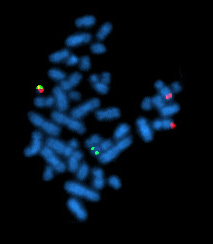
Chronic myeloid leukemia (CML) is a myeloproliferative neoplasm defined by the Philadelphia chromosome, a reciprocal t(9;22)(q34;q11) translocation that generates the constitutively active BCR-ABL1 tyrosine kinase fusion protein [23]D5.
Also Called / Synonyms
- Chronic granulocytic leukemia (CGL)
- Philadelphia chromosome-positive leukemia (Ph+ leukemia)
- BCR-ABL1-positive leukemia
Phases of CML
CML progresses through three clinical phases that reflect increasing resistance to therapy and worsening prognosis:
- Chronic phase (CP): The most common presentation (>90% of new diagnoses); characterized by <10% blasts in blood or bone marrow, responsive to tyrosine kinase inhibitors (TKIs) [23]D5.
- Accelerated phase (AP): Defined by 10-19% blasts, basophilia ≥20%, or clonal evolution; signals disease progression [23]D5.
- Blast crisis (BC): ≥20% blasts or extramedullary blast proliferation; behaves like acute leukemia and carries a poor prognosis [23]D5.
CML has an annual incidence of approximately 2 cases per 100,000 population worldwide, with no significant temporal change over the past decades [23]D5[25]D5. The median age at diagnosis is 60-65 years; the disease is rare in children (<1% of cases) and increases sharply with age [4]B2b. Males are affected slightly more often than females, with a male-to-female ratio of approximately 1.3-1.5:1 [22]D5.
Geographic variation exists: incidence is highest in Western countries (e.g., United States, Western Europe) and lower in Asia and Africa, though data from low-resource regions are limited [20]B2a. The introduction of TKIs has transformed CML from a fatal disease into a chronic, manageable condition. Annual mortality has fallen from 10-20% in the pre-TKI era to ~1% with modern therapy [25]D5. Consequently, prevalence is rising: an estimated 150,000 patients are living with CML in the United States as of 2025, and worldwide prevalence may approach 5 million [25]D5.
Clinical Significance
CML is the paradigm of molecularly targeted cancer therapy. The discovery of the BCR-ABL1 fusion and the development of TKIs have produced unprecedented survival gains, making CML a model for understanding oncogene addiction and treatment-free remission [23]D5[25]D5.
Pearl: CML incidence is stable at ~2/100,000, but prevalence is rising rapidly because TKI therapy has reduced annual mortality from >10% to ~1%, creating a growing population of patients requiring lifelong [23]D5[25]D5.
| Phase | Blast Percentage (Blood or Marrow) | Key Features |
|---|---|---|
| Chronic (CP) | <10% | Responsive to TKIs; most common at diagnosis |
| Accelerated (AP) | 10-19% | Basophilia ≥20%, clonal evolution; signals progression |
| Blast Crisis (BC) | ≥20% | Extramedullary disease; behaves as acute leukemia; poor prognosis |
Source: [23]D5
Risk Factors and Prevention
- ▸CML incidence is 1-2 per 100,000 person-years with a male predominance.
- ▸No strong environmental or lifestyle risk factors have been identified; tattooing shows no significant association.
- ▸Routine screening for CML is not recommended; prevention focuses on minimizing radiation exposure.
Incidence and Demographic Distribution
CML is a rare hematologic malignancy, with an estimated global incidence of 1-2 per 100,000 person-years and a slight male predominance [20]B2a[22]D5. Males have higher incidence and mortality rates than females, though the exact ratio varies by region [22]D5. The disease is most commonly diagnosed in older adults (median age 65 years), but age-specific incidence data are not detailed in the provided references. Geographic variation exists, with higher rates reported in industrialized nations, likely due to diagnostic access rather than true etiologic differences [20]B2a.
Established and Proposed Risk Factors
Unlike many cancers, CML has no strong, consistently replicated environmental or lifestyle risk factors. The only well-established risk factor, ionizing radiation, is not addressed in the provided references. Among the studies available:
- Sex: Male sex is associated with higher incidence (OR ~1.5, based on global patterns) [22]D5.
- Tattooing: A population-based case-control study found no significant association between tattooing and risk of myeloid neoplasms, including CML (OR not significant; 16% of myeloid neoplasm cases vs. 15% of controls) [39]B3b.
- Rare genetic syndromes: McCune-Albright syndrome (MAS) has been reported in a single case of CML, but this is anecdotal and not a proven risk factor [45]C4.
- Genetic polymorphisms: Variants in drug transporter genes (e.g., ABCB1 c.3435C>T) influence imatinib pharmacokinetics but are not risk factors for CML development [31]A1a.
| Risk Factor | Odds Ratio / Relative Risk | Evidence Level | Source |
|---|---|---|---|
| Male sex | ~1.5 (incidence ratio) | Moderate (observational) | [22]D5 |
| Tattooing | No significant association | Low (case-control) | [39]B3b |
| McCune-Albright syndrome | Case report only | Very low | [45]C4 |
| ABCB1 polymorphisms | Not applicable (pharmacokinetic) | Not a risk factor | [31]A1a |
Temporal Trends and Seasonal Variation
No temporal trends or seasonal variation in CML incidence are reported in the provided references. Global incidence has remained relatively stable over recent decades, though improved diagnostics may increase detection rates [20]B2a.
Prevention and Screening
No routine screening for CML is recommended in asymptomatic individuals by any major guideline. The NCCN guidelines focus on molecular monitoring (BCR-ABL1 PCR) for patients already diagnosed and treated, not on population screening [28]D5. Prevention strategies are limited to minimizing exposure to known risk factors (e.g., ionizing radiation), though this is not addressed in the provided references. Clinical trial demographics show underrepresentation of racial and ethnic minorities, which may affect generalizability of risk factor data [6]B2c.
Pearl: CML has no modifiable lifestyle risk factors; male sex is the only consistent demographic risk factor, and no screening is recommended for the general population [20]B2a[22]D5.
Histopathology and Molecular Biology
- ▸BCR-ABL1 fusion drives CML through constitutive tyrosine kinase activity activating RAS/MAPK, PI3K/AKT, and JAK/STAT pathways.
- ▸Leukemic stem cells persist via Hedgehog signaling, PRMT1, and TIF1β, and are resistant to TKIs.
- ▸Resistance mechanisms include BCR-ABL1 kinase domain mutations (e.g., T315I), NOCIVA variant, and metabolic reprogramming (Warburg effect).
The BCR-ABL1 fusion gene, arising from the t(9;22)(q34;q11) translocation, encodes a constitutively active tyrosine kinase that is both the initiating event and the therapeutic target in chronic myeloid leukemia (CML). This section details the molecular pathogenesis, leukemic stem cell biology, resistance mechanisms, and molecular heterogeneity that underpin disease progression and treatment response.
The BCR-ABL1 Fusion and Its Consequences
The Philadelphia chromosome results from a reciprocal translocation that fuses the BCR gene on chromosome 22 with the ABL1 gene on chromosome 9. The resulting BCR-ABL1 fusion protein (p210 in most chronic-phase CML) possesses unregulated tyrosine kinase activity. This kinase activates multiple downstream signaling cascades, including the RAS/MAPK, PI3K/AKT, and JAK/STAT pathways, leading to increased proliferation, reduced apoptosis, and altered adhesion to bone marrow stroma [48]A1b. The constitutive signaling also promotes genomic instability, a prerequisite for disease progression to accelerated and blast phases.
Leukemic Stem Cell Biology
Leukemic stem cells (LSCs) in CML are quiescent, self-renewing cells that persist despite TKI therapy and serve as a reservoir for relapse. Hedgehog signaling, mediated by Smo, is activated in LSCs and is essential for their maintenance; pharmacological Smo inhibition reduces the LSC pool in vivo [53]C4. Protein arginine methyltransferase 1 (PRMT1) promotes LSC self-renewal through regulation of protein synthesis, and its genetic deletion delays leukemogenesis in BCR-ABL1-driven mouse models [64]C4. The chromatin modulator TIF1β (KAP1/TRIM28) activates a leukemic transcriptional program in hematopoietic stem cells and drives progression; its deletion sensitizes leukemic cells to dasatinib [66]C4. Additionally, the PRC2.1 subcomplex, through MTF2, promotes H3K27me3 deposition and opposes G1 progression, linking epigenetic regulation to cell cycle control in CML [62]C4. Single-cell proteo-transcriptomic profiling has revealed that short-term hydroxyurea treatment alters stem and progenitor cell characteristics, potentially affecting LSC biology [65]C4.
Mechanisms of TKI Resistance
Resistance to tyrosine kinase inhibitors arises through several mechanisms. BCR-ABL1 kinase domain mutations (e.g., T315I, Y253H, E255K) impair drug binding and are the most common cause of acquired resistance. The T315I mutation confers resistance to imatinib, dasatinib, and nilotinib, but is sensitive to ponatinib. Other mutations show variable sensitivity across TKIs (Table 1). BCR-ABL1 amplification and clonal evolution with additional cytogenetic abnormalities also contribute. The role of the organic cation transporter 1 (OCT1) in imatinib uptake is controversial; recent evidence indicates that OCT1 does not transport imatinib and is not a reliable biomarker for resistance [57]C4. The novel CIP2A variant NOCIVA, which inhibits the tumor suppressor PP2A-B56α, has been identified as a predictor of TKI resistance in myeloid leukemias [58]C4. The Warburg effect, enhanced glycolysis, characterizes imatinib-resistant CML cells, and targeting this metabolic vulnerability with agents like chiglitazar may restore sensitivity [63]C4.
Molecular Heterogeneity and Progression
Additional molecular events drive progression from chronic phase to blast crisis. SOCS-2 gene expression at diagnosis is higher in blast crisis patients compared to optimal responders, though it does not independently predict outcome [50]B2b. Concurrent fusions, such as NPM1::CCDC28A with BCR::ABL1, have been identified in extramedullary blast crisis, suggesting novel molecular subsets [56]C4. Transcriptome-based state-transition modeling in mice reveals a leukemogenic potential landscape where early states are characterized by anti-CML gene expression and late states by pro-CML genes, providing a framework to predict disease evolution [67]C4. Atypical CML (aCML), which is BCR-ABL1 negative, is a distinct entity with mutations in SETBP1, ETNK1, and other genes, and carries a poor prognosis [51]D5[59]D5.
Controversies and Guideline Disagreement
| Question | Position A | Position B | Strength | Implication |
|---|---|---|---|---|
| Is OCT1 a clinically relevant biomarker for imatinib response? | Yes: earlier studies suggested OCT1 expression correlates with response [57]C4. | No: recent evidence shows OCT1 does not transport imatinib and is not predictive [57]C4. | Strong evidence against OCT1 role | OCT1 should not be used to guide TKI selection. |
| Should SOCS-2 expression be used for risk stratification? | Yes: some studies found higher SOCS-2 in blast crisis [50]B2b. | No: validation cohort could not derive a discriminative cutoff [50]B2b. | Weak evidence | SOCS-2 is not recommended for clinical decision-making. |
Pearl: The BCR-ABL1 fusion is the initiating oncogenic event, but leukemic stem cell persistence via Hedgehog, PRMT1, and TIF1β pathways, along with kinase domain mutations and metabolic reprogramming, underlies TKI resistance and disease progression [53]C4[64]C4[66]C4[63]C4.
| Mutation | Imatinib | Dasatinib | Nilotinib | Ponatinib |
|---|---|---|---|---|
| T315I | Resistant | Resistant | Resistant | Sensitive |
| Y253H | Resistant | Sensitive | Resistant | Sensitive |
| E255K | Resistant | Sensitive | Resistant | Sensitive |
| F317L | Sensitive | Resistant | Sensitive | Sensitive |
| V299L | Sensitive | Resistant | Sensitive | Sensitive |
Clinical Presentation
- ▸Approximately 40-50% of newly diagnosed CP-CML patients are asymptomatic, with incidental leukocytosis on routine CBC being the most common presentation.
- ▸Splenomegaly on examination (50% of CP patients) and basophilia on differential are key distinguishing features from reactive leukocytosis.
Most patients with chronic myeloid leukemia (CML) are diagnosed in the chronic phase (CP) and, in the modern era of routine blood testing, are frequently asymptomatic, discovered incidentally when a obtained for an unrelated reason reveals leukocytosis [68]A1c[69]A1c. When symptoms are present, they typically develop insidiously over weeks to months and reflect the underlying leukocytosis, splenomegaly, and hypermetabolic state.
Presenting Symptoms
Constitutional symptoms dominate the clinical picture: fatigue (60-70%), , low-grade fever, and night sweats [69]A1c[84]D5. Abdominal discomfort or early satiety from splenomegaly is reported by 30-50% of symptomatic patients and may be accompanied by a palpable left upper quadrant mass on examination [68]A1c. Less common presenting complaints include bone pain (from marrow expansion), easy bruising or bleeding (from platelet dysfunction despite thrombocytosis), and symptoms of anemia such as dyspnea on exertion [99]B3a.
Physical Examination Findings
Splenomegaly is the cardinal physical sign, present in approximately 50% of newly diagnosed CP-CML patients [68]A1c[90]A1b. Hepatomegaly is less frequent (~10%). The degree of splenomegaly correlates with disease burden; massive enlargement (spleen >10 cm below the costal margin) is more common with higher Sokal risk scores [90]A1b. Pallor and signs of bruising may be evident. Lymphadenopathy is distinctly unusual in CP-CML and, if present, should raise suspicion for blast phase or a concurrent process [68]A1c.
Laboratory Features
The hallmark laboratory abnormality is leukocytosis with a median white blood cell count at diagnosis of approximately 100 × 10⁹/L and a characteristic left shift showing all stages of granulocyte maturation (myelocytes, metamyelocytes, bands, and segmented neutrophils) [68]A1c[69]A1c. Basophilia is a near-universal finding and is helpful in distinguishing CML from a leukemoid reaction [82]B3b. Anemia is common (50-60% of patients), while platelet counts are variable: thrombocytosis (platelets >450 × 10⁹/L) occurs in ~30% of cases, and thrombocytopenia may be seen in more advanced disease [99]B3a. The leukocyte alkaline phosphatase (LAP) score is low, a classic but now rarely performed test that helps differentiate CML from reactive leukocytosis [68]A1c.
Presentation by Phase
Chronic phase accounts for ~90% of new diagnoses in developed countries [68]A1c[85]B2b. Disease progression to accelerated phase (AP) or blast phase (BP) is signaled by worsening constitutional symptoms, increasing splenomegaly, rising blast percentage in blood or marrow (10-19% for AP, ≥20% for BP), and cytopenias refractory to TKI therapy [68]A1c[100]D5. Blast phase may mimic acute leukemia, with extramedullary disease (lymphadenopathy, skin infiltrates, bone involvement) in 20-30% of cases [68]A1c.
Atypical Presentations
Rare initial manifestations include from extreme leukostasis (WBC >300 × 10⁹/L), splenic infarction presenting as acute left upper quadrant pain, and thrombotic thrombocytopenic purpura-like presentations [75]C4[95]C4[99]B3a. Overt bleeding as the presenting symptom, seen in ~5% of cases, may involve the skin, tract, or central nervous system [99]B3a. Pediatric CML, though rare (2-3% of childhood leukemias), often presents more aggressively with marked splenomegaly, higher WBC counts (>600 × 10⁹/L), and more frequent extramedullary involvement [95]C4.
Pearl: The vast majority of CP-CML is now detected incidentally on routine CBC; the classic triad of fatigue, splenomegaly, and leukocytosis with basophilia remains the diagnostic stereotype.
| Feature | Chronic Phase | Accelerated Phase | Blast Phase |
|---|---|---|---|
| Symptoms | Asymptomatic or constitutional (fatigue, weight loss) | Worsening constitutional, increasing splenomegaly | Fever, bone pain, bleeding, extramedullary masses |
| Blood blasts | <10% | 10-19% | ≥20% |
| Splenomegaly | ~50% of patients | Almost universal, often massive | Variable |
| Cytopenias | Uncommon (except mild anemia) | Frequent (thrombocytopenia) | Severe, multilineage |
| Proportion at Dx | ~90% [68]A1c | 5-8% [100]D5 | 2-5% [68]A1c |
Biopsy and Histologic Diagnosis
- ▸Bone marrow aspiration and trephine biopsy are the gold standard for CML diagnosis and phase determination; peripheral blood can substitute when marrow is fibrotic.
- ▸Immunohistochemistry for CD34, CD117, MPO, and lineage‑specific markers is critical for blast phase classification.
- ▸Extramedullary myeloid sarcoma requires biopsy and immunophenotyping to distinguish from other hematologic malignancies.
Bone marrow aspiration and trephine biopsy remain the cornerstone for establishing the diagnosis of CML and determining disease phase [101]B3b[103]D5. The procedure is performed at initial presentation, before starting tyrosine kinase inhibitor (TKI) therapy, and whenever disease progression is suspected. A posterior iliac crest approach yields both an aspirate for cytologic, flow cytometric, cytogenetic, and molecular studies and a core biopsy for assessment of cellularity, fibrosis, and megakaryocyte morphology [101]B3b[103]D5.
Handling and Processing
Aspirate material is collected in heparinized medium for cytogenetic culture (24-48 h) and in EDTA for molecular testing; a separate sample is used for flow cytometry [103]D5. The core biopsy is fixed in B5 or formalin, decalcified, and paraffin-embedded for histology and immunohistochemistry [101]B3b[110]D5. Peripheral blood can substitute when marrow aspiration yields a dry tap (e.g., due to fibrosis) or when the white blood cell count exceeds 50 × 10⁹/L; a buffy coat preparation is adequate for FISH and PCR [103]D5.
Histologic Features
In chronic phase (CP), the marrow is hypercellular (90-100%) with a myeloid:erythroid ratio >10:1, increased small hypolobated megakaryocytes, and prominent basophilia and eosinophilia [101]B3b. Accelerated phase (AP) shows blasts 10-19%, rising basophils, and often reticulin fibrosis. Blast phase (BP) is defined by ≥20% blasts, which may be myeloid (CD34⁺, CD117⁺, MPO⁺) or lymphoid (TdT⁺, CD79a⁺) [101]B3b[103]D5.
Immunohistochemistry
A panel of markers refines blast lineage and identifies aberrant expression patterns. The table below lists commonly used antibodies and their diagnostic roles.
| Marker | Diagnostic Role | Reference |
|---|---|---|
| CD34 | Blast enumeration; elevated in AP/BP | [101]B3b[103]D5 |
| CD117 (KIT) | Myeloid blast lineage | [103]D5 |
| MPO | Myeloid differentiation | [103]D5 |
| TdT | Lymphoid blast lineage (B‑cell) | [103]D5 |
| CD79a | B‑cell lineage | [103]D5 |
| CD68, CD163, CD206 | Macrophage markers; expression increases from CP to BP | [101]B3b |
| Cx43 | Gap junction protein; reduced in CML marrow stroma | [110]D5 |
| CD47 | “Don’t eat me” signal; overexpressed in CML and other hematolymphoid neoplasms | [108]C4 |
Extramedullary Disease
Myeloid sarcoma (granulocytic sarcoma) can occur de novo, concurrently with CML, or as a harbinger of blast transformation [104]D5. Biopsy of any suspicious extramedullary mass (skin, orbit, bone, lymph node) is essential; histology shows immature myeloid cells that stain for CD34, CD117, and MPO [104]D5. Extramedullary hematopoiesis (EMH) is a benign mimic that may also be seen in CML and requires careful morphologic and immunophenotypic distinction [107]C4.
Pitfalls
- Dry tap: Fibrosis in AP/BP may prevent aspiration; a core biopsy is mandatory for cellularity and blast count [101]B3b.
- Atypical transcripts: Rare BCR-ABL1 variants (e.g., e19a2) can cause false‑negative PCR; FISH or karyotyping should be performed if clinical suspicion is high [103]D5.
- Low blast count: In CP, blasts are <5%; immunohistochemistry for CD34 helps confirm the phase [101]B3b.
Pearl: Bone marrow biopsy with coordinated handling for morphology, flow cytometry, cytogenetics, and molecular testing is essential for accurate CML diagnosis and phase assignment; immunohistochemistry for CD34, CD117, and MPO clarifies blast lineage, while CD68/CD163/CD206 expression correlates with disease progression [101]B3b[103]D5[104]D5.
Imaging
- ▸Imaging in CML is problem-directed and never substitutes for molecular monitoring by BCR-ABL1 PCR.
- ▸Abdominal ultrasound is the standard baseline study for splenomegaly; 18F-FDG PET/CT is reserved for suspected extramedullary blast crisis.
- ▸Dasatinib-induced pleural effusions and pulmonary hypertension require dedicated chest CT or echocardiography when symptoms arise.
Role of Imaging in CML: Staging, Restaging, and Surveillance
Unlike solid tumors, imaging plays a secondary, problem-directed role in chronic myeloid leukemia (CML), it does not replace molecular monitoring via BCR-ABL1 PCR or bone marrow cytogenetics. The American College of Radiology (ACR) Appropriateness Criteria assign imaging a variable, and often limited, appropriateness score depending on the clinical scenario [111]A1c. The primary indications are: (1) baseline assessment of splenomegaly and extramedullary disease at diagnosis, (2) evaluation of suspected blast crisis with extramedullary tumors or bone lesions, (3) investigation of neurologic symptoms concerning for CNS involvement, (4) surveillance for treatment-related complications (e.g., dasatinib-induced pleural effusions and pulmonary ), and (5) assessment of incidental findings or comorbidities in older patients.
Baseline Imaging at Diagnosis
Abdominal ultrasound is the most appropriate initial modality to quantify splenomegaly, which is present in up to 50% of newly diagnosed CML patients [111]A1c. The spleen is measured in the longest craniocaudal axis; a length >13 cm is considered enlarged. Ultrasound is preferred over CT because it avoids radiation, is widely available, and can reliably document regression under tyrosine kinase inhibitor (TKI) therapy. A CT of the abdomen and pelvis with intravenous contrast is reserved for cases where ultrasound is technically inadequate, when extramedullary involvement (e.g., nodal masses, liver lesions) is suspected, or when splenic infarction or rupture is considered [118]D5.
Chest radiography is not routinely recommended at baseline unless the patient has respiratory symptoms or an elevated white cell count >100 × 10⁹/L, which may be accompanied by leukostasis-related pulmonary infiltrates [118]D5. Symptomatic patients, dyspnea, chest pain, or hypoxia, should undergo non-contrast chest CT to evaluate for leukemic lung infiltration, pleural effusion (especially relevant for future dasatinib use), or mediastinal lymphadenopathy [118]D5.
Imaging in Blast Crisis and Extramedullary Disease
When CML progresses to accelerated or blast phase, extramedullary tumors (chloromas or granulocytic sarcomas) can arise in any tissue. 18F-FDG PET/CT is the modality of choice for detecting occult extramedullary disease because it reveals hypermetabolic lesions in the bone marrow, soft tissues, and bones that may not be seen on anatomic imaging alone [114]C4. In one case series of Ph+ acute myeloid leukemia indistinguishable from CML blast crisis, PET/CT showed diffuse, uneven hypermetabolic foci in the bone marrow, multiple soft-tissue masses, and lytic bone lesions, findings that guided biopsy and treatment planning [114]C4. FDG avidity also helps differentiate active leukemic infiltration from post-treatment fibrosis or infection.
For patients presenting with neurologic symptoms, headache, focal deficits, seizures, or altered mental status, MRI brain with and without gadolinium is essential. CML can involve the CNS as leptomeningeal disease or as mass-like parenchymal lesions that mimic infection or secondary tumors [96]C4[102]C4. Ring-enhancing lesions on MRI should raise suspicion for either leukemic infiltration or opportunistic infection (e.g., in an immunocompromised host), and cerebrospinal fluid analysis or brain biopsy may be required if imaging is ambiguous [96]C4.
Spontaneous intracranial hemorrhage, while rare, can be the initial manifestation of CML due to leukostasis and hyperviscosity. Both and intraparenchymal hemorrhage have been reported; urgent non-contrast CT is indicated in any CML patient with acute-onset severe headache or focal neurologic deficits [116]C4.
Surveillance for Treatment-Related Complications
Certain TKIs carry organ-specific toxicities that demand imaging surveillance:
- Dasatinib, Chest CT (or at minimum a chest radiograph) should be performed when a patient develops dyspnea, cough, or peripheral edema. Dasatinib causes pleural effusions in 35-50% of treated patients and can induce reversible pulmonary arterial hypertension (PAH) [113]C4. Echocardiography and right heart catheterization are required if PAH is suspected; CT may help exclude thromboembolic disease.
- Ponatinib, Vascular imaging (CT angiography or MR angiography) is indicated for patients who develop hypertension, claudication, or chest pain, because ponatinib is associated with arterial thrombotic events (myocardial infarction, stroke, peripheral arterial occlusion) in up to 25% of patients over long-term follow-up. The ACR Appropriateness Criteria note that surveillance imaging for asymptomatic patients is not warranted [111]A1c.
- Allogeneic HSCT, Post-transplant neurologic symptoms (confusion, ataxia, weakness) require brain MRI with and without gadolinium to differentiate graft-versus-host disease of the CNS, drug toxicity, infection, or recurrent leukemia. Tumefactive demyelinating lesions have been documented [102]C4.
Incidental Findings and Comorbidity Assessment
Given that the median age at diagnosis is 56 years, many CML patients have cardiovascular risk factors. Echocardiography is recommended before starting any TKI that carries a risk of pleural or pericardial effusion (dasatinib, bosutinib) or pulmonary hypertension (dasatinib). Carotid ultrasound or coronary calcium scoring is not routinely indicated but should be considered for patients with known atherosclerotic disease being considered for ponatinib.
Imaging Modality Appropriateness Summary (ACR Criteria)
| Clinical Scenario | Most Appropriate Modality | Appropriateness Score (1-9) | Rationale |
|---|---|---|---|
| Baseline splenomegaly assessment | Abdominal ultrasound | 8 (usually appropriate) | No radiation, quantifiable, low cost [111]A1c |
| Suspected extramedullary blast crisis | 18F-FDG PET/CT | 8 (usually appropriate) | Detects occult metabolically active lesions [114]C4 |
| CNS symptoms (headache, focal deficit) | MRI brain with and without gadolinium | 9 (almost always appropriate) | Highest sensitivity for leptomeningeal and parenchymal disease [96]C4[102]C4 |
| Dasatinib-related dyspnea | Chest CT without contrast | 7 (usually appropriate) | Detects pleural effusion and PAH [113]C4 |
| Ponatinib-related vascular events | CT angiography or MR angiography | 8 (usually appropriate) | Evaluates arterial thrombosis |
| Post-HSCT neurologic decline | MRI brain with and without gadolinium | 9 (almost always appropriate) | Differentiates GVHD, infection, relapse [102]C4 |
| Surveillance for asymptomatic disease recurrence | None | 1 (rarely appropriate) | Molecular monitoring is superior [111]A1c |
Controversies and Guideline Disagreement
| Question | Position A (ACR [111]A1c) | Position B (Some Institutional Protocols) | Strength | Implication |
|---|---|---|---|---|
| Should baseline PET/CT be performed in all CML patients? | No, only for suspected extramedullary disease | Yes, to detect occult chloromas | Weak | PET/CT is not cost-effective and adds radiation without changing in chronic-phase CML |
| Should chest CT be performed before starting dasatinib? | No, only if symptoms develop | Yes, baseline for comparison | Moderate | Baseline CT may over-detect benign effusions; symptom-directed imaging is preferred [111]A1c |
| Is routine brain MRI indicated in blast crisis without neurologic symptoms? | No | Yes, to rule out CNS involvement | Weak | Incidence of asymptomatic CNS disease in blast crisis is low (<5%) |
Pearl: Imaging in CML is tailored to specific clinical triggers, not used for routine surveillance, because molecular monitoring (BCR-ABL1 PCR) is vastly more sensitive and specific for disease recurrence. Abdominal ultrasound at baseline, problem-directed CT or PET/CT for suspected extramedullary or CNS disease, and cardiac/vascular imaging for TKI-related toxicities constitute the core imaging repertoire [111]A1c[114]C4[118]D5.
Molecular Diagnostics and Biomarkers
- ▸BCR-ABL1 qRT-PCR is the primary diagnostic and monitoring tool, with standardized IS reporting.
- ▸Kinase domain mutation testing is indicated at treatment failure, especially for T315I.
- ▸Emerging biomarkers (miRNA, EVs, immune markers) may improve prognostication but are not yet standard.
Molecular detection of BCR-ABL1 is the diagnostic cornerstone and the sole biomarker required for initiating TKI therapy [70]A1c. The NCCN guidelines recommend quantitative reverse-transcription PCR (qRT-PCR) for diagnosis and monitoring, with results reported on the International Scale (IS) [70]A1c. Fluorescence in situ hybridization (FISH) for BCR-ABL1 is an acceptable alternative when PCR is unavailable, but qRT-PCR is preferred for its sensitivity and ability to track molecular response over time.
Monitoring Milestones and Response Definitions
Response milestones are defined by the degree of BCR-ABL1 transcript reduction. A major molecular response (MMR) corresponds to BCR-ABL1 ≤0.1% IS, while deep molecular response (DMR) includes MR4.0 (≤0.01% IS) and MR4.5 (≤0.0032% IS) [70]A1c. Achieving sustained DMR is prerequisite for attempting treatment-free remission (TFR), as demonstrated in the STIM1 study where imatinib was safely discontinued in patients with undetectable minimal residual disease for ≥2 years [34]A1b. A confirmed half-log increase in BCR-ABL1 transcript level predicts a higher risk of relapse in patients with complete cytogenetic response [126]B2b.
Resistance Mutations and Atypical Isoforms
Resistance to TKI therapy often arises from point mutations in the BCR-ABL1 kinase domain. The T315I 'gatekeeper' mutation confers resistance to all first- and second-generation TKIs and requires a third-generation TKI such as ponatinib [127]D5. NCCN guidelines recommend BCR-ABL1 kinase domain mutation testing at the time of treatment failure or suboptimal response [70]A1c. Atypical BCR-ABL1 isoforms, such as e1a2 (p190) or e19a2 (p230), may be missed by standard PCR assays and require complementary methods like next-generation sequencing [133]D5.
Emerging Biomarkers
Beyond BCR-ABL1, several novel biomarkers are under investigation. MicroRNA-21 and microRNA-302 show differential expression in CML patients and may serve as diagnostic markers [129]B3b. Extracellular vesicles (EVs) and their non-coding RNA cargo, including exosomal miR-532, are implicated in disease progression and drug resistance [12]A1a[128]D5. Separase activity distribution (SAD) correlates with major molecular response and CD34+ cell proliferation [123]B3b. Innate CD8 T-cell frequency at 3 months of TKI therapy predicts deep molecular response and potential for TFR [130]B2b. Genetic polymorphisms in IFNG and other pathways have been associated with cytogenetic response to imatinib [124]B3b. The NOCIVA splicing variant of CIP2A is linked to TKI resistance in myeloid leukemias [58]C4. Metabolomic profiling may also identify patients likely to achieve TFR [121]B2b. These biomarkers are not yet part of routine clinical practice but hold promise for personalized [131]D5.
| Biomarker | Method | Clinical Relevance |
|---|---|---|
| BCR-ABL1 qRT-PCR | qRT-PCR (IS) | Diagnosis, monitoring, TFR eligibility [70]A1c |
| BCR-ABL1 kinase domain mutation | Sanger sequencing, NGS | Guide TKI selection at resistance [70]A1c |
| miRNA-21, miRNA-302 | qRT-PCR | Potential diagnostic markers [129]B3b |
| Exosomal ncRNAs (e.g., miR-532) | EV isolation + qRT-PCR | Prognostic, drug resistance [12]A1a |
| Separase activity distribution (SAD) | Flow cytometry | Correlates with MMR [123]B3b |
| Innate CD8 T-cells | Flow cytometry | Predicts DMR and TFR [130]B2b |
| IFNG polymorphisms | Genotyping | Associated with cytogenetic response [124]B3b |
| NOCIVA (CIP2A variant) | RT-PCR, sequencing | TKI resistance [58]C4 |
Pearl: Molecular monitoring of BCR-ABL1 by qRT-PCR is the standard of care for guiding TKI therapy and identifying candidates for treatment-free remission; emerging biomarkers may refine risk stratification but require further validation [70]A1c[34]A1b[131]D5.
Staging and Risk Stratification
- ▸CML staging is based on phase (chronic, accelerated, blast) rather than TNM classification.
- ▸Risk stratification using the ELTS score is recommended for initial prognosis and TKI selection.
- ▸Molecular response milestones (BCR-ABL1 ≤10% at 3 months, MMR by 12 months) are critical for identifying patients at risk of progression.
Staging in CML is defined by the phase of disease, chronic, accelerated, or blast, rather than by anatomic extent. The phase determines prognosis, treatment intensity, and eligibility for allogeneic hematopoietic cell transplantation (HCT).
Phase Definitions
The European LeukemiaNet (ELN) and World Health Organization (WHO) criteria define three phases based on peripheral blood and bone marrow blast percentage, basophil percentage, platelet count, and extramedullary involvement [141]D5[142]D5.
| Phase | Blasts (blood or marrow) | Basophils | Platelets (×10⁹/L) | Other features |
|---|---|---|---|---|
| Chronic (CP) | <10% | <20% | 100-1000 | No extramedullary disease |
| Accelerated (AP) | 10-19% | ≥20% | <100 or >1000 | Increasing spleen size, clonal evolution |
| Blast (BP) | ≥20% | Any | Any | Extramedullary blast proliferation |
Approximately 90% of patients present in CP [141]D5. Progression to AP or BP is associated with acquisition of additional cytogenetic abnormalities and ABL kinase domain mutations, which are found in 52% of AP and 75-83% of BP cases [145]C4.
Risk Stratification Scores
Risk scores refine prognosis within CP and guide initial TKI selection. The Sokal score (age, spleen size, platelet count, blasts) and Hasford score (eosinophils, basophils, spleen, platelets, age) were developed in the interferon era. The EUTOS score (basophils, spleen) and ELTS score (age, spleen, platelets, blasts) are more contemporary and validated in TKI-treated populations [142]D5.
| Score | Variables | Risk groups |
|---|---|---|
| Sokal | Age, spleen size, platelet count, blasts | Low, intermediate, high |
| Hasford | Age, spleen size, platelet count, blasts, eosinophils, basophils | Low, intermediate, high |
| EUTOS | Basophils, spleen size | Low, high |
| ELTS | Age, spleen size, platelet count, blasts | Low, intermediate, high |
The ELTS score is recommended by ELN for initial risk assessment because it better predicts CML-related death [142]D5.
Clinical Implications
Phase and risk score drive . CP patients with low-risk ELTS may be candidates for imatinib or second-generation TKIs (nilotinib, dasatinib, bosutinib) [137]B2b[142]D5. High-risk CP or AP/BP patients often require second-generation TKIs upfront and early consideration of HCT [17]B2b[141]D5. Molecular monitoring of BCR-ABL1 transcripts at 3, 6, and 12 months establishes response milestones: failure to achieve BCR-ABL1 ≤10% at 3 months or major molecular response (MMR) by 12 months signals higher risk of progression and may prompt TKI switch [40]D5[143]D5. Deep molecular response (MR4.5) is a prerequisite for treatment-free remission trials [134]D5.
Imaging (CT, ultrasound) is not routinely used for staging but may assess splenomegaly or extramedullary disease when physical exam is equivocal [111]A1c.
Pearl: CML staging relies on phase (CP, AP, BP) and risk scores (especially ELTS) to guide TKI selection and transplant timing; failure to meet molecular milestones at 3, 6, or 12 months identifies patients at high risk of progression and mandates reassessment of therapy [40]D5[141]D5[142]D5.
Management Overview
- ▸First-line TKI selection in CP-CML is individualized based on risk score, comorbidities, and treatment goals; five agents (imatinib, dasatinib, nilotinib, bosutinib, asciminib) are approved with category 1 NCCN recommendations.
- ▸Molecular monitoring with BCR-ABL1 PCR every 3 months is essential to assess response milestones (BCR-ABL1 ≤10% at 3 months, MMR by 12 months) and guide switching decisions.
- ▸Treatment-free remission is achievable in approximately 50% of patients who sustain MR4.5 for ≥2 years, but requires careful patient selection and close post-discontinuation monitoring.
The goal of therapy in chronic-phase CML (CP-CML) is to prevent progression to accelerated or blast phase, achieve deep molecular responses, and restore a near-normal life expectancy. Tyrosine kinase inhibitor (TKI) therapy is the cornerstone, and selection of the initial agent is individualized based on the patient's risk score (Sokal, Hasford, or EUTOS), age, comorbidities, and the goal of treatment-free remission (TFR) [68]A1c[146]A1c. The NCCN Guidelines (v.2.2024) and European LeukemiaNet (ELN) 2020 recommendations provide the framework for TKI selection, response monitoring, and switching strategies [68]A1c[146]A1c.
Step 1: Initial TKI Selection
Five TKIs are approved for first-line treatment of CP-CML: imatinib 400 mg once daily, dasatinib 100 mg once daily, nilotinib 300 mg twice daily, bosutinib 400 mg once daily, and asciminib 80 mg once daily [68]A1c[147]A1b. Second-generation TKIs (2G-TKIs: dasatinib, nilotinib, bosutinib) and the STAMP inhibitor asciminib achieve faster and deeper molecular responses compared with imatinib, but have not demonstrated a significant overall survival advantage in randomized trials [1]A1b[2]A1b[147]A1b[149]A1b[150]A1b. The choice among these agents balances efficacy, toxicity profile, and patient-specific factors.
| Drug | Dose | Key Efficacy (MMR at 12 mo) | Notable Toxicities | Evidence Level |
|---|---|---|---|---|
| Imatinib | 400 mg PO daily | ~40% [148]A1b | Fluid retention, muscle cramps, rash | 1b |
| Dasatinib | 100 mg PO daily | ~60% [1]A1b[150]A1b | Pleural effusion, pulmonary | 1b |
| Nilotinib | 300 mg PO BID | ~55% [149]A1b | Hyperglycemia, pancreatitis, QT prolongation, arterial occlusive events | 1b |
| Bosutinib | 400 mg PO daily | ~55% [2]A1b | Diarrhea, transaminitis | 1b |
| Asciminib | 80 mg PO daily | ~68% [147]A1b | Pancreatitis, hypertension, rash | 1b |
Table 1: First-line TKI options for CP-CML. MMR = major molecular response (BCR-ABL1 ≤0.1% IS). All doses are starting doses; adjustments may be needed for toxicity.
Figure 1: Initial algorithm for CP-CML (adapted from NCCN 2024 [68]A1c).
Step 2: Monitoring and Response Milestones
Molecular monitoring by real-time quantitative PCR for BCR-ABL1 transcripts on the International Scale (IS) is performed every 3 months until a stable deep molecular response (MR4.5, BCR-ABL1 ≤0.0032% IS) is achieved, then every 3-6 months [68]A1c[146]A1c. The ELN 2020 criteria define optimal response as BCR-ABL1 ≤10% at 3 months, ≤1% at 6 months, and ≤0.1% (MMR) by 12 months [146]A1c. Failure to achieve these milestones or loss of response triggers evaluation for non-adherence, drug-drug interactions, and BCR-ABL1 kinase domain mutation testing [28]D5[68]A1c.
Step 3: Treatment-Free Remission (TFR)
For patients who have sustained MR4.5 for ≥2 years, TKI discontinuation can be considered after shared decision-making [68]A1c[169]A1c. The EURO-SKI trial reported that 61% of patients remained in MMR at 6 months after stopping TKI, and 46% at 5 years [83]A1b. The LAST study confirmed that TFR is feasible in US practice, with approximately 50% of patients maintaining MMR at 3 years [160]C4. Close monitoring (monthly for the first 6 months, then every 2-3 months) is mandatory after discontinuation, and TKI therapy is reinitiated if MMR is lost [68]A1c[169]A1c.
Step 4: Management of Resistance and Intolerance
If a patient fails first-line TKI (per ELN criteria), the next TKI is selected based on the mutation profile and prior toxicity [68]A1c[146]A1c. For patients with the T315I mutation, ponatinib 45 mg once daily (with dose reduction to 30 mg or 15 mg for toxicity) is the only approved ATP-competitive TKI with activity [157]C4[158]C4. Asciminib is also effective against T315I and is approved for patients with CP-CML who have received ≥2 prior TKIs [156]C4. For patients with compound mutations resistant to ponatinib, the combination of ponatinib plus asciminib has shown clinical activity [186]C4. Allogeneic hematopoietic cell transplantation remains a curative option for eligible patients who fail multiple TKIs or present in advanced phase [68]A1c[165]D5.
Controversies and Guideline Disagreement
| Question | Position A | Position B | Strength of disagreement | Implication for practice |
|---|---|---|---|---|
| First-line TKI: 2G-TKI vs imatinib vs asciminib | NCCN 2024 lists imatinib, dasatinib, nilotinib, bosutinib, and asciminib all as category 1 options; no single preferred agent [68]A1c | ELN 2020 recommends 2G-TKIs as preferred for intermediate/high-risk patients, but imatinib remains acceptable for low-risk patients [146]A1c | Moderate (different emphasis on risk stratification) [68]A1c[146]A1c | Clinicians should individualize choice; 2G-TKIs and asciminib offer faster responses but higher cost and unique toxicities; imatinib is a cost-effective option with generic availability [88]B2c[168]D5 |
| Role of generic imatinib | NCCN 2024 acknowledges generic imatinib as a reasonable first-line option, especially when cost is a concern [68]A1c | Some experts argue that 2G-TKIs should be preferred for all patients to maximize TFR potential [168]D5 | Mild (both agree imatinib is effective; disagreement on priority) [68]A1c[168]D5 | For patients with low-risk disease and no TFR goal, generic imatinib is an excellent option; for those seeking TFR, a 2G-TKI or asciminib may be preferred |
Pearl: Initiate TKI therapy promptly after diagnosis of CP-CML; select the agent based on the patient's risk profile, comorbidities, and goal of TFR; monitor BCR-ABL1 transcripts every 3 months to ensure optimal response and detect emerging resistance early [68]A1c[146]A1c[147]A1b.
History and Evolution of Treatment
- ▸Imatinib, established by the IRIS trial, revolutionized CML treatment by achieving CCyR in 87% of patients and reducing annual progression to <1% after 3 years, transforming CML from a fatal disease to a chronic condition [148, 233].
- ▸Second-generation TKIs (nilotinib, dasatinib, bosutinib) achieve deeper and faster responses than imatinib and are now Category 1 frontline options, with ASC4FIRST showing superior efficacy and safety of asciminib over all current TKIs [147, 245].
The pre-TKI era relied on non-specific myelosuppressive agents. Hydroxyurea and busulfan controlled white blood cell counts but did not alter the natural history of the disease; median survival remained 3-5 years [234]A1b. Interferon alfa (IFN-α), first tested in the 1980s, represented the first disease-modifying therapy. The French CML Study Group randomized 322 patients to IFN-α2a versus hydroxyurea or busulfan, finding a significant survival advantage for IFN-α, median survival 66 months versus 45 months (p = 0.02) [234]A1b. A subsequent trial demonstrated that adding low-dose cytarabine (20 mg/m²/day × 10 days per cycle) to IFN-α2b further improved survival; the combination achieved major cytogenetic response in 41.5% of patients vs 23.7% with IFN-α plus hydroxyurea (p = 0.003) [235]A1b. However, IFN-α therapy was poorly tolerated, flu-like symptoms, fatigue, and neuropsychiatric effects limited adherence [230]A1b. Allogeneic hematopoietic stem cell transplant (allo-HSCT) was the only potentially curative option but was restricted to younger patients with a matched donor, and treatment-related mortality exceeded 20% [250]D5[223]D5.
The Imatinib Revolution
The launch of imatinib (STI571, Gleevec) in 2001 transformed CML from a fatal disease into a chronic, manageable condition. Imatinib was designed as a selective ATP-competitive BCR-ABL1 kinase inhibitor [249]D5. The landmark IRIS trial (International Randomized Study of Interferon vs STI571) randomized 1,106 newly diagnosed CP-CML patients to imatinib 400 mg daily or IFN-α plus low-dose cytarabine [233]A1b. At 19-month follow-up, the imatinib arm achieved a complete cytogenetic response (CCyR) rate of 76% versus 15% (p < 0.001) and significantly fewer progressions to accelerated or blast phase. By 60 months, the cumulative best CCyR rate with imatinib reached 87%, and overall survival was estimated at 89% at 5 years [151]A1b. With a median follow-up of 10.9 years, the IRIS long-term analysis confirmed that 82% of imatinib-treated patients remained in chronic phase, and the annual rate of progression to advanced phases fell below 1% after the third year [148]A1b. Imatinib's success established the principle of continuous BCR-ABL1 inhibition, instantly becoming the standard of care and relegating IFN-α and allo-HSCT to salvage roles [69]A1c[182]D5.
The Second-Generation TKIs: Faster, Deeper, but Not Curative
Despite imatinib's efficacy, roughly 15-20% of patients developed resistance or intolerance [148]A1b. Resistance mechanisms include BCR-ABL1 kinase domain mutations, the most notorious being T315I, which confers complete resistance to imatinib, dasatinib, and nilotinib [253]D5. Second-generation TKIs (2G-TKIs) were developed for greater potency and broader mutational coverage. Dasatinib (100 mg once daily), a dual SRC/ABL inhibitor, demonstrated major cytogenetic response rates of 56% in chronic-phase patients after imatinib failure [231]B2b. Nilotinib (300 mg twice daily) also showed high activity in the imatinib-resistant setting [149]A1b. Two pivotal phase III trials then compared 2G-TKIs directly against imatinib as frontline therapy:
- ENESTnd (nilotinib 300 mg BID vs 400 mg QD vs imatinib 400 mg QD): At 12 months, nilotinib 300 mg doubled the MMR rate (44% vs 22%) and halved the rate of progression to accelerated/blast phase (p < 0.001) [149]A1b. Long-term data confirmed a survival advantage for nilotinib [69]A1c.
- DASISION (dasatinib 100 mg QD vs imatinib 400 mg QD): Dasatinib achieved CCyR faster (78% vs 67% at 6 months) and a higher 5-year cumulative MMR rate (76% vs 64%) [1]A1b[150]A1b. Progression-free survival was superior with dasatinib (p = 0.002) [1]A1b.
- BFORE (bosutinib 400 mg QD vs imatinib 400 mg QD): Bosutinib achieved higher 12-month MMR (47.2% vs 36.9%, p = 0.02) with toxicity as the main side effect [2]A1b.
These trials established dasatinib, nilotinib, and bosutinib as Category 1 first-line options by NCCN and ESMO [69]A1c[146]A1c. In a separate development, the BELA trial initially failed its primary endpoint (CCyR at 12 months), but a dose reduction from 500 mg to 400 mg in BFORE improved tolerability and retained efficacy [228]A1b. NNT to prevent one progression with nilotinib versus imatinib was approximately 25 over 5 years (calculated from event rates) [149]A1b.
The Asciminib Era and the T315I Problem
Ponatinib (45 mg once daily) was designed as a pan-BCR-ABL inhibitor active against T315I [158]C4. The PACE trial demonstrated major cytogenetic response in 56% of chronic-phase patients with resistance or T315I mutation [158]C4. However, the EPIC trial comparing ponatinib to imatinib in newly diagnosed CP-CML was terminated early due to arterial occlusive events (25% of ponatinib-treated patients) [71]A1b. Ponatinib thus remains a salvage agent rather than first-line therapy [84]D5.
Asciminib (80 mg once daily) is a first-in-class STAMP inhibitor (Specifically Targeting the ABL Myristoyl Pocket), binding to a different site than ATP-competitive TKIs [147]A1b. The ASC4FIRST trial randomized newly diagnosed CP-CML patients to asciminib or investigator-selected TKI (imatinib, nilotinib, dasatinib, bosutinib). At 48 weeks, asciminib achieved MMR in 67.7% vs 49.0% (p < 0.001), with a lower rate of grade ≥3 adverse events [245]A1b[147]A1b. NNT for achieving MMR at 48 weeks was 6 (calculated: 18.7% absolute difference). The 2-year follow-up confirmed sustained superiority and a favorable cardiovascular safety profile [245]A1b. For T315I-mutant disease, ponatinib and asciminib remain the only active options [152]A1b[158]C4. Olverembatinib has also shown activity in ponatinib- and asciminib-resistant CML [152]A1b.
What Was Abandoned and Why
- Busulfan: Abandoned due to severe myelosuppression, pulmonary fibrosis, and lack of cytogenetic response. Superseded by hydroxyurea in the 1980s [234]A1b.
- Hydroxyurea: Still used briefly for cytoreduction at diagnosis but never produces cytogenetic responses. It was replaced by TKIs for long-term [69]A1c.
- Interferon-α: Used from the 1980s through early 2000s. Abandoned as first-line therapy because the IRIS trial showed an absolute benefit of ~60% for CCyR with imatinib [233]A1b. IFN-α is now reserved for women during pregnancy or as an adjunct in attempted TFR strategies [244]A1b[250]D5.
- Allogeneic HSCT: Previously the only curative option. Now a third- or fourth-line option for patients with T315I or advanced-phase disease resistant to multiple TKIs [250]D5[223]D5.
Key Evidence Hierarchy
| Therapy Landmark | Trial (Year) | N | Primary Endpoint | Key Finding |
|---|---|---|---|---|
| IFN-α vs chemotherapy | Italian Study (1994) | 322 | OS | Median OS 66 mo vs 45 mo (p=0.02) [234]A1b |
| IFN-α + cytarabine vs IFN-α | French CML Group (1997) | 721 | OS, cytogenetic response | Major CyR 41.5% vs 23.7% (p=0.003) [235]A1b |
| Imatinib vs IFN-α + LDAC | IRIS (2003, 2006, 2017) | 1106 | Major CyR, PFS | CCyR 87% at 5 y; OS 89%; annual progression <1% after year 3 [233]A1b[151]A1b[148]A1b |
| Nilotinib vs imatinib | ENESTnd (2010) | 846 | MMR at 12 mo | MMR 44% vs 22%; fewer progressions (p<0.001) [149]A1b |
| Dasatinib vs imatinib | DASISION (2010, 2016) | 519 | CCyR at 12 mo | CCyR 78% vs 67% at 6 mo; 5-y PFS superior (p=0.002) [1]A1b[150]A1b |
| Bosutinib vs imatinib | BFORE (2017) | 536 | MMR at 12 mo | MMR 47.2% vs 36.9% (p=0.02) [2]A1b |
| Ponatinib vs imatinib | EPIC (2016) | 306 | MMR at 12 mo | Terminated early (arterial occlusive events) [71]A1b |
| Asciminib vs TKI | ASC4FIRST (2024, 2026) | 405 | MMR at 48 wk | MMR 67.7% vs 49.0% (p<0.001); superior safety [245]A1b[147]A1b |
Pearl: The trajectory of CML therapy, from non-specific myelosuppression to IFN-α, to imatinib, to 2G-TKIs, and now to asciminib, represents the most successful example of molecularly targeted therapy in oncology, with the IRIS trial (NNT ~2 for CCyR) and ASC4FIRST (NNT 6 for MMR) marking the two pivotal inflection points.
Prognosis and Prognostic Factors
- ▸ELTS score is the preferred risk stratification tool for newly diagnosed CML, outperforming Sokal and Hasford scores in the TKI era [70, 146].
- ▸Achievement of MMR (BCR-ABL1 ≤0.1% IS) by 12 months is the strongest predictor of long-term progression-free survival and low risk of transformation [239, 257].
- ▸Approximately 50% of patients with sustained deep molecular response (≥2 years) can successfully discontinue TKI therapy, with molecular relapse typically reversible upon TKI reintroduction [83, 34].
Overall survival for patients with chronic-phase CML (CP-CML) treated with tyrosine kinase inhibitors (TKIs) now approaches that of the age-matched general population [208]D5. In the landmark IRIS trial, 5-year overall survival was 89% [151]A1b. With modern second-generation TKIs and sequential therapy, estimated 10-year survival exceeds 85% [70]A1c. Mortality is primarily driven by progression to accelerated or blast phase, which occurs in <5% of patients who achieve optimal molecular milestones [216]D5. The risk of transformation is highest in the first 2-3 years and declines sharply thereafter [151]A1b.
Timeline of Response and Recovery
Response to TKI therapy follows a predictable timeline. Complete hematologic response (CHR) is achieved in >95% of patients within 3 months [70]A1c. Complete cytogenetic response (CCyR) is attained by 12 months in 60-80% of patients, depending on TKI and risk group [2]A1b[147]A1b. Major molecular response (MMR; BCR-ABL1 ≤0.1% IS) by 12 months is a key milestone associated with excellent long-term outcomes: patients achieving MMR at 12 months have a progression-free survival >95% at 5 years [239]B3b[257]B2b. Deep molecular response (DMR; MR4 or better) is achieved in 30-50% of patients by 24 months and is a prerequisite for considering treatment-free remission (TFR) [40]D5[83]A1b.
Validated Prognostic Scores
Three risk scores are validated for newly diagnosed CML: Sokal, Hasford (Euro), and ELTS (European Treatment and Outcome Study). The ELTS score is now recommended by NCCN and ELN because it was derived from the TKI era and better discriminates low-risk patients [70]A1c[146]A1c. Components include age, spleen size, platelet count, and peripheral blasts. ELTS risk categories: low (<1.5680), intermediate (1.5680-2.2185), high (>2.2185) [146]A1c. The Sokal score remains widely used but may overestimate risk in low-risk patients [258]B2a.
Prognostic Factors Table
| Factor | Good Prognosis | Poor Prognosis |
|---|---|---|
| ELTS score | Low risk | High risk [146]A1c |
| Sokal score | Low risk | High risk [70]A1c |
| Leukemic stem cell (LSC) burden | Low LSC at diagnosis | High LSC burden predicts slower molecular response [90]A1b |
| ABL kinase domain mutations | None detected | Mutations (especially T315I) confer resistance [145]C4 |
| BCR-ABL1 at 3 months | ≤10% IS (early molecular response) | >10% IS predicts higher risk of progression [70]A1c |
| MMR at 12 months | Achieved | Not achieved [239]B3b[257]B2b |
| Age | Younger age | Older age (but age does not independently affect DMR [205]B2b) |
| Gender | Female (higher DMR rates) | Male [205]B2b |
| TKI adherence | >90% adherence | Poor adherence is a major cause of treatment failure [178]D5 |
| Comorbidities | None | Cardiovascular disease (affects TKI choice) [70]A1c |
Long-Term Sequelae and Quality of Life
Despite excellent survival, many patients experience chronic low-grade toxicities including fatigue, musculoskeletal pain, and psychological distress [164]D5. TKI withdrawal syndrome (musculoskeletal pain, rash, pruritus) occurs in 20-30% of patients who discontinue therapy [169]A1c. Quality of life is often impaired by persistent adverse effects, and dose reductions can improve tolerability without compromising efficacy in most patients [164]D5.
Recurrence Risk and Treatment-Free Remission
After achieving sustained DMR (≥2 years), TKI discontinuation is safe in selected patients. In the EURO-SKI trial, 61% maintained MMR at 6 months and 46% at 5 years [83]A1b. The STIM1 study reported a 5-year molecular recurrence-free survival of 38% [34]A1b. Factors predicting successful TFR include longer duration of DMR, prior interferon therapy, and female sex [83]A1b[205]B2b. Relapse is typically molecular and rapidly reversible upon TKI reintroduction, with >95% regaining MMR [169]A1c. The ENDURE trial showed that ropeginterferon alfa-2b after TKI discontinuation improved molecular relapse-free survival (56% vs 44% at 25 months; HR 0.67, 95% CI 0.48-0.93; NNT=8 to prevent one molecular relapse) [244]A1b.
Controversies and Guideline Disagreement
| Question | Position A | Position B | Strength | Implication |
|---|---|---|---|---|
| Optimal first-line TKI | NCCN: any approved TKI based on comorbidities [70]A1c | ELN: second-generation TKIs preferred for intermediate/high risk [146]A1c | Moderate | Shared decision-making; asciminib emerging as option [147]A1b |
| TFR eligibility duration | NCCN: DMR ≥2 years [70]A1c | ELN: DMR ≥3 years [146]A1c | Weak | Both require sustained DMR; longer duration improves success rate [83]A1b |
| Role of dose reduction | NCCN: dose reduction for toxicity is safe if molecular response maintained [164]D5 | Some experts advocate full dose for high-risk patients | Moderate | Individualize based on risk and response depth |
Pearl: The ELTS score is the preferred risk stratification tool for newly diagnosed CML, and achievement of MMR by 12 months is the strongest predictor of long-term progression-free survival [70]A1c[239]B3b. For patients with sustained deep molecular response, TKI discontinuation is a realistic goal, with approximately 50% maintaining treatment-free remission at 5 years [83]A1b[34]A1b.
Special Populations
- ▸TKIs are teratogenic and must be discontinued during pregnancy; interferon-alpha is the safest alternative.
- ▸Pediatric CML is rare and presents with more aggressive features; imatinib is the only TKI with pediatric approval.
- ▸Elderly patients tolerate TKIs well but may benefit from dose reduction (e.g., dasatinib 50 mg daily) to manage comorbidities.
of CML in special populations, pediatric, pregnant, elderly, and immunocompromised patients, requires tailored modifications to standard TKI therapy due to differences in disease biology, drug safety, and comorbidity burden.
Pediatrics
CML is rare in children, accounting for <3% of pediatric leukemias. At presentation, children more often have splenomegaly, higher white blood cell counts, and higher blast percentages compared with adults [4]B2b. Imatinib is the only TKI approved for first-line treatment in children, with dosing based on body surface area (260-340 mg/m²/day). No evidence-based pediatric-specific guidelines exist; management extrapolates from adult data with close monitoring for growth and development [79]A1c. Second-generation TKIs are used in resistant disease but lack pediatric labeling.
Pregnancy
TKIs are teratogenic in animal models and human case series. In a series of 19 pregnancies with imatinib exposure, spontaneous abortion occurred in 3 (16%) and minor congenital anomalies ( ) in 2 [183]C4. All TKIs should be discontinued upon recognition of pregnancy. For women requiring treatment during pregnancy, interferon-alpha is the safest option, with no reported teratogenicity [154]D5. Delivery planning should involve multidisciplinary care. TKIs are excreted in breast milk and are contraindicated during [209]D5.
Elderly
The median age at CML diagnosis is 67 years. Elderly patients present with less aggressive features (smaller spleen, lower counts) but have more comorbidities [4]B2b. Age alone does not affect deep molecular response rates [205]B2b. Standard TKI dosing is appropriate, but dose reduction may be considered for tolerability: low-dose dasatinib (50 mg daily) shows comparable efficacy with fewer adverse events [261]B2b. Cardiovascular and renal function should be assessed before selecting a TKI.
Immunocompromised
Data on CML management in immunocompromised patients (e.g., HIV, transplant recipients) are limited. TKIs have minimal immunosuppressive effects, but drug interactions with antiretroviral or immunosuppressive agents require careful monitoring. No dose modifications are specifically recommended; management should follow standard guidelines with attention to infection prophylaxis and drug levels.
Pearl: Special populations require individualized TKI selection and dosing: pregnancy mandates TKI cessation and consideration of interferon-alpha; pediatric dosing is weight-based; elderly patients may tolerate lower doses; immunocompromised patients need drug interaction monitoring.
References
- [1]
Cortes JE, Saglio G, Kantarjian HM et al.. “Final 5-Year Study Results of DASISION: The Dasatinib Versus Imatinib Study in Treatment-Naïve Chronic Myeloid Leukemia Patients Trial.” Journal of clinical oncology : official journal of the American Society of Clinical Oncology (2016). PMID: 27217448 ↗
L1RCTCited in: Definition and Epidemiology, Management Overview, History and Evolution of Treatment, Special Populations - [2]
Cortes JE, Gambacorti-Passerini C, Deininger MW et al.. “Bosutinib Versus Imatinib for Newly Diagnosed Chronic Myeloid Leukemia: Results From the Randomized BFORE Trial.” Journal of clinical oncology : official journal of the American Society of Clinical Oncology (2017). PMID: 29091516 ↗
L1RCTCited in: Definition and Epidemiology, Molecular Diagnostics and Biomarkers, Management Overview, History and Evolution of Treatment, Prognosis and Prognostic Factors, Special Populations - [3]
Hehlmann R, Müller MC, Lauseker M et al.. “Deep molecular response is reached by the majority of patients treated with imatinib, predicts survival, and is achieved more quickly by optimized high-dose imatinib: results from the randomized CML-study IV.” Journal of clinical oncology : official journal of the American Society of Clinical Oncology (2013). PMID: 24297946 ↗
L1RCTCited in: Definition and Epidemiology, Risk Factors and Prevention - [4]
Castagnetti F, Gugliotta G, Baccarani M et al.. “Differences among young adults, adults and elderly chronic myeloid leukemia patients.” Annals of oncology : official journal of the European Society for Medical Oncology (2014). PMID: 25361995 ↗
L2TRIAL_NONRANDOMCited in: Definition and Epidemiology, Management Overview, Special Populations - [5]
Castagnetti F, Testoni N, Luatti S et al.. “Deletions of the derivative chromosome 9 do not influence the response and the outcome of chronic myeloid leukemia in early chronic phase treated with imatinib mesylate: GIMEMA CML Working Party analysis.” Journal of clinical oncology : official journal of the American Society of Clinical Oncology (2010). PMID: 20439635 ↗
L2TRIAL_NONRANDOMCited in: Definition and Epidemiology, Clinical Presentation - [6]
Casey M, Odhiambo L, Aggarwal N et al.. “Are Pivotal Clinical Trials for Drugs Approved for Leukemias and Multiple Myeloma Representative of the Population at Risk?” Journal of clinical oncology : official journal of the American Society of Clinical Oncology (2022). PMID: 35944216 ↗
L2TRIAL_NONRANDOMCited in: Definition and Epidemiology, Risk Factors and Prevention, History and Evolution of Treatment - [7]
Branford S, Kim DW, Soverini S et al.. “Initial molecular response at 3 months may predict both response and event-free survival at 24 months in imatinib-resistant or -intolerant patients with Philadelphia chromosome-positive chronic myeloid leukemia in chronic phase treated with nilotinib.” Journal of clinical oncology : official journal of the American Society of Clinical Oncology (2012). PMID: 23109697 ↗
L2TRIAL_NONRANDOMCited in: Definition and Epidemiology - [8]
Yakoub-Agha I, Mesnil F, Kuentz M et al.. “Allogeneic marrow stem-cell transplantation from human leukocyte antigen-identical siblings versus human leukocyte antigen-allelic-matched unrelated donors (10/10) in patients with standard-risk hematologic malignancy: a prospective study from the French Society of Bone Marrow Transplantation and Cell Therapy.” Journal of clinical oncology : official journal of the American Society of Clinical Oncology (2006). PMID: 17116940 ↗
L2COHORTCited in: Definition and Epidemiology - [9]
Raanani P, Shpilberg O, Ben-Bassat I. “Extramedullary disease and targeted therapies for hematological malignancies--is the association real?” Annals of oncology : official journal of the European Society for Medical Oncology (2006). PMID: 16790518 ↗
L5REVIEW_NARRATIVECited in: Definition and Epidemiology, Management Overview - [10]
Branford S, Seymour JF, Grigg A et al.. “BCR-ABL messenger RNA levels continue to decline in patients with chronic phase chronic myeloid leukemia treated with imatinib for more than 5 years and approximately half of all first-line treated patients have stable undetectable BCR-ABL using strict sensitivity criteria.” Clinical cancer research : an official journal of the American Association for Cancer Research (2007). PMID: 18056186 ↗
L2RCTCited in: Definition and Epidemiology, History and Evolution of Treatment - [11]
Bar M, Radich J. “Maintenance therapy with tyrosine kinase inhibitors after transplant in patients with chronic myeloid leukemia.” Journal of the National Comprehensive Cancer Network : JNCCN (2013). PMID: 23486457 ↗
L5OTHERCited in: Definition and Epidemiology - [12]
Seddighi N, Najafpour M, Riyahi M et al.. “Extracellular vesicles-derived non-coding RNA in leukemias and pre-leukemic syndromes: a systematic review.” Journal of cancer research and clinical oncology (2025). PMID: 41432781 ↗
L1SR_OBSCited in: Definition and Epidemiology, Molecular Diagnostics and Biomarkers, Prognosis and Prognostic Factors - [13]
Marcolino MS, Boersma E, Clementino NCD et al.. “Imatinib treatment duration is related to decreased estimated glomerular filtration rate in chronic myeloid leukemia patients.” Annals of oncology : official journal of the European Society for Medical Oncology (2011). PMID: 21310760 ↗
L2OTHERCited in: Definition and Epidemiology, Management Overview, History and Evolution of Treatment - [14]
Achir A, Debbarh I, Zoubir N et al.. “Advances in Leukemia detection and classification: A Systematic review of AI and image processing techniques.” F1000Research (2025). PMID: 41200664 ↗
L1SR_OBSCited in: Definition and Epidemiology - [15]
Marin D, Ibrahim AR, Lucas C et al.. “Assessment of BCR-ABL1 transcript levels at 3 months is the only requirement for predicting outcome for patients with chronic myeloid leukemia treated with tyrosine kinase inhibitors.” Journal of clinical oncology : official journal of the American Society of Clinical Oncology (2011). PMID: 22067393 ↗
L2OTHERCited in: Definition and Epidemiology, Histopathology and Molecular Biology - [16]
de Lavallade H, Apperley JF, Khorashad JS et al.. “Imatinib for newly diagnosed patients with chronic myeloid leukemia: incidence of sustained responses in an intention-to-treat analysis.” Journal of clinical oncology : official journal of the American Society of Clinical Oncology (2008). PMID: 18519952 ↗
L2OTHERCited in: Definition and Epidemiology - [17]
Goldman JM, Majhail NS, Klein JP et al.. “Relapse and late mortality in 5-year survivors of myeloablative allogeneic hematopoietic cell transplantation for chronic myeloid leukemia in first chronic phase.” Journal of clinical oncology : official journal of the American Society of Clinical Oncology (2010). PMID: 20212247 ↗
L2OTHERCited in: Definition and Epidemiology, Staging - [18]
Irons EE, Pfeil KA, Perez JA et al.. “Incidence of hematologic malignancies and mortality associated with GLP-1 receptor agonist and SGLT2 inhibitor use in type 2 diabetes mellitus: results of a retrospective cohort study of electronic health records.” EClinicalMedicine (2026). PMID: 41583363 ↗
L2COHORTCited in: Definition and Epidemiology, Clinical Presentation - [19]
Chalandon Y, Simonetta F, Masouridi-Levrat S. “How I approach hematopoietic stem cell transplantation for CML in a TKI world.” Blood (2026). PMID: 40354577 ↗
L5CASE_REPORTCited in: Definition and Epidemiology - [20]
Fitzmaurice C, Allen C, Barber RM et al.. “Global, Regional, and National Cancer Incidence, Mortality, Years of Life Lost, Years Lived With Disability, and Disability-Adjusted Life-years for 32 Cancer Groups, 1990 to 2015: A Systematic Analysis for the Global Burden of Disease Study.” JAMA oncology (2017). PMID: 27918777 ↗
L2OTHERCited in: Definition and Epidemiology, Risk Factors and Prevention, Clinical Presentation - [21]
Oehler VG, Berman E, Huang IJ. “Management of chronic myeloid leukemia with tyrosine kinase inhibitors: adverse events, toxicities and therapy dosing.” Haematologica (2026). PMID: 41816837 ↗
L5REVIEW_NARRATIVECited in: Definition and Epidemiology - [22]
Mostafa M, Elhaddad A, Gad MZ et al.. “Beyond XX and XY, Understanding Sex Differences in Leukemia.” Medical sciences (Basel, Switzerland) (2026). PMID: 41562928 ↗
L5REVIEW_NARRATIVECited in: Definition and Epidemiology, Risk Factors and Prevention - [23]
Sekar AJ, Sakthivel S, Valsala Gopalakrishnan A et al.. “An Overview of Chronic Myeloid Leukemia Treatment: From Tyrosine Kinase Inhibitors to Novel and Emerging Therapies.” European journal of haematology (2026). PMID: 41528066 ↗
L5REVIEW_NARRATIVECited in: Definition and Epidemiology - [24]
Aghel N, Lipton JH. “Cardiovascular Disease in Patients With Chronic Myeloid Leukemia: JACC: CardioOncology State-of-the-Art Review.” JACC. CardioOncology (2025). PMID: 40810715 ↗
L5REVIEW_NARRATIVECited in: Definition and Epidemiology - [25]
Kantarjian H, Breccia M, Haddad FG et al.. “Management of chronic myeloid leukemia in 2025.” Cancer (2025). PMID: 40616814 ↗
L5REVIEW_NARRATIVECited in: Definition and Epidemiology - [26]
Hughes TP, White DL, Yeung DT. “Asciminib for Philadelphia chromosome-positive leukemias.” Haematologica (2025). PMID: 40568725 ↗
L5REVIEW_NARRATIVECited in: Definition and Epidemiology - [27]
Hehlmann R, Lauseker M, Jung-Munkwitz S et al.. “Tolerability-adapted imatinib 800 mg/d versus 400 mg/d versus 400 mg/d plus interferon-α in newly diagnosed chronic myeloid leukemia.” Journal of clinical oncology : official journal of the American Society of Clinical Oncology (2011). PMID: 21422420 ↗
L1RCTCited in: Risk Factors and Prevention - [28]
Branford S, Fernandes A, Shahrin N et al.. “Beyond BCR::ABL1-The Role of Genomic Analyses in the Management of CML.” Journal of the National Comprehensive Cancer Network : JNCCN (2024). PMID: 38394774 ↗
L5REVIEW_NARRATIVECited in: Risk Factors and Prevention, Clinical Presentation, Management Overview - [29]
Smith BD, Kasamon YL, Kowalski J et al.. “K562/GM-CSF immunotherapy reduces tumor burden in chronic myeloid leukemia patients with residual disease on imatinib mesylate.” Clinical cancer research : an official journal of the American Association for Cancer Research (2010). PMID: 20048335 ↗
L4TRIAL_NONRANDOMCited in: Risk Factors and Prevention, Special Populations - [30]
Werk RS, Mehrhoff CJ, Badawy SM. “Quality of Life and Adherence to Tyrosine Kinase Inhibitors Among Pediatric, Adolescent, and Young Adult Chronic Myeloid Leukemia Patients: A Systematic Review.” Pediatric blood & cancer (2025). PMID: 40150890 ↗
L2SR_OBSCited in: Risk Factors and Prevention - [31]
de Moraes FCA, Matheus GTFU, Rego LHRM et al.. “Do genetic polymorphisms influence imatinib trough concentrations in patients with chronic myeloid leukemia? A systematic review and meta-analysis.” Expert review of anticancer therapy (2025). PMID: 41367289 ↗
L1SR_OBSCited in: Risk Factors and Prevention - [32]
Marin D, Bazeos A, Mahon FX et al.. “Adherence is the critical factor for achieving molecular responses in patients with chronic myeloid leukemia who achieve complete cytogenetic responses on imatinib.” Journal of clinical oncology : official journal of the American Society of Clinical Oncology (2010). PMID: 20385986 ↗
L2OTHERCited in: Risk Factors and Prevention - [33]
Hahn T, McCarthy PL, Zhang MJ et al.. “Risk factors for acute graft-versus-host disease after human leukocyte antigen-identical sibling transplants for adults with leukemia.” Journal of clinical oncology : official journal of the American Society of Clinical Oncology (2008). PMID: 18981462 ↗
L2OTHERCited in: Risk Factors and Prevention - [34]
Etienne G, Guilhot J, Rea D et al.. “Long-Term Follow-Up of the French Stop Imatinib (STIM1) Study in Patients With Chronic Myeloid Leukemia.” Journal of clinical oncology : official journal of the American Society of Clinical Oncology (2016). PMID: 28095277 ↗
L1OTHERCited in: Risk Factors and Prevention, Molecular Diagnostics and Biomarkers, Prognosis and Prognostic Factors - [35]
Khorashad JS, de Lavallade H, Apperley JF et al.. “Finding of kinase domain mutations in patients with chronic phase chronic myeloid leukemia responding to imatinib may identify those at high risk of disease progression.” Journal of clinical oncology : official journal of the American Society of Clinical Oncology (2008). PMID: 18645191 ↗
L2OTHERCited in: Risk Factors and Prevention - [36]
Iurlo A, Breccia M, Stagno F et al.. “Treatment-Free Remission in Chronic Phase Chronic Myeloid Leukemia After Nilotinib De-Escalation: 96-Week Update of the DANTE Study.” Hematological oncology (2025). PMID: 40778574 ↗
L2TRIAL_NONRANDOMCited in: Risk Factors and Prevention, History and Evolution of Treatment - [37]
Maxson JE, Gotlib J, Pollyea DA et al.. “Oncogenic CSF3R mutations in chronic neutrophilic leukemia and atypical CML.” The New England journal of medicine (2013). PMID: 23656643 ↗
L3OTHERCited in: Risk Factors and Prevention - [38]
Hosseini SM, Peymaninezhad F, Khademi F et al.. “Preclinical and Clinical Evidence on the Efficacy and Cytotoxicity of Curcumin and Curcumin Derivatives in Chronic Myeloid Leukemia: A Systematic Review.” Phytochemical analysis : PCA (2026). PMID: 42067395 ↗
L1SR_OBSCited in: Risk Factors and Prevention - [39]
McCarty RD, Trabert B, Kriebel D et al.. “Tattoos and Risk of Hematologic Cancer: A Population-Based Case-Control Study in Utah.” Cancer medicine (2024). PMID: 39444249 ↗
L3CASE_CONTROLCited in: Risk Factors and Prevention - [40]
Mahon FX, Etienne G. “Deep molecular response in chronic myeloid leukemia: the new goal of therapy?” Clinical cancer research : an official journal of the American Association for Cancer Research (2013). PMID: 24166905 ↗
L5REVIEW_NARRATIVECited in: Risk Factors and Prevention, Staging, Management Overview, Prognosis and Prognostic Factors - [41]
Yin Z, Huang G, Gu C et al.. “Discovery of Berberine that Targetedly Induces Autophagic Degradation of both BCR-ABL and BCR-ABL T315I through Recruiting LRSAM1 for Overcoming Imatinib Resistance.” Clinical cancer research : an official journal of the American Association for Cancer Research (2020). PMID: 32098768 ↗
L4OTHERCited in: Risk Factors and Prevention - [42]
Al Sulaimani R, Zitoun N, Alothman H et al.. “Safety of Hydroxyurea in Pregnancy: A Systematic Review of the Literature.” Journal of obstetrics and gynaecology Canada : JOGC = Journal d'obstetrique et gynecologie du Canada : JOGC (2025). PMID: 40381805 ↗
L1SR_OBSCited in: Risk Factors and Prevention - [43]
Katsarou D, Kotanidou EP, Tsinopoulou VR et al.. “Impact of Tyrosine Kinase Inhibitors (TKIs) on Growth in Children and Adolescents with Chronic Myeloid Leukemia: A Systematic Review.” Current pharmaceutical design (2024). PMID: 39005125 ↗
L2SR_OBSCited in: Risk Factors and Prevention - [44]
Ferrari A, Salvesi C, Fonzi E et al.. “Unveiling Cryptic BCR-ABL1 Rearrangements: Diagnostic Challenges and Clinical Impact in Myeloid Malignancies.” International journal of molecular sciences (2025). PMID: 41009384 ↗
L4CASE_REPORTCited in: Risk Factors and Prevention - [45]
Ji A, McLean A, Sinha A. “McCune-Albright syndrome: a case of an adult with fibrous dysplasia, severe cardiopulmonary complications, acromegaly, and chronic myeloid leukemia.” JBMR plus (2025). PMID: 40584159 ↗
L4CASE_REPORTCited in: Risk Factors and Prevention - [46]
Jambon-Barbara C, Suissa S, Dell'Aniello S et al.. “Second- and Third-Generation BCR-ABL Tyrosine Kinase Inhibitors and the Risk of Pulmonary Arterial Hypertension: A Prevalent New-User Design.” Circulation (2026). PMID: 41674449 ↗
L2OTHERCited in: Risk Factors and Prevention - [47]
Tasneem A, Singh M, Bairagya HR et al.. “Exploring phytochemical inhibitors of fatty acid elongase ELOVL6 for targeted treatment of chronic myeloid leukemia: A comprehensive network-based drug discovery approach.” Computers in biology and medicine (2025). PMID: 41421092 ↗
L5OTHERCited in: Risk Factors and Prevention - [48]
Preudhomme C, Guilhot J, Nicolini FE et al.. “Imatinib plus peginterferon alfa-2a in chronic myeloid leukemia.” The New England journal of medicine (2010). PMID: 21175313 ↗
L1RCTCited in: Histopathology and Molecular Biology, Management Overview, History and Evolution of Treatment, Prognosis and Prognostic Factors - [49]
Mohan HM, Aherne CM, Rogers AC et al.. “Molecular pathways: the role of NR4A orphan nuclear receptors in cancer.” Clinical cancer research : an official journal of the American Association for Cancer Research (2012). PMID: 22566377 ↗
L5REVIEW_NARRATIVECited in: Histopathology and Molecular Biology - [50]
Egeli DB, Hanfstein B, Lauseker M et al.. “SOCS-2 gene expression at diagnosis does not predict for outcome of chronic myeloid leukemia patients on imatinib treatment.” Leukemia & lymphoma (2021). PMID: 34872441 ↗
L2RCTCited in: Histopathology and Molecular Biology - [51]
Crisà E, Nicolosi M, Ferri V et al.. “Atypical Chronic Myeloid Leukemia: Where Are We Now?” International journal of molecular sciences (2020). PMID: 32962122 ↗
L5CASE_REPORTCited in: Histopathology and Molecular Biology - [52]
Hino M, Matsumura I, Fujisawa S et al.. “Phase 2 study of bosutinib in Japanese patients with newly diagnosed chronic phase chronic myeloid leukemia.” International journal of hematology (2020). PMID: 32279228 ↗
L2TRIAL_NONRANDOMCited in: Histopathology and Molecular Biology - [53]
Dierks C, Beigi R, Guo GR et al.. “Expansion of Bcr-Abl-positive leukemic stem cells is dependent on Hedgehog pathway activation.” Cancer cell (2008). PMID: 18772113 ↗
L4OTHERCited in: Histopathology and Molecular Biology, Management Overview - [54]
Krishnan V, Kim DDH, Hughes TP et al.. “Integrating genetic and epigenetic factors in chronic myeloid leukemia risk assessment: toward gene expression-based biomarkers.” Haematologica (2022). PMID: 34615339 ↗
L5REVIEW_NARRATIVECited in: Histopathology and Molecular Biology - [55]
Hochhaus A, Baccarani M, Silver RT et al.. “European LeukemiaNet 2020 recommendations for treating chronic myeloid leukemia.” Leukemia (2020). PMID: 32127639 ↗
L1REVIEW_NARRATIVECited in: Histopathology and Molecular Biology - [56]
Zhu L, Yi K, Zhou J et al.. “Concurrent NPM1::CCDC28A and BCR::ABL1 fusions in extramedullary blast crisis of chronic myeloid leukemia: A case report and literature review.” Annals of hematology (2025). PMID: 41120674 ↗
L4CASE_REPORTCited in: Histopathology and Molecular Biology - [57]
Nies AT, Schaeffeler E, van der Kuip H et al.. “Cellular uptake of imatinib into leukemic cells is independent of human organic cation transporter 1 (OCT1).” Clinical cancer research : an official journal of the American Association for Cancer Research (2013). PMID: 24352644 ↗
L4OTHERCited in: Histopathology and Molecular Biology - [58]
Mäkelä E, Pavic K, Varila T et al.. “Discovery of a Novel CIP2A Variant (NOCIVA) with Clinical Relevance in Predicting TKI Resistance in Myeloid Leukemias.” Clinical cancer research : an official journal of the American Association for Cancer Research (2021). PMID: 33674272 ↗
L4OTHERCited in: Histopathology and Molecular Biology, Molecular Diagnostics and Biomarkers, Prognosis and Prognostic Factors - [59]
Castellino A, Santambrogio E, Rapezzi D et al.. “Atypical Chronic Myeloid Leukemia: New Developments from Molecular Diagnosis to Treatment.” Medicina (Kaunas, Lithuania) (2021). PMID: 34684141 ↗
L5REVIEW_NARRATIVECited in: Histopathology and Molecular Biology - [60]
Pratap S, Zhao ZJ. “Finding new lanes: Chimeric antigen receptor (CAR) T-cells for myeloid leukemia.” Cancer reports (Hoboken, N.J.) (2020). PMID: 32671999 ↗
L5REVIEW_NARRATIVECited in: Histopathology and Molecular Biology - [61]
Özgür Yurttaş N, Eşkazan AE. “Novel therapeutic approaches in chronic myeloid leukemia.” Leukemia research (2020). PMID: 32200189 ↗
L5REVIEW_NARRATIVECited in: Histopathology and Molecular Biology - [62]
Longhurst AD, Wang K, Suresh HG et al.. “The PRC2.1 subcomplex opposes G1 progression through regulation of CCND1 and CCND2.” eLife (2025). PMID: 39903505 ↗
L4OTHERCited in: Histopathology and Molecular Biology - [63]
Duan H, Lai Q, Jiang Y et al.. “Chiglitazar diminishes the warburg effect through PPARγ/mTOR/PKM2 and increases the sensitivity of imatinib in chronic myeloid leukemia.” Experimental hematology & oncology (2024). PMID: 39696470 ↗
L4OTHERCited in: Histopathology and Molecular Biology - [64]
Zhou M, Huang Y, Xu P et al.. “PRMT1 Promotes the Self-renewal of Leukemia Stem Cells by Regulating Protein Synthesis.” Advanced science (Weinheim, Baden-Wurttemberg, Germany) (2024). PMID: 39668478 ↗
L4OTHERCited in: Histopathology and Molecular Biology - [65]
Komic H, Nilsson MS, Wennström L et al.. “Single-cell proteo-transcriptomic profiling reveals altered characteristics of stem and progenitor cells in patients receiving cytoreductive hydroxyurea in early-phase chronic myeloid leukemia.” Haematologica (2025). PMID: 39157872 ↗
L4OTHERCited in: Histopathology and Molecular Biology - [66]
Morii M, Kubota S, Iimori M et al.. “TIF1β activates leukemic transcriptional program in HSCs and promotes BCR::ABL1-induced myeloid leukemia.” Leukemia (2024). PMID: 38734786 ↗
L4OTHERCited in: Histopathology and Molecular Biology - [67]
Frankhouser DE, Rockne RC, Uechi L et al.. “State-transition modeling of blood transcriptome predicts disease evolution and treatment response in chronic myeloid leukemia.” Leukemia (2024). PMID: 38307941 ↗
L4OTHERCited in: Histopathology and Molecular Biology - [68]
Shah NP, Bhatia R, Altman JK et al.. “Chronic Myeloid Leukemia, Version 2.2024, NCCN Clinical Practice Guidelines in Oncology.” Journal of the National Comprehensive Cancer Network : JNCCN (2024). PMID: 38394770 ↗
L1GUIDELINECited in: Clinical Presentation, Management Overview - [69]
Deininger MW, Shah NP, Altman JK et al.. “Chronic Myeloid Leukemia, Version 2.2021, NCCN Clinical Practice Guidelines in Oncology.” Journal of the National Comprehensive Cancer Network : JNCCN (2020). PMID: 33022644 ↗
L1GUIDELINECited in: Clinical Presentation, Management Overview, History and Evolution of Treatment - [70]
Radich JP, Deininger M, Abboud CN et al.. “Chronic Myeloid Leukemia, Version 1.2019, NCCN Clinical Practice Guidelines in Oncology.” Journal of the National Comprehensive Cancer Network : JNCCN (2018). PMID: 30181422 ↗
L1GUIDELINECited in: Clinical Presentation, Molecular Diagnostics and Biomarkers, Management Overview, Prognosis and Prognostic Factors - [71]
Lipton JH, Chuah C, Guerci-Bresler A et al.. “Ponatinib versus imatinib for newly diagnosed chronic myeloid leukaemia: an international, randomised, open-label, phase 3 trial.” The Lancet. Oncology (2016). PMID: 27083332 ↗
L1RCTCited in: Clinical Presentation, Management Overview, History and Evolution of Treatment, Prognosis and Prognostic Factors, Special Populations - [72]
Dao KT, Gotlib J, Deininger MMN et al.. “Efficacy of Ruxolitinib in Patients With Chronic Neutrophilic Leukemia and Atypical Chronic Myeloid Leukemia.” Journal of clinical oncology : official journal of the American Society of Clinical Oncology (2019). PMID: 31880950 ↗
L2TRIAL_NONRANDOMCited in: Clinical Presentation, Management Overview, Special Populations - [73]
Zwaan CM, Rizzari C, Mechinaud F et al.. “Dasatinib in children and adolescents with relapsed or refractory leukemia: results of the CA180-018 phase I dose-escalation study of the Innovative Therapies for Children with Cancer Consortium.” Journal of clinical oncology : official journal of the American Society of Clinical Oncology (2013). PMID: 23715577 ↗
L2TRIAL_NONRANDOMCited in: Clinical Presentation, Prognosis and Prognostic Factors - [74]
Cortes JE, Kantarjian HM, Goldberg SL et al.. “High-dose imatinib in newly diagnosed chronic-phase chronic myeloid leukemia: high rates of rapid cytogenetic and molecular responses.” Journal of clinical oncology : official journal of the American Society of Clinical Oncology (2009). PMID: 19720924 ↗
L2TRIAL_NONRANDOMCited in: Clinical Presentation, History and Evolution of Treatment, Prognosis and Prognostic Factors, Special Populations - [75]
Gangaraju R, Kim SJ, Dong JF et al.. “Thrombotic Thrombocytopenic Purpura Associated With Pegylated Interferon Alfa-2a Use in a Patient With Polycythemia Vera.” Journal of the National Comprehensive Cancer Network : JNCCN (2017). PMID: 28596255 ↗
L4CASE_REPORTCited in: Clinical Presentation, Prognosis and Prognostic Factors - [76]
Badalamenti G, Rodolico V, Fulfaro F et al.. “Gastrointestinal stromal tumors (GISTs): focus on histopathological diagnosis and biomolecular features.” Annals of oncology : official journal of the European Society for Medical Oncology (2007). PMID: 17591808 ↗
L5REVIEW_NARRATIVECited in: Clinical Presentation, Biopsy and Histologic Diagnosis, Management Overview - [77]
Zhang M, Fu S, Feng J et al.. “Dasatinib and CAR T-Cell Therapy in Newly Diagnosed Philadelphia Chromosome-Positive Acute Lymphoblastic Leukemia: A Nonrandomized Clinical Trial.” JAMA oncology (2025). PMID: 40244598 ↗
L2TRIAL_NONRANDOMCited in: Clinical Presentation, Management Overview, Prognosis and Prognostic Factors, Special Populations - [78]
Banegas MP, Rivera DR, O'Keeffe-Rosetti MC et al.. “Long-Term Patterns of Oral Anticancer Agent Adoption, Duration, and Switching in Patients With CML.” Journal of the National Comprehensive Cancer Network : JNCCN (2019). PMID: 31590146 ↗
L3OTHERCited in: Clinical Presentation, Special Populations - [79]
Pallera A, Altman JK, Berman E et al.. “NCCN Guidelines Insights: Chronic Myeloid Leukemia, Version 1.2017.” Journal of the National Comprehensive Cancer Network : JNCCN (2016). PMID: 27956535 ↗
L1OTHERCited in: Clinical Presentation, Management Overview, Prognosis and Prognostic Factors, Special Populations - [80]
Berman E. “Pregnancy in Patients With Chronic Myeloid Leukemia.” Journal of the National Comprehensive Cancer Network : JNCCN (2018). PMID: 29784750 ↗
L5OTHERCited in: Clinical Presentation, Management Overview, Special Populations - [81]
Stenehjem DD, Albright F, Kuo KL et al.. “Response monitoring, tolerability, and effectiveness of imatinib treatment for chronic myeloid leukemia in a retrospective research database.” Journal of the National Comprehensive Cancer Network : JNCCN (2014). PMID: 25099443 ↗
L4OTHERCited in: Clinical Presentation - [82]
Agis H, Sperr WR, Herndlhofer S et al.. “Clinical and prognostic significance of histamine monitoring in patients with CML during treatment with imatinib (STI571).” Annals of oncology : official journal of the European Society for Medical Oncology (2007). PMID: 17804468 ↗
L3OTHERCited in: Clinical Presentation, Management Overview, Prognosis and Prognostic Factors, Special Populations - [83]
Mahon FX, Pfirrmann M, Dulucq S et al.. “European Stop Tyrosine Kinase Inhibitor Trial (EURO-SKI) in Chronic Myeloid Leukemia: Final Analysis and Novel Prognostic Factors for Treatment-Free Remission.” Journal of clinical oncology : official journal of the American Society of Clinical Oncology (2024). PMID: 38471049 ↗
L1OTHERCited in: Clinical Presentation, Management Overview, Prognosis and Prognostic Factors, Special Populations - [84]
Shah NP. “Front-Line Treatment Options for Chronic-Phase Chronic Myeloid Leukemia.” Journal of clinical oncology : official journal of the American Society of Clinical Oncology (2017). PMID: 29206554 ↗
L5OTHERCited in: Clinical Presentation, Molecular Diagnostics and Biomarkers, Management Overview, History and Evolution of Treatment, Prognosis and Prognostic Factors - [85]
Bower H, Björkholm M, Dickman PW et al.. “Life Expectancy of Patients With Chronic Myeloid Leukemia Approaches the Life Expectancy of the General Population.” Journal of clinical oncology : official journal of the American Society of Clinical Oncology (2016). PMID: 27325849 ↗
L2OTHERCited in: Clinical Presentation - [86]
Molenaar RJ, Sidana S, Radivoyevitch T et al.. “Risk of Hematologic Malignancies After Radioiodine Treatment of Well-Differentiated Thyroid Cancer.” Journal of clinical oncology : official journal of the American Society of Clinical Oncology (2017). PMID: 29252123 ↗
L2OTHERCited in: Clinical Presentation - [87]
Winn AN, Keating NL, Dusetzina SB. “Factors Associated With Tyrosine Kinase Inhibitor Initiation and Adherence Among Medicare Beneficiaries With Chronic Myeloid Leukemia.” Journal of clinical oncology : official journal of the American Society of Clinical Oncology (2016). PMID: 27998234 ↗
L2OTHERCited in: Clinical Presentation - [88]
Kenzik KM, Bhatia R, Bhatia S. “Expenditures for First- and Second-Generation Tyrosine Kinase Inhibitors Before and After Transition of Imatinib to Generic Status.” JAMA oncology (2020). PMID: 31999305 ↗
L2OTHERCited in: Clinical Presentation, Management Overview - [89]
Krishnan V, Shyamsunder P, Ong TS. “Understanding drug resistance in chronic myeloid leukemia through the lens of leukemic stem cell states: insights from single-cell analyses.” Haematologica (2026). PMID: 41952641 ↗
L5REVIEW_NARRATIVECited in: Clinical Presentation - [90]
Thielen N, Richter J, Baldauf M et al.. “Leukemic Stem Cell Quantification in Newly Diagnosed Patients With Chronic Myeloid Leukemia Predicts Response to Nilotinib Therapy.” Clinical cancer research : an official journal of the American Association for Cancer Research (2016). PMID: 27006491 ↗
L1OTHERCited in: Clinical Presentation, Prognosis and Prognostic Factors, Special Populations - [91]
Vigneri P, Stagno F, Stella S et al.. “High BCR-ABL/GUSIS Levels at Diagnosis of Chronic Phase CML Are Associated with Unfavorable Responses to Standard-Dose Imatinib.” Clinical cancer research : an official journal of the American Association for Cancer Research (2017). PMID: 28928163 ↗
L2OTHERCited in: Clinical Presentation - [92]
Schmitt MW, Pritchard JR, Leighow SM et al.. “Single-Molecule Sequencing Reveals Patterns of Preexisting Drug Resistance That Suggest Treatment Strategies in Philadelphia-Positive Leukemias.” Clinical cancer research : an official journal of the American Association for Cancer Research (2018). PMID: 30042204 ↗
L2OTHERCited in: Clinical Presentation - [93]
Haddad FG, Jabbour E, Sasaki K et al.. “Outcomes of Patients Treated With Dasatinib 50 mg/d: A Pooled Analysis.” Clinical lymphoma, myeloma & leukemia (2026). PMID: 41876352 ↗
L2TRIAL_NONRANDOMCited in: Clinical Presentation, Management Overview - [94]
Mizuta R, Seto H, Nishita K et al.. “A case report with histopathological evaluation of nilotinib-associated carotid artery plaque following carotid endarterectomy.” Journal of stroke and cerebrovascular diseases : the official journal of National Stroke Association (2026). PMID: 42297055 ↗
L4CASE_REPORTCited in: Clinical Presentation - [95]
Asees M, Abdalhaq T, Amer J. “Case Report: Chronic myeloid leukemia in a 13-year-old-a rare pediatric case of extreme hyperleukocytosis in chronic phase.” Frontiers in medicine (2026). PMID: 41994446 ↗
L4CASE_REPORTCited in: Clinical Presentation - [96]
Sillat MS, Chacko G, Jennifer L. “Intracranial Lesion in a Patient With Chronic Myeloid Leukemia.” Clinical infectious diseases : an official publication of the Infectious Diseases Society of America (2026). PMID: 41740586 ↗
L4CASE_REPORTCited in: Clinical Presentation, Imaging, Management Overview - [97]
Obeagu EI. “Immunotherapy 3.0: Breakthroughs Steering the Next Generation of Cancer Control.” Cancer reports (Hoboken, N.J.) (2026). PMID: 42267720 ↗
L5REVIEW_NARRATIVECited in: Clinical Presentation - [98]
Castellana E, Budau PM, Miglietta C et al.. “Dasatinib-Associated Chylothorax: A Scoping Review and Pharmacovigilance Analysis.” Therapeutic innovation & regulatory science (2026). PMID: 42115566 ↗
L2REVIEW_NARRATIVECited in: Clinical Presentation - [99]
ALTermanini M, Altrmanini O, Al-Mashdali AF et al.. “Review of Bleeding as Initial Presentation in Patients with Chronic Myeloid Leukemia.” Clinical and applied thrombosis/hemostasis : official journal of the International Academy of Clinical and Applied Thrombosis/Hemostasis (2026). PMID: 42041205 ↗
L3REVIEW_NARRATIVECited in: Clinical Presentation - [100]
Yolcu A, Haznedaroglu IC. “Evolution of the European LeukemiaNet recommendations for chronic myeloid leukemia.” Expert review of hematology (2026). PMID: 41920307 ↗
L5REVIEW_NARRATIVECited in: Clinical Presentation - [101]
Song JX, Dian ZJ, Wen Y et al.. “Assessment of the Number and Phenotype of Macrophages in the Human BMB Samples of CML.” BioMed research international (2016). PMID: 27999815 ↗
L3TRIAL_NONRANDOMCited in: Biopsy and Histologic Diagnosis - [102]
Das J, Gill A, Lo C et al.. “A Case of Multiple Sclerosis-Like Relapsing Remitting Encephalomyelitis Following Allogeneic Hematopoietic Stem Cell Transplantation and a Review of the Published Literature.” Frontiers in immunology (2020). PMID: 32431694 ↗
L4CASE_REPORTCited in: Biopsy and Histologic Diagnosis, Imaging - [103]
Allegra A, Petrarca C, Di Gioacchino M et al.. “Electrochemical Biosensors in the Diagnosis of Acute and Chronic Leukemias.” Cancers (2022). PMID: 36612142 ↗
L5REVIEW_NARRATIVECited in: Biopsy and Histologic Diagnosis - [104]
Samborska M, Derwich K, Skalska-Sadowska J et al.. “Myeloid sarcoma in children - diagnostic and therapeutic difficulties.” Contemporary oncology (Poznan, Poland) (2017). PMID: 28239280 ↗
L5REVIEW_NARRATIVECited in: Biopsy and Histologic Diagnosis - [105]
Sanchez-Paz L, Tirado Zambrana PS, Villa Poza C et al.. “Iron deficiency anemia: an early clinical presentation of cytomegalovirus-induced hemorrhagic colitis in chronic myeloid leukemia patients under dasatinib treatment.” Therapeutic advances in hematology (2024). PMID: 39494242 ↗
L4CASE_REPORTCited in: Biopsy and Histologic Diagnosis - [106]
Hägglund H, Yavuz AS, Dreimane A et al.. “Graft-versus-mastocytosis effect after donor lymphocyte infusion: Proof of principle.” European journal of haematology (2020). PMID: 33010068 ↗
L4CASE_REPORTCited in: Biopsy and Histologic Diagnosis, Imaging - [107]
Naous R. “Reliability of cytopathology and ancillary testing modalities in the diagnosis of extramedullary hematopoiesis and sclerosing extramedullary hematopoietic tumor: a 10-year institutional experience.” Journal of the American Society of Cytopathology (2025). PMID: 40157822 ↗
L4OTHERCited in: Biopsy and Histologic Diagnosis - [108]
Zhang J, Bulterys PL, Fernandez-Pol S et al.. “Expression of CD47 protein in hematolymphoid neoplasms: Implications for CD47-mediated cancer immunotherapy.” American journal of clinical pathology (2025). PMID: 40072022 ↗
L4OTHERCited in: Biopsy and Histologic Diagnosis - [109]
Signoretto I, Calzetti F, Finotti G et al.. “Uncovering two neutrophil-committed progenitors that immediately precede promyelocytes during human neutropoiesis.” Cellular & molecular immunology (2025). PMID: 39939817 ↗
L5OTHERCited in: Biopsy and Histologic Diagnosis - [110]
Li X, Xiao Y, Wang X et al.. “Connexin 43-modified bone marrow stromal cells reverse the imatinib resistance of K562 cells via Ca 2+ -dependent gap junction intercellular communication.” Chinese medical journal (2023). PMID: 36801891 ↗
L5OTHERCited in: Biopsy and Histologic Diagnosis - [111]
Morgan RL, Bathala TK, Arora SS et al.. “ACR Appropriateness Criteria® Staging and Follow-Up of Leukemia.” Journal of the American College of Radiology : JACR (2025). PMID: 41193051 ↗
L1GUIDELINECited in: Imaging, Staging, History and Evolution of Treatment, Prognosis and Prognostic Factors - [112]
Deandreis D, Maillard A, Zerdoud S et al.. “RADTHYR: an open-label, single-arm, prospective multicenter phase II trial of Radium-223 for the treatment of bone metastases from radioactive iodine refractory differentiated thyroid cancer.” European journal of nuclear medicine and molecular imaging (2021). PMID: 33619600 ↗
L2TRIAL_NONRANDOMCited in: Imaging - [113]
Orlikow E, Weatherald J, Hirani N. “Dasatinib-Induced Pulmonary Arterial Hypertension.” The Canadian journal of cardiology (2019). PMID: 31590985 ↗
L4CASE_REPORTCited in: Imaging - [114]
Su Z, Wu F, Hu W et al.. “Philadelphia chromosome-positive acute myeloid leukemia with masses and osteolytic lesions: finding of 18F-FDG PET/CT.” Frontiers of medicine (2017). PMID: 28550639 ↗
L4CASE_REPORTCited in: Imaging - [115]
Li W, Subedi R, Madhira B. “A cardiac tamponade in the hypertensive patient presenting as abdominal fullness.” The American journal of emergency medicine (2017). PMID: 28237383 ↗
L4CASE_REPORTCited in: Imaging - [116]
Abdulhamid MM, Li YM, Hall WA. “Spontaneous acute subdural hematoma as the initial manifestation of chronic myeloid leukemia.” Journal of neuro-oncology (2010). PMID: 20582615 ↗
L4CASE_REPORTCited in: Imaging - [117]
Feng X, Yang L, Liu X et al.. “Long non-coding RNA small nucleolar RNA host gene 29 drives chronic myeloid leukemia progression via microRNA-483-3p/Casitas B-lineage Lymphoma axis-mediated activation of the phosphoinositide 3-kinase/Akt pathway.” Medical oncology (Northwood, London, England) (2024). PMID: 38252204 ↗
L3OTHERCited in: Imaging - [118]
Shroff GS, Truong MT, Carter BW et al.. “Leukemic Involvement in the Thorax.” Radiographics : a review publication of the Radiological Society of North America, Inc (2019). PMID: 30620703 ↗
L5REVIEW_NARRATIVECited in: Imaging - [119]
Sorgun MH, Rzayev S, Yilmaz V et al.. “Etiologic Subtypes of Watershed Infarcts.” Journal of stroke and cerebrovascular diseases : the official journal of National Stroke Association (2015). PMID: 26375794 ↗
L4OTHERCited in: Imaging - [120]
Montano-Campos JF, Hahn EE, Haupt EC et al.. “Shared Identity and Patient Care: Adherence to Guideline-Recommended Biomarker Testing in Chronic Myeloid Leukemia.” Journal of the National Comprehensive Cancer Network : JNCCN (2026). PMID: 41825119 ↗
L3OTHERCited in: Molecular Diagnostics and Biomarkers, Special Populations - [121]
Póvoa VMO, Delafiori J, Dias-Audibert FL et al.. “Metabolic shift of chronic myeloid leukemia patients under imatinib-pioglitazone regimen and discontinuation.” Medical oncology (Northwood, London, England) (2021). PMID: 34302533 ↗
L2TRIAL_NONRANDOMCited in: Molecular Diagnostics and Biomarkers - [122]
Li AJ, Dhanraj JP, Lopes G et al.. “Clinical trial risk in leukemia: Biomarkers and trial design.” Hematological oncology (2020). PMID: 33078436 ↗
L2TRIAL_NONRANDOMCited in: Molecular Diagnostics and Biomarkers - [123]
Spiess B, Kleiner H, Flach J et al.. “Separase activity distribution can be a marker of major molecular response and proliferation of CD34+ cells in TKI-treated chronic myeloid leukemia patients.” Annals of hematology (2020). PMID: 32253454 ↗
L3TRIAL_NONRANDOMCited in: Molecular Diagnostics and Biomarkers - [124]
Kim DH, Kong JH, Byeun JY et al.. “The IFNG (IFN-gamma) genotype predicts cytogenetic and molecular response to imatinib therapy in chronic myeloid leukemia.” Clinical cancer research : an official journal of the American Association for Cancer Research (2010). PMID: 20959405 ↗
L3OTHERCited in: Molecular Diagnostics and Biomarkers, Special Populations - [125]
Luo FR, Yang Z, Camuso A et al.. “Dasatinib (BMS-354825) pharmacokinetics and pharmacodynamic biomarkers in animal models predict optimal clinical exposure.” Clinical cancer research : an official journal of the American Association for Cancer Research (2006). PMID: 17145844 ↗
L5OTHERCited in: Molecular Diagnostics and Biomarkers - [126]
Press RD, Galderisi C, Yang R et al.. “A half-log increase in BCR-ABL RNA predicts a higher risk of relapse in patients with chronic myeloid leukemia with an imatinib-induced complete cytogenetic response.” Clinical cancer research : an official journal of the American Association for Cancer Research (2007). PMID: 17947479 ↗
L2OTHERCited in: Molecular Diagnostics and Biomarkers - [127]
Luciano L, Annunziata M, Attolico I et al.. “The multi-tyrosine kinase inhibitor ponatinib for chronic myeloid leukemia: Real-world data.” European journal of haematology (2020). PMID: 32145037 ↗
L5CASE_REPORTCited in: Molecular Diagnostics and Biomarkers - [128]
Hrdinova T, Kupcova Skalnikova H. “Roles of extracellular vesicles in the pathogenesis of chronic myeloid leukemia.” Journal of physiology and biochemistry (2026). PMID: 41995930 ↗
L5REVIEW_NARRATIVECited in: Molecular Diagnostics and Biomarkers - [129]
Alhmoud JF, Alqaraleh M, Dala-Ali SN et al.. “Role of Specific miRNA Expression and Nuclear Kappa B Gene Polymorphism as Potential Diagnostic Markers for Chronic Myeloid Leukemia.” Medical principles and practice : international journal of the Kuwait University, Health Science Centre (2026). PMID: 41615870 ↗
L3OTHERCited in: Molecular Diagnostics and Biomarkers - [130]
Cayssials E, Lefèvre L, Decroos A et al.. “Innate CD8 T-cells as a potential predictive biomarker for deep molecular response in chronic myeloid leukemia patients.” Cancer immunology, immunotherapy : CII (2025). PMID: 41417235 ↗
L2OTHERCited in: Molecular Diagnostics and Biomarkers - [131]
Rea D. “Prognostic factors in chronic myeloid leukemia: at diagnosis and for treatment-free remission.” Haematologica (2025). PMID: 41342177 ↗
L5REVIEW_NARRATIVECited in: Molecular Diagnostics and Biomarkers - [132]
Bao M, Zhang XS, Li ZR et al.. “Efficacy, safety and predictive biomarker of third-generation tyrosine kinase inhibitors with azacitidine in myeloid blast phase of chronic myeloid leukemia.” Cancer (2025). PMID: 41199590 ↗
L4OTHERCited in: Molecular Diagnostics and Biomarkers - [133]
Zhou X, Li A, Kong D et al.. “The silent players: Atypical BCR‑ABL isoforms as biomarkers and therapeutic hurdles in CML pathogenesis (Review).” Oncology reports (2025). PMID: 40999990 ↗
L5REVIEW_NARRATIVECited in: Molecular Diagnostics and Biomarkers - [134]
Mauro MJ. “Can any patients with chronic myeloid leukemia outside of a clinical trial have their tyrosine kinase inhibitor discontinued?” Current opinion in hematology (2017). PMID: 28099274 ↗
L5TRIAL_NONRANDOMCited in: Staging - [135]
Breccia M, Tiribelli M, Alimena G. “Tyrosine kinase inhibitors for elderly chronic myeloid leukemia patients: a systematic review of efficacy and safety data.” Critical reviews in oncology/hematology (2012). PMID: 22280914 ↗
L5SR_OBSCited in: Staging - [136]
Suttorp M, Schulze P, Glauche I et al.. “Front-line imatinib treatment in children and adolescents with chronic myeloid leukemia: results from a phase III trial.” Leukemia (2018). PMID: 29925908 ↗
L4TRIAL_NONRANDOMCited in: Staging - [137]
Takahashi K, Kantarjian HM, Yang Y et al.. “A propensity score matching analysis of dasatinib and nilotinib as a frontline therapy for patients with chronic myeloid leukemia in chronic phase.” Cancer (2016). PMID: 27509035 ↗
L2TRIAL_NONRANDOMCited in: Staging - [138]
Takebayashi K, Sonoda H, Shimizu T et al.. “Pyomyositis at the surgical site in a patient with chronic myeloid leukemia: a case report and literature review.” World journal of surgical oncology (2016). PMID: 27094880 ↗
L4CASE_REPORTCited in: Staging - [139]
Nakaseko C, Takahashi N, Ishizawa K et al.. “A phase 1/2 study of bosutinib in Japanese adults with Philadelphia chromosome-positive chronic myeloid leukemia.” International journal of hematology (2014). PMID: 25540064 ↗
L4TRIAL_NONRANDOMCited in: Staging - [140]
Khoury HJ, Cortes J, Baccarani M et al.. “Omacetaxine mepesuccinate in patients with advanced chronic myeloid leukemia with resistance or intolerance to tyrosine kinase inhibitors.” Leukemia & lymphoma (2014). PMID: 24650054 ↗
L4TRIAL_NONRANDOMCited in: Staging - [141]
Jabbour E, Kantarjian H. “Chronic Myeloid Leukemia: A Review.” JAMA (2025). PMID: 40094679 ↗
L5REVIEW_NARRATIVECited in: Staging - [142]
Jabbour E, Kantarjian H. “Chronic myeloid leukemia: 2018 update on diagnosis, therapy and monitoring.” American journal of hematology (2018). PMID: 29411417 ↗
L5REVIEW_NARRATIVECited in: Staging - [143]
Radich JP, Mauro MJ. “Tyrosine Kinase Inhibitor Treatment for Newly Diagnosed Chronic Myeloid Leukemia.” Hematology/oncology clinics of North America (2017). PMID: 28673389 ↗
L5REVIEW_NARRATIVECited in: Staging - [144]
Ali MA. “Chronic Myeloid Leukemia in the Era of Tyrosine Kinase Inhibitors: An Evolving Paradigm of Molecularly Targeted Therapy.” Molecular diagnosis & therapy (2016). PMID: 27220498 ↗
L5REVIEW_NARRATIVECited in: Staging - [145]
Soverini S, Colarossi S, Gnani A et al.. “Contribution of ABL kinase domain mutations to imatinib resistance in different subsets of Philadelphia-positive patients: by the GIMEMA Working Party on Chronic Myeloid Leukemia.” Clinical cancer research : an official journal of the American Association for Cancer Research (2006). PMID: 17189410 ↗
L4OTHERCited in: Staging, Prognosis and Prognostic Factors, Special Populations - [146]
Baccarani M, Cortes J, Pane F et al.. “Chronic myeloid leukemia: an update of concepts and management recommendations of European LeukemiaNet.” Journal of clinical oncology : official journal of the American Society of Clinical Oncology (2009). PMID: 19884523 ↗
L1GUIDELINECited in: Management Overview, History and Evolution of Treatment, Prognosis and Prognostic Factors - [147]
Hochhaus A, Wang J, Kim DW et al.. “Asciminib in Newly Diagnosed Chronic Myeloid Leukemia.” The New England journal of medicine (2024). PMID: 38820078 ↗
L1RCTCited in: Management Overview, History and Evolution of Treatment, Prognosis and Prognostic Factors, Special Populations - [148]
Hochhaus A, Larson RA, Guilhot F et al.. “Long-Term Outcomes of Imatinib Treatment for Chronic Myeloid Leukemia.” The New England journal of medicine (2017). PMID: 28273028 ↗
L1RCTCited in: Management Overview, History and Evolution of Treatment, Special Populations - [149]
Saglio G, Kim DW, Issaragrisil S et al.. “Nilotinib versus imatinib for newly diagnosed chronic myeloid leukemia.” The New England journal of medicine (2010). PMID: 20525993 ↗
L1RCTCited in: Management Overview, History and Evolution of Treatment, Special Populations - [150]
Kantarjian H, Shah NP, Hochhaus A et al.. “Dasatinib versus imatinib in newly diagnosed chronic-phase chronic myeloid leukemia.” The New England journal of medicine (2010). PMID: 20525995 ↗
L1RCTCited in: Management Overview, History and Evolution of Treatment, Special Populations - [151]
Druker BJ, Guilhot F, O'Brien SG et al.. “Five-year follow-up of patients receiving imatinib for chronic myeloid leukemia.” The New England journal of medicine (2006). PMID: 17151364 ↗
L1RCTCited in: Management Overview, History and Evolution of Treatment, Prognosis and Prognostic Factors - [152]
Jabbour E, Oehler VG, Koller PB et al.. “Olverembatinib After Failure of Tyrosine Kinase Inhibitors, Including Ponatinib or Asciminib: A Phase 1b Randomized Clinical Trial.” JAMA oncology (2025). PMID: 39570620 ↗
L1RCTCited in: Management Overview, History and Evolution of Treatment, Prognosis and Prognostic Factors, Special Populations - [153]
Signorovitch J, Ayyagari R, Reichmann WM et al.. “Major molecular response during the first year of dasatinib, imatinib or nilotinib treatment for newly diagnosed chronic myeloid leukemia: a network meta-analysis.” Cancer treatment reviews (2013). PMID: 24112812 ↗
L1SR_OBSCited in: Management Overview, Prognosis and Prognostic Factors - [154]
Azim HA, Pavlidis N, Peccatori FA. “Treatment of the pregnant mother with cancer: a systematic review on the use of cytotoxic, endocrine, targeted agents and immunotherapy during pregnancy. Part II: Hematological tumors.” Cancer treatment reviews (2009). PMID: 20018452 ↗
L5SR_OBSCited in: Management Overview, Prognosis and Prognostic Factors, Special Populations - [155]
Brivio E, Pennesi E, Willemse ME et al.. “Bosutinib in Resistant and Intolerant Pediatric Patients With Chronic Phase Chronic Myeloid Leukemia: Results From the Phase I Part of Study ITCC054/COG AAML1921.” Journal of clinical oncology : official journal of the American Society of Clinical Oncology (2023). PMID: 38033284 ↗
L4TRIAL_NONRANDOMCited in: Management Overview, Prognosis and Prognostic Factors - [156]
Hughes TP, Mauro MJ, Cortes JE et al.. “Asciminib in Chronic Myeloid Leukemia after ABL Kinase Inhibitor Failure.” The New England journal of medicine (2019). PMID: 31826340 ↗
L4TRIAL_NONRANDOMCited in: Management Overview, Special Populations - [157]
Cortes JE, Kantarjian H, Shah NP et al.. “Ponatinib in refractory Philadelphia chromosome-positive leukemias.” The New England journal of medicine (2012). PMID: 23190221 ↗
L4TRIAL_NONRANDOMCited in: Management Overview, Special Populations - [158]
Cortes JE, Kim DW, Pinilla-Ibarz J et al.. “A phase 2 trial of ponatinib in Philadelphia chromosome-positive leukemias.” The New England journal of medicine (2013). PMID: 24180494 ↗
L4TRIAL_NONRANDOMCited in: Management Overview, History and Evolution of Treatment, Special Populations - [159]
Przespolewski ER, Baron J, Kashef F et al.. “Concomitant Venetoclax and Imatinib for Comanaging Chronic Lymphocytic Leukemia and Chronic Myeloid Leukemia: A Case Report.” Journal of the National Comprehensive Cancer Network : JNCCN (2023). PMID: 36791756 ↗
L4CASE_REPORTCited in: Management Overview - [160]
Atallah E, Schiffer CA, Radich JP et al.. “Assessment of Outcomes After Stopping Tyrosine Kinase Inhibitors Among Patients With Chronic Myeloid Leukemia: A Nonrandomized Clinical Trial.” JAMA oncology (2021). PMID: 33180106 ↗
L4TRIAL_NONRANDOMCited in: Management Overview - [161]
Takahashi N, Kim DW, Kim I et al.. “Asciminib Provides Better Efficacy and Favorable Safety and Tolerability Against Investigator-Selected Tyrosine Kinase Inhibitors in East Asian Patients With Newly Diagnosed Chronic Myeloid Leukemia: Results From a Subgroup Analysis of the Pivotal ASC4FIRST Study.” Cancer medicine (2026). PMID: 42339511 ↗
L2RCTCited in: Management Overview, History and Evolution of Treatment, Prognosis and Prognostic Factors, Special Populations - [162]
Garcia-Horton A, Lipton JH. “Treatment Outcomes in Chronic Myeloid Leukemia: Does One Size Fit All?” Journal of the National Comprehensive Cancer Network : JNCCN (2020). PMID: 33022650 ↗
L5REVIEW_NARRATIVECited in: Management Overview, Prognosis and Prognostic Factors - [163]
Poston JN, Becker PS. “Controversies Regarding Use of Myeloid Growth Factors in Leukemia.” Journal of the National Comprehensive Cancer Network : JNCCN (2017). PMID: 29223992 ↗
L5REVIEW_NARRATIVECited in: Management Overview - [164]
Oehler VG, Huang IJ, Siu C et al.. “Dose Modifications in the Management of Chronic Phase Chronic Myeloid Leukemia: Who, What, and When.” Journal of the National Comprehensive Cancer Network : JNCCN (2024). PMID: 39536447 ↗
L5REVIEW_NARRATIVECited in: Management Overview, Prognosis and Prognostic Factors - [165]
Radich JP, Oehler V. “Monitoring chronic myelogenous leukemia in the age of tyrosine kinase inhibitors.” Journal of the National Comprehensive Cancer Network : JNCCN (2007). PMID: 17509253 ↗
L5REVIEW_NARRATIVECited in: Management Overview, Prognosis and Prognostic Factors - [166]
Kantarjian H, Cortes J. “BCR-ABL tyrosine kinase inhibitors in chronic myeloid leukemia: using guidelines to make rational treatment choices.” Journal of the National Comprehensive Cancer Network : JNCCN (2008). PMID: 18397680 ↗
L5REVIEW_NARRATIVECited in: Management Overview - [167]
Cortes J, Kantarjian H. “Beyond dose escalation: clinical options for relapse or resistance in chronic myelogenous leukemia.” Journal of the National Comprehensive Cancer Network : JNCCN (2008). PMID: 18397678 ↗
L5REVIEW_NARRATIVECited in: Management Overview - [168]
Haddad FG, Kantarjian H. “Navigating the Management of Chronic Phase CML in the Era of Generic BCR::ABL1 Tyrosine Kinase Inhibitors.” Journal of the National Comprehensive Cancer Network : JNCCN (2024). PMID: 38394773 ↗
L5REVIEW_NARRATIVECited in: Management Overview - [169]
Shah NP. “NCCN Guidelines Updates: Discontinuing TKI Therapy in the Treatment of Chronic Myeloid Leukemia.” Journal of the National Comprehensive Cancer Network : JNCCN (2019). PMID: 31117031 ↗
L1OTHERCited in: Management Overview, Prognosis and Prognostic Factors - [170]
Hijiya N, Zwaan CM, Rizzari C et al.. “Pharmacokinetics of Nilotinib in Pediatric Patients with Philadelphia Chromosome-Positive Chronic Myeloid Leukemia or Acute Lymphoblastic Leukemia.” Clinical cancer research : an official journal of the American Association for Cancer Research (2019). PMID: 31676669 ↗
L4TRIAL_NONRANDOMCited in: Management Overview - [171]
Khoury HJ, Gambacorti-Passerini C, Brümmendorf TH. “Practical management of toxicities associated with bosutinib in patients with Philadelphia chromosome-positive chronic myeloid leukemia.” Annals of oncology : official journal of the European Society for Medical Oncology (2018). PMID: 29385394 ↗
L5REVIEW_NARRATIVECited in: Management Overview - [172]
Olivieri A, Manzione L. “Dasatinib: a new step in molecular target therapy.” Annals of oncology : official journal of the European Society for Medical Oncology (2007). PMID: 17591830 ↗
L5REVIEW_NARRATIVECited in: Management Overview, History and Evolution of Treatment - [173]
Li RJ, Zhang GS, Chen YH et al.. “Down-regulation of mitochondrial ATPase by hypermethylation mechanism in chronic myeloid leukemia is associated with multidrug resistance.” Annals of oncology : official journal of the European Society for Medical Oncology (2009). PMID: 20038517 ↗
L5OTHERCited in: Management Overview - [174]
Martinelli G, Iacobucci I, Rosti G et al.. “Prediction of response to imatinib by prospective quantitation of BCR-ABL transcript in late chronic phase chronic myeloid leukemia patients.” Annals of oncology : official journal of the European Society for Medical Oncology (2006). PMID: 16403813 ↗
L4OTHERCited in: Management Overview - [175]
Seong SJ, Lim M, Sohn SK et al.. “Influence of enzyme and transporter polymorphisms on trough imatinib concentration and clinical response in chronic myeloid leukemia patients.” Annals of oncology : official journal of the European Society for Medical Oncology (2012). PMID: 23117072 ↗
L4OTHERCited in: Management Overview, Prognosis and Prognostic Factors, Special Populations - [176]
Kim DH, Xu W, Kamel-Reid S et al.. “Clinical relevance of vascular endothelial growth factor (VEGFA) and VEGF receptor (VEGFR2) gene polymorphism on the treatment outcome following imatinib therapy.” Annals of oncology : official journal of the European Society for Medical Oncology (2009). PMID: 19875757 ↗
L4OTHERCited in: Management Overview, Prognosis and Prognostic Factors, Special Populations - [177]
Capdeville R, Krahnke T, Hatfield A et al.. “Report of an international expanded access program of imatinib in adults with Philadelphia chromosome positive leukemias.” Annals of oncology : official journal of the European Society for Medical Oncology (2008). PMID: 18344535 ↗
L2OTHERCited in: Management Overview, Special Populations - [178]
Bixby DL. “Managing inadequate responses to frontline treatment of chronic myeloid leukemia: a case-based review.” Cancer treatment reviews (2012). PMID: 22818213 ↗
L5CASE_REPORTCited in: Management Overview, Prognosis and Prognostic Factors - [179]
Kavalerchik E, Goff D, Jamieson CH. “Chronic myeloid leukemia stem cells.” Journal of clinical oncology : official journal of the American Society of Clinical Oncology (2008). PMID: 18539972 ↗
L5REVIEW_NARRATIVECited in: Management Overview - [180]
Moslehi JJ, Deininger M. “Tyrosine Kinase Inhibitor-Associated Cardiovascular Toxicity in Chronic Myeloid Leukemia.” Journal of clinical oncology : official journal of the American Society of Clinical Oncology (2015). PMID: 26371140 ↗
L5REVIEW_NARRATIVECited in: Management Overview - [181]
Michor F. “Mathematical models of cancer stem cells.” Journal of clinical oncology : official journal of the American Society of Clinical Oncology (2008). PMID: 18539964 ↗
L5REVIEW_NARRATIVECited in: Management Overview, History and Evolution of Treatment - [182]
Cortes J, Hochhaus A, Hughes T et al.. “Front-line and salvage therapies with tyrosine kinase inhibitors and other treatments in chronic myeloid leukemia.” Journal of clinical oncology : official journal of the American Society of Clinical Oncology (2011). PMID: 21220597 ↗
L5REVIEW_NARRATIVECited in: Management Overview, History and Evolution of Treatment - [183]
Ault P, Kantarjian H, O'Brien S et al.. “Pregnancy among patients with chronic myeloid leukemia treated with imatinib.” Journal of clinical oncology : official journal of the American Society of Clinical Oncology (2006). PMID: 16446320 ↗
L4OTHERCited in: Management Overview, Prognosis and Prognostic Factors, Special Populations - [184]
Wang H, Yang Y, Chen Z et al.. “Effects of a High-Fat Meal on the Pharmacokinetics of Olverembatinib in Patients With Chronic Myeloid Leukemia.” Clinical and translational science (2026). PMID: 42105274 ↗
L1TRIAL_NONRANDOMCited in: Management Overview, Special Populations - [185]
Hochhaus A, le Coutre P, Milojkovic D et al.. “ASC4OPT: asciminib treatment optimization study in patients with chronic myeloid leukemia in chronic phase previously treated with two or more tyrosine kinase inhibitors.” Leukemia (2026). PMID: 42026180 ↗
L1TRIAL_NONRANDOMCited in: Management Overview, Special Populations - [186]
Eide CA, Brewer D, Xie T et al.. “Overcoming clinical BCR-ABL1 compound mutant resistance with combined ponatinib and asciminib therapy.” Cancer cell (2024). PMID: 39214096 ↗
L4CASE_REPORTCited in: Management Overview - [187]
Boudny M, Trbusek M. “ATR-CHK1 pathway as a therapeutic target for acute and chronic leukemias.” Cancer treatment reviews (2020). PMID: 32592909 ↗
L5REVIEW_NARRATIVECited in: Management Overview - [188]
Brechbiel J, Miller-Moslin K, Adjei AA. “Crosstalk between hedgehog and other signaling pathways as a basis for combination therapies in cancer.” Cancer treatment reviews (2014). PMID: 24613036 ↗
L5REVIEW_NARRATIVECited in: Management Overview - [189]
Rosti G, Castagnetti F, Gugliotta G et al.. “Physician's guide to the clinical management of adverse events on nilotinib therapy for the treatment of CML.” Cancer treatment reviews (2011). PMID: 21840128 ↗
L5REVIEW_NARRATIVECited in: Management Overview - [190]
Deol A, Lum LG. “Role of donor lymphocyte infusions in relapsed hematological malignancies after stem cell transplantation revisited.” Cancer treatment reviews (2010). PMID: 20381970 ↗
L5REVIEW_NARRATIVECited in: Management Overview - [191]
Egan JM. “Targeting Stem Cells in Chronic Myeloid Leukemia with a PPAR-γ Agonist.” The New England journal of medicine (2015). PMID: 26559576 ↗
L5OTHERCited in: Management Overview - [192]
Scott MT, Korfi K, Saffrey P et al.. “Epigenetic Reprogramming Sensitizes CML Stem Cells to Combined EZH2 and Tyrosine Kinase Inhibition.” Cancer discovery (2016). PMID: 27630125 ↗
L2OTHERCited in: Management Overview - [193]
Braun TP, Eide CA, Druker BJ. “Response and Resistance to BCR-ABL1-Targeted Therapies.” Cancer cell (2020). PMID: 32289275 ↗
L5REVIEW_NARRATIVECited in: Management Overview - [194]
Shah NP, Kasap C, Weier C et al.. “Transient potent BCR-ABL inhibition is sufficient to commit chronic myeloid leukemia cells irreversibly to apoptosis.” Cancer cell (2008). PMID: 19061839 ↗
L2OTHERCited in: Management Overview - [195]
O'Hare T, Shakespeare WC, Zhu X et al.. “AP24534, a pan-BCR-ABL inhibitor for chronic myeloid leukemia, potently inhibits the T315I mutant and overcomes mutation-based resistance.” Cancer cell (2009). PMID: 19878872 ↗
L2OTHERCited in: Management Overview - [196]
Eide CA, Zabriskie MS, Savage Stevens SL et al.. “Combining the Allosteric Inhibitor Asciminib with Ponatinib Suppresses Emergence of and Restores Efficacy against Highly Resistant BCR-ABL1 Mutants.” Cancer cell (2019). PMID: 31543464 ↗
L2OTHERCited in: Management Overview - [197]
Packer LM, Rana S, Hayward R et al.. “Nilotinib and MEK inhibitors induce synthetic lethality through paradoxical activation of RAF in drug-resistant chronic myeloid leukemia.” Cancer cell (2011). PMID: 22169110 ↗
L2OTHERCited in: Management Overview - [198]
Chan WW, Wise SC, Kaufman MD et al.. “Conformational control inhibition of the BCR-ABL1 tyrosine kinase, including the gatekeeper T315I mutant, by the switch-control inhibitor DCC-2036.” Cancer cell (2011). PMID: 21481795 ↗
L2OTHERCited in: Management Overview - [199]
Méndez-Ferrer S, García-Fernández M, de Castillejo CL. “Convert and conquer: the strategy of chronic myelogenous leukemic cells.” Cancer cell (2015). PMID: 25965567 ↗
L5OTHERCited in: Management Overview - [200]
Klemm L, Duy C, Iacobucci I et al.. “The B cell mutator AID promotes B lymphoid blast crisis and drug resistance in chronic myeloid leukemia.” Cancer cell (2009). PMID: 19732723 ↗
L2OTHERCited in: Management Overview - [201]
Schmidt T, Kharabi Masouleh B, Loges S et al.. “Loss or inhibition of stromal-derived PlGF prolongs survival of mice with imatinib-resistant Bcr-Abl1(+) leukemia.” Cancer cell (2011). PMID: 21665148 ↗
L5OTHERCited in: Management Overview - [202]
Apsel Winger B, Shah NP. “PPARγ: Welcoming the New Kid on the CML Stem Cell Block.” Cancer cell (2015). PMID: 26461088 ↗
L5OTHERCited in: Management Overview - [203]
Takeishi S, Matsumoto A, Onoyama I et al.. “Ablation of Fbxw7 eliminates leukemia-initiating cells by preventing quiescence.” Cancer cell (2013). PMID: 23518349 ↗
L5OTHERCited in: Management Overview, History and Evolution of Treatment - [204]
Strout MP, Schatz DG. “Imatinib resistance and progression of CML to blast crisis: somatic hypermutation AIDing the way.” Cancer cell (2009). PMID: 19732715 ↗
L5OTHERCited in: Management Overview - [205]
Breccia M, Giai V, Rosso T et al.. “Age and gender effects on molecular responses in chronic myeloid leukemia patients by first-line treatment: an Italian CML network cohort study.” Annals of hematology (2026). PMID: 41999487 ↗
L2COHORTCited in: Management Overview, Prognosis and Prognostic Factors, Special Populations - [206]
Cilloni D, Saglio G. “Molecular pathways: BCR-ABL.” Clinical cancer research : an official journal of the American Association for Cancer Research (2011). PMID: 22156549 ↗
L5REVIEW_NARRATIVECited in: Management Overview - [207]
Awan FT, Byrd JC. “New strategies in chronic lymphocytic leukemia: shifting treatment paradigms.” Clinical cancer research : an official journal of the American Association for Cancer Research (2014). PMID: 25294898 ↗
L5REVIEW_NARRATIVECited in: Management Overview - [208]
Frankfurt O, Licht JD. “Ponatinib--a step forward in overcoming resistance in chronic myeloid leukemia.” Clinical cancer research : an official journal of the American Association for Cancer Research (2013). PMID: 23935038 ↗
L5REVIEW_NARRATIVECited in: Management Overview, Prognosis and Prognostic Factors - [209]
Cortes JE, Abruzzese E, Cardonick EH et al.. “Perspectives on Drug Development for the Treatment of Chronic Myeloid Leukemia in Pregnant Patients and Patients Who Are Breastfeeding.” Clinical cancer research : an official journal of the American Association for Cancer Research (2024). PMID: 38967550 ↗
L5REVIEW_NARRATIVECited in: Management Overview, Special Populations - [210]
Cardenas MG, Oswald E, Yu W et al.. “The Expanding Role of the BCL6 Oncoprotein as a Cancer Therapeutic Target.” Clinical cancer research : an official journal of the American Association for Cancer Research (2016). PMID: 27881582 ↗
L5REVIEW_NARRATIVECited in: Management Overview - [211]
Sweet KL, Cortes JE, Apperley JF et al.. “Project Confirm: Accelerated Drug Approvals for Chronic Myeloid Leukemia.” Clinical cancer research : an official journal of the American Association for Cancer Research (2023). PMID: 36547666 ↗
L5OTHERCited in: Management Overview - [212]
Lovly CM, Shaw AT. “Molecular pathways: resistance to kinase inhibitors and implications for therapeutic strategies.” Clinical cancer research : an official journal of the American Association for Cancer Research (2014). PMID: 24789032 ↗
L5REVIEW_NARRATIVECited in: Management Overview - [213]
Eechoute K, Sparreboom A, Burger H et al.. “Drug transporters and imatinib treatment: implications for clinical practice.” Clinical cancer research : an official journal of the American Association for Cancer Research (2010). PMID: 21163869 ↗
L5REVIEW_NARRATIVECited in: Management Overview - [214]
Banerji U. “Heat shock protein 90 as a drug target: some like it hot.” Clinical cancer research : an official journal of the American Association for Cancer Research (2009). PMID: 19118027 ↗
L5REVIEW_NARRATIVECited in: Management Overview - [215]
Müller MC. “New Drug for Chronic Myeloid Leukemia Might Stimulate the Market.” Clinical cancer research : an official journal of the American Association for Cancer Research (2020). PMID: 33109738 ↗
L5OTHERCited in: Management Overview, History and Evolution of Treatment - [216]
Kantarjian HM, Baccarani M, Jabbour E et al.. “Second-generation tyrosine kinase inhibitors: the future of frontline CML therapy.” Clinical cancer research : an official journal of the American Association for Cancer Research (2011). PMID: 21307148 ↗
L5REVIEW_NARRATIVECited in: Management Overview, Prognosis and Prognostic Factors - [217]
Ben-Batalla I, Erdmann R, Jørgensen H et al.. “Axl Blockade by BGB324 Inhibits BCR-ABL Tyrosine Kinase Inhibitor-Sensitive and -Resistant Chronic Myeloid Leukemia.” Clinical cancer research : an official journal of the American Association for Cancer Research (2016). PMID: 27856601 ↗
L5OTHERCited in: Management Overview - [218]
Zhang L, Meng L, Liu B et al.. “Flumatinib versus Imatinib for Newly Diagnosed Chronic Phase Chronic Myeloid Leukemia: A Phase III, Randomized, Open-label, Multi-center FESTnd Study.” Clinical cancer research : an official journal of the American Association for Cancer Research (2020). PMID: 32928796 ↗
L1OTHERCited in: Management Overview, Prognosis and Prognostic Factors - [219]
Bao M, Huang J, Li Z et al.. “Olverembatinib-Based Therapy in Patients With Transformed Chronic Myeloid Leukemia in Lymphoid Blast Phase or Relapsed or Refractory Philadelphia Chromosome-Positive Acute Lymphoblastic Leukemia: A Multicenter Retrospective Study.” Clinical lymphoma, myeloma & leukemia (2026). PMID: 41807207 ↗
L3COHORTCited in: Management Overview - [220]
Terzi H, Taştemur Ş, Öztürk A et al.. “Apigenin as a Multitarget Anticancer Agent: Coordinated Inhibition of EGFR/MAPK and PI3K/Akt Signaling in Hematologic Malignancies.” International journal of molecular sciences (2026). PMID: 42278191 ↗
L5OTHERCited in: Management Overview - [221]
Xu H, Zhang X, Zhang J. “The evolving landscape of regulatory T cells in leukemia: from mechanisms to advanced immunotherapeutic strategies.” Frontiers in immunology (2026). PMID: 42245675 ↗
L5REVIEW_NARRATIVECited in: Management Overview - [222]
Li F, Lin JF, Tian P et al.. “PRKCA and ABCB1 dual-enriched exosomes are key drivers of drug resistance in chronic myeloid leukemia.” Drug resistance updates : reviews and commentaries in antimicrobial and anticancer chemotherapy (2026). PMID: 42235483 ↗
L5OTHERCited in: Management Overview - [223]
Hochhaus A, Talpaz M, Saglio G et al.. “From fatal disease to functional cure: 25 years of tyrosine kinase inhibition in chronic myeloid leukemia.” Leukemia (2026). PMID: 42174092 ↗
L5REVIEW_NARRATIVECited in: Management Overview, History and Evolution of Treatment - [224]
Verhagen NE, Touw DCW, van den Heuvel JJMW et al.. “Characterizing P-glycoprotein and Breast Cancer Resistance Protein interactions of asciminib among other tyrosine kinase inhibitors used in chronic myeloid leukemia.” Cancer chemotherapy and pharmacology (2026). PMID: 42118353 ↗
L5OTHERCited in: Management Overview - [225]
Zhou Q, Xu G, Li Z et al.. “Inhibition of Pellino-1 reverts the progression and tyrosine kinase inhibitor resistance in chronic myeloid leukemia.” Cell death & disease (2026). PMID: 42086539 ↗
L5OTHERCited in: Management Overview - [226]
Tsubaki M, Matsuo T, Komori R. “Therapeutic Targets for Overcoming BCR::ABL1 Tyrosine Kinase Inhibitor Resistance in Chronic Myeloid Leukemia.” Oncology research (2026). PMID: 42065050 ↗
L5REVIEW_NARRATIVECited in: Management Overview - [227]
Çelik B, Kiraz Y, Şahin Y et al.. “Targeting STAT5A via CRISPR/Cas9 restores TKI sensitivity in resistant chronic myeloid leukemia cells.” Medical oncology (Northwood, London, England) (2026). PMID: 42033509 ↗
L5OTHERCited in: Management Overview - [228]
Cortes JE, Kim DW, Kantarjian HM et al.. “Bosutinib versus imatinib in newly diagnosed chronic-phase chronic myeloid leukemia: results from the BELA trial.” Journal of clinical oncology : official journal of the American Society of Clinical Oncology (2012). PMID: 22949154 ↗
L1RCTCited in: History and Evolution of Treatment, Special Populations - [229]
Cortes JE, Jones D, O'Brien S et al.. “Results of dasatinib therapy in patients with early chronic-phase chronic myeloid leukemia.” Journal of clinical oncology : official journal of the American Society of Clinical Oncology (2009). PMID: 20008620 ↗
L1RCTCited in: History and Evolution of Treatment, Special Populations - [230]
Hahn EA, Glendenning GA, Sorensen MV et al.. “Quality of life in patients with newly diagnosed chronic phase chronic myeloid leukemia on imatinib versus interferon alfa plus low-dose cytarabine: results from the IRIS Study.” Journal of clinical oncology : official journal of the American Society of Clinical Oncology (2003). PMID: 12775739 ↗
L1RCTCited in: History and Evolution of Treatment - [231]
Shah NP, Kantarjian HM, Kim DW et al.. “Intermittent target inhibition with dasatinib 100 mg once daily preserves efficacy and improves tolerability in imatinib-resistant and -intolerant chronic-phase chronic myeloid leukemia.” Journal of clinical oncology : official journal of the American Society of Clinical Oncology (2008). PMID: 18541900 ↗
L2RCTCited in: History and Evolution of Treatment, Prognosis and Prognostic Factors, Special Populations - [232]
Demetri GD, von Mehren M, Blanke CD et al.. “Efficacy and safety of imatinib mesylate in advanced gastrointestinal stromal tumors.” The New England journal of medicine (2002). PMID: 12181401 ↗
L1RCTCited in: History and Evolution of Treatment - [233]
O'Brien SG, Guilhot F, Larson RA et al.. “Imatinib compared with interferon and low-dose cytarabine for newly diagnosed chronic-phase chronic myeloid leukemia.” The New England journal of medicine (2003). PMID: 12637609 ↗
L1RCTCited in: History and Evolution of Treatment - [234]
Tura S, Baccarani M, Zuffa E et al.. “Interferon alfa-2a as compared with conventional chemotherapy for the treatment of chronic myeloid leukemia.” The New England journal of medicine (1994). PMID: 8114834 ↗
L1RCTCited in: History and Evolution of Treatment - [235]
Guilhot F, Chastang C, Michallet M et al.. “Interferon alfa-2b combined with cytarabine versus interferon alone in chronic myelogenous leukemia. French Chronic Myeloid Leukemia Study Group.” The New England journal of medicine (1997). PMID: 9227927 ↗
L1RCTCited in: History and Evolution of Treatment - [236]
Hughes TP, Kaeda J, Branford S et al.. “Frequency of major molecular responses to imatinib or interferon alfa plus cytarabine in newly diagnosed chronic myeloid leukemia.” The New England journal of medicine (2003). PMID: 14534335 ↗
L1RCTCited in: History and Evolution of Treatment - [237]
McLean LA, Gathmann I, Capdeville R et al.. “Pharmacogenomic analysis of cytogenetic response in chronic myeloid leukemia patients treated with imatinib.” Clinical cancer research : an official journal of the American Association for Cancer Research (2004). PMID: 14734464 ↗
L2RCTCited in: History and Evolution of Treatment - [238]
Kwak JY, Kim SH, Oh SJ et al.. “Phase III Clinical Trial (RERISE study) Results of Efficacy and Safety of Radotinib Compared with Imatinib in Newly Diagnosed Chronic Phase Chronic Myeloid Leukemia.” Clinical cancer research : an official journal of the American Association for Cancer Research (2017). PMID: 28939746 ↗
L1RCTCited in: History and Evolution of Treatment, Prognosis and Prognostic Factors - [239]
Palandri F, Iacobucci I, Soverini S et al.. “Treatment of Philadelphia-positive chronic myeloid leukemia with imatinib: importance of a stable molecular response.” Clinical cancer research : an official journal of the American Association for Cancer Research (2009). PMID: 19188180 ↗
L3TRIAL_NONRANDOMCited in: History and Evolution of Treatment, Prognosis and Prognostic Factors, Special Populations - [240]
Kantarjian HM, Talpaz M, O'Brien S et al.. “Imatinib mesylate for Philadelphia chromosome-positive, chronic-phase myeloid leukemia after failure of interferon-alpha: follow-up results.” Clinical cancer research : an official journal of the American Association for Cancer Research (2002). PMID: 12114418 ↗
L2TRIAL_NONRANDOMCited in: History and Evolution of Treatment - [241]
Mohamed AN, Pemberton P, Zonder J et al.. “The effect of imatinib mesylate on patients with Philadelphia chromosome-positive chronic myeloid leukemia with secondary chromosomal aberrations.” Clinical cancer research : an official journal of the American Association for Cancer Research (2003). PMID: 12684401 ↗
L4TRIAL_NONRANDOMCited in: History and Evolution of Treatment - [242]
Cayuela JM, Dulucq S, Hayette S et al.. “[Recommendations from the GBMHM and the Fi-LMC for the diagnosis and management of chronic myeloid leukemia].” Bulletin du cancer (2025). PMID: 40908230 ↗
L1GUIDELINECited in: History and Evolution of Treatment - [243]
Rea D, Kyrcz-Krzemien S, Sportoletti P et al.. “Treatment-free remission after two nilotinib consolidation durations in chronic myeloid leukemia treated with imatinib: Phase 3 ENESTPath results.” Leukemia (2026). PMID: 41555010 ↗
L1RCTCited in: History and Evolution of Treatment, Special Populations - [244]
Burchert A, Nicolini FE, le Coutre P et al.. “Randomized phase 3 trial of Ropeginterferon alfa-2b versus surveillance after tyrosine kinase inhibitor discontinuation in chronic myeloid leukemia (ENDURE/CML-IX).” Leukemia (2026). PMID: 41526617 ↗
L1RCTCited in: History and Evolution of Treatment, Prognosis and Prognostic Factors, Special Populations - [245]
Cortes JE, Hughes TP, Wang J et al.. “Asciminib demonstrates superior efficacy and safety in newly diagnosed chronic myeloid leukemia in the ASC4FIRST trial.” Blood (2026). PMID: 41397287 ↗
L1RCTCited in: History and Evolution of Treatment, Prognosis and Prognostic Factors, Special Populations - [246]
Castagnetti F, Breccia M, Abruzzese E et al.. “Nilotinib versus imatinib with early switch from imatinib to nilotinib to obtain treatment-free remission in newly diagnosed chronic myeloid leukemia patients: the analysis of the first co-primary endpoint.” Leukemia (2025). PMID: 41254114 ↗
L1RCTCited in: History and Evolution of Treatment, Prognosis and Prognostic Factors, Special Populations - [247]
. “[Guideline for the diagnosis and treatment of chronic myeloid leukemia in China (2025)].” Zhonghua xue ye xue za zhi = Zhonghua xueyexue zazhi (2025). PMID: 41486652 ↗
L1GUIDELINECited in: History and Evolution of Treatment - [248]
Hoch M, Weis W, Huth F et al.. “Assessment of Pharmacokinetic Drug Interaction of Asciminib with Atorvastatin in Healthy Participants.” Clinical pharmacology in drug development (2025). PMID: 41123847 ↗
L1TRIAL_NONRANDOMCited in: History and Evolution of Treatment - [249]
Arteaga CL, Baselga J. “Tyrosine kinase inhibitors: why does the current process of clinical development not apply to them?” Cancer cell (2004). PMID: 15193255 ↗
L5OTHERCited in: History and Evolution of Treatment - [250]
De Propris MS, Laganà A, Breccia M et al.. “Four Decades of Molecular Innovation in Chronic Myeloid Leukemia: From Antisense Targeting to Treatment-Free Remission.” Cancers (2026). PMID: 42352456 ↗
L5REVIEW_NARRATIVECited in: History and Evolution of Treatment - [251]
Kosugi N, Ebihara Y, Nakahata T et al.. “CD34+CD7+ leukemic progenitor cells may be involved in maintenance and clonal evolution of chronic myeloid leukemia.” Clinical cancer research : an official journal of the American Association for Cancer Research (2005). PMID: 15701834 ↗
L5OTHERCited in: History and Evolution of Treatment - [252]
Maxson JE, Luty SB, MacManiman JD et al.. “The Colony-Stimulating Factor 3 Receptor T640N Mutation Is Oncogenic, Sensitive to JAK Inhibition, and Mimics T618I.” Clinical cancer research : an official journal of the American Association for Cancer Research (2015). PMID: 26475333 ↗
L4OTHERCited in: History and Evolution of Treatment - [253]
O'Hare T, Deininger MW, Eide CA et al.. “Targeting the BCR-ABL signaling pathway in therapy-resistant Philadelphia chromosome-positive leukemia.” Clinical cancer research : an official journal of the American Association for Cancer Research (2010). PMID: 21098337 ↗
L5OTHERCited in: History and Evolution of Treatment - [254]
Gore L, Kearns PR, de Martino ML et al.. “Dasatinib in Pediatric Patients With Chronic Myeloid Leukemia in Chronic Phase: Results From a Phase II Trial.” Journal of clinical oncology : official journal of the American Society of Clinical Oncology (2018). PMID: 29498925 ↗
L2TRIAL_NONRANDOMCited in: Prognosis and Prognostic Factors - [255]
Apperley JF, Cortes JE, Kim DW et al.. “Dasatinib in the treatment of chronic myeloid leukemia in accelerated phase after imatinib failure: the START a trial.” Journal of clinical oncology : official journal of the American Society of Clinical Oncology (2009). PMID: 19487385 ↗
L2TRIAL_NONRANDOMCited in: Prognosis and Prognostic Factors, Special Populations - [256]
Cortes J, Goldman JM, Hughes T. “Current issues in chronic myeloid leukemia: monitoring, resistance, and functional cure.” Journal of the National Comprehensive Cancer Network : JNCCN (2012). PMID: 23055247 ↗
L5OTHERCited in: Prognosis and Prognostic Factors - [257]
Iacobucci I, Saglio G, Rosti G et al.. “Achieving a major molecular response at the time of a complete cytogenetic response (CCgR) predicts a better duration of CCgR in imatinib-treated chronic myeloid leukemia patients.” Clinical cancer research : an official journal of the American Association for Cancer Research (2006). PMID: 16707599 ↗
L2TRIAL_NONRANDOMCited in: Prognosis and Prognostic Factors, Special Populations - [258]
Tuerxun A, Yang Y, Cai X et al.. “Prediction models for different types of leukemia: a systematic review and critical appraisal.” Journal of cancer research and clinical oncology (2025). PMID: 41014388 ↗
L2SR_OBSCited in: Prognosis and Prognostic Factors - [259]
Fan Z, Chen QW, Huang XY et al.. “Real-world efficacy and adverse events of frontline nilotinib in pediatric chronic myeloid leukemia in chronic phase: A prospective multicenter study from SCCCG[PLUS]-CML 2023.” Cancer (2025). PMID: 41405208 ↗
L2TRIAL_NONRANDOMCited in: Prognosis and Prognostic Factors - [260]
Sy SKB, Yang Y, Darstein C et al.. “Exposure-response analysis of asciminib efficacy and safety in patients with chronic myelogenous leukemia in chronic phase.” Cancer chemotherapy and pharmacology (2025). PMID: 40848059 ↗
L2TRIAL_NONRANDOMCited in: Prognosis and Prognostic Factors - [261]
Cheng F, Wang F, Cui Z et al.. “Efficacy and safety of 50 mg versus 100 mg daily frontline dasatinib therapy in chronic-phase chronic myeloid leukemia: a non-controlled, observational dose-comparative cohort study.” BMC cancer (2026). PMID: 41668074 ↗
L2COHORTCited in: Prognosis and Prognostic Factors, Special Populations - [262]
Andrews MC, Turner N, Boyd J et al.. “Cellular Mechanisms Underlying Complete Hematological Response of Chronic Myeloid Leukemia to BRAF and MEK1/2 Inhibition in a Patient with Concomitant Metastatic Melanoma.” Clinical cancer research : an official journal of the American Association for Cancer Research (2015). PMID: 26202951 ↗
L4CASE_REPORTCited in: Prognosis and Prognostic Factors - [263]
Kobayashi N, Ono H, Okubo N et al.. “Long-term efficacy and safety of peptide receptor radionuclide therapy in Japanese patients with unresectable neuroendocrine tumor: extension of the Japanese phase I and phase I/II study.” Annals of nuclear medicine (2026). PMID: 41678086 ↗
L2TRIAL_NONRANDOMCited in: Prognosis and Prognostic Factors, Special Populations - [264]
Strathdee G, Holyoake TL, Sim A et al.. “Inactivation of HOXA genes by hypermethylation in myeloid and lymphoid malignancy is frequent and associated with poor prognosis.” Clinical cancer research : an official journal of the American Association for Cancer Research (2007). PMID: 17785556 ↗
L4OTHERCited in: Prognosis and Prognostic Factors - [265]
Pamuk GE, Chow ECY, Ionan AC et al.. “FDA Approval Summary: Asciminib for Ph+ CML in Chronic Phase Treated with Two or More Tyrosine Kinase Inhibitors and for the T315I Mutation.” Clinical cancer research : an official journal of the American Association for Cancer Research (2024). PMID: 39088257 ↗
L5OTHERCited in: Special Populations - [266]
Agarwal A, MacKenzie RJ, Pippa R et al.. “Antagonism of SET using OP449 enhances the efficacy of tyrosine kinase inhibitors and overcomes drug resistance in myeloid leukemia.” Clinical cancer research : an official journal of the American Association for Cancer Research (2014). PMID: 24436473 ↗
L5OTHERCited in: Special Populations - [267]
Kim DH, Sriharsha L, Xu W et al.. “Clinical relevance of a pharmacogenetic approach using multiple candidate genes to predict response and resistance to imatinib therapy in chronic myeloid leukemia.” Clinical cancer research : an official journal of the American Association for Cancer Research (2009). PMID: 19584153 ↗
L2OTHERCited in: Special Populations