On this page
Quick Reference
Overview and Recommendations
Background
- •Aortic stenosis (AS) is a progressive valvular heart disease characterized by narrowing of the aortic valve orifice during systole, leading to left ventricular outflow obstruction, pressure overload, and eventually heart failure and death if untreated. The most common cause in developed countries is calcific (degenerative) AS, affecting 1-2% of adults >65 years and approximately 12% of those >75 years; other causes include congenital bicuspid aortic valve (presenting at age 40-65 years) and rheumatic heart disease (rare in developed countries).
- •The pathophysiology of AS extends beyond passive calcium deposition: it is a lipoprotein-driven process involving endothelial injury, lipid infiltration (particularly lipoprotein(a)), inflammation, and ectopic osteogenesis in valve leaflets. This triggers left ventricular concentric hypertrophy as an adaptive response to pressure overload, but maladaptive remodeling, including myocardial fibrosis, microvascular rarefaction, and diastolic dysfunction, ultimately leads to decompensation.
- •Once symptoms (exertional dyspnea, angina, syncope) develop in severe AS, 1-year mortality exceeds 50% without intervention. The classic triad of angina, syncope, and heart failure signals advanced disease, with median survival of 2-3 years after symptom onset. Valve replacement (surgical or transcatheter) restores near-normal life expectancy.
- •Severity is graded by Doppler echocardiography: severe AS is defined by aortic velocity ≥4.0 m/s, mean gradient ≥40 mm Hg, or aortic valve area ≤1.0 cm². Discordant low-gradient patterns (small valve area but lower gradient) occur in up to 30% of patients and require additional testing (dobutamine stress echo or CT calcium scoring) to differentiate true-severe from pseudo-severe AS.
- •Concomitant conditions modulate risk: transthyretin cardiac amyloidosis (ATTR-CA) is present in 8-18% of severe AS patients, especially older men with low-flow/low-gradient physiology; cardiovascular-kidney-metabolic syndrome is present in 90% of TAVI patients and incrementally raises 1-year mortality.
Evaluation
- •Suspect aortic stenosis in any patient aged ≥65 years with a systolic ejection murmur at the right upper sternal border radiating to the carotids, especially if accompanied by exertional dyspnea, angina, syncope, or reduced exercise tolerance. Many patients unconsciously limit activity, so a careful exercise history is essential.
- •Ask about the classic symptom triad: dyspnea on exertion, angina (due to increased oxygen demand from LV hypertrophy and reduced supply), and exertional syncope (from vasodilation outstripping fixed cardiac output). Also ask about orthopnea, paroxysmal nocturnal dyspnea, and symptoms of heart failure.
- •Examine for a late-peaking crescendo-decrescendo systolic murmur (louder with squatting, softer with Valsalva), diminished and delayed carotid upstroke (pulsus parvus et tardus), an S4 gallop, narrow pulse pressure (late sign), and signs of pulmonary congestion (crackles) or elevated jugular venous pressure.
- •Order transthoracic echocardiography with Doppler as the first-line gold-standard test. Document peak aortic velocity, mean gradient, and aortic valve area (by continuity equation). Severe AS: Vmax ≥4 m/s, mean gradient ≥40 mm Hg, AVA ≤1.0 cm² (indexed ≤0.6 cm²/m²).
- •If the three measures are concordant, severity classification is straightforward. If discordant (AVA ≤1.0 cm² but mean gradient <40 mm Hg), measure stroke volume index (SVi). If SVi ≤35 mL/m² and LVEF <50% → low-dose dobutamine stress echo to differentiate true-severe vs pseudo-severe. If SVi ≤35 mL/m² and LVEF ≥50% → CT calcium scoring (thresholds: ≥1274 AU in women, ≥2065 AU in men). If SVi >35 mL/m² → CT calcium scoring.
- •In asymptomatic patients with severe AS, consider exercise stress echocardiography to unmask symptoms or abnormal blood pressure response. An abnormal response identifies higher-risk patients who may benefit from earlier intervention.
- •Assess for concomitant cardiac amyloidosis in older patients (≥75 years) with low ECG voltage relative to LV hypertrophy, discordant low-flow low-gradient AS, or unexplained right ventricular dysfunction. Order DPD scintigraphy and serum free light chains if suspicion is high.
- •Order baseline laboratory studies: NT-proBNP and high-sensitivity cardiac troponin T (both strong independent predictors of outcomes), renal function (eGFR), and electrolytes before initiating GDMT.
- •Consider imaging for coronary artery disease before valve intervention: CT coronary angiography or invasive angiography based on age and risk factors. In patients with significant CAD, PCI before TAVR reduces MACE (NOTION-3 trial).
- •Evaluate frailty using the Essential Frailty Toolset (EFT), a score ≥3 is the strongest predictor of 1-year mortality after TAVR (OR 3.72).
- •Assess for extravalvular cardiac damage using the staging classification (Stage 0-4, based on LV, left atrial, pulmonary, and right ventricular involvement), which independently predicts mortality after TAVR (HR 1.46 per stage increment).
- •Consider cardiac MRI if myocardial fibrosis is suspected (late gadolinium enhancement), it is associated with a 23% increase in hazard of death or AS-related hospitalization per 1% rise in extracellular volume. However, the EVOLVED trial showed early intervention did not reduce the primary composite endpoint in fibrosis-positive patients.
- •Differential diagnoses include hypertrophic cardiomyopathy (dynamic LVOT obstruction on Doppler), hypertensive heart disease (LV hypertrophy without transvalvular gradient), aortic sclerosis (thickening without obstruction, Vmax <2 m/s), and mitral regurgitation (blowing systolic murmur at apex).
Management
- •For symptomatic severe aortic stenosis, valve replacement is a class I recommendation. The choice between transcatheter (TAVR) and surgical (SAVR) AVR depends on age, surgical risk, anatomy, and patient preference. In low-risk patients, TAVR is noninferior to SAVR at 5 years; in intermediate-risk patients, 10-year mortality is similar.
- •For asymptomatic severe AS, early intervention (TAVR or SAVR) reduces unplanned cardiovascular hospitalization (HR 0.40) and stroke (HR 0.62) compared with clinical surveillance (EARLY TAVR trial). The AVATAR trial showed a 58% relative reduction in the composite of death, MI, stroke, or HF hospitalization with early SAVR (HR 0.42).
- •Initiate guideline-directed medical therapy (GDMT) for heart failure in all patients with AS and HF: renin-angiotensin system inhibitors (ACE-I/ARB/ARNI), beta-blockers, and mineralocorticoid receptor antagonists, as tolerated. In severe AS, vasodilators require cautious up-titration to avoid hypotension.
- •Add an SGLT2 inhibitor after valve replacement: dapagliflozin 10 mg once daily reduced the composite of death or worsening HF by 28% (15.0% vs 20.1%; HR 0.72) in the DAPA-TAVI trial. Empagliflozin 10 mg daily is an alternative. Monitor volume status, eGFR, and for genital infections.
- •Manage blood pressure per standard guidelines, but with close monitoring in severe AS. Statins do not slow AS progression (ASTRONOMER trial) but are indicated for coexisting atherosclerotic disease. Lipoprotein(a) should be measured at least once; Lp(a)-lowering therapies (antisense, siRNA) are under investigation but not yet guideline-recommended.
- •Avoid therapies without proven benefit for AS modification: vitamin K2 (menaquinone-7), DPP-4 inhibitors (evogliptin), and statins (for AS alone). Do not prescribe these for the purpose of slowing AS progression.
- •Periprocedural antithrombotic therapy: For patients without an indication for oral anticoagulation, single antiplatelet therapy (aspirin alone) is preferred over dual antiplatelet therapy after TAVR. For patients with atrial fibrillation or other indication, anticoagulation is indicated.
- •Monitor for complications after valve replacement: stroke (2.1% at 30 days), major bleeding (9.3% with TAVR), paravalvular regurgitation (33.3% at 5 years), new permanent pacemaker (17.4% with TAVR in low-risk), acute kidney injury (0.9% stage 2/3), valve thrombosis (0.4-2.1%), and heart failure hospitalization (9.4% worsening HF).
- •Post-procedural dapagliflozin reduces HF events; renin-angiotensin system inhibition promotes greater LV mass regression (adjusted mean difference -12.77 g/m²).
- •Refer for valve replacement when: (1) symptomatic severe AS, (2) asymptomatic severe AS with LVEF <50%, (3) asymptomatic severe AS with abnormal exercise test or high-risk features (e.g., rapid progression, extremely severe stenosis, elevated biomarkers, cardiac damage stage ≥2), or (4) asymptomatic severe AS and patient preference after shared decision-making.
- •Discharge criteria after valve intervention: stable hemodynamics, no high-grade AV block requiring pacing, adequate diuresis, no major bleeding, pain controlled, and follow-up plan for GDMT optimization and outpatient monitoring.
- •In patients with concomitant cardiac amyloidosis, add tafamidis after valve replacement (if ATTR-CA confirmed), combined therapy confers additive survival benefit (weighted HR 0.40 for all-cause death).
- •For patients with bicuspid aortic valve undergoing TAVR: be aware of higher stroke risk at 30 days (2.5% vs 1.6%) and need for careful pre-procedural CT sizing. Low-risk BAV patients have favorable outcomes with self-expanding valves.
- •For patients with small aortic annulus (common in women): self-expanding valves reduce bioprosthetic valve dysfunction (8.4% vs 41.8%) and prosthesis-patient mismatch compared with balloon-expandable valves (SMART trial).
- •For patients with concomitant coronary artery disease: PCI before TAVR reduces MACE (HR 0.71) but increases bleeding (HR 1.51). Percutaneous approach (FFR-guided PCI + TAVR) is superior to SAVR + CABG in patients with complex CAD (TCW trial).
Board Review — High Yield
- •Classification of AS severity, Severe: Vmax ≥4 m/s, mean gradient ≥40 mm Hg, AVA ≤1.0 cm². Discordant low-gradient AS requires CT calcium scoring (≥1274 AU women, ≥2065 AU men) or dobutamine stress echo.
- •Natural history, Once symptoms develop, 1-year mortality >50% without intervention. Median survival 2-3 years after symptom onset.
- •TAVR vs SAVR, In low-risk patients, TAVR is noninferior at 5 years and reduces early mortality (HR 0.80). In intermediate-risk, 10-year mortality similar. Choice depends on age, anatomy, frailty.
- •Asymptomatic severe AS, Early intervention (AVATAR, EARLY TAVR) reduces unplanned hospitalization and mortality (HR 0.42). Previously watchful waiting was standard; now guidelines shifting.
- •DAPA-TAVI, Dapagliflozin 10 mg daily after TAVR reduces death or worsening HF by 28% (HR 0.72). NNT = 20 at 1 year.
- •Cardiac amyloidosis, Screen in patients ≥75 with low voltage, disproportionate LVH, or low-flow low-gradient AS. Prevalence 8-18%. Tafamidis plus AVR improves survival.
- •Extravalvular cardiac damage, Stage 0-4 classification predicts mortality after TAVR (HR 1.46 per stage). Stage ≥2 may lower threshold for early intervention.
- •Essential Frailty Toolset, Score ≥3 is strongest predictor of 1-year mortality after TAVR (OR 3.72). Assess all candidates.
- •Bicuspid aortic valve, More common in younger patients; TAVR feasible but with higher stroke risk (2.5% vs 1.6%). Self-expanding valves preferred for small annuli.
- •Heyde syndrome, AS + GI angiodysplasia + acquired von Willebrand syndrome. Valve replacement resolves bleeding in 79-86% of cases.
Deep Dive — Evidence Details
Definition, Classification and Nomenclature
- ▸Severe AS is operationally characterized by an AVA of **<1.0 cm²**, but gradient interpretation depends on transvalvular flow and LVEF [392].
- ▸Low-gradient AS combines AVA **<1.0 cm²** with mean gradient **<40 mmHg** [392].
- ▸Classical low-flow, low-gradient AS includes reduced LVEF, conventionally **<50%** [392].
- ▸Normal-flow, high-gradient AS and low-flow, low-gradient AS are distinct hemodynamic phenotypes [385,388].
- ▸Pure AR, bicuspid anatomy, bioprosthetic valves, large annuli, and concomitant coronary disease should be documented separately from native AS severity [377,384,396,402].
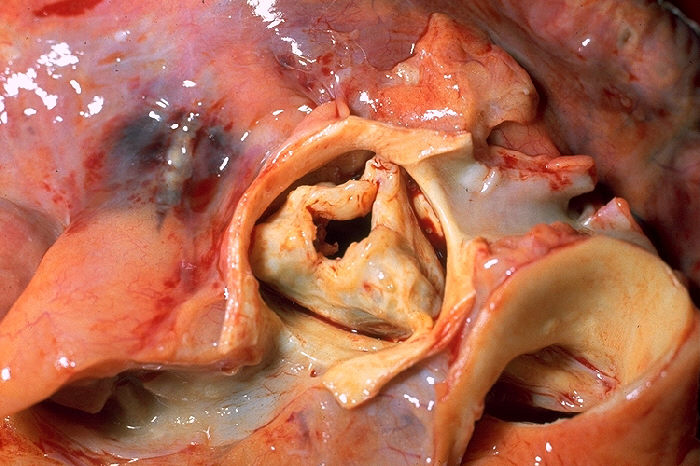
Definition
Aortic stenosis (AS) is the clinical syndrome of obstructed left-ventricular outflow at the aortic valve, conventionally characterized by reduction in aortic valve area (AVA) and elevation of transvalvular flow velocity or mean pressure gradient. In the contemporary literature supplied here, severe AS is operationally identified by an AVA of <1.0 cm²; however, the pressure-gradient response depends on transvalvular flow, left-ventricular systolic function, and loading conditions [392]. Severe AS is described in both symptomatic and asymptomatic patients, and in patients treated with either surgical aortic valve replacement (SAVR) or transcatheter aortic valve replacement (TAVR) [379][397].
The term “aortic stenosis” should be distinguished from aortic regurgitation (AR). Pure AR is a separate valve lesion and should not be classified as AS, even when transcatheter valve implantation is considered; the SEASON-AR trial specifically studied patients with severe pure AR rather than stenotic valve disease [396].
Hemodynamic classification
The principal hemodynamic distinction is between high-gradient and low-gradient AS. Conventional criteria used in patients undergoing dobutamine stress echocardiography classify severe AS as an AVA of <1.0 cm² with a mean aortic-valve gradient of ≥40 mmHg; moderate AS is characterized by an AVA of ≥1.0 cm² in the corresponding assessment framework [392]. These criteria must be interpreted with flow and left-ventricular ejection fraction (LVEF), because a low gradient may reflect reduced forward flow rather than absence of severe valve obstruction [392].
Low-gradient AS refers to AS with an AVA of <1.0 cm² but a mean gradient of <40 mmHg [392]. Important subcategories include:
- Classical low-flow, low-gradient AS: low-gradient AS with reduced LVEF, conventionally <50%; dobutamine stress echocardiography is used to assess contractile or flow reserve and to determine whether the valve behaves as truly severe or as functionally moderate [392].
- Low-flow, low-gradient AS with preserved or non-reduced LVEF: a phenotype in which forward flow is reduced despite no documented LVEF reduction; this group is explicitly recognized in contemporary TAVR outcome studies [385].
- Normal-flow, high-gradient AS: a high-gradient phenotype studied in patients with severe AS, preserved LVEF, and normal flow; it represents a distinct hemodynamic category from low-flow, low-gradient disease [388]C.
Dobutamine stress echocardiography may remain indeterminate in a substantial proportion of patients with classical low-gradient AS. Newer transvalvular-flow criteria have been evaluated to reduce indeterminate classifications and refine risk stratification, but these criteria should be regarded as an evolving refinement rather than a replacement for integrated clinical and imaging assessment [392]. Resting AVA may also be misleading when transvalvular flow rate is abnormal; the REFLOW-AS study evaluated whether resting AVA can identify hemodynamic severity at high transvalvular flow rates in patients referred for stress echocardiography [401].
Clinical and anatomic nomenclature
AS is also described according to symptoms and treatment status. Asymptomatic severe AS denotes severe valve obstruction without reported AS-attributable symptoms; the EARLY TAVR trial randomized such patients to early transfemoral TAVR or clinical surveillance, with surveillance patients converted to TAVR after development of guideline-defined indications [379]. Symptomatic severe AS denotes severe obstruction accompanied by clinically relevant symptoms attributable to the valve lesion; the PORTICO IDE trial enrolled patients with severe symptomatic AS at high or extreme surgical risk [397].
Anatomic terminology should specify whether the native valve is tricuspid, bicuspid, or bioprosthetic. Most TAVI evidence concerns native tricuspid valves, whereas bicuspid and bioprosthetic valves are recognized subgroups requiring separate outcome reporting [402]. Bicuspid AS is additionally characterized by raphe morphology and nonuniform annular or supra-annular anatomy; the LIRA method uses a raphe-level measurement to support TAVR sizing in this anatomy [390]. Annular size should also be documented, including large-annulus AS, for which 34-mm self-expanding valves have been studied separately from regular 23–29-mm valve sizes [384].
Related severity descriptors
Mild or trace aortic-valve abnormality should not be conflated with severe AS. In older adults, the ARIC study separately reported mild AS and trace or mild valve abnormalities, demonstrating that these findings form a lower-severity category than the severe AS populations evaluated for AVR or TAVR [403]. Post-TAVR terminology should likewise distinguish residual paravalvular regurgitation from native AS; in low-flow, low-gradient AS cohorts, paravalvular regurgitation is graded separately because its prognostic significance is evaluated after valve replacement rather than as a measure of native stenosis severity [385].
Finally, “AS with concomitant coronary artery disease” identifies a combined disease state rather than a distinct AS phenotype. Comparative literature evaluates SAVR plus coronary artery bypass grafting against TAVR plus percutaneous coronary intervention in such patients, and the coronary component should therefore be documented separately from the valve-severity classification [377].
| Term | Operational description |
|---|---|
| Severe AS | AVA <1.0 cm² [392] |
| High-gradient severe AS | AVA <1.0 cm² with mean gradient ≥40 mmHg [392] |
| Low-gradient AS | AVA <1.0 cm² with mean gradient <40 mmHg [392] |
| Classical low-flow, low-gradient AS | Low-gradient AS with LVEF <50% [392] |
| Normal-flow, high-gradient AS | Severe AS with preserved LVEF and normal flow, classified separately from low-flow disease [388]C |
| Asymptomatic severe AS | Severe AS without reported AS-attributable symptoms [379] |
| Symptomatic severe AS | Severe AS with clinically relevant valve-attributable symptoms [397] |
Epidemiology and Risk Factors
- ▸AS is concentrated in older adults; mild AS occurred in 4.3% of ARIC participants aged 66–90 years. [403]
- ▸Opportunistic noncontrast CT can detect AVC in adults aged ≥50 years, but CT-detected calcification is not synonymous with clinically diagnosed AS. [406]
- ▸Asymptomatic severe AS and moderate AS with at-risk features are clinically important phenotypes requiring structured assessment and surveillance. [379,404]
- ▸HF, DM, frailty, prefrailty, sarcopenia, and poor nutritional status identify higher-risk patients, particularly around AVR or TAVR. [378,380,386]
- ▸Bicuspid anatomy, ascending-aortic dilatation, low-flow low-gradient physiology, and annular size modify anatomical or procedural risk. [384,385,402,408]
Disease burden and age
Aortic stenosis (AS) is represented predominantly in older adults in contemporary cohorts. The ARIC study included 4,684 adults aged 66–90 years and identified mild AS in 4.3% of participants; even mild or trace valvular abnormalities were associated with measurable differences in cardiac structure, function, or biomarkers, supporting the clinical relevance of early valve disease. [403] A real-world TAVI cohort likewise consisted of 1,065 patients with severe AS treated between 2010 and 2023, illustrating that clinically significant disease is concentrated in an elderly, intervention-referred population. [407]
Routine imaging may identify previously unrecognized aortic valve calcification (AVC), an important marker of aortic valve disease burden. In a real-world cohort of 511 adults aged ≥50 years undergoing noncontrast chest CT, 440 examinations were suitable for quantitative assessment of AVC; the study evaluated prevalence, calcification burden, clinical correlates, and the extent to which AVC was documented in radiology reports. [406] These findings support opportunistic CT-based case finding, although the reference does not provide a population prevalence of clinically diagnosed AS. [406]
Severity and clinical phenotype
Severe AS is not limited to patients with overt symptoms. The EARLY TAVR trial enrolled patients with asymptomatic severe AS and randomized them to early transfemoral TAVR or clinical surveillance, with surveillance patients undergoing TAVR after development of guideline-defined Class I indications. [379] The trial specifically assessed the prevalence and clinical consequences of guideline-directed Class II indications for aortic valve replacement, indicating that apparently asymptomatic patients may nevertheless have clinical or structural features associated with higher risk. [379]
Moderate AS also comprises a clinically important risk group. A randomized international trial studied patients with moderate AS and at least one “at-risk” feature, defined as a symptom or a structural or functional abnormality associated with faster progression or adverse cardiovascular outcomes. [404] The trial addresses a population for whom current surveillance recommendations include echocardiographic assessment every 1–2 years, while the benefit of TAVR remains dependent on trial evidence rather than severity alone. [404]
Patient-related risk factors and modifiers
Heart failure (HF) identifies a particularly high-risk phenotype among patients with severe AS. The DAPA-TAVI trial enrolled 1,222 patients with severe AS undergoing TAVR who had prior HF and at least one additional high-risk condition; subsequent analyses evaluated whether diabetes mellitus (DM) modified outcomes after TAVR. [378] Thus, coexisting HF and DM are clinically important risk modifiers in post-intervention populations, although the cited evidence does not establish that DM causes AS or quantify its prevalence among all patients with AS. [378]
Frailty is common in patients undergoing intervention for severe AS and is associated with worse outcomes. In a DapaTAVI analysis of 1,222 patients with baseline frailty assessment, 47.2% were classified as frail and 40.3% as prefrail using the Fatigue, Resistance, Ambulation, Illnesses, and Loss of Weight scale. [380] Frailty therefore represents a frequent vulnerability phenotype that should be considered alongside anatomical AS severity and symptoms. [380] Additional markers of vulnerability include clinical frailty, poor nutritional status, and CT-defined sarcopenia; in a retrospective cohort of 407 patients undergoing surgical or transcatheter AVR for severe AS, these measures were investigated in relation to survival, particularly during the first year after intervention. [386]
Sex may influence the clinical course and procedural risk profile. A real-world cohort of 1,065 patients undergoing transfemoral TAVI evaluated associations between sex and one-year mortality, bleeding, and other procedure-related complications. [407] Because this was a retrospective single-center cohort, it informs outcome heterogeneity after treatment but does not establish sex-specific differences in AS incidence. [407]
Anatomical and associated cardiovascular factors
Valve morphology is an important anatomical modifier. Most TAVI evidence concerns tricuspid aortic valves, whereas bicuspid valves and failed surgical or transcatheter bioprostheses represent distinct anatomical or treatment-related groups; the COMPARE-TAVI 1 analysis compared 30-day and one-year outcomes across tricuspid, bicuspid, and bioprosthetic valves in an all-comer transfemoral TAVI population. [402] Bicuspid anatomy may also coexist with ascending-aortic dilatation. In a cohort of 189 older adults with severe AS and ascending-aortic dilatation of ≥4.5 cm undergoing TAVR, 87 had bicuspid and 102 had tricuspid valves; serial CT was used to compare subsequent aortic expansion. [408]
Low-flow, low-gradient AS is another high-risk phenotype that may be clinically distinct from high-gradient disease. A multicenter registry evaluated consecutive patients with severe low-flow, low-gradient AS undergoing TAVR and examined the prognostic effect of post-procedural paravalvular regurgitation. [385] Large annular anatomy is also relevant to treatment selection: among 488 TAVI patients with native AS, 186 (38%) received a 34-mm valve and 302 (62%) received 23–29-mm valves. [384]
Treatment-related evidence relevant to risk assessment
The cited post-intervention literature shows that residual risk persists after valve replacement. Systematic reviews evaluated SGLT2 inhibitor use after TAVR, TAVI, SAVR, or other aortic valve interventions for mortality, HF, renal, rhythm, and valve-related outcomes, but these studies address management after AS treatment rather than causes of AS. [381][382] Short-term complications after TAVR have also been synthesized across prosthesis types, with the available evidence primarily covering predominantly transfemoral procedures and severe AS. [405] Other studies examined long-term valve performance, conduction disturbance prevention, anesthesia strategy, coronary revascularization timing, and outcomes of self-expanding versus commercially available valves; these are procedural risk domains rather than epidemiological determinants of AS. [397][389][409][410]
Fibromuscular dysplasia (FMD) is a nonatherosclerotic, noninflammatory arterial disease that usually affects medium-sized arteries; evidence for true aortic FMD remains sparse and is derived mainly from case reports and small series, so it should not be considered an established common risk factor for degenerative AS. [398]
| Domain | Evidence | Reference |
|---|---|---|
| Older age | ARIC participants were aged 66–90 years; mild AS prevalence was 4.3%. | [403] |
| AVC detection | 511 adults aged ≥50 years underwent screening CT; 440 scans were evaluable. | [406] |
| Frailty | Among 1,222 DapaTAVI participants assessed for frailty, 47.2% were frail and 40.3% prefrail. | [380] |
| HF and DM | DAPA-TAVI enrolled 1,222 severe-AS patients undergoing TAVR with prior HF and at least one high-risk condition; outcomes were analyzed by DM status. | [378] |
| Moderate AS | Randomized trial population had moderate AS plus ≥1 symptom, structural, or functional at-risk feature. | [404] |
| Valve morphology | COMPARE-TAVI 1 compared tricuspid, bicuspid, and bioprosthetic valves. | [402] |
| Ascending-aortic dilatation | TAVR cohort required ascending aorta ≥4.5 cm. | [408] |
Pathophysiology and Mechanism
- ▸AS severity is flow dependent; an AVA of <1.0 cm² with a mean gradient of <40 mmHg may represent true severe low-flow disease or diagnostically indeterminate disease. [392]
- ▸Chronic pressure overload affects ventricular structure, diastolic function, myocardial reserve, extracellular volume, and left-ventricular mass, even when ejection fraction is preserved. [388,403,415]
- ▸Atrial cardiomyopathy and genetically mediated atrial-fibrillation susceptibility can contribute to downstream rhythm and heart-failure risk. [411,412]
- ▸TAVR reduces afterload but does not automatically reverse myocardial, coronary, metabolic, atrial, or ascending-aortic abnormalities. [382,388,408,413,414,415]
- ▸Residual paravalvular regurgitation and prosthesis-related hemodynamics remain important determinants of post-TAVR physiology and outcomes. [384,385,397]
Core hemodynamic lesion
Aortic stenosis (AS) is fundamentally an obstruction to left-ventricular outflow. As the valve orifice narrows, forward flow requires a higher pressure gradient between the left ventricle and aorta; the ventricle therefore operates against increased afterload. The resulting pressure burden is reflected clinically by the relationship among aortic valve area (AVA), transvalvular flow, and mean gradient. Conventional severe low-gradient AS is commonly defined by an AVA of <1.0 cm² with a mean gradient of <40 mmHg, but this combination may represent either truly severe obstruction with inadequate flow or anatomically less severe disease. [392]
Transvalvular flow is therefore a central determinant of apparent severity. Low stroke volume can reduce the gradient despite a critically narrowed valve, particularly when left-ventricular systolic function is impaired. Conversely, resting AVA may be more informative when transvalvular flow rate is high; the REFLOW-AS study specifically evaluated whether resting AVA can identify severity across different flow states in patients undergoing dobutamine stress echocardiography. [401] Novel flow-based criteria also reduced the proportion of indeterminate dobutamine stress studies in classical low-gradient AS, indicating that flow, rather than gradient alone, influences diagnostic classification. [392]
Ventricular remodeling and myocardial reserve
Chronic pressure overload produces structural and functional left-ventricular remodeling. In older adults, even mild AS was associated with measurable differences in cardiac structure, systolic and diastolic function, and high-sensitivity cardiac troponin T, supporting the concept that remodeling may begin before hemodynamically advanced disease. [403] In severe AS, computed-tomography assessment of extracellular volume and left-ventricular mass has been used to characterize myocardial remodeling; changes in indexed extracellular volume and cellular volume after TAVI suggest that relief of obstruction can alter the myocardial substrate over time. [415]C
The consequences are not limited to resting ejection fraction. Invasive hemodynamic assessment demonstrated that severe AS with preserved ejection fraction can impair frequency-dependent myocardial reserve, including systolic and relaxation responses during incremental atrial pacing. Acute afterload reduction immediately after TAVI was associated with restoration of these reserve relationships, linking valvular obstruction directly to impaired contractile and lusitropic adaptability. [388]C Aortic-root geometry may also influence recovery: annular eccentricity and sinus-of-Valsalva height were investigated as predictors of 1-year left-ventricular reverse remodeling after TAVR. [413]
Atrial, pulmonary, and heart-failure consequences
Raised left-ventricular filling pressures and impaired compliance transmit pressure backward to the left atrium. Severe AS can consequently produce structural, functional, and electrical atrial remodeling even when left-ventricular ejection fraction is preserved. A multimodal atrial-cardiomyopathy phenotype was associated with risk stratification after TAVI in patients without previous atrial fibrillation, supporting atrial remodeling as an intermediate mechanism between ventricular pressure overload and adverse outcomes. [412] In valvular heart disease, incident atrial fibrillation is generally attributed to pressure or volume overload with atrial remodeling, although UK Biobank data indicate that inherited atrial-fibrillation susceptibility may contribute independently. [411]
Progressive ventricular and atrial dysfunction can culminate in heart failure, reduced exercise tolerance, pulmonary congestion, and acute decompensation. In the DAPA-TAVI trial, patients with severe AS undergoing TAVR who had prior heart failure were randomized to dapagliflozin or control; the trial evaluated all-cause mortality or worsening heart failure at 1 year, and a prespecified analysis examined whether diabetes modified treatment response. [378] A systematic review and GRADE-assessed meta-analysis likewise evaluated whether sodium-glucose cotransporter-2 inhibitors influence cardiovascular and renal outcomes after TAVI, emphasizing that correction of the valve lesion does not immediately eliminate postprocedural heart-failure or renal risk. [382]
Etiologic and modifying mechanisms
Degenerative valvular disease is influenced by systemic metabolic factors. In a large UK Biobank cohort, metabolic obesity phenotypes were evaluated in relation to degenerative valvular heart disease and its subtypes, with proteomic analyses used to explore biological pathways linking metabolic status to valve disease. [416] Valve morphology also modifies the mechanical phenotype: bicuspid and tricuspid valves were compared in contemporary TAVI cohorts, while bicuspid anatomy required dedicated sizing strategies because of heterogeneous annular and raphe geometry. [402][390] Ascending-aortic dilatation may coexist with bicuspid or tricuspid AS; after TAVR, the valve obstruction is treated but the dilated ascending aorta remains anatomically present, and serial imaging found no clear evidence that bicuspid morphology inherently accelerated expansion during the reported follow-up. [408]
Coronary disease adds an independent ischemic and microvascular burden. Patient-level angiography-derived fractional-flow-reserve measurements were used to quantify cumulative coronary physiologic impairment before TAVI, reflecting how diffuse coronary dysfunction can compound the myocardial effects of pressure overload. [414]
Relief of obstruction and residual loading
TAVR reduces valvular afterload and can promote reverse remodeling, improved myocardial reserve, and recovery of filling-pressure physiology; however, recovery is heterogeneous and depends on pre-existing myocardial, atrial, coronary, metabolic, and aortic disease. [388]C[413][415]C Prosthetic valve performance also matters. Long-term randomized follow-up compared a self-expanding intra-annular valve with commercially available balloon-expandable or supra-annular valves, including clinical and hemodynamic outcomes through 5 years. [397] Large self-expanding valves have additionally been studied in patients with large annuli, a subgroup in which prosthesis sizing and residual gradients are important mechanical considerations. [384]
Residual paravalvular regurgitation creates volume loading after TAVR and may be particularly consequential in low-flow, low-gradient AS; a multicenter registry evaluated its prognostic significance using contemporary prostheses. [385] Thus, successful treatment requires not only relief of forward-flow obstruction but also minimization of residual gradient, regurgitant volume, and prosthesis–patient mismatch. Early intervention is increasingly studied even in asymptomatic severe AS because adverse remodeling and clinical events may develop before conventional symptoms or Class I indications appear. [379]
Clinical Presentation
- ▸AS may be mild and apparently asymptomatic, or severe with heart failure, functional limitation, frailty, or reduced myocardial reserve. [379] [380] [388] [403]
- ▸Asymptomatic severe AS is a recognized clinical phenotype; mild symptoms or comorbidity may lead to prolonged surveillance before TAVR. [379] [418]
- ▸Classical low-gradient AS is evaluated using **AVA <1.0 cm²**, mean gradient **<40 mmHg**, and LVEF **<50%**, with DSE used to clarify severity. [392]
- ▸Frailty is common among patients undergoing TAVI for severe AS, with **47.2% frail** and **40.3% prefrail** in one contemporary cohort. [380]
- ▸Preserved LVEF does not exclude impaired myocardial reserve in severe AS. [388]
Overall clinical spectrum
Aortic stenosis (AS) presents across a spectrum ranging from mild, apparently asymptomatic valve disease to severe disease with heart failure, reduced functional capacity, or other indications for valve replacement. Contemporary evidence includes older adults with mild AS, patients with asymptomatic severe AS, and high-risk patients with severe symptomatic AS referred for transcatheter aortic valve replacement (TAVR). [403] [379] [397] The clinical phenotype is therefore determined not only by valve obstruction, but also by ventricular response, transvalvular flow, symptoms, frailty, comorbidity, and associated coronary or vascular disease. [380] [386] [414]
In an older community cohort aged 66–90 years, mild AS was present in 4.3% of participants. The same study evaluated associations between mild or trace valvular abnormalities and cardiac remodeling, including left-ventricular structure, systolic and diastolic function, and high-sensitivity cardiac troponin T, indicating that even apparently minor valve abnormalities may occur alongside measurable cardiac changes. [403]
Symptoms and functional status
Symptoms may be absent despite severe AS. The EARLY TAVR trial specifically enrolled patients with asymptomatic severe AS and compared early transfemoral TAVR with clinical surveillance, with conversion to TAVR when a guideline-defined class I indication developed. [379] A separate observational study described patients diagnosed with severe AS who underwent extended observation because of mild symptoms or comorbidities, highlighting that symptom burden may be subtle, equivocal, or difficult to attribute in older adults. [418]
When severe AS is accompanied by prior heart failure, the clinical presentation includes vulnerability to worsening heart failure and death during follow-up after TAVR. The DAPA-TAVI population consisted of patients with severe AS undergoing TAVR who had prior heart failure and at least one additional high-risk condition. [378] Frailty is also common in this setting: among 1,222 patients undergoing TAVI with baseline frailty assessment, 47.2% were frail and 40.3% were prefrail according to the Fatigue, Resistance, Ambulation, Illnesses, and Loss of Weight scale. [380] Functional frailty, nutritional impairment, and CT-defined sarcopenia are clinically relevant descriptors because they are associated with prognosis after surgical or transcatheter aortic valve replacement for severe AS. [386]
Hemodynamic phenotypes
The presentation of severe AS is not uniform by gradient. Classical low-gradient AS is generally evaluated when the aortic valve area (AVA) is <1.0 cm², the mean aortic-valve gradient is <40 mmHg, and left-ventricular ejection fraction (LVEF) is <50%; dobutamine stress echocardiography (DSE) is used to clarify whether obstruction is truly severe. [392] This group may have an indeterminate clinical and echocardiographic presentation because conventional DSE criteria can be nondiagnostic; transvalvular-flow-based criteria have been investigated to reduce this indeterminate classification. [392]
Resting AVA should also be interpreted in relation to transvalvular flow. In patients referred for DSE because of suspected low-gradient AS, the ability of resting AVA to identify hemodynamic severity varied according to the resting transvalvular flow rate, supporting an integrated assessment rather than reliance on AVA alone. [401] Patients with severe low-flow, low-gradient AS undergoing TAVR represent a distinct high-risk phenotype in which post-procedural paravalvular regurgitation may have prognostic importance. [385]
Severe AS may impair myocardial reserve even when LVEF is preserved. In patients with severe normal-flow, high-gradient AS and preserved LVEF, invasive assessment examined systolic and relaxation responses during incremental atrial pacing before and immediately after TAVI, reflecting a clinically important phenotype in which apparently preserved global systolic function does not exclude impaired reserve. [388]C
Associated clinical features and anatomic context
Coronary artery disease frequently coexists with severe AS and contributes to clinical risk; diffuse coronary physiologic impairment may be present even without a single angiographically severe epicardial stenosis. [414] Patients may also present with bicuspid, tricuspid, or pre-existing bioprosthetic valve anatomy, each of which can influence the diagnostic and procedural context of AS. [402] Bicuspid anatomy is particularly heterogeneous and may require dedicated CT-based assessment before TAVR. [390]
The broader comorbidity profile can include frailty, sarcopenia, nutritional compromise, diabetes mellitus, and vascular disease. Diabetes status was specifically examined as a potential modifier of response to dapagliflozin after TAVR, while fibromuscular dysplasia may rarely involve the aorta in addition to its more typical medium-artery distribution. [378] [398] Cardiac CT-derived extracellular volume and cardiac MRI radiomics are emerging tools for characterizing myocardial interstitial expansion or differentiating causes of left-ventricular hypertrophy, which may help explain symptoms or ventricular remodeling when AS coexists with other myocardial disease. [399]C [400]
Clinical interpretation
The clinical presentation should therefore integrate symptoms and activity limitation with echocardiographic severity, flow state, LVEF, ventricular remodeling, frailty, and competing disease. Absence of symptoms does not necessarily indicate low risk in severe AS, whereas mild symptoms may be difficult to recognize in sedentary, frail, or multimorbid patients. [379] [380] [418] Diagnostic uncertainty is greatest in low-gradient disease and when ventricular function or flow is abnormal; these patients require an integrated evaluation using resting echocardiography, flow assessment, and, when appropriate, DSE or complementary imaging. [392] [401]
| Phenotype | Clinical or hemodynamic features | Evidence |
|---|---|---|
| Mild or trace AS | May occur in older adults and may accompany cardiac remodeling. | [403] |
| Asymptomatic severe AS | Severe AS without reported symptoms; early TAVR versus surveillance has been studied. | [379] |
| Severe AS with subtle symptoms | Mild symptoms or comorbidities may complicate timing of intervention. | [418] |
| Classical low-gradient AS | AVA <1.0 cm², mean gradient <40 mmHg, LVEF <50%; DSE may be required. | [392] |
| Severe low-flow, low-gradient AS | Distinct high-risk phenotype with prognostic relevance of post-TAVR paravalvular regurgitation. | [385] |
| Severe AS with preserved LVEF | Global EF may be preserved despite impaired frequency-dependent myocardial reserve. | [388]C |
| Severe AS with frailty | Frailty, prefrailty, sarcopenia, and nutritional impairment are common and clinically prognostic. | [380] [386] |
Diagnosis and Workup
- ▸Use echocardiography to establish AS severity, flow status, ventricular response and right-heart involvement; investigate discordant or low-gradient findings with CT, invasive haemodynamics or both. [385][420][422]
- ▸An invasive reference study defined severe AS as AVA ≤1.0 cm² in the evaluated low-gradient cohort. [422]
- ▸CT-based AVC can adjudicate low-gradient AS and may be detected incidentally or with AI on routine noncontrast chest CT; the cited AI study used >10 Agatston units and a 130-Hounsfield-unit threshold. [406][422]
- ▸Record symptoms, heart-failure history, diabetes, frailty, nutrition, sarcopenia, rhythm status, biomarkers and coronary disease because these factors affect risk stratification and treatment planning. [378][380][386][389][393][423]
- ▸Consider alternative myocardial diagnoses when hypertrophy is disproportionate or atypical, but do not treat the cited amyloidosis or transcriptomic studies as validated diagnostic standards for AS. [425][426]
Diagnostic objectives
Evaluation of aortic stenosis (AS) should establish valve anatomy, haemodynamic severity, flow and ventricular response, while identifying coexisting coronary, myocardial, pulmonary, right-heart, frailty, nutritional and systemic disease that may influence prognosis or treatment selection. The contemporary evidence supplied here is predominantly derived from patients with severe AS undergoing transcatheter aortic valve replacement (TAVR/TAVI), so several findings are best regarded as risk-stratification or adjudication tools rather than standalone diagnostic tests. [378][379][380][382]
Echocardiography and haemodynamic classification
Transthoracic echocardiography remains the central modality for documenting valve morphology, stenosis severity, ventricular function and associated cardiac damage. Particular attention is required when measurements are discordant or the transvalvular gradient is low. In a study of low-gradient AS, invasive aortic valve study (IAVS) used an aortic valve area (AVA) of ≤1.0 cm² to define severe AS, providing a reference standard against which computed tomography (CT)-derived AVA and aortic valve calcium (AVC) were evaluated. [422]
Low-flow, low-gradient AS is a diagnostically challenging phenotype in which apparent severity may be uncertain; therefore, discordant echocardiographic findings should prompt integration of flow, ventricular function, valve calcification and, when necessary, invasive haemodynamic assessment. In the multicentre registry of patients with low-flow, low-gradient AS undergoing TAVR, postprocedural paravalvular regurgitation was graded using a five-class scheme, underscoring the importance of systematic quantitative assessment of residual valve-related haemodynamics. [385]
Echocardiography should also characterize extracardiac and right-heart involvement. Right-heart damage was staged echocardiographically in stages 0–4, with stages 3–4 representing right-heart involvement in a retrospective cohort of 548 patients with severe AS treated by TAVR. [420] Additional measures of myocardial function may include tissue-Doppler systolic velocity; pre-TAVI tissue-Doppler S-wave velocity was investigated as a marker of the subsequent NT-proBNP response. [424] Left-ventricular mass index and its regression after TAVR have been studied as indicators of myocardial recovery, although their prognostic meaning may differ according to the presence of right-heart damage. [420]
CT assessment and calcium burden
CT is particularly useful when echocardiographic severity is discordant, especially in low-gradient AS. CT-derived AVA and sex-based AVC were directly compared with IAVS in patients who had echocardiography, CT and invasive assessment within one year. [422] Routine noncontrast chest CT can also identify incidental AVC outside a dedicated AS evaluation. In a real-world cohort, AVC was defined as >10 Agatston units, using a 130-Hounsfield-unit threshold adjusted for the blood pool; two blinded readers quantified AVC after exclusion of nonevaluable scans. [406]
Artificial-intelligence-assisted detection may improve case finding because AVC on routine chest CT can be clinically overlooked or incompletely documented. However, the available evidence is retrospective and single-centre, and AI-detected calcification should trigger clinical correlation rather than replace echocardiographic confirmation of haemodynamic AS. [406]
Clinical, functional and systemic assessment
The workup should document symptoms, prior heart failure, diabetes, frailty, nutritional status, functional capacity and comorbidity burden. The DAPA-TAVI trial enrolled 1,222 patients with severe AS undergoing TAVR who had prior heart failure and at least one high-risk condition, illustrating the importance of explicitly recording heart-failure history and risk status during evaluation. [378]
Frailty can be assessed with the Fatigue, Resistance, Ambulation, Illnesses and Loss of Weight scale, in which scores of 0, 1–2 and 3–5 indicate robust, prefrail and frail status, respectively. In the DapaTAVI frailty analysis, 47.2% of 1,222 patients were frail and 40.3% were prefrail. [380] Additional assessment may include the Clinical Frailty Scale, CONUT nutritional score and CT-defined sarcopenia; all three were evaluated in 407 patients undergoing surgical or transcatheter AVR, with emphasis on mortality during the first year after treatment. [386]
Biomarkers, rhythm and differential diagnosis
Baseline laboratory evaluation can be expanded when clinically indicated. IL-6 and soluble IL-6 receptor concentrations were examined as exploratory biomarkers of outcomes after TAVI in a prospective multicentre cohort. [393] NT-proBNP response after TAVI has been investigated in relation to tissue-Doppler S-wave velocity. [424] Twenty-four-hour Holter monitoring before and three months after TAVR has also been used to assess heart-rate variability, including low-frequency/high-frequency measures, in symptomatic severe AS. [423]
Marked left-ventricular hypertrophy should prompt consideration of alternative or coexisting myocardial disease. Transcriptomic profiling studies have evaluated circulating microRNAs in hypertrophic cardiomyopathy, hypertensive left-ventricular hypertrophy, transthyretin amyloid cardiomyopathy and AS, but no established circulating biomarker for distinguishing hypertrophic cardiomyopathy is currently provided by this evidence set. [425] A separate study of older patients with significant hypertrophy excluded severe AS and evaluated ATTR and light-chain cardiac amyloidosis using electrocardiography, echocardiography and strain imaging; its results therefore cannot be directly extrapolated to patients with severe AS. [426]C
Pre-intervention anatomical and comorbidity assessment
Patients being considered for TAVR require assessment of valve and vascular anatomy, coronary disease and procedural risk. The EARLY TAVR trial enrolled patients with asymptomatic severe AS and randomized transfemoral TAVR against clinical surveillance, with conversion to TAVR when guideline Class I indications developed; this population emphasizes the need to document symptoms and guideline-based indications carefully even when patients report being asymptomatic. [379] In patients with concomitant high-risk coronary disease, registry data have compared PCI before, during or after TAVI, supporting explicit coronary evaluation as part of multidisciplinary planning. [389]
Bicuspid morphology and mixed valve disease should be recorded because outcomes have been separately examined in bicuspid versus tricuspid valves among patients with severe AS and at least moderate aortic regurgitation. [395] Findings from studies of TAVR prosthesis geometry, routine postdilation and paravalvular regurgitation concern procedural optimization and follow-up rather than primary diagnosis, but they reinforce the need for baseline anatomical documentation and post-implant haemodynamic assessment. [419][385]
Scope and limitations
Evidence concerning dapagliflozin, SGLT2 inhibitors, myocardial reserve, post-TAVR remodelling and outcomes does not establish diagnostic criteria for AS; it informs post-diagnosis risk stratification and management. [378][382][388]C[420] The fetal-heart-society study of hypoplastic left heart syndrome addresses congenital disease in fetuses and neonates and should not be used to diagnose typical adult AS. [421]
| Domain | Assessment | Evidence-supported purpose |
|---|---|---|
| Valve and haemodynamics | Echocardiography; assess flow, gradients, AVA, ventricular function and right-heart damage | Establish severity and identify discordant or advanced disease. [385][420][422] |
| CT | CT-AVA and AVC; review routine noncontrast chest CT for incidental calcification | Adjudicate low-gradient AS and support case finding. [406][422] |
| Invasive assessment | IAVS when noninvasive findings remain discordant | Reference assessment used for severe AS defined as AVA ≤1.0 cm² in the cited study. [422] |
| Clinical and geriatric assessment | Symptoms, heart failure, diabetes, frailty, nutrition and sarcopenia | Characterize procedural risk and prognosis. [378][380][386] |
| Additional testing | ECG/Holter, NT-proBNP, selected inflammatory biomarkers, coronary evaluation and assessment for alternative cardiomyopathy | Identify associated disease and refine management planning. [389][393][423][424][425][426]C |
Severity Staging and Risk Stratification
- ▸Define pLFLG AS using AVA ≤1.0 cm², mean gradient <40 mmHg, stroke-volume index <35 mL/m², and LVEF ≥50%. [427]
- ▸Use dobutamine stress echocardiography and multimodality assessment when AVA, gradient, and flow are discordant. [401]
- ▸In asymptomatic severe AS, assess ACC/AHA Class II risk markers in addition to symptoms and Class I indications. [379]
- ▸Stage disease by cardiac damage, including right-heart involvement, atrial cardiomyopathy, LV dysfunction, MR, and PVR. [420] [412] [430] [431] [385]
- ▸Integrate frailty, sarcopenia, nutrition, age, coronary disease, and procedural strategy into individualized risk assessment. [386] [428] [376] [389]
Core echocardiographic staging
Aortic stenosis (AS) should be staged by integrating aortic valve area (AVA), transvalvular velocity, mean gradient, flow status, left ventricular ejection fraction (LVEF), symptoms, and evidence of myocardial or extracardiac damage. A particularly important phenotype is paradoxical low-flow, low-gradient (pLFLG) AS, defined in the REBOOT-PARADOX trial by AVA ≤1.0 cm², mean gradient <40 mmHg, stroke-volume index <35 mL/m², and LVEF ≥50% in symptomatic patients. [427] This phenotype has historically been associated with an adverse prognosis compared with other AS subtypes and requires confirmation that the stenosis is truly severe before treatment decisions are made. [427]
Low-gradient AS remains diagnostically challenging because resting AVA may be misleading when transvalvular flow is abnormal. The REFLOW-AS study evaluated resting AVA against flow rate during low-dose dobutamine stress echocardiography in 201 patients referred for AS assessment; the study specifically examined whether resting AVA can identify hemodynamically severe disease in patients with high transvalvular flow rate. [401] Thus, discordant AVA-gradient findings should prompt a multimodality assessment rather than classification from a single resting parameter. [401]
Clinical stages and timing of intervention
Severity classification should distinguish asymptomatic severe AS from symptomatic severe AS and should incorporate guideline-directed triggers for aortic valve replacement (AVR). The EARLY TAVR trial randomized patients with asymptomatic severe AS to transfemoral TAVR or clinical surveillance, with surveillance patients undergoing TAVR after development of an ACC/AHA Class I indication. [379] A subsequent analysis examined the prevalence and clinical impact of ACC/AHA Class II indications within this randomized population, reflecting the increasing importance of risk markers beyond symptoms alone when considering early intervention. [379]
Symptomatic pLFLG AS represents a high-risk clinical stage. REBOOT-PARADOX directly compared TAVR plus optimal medical therapy with optimal medical therapy alone in this population, using all-cause mortality at 2 years as the primary endpoint. [427] This trial provides dedicated randomized evidence for treatment decision-making in symptomatic pLFLG disease, a group previously managed largely on the basis of observational evidence and physiologic assessment. [427]
Cardiac-damage staging
Risk stratification should extend beyond valve hemodynamics to the extent of cardiac remodeling and right-sided involvement. In a TAVR cohort, extracardiac cardiac damage was staged echocardiographically, with stages 0–2 representing no right-heart damage and stages 3–4 representing right-heart damage; the prognostic value of left-ventricular mass-index regression after TAVR differed according to this right-heart-damage status. [420] Persistent or advanced cardiac damage may therefore identify patients whose prognosis is less reliably inferred from successful valve implantation or early reverse remodeling alone. [420]
Atrial cardiomyopathy is another potentially relevant substrate. In 122 patients with severe AS, preserved LVEF, and sinus rhythm undergoing TAVI, multimodal phenotyping incorporated structural, functional, and electrical atrial remodeling to identify distinct risk phenotypes. [412] This approach is clinically relevant because atrial remodeling may be present despite preserved LVEF and absence of prior atrial fibrillation (AF). [412] Genetic predisposition may also contribute: UK Biobank analyses evaluated an AF polygenic-risk score across valvular heart-disease subtypes, including AS, indicating that inherited AF susceptibility should not automatically be attributed solely to hemodynamic remodeling. [411]
Ventricular recovery and residual valve-related risk
Baseline ventricular dysfunction should be incorporated into counseling and follow-up planning. A Japanese multicenter registry developed a preprocedural score to predict complete LVEF normalization, defined as LVEF >50% at 1 year, among patients with severe AS and baseline LVEF <40% undergoing TAVI. [430] Recovery is heterogeneous, so severe LV dysfunction should be treated as both a marker of advanced disease and a determinant of expected post-procedural benefit. [430]
Residual or associated valve disease can modify risk after intervention. In patients with low-flow, low-gradient AS undergoing TAVR, paravalvular regurgitation (PVR) was classified using a five-grade scheme, allowing comparison of outcomes according to PVR severity. [385] Moderate or severe mitral regurgitation is also common in TAVR candidates; a study of 344 patients evaluated predictors of improvement to mild-or-less MR and the prognostic impact of persistent MR, particularly in classic versus low-flow, low-gradient AS and according to sex. [431]
Global clinical and procedural risk
Risk assessment should include frailty, nutritional status, sarcopenia, age, comorbidity, coronary disease, and procedural anatomy. In 407 patients undergoing surgical or transcatheter AVR for severe AS, clinical frailty, CT-defined sarcopenia, and nutritional status assessed by the CONUT score were evaluated in relation to overall survival, with particular attention to the first year after AVR. [386] In nonagenarians undergoing TAVI, a multicenter real-world study assessed long-term survival and clinical factors associated with mortality, emphasizing that chronological age identifies a high-risk group but does not replace individualized assessment. [428]
Coronary disease should be considered in the overall risk profile, but the value and timing of revascularization remain uncertain. A systematic review and meta-analysis of randomized trials compared routine PCI with conservative management in patients with severe AS undergoing TAVI and also compared angiography-guided with physiology-guided PCI strategies. [376] In patients requiring both high-risk PCI and TAVI, the ASCoP registry compared PCI performed before, concomitantly with, or after TAVI using death or first unplanned hospitalization as the primary composite outcome. [389]
Finally, treatment response and residual risk may be influenced by comorbidity and adjunctive therapy. The DAPA-TAVI trial enrolled patients with severe AS undergoing TAVR who had prior heart failure and at least one high-risk condition; a prespecified analysis examined whether diabetes modified the effect of dapagliflozin on 1-year all-cause mortality or worsening heart failure. [378] A systematic review and GRADE-assessed meta-analysis evaluated SGLT2 inhibitor use versus nonuse or standard care after TAVI for cardiovascular and renal outcomes. [382] These studies inform post-TAVI risk management but should not substitute for anatomic, hemodynamic, ventricular, and frailty-based staging.
| Domain | Key assessment | Evidence |
|---|---|---|
| Valve hemodynamics | AVA, gradient, flow, LVEF; pLFLG criteria include AVA ≤1.0 cm², gradient <40 mmHg, and stroke-volume index <35 mL/m² | [427] |
| Diagnostic uncertainty | Dobutamine stress echocardiography and assessment of transvalvular flow rate | [401] |
| Cardiac damage | Right-heart damage stage, LV mass regression, atrial remodeling, LV dysfunction | [420] [412] [430] |
| Associated valve disease | MR persistence and PVR severity after TAVR | [431] [385] |
| Patient vulnerability | Frailty, CT sarcopenia, nutritional status, advanced age | [386] [428] |
| Procedural comorbidity | CAD, PCI timing, diabetes, heart failure, SGLT2 inhibitor use | [376] [389] [378] [382] |
Acute and Initial Management
- ▸Confirm severe AS promptly and characterize low-gradient disease using AVA **<1.0 cm²**, mean gradient **<40 mmHg**, and LVEF **<50%** when applicable; DSE may be indeterminate, and flow-based criteria can assist classification.[392]
- ▸Urgent or emergency TAVI is feasible in selected patients with acute decompensated severe AS, but current evidence is limited to a small prospective cohort.[383]
- ▸BAV may serve as a bridge when definitive valve replacement is not immediately feasible, including selected urgent orthopedic-surgery cases, but comparative evidence is observational.[387]
- ▸Routine coronary revascularization before TAVI is not established; PCI timing and physiology-guided versus angiography-guided strategies remain under study.[376][389]
- ▸Post-intervention care should address heart failure, renal, rhythm, neurologic, vascular, prosthetic, and paravalvular complications, with individualized consideration of SGLT2 inhibitors.[381][382][385][394]
Immediate assessment and stabilization
Patients with suspected severe aortic stenosis (AS) should undergo prompt clinical assessment for symptoms, acute heart failure, hypotension, pulmonary congestion, myocardial ischemia, arrhythmia, and end-organ hypoperfusion, followed by urgent echocardiographic confirmation and multidisciplinary evaluation when decompensation is present.[383] Echocardiographic assessment should distinguish high-gradient disease from low-gradient phenotypes; classical low-gradient AS is characterized by an aortic valve area (AVA) <1.0 cm², mean transvalvular gradient <40 mmHg, and reduced left ventricular ejection fraction (LVEF) <50%.[392] Dobutamine stress echocardiography (DSE) remains an established tool in this phenotype, although indeterminate studies are common; transvalvular-flow criteria have been proposed to reduce diagnostic uncertainty and refine classification.[392]
Initial supportive treatment should be individualized and cautious because fixed outflow obstruction limits the ability to augment cardiac output. Manage pulmonary congestion, hypoxemia, ischemia, and arrhythmias while avoiding abrupt reductions in preload or systemic vascular resistance; patients with shock or rapidly progressive organ dysfunction require immediate specialist involvement and consideration of definitive valve intervention.[383] The supplied evidence does not establish a universal medication protocol for acute decompensation, so treatment should be guided by blood pressure, perfusion, renal function, congestion, rhythm, and the anticipated timing of valve replacement.[383]
Acute decompensation and urgent valve intervention
Acute decompensated severe AS may make elective treatment unsafe or impossible, and urgent, emergency, or salvage transcatheter aortic valve implantation (TAVI) can be considered in selected patients after evaluation of anatomy, comorbidity, procedural feasibility, and goals of care.[383] In a prospective single-center cohort of 53 such patients treated during 2022–2025, device success was 98.1% (52/53); 30-day mortality was 1/36 in the urgent group, 0/14 in the emergency group, and 0/3 in the salvage group, while 12-month mortality was 2/36, 1/14, and 0/3, respectively.[383] These findings support feasibility in experienced centers but should not be interpreted as proof of equivalence to elective TAVI because the cohort was small, nonrandomized, and single-center.[383]
Balloon aortic valvuloplasty (BAV) may be considered as a temporary bridge when definitive valve replacement cannot be performed immediately, including selected patients requiring urgent noncardiac surgery; however, the supplied evidence is observational and does not establish superiority over conservative management.[387]C In older adults with hip fracture and severe AS, the relevant clinical outcomes include 30-day and 180-day mortality, time to orthopedic surgery, intensive-care and hospital length of stay, and need for mechanical ventilation.[387]C
Concomitant coronary artery disease
Coronary artery disease is common in severe AS, and initial management should define the clinical indication, anatomical complexity, ischemic territory, and timing of coronary revascularization relative to TAVI.[376][377][389] The optimal strategy remains uncertain: a 2026 systematic review and network meta-analysis specifically compared routine PCI with conservative management and assessed angiography-guided versus physiology-guided PCI in patients undergoing TAVI.[376] A separate systematic review compared TAVR plus PCI with SAVR plus CABG while correcting for overlapping populations and reporting randomized evidence separately.[377] For complex or high-risk CAD, registry data have examined PCI performed before TAVI, concomitantly with TAVI, or after TAVI, using death or first unplanned hospitalization as the primary composite outcome.[389] Accordingly, PCI should be selective rather than automatic, with the sequence determined by coronary urgency, lesion complexity, hemodynamic risk, renal function, access considerations, and the heart-team assessment.[376][389]
Early post-intervention management
After TAVI or surgical valve replacement, monitor closely for heart failure, renal dysfunction, conduction abnormalities, stroke, vascular complications, prosthetic dysfunction, and paravalvular regurgitation.[381][382][385][394]C Contemporary studies have evaluated sodium–glucose cotransporter-2 inhibitors (SGLT2 inhibitors) after TAVI or surgical valve intervention for mortality, worsening heart failure, rhythm, renal, and valve-related outcomes, but the evidence base includes randomized and observational data and should not be treated as a universal acute-start recommendation.[381][382] The DAPA-TAVI program studied dapagliflozin in patients undergoing TAVR who had prior heart failure and at least one high-risk condition, including prespecified analyses according to diabetes and post hoc analyses according to frailty.[378][380] Frailty is common in this population and is associated with prognosis, so functional status, nutrition, sarcopenia, and treatment goals should be incorporated into discharge planning and follow-up.[380][386]
Special anatomical and procedural considerations
Preprocedural computed tomography and echocardiography should guide annular sizing, valve selection, coronary-access planning, and assessment of bicuspid or low-flow anatomy.[390][392] Bicuspid anatomy requires particular attention to raphe morphology and implantation strategy; the multicenter SUBLIME study evaluated the LIRA sizing method in 215 bicuspid patients, reflecting the ongoing need for anatomy-specific planning.[390] Large annuli may require large self-expanding valves, but evidence remains observational; a propensity-matched study compared 34-mm valves with 23–29-mm valves in patients undergoing TAVI.[384] In low-flow, low-gradient AS, residual paravalvular regurgitation after TAVR has specific prognostic relevance under investigation, reinforcing the importance of careful deployment and post-procedure echocardiographic assessment.[385] Mixed AS and aortic regurgitation, including bicuspid disease, also warrants individualized anatomical and hemodynamic assessment because comparative TAVR outcome data remain observational.[395]
| Clinical situation | Initial priority | Evidence-informed consideration |
|---|---|---|
| Suspected severe AS | Echocardiography and hemodynamic assessment | Characterize gradient, AVA, LVEF, flow state, and symptoms.[392] |
| Acute decompensation or shock | Stabilization and urgent heart-team evaluation | Selected patients may undergo urgent, emergency, or salvage TAVI.[383] |
| Need for urgent noncardiac surgery | Determine whether definitive valve treatment is feasible | BAV may be considered as a bridge, but evidence is observational.[387]C |
| Coexisting CAD | Define ischemic urgency and coronary anatomy | PCI should be individualized; optimal timing relative to TAVI remains uncertain.[376][389] |
| After valve intervention | Surveillance for complications and reassessment of HF therapy | Consider renal, rhythm, neurologic, prosthetic, and paravalvular outcomes.[381][382][385][394]C |
Long-term Guideline-Directed Therapy
- ▸Early AVR should be considered in selected asymptomatic severe-AS patients; randomized evidence has expanded beyond older surveillance-only paradigms [379][432].
- ▸Routine PCI before or during TAVI has not shown a consistent mortality or clinical benefit over conservative or deferred management in randomized trials [376][433][434][436].
- ▸Dapagliflozin reduced the one-year composite of death or worsening heart failure in DAPA-TAVI patients with prior heart failure; diabetes-specific effect estimates were not provided in the supplied abstract [378].
- ▸After TAVR, monitor ventricular recovery, residual mitral regurgitation, ascending-aortic dilatation, and atrial or heart-failure phenotypes [408][412][430][437].
- ▸Evidence concerning pure aortic regurgitation, perioperative balloon valvuloplasty, and device selection should not be misapplied as direct evidence for routine long-term AS pharmacotherapy [396][387][435].
Scope of long-term therapy
Long-term management of severe aortic stenosis (AS) should be structured around timely valve replacement, treatment of coexisting cardiovascular disease, and surveillance for residual or progressive cardiac dysfunction. The supplied evidence does not support guideline-directed medical therapy (GDMT) as a substitute for definitive valve replacement in severe AS; instead, contemporary trials primarily evaluate when to intervene and how to manage comorbid disease around transcatheter aortic valve replacement (TAVR/TAVI) [379][432][418].
Timing of definitive valve therapy
The updated randomized evidence supports consideration of early aortic valve replacement in selected patients with asymptomatic severe AS. A 2026 systematic review and meta-analysis evaluated early surgical or transcatheter AVR versus conservative management and incorporated recent long-term randomized data [432]. The EARLY TAVR trial randomized asymptomatic patients with severe AS to transfemoral TAVR or clinical surveillance, with conversion to TAVR after development of an ACC/AHA Class I indication; the trial specifically examined the prevalence and consequences of guideline-based Class II indications [379]. Consequently, surveillance should not be interpreted as an absence of risk, particularly when clinical, imaging, or exercise findings increase concern [379][432].
Observational data also suggest that prolonged delay may be unfavorable: among 149 patients undergoing TAVR, treatment more than 6 months after severe-AS diagnosis was compared with treatment within 6 months for a composite of heart-failure hospitalization or death [418]. Because this was a retrospective study, the association should not be treated as proof that every patient requires immediate intervention [418].
Coronary artery disease and antithrombotic strategy
Coronary artery disease commonly accompanies severe AS, but routine PCI before or during TAVI has not demonstrated a consistent clinical advantage over conservative or deferred management in randomized evidence [376][433][434][436]. A 2026 meta-analysis included three randomized trials and 1,156 patients; routine PCI was not associated with a significant reduction in all-cause mortality, with a reported risk ratio of 0.90 and 95% confidence interval 0. [436]. The supplied abstract is truncated before the complete confidence-interval value and the remaining outcomes; therefore, treatment decisions should not be based on the incomplete estimate alone [436].
The randomized evidence base also includes comparisons of angiography-guided and physiology-guided PCI strategies, but the available abstract does not provide their complete comparative results [376]. Separate analyses specifically evaluated myocardial infarction, stroke, revascularization, and major bleeding, emphasizing that any PCI decision must balance ischemic benefit against procedural and bleeding risks [433][434]. Observational registry data have examined PCI performed before, after, or concomitantly with TAVI in patients requiring high-risk PCI, but this evidence is nonrandomized and cannot establish the optimal sequence [389].
When significant coronary disease requires revascularization, combined SAVR-CABG remains the established surgical comparator, whereas TAVR-PCI is increasingly used; a systematic review specifically reanalyzed these strategies after excluding overlapping populations and separating randomized from observational evidence [377]. The available abstract does not report the complete pooled outcome estimates, so it should not be used to claim superiority of either strategy [377].
Heart failure and ventricular recovery after TAVR
Patients with prior heart failure undergoing TAVR were studied in DAPA-TAVI, in which dapagliflozin reduced the one-year composite of all-cause mortality or worsening heart failure; a prespecified analysis evaluated whether the response differed according to diabetes status [378]. The supplied abstract does not include the subgroup effect estimates, so diabetes-specific treatment effects cannot be quantified here [378].
Post-TAVR follow-up should include assessment of left-ventricular systolic recovery. In a multicenter registry of patients with baseline LVEF <40%, a prediction model was developed for complete normalization to LVEF >50% at one year [430]. Severe AS may also impair frequency-dependent myocardial reserve despite preserved LVEF, and an invasive study evaluated whether acute afterload reduction with TAVI restored systolic and relaxation responses [388]C. These findings support continued heart-failure surveillance after technically successful valve replacement rather than assuming immediate normalization of myocardial function [388]C[430].
Residual valve disease and structural surveillance
Concomitant mitral regurgitation may improve after TAVI but can persist. In a retrospective cohort of 112 patients with more-than-moderate MR, 34% improved by more than one MR grade at discharge; serial follow-up assessed longer-term evolution and mortality according to MR etiology and residual discharge MR [437]C. Persistent or clinically important MR therefore warrants echocardiographic reassessment and consideration of additional management [437]C.
Ascending-aortic dilatation remains untreated by TAVR. In a cohort of 189 patients with severe AS and ascending-aortic dilatation of ≥4.5 cm, serial CT was used to compare bicuspid and tricuspid valves; no dissection, rupture, or elective aortic intervention occurred during the reported follow-up [408]. This does not eliminate the need for continued aortic imaging, particularly because the study was retrospective [408].
Atrial cardiomyopathy is common even with preserved LVEF, and multimodal structural, functional, and electrical phenotyping has been investigated for risk stratification after TAVI [412]. Valve choice also has long-term implications: contemporary balloon-expandable and self-expandable devices differ in deployment, hemodynamics, and lifetime-management considerations, according to a contemporary systematic review [435].
Conditions outside standard AS therapy
The randomized SEASON-AR trial addressed severe pure aortic regurgitation in patients at high surgical risk or who declined surgery, comparing transfemoral TAVR plus GDMT with GDMT alone [396]. These findings concern pure AR rather than AS and should not be extrapolated to routine long-term treatment of severe AS [396]. Similarly, balloon aortic valvuloplasty before urgent hip-fracture surgery has been evaluated against conservative management in an observational study, but this represents temporary perioperative management rather than definitive long-term AS therapy [387]C.
| Domain | Practical priority | Supporting evidence |
|---|---|---|
| Valve timing | Reassess asymptomatic severe AS for early AVR, particularly when guideline-based risk features are present | [379][432] |
| Surveillance interval | Avoid assuming that prolonged observation is benign; observational data compared treatment within versus beyond 6 months | [418] |
| CAD | Individualize PCI; routine PCI has not shown consistent benefit over conservative or deferred treatment | [376][433][434][436] |
| Heart failure | Continue post-TAVR HF management and assess LVEF recovery; dapagliflozin evidence applies to patients with prior HF | [378][430] |
| Structural follow-up | Reassess MR and monitor dilated ascending aorta after TAVR | [408][437]C |
Interventional and Device Therapy
- ▸TAVR is noninferior to SAVR across all surgical risk strata and reduces 1-year death/stroke in low-to-intermediate risk patients (HR 0.76).
- ▸Early AVR in asymptomatic severe AS reduces unplanned hospitalization and stroke, especially when LVEF is low or high-risk features are present.
- ▸Periprocedural antithrombotic therapy should favor single antiplatelet; dapagliflozin 10 mg daily improves outcomes after TAVR.
Once guideline-directed medical therapy is optimized and symptoms or high-risk features are confirmed, (AVR) is the definitive intervention. For symptomatic severe aortic stenosis, AVR is a class I recommendation; for asymptomatic severe stenosis with left ventricular ejection fraction (LVEF) <50%, it is also strongly indicated. Early intervention in truly asymptomatic patients reduces unplanned cardiovascular or heart failure hospitalization (HR 0.40, 95% CI 0.30-0.53) and stroke (HR 0.62, 95% CI 0.40-0.97) compared with clinical surveillance [3]A1a. The AVATAR trial further demonstrated a 58% relative reduction in the composite of death, myocardial infarction, stroke, or heart failure hospitalization with early surgical AVR (HR 0.42, 95% CI 0.24-0.73) at a median follow‐up of 63 months [86]A1b.
Versus SAVR: Evidence Across Risk Strata
Choice between transcatheter (TAVR) and surgical (SAVR) AVR depends on surgical risk, age, anatomy, and patient preference. Landmark trials span the risk spectrum:
| Risk stratum | Key trial | Key result (TAVR vs SAVR) | NNT or effect size |
|---|---|---|---|
| Intermediate risk | PARTNER 2A [14]A1b, SURTAVI [96]A1b | 2-y death/disabling stroke: 19.3% vs 21.1% (HR 0.89, ns); PARTNER 2 SAPIEN 3 registry showed superiority [281]B2b | NNT not calculable |
| Low risk | PARTNER 3 [95]A1b, Evolut Low Risk [265]A1b | 1-y composite: 8.5% vs 15.1% (HR 0.54; NNT ~15); 5-y outcomes similar [12]A1b[82]A1b | 1-y NNT = 15 |
| Low/intermediate (meta‐analysis) | DEDICATE [90]A1b, NOTION‑2 [85]A1b, IPD meta‐analysis [105]A1a | 1-y death/stroke: HR 0.76 (95% CI 0.60-0.97) favoring TAVR | NNT not reported |
An updated meta‐analysis of 5,341 lower‐risk patients reported a 20% reduction in all‐cause death at 5 years with TAVR (HR 0.80, 95% CI 0.66-0.97; P=0.02) and a 19% reduction in death or disabling stroke (HR 0.81, 95% CI 0.68-0.96) [76]A1a.
Procedural Considerations and Special Populations
(BAV): TAVR is increasingly used, but registry data show higher stroke risk at 30 days (2.5% vs 1.6%) compared with tricuspid valve, and calcified raphe with excess leaflet calcium predicts worse outcomes [199]B2b[255]B2b. Low‐risk BAV patients in the Evolut Low Risk Bicuspid Study had favorable 30‐day results (death/disabling stroke 1.3%) [180]B2b. Small aortic annulus: The SMART trial (women only) found that self‐expanding valves reduced bioprosthetic valve dysfunction (8.4% vs 41.8%) and prosthesis-patient mismatch compared with balloon‐expandable valves [36]A1b. Low‐flow, low‐gradient AS: Both classical and paradoxical subtypes carry higher 5‐year all‐cause mortality after TAVR than high‐gradient AS (HR 1.92 and 1.20) [167]B2a. Concomitant CAD: The NOTION‑3 trial showed PCI before TAVR reduced major adverse cardiac events (HR 0.71, 95% CI 0.51-0.99) but increased bleeding (HR 1.51) [92]A1b. The TCW trial found percutaneous approach (FFR‐guided PCI + TAVR) superior to SAVR + (4% vs 23% primary endpoint) in patients with complex CAD [247]A1b. Heart failure with reduced LVEF: TAVR is safe, but baseline LVEF independently predicts 2‐year cardiovascular mortality (adjusted HR 1.16 per 10% decrease) [41]B2b. : ATTR‐specific therapy (tafamidis) plus AVR confers additive survival benefit (weighted HR 0.40 for all‐cause death) [211]B2b.
Periprocedural Medical
Antithrombotic therapy: For patients without an indication for oral anticoagulation, single antiplatelet therapy ( alone) is preferred over dual antiplatelet therapy [50]D5. SGLT2 inhibitors: The DapaTAVI trial demonstrated that 10 mg daily reduces death or worsening heart failure (15.0% vs 20.1%; HR 0.72, 95% CI 0.55-0.95) after TAVI [93]A1b; a meta‐analysis confirmed reductions in all‐cause mortality (RR 0.62, 95% CI 0.49-0.78) and HF hospitalization [307]A1a. Routine cerebral embolic protection does not decrease periprocedural stroke (2.1% vs 2.2%; P=0.94) [299]A1b.
Controversies and Guideline Disagreement
| Question | Position A | Position B | Strength | Implication |
|---|---|---|---|---|
| Age cutoffs for TAVR vs SAVR in low‐risk patients | ESC 2021 recommends TAVR for age ≥75 and SAVR for <75 | ACC/AHA 2020 recommends TAVR for age ≥80, SAVR for ≤65, and shared decision‐making at 66-79 | Moderate [31]D5 | US practice is more permissive for TAVR in younger patients; ESC reserves surgery for younger patients preferring a bioprosthesis with established long‐term durability data |
| Asymptomatic severe AS intervention | ESC, consider AVR if LVEF ≤55% or high‐risk features | ACC/AHA, AVR if LVEF <50% or abnormal exercise test | Mild [31]D5 | Slightly earlier intervention in Europe driven by LVEF threshold of 55% |
Pearl: For symptomatic severe AS, TAVR is noninferior to SAVR across all risk strata and reduces early mortality in low‐risk patients (HR 0.80 at 5 years); patient selection should integrate age, valve anatomy, coronary disease, and frailty, with SGLT2 inhibitor therapy recommended after TAVR to reduce downstream heart failure events [93]A1b[76]A1a.
History and Evolution of Treatment
- ▸Treatment has evolved from SAVR as the traditional standard toward risk- and anatomy-adapted use of TAVR and SAVR. [391]
- ▸TAVR evidence now extends from high- or extreme-risk symptomatic patients to low-risk patients, asymptomatic severe disease, and selected younger populations. [379,397,439,443,445]
- ▸Long-term evaluation increasingly includes 7-year valve durability, health status, annular size, and prosthesis–patient mismatch. [170,439,440,443]
- ▸Randomized evaluation now includes paradoxical low-flow, low-gradient disease defined by **aortic valve area ≤1.0 cm²**, **mean gradient <40 mm Hg**, **stroke-volume index <35 mL/m²**, and **LVEF ≥50%**. [427]
- ▸Post-TAVI management is expanding to include dapagliflozin, with analyses across diabetes, frailty, and LVEF subgroups. [378,380,438]
- ▸Contemporary care must account for bicuspid or bioprosthetic anatomy, coronary disease, mitral regurgitation, cancer treatment, and frailty. [402,437,441,447,429]
From surgical replacement to transcatheter therapy
For much of the modern treatment era, surgical aortic valve replacement (SAVR) was regarded as the standard treatment for severe aortic valve disease. The subsequent development and expansion of transcatheter aortic valve replacement (TAVR) changed both procedural practice and patient selection. A single-centre comparison of the earliest and most recent 100 isolated procedures documented institutional evolution in both modalities, contrasting TAVR performed in 2012 with TAVR performed in 2024 and SAVR performed in 2011 with SAVR performed in 2024–2025. [391] Contemporary practice therefore reflects not simply competition between procedures, but progressive refinement of indications, devices, access, patient selection, and peri-procedural management. [391]
TAVR was initially established mainly for patients with severe symptomatic aortic stenosis who were inoperable or at high surgical risk. The PORTICO IDE trial compared a self-expanding intra-annular valve with commercially available balloon-expandable or self-expanding supra-annular valves in patients with severe symptomatic disease at high or extreme surgical risk, illustrating the early emphasis on expanding transcatheter options for patients considered unsuitable for conventional surgery. [397] Subsequent device research addressed haemodynamics and prosthesis–patient mismatch, particularly in small annuli; the PORTICO analysis compared Portico, Evolut, and SAPIEN 3 valves according to annular diameter, using core-laboratory gradients, effective orifice area, and prosthesis–patient mismatch. [170]A1b
Comparative treatment and expansion into lower-risk populations
As evidence accumulated, TAVR was evaluated in patients with lower operative risk and in direct comparison with SAVR. PARTNER 3 randomized low-surgical-risk patients with symptomatic severe aortic stenosis to balloon-expandable TAVR or SAVR and subsequently assessed health status through 7 years, reflecting the shift from short-term procedural safety toward durable quality-of-life comparisons. [439] The same trial has also provided a framework for evaluating outcomes according to annular size, including ≤430 mm² versus >430 mm², because anatomy may influence the relative performance of TAVR and SAVR. [440]
Long-term durability has become increasingly important as TAVR is offered to younger and lower-risk patients. A 7-year analysis of PARTNER 3 evaluated valve durability after TAVR or SAVR in patients with symptomatic severe aortic stenosis and low surgical risk; the analysis included 495 TAVR and 453 surgical valve recipients who underwent implantation. [443] Additional observational work has examined patients younger than 75 years undergoing TAVR, mechanical SAVR, or bioprosthetic SAVR, with 5-year composite outcomes including death, stroke, and cardiovascular rehospitalization. [445] These data represent the evolution from proving feasibility in high-risk patients to assessing lifetime management, reintervention, valve durability, and treatment choice in younger adults. [443][445]
Earlier intervention and difficult haemodynamic phenotypes
Treatment is also moving earlier in the disease course. The EARLY TAVR trial randomized patients with asymptomatic severe aortic stenosis to transfemoral TAVR with a balloon-expandable valve or clinical surveillance, with conversion to TAVR when guideline-based Class I indications developed. [379] A prespecified registry evaluated treadmill stress testing in this population, where exercise testing was used to confirm asymptomatic status and to identify patients whose symptoms or exercise response could influence subsequent valve replacement. [442] This evolution challenges a purely symptom-triggered strategy and emphasizes structured assessment of apparently asymptomatic disease. [379][442]
A separate randomized strategy trial addressed symptomatic paradoxical low-flow, low-gradient aortic stenosis, defined by aortic valve area ≤1.0 cm², mean gradient <40 mm Hg, stroke-volume index <35 mL/m², and left-ventricular ejection fraction ≥50%. REBOOT-PARADOX compared TAVR plus optimal medical therapy with optimal medical therapy alone, with all-cause mortality as the principal endpoint. [427] This represents an expansion of randomized evidence into a phenotype in which conventional gradient-based assessment may underestimate disease severity. [427]
Post-procedural medical therapy and individualized care
Modern treatment increasingly includes adjunctive medical therapy after valve implantation. DapaTAVI randomized patients with severe aortic stenosis, prior heart failure, and at least one high-risk condition to dapagliflozin or standard care after TAVI; its primary endpoint was all-cause death or worsening heart failure at 1 year, and the trial reported a reduction in this composite outcome. [378] Prespecified or post hoc analyses examined whether treatment effects varied by diabetes status, frailty, and baseline left-ventricular ejection fraction. [378][380][438] The frailty analysis categorized patients as robust, prefrail, or frail using the Fatigue, Resistance, Ambulation, Illnesses, and Loss of Weight scale, while the LVEF analysis evaluated efficacy across the full ejection-fraction spectrum. [380][438]
Treatment selection has also broadened to complex anatomy and comorbidity. COMPARE-TAVI 1 compared outcomes after transfemoral TAVI in tricuspid, bicuspid, and bioprosthetic valves. [402] NOTION-3 evaluated PCI versus conservative coronary management in patients undergoing TAVI with physiologically significant stable coronary disease, including analyses by stenosis severity and lesion location. [441] Other studies examined residual or changing mitral regurgitation after TAVI, TAVR in patients with cancer in relation to continuity of anti-cancer therapy, and outcomes in older adults selected for TAVR or SAVR. [437]C[447][429]
Device development continues through newer valves and real-world validation. The Myval transcatheter heart valve was assessed in a consecutive clinical registry for safety, efficacy, and mid-term durability after prior randomized noninferiority evaluation. [446] Conversely, retrospective intensive-care data have explored whether statin exposure is associated with short- and long-term mortality in critically ill patients with aortic stenosis, without establishing statins as disease-modifying therapy. [444] Overall, the treatment history of aortic stenosis has progressed from surgery-centered management to anatomy-guided, risk-adapted, transcatheter and surgical care, with increasing attention to asymptomatic disease, long-term durability, frailty, ventricular function, coronary disease, valve anatomy, and post-procedural heart-failure prevention. [379][391][397][402][427][438][443]
| Era or focus | Treatment development | Evidence represented |
|---|---|---|
| Surgical standard | SAVR as the historical reference treatment | [391] |
| Early transcatheter era | TAVR for severe symptomatic disease in high- or extreme-risk patients | [397] |
| Comparative expansion | TAVR versus SAVR in low-risk symptomatic disease, with health-status and durability follow-up | [439][443] |
| Earlier intervention | TAVR versus surveillance in asymptomatic severe aortic stenosis | [379][442] |
| Complex phenotypes | TAVR versus medical therapy in paradoxical low-flow, low-gradient disease | [427] |
| Integrated contemporary care | Adjunctive dapagliflozin and individualized management by frailty, diabetes, LVEF, anatomy, and comorbidity | [378][380][402][438][441][447] |
Complications of Aortic Stenosis and Its Therapy
- ▸Procedure-related complications include stroke (2.1%), major bleeding (9.3%), paravalvular regurgitation (33.3% at 5 years), and pacemaker implantation (17.4%) [299][246][13][265].
- ▸Disease-related complications such as myocardial fibrosis, fluid overload, and cardiac amyloidosis (up to 15% of AS) worsen prognosis [275][59][186].
- ▸Post-TAVR dapagliflozin reduces heart failure hospitalization (HR 0.63) and RAS inhibitors enhance left ventricular reverse remodeling [93][332].
The preceding section traced the evolution of aortic valve interventions, but the burden of aortic stenosis extends beyond procedural timelines to encompass a constellation of complications arising from the disease itself and its treatment. Disease-related complications include progressive myocardial fibrosis, fluid overload, exercise-induced pulmonary , and (up to 15% of AS patients, 30% of low-flow low-gradient cases) [275]D5[59]B2b[186]C4[97]B2a. Procedure-related complications after or SAVR are dominated by stroke, bleeding, paravalvular leak, and conduction disturbances requiring permanent pacemaker implantation.
Complication Profile
The table below summarizes key complications, their frequencies, and strategies. Rates are drawn from landmark trials and registries.
| Complication | Frequency (TAVR vs SAVR) | Prevention | Management |
|---|---|---|---|
| Stroke at 30 days | 2.1% (TAVR) vs 2.2% (SAVR) [299]A1b | Cerebral embolic protection not proven to reduce stroke [299]A1b | Acute stroke protocol; consider thrombolysis/mechanical thrombectomy if eligible |
| Major bleeding | 9.3% vs 19.5% [246]A1b | Use transfemoral access; minimize antithrombotic duration | Blood transfusion; reverse anticoagulation; surgical hemostasis |
| Moderate/severe paravalvular regurgitation | 33.3% vs 6.3% at 5 years [13]A1b | Pre-procedural CT sizing; use of balloon-expandable valves [114]A1b | Observation; if symptomatic, consider valve-in-valve or plug occlusion |
| New permanent pacemaker | 17.4% vs 6.1% (low-risk) [265]A1b | Avoid deep implantation; limit oversizing | Pacemaker implantation if symptomatic bradycardia or high-grade AV block |
| Acute kidney injury (stage 2/3) | 0.9% vs 2.8% [265]A1b | Reduce contrast volume; periprocedural hydration | Supportive care; renal replacement therapy if needed |
| Valve thrombosis (clinical) | 0.4% (SEV) vs 2.1% (BEV) [134]A1a | Use of self-expanding valve may lower risk [134]A1a | Anticoagulation with vitamin K antagonist; consider valve reintervention |
| Heart failure hospitalization | 9.4% vs 14.4% (worsening HF) [93]A1b | Post-procedural reduces HF events (HR 0.63) [93]A1b | Guideline-directed medical therapy; diuretics; SGLT2i |
Respiratory and Autonomic Monitoring
Fluid overload is present in 41% of TAVR patients and is associated with a 13% increase in event hazard per liter of excess [59]B2b. Exercise-induced postcapillary pulmonary hypertension occurs in 88% of asymptomatic patients with severe AS, unmasking subclinical diastolic dysfunction [186]C4. New-onset is more common after SAVR (16.0%) than TAVR (8.6%) [246]A1b and contributes to stroke risk. Delirium occurs in 10.2% of TAVR patients; frailty doubles the odds (OR 2.17) [331]B2a.
DVT/PE Prophylaxis, Pain, and Rehabilitation
Standard perioperative pharmacologic prophylaxis (e.g., low-molecular-weight ) is used, but no AS-specific trial data exist. Pain management follows typical postoperative protocols; early mobilization reduces hospital-acquired complications. Structured cardiac rehabilitation after TAVR or SAVR improves functional capacity and quality of life.
Pearl: Post-TAVR dapagliflozin reduces death or worsening heart failure by 28% (HR 0.72, 95% CI 0.55-0.95; NNT = 20 to prevent one primary outcome event at 1 year) [93]A1b, and renin-angiotensin system inhibition promotes greater left ventricular mass regression (adjusted mean difference -12.77 g/m²) [332]A1b.
| Complication | Frequency (TAVR vs SAVR) | Prevention | Management |
|---|---|---|---|
| Stroke at 30 days | 2.1% vs 2.2% [299]A1b | Cerebral embolic protection not proven effective [299]A1b | Acute stroke protocol; consider thrombolysis/mechanical thrombectomy |
| Major bleeding | 9.3% vs 19.5% [246]A1b | Transfemoral access; reduce antithrombotic duration | Transfusion; reverse anticoagulation; surgical hemostasis |
| Moderate/severe paravalvular regurgitation | 33.3% vs 6.3% at 5 years [13]A1b | Pre-procedural CT sizing; balloon-expandable valves [114]A1b | Observation; valve-in-valve or plug occlusion if symptomatic |
| New permanent pacemaker | 17.4% vs 6.1% [265]A1b | Avoid deep implantation; limit oversizing | Pacemaker for symptomatic bradycardia or high-grade AV block |
| Acute kidney injury (stage 2/3) | 0.9% vs 2.8% [265]A1b | Reduce contrast volume; periprocedural hydration | Supportive care; renal replacement therapy if needed |
| Valve thrombosis (clinical) | 0.4% (SEV) vs 2.1% (BEV) [134]A1a | Self-expanding valve may lower risk [134]A1a | Anticoagulation (VKA); consider valve reintervention |
| Heart failure hospitalization | 9.4% vs 14.4% (worsening HF) [93]A1b | Post-procedural dapagliflozin (HR 0.63) [93]A1b | GDMT; diuretics; SGLT2i |
| Delirium | 10.2% post-TAVR [331]B2a | Frailty assessment (OR 2.17) [331]B2a | Non-pharmacologic measures; antipsychotics if needed |
| Fluid overload | 41% of TAVR patients [59]B2b | Bioimpedance monitoring [59]B2b | Diuresis; adjust guideline-directed medical therapy |
Prognosis and Natural History
- ▸Prognosis after severe AS intervention remains heterogeneous, with persistent risks from heart failure, frailty, atrial remodeling, concomitant mitral regurgitation, paravalvular regurgitation, and coronary disease. [381][382][386][412][437][450]
- ▸Evidence from EARLY TAVR supports reassessment of surveillance strategies in asymptomatic severe AS and the potential role of earlier intervention. [379]
- ▸Routine PCI before or with TAVI has not demonstrated a significant all-cause mortality reduction versus conservative management in randomized evidence. [376][436]
- ▸Frailty, sarcopenia, and nutritional impairment are important prognostic domains after AVR. [380][386]
- ▸Discharge NT-proBNP may predict **2-year** outcomes after TAVR even when left-ventricular ejection fraction is preserved. [450]
- ▸Urgent or emergency TAVI may be feasible in acute decompensated severe AS, but available evidence is based on a small prospective cohort. [383]
Natural history of severe aortic stenosis
Severe aortic stenosis (AS) is associated with substantial residual morbidity and mortality even after valve intervention, particularly through heart-failure events, recurrent hospitalization, frailty-related vulnerability, atrial and ventricular remodeling, concomitant valve disease, and coronary artery disease. [381][382] The prognosis of apparently asymptomatic severe AS is being redefined by evidence supporting earlier intervention: the EARLY TAVR trial randomized patients with asymptomatic severe AS to transfemoral TAVR or clinical surveillance, with surveillance patients undergoing TAVR when an ACC/AHA Class I indication developed. [379] The prevalence and clinical consequences of guideline-based Class II indications were specifically examined because recent trials have strengthened the rationale for intervention before conventional symptom-triggered indications. [379]
Prognosis after valve replacement
Outcomes after TAVR are heterogeneous and depend on baseline age, frailty, comorbidity, ventricular and atrial remodeling, residual valve-related complications, and post-procedural heart failure. [380][386][412][450] In patients with prior heart failure undergoing TAVR, the randomized DAPA-TAVI trial evaluated dapagliflozin against control for the composite of all-cause mortality or worsening heart failure at 12 months; prespecified analyses examined whether treatment response differed according to diabetes mellitus. [378] A separate post hoc analysis assessed whether the same outcome varied across robust, prefrail, and frail groups using the Fatigue, Resistance, Ambulation, Illnesses, and Loss of Weight scale, with frailty defined as 3–5 points, prefrailty as 1–2 points, and robustness as 0 points. [380]
Frailty is common in this population and is clinically important because it is associated with worse outcomes after TAVI; the DAPA-TAVI frailty analysis included 47.2% frail and 40.3% prefrail patients among 1,222 participants with baseline frailty assessment. [380] CT-defined sarcopenia, clinical frailty measured by the Clinical Frailty Scale, and nutritional impairment measured by the CONUT score were independently evaluated as prognostic markers after surgical or transcatheter AVR, with particular emphasis on mortality during the first year after intervention. [386]
SGLT2 inhibitors are being studied as a strategy to reduce residual post-intervention risk. [381][382] A systematic review and meta-analysis evaluated their associations with mortality, heart failure, rhythm, renal, and valve-related outcomes after TAVR, SAVR, or bioprosthetic valve intervention, whereas a GRADE-assessed meta-analysis focused specifically on patients undergoing TAVI. [381][382] These data address an important clinical problem but should not be interpreted as proof that all post-intervention patients benefit equally, because the evidence base included both randomized and observational studies. [381][382]
Factors associated with adverse prognosis
Concomitant mitral regurgitation may improve after TAVI, but residual disease remains clinically relevant. In a cohort of 112 TAVI patients with more-than-moderate baseline mitral regurgitation, 34% improved by more than one grade at discharge; serial assessment to at least 5 years examined whether mitral-regurgitation etiology, early improvement, and residual discharge severity were associated with mortality. [437]C In low-flow, low-gradient AS, paravalvular regurgitation was evaluated using a five-class grading system in a multicenter registry of patients treated with contemporary TAVR devices; the study specifically assessed whether regurgitation severity predicted outcomes in this high-risk phenotype. [385]
Atrial cardiomyopathy is another potential marker of residual risk. In patients with severe AS, preserved left-ventricular ejection fraction, and sinus rhythm without prior atrial fibrillation, multimodal structural, functional, and electrical atrial markers were used to identify post-TAVI risk phenotypes. [412] Discharge NT-proBNP also has differential prognostic value: in a propensity-matched cohort of 556 patients with preserved ejection fraction, discharge NT-proBNP predicted 2-year outcomes after TAVR but not after SAVR, while NT-proBNP reduction was examined in relation to left-ventricular mass-index regression. [450]
Coronary disease and competing risks
Coronary artery disease commonly coexists with severe AS, and management may influence prognosis without clearly improving survival. [376][377][436] A randomized-trial meta-analysis of 1,156 patients found that routine PCI before or concomitant with TAVI was not associated with a significant reduction in all-cause mortality compared with conservative management. [436] A broader systematic review compared PCI with conservative treatment and also evaluated angiography-guided versus physiology-guided PCI strategies in patients undergoing TAVI. [376] Another meta-analysis compared combined TAVR plus PCI with SAVR plus CABG after correcting for overlapping populations and reporting randomized evidence separately. [377] These findings support individualized coronary management rather than assuming that routine revascularization improves long-term prognosis. [376][377][436]
Prognosis in high-risk and older patients
Urgent, emergency, or salvage TAVI can provide short-term recovery in acute decompensated severe AS when elective treatment is not feasible. In a prospective cohort of 53 patients, device success was 98.1%, and 12-month mortality was 3/53, although the small, single-center cohort limits generalizability. [383] In nonagenarians treated between 2013 and 2021, a multicenter real-world study evaluated long-term survival and predictors of mortality, reflecting the importance of age-related competing risks in treatment selection. [428] Among patients aged 70–89 years, an overlap-weighted comparison of TAVR and SAVR assessed long-term all-cause mortality or cerebrovascular events while accounting for frailty, procedural year, surgical risk, symptoms, vascular disease, and AS severity. [429] In adults aged 50–65 years, a target-trial emulation compared SAVR and TAVI using a 5-year composite of death, stroke, valve reintervention, or heart-failure rehospitalization, emphasizing that long-term durability and reintervention remain central prognostic issues in younger patients. [449]
| Domain | Prognostic relevance or evidence assessed |
|---|---|
| Frailty and sarcopenia | Associated with adverse outcomes and evaluated using clinical frailty, CT sarcopenia, and nutritional status measures. [380][386] |
| Heart failure | Residual mortality and worsening-heart-failure events remain important post-intervention outcomes; dapagliflozin was assessed after TAVR. [378][381][382] |
| Mitral regurgitation | Improvement is possible after TAVI, but residual severity and etiology may influence mortality. [437]C |
| Paravalvular regurgitation | Severity was evaluated as a prognostic factor in low-flow, low-gradient AS treated with TAVR. [385] |
| Biomarkers and remodeling | Discharge NT-proBNP predicted 2-year TAVR outcomes; atrial cardiomyopathy identified potential risk phenotypes. [412][450] |
| Coronary artery disease | Routine PCI has not shown a mortality advantage over conservative management in randomized TAVI populations. [376][436] |
Special Populations and Prevention
- ▸In older adults, TAVI selection should include frailty, cognition, cancer burden, rehabilitation potential, and expected functional recovery. [453][454][457][458]
- ▸ATTR cardiac amyloidosis is an important differential diagnosis in elderly patients with AS, ventricular hypertrophy, atrial fibrillation, or disproportionate biomarker elevation. [128][451][460]
- ▸Dapagliflozin 10 mg daily is being evaluated after TAVI across the full LVEF spectrum for death or worsening heart failure. [438]
- ▸Metabolic, blood-pressure, renal, and atherosclerotic risk-factor management may help address the systemic risk associated with aortic valve sclerosis and incident AS. [292][452]
- ▸The optimal duration of aspirin after TAVI without another antithrombotic indication remains under prospective evaluation, including discontinuation at 3 months. [465]
Older adults, frailty, and functional recovery
Severe aortic stenosis (AS) predominantly affects older adults, in whom treatment decisions should incorporate comorbidity, frailty, cognition, functional status, life expectancy, and the likelihood of meaningful recovery rather than procedural risk alone. [54]B2b[454][457] A retrospective study of 204 adults aged ≥65 years undergoing transcatheter aortic valve replacement (TAVR) developed and validated a pragmatic score for poor 6-month functional outcome, defined as failure to improve left ventricular ejection fraction (LVEF) by >10% and failure to increase 6-minute-walk distance by >50 m. [454] This tool may support shared decision-making, although its single-centre retrospective design limits generalisability. [454]
Neurocognitive assessment is relevant in elderly TAVI recipients because periprocedural cerebral embolic events may contribute to subtle cognitive change. [457] A prospective cohort evaluated app-based, AI-assisted neurocognitive testing before and after TAVI across multiple cognitive domains, suggesting a potentially feasible approach for structured monitoring when conventional testing is resource-intensive. [457] Exercise capacity may remain impaired after otherwise successful TAVI; in a retrospective cohort receiving outpatient cardiac rehabilitation, exercise-induced pulse-pressure augmentation was examined in relation to peak oxygen uptake. [458] These findings support post-procedural rehabilitation and objective functional reassessment rather than relying solely on valve haemodynamics. [458]
Cardiac amyloidosis and phenotypic mimics
Transthyretin cardiac amyloidosis (ATTR-CA) is increasingly recognised among older patients referred for TAVI with severe AS. [451] A systematic review of 11 observational studies included 644,107 patients with isolated AS and 1,637 with AS plus ATTR-CA; the ATTR-CA group was older, more often male, and had more atrial fibrillation, mildly reduced LVEF, and substantially higher cardiac biomarkers. [451] Thirty-day mortality was low and broadly similar between groups, although findings for stroke and major complications were not consistent across studies. [451] ATTR-CA should therefore be considered when ventricular thickening, disproportionate biomarker elevation, atrial fibrillation, or persistent heart-failure features are not fully explained by AS, while recognising that the available outcome evidence is observational. [451]
A 2026 systematic review and meta-analysis of 83 screening studies found that cardiac amyloidosis prevalence varied substantially by clinical setting and by whether confirmatory testing was performed. [128]B2a This supports selective diagnostic testing in patients with unexplained left-ventricular hypertrophy or restrictive phenotypes, but prevalence estimates should not be extrapolated indiscriminately across populations. [128]B2a Asymmetric septal hypertrophy occurs across health and multiple left-ventricular-hypertrophy conditions, including AS, hypertrophic cardiomyopathy, Fabry disease, and AL and ATTR amyloidosis; therefore, septal morphology alone is not diagnostic. [460]
Cancer and concomitant coronary disease
Cancer is increasingly encountered in elderly patients with severe AS and complicates assessment of prognosis, treatment timing, bleeding risk, and competing mortality. [453] A systematic review and meta-analysis specifically evaluated mortality predictors among cancer patients undergoing TAVI; individual tumour-, treatment-, and patient-level predictors should be interpreted within a multidisciplinary cardio-oncology and Heart Team assessment because the evidence base is derived from heterogeneous observational studies. [453]
AS and coronary artery disease frequently coexist. [455]C A nationwide Japanese registry compared TAVR plus percutaneous coronary intervention (PCI) with surgical aortic valve replacement plus coronary artery bypass grafting (SAVR-CABG) in 12,393 patients, including 1,487 treated with TAVR plus PCI and 10,906 with SAVR-CABG, and assessed whether institutional procedural volume influenced in-hospital and functional outcomes. [455]C These data support centre expertise and individualised Heart Team selection when deciding between transcatheter and surgical combined strategies. [455]C
Valve-in-valve procedures and long-term durability
Valve-in-valve TAVI (ViV-TAVI) offers a less invasive option for degenerated surgical bioprostheses and may avoid redo surgery in selected patients. [456] In a Brazilian registry of 3,194 TAVI procedures from 25 centres, 135 were ViV-TAVI; propensity matching and multivariable analyses compared ViV-TAVI with native-valve TAVI for procedural and in-hospital outcomes. [456] Patient–prosthesis mismatch, coronary access, residual gradients, and future valve-in-valve feasibility should be considered during planning, although the cited study provides observational rather than randomised evidence. [456]
Ten-year outcomes of balloon-expandable SAPIEN 3 TAVR were compared with surgery in intermediate-risk patients using the PARTNER 2 SAPIEN 3 registry and PARTNER 2A trial populations. [54]B2b This work addresses the previously limited long-term evidence base for contemporary TAVR and is particularly relevant when counselling intermediate-risk patients about durability and late outcomes. [54]B2b
Medical therapy and prevention
The DapaTAVI pragmatic multicentre randomised trial enrolled elderly patients with severe AS after TAVI and compared dapagliflozin 10 mg once daily with standard care across the full baseline LVEF spectrum. [438] The primary endpoint was all-cause death or worsening heart failure, with blinded endpoint adjudication across 39 Spanish centres. [438] This trial directly addresses the previously limited evidence for sodium-glucose cotransporter-2 inhibition in patients with severe valvular disease, who had generally been excluded from pivotal heart-failure trials. [438]
Metabolic risk may contribute to incident AS. [452] In 363,907 UK Biobank participants with cardiovascular-kidney-metabolic syndrome stages 0–3, six triglyceride-glucose and obesity-derived indices were evaluated prospectively for incident AS, with mediation analyses examining systolic blood pressure. [452] These findings support prevention through comprehensive management of adiposity, insulin resistance, blood pressure, diabetes, and kidney risk, but do not establish that any single index should be used for screening. [452] Aortic valve sclerosis is also a marker of systemic disease: in 42,959 echocardiographic participants without more than mild AS, increasing sclerosis severity was associated with hypertension, diabetes, atherosclerotic cardiovascular disease, heart failure, atrial fibrillation, renal disease, and mortality risk. [292]B2b
Risk stratification, procedural safety, and antithrombotic prevention
Several observational studies evaluated adjunctive risk markers after TAVI, including tissue-Doppler S-wave velocity in relation to post-procedural NT-proBNP response, endothelial activation and stress index, and the haemoglobin-to-red-cell-distribution-width ratio. [424][459][461] These markers may refine risk assessment, but they should not replace established clinical, anatomical, echocardiographic, and frailty evaluations. [424][459][461] TAVI performed in selected hospitals without on-site cardiac surgery was associated with reported long-term outcomes in the MURGIA-TAVI registry under structured Heart Team organisation and visiting surgical backup; current practice should remain consistent with local regulatory and centre-accreditation requirements. [463]C
The SOLOTAVI trial was designed to test whether aspirin can be stopped 3 months after TAVI in patients without another indication for antithrombotic therapy, using a randomised non-inferiority design. [465]D Its rationale reflects bleeding concerns with lifelong aspirin in older adults and the absence of benefit from aspirin for primary prevention in elderly populations. [465]D Until definitive results are available, antithrombotic therapy should be individualised according to valve status, atrial fibrillation, recent PCI, bleeding risk, and prevailing guideline recommendations. [465]D
Key prevention principles
- Screen selectively for ATTR-CA or other infiltrative disease when AS coexists with unexplained hypertrophy or disproportionate heart-failure findings. [128]B2a[451][460]
- Assess frailty, cognition, cancer burden, rehabilitation potential, and functional goals before TAVI. [453][454][457][458]
- Address blood pressure, obesity, insulin resistance, diabetes, kidney disease, and atherosclerotic risk as part of AS prevention and overall cardiovascular care. [292]B2b[452]
- Use Heart Team and centre-expertise assessment for concomitant CAD, ViV-TAVI, and complex procedural strategies. [455]C[456][463]C
- Avoid routine long-term aspirin assumptions until evidence from post-TAVI antithrombotic trials is available. [465]D
| Population or issue | Evidence-informed consideration |
|---|---|
| Older or frail adults | Estimate functional recovery using frailty, cognition, walking capacity, and patient goals; a poor-outcome score used LVEF improvement >10% and 6-minute-walk improvement >50 m as recovery thresholds. [454][457] |
| Suspected ATTR-CA | Consider selective confirmatory testing when hypertrophy, atrial fibrillation, biomarker elevation, or restrictive features are disproportionate to AS. [128]B2a[451][460] |
| Cancer | Integrate tumour prognosis, treatment plans, bleeding risk, and competing mortality into Heart Team decisions. [453] |
| Concomitant CAD | Choose TAVR-PCI or SAVR-CABG according to anatomy, comorbidity, procedural expertise, and institutional volume. [455]C |
| Degenerated surgical valve | ViV-TAVI may avoid redo surgery in selected patients; assess gradients, coronary access, and future reintervention. [456] |
| Post-TAVI medical therapy | Dapagliflozin and shortened aspirin strategies are being evaluated in dedicated studies. [438][465]D |
References
- [1]
Otto CM, Nishimura RA, Bonow RO et al.. “2020 ACC/AHA Guideline for the Management of Patients With Valvular Heart Disease: Executive Summary: A Report of the American College of Cardiology/American Heart Association Joint Committee on Clinical Practice Guidelines.” Circulation (2020). PMID: 33332149 ↗
L1GUIDELINECited in: Definition, Classification and Nomenclature, Acute and Initial Management, Long-term Guideline-Directed Therapy, History and Evolution of Treatment - [2]
Otto CM, Nishimura RA, Bonow RO et al.. “2020 ACC/AHA Guideline for the Management of Patients With Valvular Heart Disease: Executive Summary: A Report of the American College of Cardiology/American Heart Association Joint Committee on Clinical Practice Guidelines.” Journal of the American College of Cardiology (2020). PMID: 33342587 ↗
L1GUIDELINECited in: Definition, Classification and Nomenclature, Long-term Guideline-Directed Therapy, History and Evolution of Treatment - [3]
Généreux P, Banovic M, Kang DH et al.. “Aortic Valve Replacement vs Clinical Surveillance in Asymptomatic Severe Aortic Stenosis: A Systematic Review and Meta-Analysis.” Journal of the American College of Cardiology (2024). PMID: 39641732 ↗
L1SR_OBSCited in: Definition, Classification and Nomenclature, Epidemiology and Risk Factors, Clinical Presentation, Diagnosis and Workup, Severity Staging and Risk Stratification, Acute and Initial Management, Interventional and Device Therapy, Prognosis and Natural History - [4]
Diederichsen ACP, Lindholt JS, Möller S et al.. “Vitamin K2 and D in Patients With Aortic Valve Calcification: A Randomized Double-Blinded Clinical Trial.” Circulation (2022). PMID: 35465686 ↗
L1RCTCited in: Definition, Classification and Nomenclature, Clinical Presentation, Diagnosis and Workup, Acute and Initial Management, Long-term Guideline-Directed Therapy, History and Evolution of Treatment, Prognosis and Natural History, Special Populations and Prevention - [5]
Rodés-Cabau J, Ribeiro HB, Mohammadi S et al.. “Transcatheter or Surgical Aortic Valve Replacement in Patients With Severe Aortic Stenosis and Small Aortic Annulus: A Randomized Clinical Trial.” Circulation (2023). PMID: 37883682 ↗
L1RCTCited in: Definition, Classification and Nomenclature, Epidemiology and Risk Factors, Clinical Presentation, Diagnosis and Workup, Acute and Initial Management, Interventional and Device Therapy, History and Evolution of Treatment, Prognosis and Natural History - [6]
Lindman BR, Pibarot P, Schwartz A et al.. “Cardiac Biomarkers in Patients With Asymptomatic Severe Aortic Stenosis: Analysis From the EARLY TAVR Trial.” Circulation (2025). PMID: 40163596 ↗
L2RCTCited in: Definition, Classification and Nomenclature, Epidemiology and Risk Factors, Pathophysiology and Mechanism, Clinical Presentation, Diagnosis and Workup, Severity Staging and Risk Stratification, Acute and Initial Management, Interventional and Device Therapy, History and Evolution of Treatment, Prognosis and Natural History - [7]
Jørgensen TH, Savontaus M, Willemen Y et al.. “Three-Year Follow-Up of the NOTION-2 Trial: TAVR Versus SAVR to Treat Younger Low-Risk Patients With Tricuspid or Bicuspid Aortic Stenosis.” Circulation (2025). PMID: 40884768 ↗
L1RCTCited in: Definition, Classification and Nomenclature, Epidemiology and Risk Factors, Clinical Presentation, Diagnosis and Workup, Acute and Initial Management, Interventional and Device Therapy, History and Evolution of Treatment, Prognosis and Natural History - [8]
Van Mieghem NM, Elmariah S, Spitzer E et al.. “Transcatheter Aortic Valve Replacement in Patients With Systolic Heart Failure and Moderate Aortic Stenosis: TAVR UNLOAD.” Journal of the American College of Cardiology (2024). PMID: 39480381 ↗
L1RCTCited in: Definition, Classification and Nomenclature, Pathophysiology and Mechanism, Severity Staging and Risk Stratification, Acute and Initial Management, Long-term Guideline-Directed Therapy, Interventional and Device Therapy, History and Evolution of Treatment, Complications - [9]
Forrest JK, Yakubov SJ, Deeb GM et al.. “Six-Year Outcomes After Transcatheter vs Surgical Aortic Valve Replacement in Low-Risk Patients With Aortic Stenosis.” Journal of the American College of Cardiology (2026). PMID: 41697183 ↗
L1RCTCited in: Definition, Classification and Nomenclature, Epidemiology and Risk Factors, Clinical Presentation, Diagnosis and Workup, Severity Staging and Risk Stratification, Acute and Initial Management, Interventional and Device Therapy, History and Evolution of Treatment, Prognosis and Natural History - [10]
Mylotte D, Andalib A, Thériault-Lauzier P et al.. “Transcatheter heart valve failure: a systematic review.” European heart journal (2014). PMID: 25265974 ↗
L4SR_OBSCited in: Definition, Classification and Nomenclature, Clinical Presentation, Diagnosis and Workup - [11]
Adamo M, Pagnesi M, Chioncel O et al.. “Management of aortic stenosis and chronic heart failure: A clinical consensus statement of the Heart Failure Association (HFA) and the European Association of Percutaneous Cardiovascular Interventions (EAPCI) of the ESC.” European journal of heart failure (2025). PMID: 40948025 ↗
L5GUIDELINECited in: Definition, Classification and Nomenclature, Pathophysiology and Mechanism, Acute and Initial Management, Long-term Guideline-Directed Therapy, Interventional and Device Therapy, History and Evolution of Treatment, Complications - [12]
Mack MJ, Leon MB, Thourani VH et al.. “Transcatheter Aortic-Valve Replacement in Low-Risk Patients at Five Years.” The New England journal of medicine (2023). PMID: 37874020 ↗
L1RCTCited in: Definition, Classification and Nomenclature, Epidemiology and Risk Factors, Clinical Presentation, Diagnosis and Workup, Acute and Initial Management, Long-term Guideline-Directed Therapy, Interventional and Device Therapy, History and Evolution of Treatment, Prognosis and Natural History - [13]
Makkar RR, Thourani VH, Mack MJ et al.. “Five-Year Outcomes of Transcatheter or Surgical Aortic-Valve Replacement.” The New England journal of medicine (2020). PMID: 31995682 ↗
L1RCTCited in: Definition, Classification and Nomenclature, Pathophysiology and Mechanism, Clinical Presentation, Diagnosis and Workup, Acute and Initial Management, Interventional and Device Therapy, History and Evolution of Treatment, Complications, Prognosis and Natural History - [14]
Leon MB, Smith CR, Mack MJ et al.. “Transcatheter or Surgical Aortic-Valve Replacement in Intermediate-Risk Patients.” The New England journal of medicine (2016). PMID: 27040324 ↗
L1RCTCited in: Definition, Classification and Nomenclature, Epidemiology and Risk Factors, Clinical Presentation, Diagnosis and Workup, Acute and Initial Management, Interventional and Device Therapy, History and Evolution of Treatment, Prognosis and Natural History - [15]
Leon MB, Mack MJ, Pibarot P et al.. “Transcatheter or Surgical Aortic-Valve Replacement in Low-Risk Patients at 7 Years.” The New England journal of medicine (2025). PMID: 41144631 ↗
L1RCTCited in: Definition, Classification and Nomenclature, Epidemiology and Risk Factors, Clinical Presentation, Diagnosis and Workup, Long-term Guideline-Directed Therapy, Interventional and Device Therapy, History and Evolution of Treatment, Complications - [16]
Kang DH, Park SJ, Kim GY et al.. “Early Surgery or Conservative Care for Asymptomatic Aortic Stenosis at 10 Years.” The New England journal of medicine (2026). PMID: 41880613 ↗
L1RCTCited in: Definition, Classification and Nomenclature, Pathophysiology and Mechanism, Clinical Presentation, Diagnosis and Workup, Severity Staging and Risk Stratification, Long-term Guideline-Directed Therapy - [17]
Makkar RR, Fontana GP, Jilaihawi H et al.. “Transcatheter aortic-valve replacement for inoperable severe aortic stenosis.” The New England journal of medicine (2012). PMID: 22443478 ↗
L1RCTCited in: Definition, Classification and Nomenclature, Clinical Presentation, Diagnosis and Workup, Long-term Guideline-Directed Therapy - [18]
Kodali SK, Williams MR, Smith CR et al.. “Two-year outcomes after transcatheter or surgical aortic-valve replacement.” The New England journal of medicine (2012). PMID: 22443479 ↗
L1RCTCited in: Definition, Classification and Nomenclature, Clinical Presentation, Diagnosis and Workup - [19]
Aimo A, Merlo M, Porcari A et al.. “Redefining the epidemiology of cardiac amyloidosis. A systematic review and meta-analysis of screening studies.” European journal of heart failure (2022). PMID: 35509173 ↗
L2SR_OBSCited in: Definition, Classification and Nomenclature, Epidemiology and Risk Factors, Clinical Presentation, Diagnosis and Workup, Acute and Initial Management, Special Populations and Prevention - [20]
Freitas-Ferraz AB, Tirado-Conte G, Dagenais F et al.. “Aortic Stenosis and Small Aortic Annulus.” Circulation (2019). PMID: 31157994 ↗
L5REVIEW_NARRATIVECited in: Definition, Classification and Nomenclature, Epidemiology and Risk Factors, Pathophysiology and Mechanism, Clinical Presentation, Diagnosis and Workup, Acute and Initial Management, Long-term Guideline-Directed Therapy, Interventional and Device Therapy, Prognosis and Natural History, Special Populations and Prevention - [21]
Redfors B, Pibarot P, Gillam LD et al.. “Stress Testing in Asymptomatic Aortic Stenosis.” Circulation (2017). PMID: 28507251 ↗
L5REVIEW_NARRATIVECited in: Definition, Classification and Nomenclature, Pathophysiology and Mechanism, Clinical Presentation, Diagnosis and Workup, Severity Staging and Risk Stratification, Prognosis and Natural History - [22]
Tsimikas S. “A Test in Context: Lipoprotein(a): Diagnosis, Prognosis, Controversies, and Emerging Therapies.” Journal of the American College of Cardiology (2017). PMID: 28183512 ↗
L5REVIEW_NARRATIVECited in: Definition, Classification and Nomenclature, Epidemiology and Risk Factors, Clinical Presentation, Diagnosis and Workup, Severity Staging and Risk Stratification, Acute and Initial Management, Prognosis and Natural History - [23]
Beerkens FJ, Tang GHL, Kini AS et al.. “Transcatheter Aortic Valve Replacement Beyond Severe Aortic Stenosis: JACC State-of-the-Art Review.” Journal of the American College of Cardiology (2025). PMID: 40044299 ↗
L5REVIEW_NARRATIVECited in: Definition, Classification and Nomenclature, Pathophysiology and Mechanism, Clinical Presentation, Diagnosis and Workup, Severity Staging and Risk Stratification, Acute and Initial Management, Interventional and Device Therapy - [24]
Pawar S, Allen C, Mori M et al.. “Contemporary Diagnosis and Treatment of Aortic Regurgitation: A State-of-the-Art Review.” Journal of the American College of Cardiology (2025). PMID: 41194752 ↗
L5REVIEW_NARRATIVECited in: Definition, Classification and Nomenclature, Pathophysiology and Mechanism, Clinical Presentation, Diagnosis and Workup, Severity Staging and Risk Stratification, Acute and Initial Management, Long-term Guideline-Directed Therapy, Interventional and Device Therapy, History and Evolution of Treatment, Complications - [25]
Rodés-Cabau J, Ellenbogen KA, Krahn AD et al.. “Management of Conduction Disturbances Associated With Transcatheter Aortic Valve Replacement: JACC Scientific Expert Panel.” Journal of the American College of Cardiology (2019). PMID: 31439219 ↗
L5REVIEW_NARRATIVECited in: Definition, Classification and Nomenclature, Epidemiology and Risk Factors, Clinical Presentation, Diagnosis and Workup, Long-term Guideline-Directed Therapy - [26]
Terkelsen CJ, Freeman P, Dahl JS et al.. “SAPIEN 3 versus Myval transcatheter heart valves for transcatheter aortic valve implantation (COMPARE-TAVI 1): a multicentre, randomised, non-inferiority trial.” Lancet (London, England) (2025). PMID: 40187364 ↗
L1RCTCited in: Definition, Classification and Nomenclature, Epidemiology and Risk Factors, Acute and Initial Management, Long-term Guideline-Directed Therapy, Interventional and Device Therapy, History and Evolution of Treatment - [27]
Kapadia SR, Leon MB, Makkar RR et al.. “5-year outcomes of transcatheter aortic valve replacement compared with standard treatment for patients with inoperable aortic stenosis (PARTNER 1): a randomised controlled trial.” Lancet (London, England) (2015). PMID: 25788231 ↗
L1RCTCited in: Definition, Classification and Nomenclature, Epidemiology and Risk Factors, Pathophysiology and Mechanism, Clinical Presentation, Diagnosis and Workup, Severity Staging and Risk Stratification, Acute and Initial Management, Interventional and Device Therapy, History and Evolution of Treatment, Prognosis and Natural History - [28]
Arsenault BJ, Loganath K, Girard A et al.. “Lipoprotein(a) and Calcific Aortic Valve Stenosis Progression: A Systematic Review and Meta-Analysis.” JAMA cardiology (2024). PMID: 39018080 ↗
L2SR_OBSCited in: Definition, Classification and Nomenclature, Pathophysiology and Mechanism, Clinical Presentation, Diagnosis and Workup, Complications - [29]
Thanassoulis G, Campbell CY, Owens DS et al.. “Genetic associations with valvular calcification and aortic stenosis.” The New England journal of medicine (2013). PMID: 23388002 ↗
L3SR_OBSCited in: Definition, Classification and Nomenclature, Clinical Presentation, Diagnosis and Workup - [30]
Unger P, Galloo X, Pibarot P. “Mixed valvular heart disease: diagnosis and management.” European heart journal (2025). PMID: 40036874 ↗
L5REVIEW_NARRATIVECited in: Definition, Classification and Nomenclature, Clinical Presentation, Diagnosis and Workup, Severity Staging and Risk Stratification, Acute and Initial Management, Long-term Guideline-Directed Therapy, History and Evolution of Treatment, Prognosis and Natural History - [31]
Lee G, Chikwe J, Milojevic M et al.. “ESC/EACTS vs. ACC/AHA guidelines for the management of severe aortic stenosis.” European heart journal (2023). PMID: 36632841 ↗
L5REVIEW_NARRATIVECited in: Definition, Classification and Nomenclature, Pathophysiology and Mechanism, Clinical Presentation, Diagnosis and Workup, Acute and Initial Management, Long-term Guideline-Directed Therapy, Interventional and Device Therapy - [32]
Tadic M, Cuspidi C, Marwick TH. “Phenotyping the hypertensive heart.” European heart journal (2022). PMID: 35869979 ↗
L5REVIEW_NARRATIVECited in: Definition, Classification and Nomenclature, Clinical Presentation, Diagnosis and Workup, Acute and Initial Management, Long-term Guideline-Directed Therapy, Complications - [33]
Coisne A, Lancellotti P, Côté N et al.. “Blood biomarkers in left-sided valvular heart disease.” European heart journal (2025). PMID: 40259754 ↗
L5REVIEW_NARRATIVECited in: Definition, Classification and Nomenclature, Clinical Presentation, Diagnosis and Workup, Complications - [34]
Zamorano JL, Gonçalves A, Lang R. “Imaging to select and guide transcatheter aortic valve implantation.” European heart journal (2014). PMID: 24459198 ↗
L5REVIEW_NARRATIVECited in: Definition, Classification and Nomenclature, Clinical Presentation, Diagnosis and Workup - [35]
Vahanian A, Otto CM. “Risk stratification of patients with aortic stenosis.” European heart journal (2010). PMID: 20047994 ↗
L5REVIEW_NARRATIVECited in: Definition, Classification and Nomenclature, Epidemiology and Risk Factors, Clinical Presentation, Diagnosis and Workup - [36]
Tchétché D, Mehran R, Blackman DJ et al.. “Transcatheter Aortic Valve Implantation by Valve Type in Women With Small Annuli: Results From the SMART Randomized Clinical Trial.” JAMA cardiology (2024). PMID: 39382856 ↗
L1RCTCited in: Definition, Classification and Nomenclature, Epidemiology and Risk Factors, Pathophysiology and Mechanism, Clinical Presentation, Diagnosis and Workup, Acute and Initial Management, Interventional and Device Therapy, History and Evolution of Treatment - [37]
Craig NJ, Loganath K, Everett RJ et al.. “Myocardial Fibrosis and Early Intervention in Asymptomatic Patients With Severe Aortic Stenosis: Insights From the EVOLVED Randomized Clinical Trial.” JAMA cardiology (2026). PMID: 41984459 ↗
L2RCTCited in: Definition, Classification and Nomenclature, Epidemiology and Risk Factors, Severity Staging and Risk Stratification, Acute and Initial Management, Long-term Guideline-Directed Therapy, Interventional and Device Therapy, History and Evolution of Treatment, Complications, Prognosis and Natural History - [38]
Douglas PS, Leon MB, Mack MJ et al.. “Longitudinal Hemodynamics of Transcatheter and Surgical Aortic Valves in the PARTNER Trial.” JAMA cardiology (2017). PMID: 28973520 ↗
L2RCTCited in: Definition, Classification and Nomenclature, Pathophysiology and Mechanism, Clinical Presentation, Diagnosis and Workup, History and Evolution of Treatment, Complications - [39]
Loganath K, Craig NJ, Everett RJ et al.. “Early Intervention in Patients With Asymptomatic Severe Aortic Stenosis and Myocardial Fibrosis: The EVOLVED Randomized Clinical Trial.” JAMA (2025). PMID: 39466640 ↗
L1RCTCited in: Definition, Classification and Nomenclature, Epidemiology and Risk Factors, Clinical Presentation, Diagnosis and Workup, Severity Staging and Risk Stratification, Acute and Initial Management, Long-term Guideline-Directed Therapy, Interventional and Device Therapy, History and Evolution of Treatment, Complications, Prognosis and Natural History - [40]
Haussig S, Mangner N, Dwyer MG et al.. “Effect of a Cerebral Protection Device on Brain Lesions Following Transcatheter Aortic Valve Implantation in Patients With Severe Aortic Stenosis: The CLEAN-TAVI Randomized Clinical Trial.” JAMA (2016). PMID: 27532914 ↗
L1RCTCited in: Definition, Classification and Nomenclature, Epidemiology and Risk Factors, Clinical Presentation, Diagnosis and Workup, History and Evolution of Treatment, Complications, Prognosis and Natural History, Special Populations and Prevention - [41]
Furer A, Chen S, Redfors B et al.. “Effect of Baseline Left Ventricular Ejection Fraction on 2-Year Outcomes After Transcatheter Aortic Valve Replacement: Analysis of the PARTNER 2 Trials.” Circulation. Heart failure (2019). PMID: 31525069 ↗
L2RCTCited in: Definition, Classification and Nomenclature, Epidemiology and Risk Factors, Pathophysiology and Mechanism, Clinical Presentation, Diagnosis and Workup, Severity Staging and Risk Stratification, Acute and Initial Management, Interventional and Device Therapy, History and Evolution of Treatment, Complications, Prognosis and Natural History - [42]
Jain SS, Sun T, Pierson E et al.. “Detecting Transthyretin Cardiac Amyloidosis With Artificial Intelligence: A Nonrandomized Clinical Trial.” JAMA cardiology (2026). PMID: 41213043 ↗
L4TRIAL_NONRANDOMCited in: Definition, Classification and Nomenclature, Clinical Presentation, Diagnosis and Workup, History and Evolution of Treatment, Prognosis and Natural History - [43]
Tromp TR, Hartgers ML, Hovingh GK et al.. “Worldwide experience of homozygous familial hypercholesterolaemia: retrospective cohort study.” Lancet (London, England) (2022). PMID: 35101175 ↗
L2COHORTCited in: Definition, Classification and Nomenclature, Severity Staging and Risk Stratification, Acute and Initial Management, Long-term Guideline-Directed Therapy, Complications, Prognosis and Natural History - [44]
Messas E, Ijsselmuiden A, Trifunović-Zamaklar D et al.. “Treatment of severe symptomatic aortic valve stenosis using non-invasive ultrasound therapy: a cohort study.” Lancet (London, England) (2023). PMID: 37972628 ↗
L4COHORTCited in: Definition, Classification and Nomenclature, Epidemiology and Risk Factors, Clinical Presentation, Diagnosis and Workup, Severity Staging and Risk Stratification, Acute and Initial Management, Long-term Guideline-Directed Therapy, Interventional and Device Therapy, Complications - [45]
Ho FK, Mark PB, Lees JS et al.. “A Proteomics-Based Approach for Prediction of Different Cardiovascular Diseases and Dementia.” Circulation (2024). PMID: 39540306 ↗
L2OTHERCited in: Definition, Classification and Nomenclature, Epidemiology and Risk Factors, Clinical Presentation, Diagnosis and Workup, Severity Staging and Risk Stratification, Complications, Prognosis and Natural History - [46]
Manning WJ. “Asymptomatic aortic stenosis in the elderly: a clinical review.” JAMA (2013). PMID: 24104373 ↗
L5CASE_REPORTCited in: Definition, Classification and Nomenclature, Pathophysiology and Mechanism, Clinical Presentation, Diagnosis and Workup, Acute and Initial Management, Long-term Guideline-Directed Therapy, Complications, Special Populations and Prevention - [47]
Bonow RO, Leon MB, Doshi D et al.. “Management strategies and future challenges for aortic valve disease.” Lancet (London, England) (2016). PMID: 27025437 ↗
L5REVIEW_NARRATIVECited in: Definition, Classification and Nomenclature, Epidemiology and Risk Factors, Clinical Presentation, Diagnosis and Workup, Acute and Initial Management, Long-term Guideline-Directed Therapy, Special Populations and Prevention - [48]
Kamperidis V, Delgado V, van Mieghem NM et al.. “Diagnosis and management of aortic valve stenosis in patients with heart failure.” European journal of heart failure (2016). PMID: 26725980 ↗
L5REVIEW_NARRATIVECited in: Definition, Classification and Nomenclature, Epidemiology and Risk Factors, Pathophysiology and Mechanism, Clinical Presentation, Diagnosis and Workup, Severity Staging and Risk Stratification, Acute and Initial Management, Long-term Guideline-Directed Therapy, Interventional and Device Therapy - [49]
Holste G, Oikonomou EK, Mortazavi BJ et al.. “Severe aortic stenosis detection by deep learning applied to echocardiography.” European heart journal (2023). PMID: 37611002 ↗
L2OTHERCited in: Definition, Classification and Nomenclature, Clinical Presentation, Diagnosis and Workup, Complications - [50]
Saito Y, Nazif T, Baumbach A et al.. “Adjunctive Antithrombotic Therapy for Patients With Aortic Stenosis Undergoing Transcatheter Aortic Valve Replacement.” JAMA cardiology (2020). PMID: 31721980 ↗
L5REVIEW_NARRATIVECited in: Definition, Classification and Nomenclature, Severity Staging and Risk Stratification, Acute and Initial Management, Long-term Guideline-Directed Therapy, Interventional and Device Therapy, Complications - [51]
Otto CM, Newby DE, Hillis GS. “Calcific Aortic Stenosis: A Review.” JAMA (2024). PMID: 39527048 ↗
L5REVIEW_NARRATIVECited in: Definition, Classification and Nomenclature, Epidemiology and Risk Factors, Clinical Presentation, Diagnosis and Workup, Acute and Initial Management, Long-term Guideline-Directed Therapy, Interventional and Device Therapy, Prognosis and Natural History - [52]
Ilonze OJ, Ebong IA, Guglin M et al.. “Considerations in the Diagnosis and Management of Pulmonary Hypertension Associated With Left Heart Disease.” JACC. Heart failure (2024). PMID: 38970588 ↗
L5REVIEW_NARRATIVECited in: Definition, Classification and Nomenclature, Epidemiology and Risk Factors, Pathophysiology and Mechanism, Clinical Presentation, Diagnosis and Workup, Severity Staging and Risk Stratification, Acute and Initial Management, Long-term Guideline-Directed Therapy, Complications, Prognosis and Natural History - [53]
Thourani VH, von Stein P, Mack MJ et al.. “10-Year Randomized Outcomes of Transcatheter or Surgical Aortic Valve Replacement in Intermediate-Risk Aortic Stenosis.” Journal of the American College of Cardiology (2026). PMID: 42300821 ↗
L1RCTCited in: Definition, Classification and Nomenclature, Epidemiology and Risk Factors, Clinical Presentation, Diagnosis and Workup, Acute and Initial Management, Interventional and Device Therapy, History and Evolution of Treatment, Prognosis and Natural History - [54]
Nazif TM, Simonato M, Makkar RR et al.. “10-Year Outcomes of SAPIEN 3 Transcatheter Aortic Valve Replacement or Surgery in Intermediate-Risk Patients.” Journal of the American College of Cardiology (2026). PMID: 42300820 ↗
L2RCTCited in: Definition, Classification and Nomenclature, Epidemiology and Risk Factors, Clinical Presentation, Diagnosis and Workup, Severity Staging and Risk Stratification, Acute and Initial Management, Interventional and Device Therapy, History and Evolution of Treatment, Prognosis and Natural History, Special Populations and Prevention - [55]
Puls M, Zeisberg EM, Placzek M et al.. “Effect of anti-fibrotic therapy on regression of myocardial fibrosis after TAVI: design and rationale of the Reduce-MFA DZHK25 trial.” ESC heart failure (2026). PMID: 42117551 ↗
L5RCTCited in: Definition, Classification and Nomenclature, Clinical Presentation, Severity Staging and Risk Stratification, Interventional and Device Therapy, History and Evolution of Treatment, Complications - [56]
Batchelor WB, Lindman BR, Coylewright M et al.. “Automated Alerts to Improve Timely Evaluation and Treatment of Valvular Heart Disease: The ALERT Trial.” Journal of the American College of Cardiology (2026). PMID: 42059855 ↗
L1RCTCited in: Definition, Classification and Nomenclature, Clinical Presentation, History and Evolution of Treatment - [57]
Eltaweel MF, Elsokkary IN, Badawi MW et al.. “Trans-catheter versus open surgical aortic valve replacement in severe symptomatic aortic stenosis.” Journal of cardiothoracic surgery (2026). PMID: 42032736 ↗
L4RCTCited in: Definition, Classification and Nomenclature, Clinical Presentation, Severity Staging and Risk Stratification - [58]
Baumbach A, van Royen N, Amat-Santos IJ et al.. “LANDMARK comparison of early outcomes of newer-generation Myval transcatheter heart valve series with contemporary valves (Sapien and Evolut) in real-world individuals with severe symptomatic native aortic stenosis: a randomised non-inferiority trial.” Lancet (London, England) (2024). PMID: 38795719 ↗
L1OTHERCited in: Definition, Classification and Nomenclature, Epidemiology and Risk Factors, Severity Staging and Risk Stratification, Acute and Initial Management, Long-term Guideline-Directed Therapy, Interventional and Device Therapy, History and Evolution of Treatment - [59]
Halavina K, Koschutnik M, Donà C et al.. “Quantitative fluid overload in severe aortic stenosis refines cardiac damage and associates with worse outcomes.” European journal of heart failure (2023). PMID: 37462329 ↗
L2OTHERCited in: Definition, Classification and Nomenclature, Clinical Presentation, Diagnosis and Workup, Severity Staging and Risk Stratification, Acute and Initial Management, Interventional and Device Therapy, Complications - [60]
Nitsche C, Aschauer S, Kammerlander AA et al.. “Light-chain and transthyretin cardiac amyloidosis in severe aortic stenosis: prevalence, screening possibilities, and outcome.” European journal of heart failure (2020). PMID: 32078212 ↗
L2OTHERCited in: Definition, Classification and Nomenclature, Epidemiology and Risk Factors, Clinical Presentation, Diagnosis and Workup, Severity Staging and Risk Stratification, Acute and Initial Management, Prognosis and Natural History - [61]
Nies RJ, Nettersheim FS, Braumann S et al.. “Right ventricular dysfunction and impaired right ventricular-pulmonary arterial coupling in paradoxical low-flow, low-gradient aortic stenosis.” European journal of heart failure (2024). PMID: 38887164 ↗
L2OTHERCited in: Definition, Classification and Nomenclature, Pathophysiology and Mechanism, Clinical Presentation, Diagnosis and Workup, Severity Staging and Risk Stratification, Acute and Initial Management, Interventional and Device Therapy - [62]
Lillo R, Cangemi S, Graziani F et al.. “Pulmonary congestion assessed by lung ultrasound in patients with severe aortic stenosis undergoing transcatheter aortic valve implantation: Prevalence and prognostic implications.” European journal of heart failure (2024). PMID: 39014551 ↗
L2OTHERCited in: Definition, Classification and Nomenclature, Clinical Presentation, Diagnosis and Workup, Interventional and Device Therapy, Prognosis and Natural History - [63]
Dreyfus J, Komar M, Attias D et al.. “Tricuspid regurgitation: Frequency, clinical presentation, management and outcome among patients with severe left-sided valvular heart disease in Europe. Insights from the ESC-EORP Valvular Heart Disease II survey.” European journal of heart failure (2024). PMID: 38374610 ↗
L2OTHERCited in: Definition, Classification and Nomenclature, Clinical Presentation, Diagnosis and Workup, Long-term Guideline-Directed Therapy - [64]
Zheng E, Garza A, Vetter S et al.. “Diagnostic Accuracy of the Apical Sparing Ratio for Detecting Cardiac Amyloidosis in Left Ventricular Hypertrophy and Severe Aortic Stenosis: A Systematic Review and Meta-Analysis.” Echocardiography (Mount Kisco, N.Y.) (2026). PMID: 42033274 ↗
L1SR_OBSCited in: Definition, Classification and Nomenclature, Clinical Presentation, Complications - [65]
Oikonomou EK, Holste G, Yuan N et al.. “A Multimodal Video-Based AI Biomarker for Aortic Stenosis Development and Progression.” JAMA cardiology (2024). PMID: 38581644 ↗
L2OTHERCited in: Definition, Classification and Nomenclature, Pathophysiology and Mechanism, Clinical Presentation, Diagnosis and Workup, Severity Staging and Risk Stratification, Acute and Initial Management, Complications - [66]
Spencer-Bonilla G, Fan J, Cheng P et al.. “Timeliness of Transthyretin Cardiac Amyloidosis Diagnosis in the Medicare Population.” JAMA cardiology (2026). PMID: 42054052 ↗
L2OTHERCited in: Definition, Classification and Nomenclature, Clinical Presentation, Diagnosis and Workup, Long-term Guideline-Directed Therapy, Complications, Prognosis and Natural History - [67]
Tzemos N, Therrien J, Yip J et al.. “Outcomes in adults with bicuspid aortic valves.” JAMA (2008). PMID: 18799444 ↗
L2OTHERCited in: Definition, Classification and Nomenclature, Epidemiology and Risk Factors, Clinical Presentation, Diagnosis and Workup, Acute and Initial Management - [68]
Sivaraj K, Arora S, Hendrickson M et al.. “Epidemiology and Outcomes of Aortic Stenosis in Acute Decompensated Heart Failure: The ARIC Study.” Circulation. Heart failure (2023). PMID: 36734224 ↗
L2OTHERCited in: Definition, Classification and Nomenclature, Epidemiology and Risk Factors, Pathophysiology and Mechanism, Clinical Presentation, Diagnosis and Workup, Severity Staging and Risk Stratification, Acute and Initial Management, Prognosis and Natural History - [69]
Akita K, Maurer MS, Tower-Rader A et al.. “Comprehensive Proteomics Profiling Identifies Circulating Biomarkers to Distinguish Hypertrophic Cardiomyopathy From Other Cardiomyopathies With Left Ventricular Hypertrophy.” Circulation. Heart failure (2024). PMID: 39523983 ↗
L3OTHERCited in: Definition, Classification and Nomenclature, Clinical Presentation, Diagnosis and Workup - [70]
Ali M, Frederiksen PH, Møller JE et al.. “Invasive Hemodynamic Exercise Response in Hemodynamically Significant Aortic Stenosis With Preserved Left Ventricular Ejection Fraction.” Circulation. Heart failure (2026). PMID: 41730521 ↗
L4OTHERCited in: Definition, Classification and Nomenclature, Pathophysiology and Mechanism, Clinical Presentation, Diagnosis and Workup, Severity Staging and Risk Stratification, Long-term Guideline-Directed Therapy - [71]
Arain F, Abraityte A, Bogdanova M et al.. “YKL-40 (Chitinase-3-Like Protein 1) Serum Levels in Aortic Stenosis.” Circulation. Heart failure (2020). PMID: 32962417 ↗
L2OTHERCited in: Definition, Classification and Nomenclature, Epidemiology and Risk Factors, Clinical Presentation, Diagnosis and Workup, Severity Staging and Risk Stratification, Prognosis and Natural History - [72]
Voros G, Ector J, Garweg C et al.. “Increased Cardiac Uptake of Ketone Bodies and Free Fatty Acids in Human Heart Failure and Hypertrophic Left Ventricular Remodeling.” Circulation. Heart failure (2018). PMID: 30562098 ↗
L3OTHERCited in: Definition, Classification and Nomenclature, Pathophysiology and Mechanism, Clinical Presentation, Diagnosis and Workup - [73]
Lindman BR, Arnold SV, Madrazo JA et al.. “The adverse impact of diabetes mellitus on left ventricular remodeling and function in patients with severe aortic stenosis.” Circulation. Heart failure (2011). PMID: 21357546 ↗
L3OTHERCited in: Definition, Classification and Nomenclature, Pathophysiology and Mechanism, Clinical Presentation, Diagnosis and Workup, Complications - [74]
Onishi T, Tang GHL, Moyal A et al.. “Heart Failure Pharmacotherapy Across the TAVR Continuum.” Journal of cardiac failure (2026). PMID: 42401229 ↗
L5REVIEW_NARRATIVECited in: Definition, Classification and Nomenclature, Pathophysiology and Mechanism, Long-term Guideline-Directed Therapy - [75]
Martini K, Poddi S, Rungatscher A. “Current and Emerging Treatments for Isolated Aortic Stenosis and Concomitant Mitral Stenosis: A Comprehensive Narrative Review.” Journal of clinical medicine (2026). PMID: 42194636 ↗
L5REVIEW_NARRATIVECited in: Definition, Classification and Nomenclature - [76]
Reddy RK, Howard JP, Mack MJ et al.. “Transcatheter vs Surgical Aortic Valve Replacement in Lower-Risk Patients: An Updated Meta-Analysis of Randomized Controlled Trials.” Journal of the American College of Cardiology (2025). PMID: 40044297 ↗
L1SR_MA_RCTCited in: Epidemiology and Risk Factors, Acute and Initial Management, Interventional and Device Therapy, Prognosis and Natural History - [77]
Rogers MA, Bartoli-Leonard F, Zheng KH et al.. “Major Facilitator Superfamily Domain Containing 5 Inhibition Reduces Lipoprotein(a) Uptake and Calcification in Valvular Heart Disease.” Circulation (2023). PMID: 37937463 ↗
L5SR_OBSCited in: Epidemiology and Risk Factors, Long-term Guideline-Directed Therapy, Complications - [78]
Osnabrugge RL, Mylotte D, Head SJ et al.. “Aortic stenosis in the elderly: disease prevalence and number of candidates for transcatheter aortic valve replacement: a meta-analysis and modeling study.” Journal of the American College of Cardiology (2013). PMID: 23727214 ↗
L2SR_OBSCited in: Epidemiology and Risk Factors, Severity Staging and Risk Stratification, Acute and Initial Management, Interventional and Device Therapy, Special Populations and Prevention - [79]
Banovic M, Putnik S, Penicka M et al.. “Aortic Valve Replacement Versus Conservative Treatment in Asymptomatic Severe Aortic Stenosis: The AVATAR Trial.” Circulation (2021). PMID: 34779220 ↗
L1RCTCited in: Epidemiology and Risk Factors, Acute and Initial Management, Interventional and Device Therapy, History and Evolution of Treatment, Prognosis and Natural History - [80]
Galper BZ, Chinnakondepalli KM, Wang K et al.. “Economic Outcomes of Transcatheter Versus Surgical Aortic Valve Replacement in Patients with Severe Aortic Stenosis and Low Surgical Risk: Results from the PARTNER 3 Trial.” Circulation (2023). PMID: 37154049 ↗
L1RCTCited in: Epidemiology and Risk Factors, Interventional and Device Therapy, History and Evolution of Treatment, Prognosis and Natural History - [81]
Kapadia SR, Krishnaswamy A, Whisenant B et al.. “Concomitant Left Atrial Appendage Occlusion and Transcatheter Aortic Valve Replacement Among Patients With Atrial Fibrillation.” Circulation (2023). PMID: 37874908 ↗
L1RCTCited in: Epidemiology and Risk Factors, Long-term Guideline-Directed Therapy, Interventional and Device Therapy, History and Evolution of Treatment, Complications, Special Populations and Prevention - [82]
Forrest JK, Yakubov SJ, Deeb GM et al.. “5-Year Outcomes After Transcatheter or Surgical Aortic Valve Replacement in Low-Risk Patients With Aortic Stenosis.” Journal of the American College of Cardiology (2025). PMID: 40158212 ↗
L1RCTCited in: Epidemiology and Risk Factors, Acute and Initial Management, Interventional and Device Therapy, History and Evolution of Treatment, Prognosis and Natural History - [83]
Yu Chen H, Dina C, Small AM et al.. “Dyslipidemia, inflammation, calcification, and adiposity in aortic stenosis: a genome-wide study.” European heart journal (2023). PMID: 37038246 ↗
L2SR_OBSCited in: Epidemiology and Risk Factors, Clinical Presentation, Severity Staging and Risk Stratification, Complications - [84]
Siontis GCM, Overtchouk P, Cahill TJ et al.. “Transcatheter aortic valve implantation vs. surgical aortic valve replacement for treatment of symptomatic severe aortic stenosis: an updated meta-analysis.” European heart journal (2019). PMID: 31329852 ↗
L1SR_OBSCited in: Epidemiology and Risk Factors, Acute and Initial Management, Interventional and Device Therapy, Prognosis and Natural History - [85]
Jørgensen TH, Thyregod HGH, Savontaus M et al.. “Transcatheter aortic valve implantation in low-risk tricuspid or bicuspid aortic stenosis: the NOTION-2 trial.” European heart journal (2024). PMID: 38747246 ↗
L1RCTCited in: Epidemiology and Risk Factors, Severity Staging and Risk Stratification, Acute and Initial Management, Long-term Guideline-Directed Therapy, Interventional and Device Therapy, History and Evolution of Treatment, Complications, Prognosis and Natural History - [86]
Banovic M, Putnik S, Da Costa BR et al.. “Aortic valve replacement vs. conservative treatment in asymptomatic severe aortic stenosis: long-term follow-up of the AVATAR trial.” European heart journal (2024). PMID: 39217448 ↗
L1RCTCited in: Epidemiology and Risk Factors, Pathophysiology and Mechanism, Acute and Initial Management, Long-term Guideline-Directed Therapy, Interventional and Device Therapy, History and Evolution of Treatment, Prognosis and Natural History - [87]
Tchetche D, Pibarot P, Bax JJ et al.. “Transcatheter vs. surgical aortic valve replacement in women: the RHEIA trial.” European heart journal (2025). PMID: 40171878 ↗
L1RCTCited in: Epidemiology and Risk Factors, Severity Staging and Risk Stratification, Acute and Initial Management, Long-term Guideline-Directed Therapy, Interventional and Device Therapy, History and Evolution of Treatment, Prognosis and Natural History - [88]
Afilalo J, Lauck S, Kim DH et al.. “Frailty in Older Adults Undergoing Aortic Valve Replacement: The FRAILTY-AVR Study.” Journal of the American College of Cardiology (2017). PMID: 28693934 ↗
L2TRIAL_NONRANDOMCited in: Epidemiology and Risk Factors, Severity Staging and Risk Stratification, Acute and Initial Management, Interventional and Device Therapy, Prognosis and Natural History - [89]
Généreux P, Pibarot P, Redfors B et al.. “Staging classification of aortic stenosis based on the extent of cardiac damage.” European heart journal (2017). PMID: 29020232 ↗
L2TRIAL_NONRANDOMCited in: Epidemiology and Risk Factors, Diagnosis and Workup, Severity Staging and Risk Stratification, Acute and Initial Management, Long-term Guideline-Directed Therapy, Interventional and Device Therapy, Prognosis and Natural History - [90]
Blankenberg S, Seiffert M, Vonthein R et al.. “Transcatheter or Surgical Treatment of Aortic-Valve Stenosis.” The New England journal of medicine (2024). PMID: 38588025 ↗
L1RCTCited in: Epidemiology and Risk Factors, Severity Staging and Risk Stratification, Acute and Initial Management, Interventional and Device Therapy, History and Evolution of Treatment, Prognosis and Natural History - [91]
Tsimikas S, Karwatowska-Prokopczuk E, Gouni-Berthold I et al.. “Lipoprotein(a) Reduction in Persons with Cardiovascular Disease.” The New England journal of medicine (2020). PMID: 31893580 ↗
L1RCTCited in: Epidemiology and Risk Factors, Acute and Initial Management, Long-term Guideline-Directed Therapy, History and Evolution of Treatment, Complications - [92]
Lønborg J, Jabbari R, Sabbah M et al.. “PCI in Patients Undergoing Transcatheter Aortic-Valve Implantation.” The New England journal of medicine (2024). PMID: 39216095 ↗
L1RCTCited in: Epidemiology and Risk Factors, Acute and Initial Management, Long-term Guideline-Directed Therapy, Interventional and Device Therapy, History and Evolution of Treatment, Complications, Prognosis and Natural History - [93]
Raposeiras-Roubin S, Amat-Santos IJ, Rossello X et al.. “Dapagliflozin in Patients Undergoing Transcatheter Aortic-Valve Implantation.” The New England journal of medicine (2025). PMID: 40162639 ↗
L1RCTCited in: Epidemiology and Risk Factors, Acute and Initial Management, Long-term Guideline-Directed Therapy, Interventional and Device Therapy, History and Evolution of Treatment, Complications, Prognosis and Natural History - [94]
Leon MB, Smith CR, Mack M et al.. “Transcatheter aortic-valve implantation for aortic stenosis in patients who cannot undergo surgery.” The New England journal of medicine (2010). PMID: 20961243 ↗
L1RCTCited in: Epidemiology and Risk Factors, Acute and Initial Management, Long-term Guideline-Directed Therapy, Interventional and Device Therapy, History and Evolution of Treatment, Prognosis and Natural History - [95]
Mack MJ, Leon MB, Thourani VH et al.. “Transcatheter Aortic-Valve Replacement with a Balloon-Expandable Valve in Low-Risk Patients.” The New England journal of medicine (2019). PMID: 30883058 ↗
L1RCTCited in: Epidemiology and Risk Factors, Severity Staging and Risk Stratification, Acute and Initial Management, Long-term Guideline-Directed Therapy, Interventional and Device Therapy, History and Evolution of Treatment, Complications, Prognosis and Natural History - [96]
Reardon MJ, Van Mieghem NM, Popma JJ et al.. “Surgical or Transcatheter Aortic-Valve Replacement in Intermediate-Risk Patients.” The New England journal of medicine (2017). PMID: 28304219 ↗
L1RCTCited in: Epidemiology and Risk Factors, Severity Staging and Risk Stratification, Acute and Initial Management, Interventional and Device Therapy, History and Evolution of Treatment, Complications, Prognosis and Natural History - [97]
Antonopoulos AS, Panagiotopoulos I, Kouroutzoglou A et al.. “Prevalence and clinical outcomes of transthyretin amyloidosis: a systematic review and meta-analysis.” European journal of heart failure (2022). PMID: 35730461 ↗
L2SR_OBSCited in: Epidemiology and Risk Factors, Complications, Prognosis and Natural History, Special Populations and Prevention - [98]
d'Arcy JL, Coffey S, Loudon MA et al.. “Large-scale community echocardiographic screening reveals a major burden of undiagnosed valvular heart disease in older people: the OxVALVE Population Cohort Study.” European heart journal (2016). PMID: 27354049 ↗
L2COHORTCited in: Epidemiology and Risk Factors, Diagnosis and Workup, History and Evolution of Treatment, Prognosis and Natural History, Special Populations and Prevention - [99]
Tsimikas S, Marcovina SM. “Ancestry, Lipoprotein(a), and Cardiovascular Risk Thresholds: JACC Review Topic of the Week.” Journal of the American College of Cardiology (2022). PMID: 36007992 ↗
L5REVIEW_NARRATIVECited in: Epidemiology and Risk Factors - [100]
Tsimikas S, Fazio S, Ferdinand KC et al.. “NHLBI Working Group Recommendations to Reduce Lipoprotein(a)-Mediated Risk of Cardiovascular Disease and Aortic Stenosis.” Journal of the American College of Cardiology (2018). PMID: 29325642 ↗
L5REVIEW_NARRATIVECited in: Epidemiology and Risk Factors, Pathophysiology and Mechanism - [101]
Mack MJ, Leon MB, Smith CR et al.. “5-year outcomes of transcatheter aortic valve replacement or surgical aortic valve replacement for high surgical risk patients with aortic stenosis (PARTNER 1): a randomised controlled trial.” Lancet (London, England) (2015). PMID: 25788234 ↗
L1RCTCited in: Epidemiology and Risk Factors, Acute and Initial Management, Interventional and Device Therapy, History and Evolution of Treatment, Prognosis and Natural History - [102]
Makkar RR, Ramana RK, Gnall E et al.. “ACURATE neo2 valve versus commercially available transcatheter heart valves in patients with severe aortic stenosis (ACURATE IDE): a multicentre, randomised, controlled, non-inferiority trial.” Lancet (London, England) (2025). PMID: 40412426 ↗
L1RCTCited in: Epidemiology and Risk Factors, Severity Staging and Risk Stratification, Acute and Initial Management, Interventional and Device Therapy, History and Evolution of Treatment, Prognosis and Natural History - [103]
Montaigne D, Marechal X, Modine T et al.. “Daytime variation of perioperative myocardial injury in cardiac surgery and its prevention by Rev-Erbα antagonism: a single-centre propensity-matched cohort study and a randomised study.” Lancet (London, England) (2017). PMID: 29107324 ↗
L2RCTCited in: Epidemiology and Risk Factors, Interventional and Device Therapy, History and Evolution of Treatment, Complications - [104]
Lanz J, Kim WK, Walther T et al.. “Safety and efficacy of a self-expanding versus a balloon-expandable bioprosthesis for transcatheter aortic valve replacement in patients with symptomatic severe aortic stenosis: a randomised non-inferiority trial.” Lancet (London, England) (2019). PMID: 31570258 ↗
L1RCTCited in: Epidemiology and Risk Factors, Severity Staging and Risk Stratification, Acute and Initial Management, Interventional and Device Therapy, History and Evolution of Treatment, Prognosis and Natural History - [105]
Ludwig S, Klimek M, Bay B et al.. “Transcatheter or Surgical Treatment of Patients With Aortic Stenosis at Low to Intermediate Risk: An Individual Participant Data Meta-Analysis.” JAMA cardiology (2025). PMID: 40884787 ↗
L1SR_OBSCited in: Epidemiology and Risk Factors, Severity Staging and Risk Stratification, Acute and Initial Management, Interventional and Device Therapy - [106]
Gahl B, Çelik M, Head SJ et al.. “Natural History of Asymptomatic Severe Aortic Stenosis and the Association of Early Intervention With Outcomes: A Systematic Review and Meta-analysis.” JAMA cardiology (2020). PMID: 32639521 ↗
L2SR_OBSCited in: Epidemiology and Risk Factors, Severity Staging and Risk Stratification, Acute and Initial Management, History and Evolution of Treatment, Prognosis and Natural History - [107]
Barbanti M, Costa G, Windecker S et al.. “Bicuspid aortic valve disease: advancements and challenges of transcatheter aortic valve implantation.” European heart journal (2025). PMID: 40343748 ↗
L5REVIEW_NARRATIVECited in: Epidemiology and Risk Factors, Acute and Initial Management, Interventional and Device Therapy, Complications - [108]
Van Mieghem NM, Deeb GM, Søndergaard L et al.. “Self-expanding Transcatheter vs Surgical Aortic Valve Replacement in Intermediate-Risk Patients: 5-Year Outcomes of the SURTAVI Randomized Clinical Trial.” JAMA cardiology (2022). PMID: 36001335 ↗
L1RCTCited in: Epidemiology and Risk Factors, Acute and Initial Management, History and Evolution of Treatment, Complications - [109]
Small AM, Melloni GEM, Kamanu FK et al.. “Novel Polygenic Risk Score and Established Clinical Risk Factors for Risk Estimation of Aortic Stenosis.” JAMA cardiology (2024). PMID: 38416462 ↗
L2RCTCited in: Epidemiology and Risk Factors, Severity Staging and Risk Stratification, History and Evolution of Treatment - [110]
Makkar RR, Gupta A, Waggoner TE et al.. “Cerebral Embolic Protection by Geographic Region: A Post Hoc Analysis of the PROTECTED TAVR Randomized Clinical Trial.” JAMA cardiology (2025). PMID: 39471309 ↗
L1RCTCited in: Epidemiology and Risk Factors, Interventional and Device Therapy, History and Evolution of Treatment - [111]
Nissen SE, Linnebjerg H, Shen X et al.. “Lepodisiran, an Extended-Duration Short Interfering RNA Targeting Lipoprotein(a): A Randomized Dose-Ascending Clinical Trial.” JAMA (2023). PMID: 37952254 ↗
L1RCTCited in: Epidemiology and Risk Factors, Long-term Guideline-Directed Therapy, History and Evolution of Treatment, Complications, Prognosis and Natural History - [112]
Toff WD, Hildick-Smith D, Kovac J et al.. “Effect of Transcatheter Aortic Valve Implantation vs Surgical Aortic Valve Replacement on All-Cause Mortality in Patients With Aortic Stenosis: A Randomized Clinical Trial.” JAMA (2022). PMID: 35579641 ↗
L1RCTCited in: Epidemiology and Risk Factors, Severity Staging and Risk Stratification, Acute and Initial Management, Interventional and Device Therapy, History and Evolution of Treatment, Prognosis and Natural History - [113]
Mack MJ, Acker MA, Gelijns AC et al.. “Effect of Cerebral Embolic Protection Devices on CNS Infarction in Surgical Aortic Valve Replacement: A Randomized Clinical Trial.” JAMA (2017). PMID: 28787505 ↗
L1RCTCited in: Epidemiology and Risk Factors, Acute and Initial Management, Interventional and Device Therapy, History and Evolution of Treatment, Complications, Special Populations and Prevention - [114]
Feldman TE, Reardon MJ, Rajagopal V et al.. “Effect of Mechanically Expanded vs Self-Expanding Transcatheter Aortic Valve Replacement on Mortality and Major Adverse Clinical Events in High-Risk Patients With Aortic Stenosis: The REPRISE III Randomized Clinical Trial.” JAMA (2018). PMID: 29297076 ↗
L1RCTCited in: Epidemiology and Risk Factors, Interventional and Device Therapy, History and Evolution of Treatment, Complications, Prognosis and Natural History - [115]
Barlera S, Tavazzi L, Franzosi MG et al.. “Predictors of mortality in 6975 patients with chronic heart failure in the Gruppo Italiano per lo Studio della Streptochinasi nell'Infarto Miocardico-Heart Failure trial: proposal for a nomogram.” Circulation. Heart failure (2012). PMID: 23152490 ↗
L2RCTCited in: Epidemiology and Risk Factors, Pathophysiology and Mechanism, Diagnosis and Workup, Acute and Initial Management, Long-term Guideline-Directed Therapy, History and Evolution of Treatment, Prognosis and Natural History - [116]
Makkar RR, Thourani VH, Vahl TP et al.. “Transcatheter aortic valve implantation with the Trilogy valve for symptomatic native aortic regurgitation (ALIGN-AR): a pivotal, multicentre, single-arm, investigational device exemption study.” Lancet (London, England) (2025). PMID: 41260228 ↗
L4TRIAL_NONRANDOMCited in: Epidemiology and Risk Factors, Acute and Initial Management, Interventional and Device Therapy, History and Evolution of Treatment, Complications - [117]
Amat-Santos IJ, Sánchez-Luna JP, Abu-Assi E et al.. “Rationale and design of the Dapagliflozin after Transcatheter Aortic Valve Implantation (DapaTAVI) randomized trial.” European journal of heart failure (2021). PMID: 34693613 ↗
L5TRIAL_NONRANDOMCited in: Epidemiology and Risk Factors, Pathophysiology and Mechanism, Acute and Initial Management, Interventional and Device Therapy, History and Evolution of Treatment, Complications, Prognosis and Natural History - [118]
Iung B, Delgado V, Rosenhek R et al.. “Contemporary Presentation and Management of Valvular Heart Disease: The EURObservational Research Programme Valvular Heart Disease II Survey.” Circulation (2019). PMID: 31510787 ↗
L2OTHERCited in: Epidemiology and Risk Factors, Clinical Presentation, Diagnosis and Workup, Acute and Initial Management, Long-term Guideline-Directed Therapy - [119]
Parikh PB, Mack M, Stone GW et al.. “Transcatheter aortic valve replacement in heart failure.” European journal of heart failure (2024). PMID: 38297972 ↗
L5REVIEW_NARRATIVECited in: Epidemiology and Risk Factors, Severity Staging and Risk Stratification, Acute and Initial Management, Interventional and Device Therapy, Complications - [120]
Ali N, Patel PA, Lindsay SJ. “Recent developments and controversies in transcatheter aortic valve implantation.” European journal of heart failure (2018). PMID: 29368369 ↗
L5REVIEW_NARRATIVECited in: Epidemiology and Risk Factors, Severity Staging and Risk Stratification, Acute and Initial Management, Long-term Guideline-Directed Therapy, Interventional and Device Therapy, Complications - [121]
Kronenberg F, Mora S, Stroes ESG et al.. “Lipoprotein(a) in atherosclerotic cardiovascular disease and aortic stenosis: a European Atherosclerosis Society consensus statement.” European heart journal (2022). PMID: 36036785 ↗
L1OTHERCited in: Epidemiology and Risk Factors, Long-term Guideline-Directed Therapy, History and Evolution of Treatment, Complications - [122]
Mengi S, Januzzi JL, Cavalcante JL et al.. “Aortic Stenosis, Heart Failure, and Aortic Valve Replacement.” JAMA cardiology (2024). PMID: 39412797 ↗
L5REVIEW_NARRATIVECited in: Epidemiology and Risk Factors, Pathophysiology and Mechanism, Diagnosis and Workup, Acute and Initial Management, Interventional and Device Therapy - [123]
Davidson LJ, Davidson CJ. “Transcatheter Treatment of Valvular Heart Disease: A Review.” JAMA (2021). PMID: 34156404 ↗
L5REVIEW_NARRATIVECited in: Epidemiology and Risk Factors, Diagnosis and Workup, Acute and Initial Management, Interventional and Device Therapy - [124]
Zhou JY, Nanayakkara S, Kaye DM et al.. “Aortic Stenosis and Heart Failure With Preserved Ejection Fraction: A Cautionary Tale of Common Partners.” Circulation. Heart failure (2026). PMID: 42305086 ↗
L5REVIEW_NARRATIVECited in: Epidemiology and Risk Factors, Pathophysiology and Mechanism, Severity Staging and Risk Stratification, Long-term Guideline-Directed Therapy, Prognosis and Natural History - [125]
Tomii D, Lanz J, Heg D et al.. “Relationship between baseline patient-reported health status and patient-centered outcomes after transcatheter aortic valve replacement.” American heart journal (2026). PMID: 42203165 ↗
L1RCTCited in: Epidemiology and Risk Factors, Acute and Initial Management, Interventional and Device Therapy, History and Evolution of Treatment, Prognosis and Natural History - [126]
Saeed A, Gerges KM, Saeed O et al.. “Stented vs. stentless in aortic stenosis: a systematic review and meta-analysis.” Journal of cardiothoracic surgery (2026). PMID: 42249390 ↗
L2SR_OBSCited in: Epidemiology and Risk Factors - [127]
Jarade C, Levett JY, Zolotarova T et al.. “Meta-Analysis of Transcatheter Versus Surgical Aortic Valve Replacement in Low Surgical Risk Patients: An Update.” The American journal of cardiology (2026). PMID: 42128260 ↗
L1SR_OBSCited in: Epidemiology and Risk Factors, Interventional and Device Therapy - [128]
Aimo A, Castiglione V, Panichella G et al.. “Prevalence of cardiac amyloidosis in screening studies: a systematic review and meta-analysis.” ESC heart failure (2026). PMID: 42325163 ↗
L2SR_OBSCited in: Epidemiology and Risk Factors, Special Populations and Prevention - [129]
Hendrianus H, Cho JH, Won H et al.. “Sex-Specific and Time-Dependent Outcomes After TAVR Versus SAVR: A Meta-Analysis of Randomized Trials.” JACC. Advances (2026). PMID: 42263623 ↗
L1SR_OBSCited in: Epidemiology and Risk Factors - [130]
Götzinger F, Stolte T, Reichl J et al.. “Prevalence and influence of cardiovascular kidney metabolic syndrome on outcomes after transcatheter aortic valve implantation.” European journal of heart failure (2026). PMID: 41823981 ↗
L2OTHERCited in: Epidemiology and Risk Factors - [131]
Rosenblum H, Masri A, Narotsky DL et al.. “Unveiling outcomes in coexisting severe aortic stenosis and transthyretin cardiac amyloidosis.” European journal of heart failure (2020). PMID: 32729170 ↗
L2OTHERCited in: Epidemiology and Risk Factors, Acute and Initial Management, Interventional and Device Therapy, Prognosis and Natural History - [132]
Schupp T, Abel N, Schmidberger M et al.. “Prevalence and prognosis of aortic valve diseases in patients hospitalized with heart failure with mildly reduced ejection fraction.” European journal of heart failure (2024). PMID: 38896059 ↗
L2OTHERCited in: Epidemiology and Risk Factors, Pathophysiology and Mechanism, Severity Staging and Risk Stratification, Long-term Guideline-Directed Therapy, Complications, Prognosis and Natural History - [133]
Gadelmawla AF, Mansour A, Elbataa A et al.. “Safety and efficacy of transcatheter aortic valve replacement (TAVR) vs. surgical aortic valve replacement (SAVR) in patients with bicuspid aortic stenosis: A Systematic review and meta-analysis.” Perfusion (2026). PMID: 42340809 ↗
L1SR_OBSCited in: Epidemiology and Risk Factors, Acute and Initial Management - [134]
Ali M, Paraskevi T, Omari M et al.. “Supra-Annular Self-Expanding Versus Intra-Annular Balloon-Expandable Transcatheter Aortic Valve Implantation: A Meta-Analysis of Valve-Related Outcomes.” Reviews in cardiovascular medicine (2026). PMID: 42110155 ↗
L1SR_OBSCited in: Epidemiology and Risk Factors, Complications - [135]
Katarzyna G, Ewa D, Mateusz W et al.. “Risk-score performance for detecting transthyretin cardiac amyloidosis in severe aortic stenosis: a prospective cohort study.” Frontiers in cardiovascular medicine (2026). PMID: 42257036 ↗
L2COHORTCited in: Epidemiology and Risk Factors, Diagnosis and Workup - [136]
Mulder JWCM, Tromp TR, Al-Khnifsawi M et al.. “Sex Differences in Diagnosis, Treatment, and Cardiovascular Outcomes in Homozygous Familial Hypercholesterolemia.” JAMA cardiology (2024). PMID: 38353972 ↗
L2OTHERCited in: Epidemiology and Risk Factors - [137]
Trenkwalder T, Maj C, Al-Kassou B et al.. “Distinct Genetic Risk Profile in Aortic Stenosis Compared With Coronary Artery Disease.” JAMA cardiology (2025). PMID: 39504041 ↗
L3OTHERCited in: Epidemiology and Risk Factors - [138]
Honigberg MC, Zekavat SM, Aragam K et al.. “Association of Premature Natural and Surgical Menopause With Incident Cardiovascular Disease.” JAMA (2019). PMID: 31738818 ↗
L2OTHERCited in: Epidemiology and Risk Factors, Severity Staging and Risk Stratification, Long-term Guideline-Directed Therapy, Prognosis and Natural History - [139]
Witt CM, Wu G, Yang D et al.. “Outcomes With Left Bundle Branch Block and Mildly to Moderately Reduced Left Ventricular Function.” JACC. Heart failure (2016). PMID: 27614941 ↗
L2OTHERCited in: Epidemiology and Risk Factors, Pathophysiology and Mechanism, Severity Staging and Risk Stratification, Acute and Initial Management, Long-term Guideline-Directed Therapy, Interventional and Device Therapy, Prognosis and Natural History - [140]
Marquis-Gravel G, Redfors B, Leon MB et al.. “Medical Treatment of Aortic Stenosis.” Circulation (2016). PMID: 27895025 ↗
L5SR_OBSCited in: Pathophysiology and Mechanism, Severity Staging and Risk Stratification, Acute and Initial Management, Prognosis and Natural History - [141]
Ribichini FL, Scarsini R, Pesarini G et al.. “Physiology vs angiography-guided percutaneous coronary intervention in transcatheter aortic valve implantation: the FAITAVI trial.” European heart journal (2026). PMID: 41417623 ↗
L1RCTCited in: Pathophysiology and Mechanism, History and Evolution of Treatment, Special Populations and Prevention - [142]
Battistolo Q, Avvedimento M, Guerin P et al.. “Multivalve Involvement in Aortic Stenosis: Insights From a Narrative Review.” Circulation (2026). PMID: 41525437 ↗
L5REVIEW_NARRATIVECited in: Pathophysiology and Mechanism, Long-term Guideline-Directed Therapy - [143]
Cho L, Kibbe MR, Bakaeen F et al.. “Cardiac Surgery in Women in the Current Era: What Are the Gaps in Care?” Circulation (2021). PMID: 34606298 ↗
L5REVIEW_NARRATIVECited in: Pathophysiology and Mechanism, Special Populations and Prevention - [144]
Pibarot P, Dumesnil JG. “Improving assessment of aortic stenosis.” Journal of the American College of Cardiology (2012). PMID: 22789881 ↗
L5REVIEW_NARRATIVECited in: Pathophysiology and Mechanism, Prognosis and Natural History - [145]
Pawade TA, Newby DE, Dweck MR. “Calcification in Aortic Stenosis: The Skeleton Key.” Journal of the American College of Cardiology (2015). PMID: 26227196 ↗
L5REVIEW_NARRATIVECited in: Pathophysiology and Mechanism, Complications, Prognosis and Natural History - [146]
Otto CM. “Valvular aortic stenosis: disease severity and timing of intervention.” Journal of the American College of Cardiology (2006). PMID: 16750677 ↗
L5REVIEW_NARRATIVECited in: Pathophysiology and Mechanism, Long-term Guideline-Directed Therapy - [147]
Herrmann HC, Pibarot P, Wu C et al.. “Bioprosthetic Aortic Valve Hemodynamics: Definitions, Outcomes, and Evidence Gaps: JACC State-of-the-Art Review.” Journal of the American College of Cardiology (2022). PMID: 35902177 ↗
L5REVIEW_NARRATIVECited in: Pathophysiology and Mechanism - [148]
Blaser MC, Bäck M, Lüscher TF et al.. “Calcific aortic stenosis: omics-based target discovery and therapy development.” European heart journal (2025). PMID: 39656785 ↗
L5REVIEW_NARRATIVECited in: Pathophysiology and Mechanism, Acute and Initial Management, Long-term Guideline-Directed Therapy - [149]
Clavel MA, Magne J, Pibarot P. “Low-gradient aortic stenosis.” European heart journal (2016). PMID: 27190103 ↗
L5REVIEW_NARRATIVECited in: Pathophysiology and Mechanism, Diagnosis and Workup, Severity Staging and Risk Stratification, Long-term Guideline-Directed Therapy, Interventional and Device Therapy, Prognosis and Natural History - [150]
Liebe V, Brueckmann M, Borggrefe M et al.. “Statin therapy of calcific aortic stenosis: hype or hope?” European heart journal (2006). PMID: 16399777 ↗
L5REVIEW_NARRATIVECited in: Pathophysiology and Mechanism - [151]
Bhattacharyya S, Hayward C, Pepper J et al.. “Risk stratification in asymptomatic severe aortic stenosis: a critical appraisal.” European heart journal (2012). PMID: 22766580 ↗
L5REVIEW_NARRATIVECited in: Pathophysiology and Mechanism - [152]
Arnold SV, Chinnakondepalli KM, Magnuson EA et al.. “Five-Year Health Status After Self-expanding Transcatheter or Surgical Aortic Valve Replacement in High-risk Patients With Severe Aortic Stenosis.” JAMA cardiology (2021). PMID: 32997095 ↗
L1RCTCited in: Pathophysiology and Mechanism, Severity Staging and Risk Stratification, History and Evolution of Treatment, Special Populations and Prevention - [153]
Arnold SV, Spertus JA, Lei Y et al.. “Use of the Kansas City Cardiomyopathy Questionnaire for monitoring health status in patients with aortic stenosis.” Circulation. Heart failure (2012). PMID: 23230306 ↗
L2RCTCited in: Pathophysiology and Mechanism, Severity Staging and Risk Stratification, Long-term Guideline-Directed Therapy, History and Evolution of Treatment - [154]
Hoedemakers S, Pugliese NR, Stassen J et al.. “mPAP/CO Slope and Oxygen Uptake Add Prognostic Value in Aortic Stenosis.” Circulation (2024). PMID: 38410954 ↗
L2OTHERCited in: Pathophysiology and Mechanism, Clinical Presentation, Diagnosis and Workup, Severity Staging and Risk Stratification, Complications - [155]
Korf-Klingebiel M, Reboll MR, Polten F et al.. “Myeloid-Derived Growth Factor Protects Against Pressure Overload-Induced Heart Failure by Preserving Sarco/Endoplasmic Reticulum Ca2+-ATPase Expression in Cardiomyocytes.” Circulation (2021). PMID: 34372689 ↗
L5OTHERCited in: Pathophysiology and Mechanism - [156]
Croon PM, Dhingra LS, Biswas D et al.. “Phenotypic Selectivity of Artificial Intelligence-Enhanced Electrocardiography in Cardiovascular Diagnosis and Risk Prediction.” Circulation (2025). PMID: 40888124 ↗
L2OTHERCited in: Pathophysiology and Mechanism, Diagnosis and Workup, Severity Staging and Risk Stratification - [157]
Nitsche C, Scully PR, Patel KP et al.. “Prevalence and Outcomes of Concomitant Aortic Stenosis and Cardiac Amyloidosis.” Journal of the American College of Cardiology (2020). PMID: 33181246 ↗
L2OTHERCited in: Pathophysiology and Mechanism, Clinical Presentation, Diagnosis and Workup, Severity Staging and Risk Stratification, Long-term Guideline-Directed Therapy - [158]
Honigberg MC, Zekavat SM, Aragam K et al.. “Long-Term Cardiovascular Risk in Women With Hypertension During Pregnancy.” Journal of the American College of Cardiology (2019). PMID: 31727424 ↗
L2OTHERCited in: Pathophysiology and Mechanism, Special Populations and Prevention - [159]
Carabello BA, Paulus WJ. “Aortic stenosis.” Lancet (London, England) (2009). PMID: 19232707 ↗
L5REVIEW_NARRATIVECited in: Pathophysiology and Mechanism, Clinical Presentation, Acute and Initial Management, Long-term Guideline-Directed Therapy, Interventional and Device Therapy, Complications - [160]
Opie LH, Commerford PJ, Gersh BJ et al.. “Controversies in ventricular remodelling.” Lancet (London, England) (2006). PMID: 16443044 ↗
L5REVIEW_NARRATIVECited in: Pathophysiology and Mechanism, Complications - [161]
Savarese G, von Haehling S, Butler J et al.. “Iron deficiency and cardiovascular disease.” European heart journal (2023). PMID: 36282723 ↗
L5OTHERCited in: Pathophysiology and Mechanism, Severity Staging and Risk Stratification, Complications, Prognosis and Natural History - [162]
Garcia-Pavia P, Gonzalez-Lopez E, Anderson LJ et al.. “Non-amyloid specific treatment for transthyretin cardiac amyloidosis: a clinical consensus statement of the ESC Heart Failure Association.” European heart journal (2026). PMID: 41055898 ↗
L1OTHERCited in: Pathophysiology and Mechanism, Acute and Initial Management, Long-term Guideline-Directed Therapy, Interventional and Device Therapy - [163]
Kraler S, Blaser MC, Aikawa E et al.. “Calcific aortic valve disease: from molecular and cellular mechanisms to medical therapy.” European heart journal (2022). PMID: 34849696 ↗
L5OTHERCited in: Pathophysiology and Mechanism, Complications - [164]
Iqbal F, Schlotter F, Becker-Greene D et al.. “Sortilin enhances fibrosis and calcification in aortic valve disease by inducing interstitial cell heterogeneity.” European heart journal (2023). PMID: 36660854 ↗
L5OTHERCited in: Pathophysiology and Mechanism - [165]
Lopez Santi P, Bernard J, Chua A et al.. “Outcomes of moderate mixed aortic valve stenosis and regurgitation.” European heart journal (2026). PMID: 41104570 ↗
L3OTHERCited in: Pathophysiology and Mechanism - [166]
Sonaglioni A, Baravelli M, Gramaglia GF et al.. “Prognostic Role of Left Atrial Reservoir Strain for Risk Stratification in Aortic Stenosis: A Systematic Review.” Journal of clinical medicine (2026). PMID: 42279167 ↗
L2SR_OBSCited in: Pathophysiology and Mechanism, Diagnosis and Workup, Severity Staging and Risk Stratification, Complications, Prognosis and Natural History - [167]
Soltani Moghadam A, Kazemian S, Soltani Moghadam S et al.. “Long-Term Outcomes of Transcatheter Aortic Valve Replacement in Low-Flow Low-Gradient Aortic Stenosis: A Reconstructed Time-to-Event and Multivariate Meta-Analysis.” Journal of the American Heart Association (2026). PMID: 42037444 ↗
L2SR_OBSCited in: Pathophysiology and Mechanism, Severity Staging and Risk Stratification, Interventional and Device Therapy - [168]
Chen N, Mao Y, Zhang HP. “Neosinus and Valve Thrombosis After Transcatheter Aortic Valve Replacement.” Journal of the American Heart Association (2026). PMID: 42003601 ↗
L5SR_OBSCited in: Pathophysiology and Mechanism - [169]
Okumus N, Abraham S, Puri R et al.. “Aortic Valve Disease, Transcatheter Aortic Valve Replacement, and the Heart Failure Patient: A State-of-the-Art Review.” JACC. Heart failure (2023). PMID: 37611989 ↗
L5REVIEW_NARRATIVECited in: Pathophysiology and Mechanism, Acute and Initial Management, Interventional and Device Therapy - [170]
Fontana GP, Waksman R, Salemi A et al.. “Prosthesis-patient mismatch with intra-annular self-expanding valves: an analysis of the PORTICO IDE trial.” EuroIntervention : journal of EuroPCR in collaboration with the Working Group on Interventional Cardiology of the European Society of Cardiology (2026). PMID: 42405628 ↗
L1RCTCited in: Pathophysiology and Mechanism, Acute and Initial Management, Interventional and Device Therapy, History and Evolution of Treatment - [171]
Okita S, Kitahara H, Shoji M et al.. “Evaluation of the efficacy of empagliflozin in patients with preserved left ventricular ejection fraction undergoing transcatheter aortic valve implantation for aortic stenosis: protocol for a randomised, open-label, controlled study.” BMJ open (2026). PMID: 42082222 ↗
L5TRIAL_NONRANDOMCited in: Pathophysiology and Mechanism, Interventional and Device Therapy - [172]
Krammer T, Baier MJ, Hegner P et al.. “Cardioprotective effects of semaglutide on isolated human ventricular myocardium.” European journal of heart failure (2025). PMID: 40107718 ↗
L5OTHERCited in: Pathophysiology and Mechanism, Acute and Initial Management, Long-term Guideline-Directed Therapy - [173]
Scisciola L, Paolisso P, Belmonte M et al.. “Myocardial sodium-glucose cotransporter 2 expression and cardiac remodelling in patients with severe aortic stenosis: The BIO-AS study.” European journal of heart failure (2024). PMID: 38247224 ↗
L4OTHERCited in: Pathophysiology and Mechanism, Diagnosis and Workup, Severity Staging and Risk Stratification, History and Evolution of Treatment, Complications, Prognosis and Natural History - [174]
Shahim B, Shahim A, Adamo M et al.. “Prevalence, characteristics and prognostic impact of aortic valve disease in patients with heart failure and reduced, mildly reduced, and preserved ejection fraction: An analysis of the ESC Heart Failure Long-Term Registry.” European journal of heart failure (2023). PMID: 37210639 ↗
L2OTHERCited in: Pathophysiology and Mechanism, Prognosis and Natural History - [175]
De Biase N, Mazzola M, Del Punta L et al.. “Haemodynamic and metabolic phenotyping of patients with aortic stenosis and preserved ejection fraction: A specific phenotype of heart failure with preserved ejection fraction?” European journal of heart failure (2023). PMID: 37655676 ↗
L2OTHERCited in: Pathophysiology and Mechanism, Diagnosis and Workup, Severity Staging and Risk Stratification, Prognosis and Natural History - [176]
Weber L, Rickli H, Haager PK et al.. “Haemodynamic mechanisms and long-term prognostic impact of pulmonary hypertension in patients with severe aortic stenosis undergoing valve replacement.” European journal of heart failure (2018). PMID: 30328215 ↗
L2OTHERCited in: Pathophysiology and Mechanism, Long-term Guideline-Directed Therapy - [177]
Ding WH, Lam YY, Duncan A et al.. “Predictors of survival after aortic valve replacement in patients with low-flow and high-gradient aortic stenosis.” European journal of heart failure (2009). PMID: 19596667 ↗
L3OTHERCited in: Pathophysiology and Mechanism, Clinical Presentation, Diagnosis and Workup - [178]
Henderson BC, Tyagi N, Ovechkin A et al.. “Oxidative remodeling in pressure overload induced chronic heart failure.” European journal of heart failure (2007). PMID: 17306621 ↗
L5OTHERCited in: Pathophysiology and Mechanism - [179]
Waks JW, Poulin MF, Clarke JD et al.. “Mechanisms Underlying Alterations in Cardiac Conduction After Transcatheter Aortic Valve Replacement.” JAMA cardiology (2026). PMID: 41370050 ↗
L2OTHERCited in: Pathophysiology and Mechanism, Acute and Initial Management, Interventional and Device Therapy, Prognosis and Natural History - [180]
Forrest JK, Ramlawi B, Deeb GM et al.. “Transcatheter Aortic Valve Replacement in Low-risk Patients With Bicuspid Aortic Valve Stenosis.” JAMA cardiology (2021). PMID: 33031491 ↗
L2OTHERCited in: Pathophysiology and Mechanism, Long-term Guideline-Directed Therapy, Interventional and Device Therapy - [181]
Thornton GD, Musa TA, Rigolli M et al.. “Association of Myocardial Fibrosis and Stroke Volume by Cardiovascular Magnetic Resonance in Patients With Severe Aortic Stenosis With Outcome After Valve Replacement: The British Society of Cardiovascular Magnetic Resonance AS700 Study.” JAMA cardiology (2022). PMID: 35385057 ↗
L2OTHERCited in: Pathophysiology and Mechanism, Clinical Presentation, Diagnosis and Workup - [182]
Zhou W, Sun YP, Divakaran S et al.. “Association of Myocardial Blood Flow Reserve With Adverse Left Ventricular Remodeling in Patients With Aortic Stenosis: The Microvascular Disease in Aortic Stenosis (MIDAS) Study.” JAMA cardiology (2022). PMID: 34524397 ↗
L2OTHERCited in: Pathophysiology and Mechanism, Clinical Presentation, Diagnosis and Workup - [183]
Kong WK, Delgado V, Poh KK et al.. “Prognostic Implications of Raphe in Bicuspid Aortic Valve Anatomy.” JAMA cardiology (2017). PMID: 28052146 ↗
L2OTHERCited in: Pathophysiology and Mechanism, Clinical Presentation, Diagnosis and Workup - [184]
Fukui M, Gupta A, Abdelkarim I et al.. “Association of Structural and Functional Cardiac Changes With Transcatheter Aortic Valve Replacement Outcomes in Patients With Aortic Stenosis.” JAMA cardiology (2019). PMID: 30725109 ↗
L2OTHERCited in: Pathophysiology and Mechanism, Diagnosis and Workup, Long-term Guideline-Directed Therapy - [185]
Franssen C, Kole J, Musters R et al.. “α-B Crystallin Reverses High Diastolic Stiffness of Failing Human Cardiomyocytes.” Circulation. Heart failure (2017). PMID: 28242778 ↗
L5OTHERCited in: Pathophysiology and Mechanism, Complications - [186]
Kvaslerud AB, Gude E, Eriksen G et al.. “Diastolic Dysfunction Is Unmasked on Exercise in Patients With Asymptomatic, Severe Aortic Stenosis: An Invasive Hemodynamic Study.” Circulation. Heart failure (2022). PMID: 35137599 ↗
L4OTHERCited in: Pathophysiology and Mechanism, Complications - [187]
Liu W, Zi M, Tsui H et al.. “A novel immunomodulator, FTY-720 reverses existing cardiac hypertrophy and fibrosis from pressure overload by targeting NFAT (nuclear factor of activated T-cells) signaling and periostin.” Circulation. Heart failure (2013). PMID: 23753531 ↗
L5OTHERCited in: Pathophysiology and Mechanism, Acute and Initial Management, Long-term Guideline-Directed Therapy - [188]
Eleid MF, Nishimura RA, Borlaug BA et al.. “Invasive measures of afterload in low gradient severe aortic stenosis with preserved ejection fraction.” Circulation. Heart failure (2013). PMID: 23709656 ↗
L4OTHERCited in: Pathophysiology and Mechanism, Clinical Presentation - [189]
Cheema MRS, Arshad A, Abbasi SUAM et al.. “Renin-angiotensin system inhibitors use and outcomes of aortic valve replacement: A systematic review and meta-analysis.” Cardiovascular revascularization medicine : including molecular interventions (2026). PMID: 42103561 ↗
L1SR_OBSCited in: Pathophysiology and Mechanism - [190]
Adeli A, Sampath-Kumar R, Wang A et al.. “Valvular Heart Disease in Heart Failure with Preserved Ejection Fraction.” Cardiac failure review (2026). PMID: 42338999 ↗
L5REVIEW_NARRATIVECited in: Pathophysiology and Mechanism, Long-term Guideline-Directed Therapy - [191]
Mazur P, Kopytek M, Natorska J. “Emerging Role of Sodium-Glucose Cotransporter-2 Inhibitors in Aortic Stenosis.” JACC. Basic to translational science (2026). PMID: 42284627 ↗
L5REVIEW_NARRATIVECited in: Pathophysiology and Mechanism, Long-term Guideline-Directed Therapy - [192]
Yue Z, SiTu Q, Bian JH et al.. “Shared pathophysiological mechanisms between diabetes and calcific aortic valve disease: an immunometabolic perspective.” Cardiovascular diabetology (2026). PMID: 42185844 ↗
L5REVIEW_NARRATIVECited in: Pathophysiology and Mechanism - [193]
Carvalho EB, Barros FCB, Rocha NN et al.. “Aging and cardiopulmonary interactions: physiologic and pathophysiologic consequences.” American journal of physiology. Heart and circulatory physiology (2026). PMID: 42173513 ↗
L5REVIEW_NARRATIVECited in: Pathophysiology and Mechanism, Special Populations and Prevention - [194]
Bélanger AM, Akioyamen LE, Ruel I et al.. “Aortic stenosis in homozygous familial hypercholesterolaemia: a paradigm shift over a century.” European heart journal (2022). PMID: 35776569 ↗
L2SR_OBSCited in: Clinical Presentation - [195]
Tomii D, Pilgrim T, Borger MA et al.. “Aortic Stenosis and Coronary Artery Disease: Decision-Making Between Surgical and Transcatheter Management.” Circulation (2024). PMID: 39680657 ↗
L5REVIEW_NARRATIVECited in: Clinical Presentation, Acute and Initial Management, Long-term Guideline-Directed Therapy, Interventional and Device Therapy, History and Evolution of Treatment - [196]
Carroll JD, Mack MJ, Vemulapalli S et al.. “STS-ACC TVT Registry of Transcatheter Aortic Valve Replacement.” Journal of the American College of Cardiology (2020). PMID: 33213729 ↗
L2REVIEW_NARRATIVECited in: Clinical Presentation, Interventional and Device Therapy, History and Evolution of Treatment - [197]
Kvaslerud AB, Bardan S, Andresen K et al.. “Intravenous iron supplement for iron deficiency in patients with severe aortic stenosis scheduled for transcatheter aortic valve implantation: results of the IIISAS randomised trial.” European journal of heart failure (2022). PMID: 35579454 ↗
L1RCTCited in: Clinical Presentation, Long-term Guideline-Directed Therapy, Interventional and Device Therapy, History and Evolution of Treatment - [198]
Généreux P, Sharma RP, Cubeddu RJ et al.. “The Mortality Burden of Untreated Aortic Stenosis.” Journal of the American College of Cardiology (2023). PMID: 37877909 ↗
L2OTHERCited in: Clinical Presentation, Diagnosis and Workup, Severity Staging and Risk Stratification, Acute and Initial Management, Interventional and Device Therapy - [199]
Yoon SH, Kim WK, Dhoble A et al.. “Bicuspid Aortic Valve Morphology and Outcomes After Transcatheter Aortic Valve Replacement.” Journal of the American College of Cardiology (2020). PMID: 32854836 ↗
L2OTHERCited in: Clinical Presentation, Diagnosis and Workup, Acute and Initial Management, Interventional and Device Therapy, History and Evolution of Treatment - [200]
Ratcovich H, Holmvang L, Sadjadieh G et al.. “Percutaneous Coronary Intervention in Frail Patients Undergoing Transcatheter Aortic Valve Replacement: A NOTION-3 Substudy.” JACC. Cardiovascular interventions (2026). PMID: 41986033 ↗
L2RCTCited in: Clinical Presentation, Severity Staging and Risk Stratification, History and Evolution of Treatment - [201]
Van Belle E, Rauch A, Vincent F et al.. “Von Willebrand Factor Multimers during Transcatheter Aortic-Valve Replacement.” The New England journal of medicine (2016). PMID: 27464202 ↗
L4OTHERCited in: Clinical Presentation, Diagnosis and Workup - [202]
Kararigas G, Dworatzek E, Petrov G et al.. “Sex-dependent regulation of fibrosis and inflammation in human left ventricular remodelling under pressure overload.” European journal of heart failure (2014). PMID: 25287281 ↗
L4OTHERCited in: Clinical Presentation, Diagnosis and Workup - [203]
Coisne A, Montaigne D, Aghezzaf S et al.. “Association of Mortality With Aortic Stenosis Severity in Outpatients: Results From the VALVENOR Study.” JAMA cardiology (2021). PMID: 34586336 ↗
L2OTHERCited in: Clinical Presentation, Diagnosis and Workup, Severity Staging and Risk Stratification, Long-term Guideline-Directed Therapy, Prognosis and Natural History - [204]
Malagón Tarqui GE, García JV, Hernández Rincón EH. “Early diagnosis and risk stratification of aortic stenosis using artificial intelligence applied to echocardiography: scoping review.” International journal of medical informatics (2026). PMID: 42161114 ↗
L5REVIEW_NARRATIVECited in: Clinical Presentation - [205]
Helal A, Ing LY, Bilak J et al.. “Transapical TAVI in Left Ventricular Apical Aneurysm.” Catheterization and cardiovascular interventions : official journal of the Society for Cardiac Angiography & Interventions (2026). PMID: 42020925 ↗
L4CASE_REPORTCited in: Clinical Presentation - [206]
Prosperi-Porta G, Dahiya G, Hibbert B et al.. “Valvular Shock in the Cardiac Intensive Care Unit: Perioperative Care for Transcatheter Valve Interventions.” Cardiology clinics (2026). PMID: 42399037 ↗
L5REVIEW_NARRATIVECited in: Clinical Presentation - [207]
Nicholls SJ, Nissen SE, Fleming C et al.. “Muvalaplin, an Oral Small Molecule Inhibitor of Lipoprotein(a) Formation: A Randomized Clinical Trial.” JAMA (2023). PMID: 37638695 ↗
L1RCTCited in: Diagnosis and Workup, Long-term Guideline-Directed Therapy, History and Evolution of Treatment, Complications - [208]
Rämö JT, Jurgens SJ, Kany S et al.. “Rare Genetic Variants in LDLR, APOB, and PCSK9 Are Associated With Aortic Stenosis.” Circulation (2024). PMID: 39222019 ↗
L3OTHERCited in: Diagnosis and Workup - [209]
Small AM, Peloso GM, Linefsky J et al.. “Multiancestry Genome-Wide Association Study of Aortic Stenosis Identifies Multiple Novel Loci in the Million Veteran Program.” Circulation (2023). PMID: 36802703 ↗
L3OTHERCited in: Diagnosis and Workup - [210]
Eugène M, Duchnowski P, Prendergast B et al.. “Contemporary Management of Severe Symptomatic Aortic Stenosis.” Journal of the American College of Cardiology (2021). PMID: 34823655 ↗
L2OTHERCited in: Diagnosis and Workup, Long-term Guideline-Directed Therapy - [211]
Nitsche C, Dobner S, Rosenblum HR et al.. “Cardiac transthyretin amyloidosis treatment improves outcomes after aortic valve replacement for severe stenosis.” European heart journal (2025). PMID: 40452225 ↗
L2OTHERCited in: Diagnosis and Workup, Severity Staging and Risk Stratification, Acute and Initial Management, Long-term Guideline-Directed Therapy, Interventional and Device Therapy - [212]
Yang LT, Ye Z, Wajih Ullah M et al.. “Bicuspid aortic valve: long-term morbidity and mortality.” European heart journal (2023). PMID: 37611071 ↗
L2OTHERCited in: Diagnosis and Workup - [213]
Ajmone Marsan N, Delgado V, Shah DJ et al.. “Valvular heart disease: shifting the focus to the myocardium.” European heart journal (2023). PMID: 36167923 ↗
L5REVIEW_NARRATIVECited in: Diagnosis and Workup, Complications - [214]
Vidula MK, Orlenko A, Zhao L et al.. “Plasma biomarkers associated with adverse outcomes in patients with calcific aortic stenosis.” European journal of heart failure (2021). PMID: 34632675 ↗
L2OTHERCited in: Diagnosis and Workup, Long-term Guideline-Directed Therapy, Complications - [215]
Stein GY, Ben-Gal T, Kremer A et al.. “Gender-related differences in hospitalized heart failure patients.” European journal of heart failure (2013). PMID: 23419512 ↗
L2OTHERCited in: Diagnosis and Workup - [216]
Chen HY, Cairns BJ, Small AM et al.. “Association of FADS1/2 Locus Variants and Polyunsaturated Fatty Acids With Aortic Stenosis.” JAMA cardiology (2020). PMID: 32186652 ↗
L3OTHERCited in: Diagnosis and Workup - [217]
Blackshear JL, McRee CW, Safford RE et al.. “von Willebrand Factor Abnormalities and Heyde Syndrome in Dysfunctional Heart Valve Prostheses.” JAMA cardiology (2016). PMID: 27437891 ↗
L3OTHERCited in: Diagnosis and Workup - [218]
Holste G, Oikonomou EK, Tokodi M et al.. “Complete AI-Enabled Echocardiography Interpretation With Multitask Deep Learning.” JAMA (2025). PMID: 40549400 ↗
L2OTHERCited in: Diagnosis and Workup, Acute and Initial Management, Prognosis and Natural History - [219]
Fazendas P, Caldeira D, Pereira H et al.. “Aortic valve area determination by planimetry: comparison of two-dimensional and three-dimensional transesophageal echocardiography - a systematic review and meta-analysis.” Journal of echocardiography (2026). PMID: 42217145 ↗
L1SR_OBSCited in: Diagnosis and Workup, Prognosis and Natural History - [220]
Soh SL, Wee IJY, Murray Binti Jeffery Murray RL et al.. “Spindle Cell Cardiac Lipoma in an Adolescent: A Case Report and Systematic Review of Cases.” JACC. Case reports (2026). PMID: 42322330 ↗
L4SR_OBSCited in: Diagnosis and Workup - [221]
Zhou J, Liu R, Chen F et al.. “Prognostic value of myocardial work indices measured on echocardiography in patients with aortic stenosis undergoing transcatheter aortic valve replacement: A systematic review and meta-analysis.” Pakistan journal of medical sciences (2026). PMID: 42257065 ↗
L2SR_OBSCited in: Diagnosis and Workup - [222]
Nizam NB, Beecy AN, Groenendyk JW et al.. “Cardio amyloid-artificial intelligence: advanced multi-modal screening for transthyretin cardiac amyloidosis in severe aortic stenosis patients.” European heart journal. Digital health (2026). PMID: 42427357 ↗
L2OTHERCited in: Diagnosis and Workup - [223]
Dobrolińska MM, van der Werf N, Greuter MJW et al.. “Vendor-independent Aortic Valve Calcium Scoring in Patients with Discordant Echocardiographic Criteria of Severe Aortic Stenosis.” Radiology. Cardiothoracic imaging (2026). PMID: 42423464 ↗
L2OTHERCited in: Diagnosis and Workup - [224]
Dushfunian D, Berhane H, Johnson E et al.. “CE-MRA-FLOWnet: Fast and Accurate Generative AI-Based Aortic Hemodynamic Mapping from Contrast-Enhanced MRA.” Journal of cardiovascular magnetic resonance : official journal of the Society for Cardiovascular Magnetic Resonance (2026). PMID: 42413872 ↗
L2OTHERCited in: Diagnosis and Workup, Long-term Guideline-Directed Therapy - [225]
Moura-Ferreira S, Milani M, Dhont S et al.. “Risk Stratification in Aortic Stenosis: Exercise Hemodynamics to Refine Risk in Early Cardiac Damage Stages.” European heart journal. Cardiovascular Imaging (2026). PMID: 42394266 ↗
L2OTHERCited in: Diagnosis and Workup, Long-term Guideline-Directed Therapy - [226]
Besa S, Torres Á, Ugarte P et al.. “Revisiting the Ross operation: early results from a new Ross program at a cardiovascular center in South America.” Frontiers in cardiovascular medicine (2026). PMID: 42375843 ↗
L4OTHERCited in: Diagnosis and Workup - [227]
Lindman BR, Gillam LD, Perpetua EM et al.. “Advancing Quality in the Evaluation, Surveillance, and Management of Aortic Stenosis: A Report From the AHA Target: AS Registry.” Circulation (2026). PMID: 42360276 ↗
L2OTHERCited in: Diagnosis and Workup, Long-term Guideline-Directed Therapy - [228]
Rajah MR, Doubell AF, Herbst PG. “Morphological and functional evaluation of the left ventricle in severe aortic stenosis with afterload mismatch: a South African single-centre, cross-sectional cardiovascular MRI-based study.” BMJ open (2026). PMID: 42342398 ↗
L4OTHERCited in: Diagnosis and Workup - [229]
Tanguturi VK, Abou-Karam R, Cheng F et al.. “Electronic Provider Notification to Facilitate the Recognition and Management of Severe Aortic Stenosis: A Randomized Clinical Trial.” Circulation (2025). PMID: 40159132 ↗
L1RCTCited in: Severity Staging and Risk Stratification, History and Evolution of Treatment - [230]
Bleiziffer S, Leuschner F, Rudolph TK et al.. “Sex-specific outcomes after transcatheter or surgical treatment of aortic valve stenosis: the DEDICATE-DZHK6 trial.” European heart journal (2026). PMID: 40900118 ↗
L1RCTCited in: Severity Staging and Risk Stratification, History and Evolution of Treatment - [231]
Maes F, Lerakis S, Barbosa Ribeiro H et al.. “Outcomes From Transcatheter Aortic Valve Replacement in Patients With Low-Flow, Low-Gradient Aortic Stenosis and Left Ventricular Ejection Fraction Less Than 30%: A Substudy From the TOPAS-TAVI Registry.” JAMA cardiology (2019). PMID: 30566185 ↗
L2TRIAL_NONRANDOMCited in: Severity Staging and Risk Stratification, Prognosis and Natural History - [232]
Feistritzer HJ, Ender J, Lauten P et al.. “Peri-Interventional Anesthesia Strategies for Transcatheter Aortic Valve Implantation: A Multicenter, Randomized, Controlled, Noninferiority Trial.” Circulation (2025). PMID: 40878766 ↗
L1OTHERCited in: Severity Staging and Risk Stratification, Acute and Initial Management, Interventional and Device Therapy - [233]
Vekstein AM, Wegermann ZK, Manandhar P et al.. “Outcomes of Transcatheter Aortic Valve Replacement in Low-Risk Patients in the United States: A Report From the STS/ACC TVT Registry.” Circulation (2025). PMID: 40177743 ↗
L2OTHERCited in: Severity Staging and Risk Stratification, Complications - [234]
Musa TA, Treibel TA, Vassiliou VS et al.. “Myocardial Scar and Mortality in Severe Aortic Stenosis.” Circulation (2018). PMID: 30002099 ↗
L2OTHERCited in: Severity Staging and Risk Stratification, Long-term Guideline-Directed Therapy - [235]
Anselmo A, Frank D, Papa L et al.. “Myocardial hypoxic stress mediates functional cardiac extracellular vesicle release.” European heart journal (2021). PMID: 34104945 ↗
L5OTHERCited in: Severity Staging and Risk Stratification - [236]
Généreux P, Schwartz A, Oldemeyer JB et al.. “Transcatheter Aortic-Valve Replacement for Asymptomatic Severe Aortic Stenosis.” The New England journal of medicine (2024). PMID: 39466903 ↗
L1OTHERCited in: Severity Staging and Risk Stratification, Long-term Guideline-Directed Therapy - [237]
Gilard M, Eltchaninoff H, Iung B et al.. “Registry of transcatheter aortic-valve implantation in high-risk patients.” The New England journal of medicine (2012). PMID: 22551129 ↗
L2OTHERCited in: Severity Staging and Risk Stratification, Special Populations and Prevention - [238]
Mengesha B, Giuliani C, Tzimas G et al.. “Cardiac Imaging in Clinical Trials of Intervention in Aortic Valve Stenosis.” Circulation. Cardiovascular imaging (2026). PMID: 41944020 ↗
L5TRIAL_NONRANDOMCited in: Severity Staging and Risk Stratification - [239]
Sonaglioni A, Lombardo M, Gramaglia GF et al.. “The Prognostic Value of Exercise Stress Echocardiography in Asymptomatic Moderate and Severe Aortic Stenosis: A Systematic Review of Stress-Derived Hemodynamic and Functional Markers.” Journal of clinical medicine (2026). PMID: 42122979 ↗
L2SR_OBSCited in: Severity Staging and Risk Stratification, Complications - [240]
Huang J, Ellis J, Wang D et al.. “Natural history and outcomes of early aortic valve replacement versus conservative management in asymptomatic severe aortic stenosis: A meta-analysis.” The American journal of medicine (2026). PMID: 41956340 ↗
L2SR_OBSCited in: Severity Staging and Risk Stratification, History and Evolution of Treatment - [241]
Makkar RR, Cheng W, Waksman R et al.. “Self-expanding intra-annular versus commercially available transcatheter heart valves in high and extreme risk patients with severe aortic stenosis (PORTICO IDE): a randomised, controlled, non-inferiority trial.” Lancet (London, England) (2020). PMID: 32593323 ↗
L1OTHERCited in: Severity Staging and Risk Stratification, Long-term Guideline-Directed Therapy, History and Evolution of Treatment, Special Populations and Prevention - [242]
Ng AC, Kong WK, Kamperidis V et al.. “Anaemia in patients with aortic stenosis: influence on long-term prognosis.” European journal of heart failure (2015). PMID: 26044286 ↗
L2OTHERCited in: Severity Staging and Risk Stratification, Interventional and Device Therapy, Prognosis and Natural History - [243]
Nazarzadeh M, Pinho-Gomes AC, Smith Byrne K et al.. “Systolic Blood Pressure and Risk of Valvular Heart Disease: A Mendelian Randomization Study.” JAMA cardiology (2019). PMID: 31290937 ↗
L2OTHERCited in: Severity Staging and Risk Stratification - [244]
Makkar RR, Yoon SH, Chakravarty T et al.. “Association Between Transcatheter Aortic Valve Replacement for Bicuspid vs Tricuspid Aortic Stenosis and Mortality or Stroke Among Patients at Low Surgical Risk.” JAMA (2021). PMID: 34546301 ↗
L2OTHERCited in: Severity Staging and Risk Stratification, Interventional and Device Therapy - [245]
Kang DH, Park SJ, Lee SA et al.. “Early Surgery or Conservative Care for Asymptomatic Aortic Stenosis.” The New England journal of medicine (2019). PMID: 31733181 ↗
L1RCTCited in: Acute and Initial Management, Long-term Guideline-Directed Therapy, Prognosis and Natural History - [246]
Smith CR, Leon MB, Mack MJ et al.. “Transcatheter versus surgical aortic-valve replacement in high-risk patients.” The New England journal of medicine (2011). PMID: 21639811 ↗
L1RCTCited in: Acute and Initial Management, Long-term Guideline-Directed Therapy, History and Evolution of Treatment, Complications - [247]
Kedhi E, Hermanides RS, Dambrink JE et al.. “TransCatheter aortic valve implantation and fractional flow reserve-guided percutaneous coronary intervention versus conventional surgical aortic valve replacement and coronary bypass grafting for treatment of patients with aortic valve stenosis and complex or multivessel coronary disease (TCW): an international, multicentre, prospective, open-label, non-inferiority, randomised controlled trial.” Lancet (London, England) (2024). PMID: 39644913 ↗
L1RCTCited in: Acute and Initial Management, Interventional and Device Therapy, History and Evolution of Treatment, Complications - [248]
Nissen SE, Wang Q, Nicholls SJ et al.. “Zerlasiran-A Small-Interfering RNA Targeting Lipoprotein(a): A Phase 2 Randomized Clinical Trial.” JAMA (2024). PMID: 39556769 ↗
L1RCTCited in: Acute and Initial Management, Long-term Guideline-Directed Therapy, History and Evolution of Treatment, Complications, Prognosis and Natural History - [249]
Nissen SE, Wolski K, Watts GF et al.. “Single Ascending and Multiple-Dose Trial of Zerlasiran, a Short Interfering RNA Targeting Lipoprotein(a): A Randomized Clinical Trial.” JAMA (2024). PMID: 38587822 ↗
L1RCTCited in: Acute and Initial Management, Long-term Guideline-Directed Therapy, History and Evolution of Treatment, Complications, Prognosis and Natural History - [250]
Small AM, Yutzey KE, Binstadt BA et al.. “Unraveling the Mechanisms of Valvular Heart Disease to Identify Medical Therapy Targets: A Scientific Statement From the American Heart Association.” Circulation (2024). PMID: 38881493 ↗
L1REVIEW_NARRATIVECited in: Acute and Initial Management, Long-term Guideline-Directed Therapy - [251]
Lüsebrink E, Lanz H, Kellnar A et al.. “Management of acute decompensated valvular heart disease.” European journal of heart failure (2024). PMID: 39663714 ↗
L5REVIEW_NARRATIVECited in: Acute and Initial Management, Long-term Guideline-Directed Therapy, Interventional and Device Therapy, Complications - [252]
Arnold SV, Manandhar P, Vemulapalli S et al.. “Trends in Transcatheter Aortic Valve Replacement Outcomes: Insights From the STS/ACC TVT Registry.” JAMA cardiology (2024). PMID: 39412793 ↗
L2OTHERCited in: Acute and Initial Management, Interventional and Device Therapy, Complications, Prognosis and Natural History - [253]
Kwak S, Singh A, Everett RJ et al.. “Sex-Specific Association of Myocardial Fibrosis With Mortality in Patients With Aortic Stenosis.” JAMA cardiology (2025). PMID: 39969863 ↗
L2OTHERCited in: Acute and Initial Management, History and Evolution of Treatment, Complications, Prognosis and Natural History - [254]
Kumbhani DJ, Girotra S, Dong H et al.. “Contemporary Operator Procedural Volumes and Outcomes for TAVR and MTEER in the US.” JAMA cardiology (2026). PMID: 41505119 ↗
L2OTHERCited in: Acute and Initial Management, Interventional and Device Therapy, Prognosis and Natural History - [255]
Makkar RR, Yoon SH, Leon MB et al.. “Association Between Transcatheter Aortic Valve Replacement for Bicuspid vs Tricuspid Aortic Stenosis and Mortality or Stroke.” JAMA (2019). PMID: 31184741 ↗
L2OTHERCited in: Acute and Initial Management, Interventional and Device Therapy - [256]
Trenson S, Hermans H, Craps S et al.. “Cardiac Microvascular Endothelial Cells in Pressure Overload-Induced Heart Disease.” Circulation. Heart failure (2021). PMID: 33464950 ↗
L5OTHERCited in: Acute and Initial Management, Interventional and Device Therapy - [257]
Groche M, Silwanis C, Steinwender C et al.. “Consecutive Emergency Carotid Artery Stenting and Transcatheter Aortic Valve Replacement in a Patient With Cardiogenic Shock: A Case Report.” Catheterization and cardiovascular interventions : official journal of the Society for Cardiac Angiography & Interventions (2026). PMID: 42430181 ↗
L4CASE_REPORTCited in: Acute and Initial Management - [258]
Agarwal J, Sadiq AM, Khati J et al.. “Differential Impact of Transcatheter and Surgical Aortic Valve Replacement on Right Ventricular Function: A Prospective Cohort Study.” Journal of cardiovascular echography (2026). PMID: 42181923 ↗
L2COHORTCited in: Acute and Initial Management - [259]
Lauten P, Bleiziffer S, Costello-Boerrigter LC et al.. “Successful off-label use of vascular closure devices in fully percutaneous transaxillary aortic valve implantation.” Open heart (2026). PMID: 42425724 ↗
L4OTHERCited in: Acute and Initial Management, Long-term Guideline-Directed Therapy - [260]
Veraar C, Lamm G, Will M et al.. “Pacemaker Status and 5-Year Mortality After TAVI: A Sex-Specific Analysis.” European journal of clinical investigation (2026). PMID: 42394202 ↗
L2OTHERCited in: Acute and Initial Management - [261]
Taniguchi T, Morimoto T, Takeji Y et al.. “Stable, Progressive, and Acute Valve Syndrome in Severe Aortic Stenosis: Insights from the CURRENT AS Registry-2.” Journal of the American Heart Association (2026). PMID: 42348862 ↗
L2OTHERCited in: Acute and Initial Management - [262]
El-Hamamsy I, Chauvette V, Bouhout I et al.. “Contemporary Outcomes of the Ross Procedure in Adults: Implications for Current Clinical Practice.” Journal of the American College of Cardiology (2026). PMID: 42339796 ↗
L2OTHERCited in: Acute and Initial Management - [263]
Zwaan RR, Keuning ZA, Loff Barreto B et al.. “Ultrafast ultrasound shear wave elastography: a novel approach for assessing myocardial stiffening in congenital aortic stenosis.” Open heart (2026). PMID: 42320977 ↗
L4OTHERCited in: Acute and Initial Management - [264]
Song JK, Lee S, Kim YJ et al.. “Effect of Evogliptin on the Progression of Aortic Valvular Calcification.” Journal of the American College of Cardiology (2024). PMID: 39260927 ↗
L1RCTCited in: Long-term Guideline-Directed Therapy, History and Evolution of Treatment, Complications - [265]
Popma JJ, Deeb GM, Yakubov SJ et al.. “Transcatheter Aortic-Valve Replacement with a Self-Expanding Valve in Low-Risk Patients.” The New England journal of medicine (2019). PMID: 30883053 ↗
L1RCTCited in: Long-term Guideline-Directed Therapy, Interventional and Device Therapy, Complications - [266]
Adams DH, Popma JJ, Reardon MJ et al.. “Transcatheter aortic-valve replacement with a self-expanding prosthesis.” The New England journal of medicine (2014). PMID: 24678937 ↗
L1RCTCited in: Long-term Guideline-Directed Therapy - [267]
Bergmark BA, O'Donoghue ML, Murphy SA et al.. “An Exploratory Analysis of Proprotein Convertase Subtilisin/Kexin Type 9 Inhibition and Aortic Stenosis in the FOURIER Trial.” JAMA cardiology (2020). PMID: 32347887 ↗
L2RCTCited in: Long-term Guideline-Directed Therapy, History and Evolution of Treatment, Complications - [268]
Capoulade R, Yeang C, Chan KL et al.. “Association of Mild to Moderate Aortic Valve Stenosis Progression With Higher Lipoprotein(a) and Oxidized Phospholipid Levels: Secondary Analysis of a Randomized Clinical Trial.” JAMA cardiology (2018). PMID: 30476957 ↗
L2RCTCited in: Long-term Guideline-Directed Therapy - [269]
Nissen SE, Wolski K, Balog C et al.. “Single Ascending Dose Study of a Short Interfering RNA Targeting Lipoprotein(a) Production in Individuals With Elevated Plasma Lipoprotein(a) Levels.” JAMA (2022). PMID: 35368052 ↗
L2RCTCited in: Long-term Guideline-Directed Therapy, History and Evolution of Treatment, Complications - [270]
Abdel-Wahab M, Mehilli J, Frerker C et al.. “Comparison of balloon-expandable vs self-expandable valves in patients undergoing transcatheter aortic valve replacement: the CHOICE randomized clinical trial.” JAMA (2014). PMID: 24682026 ↗
L1RCTCited in: Long-term Guideline-Directed Therapy, History and Evolution of Treatment - [271]
Chen S, Redfors B, Crowley A et al.. “Impact of recent heart failure hospitalization on clinical outcomes in patients with severe aortic stenosis undergoing transcatheter aortic valve replacement: an analysis from the PARTNER 2 trial and registries.” European journal of heart failure (2020). PMID: 32441856 ↗
L2TRIAL_NONRANDOMCited in: Long-term Guideline-Directed Therapy - [272]
Shroff GR, Bangalore S, Bhave NM et al.. “Evaluation and Management of Aortic Stenosis in Chronic Kidney Disease: A Scientific Statement From the American Heart Association.” Circulation (2021). PMID: 33980041 ↗
L1REVIEW_NARRATIVECited in: Long-term Guideline-Directed Therapy, Special Populations and Prevention - [273]
Dal-Bianco JP, Khandheria BK, Mookadam F et al.. “Management of asymptomatic severe aortic stenosis.” Journal of the American College of Cardiology (2008). PMID: 18929238 ↗
L5REVIEW_NARRATIVECited in: Long-term Guideline-Directed Therapy, Prognosis and Natural History - [274]
Zaid S, Ng V, Hahn RT et al.. “Aortic Stenosis and Mitral Regurgitation: Takeaways From the Heart Valve Collaboratory Workshop on Multivalvular Disease.” Journal of the American College of Cardiology (2025). PMID: 40576596 ↗
L5OTHERCited in: Long-term Guideline-Directed Therapy - [275]
Ternacle J, Krapf L, Mohty D et al.. “Aortic Stenosis and Cardiac Amyloidosis: JACC Review Topic of the Week.” Journal of the American College of Cardiology (2019). PMID: 31753206 ↗
L5REVIEW_NARRATIVECited in: Long-term Guideline-Directed Therapy, Complications, Special Populations and Prevention - [276]
Lindman BR, Sukul D, Dweck MR et al.. “Evaluating Medical Therapy for Calcific Aortic Stenosis: JACC State-of-the-Art Review.” Journal of the American College of Cardiology (2021). PMID: 34857095 ↗
L5REVIEW_NARRATIVECited in: Long-term Guideline-Directed Therapy - [277]
Cook CM, Pibarot P, Tarantini G et al.. “Proactive Management and Treatment of Aortic Stenosis: An International Expert Perspective.” Journal of the American College of Cardiology (2025). PMID: 41636408 ↗
L5REVIEW_NARRATIVECited in: Long-term Guideline-Directed Therapy, History and Evolution of Treatment - [278]
Avvedimento M, Nuche J, Farjat-Pasos JI et al.. “Bleeding Events After Transcatheter Aortic Valve Replacement: JACC State-of-the-Art Review.” Journal of the American College of Cardiology (2023). PMID: 36792284 ↗
L5REVIEW_NARRATIVECited in: Long-term Guideline-Directed Therapy - [279]
Adamu UG, Makgoro C, Adamu EU et al.. “Early aortic valve intervention versus clinical surveillance in patients with asymptomatic severe aortic stenosis: a systematic review and meta-analysis.” Frontiers in cardiovascular medicine (2026). PMID: 42415991 ↗
L1SR_OBSCited in: Long-term Guideline-Directed Therapy, Complications, Prognosis and Natural History - [280]
Konstantino Y, Zimetbaum PJ, Hsing J et al.. “Cardiac resynchronization therapy for low-flow, low-gradient aortic stenosis.” European journal of heart failure (2010). PMID: 20494924 ↗
L4CASE_REPORTCited in: Long-term Guideline-Directed Therapy - [281]
Thourani VH, Kodali S, Makkar RR et al.. “Transcatheter aortic valve replacement versus surgical valve replacement in intermediate-risk patients: a propensity score analysis.” Lancet (London, England) (2016). PMID: 27053442 ↗
L2OTHERCited in: Long-term Guideline-Directed Therapy, Interventional and Device Therapy, Prognosis and Natural History - [282]
Gotzmann M, Rahlmann P, Hehnen T et al.. “Heart failure in severe aortic valve stenosis: prognostic impact of left ventricular ejection fraction and mean gradient on outcome after transcatheter aortic valve implantation.” European journal of heart failure (2012). PMID: 22782969 ↗
L2OTHERCited in: Long-term Guideline-Directed Therapy - [283]
Garnier F, Eicher JC, Jazayeri S et al.. “Usefulness and limitations of contractile reserve evaluation in patients with low-flow, low-gradient aortic stenosis eligible for cardiac resynchronization therapy.” European journal of heart failure (2014). PMID: 24639092 ↗
L2OTHERCited in: Long-term Guideline-Directed Therapy - [284]
Baman JR, Medhekar AN, Malaisrie SC et al.. “Management Challenges in Patients Younger Than 65 Years With Severe Aortic Valve Disease: A Review.” JAMA cardiology (2023). PMID: 36542365 ↗
L5REVIEW_NARRATIVECited in: Long-term Guideline-Directed Therapy, Interventional and Device Therapy, Special Populations and Prevention - [285]
Coylewright M, O'Neill E, Sherman A et al.. “The Learning Curve for Shared Decision-making in Symptomatic Aortic Stenosis.” JAMA cardiology (2020). PMID: 31995126 ↗
L2OTHERCited in: Long-term Guideline-Directed Therapy, Special Populations and Prevention - [286]
O'Leary JM, Clavel MA, Chen S et al.. “Association of Natriuretic Peptide Levels After Transcatheter Aortic Valve Replacement With Subsequent Clinical Outcomes.” JAMA cardiology (2020). PMID: 32667623 ↗
L2OTHERCited in: Long-term Guideline-Directed Therapy - [287]
Khera S, Kolte D, Gupta T et al.. “Association Between Hospital Volume and 30-Day Readmissions Following Transcatheter Aortic Valve Replacement.” JAMA cardiology (2017). PMID: 28494061 ↗
L2OTHERCited in: Long-term Guideline-Directed Therapy - [288]
Sato K, Kumar A, Jobanputra Y et al.. “Association of Time Between Left Ventricular and Aortic Systolic Pressure Peaks With Severity of Aortic Stenosis and Calcification of Aortic Valve.” JAMA cardiology (2019). PMID: 31042265 ↗
L2OTHERCited in: Long-term Guideline-Directed Therapy - [289]
Lancellotti P, Magne J, Dulgheru R et al.. “Outcomes of Patients With Asymptomatic Aortic Stenosis Followed Up in Heart Valve Clinics.” JAMA cardiology (2018). PMID: 30285058 ↗
L2OTHERCited in: Long-term Guideline-Directed Therapy - [290]
Mack MJ, Brennan JM, Brindis R et al.. “Outcomes following transcatheter aortic valve replacement in the United States.” JAMA (2013). PMID: 24240934 ↗
L2OTHERCited in: Long-term Guideline-Directed Therapy, Interventional and Device Therapy - [291]
Zhang Y, Zhang Y, Yao YJ et al.. “Predictors of early cerebrovascular events after transcatheter aortic valve replacement: a systematic review and meta-analysis.” Journal of geriatric cardiology : JGC (2026). PMID: 42395848 ↗
L2SR_OBSCited in: Long-term Guideline-Directed Therapy - [292]
Gotsman I, Verbner A, Zwas DR et al.. “Graded Severity of Aortic Valve Sclerosis as an Independent Clinical Marker of Systemic Disease, Diastolic Dysfunction, and Mortality Risk: A Large Echocardiographic Cohort Study.” Cardiology (2026). PMID: 42160229 ↗
L2COHORTCited in: Long-term Guideline-Directed Therapy, Special Populations and Prevention - [293]
Mylavarapu M, Kiyani M, Tanwar N et al.. “TAVR vs. SAVR in Patients With Severe Aortic Stenosis and Chronic Kidney Disease Undergoing Dialysis: A Comprehensive Meta-Analysis.” Cardiology research and practice (2026). PMID: 42325936 ↗
L2SR_OBSCited in: Long-term Guideline-Directed Therapy - [294]
Fernandez-Cordón C, Amat-Santos I. “Commissural and Coronary Alignment Strategies in Transcatheter Aortic Valve Replacement: Success Rate and Risks.” European cardiology (2026). PMID: 42396469 ↗
L5REVIEW_NARRATIVECited in: Long-term Guideline-Directed Therapy - [295]
Ugoala O, Monene B, Tavanaei N et al.. “Management of autosomal recessive hypercholesterolemia in a patient with an LDLRAP1 mutation.” Journal of clinical lipidology (2026). PMID: 42336686 ↗
L4OTHERCited in: Long-term Guideline-Directed Therapy - [296]
Havet A, Testud A, L'Hospital A et al.. “Transcatheter and surgical aortic valve replacement for aortic stenosis in France: Trends from 2010 to 2022 and impact of European guidelines and clinical trial results.” PloS one (2026). PMID: 42302033 ↗
L2TRIAL_NONRANDOMCited in: Long-term Guideline-Directed Therapy - [297]
Munroe ES, Walzl E, Seelye S et al.. “Comorbidities, Weight-Based Initial Fluid Resuscitation, and Mortality in Patients With Sepsis.” JAMA network open (2026). PMID: 42284053 ↗
L2OTHERCited in: Long-term Guideline-Directed Therapy - [298]
Thiele H, Kurz T, Feistritzer HJ et al.. “General Versus Local Anesthesia With Conscious Sedation in Transcatheter Aortic Valve Implantation: The Randomized SOLVE-TAVI Trial.” Circulation (2020). PMID: 32819145 ↗
L1RCTCited in: Interventional and Device Therapy, History and Evolution of Treatment - [299]
Kharbanda RK, Kennedy J, Jamal Z et al.. “Routine Cerebral Embolic Protection during Transcatheter Aortic-Valve Implantation.” The New England journal of medicine (2025). PMID: 40162661 ↗
L1RCTCited in: Interventional and Device Therapy, Complications - [300]
Vincent F, Ternacle J, Denimal T et al.. “Transcatheter Aortic Valve Replacement in Bicuspid Aortic Valve Stenosis.” Circulation (2021). PMID: 33683945 ↗
L5REVIEW_NARRATIVECited in: Interventional and Device Therapy, Special Populations and Prevention - [301]
Auffret V, Puri R, Urena M et al.. “Conduction Disturbances After Transcatheter Aortic Valve Replacement: Current Status and Future Perspectives.” Circulation (2017). PMID: 28893961 ↗
L5REVIEW_NARRATIVECited in: Interventional and Device Therapy - [302]
Hamm CW, Arsalan M, Mack MJ. “The future of transcatheter aortic valve implantation.” European heart journal (2015). PMID: 26578195 ↗
L5REVIEW_NARRATIVECited in: Interventional and Device Therapy - [303]
Vranckx P, Windecker S, Welsh RC et al.. “Thrombo-embolic prevention after transcatheter aortic valve implantation.” European heart journal (2017). PMID: 29020333 ↗
L5REVIEW_NARRATIVECited in: Interventional and Device Therapy, History and Evolution of Treatment - [304]
Feistritzer HJ, Lauten P, Rudolph TK et al.. “Comparison of self-expanding transcatheter heart valves for aortic stenosis: the multicentre, randomised, controlled, non-inferiority DOUBLE-CHOICE trial.” EuroIntervention : journal of EuroPCR in collaboration with the Working Group on Interventional Cardiology of the European Society of Cardiology (2026). PMID: 42137918 ↗
L1RCTCited in: Interventional and Device Therapy, History and Evolution of Treatment - [305]
Tobe A, Smits PC, van Royen N et al.. “Pacemaker recovery after permanent pacemaker implantation post-transcatheter aortic valve implantation: A sub-study of the LANDMARK trial.” International journal of cardiology (2026). PMID: 42044716 ↗
L2RCTCited in: Interventional and Device Therapy, History and Evolution of Treatment - [306]
Mohiaddin H, Hayes J, Chotalia R et al.. “Change in Frailty After Transcatheter and Surgical Aortic Valve Replacement for Aortic Stenosis-A Systematic Review and Meta-Analysis.” Heart, lung & circulation (2026). PMID: 42091426 ↗
L1SR_OBSCited in: Interventional and Device Therapy - [307]
Hamzah KA, Kurmasha YH, Al-Shammari AS et al.. “Therapeutic impact of SGLT2 inhibitors following transcatheter aortic valve implantation: a grade-assessed systematic review and meta-analysis.” European journal of clinical pharmacology (2026). PMID: 42056230 ↗
L1SR_OBSCited in: Interventional and Device Therapy - [308]
Nathan AS, Yang L, Yang N et al.. “Racial, Ethnic, and Socioeconomic Disparities in Access to Transcatheter Aortic Valve Replacement Within Major Metropolitan Areas.” JAMA cardiology (2022). PMID: 34787635 ↗
L2OTHERCited in: Interventional and Device Therapy - [309]
Bevan GH, Zidar DA, Josephson RA et al.. “Mortality Due to Aortic Stenosis in the United States, 2008-2017.” JAMA (2019). PMID: 31184728 ↗
L4OTHERCited in: Interventional and Device Therapy - [310]
Kennedy J, Blackman DJ, Dodd M et al.. “Impact of Cerebral Embolic Protection on Cognitive Function After Transcatheter Aortic Valve Implantation: Data From the BHF PROTECT-TAVI Randomized Trial.” Circulation (2025). PMID: 40884786 ↗
L1RCTCited in: History and Evolution of Treatment - [311]
Forrest JK, Deeb GM, Yakubov SJ et al.. “3-Year Outcomes After Transcatheter or Surgical Aortic Valve Replacement in Low-Risk Patients With Aortic Stenosis.” Journal of the American College of Cardiology (2023). PMID: 36882136 ↗
L1RCTCited in: History and Evolution of Treatment - [312]
Madhavan MV, Kodali SK, Thourani VH et al.. “Outcomes of SAPIEN 3 Transcatheter Aortic Valve Replacement Compared With Surgical Valve Replacement in Intermediate-Risk Patients.” Journal of the American College of Cardiology (2023). PMID: 37407110 ↗
L2RCTCited in: History and Evolution of Treatment, Complications - [313]
Feistritzer HJ, Kurz T, Vonthein R et al.. “Effect of Valve Type and Anesthesia Strategy for TAVR: 5-Year Results of the SOLVE-TAVI Trial.” Journal of the American College of Cardiology (2024). PMID: 39503651 ↗
L1RCTCited in: History and Evolution of Treatment - [314]
Omran H, Schmidt H, Hackenbroch M et al.. “Silent and apparent cerebral embolism after retrograde catheterisation of the aortic valve in valvular stenosis: a prospective, randomised study.” Lancet (London, England) (2003). PMID: 12699950 ↗
L1RCTCited in: History and Evolution of Treatment - [315]
Horstkotte D, Loogen F. “The natural history of aortic valve stenosis.” European heart journal (1988). PMID: 3042404 ↗
L2REVIEW_NARRATIVECited in: History and Evolution of Treatment - [316]
Webb J, Cribier A. “Percutaneous transarterial aortic valve implantation: what do we know?” European heart journal (2010). PMID: 21131653 ↗
L5REVIEW_NARRATIVECited in: History and Evolution of Treatment - [317]
Puri R, Iung B, Cohen DJ et al.. “TAVI or No TAVI: identifying patients unlikely to benefit from transcatheter aortic valve implantation.” European heart journal (2016). PMID: 26819226 ↗
L5REVIEW_NARRATIVECited in: History and Evolution of Treatment - [318]
Hadziselimovic E, Greve AM, Sajadieh A et al.. “Association of Annual N-Terminal Pro-Brain Natriuretic Peptide Measurements With Clinical Events in Patients With Asymptomatic Nonsevere Aortic Stenosis: A Post Hoc Substudy of the SEAS Trial.” JAMA cardiology (2022). PMID: 35171199 ↗
L2RCTCited in: History and Evolution of Treatment - [319]
Ramlawi B, Deeb GM, Yakubov SJ et al.. “Isolated Transcatheter and Surgical Aortic Valve Replacement in the Evolut Low-Risk Trial: 5-Year Comparative Outcomes.” The Annals of thoracic surgery (2026). PMID: 41997523 ↗
L2RCTCited in: History and Evolution of Treatment - [320]
Ziegelstein RC. “Near-syncope after exercise.” JAMA (2004). PMID: 15353535 ↗
L4CASE_REPORTCited in: History and Evolution of Treatment - [321]
Sebag FA, Lellouche N, Chaachoui N et al.. “Prevalence and clinical impact of QRS duration in patients with low-flow/low-gradient aortic stenosis due to left ventricular systolic dysfunction.” European journal of heart failure (2014). PMID: 24549756 ↗
L2OTHERCited in: History and Evolution of Treatment - [322]
Coffey S, Cox B, Williams MJ. “The prevalence, incidence, progression, and risks of aortic valve sclerosis: a systematic review and meta-analysis.” Journal of the American College of Cardiology (2014). PMID: 24814496 ↗
L1SR_OBSCited in: Complications - [323]
Pawade TA, Doris MK, Bing R et al.. “Effect of Denosumab or Alendronic Acid on the Progression of Aortic Stenosis: A Double-Blind Randomized Controlled Trial.” Circulation (2021). PMID: 33913339 ↗
L1RCTCited in: Complications - [324]
Bhatia HS, Dweck MR, Craig N et al.. “Oxidized Phospholipids and Calcific Aortic Valvular Disease.” Journal of the American College of Cardiology (2024). PMID: 39545902 ↗
L1SR_OBSCited in: Complications - [325]
Dweck MR, Boon NA, Newby DE. “Calcific aortic stenosis: a disease of the valve and the myocardium.” Journal of the American College of Cardiology (2012). PMID: 23062541 ↗
L5CASE_REPORTCited in: Complications - [326]
Samarendra P, Mangione MP. “Aortic stenosis and perioperative risk with noncardiac surgery.” Journal of the American College of Cardiology (2015). PMID: 25614427 ↗
L5REVIEW_NARRATIVECited in: Complications - [327]
Benkhoff M, Barcik M, Mourikis P et al.. “Targeting Sphingosine-1-Phosphate Signaling to Prevent the Progression of Aortic Valve Disease.” Circulation (2024). PMID: 39429140 ↗
L5OTHERCited in: Complications - [328]
Shah AS, Chin CW, Vassiliou V et al.. “Left ventricular hypertrophy with strain and aortic stenosis.” Circulation (2014). PMID: 25170097 ↗
L4OTHERCited in: Complications - [329]
Wedin JO, Vedin O, Rodin S et al.. “Patients With Bicuspid Aortic Stenosis Demonstrate Adverse Left Ventricular Remodeling and Impaired Cardiac Function Before Surgery With Increased Risk of Postoperative Heart Failure.” Circulation (2022). PMID: 35971843 ↗
L2OTHERCited in: Complications - [330]
Rawshani A, Sattar N, McGuire DK et al.. “Left-Sided Degenerative Valvular Heart Disease in Type 1 and Type 2 Diabetes.” Circulation (2022). PMID: 35678729 ↗
L2OTHERCited in: Complications - [331]
Liu Z, Wu N, Wu F et al.. “Association between frailty and postoperative delirium after transcatheter aortic valve replacement: a meta-analysis.” Frontiers in psychiatry (2026). PMID: 42254735 ↗
L2SR_OBSCited in: Complications - [332]
Shao R, Huang FY, Liao Y et al.. “Effect of renin-angiotensin system inhibition on left ventricular mass regression after transcatheter aortic valve replacement: a randomised controlled trial.” Heart (British Cardiac Society) (2026). PMID: 42209209 ↗
L1RCTCited in: Complications - [333]
Mohammed O, Mohanraj K, Chakraborty D et al.. “SGLT-2 Inhibitors and Outcomes After Transcatheter Aortic Valve Implantation: A Systematic Review and Meta-Analysis.” JACC. Advances (2026). PMID: 42335597 ↗
L2SR_OBSCited in: Complications - [334]
Dimitriadis K, Pyrpyris N, Beneki E et al.. “The effect of chronic total occlusion on outcomes following transcatheter aortic valve implantation: a systematic review and meta-analysis.” Future cardiology (2026). PMID: 42036796 ↗
L2SR_OBSCited in: Complications - [335]
Généreux P, Stone GW, O'Gara PT et al.. “Natural History, Diagnostic Approaches, and Therapeutic Strategies for Patients With Asymptomatic Severe Aortic Stenosis.” Journal of the American College of Cardiology (2016). PMID: 27049682 ↗
L5REVIEW_NARRATIVECited in: Prognosis and Natural History - [336]
Li Z, Cheng S, Guo B et al.. “Wearable device-measured moderate to vigorous physical activity and risk of degenerative aortic valve stenosis.” European heart journal (2025). PMID: 38953786 ↗
L2OTHERCited in: Prognosis and Natural History - [337]
Dvir D, Jilaihawi HA, Fraser D et al.. “First Large Comprehensive Core-Laboratory Evaluation of Implantation Depth and Clinical Outcomes in TAVR: Final Global Results from the Optimize PRO Prospective Study.” JACC. Cardiovascular interventions (2026). PMID: 42223923 ↗
L2COHORTCited in: Prognosis and Natural History - [338]
Hafez A, Sobhy A, Elshahat A et al.. “Comparative outcomes of balloon-expandable and self-expanding valves in transcatheter aortic valve replacement: A systematic review and meta-analysis.” Journal of cardiology (2026). PMID: 42303223 ↗
L2SR_OBSCited in: Prognosis and Natural History - [339]
Frank D, Voran J, Rudolph TK et al.. “Timely hospital discharge in TAVI patients: towards a patient-centered care pathway.” Clinical research in cardiology : official journal of the German Cardiac Society (2026). PMID: 42207269 ↗
L5REVIEW_NARRATIVECited in: Prognosis and Natural History - [340]
Reindl M, Lechner I, Holzknecht M et al.. “Cardiac Magnetic Resonance Imaging Versus Computed Tomography to Guide Transcatheter Aortic Valve Replacement: A Randomized, Open-Label, Noninferiority Trial.” Circulation (2023). PMID: 37634187 ↗
L1RCTCited in: Special Populations and Prevention - [341]
Cubeddu RJ, Asher CR, Lowry AM et al.. “Impact of Transcatheter Aortic Valve Replacement on Severity of Chronic Kidney Disease.” Journal of the American College of Cardiology (2020). PMID: 32943158 ↗
L2RCTCited in: Special Populations and Prevention - [342]
Ben-Dor I, Pichard AD, Gonzalez MA et al.. “Correlates and causes of death in patients with severe symptomatic aortic stenosis who are not eligible to participate in a clinical trial of transcatheter aortic valve implantation.” Circulation (2010). PMID: 20837923 ↗
L2TRIAL_NONRANDOMCited in: Special Populations and Prevention - [343]
Asami M, Windecker S, Praz F et al.. “Transcatheter aortic valve replacement in patients with concomitant mitral stenosis.” European heart journal (2019). PMID: 30596992 ↗
L3TRIAL_NONRANDOMCited in: Special Populations and Prevention - [344]
Leon MB, Piazza N, Nikolsky E et al.. “Standardized endpoint definitions for transcatheter aortic valve implantation clinical trials: a consensus report from the Valve Academic Research Consortium.” European heart journal (2011). PMID: 21216739 ↗
L1TRIAL_NONRANDOMCited in: Special Populations and Prevention - [345]
Kapadia SR, Makkar R, Leon M et al.. “Cerebral Embolic Protection during Transcatheter Aortic-Valve Replacement.” The New England journal of medicine (2022). PMID: 36121045 ↗
L1RCTCited in: Special Populations and Prevention - [346]
Webb JG, Wood DA. “Current status of transcatheter aortic valve replacement.” Journal of the American College of Cardiology (2012). PMID: 22749306 ↗
L5REVIEW_NARRATIVECited in: Special Populations and Prevention - [347]
Rodés-Cabau J, Dauerman HL, Cohen MG et al.. “Antithrombotic treatment in transcatheter aortic valve implantation: insights for cerebrovascular and bleeding events.” Journal of the American College of Cardiology (2013). PMID: 23583252 ↗
L5REVIEW_NARRATIVECited in: Special Populations and Prevention - [348]
Paradis JM, Fried J, Nazif T et al.. “Aortic stenosis and coronary artery disease: what do we know? What don't we know? A comprehensive review of the literature with proposed treatment algorithms.” European heart journal (2014). PMID: 24970334 ↗
L5REVIEW_NARRATIVECited in: Special Populations and Prevention - [349]
Ten Berg J, Rocca B, Angiolillo DJ et al.. “The search for optimal antithrombotic therapy in transcatheter aortic valve implantation: facts and uncertainties.” European heart journal (2022). PMID: 36130256 ↗
L5REVIEW_NARRATIVECited in: Special Populations and Prevention - [350]
Urena M, Hayek S, Cheema AN et al.. “Arrhythmia burden in elderly patients with severe aortic stenosis as determined by continuous electrocardiographic recording: toward a better understanding of arrhythmic events after transcatheter aortic valve replacement.” Circulation (2014). PMID: 25466975 ↗
L2OTHERCited in: Special Populations and Prevention - [351]
Van Belle E, Debry N, Vincent F et al.. “Cerebral Microbleeds During Transcatheter Aortic Valve Replacement: A Prospective Magnetic Resonance Imaging Cohort.” Circulation (2022). PMID: 35722876 ↗
L2OTHERCited in: Special Populations and Prevention - [352]
Martinsson A, Li X, Andersson C et al.. “Temporal trends in the incidence and prognosis of aortic stenosis: a nationwide study of the Swedish population.” Circulation (2015). PMID: 25779541 ↗
L2OTHERCited in: Special Populations and Prevention - [353]
Tasca G, Mhagna Z, Perotti S et al.. “Impact of prosthesis-patient mismatch on cardiac events and midterm mortality after aortic valve replacement in patients with pure aortic stenosis.” Circulation (2006). PMID: 16401767 ↗
L2OTHERCited in: Special Populations and Prevention - [354]
Vavilis G, Bäck M, Occhino G et al.. “Kidney Dysfunction and the Risk of Developing Aortic Stenosis.” Journal of the American College of Cardiology (2019). PMID: 30678761 ↗
L2OTHERCited in: Special Populations and Prevention - [355]
Rodriguez-Gabella T, Voisine P, Dagenais F et al.. “Long-Term Outcomes Following Surgical Aortic Bioprosthesis Implantation.” Journal of the American College of Cardiology (2018). PMID: 29598859 ↗
L2OTHERCited in: Special Populations and Prevention - [356]
Orwat S, Diller GP, van Hagen IM et al.. “Risk of Pregnancy in Moderate and Severe Aortic Stenosis: From the Multinational ROPAC Registry.” Journal of the American College of Cardiology (2016). PMID: 27737738 ↗
L2OTHERCited in: Special Populations and Prevention - [357]
Szerlip M, Zajarias A, Vemalapalli S et al.. “Transcatheter Aortic Valve Replacement in Patients With End-Stage Renal Disease.” Journal of the American College of Cardiology (2019). PMID: 31171086 ↗
L2OTHERCited in: Special Populations and Prevention - [358]
Yan AT, Koh M, Chan KK et al.. “Association Between Cardiovascular Risk Factors and Aortic Stenosis: The CANHEART Aortic Stenosis Study.” Journal of the American College of Cardiology (2017). PMID: 28335833 ↗
L2OTHERCited in: Special Populations and Prevention - [359]
Landes U, Sathananthan J, Witberg G et al.. “Transcatheter Replacement of Transcatheter Versus Surgically Implanted Aortic Valve Bioprostheses.” Journal of the American College of Cardiology (2021). PMID: 33413929 ↗
L2OTHERCited in: Special Populations and Prevention - [360]
Galat A, Guellich A, Bodez D et al.. “Aortic stenosis and transthyretin cardiac amyloidosis: the chicken or the egg?” European heart journal (2016). PMID: 26908951 ↗
L4OTHERCited in: Special Populations and Prevention - [361]
Hamm CW, Möllmann H, Holzhey D et al.. “The German Aortic Valve Registry (GARY): in-hospital outcome.” European heart journal (2013). PMID: 24022003 ↗
L2OTHERCited in: Special Populations and Prevention - [362]
Picano E, Pellikka PA. “Stress echo applications beyond coronary artery disease.” European heart journal (2013). PMID: 24126880 ↗
L5OTHERCited in: Special Populations and Prevention - [363]
Kappetein AP, Head SJ, Généreux P et al.. “Updated standardized endpoint definitions for transcatheter aortic valve implantation: the Valve Academic Research Consortium-2 consensus document.” European heart journal (2012). PMID: 23026477 ↗
L5OTHERCited in: Special Populations and Prevention - [364]
Scully PR, Patel KP, Treibel TA et al.. “Prevalence and outcome of dual aortic stenosis and cardiac amyloid pathology in patients referred for transcatheter aortic valve implantation.” European heart journal (2020). PMID: 32267922 ↗
L2OTHERCited in: Special Populations and Prevention - [365]
Descoutures F, Himbert D, Lepage L et al.. “Contemporary surgical or percutaneous management of severe aortic stenosis in the elderly.” European heart journal (2008). PMID: 18326007 ↗
L4OTHERCited in: Special Populations and Prevention - [366]
Krau NC, Lünstedt NS, Freitag-Wolf S et al.. “Elevated growth differentiation factor 15 levels predict outcome in patients undergoing transcatheter aortic valve implantation.” European journal of heart failure (2015). PMID: 26230285 ↗
L2OTHERCited in: Special Populations and Prevention - [367]
Arow Z, Oliva O, Iwata J et al.. “Effect of Basal Septal Hypertrophy on TAVR Outcomes: Evidence From a Large Cohort Study.” Catheterization and cardiovascular interventions : official journal of the Society for Cardiac Angiography & Interventions (2026). PMID: 41521433 ↗
L2COHORTCited in: Special Populations and Prevention - [368]
Elmariah S, Farrell LA, Furman D et al.. “Association of Acylcarnitines With Left Ventricular Remodeling in Patients With Severe Aortic Stenosis Undergoing Transcatheter Aortic Valve Replacement.” JAMA cardiology (2018). PMID: 29299604 ↗
L2OTHERCited in: Special Populations and Prevention - [369]
Beohar N, Doshi D, Thourani V et al.. “Association of Transcatheter Aortic Valve Replacement With 30-Day Renal Function and 1-Year Outcomes Among Patients Presenting With Compromised Baseline Renal Function: Experience From the PARTNER 1 Trial and Registry.” JAMA cardiology (2017). PMID: 28467527 ↗
L2OTHERCited in: Special Populations and Prevention - [370]
Zhang C, Pan Y, Yang M. “Analysis of influencing factors of congenital heart disease in children in Luzhou, China: a case-control study.” Frontiers in medicine (2026). PMID: 41884125 ↗
L3CASE_CONTROLCited in: Special Populations and Prevention - [371]
Thanassoulis G, Anand S, Arsenault BJ et al.. “Clinical Care for Patients With Elevated Lipoprotein(a) Level in Canada: A Practical Framework for Screening, Risk Assessment, and Management.” The Canadian journal of cardiology (2026). PMID: 41544761 ↗
L5REVIEW_NARRATIVECited in: Special Populations and Prevention - [372]
Aboshahba A, El Sayed M, Ahmed I et al.. “Incidence, Predictors and Prognosis of Pacemaker Implantation after Transcatheter Aortic Valve Implantation versus Surgical Aortic Valve Replacement: A Prospective Cohort Study.” La Clinica terapeutica (2026). PMID: 41773364 ↗
L2TRIAL_NONRANDOMCited in: Special Populations and Prevention - [373]
Taniguchi N, Miyasaka Y, Watanabe Y et al.. “Reverse remodeling after aortic valve intervention in patients with aortic stenosis: echocardiographic assessments and prognostic implications.” Journal of echocardiography (2026). PMID: 41779343 ↗
L5REVIEW_NARRATIVECited in: Special Populations and Prevention - [374]
Patel SK, Hassan SMA, Dhingra NK et al.. “Sutureless aortic valves: timing, technique, and evidence.” Current opinion in cardiology (2026). PMID: 41701009 ↗
L5REVIEW_NARRATIVECited in: Special Populations and Prevention - [375]
Gupta Y, Khan ARS, Shetty V et al.. “Heyde Syndrome: A Literature Review.” Health science reports (2026). PMID: 41623372 ↗
L5REVIEW_NARRATIVECited in: Special Populations and Prevention - [376]
Bujak K, Giacoppo D, Laudani C et al.. “Coronary artery disease management in patients with severe aortic stenosis undergoing transcatheter aortic valve implantation: a systematic review and meta-analysis of randomised controlled trials.” EuroIntervention : journal of EuroPCR in collaboration with the Working Group on Interventional Cardiology of the European Society of Cardiology (2026). PMID: 42910974 ↗
L1aCited in: Acute and Initial Management - [377]
Rodriguez Mejia RA, Aldaoud M, Momodu I et al.. “Clinical Outcomes of Combined TAVR-PCI Versus SAVR-CABG in Patients with Aortic Stenosis and Coronary Artery Disease: A Systematic Review and Meta-Analysis.” Journal of clinical medicine (2026). PMID: 42882018 ↗
L1aCited in: Acute and Initial Management - [378]
Párraga R, Real C, Nombela-Franco L et al.. “Influence of diabetes mellitus on dapagliflozin response after transcatheter aortic valve replacement (TAVR): insights from the DAPA-TAVI trial.” Cardiovascular diabetology (2026). PMID: 43004293 ↗
L1bCited in: Acute and Initial Management - [379]
Madhavan MV, Schwartz A, Lindman BR et al.. “Prevalence and Consequences of Guideline-Directed Indications for Aortic Valve Replacement in the EARLY TAVR Trial.” JACC. Cardiovascular interventions (2026). PMID: 43003599 ↗
L1bCited in: Acute and Initial Management - [380]
Gonzalez-Manzanares R, Ojeda S, Amat-Santos I et al.. “Dapagliflozin After Transcatheter Aortic Valve Implantation According to Frailty in DapaTAVI Trial.” Journal of the American Heart Association (2026). PMID: 42885795 ↗
L1bCited in: Acute and Initial Management - [381]
Megantara HP, Dakota I, Taofan T et al.. “SGLT2 inhibitor therapy following aortic valve intervention for aortic stenosis: a systematic review and meta-analysis of mortality, heart failure, rhythm, renal, and valve-related outcomes.” Journal of cardiothoracic surgery (2026). PMID: 42919410 ↗
L1aCited in: Acute and Initial Management - [382]
Mohamed AA, Husain BH, Dali TK et al.. “Association of Sodium-Glucose Cotransporter 2 Inhibitor Use With Outcomes in Patients Undergoing Transcatheter Aortic Valve Implantation: A Systematic Review and GRADE-Assessed Meta-Analysis.” Cardiovascular therapeutics (2026). PMID: 42834681 ↗
L1aCited in: Acute and Initial Management - [383]
Zhao M, Wang J, Gao L et al.. “Urgent, Emergency, and Salvage Transcatheter Aortic Valve Implantation for Acute Decompensated Severe Aortic Stenosis: A Prospective Cohort Study.” European heart journal. Acute cardiovascular care (2026). PMID: 42934199 ↗
L2bCited in: Acute and Initial Management - [384]
Alexiou P, Moccetti F, Brunner S et al.. “Short- and Long-Term Outcomes After Transcatheter Aortic Valve Implantation With Large Self-Expanding Valves.” Catheterization and cardiovascular interventions : official journal of the Society for Cardiac Angiography & Interventions (2026). PMID: 42765909 ↗
L2bCited in: Acute and Initial Management - [385]
Bellino M, Silverio A, Ferruzzi GJ et al.. “Prognostic Impact of Paravalvular Regurgitation in Patients With Severe Low-Flow, Low-Gradient Aortic Stenosis Undergoing TAVR.” JACC. Cardiovascular interventions (2026). PMID: 43003601 ↗
L3bCited in: Acute and Initial Management - [386]
Park JH, Zhang HS, Lee S et al.. “Association of CT-Based Sarcopenia, Clinical Frailty, and Nutritional Status With Mortality After Aortic Valve Replacement for Severe Aortic Stenosis.” Korean journal of radiology (2026). PMID: 42984197 ↗
L3bCited in: Acute and Initial Management - [387]
De Vita A, Covino M, Mollo F et al.. “Preoperative Ballon Aortic Valvuloplasty vs. Conservative Management in Patients Undergoing Hip Fracture Surgery with Underlying Severe Aortic Stenosis.” Journal of clinical medicine (2026). PMID: 42941672 ↗
L4Cited in: Acute and Initial Management - [388]
Fiori E, Buytaert D, Viscusi MM et al.. “Restoration of frequency-dependent myocardial reserve after TAVI in severe aortic stenosis: an invasive hemodynamic study.” American journal of physiology. Heart and circulatory physiology (2026). PMID: 42872775 ↗
L4Cited in: Acute and Initial Management - [389]
Munafò AR, Esposito G, Khokhar A et al.. “Timing of revascularisation in patients undergoing high-risk percutaneous coronary intervention and Transcatheter aortic valve implantation: insights from the ASCoP registry.” International journal of cardiology (2026). PMID: 42838145 ↗
L3bCited in: Acute and Initial Management - [390]
Bellini B, Romano V, Iannopollo G et al.. “Clinical Performance and Reproducibility of the LIRA Method for TAVR in Bicuspid Anatomy: The SUBLIME Study.” JACC. Cardiovascular interventions (2026). PMID: 42805721 ↗
L3bCited in: Acute and Initial Management - [391]
Nickles JT, Tagliafierro M, Moos E et al.. “Evolution of Aortic Valve Replacement Across Two Eras: Institutional Changes in Transcatheter and Surgical Practice and Outcomes.” Medical sciences (Basel, Switzerland) (2026). PMID: 42783431 ↗
L3bCited in: Acute and Initial Management - [392]
Vamvakidou A, Annabi MS, Plonska-Gosciniak E et al.. “Novel Transvalvular Flow Criteria Reduce Indeterminate Stress Echocardiography and Refine Risk Stratification in Low-Gradient Aortic Stenosis.” Circulation. Cardiovascular imaging (2026). PMID: 42775464 ↗
L3bCited in: Acute and Initial Management - [393]
Procyk G, Tyrna P, Młynarczuk-Biały I et al.. “Interleukin-6, soluble interleukin-6 receptor, and outcomes after transcatheter aortic valve implantation: an exploratory biomarker substudy of a prospective multicenter cohort.” Molecular biology reports (2026). PMID: 43007530 ↗
L2bCited in: Acute and Initial Management - [394]
Turinay Ertop ZS, Bozkurt E. “Differential Predictors of Early and Mid-to-Long Term Cerebrovascular Events Following Transcatheter Aortic Valve Implantation.” Medicina (Kaunas, Lithuania) (2026). PMID: 42796231 ↗
L4Cited in: Acute and Initial Management - [395]
Tan B, Zhu Q, Liu Q et al.. “Transcatheter aortic valve replacement in bicuspid versus tricuspid aortic valves among patients with mixed aortic valve disease.” BMC cardiovascular disorders (2026). PMID: 42977929 ↗
L2bCited in: Acute and Initial Management - [396]
Gao XF, Wang Y, Jiang H et al.. “Transcatheter Aortic Valve Replacement in Pure Aortic Regurgitation: The Randomized SEASON-AR Clinical Trial.” Circulation (2026). PMID: 42965504 ↗
L1bCited in: Definition, Classification and Nomenclature - [397]
Makkar RR, Cheng W, Waksman R et al.. “5-Year Follow-Up of Transcatheter Aortic Valve Replacement With Self-Expanding Intra-Annular Versus Commercially Available Valves.” JACC. Cardiovascular interventions (2026). PMID: 42734596 ↗
L1bCited in: Definition, Classification and Nomenclature - [398]
Zedde M, Canning C, Robberechts T et al.. “Fibromuscular dysplasia and aortic involvement: a systematic review for a potential association.” Journal of hypertension (2026). PMID: 42777112 ↗
L2aCited in: Definition, Classification and Nomenclature - [399]
D'Argenzio J, Stucchi F, Tambè V et al.. “CT-derived myocardial extracellular volume: current evidence, clinical utility, and the emerging role of photon-counting CT-a systematic review.” European radiology experimental (2026). PMID: 42771077 ↗
L4Cited in: Definition, Classification and Nomenclature - [400]
Martínez Safar IE, De La Ossa Díaz JP, Martínez D DA et al.. “Cardiac MRI radiomics and texture analysis for differentiating the causes of left ventricular hypertrophy: a systematic review.” European journal of radiology (2026). PMID: 42727224 ↗
L2aCited in: Definition, Classification and Nomenclature - [401]
Elzein H, Thompson A, Irvine T et al.. “REsting FLOW rate to determine true Aortic valve Severity (REFLOW-AS).” International journal of cardiology (2026). PMID: 42710814 ↗
L2bCited in: Definition, Classification and Nomenclature - [402]
Thim T, Nissen H, Freeman P et al.. “Transcatheter aortic valve implantation in patients with tricuspid, bicuspid and bioprosthetic valves: observations from COMPARE-TAVI 1.” Scandinavian cardiovascular journal : SCJ (2026). PMID: 42757819 ↗
L1bCited in: Definition, Classification and Nomenclature - [403]
Gao Y, Rubin J, Cheng S et al.. “Associations of Mild or Trace Valvular Abnormalities With Cardiac Remodeling in Older Adults: The ARIC Study.” Journal of the American Heart Association (2026). PMID: 42858006 ↗
L3bCited in: Definition, Classification and Nomenclature - [404]
Généreux P, Makkar RR, Pibarot P et al.. “TAVR in Patients with Moderate Aortic Stenosis with At-Risk Features.” The New England journal of medicine (2026). PMID: 42970708 ↗
L1bCited in: Epidemiology and Risk Factors - [405]
Castillo-Perez M, León-Gutiérrez H, Jerjes-Sánchez C et al.. “Short-Term Complications of Transcatheter Aortic Valve Replacement: A Systematic Review and Meta-Analysis (PROLONG-TAVR).” Catheterization and cardiovascular interventions : official journal of the Society for Cardiac Angiography & Interventions (2026). PMID: 42876001 ↗
L2aCited in: Epidemiology and Risk Factors - [406]
Koren O, Patel V, Wimpfheimer O et al.. “Artificial Intelligence Detection of Aortic Valve Calcification on Routine Noncontrast Chest CT: A Real-World Cohort.” JACC. Advances (2026). PMID: 42965552 ↗
L2bCited in: Epidemiology and Risk Factors - [407]
Estévez Táboas M, Echarte-Morales J, Ruiz Golcher EJ et al.. “Sex differences in clinical outcomes after transcatheter aortic valve implantation: a real-world cohort.” Frontiers in cardiovascular medicine (2026). PMID: 42978618 ↗
L3bCited in: Epidemiology and Risk Factors - [408]
Xu Q, Xu Z, Dai X et al.. “Temporal changes in dilated ascending aorta after transfemoral TAVR: a comparative analysis of bicuspid and tricuspid aortic valves.” Frontiers in cardiovascular medicine (2026). PMID: 42920634 ↗
L3bCited in: Epidemiology and Risk Factors - [409]
Ispas A, Brunet D, Saady R et al.. “The Cusp-Overlap Technique Versus the Standard Three-Cusp Technique for Self-Expanding Transcatheter Aortic Valves-A Single-Center Experience.” Journal of clinical medicine (2026). PMID: 42881875 ↗
L3bCited in: Epidemiology and Risk Factors - [410]
Bom JS, Yang JW, Oh AR et al.. “Remimazolam versus dexmedetomidine-based sedation for transcatheter aortic valve implantation: hemodynamic stability and early clinical outcomes.” Frontiers in cardiovascular medicine (2026). PMID: 42835045 ↗
L3bCited in: Epidemiology and Risk Factors - [411]
Cristin L, Tang JJ, Tastet L et al.. “Atrial Fibrillation in Valvular Heart Disease: Assessing the Impact of Genetics in the UK Biobank.” JACC. Advances (2026). PMID: 42901089 ↗
L2bCited in: Pathophysiology and Mechanism - [412]
Mistrulli R, Fiori E, Storozhenko T et al.. “Multimodal Atrial Cardiomyopathy Phenotypes for Risk Stratification in Severe Aortic Stenosis Undergoing TAVI.” ESC heart failure (2026). PMID: 42904305 ↗
L3bCited in: Pathophysiology and Mechanism - [413]
Li X, Jiang D, Liu J et al.. “Preprocedural computed tomography angiography aortic root geometry and 1-year left ventricular reverse remodeling after transcatheter aortic valve replacement.” Frontiers in cardiovascular medicine (2026). PMID: 42769093 ↗
L3bCited in: Pathophysiology and Mechanism - [414]
Legaspi EP, Serruys PW, Tsai TY et al.. “Coronary Physiologic Burden Assessed by Mean Angiography-Derived Fractional Flow Reserve Predicts Outcomes After Transcatheter Aortic Valve Implantation.” Catheterization and cardiovascular interventions : official journal of the Society for Cardiac Angiography & Interventions (2026). PMID: 42754994 ↗
L3bCited in: Pathophysiology and Mechanism - [415]
Matsuhiro Y, Nakamura D, Ide S et al.. “Extracellular Volume Remodeling After Transcatheter Aortic Valve Implantation: Factors Associated With Indexed Extracellular Volume Worsening.” Catheterization and cardiovascular interventions : official journal of the Society for Cardiac Angiography & Interventions (2026). PMID: 42752004 ↗
L4Cited in: Pathophysiology and Mechanism - [416]
Yan Z, Bing S, Gong Y et al.. “Metabolic obesity phenotypes and degenerative valvular heart disease: A cohort study.” European journal of preventive cardiology (2026). PMID: 42748475 ↗
L3bCited in: Pathophysiology and Mechanism - [417]
Vibhishanan J, Winn K, Ferreira-Martins J et al.. “Ultra-rapid outpatient treatment of patients with severe aortic stenosis presenting with acute valve syndrome: evaluation of a novel pathway for urgent TAVI.” Open heart (2026). PMID: 42731859 ↗
L3bCited in: Pathophysiology and Mechanism - [418]
Omuro A, Okuda S, Miyazaki Y et al.. “Association between delayed transcatheter aortic valve replacement beyond 6 months and clinical outcomes in severe aortic stenosis: a retrospective observational study.” Open heart (2026). PMID: 42760097 ↗
L3bCited in: Clinical Presentation - [419]
Autherith M, Singer K, Hauptmann L et al.. “Efficacy and Safety of Routine Postdilation in Balloon-Expandable Transcatheter Aortic Valve Implantation Platform: The DUOTAP Randomized Clinical Trial.” JAMA cardiology (2026). PMID: 42976368 ↗
L1bCited in: Diagnosis and Workup - [420]
Ahn HJ, Kang J, Han M et al.. “Impact of Right Heart Damage on the Prognostic Value of LV Mass Regression After TAVR.” JACC. Asia (2026). PMID: 43033166 ↗
L3bCited in: Diagnosis and Workup - [421]
Barris DM, Freud LR, Day PE et al.. “Outcomes of Hypoplastic Left Heart Syndrome by Subtype and Presence of Ventriculocoronary Connections: A Fetal Heart Society Multicenter Retrospective Study.” Circulation (2026). PMID: 42934200 ↗
L3bCited in: Diagnosis and Workup - [422]
De Cecco D, Scoma C, Powell C et al.. “Diagnostic performance of aortic valve calcium and CT-derived aortic valve area in low-gradient aortic stenosis.” Journal of cardiovascular computed tomography (2026). PMID: 42897081 ↗
L3bCited in: Diagnosis and Workup - [423]
Pacaci E, Yildirim A, Evlice M et al.. “Short- and Mid-Term Effects of Transcatheter Aortic Valve Replacement on Heart Rate Variability in Patients With Aortic Valve Stenosis.” Heart, lung & circulation (2026). PMID: 43026085 ↗
L2bCited in: Diagnosis and Workup - [424]
Gharra S, Elbaz-Greener G, Planer D et al.. “Tissue Doppler S wave velocities are associated with changes in pro-brain natriuretic peptide levels following transcatheter aortic valve implantation.” American heart journal plus : cardiology research and practice (2026). PMID: 42965181 ↗
L2bCited in: Diagnosis and Workup - [425]
Kiyohara Y, Akita K, Fifer MA et al.. “Transcriptomics Identifies a Small Set of Circulating Biomarkers and Signaling Pathways Dysregulated in Hypertrophic Cardiomyopathy.” JACC. Heart failure (2026). PMID: 42944670 ↗
L3bCited in: Diagnosis and Workup - [426]
Chernyshova T, Shchekochikhin D, Charaya K et al.. “Prevalence of amyloidosis among older cardiac patients with left ventricular hypertrophy: a cross-sectional single-centre study in Moscow, Russia.” BMJ open (2026). PMID: 42880783 ↗
L4Cited in: Diagnosis and Workup - [427]
Mehilli J, Steffen J, Rudolph T et al.. “Transcatheter Aortic Valve Replacement or Medical Treatment for Paradoxical Low-Flow, Low-Gradient Aortic Valve Stenosis: REBOOT-PARADOX.” Journal of the American College of Cardiology (2026). PMID: 42663358 ↗
L1bCited in: Severity Staging and Risk Stratification - [428]
Pagnoni G, Loffi M, Caleffi D et al.. “Long-term survival after transcatheter aortic valve implantation in nonagenarian patients: a multicenter real-world study.” Frontiers in cardiovascular medicine (2026). PMID: 42922950 ↗
L2bCited in: Severity Staging and Risk Stratification - [429]
Kutsuzawa R, Kawamoto N, Minami K et al.. “Long-term outcomes of transcatheter versus surgical aortic valve replacement in patients aged 70 years and older: An overlap-weighted analysis.” JTCVS open (2026). PMID: 42948429 ↗
L3bCited in: Severity Staging and Risk Stratification - [430]
Hida Y, Imamura T, Ueno H et al.. “Pre-Procedural Prediction of Left Ventricular Ejection Fraction Normalization After Transcatheter Aortic Valve Implantation.” Catheterization and cardiovascular interventions : official journal of the Society for Cardiac Angiography & Interventions (2026). PMID: 42876143 ↗
L3bCited in: Severity Staging and Risk Stratification - [431]
Warner ED, Harb S, Miyasaka R et al.. “Mitral Regurgitation after TAVR: Sex Differences and Low-Flow Low-Gradient Aortic Stenosis.” JACC. Advances (2026). PMID: 42782013 ↗
L3bCited in: Severity Staging and Risk Stratification - [432]
Cannata F, Del Torto A, Stankowski K et al.. “Early aortic valve replacement for asymptomatic severe aortic stenosis: an updated systematic review and meta-analysis.” Progress in cardiovascular diseases (2026). PMID: 42810703 ↗
L1aCited in: Long-term Guideline-Directed Therapy - [433]
Balata M, Badran AS, Gbreel MI et al.. “Routine Versus Deferred Percutaneous Coronary Intervention in Patients Undergoing Transcatheter Aortic Valve Replacement: A Meta-analysis With Reconstructed Individual Patient Data.” Journal of the Society for Cardiovascular Angiography & Interventions (2026). PMID: 42936587 ↗
L1aCited in: Long-term Guideline-Directed Therapy - [434]
Ibrahim A, Shalabi L, Giamundo DM et al.. “Routine versus deferred percutaneous coronary intervention in patients undergoing transcatheter aortic valve implantation: a frequentist and Bayesian meta-analysis of randomized trials with trial sequential analysis.” International journal of cardiology. Heart & vasculature (2026). PMID: 42831044 ↗
L1aCited in: Long-term Guideline-Directed Therapy - [435]
Apergis I, Georghiou GP, Georghiou P et al.. “Balloon-Expandable Versus Self-Expandable Transcatheter Aortic Valve Implantation Devices: A Contemporary Systematic Review.” Journal of clinical medicine (2026). PMID: 42796002 ↗
L2aCited in: Long-term Guideline-Directed Therapy - [436]
Mohamed AA, Alawlaqi B, Ahmed AM et al.. “Routine Percutaneous Coronary Intervention Versus Conservative Management in Patients Undergoing Transcatheter Aortic Valve Implantation: A Systematic Review and Meta-Analysis of Randomized Controlled Trials.” Cardiology in review (2026). PMID: 43008125 ↗
L1aCited in: Long-term Guideline-Directed Therapy - [437]
Steiner K, Burri M, Feirer N et al.. “The Fate of Mitral Valve Regurgitation After TAVI.” Journal of clinical medicine (2026). PMID: 43030403 ↗
L4Cited in: Long-term Guideline-Directed Therapy - [438]
Raposeiras Roubín S, Gonzalez-Manzanares R, Amat-Santos I et al.. “Treatment effects of dapagliflozin in patients with aortic stenosis undergoing transcatheter aortic valve implantation across left ventricular ejection fraction.” European journal of heart failure (2026). PMID: 42655906 ↗
L1bCited in: History and Evolution of Treatment - [439]
Brener MI, Cohen DJ, Kodali SK et al.. “Health Status Outcomes 7 Years After Transcatheter or Surgical Aortic Valve Replacement in Low-Surgical Risk Patients With Aortic Stenosis.” Journal of the American College of Cardiology (2026). PMID: 42524810 ↗
L1bCited in: History and Evolution of Treatment - [440]
Madhavan MV, Mack MJ, Pibarot P et al.. “Impact of Aortic Annulus Size on Outcomes After Aortic Valve Replacement: The PARTNER 3 Trial.” JACC. Cardiovascular interventions (2026). PMID: 42508852 ↗
L1bCited in: History and Evolution of Treatment - [441]
Riihiniemi M, Marquard JM, Piuhola J et al.. “Impact of Coronary Diameter Stenosis and Proximal Lesion Location on Outcomes Following PCI in Patients Undergoing TAVI: Prespecified NOTION-3 Substudy.” Circulation. Cardiovascular interventions (2026). PMID: 42495729 ↗
L1bCited in: History and Evolution of Treatment - [442]
Généreux P, Schwartz A, Lindman BR et al.. “Treadmill Stress Test in Patients With Asymptomatic Severe Aortic Stenosis: A Prespecified Registry-Based Follow-Up of the EARLY TAVR Randomized Clinical Trial.” JAMA cardiology (2026). PMID: 42485012 ↗
L1bCited in: History and Evolution of Treatment - [443]
Ternacle J, Hahn RT, Silva I et al.. “Seven-Year Valve Durability With Transcatheter or Surgical Aortic Valve Replacement: An Ad Hoc Analysis of the PARTNER 3 Randomized Clinical Trial.” JAMA cardiology (2026). PMID: 42340728 ↗
L1bCited in: History and Evolution of Treatment - [444]
Yu Y, Chang S, Shang K et al.. “Association of Statin Use With Short- and Long-Term Mortality in Critically Ill Patients With Aortic Stenosis: A Retrospective Cohort Study.” Journal of intensive care medicine (2026). PMID: 42658477 ↗
L2bCited in: History and Evolution of Treatment - [445]
Wang X, Zeng L, Ou Y et al.. “Transcatheter Versus Mechanical and Bioprosthetic Surgical Aortic Valve Replacement in Retrospective Patient Cohorts with Aortic Stenosis <75 Years.” Journal of clinical medicine (2026). PMID: 42513488 ↗
L2bCited in: History and Evolution of Treatment - [446]
Cervone AC, Siqueira DAA, Delamain TRB et al.. “Real-World Performance and Mid-Term Durability of the Myval Transcatheter Heart Valve in Patients Undergoing Transcatheter Aortic Valve Replacement.” Catheterization and cardiovascular interventions : official journal of the Society for Cardiac Angiography & Interventions (2026). PMID: 42403290 ↗
L2bCited in: History and Evolution of Treatment - [447]
Zheng HJ, Zeng LL, Yan CJ et al.. “Transcatheter Aortic Valve Replacement Facilitates Anti-Cancer Therapy Continuity and Improves Survival in Cancer Patients.” Catheterization and cardiovascular interventions : official journal of the Society for Cardiac Angiography & Interventions (2026). PMID: 42811475 ↗
L3bCited in: History and Evolution of Treatment - [448]
Huang HQ, Wu SH, Ban Y et al.. “Prompt sensitivity affects large language model decision-making in aortic stenosis: a real-world study of severity classification, treatment recommendation and exploratory prognostic analysis.” BMJ health & care informatics (2026). PMID: 43014990 ↗
L3bCited in: Prognosis and Natural History - [449]
Mehaffey JH, Wolfe SB, Strobel RJ et al.. “Aortic Valve Replacement in Patients 50-65 Years: A Target Trial Emulation.” The Annals of thoracic surgery (2026). PMID: 42971307 ↗
L3bCited in: Prognosis and Natural History - [450]
Zheng HJ, Zeng LL, Guo M et al.. “Discharge NT-proBNP predicts 2-year outcomes after TAVR but not after SAVR in preserved ejection fraction: a propensity-matched cohort study.” Open heart (2026). PMID: 42901732 ↗
L3bCited in: Prognosis and Natural History - [451]
Giusti M, Malvindi PG, Benedetti M et al.. “Early and Late TAVI Outcomes in Aortic Stenosis with Transthyretin Cardiac Amyloidosis: A Systematic Review.” European journal of heart failure (2026). PMID: 42691439 ↗
L2aCited in: Special Populations and Prevention - [452]
Ding J, Cai X, Li J et al.. “Association of triglyceride-glucose and obesity-derived indices with the risk of aortic stenosis among individuals in cardiovascular-kidney-metabolic syndrome stages 0-3: a prospective cohort study from the UK Biobank.” Frontiers in endocrinology (2026). PMID: 42483668 ↗
L2bCited in: Special Populations and Prevention - [453]
Alizadehasl A, Afsari Zonooz Y, Mortaz Hejri G et al.. “Mortality predictors in cancer patients undergoing transcatheter aortic valve implantation for aortic stenosis: a systematic review and meta-analysis.” Cardio-oncology (London, England) (2026). PMID: 42458634 ↗
L2aCited in: Special Populations and Prevention - [454]
Zhang H, Wang H, Ma Q et al.. “Development and Validation of a Predictive Risk Score for Poor Functional Outcome After Transcatheter Aortic Valve Replacement in Elderly Patients.” Clinical interventions in aging (2026). PMID: 42643353 ↗
L3bCited in: Special Populations and Prevention - [455]
Takagi K, Mitsui K, Sumita Y et al.. “Differential impact of institutional procedural volume on outcomes of transcatheter and surgical strategies for concomitant aortic stenosis and coronary artery disease: a nationwide registry study.” Cardiovascular intervention and therapeutics (2026). PMID: 42377802 ↗
L4Cited in: Special Populations and Prevention - [456]
Calomeni P, Abizaid MS, Bernardi F et al.. “In-hospital outcomes of valve-in-valve vs. native valve transcatheter aortic valve implantation in Brazil: A propensity-matched analysis.” International journal of cardiology (2026). PMID: 42251950 ↗
L3bCited in: Special Populations and Prevention - [457]
Gaul AL, Butter C, Hölschermann F et al.. “App-based assessment of neurocognitive changes in patients undergoing transcatheter aortic valve implantation - a prospective cohort study.” Journal of geriatric cardiology : JGC (2026). PMID: 42741096 ↗
L2bCited in: Special Populations and Prevention - [458]
Takizawa K, Kobayashi D, Tajima S et al.. “Exercise-induced pulse pressure augmentation is positively associated with exercise capacity in patients after transcatheter aortic valve implantation.” Frontiers in physiology (2026). PMID: 42609233 ↗
L2bCited in: Special Populations and Prevention - [459]
Biyikli K, Abus S, Kara M et al.. “Prognostic value of the endothelial activation and stress index (EASIX) for in-hospital and overall mortality in patients undergoing transcatheter aortic valve implantation.” BMC cardiovascular disorders (2026). PMID: 42163100 ↗
L2bCited in: Special Populations and Prevention - [460]
Shiwani H, Augusto J, Topriceanu CC et al.. “Prevalence and determinants of asymmetric septal hypertrophy (ASH) in diseases of left ventricular hypertrophy (LVH).” European heart journal. Cardiovascular Imaging (2026). PMID: 42544038 ↗
L3bCited in: Special Populations and Prevention - [461]
Kaplan Z, Erdoğan M, Süygün H et al.. “Association of the hemoglobin-to-red cell distribution width ratio with clinical outcomes after transcatheter aortic valve implantation.” Journal of geriatric cardiology : JGC (2026). PMID: 42761002 ↗
L3bCited in: Special Populations and Prevention - [462]
Yu QX, Li SY, Chen GL et al.. “Prenatal Sonographic Features of Alagille Syndrome: A Single-Center Experience.” Fetal diagnosis and therapy (2026). PMID: 42545912 ↗
L4Cited in: Special Populations and Prevention - [463]
Mancini G, Scarcia M, Basile E et al.. “Long-term clinical outcomes of TAVI in hospitals without on-site cardiac surgery: insights from the MURGIA-TAVI Registry.” Journal of cardiovascular medicine (Hagerstown, Md.) (2026). PMID: 42065941 ↗
L4Cited in: Special Populations and Prevention - [464]
Moroz SM, Negru AG, Baba M et al.. “Estimated Pulse Wave Velocity as a Marker of Blood-Pressure-Dependent Arterial Load and Ventricular-Vascular Interaction in Severe Aortic Stenosis Before and After Transcatheter Aortic Valve Replacement.” Journal of cardiovascular development and disease (2026). PMID: 42041975 ↗
L3bCited in: Special Populations and Prevention - [465]
Beygui F, Caussin C, Marlière S et al.. “Rationale for Early Discontinuation of Aspirin After Transcatheter Aortic Valve Implantation: Design of the SOLOTAVI Randomized Trial.” American heart journal (2026). PMID: 42951053 ↗
L5Cited in: Special Populations and Prevention