On this page
Quick Reference
Overview and Recommendations
Background
- •Adrenal crisis is the most severe manifestation of adrenal insufficiency (AI), characterized by acute deterioration with hypotension or shock that mandates parenteral glucocorticoid administration and hospitalization. It remains a leading cause of mortality in patients with AI despite modern hormone replacement strategies, with an incidence of 5-10 crises per 100 patient-years in adults and a case-fatality rate of approximately 6%.
- •Primary AI (autoimmune Addison disease, congenital adrenal hyperplasia, bilateral hemorrhage) carries the highest risk of crisis due to concomitant mineralocorticoid deficiency and inability to mount a counterregulatory stress response. Secondary and tertiary AI (pituitary ACTH deficiency, hypothalamic suppression from exogenous glucocorticoids) are less prone to mineralocorticoid crises but still pose significant risk during intercurrent illness or stress.
- •The pathophysiology involves failure of the cortisol surge during stress, leading to loss of vascular tone, unopposed pro-inflammatory cytokine release, and, in primary AI, mineralocorticoid deficiency causing renal sodium wasting, hyperkalemia, and volume depletion. Impaired gluconeogenesis results in hypoglycemia, which can cause seizures and neurologic injury, especially in children.
- •Infections, particularly gastrointestinal infection and fever, trigger 45-67% of crises. Other common precipitants include emotional stress, surgery, trauma, strenuous physical activity, and heat. A prior crisis strongly predicts future events (odds ratio 2.85). Incidence is rising, driven by increasing use of glucocorticoids and immune checkpoint inhibitors, with the highest rates in patients >80 years.
- •Adrenal crisis contributes to 10% of all deaths in AI patients, and the standardized mortality ratio for primary AI is 2.49 (95% CI). In congenital adrenal hyperplasia, crisis is the predominant cause of death. Despite adequate patient education, crises still occur at a rate of 8.3 per 100 patient-years, highlighting the need for repeated hands-on training in stress dosing and self-injection.
Evaluation
- •Suspect adrenal crisis in any patient with known adrenal insufficiency presenting with hypotension (systolic BP < 100 mm Hg), nausea/vomiting, fever, or altered mental status. Also consider in patients with unexplained hypotension, shock refractory to volume resuscitation, or the classic triad of hyponatremia, hyperkalemia, and hypoglycemia, even without a known diagnosis.
- •Ask about triggers: recent infection (especially gastrointestinal), surgery, trauma, abrupt cessation of glucocorticoids, initiation of immune checkpoint inhibitors, or use of drugs that accelerate cortisol metabolism (e.g., rifampin, azole antifungals).
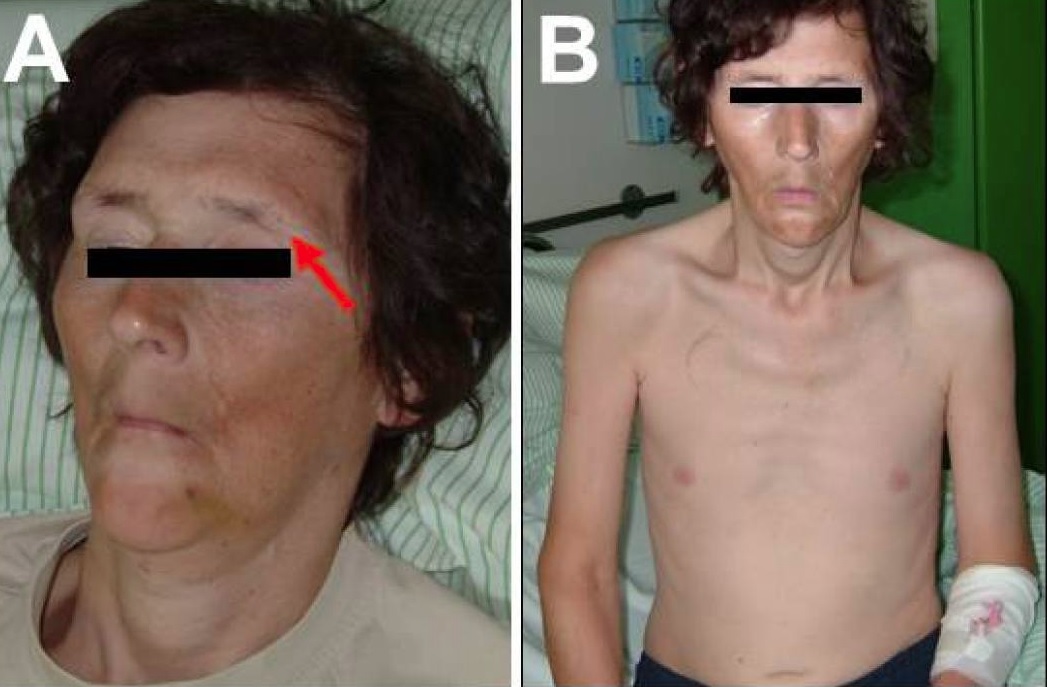
- •Examine for hyperpigmentation (sun-exposed areas, palmar creases, mucosal surfaces, pathognomonic for primary AI), signs of volume depletion (dry mucous membranes, reduced skin turgor, postural hypotension), and altered consciousness (confusion, lethargy, coma). In children, hypoglycemia-related seizures may be the presenting feature.
- •Order a stat serum cortisol and ACTH before administering glucocorticoids if possible, but do not delay treatment. A random cortisol < 3 µg/dL (approximately 34 nmol/L) has 100% sensitivity for severe AI in a stressed patient. A cortisol > 12.6 µg/dL (348 nmol/L) effectively rules out AI. Values between these cutoffs require dynamic testing when the patient is stable.
- •If the patient is hemodynamically stable enough to delay treatment, perform the 250-µg cosyntropin stimulation test: measure cortisol at 0 and 30 or 60 minutes. A peak cortisol < 18 µg/dL (500 nmol/L) is diagnostic of adrenal insufficiency. In the crisis setting, treatment should never be delayed for this test.
- •Check electrolytes, glucose, and CBC. Hyponatremia and hyperkalemia suggest primary AI; hyponatremia without hyperkalemia points to secondary AI (due to cortisol-deficiency-driven SIADH-like state). Hypoglycemia is common, especially in children and in primary AI.
- •Once the patient is stabilized, localize the defect: primary AI → non-contrast adrenal CT (looking for hemorrhage, calcification, metastases, atrophy); secondary AI → pituitary MRI with gadolinium (to detect mass, stalk thickening, empty sella). Imaging is not required during the acute crisis but should be performed within the first weeks.
- •In patients on immune checkpoint inhibitors, also screen for other endocrinopathies (hypophysitis, thyroiditis, type 1 diabetes) as part of the evaluation for autoimmune polyendocrine syndrome type 2. In women with unexplained adrenal crisis, consider antiphospholipid syndrome as a cause of bilateral adrenal hemorrhage.
- •In children with known congenital adrenal hyperplasia, evaluate for salt-wasting crisis: measure electrolytes, renin, and aldosterone. Hypoglycemia and electrolyte disturbances are more common in this population. Consider newborn screening for adrenoleukodystrophy in males with adrenal insufficiency of unclear etiology.
Management
- •Administer intravenous hydrocortisone 100 mg bolus immediately, followed by 200 mg over 24 hours as a continuous IV infusion (or 50 mg IV every 6 hours). High-dose hydrocortisone provides both glucocorticoid and mineralocorticoid activity, so fludrocortisone is not needed in the acute phase.
- •Start 0.9% saline 1000 mL IV over the first hour, then continue at 200-500 mL/hour based on hemodynamic response. Add 5% dextrose if blood glucose < 70 mg/dL (3.9 mmol/L). Correct hyperkalemia; it typically resolves with hydrocortisone and volume expansion, but severe hyperkalemia (> 6.5 mmol/L) may require additional measures.
- •If hypotension persists after 1-2 L of saline and the first hydrocortisone dose, add vasopressors (norepinephrine) for refractory shock and search for alternative causes (sepsis, myocardial infarction, adrenal hemorrhage). In patients on chronic glucocorticoid therapy, consider glucocorticoid-induced adrenal insufficiency as the precipitant.
- •Monitor blood pressure, heart rate, and urine output hourly. Check serum sodium, potassium, glucose, and creatinine every 4-6 hours until stable. Once systolic BP > 100 mm Hg and the patient is tolerating oral intake, transition to oral hydrocortisone: 20 mg in the morning, 10 mg in the early afternoon (total 30 mg/day). Taper over 2-3 days to the patient's usual maintenance dose (typically 15-25 mg/day in divided doses).
- •For primary AI, add fludrocortisone 0.05-0.2 mg orally once daily when the patient is eating and volume-replete. Titrate to normokalemia, normal plasma renin activity, and blood pressure. Mineralocorticoid replacement is not needed for secondary/tertiary AI.
- •Before discharge, provide a steroid emergency card and a parenteral hydrocortisone emergency kit (100 mg vial for IM/SC self-injection). Educate the patient and family on sick-day rules: double the daily hydrocortisone dose for fever > 38°C, triple for > 39°C; for vomiting or diarrhea, administer IM/SC hydrocortisone 100 mg and seek emergency care.
- •For major stress (surgery, sepsis, trauma), use IV hydrocortisone bolus 50-100 mg followed by continuous infusion 200 mg/24 hours, this is the only regimen that consistently matches endogenous cortisol concentrations during physiological stress. Intermittent bolus administration is inferior.
- •Avoid non-dihydropyridine calcium channel blockers (diltiazem, verapamil) as they can exacerbate hypotension. Do not delay treatment for confirmatory lab results; the clinical decision to treat should precede any lab results in a patient with known AI presenting with hypotension or shock.
- •Refer to an endocrinologist for long-term management, including dose adjustment, monitoring of bone density and cardiovascular risk, and genetic testing for congenital adrenal hyperplasia or other monogenic causes. In children, use hydrocortisone 8-10 mg/m²/day in three divided doses; avoid dexamethasone and prednisolone due to growth suppression risk.
- •In pregnancy, the prepregnancy glucocorticoid dose can be continued in the first trimester. In the second and third trimesters, increase the dose by 20-40%. Administer hydrocortisone 100 mg IV bolus at onset of labor, followed by 200 mg continuous IV infusion over 24 hours, then taper to prepregnancy dose over 2-3 days. Avoid dexamethasone as it crosses the placenta.
- •For glucocorticoid-induced adrenal insufficiency, taper the glucocorticoid dose slowly once replacement doses are reached. The HPA axis may take months to years to recover. Stress dosing is required during intercurrent illness until the axis is confirmed normal by cosyntropin stimulation testing.
Board Review — High Yield
- •Adrenal crisis definition, Acute hypotension or shock requiring parenteral glucocorticoids and hospitalization; not merely low cortisol.
- •Triad, Hypotension, hypoglycemia, hyponatremia (with hyperkalemia in primary AI).
- •Most common trigger, Gastrointestinal infection or fever (45-67% of crises).
- •Primary vs secondary AI, Primary: low cortisol + high ACTH + hyperkalemia + hyperpigmentation. Secondary: low cortisol + low/normal ACTH + hyponatremia without hyperkalemia.
- •Gold standard test, Cosyntropin stimulation: peak cortisol < 18 µg/dL (500 nmol/L) = AI.
- •Immediate treatment, Hydrocortisone 100 mg IV bolus + 1 L 0.9% saline over 1 hour; do not wait for labs.
- •Sick-day rules, Double dose for fever >38°C, triple for >39°C; IM/SC 100 mg for vomiting/diarrhea.
- •Mortality, 0.5 deaths per 100 patient-years; 10% of all deaths in AI are due to crisis.
- •High-risk groups, Primary AI, prior crisis, age >80 years, immune checkpoint inhibitor therapy, congenital adrenal hyperplasia.
- •Long-term prevention, Repeated hands-on training in stress dosing and self-injection; steroid emergency card and kit.
Deep Dive — Evidence Details
Definition, Classification and Axis Nomenclature
- ▸Adrenal crisis is the most severe form of adrenal insufficiency, defined by acute deterioration requiring parenteral glucocorticoids and hospitalization.
- ▸AI is classified as primary (adrenal), secondary (pituitary), or tertiary (hypothalamic), which determines the risk of crisis and the need for mineralocorticoid replacement.
- ▸The clinical definition of adrenal crisis is not universally standardized, but the operational definition includes hypotension/shock, parenteral glucocorticoid therapy, and admission.
Adrenal crisis is the most severe, life-threatening manifestation of adrenal insufficiency (AI), defined by acute deterioration with hypotension or shock requiring parenteral glucocorticoid administration and hospitalization [6]D5[7]D5. The condition is also termed acute adrenal insufficiency or Addisonian crisis. Synonyms include:
- Adrenal crisis (AC)
- Acute adrenal insufficiency
- Addisonian crisis
- Adrenal emergency
A universally accepted definition remains lacking, and the term is often operationalized in research as an acute illness necessitating intravenous or intramuscular glucocorticoids with clinical features of hypovolemia, hypotension, or altered consciousness [6]D5[7]D5. In pediatric (CAH) studies, a sick day episode (SDE) is distinguished from AC: SDE refers to an illness requiring increased glucocorticoid dosing but not meeting crisis criteria, whereas AC denotes the need for parenteral therapy and hospitalization [1]B2b.
Classification of Adrenal Insufficiency
AI is classified by the anatomic level of the hypothalamic-pituitary-adrenal (HPA) axis disruption. This nomenclature is essential for understanding the etiology and risk of crisis.
| Type | Defect | Key Features | Common Causes |
|---|---|---|---|
| Primary AI | Adrenal gland destruction | Cortisol deficiency + aldosterone deficiency (hyperkalemia, hyponatremia, elevated ACTH) | Autoimmune Addison disease, CAH, bilateral adrenal hemorrhage, infection (e.g., tuberculosis), APECED [1]B2b[8]C4 |
| Secondary AI | Pituitary ACTH deficiency | Cortisol deficiency only; aldosterone intact (normal electrolytes, low ACTH) | Pituitary tumors, surgery, Sheehan syndrome, lymphocytic [3]D5 |
| Tertiary AI | Hypothalamic CRH deficiency | Same as secondary; most common cause is exogenous glucocorticoid suppression | Chronic or high-dose glucocorticoid therapy, especially in nephrotic syndrome, asthma, arthritis [4]B2a |
Primary AI carries the highest risk of adrenal crisis due to concomitant mineralocorticoid deficiency and inability to mount a counterregulatory response [6]D5. Secondary and tertiary AI, while less prone to mineralocorticoid crises, still pose significant risk during intercurrent illness or stress [3]D5[4]B2a.
Clinical Significance
Adrenal crisis remains one of the leading causes of mortality in patients with AI despite current hormone replacement strategies [6]D5. Reported incidence rates vary: 5-10 per 100 patient-years in adults with AI [7]D5, 6.9 per 100 patient-years in a cohort after unilateral for [2]B2b, and approximately 9 per 100 patient-years in patients treated for Cushing’s syndrome [3]D5. In children with CAH, rates are lower (median 0 per patient-year per center) but highly variable [1]B2b.
Pearl: Adrenal crisis is defined by the need for parenteral glucocorticoids and hospitalization, not merely by a low cortisol level. The clinical decision to treat must precede confirmatory lab results in any patient with AI presenting with hypotension or shock [6]D5[7]D5.
Axis Physiology, Pathophysiology and Biochemical Signature
- ▸Adrenal crisis results from the failure of the stress-induced cortisol surge, leading to vasodilatory shock, unopposed cytokine release, and metabolic decompensation.
- ▸The biochemical signature of primary AI is low cortisol with high ACTH, hyperkalemia, and hyponatremia; secondary AI shows low cortisol with inappropriately normal ACTH and hyponatremia without hyperkalemia.
- ▸Genetic and acquired factors (e.g., NR3C1 variants, prolonged critical illness) can modify susceptibility to crisis, but prompt glucocorticoid replacement remains the cornerstone of prevention.
From the classification of adrenal insufficiency, the critical link between a broken hypothalamic-pituitary-adrenal (HPA) axis and the life-threatening decompensation of adrenal crisis becomes clear. This section traces the normal feedback loop, the precise node at which it fails, and the laboratory fingerprint that identifies the lesion.
Normal HPA Axis Physiology
Corticotropin-releasing hormone (CRH) from the hypothalamus stimulates the pituitary to secrete adrenocorticotropic hormone (ACTH), which in turn drives cortisol synthesis and release from the adrenal cortex. Cortisol exerts negative feedback at both the hypothalamus and pituitary, maintaining tight homeostatic control. In primary adrenal insufficiency, the adrenal gland itself is destroyed, removing the end-organ effector; cortisol falls, negative feedback is lost, and ACTH rises unchecked. In secondary (or tertiary) insufficiency, the defect lies upstream, pituitary ACTH deficiency or hypothalamic CRH deficiency, so cortisol is low without an appropriately elevated ACTH [12]A1c.
Pathophysiology of Adrenal Crisis
Cortisol is essential for maintaining vascular tone, gluconeogenesis, and modulating the inflammatory response. During stress, infection, surgery, trauma, the normal HPA axis increases cortisol production several-fold. When the axis is compromised, this stress response fails, triggering a cascade that culminates in adrenal crisis.
Step 1: Loss of cortisol surge. Absent the stress-driven rise in cortisol, systemic vascular resistance drops, leading to hypotension and shock that is characteristically refractory to volume resuscitation alone [13]D5.
Step 2: Unopposed cytokine release. Cortisol normally suppresses pro-inflammatory cytokines (e.g., tumor necrosis factor alpha). Without it, cytokine release is enhanced, further impairing glucocorticoid receptor function and worsening glucocorticoid deficiency [13]D5.
Step 3: Mineralocorticoid deficiency (primary AI only). Destruction of the adrenal cortex also eliminates aldosterone, causing renal sodium wasting, potassium retention, and volume depletion. This amplifies the hypotension and produces hyponatremia and hyperkalemia [18]C4.
Step 4: Metabolic decompensation. Cortisol deficiency impairs gluconeogenesis, leading to hypoglycemia, which can cause seizures, coma, and neurologic injury, especially in children [19]C4.
Step 5: Clinical phenotype. The combined effects produce the classic triad, hypotension, hypoglycemia, and hyponatremia, with nausea, vomiting, fever, and altered mental status [13]D5.
Biochemical Signature
The laboratory pattern that distinguishes primary from secondary AI is the paired hormone measurement:
- Primary AI: Low cortisol with inappropriately elevated ACTH (often >100 pg/mL). Hyperkalemia and hyponatremia are common due to aldosterone deficiency; hyperpigmentation from excess ACTH may be present.
- Secondary AI: Low cortisol with low or inappropriately normal ACTH. Hyponatremia can occur from cortisol-deficiency-driven inappropriate antidiuretic hormone secretion, mimicking SIADH [18]C4. Hyperkalemia is absent.
In an acute crisis, obtaining a stat cortisol and ACTH before administering is ideal, but treatment should never be delayed for results. The diagnosis is confirmed when a random cortisol is <3 µg/dL in a stressed patient, or <18 µg/dL after cosyntropin stimulation, with a flat ACTH response in secondary disease [13]D5.
Susceptibility Modifiers
Genetic variants in the glucocorticoid receptor (NR3C1), mineralocorticoid receptor (NR3C2), and 11β-hydroxysteroid dehydrogenase isoforms (HSD11B1, HSD11B2) may alter individual sensitivity to glucocorticoids and predispose to crisis, though the clinical impact remains under investigation [9]B3b. In patients with prolonged critical illness, central suppression of ACTH from sustained negative feedback, opioid use, and bile acid accumulation can lead to acquired central adrenal insufficiency, termed (CIRCI), which further impairs cortisol production and delays recovery [10]D5.
Pearl: In any hypotensive patient with unexplained hypoglycemia or hyponatremia, consider adrenal crisis and administer parenteral hydrocortisone 100 mg bolus immediately; do not wait for confirmatory labs [13]D5.
Epidemiology, Etiology and Risk Factors
- ▸Adrenal crisis incidence is 5-10 per 100 patient-years, with mortality 0.5 per 100 patient-years; 10% of all deaths in adrenal insufficiency are crisis-related.
- ▸Infections trigger 45-67% of crises; a prior crisis confers a 2.85-fold increased risk.
- ▸Incidence is rising, driven by central adrenal insufficiency from glucocorticoid/immunotherapy use, and peaks in patients >80 years.
The preceding section detailed the pathophysiology of cortisol deficiency; here we quantify the burden of adrenal crisis and identify those at greatest risk. Adrenal crisis (AC) occurs at a rate of 5-10 crises per 100 patient-years in chronic adrenal insufficiency (AI) [13]D5[23]B2b[32]B2c. Prospective studies report 8.3 crises per 100 patient-years in mixed primary and secondary AI [23]B2b and 4.27 per 100 patient-years in pediatric-onset AI [22]B2b. In (CAH), rates are 8.4 per 100 patient-years in adults and 5.1 per 100 patient-years in children [27]B2b; modified-release reduced this to 3.9 per 100 patient-years [21]C4. AC-associated mortality is 0.5 per 100 patient-years, and approximately 6% of crises are fatal [13]D5[23]B2b; AC contributes to 10% of all deaths in AI patients [29]B2b.
Demographic and Temporal Trends
AC-related hospitalizations have increased over the past decade, especially in patients >80 years and those with central AI, likely driven by expanding glucocorticoid and immunotherapy use [26]B2b. Adults >60 years have the highest age-specific incidence, which doubles between ages 60-69 and ≥80 [33]D5. In the Swiss nationwide cohort (2012-2022), 2302 AC hospitalizations were identified; incidence peaked in the oldest old and was steepest in central AI [26]B2b. In children, younger age at enrollment independently predicted AC (relative risk 0.93 per year; 95%) [22]B2b.
Risk Factors
Infections are the dominant precipitant, infection and fever trigger 45-67% of crises [23]B2b[32]B2c. Other common triggers include emotional stress, major pain, surgery, strenuous physical activity, and heat [23]B2b. Prior AC powerfully predicts future events (odds ratio 2.85; 95% CI 1.5-5.5) [23]B2b. Additional risk factors vary by etiology:
- Unspecified etiology, advanced age, male sex, sepsis, and cancer predict adverse outcomes in hospitalised patients [26]B2b
| Risk Factor | OR/RR | Evidence Level |
|---|---|---|
| Prior adrenal crisis | OR 2.85 (95% CI 1.5-5.5) | Prospective [23]B2b |
| GI infection / fever | 45-67% of events | Prospective [23]B2b[32]B2c |
| Male sex (hospitalised) | IRR 1.99 (ICU admission) | Nationwide cohort [26]B2b |
| Female sex (secondary AI) | OR 2.18 (95% CI 1.06-4.5) | Cross-sectional [32]B2c |
| Unspecified AI etiology | IRR 1.8 (in-hospital mortality) | Nationwide cohort [26]B2b |
Special Considerations
The pandemic did not increase AC incidence in children with AI (12.9% prevalence vs 37.4% in the general pediatric population) [30]B2b. Only 3.4% of infected children developed AC, all during severe/critical disease [30]B2b. In adults, adequately treated AI patients showed no excess COVID-19 severity or AC compared to controls [24]B3b. Vaccination against SARS-CoV-2 shortened infection duration (10.1 vs 16.0 days) and prevented severe disease [30]B2b.
The clinical presentation of AC, the next section, translates these epidemiological risks into actionable bedside recognition.
Pearl: Incidence is rising, driven by central adrenal insufficiency from glucocorticoid/immunotherapy use, and peaks in patients >80 years.
Clinical Presentation
- ▸Chronic symptoms (fatigue, weight loss, hyperpigmentation, postural hypotension) often precede crisis by months; median symptom duration before diagnosis is 5.6 months in children.
- ▸Acute crisis presents with hypotension, impaired consciousness, hyponatremia, hyperkalemia, and hypoglycemia; mortality is 2.4% overall and higher in older patients with altered mental status.
- ▸Atypical presentations include atrial tachycardia, refractory shock mimicking sepsis, and crisis precipitated by levothyroxine initiation in undiagnosed secondary AI.
From the preceding , where infection and stress are the commonest precipitants, the transition to clinical recognition is a race against time. The patient before you may not yet have a diagnosis of adrenal insufficiency: in reported cohorts, symptoms had been present for a mean of 5.6 months before diagnosis [36]B2b. Yet the presentation of an established crisis is distinctive enough to prompt immediate action.
Presenting Symptoms
The chronic phase of adrenal insufficiency (<sc>primary</sc> or <sc>secondary</sc>) is dominated by fatigue, , anorexia, and postural hypotension [42]D5[43]D5. In primary disease, generalised skin hyperpigmentation, most evident on sun-exposed areas, palmar creases, and mucosal surfaces, is pathognomonic and reflects high ACTH drive [42]D5[43]D5. Salt craving is reported by patients with mineralocorticoid deficiency [43]D5.
When a crisis supervenes, the picture accelerates. Abdominal pain, nausea, vomiting, and fever are common [40]B2c[43]D5. The cardinal haemodynamic sign is hypotension that may be postural or overt shock; in the largest inpatient database, 2.4% of patients died, and those who died were older (>60 years), had impaired consciousness at admission, or received insulin therapy (a marker of stress hyperglycaemia) [40]B2c. In children presenting with primary adrenal insufficiency, the most frequent findings at diagnosis are fatigue (67%), hyperpigmentation (50.4%), dehydration (33%), and hypotension (31%) [36]B2b.
Neurological Examination Findings
Altered mental status is a red flag: impaired consciousness was documented in 12 of 19 fatally ill patients in the Japanese nationwide series [40]B2c. Confusion, lethargy, or coma may be the presenting feature. In rare genetic forms, focal neurological signs dominate: the index case of a novel MRAP mutation presented with severe psychomotor retardation, myoclonic seizures, spastic quadriparesis, and microcephaly [11]C4. In immune‑checkpoint‑inhibitor‑induced secondary adrenal insufficiency (ICI‑SAI), neurological symptoms are less common but fatigue and malaise are universal [37]B2c.
Phenotypic Variants
| Variant | Key Features | Frequency / Context |
|---|---|---|
| Primary AI (Addison’s) | Hyperpigmentation, hyponatremia, hyperkalemia, salt craving | Most common cause of crisis; incidence ~2.7 per 100 patient‑years in children [36]B2b |
| Secondary AI | No hyperpigmentation, hyponatremia frequent, hyperkalemia absent; often with other pituitary hormone deficits | ICI‑SAI, pituitary apoplexy, post‑surgical |
| Adrenal hemorrhage | Acute abdominal pain, hemodynamic instability, bilateral adrenal enlargement on imaging | Associated with trauma, sepsis, coagulopathy, COVID‑19, VITT [35]D5 |
| ICI‑induced SAI | Older age (median 66 yr), female predominance, earlier diagnosis (88% within 1 yr), crisis rate 15%/yr, higher QoL [37]B2c | Increasing incidence with widespread ICI use |
| Familial glucocorticoid deficiency | Severe psychomotor delay, myoclonic seizures, spastic quadriparesis, microcephaly; onset in infancy | Rare; mutations in MC2R, MRAP, CYP11A1 [11]C4[34]C4 |
| APS I (APECED) | Primary AI, , ; AIRE mutation | Rare; screening warranted in sporadic Addison’s with suggestive features [41]B2c |
Red Flags
- Unexplained hypotension in any patient with known AI, ICI therapy, adrenal surgery, or autoimmune disease
- Shock that does not correct with volume resuscitation - consider adrenal crisis even if vasopressors are required [48]C4[49]C4
- Hyponatremia, hyperkalemia, and hypoglycemia occurring together (especially in primary AI) [36]B2b[42]D5
- Impaired consciousness at presentation - a predictor of mortality [40]B2c
- Abdominal pain with hemodynamic instability - suspect adrenal hemorrhage [35]D5
- Peri‑operative setting after bilateral or in Cushing’s disease post‑resection [38]C4[39]C4[48]C4
- Sudden deterioration after starting in a patient with undiagnosed AI - thyroxine accelerates cortisol clearance [50]C4
Atypical Presentations
Adrenal crisis can masquerade as other emergencies. In a patient with ectopic ACTH‑secreting thymic neuroendocrine tumour, the first sign of postoperative crisis was recurrent atrial tachycardia that resolved only after glucocorticoid administration [49]C4. Nelson’s syndrome may present with crisis 21 years after bilateral adrenalectomy, when the patient presents with anorexia, vomiting, and shock that mimics sepsis [48]C4. In antiphospholipid syndrome, bilateral adrenal hemorrhage is the dominant imaging phenotype (66.9% of cases) and adrenal insufficiency is the first manifestation in 73.6% of patients; strict adrenal crisis (hypotension with shock) occurs in 51.6% [44]C4. Pituitary apoplexy may present with sudden headache, visual deficits, and then adrenal crisis - immediate IV corticosteroids are indicated regardless of acuity [45]B2a. Immune‑checkpoint‑inhibitor‑induced hypothyroidism can unmask secondary AI when levothyroxine is started, precipitating crisis [50]C4.
Pearl: The triad of unexplained hyponatremia, hyperkalemia, and hypoglycemia in a stressed patient is adrenal crisis until proven otherwise - administer 100 mg IV immediately without waiting for confirmatory labs.
Diagnosis and Workup: Paired Hormones, Dynamic Testing and Localization
- ▸A random cortisol <34 nmol/L has 100% sensitivity for a subnormal cosyntropin response and can confirm adrenal insufficiency in the crisis setting [61].
- ▸Paired ACTH and cortisol measurement differentiates primary (high ACTH) from secondary (low/normal ACTH) adrenal insufficiency, guiding subsequent imaging [43,55].
- ▸The 250-μg cosyntropin stimulation test is the gold standard for dynamic testing, but treatment should never be delayed for its completion [56].
Once clinical suspicion for adrenal crisis is raised, biochemical confirmation must proceed in parallel with emergency treatment. The diagnosis hinges on demonstrating absolute or relative cortisol deficiency, then localizing the defect to the adrenal glands (primary) or the pituitary-hypothalamic axis (secondary).
Laboratory Studies
Draw blood immediately for cortisol and ACTH before administering any glucocorticoid. A random serum cortisol <34 nmol/L (approximately 1.2 μg/dL) has 100% sensitivity for detecting a subnormal response to the 250‑μg cosyntropin stimulation test, making it a reliable bedside marker of severe adrenal insufficiency in the crisis setting [61]C4. Conversely, a random cortisol ≥348 nmol/L (12.6 μg/dL) provides 100% specificity for a normal cosyntropin response, effectively ruling out adrenal insufficiency [61]C4. Values between these cutoffs require dynamic testing. Simultaneous ACTH measurement distinguishes primary from secondary disease: a low cortisol paired with an ACTH >2× the upper limit of normal (typically >22 pmol/L) establishes primary adrenal insufficiency; a low or inappropriately normal ACTH points to secondary (central) adrenal insufficiency [43]D5[55]D5. In primary disease, plasma renin activity is elevated and aldosterone is low; in secondary disease, the renin-aldosterone axis is preserved.
Gold‑Standard Test: Cosyntropin Stimulation Test
When the random cortisol is intermediate (34-348 nmol/L) and the patient is hemodynamically stable enough to delay treatment, the 250‑μg cosyntropin (ACTH) stimulation test is the definitive diagnostic tool [56]D5. Administer 250 μg of cosyntropin intravenously (or intramuscularly) and measure serum cortisol at 0 and 30 or 60 minutes. A peak cortisol <500 nmol/L (18 μg/dL) is diagnostic of adrenal insufficiency [61]C4. In the crisis setting, however, treatment should never be delayed for the test, draw the baseline sample, give , and perform the full stimulation test later when the patient has recovered.
Localization Imaging
Once the patient is stabilized, anatomic localization guides long‑term . For primary adrenal insufficiency, non‑contrast adrenal CT identifies hemorrhage, calcification (tuberculosis, ), metastases, or atrophy (autoimmune) [35]D5[55]D5. For secondary adrenal insufficiency, pituitary MRI with gadolinium is the study of choice to detect a mass, stalk thickening, or empty sella [55]D5[56]D5. Imaging is not required during the acute crisis but should be performed within the first weeks after diagnosis.
Diagnostic Algorithm
Step 1: Immediate random cortisol and ACTH. Step 2: If cortisol <34 nmol/L → diagnosis of AI; treat. If cortisol 34-348 nmol/L, proceed to cosyntropin test (if clinically safe). Step 3: ACTH level determines primary vs secondary. Step 4: Imaging after stabilization.
Pearl: In adrenal crisis, a random cortisol <34 nmol/L is sufficient to start treatment; do not wait for dynamic testing - the cosyntropin test can be completed later to confirm the diagnosis and guide chronic therapy [61]C4.
| Test | Expected Finding in Adrenal Crisis | Sensitivity/Specificity | Clinical Context |
|---|---|---|---|
| Random serum cortisol | <34 nmol/L (1.2 μg/dL) | 100% sensitivity for subnormal SST response [61]C4 | Immediate bedside decision; if <34 nmol/L → treat |
| Random serum cortisol | ≥348 nmol/L (12.6 μg/dL) | 100% specificity for normal SST response [61]C4 | Rules out adrenal insufficiency |
| Plasma ACTH | >22 pmol/L (primary) or low/normal (secondary) | Not reported | Distinguishes primary vs secondary disease [43]D5 |
| Plasma renin activity | Elevated in primary, normal in secondary | Not reported | Confirms mineralocorticoid deficiency in primary AI |
| Aldosterone | Low in primary, normal in secondary | Not reported | Supports primary AI diagnosis |
Severity, Staging and Risk Stratification
- ▸Mortality in PAI is 2.5-fold higher than the general population, with cardiovascular disease as the leading cause; in CAH, adrenal crisis is the predominant cause of death.
- ▸High-risk groups include patients with CAH, bilateral adrenalectomy, APS/SLE with adrenal hemorrhage, ICI-treated patients with high TMB or specific mutations, AIDS with opportunistic infections, and those on osilodrostat.
- ▸Adequate patient education on stress dosing and sick-day rules dramatically reduces the risk of adrenal crisis, even during severe infections like COVID-19.
With the diagnosis confirmed, the next step is to stratify the patient's risk for adrenal crisis, a graded appraisal that directly shapes the aggressiveness of prevention, the threshold for stress dosing, and the intensity of follow-up. Risk is not uniform; it is determined by the underlying etiology, the presence of precipitating triggers, and the patient's physiologic reserve.
Identifying High-Risk Patients
Patients with primary adrenal insufficiency (PAI) carry a 2.5-fold higher mortality than the general population (pooled HR 2.51), with cardiovascular disease as the leading cause [69]A1a. In patients with (CAH), the predominant cause of death is adrenal crisis itself [69]A1a. This distinction is clinically actionable: a CAH patient with a history of crisis requires a lower threshold for parenteral and a lower threshold for emergency department referral.
Other high-risk groups include:
- Patients with bilateral (BADx): long-term risk of adrenal crisis is a known complication, though surgical mortality is low (median 3%) and long-term mortality is low in Cushing's disease [38]C4.
- Patients with APS/SLE-spectrum disease: adrenal involvement is often hemorrhagic and bilateral; 51.6% of affected patients develop strict adrenal crisis, and hypotension is documented in 48.0% [44]C4.
- Patients on immune checkpoint inhibitors (ICIs): endocrine toxicities occur in 25% to 50% of ICI recipients; can present with adrenal crisis, and higher tumor mutational burden (TMB; 6.02 vs. 5.19 mut/Mb, P=0.002) and mutations in BABAM1, KDM5C, CDH4, and TAL1 are associated with increased risk [57]D5[71]B2b.
- Patients with AIDS and opportunistic infections: CD4 count <100 cells/µL, CMV infection, or tuberculosis are frequent triggers; two of three reported cases experienced adrenal crisis with intractable hypotension [66]C4.
- Patients on osilodrostat: prolonged adrenocortical blockade can persist 6 weeks to 9 months after drug cessation, necessitating ongoing adrenal function monitoring [70]C4.
Precipitating Triggers and Their Severity Gradient
| Trigger Category | Examples | Risk of Adrenal Crisis |
|---|---|---|
| Infectious | , sepsis, pneumonia | 3.4% in children with AI during severe COVID-19; no deaths in one large cohort [30]B2b. In adults, COVID-19 hospitalization rates are higher in AI patients than controls [30]B2b. |
| Surgical or traumatic | Pituitary apoplexy, major surgery, accidents | Pituitary apoplexy requires immediate IV corticosteroids regardless of symptom severity to prevent secondary adrenal crisis [45]B2a. |
| Pharmacologic | ICI initiation, osilodrostat withdrawal, supraphysiologic steroids | ICI-induced hypophysitis can progress to adrenal crisis; osilodrostat blockade duration varies [57]D5[70]C4. |
| Vomiting, diarrhea, poor oral intake | GI-predominant AI presentations are frequently misdiagnosed, delaying and increasing crisis risk [68]C4. |
Mortality Risk and Prognostic Factors
The standardized mortality ratio (SMR) for PAI is 2.49, with high heterogeneity (I²=97.9%) [69]A1a. In patients with CAH, the pooled HR is 2.88, and adrenal crisis is the leading cause of death [69]A1a. Adequate patient education on sick-day rules and stress dosing is protective, in a cohort of 279 AI patients during the COVID-19 pandemic, no adrenal crisis occurred, likely because patients were previously trained to adjust glucocorticoid doses [24]B3b.
Pearl: The single most modifiable risk factor for adrenal crisis is inadequate patient and family education on stress dosing, every AI patient should be able to recite the "sick-day rule" (double or triple the daily glucocorticoid dose during febrile illness) and carry an emergency injectable hydrocortisone kit.
| Condition | Risk Magnitude | Key Evidence |
|---|---|---|
| Bilateral adrenalectomy (BADx) | Surgical mortality 3%; long-term risk of adrenal crisis [38]C4 | Low overall mortality in Cushing's disease |
| APS/SLE with adrenal hemorrhage | 51.6% develop strict adrenal crisis [44]C4 | Hypotension in 48%; bilateral involvement in 86% |
| ICI-related hypophysitis | Higher TMB (6.02 vs 5.19 mut/Mb) [71]B2b | Mutations in BABAM1, KDM5C, CDH4, TAL1 increase risk |
| AIDS with CMV or TB infection | 2/3 reported cases had adrenal crisis [66]C4 | CD4 count <100 cells/µL |
| Osilodrostat therapy | Prolonged blockade 6 weeks to 9 months [70]C4 | Monitor adrenal function after cessation |
| Trigger | Examples | Crisis Rate | Notes |
|---|---|---|---|
| Infectious | COVID-19, sepsis | 3.4% in children with AI during severe COVID-19 [30]B2b | No deaths in that cohort; adults have higher hospitalization rates |
| Surgical | Pituitary apoplexy | Not quantified; recommended IV corticosteroids [45]B2a | Surgery within 7 days if severe visual deficits |
| Pharmacologic | ICI, osilodrostat withdrawal | Variable; depends on dose and duration [57]D5[70]C4 | Risk persists after drug cessation |
| Gastrointestinal | Vomiting, diarrhea | High risk due to misdiagnosis [68]C4 | Often leads to delayed recognition |
Acute Management and Endocrine Emergencies
- ▸Immediate IV hydrocortisone 100 mg bolus followed by 200 mg/24h continuous infusion is the cornerstone of acute management.
- ▸Fluid resuscitation with 0.9% saline 1 L in the first hour corrects hypovolemia; add dextrose if hypoglycemia.
- ▸Every patient must receive a steroid emergency card, parenteral hydrocortisone kit, and written sick-day rules before discharge.
Once severity is established, immediate follows a time-critical pathway. Any patient with suspected adrenal crisis requires simultaneous initiation of , fluid resuscitation, and supportive care, delay increases mortality [13]D5.
Step 1: Immediate Assessment and Disposition
Confirm the diagnosis clinically: hypotension (systolic BP < 100 mm Hg), nausea/vomiting, fever, altered mental status, and known adrenal insufficiency or risk factors [13]D5. Obtain a stat serum cortisol and ACTH if the diagnosis is uncertain, but do not wait for results to start treatment [43]D5. Insert two large-bore IV lines, draw blood for electrolytes, glucose, and CBC, and monitor cardiac rhythm. Admit to an intensive care unit if shock, severe electrolyte derangement, or altered consciousness is present [26]B2b.
Step 2: First-Line Intervention, Hydrocortisone and Fluids
- Hydrocortisone 100 mg IV bolus immediately, followed by 200 mg over 24 hours as continuous IV infusion (or 50 mg IV every 6 hours) [13]D5. High-dose hydrocortisone provides both glucocorticoid and mineralocorticoid activity, so fludrocortisone is not needed in the acute phase [43]D5.
- 0.9% saline 1000 mL IV over the first hour, then continue at 200-500 mL/hour based on hemodynamic response [13]D5. Add 5% dextrose if blood glucose < 70 mg/dL (3.9 mmol/L) [72]D5.
- Correct electrolyte abnormalities: hyperkalemia typically resolves with hydrocortisone and volume expansion; severe hyperkalemia (> 6.5 mmol/L) may require additional measures [44]C4.
Step 3: Escalation and Second-Line Measures
If hypotension persists after 1-2 L of saline and the first hydrocortisone dose, consider:
- Vasopressors (norepinephrine) for refractory shock [13]D5.
- Search for alternative causes: sepsis, myocardial infarction, adrenal hemorrhage (especially in anticoagulated patients or those with antiphospholipid syndrome) [35]D5.
- In patients on chronic glucocorticoid therapy, consider glucocorticoid-induced adrenal insufficiency as the precipitant [56]D5.
Step 4: Monitoring and Titration
- Measure blood pressure, heart rate, and urine output hourly.
- Check serum sodium, potassium, glucose, and creatinine every 4-6 hours until stable [13]D5.
- Once systolic BP > 100 mm Hg and the patient is tolerating oral intake, transition to oral hydrocortisone: 20 mg in the morning, 10 mg in the early afternoon (total 30 mg/day) [43]D5. Taper over 2-3 days to the patient's usual maintenance dose (typically 15-25 mg/day in divided doses) [63]D5.
- If primary adrenal insufficiency, add fludrocortisone 0.05-0.2 mg orally once daily when the patient is eating and volume-replete [42]D5.
Step 5: Prevention and Transition to Long-Term Care
Before discharge, every patient must receive:
- A steroid emergency card and a parenteral hydrocortisone emergency kit (100 mg vial for IM/SC self-injection) [43]D5.
- Written sick-day rules: double the daily hydrocortisone dose for fever > 38°C, triple for > 39°C; for vomiting or diarrhea, administer IM/SC hydrocortisone 100 mg and seek emergency care [72]D5.
- Education on precipitating factors: infections, surgery, trauma, emotional stress, and strenuous physical activity [23]B2b.
- A follow-up appointment with an endocrinologist for long-term management (see next section).
Dosing Table: Hydrocortisone in Adrenal Crisis
| Phase | Dose | Route | Frequency |
|---|---|---|---|
| Initial bolus | 100 mg | IV | Once |
| First 24 hours | 200 mg | IV continuous infusion or 50 mg IV q6h | Over 24 h |
| Transition to oral | 20 mg morning, 10 mg afternoon | Oral | Daily in divided doses |
| Maintenance (primary AI) | 15-25 mg total daily | Oral | 2-3 divided doses |
| Sick-day (fever > 38°C) | Double the daily dose | Oral | Until recovery |
| Sick-day (vomiting/diarrhea) | 100 mg | IM/SC | Once, then seek care |
Management Algorithm
Caption: Figure 1: Acute management algorithm for adrenal crisis (adapted from [13]D5 and [43]D5).
Controversies and Guideline Disagreement
| Question | Position A | Position B | Strength | Implication |
|---|---|---|---|---|
| Supplemental perioperative steroids | Cochrane 2012, insufficient evidence to support or refute use [74]A1a | Clinical practice, most guidelines recommend stress-dose hydrocortisone for major surgery [43]D5 | Moderate (evidence gap vs expert consensus) | Clinicians typically administer 100 mg IV hydrocortisone before induction, then 200 mg/24h for 24-48 hours, despite limited RCT data. |
| Optimal glucocorticoid regimen in CAH | Cochrane 2020, no firm conclusions due to very low-quality evidence [76]A1a | Endocrine Society 2018, recommends hydrocortisone in children, prednisolone or in adults [72]D5 | Moderate (evidence gap vs guideline) | Individualize therapy; monitor growth, bone age, and androgen levels. |
Pearl: In suspected adrenal crisis, administer hydrocortisone 100 mg IV bolus and 1 L saline within the first hour without waiting for confirmatory labs; this single action reduces mortality from approximately 0.5 per 100 patient-years to near-zero in the acute setting [13]D5, [23]B2b.
Long-term Management: Treat-to-Target (Replacement, Suppression, Definitive)
- ▸Hydrocortisone replacement (typically 20-30 mg daily in CAH, individualized in other forms) should be given in divided doses to mimic circadian rhythm; modified-release formulations improve biochemical control and reduce crisis rates.
- ▸Mineralocorticoid replacement with fludrocortisone is essential in primary adrenal insufficiency, titrated to electrolytes and renin.
- ▸Stress dosing rules are critical: double the daily dose for fever >38°C, triple for >39°C, and give 100 mg parenteral hydrocortisone for vomiting; continuous IV infusion is best for major stress.
- ▸Definitive treatments (bilateral adrenalectomy, osilodrostat) require lifelong follow-up and awareness of prolonged adrenal blockade or Nelson's syndrome.
Once the acute crisis is controlled, the cornerstone of long-term is glucocorticoid replacement that mimics physiological cortisol secretion while avoiding over-replacement, supplemented by mineralocorticoid therapy when needed. The goal is to restore eucortisolemia, suppress excess ACTH in (CAH), and address the underlying structural or autoimmune process when possible.
Glucocorticoid Replacement Therapy
is the preferred agent because its short half-life allows approximation of the circadian rhythm, though no single regimen fully replicates normal cortisol profiles. Dosing is individualized: for adults with primary or secondary adrenal insufficiency, typical regimens use two to three divided doses, with the largest given on waking. For patients with classic CAH, median hydrocortisone doses at study entry are 30 mg/day, reduced to 20 mg/day after 24 weeks with improved biochemical control; this dose remains stable thereafter [21]C4. Modified-release hydrocortisone capsules (MRHC, Chronocort) achieve a once-daily morning dose and, in open-label follow-up over 4 years, maintained disease control in the majority of patients: 71% had serum 17-hydroxyprogesterone < 4 times the upper limit of normal (ULN) and 90% had androstenedione < ULN [21]C4. The adrenal crisis rate on MRHC was 3.9 per 100 patient-years, below previously reported rates for CAH [21]C4.
Mineralocorticoid Replacement
In primary adrenal insufficiency, fludrocortisone is essential. Dose is titrated to normokalemia, normal plasma renin activity, and blood pressure. Starting and target doses vary, and the provided references do not report a specific numeric range; adjustment is guided by clinical and biochemical response. In CAH, mineralocorticoid status must be assessed: patients with salt-wasting forms require fludrocortisone and salt supplementation, especially in infancy [72]D5.
Monitoring and Treatment Targets
Optimal replacement is judged by clinical well-being, absence of features of over- or under-replacement, and biochemical markers. For CAH, serum 17-hydroxyprogesterone and androstenedione are the key monitoring tools. A single blood sample drawn between 09:00 and 13:00 h is sufficient: after 4 years of MRHC therapy, 90% of patients had androstenedione within the normal range [21]C4. Symptoms of undertreatment include fatigue, hyperandrogenic symptoms (in CAH), salt craving, and orthostatic hypotension; overtreatment manifests as weight gain, , osteoporosis, and growth suppression in children [72]D5.
Stress Dosing and Sick-Day Rules
Preventing adrenal crisis requires prompt glucocorticoid dose escalation during intercurrent illness. Patients must be educated to double the daily hydrocortisone dose for fever >38°C and triple it for fever >39°C [72]D5. If vomiting or severe diarrhea prevents oral intake, immediate administration of 100 mg hydrocortisone intramuscularly or subcutaneously - from an emergency injection kit - is required, followed by urgent medical evaluation [72]D5. For major stress (surgery, sepsis, trauma), continuous intravenous hydrocortisone infusion at 200 mg over 24 h, preceded by a 50-100 mg intravenous bolus, best maintains cortisol concentrations in the range observed during physiological stress; intermittent bolus administration is inferior [80]B2b. Two small Cochrane reviews (2009 and 2012) found insufficient evidence to support or refute supplemental perioperative steroids, but these were limited by small sample sizes and high risk of bias [74]A1a[75]A1a. Current clinical practice - endorsed by guideline recommendations - continues to use stress dosing based on the pharmacokinetic data from [80]B2b [43]D5.
Definitive Therapies
For ACTH-dependent Cushing’s syndrome, bilateral provides rapid control of hypercortisolism but creates permanent adrenal insufficiency and carries a long-term risk of Nelson’s syndrome (corticotrope tumor progression and hyperpigmentation) [38]C4. In patients with Cushing’s disease treated with the steroidogenesis inhibitor osilodrostat, adrenocortical blockade can persist for 6 weeks to 9 months after drug discontinuation, demanding continued adrenal monitoring to avoid crisis [70]C4. In autoimmune Addison’s disease, a pilot study of (B-cell depletion) in six patients within 4 weeks of diagnosis showed sustained recovery of cortisol secretion in one patient, who remained steroid-free at 27 months; the other five did not improve [54]C4. Although not standard therapy, immunomodulation at disease onset may be a future avenue.
Education and Prevention
Despite thorough training, adrenal crises still occur at a rate of 8.3 per 100 patient-years in educated patients, with infection and fever as the most common triggers [23]B2b. Every patient should carry a steroid emergency card and a parenteral hydrocortisone kit, and receive repeated instruction on stress dosing and injection technique [43]D5. The first joint European Society of Endocrinology/Endocrine Society guideline on glucocorticoid-induced adrenal insufficiency provides additional structured tapering protocols [51]D5[53]D5.
Pearl: In long-term adrenal insufficiency management, the foundation is physiologic glucocorticoid replacement with stress-dose escalation for illness; for CAH, modified-release hydrocortisone can improve biochemical control while reducing the total daily dose and crisis rate (3.9 per 100 patient-years, [21]C4).
History and Evolution of Treatment
- ▸Conventional immediate-release hydrocortisone regimens fail to replicate the physiological circadian cortisol rhythm, leaving cortisol levels outside the reference range for 50-75% of the day [79].
- ▸Modified-release hydrocortisone (Chronocort) reduces the median daily dose from 30 mg to 20 mg, achieves biochemical control in 71-90% of patients, and lowers adrenal crisis incidence to 3.9 per 100 patient-years [21].
- ▸CRF1 antagonists (crinecerfont) and MC2R antagonists (atumelnant) are emerging as pharmacologic alternatives to adrenalectomy for CAH, reducing ACTH-driven androgen excess without supraphysiological glucocorticoid exposure [91].
After decades of reliance on immediate-release dosed two to three times daily, the recognition that conventional regimens fail to replicate the circadian cortisol rhythm has driven a series of therapeutic innovations. The current treat-to-target strategy emerged from a stepwise accumulation of clinical evidence, beginning with the isolation of cortisone in the 1940s and the first successful replacement therapy for Addison disease. Fludrocortisone was added in the 1950s to address mineralocorticoid deficiency in primary adrenal insufficiency, and the standard oral hydrocortisone dose of 15-25 mg daily became the mainstay, often split into two or three divided doses [92]D5.
Limitations of Conventional Therapy
Despite maintaining adequate 24-hour cortisol exposure (AUC₀₋₂₄ₕ), conventional regimens produce cortisol concentrations outside the physiological 90% reference range in 50% of children, 55-65% of infants, and 70-75% of neonates, with low levels most prevalent before the next dose [79]C4. This non-physiological profile contributes to the narrow therapeutic window, where subclinical over- or under-replacement may increase long-term morbidity and mortality [15]D5. The lack of a reliable biomarker to guide dosing further compounds the problem, leaving clinicians to titrate based on clinical symptoms and time of day [15]D5.
Modified-Release Chronotherapeutics
The first major advance was the development of modified-release hydrocortisone formulations. Plenadren, a once-daily dual-release tablet, and Chronocort (hydrocortisone modified-release hard capsules, MRHC) were designed to mimic the circadian cortisol rise, with a delayed peak in the early morning. In an open-label follow-up study of 91 patients with classic , MRHC treatment reduced the median hydrocortisone dose from 30 mg/day to 20 mg/day after 24 weeks, with stable dosing thereafter [21]C4. Biochemical control improved: after 4 years, 71% of patients had serum 17-hydroxyprogesterone <4-fold the upper limit of normal and 90% had androstenedione <ULN [21]C4. The incidence of adrenal crisis fell to 3.9 crises per 100 patient years, lower than the previously reported rates in CAH cohorts [21]C4. Modified-release therapy also improved fertility, with 13.5% of women <50 years becoming pregnant and 13.8% of men fathering a pregnancy [21]C4.
Targeted Therapy for Congenital Adrenal Hyperplasia
For patients with CAH, bilateral was historically offered to those with unsatisfactory medical control, large adrenal tumors, or hyperplasia, but it carried risks of increased adrenal crisis and adrenal rest tumor growth [91]D5. The approval of crinecerfont, a corticotropin-releasing factor type 1 receptor (CRF1) antagonist, in December 2024, and the advanced phase 3 study of atumelnant, a melanocortin-2 receptor (MC2R) antagonist, now provide pharmacologic alternatives to reduce ACTH-driven androgen excess without supraphysiological glucocorticoid doses [91]D5. These agents may obviate the need for adrenalectomy in many patients, though cost and availability remain barriers [91]D5.
Recognition of Glucocorticoid-Induced Adrenal Insufficiency
Glucocorticoid-induced adrenal insufficiency is now recognized as the most common form of adrenal insufficiency, affecting at least 1% of the population on chronic glucocorticoid therapy [51]D5[53]D5. The risk depends on dose, duration, potency, route, and individual susceptibility. Tapering strategies evolved from rapid withdrawal above the physiological range to a slower taper once replacement doses are reached, guided by the understanding that HPA axis recovery varies greatly among individuals [51]D5[53]D5.
Emerging Causes: Immune Checkpoint Inhibitors
More recently, immune checkpoint inhibitors (ICIs) have emerged as a novel cause of adrenal crisis, with cases of anti-PD1-induced autoimmune polyendocrine syndrome type 2 presenting as full-triad adrenal crisis and ketoacidosis [89]C4[90]C4. Timely recognition and hormone replacement are critical to prevent fatal outcomes and allow continued cancer therapy when possible [89]C4.
Pearl: The evolution from fixed-dose hydrocortisone to chronotherapeutic and targeted strategies represents the most significant advance in adrenal insufficiency in the last 50 years, reducing the adrenal crisis incidence by nearly half in CAH cohorts while improving biochemical control and fertility.
Multiglandular Syndromes, Genetic Context and Co-Axis Effects
- ▸APS-1 (APECED) accounts for 3.1% of pediatric PAI; PAI develops in 36% of pregnant women with APECED and can cause adrenal crisis with fetal loss.
- ▸Immune checkpoint inhibitors can induce APS-2, particularly in HLA-DR4 carriers; after one endocrine irAE, screen for others to avert adrenal crisis.
- ▸Bilateral adrenal hemorrhage in APS/SLE presents with adrenal crisis in 51.6% of cases; require both anticoagulation and glucocorticoid replacement.
History has taught us to suspect adrenal crisis beyond isolated adrenal disease; it is the final common pathway of multiglandular syndromes, genetic defects, and cross-axis perturbations that demand syndromic screening.
Autoimmune Polyendocrine Syndromes (APS-1 and APS-2)
Autoimmune polyendocrine syndrome type 1 (APS-1, also called APECED) is a monogenic disorder caused by biallelic AIRE mutations. The classic triad is , , and primary adrenal insufficiency (PAI). In a large pediatric PAI cohort (n=803), APS-1 accounted for 3.1% of cases [36]B2b. Among women with APS-1 who become pregnant, 36% have PAI, and adrenal crisis during pregnancy is a rare but catastrophic event: one such crisis led to intrauterine fetal death at gestational week 34 [95]B2b. Premature ovarian insufficiency (POI) occurs in 40% at a median age of 28 years, and only 15% of women over 16 years had a livebirth, reflecting reduced fertility [95]B2b.
APS-2 is more common than APS-1, typically presenting in adulthood with Addison's disease plus autoimmune thyroid disease and/or type 1 diabetes. Immune checkpoint inhibitors (ICPis) can trigger an APS-2 phenotype; among 30 reported cases, endocrine irAEs included adrenalitis, thyroiditis, and type 1 diabetes [58]D5. Patients with the risk allele HLA-DR4 require close monitoring, after one ICPi-induced endocrinopathy, screening for others is mandatory to prevent adrenal crisis [58]D5.
Genetic Syndromes and Monogenic PAI
In a cohort of 59 children with rare causes of PAI (excluding 21-hydroxylase deficiency), 64% had monogenic disorders including X-linked adrenoleukodystrophy, adrenal hypoplasia congenita, and triple A syndrome [77]B2b. Acute adrenal crisis occurred in 45% of these patients, usually due to poor treatment adherence, and overall mortality was 10% [77]B2b. (21-OHD) remains the most common cause of pediatric PAI (85% of 803 cases), with an adrenal crisis rate of 2.7 per 100 patient-years [36]B2b.
Co-Axis Effects: Adrenal Hemorrhage and Antiphospholipid Syndrome
Bilateral adrenal hemorrhage is a thrombotic emergency in antiphospholipid syndrome (APS) and systemic lupus erythematosus (SLE). In a pooled analysis of 155 patients, 51.6% presented with strict adrenal crisis, 86.3% had bilateral involvement, and 66.9% had hemorrhage-dominant imaging [44]C4. Adrenal insufficiency was the first manifestation in 73.6% of informative cases [44]C4. requires dual-pathway therapy: anticoagulation for the thrombotic risk and glucocorticoid replacement for adrenal insufficiency [44]C4[98]C4. Adrenal hemorrhage is also increasingly reported in infection and vaccine-induced immune thrombotic thrombocytopenia [35]D5.
Table: Key Syndromes Associated with Adrenal Crisis Risk
| Syndrome | Genetic Basis | Adrenal Crisis Risk | Key Features |
|---|---|---|---|
| APS-1 (APECED) | AIRE mutation | 2.7 per 100 pt-yr [36]B2b | CMC, HP, PAI, POI |
| APS-2 (autoimmune) | Polygenic (HLA-DR4) | Increased with ICPi [58]D5 | Addison's + thyroid + T1D |
| CAH (21-OHD) | CYP21A2 mutation | 2.7 per 100 pt-yr [36]B2b | Virilization, salt-wasting |
| X-linked adrenoleukodystrophy | ABCD1 mutation | 45% had AC [77]B2b | Adrenoleukodystrophy, neuropathy |
| Nelson's syndrome | Post-bilateral ADX | Lifelong risk [48]C4 | ACTH-secreting pituitary tumor |
| APS/SLE | aPL antibodies | 51.6% strict AC [44]C4 | Thrombosis, hemorrhage |
Pregnancy and Syndromic Risk
While pregnancy management is detailed elsewhere, patients with APS-1 or CAH require heightened surveillance. PAI can develop de novo during pregnancy, as shown by one patient who developed PAI and adrenal crisis leading to [95]B2b. In APECED, POI severely limits fertility, but spontaneous pregnancies can occur; careful monitoring of 21-hydroxylase autoantibodies is recommended [95]B2b.
Pearl: In any patient with one autoimmune endocrine disorder, screen for concurrent adrenal insufficiency, especially before initiating immune checkpoint inhibitors or in the setting of unexplained hypotension, because adrenal crisis is the preventable endpoint of missed polyendocrine disease.
Complications and Long-term Sequelae
- ▸Mortality is increased 2.5-fold, driven by cardiovascular disease and adrenal crisis.
- ▸Bone mineral density improves with cautious reduction of glucocorticoid dose; overtreatment causes osteoporosis.
- ▸Long-term metabolic complications (obesity, diabetes, hypertension) require active surveillance and lifestyle management.
From the preceding discussion of syndromic and genetic contexts, it is clear that the consequences of adrenal insufficiency extend far beyond the acute crisis. Chronic cortisol deficiency, even with replacement therapy, leaves patients vulnerable to a spectrum of long-term complications that drive excess morbidity and mortality.
Mortality and Cardiovascular Risk
Mortality in primary adrenal insufficiency (PAI) is increased 2.5-fold compared with the reference population (pooled HR 2.51, 95%; pooled SMR 2.49) [69]A1a. In a UK cohort of 6821 patients, the all-cause mortality HR was 1.68, higher in primary (HR 1.83) than secondary disease (HR 1.52) [29]B2b. The leading cause of death is cardiovascular disease (HR 1.54, 95% CI 1.32-1.80), followed by malignancy and respiratory disease [29]B2b. Adrenal crisis contributes to 10% of all deaths [29]B2b. Mortality from infection is markedly elevated (HR 4.00) [29]B2b. Older adults (>60 years) carry the highest age-specific incidence of adrenal crisis, with rates doubling between ages 60-69 and ≥80 years [26]B2b[33]D5. (NNT for prevention of cardiovascular death not calculable from reported data.)
Bone Health
Glucocorticoid replacement dose directly influences bone mineral density (BMD). In a prospective study of 57 PAI and 33 CAH patients, a reduction in daily equivalent dose (mean from 30.8 to 21.4 mg) led to a significant increase in lumbar spine and hip Z-scores over 2 years, whereas a dose increase reduced femoral neck Z-scores [99]C4. No adrenal crises occurred during the dose-reduction period [99]C4. In classic CAH, low BMD is common, related to cumulative glucocorticoid exposure, and screening by dual-energy x-ray absorptiometry is recommended [72]D5. Prednisolone impairs BMD more than hydrocortisone [72]D5.
| Z-score change over 2 years | Dose unchanged (n=50) | Dose increased (n=13) | Dose decreased (n=27) |
|---|---|---|---|
| Lumbar spine (L1-L4) | No change | No change | +0.28 (P<0.05) [99]C4 |
| Femoral neck | No change | -0.22 (P<0.05) [99]C4 | No change |
Metabolic and Cardiovascular Risk Factors
Patients with CAH have higher frequencies of insulin resistance, obesity, type 2 diabetes, , and dyslipidemia compared with controls [72]D5. The risk of type 2 diabetes is greater in females than males with CAH [72]D5. Cardiometabolic complications are primarily attributed to obesity and glucocorticoid overtreatment [72]D5. In PAI, similar risks arise from unphysiological replacement regimens [63]D5. Avoidance of overtreatment (e.g., suppressing 17-hydroxyprogesterone completely) is essential.
Infection Risk and Adrenal Crisis Recurrence
Infections are the major precipitant of adrenal crisis, occurring in 20% of crises [23]B2b. Even in educated patients, the incidence of adrenal crisis is 8.3 per 100 patient-years [23]B2b. A prior crisis increases the risk of another (OR 2.85) [23]B2b. Adrenal crisis contributed to 0.5 deaths per 100 patient-years [23]B2b. In , adequately trained AI patients had similar symptom incidence and severity as controls, and no adrenal crises were reported [24]B3b. In pediatric PAI (non-CAH), adrenal crisis occurred in 45% of patients, often due to poor adherence [77]B2b.
Pregnancy and Fertility
Women with classic CAH have reduced fertility: birth rate 25.4% vs 45.8% in controls, with the lowest rate (8.1%) in salt-wasting CAH [72]D5. In autoimmune polyendocrinopathy-candidiasis-ectodermal dystrophy (APECED), 43 women had 83 pregnancies; 72% led to delivery, but one adrenal crisis caused [95]B2b. Adrenal insufficiency during pregnancy requires careful monitoring and stress dosing during labor [60]D5. Assisted reproduction with controlled ovarian hyperstimulation carries an unrecognized risk of adrenal crisis due to accelerated estrogen stimulation [60]D5.
Quality of Life and Psychosocial Morbidity
Despite standard replacement therapy, patients with AI report impaired subjective health status, reduced work capacity, and lower quality of life [63]D5[42]D5. In CAH, women have lower marriage rates, later sexual debut, and higher use of sick leave and disability pension [72]D5. Genital surgery in virilized females may lead to sexual dysfunction, vaginal stenosis, and reduced clitoral sensitivity [72]D5.
Long-term Sequelae in Specific Populations
- Pediatric PAI: Growth impairment is common; final height in non-CAH PAI is -1.1 SDS (males) and -0.4 SDS (females) [77]B2b. Excess weight occurs in 27% [77]B2b.
- Steroid-induced AI: In children with nephrotic syndrome, AI prevalence ranges 5.9-92.9% depending on testing method; risk increases with cumulative steroid exposure [4]B2a.
| Complication | Frequency | Prevention | |
|---|---|---|---|
| Osteoporosis / low BMD | Up to 40% in CAH [72]D5 | Lowest effective GC dose; weight-bearing exercise | BMD screening; treat with bisphosphonates if indicated |
| Type 2 diabetes | Increased vs controls [72]D5 | Avoid overtreatment; lifestyle | Standard diabetes care |
| Adrenal crisis recurrence | 8.3/100 patient-years [23]B2b | Patient education; stress dosing; emergency kit | Prompt parenteral hydrocortisone |
| Growth failure (pediatric) | Mean height -1.1 SDS [77]B2b | Hydrocortisone preferred; avoid >17 mg/m²/day | Monitor growth; adjust GC dose |
Pearl: The leading cause of death in adrenal insufficiency is cardiovascular disease, not adrenal crisis, yet crisis prevention and minimizing glucocorticoid overtreatment are the two modifiable levers that can reduce both excess mortality and long-term bone and metabolic complications [29]B2b[69]A1a[99]C4.
Prognosis, Natural History and Prevention
- ▸Mortality in adrenal insufficiency is 2.5-fold higher than the general population, with adrenal crisis a leading preventable cause.
- ▸Crisis incidence is 6.3/100 patient-years; gastrointestinal infection is the most common trigger.
- ▸Patient education alone does not reduce crisis frequency, repeated training in self-injection and stress dosing is essential.
- ▸Universal newborn screening for CAH and adrenoleukodystrophy, plus family cascade testing, prevent first crises in at-risk individuals.
Despite optimal glucocorticoid replacement, patients with adrenal insufficiency carry a 2.5-fold increased mortality compared to the general population (pooled HR 2.51) [69]A1a. Cardiovascular disease is the leading cause, but adrenal crisis itself contributes substantially, mortality rate from crisis is 0.5 per 100 patient-years [13]D5, and for every 200 crises approximately one death occurs [25]B2a. (CAH) carries a similar excess risk (HR 2.88), with crisis the dominant cause of death in this subgroup [69]A1a.
Risk Factors for Recurrent Crisis
Crisis incidence in chronic adrenal insufficiency is 6.3 per 100 patient-years (42% of patients report at least one crisis) [32]B2c. Risk factors include:
- infection or fever, triggers 45% of crises [32]B2c
- Female sex and diabetes insipidus in secondary adrenal insufficiency (OR 2.18 and 2.71, respectively) [32]B2c
- Age >60 years, crisis incidence doubles between ages 60-69 and ≥80 years [33]D5
- Higher daily glucocorticoid dose and reduced frequency of self‑reported dose adjustment, proactive up‑titration is protective, regardless of biologic vulnerability [9]B3b
Prevention: Education and Behavioural Interventions
All current interventions focus on patient education, but none has demonstrated a reduction in crisis frequency [25]B2a. Knowledge improves immediately after structured teaching (score 17→23/29, P<0.001) and is sustained at 6-9 months [103]C4; however, knowledge does not reliably translate into dose adjustment during illness, a persistent knowledge‑behaviour gap [25]B2a. Only one study showed transient gains in self‑injection confidence (91% post‑training vs 68% at baseline), but confidence waned by 6-9 months [103]C4. Effective prevention appears to require repeated, hands‑on training that targets not just knowledge but also skills, emotional readiness, and social support [104]D5.
Practical Preventive Measures (Sick Day Rules)
| Situation | Action |
|---|---|
| Fever ≥38°C | Double daily glucocorticoid dose [72]D5 |
| Fever ≥39°C | Triple daily dose [72]D5 |
| Vomiting, severe diarrhoea, or unable to take oral medication | Immediate IM/SC 100 mg (self‑injection kit) and seek emergency care [72]D5 |
| Major surgery, sepsis, trauma | IV hydrocortisone: bolus 50-100 mg, then 200 mg/24h continuous infusion, the only regimen that consistently matches endogenous cortisol concentrations during major stress [80]B2b |
| COVID‑19 with high fever | Oral stress dose: hydrocortisone 20 mg every 6 hours or parenteral if deteriorating [102]D5 |
Every patient must carry a steroid emergency card and possess a parenteral hydrocortisone kit. Clinician training is equally critical, deficits in clinician knowledge of stress dosing are a recognised and modifiable risk factor [28]D5.
Screening and Family Cascade Testing
Newborn screening for CAH is now >50% globally, but gaps persist across under‑resourced regions [101]D5. For males with adrenoleukodystrophy identified by newborn screen, adrenal function should be assessed at diagnosis and regularly thereafter to prevent first crisis [52]D5. In patients with immune checkpoint inhibitor‑induced or primary adrenal insufficiency, prompt endocrine referral and steroid coverage before further ICI cycles are essential [50]C4[57]D5. Family cascade testing (CYP21A2 genotyping) is indicated for CAH, but access to genetic counselling remains limited, especially in low‑resource settings [101]D5.
Pearl: The single most modifiable risk factor for adrenal crisis is the patient's failure to increase glucocorticoid dose during intercurrent illness, repeated, hands‑on training in stress dosing and self‑injection, rather than passive education, is needed to close the knowledge‑behaviour gap [25]B2a[103]C4.
| Situation | Action |
|---|---|
| Fever ≥38°C | Double daily dose [72]D5 |
| Fever ≥39°C | Triple daily dose [72]D5 |
| Vomiting / unable to take oral | IM/SC hydrocortisone 100 mg; seek emergency care [72]D5 |
| Major stress (surgery, sepsis, trauma) | IV bolus 50-100 mg, then 200 mg/24h continuous infusion [80]B2b |
| COVID-19 with high fever | Oral hydrocortisone 20 mg every 6 hours (or parenteral if deteriorating) [102]D5 |
Special Populations, Pregnancy and Fertility
- ▸In children, younger age and infections are independent risk factors for adrenal crisis; hydrocortisone is the preferred glucocorticoid to preserve growth.
- ▸Adrenal crisis occurs in nearly 19% of pregnancies with PAI, yet only 41% of women receive adequate dose escalation; every pregnant woman with AI must carry a steroid emergency card.
- ▸Older adults (>80 years) have the highest incidence of adrenal crisis hospitalization, with central AI and comorbidities as major drivers.
Prevention strategies must be tailored across the lifespan, as age, pregnancy, and immunosuppression fundamentally alter the risk of adrenal crisis and modify treatment thresholds.
Pediatrics
Younger age at diagnosis is an independent risk factor for adrenal crisis (relative risk 0.93 per year; 95%) [22]B2b. In a prospective cohort of pediatric-onset adrenal insufficiency, the incidence of adrenal crisis was 4.27 per 100 patient-years, with infections and illness the most common triggers [22]B2b[106]B2b. Hypoglycemia is a particular hazard in children with (CAH) because of concomitant epinephrine deficiency [106]B2b.
is the glucocorticoid of choice in children to avoid growth suppression; prednisolone and are associated with compromised final height and increased body mass index [72]D5[76]A1a. Typical maintenance doses range from 8 to 10 mg/m²/day divided into three doses, with the highest dose given in the morning [72]D5. During febrile illness, the daily dose should be doubled for fever >38°C and tripled for >39°C [72]D5. Vomiting or severe diarrhea requires intramuscular or intravenous hydrocortisone (100 mg for children >1 year; 50 mg for infants) and hospital admission [72]D5[102]D5.
Newborn screening for adrenoleukodystrophy (ALD) should prompt assessment of adrenal function at diagnosis, with regular monitoring to identify evolving adrenal insufficiency and prevent crisis [52]D5. Steroid-induced adrenal insufficiency is also common in children with nephrotic syndrome who receive prolonged corticosteroids; stress dosing is required during intercurrent illness [4]B2a.
Pregnancy
Adrenal crisis occurs in 18.8% of pregnancies in women with primary adrenal insufficiency (PAI), with 24% of women experiencing at least one crisis during pregnancy [107]B2b. Despite documented endocrinology input, only 41% of women received an increased hydrocortisone dose in pregnancy, and only 39.6% carried a steroid emergency card [107]B2b. These data indicate that inadequate dose adjustment is a major preventable contributor to crisis.
- Dose adjustments: The prepregnancy glucocorticoid dose can be continued in the first trimester. In the second and third trimesters, the dose should be increased by 20-40% to account for rising cortisol-binding globulin and placental metabolism [59]D5[60]D5. Hydrocortisone or prednisolone are preferred; dexamethasone crosses the placenta and should be avoided [72]D5.
- Stress dosing during labor: Administer 100 mg hydrocortisone IV bolus at onset of labor, followed by 200 mg continuous IV infusion over 24 hours [80]B2b. After delivery, taper to the prepregnancy dose over 2-3 days.
- Delivery planning: Cesarean section is recommended for women with prior vulvovaginal surgery (e.g., CAH feminizing surgery) to avoid perineal trauma [72]D5. The cesarean rate in PAI is 63.9%, and preterm birth occurs in 21.2% [107]B2b.
- Fertility and assisted reproduction: Women with CAH have reduced fertility, especially those with salt-wasting forms (birth rate 8.1% vs 45.8% in controls) [72]D5. Controlled ovarian hyperstimulation for assisted reproduction creates a rapid estrogen surge that can precipitate adrenal crisis; close collaboration between endocrinologists and reproductive specialists is essential [60]D5.
- : Hydrocortisone is secreted in low levels in breast milk and is considered safe; no dose adjustment is needed [59]D5.
Elderly
Adults >80 years have the highest incidence of adrenal crisis hospitalization, driven largely by an increase in central adrenal insufficiency from expanding glucocorticoid and immunotherapy use [26]B2b. Advanced age, male sex, and unspecified etiology of adrenal insufficiency are independent predictors of in-hospital mortality and 1-year death [26]B2b. Comorbidities such as diabetes, , and cardiovascular disease are common in this group and may lower the threshold for crisis. Maintenance glucocorticoid doses should be reduced to avoid overtreatment (osteoporosis, fractures, hyperglycemia), but stress doses during acute illness should follow the same protocols as younger adults. Delirium and hypoglycemia may be the presenting signs of adrenal crisis in the elderly, requiring a high index of suspicion.
Immunocompromised
Patients with adrenal insufficiency who are also immunocompromised, whether from glucocorticoid therapy itself, concomitant immunosuppressive drugs, or underlying disease, are at increased risk of infections that trigger adrenal crisis [23]B2b[32]B2c. In the setting of , children with adrenal insufficiency did not show increased susceptibility or severity compared with controls, provided sick-day rules were followed [30]B2b. For all immunocompromised patients, early stress dosing at the first sign of infection is critical. Vaccination against influenza, pneumococcus, and SARS-CoV-2 should be strongly encouraged. Drug interactions that alter glucocorticoid metabolism (e.g., , azole antifungals) require proactive dose adjustment [102]D5.
Pearl: Older adults (>80 years) have the highest incidence of adrenal crisis hospitalization, with central AI and comorbidities as major drivers.
References
- [1]
Ali SR, Bryce J, Haghpanahan H et al.. “Real-World Estimates of Adrenal Insufficiency-Related Adverse Events in Children With Congenital Adrenal Hyperplasia.” The Journal of clinical endocrinology and metabolism (2021). PMID: 32995889 ↗
L2OTHERCited in: Definition, Classification and Axis Nomenclature - [2]
Heinrich DA, Adolf C, Holler F et al.. “Adrenal Insufficiency After Unilateral Adrenalectomy in Primary Aldosteronism: Long-Term Outcome and Clinical Impact.” The Journal of clinical endocrinology and metabolism (2019). PMID: 31225874 ↗
L2OTHERCited in: Definition, Classification and Axis Nomenclature - [3]
Torpy DJ. “Commentary on article: Adrenal crisis in treated patients with Cushing's syndrome.” European journal of endocrinology (2019). PMID: 31505455 ↗
L5REVIEW_NARRATIVECited in: Definition, Classification and Axis Nomenclature, Long-term Management: Treat-to-Target (Replacement, Suppression, Definitive), Multiglandular Syndromes, Genetic Context and Co-Axis Effects - [4]
Vardaki K, Maniadaki I, Galanakis E et al.. “Steroid-induced adrenal insufficiency in children with nephrotic syndrome: a systematic review.” Pediatric nephrology (Berlin, Germany) (2026). PMID: 41706127 ↗
L2SR_OBSCited in: Definition, Classification and Axis Nomenclature, Epidemiology, Etiology and Risk Factors, Diagnosis and Workup: Paired Hormones, Dynamic Testing and Localization, Acute Management and Endocrine Emergencies, Long-term Management: Treat-to-Target (Replacement, Suppression, Definitive), Multiglandular Syndromes, Genetic Context and Co-Axis Effects, Complications and Long-term Sequelae, Prognosis, Natural History and Prevention, Special Populations, Pregnancy and Fertility - [5]
Ishii M. “Endocrine Emergencies With Neurologic Manifestations.” Continuum (Minneapolis, Minn.) (2017). PMID: 28570329 ↗
L5CASE_REPORTCited in: Definition, Classification and Axis Nomenclature - [6]
Claessen KMJA, Andela CD, Biermasz NR et al.. “Clinical Unmet Needs in the Treatment of Adrenal Crisis: Importance of the Patient's Perspective.” Frontiers in endocrinology (2021). PMID: 34354671 ↗
L5REVIEW_NARRATIVECited in: Definition, Classification and Axis Nomenclature - [7]
Rushworth RL, Torpy DJ, Stratakis CA et al.. “Adrenal Crises in Children: Perspectives and Research Directions.” Hormone research in paediatrics (2018). PMID: 29874655 ↗
L5OTHERCited in: Definition, Classification and Axis Nomenclature - [8]
Paldino G, Faienza MF, Cappa M et al.. “Analysis of a series of Italian APECED patients with autoimmune hepatitis and gastro-enteropathies.” Frontiers in immunology (2023). PMID: 37457714 ↗
L4OTHERCited in: Definition, Classification and Axis Nomenclature - [9]
Chifu I, Burger-Stritt S, Schrader A et al.. “Predisposing factors for adrenal crisis in chronic adrenal insufficiency: a case-control study.” European journal of endocrinology (2023). PMID: 38006230 ↗
L3CASE_CONTROLCited in: Axis Physiology, Pathophysiology and Biochemical Signature, Acute Management and Endocrine Emergencies, Prognosis, Natural History and Prevention - [10]
Téblick A, Gunst J, Van den Berghe G. “Critical Illness-induced Corticosteroid Insufficiency: What It Is Not and What It Could Be.” The Journal of clinical endocrinology and metabolism (2022). PMID: 35358303 ↗
L5REVIEW_NARRATIVECited in: Axis Physiology, Pathophysiology and Biochemical Signature, Acute Management and Endocrine Emergencies - [11]
Modan-Moses D, Ben-Zeev B, Hoffmann C et al.. “Unusual presentation of familial glucocorticoid deficiency with a novel MRAP mutation.” The Journal of clinical endocrinology and metabolism (2006). PMID: 16868047 ↗
L4OTHERCited in: Axis Physiology, Pathophysiology and Biochemical Signature, Clinical Presentation - [12]
Woodcock T, Barker P, Daniel S et al.. “Guidelines for the management of glucocorticoids during the peri-operative period for patients with adrenal insufficiency: Guidelines from the Association of Anaesthetists, the Royal College of Physicians and the Society for Endocrinology UK.” Anaesthesia (2020). PMID: 32017012 ↗
L1GUIDELINECited in: Axis Physiology, Pathophysiology and Biochemical Signature - [13]
Allolio B. “Extensive expertise in endocrinology. Adrenal crisis.” European journal of endocrinology (2014). PMID: 25288693 ↗
L5REVIEW_NARRATIVECited in: Axis Physiology, Pathophysiology and Biochemical Signature, Epidemiology, Etiology and Risk Factors, Acute Management and Endocrine Emergencies, Long-term Management: Treat-to-Target (Replacement, Suppression, Definitive), Complications and Long-term Sequelae, Prognosis, Natural History and Prevention - [14]
Date KL, Baster K, Caunt SL et al.. “Randomised, placebo-controlled, double-blinded, four-way crossover trial to demonstrate the comparative pharmacodynamic equivalence of a non-invasive diagnostic test for adrenal insufficiency in a healthy population: the STARLIT-2 study protocol.” BMJ open (2024). PMID: 39806610 ↗
L5TRIAL_NONRANDOMCited in: Axis Physiology, Pathophysiology and Biochemical Signature, Complications and Long-term Sequelae - [15]
Peel A, Rushworth RL, Torpy DJ. “Novel agents to treat adrenal insufficiency: findings of preclinical and early clinical trials.” Expert opinion on investigational drugs (2024). PMID: 38284211 ↗
L5TRIAL_NONRANDOMCited in: Axis Physiology, Pathophysiology and Biochemical Signature, History and Evolution of Treatment, Complications and Long-term Sequelae - [16]
Hosseinzadeh A, Hou R, Zeng RR et al.. “The Prevalence of Adrenal Insufficiency in Individuals with Traumatic Spinal Cord Injury: A Systematic Review and Meta-Analysis.” Journal of clinical medicine (2025). PMID: 40217593 ↗
L2SR_OBSCited in: Axis Physiology, Pathophysiology and Biochemical Signature, Epidemiology, Etiology and Risk Factors, Complications and Long-term Sequelae - [17]
Choi HS, Kwon A, Chae HW et al.. “Identification of a novel point mutation in DAX-1 gene in a patient with adrenal hypoplasia congenita.” Annals of pediatric endocrinology & metabolism (2021). PMID: 34218634 ↗
L4CASE_REPORTCited in: Axis Physiology, Pathophysiology and Biochemical Signature - [18]
Pintaldi S, Lora A, Vecchiato K et al.. “SIADH versus adrenal insufficiency: a life-threatening misdiagnosis.” Italian journal of pediatrics (2019). PMID: 30728045 ↗
L4CASE_REPORTCited in: Axis Physiology, Pathophysiology and Biochemical Signature - [19]
Dhar M, Verma N, Singh RB et al.. “Triple A to triple S: From diagnosis, to anesthetic management of Allgrove syndrome.” Journal of clinical anesthesia (2016). PMID: 27555148 ↗
L4CASE_REPORTCited in: Axis Physiology, Pathophysiology and Biochemical Signature - [20]
Neumann U, Braune K, Whitaker MJ et al.. “A Prospective Study of Children Aged 0-8 Years with CAH and Adrenal Insufficiency Treated with Hydrocortisone Granules.” The Journal of clinical endocrinology and metabolism (2021). PMID: 32888021 ↗
L4TRIAL_NONRANDOMCited in: Epidemiology, Etiology and Risk Factors - [21]
Arlt W, Brac de la Perrière A, Hirschberg AL et al.. “Long-term outcomes in patients with congenital adrenal hyperplasia treated with hydrocortisone modified-release hard capsules.” European journal of endocrinology (2025). PMID: 40576296 ↗
L4TRIAL_NONRANDOMCited in: Epidemiology, Etiology and Risk Factors, Acute Management and Endocrine Emergencies, Long-term Management: Treat-to-Target (Replacement, Suppression, Definitive), History and Evolution of Treatment, Multiglandular Syndromes, Genetic Context and Co-Axis Effects, Special Populations, Pregnancy and Fertility - [22]
Hosokawa M, Ichihashi Y, Sato Y et al.. “Incidence and Risk Factors for Adrenal Crisis in Pediatric-onset Adrenal Insufficiency: A Prospective Study.” The Journal of clinical endocrinology and metabolism (2024). PMID: 38128002 ↗
L2COHORTCited in: Epidemiology, Etiology and Risk Factors, Acute Management and Endocrine Emergencies, Special Populations, Pregnancy and Fertility - [23]
Hahner S, Spinnler C, Fassnacht M et al.. “High incidence of adrenal crisis in educated patients with chronic adrenal insufficiency: a prospective study.” The Journal of clinical endocrinology and metabolism (2014). PMID: 25419882 ↗
L2COHORTCited in: Epidemiology, Etiology and Risk Factors, Acute Management and Endocrine Emergencies, Long-term Management: Treat-to-Target (Replacement, Suppression, Definitive), Complications and Long-term Sequelae, Special Populations, Pregnancy and Fertility - [24]
Carosi G, Morelli V, Del Sindaco G et al.. “Adrenal Insufficiency at the Time of COVID-19: A Retrospective Study in Patients Referring to a Tertiary Center.” The Journal of clinical endocrinology and metabolism (2021). PMID: 33107576 ↗
L3COHORTCited in: Epidemiology, Etiology and Risk Factors, Severity, Staging and Risk Stratification, Long-term Management: Treat-to-Target (Replacement, Suppression, Definitive), Complications and Long-term Sequelae - [25]
Shepherd LM, Schmidtke KA, Hazlehurst JM et al.. “Interventions for the prevention of adrenal crisis in adults with primary adrenal insufficiency: a systematic review.” European journal of endocrinology (2022). PMID: 35536876 ↗
L2SR_OBSCited in: Epidemiology, Etiology and Risk Factors, Acute Management and Endocrine Emergencies, Prognosis, Natural History and Prevention - [26]
Gafner S, Leitner K, Schuetz P et al.. “Incidence and hospital outcomes of acute adrenal crisis in a Swiss-wide cohort study.” European journal of endocrinology (2026). PMID: 41894571 ↗
L2COHORTCited in: Epidemiology, Etiology and Risk Factors, Acute Management and Endocrine Emergencies, Complications and Long-term Sequelae, Special Populations, Pregnancy and Fertility - [27]
Tschaidse L, Wimmer S, Nowotny HF et al.. “Frequency of stress dosing and adrenal crisis in paediatric and adult patients with congenital adrenal hyperplasia: a prospective study.” European journal of endocrinology (2024). PMID: 38584334 ↗
L2COHORTCited in: Epidemiology, Etiology and Risk Factors - [28]
Ahmet A, Gupta A, Malcolm J et al.. “Approach to the Patient: Preventing Adrenal Crisis Through Patient and Clinician Education.” The Journal of clinical endocrinology and metabolism (2023). PMID: 36630291 ↗
L5OTHERCited in: Epidemiology, Etiology and Risk Factors, Prognosis, Natural History and Prevention - [29]
Ngaosuwan K, Johnston DG, Godsland IF et al.. “Increased Mortality Risk in Patients With Primary and Secondary Adrenal Insufficiency.” The Journal of clinical endocrinology and metabolism (2021). PMID: 33596308 ↗
L2OTHERCited in: Epidemiology, Etiology and Risk Factors, Diagnosis and Workup: Paired Hormones, Dynamic Testing and Localization, Complications and Long-term Sequelae - [30]
Capalbo D, Moracas C, Guazzarotti L et al.. “Clinical Course of COVID-19 in Children With Adrenal Insufficiency: Results From National Data.” The Journal of clinical endocrinology and metabolism (2025). PMID: 39919031 ↗
L2OTHERCited in: Epidemiology, Etiology and Risk Factors, Severity, Staging and Risk Stratification, Multiglandular Syndromes, Genetic Context and Co-Axis Effects, Special Populations, Pregnancy and Fertility - [31]
Capalbo D, Illiano S, Vasaturo S et al.. “A practical approach to diagnosis and treatment in children with primary adrenal insufficiency.” European journal of endocrinology (2025). PMID: 41218652 ↗
L5REVIEW_NARRATIVECited in: Epidemiology, Etiology and Risk Factors, Diagnosis and Workup: Paired Hormones, Dynamic Testing and Localization, Acute Management and Endocrine Emergencies, Long-term Management: Treat-to-Target (Replacement, Suppression, Definitive), Complications and Long-term Sequelae, Special Populations, Pregnancy and Fertility - [32]
Hahner S, Loeffler M, Bleicken B et al.. “Epidemiology of adrenal crisis in chronic adrenal insufficiency: the need for new prevention strategies.” European journal of endocrinology (2009). PMID: 19955259 ↗
L2OTHERCited in: Epidemiology, Etiology and Risk Factors, Diagnosis and Workup: Paired Hormones, Dynamic Testing and Localization, Prognosis, Natural History and Prevention, Special Populations, Pregnancy and Fertility - [33]
Rushworth RL, Torpy DJ, Falhammar H. “Adrenal crises in older patients.” The lancet. Diabetes & endocrinology (2020). PMID: 32559478 ↗
L5REVIEW_NARRATIVECited in: Epidemiology, Etiology and Risk Factors, Diagnosis and Workup: Paired Hormones, Dynamic Testing and Localization, Acute Management and Endocrine Emergencies, Complications and Long-term Sequelae, Prognosis, Natural History and Prevention - [34]
Parajes S, Kamrath C, Rose IT et al.. “A novel entity of clinically isolated adrenal insufficiency caused by a partially inactivating mutation of the gene encoding for P450 side chain cleavage enzyme (CYP11A1).” The Journal of clinical endocrinology and metabolism (2011). PMID: 21880796 ↗
L4CASE_REPORTCited in: Clinical Presentation, Diagnosis and Workup: Paired Hormones, Dynamic Testing and Localization - [35]
Elhassan YS, Ronchi CL, Wijewickrama P et al.. “Approach to the Patient With Adrenal Hemorrhage.” The Journal of clinical endocrinology and metabolism (2023). PMID: 36404284 ↗
L5OTHERCited in: Clinical Presentation, Diagnosis and Workup: Paired Hormones, Dynamic Testing and Localization, Acute Management and Endocrine Emergencies, Long-term Management: Treat-to-Target (Replacement, Suppression, Definitive), Multiglandular Syndromes, Genetic Context and Co-Axis Effects - [36]
Capalbo D, Moracas C, Cappa M et al.. “Primary Adrenal Insufficiency in Childhood: Data From a Large Nationwide Cohort.” The Journal of clinical endocrinology and metabolism (2021). PMID: 33247909 ↗
L2OTHERCited in: Clinical Presentation, Multiglandular Syndromes, Genetic Context and Co-Axis Effects, Complications and Long-term Sequelae - [37]
Herndon J, Hleibiehova Y, Achenbach SJ et al.. “Determinants of Quality of Life in Patients with Immune-Checkpoint-Inhibitor Induced Secondary Adrenal Insufficiency.” The Journal of clinical endocrinology and metabolism (2026). PMID: 42212516 ↗
L2OTHERCited in: Clinical Presentation - [38]
Reincke M, Ritzel K, Oßwald A et al.. “A critical reappraisal of bilateral adrenalectomy for ACTH-dependent Cushing's syndrome.” European journal of endocrinology (2015). PMID: 25994948 ↗
L4REVIEW_NARRATIVECited in: Clinical Presentation, Diagnosis and Workup: Paired Hormones, Dynamic Testing and Localization, Severity, Staging and Risk Stratification, Long-term Management: Treat-to-Target (Replacement, Suppression, Definitive), Multiglandular Syndromes, Genetic Context and Co-Axis Effects, Complications and Long-term Sequelae, Prognosis, Natural History and Prevention - [39]
Tulelli B, Besançon A, Stoupa A et al.. “Synchronous bilateral adrenalectomy for ACTH-independent Cushing's syndrome in children: multidisciplinary management.” European journal of endocrinology (2024). PMID: 39676528 ↗
L4OTHERCited in: Clinical Presentation, Diagnosis and Workup: Paired Hormones, Dynamic Testing and Localization, Multiglandular Syndromes, Genetic Context and Co-Axis Effects, Special Populations, Pregnancy and Fertility - [40]
Ono Y, Ono S, Yasunaga H et al.. “Clinical features and practice patterns of treatment for adrenal crisis: a nationwide cross-sectional study in Japan.” European journal of endocrinology (2017). PMID: 28130352 ↗
L2OTHERCited in: Clinical Presentation, Diagnosis and Workup: Paired Hormones, Dynamic Testing and Localization - [41]
F Magitta N, Pura M, S Bøe Wolff A et al.. “Autoimmune polyendocrine syndrome type I in Slovakia: relevance of screening patients with autoimmune Addison's disease.” European journal of endocrinology (2008). PMID: 18426830 ↗
L2OTHERCited in: Clinical Presentation, Multiglandular Syndromes, Genetic Context and Co-Axis Effects - [42]
Dong J, Hahner S, Bancos I et al.. “Clinical features, investigation, and management of Addison's disease.” The lancet. Diabetes & endocrinology (2026). PMID: 41587556 ↗
L5REVIEW_NARRATIVECited in: Clinical Presentation, Diagnosis and Workup: Paired Hormones, Dynamic Testing and Localization, Acute Management and Endocrine Emergencies, Long-term Management: Treat-to-Target (Replacement, Suppression, Definitive), Complications and Long-term Sequelae - [43]
Husebye ES, Pearce SH, Krone NP et al.. “Adrenal insufficiency.” Lancet (London, England) (2021). PMID: 33484633 ↗
L5REVIEW_NARRATIVECited in: Clinical Presentation, Diagnosis and Workup: Paired Hormones, Dynamic Testing and Localization, Acute Management and Endocrine Emergencies, Long-term Management: Treat-to-Target (Replacement, Suppression, Definitive), Complications and Long-term Sequelae - [44]
Li SG, Long T, Yu R et al.. “Adrenal involvement in antiphospholipid syndrome and SLE-spectrum disease: a systematic review and pooled individual-patient analysis.” Frontiers in immunology (2026). PMID: 42317308 ↗
L4SR_OBSCited in: Clinical Presentation, Diagnosis and Workup: Paired Hormones, Dynamic Testing and Localization, Severity, Staging and Risk Stratification, Acute Management and Endocrine Emergencies, Long-term Management: Treat-to-Target (Replacement, Suppression, Definitive), Multiglandular Syndromes, Genetic Context and Co-Axis Effects - [45]
Brown NJ, Patel S, Gendreau J et al.. “The role of intervention timing and treatment modality in visual recovery following pituitary apoplexy: a systematic review and meta-analysis.” Journal of neuro-oncology (2024). PMID: 39503840 ↗
L2SR_OBSCited in: Clinical Presentation, Severity, Staging and Risk Stratification - [46]
Verrienti M, Marino Picciola V, Ambrosio MR et al.. “Pituitary and COVID-19 vaccination: a systematic review.” Pituitary (2024). PMID: 38761322 ↗
L4SR_OBSCited in: Clinical Presentation - [47]
Wang J, He S, Pang X et al.. “Perioperative anesthesia management for a child with congenital adrenal cortical hyperplasia undergoing thoracoscopic repair of atrial septal defect: a case report and literature review.” BMC anesthesiology (2026). PMID: 42399760 ↗
L4CASE_REPORTCited in: Clinical Presentation, Acute Management and Endocrine Emergencies, Long-term Management: Treat-to-Target (Replacement, Suppression, Definitive), Special Populations, Pregnancy and Fertility - [48]
Wang M, Xu Y, Dong Z et al.. “A case of Nelson's syndrome with adrenal crisis occurring 21 years post-adrenalectomy for Cushing's disease.” BMC endocrine disorders (2026). PMID: 42032542 ↗
L4CASE_REPORTCited in: Clinical Presentation, Diagnosis and Workup: Paired Hormones, Dynamic Testing and Localization, Long-term Management: Treat-to-Target (Replacement, Suppression, Definitive), Multiglandular Syndromes, Genetic Context and Co-Axis Effects - [49]
Ling F, Wu M, GuoYu et al.. “Postoperative adrenal crisis and atrial tachycardia associated with an ectopic ACTH-secreting thymic neuroendocrine tumor: a case report and literature review.” BMC endocrine disorders (2026). PMID: 41580721 ↗
L4CASE_REPORTCited in: Clinical Presentation, Diagnosis and Workup: Paired Hormones, Dynamic Testing and Localization, Long-term Management: Treat-to-Target (Replacement, Suppression, Definitive), Multiglandular Syndromes, Genetic Context and Co-Axis Effects - [50]
Mou ZQ, Yi FS, Wu XP et al.. “Immune checkpoint inhibitor-associated hypothyroidism, macular rash and adrenal insufficiency: case report and review of the literature.” BMC endocrine disorders (2025). PMID: 41272554 ↗
L4CASE_REPORTCited in: Clinical Presentation, Diagnosis and Workup: Paired Hormones, Dynamic Testing and Localization, Prognosis, Natural History and Prevention - [51]
Beuschlein F, Else T, Bancos I et al.. “European Society of Endocrinology and Endocrine Society Joint Clinical Guideline: Diagnosis and Therapy of Glucocorticoid-induced Adrenal Insufficiency.” The Journal of clinical endocrinology and metabolism (2024). PMID: 38724043 ↗
L5GUIDELINECited in: Diagnosis and Workup: Paired Hormones, Dynamic Testing and Localization, Acute Management and Endocrine Emergencies, Long-term Management: Treat-to-Target (Replacement, Suppression, Definitive), History and Evolution of Treatment - [52]
Regelmann MO, Kamboj MK, Miller BS et al.. “Adrenoleukodystrophy: Guidance for Adrenal Surveillance in Males Identified by Newborn Screen.” The Journal of clinical endocrinology and metabolism (2018). PMID: 30289543 ↗
L5GUIDELINECited in: Diagnosis and Workup: Paired Hormones, Dynamic Testing and Localization, Acute Management and Endocrine Emergencies, History and Evolution of Treatment, Prognosis, Natural History and Prevention, Special Populations, Pregnancy and Fertility - [53]
Beuschlein F, Else T, Bancos I et al.. “European Society of Endocrinology and Endocrine Society Joint Clinical Guideline: Diagnosis and therapy of glucocorticoid-induced adrenal insufficiency.” European journal of endocrinology (2024). PMID: 38714321 ↗
L5GUIDELINECited in: Diagnosis and Workup: Paired Hormones, Dynamic Testing and Localization, Acute Management and Endocrine Emergencies, Long-term Management: Treat-to-Target (Replacement, Suppression, Definitive), History and Evolution of Treatment - [54]
Pearce SH, Mitchell AL, Bennett S et al.. “Adrenal steroidogenesis after B lymphocyte depletion therapy in new-onset Addison's disease.” The Journal of clinical endocrinology and metabolism (2012). PMID: 22767640 ↗
L4TRIAL_NONRANDOMCited in: Diagnosis and Workup: Paired Hormones, Dynamic Testing and Localization, Long-term Management: Treat-to-Target (Replacement, Suppression, Definitive), Complications and Long-term Sequelae - [55]
Arlt W. “The approach to the adult with newly diagnosed adrenal insufficiency.” The Journal of clinical endocrinology and metabolism (2009). PMID: 19349469 ↗
L5CASE_REPORTCited in: Diagnosis and Workup: Paired Hormones, Dynamic Testing and Localization, Complications and Long-term Sequelae, Special Populations, Pregnancy and Fertility - [56]
Borresen SW, Klose M, Glintborg D et al.. “Approach to the Patient With Glucocorticoid-induced Adrenal Insufficiency.” The Journal of clinical endocrinology and metabolism (2022). PMID: 35302603 ↗
L5REVIEW_NARRATIVECited in: Diagnosis and Workup: Paired Hormones, Dynamic Testing and Localization, Acute Management and Endocrine Emergencies, Long-term Management: Treat-to-Target (Replacement, Suppression, Definitive) - [57]
Wright JJ, Johnson DB. “Approach to the Patient With Immune Checkpoint Inhibitor-Associated Endocrine Dysfunction.” The Journal of clinical endocrinology and metabolism (2023). PMID: 36481794 ↗
L5OTHERCited in: Diagnosis and Workup: Paired Hormones, Dynamic Testing and Localization, Severity, Staging and Risk Stratification, Long-term Management: Treat-to-Target (Replacement, Suppression, Definitive), Prognosis, Natural History and Prevention - [58]
Shi Y, Shen M, Zheng X et al.. “ICPis-Induced Autoimmune Polyendocrine Syndrome Type 2: A Review of the Literature and a Protocol for Optimal Management.” The Journal of clinical endocrinology and metabolism (2020). PMID: 32905579 ↗
L5REVIEW_NARRATIVECited in: Diagnosis and Workup: Paired Hormones, Dynamic Testing and Localization, Long-term Management: Treat-to-Target (Replacement, Suppression, Definitive), Multiglandular Syndromes, Genetic Context and Co-Axis Effects, Prognosis, Natural History and Prevention - [59]
Anand G, Beuschlein F. “MANAGEMENT OF ENDOCRINE DISEASE: Fertility, pregnancy and lactation in women with adrenal insufficiency.” European journal of endocrinology (2017). PMID: 29191934 ↗
L5REVIEW_NARRATIVECited in: Diagnosis and Workup: Paired Hormones, Dynamic Testing and Localization, Special Populations, Pregnancy and Fertility - [60]
Feldt-Rasmussen U. “Extensive Expertise in Endocrinology: Adrenal crisis in assisted reproduction and pregnancy.” European journal of endocrinology (2024). PMID: 38240644 ↗
L5OTHERCited in: Diagnosis and Workup: Paired Hormones, Dynamic Testing and Localization, Long-term Management: Treat-to-Target (Replacement, Suppression, Definitive), Complications and Long-term Sequelae, Special Populations, Pregnancy and Fertility - [61]
Woods CP, Argese N, Chapman M et al.. “Adrenal suppression in patients taking inhaled glucocorticoids is highly prevalent and management can be guided by morning cortisol.” European journal of endocrinology (2015). PMID: 26294794 ↗
L4OTHERCited in: Diagnosis and Workup: Paired Hormones, Dynamic Testing and Localization - [62]
Reisch N, Willige M, Kohn D et al.. “Frequency and causes of adrenal crises over lifetime in patients with 21-hydroxylase deficiency.” European journal of endocrinology (2012). PMID: 22513882 ↗
L4OTHERCited in: Diagnosis and Workup: Paired Hormones, Dynamic Testing and Localization - [63]
Bancos I, Hahner S, Tomlinson J et al.. “Diagnosis and management of adrenal insufficiency.” The lancet. Diabetes & endocrinology (2014). PMID: 25098712 ↗
L5REVIEW_NARRATIVECited in: Diagnosis and Workup: Paired Hormones, Dynamic Testing and Localization, Acute Management and Endocrine Emergencies, Long-term Management: Treat-to-Target (Replacement, Suppression, Definitive), Complications and Long-term Sequelae - [64]
Segev N, Wilson E, Moehlman M et al.. “Unmasking Adrenal Insufficiency: Adrenal Crisis Triggered by Influenza-Associated Encephalitis.” Pediatrics (2026). PMID: 42014096 ↗
L4CASE_REPORTCited in: Diagnosis and Workup: Paired Hormones, Dynamic Testing and Localization, Special Populations, Pregnancy and Fertility - [65]
Guo Y, Zhu Q, Ren W et al.. “Adrenal crisis occurring after the application of immune checkpoint inhibitors in a hepatitis B - related hepatocellular carcinoma patient: case report and literature review.” Frontiers in immunology (2025). PMID: 41394799 ↗
L4CASE_REPORTCited in: Diagnosis and Workup: Paired Hormones, Dynamic Testing and Localization, Long-term Management: Treat-to-Target (Replacement, Suppression, Definitive) - [66]
Zhai H, Zou S, Tan Y et al.. “Primary adrenocortical insufficiency in patients with AIDS in Wuhan, China: 3 cases report and literature review.” BMC infectious diseases (2025). PMID: 41316044 ↗
L4CASE_REPORTCited in: Diagnosis and Workup: Paired Hormones, Dynamic Testing and Localization, Severity, Staging and Risk Stratification, Prognosis, Natural History and Prevention - [67]
Li M, Shan R, Song L et al.. “Adrenal crisis as a reversible etiology of heart failure with preserved ejection fraction: insights from a case series.” Frontiers in cardiovascular medicine (2025). PMID: 41262308 ↗
L4CASE_REPORTCited in: Diagnosis and Workup: Paired Hormones, Dynamic Testing and Localization - [68]
Savino A, Bina N, Muccichini E et al.. “Unmasking adrenal insufficiency: the overlooked role of gastrointestinal symptoms.” The American journal of medicine (2025). PMID: 41241120 ↗
L4CASE_REPORTCited in: Diagnosis and Workup: Paired Hormones, Dynamic Testing and Localization, Severity, Staging and Risk Stratification - [69]
Dalakas K, Allosso F, Basile C et al.. “Increased mortality in primary adrenal insufficiency: a systematic review and meta-analysis.” European journal of endocrinology (2025). PMID: 40966723 ↗
L1SR_OBSCited in: Severity, Staging and Risk Stratification, Acute Management and Endocrine Emergencies, Complications and Long-term Sequelae, Prognosis, Natural History and Prevention - [70]
Poirier J, Bonnet-Serrano F, Thomeret L et al.. “Prolonged adrenocortical blockade following discontinuation of Osilodrostat.” European journal of endocrinology (2023). PMID: 37300549 ↗
L4OTHERCited in: Severity, Staging and Risk Stratification, Acute Management and Endocrine Emergencies, Long-term Management: Treat-to-Target (Replacement, Suppression, Definitive), History and Evolution of Treatment - [71]
Zheng Y, Chen Y, Lin W et al.. “Association between tumor genomic mutations and the risk of PD-1 inhibitor-induced hypophysitis: a retrospective cohort study.” Frontiers in endocrinology (2026). PMID: 42339089 ↗
L2COHORTCited in: Severity, Staging and Risk Stratification, Acute Management and Endocrine Emergencies, Long-term Management: Treat-to-Target (Replacement, Suppression, Definitive) - [72]
Engberg H, Nordenström A, Hirschberg AL. “Clinical Manifestations and Challenges in Adolescent and Adult Females With Classic Congenital Adrenal Hyperplasia Due to 21-Hydroxylase Deficiency.” The Journal of clinical endocrinology and metabolism (2025). PMID: 39836618 ↗
L5REVIEW_NARRATIVECited in: Acute Management and Endocrine Emergencies, Long-term Management: Treat-to-Target (Replacement, Suppression, Definitive), Complications and Long-term Sequelae, Prognosis, Natural History and Prevention, Special Populations, Pregnancy and Fertility - [73]
Borresen SW, Hansen SB, Al-Jorani H et al.. “Effect of supplemental hydrocortisone during stress in prednisolone-induced adrenal insufficiency: a study protocol for a multicentre, randomised, double-blinded, placebo-controlled clinical trial on health-related quality of life in patients with polymyalgia rheumatica/giant cell arteritis on low-dose prednisolone treatment (the RESCUE study).” BMJ open (2026). PMID: 42276802 ↗
L5TRIAL_NONRANDOMCited in: Acute Management and Endocrine Emergencies, Long-term Management: Treat-to-Target (Replacement, Suppression, Definitive) - [74]
Yong SL, Coulthard P, Wrzosek A. “Supplemental perioperative steroids for surgical patients with adrenal insufficiency.” The Cochrane database of systematic reviews (2012). PMID: 23235622 ↗
L1SR_OBSCited in: Acute Management and Endocrine Emergencies, Long-term Management: Treat-to-Target (Replacement, Suppression, Definitive), Complications and Long-term Sequelae, Special Populations, Pregnancy and Fertility - [75]
Yong SL, Marik P, Esposito M et al.. “Supplemental perioperative steroids for surgical patients with adrenal insufficiency.” The Cochrane database of systematic reviews (2009). PMID: 19821345 ↗
L1SR_OBSCited in: Acute Management and Endocrine Emergencies, Long-term Management: Treat-to-Target (Replacement, Suppression, Definitive), Complications and Long-term Sequelae, Special Populations, Pregnancy and Fertility - [76]
Ng SM, Stepien KM, Krishan A. “Glucocorticoid replacement regimens for treating congenital adrenal hyperplasia.” The Cochrane database of systematic reviews (2020). PMID: 32190901 ↗
L1SR_OBSCited in: Acute Management and Endocrine Emergencies, Long-term Management: Treat-to-Target (Replacement, Suppression, Definitive), Prognosis, Natural History and Prevention, Special Populations, Pregnancy and Fertility - [77]
Schermesser-Sicard M, Samara-Boustani D, Roucher-Boulez F et al.. “Rare Causes of Pediatric Primary Adrenal Insufficiency: An Observational Cohort Study.” Endocrine practice : official journal of the American College of Endocrinology and the American Association of Clinical Endocrinologists (2026). PMID: 42142624 ↗
L2COHORTCited in: Acute Management and Endocrine Emergencies, Long-term Management: Treat-to-Target (Replacement, Suppression, Definitive), Multiglandular Syndromes, Genetic Context and Co-Axis Effects, Complications and Long-term Sequelae, Special Populations, Pregnancy and Fertility - [78]
Low TL, Cheok CCS, Zhang MW. “Case Report: A literature review of the medical complications arising from etomidate-laced vapes and two case studies of hypokalemia associated with etomidate use.” Frontiers in psychiatry (2026). PMID: 42389392 ↗
L4CASE_REPORTCited in: Acute Management and Endocrine Emergencies, Prognosis, Natural History and Prevention - [79]
Michelet R, Melin J, Parra-Guillen ZP et al.. “Paediatric population pharmacokinetic modelling to assess hydrocortisone replacement dosing regimens in young children.” European journal of endocrinology (2020). PMID: 32621587 ↗
L4RCTCited in: Long-term Management: Treat-to-Target (Replacement, Suppression, Definitive), History and Evolution of Treatment, Multiglandular Syndromes, Genetic Context and Co-Axis Effects - [80]
Prete A, Taylor AE, Bancos I et al.. “Prevention of Adrenal Crisis: Cortisol Responses to Major Stress Compared to Stress Dose Hydrocortisone Delivery.” The Journal of clinical endocrinology and metabolism (2020). PMID: 32170323 ↗
L2OTHERCited in: Long-term Management: Treat-to-Target (Replacement, Suppression, Definitive), Prognosis, Natural History and Prevention, Special Populations, Pregnancy and Fertility - [81]
Gan EH, Pearce SH. “MANAGEMENT OF ENDOCRINE DISEASE: Regenerative therapies in autoimmune Addison's disease.” European journal of endocrinology (2016). PMID: 27810905 ↗
L5REVIEW_NARRATIVECited in: Long-term Management: Treat-to-Target (Replacement, Suppression, Definitive), Complications and Long-term Sequelae - [82]
Murphy C, Nasomyont N, Tian C et al.. “From case to caution: hyponatremia in a patient with Duchenne muscular dystrophy on vamorolone and lessons for clinicians.” Neuromuscular disorders : NMD (2026). PMID: 41894886 ↗
L4CASE_REPORTCited in: Long-term Management: Treat-to-Target (Replacement, Suppression, Definitive) - [83]
Sakai Y, Yanase T, Okabe Y et al.. “No mutation in cytochrome P450 side chain cleavage in a patient with congenital lipoid adrenal hyperplasia.” The Journal of clinical endocrinology and metabolism (1994). PMID: 7962293 ↗
L4CASE_REPORTCited in: History and Evolution of Treatment - [84]
Cravioto MD, Ulloa-Aguirre A, Bermudez JA et al.. “A new inherited variant of the 3 beta-hydroxysteroid dehydrogenase-isomerase deficiency syndrome: evidence for the existence of two isoenzymes.” The Journal of clinical endocrinology and metabolism (1986). PMID: 3088022 ↗
L4CASE_REPORTCited in: History and Evolution of Treatment - [85]
Zhang L, Sakkal-Alkaddour H, Chang YT et al.. “A new compound heterozygous frameshift mutation in the type II 3 beta-hydroxysteroid dehydrogenase (3 beta-HSD) gene causes salt-wasting 3 beta-HSD deficiency congenital adrenal hyperplasia.” The Journal of clinical endocrinology and metabolism (1996). PMID: 8550766 ↗
L4CASE_REPORTCited in: History and Evolution of Treatment - [86]
Nelson RP, Traisman HS, Deddish RB et al.. “Schmidt's syndrome in a child with diabetes mellitus.” Diabetes care (1978). PMID: 554785 ↗
L4CASE_REPORTCited in: History and Evolution of Treatment - [87]
Vulto A, van Faassen M, Kerstens MN et al.. “Susceptibility to Adrenal Crisis Is Associated With Differences in Cortisol Excretion in Patients With Secondary Adrenal Insufficiency.” Frontiers in endocrinology (2022). PMID: 35518935 ↗
L2RCTCited in: History and Evolution of Treatment - [88]
Yao Z, Chen H, Hu X et al.. “Delayed diagnosis of the full triad autoimmune polyendocrine syndrome type 2 with adrenal crisis: a case report and literature review.” Frontiers in immunology (2025). PMID: 40416965 ↗
L4CASE_REPORTCited in: History and Evolution of Treatment - [89]
Pan Q, Li P. “Challenges in autoimmune polyendocrine syndrome type 2 with the full triad induced by anti-programmed cell death 1: a case report and review of the literature.” Frontiers in immunology (2024). PMID: 38707904 ↗
L4CASE_REPORTCited in: History and Evolution of Treatment - [90]
Wei H, Zuo A, Chen J et al.. “Adrenal crisis mainly manifested as recurrent syncope secondary to tislelizumab: a case report and literature review.” Frontiers in immunology (2024). PMID: 38292481 ↗
L4CASE_REPORTCited in: History and Evolution of Treatment - [91]
Fedorova O, Falhammar H. “What is the need for adrenalectomy in patients with congenital adrenal hyperplasia in the era of CRF1/ACTH inhibitors?” Frontiers in endocrinology (2025). PMID: 41268173 ↗
L5REVIEW_NARRATIVECited in: History and Evolution of Treatment - [92]
Vaidya A, Findling J, Bancos I. “Adrenal Insufficiency in Adults: A Review.” JAMA (2025). PMID: 40522647 ↗
L5REVIEW_NARRATIVECited in: History and Evolution of Treatment - [93]
Kachwala I, Regelmann MO. “Monitoring for and Management of Endocrine Dysfunction in Adrenoleukodystrophy.” International journal of neonatal screening (2022). PMID: 35323197 ↗
L5REVIEW_NARRATIVECited in: History and Evolution of Treatment - [94]
Şimşek E, Şimşek T, Çilingir O. “Early-onset Chronic Keratitis as the First Presenting Component of Autoimmune Polyendocrine Syndrome Type 1: A Case Report and Review of the Literature.” Journal of clinical research in pediatric endocrinology (2023). PMID: 38084036 ↗
L4CASE_REPORTCited in: History and Evolution of Treatment - [95]
Laakso S, Holopainen E, Betterle C et al.. “Pregnancy Outcome in Women With APECED (APS-1): A Multicenter Study on 43 Females With 83 Pregnancies.” The Journal of clinical endocrinology and metabolism (2022). PMID: 34570215 ↗
L2OTHERCited in: Multiglandular Syndromes, Genetic Context and Co-Axis Effects, Complications and Long-term Sequelae - [96]
Osswald A, Quinkler M, Di Dalmazi G et al.. “Long-Term Outcome of Primary Bilateral Macronodular Adrenocortical Hyperplasia After Unilateral Adrenalectomy.” The Journal of clinical endocrinology and metabolism (2019). PMID: 30844071 ↗
L2OTHERCited in: Multiglandular Syndromes, Genetic Context and Co-Axis Effects, Prognosis, Natural History and Prevention - [97]
Broersen LHA, van Haalen FM, Kienitz T et al.. “The incidence of adrenal crisis in the postoperative period of HPA axis insufficiency after surgical treatment for Cushing's syndrome.” European journal of endocrinology (2019). PMID: 31167165 ↗
L2OTHERCited in: Multiglandular Syndromes, Genetic Context and Co-Axis Effects - [98]
Wang Y, Jin D, Pang J et al.. “Case Report: Bilateral adrenal hemorrhage in a patient with systemic lupus erythematosus and antiphospholipid syndrome.” Frontiers in immunology (2025). PMID: 40873581 ↗
L4CASE_REPORTCited in: Multiglandular Syndromes, Genetic Context and Co-Axis Effects - [99]
Schulz J, Frey KR, Cooper MS et al.. “Reduction in daily hydrocortisone dose improves bone health in primary adrenal insufficiency.” European journal of endocrinology (2016). PMID: 26811406 ↗
L4TRIAL_NONRANDOMCited in: Complications and Long-term Sequelae - [100]
Araujo-Castro M, Mínguez Ojeda C, Gómez Dos Santos V et al.. “Surgical outcomes of partial adrenalectomy for pheochromocytoma: A systematic review and meta-analysis.” Reviews in endocrine & metabolic disorders (2025). PMID: 40214691 ↗
L1SR_OBSCited in: Complications and Long-term Sequelae - [101]
Eitel KB, Fechner PY. “Barriers to the Management of Classic Congenital Adrenal Hyperplasia Due to 21-Hydroxylase Deficiency.” The Journal of clinical endocrinology and metabolism (2025). PMID: 39836619 ↗
L5REVIEW_NARRATIVECited in: Prognosis, Natural History and Prevention - [102]
Arlt W, Baldeweg SE, Pearce SHS et al.. “ENDOCRINOLOGY IN THE TIME OF COVID-19: Management of adrenal insufficiency.” European journal of endocrinology (2020). PMID: 32379699 ↗
L5OTHERCited in: Prognosis, Natural History and Prevention, Special Populations, Pregnancy and Fertility - [103]
Burger-Stritt S, Eff A, Quinkler M et al.. “Standardised patient education in adrenal insufficiency: a prospective multi-centre evaluation.” European journal of endocrinology (2020). PMID: 32580144 ↗
L4OTHERCited in: Prognosis, Natural History and Prevention - [104]
Llahana S, Mulligan K, Hirani SP et al.. “Using the behaviour change wheel and person-based approach to develop a digital self-management intervention for patients with adrenal insufficiency: the Support AI study protocol.” Frontiers in endocrinology (2023). PMID: 37455898 ↗
L5TRIAL_NONRANDOMCited in: Prognosis, Natural History and Prevention - [105]
Brunori L, Walesby OX, Lewis DH et al.. “A retrospective study of hydrocortisone continuous rate infusion compared with administration of dexamethasone boluses in dogs with adrenal crisis.” Journal of veterinary internal medicine (2024). PMID: 38353573 ↗
L2COHORTCited in: Prognosis, Natural History and Prevention - [106]
El-Maouche D, Hargreaves CJ, Sinaii N et al.. “Longitudinal Assessment of Illnesses, Stress Dosing, and Illness Sequelae in Patients With Congenital Adrenal Hyperplasia.” The Journal of clinical endocrinology and metabolism (2018). PMID: 29584889 ↗
L2OTHERCited in: Special Populations, Pregnancy and Fertility - [107]
Cauldwell M, Steer PJ, Ahsan M et al.. “Pregnancy Outcomes in Women With Primary Adrenal Insufficiency: Data From a Multicentre Cohort Study.” BJOG : an international journal of obstetrics and gynaecology (2025). PMID: 40159596 ↗
L2COHORTCited in: Special Populations, Pregnancy and Fertility