On this page
Quick Reference
Overview and Recommendations
Background
- •Acute kidney injury (AKI) is a clinical syndrome defined by an abrupt decline in excretory function, quantified by the 2012 criteria: a rise in serum creatinine (SCr) ≥0.3 mg/dL within 48 hours, an increase ≥1.5× baseline within 7 days, or a fall in urine output (UO) <0.5 mL/kg/h for ≥6 hours. Three severity stages exist, with Stage 1 representing the threshold and Stage 3 representing a ≥200 % SCr rise or initiation of renal replacement therapy (RRT). The pathophysiology is categorized into prerenal (renal hypoperfusion with intact parenchyma), intrinsic renal (direct injury to tubules, glomeruli, interstitium, or vasculature), and postrenal (urinary tract obstruction).
- •AKI is a global public health priority. It affects approximately 10-15 % of all hospitalized patients and over 50 % of ICU patients, with 1-2 million hospitalizations annually in China alone. Even Stage 1 AKI independently doubles short-term mortality. Survivors face a significantly increased risk of chronic kidney disease (CKD; HR 2.67), end-stage kidney disease (HR 4.81), and death (HR 1.80). The syndrome is not self-limited, maladaptive repair drives fibrosis and the AKI-to-CKD transition, making structured follow-up mandatory.
- •The most common intrinsic form is (ATN), often due to ischemia, sepsis, or nephrotoxins. Sepsis-associated AKI (S-AKI) is the leading cause in critical illness, involving microvascular dysfunction, inflammation, and metabolic reprogramming. Drug-induced AKI is frequent, especially from combinations like plus , , aminoglycosides, and iodinated contrast. Postrenal AKI (5-10 % of cases) is usually reversible if obstruction is relieved within 24-48 hours.
- •The pathogenesis converges on mitochondrial failure, cell death (ferroptosis, apoptosis, necroptosis), and dysregulated inflammation. In ischemia-reperfusion, proximal tubular cells shift to anaerobic metabolism, ATP depletion disables ion pumps, and reperfusion generates reactive oxygen species that trigger ferroptosis. In S-AKI, preserved global renal blood flow coexists with microvascular shunting and metabolic reprogramming. Maladaptive repair, G2/M cell-cycle arrest in tubular cells, promotes a pro-fibrotic secretory phenotype (TGF-β, CTGF), pericyte-to-myofibroblast transition, and interstitial fibrosis.
- •Key susceptibility factors include pre-existing CKD (HR 8.8 for CKD after AKI), diabetes (HR 1.49), hypertension, aging, and nephrotoxic drug combinations. Avoidance of nephrotoxic pairs (e.g., vancomycin + piperacillin-tazobactam) and hemodynamic optimization are the most effective prevention strategies. The Four Pillars of long-term nephroprotection, RAS blockade, SGLT2 inhibitors, nonsteroidal MRAs, and GLP-1 receptor agonists, have replaced the legacy approach of watching and waiting.
Evaluation
- •Suspect AKI in any hospitalized patient with oliguria (UO <0.5 mL/kg/h for ≥6 hours), unexplained rise in SCr, or predisposing conditions (sepsis, surgery, contrast exposure, nephrotoxic medications). Confirm AKI using criteria: SCr increase ≥0.3 mg/dL within 48 hours, ≥1.5× baseline within 7 days, or UO <0.5 mL/kg/h for ≥6 hours.
- •Ask about symptoms: reduced urine volume (oliguria or anuria), foamy or tea-colored urine (suggests glomerulonephritis), dark brown urine (suggests pigment nephropathy from or hemolysis), flank or suprapubic pain (obstruction), and constitutional symptoms (fatigue, anorexia, nausea). Probe for fever, rash, arthralgias (acute interstitial nephritis) and review all medications: NSAIDs, ± , proton pump inhibitors, contrast, herbal remedies.
- •Examine volume status: orthostatic hypotension indicates prerenal cause; peripheral edema and jugular venous distention suggest volume overload from intrinsic AKI or heart failure; palpable bladder suggests obstruction. Look for asterixis (liver flap) as a sign of uremia. Assess respiratory rate and oxygen saturation for pulmonary edema.
- •Order a renal ultrasound immediately to exclude obstructive uropathy, hydronephrosis, stones, or masses. In critically ill patients, point-of-care ultrasound also assesses volume status and cardiac function. Avoid contrast-enhanced studies unless absolutely indicated.
- •Perform urine microscopy on a fresh, clean-catch sample. Muddy brown granular casts and renal tubular epithelial cell casts are pathognomonic for (ATN). White blood cell casts and eosinophiluria suggest acute interstitial nephritis (AIN). Dysmorphic red blood cells and red cell casts indicate glomerulonephritis. Acellular sediment with hyaline casts suggests prerenal azotemia.
- •Calculate the fractional excretion of sodium (FENa): FENa = (U[Na] × P[Cr]) / (P[Na] × U[Cr]) × 100. FENa <1 % has 90 % sensitivity and 82 % specificity for prerenal AKI. FENa >2 % suggests intrinsic ATN. In patients on diuretics, use FEUrea <35 % for prerenal (less affected by loop diuretics).
- •Order serum chemistry: SCr, BUN, electrolytes (K+, Na+, Cl-, HCO3-), calcium, phosphate, uric acid, creatine kinase (if rhabdomyolysis suspected). Complete blood count with smear to look for schistocytes (thrombotic microangiopathy). Check LDH, haptoglobin, and ADAMTS13 if TMA is considered.
- •Consider novel biomarkers: neutrophil gelatinase-associated lipocalin (NGAL), kidney injury molecule-1 (KIM-1), and cystatin C can detect tubular injury earlier than creatinine, but they are not yet incorporated into standard diagnostic criteria. Cystatin C-based eGFR may identify occult kidney dysfunction (eGFRcys >27 % lower than eGFRcr confers HR 2.6 for subsequent AKI).
- •If cause remains unclear after urine sediment and FENa, order serologies: complement C3/C4, ANA, ANCA, anti-GBM, anti-streptolysin O, hepatitis B and C, HIV, serum and urine protein electrophoresis with free light chains, and cryoglobulins.
- •Perform a renal biopsy if the cause remains uncertain, if glomerulonephritis or systemic vasculitis is suspected, or if AKI does not improve after 1-2 weeks of supportive care. Biopsy distinguishes ATN (tubular injury), AIN (interstitial inflammation), glomerulonephritis (crescents, endocapillary proliferation), TMA, or crystal nephropathy.
- •Use validated risk scores for specific settings: the Mehran score for contrast-associated AKI after PCI (AUC ≈0.80); the SPARK index for postoperative AKI in noncardiac surgery (c-statistic 0.80). Machine-learning models show higher discrimination (pooled AUC 0.82) but are not yet widely implemented.
- •Identify red flags requiring urgent RRT evaluation: respiratory distress with SpO₂ <90 % despite high-flow oxygen (consider intubation if FVC <15 mL/kg), hyperkalemia >6.5 mmol/L with ECG changes (peaked T waves, widened QRS), severe metabolic acidosis pH <7.15, uremic pericarditis (pericardial rub, chest pain), rapidly rising creatinine >3 mg/dL over 24-48 hours, or anuria >12 hours.
Management
- •Initiate hemodynamic optimization: correct hypovolemia with balanced crystalloids ( or Plasma-Lyte) rather than 0.9 % saline to reduce the risk of hyperchloremic metabolic acidosis and subsequent AKI. Avoid hydroxyethyl starches, they increase AKI and RRT need.
- •Once euvolemia is achieved, restrict daily fluid balance to ≤0.5 L positive after the first 24-48 hours. Use 20-80 mg IV (or continuous infusion 5-20 mg/h) only for pulmonary edema, do NOT use diuretics to convert oliguric to non-oliguric AKI. Early diuretic use in Stage 3 AKI is associated with higher mortality (HR 1.42).
- •Manage life-threatening hyperkalemia (K⁺ >6.5 mmol/L or with ECG changes): immediately administer calcium gluconate 1 g IV over 2-3 minutes for cardiac membrane stabilization. Then give regular insulin 10 U IV plus 50 mL of 50 % dextrose, followed by nebulized albuterol 10-20 mg. Consider sodium bicarbonate 50 mEq IV if metabolic acidosis coexists. Monitor blood glucose hourly.
- •For severe metabolic acidosis (pH <7.15-7.20): administer IV sodium bicarbonate 1-2 ampules (50-100 mEq) over 30-60 minutes, but reserve for pH <7.0 or for AKI Stage 2-3 (BICAR-ICU subgroup benefit). Routine bicarbonate use does not improve survival and may worsen intracellular acidosis.
- •Discontinue all nephrotoxic medications: NSAIDs, aminoglycosides, IV contrast (if feasible), ACE inhibitors/ARBs during hemodynamic instability, and proton pump inhibitors (risk of AIN). Dose-adjust all renally cleared drugs to estimated GFR.
- •For sepsis-associated AKI, follow Surviving Sepsis guidelines: early broad-spectrum antibiotics, norepinephrine as first-line vasopressor, and goal-directed resuscitation. Consider as the preferred sedative, a meta-analysis found it significantly reduced AKI incidence (P=0.004) compared with other sedatives.
- •Initiate renal replacement therapy (RRT) emergently if any AEIOU criterion is present: Acidosis (pH <7.15 refractory), Electrolyte disturbance (K⁺ >6.5 refractory), Intoxication (dialyzable toxin), Overload (diuretic-resistant pulmonary edema), Uremia (pericarditis, encephalopathy, or bleeding).
- •If no AEIOU criteria, adopt a delayed RRT strategy: monitor kidney function and volume status; initiate RRT if oliguria persists >72 hours or BUN exceeds 112 mg/dL. This approach avoids RRT in ~40 % of patients without increasing mortality (STARRT-AKI, AKIKI). Do NOT initiate RRT early without indications, accelerated strategies increase RRT dependence at 90 days (10.4 % vs 6.0 %). Do NOT delay beyond BUN >140 mg/dL (AKIKI 2 showed harm).
- •Choose RRT modality based on hemodynamic stability: continuous RRT (CRRT) for unstable patients; intermittent hemodialysis (IHD) for stable patients; peritoneal dialysis in resource-limited settings. Deliver a dose of 20-25 mL/kg/h, higher intensity does not improve survival. Anticoagulate with regional citrate for CRRT if feasible (longer filter life, potential survival benefit in S-AKI).
- •After achieving hemodynamic stability and resolving acute phase, initiate long-term nephroprotection. Start an (e.g., lisinopril 5-10 mg daily) or (e.g., losartan 25-50 mg daily) in all AKI survivors with UACR ≥30 mg/g or hypertension. Titrate to maximally tolerated dose. Expect a small haemodynamic SCr rise (≤30 %), do not discontinue. Monitor K⁺ and Cr at 1-2 weeks.
- •Add an once eGFR ≥20 mL/min/1.73 m²: 10 mg daily or 10 mg daily. This reduces kidney disease progression by 37 % and AKI by 23 % (meta-analysis). Continue until dialysis or transplant. No dose adjustment required.
- •In patients with diabetic kidney disease (eGFR 30-90, UACR 100-5000), add 10-20 mg daily (nonsteroidal MRA). The CONFIDENCE trial showed that adding finerenone to empagliflozin plus RAS blockade reduced UACR by 29 % more than either agent alone. Monitor K⁺.
- •Consider a (e.g., 0.6-1.8 mg SC daily) in patients with obesity or atherosclerotic cardiovascular disease and persistent albuminuria despite RAS blockade, SGLT2i, and finerenone. Liraglutide reduced the composite renal outcome by 22 % (LEADER trial).
- •For immune checkpoint inhibitor-associated AKI (ICI-AKI): hold the ICI, discontinue PPI/NSAIDs, and start 0.5-1 mg/kg/day tapered over 4-6 weeks. Renal recovery occurs in ~85 % of treated patients. Rechallenge with ICI after resolution is feasible but carries a 23 % risk of recurrence.
- •Refer to nephrology for: AKI Stage ≥2, need for RRT, uncertain etiology, suspected glomerulonephritis or systemic vasculitis, AKI not improving after 1-2 weeks of supportive care, and all AKI survivors for post-discharge follow-up within 30 days (associated with improved survival).
- •At discharge, measure eGFR and UACR at 3 months, then at least annually. Educate patients to avoid over-the-counter NSAIDs when febrile or volume-depleted, maintain hydration during intercurrent illness, and seek medical attention for oliguria or weight gain. Aggressively control blood pressure to <120 mmHg in high-risk patients (SPRINT).
- •For acute tubulointerstitial nephritis (drug-induced, non-ICI): remove the offending drug. Consider prednisone 0.5-1 mg/kg/day started within 7 days of diagnosis to improve renal recovery. For lupus nephritis, use induction with or plus corticosteroids.
- •Do NOT give routine iron chelation or mesenchymal stem cells for AKI, phase 2 trials showed no benefit. Do NOT restrict protein intake to <0.8 g/kg/day in the post-AKI period, higher protein (≥2.2 g/kg/day) in critically ill patients with AKI worsened outcomes. Do NOT use isotonic sodium bicarbonate or acetylcysteine for contrast-AKI prevention (PRESERVE trial showed no benefit).
Board Review — High Yield
- •Muddy brown granular casts, Pathognomonic for acute tubular necrosis on urine sediment.
- •FENa <1%, Indicates prerenal AKI (sensitivity 90%, specificity 82%). Use FEUrea <35% if patient on diuretics.
- •KDIGO Stage 1, SCr rise ≥0.3 mg/dL in 48 h or ≥1.5× baseline in 7 d; independently doubles mortality.
- •STARRT-AKI, Delayed RRT (wait for conventional indications or oliguria >72h) not inferior to early; ~40% avoid RRT.
- •SGLT2 inhibitors, Reduce AKI risk by 23% and CKD progression by 37% (empagliflozin 10 mg, dapagliflozin 10 mg).
- •Hyperkalemia management, Calcium gluconate (cardiac protection) → insulin+glucose → albuterol → consider bicarbonate.
- •AEIOU mnemonic, Indications for emergent RRT: Acidosis, Electrolytes, Intoxication, Overload, Uremia.
- •Balanced crystalloids preferred, 0.9% saline increases risk of hyperchloremic metabolic acidosis and AKI.
- •BigpAK-2 trial, Biomarker-guided care bundle (hemodynamic monitoring, avoid nephrotoxins, normoglycemia) reduced moderate-to-severe AKI by 43% (NNT=12).
- •PRESERVE trial, No benefit for sodium bicarbonate or acetylcysteine in preventing contrast-associated AKI.
Deep Dive — Evidence Details
Definition, Classification and Nomenclature
- ▸KDIGO classifies AKI using acute SCr and/or UO changes and stages disease from 1 to 3. [648][649][651][653][666]
- ▸In pediatric sepsis, any AKI means KDIGO stages 1–3, while severe AKI means stages 2–3. [648]
- ▸The conventional oliguria threshold is <0.5 mL/kg/hour, but optimal oliguria duration and thresholds remain under investigation. [657]
- ▸Fluid-overload-adjusted SCr may identify cryptic AKI missed by traditional KDIGO assessment. [659]
- ▸Neonatal AKI should be labelled according to nKDIGO or Gupta criteria because the two approaches are not interchangeable. [658][661]
- ▸Disease-specific definitions, such as severe pregnancy-associated AKI, must be reported separately from KDIGO staging. [663]
- ▸ICD coding and biomarker positivity should not be presented as synonymous with measurement-based AKI. [652][654][665]
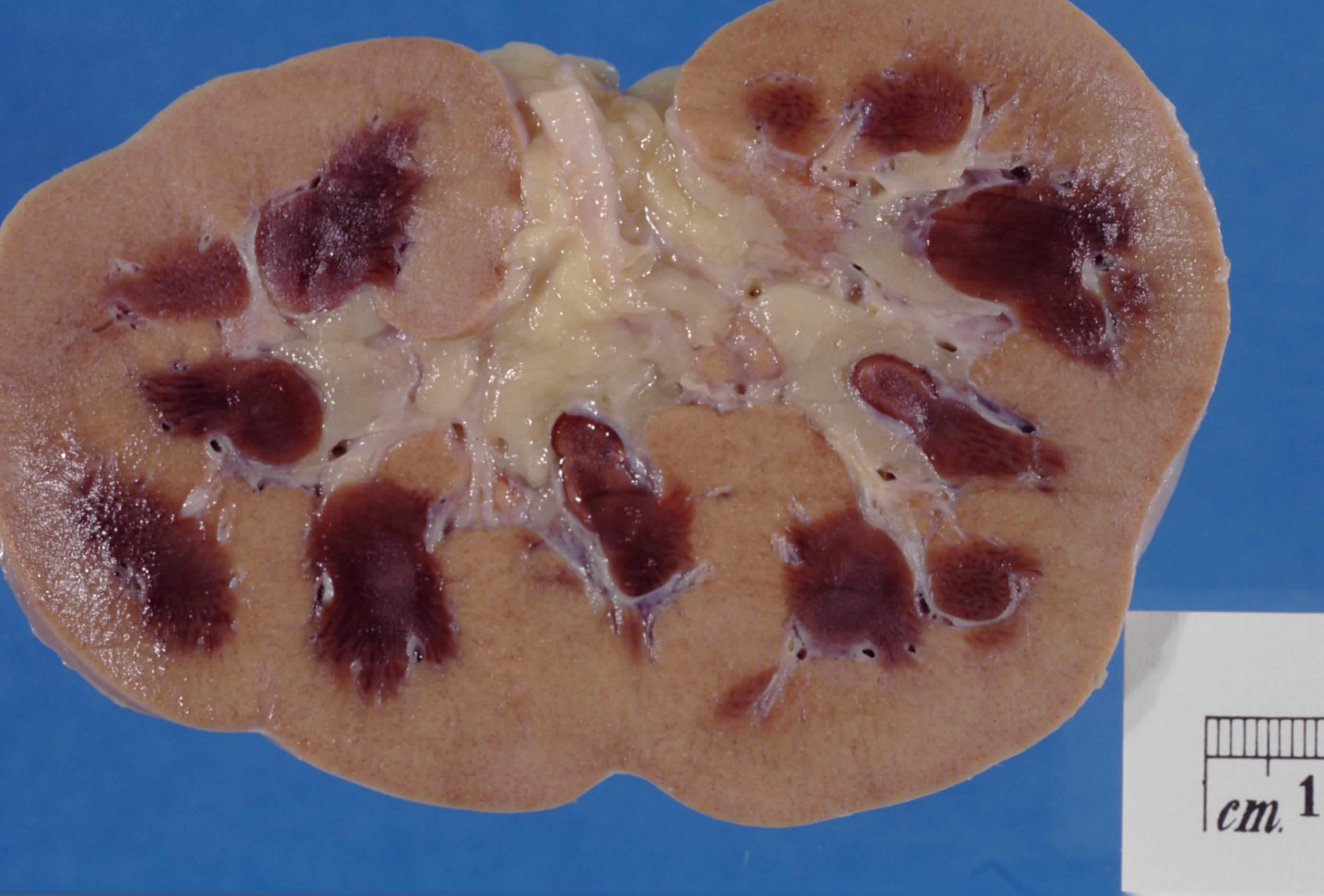
Core definition
Acute kidney injury (AKI) is operationally identified by an acute change in kidney function, principally using serum creatinine (SCr) and urine output (UO) criteria. The Kidney Disease: Improving Global Outcomes (KDIGO) framework is the principal contemporary standard used in clinical research and in studies across sepsis, malaria, diabetic ketoacidosis, trauma, transplantation, and other acute illnesses. [649][651][653][666] KDIGO classifies AKI into stages 1–3 according to the magnitude and timing of SCr change and/or reduction in UO; in pediatric sepsis research, “any AKI” denotes KDIGO stages 1–3, whereas “severe AKI” denotes stages 2–3. [648]
Functional criteria and limitations
UO is a core component of KDIGO classification, and oliguria is conventionally represented by a UO threshold of <0.5 mL/kg/hour. [657] However, the optimal duration and threshold for oliguria remain under evaluation: an adult ICU study specifically examined the lowest mean diuresis over 3-, 6-, 12-, and 24-hour intervals because the consensus threshold has been questioned. [657] Thus, UO should be interpreted with the observation interval, body weight, baseline kidney function, fluid administration, diuretic exposure, and clinical context documented whenever possible. [657]
SCr-based recognition may lag behind the onset of renal injury and can be confounded by fluid accumulation. [650][653][654][659] In pediatric acute respiratory distress syndrome, fluid-overload-adjusted SCr identified “cryptic AKI”—AKI that would not be detected by traditional KDIGO assessment—and cryptic AKI was evaluated as a distinct nomenclature category alongside overt KDIGO-defined AKI. [659] Biomarkers such as urinary [TIMP-2]·[IGFBP7], plasma or urinary soluble triggering receptor expressed on myeloid cells-1, and multidimensional immuno-inflammatory profiles are therefore best regarded as early-risk or injury-detection tools, not replacements for the established functional AKI definition. [650][652][654]
Severity classification
The standard severity spectrum is KDIGO stage 1, stage 2, and stage 3. [648][649][651][653][666] For pediatric sepsis, stage 1–3 disease is classified as any AKI and stage 2–3 disease as severe AKI, with outcomes assessed after the first 24 hours through day 7 in one prediction-model study. [648] Studies of malaria in African children used serum-creatinine-based KDIGO criteria to define AKI and evaluate its association with inpatient mortality. [649] In adults with diabetic ketoacidosis, polytrauma, and pediatric liver transplantation, AKI was likewise defined or staged using KDIGO creatinine criteria or the full KDIGO framework. [651][653][666]
“Severe AKI” should not be assumed to have one universal meaning outside a specified framework. In pediatric sepsis, it means KDIGO stages 2–3. [648] In pregnancy-associated disease, “severe pregnancy-associated AKI” was defined by a stringent kidney-function endpoint—dialysis initiation or a first recorded estimated glomerular filtration rate (eGFR) <15 mL/min/1.73 m²—rather than by the complete KDIGO staging system. [663] This pregnancy-specific definition should therefore be reported explicitly and not conflated with KDIGO stage 3. [663]
Neonatal nomenclature
Neonatal AKI requires age- and context-specific terminology. Modified neonatal KDIGO (nKDIGO) criteria are used in neonates, including those with hypoxic-ischaemic encephalopathy treated with therapeutic hypothermia. [658][661] These criteria rely on SCr increase and UO, but early neonatal AKI can be difficult to classify because SCr may reflect maternal or perinatal factors and may not decline as expected. [661] The Gupta definition is an alternative neonatal classification based on insufficient SCr decline and may identify clinically significant AKI not captured by nKDIGO. [661] In therapeutic-hypothermia cohorts, studies have therefore reported diagnostic agreement and incidence separately according to nKDIGO and Gupta criteria rather than treating the definitions as interchangeable. [658][661]
Nomenclature in research and practice
“Incident AKI” refers to AKI developing after an initial observation period; for example, a polytrauma study assessed incident AKI between 7 and 72 hours after ICU admission, while a pediatric sepsis model excluded AKI present during the first 24 hours and predicted subsequent AKI through day 7. [648][653] “Sepsis-associated AKI” (SA-AKI) and “sepsis-related AKI” describe AKI occurring in temporal association with sepsis, without replacing KDIGO staging. [650][652][654] Similar etiologic descriptors include malaria-associated, DKA-associated, postoperative, transplant-associated, pregnancy-associated, and trauma-associated AKI. [649][651][653][663][664][666]
Administrative documentation is not equivalent to a physiologic definition: ICD-9/10 AKI codes at discharge may disagree with AKI identified from SCr and UO using KDIGO criteria. [665] Consequently, publications and clinical records should specify whether AKI was defined by KDIGO/nKDIGO measurements, a disease-specific severe-AKI endpoint, biomarker evidence, or diagnostic coding. [658][661][663][665]
| Term or framework | Definition or use | References |
|---|---|---|
| KDIGO AKI | Measurement-based classification using acute SCr and/or UO changes; stages 1–3 | [648][649][651][653][666] |
| Any AKI in pediatric sepsis | KDIGO stages 1–3 | [648] |
| Severe AKI in pediatric sepsis | KDIGO stages 2–3 | [648] |
| Oliguria | Conventional threshold <0.5 mL/kg/hour; duration and optimal threshold remain debated | [657] |
| Cryptic AKI | Fluid-overload-adjusted SCr identifies AKI not detected by traditional KDIGO assessment | [659] |
| Neonatal AKI | Classified with modified nKDIGO or the alternative Gupta insufficient-SCr-decline definition | [658][661] |
| Severe pregnancy-associated AKI | Dialysis initiation or first recorded eGFR <15 mL/min/1.73 m² | [663] |
| Administrative AKI | ICD-9/10 discharge coding; may be discordant with KDIGO-defined AKI | [665] |
Pathophysiology and Mechanism
- ▸AKI can arise through converging hemodynamic, ischemic, vascular, inflammatory, infectious, toxic, and tubular-transport mechanisms [667][670][676][678][682][686].
- ▸AKD persists for **7–90 days** after AKI; 45.6% of AKI survivors in one cohort progressed to AKD, which was associated with de novo chronic kidney disease [672].
- ▸A serum creatinine rise during abemaciclib therapy may represent transporter-mediated pseudo-AKI rather than reduced true glomerular filtration; cystatin C can help resolve the discrepancy [670].
- ▸Contrast-associated AKI may be defined by a creatinine increase of **≥0.3 mg/dL** or **>50% within 48–72 hours** after contrast exposure [682].
- ▸Renal artery compromise after endovascular aneurysm repair may result from mechanical ostial coverage or atheroembolism [678].
Overview
Acute kidney injury (AKI) is a dynamic loss of kidney function caused by interacting disturbances in renal perfusion, glomerular filtration, tubular integrity, vascular patency, and drug or toxin handling. The available evidence describes AKI as a final common phenotype arising from diverse settings, including liver transplantation, cardiovascular procedures, aortic disease, chemotherapy, infection, trauma, and critical illness [667][676][682]C[685][686]. Its biological consequences may persist after the initial creatinine-defined episode: acute kidney disease (AKD) is defined as AKI that continues for 7–90 days, and nearly half of AKI survivors in a large retrospective cohort developed AKD [672].
Hemodynamic and ischemic mechanisms
Perioperative AKI commonly reflects an imbalance between renal oxygen delivery and tubular metabolic demand. In liver transplantation, early postoperative prediction models use perioperative variables available from the first urgent blood test, indicating that the renal insult can be established during the operation or immediately afterward [667]. In type B aortic dissection, the pathophysiology is distinct from type A or mixed aortic cohorts and may involve dissection-related renal malperfusion, systemic instability, and treatment-associated injury; this disease-specific mechanism motivated development of a dedicated AKI prediction model [676]. Direct renal artery compromise after endovascular aneurysm repair can result from mechanical ostial coverage or atheroembolism, producing focal ischemia and potentially abrupt loss of renal function [678]C.
Cardiac procedures add several potential hemodynamic stresses. In pediatric heart transplantation, postoperative AKI was investigated in relation to right ventricular end-diastolic pressure and pulmonary capillary wedge pressure, reflecting the possible contribution of impaired cardiac filling, venous congestion, and abnormal diastolic physiology to renal dysfunction [683]. In minimally invasive cardiac surgery, delayed early hemodynamic recovery was associated with preoperative platelet-related inflammatory burden, linking systemic inflammation with postoperative circulatory instability [675]. Trauma resuscitation may also modify renal risk through sex- and age-dependent responses to whole-blood transfusion, although the cited national database study evaluated broader complications and outcomes rather than establishing a single renal mechanism [680].
Tubular injury, inflammation, and infection
Renal tubular epithelial cells are vulnerable to ischemia, inflammatory signaling, oxidative stress, and nephrotoxins. The clinical association between AKI and adverse outcomes in necrotizing fasciitis is consistent with severe infection-related systemic inflammation, tissue destruction, and shock contributing to renal injury; AKI was the only independent mortality-associated factor in the cited cohort [686]. Preoperative platelet-to-lymphocyte ratio and systemic immune-inflammation index were examined as markers of inflammatory burden in cardiac surgery, supporting inflammation as a biologically plausible modifier of postoperative renal vulnerability, although the study endpoint was delayed hemodynamic recovery rather than AKI itself [675].
Contrast-associated AKI illustrates a time-limited toxic and hemodynamic pathway. In oncology patients receiving contrast-enhanced computed tomography during active chemotherapy, AKI was defined as a serum creatinine rise of ≥0.3 mg/dL or >50% within 48–72 hours after contrast exposure, even among patients whose baseline estimated glomerular filtration rate exceeded 50 mL/min/1.73 m² [682]C. Vancomycin provides another exposure-dependent mechanism: dosing intensity and accumulation can influence nephrotoxicity, and a study in patients with severe renal impairment compared model-based area-under-the-curve dosing with conventional trough-guided dosing to assess AKI within 14 days [679]C.
Drug-related changes in measured kidney function
Not every creatinine rise represents structural AKI. Abemaciclib inhibits renal tubular transporters and can increase serum creatinine without reducing true glomerular filtration, producing “pseudo-AKI”; a creatinine–cystatin C discrepancy can therefore help distinguish altered creatinine handling from genuine filtration loss [670]. This mechanism is clinically important because reliance on creatinine alone may overestimate injury when transporter inhibition is present. Conversely, sodium-glucose cotransporter 2 (SGLT2) inhibitors have recognized cardiovascular and renal effects, and systematic review evidence has evaluated whether their use around transcatheter aortic valve implantation changes renal and cardiovascular outcomes [668]. Similar outcome-focused analyses have examined SGLT2 inhibitor use in patients with diabetes undergoing transcatheter mitral valve repair [677]. These studies address associations and outcomes rather than proving a single AKI mechanism.
Vascular, obstructive, and recovery pathways
Renal vascular obstruction may be mechanical or embolic: after standard infrarenal endovascular aneurysm repair, renal artery compromise was specifically attributed to ostial coverage or atheroembolism and was managed according to the mechanism and timing of injury [678]C. Reduced nephron reserve can also influence recovery. Three-dimensional assessment of retained blood-perfused renal volume was used to evaluate functional preservation after nephron-sparing surgery, emphasizing that the amount of viable, perfused renal tissue mediates postoperative renal function [684].
After AKI, incomplete recovery may reflect persistent tubular injury, unresolved hemodynamic or inflammatory stress, loss of functional nephron mass, or superimposed comorbidity. Advanced age, hypertension, heart failure, cirrhosis, recent diuretic use, and hepatorenal syndrome were identified as risk factors for AKD, and AKD was associated with subsequent de novo chronic kidney disease [672]. A tertiary nephrology cohort additionally evaluated predictors of renal recovery and in-hospital mortality, reinforcing that recovery is heterogeneous and depends on the underlying kidney disorder and systemic illness [685].
Integrative and emerging mechanisms
Kidney injury is biologically heterogeneous and cannot always be explained by a single pathway. Artificial-intelligence virtual-cell frameworks are being proposed to integrate multiomics, renal-cell states, organoid experiments, urinary measurements, and clinical data to model patient-specific injury and recovery mechanisms [674]. Current clinical prediction tools—including models developed for liver transplantation and type B aortic dissection—primarily estimate risk from observable perioperative variables rather than directly measuring cellular injury [667][676]. Thus, AKI pathophysiology is best understood as the convergence of perfusion failure, congestion, vascular obstruction, inflammation, infection, nephrotoxicity, altered tubular transport, and limited renal reserve, with the relative contribution varying by clinical context [667][670][672][676][678]C[682]C[683].
| Mechanistic pathway | Clinical example | Evidence |
|---|---|---|
| Hemodynamic or ischemic stress | Liver transplantation, aortic dissection, cardiac transplantation | [667][676][683] |
| Vascular obstruction or embolization | Renal artery compromise after EVAR | [678]C |
| Inflammation and infection | Necrotizing fasciitis; inflammatory burden during cardiac surgery | [675][686] |
| Nephrotoxicity or exposure-related injury | Contrast during chemotherapy; vancomycin dosing | [679]C[682]C |
| Altered creatinine handling | Abemaciclib-associated pseudo-AKI | [670] |
| Reduced renal reserve and incomplete recovery | AKD, CKD transition, retained perfused renal volume | [672][684] |
Epidemiology, Etiology and Risk Factors
- ▸AKI is frequently underrecognized when ascertainment relies only on diagnostic coding; serial creatinine assessment identifies additional undiagnosed events. [697]
- ▸Cardiac surgery with cardiopulmonary bypass is a major high-risk setting, with AKI commonly evaluated within the first 7 postoperative days. [687] [693] [700]
- ▸Among AKI survivors, 45.6% developed AKD lasting 7–90 days; advanced age, hypertension, heart failure, cirrhosis, diuretic use, and hepatorenal syndrome were associated with progression. [672]
- ▸Important etiologic contexts include hypoperfusion and sepsis, surgery and transplantation, nephrotoxic medications, toxic ingestion, immune checkpoint therapy, thrombotic microangiopathy, and infection-associated glomerulonephritis. [690] [692] [696] [694] [695] [703]
Epidemiology
Acute kidney injury (AKI) occurs across community, hospital, intensive-care, perioperative, toxicologic, infectious, inflammatory, and immune-mediated settings. Its apparent epidemiology depends substantially on ascertainment: in the Atherosclerosis Risk in Communities cohort, AKI was identified either by ICD coding or by serial inpatient serum-creatinine measurements, specifically to distinguish clinically recognized from undiagnosed events. The study included 5,692 adults with proteomic and metabolomic profiling and excluded baseline end-stage kidney disease, underscoring that creatinine-defined AKI may be missed when diagnostic coding is used alone. [697] AKI is also common after cardiac surgery and is sufficiently frequent and prognostically important that numerous clinical prediction models have been developed for adults undergoing cardiopulmonary bypass. [693]
Cardiac surgery-associated AKI (CSA-AKI) is a major perioperative phenotype. A 2026 systematic review identified six randomized trials involving 798 patients evaluating intraoperative hemoadsorption during cardiopulmonary bypass, with postoperative AKI within 7 days as the primary endpoint. [687] A large retrospective cardiac-surgery cohort included 8,198 patients treated with cardiopulmonary bypass and assessed KDIGO-defined AKI during the first 7 postoperative days, specifically examining antibiotic prophylaxis and preoperative risk status. [700] Other contemporary cardiac-surgery studies evaluated early AKI within 48 hours of intensive-care admission or postoperative AKI as part of prediction-model development, reflecting the concentration of risk in the immediate postoperative period. [699]
AKI may persist beyond the initial episode. In a cohort of 23,868 adult AKI survivors, 10,884 patients (45.6%) progressed to acute kidney disease (AKD), defined as AKI persisting for 7–90 days. Advanced age, hypertension, heart failure, cirrhosis, recent diuretic use, and hepatorenal syndrome were identified as factors associated with AKD; AKD was also examined in relation to subsequent de novo chronic kidney disease. [672]
Etiologic settings
The principal etiologic categories represented in the updated evidence are hemodynamic or ischemic injury, nephrotoxic exposure, sepsis-associated injury, surgery-related injury, immune-mediated disease, infection-associated glomerular injury, obstruction, and toxic ingestion. In septic shock patients undergoing surgical source control, a randomized trial compared intraoperative dobutamine plus norepinephrine with norepinephrine alone, using AKI within 7 postoperative days as the primary outcome; this population represents severe systemic hypoperfusion and vasopressor exposure as important clinical contexts for AKI. [690]
Perioperative AKI is not confined to cardiac surgery. The PELICAN randomized trial enrolled high-risk adults undergoing elective major abdominal surgery and evaluated individualized cardiac-index-guided hemodynamic therapy, a strategy directed at potentially modifiable intraoperative perfusion abnormalities. [688] Liver transplantation is another high-risk setting: a randomized single-center study of 89 adults evaluated tranexamic acid versus placebo and assessed early allograft dysfunction and other outcomes during the first 7 days after transplantation, although the available report excerpt does not provide the AKI-specific result. [692]
Drug- and toxin-associated AKI remains heterogeneous. A cardiac-surgery cohort specifically examined vancomycin plus gentamicin prophylaxis because of the nephrotoxic potential of this combination. [700] AKI was also a prespecified safety outcome in a pediatric real-world comparison of ceftazidime-avibactam with polymyxin-based therapy for multidrug-resistant Gram-negative infection. [698] Glyphosate-surfactant ingestion was studied in a retrospective cohort of adults presenting to a tertiary emergency department in India; the investigation focused on clinical patterns and predictors of in-hospital mortality, providing evidence for a toxicologic context in which renal injury may occur, although the supplied abstract does not report an AKI proportion. [696]
Risk factors and vulnerable populations
Risk is increased by advanced age and pre-existing cardiovascular, hypertensive, hepatic, and renal vulnerability. Age, hypertension, heart failure, cirrhosis, diuretic exposure, and hepatorenal syndrome were associated with progression from AKI to AKD. [672] In cardiac surgery, prediction models incorporate preoperative and perioperative variables, and external validation studies have compared scores for in-hospital, 7-day, and stage 2–3 AKI in critically ill adults. [693] [702]
Cancer immunotherapy introduces overlapping conventional and immune-mediated mechanisms. Among adults treated with immune checkpoint inhibitors, AKI occurring within 12 months of treatment initiation was classified as transient azotemia when recovery occurred within 72 hours or as sustained AKI when it persisted beyond 72 hours; sustained cases included acute tubular necrosis, obstruction, and immune-checkpoint-inhibitor-associated AKI. [703] Systemic lupus erythematosus and lupus nephritis may cause AKI through thrombotic thrombocytopenic purpura, antiphospholipid-associated microangiopathy, secondary endothelial injury, or complement-amplified atypical hemolytic-uremic-syndrome-like disease; a systematic review synthesized 78 reported patients, although the evidence was dominated by selectively reported cases. [694]C Pediatric acute post-streptococcal glomerulonephritis is another infection-associated mechanism for acute kidney dysfunction; a systematic review evaluated hypertension, hematuria, nephrotic-range proteinuria, severe complications, rapidly progressive or crescentic disease, and renal replacement therapy in predominantly hospital-based cohorts. [695]
Additional vulnerable groups include people living with HIV undergoing surgery, an exposure evaluated in a national inpatient sample of 41,622,004 surgical admissions, including 2,088,307 admissions involving HIV. [704] SGLT2-inhibitor studies provide safety-context evidence rather than a single universal AKI risk estimate: one target-trial emulation compared newly initiated SGLT2 inhibitors with DPP-4 inhibitors in 224,510 versus 698,012 adults with type 2 diabetes, including frail populations, while a meta-analysis examined renal outcomes after transcatheter or surgical aortic-valve intervention. [701] [691] Finally, AKI was monitored as a secondary outcome in trials of topical vancomycin after sternotomy and as a renal outcome in studies of aortic-valve intervention, but the supplied abstracts do not provide sufficient results to quantify those risks. [689] [691]
| Domain | Evidence-supported examples |
|---|---|
| Perioperative/hemodynamic | Cardiac surgery with cardiopulmonary bypass; major abdominal surgery; septic shock requiring surgical source control; liver transplantation. [687] [688] [690] [692] |
| Drug/toxin exposure | Vancomycin plus gentamicin prophylaxis; polymyxin-based antimicrobial therapy; glyphosate-surfactant ingestion. [700] [698] [696] |
| Immune/inflammatory | Immune checkpoint inhibitors; SLE/lupus nephritis-associated thrombotic microangiopathy. [703] [694]C |
| Infection-associated renal disease | Pediatric acute post-streptococcal glomerulonephritis. [695] |
| Patient vulnerability | Older age, hypertension, heart failure, cirrhosis, diuretic use, hepatorenal syndrome, HIV, diabetes, and critical illness. [672] [704] [701] [702] |
Clinical Presentation
- ▸AKI may be overt, incidentally detected, or undiagnosed when serum-creatinine surveillance is incomplete; ICD coding alone can miss cases [697].
- ▸A postoperative KDIGO threshold includes a serum-creatinine rise of **≥26.5 µmol/L within 48 hours** or to **≥1.5 times baseline** [715].
- ▸Important presenting clues include reduced urine output, hematuria, hypertension, proteinuria, jaundice, fever, altered consciousness, and other organ dysfunction [695,699,707,708,711,716].
- ▸AKI commonly occurs in high-risk settings including cardiac surgery, critical illness, infection, radical cystectomy, and pediatric heart transplantation [683,693,702,706,707,715,716].
- ▸Stage 2 or 3 AKI is considered severe in the cited pediatric heart-transplantation study [683].
Overview
Acute kidney injury (AKI) is a clinical syndrome characterized by an acute deterioration in kidney function, usually recognized through changes in serum creatinine and/or urine output. In practice, it may be clinically overt, incidentally detected during laboratory surveillance, or remain undocumented despite meeting biochemical criteria. In the Atherosclerosis Risk in Communities cohort, undiagnosed AKI was specifically identified from serial inpatient serum-creatinine measurements, highlighting that reliance on diagnostic coding can miss clinically important episodes [697].
Diagnostic clinical features
A practical postoperative definition uses Kidney Disease: Improving Global Outcomes (KDIGO) criteria: a serum-creatinine increase of ≥26.5 µmol/L within 48 hours, or an increase to ≥1.5 times baseline within the relevant assessment period [715]. Following cardiac surgery, early AKI has been assessed within 48 hours of intensive-care admission, using KDIGO criteria [699]. Clinical assessment should therefore include urine output, serial serum creatinine, hemodynamic status, fluid balance, exposure history, and evidence of systemic or organ-specific illness [699][715].
The clinical phenotype ranges from an isolated biochemical abnormality to oliguria or reduced urine output, fluid accumulation, electrolyte or acid–base disturbance, and multiorgan dysfunction. Reduced urine output was a predominant renal manifestation in patients with idiopathic multicentric Castleman disease-associated TAFRO syndrome, in whom renal involvement occurred in 95.8% (46/48) of patients [708]C. In severe yellow fever, AKI occurred as part of a critical illness characterized by organ dysfunction and substantial in-hospital mortality; the reported cohort included 61 critically ill adults, of whom 22 died (36.1%) [707]C.
Etiology-specific presentations
AKI may accompany infection, inflammation, surgery, circulatory failure, or intrinsic glomerular disease. In children with acute post-streptococcal glomerulonephritis, the clinically relevant presentation includes hypertension, gross hematuria, AKI or acute kidney dysfunction, nephrotic-range proteinuria, severe complications, and, in some cases, rapidly progressive glomerulonephritis or crescentic lesions; renal replacement therapy was also evaluated as a severe outcome in the systematic review [695].
Leptospirosis-associated AKI may present within Weil’s syndrome, alongside high fever, jaundice, and early disseminated intravascular coagulation; these features were reported in a patient with severe leptospirosis after freshwater exposure [716]C. Imported falciparum malaria can present with nonspecific symptoms and may progress rapidly to severe disease, creating a setting in which AKI may occur as part of systemic deterioration; a five-case series described the diagnostic and management contribution of metagenomic next-generation sequencing in a malaria-free region [711]C.
Infective endocarditis is another context in which AKI may be clinically important. In a nationwide cohort, Enterococcus faecium endocarditis affected older patients with greater comorbidity and more frequent nosocomial acquisition than other endocarditis etiologies, and it was associated with more AKI [706]. Renal involvement in iMCD-TAFRO syndrome may present with reduced urine output and mild hematuria, within a broader syndrome defined by thrombocytopenia, anasarca, myelofibrosis, renal dysfunction, and organomegaly [708]C.
Postoperative and critical-care presentation
Postoperative AKI is particularly relevant after cardiac surgery, radical cystectomy, and pediatric heart transplantation. After cardiac surgery, AKI and altered consciousness are recognized early intensive-care complications associated with increased morbidity and mortality, and prediction models have been developed to identify patients at risk [699]. A systematic review of cardiac surgery-associated AKI prediction models evaluated adults undergoing cardiopulmonary-bypass procedures and emphasized early risk identification for targeted preventive strategies [693].
After radical cystectomy with urinary diversion, AKI may occur during the 90 days following surgery and is associated with substantial morbidity and mortality; the study used KDIGO criteria based on serum-creatinine change [715]. In children undergoing heart transplantation, postoperative AKI was staged according to KDIGO creatinine criteria, with stage 2 or 3 classified as severe, and was evaluated in relation to subsequent invasive measures of cardiac filling pressures [683].
Critically ill adults may develop AKI during hospitalization or within the first 7 days, including stage 2 or stage 3 disease; external validation studies have compared scores intended to identify these outcomes in emergency intensive-care populations [702]. Clinical prediction models can support risk stratification, but they do not replace serial clinical examination and laboratory monitoring because AKI may be missed when it is not coded or when creatinine is measured incompletely [693][697].
Recognition and severity assessment
The bedside presentation should be interpreted in context rather than by creatinine alone. Oliguria or reduced urine output, hematuria, hypertension, proteinuria, jaundice, fever, altered consciousness, hemodynamic instability, and other signs of organ dysfunction can provide important etiologic clues [695][699][707]C[708]C[711]C[716]C. The severity of AKI should be documented using the applicable KDIGO stage, with particular attention to stage 2 or 3 disease because these categories identify severe postoperative AKI in pediatric transplantation and are commonly evaluated as clinically important outcomes in critical-care cohorts [683][702].
| Clinical context | Reported AKI-associated presentation or relevance |
|---|---|
| Acute post-streptococcal glomerulonephritis | Hypertension, gross hematuria, acute kidney dysfunction, nephrotic-range proteinuria, severe complications, and possible rapidly progressive/crescentic disease [695] |
| iMCD-TAFRO syndrome | Reduced urine output, mild hematuria, and renal involvement in 95.8% of patients [708]C |
| Severe leptospirosis | High fever, jaundice, AKI, and early disseminated intravascular coagulation [716]C |
| Severe yellow fever | AKI within critical illness and multiorgan dysfunction; mortality was 36.1% in the reported ICU cohort [707]C |
| Enterococcus faecium endocarditis | AKI was more frequent than in other endocarditis etiologies [706] |
| Cardiac surgery | Early postoperative AKI, often assessed within 48 hours of ICU admission, with associated morbidity and mortality [693][699] |
| Radical cystectomy | AKI within 90 days after surgery, associated with substantial morbidity and mortality [715] |
| Pediatric heart transplantation | KDIGO stage 2 or 3 classified as severe postoperative AKI [683] |
Diagnosis and Workup
- ▸Use serial creatinine and urine-output assessment, with attention to the **48-hour** postoperative diagnostic window used in cardiac-surgery AKI research. [699]
- ▸After intra-arterial contrast, cystatin C may detect earlier functional change than creatinine, but it should complement rather than replace standard monitoring. [719]
- ▸Evaluate rhabdomyolysis with targeted muscle-injury testing after crush injury or exertional illness. [720][724]
- ▸Consider uKIM-1 and Vanin-1 investigational or adjunctive biomarkers rather than universally validated replacements for clinical AKI assessment. [721][714]
- ▸Define persistent kidney dysfunction as AKD when AKI continues for **7–90 days**, and arrange follow-up because AKD was common and associated with later chronic kidney disease. [672]
Diagnostic approach
Acute kidney injury (AKI) should be evaluated as a dynamic change in kidney function rather than as an isolated abnormal creatinine result. In the available contemporary evidence, postoperative cardiac-surgery AKI was operationalized using KDIGO criteria within 48 hours of intensive-care admission, illustrating the importance of serial laboratory assessment after a high-risk exposure. [699] A complete assessment should therefore establish the baseline creatinine, obtain repeat serum creatinine measurements, monitor urine output, and document the timing of hypotension, surgery, infection, contrast exposure, nephrotoxin exposure, obstruction, and systemic disease. [699][719]
The workup should begin with clinical assessment of perfusion and volume status, including blood pressure, hemodynamic trends, fluid balance, weight change, and examination for congestion or hypovolemia. Renal hypoperfusion was specifically investigated in patients exposed to controlled hypotension during surgery, in whom renal resistive index (RRI) was assessed before and after the procedure; the study supports RRI as an adjunctive physiologic measure, but it does not establish RRI as a standalone diagnostic test for AKI. [723]C RRI findings should therefore be interpreted alongside serum creatinine, urine output, hemodynamics, and the clinical context. [723]C
Laboratory and urine evaluation
Initial laboratory testing should include serum creatinine, urea, electrolytes, bicarbonate, glucose, complete blood count, and tests directed at the suspected cause, with repeated measurements when kidney function is changing rapidly. [699][702] Urinalysis with microscopy and urine sediment examination can help identify hematuria, proteinuria, pyuria, casts, or pigment-associated injury; targeted urine testing is especially important when infection, glomerular disease, interstitial nephritis, or rhabdomyolysis is suspected. [724]C[726]C
Creatine kinase and related evaluation for muscle injury should be obtained after crush injury, prolonged exertion, seizures, ischemia, or other suspected rhabdomyolysis. Crush injury is recognized as a setting in which rhabdomyolysis may lead to AKI, and experimental work has evaluated renal biochemical and histopathologic injury after bilateral muscle compression. [720] In exertional rhabdomyolysis, baseline total body water measured by bioelectrical impedance was investigated as a predictor of AKI in military recruits, but this remains a cohort-level predictive finding rather than a replacement for clinical assessment and serial renal testing. [724]C
Contrast-associated AKI and biomarkers
After intra-arterial contrast exposure, the timing of creatinine measurements and the biomarker selected can materially affect the apparent incidence of contrast-associated AKI. Serum creatinine-based definitions may miss early functional impairment, whereas cystatin C was evaluated as a more sensitive early marker of glomerular filtration change in a randomized exploratory trial. [719] When clinically available, cystatin C may therefore complement—not replace—serial creatinine and urine-output assessment after contrast exposure. [719]
Novel biomarkers should not be used indiscriminately as substitutes for established clinical evaluation. Urinary kidney injury molecule-1 (uKIM-1) was systematically evaluated for diagnosing persistent severe AKI, with the review specifically addressing pooled sensitivity, specificity, area under the curve, and diagnostic odds ratio. [721] The evidence concerns persistence and severity rather than routine diagnosis of every AKI episode, so uKIM-1 is best regarded as an adjunct requiring local assay validation and clinical correlation. [721] Vanin-1 has also been described in a review of emerging AKI detection probes, but the evidence primarily concerns assay and probe development rather than validated bedside diagnostic thresholds. [714]
Identifying etiology and complications
Renal ultrasonography should be considered when obstruction, hydronephrosis, an atypical renal course, or an uncertain diagnosis is suspected; the available cited studies do not provide a validated imaging threshold, so imaging should be guided by the clinical differential. [726]C Tubulointerstitial nephritis should be considered when AKI is accompanied by features suggesting systemic autoimmune disease, including possible primary Sjögren syndrome; biopsy-proven Sjögren-associated tubulointerstitial nephritis has been characterized as a distinct clinicopathologic entity. [726]C
In suspected urinary infection or pyelonephritis, obtain urine culture before antibiotics when feasible and interpret results with symptoms and imaging. Evidence in this reference set is limited for diagnosis because the feline study concerns survival and prognostic factors in cats with suspected acute pyelonephritis rather than human diagnostic accuracy. [722] Similarly, imported falciparum malaria can present with nonspecific illness and severe disease; in a five-case series, metagenomic next-generation sequencing contributed to diagnosis or management in a malaria-free region, supporting its role only as a complementary test when conventional evaluation is inconclusive and epidemiologic risk is present. [711]C
Risk stratification and follow-up
Risk prediction models may help identify patients who require intensified surveillance, but they do not establish AKI. A systematic review and meta-analysis evaluated clinical prediction models for cardiac surgery-associated AKI, while external validation compared four risk scores in critically ill adults using discrimination, calibration, reclassification, and decision-curve analyses. [693][702] Retrospective machine-learning models have also predicted early AKI after cardiac surgery and integrated longitudinal biomarkers for AKI prediction and prognosis, but their retrospective designs require external validation before routine clinical adoption. [699][727]
After AKI, reassess kidney function beyond the initial episode because acute kidney disease (AKD) is defined in the cited cohort as AKI persisting for 7–90 days. [672] In 23,868 adult AKI survivors, 45.6% developed AKD, and AKD was associated with subsequent de novo chronic kidney disease; these findings support scheduled follow-up of creatinine, urine findings, blood pressure, medication exposure, and renal recovery after discharge. [672] If renal-replacement therapy is being considered, the indication and modality decision should be separated from diagnosis: a 2026 randomized trial enrolled critically ill adults with AKI who already had indications for renal-replacement therapy and compared intermittent with continuous treatment, with major adverse kidney events assessed by day 90. [718]
| Domain | Practical evaluation | Evidence and limitations |
|---|---|---|
| Functional change | Serial creatinine, urine output, baseline comparison, timing of injury | KDIGO-based early AKI assessment was used within 48 hours after cardiac surgery. [699] |
| Hemodynamics | Volume/perfusion assessment; consider adjunctive renal resistive index | RRI was studied during controlled hypotension but is not established as a standalone test. [723]C |
| Contrast exposure | Serial creatinine; consider cystatin C | Cystatin C may identify earlier change after intra-arterial contrast. [719] |
| Muscle injury | Creatine kinase and pigment-injury evaluation | Crush and exertional rhabdomyolysis are clinically relevant AKI settings. [720][724]C |
| Persistent AKI | Reassess through 7–90 days | AKD was present in 45.6% of adult AKI survivors in one cohort. [672] |
Staging and Risk Stratification (KDIGO)
- ▸Use KDIGO to classify AKI into stages 1–3; in the supplied evidence, any AKI means stages 1–3 and severe AKI means stages 2–3. [648]
- ▸KRT for renal or mixed hepatorenal indications is included in the severe-AKI definition in the pediatric liver-transplant cohort. [734]
- ▸The supplied references do not reproduce the numerical KDIGO creatinine or urine-output thresholds; apply the complete current KDIGO criteria in practice. [648,733]
- ▸Consider timing, persistence beyond 72 hours, KRT, and the underlying clinical syndrome in addition to KDIGO stage. [703,730,734]
- ▸Risk-prediction tools, including the RAI and adult or cardiac-surgery scores, require population-specific validation and calibration. [693,702,730]
KDIGO staging framework
The supplied contemporary studies consistently use the 2012 Kidney Disease: Improving Global Outcomes (KDIGO) framework to identify AKI and distinguish stages 1–3. [733] In pediatric sepsis research, “any AKI” includes KDIGO stages 1–3, whereas “severe AKI” is defined as stages 2–3 occurring after the initial 24-hour period through day 7. [648] The same stage 2–3 threshold is used to define severe AKI in critically ill children after liver transplantation; continuous kidney replacement therapy (KRT) for renal or mixed hepatorenal indications is also included in that severe category. [734] In critically ill children evaluated with the Renal Angina Index (RAI), the principal endpoint was severe AKI at 72 hours, defined as KDIGO stage 2–3. [730]
The available references do not reproduce the numerical KDIGO serum-creatinine or urine-output cutoffs for stages 1, 2, and 3. Accordingly, staging should be performed using the complete current KDIGO criteria in the clinical record, while the evidence summarized here supports the practical distinction between any AKI (stages 1–3) and severe AKI (stages 2–3). [648]
Timing and persistence
Timing is important when applying KDIGO staging. The pediatric sepsis prediction study excluded children who already had AKI during the first 24 hours and predicted incident AKI from 24 hours through day 7. [648] The RAI study calculated risk within 24 hours of pediatric intensive-care admission and assessed severe AKI at 72 hours. [730] In immune-checkpoint-inhibitor recipients, AKI was classified as transient azotemia when recovery occurred within 72 hours and as sustained AKI when it persisted beyond 72 hours; sustained cases included acute tubular necrosis, obstruction, and immune-checkpoint-inhibitor-associated AKI. [703] These time-based categories supplement, but do not replace, KDIGO stage assignment. [648][703]
Risk stratification before or early in AKI
Risk stratification should be separated from diagnostic staging. The RAI is an early pediatric tool intended to identify children at risk for severe AKI before or around the time of initial intensive-care assessment. [730] Its external validation in Vietnam specifically evaluated prediction of stage 2–3 AKI at 72 hours, incident AKI, KRT, and PICU mortality. [730] The pediatric sepsis model used LASSO selection followed by multivariable logistic regression and separately predicted any AKI and severe AKI from 24 hours through day 7. [648]
In critically ill adults, four externally evaluated scores—the UCSD-Mayo, AKI-RiSc, Bell, and APS scores—were compared for in-hospital AKI, AKI within 7 days, and stage 2–3 AKI. [702] The analysis included discrimination, recalibration, integrated discrimination improvement, net reclassification, and decision-curve assessment, emphasizing that a prediction score requires local validation and calibration rather than reliance on discrimination alone. [702] In cardiac surgery, a systematic review and meta-analysis identified clinical prediction models for cardiac-surgery-associated AKI and summarized their performance, while noting that applicability depends on the surgical population and model validation setting. [693] An interpretable machine-learning model was also developed for early AKI within 48 hours after ICU admission among cardiac-surgery patients. [699]
Clinical contexts associated with higher-risk or severe AKI
Risk assessment should incorporate the underlying clinical setting. In septic shock patients undergoing surgical source control, a randomized trial evaluated postoperative AKI within 7 days and compared intraoperative dobutamine plus norepinephrine with norepinephrine alone. [690] Cardiac-surgery evidence includes a systematic review of 207 randomized trials involving 63,785 patients and 55 preventive interventions for cardiac-surgery-associated AKI. [729] Additional observational studies assessed AKI risk after pulmonary endarterectomy in relation to deep hypothermic circulatory-arrest duration, [736]C after cardiac surgery with vancomycin plus gentamicin prophylaxis, [700] and after open-heart surgery in relation to the preoperative pan-immune inflammation value. [739]
Other validated or investigated risk contexts include acute myocardial infarction treated with percutaneous coronary intervention, where higher Huaxi Fall Risk Assessment categories were examined in relation to AKI; [731] imported malaria, for which a simple early assessment score was derived using KDIGO creatinine-defined AKI; [733] community-acquired pneumonia; [737]C immune-checkpoint-inhibitor therapy; [703] and sepsis-associated biomarkers including Klotho, fibroblast growth factor 23, and their ratio. [738] Metoprolol exposure has also been evaluated using a lagged time-varying framework among hospitalized adults with baseline estimated GFR of at least 60 mL/min/1.73 m². [732]
Organ-failure and follow-up considerations
In acute-on-chronic liver failure, contemporary consensus work provides a framework for organ dysfunction and organ-failure assessment, patient stratification, and critical-care management; renal status should therefore be interpreted within the broader multisystem syndrome rather than in isolation. [728] After AKI, surveillance remains clinically important: a pediatric cohort evaluated serum-creatinine remeasurement after AKI onset because incomplete monitoring may contribute to under-recognition and inadequate follow-up. [735] Overall, KDIGO stage, timing, persistence, KRT requirement, and the patient’s underlying syndrome should be documented together when communicating AKI severity and risk. [648][703][728][730][734]
| Category | Operationalization in cited studies | Clinical use |
|---|---|---|
| Any AKI | KDIGO stages 1–3 | Outcome category in pediatric sepsis prediction. [648] |
| Severe AKI | KDIGO stages 2–3 | Used in pediatric sepsis, pediatric liver transplantation, and RAI validation. [648][730][734] |
| Sustained AKI | AKI persisting >72 hours | Used in immune-checkpoint-inhibitor-associated AKI classification. [703] |
| Severe AKI with KRT | Stage 2–3 AKI or KRT for renal/mixed hepatorenal indications | Used after pediatric liver transplantation. [734] |
Acute Management
- ▸Prefer balanced crystalloids over routine saline when clinically appropriate in pediatric DKA and consider chloride exposure during resuscitation. [741][742][745]
- ▸Use dynamic reassessment of fluid responsiveness and individualized perfusion targets; **65 mm Hg MAP** is the guideline-referenced septic-shock target discussed in the available review. [743][748]
- ▸Review nephrotoxic medications; routine PPI co-administration for cisplatin nephroprotection is not supported by the available evidence and may carry AKI concerns. [740]
- ▸When KRT is indicated in critically ill AKI, continuous therapy may be preferable to intermittent hemodialysis in patients with hemodynamic instability because the randomized trial detected a sustained mortality signal with intermittent treatment. [718]
- ▸Use KDIGO severity staging and close follow-up in high-risk settings including pediatric liver transplantation, leptospirosis, pregnancy, ECMO, and cardiac surgery. [734][749][750][752][753]
Immediate priorities
Acute management should be individualized to the precipitating illness, hemodynamic state, fluid balance, electrolyte and acid–base abnormalities, urine output, and trajectory of kidney function. The supplied evidence supports early attention to fluid composition, perfusion targets, nephrotoxin exposure, contrast-associated injury, and timely kidney-replacement therapy (KRT), but does not establish a single universal treatment pathway for all AKI phenotypes. [718][742][748]
In septic shock, fluid resuscitation remains central, but 0.9% saline delivers a supraphysiologic chloride load that can promote hyperchloremic acidosis and may contribute to renal injury; balanced crystalloids more closely approximate extracellular fluid. [742] An updated pediatric systematic review specifically compared balanced crystalloids with saline, including evidence from the large PRoMPT BOLUS trial. [742] In pediatric diabetic ketoacidosis (DKA), pooled evidence found that balanced electrolyte solutions were associated with faster DKA resolution, with a mean difference of −4.41 hours, shorter hospital stay by −0.43 days, higher post-resuscitation bicarbonate by 1.20 mmol/L, and lower chloride by 3.31 mmol/L compared with saline. [745] A separate pediatric systematic review and meta-analysis likewise evaluated balanced solutions versus 0.9% saline, emphasizing that saline-associated hyperchloremic acidosis is a clinically relevant concern during resuscitation. [741]
Hemodynamic and fluid strategy
Fluid administration should be reassessed dynamically rather than continued solely because AKI is present. In complex hepatobiliary, pancreatic, splenic, and abdominal great-vessel surgery, a systematic review evaluated perioperative “precision” venous-access and fluid-management strategies designed to adapt to individual physiological reserve and surgical stress rather than relying only on static hemodynamic variables. [743] In septic resuscitation, 65 mm Hg remains the guideline-referenced mean arterial pressure (MAP) target discussed in the systematic review; evidence for routinely using higher MAP targets was identified as fragmented across mortality, renal, and splanchnic outcomes. [748] Therefore, higher MAP targets should be considered selectively rather than applied automatically, particularly when balancing perfusion needs against vasopressor and fluid-related harms. [748]
The pediatric septic-shock literature directly compares balanced crystalloids with saline, while the pediatric DKA literature primarily addresses metabolic recovery and chloride exposure; these populations should not be assumed to have identical fluid requirements. [741][742][745] Hypertonic saline combined with ulinastatin reduced trauma–hemorrhagic-shock-associated intestinal and renal injury in a rat model, but this experimental finding is insufficient to recommend the combination for routine human AKI treatment. [746]
Remove or avoid renal insults
Medication review should identify potentially nephrotoxic or hemodynamically hazardous agents and address reversible contributors. Proton-pump inhibitors (PPIs) have been investigated as a means of preventing cisplatin nephrotoxicity through inhibition of renal OCT2-mediated cisplatin uptake; however, the systematic review also highlights independent evidence linking PPIs with AKI. [740] Consequently, PPI co-administration should not be adopted routinely for cisplatin nephroprotection without considering the balance between uncertain preventive efficacy and potential renal harm. [740]
For patients undergoing intra-arterial contrast procedures, serum-creatinine-based definitions may miss early functional impairment, whereas cystatin C may detect earlier changes in glomerular filtration. [719] An exploratory randomized trial of 76 patients examined how biomarker selection affected detection and interpretation of contrast-associated AKI; its exploratory design means that biomarker differences should not automatically be interpreted as proof of improved clinical outcomes. [719]
Kidney-replacement therapy
When standard clinical indications for KRT are present, either intermittent hemodialysis or continuous KRT may be considered according to hemodynamic stability, fluid-removal needs, neurological status, staffing, and local expertise. In a multicenter randomized noninferiority trial of critically ill adults with AKI requiring KRT, initial intermittent hemodialysis was compared with continuous renal-replacement therapy using 90-day major adverse kidney events—death, KRT dependence, or creatinine more than 25% above baseline—as the primary outcome. [718] The trial was stopped early after interim analyses showed a sustained signal of higher mortality with intermittent hemodialysis than with continuous therapy; this finding supports caution when selecting intermittent treatment for unstable critically ill patients. [718]
Duration of continuous KRT is a marker of illness severity, renal recovery, and treatment decisions rather than an established therapeutic target. In a multicenter cohort of 1,436 three-month survivors treated with continuous KRT, outcomes were compared between treatment lasting ≤4 days and >4 days; these observational data should inform prognostic discussions but should not be used alone to determine when KRT can be stopped. [751]
Special populations and follow-up
AKI management requires attention to the underlying disease. Pediatric liver-transplant recipients were evaluated using KDIGO stage 2–3 AKI or continuous KRT for renal or mixed hepatorenal indications to define severe AKI, demonstrating the importance of severity staging and postoperative surveillance in this population. [734] Pediatric leptospirosis cohorts similarly used KDIGO criteria and found stage 3 AKI in 24.5% of included patients, underscoring the need for early recognition in infectious illnesses associated with severe renal involvement. [750] Pregnancy-related AKI was associated with adverse maternal and neonatal outcomes in a cohort of 29,586 deliveries, supporting close maternal, fetal, and postpartum follow-up when AKI occurs during pregnancy. [753]
Several interventions remain investigational or prognostic rather than suitable for routine acute treatment. Remifentanil and dexmedetomidine were compared in a rat crush-injury model of rhabdomyolysis-associated renal injury. [720] Cordycepin-mediated Nrf2/HMOX1 signaling and ferroptosis inhibition were studied in a mouse AKI-to-CKD model. [744] Machine-learning models for ECMO-associated AKI and inflammatory indices after cardiac surgery predict risk but do not replace clinical monitoring or treatment. [749][752] Music-based interventions address symptoms in patients receiving chronic hemodialysis, not acute AKI treatment. [713] Whole-blood resuscitation analyses in trauma examined sex-associated outcomes and do not establish a kidney-specific AKI therapy. [680] Observational NSTEMI data included dialysis-requiring AKI within a composite endpoint but do not determine AKI management. [747]
| Clinical situation | Evidence-informed consideration |
|---|---|
| Pediatric DKA | Balanced electrolyte solutions were associated with faster resolution, shorter hospital stay, higher bicarbonate, and lower chloride than saline. [745] |
| Pediatric septic shock | Balanced crystalloids are intended to reduce supraphysiologic chloride exposure; updated evidence compares them with 0.9% saline. [742] |
| Septic shock | The available review discusses 65 mm Hg MAP as the guideline-referenced target; higher targets should be individualized. [748] |
| Cisplatin therapy | Do not routinely add PPIs solely for nephroprotection; efficacy and safety remain concerns. [740] |
| Critically ill AKI requiring KRT | Continuous therapy may be favored over intermittent therapy in unstable patients given the mortality signal in the randomized trial. [718] |
| Intra-arterial contrast exposure | Cystatin C may detect earlier functional changes than serum creatinine, but exploratory biomarker findings do not prove outcome benefit. [719] |
Long-term and Definitive Management
- ▸AKD persists for **7–90 days** after AKI and occurred in 45.6% of AKI survivors in a large retrospective cohort; it was associated with subsequent de novo CKD. [672]
- ▸For critically ill patients who require RRT, a randomized trial stopped early after identifying a sustained mortality signal favoring continuous over intermittent RRT. [718]
- ▸The MAKE90 endpoint included death, RRT dependence, or serum creatinine **more than 25% above baseline**. [718]
- ▸Routine sodium bicarbonate therapy did not significantly improve MAKE30 in the SODa-BIC trial. [757]
- ▸Molsidomine, vortioxetine, URB597, cordycepin, and anesthetic strategies remain investigational for AKI because the cited renal-protective evidence is preclinical. [754][755][758][744][720]
Recovery surveillance and transition to chronic kidney disease
Acute kidney disease (AKD) is defined as kidney injury or impaired kidney function persisting for 7–90 days after AKI. [672] In a retrospective cohort of 23,868 adult AKI survivors, 45.6% developed AKD, and AKD was associated with subsequent de novo chronic kidney disease (CKD). [672] Higher-risk features included advanced age, pre-existing hypertension, heart failure, cirrhosis, recent diuretic exposure, and hepatorenal syndrome-related factors. [672] Accordingly, patients who survive AKI should undergo structured reassessment during the first 90 days, including kidney function, urine output, proteinuria or albuminuria when measurable, volume status, blood pressure, medication exposure, and ongoing need for renal-replacement therapy (RRT); the precise follow-up schedule was not tested in the cited studies. [672]
Persistent renal dysfunction should be treated as AKD rather than assumed to represent complete recovery, because this interval may provide an opportunity to reduce progression to CKD. [672] Long-term management should therefore include review of the precipitating cause, avoidance of recurrent nephrotoxic or hemodynamically destabilizing exposures, adjustment of renally cleared medicines, and reassessment of cardiovascular and metabolic comorbidity; these management principles are clinically applicable but were not directly evaluated by the cited cohort. [672]
Definitive renal-replacement therapy and modality selection
The indication for continuing or initiating RRT should be reassessed using the overall clinical picture, including refractory complications of kidney failure and the likelihood of renal recovery, rather than serum creatinine alone; the supplied trials evaluated modality after an indication for RRT had already been established. [718] In the multicenter randomized trial by Gaudry et al., critically ill adults with AKI requiring RRT were assigned to intermittent hemodialysis or continuous RRT as the initial treatment. [718] The primary endpoint was major adverse kidney events at day 90 (MAKE90), defined as death, dependence on RRT, or serum creatinine more than 25% above baseline. [718]
The trial was stopped early because interim analyses showed a sustained signal of higher mortality with intermittent hemodialysis than with continuous RRT. [718] Thus, for critically ill patients with AKI who require definitive extracorporeal support, continuous RRT should be strongly considered when hemodynamic instability or intolerance of rapid fluid and solute shifts makes intermittent treatment hazardous; the abstract does not establish that continuous therapy is superior for every patient or mandate one modality after stabilization. [718] Modality decisions should remain individualized according to hemodynamic status, fluid balance, neurologic needs, vascular access, local expertise, and the anticipated duration of kidney dysfunction; these specific selection factors were not directly compared in the supplied abstract. [718]
Metabolic acidosis and bicarbonate therapy
Sodium bicarbonate should not be used routinely solely to prevent adverse kidney outcomes in critically ill patients with metabolic acidosis. [757] In the SODa-BIC trial, bicarbonate produced no significant difference in the primary MAKE30 outcome, although a post-hoc analysis found differing effects among death, RRT requirement, and other hierarchical components. [757] The post-hoc nature of that analysis limits definitive treatment conclusions, and the cited evidence does not support bicarbonate as a substitute for source control, circulatory optimization, correction of reversible causes, or RRT when clinically indicated. [757]
Hepatorenal syndrome-associated AKI
In suspected hepatorenal syndrome-AKI (HRS-AKI), albumin is used for volume expansion during diagnostic evaluation and is administered with terlipressin when HRS-AKI is treated. [761]C A multicenter retrospective analysis of 145 patients evaluated whether the duration of albumin therapy influenced terlipressin response and prognosis, but the optimal duration remained a balance between timely diagnosis and the risk of overtreatment. [761]C Albumin exposure should therefore be reassessed frequently for intravascular response, pulmonary edema, and other signs of volume intolerance rather than continued automatically; the cited study was retrospective and does not define a universal duration. [761]C
Pharmacologic strategies: current evidence limits
Experimental renal-protective agents should not be incorporated into definitive human AKI management on the basis of the supplied preclinical studies. [754][755][758][744] In rat polymicrobial sepsis, molsidomine pretreatment was associated with lower renal histopathologic injury and favorable redox and endothelial-activation markers, but it was administered for 14 days before sepsis induction, limiting applicability to established human AKI. [754] In a rat renal ischemia-reperfusion model, vortioxetine reduced biochemical, inflammatory, oxidative-stress, apoptotic, and histopathologic injury signals, but the study involved female rats, unilateral nephrectomy, and short-term assessment. [755] URB597 given shortly after experimental sepsis reduced renal inflammation, apoptosis, and TLR4/NF-κB activation in rats, but no human efficacy or safety data were provided. [758] Cordycepin was reported in a mouse unilateral ischemia-reperfusion model to affect Nrf2/Hmox1 signaling, ferroptosis, and the AKI-to-CKD process, but the evidence remains preclinical. [744]
Other animal studies do not establish long-term AKI treatment: remifentanil and dexmedetomidine were compared in a rat crush-injury model, with renal biochemical and histopathologic outcomes, but this does not determine preferred human therapy. [720] A stellate ganglion block trial addressed postoperative atrial fibrillation after cardiac surgery and does not provide evidence for AKI recovery or CKD prevention. [717]
Drugs and populations requiring special caution
SGLT2 inhibitors have emerging post-procedural cardiovascular and renal outcome data after aortic-valve intervention, but the cited systematic reviews describe uncertain evidence across TAVR and surgical valve populations and do not establish initiation during active AKI. [691][668] Combined GLP-1 receptor agonist and SGLT2 inhibitor therapy was associated with outcomes in a propensity-matched CKD cohort, but this observational evidence concerns established CKD rather than acute kidney injury and cannot define post-AKI initiation timing. [762] Androgen-deprivation therapy was associated with AKI risk in a meta-analysis of 72,980 patients with prostate cancer, supporting medication-risk review during recovery, although the evidence was observational. [759] Ceftazidime-avibactam was evaluated as a polymyxin-sparing option in children with multidrug-resistant Gram-negative infection, with AKI among reported outcomes; these findings support antimicrobial stewardship and renal dose adjustment but do not define long-term AKI treatment. [698] Perioperative NSAID exposure was studied after distal-radius fracture surgery in adults, but the cited cohort does not establish a universal post-AKI NSAID rule. [760]
Neurologic hyperosmolar or pharmacologic interventions reviewed for secondary brain injury in adults with traumatic brain injury are not treatments for renal recovery and may require kidney-focused safety assessment when used in patients with AKI. [756]
| Domain | Evidence-supported implication | Evidence limitation |
|---|---|---|
| AKI-to-CKD transition | Reassess survivors during the 7–90-day AKD window and identify persistent dysfunction. [672] | Follow-up intervals and specific interventions were not tested. [672] |
| RRT modality | Consider continuous RRT preferentially in critically ill patients requiring RRT, particularly when intermittent therapy may be poorly tolerated. [718] | The trial does not establish superiority for every clinical context. [718] |
| Metabolic acidosis | Do not use sodium bicarbonate routinely solely to improve kidney outcomes. [757] | Post-hoc component analyses are exploratory. [757] |
| HRS-AKI | Reassess albumin duration and response during terlipressin therapy. [761]C | Retrospective data do not define a universal duration. [761]C |
| Experimental agents | Restrict molsidomine, vortioxetine, URB597, and cordycepin to research settings. [754][755][758][744] | Human efficacy and safety remain unestablished. [754][755][758][744] |
Fluid, Electrolyte & Acid-Base Disorders
- ▸Balanced electrolyte solutions were associated with approximately 4.4 hours faster DKA resolution, shorter hospitalization, higher bicarbonate, and lower chloride than normal saline in meta-analysis [745].
- ▸In pediatric DKA, monitor chloride and acid-base trends because saline-associated hyperchloremia can produce persistent or worsening non-anion-gap acidosis [741][765][775].
- ▸Consider potassium **≥7.0 mmol/L** a severe hyperkalemia threshold requiring urgent evaluation for electrocardiographic toxicity and dialysis indications [770].
- ▸Critically ill patients receiving continuous renal replacement therapy are susceptible to phosphate and magnesium losses [773].
- ▸Sodium bicarbonate did not significantly improve the primary MAKE30 outcome in SODa-BIC; exploratory hierarchical analyses should be interpreted cautiously [757].
Fluid assessment and resuscitation
Fluid and electrolyte disturbances are frequent contributors to, consequences of, and potential aggravators of acute kidney injury (AKI). Assessment should integrate volume status, urine output, serial creatinine, sodium, potassium, chloride, bicarbonate, magnesium, phosphate, glucose, and acid-base parameters rather than relying on a single measurement. Dysnatremia is common in critical illness: in a retrospective cohort of 1,758 intensive-care burn patients, hyponatremia or hypernatremia occurred in 56.3% [766]. A prospective multicenter cohort of high-risk cardiac-surgery patients specifically evaluated whether preoperative sodium strata of <139 mmol/L, 139–141 mmol/L, and >141 mmol/L were associated with postoperative AKI [769].
Patients with ileostomies are vulnerable to gastrointestinal fluid and electrolyte losses. A United States national cohort study evaluated 30-day readmission for dehydration or AKI after ileostomy creation, including the effects of discharge destination, risk factors, and encounter costs from 2016–2022 [768]. These data support explicit discharge planning for fluid intake, stoma-output monitoring, renal-function follow-up, and early reassessment when output rises or oral intake falls, although the supplied abstract does not provide the study’s numerical outcome estimates [768].
Diabetic ketoacidosis and chloride-related acid-base disorders
In pediatric diabetic ketoacidosis (DKA), early fluid resuscitation is central to treatment, but chloride-rich 0.9% saline can contribute to hyperchloremic metabolic acidosis [741]. A pediatric-specific systematic review and meta-analysis compared balanced electrolyte solutions (BES) with 0.9% saline across randomized and observational studies [741]. A broader pairwise and network meta-analysis included 18 studies comparing BES with normal saline and 16 studies evaluating different BES formulations [745]. Compared with normal saline, BES was associated with faster DKA resolution (mean difference −4.41 hours, 95% CI −7.00 to −1.82), shorter hospital stay (mean difference −0.43 days, 95% CI −0.72 to −0.14), higher post-resuscitation bicarbonate (mean difference +1.20 mmol/L, 95% CI 0.48–1.92), and lower post-resuscitation chloride (mean difference −3.31 mmol/L, 95% CI −5.32 to −1.29) [745]. These findings support considering BES when avoiding chloride accumulation is clinically important, while recognizing that the pediatric review included heterogeneous randomized and observational evidence [741].
Serum chloride trajectories may be clinically relevant in pediatric DKA. A retrospective cohort of patients aged 1–20 years measured electrolytes and renal function every four hours until DKA resolution and examined peak chloride, time to chloride normalization, creatinine-defined AKI, incident AKI, hospital length of stay, and the relationship between initial beta-hydroxybutyrate and creatinine [765]. A case report illustrates the potential severity of iatrogenic hyperchloremic acidosis: despite improving glucose and ketone concentrations, a patient’s pH deteriorated from 6.974 to 6.84 while chloride increased from 96.8 to 115 mmol/L, with subsequent acute heart failure and AKI [775]C. The report emphasizes using the delta gap—Δ anion gap minus Δ bicarbonate—to detect refractory mixed acidosis [775]C.
Bicarbonate and critically ill patients
The SODa-BIC randomized trial evaluated sodium bicarbonate for metabolic acidosis in critically ill patients using 30-day major adverse kidney events (MAKE30). The trial found no significant difference in its primary outcome [757]. A post-hoc hierarchical composite analysis reassessed outcomes using death, renal-replacement therapy, and persistent renal dysfunction within the hierarchy; because this was exploratory, it should not replace the primary trial interpretation [757]. Sodium bicarbonate therefore should not be assumed to prevent AKI or improve patient-centered outcomes solely because metabolic acidosis is present [757].
Potassium, magnesium, and phosphate
Severe hyperkalemia requires urgent assessment of electrocardiographic findings, renal function, and the need for dialysis. A cohort of non-dialysis-dependent emergency-department patients with potassium ≥7.0 mmol/L examined treatment, urgent dialysis, and mortality, and used multivariable analysis to identify associated factors [770]. Combined potassium–magnesium abnormalities are also clinically important: a 9,462-patient ICU cohort classified nine admission magnesium–potassium phenotypes and evaluated 30-day mortality, AKI, and invasive ventilation after adjustment for age, sex, and illness severity [767].
Continuous renal replacement therapy can cause phosphate and magnesium depletion. In a single-center observational comparison of citrate-anticoagulated continuous veno-venous hemodialysis, phosphate-containing dialysate with magnesium enrichment was compared with phosphate-free dialysate containing standard magnesium concentration; both cohorts also involved intravenous phosphate and magnesium supplementation [773]. The study directly evaluated whether the enriched solution reduced hypophosphatemia and hypomagnesemia [773].
Drug- and disease-associated disturbances
Topiramate can cause metabolic acidosis and nephrolithiasis and has been reported in association with Fanconi syndrome and AKI. In a case report, a patient receiving topiramate 100 mg daily developed AKI with Fanconi syndrome; renal recovery followed supportive care and drug cessation [774]C. Legionella pneumonia with rhabdomyolysis may present with hyponatremia, metabolic acidosis, myoglobinemia, anuria, and AKI, particularly when muscle findings are misattributed to inflammatory myopathy [777]C. Gastrointestinal sepsis in a child was associated with severe hypertension, hypoglycemia, metabolic acidosis, and AKI; two hemodialysis sessions corrected renal function and resolved neurologic manifestations [776]C.
In CKD with type 2 diabetes, a network meta-analysis found that SGLT2 inhibitors and finerenone reduced kidney-function progression versus placebo, with hazard ratios of 0.64 (95% CI 0.56–0.73) and 0.84 (95% CI 0.77–0.92), respectively [764]. A phase 2 crossover trial evaluated lorundrostat 25 mg/day added to an SGLT2 inhibitor in adults with uncontrolled hypertension, CKD, albuminuria, and background renin–angiotensin–aldosterone-system blockade [763]. A target-trial emulation likewise compared finerenone plus empagliflozin with either monotherapy for albuminuria reduction in Chinese adults with CKD and type 2 diabetes [771]. These studies concern chronic cardiorenal management rather than acute fluid resuscitation and should not be extrapolated directly to unstable AKI.
| Clinical problem | Evidence update | Practical implication |
|---|---|---|
| Pediatric DKA fluid choice | BES was associated with faster resolution, shorter stay, higher bicarbonate, and lower chloride than normal saline [745] | BES may reduce chloride burden when clinically appropriate [741][745] |
| Hyperchloremic acidosis | Chloride rose from 96.8 to 115 mmol/L while pH worsened in a DKA case [775]C | Reassess for mixed acidosis using serial chloride, bicarbonate, anion gap, and delta gap [775]C |
| Severe hyperkalemia | Emergency-department cohort defined severe hyperkalemia as potassium ≥7.0 mmol/L [770] | Obtain urgent ECG and assess dialysis requirement [770] |
| CRRT-associated losses | Phosphate- and magnesium-containing dialysate was evaluated against conventional dialysate [773] | Monitor and replace phosphate and magnesium during CRRT [773] |
Renal Replacement Therapy, Dialysis Access & Transplantation
- ▸A randomized trial stopped early after showing a sustained mortality signal favoring continuous over initial intermittent RRT in critically ill adults with AKI. [718]
- ▸The day-90 major adverse kidney event included death, RRT dependence, or serum creatinine more than 25% above baseline. [718]
- ▸Current evidence favors individualized, conservative timing rather than routine early RRT, while the patients most likely to benefit remain uncertain. [778,786]
- ▸Pediatric urgent-start PD was defined as initiation within 14 days of catheter insertion in one small retrospective series. [783]
- ▸Pediatric and neonatal modality comparisons are limited by small, retrospective cohorts and baseline differences between treatment groups. [785,788]
- ▸CKRT duration is a marker of illness severity and renal recovery, not necessarily a causal determinant of long-term outcome. [751]
- ▸Perioperative prediction models may identify patients at risk for post-transplant RRT, but internal validation does not establish clinical utility. [789]
- ▸CKRT drug dosing should be checked against validated pharmacokinetic guidance because large-language-model recommendations may be inaccurate or inconsistent. [793]
Indications and timing of renal replacement therapy
Renal replacement therapy (RRT) is a life-support treatment for critically ill patients with acute kidney injury (AKI), but uncertainty remains regarding initiation thresholds, modality selection, anticoagulation, and liberation from therapy. The 2026 Chinese Society of Critical Care Medicine guideline was developed using systematic literature retrieval, meta-analysis, and the GRADE approach to address these issues. [778] Contemporary observational evidence also supports individualized rather than indiscriminate early initiation: prior randomized trials have shifted practice toward more conservative initiation because early RRT has not consistently improved mortality, although the patient groups most likely to benefit remain uncertain. [786] A multicenter Japanese ICU-registry study specifically evaluated heterogeneous treatment effects to identify groups in whom RRT might confer benefit or harm, but the supplied evidence does not provide the final subgroup estimates. [786]
Intermittent versus continuous therapy
In a multicenter, open-label, noninferiority trial, critically ill adults with AKI and an indication for RRT were randomized to initial intermittent hemodialysis or continuous RRT; the primary outcome was a major adverse kidney event by day 90, defined as death, ongoing RRT dependence, or serum creatinine more than 25% above baseline. [718] The trial was stopped early after sequential interim analyses demonstrated a sustained signal of higher mortality with intermittent hemodialysis than with continuous RRT. [718] These findings challenge the assumption that the two initial strategies are clinically interchangeable, although the supplied abstract does not report the complete effect estimates or all secondary outcomes. [718]
Duration of continuous kidney replacement therapy (CKRT) is not simply a treatment exposure: it reflects illness severity, renal recovery, and clinician decisions about discontinuation. In a multicenter retrospective cohort of 1,436 patients who survived at least 3 months after CKRT initiation, participants were categorized by a median duration of 4 days into short-duration (≤4 days) and long-duration (>4 days) groups to examine longer-term renal outcomes and mortality. [751] The abstract supplied does not provide the adjusted outcome estimates; therefore, CKRT duration should not be interpreted as a causal determinant of prognosis from this study alone. [751]
Peritoneal dialysis, pediatric therapy, and access considerations
Urgent-start peritoneal dialysis (PD) is used in children with AKI or stage 5 chronic kidney disease when dialysis is required; in one Jordanian single-center series, urgent start was defined as PD initiation within 14 days of catheter insertion. [783] The series included 18 children, of whom 16 had AKI; hemolytic uremic syndrome accounted for 6 cases and acute tubular necrosis for 4 cases. [783] The study was retrospective and small, so it provides feasibility and complication experience rather than comparative evidence for access choice. [783]
In a French multicenter pediatric study of Shiga toxin-associated hemolytic uremic syndrome requiring KRT, 44 children received either PD (29) or CKRT (15), with no intermittent hemodialysis patients. [788] The investigators evaluated residual kidney function according to KRT modality, but the supplied abstract does not report the comparative results; modality selection therefore cannot be inferred to cause differences in recovery. [788] In neonates, a retrospective single-center cohort included 85 patients treated with PD (42), CKRT (23), or sequential PD plus CKRT (20); AKI was the most common indication, and modality groups differed in gestational age and birth weight. [785] Because treatment allocation was nonrandomized and baseline characteristics differed, these data should not be used to rank modalities. [785]
Special extracorporeal applications and treatment safety
Hemofiltration during pediatric cardiopulmonary bypass is used to address hemodilution, inflammatory responses, and postoperative complications. [781] A randomized trial of 80 children compared conventional ultrafiltration with subzero balanced ultrafiltration plus simple modified ultrafiltration; the supplied abstract does not include complete clinical outcome data. [781] In children with pediatric ARDS and AKI who already required CRRT, extracorporeal carbon dioxide removal was integrated into the CRRT circuit in a retrospective uncontrolled case series; this remains an investigational, center-specific strategy rather than a routine indication for dialysis. [787]C
Medication dosing during CKRT remains vulnerable to error because evidence-based precision-dosing guidance is limited. A case series evaluating six freely available large language models found that recommendations for cefepime and meropenem in AKI with CKRT required assessment for literature concordance and internal consistency; the supplied abstract does not provide the final accuracy estimates. [793]C Drug dosing should therefore be verified against authoritative pharmacokinetic and institutional protocols rather than relying on unvalidated automated recommendations. [793]C
Recovery, post-AKI care, and transplantation
Among adults with type 2 diabetes who recovered sufficiently to discontinue dialysis after AKI-D, a target-trial-emulation cohort compared SGLT2-inhibitor prescription within 30 days versus 31–90 days after discharge; the supplied abstract does not report the comparative outcomes. [784] This study addresses post-AKI medication timing, not initiation of RRT or dialysis-access management. [784]
AKI is common after lung transplantation and is associated with increased morbidity and mortality. A single-center retrospective study developed and internally validated perioperative prediction models for AKI and subsequent RRT using preoperative and early postoperative variables. [789] Prediction models may support risk stratification, but internal validation does not establish clinical benefit or replace postoperative surveillance. [789]
In multiple myeloma-associated AKI from light-chain cast nephropathy, a multicenter propensity-matched cohort evaluated plasma exchange within 7 days of presentation among patients with free light-chain levels greater than 1,500 mg/L, with dialysis dependence at 90 days as the primary outcome. [790] The supplied abstract does not report the matched results; plasma exchange therefore cannot be recommended or rejected on the basis of this summary alone. [790] A case report also illustrates that dialysis-requiring AKI may complicate postoperative prosthetic-valve endocarditis, while a separate report describes severe infection and AKI in a long-term renal-transplant recipient, emphasizing the diagnostic complexity of immunocompromised patients. [791]C[792]C
Evidence gaps
National U.S. pediatric hospitalization data from 1997–2022 were used to examine trends in AKI and AKI requiring dialysis, excluding uncomplicated births, end-stage kidney disease, and prior kidney transplantation; the supplied abstract does not provide the trend estimates. [782] In people with kidney failure receiving hemodialysis, an updated Cochrane review evaluated music-based interventions for fatigue, blood pressure, depression, pain, anxiety, stress, quality of life, and sleep, but the supplied abstract does not state the pooled effects or certainty. [713] Collectively, the updated evidence supports individualized timing, careful modality selection, explicit reassessment for recovery, and caution when extrapolating retrospective pediatric, transplant, or prediction-model data to dialysis-access decisions. [718][778][785][786][788][789]
| Clinical issue | Updated evidence | Practical interpretation |
|---|---|---|
| Initial intermittent versus continuous RRT | Randomized trial stopped early for sustained higher mortality with intermittent hemodialysis. [718] | Continuous therapy may be preferred in appropriate critically ill patients, but review complete trial data and patient-specific factors. |
| Timing of RRT | Guideline and registry evidence emphasize uncertainty and individualized initiation. [778][786] | Avoid using creatinine or timing alone; integrate clinical indications and trajectory. |
| Urgent-start pediatric PD | 18-child retrospective series; PD started within 14 days of catheter placement by definition. [783] | Feasible option where vascular access or extracorporeal therapy is unsuitable, but comparative evidence is limited. |
| Neonatal KRT | 85-neonate cohort: PD 42, CKRT 23, sequential PD/CKRT 20. [785] | Modality selection is strongly influenced by age, size, illness, and local expertise. |
| Pediatric STEC-HUS | 44 children: PD 29 and CKRT 15; no intermittent hemodialysis. [788] | No causal superiority of PD or CKRT can be concluded. |
History and Evolution of Treatment
- ▸CRRT has gained support as the initial KRT strategy in critically ill adults after a randomized trial was stopped early because of a mortality signal favoring CRRT over intermittent hemodialysis.[718]
- ▸Major adverse kidney events were assessed at **day 90**, including death, KRT dependence, or creatinine more than 25% above baseline.[718]
- ▸AKD provides a follow-up framework for kidney dysfunction during **7–90 days** after an acute insult.[803]
- ▸Cystatin C, Vanin-1, and predictive analytics represent evolving approaches to earlier AKI detection, but the cited evidence does not establish them as treatments.[719][714][802]
- ▸Bayesian model-informed precision dosing is being evaluated to improve antimicrobial exposure targeting in critically ill neonates.[795]
- ▸Specialized extracorporeal filters and neonatal hemodiafiltration remain emerging approaches with limited or noncomparative evidence.[797][799]
- ▸Medication withdrawal and supportive care remain central for suspected drug-induced AKI, illustrated by topiramate-associated Fanconi syndrome.[774]
From supportive care to kidney-replacement strategy
The treatment of acute kidney injury (AKI) has progressively expanded from correction of reversible precipitants and supportive management to individualized kidney-replacement therapy (KRT), biomarker-informed detection, precision pharmacotherapy, and extracorporeal organ support. Contemporary management is increasingly framed within broader syndromes of persistent kidney dysfunction and multiorgan failure rather than as an isolated creatinine abnormality.[719][728][803]
A major recent development concerns the choice of KRT modality. In a 2026 multicenter randomized noninferiority trial of critically ill adults with AKI and indications for KRT, intermittent hemodialysis and continuous renal-replacement therapy (CRRT) were compared as initial treatments. The trial was stopped early because interim analyses showed a sustained signal of higher mortality with intermittent hemodialysis than with CRRT.[718] The primary outcome was a major adverse kidney event by day 90, defined as death, ongoing KRT dependence, or serum creatinine more than 25% above baseline.[718] These findings support the historical shift toward CRRT when continuous solute and fluid control is clinically important, although the available abstract does not provide the final effect estimate or establish that CRRT is preferable for every patient.[718]
Expansion of extracorporeal and organ-support approaches
Extracorporeal treatment has also evolved beyond conventional solute and volume clearance. A 2026 structured narrative review described hemodiafiltration in neonates and infants with sepsis, AKI, and multiple organ dysfunction as a potential method combining convective and diffusive clearance while aiming to preserve hemodynamic stability.[799] The review emphasized that conventional KRT is technically and physiologically difficult in low-weight patients, making extracorporeal support an area of continuing development rather than a uniformly established standard.[799]
In sepsis-associated AKI, an exploratory retrospective cohort compared standard CRRT, oXiris, and CytoSorb filters. Twenty-eight-day survival was 13.6% with standard CRRT, 33.3% with oXiris, and 40.0% with CytoSorb, but the difference was not statistically significant, and the small CytoSorb group and clinician-selected devices created substantial confounding by indication.[797]C The study therefore illustrates the movement toward cytokine-adsorptive or blood-purification devices while providing insufficient evidence to replace standard CRRT.[797]C
Earlier detection and transition beyond AKI
Treatment evolution has been accompanied by attempts to identify kidney injury before conventional serum creatinine criteria become positive. An exploratory randomized trial after intra-arterial contrast procedures examined how creatinine and cystatin C-based definitions influence detection of contrast-associated AKI; its rationale was that cystatin C may detect early glomerular filtration changes that serum creatinine can miss.[719] This supports a more biomarker-aware approach to diagnosis and prevention, but the abstract does not establish a superior preventive therapy or a definitive clinical outcome advantage.[719]
The concept of acute kidney disease (AKD) has further extended management beyond the initial insult. In patients receiving cisplatin for head and neck squamous-cell carcinoma, AKD was assessed during the 7–90-day interval after treatment as a bridge between AKI and chronic kidney disease.[803] The study evaluated risk factors and long-term survival, reinforcing the need for post-AKI surveillance and oncologic treatment planning, although the abstract does not provide specific interventions that improved renal outcomes.[803]
Precision dosing and medication-related injury
Drug management has moved from fixed dosing and conventional therapeutic-drug monitoring toward model-informed precision dosing. In critically ill neonates receiving vancomycin or amikacin, Bayesian model-informed precision dosing was compared with conventional dosing in a pre–post intervention study involving 61 neonates.[795] The intervention specifically addressed developmental pharmacokinetic variability and was designed to improve pharmacokinetic/pharmacodynamic target attainment and exposure-based dose adjustment.[795] This approach is particularly relevant to AKI prevention because antimicrobial exposure must be balanced against efficacy and nephrotoxicity, although the abstract does not report the complete comparative results.[795]
Medication-associated tubular injury remains an important treatment consideration. A 2026 case report described topiramate-associated AKI with Fanconi syndrome in a patient receiving 100 mg daily for migraine prevention; the condition improved after supportive treatment and drug cessation, and the Naranjo score indicated that topiramate was probably causal.[774]C This reinforces withdrawal of a suspected offending drug and supportive care as central responses to drug-induced AKI.[774]C
Prevention in perioperative and systemic inflammatory states
Preventive treatment has increasingly targeted inflammation, hemodynamic instability, and procedural exposures. A prespecified substudy of the COP-AF randomized trial evaluated colchicine versus placebo for perioperative AKI prevention in adults aged 55 years or older undergoing major noncardiac thoracic surgery across 45 centers in 11 countries.[794] The study directly tested whether anti-inflammatory therapy could reduce perioperative AKI, but the supplied abstract does not report the outcome estimate.[794] A randomized trial of preoperative stellate ganglion block in cardiac surgery primarily assessed postoperative atrial fibrillation; it found atrial fibrillation in 43% of the block group and 40% of the saline group, and therefore does not provide evidence of AKI benefit.[717]
Other perioperative research has clarified risk context rather than established AKI treatment. A reconstructed time-to-event meta-analysis evaluated transfusion and outcomes after cardiovascular surgery,[798] while a national trauma database study examined sex-dimorphic outcomes after whole-blood resuscitation.[680] A prespecified SQUEEZE cohort analysis characterized postoperative vasoactive exposure patterns and their associations with mortality, AKI, and length of stay after noncardiac surgery.[805] Preoperative proton-pump-inhibitor exposure was also associated with postoperative complications after anatomic total shoulder arthroplasty in a retrospective database study, although this was not an AKI-specific treatment trial.[800] These studies reflect the modern shift toward reducing iatrogenic and hemodynamic contributors to AKI rather than treating renal injury only after it develops.
Systems biology, transplantation, and decision support
Current treatment frameworks increasingly place AKI within organ-failure syndromes. The 2026 global multisociety ACLF consensus standardized definitions, grading, organ dysfunction and failure assessment, critical-care management, transplantation, and trial endpoints, providing a common framework for renal dysfunction in acute-on-chronic liver failure.[728] Research on Vanin-1 detection probes illustrates continued development of inflammatory and oxidative-stress biomarkers for AKI monitoring, but represents diagnostic-tool development rather than an established therapy.[714] Machine-learning forecasting of ICU vital signs and laboratory values, including irregular and delayed measurements, similarly signals a move toward predictive clinical decision support; the reported model was investigational and not a validated AKI treatment.[802]C A machine-learning model for early prediction of pancreatitis-associated liver injury likewise demonstrates risk stratification rather than therapeutic efficacy.[712] Together, these developments define the current trajectory: earlier recognition, individualized dosing, prevention of secondary injury, selective use of continuous or specialized extracorporeal support, and longitudinal follow-up after AKI.[718][719][795][799][803]
| Domain | Evidence and current implication |
|---|---|
| KRT modality | Randomized evidence identified a mortality signal favoring CRRT over intermittent hemodialysis in critically ill adults requiring KRT.[718] |
| Specialized extracorporeal support | Neonatal hemodiafiltration and cytokine-adsorptive filters are promising but remain incompletely established.[797]C[799] |
| Biomarker-guided care | Cystatin C and Vanin-1 may support earlier detection, but clinical treatment benefits remain unproven.[719][714] |
| Precision dosing | Bayesian model-informed dosing targets antimicrobial exposure in critically ill neonates.[795] |
| Longitudinal care | AKD surveillance during 7–90 days links AKI with later chronic kidney disease risk.[803] |
Complications (Chronic Systemic Sequelae)
- ▸AKD persists for 7–90 days after AKI; 45.6% of 23,868 adult AKI survivors developed AKD in one retrospective cohort.[672]
- ▸Older age, hypertension, heart failure, cirrhosis, recent diuretic use, and hepatorenal syndrome were associated with AKD.[672]
- ▸A 90-day major adverse kidney event includes death, dialysis dependence, or creatinine more than 25% above baseline.[718]
- ▸Intermittent hemodialysis showed a sustained mortality signal compared with continuous renal-replacement therapy in a randomized trial stopped early.[718]
- ▸Sepsis-associated AKI warrants systemic prognostic assessment because 90-day all-cause mortality was specifically evaluated in a cohort of 3,049 patients.[725]
- ▸Post-AKI care should include renal, cardiovascular, infectious, inflammatory, and medication-related follow-up rather than assuming complete recovery.[672][683][694][725]
Overview
Acute kidney injury (AKI) is not necessarily a transient, isolated renal event. The principal chronic systemic sequela is persistence of kidney dysfunction as acute kidney disease (AKD), followed by de novo or progressive chronic kidney disease (CKD), while severe AKI may also contribute to prolonged critical illness, dialysis dependence, cardiovascular dysfunction, and excess mortality.[672][718] Evidence in the supplied literature is heterogeneous: the strongest direct human data concern AKD after AKI, major adverse kidney events after dialysis-requiring AKI, and mortality in sepsis-associated AKI; several other reports provide mechanistic, organ-specific, pediatric, autoimmune, or experimental context.[672][718][725]
AKD and progression to CKD
AKD is defined as AKI or kidney dysfunction persisting for 7–90 days after the initial insult.[672] In a retrospective cohort of 23,868 adult AKI survivors, 10,884 patients (45.6%) developed AKD.[672] Advanced age, pre-existing hypertension, heart failure, cirrhosis, recent diuretic exposure, and hepatorenal syndrome were identified as independent risk factors for AKD in that cohort.[672] AKD was evaluated in relation to de novo CKD, supporting the post-AKI period as an important interval for surveillance and intervention rather than a period in which renal recovery should be assumed.[672]
Experimental evidence also supports a biologically plausible transition from AKI to CKD. In a rat ischemia–reperfusion model involving unilateral renal ischemia and contralateral nephrectomy, maternal protein restriction during gestation and/or lactation was studied as a modifier of long-term susceptibility to CKD after AKI.[806] Because this was an animal nutritional-programming study, its findings should not be directly extrapolated to human post-AKI risk without clinical validation.[806]
Dialysis dependence, major adverse kidney events, and mortality
For critically ill patients requiring renal-replacement therapy, the clinically relevant chronic outcome is not only early biochemical recovery but also death, persistent dialysis dependence, or failure to return to baseline renal function. A multicenter randomized noninferiority trial defined a 90-day major adverse kidney event as death, dependence on renal-replacement therapy, or serum creatinine more than 25% above baseline.[718] The trial was stopped early because interim analyses showed a sustained signal of higher mortality with intermittent hemodialysis than with continuous renal-replacement therapy as the initial treatment, although the supplied abstract does not provide the final effect estimate.[718]
Sepsis-associated AKI also carries substantial short-term systemic risk. A retrospective cohort of 3,049 patients with sepsis-associated AKI followed patients for 90 days and examined iron-metabolism indices in relation to all-cause death using regression, receiver-operating-characteristic, and survival analyses.[725] The study supports prognostic assessment beyond renal recovery alone, but the supplied abstract does not provide the adjusted mortality estimates or the specific iron parameter with the strongest association.[725]
Cardiovascular and hemodynamic sequelae
AKI may occur within complex cardiovascular syndromes and can coexist with persistent cardiac dysfunction. In children undergoing heart transplantation, a retrospective study examined postoperative AKI—staged using KDIGO creatinine criteria—and subsequent invasive measures of cardiac filling pressures, including right-ventricular end-diastolic pressure and pulmonary-capillary wedge pressure, during the first 2 years after transplantation.[683] Severe AKI was defined as KDIGO stage 2 or 3 in that study.[683] The available abstract establishes the longitudinal cardiac assessment but does not provide the magnitude or direction of the association between postoperative AKI and later diastolic dysfunction.[683]
Postoperative atrial fibrillation (POAF) is another systemic complication relevant to patients exposed to cardiac surgery and perioperative AKI risk. In a randomized trial of 140 valve-surgery patients using cardiopulmonary bypass, postoperative day 0–7 or discharge POAF occurred in 43% of patients receiving preoperative right stellate-ganglion block and 40% receiving saline among the 132 patients included in the modified intention-to-treat analysis.[717] This result does not demonstrate a chronic AKI sequela, but it indicates that autonomic and cardiovascular complications may remain clinically important in high-risk perioperative populations.[717] In a separate retrospective CABG cohort, investigators compared initial rhythm-control escalation with rate control alone in 663 patients who developed POAF, using propensity matching and inverse-probability weighting to examine resource use and long-term outcomes.[681]
Systemic, immune, and organ-specific consequences
Severe renal injury may accompany broader inflammatory, endothelial, or thrombotic syndromes. A systematic review of 78 reported patients described complement-amplified thrombotic microangiopathy in systemic lupus erythematosus and lupus nephritis, including immune thrombotic thrombocytopenic purpura, antiphospholipid-associated microangiopathy, secondary endothelial injury, and atypical hemolytic-uremic-syndrome-like phenotypes.[694]C These entities can complicate renal recovery and require distinction from isolated tubular AKI, although the evidence consisted predominantly of selectively published case reports.[694]C
Other supplied studies address renal vulnerability or organ injury without establishing chronic AKI sequelae. Biomarker selection, including cystatin C, may identify contrast-associated renal impairment earlier than serum creatinine after intra-arterial procedures.[719] Pediatric leptospirosis cohorts have examined factors associated with KDIGO stage 3 AKI, while exertional-rhabdomyolysis research has assessed predictors of AKI during military training.[750][724]C A case of severe diabetic ketoacidosis illustrates how iatrogenic hyperchloremic acidosis may persist after ketone and glucose improvement and coexist with acute heart failure and AKI.[775]C A prosthetic-valve endocarditis case demonstrates that dialysis-requiring AKI may occur with systemic infection, circulatory collapse, and spondylodiscitis.[791]C Primary Sjögren syndrome may produce biopsy-proven tubulointerstitial nephritis, a chronic immune-mediated renal lesion that can resemble or complicate recovery from acute tubular injury.[726]C
Clinical implications
After AKI, follow-up should assess renal recovery through the 7–90-day AKD window, blood pressure, volume status, serum creatinine, and ongoing dialysis requirement, while also reviewing cardiovascular, infectious, inflammatory, and medication-related contributors.[672][718][725] Experimental antioxidant, anti-inflammatory, anesthetic, or antidepressant interventions described in renal ischemia–reperfusion and crush-injury models remain preclinical and should not be presented as established treatments for chronic post-AKI sequelae.[755][720] Similarly, evidence regarding SGLT2 inhibitors after aortic-valve intervention remains uncertain in the available systematic review and should not be interpreted as definitive post-AKI therapy.[691]
| Sequela or domain | Evidence from supplied references |
|---|---|
| AKD and CKD transition | AKD affected 45.6% of 23,868 AKI survivors; risk factors included advanced age, hypertension, heart failure, cirrhosis, diuretic use, and hepatorenal syndrome.[672] |
| Dialysis dependence and renal nonrecovery | Major adverse kidney event at day 90 included death, renal-replacement therapy dependence, or creatinine >25% above baseline.[718] |
| Mortality | A randomized trial found a sustained higher-mortality signal with initial intermittent hemodialysis versus continuous therapy; sepsis-associated AKI mortality was assessed over 90 days.[718][725] |
| Cardiovascular dysfunction | Postoperative AKI after pediatric heart transplantation was studied in relation to invasive filling pressures over 2 years; severe AKI was KDIGO stage 2–3.[683] |
| Immune and endothelial disease | Complement-amplified thrombotic microangiopathy complicating SLE/lupus nephritis was characterized across 78 reported patients.[694]C |
| Systemic precipitating or accompanying illness | Dialysis-requiring AKI was reported with prosthetic-valve endocarditis and circulatory collapse; severe DKA-associated hyperchloremic acidosis was accompanied by heart failure and AKI.[775]C[791]C |
Prognosis and Natural History
- ▸AKD is persistent kidney dysfunction during **7–90 days** after AKI and is a key prognostic bridge to CKD. [672] [803]
- ▸Among 23,868 AKI survivors, **45.6%** developed AKD; older age, hypertension, heart failure, cirrhosis, diuretic exposure, and hepatorenal syndrome were associated with AKD. [672]
- ▸Sepsis-associated persistent severe AKI requiring CRRT carries high short-term mortality; one small cohort reported 28-day survival of 13.6% with standard CRRT, 33.3% with oXiris, and 40.0% with CytoSorb, without a statistically significant comparison. [797]
- ▸Prognosis must be interpreted in the context of multiorgan dysfunction, especially ACLF, cardiovascular disease, sepsis, and systemic inflammatory syndromes. [728] [818] [708]
- ▸Preclinical melatonin and cordycepin findings are hypothesis-generating and do not establish benefit in human AKI. [811] [744]
Overview
Acute kidney injury (AKI) is a heterogeneous syndrome whose prognosis depends on the precipitating illness, baseline kidney function, severity and duration of kidney dysfunction, urine output, multiorgan involvement, and recovery during follow-up. The supplied evidence supports viewing prognosis across three linked phases: the acute episode, persistent dysfunction or acute kidney disease (AKD), and subsequent chronic kidney disease (CKD). [672]
AKI occurring in critical illness, sepsis, cardiovascular disease, liver failure, or systemic inflammatory syndromes generally has a worse prognosis than isolated, rapidly reversible kidney injury because outcomes are strongly influenced by extrarenal organ failure and the underlying disease. The 2026 global ACLF consensus specifically incorporates organ dysfunction and organ failure assessment, critical-care management, transplantation, and standardized endpoints into prognostic stratification for acute-on-chronic liver failure (ACLF). [728]
Recovery, AKD, and progression to CKD
AKD is the clinically important interval between AKI and CKD, defined as persistent or subacute kidney dysfunction during 7–90 days after the acute event. [803] In a retrospective cohort of 23,868 adults who survived an AKI episode, 10,884 patients (45.6%) developed AKD. Older age, hypertension, heart failure, cirrhosis, recent diuretic use, and hepatorenal syndrome were identified as risk factors in multivariable analysis. [672] The same study evaluated the relationship between AKD and de novo CKD, supporting AKD as a prognostically important marker rather than merely a transient diagnostic category. [672]
Cisplatin-treated patients with head and neck squamous-cell carcinoma were specifically evaluated for AKD during the 7–90-day post-treatment period, with five-year all-cause survival examined according to AKD occurrence. [803] These data reinforce the need for renal surveillance after nephrotoxic exposure, although the supplied abstract does not provide the numerical survival estimates or adjusted effect sizes. [803]
Critical illness, sepsis, and extracorporeal support
Sepsis-associated persistent severe AKI requiring continuous renal replacement therapy (CRRT) represents a particularly high-risk phenotype. In a prospective randomized pilot study of 76 such patients, 30-day all-cause mortality was the primary endpoint for comparing conventional continuous venovenous hemofiltration with hemofiltration plus hemoadsorption; the supplied abstract does not report the mortality results. [809]C A separate exploratory retrospective cohort of 48 adults with sepsis-associated AKI reported 28-day survival of 13.6% with standard CRRT, 33.3% with an oXiris filter, and 40.0% with CytoSorb, but the comparison was not statistically significant and was substantially limited by single-center design, small sample size, descriptive analysis of the CytoSorb group, and confounding by indication. [797]C
Nafamostat mesilate versus no-anticoagulation regimens during CRRT has been evaluated in a 2026 meta-analysis of randomized and cohort studies, primarily addressing circuit anticoagulation efficacy and safety rather than long-term renal recovery or mortality. [808] Similarly, a systematic review and meta-analysis of higher versus lower protein intake in critically ill adults examined mortality, ventilation duration, intensive-care length of stay, muscle outcomes, quality of life, and adverse events; the supplied abstract does not provide subgroup-specific prognostic estimates for patients with AKI. [810]
Disease-specific prognostic contexts
In STEMI treated with primary percutaneous coronary intervention, admission eGFR and admission AKI were evaluated in relation to one-year mortality in a retrospective cohort of 2,903 patients, indicating that renal function at presentation is an important component of cardiovascular risk assessment. [818]C AKI was also a prespecified secondary outcome in a multicenter comparison of contemporary self-expanding and balloon-expandable transcatheter aortic valves, although the supplied abstract does not report the AKI-specific numerical results. [819] Cardiovascular-surgery literature likewise evaluates the association of red-blood-cell transfusion with short- and long-term mortality, but the supplied abstract does not establish an AKI-specific causal effect. [798]
Renal involvement is common in idiopathic multicentric Castleman disease–TAFRO syndrome: it occurred in 95.8% (46/48) patients in a 10-year retrospective cohort and was associated with a clinically aggressive systemic disorder; the supplied abstract does not provide renal-specific survival estimates. [708]C Syphilis-associated kidney disease has been summarized in a systematic review of case reports and case series, but its rarity and case-based evidence limit generalization of outcome estimates to typical AKI populations. [812]
Limits of extrapolation and emerging therapies
Animal studies suggest that melatonin may attenuate ischemia-reperfusion AKI through effects on oxidative stress and p53-PUMA/Bcl-2-Bax apoptotic signaling, while cordycepin was investigated for limiting ferroptosis and AKI-to-CKD progression through Nrf2/Hmox1 signaling. [811] [744] These findings are preclinical and do not establish improved human survival or renal recovery. [811] [744]
Several supplied studies concern related but noncomparable populations, including cats with suspected acute pyelonephritis, patients receiving VV-ECMO for near-fatal asthma, children with Amanita-associated acute liver failure, lung-transplant recipients, and patients with infective aortic aneurysm or carbapenem-resistant Acinetobacter pneumonia. [722] [815] [816] [817] [813] [814] Their outcomes should not be extrapolated directly to human AKI prognosis without disease-specific validation. [722] [815] [816] [817] [813] [814]
Practical prognostic implications
The most useful prognostic assessment combines baseline kidney reserve, AKI severity and duration, urine-output trajectory, need for CRRT, recovery by 90 days, and the presence of persistent cardiovascular, hepatic, infectious, or inflammatory organ dysfunction. [672] [728] Persistent dysfunction beyond the acute episode should prompt classification as AKD and follow-up for CKD, rather than assuming complete recovery. [672] [803] Mortality estimates from small, retrospective, or disease-specific studies should be interpreted cautiously because confounding by illness severity and treatment selection is substantial. [797]C [809]C
| Phase | Definition or evidence | Prognostic implication |
|---|---|---|
| Acute AKI | Initial episode of acute kidney dysfunction | Risk depends on severity, urine output, underlying illness, and multiorgan failure. [728] [672] |
| AKD | Persistent dysfunction during 7–90 days | Occurs in 45.6% of AKI survivors in one large retrospective cohort and is associated with later CKD risk. [672] [803] |
| Longer-term outcome | CKD, cardiovascular events, or death after AKI/AKD | Requires follow-up beyond the acute hospitalization, particularly after nephrotoxic exposure or incomplete recovery. [672] [803] [818]C |
Special Populations & Pregnancy
- ▸Human pregnancy-specific AKI evidence is limited; maternal protein-restriction findings are experimental rat data and should not be extrapolated directly to clinical care. [806]
- ▸In pediatric DKA, balanced electrolyte solutions were evaluated against 0.9% saline in an eight-study systematic review, but pooled estimates are not available in the supplied abstract. [741]
- ▸Pediatric high-risk groups include liver-transplant recipients, children with leptospirosis, MDR Gram-negative infection, and febrile UTI or congenital urinary tract abnormalities. [734] [750] [698] [709]
- ▸For critically ill adults requiring renal replacement, a randomized trial stopped early after a sustained mortality signal with intermittent hemodialysis compared with continuous therapy. [718]
- ▸AKI persisting for 7–90 days constitutes AKD; 45.6% of survivors in one large cohort progressed to AKD, supporting structured post-AKI follow-up. [672]
Pregnancy and developmental programming
Pregnancy-specific human evidence in the supplied literature is limited. A rat model evaluated whether maternal protein restriction during gestation and lactation modifies the long-term response to offspring AKI. Fifty pregnant Wistar rats received either a control diet containing 20% casein or a protein-restricted diet containing 10% casein during gestation; diets were maintained or switched during lactation, generating four maternal nutritional groups. Offspring later underwent renal ischemia–reperfusion with contralateral nephrectomy, and renal outcomes were assessed in this experimental model. [806] These findings support the biologic plausibility that prenatal and early-life nutritional exposures influence renal development and susceptibility to progression from AKI toward CKD, but they do not establish a management strategy for pregnant patients or prove that maternal protein restriction is beneficial in humans. [806]
Children and adolescents
Pediatric AKI requires attention to age, body size, baseline creatinine, fluid balance, and the underlying illness. The available evidence covers several distinct high-risk settings rather than a single pediatric treatment pathway. In pediatric DKA, a systematic review and meta-analysis evaluated balanced electrolyte solutions versus 0.9% saline across eight studies comprising randomized and observational evidence. The rationale was that saline’s high chloride content may contribute to hyperchloremic acidosis, whereas balanced solutions might accelerate metabolic recovery; the review specifically assessed efficacy and safety in children. [741] The abstract supplied does not provide pooled effect estimates, so it should not be interpreted as demonstrating superiority of either fluid without review of the full report. [741]
After pediatric liver transplantation, a single-center retrospective cohort examined PICU admissions from 2013–2023 and assessed AKI during the first postoperative week, at 90 days, and at 1 year. Severe AKI was defined as KDIGO stage 2–3 AKI or receipt of continuous renal-replacement therapy for renal or mixed hepatorenal indications. The cohort included 283 children, highlighting the importance of longitudinal kidney surveillance after transplantation. [734]
In pediatric leptospirosis, a retrospective study of patients aged 2–15 years identified 106 evaluable children from 155 cases; 26 children (24.5%) had KDIGO stage 3 AKI. This supports early recognition and severity assessment in children with leptospirosis, although the study was observational and does not establish causal predictors or a specific intervention. [750] For children with multidrug-resistant Gram-negative infection, a real-world comparative cohort evaluated ceftazidime–avibactam as a polymyxin-sparing option and included AKI among safety outcomes. Because the supplied abstract does not report the comparative AKI estimates, treatment selection should remain individualized and include renal-dose adjustment and nephrotoxicity monitoring. [698]
Children hospitalized with febrile urinary tract infection also warrant discharge planning tailored to renal risk. A nationwide Italian cohort included children aged 2 months–3 years and examined clinical, laboratory, microbiologic, and imaging features associated with recurrence, with stratification by sex and known congenital anomalies of the kidney and urinary tract. These data support risk-informed follow-up, particularly when congenital urinary tract abnormalities are present, but the supplied abstract does not provide recurrence estimates. [709]
Critically ill adults and renal replacement therapy
In critically ill adults with AKI requiring renal-replacement therapy, a multicenter randomized noninferiority trial compared intermittent hemodialysis with continuous renal-replacement therapy as initial treatment. The primary endpoint was a major adverse kidney event by day 90, defined as death, ongoing renal-replacement dependence, or serum creatinine more than 25% above baseline. The trial was stopped early because interim analyses showed a sustained signal of higher mortality with intermittent hemodialysis than with continuous therapy. [718] This result favors careful consideration of continuous therapy in appropriate critically ill patients, while modality selection must still account for hemodynamic status and local expertise. [718]
A multicenter retrospective cohort of 1,436 patients who survived at least 3 months after starting continuous kidney-replacement therapy examined short duration (≤4 days) versus longer duration (>4 days) and its association with later renal outcomes and mortality. Duration is a marker of illness severity, metabolic recovery, and clinical decision-making; it should not be treated as an independent treatment target. [751]
Other high-risk contexts
Intra-arterial contrast procedures, an exploratory randomized trial of 76 patients with peripheral arterial disease examined how serum creatinine and cystatin C influence detection and interpretation of contrast-associated AKI. The study emphasizes that creatinine-based definitions may miss early functional change and that cystatin C may detect glomerular filtration changes earlier, although the supplied abstract does not provide outcome estimates. [719]
Severe malaria remains a cause of multiorgan dysfunction and AKI. A prospective cohort followed 250 adults hospitalized with severe malaria in Southwest Ethiopia from March 2024 through February 2025 and evaluated inpatient mortality and predictors. [820] In sepsis-associated AKI, a retrospective cohort of 3,049 patients assessed iron-metabolism measures in relation to 90-day mortality, using regression, ROC, and survival analyses. These studies support risk stratification but do not validate biomarker-directed treatment. [725]
AKI survivors require surveillance for persistent dysfunction. In a cohort of 23,868 adult AKI survivors, 10,884 (45.6%) progressed to AKD, defined as AKI persisting for 7–90 days; AKD was evaluated in relation to de novo CKD, with advanced age, hypertension, heart failure, cirrhosis, recent diuretic use, and hepatorenal factors identified among candidate risks. [672] After ileostomy, a US national cohort of adults examined 30-day dehydration- or AKI-related readmission from 2016–2022 and evaluated discharge destination and population-level risk factors, reinforcing the need for hydration education and early post-discharge monitoring. [768]
Autoimmune and surgical populations
Biopsy-proven primary Sjögren syndrome can involve the kidney, with tubulointerstitial nephritis described as the characteristic lesion in a retrospective analysis of adult and pediatric native-kidney biopsies. The study compared Sjögren-associated tubulointerstitial nephritis with other causes of tubulointerstitial nephritis; diagnosis therefore depends on integrating clinical, laboratory, and histologic findings rather than attributing AKI to Sjögren syndrome solely on clinical grounds. [726]C Perioperative AKI risk is also relevant in patients exposed to controlled hypotension: a prospective study of 90 adults undergoing shoulder arthroscopy assessed renal resistive index before and after surgery because hypoperfusion may cause postoperative AKI. [723]C
| Population or setting | Evidence and practical implication |
|---|---|
| Pregnancy/early life | Maternal protein restriction was studied in rats after offspring ischemia–reperfusion AKI; human clinical extrapolation is not justified. [806] |
| Pediatric DKA | Eight-study review compared balanced electrolyte solutions with 0.9% saline; chloride-related hyperchloremic acidosis was the treatment rationale. [741] |
| Pediatric liver transplantation | Cohort of 283 children assessed AKI during the first week, at 90 days, and at 1 year; severe AKI was KDIGO stage 2–3 or renal/mixed hepatorenal CRRT. [734] |
| Pediatric leptospirosis | Among 106 evaluable children aged 2–15 years, 26 (24.5%) had KDIGO stage 3 AKI. [750] |
| Critical illness requiring RRT | Trial endpoint included death, RRT dependence, or creatinine >25% above baseline by day 90; intermittent therapy had a mortality signal. [718] |
| AKI survivorship | AKD was defined as AKI lasting 7–90 days; 45.6% of 23,868 survivors developed AKD. [672] |
Prevention, Screening & Surveillance
- ▸Use individualized hemodynamic, fluid, medication, contrast, and postoperative risk assessment rather than a single universal AKI-prevention strategy. [821][823][833]
- ▸Review potentially nephrotoxic combinations, particularly exposure to at least three concurrent nephrotoxic medications, and monitor closely during the first 7 days after high-risk exposure. [833]
- ▸Do not assume proton pump inhibitors prevent cisplatin nephrotoxicity; potential OCT2-mediated benefit must be weighed against independent PPI-AKI concerns. [740]
- ▸Use cystatin C and other biomarkers selectively when early renal dysfunction may be missed by serum creatinine, especially after contrast exposure or in neonates. [719][827]
- ▸Define and monitor AKD as persistent AKI for 7–90 days, because 45.6% of AKI survivors in one cohort developed AKD and AKD was linked with subsequent CKD. [672]
- ▸Continue renal surveillance after nephrotoxic chemotherapy, including pediatric ifosfamide exposure, with attention to eGFR and proteinuria. [834]
Prevention principles
AKI prevention should be risk-adapted, because the available evidence spans perioperative hemodynamics, contrast exposure, chemotherapy, medication combinations, critical illness, and post-AKI follow-up rather than supporting one universal intervention. [821][823][719][740][833] Baseline assessment should document kidney function, comorbidities, current nephrotoxic exposures, planned contrast or chemotherapy exposure, and operative risk; the cited studies identify diabetes, hypertension, heart failure, cirrhosis, advanced age, polypharmacy, and prior or evolving kidney dysfunction as clinically relevant risk contexts. [824][672][833][834]C
For major noncardiac surgery, protocolized intraoperative arterial-pressure targeting has been evaluated against usual care or lower-pressure approaches in randomized trials, with AKI as a prespecified secondary outcome; however, the supplied abstract does not report the pooled effect estimate, so a specific pressure target cannot be recommended from this review alone. [821] Dynamic parameter-guided goal-directed fluid therapy using stroke-volume variation, pulse-pressure variation, or plethysmographic variability index was assessed in 11 randomized trials involving 1,698 adults undergoing major noncardiac, nontransplant surgery; the intervention used fluid challenges, and AKI was the primary outcome. [823] These data support considering individualized hemodynamic and fluid management, while recognizing that the abstract does not provide the final pooled benefit, certainty estimate, or subgroup results. [823]
Contrast-associated AKI prevention remains particularly dependent on accurate risk assessment and outcome definition. A contemporary national cohort evaluated contrast dose relative to the maximum allowable contrast dose (MACD), calculated as 2.5 mL × body weight (kg) / serum creatinine, in patients undergoing coronary angiography or PCI; the study specifically examined whether contrast dose was associated with post-procedure AKI in an era of lower contrast volumes and less nephrotoxic agents. [832] In a prospective randomized exploratory trial of 76 patients undergoing elective intra-arterial contrast procedures, cystatin C was investigated alongside serum creatinine because creatinine-based definitions may miss early functional impairment; biomarker choice therefore affects both surveillance and apparent preventive-treatment efficacy. [719] In patients with type 2 diabetes undergoing coronary angiography or PCI, a retrospective cohort compared stable GLP-1 receptor agonist users (149 patients) with non-users (187 patients) for contrast-associated AKI; this observational design supports association assessment, not routine prophylactic use of GLP-1 receptor agonists for AKI prevention. [824]
Medication and procedure-related prevention
PPI co-administration during cisplatin treatment should not be assumed to be nephroprotective. A systematic review examined the proposed mechanism of renal OCT2 inhibition, while also emphasizing independent links between PPIs and AKI; its purpose was to synthesize efficacy and safety evidence for preventing cisplatin-induced nephrotoxicity. [740] Until the review’s comparative results are available, PPIs should be prescribed only for a clear indication, with renal monitoring when cisplatin and other nephrotoxic exposures are combined. [740]
Medication surveillance is important in hospitalized patients receiving multiple potentially nephrotoxic agents. A retrospective study defined high nephrotoxin exposure as at least three concurrent potentially nephrotoxic medications and evaluated stage 2/3 AKI within 7 days of initial high exposure, highlighting the need for medication reconciliation, interaction review, and early laboratory surveillance rather than treating nephrotoxicity as a simple class-wide property. [833] In patients undergoing percutaneous nephrolithotomy, a prospective randomized double-blind study of 130 patients evaluated low-dose postoperative flurbiprofen axetil using serum creatinine, estimated GFR, cystatin C, and NGAL at 6, 24, and 48 hours; these measurements illustrate intensive perioperative renal surveillance, but the supplied abstract does not report the comparative AKI result. [826]
Intra-abdominal hypertension is another potentially modifiable risk. Because the kidney may develop dysfunction early when intra-abdominal pressure rises, accurate and timely pressure measurement is relevant to prevention and intervention; a prospective cohort validated an intra-abdominal pressure monitoring system against pneumoperitoneum pressure and assessed renal biomarker changes during and after increased pressure. [835]C
Screening and surveillance after AKI
Serum creatinine remains the conventional reference for AKI classification, but early biomarkers may detect injury sooner. In neonates, a PRISMA-DTA systematic review evaluated serum cystatin C against validated creatinine-based AKI definitions; the rationale is that creatinine rises only after substantial renal injury, whereas cystatin C may provide earlier diagnostic information. [827] Cystatin C is also relevant after contrast exposure, where it may identify early filtration changes not captured by creatinine. [719]
Surveillance must continue after apparent AKI recovery. Acute kidney disease (AKD) is defined as AKI persisting for 7–90 days; in a retrospective cohort of 23,868 adult AKI survivors, 45.6% developed AKD, and advanced age, hypertension, heart failure, cirrhosis, recent diuretic use, and hepatorenal syndrome were reported risk factors. [672] AKD is clinically important because it represents a window for intervention and is associated with subsequent de novo CKD. [672] Similar longer-term surveillance is warranted after pediatric ifosfamide exposure: a Dutch cohort of 292 children assessed CKD within five years, defining CKD as eGFR <90 mL/min/1.73 m² and/or proteinuria, with median follow-up of 30 months. [834]C
Systems and outcome surveillance
Quality-improvement systems may influence AKI outcomes. The American College of Surgeons Emergency General Surgery Verification Program introduced 43 standards for hospital structure, care processes, and outcome surveillance; a quasi-experimental study evaluated associations with AKI, length of stay, and 30-day mortality in operatively managed emergency general-surgery patients. [825] Post-contrast surveillance should also consider graded creatinine changes: a multicenter registry of 6,638 patients treated with endovascular thrombectomy evaluated the 48-hour creatinine change continuously, rather than relying only on a binary contrast-associated AKI threshold. [829] These findings support documenting baseline and early follow-up kidney function, while recognizing that the cited observational studies establish prognostic associations rather than universal screening schedules. [825][829]
The yellow-fever cohort illustrates why surveillance should extend beyond the initial renal event in severe systemic illness: among 61 critically ill adults, 22 died (36.1%), and organ dysfunction and supportive-care requirements were recorded prospectively. [707]C Other cited studies address outcomes adjacent to AKI prevention, including perioperative anemia and later CKD after bariatric surgery, and renal outcomes after infective aortic-aneurysm repair; these reinforce the importance of longitudinal renal outcome capture but do not establish AKI-specific preventive protocols. [830][813]
Practical surveillance thresholds
At-risk patients should have serial creatinine-based kidney assessment supplemented, where clinically appropriate, by cystatin C or injury biomarkers, with timing tailored to the exposure: early postoperative measurements may include 6–48 hours, contrast studies commonly assess early post-procedure change, and AKI survivors require reassessment through the 7–90-day AKD window and thereafter for CKD. [719][826][829][672] Any apparent preventive benefit should be interpreted alongside harms, confounding, biomarker selection, and the distinction between randomized efficacy evidence and observational association. [740][821][823][824][833]
| Domain | Evidence and operational implication |
|---|---|
| Perioperative hemodynamics | Protocolized blood-pressure targeting and dynamic-index goal-directed fluid therapy have been studied in randomized trials, but the supplied abstracts do not provide sufficient results to define a universal target. [821][823] |
| Contrast exposure | Record baseline kidney function, contrast volume, and MACD; interpret AKI using both creatinine and, when appropriate, cystatin C. [719][832] |
| Nephrotoxic medications | Reconcile medications and reassess combinations, especially when at least three potentially nephrotoxic drugs are given concurrently. [833] |
| Biomarker surveillance | Consider cystatin C or injury biomarkers when early dysfunction may be missed by creatinine, including neonatal and perioperative settings. [719][826][827] |
| Post-AKI follow-up | Assess for AKD during 7–90 days, then monitor for CKD; include eGFR and proteinuria after pediatric ifosfamide exposure. [672][834]C |
| Critical illness and pressure-related risk | Measure intra-abdominal pressure accurately when intra-abdominal hypertension is suspected and monitor for early renal dysfunction. [835]C |
References
- [1]
Palevsky PM, Liu KD, Brophy PD et al.. “KDOQI US commentary on the 2012 KDIGO clinical practice guideline for acute kidney injury.” American journal of kidney diseases : the official journal of the National Kidney Foundation (2013). PMID: 23499048 ↗
L5GUIDELINECited in: Definition, Classification and Nomenclature, Staging and Risk Stratification (KDIGO), Acute Management - [2]
Thomas ME, Blaine C, Dawnay A et al.. “The definition of acute kidney injury and its use in practice.” Kidney international (2014). PMID: 25317932 ↗
L5SR_OBSCited in: Definition, Classification and Nomenclature, Pathophysiology and Mechanism, Clinical Presentation, Diagnosis and Workup, Staging and Risk Stratification (KDIGO), Complications (Chronic Systemic Sequelae) - [3]
Ricci Z, Cruz D, Ronco C. “The RIFLE criteria and mortality in acute kidney injury: A systematic review.” Kidney international (2007). PMID: 18160961 ↗
L2SR_OBSCited in: Definition, Classification and Nomenclature - [4]
Yang C, Tonelli M, James MT et al.. “Incidence and Adverse Outcomes of Acute Kidney Disease: A Systematic Review and Meta-Analysis.” American journal of kidney diseases : the official journal of the National Kidney Foundation (2025). PMID: 40609854 ↗
L2SR_OBSCited in: Definition, Classification and Nomenclature, Epidemiology, Etiology and Risk Factors, Staging and Risk Stratification (KDIGO) - [5]
Pickering JW, James MT, Palmer SC. “Acute kidney injury and prognosis after cardiopulmonary bypass: a meta-analysis of cohort studies.” American journal of kidney diseases : the official journal of the National Kidney Foundation (2014). PMID: 25445101 ↗
L2SR_OBSCited in: Definition, Classification and Nomenclature - [6]
Zhang Z, Lu B, Sheng X et al.. “Cystatin C in prediction of acute kidney injury: a systemic review and meta-analysis.” American journal of kidney diseases : the official journal of the National Kidney Foundation (2011). PMID: 21601330 ↗
L2SR_OBSCited in: Definition, Classification and Nomenclature, Prevention, Screening & Surveillance - [7]
Schmitt R, Coca S, Kanbay M et al.. “Recovery of kidney function after acute kidney injury in the elderly: a systematic review and meta-analysis.” American journal of kidney diseases : the official journal of the National Kidney Foundation (2008). PMID: 18511164 ↗
L2SR_OBSCited in: Definition, Classification and Nomenclature - [8]
Vlasschaert ME, Bejaimal SA, Hackam DG et al.. “Validity of administrative database coding for kidney disease: a systematic review.” American journal of kidney diseases : the official journal of the National Kidney Foundation (2011). PMID: 21184918 ↗
L2SR_OBSCited in: Definition, Classification and Nomenclature - [9]
Nigwekar SU, Kandula P, Hix JK et al.. “Off-pump coronary artery bypass surgery and acute kidney injury: a meta-analysis of randomized and observational studies.” American journal of kidney diseases : the official journal of the National Kidney Foundation (2009). PMID: 19406542 ↗
L2SR_OBSCited in: Definition, Classification and Nomenclature - [10]
Haase M, Bellomo R, Devarajan P et al.. “Accuracy of neutrophil gelatinase-associated lipocalin (NGAL) in diagnosis and prognosis in acute kidney injury: a systematic review and meta-analysis.” American journal of kidney diseases : the official journal of the National Kidney Foundation (2009). PMID: 19850388 ↗
L2SR_OBSCited in: Definition, Classification and Nomenclature - [11]
Lu JC, Coca SG, Patel UD et al.. “Searching for genes that matter in acute kidney injury: a systematic review.” Clinical journal of the American Society of Nephrology : CJASN (2009). PMID: 19443624 ↗
L2SR_OBSCited in: Definition, Classification and Nomenclature - [12]
Nigwekar SU, Wolf M, Sterns RH et al.. “Calciphylaxis from nonuremic causes: a systematic review.” Clinical journal of the American Society of Nephrology : CJASN (2008). PMID: 18417747 ↗
L4SR_OBSCited in: Definition, Classification and Nomenclature - [13]
Barbar SD, Clere-Jehl R, Bourredjem A et al.. “Timing of Renal-Replacement Therapy in Patients with Acute Kidney Injury and Sepsis.” The New England journal of medicine (2018). PMID: 30304656 ↗
L1RCTCited in: Definition, Classification and Nomenclature, Staging and Risk Stratification (KDIGO), Acute Management, Renal Replacement Therapy, Dialysis Access & Transplantation, Complications (Chronic Systemic Sequelae), Prognosis and Natural History - [14]
. “Impact of diabetes on the effects of sodium glucose co-transporter-2 inhibitors on kidney outcomes: collaborative meta-analysis of large placebo-controlled trials.” Lancet (London, England) (2022). PMID: 36351458 ↗
L1SR_OBSCited in: Definition, Classification and Nomenclature, Long-term and Definitive Management, Fluid, Electrolyte & Acid-Base Disorders, Complications (Chronic Systemic Sequelae), Prognosis and Natural History - [15]
Gaudry S, Hajage D, Benichou N et al.. “Delayed versus early initiation of renal replacement therapy for severe acute kidney injury: a systematic review and individual patient data meta-analysis of randomised clinical trials.” Lancet (London, England) (2020). PMID: 32334654 ↗
L1SR_OBSCited in: Definition, Classification and Nomenclature, Staging and Risk Stratification (KDIGO), Acute Management, Renal Replacement Therapy, Dialysis Access & Transplantation, Prognosis and Natural History, Special Populations & Pregnancy - [16]
Fiorentino M, Castellano G, Kellum JA. “Differences in acute kidney injury ascertainment for clinical and preclinical studies.” Nephrology, dialysis, transplantation : official publication of the European Dialysis and Transplant Association - European Renal Association (2017). PMID: 28371878 ↗
L2SR_OBSCited in: Definition, Classification and Nomenclature, Clinical Presentation, Diagnosis and Workup - [17]
Leaf DE, Waikar SS. “End Points for Clinical Trials in Acute Kidney Injury.” American journal of kidney diseases : the official journal of the National Kidney Foundation (2016). PMID: 27599630 ↗
L5TRIAL_NONRANDOMCited in: Definition, Classification and Nomenclature - [18]
Lerink LJS, de Kok MJC, Mulvey JF et al.. “Preclinical models versus clinical renal ischemia reperfusion injury: A systematic review based on metabolic signatures.” American journal of transplantation : official journal of the American Society of Transplantation and the American Society of Transplant Surgeons (2021). PMID: 34657378 ↗
L2SR_OBSCited in: Definition, Classification and Nomenclature, Renal Replacement Therapy, Dialysis Access & Transplantation, Complications (Chronic Systemic Sequelae), Special Populations & Pregnancy - [19]
Peerapornratana S, Manrique-Caballero CL, Gómez H et al.. “Acute kidney injury from sepsis: current concepts, epidemiology, pathophysiology, prevention and treatment.” Kidney international (2019). PMID: 31443997 ↗
L5REVIEW_NARRATIVECited in: Definition, Classification and Nomenclature, Pathophysiology and Mechanism, Epidemiology, Etiology and Risk Factors, Acute Management, Renal Replacement Therapy, Dialysis Access & Transplantation, Complications (Chronic Systemic Sequelae), Prevention, Screening & Surveillance - [20]
Lameire NH, Levin A, Kellum JA et al.. “Harmonizing acute and chronic kidney disease definition and classification: report of a Kidney Disease: Improving Global Outcomes (KDIGO) Consensus Conference.” Kidney international (2021). PMID: 34252450 ↗
L1OTHERCited in: Definition, Classification and Nomenclature, Epidemiology, Etiology and Risk Factors, Clinical Presentation, Diagnosis and Workup, Staging and Risk Stratification (KDIGO), Acute Management - [21]
Fouque D, Kalantar-Zadeh K, Kopple J et al.. “A proposed nomenclature and diagnostic criteria for protein-energy wasting in acute and chronic kidney disease.” Kidney international (2007). PMID: 18094682 ↗
L1OTHERCited in: Definition, Classification and Nomenclature, Diagnosis and Workup, Staging and Risk Stratification (KDIGO) - [22]
Levey AS, Eckardt KU, Dorman NM et al.. “Nomenclature for kidney function and disease: report of a Kidney Disease: Improving Global Outcomes (KDIGO) Consensus Conference.” Kidney international (2020). PMID: 32409237 ↗
L1OTHERCited in: Definition, Classification and Nomenclature, Pathophysiology and Mechanism, Diagnosis and Workup, Staging and Risk Stratification (KDIGO), Prognosis and Natural History - [23]
Kavanagh D, Ardissino G, Brocklebank V et al.. “Outcomes from the International Society of Nephrology Hemolytic Uremic Syndromes International Forum.” Kidney international (2024). PMID: 39395628 ↗
L5OTHERCited in: Definition, Classification and Nomenclature, Diagnosis and Workup, Long-term and Definitive Management, Renal Replacement Therapy, Dialysis Access & Transplantation, Special Populations & Pregnancy - [24]
Kalim S, Rhee EP. “An overview of renal metabolomics.” Kidney international (2016). PMID: 27692817 ↗
L5REVIEW_NARRATIVECited in: Definition, Classification and Nomenclature - [25]
Himmelfarb J, Ikizler TA. “Acute kidney injury: changing lexicography, definitions, and epidemiology.” Kidney international (2007). PMID: 17396117 ↗
L5REVIEW_NARRATIVECited in: Definition, Classification and Nomenclature, History and Evolution of Treatment - [26]
Rennie TJW, De Souza N, Donnan PT et al.. “Risk of acute kidney injury following community prescription of antibiotics: self-controlled case series.” Nephrology, dialysis, transplantation : official publication of the European Dialysis and Transplant Association - European Renal Association (2019). PMID: 29961876 ↗
L4CASE_REPORTCited in: Definition, Classification and Nomenclature - [27]
Aderounmu T, Adeyemi B, Bolarinwa A. “Post-asphyxia acute kidney injury in neonates: a systematic review.” European journal of pediatrics (2026). PMID: 42096066 ↗
L5SR_OBSCited in: Definition, Classification and Nomenclature - [28]
Rostami P, Jafari Rouhi A, Hajebrahimi R et al.. “Crush injury syndrome in earthquakes: a systematic review and meta-analysis on its frequency and complications.” BMC emergency medicine (2026). PMID: 41928063 ↗
L1SR_OBSCited in: Definition, Classification and Nomenclature - [29]
Zhang F, Wang H, Li J et al.. “Acute kidney injury incidence and mortality following spontaneous intracerebral hemorrhage: a systematic review and meta-analysis.” Frontiers in medicine (2026). PMID: 41907292 ↗
L1SR_OBSCited in: Definition, Classification and Nomenclature - [30]
Xu K, Rosenstiel P, Paragas N et al.. “Unique Transcriptional Programs Identify Subtypes of AKI.” Journal of the American Society of Nephrology : JASN (2016). PMID: 28028135 ↗
L3OTHERCited in: Definition, Classification and Nomenclature, Epidemiology, Etiology and Risk Factors - [31]
Anderson S, Eldadah B, Halter JB et al.. “Acute kidney injury in older adults.” Journal of the American Society of Nephrology : JASN (2011). PMID: 21209252 ↗
L5OTHERCited in: Definition, Classification and Nomenclature, Epidemiology, Etiology and Risk Factors, Clinical Presentation, Diagnosis and Workup, Prognosis and Natural History, Special Populations & Pregnancy - [32]
Basile DP, Bonventre JV, Mehta R et al.. “Progression after AKI: Understanding Maladaptive Repair Processes to Predict and Identify Therapeutic Treatments.” Journal of the American Society of Nephrology : JASN (2015). PMID: 26519085 ↗
L5OTHERCited in: Definition, Classification and Nomenclature, Long-term and Definitive Management, Prognosis and Natural History - [33]
Waikar SS, Bonventre JV. “Creatinine kinetics and the definition of acute kidney injury.” Journal of the American Society of Nephrology : JASN (2009). PMID: 19244578 ↗
L5OTHERCited in: Definition, Classification and Nomenclature, Clinical Presentation, Diagnosis and Workup - [34]
Ali T, Khan I, Simpson W et al.. “Incidence and outcomes in acute kidney injury: a comprehensive population-based study.” Journal of the American Society of Nephrology : JASN (2007). PMID: 17314324 ↗
L2OTHERCited in: Definition, Classification and Nomenclature, Renal Replacement Therapy, Dialysis Access & Transplantation - [35]
Sandokji I, Yamamoto Y, Biswas A et al.. “A Time-Updated, Parsimonious Model to Predict AKI in Hospitalized Children.” Journal of the American Society of Nephrology : JASN (2020). PMID: 32381598 ↗
L2OTHERCited in: Definition, Classification and Nomenclature - [36]
Park S, Cho H, Park S et al.. “Simple Postoperative AKI Risk (SPARK) Classification before Noncardiac Surgery: A Prediction Index Development Study with External Validation.” Journal of the American Society of Nephrology : JASN (2018). PMID: 30563915 ↗
L2OTHERCited in: Definition, Classification and Nomenclature, Staging and Risk Stratification (KDIGO), Fluid, Electrolyte & Acid-Base Disorders - [37]
Francoz C, Durand F, Kahn JA et al.. “Hepatorenal Syndrome.” Clinical journal of the American Society of Nephrology : CJASN (2019). PMID: 30996046 ↗
L5REVIEW_NARRATIVECited in: Definition, Classification and Nomenclature, Clinical Presentation, Diagnosis and Workup, Renal Replacement Therapy, Dialysis Access & Transplantation, Complications (Chronic Systemic Sequelae), Prognosis and Natural History, Special Populations & Pregnancy - [38]
Boyer N, Eldridge J, Prowle JR et al.. “Postoperative Acute Kidney Injury.” Clinical journal of the American Society of Nephrology : CJASN (2022). PMID: 35710717 ↗
L5OTHERCited in: Definition, Classification and Nomenclature, Epidemiology, Etiology and Risk Factors, Clinical Presentation, Diagnosis and Workup, Acute Management - [39]
Goldstein SL, Chawla LS. “Renal angina.” Clinical journal of the American Society of Nephrology : CJASN (2010). PMID: 20299370 ↗
L5REVIEW_NARRATIVECited in: Definition, Classification and Nomenclature, Epidemiology, Etiology and Risk Factors, Clinical Presentation, Diagnosis and Workup, Staging and Risk Stratification (KDIGO), Special Populations & Pregnancy - [40]
Patel S, Puri N, Dellinger RP. “Sepsis Management for the Nephrologist.” Clinical journal of the American Society of Nephrology : CJASN (2022). PMID: 35551069 ↗
L5REVIEW_NARRATIVECited in: Definition, Classification and Nomenclature, Clinical Presentation, Diagnosis and Workup, Acute Management, Long-term and Definitive Management - [41]
Cerdá J, Lameire N, Eggers P et al.. “Epidemiology of acute kidney injury.” Clinical journal of the American Society of Nephrology : CJASN (2008). PMID: 18216347 ↗
L5OTHERCited in: Definition, Classification and Nomenclature, Epidemiology, Etiology and Risk Factors, Prevention, Screening & Surveillance - [42]
Ronco C, Kellum JA, Bellomo R et al.. “Potential interventions in sepsis-related acute kidney injury.” Clinical journal of the American Society of Nephrology : CJASN (2008). PMID: 18235149 ↗
L5REVIEW_NARRATIVECited in: Definition, Classification and Nomenclature, Pathophysiology and Mechanism, Renal Replacement Therapy, Dialysis Access & Transplantation, Prevention, Screening & Surveillance - [43]
Griffin BR, Wendt L, Vaughan-Sarrazin M et al.. “Nephrotoxin Exposure and Acute Kidney Injury in Adults.” Clinical journal of the American Society of Nephrology : CJASN (2023). PMID: 36754005 ↗
L2OTHERCited in: Definition, Classification and Nomenclature, Special Populations & Pregnancy - [44]
Fan X, Zhuang J, Xiong Z et al.. “Machine learning model predicts acute kidney injury in pediatric patients after cardiac surgery: a systematic review and meta-analysis.” BMC nephrology (2026). PMID: 42121090 ↗
L1SR_OBSCited in: Definition, Classification and Nomenclature - [45]
Afrifa J, Asum K, Fosu SAB et al.. “Prevalence and Causes of Acute Kidney Injury and Chronic Kidney Disease in Ghana: A Systematic Review and Meta-Analysis.” Journal of epidemiology and global health (2026). PMID: 41793628 ↗
L1SR_OBSCited in: Definition, Classification and Nomenclature - [46]
Yang L, Xing G, Wang L et al.. “Acute kidney injury in China: a cross-sectional survey.” Lancet (London, England) (2015). PMID: 26466051 ↗
L2OTHERCited in: Definition, Classification and Nomenclature, Epidemiology, Etiology and Risk Factors, Clinical Presentation, Diagnosis and Workup, Staging and Risk Stratification (KDIGO), Acute Management - [47]
Lameire NH, Bagga A, Cruz D et al.. “Acute kidney injury: an increasing global concern.” Lancet (London, England) (2013). PMID: 23727171 ↗
L5REVIEW_NARRATIVECited in: Definition, Classification and Nomenclature, Clinical Presentation, Diagnosis and Workup, Acute Management, Renal Replacement Therapy, Dialysis Access & Transplantation - [48]
Banerjee D, Ali MA, Wang AY et al.. “Acute kidney injury in acute heart failure-when to worry and when not to worry?” Nephrology, dialysis, transplantation : official publication of the European Dialysis and Transplant Association - European Renal Association (2024). PMID: 38944413 ↗
L5REVIEW_NARRATIVECited in: Definition, Classification and Nomenclature, Acute Management, Complications (Chronic Systemic Sequelae), Prognosis and Natural History - [49]
Ricci Z, Ronco C. “Neonatal RIFLE.” Nephrology, dialysis, transplantation : official publication of the European Dialysis and Transplant Association - European Renal Association (2013). PMID: 23625973 ↗
L5OTHERCited in: Definition, Classification and Nomenclature, Pathophysiology and Mechanism, Epidemiology, Etiology and Risk Factors, Clinical Presentation, Diagnosis and Workup - [50]
Joyce EL, DeAlmeida DR, Fuhrman DY et al.. “eResearch in acute kidney injury: a primer for electronic health record research.” Nephrology, dialysis, transplantation : official publication of the European Dialysis and Transplant Association - European Renal Association (2019). PMID: 29617846 ↗
L5REVIEW_NARRATIVECited in: Definition, Classification and Nomenclature, Diagnosis and Workup, Prevention, Screening & Surveillance - [51]
Song SM, Jeon J, Jang HR et al.. “Acute kidney injury in bortezomib-treated patients with multiple myeloma.” Nephrology, dialysis, transplantation : official publication of the European Dialysis and Transplant Association - European Renal Association (2023). PMID: 36662030 ↗
L2OTHERCited in: Definition, Classification and Nomenclature, Special Populations & Pregnancy - [52]
Lane K, Dixon JJ, MacPhee IA et al.. “Renohepatic crosstalk: does acute kidney injury cause liver dysfunction?” Nephrology, dialysis, transplantation : official publication of the European Dialysis and Transplant Association - European Renal Association (2013). PMID: 23685679 ↗
L5REVIEW_NARRATIVECited in: Definition, Classification and Nomenclature - [53]
Sawhney S, Fluck N, Marks A et al.. “Acute kidney injury-how does automated detection perform?” Nephrology, dialysis, transplantation : official publication of the European Dialysis and Transplant Association - European Renal Association (2015). PMID: 25925702 ↗
L2OTHERCited in: Definition, Classification and Nomenclature - [54]
Warnock DG. “The pressing need for real-time risk assessment of hospital-acquired acute kidney injury.” Nephrology, dialysis, transplantation : official publication of the European Dialysis and Transplant Association - European Renal Association (2017). PMID: 27461745 ↗
L5REVIEW_NARRATIVECited in: Definition, Classification and Nomenclature, Staging and Risk Stratification (KDIGO) - [55]
Raina R, Shirode P, Shah R et al.. “Artificial intelligence for predicting paediatric acute kidney injury: a systematic review and meta-analysis.” Clinical kidney journal (2026). PMID: 42079462 ↗
L2SR_OBSCited in: Definition, Classification and Nomenclature - [56]
Schefold JC, Filippatos G, Hasenfuss G et al.. “Heart failure and kidney dysfunction: epidemiology, mechanisms and management.” Nature reviews. Nephrology (2016). PMID: 27573728 ↗
L5REVIEW_NARRATIVECited in: Definition, Classification and Nomenclature, Pathophysiology and Mechanism, Epidemiology, Etiology and Risk Factors, Acute Management, Complications (Chronic Systemic Sequelae) - [57]
Wang Y, Bellomo R. “Cardiac surgery-associated acute kidney injury: risk factors, pathophysiology and treatment.” Nature reviews. Nephrology (2017). PMID: 28869251 ↗
L5REVIEW_NARRATIVECited in: Definition, Classification and Nomenclature, Pathophysiology and Mechanism, Diagnosis and Workup, Acute Management, Renal Replacement Therapy, Dialysis Access & Transplantation, Prognosis and Natural History - [58]
Prowle JR, Forni LG, Bell M et al.. “Postoperative acute kidney injury in adult non-cardiac surgery: joint consensus report of the Acute Disease Quality Initiative and PeriOperative Quality Initiative.” Nature reviews. Nephrology (2021). PMID: 33976395 ↗
L1REVIEW_NARRATIVECited in: Definition, Classification and Nomenclature, Epidemiology, Etiology and Risk Factors, Staging and Risk Stratification (KDIGO), Prevention, Screening & Surveillance - [59]
Prowle JR, Echeverri JE, Ligabo EV et al.. “Fluid balance and acute kidney injury.” Nature reviews. Nephrology (2009). PMID: 20027192 ↗
L5REVIEW_NARRATIVECited in: Definition, Classification and Nomenclature - [60]
Akcan Arikan A, Ostermann M, Goldstein SL et al.. “Sepsis criteria and kidney function: eliminating sex, age and economic status biases.” Nature reviews. Nephrology (2025). PMID: 40506504 ↗
L5REVIEW_NARRATIVECited in: Definition, Classification and Nomenclature, Special Populations & Pregnancy - [61]
Kellum JA, Ronco C, Bellomo R. “Conceptual advances and evolving terminology in acute kidney disease.” Nature reviews. Nephrology (2021). PMID: 33712812 ↗
L5REVIEW_NARRATIVECited in: Definition, Classification and Nomenclature, Long-term and Definitive Management - [62]
Desanti De Oliveira B, Xu K, Shen TH et al.. “Molecular nephrology: types of acute tubular injury.” Nature reviews. Nephrology (2019). PMID: 31439924 ↗
L5REVIEW_NARRATIVECited in: Definition, Classification and Nomenclature - [63]
Kellum JA, Prowle JR. “Paradigms of acute kidney injury in the intensive care setting.” Nature reviews. Nephrology (2018). PMID: 29355173 ↗
L5REVIEW_NARRATIVECited in: Definition, Classification and Nomenclature - [64]
Prowle JR, Kirwan CJ, Bellomo R. “Fluid management for the prevention and attenuation of acute kidney injury.” Nature reviews. Nephrology (2013). PMID: 24217464 ↗
L5REVIEW_NARRATIVECited in: Definition, Classification and Nomenclature, Prevention, Screening & Surveillance - [65]
Albusta N, Abdulla M, Isa S et al.. “Impact of Pre-Transplant Frailty on Early Outcomes Following Liver Transplantation: A Propensity-Matched Multicenter Cohort Study.” Journal of clinical medicine (2026). PMID: 42278866 ↗
L2COHORTCited in: Definition, Classification and Nomenclature - [66]
Gür A, Yazıcı R, Mutlu H et al.. “Diagnostic performance of the lactate dehydrogenase-to-albumin ratio for early acute kidney injury in crush syndrome: a retrospective cohort study.” BMC emergency medicine (2026). PMID: 42177412 ↗
L2COHORTCited in: Definition, Classification and Nomenclature - [67]
Xu Z, Li C, Guan C et al.. “Development and external validation of an interpretable early prediction model for acute kidney injury using TabPFN and routine admission data: a retrospective cohort study.” BMC medical informatics and decision making (2026). PMID: 42121180 ↗
L2COHORTCited in: Definition, Classification and Nomenclature - [68]
Floege J, Barratt J, Cook HT et al.. “Executive summary of the KDIGO 2025 Clinical Practice Guideline for the Management of Immunoglobulin A Nephropathy (IgAN) and Immunoglobulin A Vasculitis (IgAV).” Kidney international (2025). PMID: 40975525 ↗
L1GUIDELINECited in: Pathophysiology and Mechanism, Clinical Presentation, Diagnosis and Workup, Staging and Risk Stratification (KDIGO), Long-term and Definitive Management, History and Evolution of Treatment, Complications (Chronic Systemic Sequelae), Prognosis and Natural History - [69]
Lam CSP, Bozkurt B, Cherney DZI et al.. “Kidney disease and heart failure: recent advances and current challenges: conclusions from a Kidney Disease: Improving Global Outcomes (KDIGO) Controversies Conference.” Kidney international (2026). PMID: 41791738 ↗
L5GUIDELINECited in: Pathophysiology and Mechanism, Epidemiology, Etiology and Risk Factors, Clinical Presentation, Staging and Risk Stratification (KDIGO), Long-term and Definitive Management, History and Evolution of Treatment, Prognosis and Natural History - [70]
Helget LN, Davis-Karim A, O'Dell JR et al.. “Efficacy and Safety of Allopurinol and Febuxostat in Patients With Gout and CKD: Subgroup Analysis of the STOP Gout Trial.” American journal of kidney diseases : the official journal of the National Kidney Foundation (2024). PMID: 38906504 ↗
L1RCTCited in: Pathophysiology and Mechanism, Epidemiology, Etiology and Risk Factors, Diagnosis and Workup, Long-term and Definitive Management, History and Evolution of Treatment, Complications (Chronic Systemic Sequelae), Prognosis and Natural History, Special Populations & Pregnancy - [71]
Agarwal R, Green JB, Heerspink HJL et al.. “Finerenone with Empagliflozin in Chronic Kidney Disease and Type 2 Diabetes.” The New England journal of medicine (2025). PMID: 40470996 ↗
L1RCTCited in: Pathophysiology and Mechanism, Clinical Presentation, Diagnosis and Workup, Staging and Risk Stratification (KDIGO), Long-term and Definitive Management, Fluid, Electrolyte & Acid-Base Disorders, History and Evolution of Treatment, Complications (Chronic Systemic Sequelae), Prognosis and Natural History, Special Populations & Pregnancy - [72]
Mann JFE, Ørsted DD, Brown-Frandsen K et al.. “Liraglutide and Renal Outcomes in Type 2 Diabetes.” The New England journal of medicine (2017). PMID: 28854085 ↗
L1RCTCited in: Pathophysiology and Mechanism, Epidemiology, Etiology and Risk Factors, Clinical Presentation, Diagnosis and Workup, Staging and Risk Stratification (KDIGO), Long-term and Definitive Management, History and Evolution of Treatment, Prognosis and Natural History, Prevention, Screening & Surveillance - [73]
Gaudry S, Hajage D, Schortgen F et al.. “Initiation Strategies for Renal-Replacement Therapy in the Intensive Care Unit.” The New England journal of medicine (2016). PMID: 27181456 ↗
L1RCTCited in: Pathophysiology and Mechanism, Epidemiology, Etiology and Risk Factors, Clinical Presentation, Staging and Risk Stratification (KDIGO), Acute Management, Fluid, Electrolyte & Acid-Base Disorders, Renal Replacement Therapy, Dialysis Access & Transplantation, Prognosis and Natural History - [74]
Fearon WF, Jeremias A, Witberg G et al.. “Angiography-Derived Fractional Flow Reserve to Guide PCI.” The New England journal of medicine (2026). PMID: 41910384 ↗
L1RCTCited in: Pathophysiology and Mechanism, Clinical Presentation, Diagnosis and Workup - [75]
Torres VE, Abebe KZ, Chapman AB et al.. “Angiotensin blockade in late autosomal dominant polycystic kidney disease.” The New England journal of medicine (2014). PMID: 25399731 ↗
L1RCTCited in: Pathophysiology and Mechanism, Clinical Presentation, Diagnosis and Workup, Staging and Risk Stratification (KDIGO), Fluid, Electrolyte & Acid-Base Disorders, Prognosis and Natural History - [76]
Hausenloy DJ, Candilio L, Evans R et al.. “Remote Ischemic Preconditioning and Outcomes of Cardiac Surgery.” The New England journal of medicine (2015). PMID: 26436207 ↗
L1RCTCited in: Pathophysiology and Mechanism - [77]
Fried LF, Emanuele N, Zhang JH et al.. “Combined angiotensin inhibition for the treatment of diabetic nephropathy.” The New England journal of medicine (2013). PMID: 24206457 ↗
L1RCTCited in: Pathophysiology and Mechanism, Diagnosis and Workup, Fluid, Electrolyte & Acid-Base Disorders, Prognosis and Natural History - [78]
Brar SS, Aharonian V, Mansukhani P et al.. “Haemodynamic-guided fluid administration for the prevention of contrast-induced acute kidney injury: the POSEIDON randomised controlled trial.” Lancet (London, England) (2014). PMID: 24856027 ↗
L1RCTCited in: Pathophysiology and Mechanism, Diagnosis and Workup, Long-term and Definitive Management, Renal Replacement Therapy, Dialysis Access & Transplantation, History and Evolution of Treatment, Special Populations & Pregnancy, Prevention, Screening & Surveillance - [79]
de Moura Pedro RA, Scharanch BC, de Oliveira Araújo L et al.. “Higher vs standard mean arterial pressure target in the immediate postoperative period of liver transplantation to prevent acute kidney injury: A randomized clinical trial (LIVER-PAM).” American journal of transplantation : official journal of the American Society of Transplantation and the American Society of Transplant Surgeons (2025). PMID: 40774358 ↗
L1RCTCited in: Pathophysiology and Mechanism, Epidemiology, Etiology and Risk Factors, Diagnosis and Workup, Long-term and Definitive Management, History and Evolution of Treatment, Prognosis and Natural History, Prevention, Screening & Surveillance - [80]
James MT, Hemmelgarn BR, Wiebe N et al.. “Glomerular filtration rate, proteinuria, and the incidence and consequences of acute kidney injury: a cohort study.” Lancet (London, England) (2010). PMID: 21094997 ↗
L2COHORTCited in: Pathophysiology and Mechanism, Staging and Risk Stratification (KDIGO), Prognosis and Natural History - [81]
Schunk SJ, Zarbock A, Meersch M et al.. “Association between urinary dickkopf-3, acute kidney injury, and subsequent loss of kidney function in patients undergoing cardiac surgery: an observational cohort study.” Lancet (London, England) (2019). PMID: 31202596 ↗
L2COHORTCited in: Pathophysiology and Mechanism, Prognosis and Natural History - [82]
Wadei HM, Lee DD, Croome KP et al.. “Early Allograft Dysfunction After Liver Transplantation Is Associated With Short- and Long-Term Kidney Function Impairment.” American journal of transplantation : official journal of the American Society of Transplantation and the American Society of Transplant Surgeons (2015). PMID: 26663518 ↗
L2TRIAL_NONRANDOMCited in: Pathophysiology and Mechanism - [83]
Makkapati S, D'Agati VD, Balsam L. “"Green Smoothie Cleanse" Causing Acute Oxalate Nephropathy.” American journal of kidney diseases : the official journal of the National Kidney Foundation (2017). PMID: 29203127 ↗
L4CASE_REPORTCited in: Pathophysiology and Mechanism, Epidemiology, Etiology and Risk Factors, Clinical Presentation, Diagnosis and Workup, Acute Management, Long-term and Definitive Management, Renal Replacement Therapy, Dialysis Access & Transplantation, History and Evolution of Treatment, Complications (Chronic Systemic Sequelae), Prognosis and Natural History, Special Populations & Pregnancy - [84]
Nasr SH, Milliner DS, Wooldridge TD et al.. “Triamterene crystalline nephropathy.” American journal of kidney diseases : the official journal of the National Kidney Foundation (2013). PMID: 23958399 ↗
L4CASE_REPORTCited in: Pathophysiology and Mechanism, Clinical Presentation, Diagnosis and Workup, Long-term and Definitive Management, Prognosis and Natural History - [85]
Siddall E, Khatri M, Radhakrishnan J. “Capillary leak syndrome: etiologies, pathophysiology, and management.” Kidney international (2017). PMID: 28318633 ↗
L5REVIEW_NARRATIVECited in: Pathophysiology and Mechanism, Epidemiology, Etiology and Risk Factors, Clinical Presentation, Diagnosis and Workup, Acute Management, Complications (Chronic Systemic Sequelae) - [86]
Praga M, González E. “Acute interstitial nephritis.” Kidney international (2010). PMID: 20336051 ↗
L5REVIEW_NARRATIVECited in: Pathophysiology and Mechanism, Epidemiology, Etiology and Risk Factors, Clinical Presentation, Diagnosis and Workup, Long-term and Definitive Management, Complications (Chronic Systemic Sequelae), Prognosis and Natural History - [87]
Liu BC, Tang TT, Lv LL et al.. “Renal tubule injury: a driving force toward chronic kidney disease.” Kidney international (2018). PMID: 29361307 ↗
L5REVIEW_NARRATIVECited in: Pathophysiology and Mechanism, Long-term and Definitive Management, Complications (Chronic Systemic Sequelae), Prognosis and Natural History - [88]
Cortazar FB, Marrone KA, Troxell ML et al.. “Clinicopathological features of acute kidney injury associated with immune checkpoint inhibitors.” Kidney international (2016). PMID: 27282937 ↗
L4OTHERCited in: Pathophysiology and Mechanism, Diagnosis and Workup, Acute Management, Long-term and Definitive Management, Renal Replacement Therapy, Dialysis Access & Transplantation, Special Populations & Pregnancy - [89]
Xu S, Jia P, Fang Y et al.. “Nuclear farnesoid X receptor attenuates acute kidney injury through fatty acid oxidation.” Kidney international (2022). PMID: 35227690 ↗
L5OTHERCited in: Pathophysiology and Mechanism, Acute Management, Long-term and Definitive Management, Prevention, Screening & Surveillance - [90]
Lee LE, Doke T, Mukhi D et al.. “The key role of altered tubule cell lipid metabolism in kidney disease development.” Kidney international (2024). PMID: 38614389 ↗
L5REVIEW_NARRATIVECited in: Pathophysiology and Mechanism - [91]
Xu Q, Li ZL, Zhang YL et al.. “Kidney hepcidin protects the collecting duct against ferroptosis in ischemia/reperfusion-induced acute kidney injury.” Kidney international (2025). PMID: 40581167 ↗
L5OTHERCited in: Pathophysiology and Mechanism, Prognosis and Natural History - [92]
Imberti B, Morigi M, Benigni A. “Potential of mesenchymal stem cells in the repair of tubular injury.” Kidney international supplements (2011). PMID: 25028629 ↗
L5REVIEW_NARRATIVECited in: Pathophysiology and Mechanism, Prognosis and Natural History - [93]
Genest DS, Patriquin CJ, Licht C et al.. “Renal Thrombotic Microangiopathy: A Review.” American journal of kidney diseases : the official journal of the National Kidney Foundation (2022). PMID: 36509342 ↗
L5REVIEW_NARRATIVECited in: Pathophysiology and Mechanism, Clinical Presentation, Diagnosis and Workup, Complications (Chronic Systemic Sequelae) - [94]
Gallo Marin B, Aghagoli G, Hu SL et al.. “Calciphylaxis and Kidney Disease: A Review.” American journal of kidney diseases : the official journal of the National Kidney Foundation (2022). PMID: 35970430 ↗
L5REVIEW_NARRATIVECited in: Pathophysiology and Mechanism, Clinical Presentation, Diagnosis and Workup, Complications (Chronic Systemic Sequelae), Prognosis and Natural History - [95]
Lee SA, Cozzi M, Bush EL et al.. “Distant Organ Dysfunction in Acute Kidney Injury: A Review.” American journal of kidney diseases : the official journal of the National Kidney Foundation (2018). PMID: 29866457 ↗
L5REVIEW_NARRATIVECited in: Pathophysiology and Mechanism, Epidemiology, Etiology and Risk Factors, Clinical Presentation, Diagnosis and Workup - [96]
Inker LA, Titan S. “Measurement and Estimation of GFR for Use in Clinical Practice: Core Curriculum 2021.” American journal of kidney diseases : the official journal of the National Kidney Foundation (2021). PMID: 34518032 ↗
L5REVIEW_NARRATIVECited in: Pathophysiology and Mechanism, Diagnosis and Workup, Staging and Risk Stratification (KDIGO), Prognosis and Natural History - [97]
Demoulin N, Aydin S, Gillion V et al.. “Pathophysiology and Management of Hyperoxaluria and Oxalate Nephropathy: A Review.” American journal of kidney diseases : the official journal of the National Kidney Foundation (2021). PMID: 34508834 ↗
L5REVIEW_NARRATIVECited in: Pathophysiology and Mechanism, Diagnosis and Workup, Complications (Chronic Systemic Sequelae) - [98]
Becerra LA, Mansour SG. “Exercise and Kidney Health: Core Curriculum 2026.” American journal of kidney diseases : the official journal of the National Kidney Foundation (2025). PMID: 41389078 ↗
L5REVIEW_NARRATIVECited in: Pathophysiology and Mechanism, Fluid, Electrolyte & Acid-Base Disorders, Prevention, Screening & Surveillance - [99]
Murray SL, Wolf M. “Calcium and Phosphate Disorders: Core Curriculum 2024.” American journal of kidney diseases : the official journal of the National Kidney Foundation (2023). PMID: 38099870 ↗
L5REVIEW_NARRATIVECited in: Pathophysiology and Mechanism - [100]
Johnson RJ, Bakris GL, Borghi C et al.. “Hyperuricemia, Acute and Chronic Kidney Disease, Hypertension, and Cardiovascular Disease: Report of a Scientific Workshop Organized by the National Kidney Foundation.” American journal of kidney diseases : the official journal of the National Kidney Foundation (2018). PMID: 29496260 ↗
L5REVIEW_NARRATIVECited in: Pathophysiology and Mechanism, Epidemiology, Etiology and Risk Factors, Staging and Risk Stratification (KDIGO), Complications (Chronic Systemic Sequelae) - [101]
Bouquegneau A, Dubois BE, Krzesinski JM et al.. “Anorexia nervosa and the kidney.” American journal of kidney diseases : the official journal of the National Kidney Foundation (2012). PMID: 22609034 ↗
L5REVIEW_NARRATIVECited in: Pathophysiology and Mechanism, Epidemiology, Etiology and Risk Factors, Diagnosis and Workup, Fluid, Electrolyte & Acid-Base Disorders, Complications (Chronic Systemic Sequelae) - [102]
Patel JJ, McClave SA. “Nutrition Therapy in Critically Ill Adults.” The New England journal of medicine (2026). PMID: 42418776 ↗
L5REVIEW_NARRATIVECited in: Pathophysiology and Mechanism, Acute Management - [103]
Rudman-Melnick V, Adam M, Potter A et al.. “Single-Cell Profiling of AKI in a Murine Model Reveals Novel Transcriptional Signatures, Profibrotic Phenotype, and Epithelial-to-Stromal Crosstalk.” Journal of the American Society of Nephrology : JASN (2020). PMID: 33115917 ↗
L5OTHERCited in: Pathophysiology and Mechanism, Complications (Chronic Systemic Sequelae) - [104]
Dixon EE, Wu H, Muto Y et al.. “Spatially Resolved Transcriptomic Analysis of Acute Kidney Injury in a Female Murine Model.” Journal of the American Society of Nephrology : JASN (2021). PMID: 34853151 ↗
L5OTHERCited in: Pathophysiology and Mechanism, Complications (Chronic Systemic Sequelae) - [105]
Goggins E, Inoue H, Okusa MD. “Neuroimmune Control of Inflammation in Acute Kidney Injury and Multiorgan Dysfunction.” Journal of the American Society of Nephrology : JASN (2025). PMID: 40622772 ↗
L5REVIEW_NARRATIVECited in: Pathophysiology and Mechanism, Complications (Chronic Systemic Sequelae) - [106]
Tang TT, Wang B, Li ZL et al.. “Kim-1 Targeted Extracellular Vesicles: A New Therapeutic Platform for RNAi to Treat AKI.” Journal of the American Society of Nephrology : JASN (2021). PMID: 34127536 ↗
L5OTHERCited in: Pathophysiology and Mechanism, Acute Management, Complications (Chronic Systemic Sequelae) - [107]
Zarjou A, Agarwal A. “Sepsis and acute kidney injury.” Journal of the American Society of Nephrology : JASN (2011). PMID: 21566052 ↗
L5REVIEW_NARRATIVECited in: Pathophysiology and Mechanism, Acute Management, Long-term and Definitive Management, Complications (Chronic Systemic Sequelae) - [108]
Nath KA, Singh RD, Croatt AJ et al.. “The Aging Kidney and Acute Kidney Injury.” Journal of the American Society of Nephrology : JASN (2025). PMID: 41563815 ↗
L5REVIEW_NARRATIVECited in: Pathophysiology and Mechanism - [109]
Bowe B, Xie Y, Xu E et al.. “Kidney Outcomes in Long COVID.” Journal of the American Society of Nephrology : JASN (2021). PMID: 34470828 ↗
L2OTHERCited in: Pathophysiology and Mechanism, Epidemiology, Etiology and Risk Factors, Clinical Presentation, Diagnosis and Workup, Complications (Chronic Systemic Sequelae), Prognosis and Natural History, Special Populations & Pregnancy - [110]
Zhang YL, Li XY, Tang TT et al.. “Metabolic Dysregulation of 27-Hydroxycholesterol Sensitizes Proximal Tubular Epithelial Cells to Ferroptosis in Ischemic Acute Kidney Injury.” Journal of the American Society of Nephrology : JASN (2025). PMID: 40952808 ↗
L5OTHERCited in: Pathophysiology and Mechanism, History and Evolution of Treatment - [111]
Xue R, Yiu WH, Chan KW et al.. “Long Non-coding RNA NEAT1 , NOD-Like Receptor Family Protein 3 Inflammasome, and Acute Kidney Injury.” Journal of the American Society of Nephrology : JASN (2024). PMID: 39088708 ↗
L4OTHERCited in: Pathophysiology and Mechanism - [112]
Shi N, Wang JW, Su G et al.. “N -Acetyl-Tryptophan in Acute Kidney Injury after Cardiac Surgery.” Journal of the American Society of Nephrology : JASN (2025). PMID: 39847454 ↗
L3OTHERCited in: Pathophysiology and Mechanism - [113]
Bauerle JD, Grenz A, Kim JH et al.. “Adenosine generation and signaling during acute kidney injury.” Journal of the American Society of Nephrology : JASN (2011). PMID: 21209250 ↗
L5REVIEW_NARRATIVECited in: Pathophysiology and Mechanism, Complications (Chronic Systemic Sequelae) - [114]
Hayek SS, Leaf DE, Samman Tahhan A et al.. “Soluble Urokinase Receptor and Acute Kidney Injury.” The New England journal of medicine (2020). PMID: 31995687 ↗
L2OTHERCited in: Pathophysiology and Mechanism, Staging and Risk Stratification (KDIGO), Prevention, Screening & Surveillance - [115]
Perazella MA, Rosner MH. “Drug-Induced Acute Kidney Injury.” Clinical journal of the American Society of Nephrology : CJASN (2022). PMID: 35273009 ↗
L5REVIEW_NARRATIVECited in: Pathophysiology and Mechanism, Acute Management, Complications (Chronic Systemic Sequelae) - [116]
Kuwabara S, Goggins E, Okusa MD. “The Pathophysiology of Sepsis-Associated AKI.” Clinical journal of the American Society of Nephrology : CJASN (2022). PMID: 35764395 ↗
L5OTHERCited in: Pathophysiology and Mechanism, Acute Management, Complications (Chronic Systemic Sequelae) - [117]
Nassar TI, Qunibi WY. “AKI Associated with Acute Pancreatitis.” Clinical journal of the American Society of Nephrology : CJASN (2019). PMID: 31118209 ↗
L5REVIEW_NARRATIVECited in: Pathophysiology and Mechanism, Epidemiology, Etiology and Risk Factors, Acute Management, Renal Replacement Therapy, Dialysis Access & Transplantation, Complications (Chronic Systemic Sequelae) - [118]
Vijayan A, Abdel-Rahman EM, Liu KD et al.. “Recovery after Critical Illness and Acute Kidney Injury.” Clinical journal of the American Society of Nephrology : CJASN (2021). PMID: 34462285 ↗
L5REVIEW_NARRATIVECited in: Pathophysiology and Mechanism, Epidemiology, Etiology and Risk Factors, Clinical Presentation, Diagnosis and Workup, Staging and Risk Stratification (KDIGO), Acute Management, Renal Replacement Therapy, Dialysis Access & Transplantation, Special Populations & Pregnancy - [119]
Molitoris BA. “Low-Flow Acute Kidney Injury: The Pathophysiology of Prerenal Azotemia, Abdominal Compartment Syndrome, and Obstructive Uropathy.” Clinical journal of the American Society of Nephrology : CJASN (2022). PMID: 35584927 ↗
L5REVIEW_NARRATIVECited in: Pathophysiology and Mechanism, Acute Management, Complications (Chronic Systemic Sequelae) - [120]
Liu KD, Goldstein SL, Vijayan A et al.. “AKI!Now Initiative: Recommendations for Awareness, Recognition, and Management of AKI.” Clinical journal of the American Society of Nephrology : CJASN (2020). PMID: 32317329 ↗
L5OTHERCited in: Pathophysiology and Mechanism, Epidemiology, Etiology and Risk Factors, Clinical Presentation, Diagnosis and Workup, Acute Management - [121]
Ledeganck KJ, Gielis EM, Abramowicz D et al.. “MicroRNAs in AKI and Kidney Transplantation.” Clinical journal of the American Society of Nephrology : CJASN (2019). PMID: 30602462 ↗
L5REVIEW_NARRATIVECited in: Pathophysiology and Mechanism, Renal Replacement Therapy, Dialysis Access & Transplantation, Special Populations & Pregnancy - [122]
Ross DW, Stevens GR, Wanchoo R et al.. “Left Ventricular Assist Devices and the Kidney.” Clinical journal of the American Society of Nephrology : CJASN (2017). PMID: 29070522 ↗
L5REVIEW_NARRATIVECited in: Pathophysiology and Mechanism, Staging and Risk Stratification (KDIGO), Renal Replacement Therapy, Dialysis Access & Transplantation, Prognosis and Natural History - [123]
McCoy IE, Hsu JY, Zhang X et al.. “Probing the Association between Acute Kidney Injury and Cardiovascular Outcomes.” Clinical journal of the American Society of Nephrology : CJASN (2023). PMID: 37116457 ↗
L2OTHERCited in: Pathophysiology and Mechanism, Prognosis and Natural History - [124]
Behal ML, Flannery AH, Barreto EF. “Medication Management in the Critically Ill Patient with Acute Kidney Injury.” Clinical journal of the American Society of Nephrology : CJASN (2023). PMID: 36723347 ↗
L5REVIEW_NARRATIVECited in: Pathophysiology and Mechanism, Long-term and Definitive Management, Prognosis and Natural History - [125]
Ronco C, Bellomo R, Kellum JA. “Acute kidney injury.” Lancet (London, England) (2019). PMID: 31777389 ↗
L5REVIEW_NARRATIVECited in: Pathophysiology and Mechanism, Epidemiology, Etiology and Risk Factors, Clinical Presentation, Diagnosis and Workup, Staging and Risk Stratification (KDIGO), Acute Management, Complications (Chronic Systemic Sequelae) - [126]
Vivarelli M, Gibson K, Sinha A et al.. “Childhood nephrotic syndrome.” Lancet (London, England) (2023). PMID: 37659779 ↗
L5REVIEW_NARRATIVECited in: Pathophysiology and Mechanism, Long-term and Definitive Management - [127]
Fakhouri F, Zuber J, Frémeaux-Bacchi V et al.. “Haemolytic uraemic syndrome.” Lancet (London, England) (2017). PMID: 28242109 ↗
L5REVIEW_NARRATIVECited in: Pathophysiology and Mechanism, Clinical Presentation, Diagnosis and Workup, Renal Replacement Therapy, Dialysis Access & Transplantation, Complications (Chronic Systemic Sequelae) - [128]
Noone DG, Iijima K, Parekh R. “Idiopathic nephrotic syndrome in children.” Lancet (London, England) (2018). PMID: 29910038 ↗
L5REVIEW_NARRATIVECited in: Pathophysiology and Mechanism, Epidemiology, Etiology and Risk Factors, Long-term and Definitive Management, Complications (Chronic Systemic Sequelae) - [129]
Zarbock A, Koyner JL, Gomez H et al.. “Sepsis-associated acute kidney injury-treatment standard.” Nephrology, dialysis, transplantation : official publication of the European Dialysis and Transplant Association - European Renal Association (2023). PMID: 37401137 ↗
L5REVIEW_NARRATIVECited in: Pathophysiology and Mechanism, Clinical Presentation, Diagnosis and Workup, Acute Management, Complications (Chronic Systemic Sequelae) - [130]
Barbir EB, Kitchlu A, Herrmann SM. “Immune checkpoint inhibitor-associated nephritis-treatment standard.” Nephrology, dialysis, transplantation : official publication of the European Dialysis and Transplant Association - European Renal Association (2024). PMID: 39138117 ↗
L5REVIEW_NARRATIVECited in: Pathophysiology and Mechanism, Clinical Presentation, Diagnosis and Workup, Long-term and Definitive Management - [131]
Dhakal AK, Shrestha D, Preston R et al.. “Acute post-streptococcal glomerulonephritis in children-treatment standard.” Nephrology, dialysis, transplantation : official publication of the European Dialysis and Transplant Association - European Renal Association (2025). PMID: 40650562 ↗
L5REVIEW_NARRATIVECited in: Pathophysiology and Mechanism, Epidemiology, Etiology and Risk Factors, Clinical Presentation, Diagnosis and Workup, Acute Management, Complications (Chronic Systemic Sequelae), Special Populations & Pregnancy - [132]
Morelle J, Caravaca-Fontan F, Fakhouri F et al.. “Complement activation in secondary thrombotic microangiopathies.” Nephrology, dialysis, transplantation : official publication of the European Dialysis and Transplant Association - European Renal Association (2025). PMID: 40372375 ↗
L5REVIEW_NARRATIVECited in: Pathophysiology and Mechanism, Epidemiology, Etiology and Risk Factors, Renal Replacement Therapy, Dialysis Access & Transplantation, Special Populations & Pregnancy - [133]
Jacobs ME, de Vries DK, Engelse MA et al.. “Endothelial to mesenchymal transition in kidney fibrosis.” Nephrology, dialysis, transplantation : official publication of the European Dialysis and Transplant Association - European Renal Association (2024). PMID: 37968135 ↗
L5REVIEW_NARRATIVECited in: Pathophysiology and Mechanism - [134]
Seibt T, Wahida A, Hoeft K et al.. “The biology of ferroptosis in kidney disease.” Nephrology, dialysis, transplantation : official publication of the European Dialysis and Transplant Association - European Renal Association (2024). PMID: 38684468 ↗
L5REVIEW_NARRATIVECited in: Pathophysiology and Mechanism, Prevention, Screening & Surveillance - [135]
Kramann R, Kusaba T, Humphreys BD. “Who regenerates the kidney tubule?” Nephrology, dialysis, transplantation : official publication of the European Dialysis and Transplant Association - European Renal Association (2014). PMID: 25155054 ↗
L5REVIEW_NARRATIVECited in: Pathophysiology and Mechanism - [136]
Ergin B, Kapucu A, Demirci-Tansel C et al.. “The renal microcirculation in sepsis.” Nephrology, dialysis, transplantation : official publication of the European Dialysis and Transplant Association - European Renal Association (2014). PMID: 24848133 ↗
L5REVIEW_NARRATIVECited in: Pathophysiology and Mechanism, Acute Management, Complications (Chronic Systemic Sequelae) - [137]
Malyszko J, Kozlowska K, Kozlowski L et al.. “Nephrotoxicity of anticancer treatment.” Nephrology, dialysis, transplantation : official publication of the European Dialysis and Transplant Association - European Renal Association (2017). PMID: 28339935 ↗
L5REVIEW_NARRATIVECited in: Pathophysiology and Mechanism, Clinical Presentation, Diagnosis and Workup, Long-term and Definitive Management, Prognosis and Natural History - [138]
Corte-Iglesias V, Saiz ML, Andrade-Lopez AC et al.. “Propionate and butyrate counteract renal damage and progression to chronic kidney disease.” Nephrology, dialysis, transplantation : official publication of the European Dialysis and Transplant Association - European Renal Association (2024). PMID: 38794880 ↗
L4OTHERCited in: Pathophysiology and Mechanism, Diagnosis and Workup, Acute Management, Long-term and Definitive Management, Complications (Chronic Systemic Sequelae), Prognosis and Natural History, Special Populations & Pregnancy, Prevention, Screening & Surveillance - [139]
Steenvoorden TS, Rood JAJ, Bemelman FJ et al.. “Alkaline phosphatase treatment of acute kidney injury-an update.” Nephrology, dialysis, transplantation : official publication of the European Dialysis and Transplant Association - European Renal Association (2024). PMID: 38400561 ↗
L5REVIEW_NARRATIVECited in: Pathophysiology and Mechanism, Epidemiology, Etiology and Risk Factors, Acute Management - [140]
Zarbock A, Nadim MK, Pickkers P et al.. “Sepsis-associated acute kidney injury: consensus report of the 28th Acute Disease Quality Initiative workgroup.” Nature reviews. Nephrology (2023). PMID: 36823168 ↗
L5REVIEW_NARRATIVECited in: Pathophysiology and Mechanism, Epidemiology, Etiology and Risk Factors, Clinical Presentation, Diagnosis and Workup, Acute Management, Complications (Chronic Systemic Sequelae) - [141]
Bhargava P, Schnellmann RG. “Mitochondrial energetics in the kidney.” Nature reviews. Nephrology (2017). PMID: 28804120 ↗
L5REVIEW_NARRATIVECited in: Pathophysiology and Mechanism, Long-term and Definitive Management, Complications (Chronic Systemic Sequelae), Prognosis and Natural History - [142]
Messerer DAC, Halbgebauer R, Nilsson B et al.. “Immunopathophysiology of trauma-related acute kidney injury.” Nature reviews. Nephrology (2020). PMID: 32958893 ↗
L5REVIEW_NARRATIVECited in: Pathophysiology and Mechanism, Complications (Chronic Systemic Sequelae) - [143]
Tang C, Livingston MJ, Liu Z et al.. “Autophagy in kidney homeostasis and disease.” Nature reviews. Nephrology (2020). PMID: 32704047 ↗
L5REVIEW_NARRATIVECited in: Pathophysiology and Mechanism - [144]
Tang C, Cai J, Yin XM et al.. “Mitochondrial quality control in kidney injury and repair.” Nature reviews. Nephrology (2020). PMID: 33235391 ↗
L5REVIEW_NARRATIVECited in: Pathophysiology and Mechanism, Prevention, Screening & Surveillance - [145]
Venet F, Monneret G. “Advances in the understanding and treatment of sepsis-induced immunosuppression.” Nature reviews. Nephrology (2017). PMID: 29225343 ↗
L5REVIEW_NARRATIVECited in: Pathophysiology and Mechanism, Long-term and Definitive Management, Complications (Chronic Systemic Sequelae) - [146]
Murugan R, Bellomo R, Palevsky PM et al.. “Ultrafiltration in critically ill patients treated with kidney replacement therapy.” Nature reviews. Nephrology (2020). PMID: 33177700 ↗
L5REVIEW_NARRATIVECited in: Pathophysiology and Mechanism, Acute Management, Fluid, Electrolyte & Acid-Base Disorders, Renal Replacement Therapy, Dialysis Access & Transplantation, Complications (Chronic Systemic Sequelae) - [147]
Chesnaye NC, Carrero JJ, Hecking M et al.. “Differences in the epidemiology, management and outcomes of kidney disease in men and women.” Nature reviews. Nephrology (2023). PMID: 37985869 ↗
L5REVIEW_NARRATIVECited in: Pathophysiology and Mechanism, Epidemiology, Etiology and Risk Factors, Diagnosis and Workup, Long-term and Definitive Management, Renal Replacement Therapy, Dialysis Access & Transplantation, Complications (Chronic Systemic Sequelae), Prognosis and Natural History, Special Populations & Pregnancy - [148]
Bayır H, Dixon SJ, Tyurina YY et al.. “Ferroptotic mechanisms and therapeutic targeting of iron metabolism and lipid peroxidation in the kidney.” Nature reviews. Nephrology (2023). PMID: 36922653 ↗
L5REVIEW_NARRATIVECited in: Pathophysiology and Mechanism - [149]
Ferenbach DA, Bonventre JV. “Mechanisms of maladaptive repair after AKI leading to accelerated kidney ageing and CKD.” Nature reviews. Nephrology (2015). PMID: 25643664 ↗
L5REVIEW_NARRATIVECited in: Pathophysiology and Mechanism - [150]
Park J, Koutentakis M, Babu A et al.. “Texas statewide incidence and severity of iatrogenic major vascular injury during inpatient laparoscopic surgery: a population-based cohort study.” Surgical endoscopy (2026). PMID: 42384194 ↗
L2COHORTCited in: Pathophysiology and Mechanism - [151]
Sadjadi M, Marcello M, Köhler A et al.. “Implementation of the kidney protection strategy in critically ill patients with acute kidney injury - a multi-center prospective cohort study.” Critical care (London, England) (2026). PMID: 42321935 ↗
L2COHORTCited in: Pathophysiology and Mechanism, Special Populations & Pregnancy - [152]
Siedlecki A, Irish W, Brennan DC. “Delayed graft function in the kidney transplant.” American journal of transplantation : official journal of the American Society of Transplantation and the American Society of Transplant Surgeons (2011). PMID: 21929642 ↗
L5REVIEW_NARRATIVECited in: Pathophysiology and Mechanism, Epidemiology, Etiology and Risk Factors, Renal Replacement Therapy, Dialysis Access & Transplantation, Complications (Chronic Systemic Sequelae), Special Populations & Pregnancy - [153]
Williams C, Borges K, Banh T et al.. “Patterns of kidney injury in pediatric nonkidney solid organ transplant recipients.” American journal of transplantation : official journal of the American Society of Transplantation and the American Society of Transplant Surgeons (2018). PMID: 29286569 ↗
L2OTHERCited in: Pathophysiology and Mechanism, Epidemiology, Etiology and Risk Factors, Diagnosis and Workup, Prognosis and Natural History - [154]
Shi L, Zhou S, Zhao J et al.. “Tubule-derived growth differentiation factor 15 limits renal transplant injury by reprogramming macrophage responses.” American journal of transplantation : official journal of the American Society of Transplantation and the American Society of Transplant Surgeons (2026). PMID: 41581667 ↗
L5OTHERCited in: Pathophysiology and Mechanism, Diagnosis and Workup, Renal Replacement Therapy, Dialysis Access & Transplantation, Complications (Chronic Systemic Sequelae), Prognosis and Natural History, Special Populations & Pregnancy - [155]
Heilman RL, Smith ML, Kurian SM et al.. “Transplanting Kidneys from Deceased Donors With Severe Acute Kidney Injury.” American journal of transplantation : official journal of the American Society of Transplantation and the American Society of Transplant Surgeons (2015). PMID: 25808278 ↗
L2OTHERCited in: Pathophysiology and Mechanism, Staging and Risk Stratification (KDIGO), Renal Replacement Therapy, Dialysis Access & Transplantation, Prognosis and Natural History - [156]
Boffa C, van de Leemkolk F, Curnow E et al.. “Transplantation of Kidneys From Donors With Acute Kidney Injury: Friend or Foe?” American journal of transplantation : official journal of the American Society of Transplantation and the American Society of Transplant Surgeons (2016). PMID: 27428556 ↗
L2OTHERCited in: Pathophysiology and Mechanism, Epidemiology, Etiology and Risk Factors, Diagnosis and Workup, Renal Replacement Therapy, Dialysis Access & Transplantation, Prognosis and Natural History - [157]
Heilman RL, Mathur A, Smith ML et al.. “Increasing the Use of Kidneys From Unconventional and High-Risk Deceased Donors.” American journal of transplantation : official journal of the American Society of Transplantation and the American Society of Transplant Surgeons (2016). PMID: 27172238 ↗
L5REVIEW_NARRATIVECited in: Pathophysiology and Mechanism, Renal Replacement Therapy, Dialysis Access & Transplantation, Prognosis and Natural History - [158]
Hall IE, Schröppel B, Doshi MD et al.. “Associations of deceased donor kidney injury with kidney discard and function after transplantation.” American journal of transplantation : official journal of the American Society of Transplantation and the American Society of Transplant Surgeons (2015). PMID: 25762442 ↗
L2OTHERCited in: Pathophysiology and Mechanism, Diagnosis and Workup - [159]
Halloran PF, Matas A, Kasiske BL et al.. “Molecular phenotype of kidney transplant indication biopsies with inflammation in scarred areas.” American journal of transplantation : official journal of the American Society of Transplantation and the American Society of Transplant Surgeons (2018). PMID: 30417539 ↗
L2OTHERCited in: Pathophysiology and Mechanism, Diagnosis and Workup - [160]
Winther S, Svensson M, Jørgensen HS et al.. “Repeated Contrast Administration Is Associated With Low Risk of Postcontrast Acute Kidney Injury and Long-Term Complications in Patients With Severe Chronic Kidney Disease.” American journal of transplantation : official journal of the American Society of Transplantation and the American Society of Transplant Surgeons (2015). PMID: 26663699 ↗
L2OTHERCited in: Pathophysiology and Mechanism, Clinical Presentation, Staging and Risk Stratification (KDIGO), Prevention, Screening & Surveillance - [161]
Steenvoorden TS, Evers L, Vogt L et al.. “The differential impact of early graft dysfunction in kidney donation after brain death and after circulatory death: Insights from the Dutch National Transplant Registry.” American journal of transplantation : official journal of the American Society of Transplantation and the American Society of Transplant Surgeons (2024). PMID: 39343037 ↗
L2OTHERCited in: Pathophysiology and Mechanism - [162]
M KK, V H N, P Y et al.. “Effects of Sedation, TEmperature and Pressure After Cardiac Arrest and REsuscitation on Major Adverse Kidney Events (STEPCARE-MAKE): A Protocol for a Pre-Planned Sub-Study of a Randomized Clinical Trial.” Acta anaesthesiologica Scandinavica (2026). PMID: 42298739 ↗
L5TRIAL_NONRANDOMCited in: Pathophysiology and Mechanism, Acute Management, Complications (Chronic Systemic Sequelae), Prevention, Screening & Surveillance - [163]
Karakoc AZ, Ozcan E, Akardere OF et al.. “The Effect of Preoperative Hydration on Cardiac Surgery-Associated Acute Kidney Injury.” Brazilian journal of cardiovascular surgery (2026). PMID: 42398042 ↗
L1RCTCited in: Pathophysiology and Mechanism, Diagnosis and Workup, Long-term and Definitive Management, Prognosis and Natural History, Prevention, Screening & Surveillance - [164]
Liu W, Chen Q, Huang T et al.. “The first 24-h negative fluid balance is related to lower short-term mortality but higher AKI progression in critically ill heart failure: a retrospective cohort study.” Therapeutic advances in cardiovascular disease (2026). PMID: 42304606 ↗
L2COHORTCited in: Pathophysiology and Mechanism, Diagnosis and Workup, Long-term and Definitive Management, Complications (Chronic Systemic Sequelae), Prognosis and Natural History - [165]
Morikawa T, Dotsu Y, Torigoe K et al.. “Cisplatin re-challenge following recovery from carboplatin-induced, biopsy-proven acute tubular necrosis in a 57-year-old patient with squamous-transformed non-small cell lung cancer: a case report.” Translational lung cancer research (2026). PMID: 42433252 ↗
L4CASE_REPORTCited in: Pathophysiology and Mechanism - [166]
Morrissey B. “Acute urinary retention presenting as inferior pseudo-STEMI: A case report.” The American journal of emergency medicine (2026). PMID: 42330710 ↗
L4CASE_REPORTCited in: Pathophysiology and Mechanism, Fluid, Electrolyte & Acid-Base Disorders - [167]
Jiang Y, Xu J, Wang Z et al.. “From intracellular processing to renal phenotypes: a mechanism-informed framework for interpreting kidney injury and electrolyte patterns with antibody-drug conjugates in solid tumors.” Frontiers in pharmacology (2026). PMID: 42434135 ↗
L5REVIEW_NARRATIVECited in: Pathophysiology and Mechanism - [168]
Ma J, Yiu WH, Lok SWY et al.. “C5a/C5aR1 mediates AKI-CKD transition by enhancing autophagy.” Nephrology, dialysis, transplantation : official publication of the European Dialysis and Transplant Association - European Renal Association (2026). PMID: 42429470 ↗
L5OTHERCited in: Pathophysiology and Mechanism - [169]
Kim H, Migneault F, Lan S et al.. “Microvascular autophagy and caspase-3 activation are central regulators of renal fibrosis after ischemia-reperfusion.” JCI insight (2026). PMID: 42417162 ↗
L5OTHERCited in: Pathophysiology and Mechanism - [170]
Lian R, Rao S, Zheng Z et al.. “Finerenone attenuates chronic fibrotic remodeling during the AKI-CKD transition in an ischemia-reperfusion-induced acute kidney injury mouse model.” Renal failure (2026). PMID: 42414246 ↗
L5OTHERCited in: Pathophysiology and Mechanism, Long-term and Definitive Management - [171]
Coca SG, Singanamala S, Parikh CR. “Chronic kidney disease after acute kidney injury: a systematic review and meta-analysis.” Kidney international (2011). PMID: 22113526 ↗
L2SR_OBSCited in: Epidemiology, Etiology and Risk Factors, Complications (Chronic Systemic Sequelae), Prognosis and Natural History - [172]
See EJ, Jayasinghe K, Glassford N et al.. “Long-term risk of adverse outcomes after acute kidney injury: a systematic review and meta-analysis of cohort studies using consensus definitions of exposure.” Kidney international (2018). PMID: 30473140 ↗
L2SR_OBSCited in: Epidemiology, Etiology and Risk Factors, Clinical Presentation, Diagnosis and Workup, Staging and Risk Stratification (KDIGO), Acute Management, Long-term and Definitive Management, Complications (Chronic Systemic Sequelae), Prognosis and Natural History - [173]
Siew ED, Hellwege JN, Hung AM et al.. “Genome-wide association study of hospitalized patients and acute kidney injury.” Kidney international (2024). PMID: 38797326 ↗
L3SR_OBSCited in: Epidemiology, Etiology and Risk Factors, Staging and Risk Stratification (KDIGO), Special Populations & Pregnancy - [174]
Chung EYM, Palmer SC, Natale P et al.. “Incidence and Outcomes of COVID-19 in People With CKD: A Systematic Review and Meta-analysis.” American journal of kidney diseases : the official journal of the National Kidney Foundation (2021). PMID: 34364906 ↗
L2SR_OBSCited in: Epidemiology, Etiology and Risk Factors - [175]
Van den Eynde J, Cloet N, Van Lerberghe R et al.. “Strategies to Prevent Acute Kidney Injury after Pediatric Cardiac Surgery: A Network Meta-Analysis.” Clinical journal of the American Society of Nephrology : CJASN (2021). PMID: 34620647 ↗
L1SR_OBSCited in: Epidemiology, Etiology and Risk Factors, Clinical Presentation, Diagnosis and Workup, Staging and Risk Stratification (KDIGO), Special Populations & Pregnancy, Prevention, Screening & Surveillance - [176]
Wright JT, Williamson JD, Whelton PK et al.. “A Randomized Trial of Intensive versus Standard Blood-Pressure Control.” The New England journal of medicine (2015). PMID: 26551272 ↗
L1RCTCited in: Epidemiology, Etiology and Risk Factors, Long-term and Definitive Management, History and Evolution of Treatment, Complications (Chronic Systemic Sequelae), Special Populations & Pregnancy - [177]
Lincoff AM, Bhasin S, Flevaris P et al.. “Cardiovascular Safety of Testosterone-Replacement Therapy.” The New England journal of medicine (2023). PMID: 37326322 ↗
L1RCTCited in: Epidemiology, Etiology and Risk Factors, Long-term and Definitive Management, History and Evolution of Treatment, Complications (Chronic Systemic Sequelae), Special Populations & Pregnancy - [178]
Bagshaw SM, Wald R, Adhikari NKJ et al.. “Timing of Initiation of Renal-Replacement Therapy in Acute Kidney Injury.” The New England journal of medicine (2020). PMID: 32668114 ↗
L1RCTCited in: Epidemiology, Etiology and Risk Factors, Acute Management, Long-term and Definitive Management, Renal Replacement Therapy, Dialysis Access & Transplantation, History and Evolution of Treatment, Special Populations & Pregnancy - [179]
Finfer S, Micallef S, Hammond N et al.. “Balanced Multielectrolyte Solution versus Saline in Critically Ill Adults.” The New England journal of medicine (2022). PMID: 35041780 ↗
L1RCTCited in: Epidemiology, Etiology and Risk Factors, Long-term and Definitive Management, History and Evolution of Treatment, Special Populations & Pregnancy, Prevention, Screening & Surveillance - [180]
Bhatt DL, Szarek M, Steg PG et al.. “Sotagliflozin in Patients with Diabetes and Recent Worsening Heart Failure.” The New England journal of medicine (2020). PMID: 33200892 ↗
L1RCTCited in: Epidemiology, Etiology and Risk Factors, Long-term and Definitive Management, History and Evolution of Treatment, Complications (Chronic Systemic Sequelae), Special Populations & Pregnancy - [181]
Landoni G, Monaco F, Ti LK et al.. “A Randomized Trial of Intravenous Amino Acids for Kidney Protection.” The New England journal of medicine (2024). PMID: 38865168 ↗
L1RCTCited in: Epidemiology, Etiology and Risk Factors, Clinical Presentation, Diagnosis and Workup, Long-term and Definitive Management, Renal Replacement Therapy, Dialysis Access & Transplantation, History and Evolution of Treatment, Special Populations & Pregnancy, Prevention, Screening & Surveillance - [182]
Lewis CE, Fine LJ, Beddhu S et al.. “Final Report of a Trial of Intensive versus Standard Blood-Pressure Control.” The New England journal of medicine (2021). PMID: 34010531 ↗
L1RCTCited in: Epidemiology, Etiology and Risk Factors, Long-term and Definitive Management, History and Evolution of Treatment, Complications (Chronic Systemic Sequelae), Special Populations & Pregnancy - [183]
Lee TC, Barina LA, Walls G et al.. “Cefazolin for Methicillin-Susceptible Staphylococcus aureus Bacteremia.” The New England journal of medicine (2026). PMID: 42308484 ↗
L1RCTCited in: Epidemiology, Etiology and Risk Factors, Long-term and Definitive Management, History and Evolution of Treatment, Special Populations & Pregnancy - [184]
Reardon MJ, Van Mieghem NM, Popma JJ et al.. “Surgical or Transcatheter Aortic-Valve Replacement in Intermediate-Risk Patients.” The New England journal of medicine (2017). PMID: 28304219 ↗
L1RCTCited in: Epidemiology, Etiology and Risk Factors, Staging and Risk Stratification (KDIGO), Long-term and Definitive Management, History and Evolution of Treatment, Complications (Chronic Systemic Sequelae) - [185]
Monaco F, Lei C, Bonizzoni MA et al.. “A Randomized Trial of Acute Normovolemic Hemodilution in Cardiac Surgery.” The New England journal of medicine (2025). PMID: 40503713 ↗
L1RCTCited in: Epidemiology, Etiology and Risk Factors, Long-term and Definitive Management, History and Evolution of Treatment, Prevention, Screening & Surveillance - [186]
Veltkamp DMJ, Porras CP, Gant CM et al.. “Long-term risks of adverse kidney outcomes after acute kidney injury: a systematic review and meta-analysis.” Nephrology, dialysis, transplantation : official publication of the European Dialysis and Transplant Association - European Renal Association (2025). PMID: 40424522 ↗
L1SR_OBSCited in: Epidemiology, Etiology and Risk Factors, Long-term and Definitive Management, Complications (Chronic Systemic Sequelae), Prognosis and Natural History - [187]
Wilson T, Quan S, Cheema K et al.. “Risk prediction models for acute kidney injury following major noncardiac surgery: systematic review.” Nephrology, dialysis, transplantation : official publication of the European Dialysis and Transplant Association - European Renal Association (2015). PMID: 26705194 ↗
L2SR_OBSCited in: Epidemiology, Etiology and Risk Factors, Staging and Risk Stratification (KDIGO) - [188]
Gaudry S, Hajage D, Martin-Lefevre L et al.. “Comparison of two delayed strategies for renal replacement therapy initiation for severe acute kidney injury (AKIKI 2): a multicentre, open-label, randomised, controlled trial.” Lancet (London, England) (2021). PMID: 33812488 ↗
L1RCTCited in: Epidemiology, Etiology and Risk Factors, Staging and Risk Stratification (KDIGO), Acute Management, Long-term and Definitive Management, Fluid, Electrolyte & Acid-Base Disorders, Renal Replacement Therapy, Dialysis Access & Transplantation, History and Evolution of Treatment, Special Populations & Pregnancy - [189]
Liu J, Li Y, Ge J et al.. “Lowering systolic blood pressure to less than 120 mm Hg versus less than 140 mm Hg in patients with high cardiovascular risk with and without diabetes or previous stroke: an open-label, blinded-outcome, randomised trial.” Lancet (London, England) (2024). PMID: 38945140 ↗
L1RCTCited in: Epidemiology, Etiology and Risk Factors, Long-term and Definitive Management, History and Evolution of Treatment, Complications (Chronic Systemic Sequelae), Special Populations & Pregnancy - [190]
Heyland DK, Patel J, Compher C et al.. “The effect of higher protein dosing in critically ill patients with high nutritional risk (EFFORT Protein): an international, multicentre, pragmatic, registry-based randomised trial.” Lancet (London, England) (2023). PMID: 36708732 ↗
L1RCTCited in: Epidemiology, Etiology and Risk Factors, Long-term and Definitive Management, History and Evolution of Treatment - [191]
Huang C, Huang L, Wang Y et al.. “6-month consequences of COVID-19 in patients discharged from hospital: a cohort study.” Lancet (London, England) (2021). PMID: 33428867 ↗
L2COHORTCited in: Epidemiology, Etiology and Risk Factors, Clinical Presentation, Staging and Risk Stratification (KDIGO), Complications (Chronic Systemic Sequelae), Special Populations & Pregnancy - [192]
Zarbock A, Ostermann M, Forni L et al.. “A preventive care strategy to reduce moderate or severe acute kidney injury after major surgery (BigpAK-2); a multinational, randomised clinical trial.” Lancet (London, England) (2025). PMID: 41242333 ↗
L1RCTCited in: Epidemiology, Etiology and Risk Factors, Long-term and Definitive Management, History and Evolution of Treatment, Special Populations & Pregnancy, Prevention, Screening & Surveillance - [193]
Jaber S, Paugam C, Futier E et al.. “Sodium bicarbonate therapy for patients with severe metabolic acidaemia in the intensive care unit (BICAR-ICU): a multicentre, open-label, randomised controlled, phase 3 trial.” Lancet (London, England) (2018). PMID: 29910040 ↗
L1TRIAL_NONRANDOMCited in: Epidemiology, Etiology and Risk Factors, Long-term and Definitive Management, Fluid, Electrolyte & Acid-Base Disorders, Renal Replacement Therapy, Dialysis Access & Transplantation, Prognosis and Natural History - [194]
Makkar RR, Thourani VH, Vahl TP et al.. “Transcatheter aortic valve implantation with the Trilogy valve for symptomatic native aortic regurgitation (ALIGN-AR): a pivotal, multicentre, single-arm, investigational device exemption study.” Lancet (London, England) (2025). PMID: 41260228 ↗
L4TRIAL_NONRANDOMCited in: Epidemiology, Etiology and Risk Factors, Complications (Chronic Systemic Sequelae) - [195]
Chaudhry ZS, Williams JD, Vahia A et al.. “Clinical characteristics and outcomes of COVID-19 in solid organ transplant recipients: A cohort study.” American journal of transplantation : official journal of the American Society of Transplantation and the American Society of Transplant Surgeons (2020). PMID: 32654332 ↗
L2COHORTCited in: Epidemiology, Etiology and Risk Factors - [196]
Forker CM, Miano TA, Reilly JP et al.. “Postreperfusion plasma endothelial activation markers are associated with acute kidney injury after lung transplantation.” American journal of transplantation : official journal of the American Society of Transplantation and the American Society of Transplant Surgeons (2019). PMID: 31017370 ↗
L2TRIAL_NONRANDOMCited in: Epidemiology, Etiology and Risk Factors, Clinical Presentation, Diagnosis and Workup, Complications (Chronic Systemic Sequelae) - [197]
Chen C, Wei X, Han Y et al.. “Efficacy and safety of haemostatic agents for patients receiving antiplatelet therapy before coronary artery bypass grafting: a protocol for a systematic review and network meta-analysis of randomised controlled trials.” BMJ open (2026). PMID: 42425562 ↗
L5SR_MA_RCTCited in: Epidemiology, Etiology and Risk Factors - [198]
Herrmann SM, Abudayyeh A, Gupta S et al.. “Diagnosis and management of immune checkpoint inhibitor-associated nephrotoxicity: a position statement from the American Society of Onco-nephrology.” Kidney international (2024). PMID: 39455026 ↗
L1OTHERCited in: Epidemiology, Etiology and Risk Factors, Clinical Presentation, Diagnosis and Workup, Acute Management, Long-term and Definitive Management, Renal Replacement Therapy, Dialysis Access & Transplantation, Special Populations & Pregnancy - [199]
Matsuura R, Doi K, Rabb H. “Acute kidney injury and distant organ dysfunction-network system analysis.” Kidney international (2023). PMID: 37030663 ↗
L5REVIEW_NARRATIVECited in: Epidemiology, Etiology and Risk Factors, Acute Management - [200]
Barrera-Chimal J, Girerd S, Jaisser F. “Mineralocorticoid receptor antagonists and kidney diseases: pathophysiological basis.” Kidney international (2019). PMID: 31133455 ↗
L5REVIEW_NARRATIVECited in: Epidemiology, Etiology and Risk Factors, Acute Management, Long-term and Definitive Management, Fluid, Electrolyte & Acid-Base Disorders, Complications (Chronic Systemic Sequelae), Prognosis and Natural History - [201]
Natu AA, Gupta I, Leung N et al.. “Clonal monocytosis of renal significance.” Kidney international (2024). PMID: 39299498 ↗
L5REVIEW_NARRATIVECited in: Epidemiology, Etiology and Risk Factors - [202]
Khraisat O, Khan F, Asif A et al.. “Preventive efficacy of oxygen therapy against contrast-associated acute kidney injury in patients undergoing coronary angiography: a systematic review and meta-analysis of randomized controlled trials.” BMC nephrology (2026). PMID: 42387412 ↗
L1SR_MA_RCTCited in: Epidemiology, Etiology and Risk Factors - [203]
Luyckx VA, Tuttle KR, Garcia-Garcia G et al.. “Reducing major risk factors for chronic kidney disease.” Kidney international supplements (2017). PMID: 30675422 ↗
L5REVIEW_NARRATIVECited in: Epidemiology, Etiology and Risk Factors - [204]
Calice-Silva V, Neyra JA, Ferreiro Fuentes A et al.. “Capacity for the management of kidney failure in the International Society of Nephrology Latin America region: report from the 2023 ISN Global Kidney Health Atlas (ISN-GKHA).” Kidney international supplements (2024). PMID: 38618500 ↗
L4REVIEW_NARRATIVECited in: Epidemiology, Etiology and Risk Factors, Prevention, Screening & Surveillance - [205]
Prikhodina L, Komissarov K, Bulanov N et al.. “Capacity for the management of kidney failure in the International Society of Nephrology Newly Independent States and Russia region: report from the 2023 ISN Global Kidney Health Atlas (ISN-GKHA).” Kidney international supplements (2024). PMID: 38618496 ↗
L4REVIEW_NARRATIVECited in: Epidemiology, Etiology and Risk Factors - [206]
Lowe-Jones R, Ethier I, Fisher LA et al.. “Capacity for the management of kidney failure in the International Society of Nephrology North America and the Caribbean region: report from the 2023 ISN Global Kidney Health Atlas (ISN-GKHA).” Kidney international supplements (2024). PMID: 38618503 ↗
L4REVIEW_NARRATIVECited in: Epidemiology, Etiology and Risk Factors - [207]
See EJ, Alrukhaimi M, Ashuntantang GE et al.. “Global coverage of health information systems for kidney disease: availability, challenges, and opportunities for development.” Kidney international supplements (2018). PMID: 30675441 ↗
L4REVIEW_NARRATIVECited in: Epidemiology, Etiology and Risk Factors, Prevention, Screening & Surveillance - [208]
Pippias M, Alfano G, Kelly DM et al.. “Capacity for the management of kidney failure in the International Society of Nephrology Western Europe region: report from the 2023 ISN Global Kidney Health Atlas (ISN-GKHA).” Kidney international supplements (2024). PMID: 38618502 ↗
L4REVIEW_NARRATIVECited in: Epidemiology, Etiology and Risk Factors, Prevention, Screening & Surveillance - [209]
MacLaughlin HL, Friedman AN, Ikizler TA. “Nutrition in Kidney Disease: Core Curriculum 2022.” American journal of kidney diseases : the official journal of the National Kidney Foundation (2021). PMID: 34862042 ↗
L5REVIEW_NARRATIVECited in: Epidemiology, Etiology and Risk Factors, Acute Management, Renal Replacement Therapy, Dialysis Access & Transplantation, Complications (Chronic Systemic Sequelae), Special Populations & Pregnancy - [210]
Griffin BR, Liu KD, Teixeira JP. “Critical Care Nephrology: Core Curriculum 2020.” American journal of kidney diseases : the official journal of the National Kidney Foundation (2020). PMID: 31982214 ↗
L5REVIEW_NARRATIVECited in: Epidemiology, Etiology and Risk Factors, Acute Management, Renal Replacement Therapy, Dialysis Access & Transplantation - [211]
Xiong C, Jia Y, Wu X et al.. “Early Postoperative Acetaminophen Administration and Severe Acute Kidney Injury After Cardiac Surgery.” American journal of kidney diseases : the official journal of the National Kidney Foundation (2022). PMID: 36586561 ↗
L3OTHERCited in: Epidemiology, Etiology and Risk Factors, Staging and Risk Stratification (KDIGO) - [212]
McCoy IE, Chertow GM. “AKI-A Relevant Safety End Point?” American journal of kidney diseases : the official journal of the National Kidney Foundation (2020). PMID: 32037098 ↗
L5REVIEW_NARRATIVECited in: Epidemiology, Etiology and Risk Factors, Diagnosis and Workup - [213]
Coca SG. “Acute kidney injury in elderly persons.” American journal of kidney diseases : the official journal of the National Kidney Foundation (2010). PMID: 20346560 ↗
L5REVIEW_NARRATIVECited in: Epidemiology, Etiology and Risk Factors, Acute Management, Special Populations & Pregnancy - [214]
Yang Y, Shan X, Tang X et al.. “Incidence and risk factors of acute kidney injury following Stanford type A aortic dissection surgery: a systematic review and meta-analysis.” Frontiers in cardiovascular medicine (2026). PMID: 42375845 ↗
L2SR_OBSCited in: Epidemiology, Etiology and Risk Factors, Staging and Risk Stratification (KDIGO), History and Evolution of Treatment - [215]
French J, Bomphrey L, Manta A et al.. “Hyperosmolar hyperglycaemic state: a systematic review and meta-analysis.” BMJ open diabetes research & care (2026). PMID: 42373194 ↗
L4SR_OBSCited in: Epidemiology, Etiology and Risk Factors - [216]
Cortazar FB, Kibbelaar ZA, Glezerman IG et al.. “Clinical Features and Outcomes of Immune Checkpoint Inhibitor-Associated AKI: A Multicenter Study.” Journal of the American Society of Nephrology : JASN (2020). PMID: 31896554 ↗
L3OTHERCited in: Epidemiology, Etiology and Risk Factors, Clinical Presentation, Acute Management, Special Populations & Pregnancy - [217]
Nie S, Li Y, Sun Y et al.. “Discontinuation of Renin-Angiotensin System Inhibitors during Acute Kidney Injury Episode and All-Cause Mortality: Target Trial Emulation Studies.” Journal of the American Society of Nephrology : JASN (2025). PMID: 40531580 ↗
L3OTHERCited in: Epidemiology, Etiology and Risk Factors - [218]
Babroudi S, Weiner DE, Neyra JA et al.. “Acute Kidney Injury Receiving Dialysis and Dialysis Care after Hospital Discharge.” Journal of the American Society of Nephrology : JASN (2024). PMID: 38652567 ↗
L5REVIEW_NARRATIVECited in: Epidemiology, Etiology and Risk Factors, Acute Management, Renal Replacement Therapy, Dialysis Access & Transplantation, Special Populations & Pregnancy - [219]
Rifkin DE, Coca SG, Kalantar-Zadeh K. “Does AKI truly lead to CKD?” Journal of the American Society of Nephrology : JASN (2012). PMID: 22460531 ↗
L5REVIEW_NARRATIVECited in: Epidemiology, Etiology and Risk Factors, Clinical Presentation, Diagnosis and Workup, Staging and Risk Stratification (KDIGO), Long-term and Definitive Management, Complications (Chronic Systemic Sequelae), Prognosis and Natural History - [220]
Perazella MA, Shirali AC. “Nephrotoxicity of Cancer Immunotherapies: Past, Present and Future.” Journal of the American Society of Nephrology : JASN (2018). PMID: 29959196 ↗
L5REVIEW_NARRATIVECited in: Epidemiology, Etiology and Risk Factors, Staging and Risk Stratification (KDIGO) - [221]
James MT, Wald R, Bell CM et al.. “Weekend hospital admission, acute kidney injury, and mortality.” Journal of the American Society of Nephrology : JASN (2010). PMID: 20395373 ↗
L3OTHERCited in: Epidemiology, Etiology and Risk Factors, Staging and Risk Stratification (KDIGO) - [222]
Lafrance JP, Miller DR. “Acute kidney injury associates with increased long-term mortality.” Journal of the American Society of Nephrology : JASN (2009). PMID: 20019168 ↗
L3OTHERCited in: Epidemiology, Etiology and Risk Factors, Acute Management, Renal Replacement Therapy, Dialysis Access & Transplantation - [223]
Ishani A, Xue JL, Himmelfarb J et al.. “Acute kidney injury increases risk of ESRD among elderly.” Journal of the American Society of Nephrology : JASN (2008). PMID: 19020007 ↗
L3OTHERCited in: Epidemiology, Etiology and Risk Factors, Long-term and Definitive Management, History and Evolution of Treatment - [224]
Siew ED, Peterson JF, Eden SK et al.. “Outpatient nephrology referral rates after acute kidney injury.” Journal of the American Society of Nephrology : JASN (2011). PMID: 22158435 ↗
L3OTHERCited in: Epidemiology, Etiology and Risk Factors, Diagnosis and Workup, Renal Replacement Therapy, Dialysis Access & Transplantation, Prevention, Screening & Surveillance - [225]
Churpek MM, Fatima A, Anjorin O et al.. “Early Nephrology Consultation and Acute Kidney Injury in Hospitalized Patients: A Randomized Clinical Trial.” JAMA network open (2026). PMID: 42430171 ↗
L1RCTCited in: Epidemiology, Etiology and Risk Factors, Clinical Presentation, Diagnosis and Workup, Staging and Risk Stratification (KDIGO), Acute Management, Long-term and Definitive Management, History and Evolution of Treatment, Special Populations & Pregnancy, Prevention, Screening & Surveillance - [226]
Wang X, Liu Y, Wang Z et al.. “Effects of early continuous renal replacement therapy in critically ill patients requiring ECMO treatment: results of a randomised controlled trial.” Open heart (2026). PMID: 42425722 ↗
L1RCTCited in: Epidemiology, Etiology and Risk Factors, Clinical Presentation, Diagnosis and Workup, Acute Management, Long-term and Definitive Management, Renal Replacement Therapy, Dialysis Access & Transplantation, History and Evolution of Treatment - [227]
Schneider AG, Vandenberghe W, Bellomo R et al.. “Acute kidney injury-epidemiology in intensive care unit patients 2: study protocol for a prospective international multicentre cohort study.” BMJ open (2026). PMID: 42425561 ↗
L5COHORTCited in: Epidemiology, Etiology and Risk Factors, Staging and Risk Stratification (KDIGO), Acute Management, Renal Replacement Therapy, Dialysis Access & Transplantation, Prognosis and Natural History - [228]
Ding R, Yang Y, Xiang S et al.. “Compartment syndrome is associated with acute kidney injury following revascularisation in patients with lower extremity arterial occlusive disease: a retrospective cohort study.” Renal failure (2026). PMID: 42425544 ↗
L3COHORTCited in: Epidemiology, Etiology and Risk Factors, Complications (Chronic Systemic Sequelae), Special Populations & Pregnancy - [229]
Wang Y, Wang X, Wang X et al.. “Impact of acute kidney injury in different ECMO modalities: a multicenter retrospective study on risk factors and mortality.” Renal failure (2026). PMID: 42414252 ↗
L3COHORTCited in: Epidemiology, Etiology and Risk Factors, Diagnosis and Workup, Staging and Risk Stratification (KDIGO), History and Evolution of Treatment - [230]
Teles RM, Menezes RC, Ferreira IBB et al.. “ICU-acquired acute kidney injury in critically ill adults: a retrospective cohort study of risk factors and KDIGO stage dynamics in a Brazilian ICU.” Renal failure (2026). PMID: 42410341 ↗
L3COHORTCited in: Epidemiology, Etiology and Risk Factors, Clinical Presentation, Diagnosis and Workup, Staging and Risk Stratification (KDIGO), Special Populations & Pregnancy - [231]
Youmbi CT, Santos A, Bridger A et al.. “Acute Kidney Injury Following Antibiotic-Loaded Spacer Insertion in Two-Stage Knee Arthroplasty Revision for Periprosthetic Joint Infection: A Retrospective Cohort Study.” The Journal of arthroplasty (2026). PMID: 42409293 ↗
L3COHORTCited in: Epidemiology, Etiology and Risk Factors, Staging and Risk Stratification (KDIGO) - [232]
Pan K, Hou X, Li J et al.. “Risk of acute kidney injury in patients on concomitant vancomycin and piperacillin-tazobactam compared to vancomycin and other beta-lactam agents: a large multicenter retrospective cohort study from China.” Microbiology spectrum (2026). PMID: 42405788 ↗
L3COHORTCited in: Epidemiology, Etiology and Risk Factors, Clinical Presentation - [233]
Brocklebank V, Wood KM, Kavanagh D. “Thrombotic Microangiopathy and the Kidney.” Clinical journal of the American Society of Nephrology : CJASN (2017). PMID: 29042465 ↗
L5REVIEW_NARRATIVECited in: Epidemiology, Etiology and Risk Factors, Clinical Presentation, Diagnosis and Workup, Staging and Risk Stratification (KDIGO), Acute Management, Long-term and Definitive Management, Complications (Chronic Systemic Sequelae), Prognosis and Natural History - [234]
Yang B, Xie Y, Guo M et al.. “Nephrotoxicity and Chinese Herbal Medicine.” Clinical journal of the American Society of Nephrology : CJASN (2018). PMID: 29615394 ↗
L5REVIEW_NARRATIVECited in: Epidemiology, Etiology and Risk Factors - [235]
Lea-Henry TN, Carland JE, Stocker SL et al.. “Clinical Pharmacokinetics in Kidney Disease: Fundamental Principles.” Clinical journal of the American Society of Nephrology : CJASN (2018). PMID: 29934432 ↗
L5REVIEW_NARRATIVECited in: Epidemiology, Etiology and Risk Factors - [236]
Gupta S, Gudsoorkar P, Jhaveri KD. “Acute Kidney Injury in Critically Ill Patients with Cancer.” Clinical journal of the American Society of Nephrology : CJASN (2022). PMID: 35338071 ↗
L5REVIEW_NARRATIVECited in: Epidemiology, Etiology and Risk Factors, Complications (Chronic Systemic Sequelae), Prognosis and Natural History - [237]
Cullaro G, Kanduri SR, Velez JCQ. “Acute Kidney Injury in Patients with Liver Disease.” Clinical journal of the American Society of Nephrology : CJASN (2022). PMID: 35902128 ↗
L5OTHERCited in: Epidemiology, Etiology and Risk Factors, Long-term and Definitive Management, Complications (Chronic Systemic Sequelae) - [238]
Ostermann M, Lumlertgul N, Jeong R et al.. “Acute kidney injury.” Lancet (London, England) (2025). PMID: 39826969 ↗
L5REVIEW_NARRATIVECited in: Epidemiology, Etiology and Risk Factors, Clinical Presentation, Diagnosis and Workup, Acute Management, Renal Replacement Therapy, Dialysis Access & Transplantation, Complications (Chronic Systemic Sequelae), Prevention, Screening & Surveillance - [239]
Jha V, Garcia-Garcia G, Iseki K et al.. “Chronic kidney disease: global dimension and perspectives.” Lancet (London, England) (2013). PMID: 23727169 ↗
L5REVIEW_NARRATIVECited in: Epidemiology, Etiology and Risk Factors, Complications (Chronic Systemic Sequelae) - [240]
Mehta S, Lightle A, Judson MA. “Renal sarcoidosis.” Nephrology, dialysis, transplantation : official publication of the European Dialysis and Transplant Association - European Renal Association (2023). PMID: 35867874 ↗
L5OTHERCited in: Epidemiology, Etiology and Risk Factors, Clinical Presentation, Diagnosis and Workup, Complications (Chronic Systemic Sequelae), Prognosis and Natural History - [241]
Zoccali C, Lameire N, Ronco C et al.. “Acute kidney injury, acute kidney disease and chronic kidney disease: challenges and research perspectives.” Nephrology, dialysis, transplantation : official publication of the European Dialysis and Transplant Association - European Renal Association (2025). PMID: 40353771 ↗
L5REVIEW_NARRATIVECited in: Epidemiology, Etiology and Risk Factors, Long-term and Definitive Management, Complications (Chronic Systemic Sequelae), Prognosis and Natural History - [242]
Kellum JA, van Till JWO, Mulligan G. “Targeting acute kidney injury in COVID-19.” Nephrology, dialysis, transplantation : official publication of the European Dialysis and Transplant Association - European Renal Association (2020). PMID: 33022712 ↗
L5REVIEW_NARRATIVECited in: Epidemiology, Etiology and Risk Factors, Diagnosis and Workup, Prognosis and Natural History - [243]
Moreno JA, Martín-Cleary C, Gutiérrez E et al.. “Haematuria: the forgotten CKD factor?” Nephrology, dialysis, transplantation : official publication of the European Dialysis and Transplant Association - European Renal Association (2012). PMID: 22287699 ↗
L5REVIEW_NARRATIVECited in: Epidemiology, Etiology and Risk Factors - [244]
Milburn J, Jones R, Levy JB. “Renal effects of novel antiretroviral drugs.” Nephrology, dialysis, transplantation : official publication of the European Dialysis and Transplant Association - European Renal Association (2017). PMID: 27190354 ↗
L5REVIEW_NARRATIVECited in: Epidemiology, Etiology and Risk Factors, Diagnosis and Workup, Long-term and Definitive Management - [245]
Desir GV, Peixoto AJ. “Renalase in hypertension and kidney disease.” Nephrology, dialysis, transplantation : official publication of the European Dialysis and Transplant Association - European Renal Association (2013). PMID: 24137013 ↗
L5REVIEW_NARRATIVECited in: Epidemiology, Etiology and Risk Factors - [246]
Hoste EAJ, Kellum JA, Selby NM et al.. “Global epidemiology and outcomes of acute kidney injury.” Nature reviews. Nephrology (2018). PMID: 30135570 ↗
L5REVIEW_NARRATIVECited in: Epidemiology, Etiology and Risk Factors, Clinical Presentation, Diagnosis and Workup, Long-term and Definitive Management, Complications (Chronic Systemic Sequelae), Prognosis and Natural History, Prevention, Screening & Surveillance - [247]
Legrand M, Clark AT, Neyra JA et al.. “Acute kidney injury in patients with burns.” Nature reviews. Nephrology (2023). PMID: 37758939 ↗
L5REVIEW_NARRATIVECited in: Epidemiology, Etiology and Risk Factors, Acute Management, Renal Replacement Therapy, Dialysis Access & Transplantation, Complications (Chronic Systemic Sequelae), Prognosis and Natural History - [248]
Vijayan A. “Tackling AKI: prevention, timing of dialysis and follow-up.” Nature reviews. Nephrology (2021). PMID: 33335277 ↗
L5REVIEW_NARRATIVECited in: Epidemiology, Etiology and Risk Factors, Clinical Presentation, Diagnosis and Workup, Acute Management, Fluid, Electrolyte & Acid-Base Disorders, Renal Replacement Therapy, Dialysis Access & Transplantation, Special Populations & Pregnancy - [249]
Cerda J, Kashani K, Ostermann M et al.. “The global epidemiology of acute kidney injury: challenges and opportunities.” Nature reviews. Nephrology (2025). PMID: 41350436 ↗
L5REVIEW_NARRATIVECited in: Epidemiology, Etiology and Risk Factors, Clinical Presentation, Diagnosis and Workup, Staging and Risk Stratification (KDIGO), Acute Management - [250]
Nelson-Piercy C, Srisawat N, Kashani K et al.. “Pregnancy-associated acute kidney injury - consensus report of the 32nd Acute Disease Quality Initiative workgroup.” Nature reviews. Nephrology (2025). PMID: 40681846 ↗
L1OTHERCited in: Epidemiology, Etiology and Risk Factors, Clinical Presentation, Diagnosis and Workup, Acute Management, Special Populations & Pregnancy, Prevention, Screening & Surveillance - [251]
James MT, Bhatt M, Pannu N et al.. “Long-term outcomes of acute kidney injury and strategies for improved care.” Nature reviews. Nephrology (2020). PMID: 32051567 ↗
L5REVIEW_NARRATIVECited in: Epidemiology, Etiology and Risk Factors, Clinical Presentation, Diagnosis and Workup, Staging and Risk Stratification (KDIGO), Acute Management, Long-term and Definitive Management, Prognosis and Natural History - [252]
Daher EF, da Silva Junior GB, Trivedi M et al.. “Kidney complications of parasitic diseases.” Nature reviews. Nephrology (2022). PMID: 35347315 ↗
L5REVIEW_NARRATIVECited in: Epidemiology, Etiology and Risk Factors, Long-term and Definitive Management - [253]
Ivković V, Anandh U, Bell S et al.. “Long COVID and the kidney.” Nature reviews. Nephrology (2025). PMID: 40908304 ↗
L5REVIEW_NARRATIVECited in: Epidemiology, Etiology and Risk Factors - [254]
Nair V, Jandovitz N, Hirsch JS et al.. “COVID-19 in kidney transplant recipients.” American journal of transplantation : official journal of the American Society of Transplantation and the American Society of Transplant Surgeons (2020). PMID: 32351040 ↗
L4OTHERCited in: Epidemiology, Etiology and Risk Factors, Clinical Presentation, Diagnosis and Workup, Renal Replacement Therapy, Dialysis Access & Transplantation, Complications (Chronic Systemic Sequelae), Prognosis and Natural History, Special Populations & Pregnancy - [255]
Clajus C, Hanke N, Gottlieb J et al.. “Renal comorbidity after solid organ and stem cell transplantation.” American journal of transplantation : official journal of the American Society of Transplantation and the American Society of Transplant Surgeons (2012). PMID: 22676355 ↗
L5REVIEW_NARRATIVECited in: Epidemiology, Etiology and Risk Factors - [256]
Caillard S, Chavarot N, Francois H et al.. “Is COVID-19 infection more severe in kidney transplant recipients?” American journal of transplantation : official journal of the American Society of Transplantation and the American Society of Transplant Surgeons (2021). PMID: 33259686 ↗
L2OTHERCited in: Epidemiology, Etiology and Risk Factors, Clinical Presentation, Diagnosis and Workup, Staging and Risk Stratification (KDIGO), Long-term and Definitive Management, Renal Replacement Therapy, Dialysis Access & Transplantation, Special Populations & Pregnancy - [257]
Xia VW, Worapot A, Huang S et al.. “Postoperative atrial fibrillation in liver transplantation.” American journal of transplantation : official journal of the American Society of Transplantation and the American Society of Transplant Surgeons (2015). PMID: 25657037 ↗
L2OTHERCited in: Epidemiology, Etiology and Risk Factors, History and Evolution of Treatment, Complications (Chronic Systemic Sequelae) - [258]
Cravedi P, Mothi SS, Azzi Y et al.. “COVID-19 and kidney transplantation: Results from the TANGO International Transplant Consortium.” American journal of transplantation : official journal of the American Society of Transplantation and the American Society of Transplant Surgeons (2020). PMID: 32649791 ↗
L4OTHERCited in: Epidemiology, Etiology and Risk Factors, Clinical Presentation, Long-term and Definitive Management, Renal Replacement Therapy, Dialysis Access & Transplantation, Special Populations & Pregnancy - [259]
Puttappa A, Gaurav R, Kakhandki V et al.. “Normothermic regional and ex situ perfusion reduces postreperfusion syndrome in donation after circulatory death liver transplantation: A retrospective comparative study.” American journal of transplantation : official journal of the American Society of Transplantation and the American Society of Transplant Surgeons (2025). PMID: 39826893 ↗
L2OTHERCited in: Epidemiology, Etiology and Risk Factors, Complications (Chronic Systemic Sequelae), Prevention, Screening & Surveillance - [260]
Ostermann M, Bellomo R, Burdmann EA et al.. “Controversies in acute kidney injury: conclusions from a Kidney Disease: Improving Global Outcomes (KDIGO) Conference.” Kidney international (2020). PMID: 32709292 ↗
L5GUIDELINECited in: Clinical Presentation, Diagnosis and Workup, Staging and Risk Stratification (KDIGO), Acute Management, History and Evolution of Treatment - [261]
Abdelhafez M, Nayfeh T, Atieh A et al.. “Diagnostic Performance of Fractional Excretion of Sodium for the Differential Diagnosis of Acute Kidney Injury: A Systematic Review and Meta-Analysis.” Clinical journal of the American Society of Nephrology : CJASN (2022). PMID: 35545442 ↗
L1SR_OBSCited in: Clinical Presentation, Diagnosis and Workup, History and Evolution of Treatment, Complications (Chronic Systemic Sequelae) - [262]
Leon MB, Smith CR, Mack MJ et al.. “Transcatheter or Surgical Aortic-Valve Replacement in Intermediate-Risk Patients.” The New England journal of medicine (2016). PMID: 27040324 ↗
L1RCTCited in: Clinical Presentation, Diagnosis and Workup, Long-term and Definitive Management, Complications (Chronic Systemic Sequelae), Prognosis and Natural History - [263]
Olsen HT, Nedergaard HK, Strøm T et al.. “Nonsedation or Light Sedation in Critically Ill, Mechanically Ventilated Patients.” The New England journal of medicine (2020). PMID: 32068366 ↗
L1RCTCited in: Clinical Presentation, Complications (Chronic Systemic Sequelae) - [264]
Kapadia SR, Makkar R, Leon M et al.. “Cerebral Embolic Protection during Transcatheter Aortic-Valve Replacement.” The New England journal of medicine (2022). PMID: 36121045 ↗
L1RCTCited in: Clinical Presentation - [265]
Lemkes JS, Janssens GN, van der Hoeven NW et al.. “Coronary Angiography after Cardiac Arrest without ST-Segment Elevation.” The New England journal of medicine (2019). PMID: 30883057 ↗
L1RCTCited in: Clinical Presentation, Diagnosis and Workup, Prognosis and Natural History - [266]
Chawla LS, Bellomo R, Bihorac A et al.. “Acute kidney disease and renal recovery: consensus report of the Acute Disease Quality Initiative (ADQI) 16 Workgroup.” Nature reviews. Nephrology (2017). PMID: 28239173 ↗
L5GUIDELINECited in: Clinical Presentation, Diagnosis and Workup, Staging and Risk Stratification (KDIGO), Acute Management, History and Evolution of Treatment - [267]
Verstovsek S, Gerds AT, Vannucchi AM et al.. “Momelotinib versus danazol in symptomatic patients with anaemia and myelofibrosis (MOMENTUM): results from an international, double-blind, randomised, controlled, phase 3 study.” Lancet (London, England) (2023). PMID: 36709073 ↗
L1RCTCited in: Clinical Presentation, Diagnosis and Workup, Long-term and Definitive Management, History and Evolution of Treatment, Complications (Chronic Systemic Sequelae) - [268]
Huang C, Huang L, Wang Y et al.. “6-month consequences of COVID-19 in patients discharged from hospital: a cohort study.” Lancet (London, England) (2023). PMID: 37321233 ↗
L2COHORTCited in: Clinical Presentation, Complications (Chronic Systemic Sequelae), Special Populations & Pregnancy - [269]
Moore PK, Hsu RK, Liu KD. “Management of Acute Kidney Injury: Core Curriculum 2018.” American journal of kidney diseases : the official journal of the National Kidney Foundation (2018). PMID: 29478864 ↗
L5CASE_REPORTCited in: Clinical Presentation, Diagnosis and Workup, Staging and Risk Stratification (KDIGO), Acute Management, Renal Replacement Therapy, Dialysis Access & Transplantation - [270]
Bnaya A, Abu-Amer N, Beckerman P et al.. “Acute Kidney Injury and Hair-Straightening Products: A Case Series.” American journal of kidney diseases : the official journal of the National Kidney Foundation (2023). PMID: 36610611 ↗
L4CASE_REPORTCited in: Clinical Presentation - [271]
Nasr SH, Kudose S, Valeri AM et al.. “Clinicopathologic Characteristics of Crystalglobulin-Induced Nephropathy: A Case Series.” American journal of kidney diseases : the official journal of the National Kidney Foundation (2024). PMID: 38908425 ↗
L4CASE_REPORTCited in: Clinical Presentation, Special Populations & Pregnancy - [272]
Rosner MH, Husain-Syed F, Reis T et al.. “Uremic encephalopathy.” Kidney international (2021). PMID: 34736971 ↗
L5REVIEW_NARRATIVECited in: Clinical Presentation, Diagnosis and Workup, Acute Management, Renal Replacement Therapy, Dialysis Access & Transplantation, Complications (Chronic Systemic Sequelae), Special Populations & Pregnancy - [273]
Sharma P, Uppal NN, Wanchoo R et al.. “COVID-19-Associated Kidney Injury: A Case Series of Kidney Biopsy Findings.” Journal of the American Society of Nephrology : JASN (2020). PMID: 32660970 ↗
L4CASE_REPORTCited in: Clinical Presentation, Diagnosis and Workup, Special Populations & Pregnancy - [274]
Baker M, Perazella MA. “NSAIDs in CKD: Are They Safe?” American journal of kidney diseases : the official journal of the National Kidney Foundation (2020). PMID: 32479922 ↗
L5REVIEW_NARRATIVECited in: Clinical Presentation, Long-term and Definitive Management, Fluid, Electrolyte & Acid-Base Disorders, Complications (Chronic Systemic Sequelae) - [275]
Cavanaugh C, Perazella MA. “Urine Sediment Examination in the Diagnosis and Management of Kidney Disease: Core Curriculum 2019.” American journal of kidney diseases : the official journal of the National Kidney Foundation (2018). PMID: 30249419 ↗
L5REVIEW_NARRATIVECited in: Clinical Presentation, Diagnosis and Workup, Acute Management - [276]
João RB, Soares LR, Ragazzo PC et al.. “CDK4/6 inhibitor-statin interaction and rhabdomyolysis in breast cancer treatment: a case-based systematic review.” Cancer chemotherapy and pharmacology (2026). PMID: 42380684 ↗
L4SR_OBSCited in: Clinical Presentation, Long-term and Definitive Management, Special Populations & Pregnancy - [277]
Siew ED, Ware LB, Ikizler TA. “Biological markers of acute kidney injury.” Journal of the American Society of Nephrology : JASN (2011). PMID: 21493774 ↗
L5REVIEW_NARRATIVECited in: Clinical Presentation, Diagnosis and Workup - [278]
Hull TD, Agarwal A, Hoyt K. “New Ultrasound Techniques Promise Further Advances in AKI and CKD.” Journal of the American Society of Nephrology : JASN (2017). PMID: 28923914 ↗
L5REVIEW_NARRATIVECited in: Clinical Presentation, Diagnosis and Workup, Long-term and Definitive Management, Prognosis and Natural History - [279]
Munshi R, Johnson A, Siew ED et al.. “MCP-1 gene activation marks acute kidney injury.” Journal of the American Society of Nephrology : JASN (2010). PMID: 21071523 ↗
L3OTHERCited in: Clinical Presentation, Diagnosis and Workup, Special Populations & Pregnancy - [280]
Famulski KS, de Freitas DG, Kreepala C et al.. “Molecular phenotypes of acute kidney injury in kidney transplants.” Journal of the American Society of Nephrology : JASN (2012). PMID: 22343120 ↗
L3OTHERCited in: Clinical Presentation, Diagnosis and Workup, Renal Replacement Therapy, Dialysis Access & Transplantation - [281]
Ran X, Wang Z, Shao J et al.. “Machine learning-assisted prognostic model for mortality in ICU patients with culture-confirmed Klebsiella pneumoniae infection: a preliminary single-center retrospective cohort study.” Frontiers in cellular and infection microbiology (2026). PMID: 42404781 ↗
L2COHORTCited in: Clinical Presentation, Diagnosis and Workup, Staging and Risk Stratification (KDIGO), Special Populations & Pregnancy - [282]
Hu J, Shu B, Zhang D et al.. “Development and validation of an explainable machine learning model for predicting acute kidney injury in critically ill patients with primary peritonitis: a multicenter cohort study.” Renal failure (2026). PMID: 42349900 ↗
L2COHORTCited in: Clinical Presentation, Diagnosis and Workup, Staging and Risk Stratification (KDIGO), Complications (Chronic Systemic Sequelae), Special Populations & Pregnancy - [283]
Kashani K, Omer T, Shaw AD. “The Intensivist's Perspective of Shock, Volume Management, and Hemodynamic Monitoring.” Clinical journal of the American Society of Nephrology : CJASN (2022). PMID: 35379765 ↗
L5REVIEW_NARRATIVECited in: Clinical Presentation, Diagnosis and Workup, Acute Management, History and Evolution of Treatment - [284]
Bellomo R, Kellum JA, Ronco C. “Acute kidney injury.” Lancet (London, England) (2012). PMID: 22617274 ↗
L5REVIEW_NARRATIVECited in: Clinical Presentation, Diagnosis and Workup, Acute Management, Renal Replacement Therapy, Dialysis Access & Transplantation - [285]
Michael M, Bagga A, Sartain SE et al.. “Haemolytic uraemic syndrome.” Lancet (London, England) (2022). PMID: 36272423 ↗
L5REVIEW_NARRATIVECited in: Clinical Presentation, Diagnosis and Workup, Acute Management, Complications (Chronic Systemic Sequelae) - [286]
Charlton JR, Portilla D, Okusa MD. “A basic science view of acute kidney injury biomarkers.” Nephrology, dialysis, transplantation : official publication of the European Dialysis and Transplant Association - European Renal Association (2014). PMID: 24385545 ↗
L5REVIEW_NARRATIVECited in: Clinical Presentation, Diagnosis and Workup - [287]
Wilflingseder J, Reindl-Schwaighofer R, Sunzenauer J et al.. “MicroRNAs in kidney transplantation.” Nephrology, dialysis, transplantation : official publication of the European Dialysis and Transplant Association - European Renal Association (2014). PMID: 25170095 ↗
L5REVIEW_NARRATIVECited in: Clinical Presentation, Diagnosis and Workup, Renal Replacement Therapy, Dialysis Access & Transplantation, Special Populations & Pregnancy - [288]
Joseph A, Harel S, Mesnard L et al.. “Carfilzomib-associated thrombotic microangiopathy: clinical features and outcomes.” Nephrology, dialysis, transplantation : official publication of the European Dialysis and Transplant Association - European Renal Association (2024). PMID: 38658194 ↗
L4OTHERCited in: Clinical Presentation, Staging and Risk Stratification (KDIGO) - [289]
Legrand M, Bell S, Forni L et al.. “Pathophysiology of COVID-19-associated acute kidney injury.” Nature reviews. Nephrology (2021). PMID: 34226718 ↗
L5REVIEW_NARRATIVECited in: Clinical Presentation, Diagnosis and Workup, Staging and Risk Stratification (KDIGO) - [290]
Hennessy A, Ng J, Makris A. “The pathophysiology of pre-eclampsia.” Nature reviews. Nephrology (2026). PMID: 42174049 ↗
L5REVIEW_NARRATIVECited in: Clinical Presentation - [291]
Fähling M, Seeliger E, Patzak A et al.. “Understanding and preventing contrast-induced acute kidney injury.” Nature reviews. Nephrology (2017). PMID: 28138128 ↗
L5REVIEW_NARRATIVECited in: Clinical Presentation, Diagnosis and Workup, Prevention, Screening & Surveillance - [292]
Famulski KS, Reeve J, de Freitas DG et al.. “Kidney transplants with progressing chronic diseases express high levels of acute kidney injury transcripts.” American journal of transplantation : official journal of the American Society of Transplantation and the American Society of Transplant Surgeons (2013). PMID: 23356967 ↗
L3OTHERCited in: Clinical Presentation, Diagnosis and Workup, Long-term and Definitive Management - [293]
Demirhan S, Munoz FM, Valencia Deray KG et al.. “Body surface area compared to body weight dosing of valganciclovir is associated with increased toxicity in pediatric solid organ transplantation recipients.” American journal of transplantation : official journal of the American Society of Transplantation and the American Society of Transplant Surgeons (2023). PMID: 37499799 ↗
L2OTHERCited in: Clinical Presentation, Long-term and Definitive Management - [294]
Zeiner S, Kothari RP, Reddy M et al.. “High body mass index at liver transplantation: A retrospective single-center analysis of blood product utilization and postoperative outcomes.” American journal of transplantation : official journal of the American Society of Transplantation and the American Society of Transplant Surgeons (2025). PMID: 40882844 ↗
L2OTHERCited in: Clinical Presentation - [295]
Nadim MK, Davis CL, Sung R et al.. “Simultaneous liver-kidney transplantation: a survey of US transplant centers.” American journal of transplantation : official journal of the American Society of Transplantation and the American Society of Transplant Surgeons (2012). PMID: 22759208 ↗
L5OTHERCited in: Clinical Presentation, Staging and Risk Stratification (KDIGO) - [296]
Einecke G, Reeve J, Gupta G et al.. “Factors associated with kidney graft survival in pure antibody-mediated rejection at the time of indication biopsy: Importance of parenchymal injury but not disease activity.” American journal of transplantation : official journal of the American Society of Transplantation and the American Society of Transplant Surgeons (2020). PMID: 32594646 ↗
L2OTHERCited in: Clinical Presentation - [297]
Cheng L, Pan C, Wang K et al.. “Primary aldosteronism-induced hypokalemic rhabdomyolysis syndrome: a case report and literature review.” Frontiers in medicine (2026). PMID: 42415812 ↗
L4CASE_REPORTCited in: Clinical Presentation - [298]
Banerjee P, Sahu P, Naaz Z et al.. “Posterior Reversible Encephalopathy Syndrome in Eclampsia: A Prospective Study of Risk Factors and Outcomes.” Cureus (2026). PMID: 42403838 ↗
L2COHORTCited in: Clinical Presentation - [299]
Ge T, Qiu J, Wang Z et al.. “Cytomegalovirus enteritis in a patient with AKI after type B aortic dissection surgery: a case report.” BMC infectious diseases (2026). PMID: 42401812 ↗
L4CASE_REPORTCited in: Clinical Presentation, Prevention, Screening & Surveillance - [300]
Weisbord SD, Gallagher M, Jneid H et al.. “Outcomes after Angiography with Sodium Bicarbonate and Acetylcysteine.” The New England journal of medicine (2017). PMID: 29130810 ↗
L1RCTCited in: Diagnosis and Workup, Acute Management, Renal Replacement Therapy, Dialysis Access & Transplantation, Prevention, Screening & Surveillance - [301]
Myburgh JA, Finfer S, Bellomo R et al.. “Hydroxyethyl starch or saline for fluid resuscitation in intensive care.” The New England journal of medicine (2012). PMID: 23075127 ↗
L1RCTCited in: Diagnosis and Workup, Prognosis and Natural History - [302]
Wilson FP, Shashaty M, Testani J et al.. “Automated, electronic alerts for acute kidney injury: a single-blind, parallel-group, randomised controlled trial.” Lancet (London, England) (2015). PMID: 25726515 ↗
L1RCTCited in: Diagnosis and Workup, History and Evolution of Treatment - [303]
Greenberg B, Taylor M, Adler E et al.. “Phase 1 Study of AAV9.LAMP2B Gene Therapy in Danon Disease.” The New England journal of medicine (2024). PMID: 39556016 ↗
L4TRIAL_NONRANDOMCited in: Diagnosis and Workup, Complications (Chronic Systemic Sequelae) - [304]
Bridoux F, Leung N, Belmouaz M et al.. “Management of acute kidney injury in symptomatic multiple myeloma.” Kidney international (2021). PMID: 33440212 ↗
L5REVIEW_NARRATIVECited in: Diagnosis and Workup, Acute Management, Renal Replacement Therapy, Dialysis Access & Transplantation, Complications (Chronic Systemic Sequelae), Prognosis and Natural History, Special Populations & Pregnancy - [305]
Huang J, Cui S, Chi X et al.. “Dynamically visualizing profibrotic maladaptive repair after acute kidney injury by fibroblast activation protein imaging.” Kidney international (2024). PMID: 39098582 ↗
L5OTHERCited in: Diagnosis and Workup, Long-term and Definitive Management, History and Evolution of Treatment, Prognosis and Natural History - [306]
Becker GJ, Garigali G, Fogazzi GB. “Advances in Urine Microscopy.” American journal of kidney diseases : the official journal of the National Kidney Foundation (2016). PMID: 26806004 ↗
L5REVIEW_NARRATIVECited in: Diagnosis and Workup - [307]
Carrero JJ, Fu EL, Sang Y et al.. “Discordances Between Creatinine- and Cystatin C-Based Estimated GFR and Adverse Clinical Outcomes in Routine Clinical Practice.” American journal of kidney diseases : the official journal of the National Kidney Foundation (2023). PMID: 37354936 ↗
L2OTHERCited in: Diagnosis and Workup - [308]
Xie CM, Shen MQ, Yao YT et al.. “Hypotension prediction index in surgical patients: A systematic review and meta-analysis of randomized controlled trials.” Medicine (2026). PMID: 42299539 ↗
L1SR_MA_RCTCited in: Diagnosis and Workup, Complications (Chronic Systemic Sequelae) - [309]
Böhner AMC, Jacob AM, Heuser C et al.. “Renal Denervation Exacerbates LPS- and Antibody-induced Acute Kidney Injury, but Protects from Pyelonephritis in Mice.” Journal of the American Society of Nephrology : JASN (2021). PMID: 34599036 ↗
L5OTHERCited in: Diagnosis and Workup - [310]
Lunyera J, Clare RM, Chiswell K et al.. “Racial Differences in AKI Incidence Following Percutaneous Coronary Intervention.” Journal of the American Society of Nephrology : JASN (2020). PMID: 33443096 ↗
L2OTHERCited in: Diagnosis and Workup - [311]
Kaddourah A, Basu RK, Bagshaw SM et al.. “Epidemiology of Acute Kidney Injury in Critically Ill Children and Young Adults.” The New England journal of medicine (2016). PMID: 27959707 ↗
L2OTHERCited in: Diagnosis and Workup, Staging and Risk Stratification (KDIGO), Acute Management, Renal Replacement Therapy, Dialysis Access & Transplantation, Complications (Chronic Systemic Sequelae) - [312]
Lipinski A, Paulmann M, Müller S et al.. “"Drug Reaction with Eosinophilia and Systemic Symptoms" (DRESS): Long-term Outcomes Based on Severity - A Cohort Study.” Acta dermato-venereologica (2026). PMID: 42328995 ↗
L2COHORTCited in: Diagnosis and Workup, Complications (Chronic Systemic Sequelae), Special Populations & Pregnancy - [313]
Klopp A, de Rosa S, Schmidt EA et al.. “Admission creatinine and outcomes in very elderly critically ill patients: a retrospective cohort study.” BMC geriatrics (2026). PMID: 42271276 ↗
L2COHORTCited in: Diagnosis and Workup - [314]
Tang X, Li C, Ren J et al.. “Prediction of acute kidney injury after total aortic arch replacement with postoperative serum lactate: a retrospective cohort study.” Renal failure (2026). PMID: 42204447 ↗
L2COHORTCited in: Diagnosis and Workup - [315]
Wilson C, Phillips CL, Klenk A et al.. “Crystalglobulinemia causing cutaneous vasculopathy and acute nephropathy in a kidney transplant patient.” American journal of transplantation : official journal of the American Society of Transplantation and the American Society of Transplant Surgeons (2021). PMID: 33565232 ↗
L4CASE_REPORTCited in: Diagnosis and Workup - [316]
Vanmassenhove J, Kielstein J, Jörres A et al.. “Management of patients at risk of acute kidney injury.” Lancet (London, England) (2017). PMID: 28561005 ↗
L5REVIEW_NARRATIVECited in: Diagnosis and Workup, Acute Management, Renal Replacement Therapy, Dialysis Access & Transplantation - [317]
Levin A, Tonelli M, Bonventre J et al.. “Global kidney health 2017 and beyond: a roadmap for closing gaps in care, research, and policy.” Lancet (London, England) (2017). PMID: 28434650 ↗
L5REVIEW_NARRATIVECited in: Diagnosis and Workup, Prognosis and Natural History, Prevention, Screening & Surveillance - [318]
Zhang Y, Fu W, Huang X. “Kidney disease after hematopoietic stem cell transplant-treatment standard.” Nephrology, dialysis, transplantation : official publication of the European Dialysis and Transplant Association - European Renal Association (2025). PMID: 40674058 ↗
L5REVIEW_NARRATIVECited in: Diagnosis and Workup - [319]
Herzog CA. “Kidney disease in cardiology.” Nephrology, dialysis, transplantation : official publication of the European Dialysis and Transplant Association - European Renal Association (2010). PMID: 21135041 ↗
L5REVIEW_NARRATIVECited in: Diagnosis and Workup, Staging and Risk Stratification (KDIGO), Complications (Chronic Systemic Sequelae), Prognosis and Natural History - [320]
Rewa O, Bagshaw SM. “Acute kidney injury-epidemiology, outcomes and economics.” Nature reviews. Nephrology (2014). PMID: 24445744 ↗
L5REVIEW_NARRATIVECited in: Diagnosis and Workup, Prognosis and Natural History, Special Populations & Pregnancy - [321]
Murugan R, Kellum JA. “Acute kidney injury: what's the prognosis?” Nature reviews. Nephrology (2011). PMID: 21343898 ↗
L5REVIEW_NARRATIVECited in: Diagnosis and Workup - [322]
Perazella MA, Markowitz GS. “Drug-induced acute interstitial nephritis.” Nature reviews. Nephrology (2010). PMID: 20517290 ↗
L5REVIEW_NARRATIVECited in: Diagnosis and Workup - [323]
Sprangers B, Leaf DE, Porta C et al.. “Diagnosis and management of immune checkpoint inhibitor-associated acute kidney injury.” Nature reviews. Nephrology (2022). PMID: 36168055 ↗
L5REVIEW_NARRATIVECited in: Diagnosis and Workup - [324]
Sellarés J, de Freitas DG, Mengel M et al.. “Understanding the causes of kidney transplant failure: the dominant role of antibody-mediated rejection and nonadherence.” American journal of transplantation : official journal of the American Society of Transplantation and the American Society of Transplant Surgeons (2011). PMID: 22081892 ↗
L2OTHERCited in: Diagnosis and Workup, Renal Replacement Therapy, Dialysis Access & Transplantation, Special Populations & Pregnancy - [325]
Daniel E, Sekulic M, Kudose S et al.. “Kidney allograft biopsy findings after COVID-19.” American journal of transplantation : official journal of the American Society of Transplantation and the American Society of Transplant Surgeons (2021). PMID: 34403563 ↗
L4OTHERCited in: Diagnosis and Workup - [326]
Halloran PF, Böhmig GA, Bromberg JS et al.. “Discovering novel injury features in kidney transplant biopsies associated with TCMR and donor aging.” American journal of transplantation : official journal of the American Society of Transplantation and the American Society of Transplant Surgeons (2020). PMID: 33107191 ↗
L4OTHERCited in: Diagnosis and Workup, Renal Replacement Therapy, Dialysis Access & Transplantation, Prognosis and Natural History - [327]
Eason JD, Gonwa TA, Davis CL et al.. “Proceedings of Consensus Conference on Simultaneous Liver Kidney Transplantation (SLK).” American journal of transplantation : official journal of the American Society of Transplantation and the American Society of Transplant Surgeons (2008). PMID: 18808402 ↗
L1OTHERCited in: Diagnosis and Workup, Complications (Chronic Systemic Sequelae), Prognosis and Natural History - [328]
Chen H, Guo Y, You T et al.. “Machine learning models to predict ICU admission of patients with COPD and depression: A retrospective cohort study.” Medicine (2026). PMID: 42363537 ↗
L2COHORTCited in: Diagnosis and Workup, Complications (Chronic Systemic Sequelae) - [329]
Guerrero-Romero F, Martínez-Aguilar G, Ríos-Mier M et al.. “Association Between Occult Kidney Disease and COVID-19 Mortality: Evidence from a Retrospective Study.” Iranian journal of kidney diseases (2026). PMID: 42234902 ↗
L2COHORTCited in: Diagnosis and Workup - [330]
Weng A, Gardiner S, Pefanis A et al.. “Paroxysmal Cold Haemoglobinuria: A Chilling Case of Acute Renal Failure.” Nephrology (Carlton, Vic.) (2026). PMID: 42383493 ↗
L4CASE_REPORTCited in: Diagnosis and Workup, Acute Management, Complications (Chronic Systemic Sequelae) - [331]
Malijan GB, Sardell RJ, Staplin N et al.. “Effects of Empagliflozin on Urine Biomarkers in EMPA-KIDNEY.” American journal of kidney diseases : the official journal of the National Kidney Foundation (2025). PMID: 41177216 ↗
L1RCTCited in: Staging and Risk Stratification (KDIGO), Long-term and Definitive Management, History and Evolution of Treatment - [332]
Srialluri N, Surapaneni A, Chang A et al.. “Preeclampsia and Long-term Kidney Outcomes: An Observational Cohort Study.” American journal of kidney diseases : the official journal of the National Kidney Foundation (2023). PMID: 37516302 ↗
L2COHORTCited in: Staging and Risk Stratification (KDIGO) - [333]
Anderson RT, Cleek H, Pajouhi AS et al.. “Prediction of Risk of Death for Patients Starting Dialysis: A Systematic Review and Meta-Analysis.” Clinical journal of the American Society of Nephrology : CJASN (2019). PMID: 31362990 ↗
L1SR_OBSCited in: Staging and Risk Stratification (KDIGO) - [334]
Kiernan EA, Hu D, Philbrook HT et al.. “Urinary Biomarkers and Kidney Injury in VA NEPHRON-D: Phenotyping Acute Kidney Injury in Clinical Trials.” American journal of kidney diseases : the official journal of the National Kidney Foundation (2023). PMID: 37726051 ↗
L2TRIAL_NONRANDOMCited in: Staging and Risk Stratification (KDIGO) - [335]
Lanz J, Kim WK, Walther T et al.. “Safety and efficacy of a self-expanding versus a balloon-expandable bioprosthesis for transcatheter aortic valve replacement in patients with symptomatic severe aortic stenosis: a randomised non-inferiority trial.” Lancet (London, England) (2019). PMID: 31570258 ↗
L1RCTCited in: Staging and Risk Stratification (KDIGO), History and Evolution of Treatment - [336]
Cama-Olivares A, Braun C, Takeuchi T et al.. “Systematic Review and Meta-Analysis of Machine Learning Models for Acute Kidney Injury Risk Classification.” Journal of the American Society of Nephrology : JASN (2025). PMID: 40152939 ↗
L1SR_OBSCited in: Staging and Risk Stratification (KDIGO) - [337]
Durando M, Tiu H, Kim JS. “Sulfasalazine-Induced Crystalluria Causing Severe Acute Kidney Injury.” American journal of kidney diseases : the official journal of the National Kidney Foundation (2017). PMID: 28669550 ↗
L4CASE_REPORTCited in: Staging and Risk Stratification (KDIGO) - [338]
Kashani KB. “Automated acute kidney injury alerts.” Kidney international (2018). PMID: 29728257 ↗
L5REVIEW_NARRATIVECited in: Staging and Risk Stratification (KDIGO), Prevention, Screening & Surveillance - [339]
Koyner JL, Garg AX, Coca SG et al.. “Biomarkers predict progression of acute kidney injury after cardiac surgery.” Journal of the American Society of Nephrology : JASN (2012). PMID: 22383693 ↗
L2OTHERCited in: Staging and Risk Stratification (KDIGO), Long-term and Definitive Management - [340]
Guo Y, Ni J, Chen S et al.. “MicroRNA-709 Mediates Acute Tubular Injury through Effects on Mitochondrial Function.” Journal of the American Society of Nephrology : JASN (2017). PMID: 29042455 ↗
L4OTHERCited in: Staging and Risk Stratification (KDIGO) - [341]
Grams ME, Astor BC, Bash LD et al.. “Albuminuria and estimated glomerular filtration rate independently associate with acute kidney injury.” Journal of the American Society of Nephrology : JASN (2010). PMID: 20671214 ↗
L2OTHERCited in: Staging and Risk Stratification (KDIGO) - [342]
Xia P, Wen Y, Duan Y et al.. “Clinicopathological Features and Outcomes of Acute Kidney Injury in Critically Ill COVID-19 with Prolonged Disease Course: A Retrospective Cohort.” Journal of the American Society of Nephrology : JASN (2020). PMID: 32826326 ↗
L2OTHERCited in: Staging and Risk Stratification (KDIGO) - [343]
Balasubramanian S, Jansen M, Valerius MT et al.. “Orphan nuclear receptor Nur77 promotes acute kidney injury and renal epithelial apoptosis.” Journal of the American Society of Nephrology : JASN (2012). PMID: 22343121 ↗
L5OTHERCited in: Staging and Risk Stratification (KDIGO) - [344]
Zhang D, Li G, Xu G et al.. “Association of the serum uric acid to high-density lipoprotein cholesterol ratio with in-hospital mortality in patients with acute kidney injury: a retrospective cohort study.” Frontiers in endocrinology (2026). PMID: 42404348 ↗
L2COHORTCited in: Staging and Risk Stratification (KDIGO), Special Populations & Pregnancy - [345]
Balkan B, Turan Eİ, Ünal O et al.. “Preoperative Anaemia, Renal Function, and Operative Factors in Acute Kidney Injury and Mortality After Cardiac Surgery with a Prolonged ICU Stay: A Retrospective Cohort Study.” Journal of clinical medicine (2026). PMID: 42355667 ↗
L2COHORTCited in: Staging and Risk Stratification (KDIGO) - [346]
Noble RA, Lucas BJ, Selby NM. “Long-Term Outcomes in Patients with Acute Kidney Injury.” Clinical journal of the American Society of Nephrology : CJASN (2020). PMID: 32075806 ↗
L5REVIEW_NARRATIVECited in: Staging and Risk Stratification (KDIGO), Long-term and Definitive Management, Complications (Chronic Systemic Sequelae), Prognosis and Natural History - [347]
Renaghan AD, Jaimes EA, Malyszko J et al.. “Acute Kidney Injury and CKD Associated with Hematopoietic Stem Cell Transplantation.” Clinical journal of the American Society of Nephrology : CJASN (2019). PMID: 31836598 ↗
L5REVIEW_NARRATIVECited in: Staging and Risk Stratification (KDIGO) - [348]
Waikar SS, Liu KD, Chertow GM. “Diagnosis, epidemiology and outcomes of acute kidney injury.” Clinical journal of the American Society of Nephrology : CJASN (2008). PMID: 18337550 ↗
L5REVIEW_NARRATIVECited in: Staging and Risk Stratification (KDIGO), Complications (Chronic Systemic Sequelae) - [349]
Kashani K, Rosner MH, Haase M et al.. “Quality Improvement Goals for Acute Kidney Injury.” Clinical journal of the American Society of Nephrology : CJASN (2019). PMID: 31101671 ↗
L5OTHERCited in: Staging and Risk Stratification (KDIGO), Renal Replacement Therapy, Dialysis Access & Transplantation, Prevention, Screening & Surveillance - [350]
Baumbach A, van Royen N, Amat-Santos IJ et al.. “LANDMARK comparison of early outcomes of newer-generation Myval transcatheter heart valve series with contemporary valves (Sapien and Evolut) in real-world individuals with severe symptomatic native aortic stenosis: a randomised non-inferiority trial.” Lancet (London, England) (2024). PMID: 38795719 ↗
L1OTHERCited in: Staging and Risk Stratification (KDIGO), Long-term and Definitive Management - [351]
Mehran R, Owen R, Chiarito M et al.. “A contemporary simple risk score for prediction of contrast-associated acute kidney injury after percutaneous coronary intervention: derivation and validation from an observational registry.” Lancet (London, England) (2021). PMID: 34793743 ↗
L2OTHERCited in: Staging and Risk Stratification (KDIGO), Prevention, Screening & Surveillance - [352]
Makkar RR, Cheng W, Waksman R et al.. “Self-expanding intra-annular versus commercially available transcatheter heart valves in high and extreme risk patients with severe aortic stenosis (PORTICO IDE): a randomised, controlled, non-inferiority trial.” Lancet (London, England) (2020). PMID: 32593323 ↗
L1OTHERCited in: Staging and Risk Stratification (KDIGO) - [353]
Herzog CA. “Kidney disease in cardiology.” Nephrology, dialysis, transplantation : official publication of the European Dialysis and Transplant Association - European Renal Association (2007). PMID: 18079149 ↗
L5REVIEW_NARRATIVECited in: Staging and Risk Stratification (KDIGO), Prognosis and Natural History, Prevention, Screening & Surveillance - [354]
Sawhney S, Ball W, Bell S et al.. “Recovery of kidney function after acute kidney disease-a multi-cohort analysis.” Nephrology, dialysis, transplantation : official publication of the European Dialysis and Transplant Association - European Renal Association (2024). PMID: 37573145 ↗
L2OTHERCited in: Staging and Risk Stratification (KDIGO) - [355]
Raymakers-Janssen PAMA, Leitzinger N, van den Berg G et al.. “Nephrotoxicity and kidney outcomes in pediatric oncology patients.” Nephrology, dialysis, transplantation : official publication of the European Dialysis and Transplant Association - European Renal Association (2026). PMID: 40844823 ↗
L3OTHERCited in: Staging and Risk Stratification (KDIGO), History and Evolution of Treatment - [356]
Gama RM, Clark K, Bhaduri M et al.. “Acute kidney injury e-alerts in pregnancy: rates, recognition and recovery.” Nephrology, dialysis, transplantation : official publication of the European Dialysis and Transplant Association - European Renal Association (2021). PMID: 33089321 ↗
L3OTHERCited in: Staging and Risk Stratification (KDIGO) - [357]
Schunk SJ, Speer T, Petrakis I et al.. “Dickkopf 3-a novel biomarker of the 'kidney injury continuum'.” Nephrology, dialysis, transplantation : official publication of the European Dialysis and Transplant Association - European Renal Association (2021). PMID: 32025732 ↗
L5OTHERCited in: Staging and Risk Stratification (KDIGO) - [358]
Diaz J, Lidon L, Sauri I et al.. “The impact of acute kidney damage in the community.” Nephrology, dialysis, transplantation : official publication of the European Dialysis and Transplant Association - European Renal Association (2025). PMID: 39049453 ↗
L2OTHERCited in: Staging and Risk Stratification (KDIGO) - [359]
Eckardt KU, Kasiske BL. “Kidney disease: improving global outcomes.” Nature reviews. Nephrology (2009). PMID: 19786993 ↗
L5REVIEW_NARRATIVECited in: Staging and Risk Stratification (KDIGO) - [360]
Bruchfeld A. “The COVID-19 pandemic: consequences for nephrology.” Nature reviews. Nephrology (2021). PMID: 33257872 ↗
L5REVIEW_NARRATIVECited in: Staging and Risk Stratification (KDIGO), Renal Replacement Therapy, Dialysis Access & Transplantation, Special Populations & Pregnancy - [361]
Chronopoulos A, Cruz DN, Ronco C. “Hospital-acquired acute kidney injury in the elderly.” Nature reviews. Nephrology (2010). PMID: 20125094 ↗
L5REVIEW_NARRATIVECited in: Staging and Risk Stratification (KDIGO), Renal Replacement Therapy, Dialysis Access & Transplantation - [362]
Chan TM. “Treatment of severe lupus nephritis: the new horizon.” Nature reviews. Nephrology (2014). PMID: 25421826 ↗
L5REVIEW_NARRATIVECited in: Staging and Risk Stratification (KDIGO), Long-term and Definitive Management - [363]
Ricci Z, Cruz DN, Ronco C. “Classification and staging of acute kidney injury: beyond the RIFLE and AKIN criteria.” Nature reviews. Nephrology (2011). PMID: 21364520 ↗
L5REVIEW_NARRATIVECited in: Staging and Risk Stratification (KDIGO) - [364]
Kreepala C, Famulski KS, Chang J et al.. “Comparing molecular assessment of implantation biopsies with histologic and demographic risk assessment.” American journal of transplantation : official journal of the American Society of Transplantation and the American Society of Transplant Surgeons (2013). PMID: 23282320 ↗
L2OTHERCited in: Staging and Risk Stratification (KDIGO) - [365]
Robinson CH, Jeyakumar N, Luo B et al.. “Long-Term Kidney Outcomes Following Dialysis-Treated Childhood Acute Kidney Injury: A Population-Based Cohort Study.” Journal of the American Society of Nephrology : JASN (2021). PMID: 34039667 ↗
L3COHORTCited in: Acute Management, Renal Replacement Therapy, Dialysis Access & Transplantation, Special Populations & Pregnancy - [366]
Vazquez MA, Oliver G, Amarasingham R et al.. “Pragmatic Trial of Hospitalization Rate in Chronic Kidney Disease.” The New England journal of medicine (2024). PMID: 38598574 ↗
L1RCTCited in: Acute Management, Renal Replacement Therapy, Dialysis Access & Transplantation - [367]
Parapiboon W, Tatiyanupanwong S, Khositrangsikun K et al.. “Lower-Dosage Acute Peritoneal Dialysis versus Acute Intermittent Hemodialysis in Acute Kidney Injury: A Randomized Controlled Trial.” Clinical journal of the American Society of Nephrology : CJASN (2024). PMID: 38809614 ↗
L1RCTCited in: Acute Management, Long-term and Definitive Management, Renal Replacement Therapy, Dialysis Access & Transplantation, History and Evolution of Treatment, Prognosis and Natural History, Special Populations & Pregnancy - [368]
Castellano G, Intini A, Stasi A et al.. “Complement Modulation of Anti-Aging Factor Klotho in Ischemia/Reperfusion Injury and Delayed Graft Function.” American journal of transplantation : official journal of the American Society of Transplantation and the American Society of Transplant Surgeons (2015). PMID: 26280899 ↗
L5RCTCited in: Acute Management, Long-term and Definitive Management, History and Evolution of Treatment - [369]
Zarbock A, Forni LG, Ostermann M et al.. “Designing acute kidney injury clinical trials.” Nature reviews. Nephrology (2023). PMID: 37653237 ↗
L5TRIAL_NONRANDOMCited in: Acute Management - [370]
Wolfkind IB, Geftos LT, Mitchell WK et al.. “Dexmedetomidine versus usual care in adult patients with septic shock receiving vasopressors: A systematic review and meta-analysis of randomised controlled trials.” European journal of anaesthesiology and intensive care (2026). PMID: 42244837 ↗
L1SR_MA_RCTCited in: Acute Management - [371]
Yarandi N, Shirali AC. “Onconephrology: Core Curriculum 2023.” American journal of kidney diseases : the official journal of the National Kidney Foundation (2023). PMID: 37855786 ↗
L5REVIEW_NARRATIVECited in: Acute Management, Long-term and Definitive Management - [372]
Teixeira JP, Hiremath S, Kabli AO et al.. “Continuous Kidney Replacement Therapies: Core Curriculum 2025.” American journal of kidney diseases : the official journal of the National Kidney Foundation (2025). PMID: 40072400 ↗
L5REVIEW_NARRATIVECited in: Acute Management, Renal Replacement Therapy, Dialysis Access & Transplantation, History and Evolution of Treatment, Prognosis and Natural History - [373]
Roehm B, Vest AR, Weiner DE. “Left Ventricular Assist Devices, Kidney Disease, and Dialysis.” American journal of kidney diseases : the official journal of the National Kidney Foundation (2017). PMID: 29249390 ↗
L5REVIEW_NARRATIVECited in: Acute Management, Renal Replacement Therapy, Dialysis Access & Transplantation, Complications (Chronic Systemic Sequelae), Prognosis and Natural History, Special Populations & Pregnancy - [374]
Allegretti AS, Solà E, Ginès P. “Clinical Application of Kidney Biomarkers in Cirrhosis.” American journal of kidney diseases : the official journal of the National Kidney Foundation (2020). PMID: 32622560 ↗
L5REVIEW_NARRATIVECited in: Acute Management, Long-term and Definitive Management, Complications (Chronic Systemic Sequelae), Prognosis and Natural History - [375]
Heung M. “Outpatient Dialysis for Acute Kidney Injury: Progress and Pitfalls.” American journal of kidney diseases : the official journal of the National Kidney Foundation (2019). PMID: 31204193 ↗
L5REVIEW_NARRATIVECited in: Acute Management, Renal Replacement Therapy, Dialysis Access & Transplantation - [376]
Kaushal GP, Shah SV. “Challenges and advances in the treatment of AKI.” Journal of the American Society of Nephrology : JASN (2014). PMID: 24480828 ↗
L5REVIEW_NARRATIVECited in: Acute Management - [377]
Perico N, Casiraghi F, Remuzzi G. “Clinical Translation of Mesenchymal Stromal Cell Therapies in Nephrology.” Journal of the American Society of Nephrology : JASN (2017). PMID: 29191959 ↗
L5REVIEW_NARRATIVECited in: Acute Management, Renal Replacement Therapy, Dialysis Access & Transplantation, Prognosis and Natural History, Special Populations & Pregnancy - [378]
Mohmand H, Goldfarb S. “Renal dysfunction associated with intra-abdominal hypertension and the abdominal compartment syndrome.” Journal of the American Society of Nephrology : JASN (2011). PMID: 21310818 ↗
L5REVIEW_NARRATIVECited in: Acute Management, Renal Replacement Therapy, Dialysis Access & Transplantation - [379]
Hryciw N, Joannidis M, Hiremath S et al.. “Intravenous Albumin for Mitigating Hypotension and Augmenting Ultrafiltration during Kidney Replacement Therapy.” Clinical journal of the American Society of Nephrology : CJASN (2020). PMID: 33115729 ↗
L5REVIEW_NARRATIVECited in: Acute Management, Long-term and Definitive Management, Renal Replacement Therapy, Dialysis Access & Transplantation, Complications (Chronic Systemic Sequelae), Prognosis and Natural History, Special Populations & Pregnancy - [380]
Abadeer K, Aslam N, Cortese C et al.. “Cytomegalovirus-Induced Polyarteritis Nodosa in a Liver Transplant Recipient.” American journal of transplantation : official journal of the American Society of Transplantation and the American Society of Transplant Surgeons (2017). PMID: 28556523 ↗
L4CASE_REPORTCited in: Acute Management, Long-term and Definitive Management - [381]
Mehta RL, Burdmann EA, Cerdá J et al.. “Recognition and management of acute kidney injury in the International Society of Nephrology 0by25 Global Snapshot: a multinational cross-sectional study.” Lancet (London, England) (2016). PMID: 27086173 ↗
L4OTHERCited in: Acute Management - [382]
Wong J, Vilar E, Davenport A et al.. “Incremental haemodialysis.” Nephrology, dialysis, transplantation : official publication of the European Dialysis and Transplant Association - European Renal Association (2015). PMID: 26038351 ↗
L5REVIEW_NARRATIVECited in: Acute Management, Renal Replacement Therapy, Dialysis Access & Transplantation, Prognosis and Natural History, Special Populations & Pregnancy - [383]
Ema C, Iwakura T, Tsuji N et al.. “Teneligliptin and empagliflozin attenuate ferroptosis-mediated acute tubular injury.” Nephrology, dialysis, transplantation : official publication of the European Dialysis and Transplant Association - European Renal Association (2026). PMID: 41042250 ↗
L5OTHERCited in: Acute Management, Long-term and Definitive Management, Prevention, Screening & Surveillance - [384]
Bakkaloğlu SA, Delibaş A, Sürmeli Döven S et al.. “Pediatric kidney care experience after the 2023 Türkiye earthquake.” Nephrology, dialysis, transplantation : official publication of the European Dialysis and Transplant Association - European Renal Association (2024). PMID: 38327222 ↗
L4OTHERCited in: Acute Management, Renal Replacement Therapy, Dialysis Access & Transplantation, Special Populations & Pregnancy - [385]
Ishimoto Y, Inagi R. “Mitochondria: a therapeutic target in acute kidney injury.” Nephrology, dialysis, transplantation : official publication of the European Dialysis and Transplant Association - European Renal Association (2015). PMID: 26333547 ↗
L5REVIEW_NARRATIVECited in: Acute Management, Long-term and Definitive Management - [386]
Corradi F, Bell M, De Rosa S. “Kidney Doppler ultrasonography in critical care nephrology.” Nephrology, dialysis, transplantation : official publication of the European Dialysis and Transplant Association - European Renal Association (2024). PMID: 38697934 ↗
L5REVIEW_NARRATIVECited in: Acute Management, History and Evolution of Treatment - [387]
Metzinger-Le Meuth V, Fourdinier O, Charnaux N et al.. “The expanding roles of microRNAs in kidney pathophysiology.” Nephrology, dialysis, transplantation : official publication of the European Dialysis and Transplant Association - European Renal Association (2019). PMID: 29800482 ↗
L5REVIEW_NARRATIVECited in: Acute Management - [388]
Nøsted SB, Falkvist FS, Schønemann-Lund M et al.. “The Impact of Diuretics on Mortality in Acute Kidney Injury With or Without Fluid Accumulation in Intensive Care-A Retrospective Cohort Study.” Acta anaesthesiologica Scandinavica (2026). PMID: 42374647 ↗
L2COHORTCited in: Acute Management, Long-term and Definitive Management, Prognosis and Natural History - [389]
Weng NC, Huang YT, Wu JY. “Alcohol use disorder and long-term kidney outcomes after acute kidney disease: a retrospective cohort study.” The American journal of drug and alcohol abuse (2026). PMID: 42258628 ↗
L2COHORTCited in: Acute Management, Renal Replacement Therapy, Dialysis Access & Transplantation - [390]
Sever MS, Luyckx V, Tonelli M et al.. “Disasters and kidney care: pitfalls and solutions.” Nature reviews. Nephrology (2023). PMID: 37479903 ↗
L5REVIEW_NARRATIVECited in: Acute Management, Renal Replacement Therapy, Dialysis Access & Transplantation, Prognosis and Natural History, Special Populations & Pregnancy - [391]
Tuuminen R, Nykänen AI, Saharinen P et al.. “Donor simvastatin treatment prevents ischemia-reperfusion and acute kidney injury by preserving microvascular barrier function.” American journal of transplantation : official journal of the American Society of Transplantation and the American Society of Transplant Surgeons (2013). PMID: 23773358 ↗
L5OTHERCited in: Acute Management, Long-term and Definitive Management, Prevention, Screening & Surveillance - [392]
Kayler LK, Garzon P, Magliocca J et al.. “Outcomes and utilization of kidneys from deceased donors with acute kidney injury.” American journal of transplantation : official journal of the American Society of Transplantation and the American Society of Transplant Surgeons (2009). PMID: 19178415 ↗
L2OTHERCited in: Acute Management, Long-term and Definitive Management - [393]
Lan J, Mao Y, Shi C et al.. “Regional citrate versus systemic heparin anticoagulation in continuous renal replacement therapy for sepsis-associated acute kidney injury: A retrospective cohort study of short-term outcomes.” The Journal of international medical research (2026). PMID: 42383899 ↗
L2COHORTCited in: Acute Management, Renal Replacement Therapy, Dialysis Access & Transplantation, Complications (Chronic Systemic Sequelae), Prognosis and Natural History - [394]
Chao Y, Liu Q, Li A et al.. “Severe Methotrexate toxicity after ectopic pregnancy: a case report managed with continuous renal replacement therapy.” Cancer chemotherapy and pharmacology (2026). PMID: 42301427 ↗
L4CASE_REPORTCited in: Acute Management, Long-term and Definitive Management - [395]
Zhang HD, Gao Y, Zhang ZY et al.. “The Effect of Dexmedetomidine on Postoperative Acute Kidney Injury in High-Risk Partial Nephrectomy Patients: A Retrospective Cohort Study.” Drug design, development and therapy (2026). PMID: 42238708 ↗
L2COHORTCited in: Acute Management - [396]
Tong A, Chando S, Crowe S et al.. “Research priority setting in kidney disease: a systematic review.” American journal of kidney diseases : the official journal of the National Kidney Foundation (2015). PMID: 25582284 ↗
L5SR_OBSCited in: Long-term and Definitive Management - [397]
Krisanapan P, Vongsanim S, Pin-On P et al.. “Efficacy of Furosemide, Oral Sodium Chloride, and Fluid Restriction for Treatment of Syndrome of Inappropriate Antidiuresis (SIAD): An Open-label Randomized Controlled Study (The EFFUSE-FLUID Trial).” American journal of kidney diseases : the official journal of the National Kidney Foundation (2020). PMID: 32199708 ↗
L1RCTCited in: Long-term and Definitive Management, Fluid, Electrolyte & Acid-Base Disorders, History and Evolution of Treatment, Special Populations & Pregnancy - [398]
Zhao M, Sun S, Huang Z et al.. “Network Meta-Analysis of Novel Glucose-Lowering Drugs on Risk of Acute Kidney Injury.” Clinical journal of the American Society of Nephrology : CJASN (2020). PMID: 33376101 ↗
L1SR_OBSCited in: Long-term and Definitive Management - [399]
Swaminathan M, Stafford-Smith M, Chertow GM et al.. “Allogeneic Mesenchymal Stem Cells for Treatment of AKI after Cardiac Surgery.” Journal of the American Society of Nephrology : JASN (2017). PMID: 29038286 ↗
L1RCTCited in: Long-term and Definitive Management, Renal Replacement Therapy, Dialysis Access & Transplantation, History and Evolution of Treatment - [400]
Peel TN, Astbury S, Cheng AC et al.. “Trial of Vancomycin and Cefazolin as Surgical Prophylaxis in Arthroplasty.” The New England journal of medicine (2023). PMID: 37851875 ↗
L1RCTCited in: Long-term and Definitive Management - [401]
Myles PS, Bellomo R, Corcoran T et al.. “Restrictive versus Liberal Fluid Therapy for Major Abdominal Surgery.” The New England journal of medicine (2018). PMID: 29742967 ↗
L1RCTCited in: Long-term and Definitive Management, Prognosis and Natural History - [402]
. “Benzylpenicillin versus flucloxacillin or cloxacillin for the treatment of penicillin-susceptible Staphylococcus aureus bacteraemia (SNAP): an international, multicentre, open-label, non-inferiority randomised controlled trial.” Lancet (London, England) (2026). PMID: 42309115 ↗
L1RCTCited in: Long-term and Definitive Management, History and Evolution of Treatment - [403]
Burdet C, Saïdani N, Dupieux C et al.. “Cloxacillin versus cefazolin for meticillin-susceptible Staphylococcus aureus bacteraemia (CloCeBa): a prospective, open-label, multicentre, non-inferiority, randomised clinical trial.” Lancet (London, England) (2025). PMID: 41115439 ↗
L1RCTCited in: Long-term and Definitive Management, Renal Replacement Therapy, Dialysis Access & Transplantation, History and Evolution of Treatment, Prognosis and Natural History, Special Populations & Pregnancy - [404]
Mohebbi N, Ritter A, Wiegand A et al.. “Sodium bicarbonate for kidney transplant recipients with metabolic acidosis in Switzerland: a multicentre, randomised, single-blind, placebo-controlled, phase 3 trial.” Lancet (London, England) (2023). PMID: 36708734 ↗
L1RCTCited in: Long-term and Definitive Management, Fluid, Electrolyte & Acid-Base Disorders, Renal Replacement Therapy, Dialysis Access & Transplantation, History and Evolution of Treatment, Special Populations & Pregnancy - [405]
Lichtenberger FB, Xu M, Erdoğan C et al.. “Activating soluble guanylyl cyclase attenuates ischemic kidney damage.” Kidney international (2024). PMID: 39571904 ↗
L5OTHERCited in: Long-term and Definitive Management, Prevention, Screening & Surveillance - [406]
Li F, Lan Q, Wang Y et al.. “Single-cell analysis of proximal tubular cells with different DNA content reveals functional heterogeneity in the acute kidney injury to chronic kidney disease transition.” Kidney international (2025). PMID: 40268163 ↗
L5OTHERCited in: Long-term and Definitive Management, History and Evolution of Treatment - [407]
Mimura I, Chen Z, Natarajan R. “Epigenetic alterations and memory: key players in the development/progression of chronic kidney disease promoted by acute kidney injury and diabetes.” Kidney international (2024). PMID: 39725223 ↗
L5REVIEW_NARRATIVECited in: Long-term and Definitive Management - [408]
Panchapakesan U, Pollock C. “Drug repurposing in kidney disease.” Kidney international (2018). PMID: 29628139 ↗
L5REVIEW_NARRATIVECited in: Long-term and Definitive Management - [409]
Decuypere JP, Ceulemans LJ, Agostinis P et al.. “Autophagy and the Kidney: Implications for Ischemia-Reperfusion Injury and Therapy.” American journal of kidney diseases : the official journal of the National Kidney Foundation (2015). PMID: 26169721 ↗
L5REVIEW_NARRATIVECited in: Long-term and Definitive Management, Renal Replacement Therapy, Dialysis Access & Transplantation, Complications (Chronic Systemic Sequelae), Prognosis and Natural History, Special Populations & Pregnancy - [410]
Hogan JJ, Alexander MP, Leung N. “Dysproteinemia and the Kidney: Core Curriculum 2019.” American journal of kidney diseases : the official journal of the National Kidney Foundation (2019). PMID: 31331759 ↗
L5REVIEW_NARRATIVECited in: Long-term and Definitive Management - [411]
Kant S, Kronbichler A, Geetha D. “Principles of Immunosuppression in the Management of Kidney Disease: Core Curriculum 2022.” American journal of kidney diseases : the official journal of the National Kidney Foundation (2022). PMID: 35440396 ↗
L5REVIEW_NARRATIVECited in: Long-term and Definitive Management - [412]
Maremonti F, Meyer C, Linkermann A. “Mechanisms and Models of Kidney Tubular Necrosis and Nephron Loss.” Journal of the American Society of Nephrology : JASN (2022). PMID: 35022311 ↗
L5REVIEW_NARRATIVECited in: Long-term and Definitive Management - [413]
Anders HJ. “Of Inflammasomes and Alarmins: IL-1β and IL-1α in Kidney Disease.” Journal of the American Society of Nephrology : JASN (2016). PMID: 27516236 ↗
L5REVIEW_NARRATIVECited in: Long-term and Definitive Management, History and Evolution of Treatment - [414]
Sharma S, Leaf DE. “Iron Chelation as a Potential Therapeutic Strategy for AKI Prevention.” Journal of the American Society of Nephrology : JASN (2019). PMID: 31554656 ↗
L5REVIEW_NARRATIVECited in: Long-term and Definitive Management, Prevention, Screening & Surveillance - [415]
Kumar S, Allen DA, Kieswich JE et al.. “Dexamethasone ameliorates renal ischemia-reperfusion injury.” Journal of the American Society of Nephrology : JASN (2009). PMID: 19797168 ↗
L5OTHERCited in: Long-term and Definitive Management - [416]
Lieberthal W, Levine JS. “The role of the mammalian target of rapamycin (mTOR) in renal disease.” Journal of the American Society of Nephrology : JASN (2009). PMID: 19875810 ↗
L5REVIEW_NARRATIVECited in: Long-term and Definitive Management, History and Evolution of Treatment, Prognosis and Natural History - [417]
Molitoris BA, Dagher PC, Sandoval RM et al.. “siRNA targeted to p53 attenuates ischemic and cisplatin-induced acute kidney injury.” Journal of the American Society of Nephrology : JASN (2009). PMID: 19470675 ↗
L5OTHERCited in: Long-term and Definitive Management, History and Evolution of Treatment - [418]
Hosoya T, Uchida S, Shibata S et al.. “Xanthine Oxidoreductase Inhibitors Suppress the Onset of Exercise-Induced AKI in High HPRT Activity Urat1-Uox Double Knockout Mice.” Journal of the American Society of Nephrology : JASN (2021). PMID: 34799437 ↗
L5OTHERCited in: Long-term and Definitive Management - [419]
DeWeese TL, Manzanera A, Sylvester J et al.. “Aglatimagene besadenovec (CAN-2409) with radiotherapy for patients with localised prostate cancer: a phase 3, multicentre, randomised, double-blind, placebo-controlled trial.” The Lancet. Oncology (2026). PMID: 42225101 ↗
L1RCTCited in: Long-term and Definitive Management - [420]
Elenjickal EJ, Baroz F, Boileau P et al.. “The Effect of Canagliflozin Dose on Renal and Cardiovascular Outcomes in Type 2 Diabetes and High Cardiovascular Risk.” Diabetes, obesity & metabolism (2026). PMID: 42219264 ↗
L2RCTCited in: Long-term and Definitive Management - [421]
Alkandari O, Nguyen L, Hebert D et al.. “Acute Kidney Injury in Children with Kidney Transplantation.” Clinical journal of the American Society of Nephrology : CJASN (2018). PMID: 30242029 ↗
L2OTHERCited in: Long-term and Definitive Management, Renal Replacement Therapy, Dialysis Access & Transplantation, Prognosis and Natural History - [422]
Kalantar-Zadeh K, Jafar TH, Nitsch D et al.. “Chronic kidney disease.” Lancet (London, England) (2021). PMID: 34175022 ↗
L5REVIEW_NARRATIVECited in: Long-term and Definitive Management - [423]
Nakao Y, Mori M, Mori Y et al.. “SGLT2 inhibitors and acute kidney injury.” Nephrology, dialysis, transplantation : official publication of the European Dialysis and Transplant Association - European Renal Association (2026). PMID: 40736512 ↗
L5REVIEW_NARRATIVECited in: Long-term and Definitive Management, Complications (Chronic Systemic Sequelae), Prevention, Screening & Surveillance - [424]
Boor P, Ostendorf T, Floege J. “PDGF and the progression of renal disease.” Nephrology, dialysis, transplantation : official publication of the European Dialysis and Transplant Association - European Renal Association (2014). PMID: 24493869 ↗
L5REVIEW_NARRATIVECited in: Long-term and Definitive Management, Complications (Chronic Systemic Sequelae), Prognosis and Natural History - [425]
Chen Z, Chen C, Lai K et al.. “GSDMD and GSDME synergy in the transition of acute kidney injury to chronic kidney disease.” Nephrology, dialysis, transplantation : official publication of the European Dialysis and Transplant Association - European Renal Association (2024). PMID: 38244230 ↗
L5OTHERCited in: Long-term and Definitive Management - [426]
Sanz AB, Izquierdo MC, Sanchez-Niño MD et al.. “TWEAK and the progression of renal disease: clinical translation.” Nephrology, dialysis, transplantation : official publication of the European Dialysis and Transplant Association - European Renal Association (2014). PMID: 24493870 ↗
L5REVIEW_NARRATIVECited in: Long-term and Definitive Management - [427]
Fontecha-Barriuso M, Martin-Sanchez D, Ruiz-Andres O et al.. “Targeting epigenetic DNA and histone modifications to treat kidney disease.” Nephrology, dialysis, transplantation : official publication of the European Dialysis and Transplant Association - European Renal Association (2018). PMID: 29534238 ↗
L5REVIEW_NARRATIVECited in: Long-term and Definitive Management - [428]
Kellum JA, Chawla LS. “Cell-cycle arrest and acute kidney injury: the light and the dark sides.” Nephrology, dialysis, transplantation : official publication of the European Dialysis and Transplant Association - European Renal Association (2015). PMID: 26044835 ↗
L5REVIEW_NARRATIVECited in: Long-term and Definitive Management - [429]
Ronco C, Rizo-Topete L, Serrano-Soto M et al.. “Pro: Prevention of acute kidney injury: time for teamwork and new biomarkers.” Nephrology, dialysis, transplantation : official publication of the European Dialysis and Transplant Association - European Renal Association (2017). PMID: 28375502 ↗
L5REVIEW_NARRATIVECited in: Long-term and Definitive Management, Prevention, Screening & Surveillance - [430]
Delaye M, Matte P, Mouren A et al.. “Acute kidney injury in patients included in early-phase oncology clinical trials, results of the AKITEP study.” European journal of cancer (Oxford, England : 1990) (2026). PMID: 42203588 ↗
L4TRIAL_NONRANDOMCited in: Long-term and Definitive Management - [431]
Tang C, Livingston MJ, Safirstein R et al.. “Cisplatin nephrotoxicity: new insights and therapeutic implications.” Nature reviews. Nephrology (2022). PMID: 36229672 ↗
L5REVIEW_NARRATIVECited in: Long-term and Definitive Management - [432]
van der Aart-van der Beek AB, de Boer RA, Heerspink HJL. “Kidney and heart failure outcomes associated with SGLT2 inhibitor use.” Nature reviews. Nephrology (2022). PMID: 35145275 ↗
L5REVIEW_NARRATIVECited in: Long-term and Definitive Management, Complications (Chronic Systemic Sequelae) - [433]
Meng XM, Wang L, Nikolic-Paterson DJ et al.. “Innate immune cells in acute and chronic kidney disease.” Nature reviews. Nephrology (2025). PMID: 40263532 ↗
L5REVIEW_NARRATIVECited in: Long-term and Definitive Management, Complications (Chronic Systemic Sequelae), Prognosis and Natural History - [434]
Jansen MPB, Florquin S, Roelofs JJTH. “The role of platelets in acute kidney injury.” Nature reviews. Nephrology (2018). PMID: 29760447 ↗
L5REVIEW_NARRATIVECited in: Long-term and Definitive Management - [435]
Izzedine H, Harris M, Perazella MA. “The nephrotoxic effects of HAART.” Nature reviews. Nephrology (2009). PMID: 19776778 ↗
L5REVIEW_NARRATIVECited in: Long-term and Definitive Management, Prognosis and Natural History - [436]
Ganguli A, Sawinski D, Berns JS. “Kidney diseases associated with haematological cancers.” Nature reviews. Nephrology (2015). PMID: 26035773 ↗
L5REVIEW_NARRATIVECited in: Long-term and Definitive Management - [437]
Schunk SJ, Floege J, Fliser D et al.. “WNT-β-catenin signalling - a versatile player in kidney injury and repair.” Nature reviews. Nephrology (2020). PMID: 32989282 ↗
L5REVIEW_NARRATIVECited in: Long-term and Definitive Management - [438]
Bossini N, Alberici F, Delbarba E et al.. “Kidney transplant patients with SARS-CoV-2 infection: The Brescia Renal COVID task force experience.” American journal of transplantation : official journal of the American Society of Transplantation and the American Society of Transplant Surgeons (2020). PMID: 32627319 ↗
L4OTHERCited in: Long-term and Definitive Management, Renal Replacement Therapy, Dialysis Access & Transplantation - [439]
Kamal AI, Doppalapudi H, Ho T et al.. “Successful treatment of idiopathic multicentric Castleman disease with TAFRO and kidney involvement: case report and literature review.” Renal failure (2026). PMID: 42310940 ↗
L4CASE_REPORTCited in: Long-term and Definitive Management, Complications (Chronic Systemic Sequelae) - [440]
Zhang Q, Wu J, Meng F et al.. “Long-term complete remission and minimal side effects after CD19/CD22 CAR-T cell cocktail therapy in a living donor with DLBCL: A rare case report.” Cell transplantation (2026). PMID: 42231134 ↗
L4CASE_REPORTCited in: Long-term and Definitive Management - [441]
Sobotka O, Staňková P, Fortunato J et al.. “Diagnosing Metformin Intoxication with High-Resolution Platelet Respirometry: A Case Report.” International journal of molecular sciences (2026). PMID: 42196606 ↗
L4CASE_REPORTCited in: Long-term and Definitive Management, Fluid, Electrolyte & Acid-Base Disorders - [442]
Yow BLH, Kittaka RC, Yeung CSJ. “Discordant ANCA Positivity in Immune Complex Glomerulonephritis Secondary to Bartonella henselae Prosthetic Valve Endocarditis.” Nephrology (Carlton, Vic.) (2026). PMID: 42168832 ↗
L4CASE_REPORTCited in: Long-term and Definitive Management - [443]
Song SH, Lee S, Ryu JH et al.. “Safety of additional intravenous acetaminophen/ibuprofen administration in patients undergoing robot-assisted renal surgery with postoperative ketorolac-based patient-controlled analgesia: A retrospective propensity-score-matched analysis.” Investigative and clinical urology (2026). PMID: 42405712 ↗
L2OTHERCited in: Long-term and Definitive Management - [444]
Ku E, Copeland TP, McCulloch CE et al.. “Intensive Home Blood Pressure Lowering in Patients With Advanced CKD.” American journal of kidney diseases : the official journal of the National Kidney Foundation (2024). PMID: 39427725 ↗
L1RCTCited in: Fluid, Electrolyte & Acid-Base Disorders, History and Evolution of Treatment - [445]
Bellomo R, Cass A, Cole L et al.. “Intensity of continuous renal-replacement therapy in critically ill patients.” The New England journal of medicine (2009). PMID: 19846848 ↗
L1RCTCited in: Fluid, Electrolyte & Acid-Base Disorders - [446]
Whitlock R, Leon SJ, Manacsa H et al.. “The association between dual RAAS inhibition and risk of acute kidney injury and hyperkalemia in patients with diabetic kidney disease: a systematic review and meta-analysis.” Nephrology, dialysis, transplantation : official publication of the European Dialysis and Transplant Association - European Renal Association (2023). PMID: 37309038 ↗
L1SR_OBSCited in: Fluid, Electrolyte & Acid-Base Disorders - [447]
Hwang YJ, Muanda FT, McArthur E et al.. “Trimethoprim-sulfamethoxazole and the risk of a hospital encounter with hyperkalemia: a matched population-based cohort study.” Nephrology, dialysis, transplantation : official publication of the European Dialysis and Transplant Association - European Renal Association (2023). PMID: 36208171 ↗
L2COHORTCited in: Fluid, Electrolyte & Acid-Base Disorders - [448]
Ascher SB, Scherzer R, Estrella MM et al.. “Kidney tubule health, mineral metabolism and adverse events in persons with CKD in SPRINT.” Nephrology, dialysis, transplantation : official publication of the European Dialysis and Transplant Association - European Renal Association (2022). PMID: 34473302 ↗
L2TRIAL_NONRANDOMCited in: Fluid, Electrolyte & Acid-Base Disorders - [449]
Manohar S, Kompotiatis P, Thongprayoon C et al.. “Programmed cell death protein 1 inhibitor treatment is associated with acute kidney injury and hypocalcemia: meta-analysis.” Nephrology, dialysis, transplantation : official publication of the European Dialysis and Transplant Association - European Renal Association (2019). PMID: 29762725 ↗
L2SR_OBSCited in: Fluid, Electrolyte & Acid-Base Disorders - [450]
Portales-Castillo I, Mount DB, Nigwekar SU et al.. “Zoledronic Acid-Associated Fanconi Syndrome in Patients With Cancer.” American journal of kidney diseases : the official journal of the National Kidney Foundation (2022). PMID: 35219759 ↗
L4CASE_REPORTCited in: Fluid, Electrolyte & Acid-Base Disorders - [451]
Devoti E, Marta E, Belotti E et al.. “Diethylene glycol poisoning from transcutaneous absorption.” American journal of kidney diseases : the official journal of the National Kidney Foundation (2014). PMID: 25445099 ↗
L4CASE_REPORTCited in: Fluid, Electrolyte & Acid-Base Disorders - [452]
Adebamiro A, Perazella MA. “Recurrent acute kidney injury following bath salts intoxication.” American journal of kidney diseases : the official journal of the National Kidney Foundation (2011). PMID: 22119408 ↗
L4CASE_REPORTCited in: Fluid, Electrolyte & Acid-Base Disorders - [453]
Cerdá J, Tolwani AJ, Warnock DG. “Critical care nephrology: management of acid-base disorders with CRRT.” Kidney international (2011). PMID: 21814173 ↗
L5REVIEW_NARRATIVECited in: Fluid, Electrolyte & Acid-Base Disorders - [454]
Bagshaw SM, Wald R. “Strategies for the optimal timing to start renal replacement therapy in critically ill patients with acute kidney injury.” Kidney international (2017). PMID: 28222898 ↗
L5REVIEW_NARRATIVECited in: Fluid, Electrolyte & Acid-Base Disorders - [455]
Abu-Alfa AK, Younes A. “Tumor lysis syndrome and acute kidney injury: evaluation, prevention, and management.” American journal of kidney diseases : the official journal of the National Kidney Foundation (2010). PMID: 20420966 ↗
L5REVIEW_NARRATIVECited in: Fluid, Electrolyte & Acid-Base Disorders - [456]
Mclean A, Nath M, Sawhney S. “Population Epidemiology of Hyperkalemia: Cardiac and Kidney Long-term Health Outcomes.” American journal of kidney diseases : the official journal of the National Kidney Foundation (2021). PMID: 34419518 ↗
L2OTHERCited in: Fluid, Electrolyte & Acid-Base Disorders - [457]
Mullins ME, Kraut JA. “The Role of the Nephrologist in Management of Poisoning and Intoxication: Core Curriculum 2022.” American journal of kidney diseases : the official journal of the National Kidney Foundation (2021). PMID: 34895948 ↗
L5REVIEW_NARRATIVECited in: Fluid, Electrolyte & Acid-Base Disorders - [458]
Al-Aly Z, Maddukuri G, Xie Y. “Proton Pump Inhibitors and the Kidney: Implications of Current Evidence for Clinical Practice and When and How to Deprescribe.” American journal of kidney diseases : the official journal of the National Kidney Foundation (2019). PMID: 31606235 ↗
L5REVIEW_NARRATIVECited in: Fluid, Electrolyte & Acid-Base Disorders - [459]
Tear AA, Fauziah N, Riswari SF et al.. “Prognostic factors in malaria patients with acute kidney injury: a systematic review and meta analysis.” Renal failure (2026). PMID: 42185742 ↗
L2SR_OBSCited in: Fluid, Electrolyte & Acid-Base Disorders - [460]
Bugarski M, Ghazi S, Polesel M et al.. “Changes in NAD and Lipid Metabolism Drive Acidosis-Induced Acute Kidney Injury.” Journal of the American Society of Nephrology : JASN (2021). PMID: 33478973 ↗
L5OTHERCited in: Fluid, Electrolyte & Acid-Base Disorders - [461]
Pannu N, McBrien KA, Tan Z et al.. “Advancing Community Care and Access to Follow-Up after Acute Kidney Injury Hospitalization: A Randomized Clinical Trial.” Journal of the American Society of Nephrology : JASN (2024). PMID: 39446571 ↗
L1OTHERCited in: Fluid, Electrolyte & Acid-Base Disorders - [462]
Peng W, Shang X, Zhang C et al.. “Long-term efficacy and renal safety of SGLT2 inhibitors in patients with heart failure and advanced chronic kidney disease (stage 4): a propensity score-matched retrospective cohort study.” Frontiers in cardiovascular medicine (2026). PMID: 42389639 ↗
L2COHORTCited in: Fluid, Electrolyte & Acid-Base Disorders, History and Evolution of Treatment - [463]
Campbell GA, Rosner MH. “The agony of ecstasy: MDMA (3,4-methylenedioxymethamphetamine) and the kidney.” Clinical journal of the American Society of Nephrology : CJASN (2008). PMID: 18684895 ↗
L5REVIEW_NARRATIVECited in: Fluid, Electrolyte & Acid-Base Disorders - [464]
Saville J, Moore LW, Narasaki Y et al.. “Kidney Nutrition for Value-Based Care Models: The Role of Low Protein Diets and Keto-Analogue Supplementation to Delay Dialysis.” Clinical journal of the American Society of Nephrology : CJASN (2025). PMID: 40932799 ↗
L5OTHERCited in: Fluid, Electrolyte & Acid-Base Disorders - [465]
Fukagawa M. “Nephrology in earthquakes: sharing experiences and information.” Clinical journal of the American Society of Nephrology : CJASN (2007). PMID: 17699497 ↗
L5OTHERCited in: Fluid, Electrolyte & Acid-Base Disorders - [466]
Vaara ST, Reinikainen M, Wald R et al.. “Timing of RRT based on the presence of conventional indications.” Clinical journal of the American Society of Nephrology : CJASN (2014). PMID: 25107952 ↗
L2OTHERCited in: Fluid, Electrolyte & Acid-Base Disorders - [467]
Chang TI, Zheng Y, Montez-Rath ME et al.. “Antihypertensive Medication Use in Older Patients Transitioning from Chronic Kidney Disease to End-Stage Renal Disease on Dialysis.” Clinical journal of the American Society of Nephrology : CJASN (2016). PMID: 27354656 ↗
L2OTHERCited in: Fluid, Electrolyte & Acid-Base Disorders - [468]
Knechtle B, Scheer V, Nikolaidis PT et al.. “The Comrades Marathon: a narrative review of physiological responses and health implications in the world's oldest ultra-marathon.” Frontiers in physiology (2026). PMID: 42232809 ↗
L5SR_OBSCited in: Fluid, Electrolyte & Acid-Base Disorders - [469]
Gungor O, Aydin Z, Inci A et al.. “Seizures in patients with kidney diseases: a neglected problem?” Nephrology, dialysis, transplantation : official publication of the European Dialysis and Transplant Association - European Renal Association (2023). PMID: 34596683 ↗
L5REVIEW_NARRATIVECited in: Fluid, Electrolyte & Acid-Base Disorders, Renal Replacement Therapy, Dialysis Access & Transplantation, Special Populations & Pregnancy - [470]
Bonavia A, Stiles N. “Renohepatic crosstalk: a review of the effects of acute kidney injury on the liver.” Nephrology, dialysis, transplantation : official publication of the European Dialysis and Transplant Association - European Renal Association (2022). PMID: 33527986 ↗
L5REVIEW_NARRATIVECited in: Fluid, Electrolyte & Acid-Base Disorders - [471]
Di Mario F, Sabatino A, Regolisti G et al.. “Simplified regional citrate anticoagulation protocol for CVVH, CVVHDF and SLED focused on the prevention of KRT-related hypophosphatemia while optimizing acid-base balance.” Nephrology, dialysis, transplantation : official publication of the European Dialysis and Transplant Association - European Renal Association (2023). PMID: 37037771 ↗
L2OTHERCited in: Fluid, Electrolyte & Acid-Base Disorders - [472]
Di Mario F, Regolisti G, Maggiore U et al.. “Hypophosphatemia in critically ill patients undergoing Sustained Low-Efficiency Dialysis with standard dialysis solutions.” Nephrology, dialysis, transplantation : official publication of the European Dialysis and Transplant Association - European Renal Association (2022). PMID: 35481705 ↗
L2OTHERCited in: Fluid, Electrolyte & Acid-Base Disorders - [473]
Nash DM, Markle-Reid M, Brimble KS et al.. “Nonsteroidal anti-inflammatory drug use and risk of acute kidney injury and hyperkalemia in older adults: a population-based study.” Nephrology, dialysis, transplantation : official publication of the European Dialysis and Transplant Association - European Renal Association (2019). PMID: 31264694 ↗
L2OTHERCited in: Fluid, Electrolyte & Acid-Base Disorders - [474]
Alves SC, Tomasi CD, Constantino L et al.. “Hypomagnesemia as a risk factor for the non-recovery of the renal function in critically ill patients with acute kidney injury.” Nephrology, dialysis, transplantation : official publication of the European Dialysis and Transplant Association - European Renal Association (2012). PMID: 22764195 ↗
L2OTHERCited in: Fluid, Electrolyte & Acid-Base Disorders - [475]
Demirjian S, Teo BW, Guzman JA et al.. “Hypophosphatemia during continuous hemodialysis is associated with prolonged respiratory failure in patients with acute kidney injury.” Nephrology, dialysis, transplantation : official publication of the European Dialysis and Transplant Association - European Renal Association (2011). PMID: 21382993 ↗
L2OTHERCited in: Fluid, Electrolyte & Acid-Base Disorders - [476]
Kan WC, Wang HY, Chien CC et al.. “Intermediate bioelectrolyte changes after phospho-soda or polyethylene glycol precolonoscopic laxatives in a population undergoing health examinations.” Nephrology, dialysis, transplantation : official publication of the European Dialysis and Transplant Association - European Renal Association (2011). PMID: 21617195 ↗
L3OTHERCited in: Fluid, Electrolyte & Acid-Base Disorders - [477]
Jones J, Colven RB, Morrisette T et al.. “Assessment of treatment outcomes in patients receiving high- versus low-dose sulfamethoxazole-trimethoprim for oral stepdown therapy in gram-negative bacteremia: a multi-center, retrospective cohort study.” Antimicrobial stewardship & healthcare epidemiology : ASHE (2026). PMID: 42375668 ↗
L3COHORTCited in: Fluid, Electrolyte & Acid-Base Disorders - [478]
Tian G, Lin Z, Chen Z et al.. “Association between renal replacement therapy and in-hospital mortality in patients with severe acute kidney injury: a retrospective cohort study based on MIMIC-IV database.” BMC urology (2026). PMID: 42226256 ↗
L3COHORTCited in: Fluid, Electrolyte & Acid-Base Disorders - [479]
Meng X, Qiu C, Huang H et al.. “Sodium bicarbonate therapy for metabolic acidosis in children stratified by acute kidney injury status and chloride levels: a retrospective cohort study.” Translational pediatrics (2026). PMID: 42158658 ↗
L3COHORTCited in: Fluid, Electrolyte & Acid-Base Disorders - [480]
Pérez-Mir M, Canal Girol C, Escolà-Vergé L et al.. “Antibiotic Tolerability in Nocardia Infection Among Kidney Transplant Recipients: A Multicenter Cohort Study.” Transplant infectious disease : an official journal of the Transplantation Society (2026). PMID: 42142207 ↗
L3COHORTCited in: Fluid, Electrolyte & Acid-Base Disorders - [481]
Better OS, Abassi ZA. “Early fluid resuscitation in patients with rhabdomyolysis.” Nature reviews. Nephrology (2011). PMID: 21587227 ↗
L5REVIEW_NARRATIVECited in: Fluid, Electrolyte & Acid-Base Disorders - [482]
Toto RD. “RAS blockade, hyperkalemia and AKI--look and you will find.” Nature reviews. Nephrology (2012). PMID: 22473512 ↗
L5OTHERCited in: Fluid, Electrolyte & Acid-Base Disorders - [483]
Rhee CM, Kalantar-Zadeh K. “Diabetes mellitus: Complex interplay between metformin, AKI and lactic acidosis.” Nature reviews. Nephrology (2017). PMID: 28736433 ↗
L5OTHERCited in: Fluid, Electrolyte & Acid-Base Disorders - [484]
Zhang Y, Hu J, Liu J et al.. “Early continuous renal replacement therapy for acute kidney injury in a very low birth weight infant: a case report and literature review.” Frontiers in medicine (2026). PMID: 42396159 ↗
L4CASE_REPORTCited in: Fluid, Electrolyte & Acid-Base Disorders - [485]
Wei W, Jiaming W, Tongping S. “Serum magnesium and adverse prognosis in acute pancreatitis with acute kidney injury: a MIMIC-IV retrospective study.” Scientific reports (2026). PMID: 42362664 ↗
L3COHORTCited in: Fluid, Electrolyte & Acid-Base Disorders - [486]
Luppes VAC, Pamir Z, Blom NA et al.. “Fluid balance during PICU stay in children after cardiac surgery with cardiopulmonary bypass.” European journal of pediatrics (2026). PMID: 42429980 ↗
L3OTHERCited in: Fluid, Electrolyte & Acid-Base Disorders - [487]
Jun M, Heerspink HJ, Ninomiya T et al.. “Intensities of renal replacement therapy in acute kidney injury: a systematic review and meta-analysis.” Clinical journal of the American Society of Nephrology : CJASN (2010). PMID: 20395356 ↗
L1SR_OBSCited in: Renal Replacement Therapy, Dialysis Access & Transplantation - [488]
Lachance P, Villeneuve PM, Rewa OG et al.. “Association between e-alert implementation for detection of acute kidney injury and outcomes: a systematic review.” Nephrology, dialysis, transplantation : official publication of the European Dialysis and Transplant Association - European Renal Association (2017). PMID: 28088774 ↗
L2SR_OBSCited in: Renal Replacement Therapy, Dialysis Access & Transplantation - [489]
Kremer D, Pieters TT, Verhaar MC et al.. “A systematic review and meta-analysis of COVID-19 in kidney transplant recipients: Lessons to be learned.” American journal of transplantation : official journal of the American Society of Transplantation and the American Society of Transplant Surgeons (2021). PMID: 34212499 ↗
L2SR_OBSCited in: Renal Replacement Therapy, Dialysis Access & Transplantation, Special Populations & Pregnancy - [490]
Pefanis A, Ierino FL, Murphy JM et al.. “Regulated necrosis in kidney ischemia-reperfusion injury.” Kidney international (2019). PMID: 31005270 ↗
L5REVIEW_NARRATIVECited in: Renal Replacement Therapy, Dialysis Access & Transplantation, Special Populations & Pregnancy, Prevention, Screening & Surveillance - [491]
Nakamura Y, Inoue T. “Tolerogenic dendritic cells: promising cell therapy for acute kidney injury.” Kidney international (2023). PMID: 37599014 ↗
L5OTHERCited in: Renal Replacement Therapy, Dialysis Access & Transplantation - [492]
Gibney RT, Sever MS, Vanholder RC. “Disaster nephrology: crush injury and beyond.” Kidney international (2013). PMID: 24107850 ↗
L5REVIEW_NARRATIVECited in: Renal Replacement Therapy, Dialysis Access & Transplantation, Prevention, Screening & Surveillance - [493]
Niyyar VD, O'Neill WC. “Point-of-care ultrasound in the practice of nephrology.” Kidney international (2018). PMID: 29477241 ↗
L5REVIEW_NARRATIVECited in: Renal Replacement Therapy, Dialysis Access & Transplantation - [494]
Linkermann A. “Nonapoptotic cell death in acute kidney injury and transplantation.” Kidney international (2016). PMID: 26759047 ↗
L5REVIEW_NARRATIVECited in: Renal Replacement Therapy, Dialysis Access & Transplantation - [495]
Davenport A, Sheikh MF, Lamb E et al.. “Acute kidney injury in acute-on-chronic liver failure: where does hepatorenal syndrome fit?” Kidney international (2017). PMID: 28844314 ↗
L5REVIEW_NARRATIVECited in: Renal Replacement Therapy, Dialysis Access & Transplantation - [496]
Asowata EO, Romoli S, Sargeant R et al.. “Multi-omics and imaging mass cytometry characterization of human kidneys to identify pathways and phenotypes associated with impaired kidney function.” Kidney international (2024). PMID: 38431215 ↗
L4OTHERCited in: Renal Replacement Therapy, Dialysis Access & Transplantation - [497]
Slagle C, Askenazi D, Starr M. “Recent Advances in Kidney Replacement Therapy in Infants: A Review.” American journal of kidney diseases : the official journal of the National Kidney Foundation (2023). PMID: 38147895 ↗
L5REVIEW_NARRATIVECited in: Renal Replacement Therapy, Dialysis Access & Transplantation - [498]
Alasfar S, Koubar SH, Gautam SC et al.. “Kidney Care in Times of Crises: A Review.” American journal of kidney diseases : the official journal of the National Kidney Foundation (2024). PMID: 38851445 ↗
L5REVIEW_NARRATIVECited in: Renal Replacement Therapy, Dialysis Access & Transplantation - [499]
Bouchard J, Mehta RL. “Timing of Kidney Support Therapy in Acute Kidney Injury: What Are We Waiting For?” American journal of kidney diseases : the official journal of the National Kidney Foundation (2021). PMID: 34461167 ↗
L5REVIEW_NARRATIVECited in: Renal Replacement Therapy, Dialysis Access & Transplantation, Prognosis and Natural History - [500]
Fiaccadori E, Antonucci E, Morabito S et al.. “Colistin Use in Patients With Reduced Kidney Function.” American journal of kidney diseases : the official journal of the National Kidney Foundation (2016). PMID: 27160031 ↗
L5REVIEW_NARRATIVECited in: Renal Replacement Therapy, Dialysis Access & Transplantation, History and Evolution of Treatment - [501]
Rudnick MR, Leonberg-Yoo AK, Litt HI et al.. “The Controversy of Contrast-Induced Nephropathy With Intravenous Contrast: What Is the Risk?” American journal of kidney diseases : the official journal of the National Kidney Foundation (2019). PMID: 31473019 ↗
L5REVIEW_NARRATIVECited in: Renal Replacement Therapy, Dialysis Access & Transplantation, Prevention, Screening & Surveillance - [502]
Hildebrand AM, Liu K, Shariff SZ et al.. “Characteristics and Outcomes of AKI Treated with Dialysis during Pregnancy and the Postpartum Period.” Journal of the American Society of Nephrology : JASN (2015). PMID: 25977311 ↗
L4OTHERCited in: Renal Replacement Therapy, Dialysis Access & Transplantation - [503]
Gupta S, Coca SG, Chan L et al.. “AKI Treated with Renal Replacement Therapy in Critically Ill Patients with COVID-19.” Journal of the American Society of Nephrology : JASN (2020). PMID: 33067383 ↗
L2OTHERCited in: Renal Replacement Therapy, Dialysis Access & Transplantation - [504]
Liu J, Kumar S, Heinzel A et al.. “Renoprotective and Immunomodulatory Effects of GDF15 following AKI Invoked by Ischemia-Reperfusion Injury.” Journal of the American Society of Nephrology : JASN (2020). PMID: 32034106 ↗
L5OTHERCited in: Renal Replacement Therapy, Dialysis Access & Transplantation - [505]
Waikar SS, Betensky RA, Emerson SC et al.. “Imperfect gold standards for kidney injury biomarker evaluation.” Journal of the American Society of Nephrology : JASN (2011). PMID: 22021710 ↗
L5OTHERCited in: Renal Replacement Therapy, Dialysis Access & Transplantation - [506]
Cho KC, Himmelfarb J, Paganini E et al.. “Survival by dialysis modality in critically ill patients with acute kidney injury.” Journal of the American Society of Nephrology : JASN (2006). PMID: 17021268 ↗
L2OTHERCited in: Renal Replacement Therapy, Dialysis Access & Transplantation - [507]
Wang CA, Wang WJ, Chen JY et al.. “Impact of sodium-glucose cotransporter-2 inhibitors on clinical outcomes in patients with type 1 diabetes after dialysis-requiring acute kidney injury: a real-world cohort study.” Diabetes research and clinical practice (2026). PMID: 42049097 ↗
L2COHORTCited in: Renal Replacement Therapy, Dialysis Access & Transplantation - [508]
Murugan R, Talisa V, Chang CH et al.. “Alternative net ultrafiltration rate strategies in acute kidney injury: a feasibility randomized clinical trial.” Critical care (London, England) (2026). PMID: 42021350 ↗
L1RCTCited in: Renal Replacement Therapy, Dialysis Access & Transplantation - [509]
Okazawa Y, Yoshida S, Miyake K et al.. “Acute normovolemic hemodilution and cardiac surgery-associated acute kidney injury: a retrospective cohort study.” Canadian journal of anaesthesia = Journal canadien d'anesthesie (2026). PMID: 41986594 ↗
L2COHORTCited in: Renal Replacement Therapy, Dialysis Access & Transplantation - [510]
Alkhezi O, Alfehaid L, Alanezi A et al.. “Real-world use of semaglutide in patients with type 2 diabetes and end-stage renal disease: a multicenter retrospective cohort study.” Frontiers in endocrinology (2026). PMID: 41970978 ↗
L2COHORTCited in: Renal Replacement Therapy, Dialysis Access & Transplantation - [511]
Maji C, Kokiwar PR, Biradar A et al.. “Comment on "Trajectory pattern of serum urea nitrogen to creatinine ratio in acute kidney injury requiring continuous renal replacement therapy: A post hoc analysis of a retrospective multicenter cohort study".” Journal of critical care (2026). PMID: 41932215 ↗
L5COHORTCited in: Renal Replacement Therapy, Dialysis Access & Transplantation - [512]
Bellomo R, Ankawi G, Bagshaw SM et al.. “Hemoadsorption: consensus report of the 30th Acute Disease Quality Initiative workgroup.” Nephrology, dialysis, transplantation : official publication of the European Dialysis and Transplant Association - European Renal Association (2024). PMID: 38621759 ↗
L5REVIEW_NARRATIVECited in: Renal Replacement Therapy, Dialysis Access & Transplantation - [513]
Dolan KJ, Gist KM, Basalely A et al.. “Functional outcomes in pediatric patients on renal replacement therapy in a worldwide registry.” Nephrology, dialysis, transplantation : official publication of the European Dialysis and Transplant Association - European Renal Association (2025). PMID: 40258340 ↗
L2OTHERCited in: Renal Replacement Therapy, Dialysis Access & Transplantation - [514]
Genovesi S, Regolisti G, Burlacu A et al.. “The conundrum of the complex relationship between acute kidney injury and cardiac arrhythmias.” Nephrology, dialysis, transplantation : official publication of the European Dialysis and Transplant Association - European Renal Association (2023). PMID: 35777072 ↗
L5REVIEW_NARRATIVECited in: Renal Replacement Therapy, Dialysis Access & Transplantation - [515]
Vanderlinden JA, Semrau JS, Silver SA et al.. “Acute kidney injury is associated with subtle but quantifiable neurocognitive impairments.” Nephrology, dialysis, transplantation : official publication of the European Dialysis and Transplant Association - European Renal Association (2022). PMID: 33881540 ↗
L3OTHERCited in: Renal Replacement Therapy, Dialysis Access & Transplantation - [516]
Deja A, Deja K, Cappoli A et al.. “Predicting mortality and short-term outcomes of continuous kidney replacement therapies in neonates and infants.” Nephrology, dialysis, transplantation : official publication of the European Dialysis and Transplant Association - European Renal Association (2026). PMID: 40862677 ↗
L2OTHERCited in: Renal Replacement Therapy, Dialysis Access & Transplantation - [517]
Hundemer GL, Srivastava A, Jacob KA et al.. “Acute kidney injury in renal transplant recipients undergoing cardiac surgery.” Nephrology, dialysis, transplantation : official publication of the European Dialysis and Transplant Association - European Renal Association (2021). PMID: 32892219 ↗
L2OTHERCited in: Renal Replacement Therapy, Dialysis Access & Transplantation - [518]
Guzzo I, de Galasso L, Bayazit AK et al.. “Acute paediatric kidney replacement therapies in Europe: demographic results from the EurAKId Registry.” Nephrology, dialysis, transplantation : official publication of the European Dialysis and Transplant Association - European Renal Association (2022). PMID: 34586417 ↗
L2OTHERCited in: Renal Replacement Therapy, Dialysis Access & Transplantation - [519]
Sever MS, Vanholder R, Luyckx V et al.. “Armed conflicts and kidney patients: a consensus statement from the Renal Disaster Relief Task Force of the ERA.” Nephrology, dialysis, transplantation : official publication of the European Dialysis and Transplant Association - European Renal Association (2023). PMID: 35998320 ↗
L5OTHERCited in: Renal Replacement Therapy, Dialysis Access & Transplantation - [520]
Yun D, Kim DK, Lee JP et al.. “Can sodium fluorescein cause contrast-induced nephropathy?” Nephrology, dialysis, transplantation : official publication of the European Dialysis and Transplant Association - European Renal Association (2021). PMID: 31773157 ↗
L2OTHERCited in: Renal Replacement Therapy, Dialysis Access & Transplantation - [521]
. “[Clinical practice guideline for renal replacement therapy in critically ill patients with acute kidney injury (2026 edition)].” Zhonghua yi xue za zhi (2026). PMID: 42203644 ↗
L5GUIDELINECited in: Renal Replacement Therapy, Dialysis Access & Transplantation - [522]
Paulus AB, Gupta G, Gungor A et al.. “Outcomes of Kidney Transplants From Donors With Stage 3 Acute Kidney Injury Requiring Dialysis: A National Cohort Study.” Clinical transplantation (2026). PMID: 41954271 ↗
L2COHORTCited in: Renal Replacement Therapy, Dialysis Access & Transplantation - [523]
Chen YC, Nordin MN, Krishna Moorthy PS et al.. “Incidence, risk factors and outcomes of postoperative acute kidney injury requiring dialysis after cardiac surgery: a retrospective study from the National Heart Institute of Malaysia.” Journal of cardiothoracic surgery (2026). PMID: 41935268 ↗
L2COHORTCited in: Renal Replacement Therapy, Dialysis Access & Transplantation - [524]
Abdelazim AM, Alaaeldin B, Amer AM et al.. “Hemofilters versus hemodialyzers: impacts on cytokine removal during cardiopulmonary bypass in pediatric cardiac surgery: a randomized controlled trial.” Journal of cardiothoracic surgery (2026). PMID: 41975514 ↗
L1RCTCited in: Renal Replacement Therapy, Dialysis Access & Transplantation - [525]
Hinze C, Lovric S, Halloran PF et al.. “Epithelial cell states associated with kidney and allograft injury.” Nature reviews. Nephrology (2024). PMID: 38632381 ↗
L5REVIEW_NARRATIVECited in: Renal Replacement Therapy, Dialysis Access & Transplantation, Special Populations & Pregnancy, Prevention, Screening & Surveillance - [526]
Lu R, Kiernan MC, Murray A et al.. “Kidney-brain crosstalk in the acute and chronic setting.” Nature reviews. Nephrology (2015). PMID: 26281892 ↗
L5REVIEW_NARRATIVECited in: Renal Replacement Therapy, Dialysis Access & Transplantation, History and Evolution of Treatment, Prognosis and Natural History, Special Populations & Pregnancy - [527]
Prowle JR, Bellomo R. “Continuous renal replacement therapy: recent advances and future research.” Nature reviews. Nephrology (2010). PMID: 20644583 ↗
L5REVIEW_NARRATIVECited in: Renal Replacement Therapy, Dialysis Access & Transplantation, History and Evolution of Treatment - [528]
Schrier RW. “Early intervention in acute kidney injury.” Nature reviews. Nephrology (2010). PMID: 20023689 ↗
L5REVIEW_NARRATIVECited in: Renal Replacement Therapy, Dialysis Access & Transplantation, Prevention, Screening & Surveillance - [529]
Nadim MK, Forni LG, Mehta RL et al.. “COVID-19-associated acute kidney injury: consensus report of the 25th Acute Disease Quality Initiative (ADQI) Workgroup.” Nature reviews. Nephrology (2020). PMID: 33060844 ↗
L1REVIEW_NARRATIVECited in: Renal Replacement Therapy, Dialysis Access & Transplantation - [530]
Bertram JF, Goldstein SL, Pape L et al.. “Kidney disease in children: latest advances and remaining challenges.” Nature reviews. Nephrology (2016). PMID: 26831913 ↗
L5REVIEW_NARRATIVECited in: Renal Replacement Therapy, Dialysis Access & Transplantation - [531]
McCulloch M, Luyckx VA, Cullis B et al.. “Challenges of access to kidney care for children in low-resource settings.” Nature reviews. Nephrology (2020). PMID: 33005036 ↗
L5REVIEW_NARRATIVECited in: Renal Replacement Therapy, Dialysis Access & Transplantation - [532]
Liu C, Alasfar S, Reese PP et al.. “Trends in the procurement and discard of kidneys from deceased donors with acute kidney injury.” American journal of transplantation : official journal of the American Society of Transplantation and the American Society of Transplant Surgeons (2021). PMID: 34897982 ↗
L2OTHERCited in: Renal Replacement Therapy, Dialysis Access & Transplantation, Special Populations & Pregnancy - [533]
Kawamura M, Matsumura S, Abe T et al.. “A novel Si-based antioxidant agent attenuates antibody-mediated rejection in allogeneic rat kidney transplantation.” American journal of transplantation : official journal of the American Society of Transplantation and the American Society of Transplant Surgeons (2025). PMID: 39848340 ↗
L5OTHERCited in: Renal Replacement Therapy, Dialysis Access & Transplantation, Complications (Chronic Systemic Sequelae), Prognosis and Natural History - [534]
Ou Q, He D, Shi X et al.. “Citrate doubles CRRT filter lifespan: A real-world Chinese cohort study.” The International journal of artificial organs (2026). PMID: 41987744 ↗
L2COHORTCited in: Renal Replacement Therapy, Dialysis Access & Transplantation - [535]
Rafique B, Arshad AR, Sabir S et al.. “N-acetylcysteine as Prophylaxis Against Contrast-Induced Nephropathy: A Meta-Analysis.” Journal of the College of Physicians and Surgeons--Pakistan : JCPSP (2026). PMID: 42015439 ↗
L1SR_OBSCited in: Renal Replacement Therapy, Dialysis Access & Transplantation - [536]
Jörres A, John S, Lewington A et al.. “A European Renal Best Practice (ERBP) position statement on the Kidney Disease Improving Global Outcomes (KDIGO) Clinical Practice Guidelines on Acute Kidney Injury: part 2: renal replacement therapy.” Nephrology, dialysis, transplantation : official publication of the European Dialysis and Transplant Association - European Renal Association (2013). PMID: 24121762 ↗
L1GUIDELINECited in: History and Evolution of Treatment - [537]
Ortiz A, Arici M, Goumenos DS et al.. “Randomized controlled trials in Europe: a call to action to protect national healthcare systems from the upcoming tsunami of kidney failure.” Nephrology, dialysis, transplantation : official publication of the European Dialysis and Transplant Association - European Renal Association (2026). PMID: 41578941 ↗
L5RCTCited in: History and Evolution of Treatment - [538]
Ascher SB, Katz R, Estrella MM et al.. “Associations of Urine Biomarkers During Ambulatory Acute Kidney Injury With Subsequent Recovery in Kidney Function: Findings From the SPRINT Study.” American journal of kidney diseases : the official journal of the National Kidney Foundation (2025). PMID: 40268226 ↗
L2RCTCited in: History and Evolution of Treatment - [539]
Schetz M, Vanhorebeek I, Wouters PJ et al.. “Tight blood glucose control is renoprotective in critically ill patients.” Journal of the American Society of Nephrology : JASN (2008). PMID: 18235100 ↗
L1RCTCited in: History and Evolution of Treatment - [540]
Garg AX, Badner N, Bagshaw SM et al.. “Safety of a Restrictive versus Liberal Approach to Red Blood Cell Transfusion on the Outcome of AKI in Patients Undergoing Cardiac Surgery: A Randomized Clinical Trial.” Journal of the American Society of Nephrology : JASN (2019). PMID: 31221679 ↗
L1RCTCited in: History and Evolution of Treatment - [541]
Hingorani S, Schmicker RH, Brophy PD et al.. “Severe Acute Kidney Injury and Mortality in Extremely Low Gestational Age Neonates.” Clinical journal of the American Society of Nephrology : CJASN (2021). PMID: 34117080 ↗
L2RCTCited in: History and Evolution of Treatment - [542]
Brown JR, Solomon R, Stabler ME et al.. “Team-Based Coaching Intervention to Improve Contrast-Associated Acute Kidney Injury: A Cluster-Randomized Trial.” Clinical journal of the American Society of Nephrology : CJASN (2023). PMID: 36787125 ↗
L1RCTCited in: History and Evolution of Treatment, Prevention, Screening & Surveillance - [543]
Soomro QH, Anand ST, Weisbord SD et al.. “The Relationship between Rate and Volume of Intravenous Fluid Administration and Kidney Outcomes after Angiography.” Clinical journal of the American Society of Nephrology : CJASN (2022). PMID: 36008352 ↗
L2RCTCited in: History and Evolution of Treatment, Prevention, Screening & Surveillance - [544]
Heerspink HJL, Furtado RHM, Berwanger O et al.. “Dapagliflozin and Kidney Outcomes in Hospitalized Patients with COVID-19 Infection: An Analysis of the DARE-19 Randomized Controlled Trial.” Clinical journal of the American Society of Nephrology : CJASN (2022). PMID: 35483733 ↗
L2RCTCited in: History and Evolution of Treatment - [545]
Thomson DJ, Price JM, Tyler M et al.. “Proton beam therapy for oropharyngeal cancer (TORPEdO): a phase 3, randomised controlled trial.” Lancet (London, England) (2026). PMID: 41875914 ↗
L1RCTCited in: History and Evolution of Treatment, Prognosis and Natural History - [546]
Wong F, Boyer TD, Sanyal AJ et al.. “Reduction in acute kidney injury stage predicts survival in patients with type-1 hepatorenal syndrome.” Nephrology, dialysis, transplantation : official publication of the European Dialysis and Transplant Association - European Renal Association (2020). PMID: 30887050 ↗
L2RCTCited in: History and Evolution of Treatment - [547]
Shapiro J, Ray JG, McArthur E et al.. “Risk of Acute Kidney Injury After Hypertensive Disorders of Pregnancy: A Population-Based Cohort Study.” American journal of kidney diseases : the official journal of the National Kidney Foundation (2021). PMID: 34487795 ↗
L2COHORTCited in: History and Evolution of Treatment - [548]
Markowitz GS, Perazella MA. “Acute phosphate nephropathy.” Kidney international (2009). PMID: 19675530 ↗
L5REVIEW_NARRATIVECited in: History and Evolution of Treatment - [549]
Izzedine H, Perazella MA, Kuruvada KM et al.. “Cancer therapy and the kidney.” Kidney international (2026). PMID: 41866123 ↗
L5REVIEW_NARRATIVECited in: History and Evolution of Treatment - [550]
Eknoyan G, Epstein M. “Hepatorenal syndrome: a historical appraisal of its origins and conceptual evolution.” Kidney international (2021). PMID: 33781792 ↗
L5REVIEW_NARRATIVECited in: History and Evolution of Treatment - [551]
Lewington AJ, Cerdá J, Mehta RL. “Raising awareness of acute kidney injury: a global perspective of a silent killer.” Kidney international (2013). PMID: 23636171 ↗
L5REVIEW_NARRATIVECited in: History and Evolution of Treatment - [552]
Yi TW, Laing C, Kretzler M et al.. “Digital health and artificial intelligence in kidney research: a report from the 2020 Kidney Disease Clinical Trialists (KDCT) meeting.” Nephrology, dialysis, transplantation : official publication of the European Dialysis and Transplant Association - European Renal Association (2022). PMID: 34791422 ↗
L5TRIAL_NONRANDOMCited in: History and Evolution of Treatment - [553]
Barsoum RS. “Parasitic kidney disease: milestones in the evolution of our knowledge.” American journal of kidney diseases : the official journal of the National Kidney Foundation (2013). PMID: 23337800 ↗
L5REVIEW_NARRATIVECited in: History and Evolution of Treatment - [554]
Malhotra R, Siew ED. “Biomarkers for the Early Detection and Prognosis of Acute Kidney Injury.” Clinical journal of the American Society of Nephrology : CJASN (2016). PMID: 27827308 ↗
L5REVIEW_NARRATIVECited in: History and Evolution of Treatment - [555]
Birkelo BC, Pannu N, Siew ED. “Overview of Diagnostic Criteria and Epidemiology of Acute Kidney Injury and Acute Kidney Disease in the Critically Ill Patient.” Clinical journal of the American Society of Nephrology : CJASN (2022). PMID: 35292532 ↗
L5REVIEW_NARRATIVECited in: History and Evolution of Treatment - [556]
Scherer JS, Holley JL. “The Role of Time-Limited Trials in Dialysis Decision Making in Critically Ill Patients.” Clinical journal of the American Society of Nephrology : CJASN (2015). PMID: 26450932 ↗
L5REVIEW_NARRATIVECited in: History and Evolution of Treatment - [557]
Heher EC, Thier SO, Rennke H et al.. “Adverse renal and metabolic effects associated with oral sodium phosphate bowel preparation.” Clinical journal of the American Society of Nephrology : CJASN (2008). PMID: 18596115 ↗
L5REVIEW_NARRATIVECited in: History and Evolution of Treatment - [558]
Mohan A, Herrmann SM. “Capmatinib-Induced Pseudo-Acute Kidney Injury: A Case Report.” American journal of kidney diseases : the official journal of the National Kidney Foundation (2021). PMID: 34118303 ↗
L4CASE_REPORTCited in: History and Evolution of Treatment, Prognosis and Natural History, Special Populations & Pregnancy - [559]
Shakoor MT, Birkenbach MP, Lynch M. “ANCA-Associated Vasculitis Following Pfizer-BioNTech COVID-19 Vaccine.” American journal of kidney diseases : the official journal of the National Kidney Foundation (2021). PMID: 34280507 ↗
L4CASE_REPORTCited in: History and Evolution of Treatment, Prevention, Screening & Surveillance - [560]
Heyman SN, Gorelik Y, Zorbavel D et al.. “Near-drowning: new perspectives for human hypoxic acute kidney injury.” Nephrology, dialysis, transplantation : official publication of the European Dialysis and Transplant Association - European Renal Association (2020). PMID: 30768198 ↗
L5REVIEW_NARRATIVECited in: History and Evolution of Treatment - [561]
Canaud G, Bonventre JV. “Cell cycle arrest and the evolution of chronic kidney disease from acute kidney injury.” Nephrology, dialysis, transplantation : official publication of the European Dialysis and Transplant Association - European Renal Association (2014). PMID: 25016609 ↗
L5REVIEW_NARRATIVECited in: History and Evolution of Treatment - [562]
Hoenig MP, Brooks CR, Hoorn EJ et al.. “Biology of the proximal tubule in body homeostasis and kidney disease.” Nephrology, dialysis, transplantation : official publication of the European Dialysis and Transplant Association - European Renal Association (2025). PMID: 39066502 ↗
L5REVIEW_NARRATIVECited in: History and Evolution of Treatment - [563]
Ingelfinger JR, Kalantar-Zadeh K, Schaefer F. “Averting the legacy of kidney disease--focus on childhood.” Kidney international (2016). PMID: 26880442 ↗
L5OTHERCited in: History and Evolution of Treatment - [564]
Cai A, Ye G, Placier S et al.. “Genetic inactivation of Semaphorin 3C protects mice from acute kidney injury.” Kidney international (2022). PMID: 35090878 ↗
L5OTHERCited in: History and Evolution of Treatment - [565]
Casemayou A, Fournel A, Bagattin A et al.. “Hepatocyte Nuclear Factor-1β Controls Mitochondrial Respiration in Renal Tubular Cells.” Journal of the American Society of Nephrology : JASN (2017). PMID: 28739648 ↗
L5CASE_REPORTCited in: History and Evolution of Treatment - [566]
Kazancioğlu R. “Risk factors for chronic kidney disease: an update.” Kidney international supplements (2013). PMID: 25019021 ↗
L5OTHERCited in: History and Evolution of Treatment - [567]
Hamano T, Nakano C, Obi Y et al.. “Fibroblast growth factor 23 and 25-hydroxyvitamin D levels are associated with estimated glomerular filtration rate decline.” Kidney international supplements (2013). PMID: 25019032 ↗
L2OTHERCited in: History and Evolution of Treatment - [568]
Nakazawa D, Masuda S, Nishibata Y et al.. “Neutrophils and NETs in kidney disease.” Nature reviews. Nephrology (2025). PMID: 40102634 ↗
L5REVIEW_NARRATIVECited in: History and Evolution of Treatment - [569]
Lam NN, Lentine KL, Levey AS et al.. “Long-term medical risks to the living kidney donor.” Nature reviews. Nephrology (2015). PMID: 25941060 ↗
L5REVIEW_NARRATIVECited in: History and Evolution of Treatment - [570]
Haase M, Kellum JA, Ronco C. “Subclinical AKI--an emerging syndrome with important consequences.” Nature reviews. Nephrology (2012). PMID: 23007617 ↗
L5REVIEW_NARRATIVECited in: History and Evolution of Treatment - [571]
Xiu X, Zheng PP, Li Y et al.. “A systematic review of semaglutide-associated kidney injury case reports.” Frontiers in medicine (2026). PMID: 42305970 ↗
L4SR_OBSCited in: History and Evolution of Treatment - [572]
Santoriello D, Khairallah P, Bomback AS et al.. “Postmortem Kidney Pathology Findings in Patients with COVID-19.” Journal of the American Society of Nephrology : JASN (2020). PMID: 32727719 ↗
L4OTHERCited in: History and Evolution of Treatment - [573]
Yang B, Lan S, Dieudé M et al.. “Caspase-3 Is a Pivotal Regulator of Microvascular Rarefaction and Renal Fibrosis after Ischemia-Reperfusion Injury.” Journal of the American Society of Nephrology : JASN (2018). PMID: 29925521 ↗
L5OTHERCited in: History and Evolution of Treatment - [574]
Salei N, Rambichler S, Salvermoser J et al.. “The Kidney Contains Ontogenetically Distinct Dendritic Cell and Macrophage Subtypes throughout Development That Differ in Their Inflammatory Properties.” Journal of the American Society of Nephrology : JASN (2020). PMID: 31932472 ↗
L5OTHERCited in: History and Evolution of Treatment - [575]
Serttas MF, Uysal A, Deği̇rmenci̇ A et al.. “The impact of urinary catheterization on urinary tract infection and renal function in elderly patients undergoing hip fracture surgery: A prospective randomized controlled trial.” Injury (2026). PMID: 42296627 ↗
L1RCTCited in: History and Evolution of Treatment - [576]
Rivero J, Merino-López M, Olmedo R et al.. “Association between Postmortem Kidney Biopsy Findings and Acute Kidney Injury from Patients with SARS-CoV-2 (COVID-19).” Clinical journal of the American Society of Nephrology : CJASN (2021). PMID: 33782033 ↗
L4OTHERCited in: History and Evolution of Treatment - [577]
Deng YH, Liu Q, Luo XQ. “Masked hypertension and non-dipping blood pressure profiles in pediatric survivors of acute kidney injury: a systematic review and meta-analysis.” Journal of human hypertension (2026). PMID: 42420406 ↗
L2SR_OBSCited in: History and Evolution of Treatment - [578]
Ning L, Chen M, Luo H et al.. “Factors associated with postoperative acute kidney injury in stanford type a aortic dissection in china: a systematic review and meta-analysis.” Journal of cardiothoracic surgery (2026). PMID: 42260504 ↗
L2SR_OBSCited in: History and Evolution of Treatment - [579]
Blanchette PS, Reid J, Richard L et al.. “Practice patterns and outcomes in cancer patients developing immune checkpoint inhibitors-related AKI.” Nephrology, dialysis, transplantation : official publication of the European Dialysis and Transplant Association - European Renal Association (2026). PMID: 41014247 ↗
L2OTHERCited in: History and Evolution of Treatment - [580]
Kraft L, Oberacker T, Schwab A et al.. “Clinical course up to 20 years after hantavirus infection.” Nephrology, dialysis, transplantation : official publication of the European Dialysis and Transplant Association - European Renal Association (2026). PMID: 41070942 ↗
L2OTHERCited in: History and Evolution of Treatment - [581]
Hamroun A, Frimat L, Laville M et al.. “New insights into acute-on-chronic kidney disease in nephrology patients: the CKD-REIN study.” Nephrology, dialysis, transplantation : official publication of the European Dialysis and Transplant Association - European Renal Association (2022). PMID: 34473306 ↗
L2OTHERCited in: History and Evolution of Treatment - [582]
Kaur R, Singh A. “Efficacy and Safety of GLP-1 Receptor Agonists on Combined Cardiovascular and Renal Outcomes in Patients With Chronic Kidney Disease: A Systematic Review and Meta-Analysis.” Diabetes, obesity & metabolism (2026). PMID: 42337824 ↗
L1SR_OBSCited in: History and Evolution of Treatment - [583]
Yu K, King K, Husain SA et al.. “Kidney nonprocurement in solid organ donors in the United States.” American journal of transplantation : official journal of the American Society of Transplantation and the American Society of Transplant Surgeons (2020). PMID: 32342627 ↗
L2OTHERCited in: History and Evolution of Treatment - [584]
Popma JJ, Deeb GM, Yakubov SJ et al.. “Transcatheter Aortic-Valve Replacement with a Self-Expanding Valve in Low-Risk Patients.” The New England journal of medicine (2019). PMID: 30883053 ↗
L1RCTCited in: Complications (Chronic Systemic Sequelae) - [585]
Leithead JA, Tariciotti L, Gunson B et al.. “Donation after cardiac death liver transplant recipients have an increased frequency of acute kidney injury.” American journal of transplantation : official journal of the American Society of Transplantation and the American Society of Transplant Surgeons (2012). PMID: 22226302 ↗
L2TRIAL_NONRANDOMCited in: Complications (Chronic Systemic Sequelae) - [586]
Privratsky JR, Ide S, Chen Y et al.. “A macrophage-endothelial immunoregulatory axis ameliorates septic acute kidney injury.” Kidney international (2022). PMID: 36334787 ↗
L5OTHERCited in: Complications (Chronic Systemic Sequelae) - [587]
Hato T, Dagher PC. “Molecular Mechanisms of Sepsis-Associated Acute Kidney Injury.” Journal of the American Society of Nephrology : JASN (2025). PMID: 40601936 ↗
L5REVIEW_NARRATIVECited in: Complications (Chronic Systemic Sequelae) - [588]
Creed HA, Kannan S, Tate BL et al.. “Single-Cell RNA Sequencing Identifies Response of Renal Lymphatic Endothelial Cells to Acute Kidney Injury.” Journal of the American Society of Nephrology : JASN (2024). PMID: 38506705 ↗
L5OTHERCited in: Complications (Chronic Systemic Sequelae) - [589]
Gerhardt LMS, Koppitch K, van Gestel J et al.. “Lineage Tracing and Single-Nucleus Multiomics Reveal Novel Features of Adaptive and Maladaptive Repair after Acute Kidney Injury.” Journal of the American Society of Nephrology : JASN (2023). PMID: 36735940 ↗
L5OTHERCited in: Complications (Chronic Systemic Sequelae) - [590]
Hüsing AM, Wulfmeyer VC, Gaedcke S et al.. “Myeloid CCR2 Promotes Atherosclerosis after AKI.” Journal of the American Society of Nephrology : JASN (2022). PMID: 35537780 ↗
L5OTHERCited in: Complications (Chronic Systemic Sequelae) - [591]
Cosmai L, Porta C, Gallieni M et al.. “Onco-nephrology: a decalogue.” Nephrology, dialysis, transplantation : official publication of the European Dialysis and Transplant Association - European Renal Association (2015). PMID: 26341467 ↗
L5REVIEW_NARRATIVECited in: Complications (Chronic Systemic Sequelae) - [592]
Matei A, Tinică G, Bacușcă A et al.. “Changing Epidemiology, Healthcare-Associated Infections, and Outcomes in Infective Endocarditis: A Five-Year Retrospective Study from a Tertiary Cardiovascular Center.” Medicina (Kaunas, Lithuania) (2026). PMID: 42356041 ↗
L4COHORTCited in: Complications (Chronic Systemic Sequelae) - [593]
Molema G, Zijlstra JG, van Meurs M et al.. “Renal microvascular endothelial cell responses in sepsis-induced acute kidney injury.” Nature reviews. Nephrology (2021). PMID: 34667283 ↗
L5REVIEW_NARRATIVECited in: Complications (Chronic Systemic Sequelae) - [594]
Shi L, Song Z, Li Y et al.. “MiR-20a-5p alleviates kidney ischemia/reperfusion injury by targeting ACSL4-dependent ferroptosis.” American journal of transplantation : official journal of the American Society of Transplantation and the American Society of Transplant Surgeons (2023). PMID: 36695612 ↗
L5OTHERCited in: Complications (Chronic Systemic Sequelae) - [595]
Schütte-Nütgen K, Edeling M, Kentrup D et al.. “Interleukin 24 promotes cell death in renal epithelial cells and is associated with acute renal injury.” American journal of transplantation : official journal of the American Society of Transplantation and the American Society of Transplant Surgeons (2022). PMID: 35801504 ↗
L5OTHERCited in: Complications (Chronic Systemic Sequelae) - [596]
Zha Q, Xiong K, Wei M et al.. “Incidence and Risk Factors of Postoperative Acute Kidney Injury in Colorectal Cancer Patients With Metabolic Syndrome: A Retrospective Cohort Study.” Annali italiani di chirurgia (2026). PMID: 42304146 ↗
L2COHORTCited in: Complications (Chronic Systemic Sequelae) - [597]
Lamontagne F, Masse MH, Menard J et al.. “Intravenous Vitamin C in Adults with Sepsis in the Intensive Care Unit.” The New England journal of medicine (2022). PMID: 35704292 ↗
L1RCTCited in: Prognosis and Natural History - [598]
Perner A, Haase N, Guttormsen AB et al.. “Hydroxyethyl starch 130/0.42 versus Ringer's acetate in severe sepsis.” The New England journal of medicine (2012). PMID: 22738085 ↗
L1RCTCited in: Prognosis and Natural History - [599]
Palmer SC, Mavridis D, Navarese E et al.. “Comparative efficacy and safety of blood pressure-lowering agents in adults with diabetes and kidney disease: a network meta-analysis.” Lancet (London, England) (2015). PMID: 26009228 ↗
L1SR_OBSCited in: Prognosis and Natural History - [600]
Batista PG, Albino Dos Santos Silva RR, Malik M et al.. “Percutaneous Coronary Intervention Prior to Transcatheter Aortic Valve Implantation: A Bayesian Meta-Analysis of Randomized Controlled Trials.” The Canadian journal of cardiology (2026). PMID: 42385979 ↗
L1SR_MA_RCTCited in: Prognosis and Natural History - [601]
Li Y, Hu C, Zhai P et al.. “Fibroblastic reticular cell-derived exosomes are a promising therapeutic approach for septic acute kidney injury.” Kidney international (2023). PMID: 38163633 ↗
L5OTHERCited in: Prognosis and Natural History - [602]
Rosenberg ME. “Cell-based therapies in kidney disease.” Kidney international supplements (2013). PMID: 25019020 ↗
L5OTHERCited in: Prognosis and Natural History - [603]
Gelfand SL, Scherer JS, Koncicki HM. “Kidney Supportive Care: Core Curriculum 2020.” American journal of kidney diseases : the official journal of the National Kidney Foundation (2020). PMID: 32173108 ↗
L5REVIEW_NARRATIVECited in: Prognosis and Natural History - [604]
Chen L, Ye Z, Yang S et al.. “RNA-Binding Protein Lgals3 , Ferroptosis, and Acute Kidney Injury.” Journal of the American Society of Nephrology : JASN (2025). PMID: 39928414 ↗
L5OTHERCited in: Prognosis and Natural History - [605]
Sharfuddin AA, Sandoval RM, Berg DT et al.. “Soluble thrombomodulin protects ischemic kidneys.” Journal of the American Society of Nephrology : JASN (2009). PMID: 19176699 ↗
L5OTHERCited in: Prognosis and Natural History, Prevention, Screening & Surveillance - [606]
Trindade-Correia S, Correia V, Delgado F et al.. “Engineered Neuromedin U Promotes Type 2 Innate Immunity and Renoprotection in Acute Kidney Injury.” Journal of the American Society of Nephrology : JASN (2025). PMID: 40338728 ↗
L5OTHERCited in: Prognosis and Natural History - [607]
Ortiz A, Husi H, Gonzalez-Lafuente L et al.. “Mitogen-Activated Protein Kinase 14 Promotes AKI.” Journal of the American Society of Nephrology : JASN (2016). PMID: 27620989 ↗
L5OTHERCited in: Prognosis and Natural History - [608]
Gao Q, Lai X, Tian Y et al.. “Association between baseline-stratified trajectory subgroups of serum albumin and outcomes in critically ill patients with early sepsis-associated acute kidney injury: a retrospective study.” Frontiers in medicine (2026). PMID: 42292189 ↗
L2COHORTCited in: Prognosis and Natural History - [609]
Larpnarongchai S, Maneenil G, Thatrimontrichai A et al.. “Clinical Factors Associated with Ventilator-Free Days in Newborns with Persistent Pulmonary Hypertension of the Newborn: A Retrospective Cohort Study in Thailand.” Journal of clinical medicine (2026). PMID: 42279237 ↗
L2COHORTCited in: Prognosis and Natural History - [610]
Sevillano AM, Diaz M, Caravaca-Fontán F et al.. “IgA Nephropathy in Elderly Patients.” Clinical journal of the American Society of Nephrology : CJASN (2019). PMID: 31311818 ↗
L2OTHERCited in: Prognosis and Natural History, Special Populations & Pregnancy - [611]
Kosugi T, Sato W. “Midkine and the kidney: health and diseases.” Nephrology, dialysis, transplantation : official publication of the European Dialysis and Transplant Association - European Renal Association (2011). PMID: 22167595 ↗
L5REVIEW_NARRATIVECited in: Prognosis and Natural History - [612]
Ben Mahmoud N, Hamouda M, Ben Salem M et al.. “Risk factors of mortality in patients with acute kidney injury: Retrospective cohort study with longitudinal follow-up.” World journal of nephrology (2026). PMID: 42395687 ↗
L2COHORTCited in: Prognosis and Natural History - [613]
Zhang Q, Liu Y, Ran B et al.. “Efficacy and optimal timing of sivelestat in critically ill patients with COVID-19: a multicenter retrospective cohort study.” BMC pulmonary medicine (2026). PMID: 42337706 ↗
L2COHORTCited in: Prognosis and Natural History - [614]
Wang R, Ren Y, Song Y et al.. “Comparison of the efficacy of the oXiris filter and the ST-100 filter in patients with postoperative cardiac surgery infections combined with acute kidney injury: a retrospective cohort study.” Journal of cardiothoracic surgery (2026). PMID: 42304487 ↗
L2COHORTCited in: Prognosis and Natural History - [615]
Shoucair S, Khan J, Ahmed AS et al.. “Robotic recipient liver transplantation worldwide: a systematic review and meta-analysis of the first 93 patients, from feasibility to early outcomes.” EClinicalMedicine (2026). PMID: 42382137 ↗
L4SR_OBSCited in: Prognosis and Natural History - [616]
Durey MA, Sinha A, Togarsimalemath SK et al.. “Anti-complement-factor H-associated glomerulopathies.” Nature reviews. Nephrology (2016). PMID: 27452363 ↗
L5REVIEW_NARRATIVECited in: Prognosis and Natural History - [617]
O'Leary JG, Levitsky J, Wong F et al.. “Protecting the Kidney in Liver Transplant Candidates: Practice-Based Recommendations From the American Society of Transplantation Liver and Intestine Community of Practice.” American journal of transplantation : official journal of the American Society of Transplantation and the American Society of Transplant Surgeons (2016). PMID: 26990924 ↗
L1REVIEW_NARRATIVECited in: Prognosis and Natural History - [618]
Jadlowiec CC, Heilman RL, Smith ML et al.. “Transplanting kidneys from donation after cardiac death donors with acute kidney injury.” American journal of transplantation : official journal of the American Society of Transplantation and the American Society of Transplant Surgeons (2019). PMID: 31612611 ↗
L2OTHERCited in: Prognosis and Natural History - [619]
Regusci A, Lava SAG, Milani GP et al.. “Tubulointerstitial nephritis and uveitis syndrome: a systematic review.” Nephrology, dialysis, transplantation : official publication of the European Dialysis and Transplant Association - European Renal Association (2022). PMID: 33561271 ↗
L4SR_OBSCited in: Special Populations & Pregnancy - [620]
Lee J, Lee J, Kim K et al.. “Antibiotic-induced intestinal microbiota depletion can attenuate the acute kidney injury to chronic kidney disease transition via NADPH oxidase 2 and trimethylamine-N-oxide inhibition.” Kidney international (2024). PMID: 38431216 ↗
L2OTHERCited in: Special Populations & Pregnancy - [621]
Piccoli GB, Ahmed SB, Fakhouri F et al.. “Women and kidney health: conclusions from a Kidney Disease: Improving Global Outcomes (KDIGO) Controversies Conference.” Kidney international (2025). PMID: 40439632 ↗
L1OTHERCited in: Special Populations & Pregnancy - [622]
Joyce EL, Kane-Gill SL, Priyanka P et al.. “Piperacillin/Tazobactam and Antibiotic-Associated Acute Kidney Injury in Critically Ill Children.” Journal of the American Society of Nephrology : JASN (2019). PMID: 31501354 ↗
L2OTHERCited in: Special Populations & Pregnancy - [623]
Yang Y, Lang XB, Zhang P et al.. “Remote ischemic preconditioning for prevention of acute kidney injury: a meta-analysis of randomized controlled trials.” American journal of kidney diseases : the official journal of the National Kidney Foundation (2014). PMID: 24954246 ↗
L1SR_MA_RCTCited in: Prevention, Screening & Surveillance - [624]
Zhou C, Gong J, Chen D et al.. “Levosimendan for Prevention of Acute Kidney Injury After Cardiac Surgery: A Meta-analysis of Randomized Controlled Trials.” American journal of kidney diseases : the official journal of the National Kidney Foundation (2015). PMID: 26518388 ↗
L1SR_MA_RCTCited in: Prevention, Screening & Surveillance - [625]
Brar SS, Hiremath S, Dangas G et al.. “Sodium bicarbonate for the prevention of contrast induced-acute kidney injury: a systematic review and meta-analysis.” Clinical journal of the American Society of Nephrology : CJASN (2009). PMID: 19713291 ↗
L1SR_OBSCited in: Prevention, Screening & Surveillance - [626]
Liu Y, Guo W, Zhang J et al.. “Urinary interleukin 18 for detection of acute kidney injury: a meta-analysis.” American journal of kidney diseases : the official journal of the National Kidney Foundation (2013). PMID: 23830182 ↗
L1SR_OBSCited in: Prevention, Screening & Surveillance - [627]
Funahashi Y, Park SH, Hebert JF et al.. “Nanotherapeutic kidney cell-specific targeting to ameliorate acute kidney injury.” Kidney international (2024). PMID: 39067856 ↗
L5OTHERCited in: Prevention, Screening & Surveillance - [628]
Cuarental L, Ribagorda M, Ceballos MI et al.. “The transcription factor Fosl1 preserves Klotho expression and protects from acute kidney injury.” Kidney international (2022). PMID: 36565807 ↗
L5OTHERCited in: Prevention, Screening & Surveillance - [629]
Li JSY, Robertson H, Trinh K et al.. “Tolerogenic dendritic cells protect against acute kidney injury.” Kidney international (2023). PMID: 37244471 ↗
L5OTHERCited in: Prevention, Screening & Surveillance - [630]
Diamantidis CJ, Zepel L, Smith VA et al.. “Epidemiology of Community-Acquired Acute Kidney Injury Among US Veterans.” American journal of kidney diseases : the official journal of the National Kidney Foundation (2023). PMID: 36963745 ↗
L3OTHERCited in: Prevention, Screening & Surveillance - [631]
Zhuo L, Zhang B, Huang Y et al.. “Association of Influenza Vaccination With Acute Kidney Injury: A Prospective Target Trial Emulation Study.” American journal of kidney diseases : the official journal of the National Kidney Foundation (2025). PMID: 41110628 ↗
L2OTHERCited in: Prevention, Screening & Surveillance - [632]
Cheng L, Zhang B, Hu X et al.. “Diagnostic value of cystatin C in acute kidney injury among patients with sepsis: a systematic review and meta-analysis.” Frontiers in medicine (2026). PMID: 42359058 ↗
L1SR_OBSCited in: Prevention, Screening & Surveillance - [633]
Antkowiak M, Domka J, Kasza R et al.. “Complications of controlled hypotension during functional endoscopic sinus surgery - a systematic review.” BMC anesthesiology (2026). PMID: 42286476 ↗
L2SR_OBSCited in: Prevention, Screening & Surveillance - [634]
Robinson CH, Jeyakumar N, Luo B et al.. “Long-Term Kidney Outcomes after Pediatric Acute Kidney Injury.” Journal of the American Society of Nephrology : JASN (2024). PMID: 39018120 ↗
L3OTHERCited in: Prevention, Screening & Surveillance - [635]
de Caestecker M, Humphreys BD, Liu KD et al.. “Bridging Translation by Improving Preclinical Study Design in AKI.” Journal of the American Society of Nephrology : JASN (2015). PMID: 26538634 ↗
L5REVIEW_NARRATIVECited in: Prevention, Screening & Surveillance - [636]
Li HF, Cheng CF, Liao WJ et al.. “ATF3-mediated epigenetic regulation protects against acute kidney injury.” Journal of the American Society of Nephrology : JASN (2010). PMID: 20360311 ↗
L5OTHERCited in: Prevention, Screening & Surveillance - [637]
Chen H, Wang L, Wang W et al.. “ELABELA and an ELABELA Fragment Protect against AKI.” Journal of the American Society of Nephrology : JASN (2017). PMID: 28583915 ↗
L5OTHERCited in: Prevention, Screening & Surveillance - [638]
Silva Barbosa AC, Zhou D, Xie Y et al.. “Inhibition of Estrogen Sulfotransferase (SULT1E1/EST) Ameliorates Ischemic Acute Kidney Injury in Mice.” Journal of the American Society of Nephrology : JASN (2020). PMID: 32424001 ↗
L5OTHERCited in: Prevention, Screening & Surveillance - [639]
Perry HM, Huang L, Ye H et al.. “Endothelial Sphingosine 1‑Phosphate Receptor‑1 Mediates Protection and Recovery from Acute Kidney Injury.” Journal of the American Society of Nephrology : JASN (2016). PMID: 26961351 ↗
L5OTHERCited in: Prevention, Screening & Surveillance - [640]
Cashion W, Weisbord SD. “Radiographic Contrast Media and the Kidney.” Clinical journal of the American Society of Nephrology : CJASN (2022). PMID: 35777831 ↗
L5OTHERCited in: Prevention, Screening & Surveillance - [641]
Rosner MH, Okusa MD. “Acute kidney injury associated with cardiac surgery.” Clinical journal of the American Society of Nephrology : CJASN (2005). PMID: 17699187 ↗
L5REVIEW_NARRATIVECited in: Prevention, Screening & Surveillance - [642]
Keaney JJ, Hannon CM, Murray PT. “Contrast-induced acute kidney injury: how much contrast is safe?” Nephrology, dialysis, transplantation : official publication of the European Dialysis and Transplant Association - European Renal Association (2013). PMID: 23413087 ↗
L5REVIEW_NARRATIVECited in: Prevention, Screening & Surveillance - [643]
Morigi M, Benigni A. “Mesenchymal stem cells and kidney repair.” Nephrology, dialysis, transplantation : official publication of the European Dialysis and Transplant Association - European Renal Association (2012). PMID: 23258756 ↗
L5REVIEW_NARRATIVECited in: Prevention, Screening & Surveillance - [644]
Bhat L, Pandey D, Bhatia K et al.. “Leveraging an Explainable Machine Learning Model for Early Identification of Acute Kidney Injury: A Retrospective Study.” The journal of applied laboratory medicine (2026). PMID: 42378106 ↗
L3COHORTCited in: Prevention, Screening & Surveillance - [645]
Jha V, Parameswaran S. “Community-acquired acute kidney injury in tropical countries.” Nature reviews. Nephrology (2013). PMID: 23458924 ↗
L5REVIEW_NARRATIVECited in: Prevention, Screening & Surveillance - [646]
Van Weydevelt E, Alrajhi Z, Vannier C et al.. “Two-year outcomes of fenestrated and branched stent grafts in patients ≤65 years: A bicenter retrospective study.” Journal of vascular surgery cases and innovative techniques (2026). PMID: 42255379 ↗
L3COHORTCited in: Prevention, Screening & Surveillance - [647]
Bernhardt K, Collie S, Jacobs DWC et al.. “Analysis of adverse events following COVID-19 vaccination and infection: A retrospective, comparative cohort study using a claims database from Discovery Health, a managed care organisation in South Africa.” South African medical journal = Suid-Afrikaanse tydskrif vir geneeskunde (2026). PMID: 42246858 ↗
L3COHORTCited in: Prevention, Screening & Surveillance - [648]
Li Y, Chen Q. “Development and validation of prediction models for any and severe acute kidney injury in children with sepsis.” Pediatric nephrology (Berlin, Germany) (2026). PMID: 42850465 ↗
L1bCited in: Definition, Classification and Nomenclature - [649]
Bond C, Batte A, Afolayan F et al.. “Identification of acute kidney injury in African children hospitalized with malaria: a multinational individual participant data meta-analysis.” BMC medicine (2026). PMID: 42482088 ↗
L2aCited in: Definition, Classification and Nomenclature - [650]
Zhang J, Tian P, Wang J et al.. “Unveiling the immuno-inflammatory endotype of sepsis-associated acute kidney injury: a machine learning-based approach.” Kidney research and clinical practice (2026). PMID: 42661565 ↗
L2bCited in: Definition, Classification and Nomenclature - [651]
Al-Azzam N, Al-Azzam S, Karasneh R et al.. “Acute kidney injury and length of ICU stay in diabetic ketoacidosis: a retrospective cohort study.” Frontiers in endocrinology (2026). PMID: 42614272 ↗
L2bCited in: Definition, Classification and Nomenclature - [652]
Cisteró B, Monforte V, Navas A et al.. “Use of [TIMP-2] • [IGFBP7] to identify sepsis-related acute kidney injury in the emergency department.” Annals of intensive care (2026). PMID: 42565116 ↗
L2bCited in: Definition, Classification and Nomenclature - [653]
He Y, Wang X, Huang J et al.. “An interpretable machine-learning model for early prediction of acute kidney injury in polytrauma patients.” Frontiers in medicine (2026). PMID: 42548679 ↗
L2bCited in: Definition, Classification and Nomenclature - [654]
Magdy SM, El-Gawaad TA, Hussein FA et al.. “Plasma and urinary sTREM-1 as biomarkers of sepsis-associated acute kidney injury in critically Ill children.” European journal of pediatrics (2026). PMID: 42377559 ↗
L2bCited in: Definition, Classification and Nomenclature - [655]
Tanaka Y, Takahashi A, Yano H et al.. “Association between baseline haptoglobin and early renal injury after pulsed-field ablation.” Heart rhythm (2026). PMID: 42190927 ↗
L4Cited in: Definition, Classification and Nomenclature - [656]
Jan A, Waheed B, Hussein GA et al.. “Prevalence, Comparative Risk, and Predictors of Shock in Children With Multisystem Inflammatory Syndrome Associated With COVID-19: A Systematic Review and Meta-Analysis.” Journal of paediatrics and child health (2026). PMID: 42272086 ↗
L2aCited in: Definition, Classification and Nomenclature - [657]
Mossberg R, Lipcsey M, Marks-Hultström M et al.. “Association of Oliguria With Acute Kidney Injury, Chronic Kidney Disease, and Mortality: Determining the Optimal Threshold in Critically Ill Patients.” Critical care medicine (2026). PMID: 42872921 ↗
L3bCited in: Definition, Classification and Nomenclature - [658]
Santos AC, Jardim J, Neto JA et al.. “Acute kidney injury in neonates with hypoxic-ischemic encephalopathy treated with therapeutic hypothermia: impact of diagnostic criteria and clinical predictors.” Pediatric nephrology (Berlin, Germany) (2026). PMID: 42747477 ↗
L3bCited in: Definition, Classification and Nomenclature - [659]
Dixon CG, Lee AM, Fitzgerald JC et al.. “Cryptic and Overt Acute Kidney Injury Share Biomarker Characteristics in Pediatric Acute Respiratory Distress Syndrome.” Critical care explorations (2026). PMID: 42708120 ↗
L3bCited in: Definition, Classification and Nomenclature - [660]
Merz LM, Doerry K, Buerger F et al.. “Pediatric Hemolytic Uremic Syndrome in North-Eastern Germany During the STEC O45:H2 Outbreak in 2025: Clinical Features and Short-Term Outcomes.” Open forum infectious diseases (2026). PMID: 42568901 ↗
L3bCited in: Definition, Classification and Nomenclature - [661]
Kristinsdóttir Þ, Chromek M, Blennow M et al.. “Neonatal acute kidney injury: Reassessing diagnostic criteria for acute kidney injury in neonates with hypoxic-ischaemic encephalopathy undergoing therapeutic hypothermia.” Pediatric nephrology (Berlin, Germany) (2026). PMID: 42484653 ↗
L3bCited in: Definition, Classification and Nomenclature - [662]
Randriamanana M, Diarra YM, Bertolotti A et al.. “Atypical presentation and severity of Dengue fever in patients with CKD.” Nephrology, dialysis, transplantation : official publication of the European Dialysis and Transplant Association - European Renal Association (2026). PMID: 42423383 ↗
L3bCited in: Definition, Classification and Nomenclature - [663]
Liao HW, Luyckx V, Ostermann M et al.. “Severe Pregnancy-Associated Acute Kidney Injury and Maternal Vulnerability.” Nephrology, dialysis, transplantation : official publication of the European Dialysis and Transplant Association - European Renal Association (2026). PMID: 42406539 ↗
L3bCited in: Definition, Classification and Nomenclature - [664]
Boyer ME, Loria A, Hilty Chu BK et al.. “Response to Postoperative Acute Kidney Injury: Does Knowledge Equate to Action?” The Journal of surgical research (2026). PMID: 42322692 ↗
L3bCited in: Definition, Classification and Nomenclature - [665]
Chanda AK, Talebianaraki E, Mahzoon V et al.. “Concordance Analysis Between KDIGO Definition of Acute Kidney Injury and Its Coding in Clinical Practice.” Kidney medicine (2026). PMID: 42232825 ↗
L3bCited in: Definition, Classification and Nomenclature - [666]
Li Y, Wang T, Li P et al.. “Acute Kidney Injury Following Pediatric Liver Transplantation: A Single-Center Retrospective Cohort Study.” Paediatric anaesthesia (2026). PMID: 42803754 ↗
L2bCited in: Definition, Classification and Nomenclature - [667]
Chen X, Luo W, Cheng M et al.. “Machine learning-based nomogram for acute kidney injury after liver transplantation.” Renal failure (2026). PMID: 42802088 ↗
L1bCited in: Pathophysiology and Mechanism - [668]
Mohamed AA, Husain BH, Dali TK et al.. “Association of Sodium-Glucose Cotransporter 2 Inhibitor Use With Outcomes in Patients Undergoing Transcatheter Aortic Valve Implantation: A Systematic Review and GRADE-Assessed Meta-Analysis.” Cardiovascular therapeutics (2026). PMID: 42834681 ↗
L1aCited in: Pathophysiology and Mechanism - [669]
Santos K, Kim Kim JYB, Patel N et al.. “Minimally Invasive Versus Sternotomy in Redo Mitral Valve Surgery: Short- and Long-Term Outcomes with Meta-Regression and Time-to-Event Analysis.” Journal of the American Heart Association (2026). PMID: 42844757 ↗
L2aCited in: Pathophysiology and Mechanism - [670]
Watanabe H, Hirai K, Oba T et al.. “Creatinine-Cystatin C Discrepancy and Renal Transporter Polymorphisms in Japanese Patients with Breast Cancer Receiving Abemaciclib.” Clinical pharmacology and therapeutics (2026). PMID: 42773505 ↗
L2bCited in: Pathophysiology and Mechanism - [671]
Safadi RA, Esmail ADA, DeProfio LE et al.. “Comparing Transcatheter Mitral Valve Replacement to Transcatheter Edge-to-Edge Repair in Mitral Regurgitation: A Systematic Review.” Cardiovascular therapeutics (2026). PMID: 42799337 ↗
L2aCited in: Pathophysiology and Mechanism - [672]
Hu S, Zhao X, Cheng Y et al.. “Acute kidney disease after acute kidney injury: incidence, risk factors, and association with de novo chronic kidney disease.” Renal failure (2026). PMID: 42876246 ↗
L3bCited in: Pathophysiology and Mechanism - [673]
Ha PTK, Chao CJ, Hung CL et al.. “Finerenone vs spironolactone in heart failure with mildly reduced or preserved ejection fraction: a real-world study.” ESC heart failure (2026). PMID: 42813221 ↗
L3bCited in: Pathophysiology and Mechanism - [674]
Hu Y, Wang Y, Qi X et al.. “Artificial intelligence virtual cells as a new paradigm in nephrology: from multiomics integration to clinical translation.” Kidney research and clinical practice (2026). PMID: 42764197 ↗
L3bCited in: Pathophysiology and Mechanism - [675]
Akkaya BB, Gül EB, Işık G et al.. “Preoperative platelet-related inflammatory burden is associated with delayed early hemodynamic recovery following minimally invasive cardiac surgery.” BMC cardiovascular disorders (2026). PMID: 42894142 ↗
L2bCited in: Pathophysiology and Mechanism - [676]
Chen W, Li Z, Shu X. “Predicting acute kidney injury in type B aortic dissection: development and validation of a clinical nomogram.” Clinics (Sao Paulo, Brazil) (2026). PMID: 42868953 ↗
L2bCited in: Pathophysiology and Mechanism - [677]
Abdelnabi M, Nhat Pham H, Ibrahim R et al.. “Outcomes of SGLT2 inhibitors after transcatheter mitral valve repair in patients with type 2 diabetes mellitus.” Journal of cardiovascular medicine (Hagerstown, Md.) (2026). PMID: 42765780 ↗
L2bCited in: Pathophysiology and Mechanism - [678]
Pini R, Fiorio P, Shyti B et al.. “Renal Artery Occlusion After Standard Endovascular Aneurysm Repair: Incidence, Mechanisms, and Individualized Management.” Journal of personalized medicine (2026). PMID: 42930794 ↗
L4Cited in: Pathophysiology and Mechanism - [679]
Fujita K, Yamamoto K, Itohara K et al.. “Incidence of Acute Kidney Injury in the Model-Based AUC-Guided Dosing of Vancomycin Compared with Conventional Trough-Guided Dosing in Patients with Severely Impaired Renal Function.” Biological & pharmaceutical bulletin (2026). PMID: 42927892 ↗
L4Cited in: Pathophysiology and Mechanism - [680]
Topper GV, Egodage T, Waters JP et al.. “Sex dimorphic outcomes after whole blood resuscitation in trauma patients: a national database study.” Trauma surgery & acute care open (2026). PMID: 42921151 ↗
L3bCited in: Pathophysiology and Mechanism - [681]
Long X, Xiong W, Zhang Y et al.. “Association between rhythm control strategy and clinical outcomes in postoperative atrial fibrillation after coronary artery bypass grafting: a retrospective cohort study.” BMC cardiovascular disorders (2026). PMID: 42919132 ↗
L3bCited in: Pathophysiology and Mechanism - [682]
Alzahrani A, Alsayed M, Shihata S et al.. “Contrast-Associated Acute Kidney Injury in Oncology Patients During Active Chemotherapy: A Saudi Arabian Retrospective Study.” Medical science monitor : international medical journal of experimental and clinical research (2026). PMID: 42902549 ↗
L4Cited in: Pathophysiology and Mechanism - [683]
Zafar F, Gist KM, Floh AA et al.. “Post-Operative Acute Kidney Injury After Pediatric Heart Transplantation and Longitudinal Invasive Assessment of Cardiac Filling Pressures.” Pediatric transplantation (2026). PMID: 42888886 ↗
L3bCited in: Pathophysiology and Mechanism - [684]
Li J, Zhang Z, Yang C et al.. “Beyond traditional nephrometry: a 3D quantitative framework for predicting pentafecta and evaluating mediation effects in nephron-sparing surgery.” BMC urology (2026). PMID: 42881392 ↗
L3bCited in: Pathophysiology and Mechanism - [685]
Shabaka SA, El-Kannishy G, Nagy E et al.. “Acute kidney injury at a tertiary nephrology referral center: predictors of renal recovery and in-hospital mortality.” BMC nephrology (2026). PMID: 42844600 ↗
L3bCited in: Pathophysiology and Mechanism - [686]
Obleaga CV, Leru PM, Cazacu SM et al.. “Necrotizing Fasciitis of the Extremities: Microbial Spectrum, Antimicrobial Resistance, and Clinical Outcomes in a 7-Year Retrospective Cohort Study.” Medicina (Kaunas, Lithuania) (2026). PMID: 42796350 ↗
L3bCited in: Pathophysiology and Mechanism - [687]
Abou-Arab O, Beyls C, Ibrahima A et al.. “Hemoadsorption to prevent acute kidney injury in elective cardiac surgery: a systematic review of randomized controlled trials with meta-analysis and trial sequential analysis.” Anaesthesia, critical care & pain medicine (2026). PMID: 42906746 ↗
L1aCited in: Epidemiology, Etiology and Risk Factors - [688]
Saugel B, Meidert AS, Meyhoff CS et al.. “Individualized Cardiac Index-Guided Hemodynamic Therapy in High-Risk Patients Undergoing Elective Major Abdominal Surgery: The PELICAN Randomized Clinical Trial.” JAMA (2026). PMID: 42896534 ↗
L1bCited in: Epidemiology, Etiology and Risk Factors - [689]
Tsai MT, Li CY, Chen YW et al.. “Topical Vancomycin for Prevention of Grade 2 or Higher Sternal Wound Infection After Cardiac Surgery: A Randomized Controlled Trial.” The Annals of thoracic surgery (2026). PMID: 42880620 ↗
L1bCited in: Epidemiology, Etiology and Risk Factors - [690]
Chu L, Xie G, Shi R et al.. “Intraoperative Dobutamine Plus Norepinephrine to Prevent Postoperative Acute Kidney Injury in Septic Shock: A Randomized Clinical Trial.” JAMA (2026). PMID: 42872914 ↗
L1bCited in: Epidemiology, Etiology and Risk Factors - [691]
Megantara HP, Dakota I, Taofan T et al.. “SGLT2 inhibitor therapy following aortic valve intervention for aortic stenosis: a systematic review and meta-analysis of mortality, heart failure, rhythm, renal, and valve-related outcomes.” Journal of cardiothoracic surgery (2026). PMID: 42919410 ↗
L1aCited in: Epidemiology, Etiology and Risk Factors - [692]
Zhang Y, Wei X, Liu H et al.. “The impact of tranexamic acid on graft function in liver transplantation: A randomised controlled trial.” Anaesthesia and intensive care (2026). PMID: 42851071 ↗
L1bCited in: Epidemiology, Etiology and Risk Factors - [693]
Lasa-Berasain P, Torrecilla Ugarte A, Juárez-Vela R et al.. “Clinical prediction models in cardiac surgery-associated acute kidney injury: a systematic review and meta-analysis.” Critical care (London, England) (2026). PMID: 42919415 ↗
L2aCited in: Epidemiology, Etiology and Risk Factors - [694]
Li SG, Yu R, Zhang Y et al.. “Complement-amplified thrombotic microangiopathy in systemic lupus erythematosus and lupus nephritis: a systematic review of 78 reported patients.” Frontiers in immunology (2026). PMID: 42877023 ↗
L4Cited in: Epidemiology, Etiology and Risk Factors - [695]
Wu R, Ren P, Chen Z et al.. “Clinical manifestations and proportions of severe outcomes in pediatric acute post-streptococcal glomerulonephritis: a systematic review and meta-analysis of predominantly hospital-based cohorts.” Frontiers in medicine (2026). PMID: 42856850 ↗
L2aCited in: Epidemiology, Etiology and Risk Factors - [696]
Kunju SA, Rahman AA, Sujir SN et al.. “A decade of glyphosate-surfactant poisoning in India: clinical patterns and predictors of mortality.” BMC emergency medicine (2026). PMID: 42902171 ↗
L2bCited in: Epidemiology, Etiology and Risk Factors - [697]
von Oiste GG, Surapaneni A, Flaherty CM et al.. “ICD-Coded Versus Undiagnosed Acute Kidney Injury in the Atherosclerosis Risk in Communities (ARIC) Study.” Kidney medicine (2026). PMID: 42893195 ↗
L2bCited in: Epidemiology, Etiology and Risk Factors - [698]
Aslan Tuncay S, Akkoc G, Celikboya E et al.. “Ceftazidime-avibactam as a polymyxin-sparing option for multidrug-resistant Gram-negative infections in children: a real-world comparative cohort study.” BMC infectious diseases (2026). PMID: 42919204 ↗
L3bCited in: Epidemiology, Etiology and Risk Factors - [699]
Yang S, Luo J, Ma L et al.. “Development and validation of an interpretable machine learning model for predicting early acute kidney injury and altered consciousness in cardiac surgery patients admitted to the intensive care unit: a retrospective study.” Frontiers in endocrinology (2026). PMID: 42908551 ↗
L3bCited in: Epidemiology, Etiology and Risk Factors - [700]
Andrei S, Provenchère S, Boutten A et al.. “Antibiotic prophylaxis with vancomycin and gentamicin and the occurrence of acute kidney injury after cardiac surgery with cardiopulmonary bypass: A retrospective single-centre cohort study.” European journal of anaesthesiology (2026). PMID: 42900675 ↗
L3bCited in: Epidemiology, Etiology and Risk Factors - [701]
Yen CL, Li PR, Wu CY et al.. “Key safety outcomes of SGLT2 inhibitors versus DPP-4 inhibitors in general and vulnerable participants with T2DM: A target trial emulation study.” Diabetic medicine : a journal of the British Diabetic Association (2026). PMID: 42896077 ↗
L3bCited in: Epidemiology, Etiology and Risk Factors - [702]
Liu F, Jia L, Wang J et al.. “External validation and comparative performance of four risk scores for acute kidney injury in critically ill adults.” Renal failure (2026). PMID: 42876263 ↗
L3bCited in: Epidemiology, Etiology and Risk Factors - [703]
Seo YB, Lee HJ, Choi YE et al.. “Incidence, risk factors, and mortality of acute kidney injury in patients receiving immune checkpoint inhibitors: analysis by acute kidney injury subtype.” Kidney research and clinical practice (2026). PMID: 42875370 ↗
L3bCited in: Epidemiology, Etiology and Risk Factors - [704]
Dasani S, Keerthi Annam S, Wang S et al.. “Impact of HIV on Perioperative Organ Injury and Surgical Outcomes in 41 Million Surgical Patients: A Retrospective Cohort Study.” Anesthesia and analgesia (2026). PMID: 42874082 ↗
L3bCited in: Epidemiology, Etiology and Risk Factors - [705]
Zhang H, Guo P, Chen B et al.. “Comparative midterm outcomes of contemporary revascularization strategies for acute lower limb ischemia: a retrospective cohort study.” Frontiers in cardiovascular medicine (2026). PMID: 42870890 ↗
L3bCited in: Epidemiology, Etiology and Risk Factors - [706]
Aparicio-Minguijón E, Muñoz P, Machado-Vilchez M et al.. “Clinical Features and Real-World Management of Enterococcus faecium Infective Endocarditis: A Nationwide Multicenter Cohort Study.” International journal of infectious diseases : IJID : official publication of the International Society for Infectious Diseases (2026). PMID: 42918321 ↗
L2bCited in: Clinical Presentation - [707]
Forero-Delgadillo AJ, Morales-Olivera JA, Narvaez-Ramirez PO et al.. “Characterization of an Unusual Severe Yellow Fever Outbreak in the Colombian Andean Region.” Open forum infectious diseases (2026). PMID: 42909258 ↗
L4Cited in: Clinical Presentation - [708]
Zhang S, Liu H, Li S et al.. “Kidney involvement in idiopathic multicentric Castleman disease-TAFRO syndrome: clinical spectrum, pathology and outcomes.” Clinical kidney journal (2026). PMID: 42898812 ↗
L4Cited in: Clinical Presentation - [709]
Marzuillo P, Guarino S, Annicchiarico Petruzzelli L et al.. “Tailoring discharge planning after pediatric febrile urinary tract infection: a cohort study.” European journal of pediatrics (2026). PMID: 42867695 ↗
L3bCited in: Clinical Presentation - [710]
Magadi W, Birnie K, Ben-Shlomo Y et al.. “Examining factors associated with catheter-defined unplanned dialysis initiation: a UK Renal Registry analysis.” Clinical kidney journal (2026). PMID: 42851443 ↗
L3bCited in: Clinical Presentation - [711]
Niu B, Wang R, Tian H et al.. “Clinical contribution of mNGS in the diagnosis and management of imported falciparum malaria in a malaria-free region: a five-case series from northern China.” Frontiers in cellular and infection microbiology (2026). PMID: 42851315 ↗
L4Cited in: Clinical Presentation - [712]
Wang P, Wang K, Yu C et al.. “Development and a single-centre temporal validation of a machine learning-based model for early prediction of acute pancreatitis-associated liver injury.” BMC gastroenterology (2026). PMID: 42897497 ↗
L2bCited in: Clinical Presentation - [713]
Nishiwaki H, Levack WM, Hasegawa T et al.. “Music-based interventions for people with kidney failure undergoing haemodialysis.” The Cochrane database of systematic reviews (2026). PMID: 42929381 ↗
L1aCited in: Clinical Presentation - [714]
Wang S, Li X. “A Review of Detection Probes for Vanin-1: Development and Biological Applications in Various Inflammatory Diseases.” Chemistry & biodiversity (2026). PMID: 42878273 ↗
L2aCited in: Clinical Presentation - [715]
Chaker K, Chaabouni A, Elleuch W et al.. “Predicting acute kidney injury after radical cystectomy for muscle-invasive bladder cancer.” BMC urology (2026). PMID: 42907957 ↗
L3bCited in: Clinical Presentation - [716]
Li M, Huang W, Zhao M et al.. “Case Report: Liangxue Jiedu Huayu Formula as adjunctive therapy for leptospirosis with Weil's syndrome.” Frontiers in medicine (2026). PMID: 42923073 ↗
L4Cited in: Clinical Presentation - [717]
Zhang J, Chen Y, Li N et al.. “Efficacy of Stellate Ganglion Block for Preventing Postoperative Atrial Fibrillation After Cardiac Surgery: A Randomized, Double-Blind, Placebo-Controlled Trial.” Journal of the American Heart Association (2026). PMID: 42960736 ↗
L1bCited in: Diagnosis and Workup - [718]
Gaudry S, Boubaya M, Louis G et al.. “Intermittent or Continuous Renal-Replacement Therapy in Acute Kidney Injury.” The New England journal of medicine (2026). PMID: 42873070 ↗
L1bCited in: Diagnosis and Workup - [719]
Fernandes DCM, Gomide R, Magalhaes TR et al.. “Biomarker-dependent detection of contrast-associated acute kidney injury after intra-arterial contrast procedures: an exploratory randomized trial.” BMC nephrology (2026). PMID: 42983348 ↗
L1bCited in: Diagnosis and Workup - [720]
Tuç Ö, Kesimci E, Tuncer HB et al.. “Evaluation of the Effects of Remifentanil and Dexmedetomidine on Renal Functions in a Rat Model of Crush Injury.” Medicina (Kaunas, Lithuania) (2026). PMID: 42942551 ↗
L1bCited in: Diagnosis and Workup - [721]
An X, Geng J, Lei K et al.. “Urinary kidney injury molecule-1 as a diagnostic biomarker for persistent severe acute kidney injury: a systematic review and Bayesian meta-analysis.” BMC nephrology (2026). PMID: 42983655 ↗
L2aCited in: Diagnosis and Workup - [722]
Fletcher JR, Gal A, Dill-Macky E et al.. “Survival time and prognostic factors in cats with suspected acute pyelonephritis.” Journal of veterinary internal medicine (2026). PMID: 42979989 ↗
L3bCited in: Diagnosis and Workup - [723]
Ozkan Sipahioglu F, Atar F, Bayraktaroglu M et al.. “Evaluation of renal resistive index in patients undergoing arthroscopic shoulder surgery with controlled hypotension.” BMC anesthesiology (2026). PMID: 42972515 ↗
L4Cited in: Diagnosis and Workup - [724]
Maniyan C, Satirapoj B, Supasyndh O et al.. “Bioelectrical impedance-derived total body water for predicting exertional rhabdomyolysis-induced acute kidney injury during military training: a prospective cohort study.” BMC nephrology (2026). PMID: 42958084 ↗
L4Cited in: Diagnosis and Workup - [725]
Mo M, Xu Y, Gao T et al.. “Influence of iron metabolism on all-cause death in patients with sepsis-associated acute kidney injury: a retrospective cohort study.” PeerJ (2026). PMID: 42997433 ↗
L3bCited in: Diagnosis and Workup - [726]
Giannese D, Moriconi D, La Rocca G et al.. “Kidney Involvement in Primary Sjögren Syndrome: Focus on Tubulointerstitial Nephritis.” Medicina (Kaunas, Lithuania) (2026). PMID: 42942559 ↗
L4Cited in: Diagnosis and Workup - [727]
Xu Z, Li D, Xu Q et al.. “Early Prediction and Prognosis in Acute Kidney Injury Using a Biomarker-Aware Transformer: Retrospective Multicenter Study.” JMIR medical informatics (2026). PMID: 42932871 ↗
L3bCited in: Diagnosis and Workup - [728]
. “Acute-on-chronic liver failure: A global multisociety consensus on definitions.” Journal of hepatology (2026). PMID: 42962929 ↗
L1cCited in: Staging and Risk Stratification (KDIGO) - [729]
D'Amico F, Bonizzoni MA, Losiggio R et al.. “Acute Kidney Injury After Cardiac Surgery: A Systematic Review of Pharmacological and Non-Pharmacological Interventions.” Journal of cardiothoracic and vascular anesthesia (2026). PMID: 42859065 ↗
L1aCited in: Staging and Risk Stratification (KDIGO) - [730]
Ta AT, Do KT, Hoang NC et al.. “External validation of the renal angina index for early prediction of severe acute kidney injury in critically ill children: a prospective cohort study from Vietnam.” Pediatric nephrology (Berlin, Germany) (2026). PMID: 42909503 ↗
L2bCited in: Staging and Risk Stratification (KDIGO) - [731]
Sun Q, Yu J, Li A et al.. “Relationship Between Fall Risk and Risk of Acute Kidney Injury in Patients with Acute Myocardial Infarction: A Multicenter Retrospective Study.” Clinical interventions in aging (2026). PMID: 42836189 ↗
L2bCited in: Staging and Risk Stratification (KDIGO) - [732]
Li Z, Zha H, Gong Q et al.. “Time-varying metoprolol exposure and the risk of acute kidney injury: a multicenter retrospective cohort study.” Frontiers in pharmacology (2026). PMID: 42991665 ↗
L3bCited in: Staging and Risk Stratification (KDIGO) - [733]
Jegorović B, Kezić A, Karić U et al.. “Acute Kidney Injury in Imported Malaria: A 20-Year Retrospective Cohort Study with Derivation and Internal Validation of a Simple Early Assessment Score.” Travel medicine and infectious disease (2026). PMID: 42988235 ↗
L3bCited in: Staging and Risk Stratification (KDIGO) - [734]
Singla R, Sheshadri S, Alexander EC et al.. “Outcomes of Acute Kidney Injury in Pediatric Liver Transplant: Retrospective Cohort Study, 2013-2023.” Pediatric critical care medicine : a journal of the Society of Critical Care Medicine and the World Federation of Pediatric Intensive and Critical Care Societies (2026). PMID: 42987181 ↗
L3bCited in: Staging and Risk Stratification (KDIGO) - [735]
Kaleemi M, Cockovski V, Anthony D et al.. “Serum creatinine monitoring after acute kidney injury in hospitalized children.” Pediatric nephrology (Berlin, Germany) (2026). PMID: 42986419 ↗
L3bCited in: Staging and Risk Stratification (KDIGO) - [736]
Zdravković D, Lafioniatis N, Tsimpoura P et al.. “The Influence of Deep Hypothermic Circulatory Arrest on the Incidence of Postoperative Acute Kidney Injury After Pulmonary Endarterectomy.” Journal of clinical medicine (2026). PMID: 42941447 ↗
L4Cited in: Staging and Risk Stratification (KDIGO) - [737]
Senturk Topaloglu E, Gumus A, Halisdemir E et al.. “Acute Kidney Injury in Hospitalized Patients with Community-Acquired Pneumonia: Frequency, Factors Associated with AKI, and Clinical Outcomes.” Journal of clinical medicine (2026). PMID: 42882077 ↗
L4Cited in: Staging and Risk Stratification (KDIGO) - [738]
Dou S, Shen Y, Zhao B et al.. “Clinical Significance of Klotho, Fibroblast Growth Factor 23, and Their Ratio for Acute Kidney Injury in Sepsis Patients.” Medical principles and practice : international journal of the Kuwait University, Health Science Centre (2026). PMID: 42853715 ↗
L3bCited in: Staging and Risk Stratification (KDIGO) - [739]
Zhong Y, Zeng P, Wang W et al.. “Associations of preoperative pan-immune inflammation value with postoperative acute kidney injury following open-heart surgery: a retrospective analysis.” Frontiers in cardiovascular medicine (2026). PMID: 42851458 ↗
L3bCited in: Staging and Risk Stratification (KDIGO) - [740]
Pakkhesal S, Mohammadi P, Rezagholizadeh A et al.. “Proton pump inhibitors in prevention of cisplatin-induced nephrotoxicity: a systematic review.” Supportive care in cancer : official journal of the Multinational Association of Supportive Care in Cancer (2026). PMID: 42980842 ↗
L1aCited in: Acute Management - [741]
Rabelo AA, Oliveira JFCE, Oliveira LF et al.. “Fluid choice in pediatric diabetic ketoacidosis: a Systematic Review and Meta-Analysis.” European journal of pediatrics (2026). PMID: 42977847 ↗
L1aCited in: Acute Management - [742]
Alshahrani HS, Alruzquwi OS, Amiri NA et al.. “Balanced Crystalloids Versus Normal Saline for Fluid Resuscitation in Pediatric Septic Shock: An Updated Systematic Review and Meta-Analysis.” Journal of clinical medicine research (2026). PMID: 42964407 ↗
L1aCited in: Acute Management - [743]
Zhu J, Fang S. “Outcomes and organ protection effects of perioperative precision venous access management strategies in patients undergoing complex hepatobiliary, pancreatic, splenic and abdominal great vascular surgery: a systematic review and meta-analysis.” BMC surgery (2026). PMID: 42963575 ↗
L1aCited in: Acute Management - [744]
Xi L, Bai M, Li J et al.. “Cordycepin Regulates the Nrf2/Hmox1 Signaling Pathway to Inhibit Ferroptosis and Improve AKI-CKD.” Cell biochemistry and function (2026). PMID: 42928985 ↗
L1bCited in: Acute Management - [745]
Lote VB, Sharma VS, Vyas G et al.. “Effectiveness of various balanced electrolyte solutions in the resuscitation of patients with diabetic ketoacidosis: A pairwise meta-analysis and network meta-analysis.” Diabetes research and clinical practice (2026). PMID: 42998723 ↗
L2aCited in: Acute Management - [746]
Zhang C, Qin Y, Gao Z et al.. “Combination therapy with hypertonic saline and ulinastatin attenuates intestinal and kidney injury induced by trauma-hemorrhagic shock in rats.” Biotechnic & histochemistry : official publication of the Biological Stain Commission (2026). PMID: 42979776 ↗
L1bCited in: Acute Management - [747]
Erdoğan KE, Sağlam MF, Baştuğ S et al.. “In-Hospital Outcomes According to Treatment Strategy in NSTEMI Patients Undergoing Coronary Angiography: No Index Revascularization, PCI, or CABG?” Journal of clinical medicine (2026). PMID: 42941388 ↗
L3bCited in: Acute Management - [748]
Cisneros P, Ortiz Caviedes JF, Piñeros Ladino LM et al.. “Impact of Elevated Blood Pressure Targets on Splanchnic Ischemia and Mortality in Septic Resuscitation: Systematic Review.” Interactive journal of medical research (2026). PMID: 42944627 ↗
L1aCited in: Acute Management - [749]
Lu J, Chen Z, Zheng D et al.. “Dynamic machine learning architecture integrating time-phased predictions for acute kidney injury following extracorporeal membrane oxygenation.” Frontiers in physiology (2026). PMID: 42991259 ↗
L3bCited in: Acute Management - [750]
Junsri P, Jongvilaikasem P. “Factors associated with KDIGO stage 3 acute kidney injury in pediatric leptospirosis.” BMC nephrology (2026). PMID: 42963733 ↗
L3bCited in: Acute Management - [751]
Jung HY, Park J, Yun D et al.. “Prognostic implications of the duration of continuous kidney replacement therapy in 3-month survivors of acute kidney injury: findings from the LINKA cohort.” BMC nephrology (2026). PMID: 42947034 ↗
L3bCited in: Acute Management - [752]
Gan H, Zhang R, Fan R et al.. “Preoperative Advanced Lung Cancer Inflammation Index and Acute Kidney Injury After Adult Cardiac Surgery: A Retrospective Cohort Study.” Journal of cardiovascular development and disease (2026). PMID: 42930886 ↗
L3bCited in: Acute Management - [753]
Kashani M, Dilmaghani D, Theiler RN et al.. “Acute kidney injury in pregnancy is associated with increased risks for adverse maternal and neonatal outcomes: an integrated health system study.” Journal of nephrology (2026). PMID: 42885396 ↗
L3bCited in: Acute Management - [754]
Kose A, Keser ZB, Gul M et al.. “Molsidomine Pretreatment Modulates Renal Redox and Endothelial Activation Markers in Experimental Polymicrobial Sepsis.” International journal of molecular sciences (2026). PMID: 42941860 ↗
L1bCited in: Long-term and Definitive Management - [755]
Çiçek R, Topçu İ, Dural B et al.. “Renoprotective Effects of Vortioxetine in Experimental Renal Ischemia-Reperfusion Injury: An Investigation of Oxidative Stress, Inflammation, and Apoptotic Signaling.” International journal of molecular sciences (2026). PMID: 42883926 ↗
L1bCited in: Long-term and Definitive Management - [756]
Qu HL, Li YS, Jiang CG et al.. “Comparative effectiveness and safety of pharmacological interventions for secondary brain injury in adult traumatic brain injury: a network meta-analysis of randomized trials.” BMC neurology (2026). PMID: 42958079 ↗
L1aCited in: Long-term and Definitive Management - [757]
Walker HGM, Brown A, White KC et al.. “A secondary analysis of the SODa-BIC randomized clinical trial using multiple hierarchical composite outcomes.” Critical care science (2026). PMID: 42820515 ↗
L1bCited in: Long-term and Definitive Management - [758]
Çakır M, Aydın A, Bircan B et al.. “URB597 attenuates experimental sepsis-associated acute kidney injury with reduced renal inflammation, apoptosis, and TLR4/NF-κB activation.” Molecular biology reports (2026). PMID: 42801359 ↗
L1bCited in: Long-term and Definitive Management - [759]
Pires IZ, Fujimura AY, da Silva Gobbo MO et al.. “Association of androgen deprivation therapy and acute kidney injury in patients with prostate cancer: a systematic review and meta-analysis of 72,980 patients.” Cancer chemotherapy and pharmacology (2026). PMID: 42786231 ↗
L2aCited in: Long-term and Definitive Management - [760]
Dinesh A, Fahmy S, Poursalehian M et al.. “Perioperative NSAID use and postoperative outcomes after distal radius fracture surgery: a propensity-matched cohort study.” European journal of orthopaedic surgery & traumatology : orthopedie traumatologie (2026). PMID: 42814145 ↗
L3bCited in: Long-term and Definitive Management - [761]
Schleicher EM, Labenz C, Uschner FE et al.. “Influence of Albumin Treatment Duration on Outcome of Terlipressin Therapy in Patients With HRS-AKI.” Liver international : official journal of the International Association for the Study of the Liver (2026). PMID: 42813964 ↗
L4Cited in: Long-term and Definitive Management - [762]
Salim H, Qureshi S, Gulsin GS et al.. “Effectiveness of Adding GLP-1 Receptor Agonists to SGLT2 Inhibitor Therapy in Chronic Kidney Disease: A Population Based Study.” Diabetes, obesity & metabolism (2026). PMID: 42802242 ↗
L3bCited in: Long-term and Definitive Management - [763]
Weir MR, Bhaduri S, Lee K et al.. “Results from the Phase 2 Explore-CKD Trial of lorundrostat, a novel aldosterone synthase inhibitor, in participants with uncontrolled hypertension, chronic kidney disease, and albuminuria.” Kidney international (2026). PMID: 42778148 ↗
L2bCited in: Fluid, Electrolyte & Acid-Base Disorders - [764]
Alghzawi F, Alghzawi Y, Alhassan L et al.. “Comparative Cardiorenal Efficacy and Safety of SGLT2 Inhibitors and Finerenone in Chronic Kidney Disease With Type 2 Diabetes: A Systematic Review and Network Meta-Analysis.” Diabetes, obesity & metabolism (2026). PMID: 42864264 ↗
L2aCited in: Fluid, Electrolyte & Acid-Base Disorders - [765]
Hasan RA, Agus MSD. “Serum Chloride Trajectories and Acute Kidney Injury in Children With Diabetic Ketoacidosis.” Hospital pediatrics (2026). PMID: 42732891 ↗
L2bCited in: Fluid, Electrolyte & Acid-Base Disorders - [766]
Kociolek M, Bellas Z, Walter T et al.. “Dysnatremia in critically ill burn patients: incidence, timing and association with kidney outcomes.” Anaesthesia, critical care & pain medicine (2026). PMID: 42956896 ↗
L3bCited in: Fluid, Electrolyte & Acid-Base Disorders - [767]
Al-Azzam N, A Shhabat B, O Aburashed Z et al.. “Electrolyte disturbance phenotypes and adverse outcomes in the intensive care unit: The role of magnesium and potassium abnormalities.” Clinica chimica acta; international journal of clinical chemistry (2026). PMID: 42880435 ↗
L3bCited in: Fluid, Electrolyte & Acid-Base Disorders - [768]
Nigam A, Onongaya C, Meshram P et al.. “Outcome-specific risk factors for dehydration and acute kidney injury readmission after ileostomy: A US National Cohort Study, 2016-2022.” Colorectal disease : the official journal of the Association of Coloproctology of Great Britain and Ireland (2026). PMID: 42931797 ↗
L2bCited in: Fluid, Electrolyte & Acid-Base Disorders - [769]
Mora JM, Montero-López P, Candela A et al.. “Preoperative natremia and AKI after cardiac surgery: an international multicenter prospective cohort study.” Journal of anesthesia, analgesia and critical care (2026). PMID: 42894242 ↗
L2bCited in: Fluid, Electrolyte & Acid-Base Disorders - [770]
Bnaya A, Jadallah WH, Shavit L. “Severe Hyperkalemia in the Emergency Department: Factors Associated with Dialysis and Mortality.” The American journal of the medical sciences (2026). PMID: 42982375 ↗
L3bCited in: Fluid, Electrolyte & Acid-Base Disorders - [771]
Li L, Zhang D, Xu M et al.. “Combination finerenone and empagliflozin for chronic kidney disease with type 2 diabetes: a target trial emulation.” Frontiers in nephrology (2026). PMID: 42978827 ↗
L3bCited in: Fluid, Electrolyte & Acid-Base Disorders - [772]
Hernández-Leiva E, Burgos-Cárdenas AJ, Marmolejo-Valois L et al.. “Plasma magnesium levels and postoperative atrial fibrillation after cardiac surgery: a cohort study.” Interdisciplinary cardiovascular and thoracic surgery (2026). PMID: 42960880 ↗
L3bCited in: Fluid, Electrolyte & Acid-Base Disorders - [773]
Ross AS, Dimski T, Roth S et al.. “A comparison of phosphate-containing versus conventional hemodialysis solutions for citrate-anticoagulated continuous veno-venous hemodialysis in patients with acute kidney injury.” Blood purification (2026). PMID: 42832436 ↗
L3bCited in: Fluid, Electrolyte & Acid-Base Disorders - [774]
Berlinkova D, Rohatgi R, Rohatgi R et al.. “Topiramate-Induced Fanconi Syndrome: A Case Report.” Kidney medicine (2026). PMID: 42991482 ↗
L4Cited in: Fluid, Electrolyte & Acid-Base Disorders - [775]
Lin J, Zheng J, Xu X et al.. “Case Report: Refractory mixed acidosis with iatrogenic hyperchloremic acidosis in diabetic ketoacidosis.” Frontiers in endocrinology (2026). PMID: 42984498 ↗
L4Cited in: Fluid, Electrolyte & Acid-Base Disorders - [776]
Sai SS, Kouame KI, Kohou-Kone LL et al.. “Posterior Reversible Encephalopathy Syndrome (PRES) following gastrointestinal sepsis in a child: a case report.” BMC anesthesiology (2026). PMID: 42958481 ↗
L4Cited in: Fluid, Electrolyte & Acid-Base Disorders - [777]
Zhang J, Zhang L, Li SG et al.. “Case Report: When muscle edema is not a myositis flare: Legionella pneumonia complicated by rhabdomyolysis and acute kidney injury in long-standing polymyositis.” Frontiers in medicine (2026). PMID: 42898150 ↗
L4Cited in: Fluid, Electrolyte & Acid-Base Disorders - [778]
Kang Y, Guan X, Chen D. “Clinical practice guideline for renal replacement therapy in critically ill patients with acute kidney injury (2026 edition).” Journal of intensive medicine (2026). PMID: 42859779 ↗
L1cCited in: Renal Replacement Therapy, Dialysis Access & Transplantation - [779]
Xu K, Liu J, Ji Y et al.. “Machine learning-based prediction of postoperative continuous renal replacement therapy initiation after open thoracoabdominal aortic repair.” BMC nephrology (2026). PMID: 42693434 ↗
L1bCited in: Renal Replacement Therapy, Dialysis Access & Transplantation - [780]
Tang Y, Zhang S, Wang Q et al.. “An interpretable machine learning model for early prediction of subsequent observed CRRT initiation in patients with sepsis-associated acute kidney injury.” Clinical and experimental medicine (2026). PMID: 42814147 ↗
L2bCited in: Renal Replacement Therapy, Dialysis Access & Transplantation - [781]
Shadmehr M, Ali B, Abdollahzadeh R et al.. “SBUF-SMUF: On the path to the optimum hemofiltration technique in pediatric cardiopulmonary bypass: A randomized clinical trial.” The journal of extra-corporeal technology (2026). PMID: 42743423 ↗
L1bCited in: Renal Replacement Therapy, Dialysis Access & Transplantation - [782]
Kula AJ, Sun S, Terry N et al.. “US Pediatric Hospitalizations Complicated by Acute Kidney Injury and Dialysis From 1997 to 2022.” JAMA network open (2026). PMID: 42771340 ↗
L3bCited in: Renal Replacement Therapy, Dialysis Access & Transplantation - [783]
Al Qaoud D, Haifawi A, Al-Qaoud W et al.. “Outcomes of pediatric urgent-start peritoneal dialysis: a single-center experience from Jordan.” Renal failure (2026). PMID: 42768298 ↗
L3bCited in: Renal Replacement Therapy, Dialysis Access & Transplantation - [784]
Chou YT, Chen JY, Jiang ZH et al.. “Early Sodium-Glucose Cotransporter-2 Inhibitor Use After Acute Kidney Injury in Type 2 Diabetes.” JAMA network open (2026). PMID: 42658493 ↗
L3bCited in: Renal Replacement Therapy, Dialysis Access & Transplantation - [785]
Demirtaş F, Aghayeva S, Aplak B et al.. “Real-world modality selection and outcomes in neonatal kidney replacement therapy: a single-center cohort study.” European journal of pediatrics (2026). PMID: 42579192 ↗
L3bCited in: Renal Replacement Therapy, Dialysis Access & Transplantation - [786]
Nakamura S, Inoue K, Takahashi K et al.. “Heterogeneous Treatment Effects of Renal Replacement Therapy in Critically Ill Patients: A Multicenter Observational Study Using a Japanese ICU Registry.” Critical care medicine (2026). PMID: 42573413 ↗
L3bCited in: Renal Replacement Therapy, Dialysis Access & Transplantation - [787]
Kuntz M, Matheisl D, Schüle I et al.. “Extracorporeal carbon dioxide removal integrated into continuous renal replacement therapy in pediatric patients with ARDS: a retrospective single-center case series.” BMC pediatrics (2026). PMID: 42723031 ↗
L4Cited in: Renal Replacement Therapy, Dialysis Access & Transplantation - [788]
Injeyan M, Morelos Zaragoza J, Rousseau C et al.. “Residual kidney function of Shiga toxin-associated hemolytic uremic syndrome according to kidney replacement therapy: An observational analysis.” Archives de pediatrie : organe officiel de la Societe francaise de pediatrie (2026). PMID: 42767158 ↗
L3bCited in: Renal Replacement Therapy, Dialysis Access & Transplantation - [789]
Trevena S, Snell GI, Westall GP et al.. “Predicting Acute Kidney Injury After Lung Transplantation: Development and Internal Validation of Perioperative Prediction Models.” Clinical transplantation (2026). PMID: 42611691 ↗
L3bCited in: Renal Replacement Therapy, Dialysis Access & Transplantation - [790]
O'Brien J, Nair MS, Desai NB et al.. “Plasma Exchange in Myeloma-Associated Acute Kidney Injury: A Multicenter Propensity-Matched Cohort Study.” Journal of clinical apheresis (2026). PMID: 42557541 ↗
L3bCited in: Renal Replacement Therapy, Dialysis Access & Transplantation - [791]
Sakai N, Seki A, Michino T. “Actinotignum-associated prosthetic aortic valve endocarditis complicated by postoperative circulatory collapse and dialysis-requiring acute kidney injury: a case report.” BMC infectious diseases (2026). PMID: 42968017 ↗
L4Cited in: Renal Replacement Therapy, Dialysis Access & Transplantation - [792]
Zou W, Yang H, Xu N et al.. “Mixed infection with multiple bacteria and microsporidia (Enterocytozoon bieneusi) in a post-renal transplant patient: a case report.” BMC infectious diseases (2026). PMID: 42902199 ↗
L4Cited in: Renal Replacement Therapy, Dialysis Access & Transplantation - [793]
Hambrick HR, Dubinsky S, Quickfall D et al.. “User Beware: Inaccuracy and Inconsistency of Large Language Models in Providing Precision Dosing Recommendations for Patients With Kidney Impairment-A Case Series.” Pharmacotherapy (2026). PMID: 42817723 ↗
L4Cited in: Renal Replacement Therapy, Dialysis Access & Transplantation - [794]
Garg AX, Cuerden MS, Sontrop JM et al.. “Colchicine and Perioperative Acute Kidney Injury: A Substudy of the COP-AF Randomized Clinical Trial.” American journal of kidney diseases : the official journal of the National Kidney Foundation (2026). PMID: 42965558 ↗
L1bCited in: History and Evolution of Treatment - [795]
Kucukyildiz B, Kasikci M, Iyigun I et al.. “Model-informed precision dosing of vancomycin and amikacin in critically ill neonates: a pre- and post-intervention study.” Frontiers in pharmacology (2026). PMID: 42964318 ↗
L2bCited in: History and Evolution of Treatment - [796]
Jin J, Tan M, Zhao M et al.. “Additional B-Lymphocyte Stimulator Inhibitors Treatment Facilitated Glucocorticoid Withdrawal in Lupus Nephritis Patients: A Real-World Retrospective Observational Single-Center Cohort Study.” MedComm (2026). PMID: 42960000 ↗
L2bCited in: History and Evolution of Treatment - [797]
Porosnicu TM, Gindac C, Elagez A et al.. “Cytokine and Vasopressor Trajectories During Continuous Renal Replacement Therapy with oXiris, CytoSorb, or Standard Haemofilters in Sepsis-Associated Acute Kidney Injury: An Exploratory Retrospective Cohort Study.” Biomedicines (2026). PMID: 42940038 ↗
L4Cited in: History and Evolution of Treatment - [798]
Obi OS, Kumar V, Rajith G et al.. “Impact of red blood cell transfusion on clinical outcomes after cardiovascular surgery: a reconstructed time-to-event meta-analysis.” Journal of cardiothoracic surgery (2026). PMID: 42934787 ↗
L2aCited in: History and Evolution of Treatment - [799]
Zhauarova G, Baesheva D, Nadirbekova G et al.. “Extracorporeal kidney support in neonates and infants: therapeutic perspectives and outcomes in multiple organ dysfunction syndrome-a structured narrative review.” Frontiers in pediatrics (2026). PMID: 42920688 ↗
L2aCited in: History and Evolution of Treatment - [800]
Ilyas MH, Abboud JA, Kassam HF. “Pre-operative proton pump inhibitor use is associated with increased post-operative complications following anatomic total shoulder arthroplasty.” Journal of shoulder and elbow arthroplasty (2026). PMID: 42991132 ↗
L3bCited in: History and Evolution of Treatment - [801]
Ply CM, Shah KS, Llaurado LJ et al.. “Navigating the 'Silver Tsunami' in Limb Salvage: Lower Extremity Free Flap Outcomes in Septuagenarians and Octogenarians.” Journal of reconstructive microsurgery (2026). PMID: 42971256 ↗
L3bCited in: History and Evolution of Treatment - [802]
Xu W, Dai Y, Yang Y et al.. “OmniTFT: an EHR-driven multi-target forecasting model for ICU clinical decision support systems.” Frontiers in digital health (2026). PMID: 42964124 ↗
L4Cited in: History and Evolution of Treatment - [803]
Hung YH, Chen CT, Tsou YA et al.. “Acute kidney disease following cisplatin treatment in head and neck cancer: risk factors and survival impact.” Frontiers in medicine (2026). PMID: 42953184 ↗
L3bCited in: History and Evolution of Treatment - [804]
Sui Y, Zhang X, Wei Z et al.. “Anatomical landmark-based proportional coordinate localization in laparoscopic partial nephrectomy for completely endophytic renal tumors.” Surgical endoscopy (2026). PMID: 42907593 ↗
L3bCited in: History and Evolution of Treatment - [805]
Ripollés-Melchor J, Jammer I, Creagh-Brown B et al.. “Postoperative Vasoactive Exposure Patterns and Outcomes After Non-Cardiac Surgery: A Prespecified Analysis of the SQUEEZE Cohort.” Acta anaesthesiologica Scandinavica (2026). PMID: 42860683 ↗
L3bCited in: History and Evolution of Treatment - [806]
García-Ortuño LE, Barragán K, Caldiño-Bhon R et al.. “Nutritional Programming via Maternal Protein Restriction Mitigates Long-Term Consequences of Acute Kidney Injury.” International journal of molecular sciences (2026). PMID: 42941751 ↗
L1bCited in: Complications (Chronic Systemic Sequelae) - [807]
Teng HG. “Prevalence and Impact of Popliteal Artery Injury Associated with Knee Dislocations, Ligament Injuries, and Peri-Knee Fractures: Analysis of the Nationwide Readmission Database, 2016-2020.” Journal of investigative surgery : the official journal of the Academy of Surgical Research (2026). PMID: 42905570 ↗
L3bCited in: Complications (Chronic Systemic Sequelae) - [808]
Wang Y, Du X, Wen D et al.. “Meta-analysis of the effect of nafamostat mesilate versus no-anticoagulation regimens in adult patients undergoing continuous renal replacement therapy.” Frontiers in medicine (2026). PMID: 42985103 ↗
L1aCited in: Prognosis and Natural History - [809]
Shi K, Jiang W, Song L et al.. “The effects of hemoadsorption in patients with sepsis-associated persistent severe AKI who require CRRT: A prospective, randomized controlled pilot study.” Annals of intensive care (2026). PMID: 42866125 ↗
L4Cited in: Prognosis and Natural History - [810]
Li S, Hou Y, Li X et al.. “Effects of higher versus lower protein intake in critically ill patients: a systematic review and meta-analysis.” Frontiers in nutrition (2026). PMID: 42857101 ↗
L1aCited in: Prognosis and Natural History - [811]
Topkaraoglu S, Sapmaz T, Kuras S et al.. “Melatonin attenuates acute kidney injury in rats: modulation of the p53-PUMA/Bcl-2-Bax apoptotic signaling axis.” Naunyn-Schmiedeberg's archives of pharmacology (2026). PMID: 42955299 ↗
L1bCited in: Prognosis and Natural History - [812]
Long X, Lin W, Liu D. “Clinicopathologic Spectrum and Treatment Response of Syphilis-Associated Kidney Disease: A Systematic Review.” American journal of kidney diseases : the official journal of the National Kidney Foundation (2026). PMID: 42966598 ↗
L2aCited in: Prognosis and Natural History - [813]
Coutinho ML, Bregalda Neves CR, Torres IO et al.. “Systematic Review and Meta-Analysis of Endovascular and Open Surgical Repair for Infective Native Aortic Aneurysms.” Annals of vascular surgery (2026). PMID: 42918568 ↗
L2aCited in: Prognosis and Natural History - [814]
Lee S, Jeon CH, Kim HT et al.. “Clinical outcomes of oral minocycline-based regimens in carbapenem-resistant Acinetobacter baumannii pneumonia: A retrospective cohort study.” Journal of infection and public health (2026). PMID: 42987752 ↗
L3bCited in: Prognosis and Natural History - [815]
Abada M, Redfern A, Sampson C et al.. “V-V ECMO for refractory near-fatal asthma: A 12-year single-centre observational study of clinical outcomes and psychological impact.” Respiratory medicine (2026). PMID: 42971097 ↗
L3bCited in: Prognosis and Natural History - [816]
Stahl K, Pape T, Nalbant B et al.. “Therapeutic plasma exchange in Amatoxin-associated pediatric acute liver failure-Results from the Amanita-PEX study.” Journal of pediatric gastroenterology and nutrition (2026). PMID: 42954103 ↗
L3bCited in: Prognosis and Natural History - [817]
Miyashita Y, Yang Y, Kaiho T et al.. “Association of Graft Laterality With Outcomes After Single Lung Transplantation.” The Journal of surgical research (2026). PMID: 42950594 ↗
L3bCited in: Prognosis and Natural History - [818]
Vishnevsky G, Wolf A, Perez Y et al.. “Association Between Admission Estimated Glomerular Filtration Rate and Long-Term Mortality in Patients with Acute Myocardial Infarction.” Journal of clinical medicine (2026). PMID: 42941608 ↗
L4Cited in: Prognosis and Natural History - [819]
Scheffel EC, Putman K, Ridley LA et al.. “Current Generation Self-Expanding and Balloon-Expandable Transcatheter Aortic Valve Replacement: A Retrospective Multicenter Analysis.” The Annals of thoracic surgery (2026). PMID: 42880619 ↗
L3bCited in: Prognosis and Natural History - [820]
Tesfaye K, Lamessa A, Kitessa M et al.. “Inpatient mortality and predictors among adults hospitalized with severe malaria: a prospective cohort study in Southwest Ethiopia.” BMC infectious diseases (2026). PMID: 42983296 ↗
L2bCited in: Special Populations & Pregnancy - [821]
Ripollés-Melchor J, Espinosa ÁV, Monge-García I et al.. “Intraoperative blood pressure targeting in noncardiac surgery: a Bayesian random-effects meta-analysis of randomized trials.” Anesthesiology (2026). PMID: 42803396 ↗
L1aCited in: Prevention, Screening & Surveillance - [822]
Biscaglia S, Erriquez A, Colaiori I et al.. “Complete Revascularization Guided by Functional Coronary Angiography in STEMI.” The New England journal of medicine (2026). PMID: 42670979 ↗
L1bCited in: Prevention, Screening & Surveillance - [823]
Sun X, Liu Y, Ren W. “Dynamic parameter-guided goal-directed fluid therapy and postoperative acute kidney injury in non-cardiac surgery: a meta-analysis of 11 randomized controlled trials.” Journal of anesthesia (2026). PMID: 42663657 ↗
L1aCited in: Prevention, Screening & Surveillance - [824]
Oksen D, Aslan M, Yavuz YE et al.. “Effects of GLP-1 receptor agonists on the incidence of contrast-induced acute kidney injury in patients with Type 2 diabetes mellitus undergoing coronary interventions.” Frontiers in endocrinology (2026). PMID: 42723898 ↗
L2bCited in: Prevention, Screening & Surveillance - [825]
Hobika GG, Wandling MW, Remer SL et al.. “Improving Quality Through the Emergency General Surgery Verification Program.” JAMA surgery (2026). PMID: 42981071 ↗
L2bCited in: Prevention, Screening & Surveillance - [826]
Wang D, Wang Z, Wang D et al.. “Effects of flurbiprofen axetil on postoperative renal function in patients undergoing percutaneous nephrolithotomy: A prospective, randomized, double-blind, controlled clinical study.” Medicine (2026). PMID: 42675694 ↗
L1bCited in: Prevention, Screening & Surveillance - [827]
Potîrcǎ DC, Radu IA, Teacoe DA et al.. “Serum Cystatin C as an Early Predictive Biomarker for Acute Kidney Injury (AKI) in Neonates: A PRISMA-DTA Systematic Review.” Children (Basel, Switzerland) (2026). PMID: 42794222 ↗
L2aCited in: Prevention, Screening & Surveillance - [828]
Piątek A, Kołodyńska G, Kaczmarek K et al.. “Urinary Complications and Injuries Related to Vaginal Mesh Surgery for Pelvic Organ Prolapse: Prevention and Management.” Journal of clinical medicine (2026). PMID: 42881998 ↗
L4Cited in: Prevention, Screening & Surveillance - [829]
Schwarz G, Cascio Rizzo A, Ambler G et al.. “Beyond the Threshold: Continuous Creatinine Change and Outcomes After Endovascular Thrombectomy for Acute Ischemic Stroke.” Stroke (2026). PMID: 42817886 ↗
L3bCited in: Prevention, Screening & Surveillance - [830]
Chen IW, Kao CL, Ko CC et al.. “Association Between Preoperative Anemia and Incident Chronic Kidney Disease after Metabolic and Bariatric Surgery: a Propensity Score-matched Cohort Study.” Obesity surgery (2026). PMID: 42809070 ↗
L3bCited in: Prevention, Screening & Surveillance - [831]
Pham AN, Dang S, Walters RW et al.. “Impact of posterior reversible encephalopathy syndrome on outcomes in pre-eclampsia and eclampsia: a nationwide analysis.” Pregnancy hypertension (2026). PMID: 42715792 ↗
L3bCited in: Prevention, Screening & Surveillance - [832]
Gaba H, Mesenbring E, Chow C et al.. “Maximum Allowable Contrast Dose and Risk of Acute Kidney Injury After Coronary Procedures.” Catheterization and cardiovascular interventions : official journal of the Society for Cardiac Angiography & Interventions (2026). PMID: 42708898 ↗
L3bCited in: Prevention, Screening & Surveillance - [833]
Wang Y, Hardin CG, Vaughan-Sarrazin M et al.. “Heterogeneity of Nephrotoxic Risk Across Medication Classes and Combinations in Hospitalized Adults.” Kidney360 (2026). PMID: 42678799 ↗
L3bCited in: Prevention, Screening & Surveillance - [834]
Pitlo L, Wens FSPL, Raymakers-Janssen PAMA et al.. “Chronic Kidney Disease in Children Within Five Years After Ifosfamide Chemotherapy for Childhood Cancer: A Dutch Pediatric Oncology Cohort Study.” Cancer medicine (2026). PMID: 42670233 ↗
L4Cited in: Prevention, Screening & Surveillance - [835]
Günther F, Hofker HS, Klinkert ER et al.. “Clinical validation of an intra-abdominal pressure monitoring system by comparison with pneumoperitoneum pressure.” Journal of clinical monitoring and computing (2026). PMID: 42873453 ↗
L4Cited in: Prevention, Screening & Surveillance