On this page
Quick Reference
Overview and Recommendations
Background
- •ACS is a spectrum of acute myocardial ischemia caused by abrupt reduction in coronary blood flow, classically due to atherosclerotic plaque rupture or erosion with superimposed thrombosis. It affects approximately 1 million individuals annually in the United States and accounts for a global incidence of 7-14 per 1000 person-years in high-income countries.
- •The 2025 ACC/AHA/ACEP/NAEMSP/SCAI guideline emphasizes precise classification at the point of care, which drives downstream decisions: emergent reperfusion for STEMI, risk-stratified invasive management for NSTE-ACS, and tailored antithrombotic strategy. Untreated, 30-day mortality for STEMI approaches 30%, driven largely by cardiogenic shock and ventricular arrhythmias.
- •Functional classification divides ACS by ST-segment elevation on ECG (STEMI indicates transmural ischemia and mandates immediate reperfusion; NSTE-ACS is subendocardial or patchy ischemia). Anatomic classification identifies the culprit coronary artery and lesion morphology (plaque rupture ~75%, plaque erosion ~30%, calcified nodules rare). Etiologic classification distinguishes Type 1 MI (atherothrombosis) from Type 2 MI (supply-demand mismatch without acute atherothrombosis).
- •The paradigm shift in management has been driven by landmark trials: PARADIGM-HF (2014) and DAPA-HF (2019) cemented four-pillar GDMT for HFrEF, while PLATO (2009) and TRITON-TIMI 38 (2007) established ticagrelor/prasugrel over clopidogrel. The 2025 guideline further refines risk-directed DAPT duration, complete revascularization, and anti-inflammatory therapy with colchicine.
Evaluation
- •Suspect ACS in any patient with substernal pressure, squeezing, or heaviness radiating to the left arm, neck, or jaw, especially if provoked by exertion and relieved by rest or nitroglycerin. The classic description has a positive likelihood ratio >4.5, but atypical presentations (isolated dyspnea, epigastric pain, fatigue, syncope) are common in women, the elderly, and patients with diabetes, up to 33% of these groups have no chest pain at all.
- •Ask about onset, duration, and quality of pain; associated symptoms (diaphoresis, nausea, dyspnea, palpitations); and provoking factors (exertion, emotional stress, infection). Also inquire about traditional risk factors (smoking, hypertension, diabetes, dyslipidemia) and prior CAD (MI, PCI, CABG).
- •Examine vital signs: hypotension (SBP <90 mmHg) or tachycardia may indicate cardiogenic shock; a shock index (HR/SBP) >0.7 predicts increased mortality (OR 4.82). Fever suggests myocarditis, pericarditis, or Kounis syndrome, not uncomplicated ACS.
- •Auscultate for a third heart sound (S3) and crackles indicating elevated left atrial pressure (Killip Class II-III); a new mitral regurgitation murmur suggests papillary muscle dysfunction; jugular venous distention with clear lungs raises concern for right ventricular infarction.
- •Order a 12-lead ECG within 10 minutes of first medical contact. ST-segment elevation ≥1 mm in two contiguous limb leads or ≥2 mm in two contiguous precordial leads defines STEMI. New left bundle branch block is a STEMI equivalent. ST depression or T-wave inversion suggests NSTEMI/UA. A normal ECG does not exclude ACS, up to 5% of patients with acute MI have a normal ECG.
- •Measure high-sensitivity cardiac troponin (hs-cTn) at presentation (0 hour). A single hs-cTn below the limit of detection (e.g., <5 ng/L for hs-cTnI) has a negative predictive value >99% for 30-day MACE, allowing safe early discharge in low-risk patients (HEART score ≤3).
- •If the initial hs-cTn is elevated or the patient is intermediate/high-risk, repeat hs-cTn at 1 hour (or 2-3 hours if using a 0/2- or 0/3-hour protocol). Apply the ESC 0-hour/1-hour algorithm: rule-out if 0h hs-cTnT <12 ng/L with Δ <3 ng/L (or hs-cTnI <5 ng/L with Δ <2 ng/L); rule-in if 0h hs-cTnT ≥52 ng/L or Δ ≥5 ng/L (or hs-cTnI ≥64 ng/L or Δ ≥6 ng/L); all others fall into an observe zone requiring further testing.
- •Diagnostic criteria for acute MI: rise and/or fall of cardiac troponin with at least one value >99th percentile URL, plus ischemic ECG changes, symptoms, or imaging evidence of new wall motion abnormality. Unstable angina is diagnosed with ischemic symptoms and dynamic ECG changes but no troponin elevation.
- •In low-to-intermediate-risk emergency department patients, coronary computed tomographic angiography (CCTA) has a NPV of 99% for ACS when no stenosis ≥50% is found and can reduce length of stay.
- •Consider alternative diagnoses: Takotsubo syndrome (apical ballooning on echo, emotional trigger), myocarditis (viral prodrome, diffuse ST elevation, cardiac MRI with late gadolinium enhancement), pulmonary embolism (S1Q3T3 pattern, D-dimer, CT pulmonary angiography), SCAD (young women, intramural hematoma on angiography), aortic dissection (tearing chest pain radiating to back, pulse deficits), and Kounis syndrome (allergic trigger with chest pain and troponin elevation).
- •Risk stratify all patients with confirmed NSTEMI or UA using the GRACE 2.0 score (8 variables: age, heart rate, SBP, Killip class, creatinine, cardiac arrest, ST deviation, elevated biomarkers). GRACE >140 defines high-risk patients who derive the greatest absolute benefit from an early invasive strategy (angiography within 24 hours).
- •Assess bleeding risk with the CRUSADE or PRECISE-DAPT score to guide antiplatelet therapy duration and intensity. In older adults (≥75 years), supplement GRACE with a frailty assessment (e.g., Clinical Frailty Scale) for additional prognostic information.
Management
- •Immediately stabilize: oxygen only if SpO₂ <90% (not routine); chewed aspirin 162-325 mg; nitroglycerin 0.4 mg sublingual every 5 minutes for ongoing chest pain (up to 3 doses) unless SBP <90 mmHg or suspected right ventricular infarction.
- •For STEMI, activate the catheterization laboratory for primary PCI with door-to-balloon time ≤90 minutes. If PCI cannot be performed within 120 minutes, administer fibrinolytic therapy (tenecteplase 30-50 mg IV bolus based on weight, or alteplase 15 mg IV bolus → 0.75 mg/kg over 30 min → 0.5 mg/kg over 60 min) within 30 minutes of arrival, then transfer to a PCI-capable center for routine angiography within 2-24 hours (pharmaco-invasive approach).
- •Initiate dual antiplatelet therapy as soon as possible: ticagrelor 180 mg oral loading dose (then 90 mg BID) or prasugrel 60 mg oral loading dose (then 10 mg daily), Class 1, Level B-R. Prasugrel is contraindicated if prior stroke or TIA. Clopidogrel 300-600 mg loading (then 75 mg daily) is reserved for patients with high bleeding risk, age ≥70 years, or contraindications to ticagrelor/prasugrel.
- •Administer anticoagulation: unfractionated heparin (UFH) 70 U/kg IV bolus (max 4,000 U) with target ACT 250-300 seconds if PCI planned, OR enoxaparin 1 mg/kg SC every 12 hours (0.75 mg/kg if age ≥75 years) for conservatively managed patients. Bivalirudin is an alternative for heparin-induced thrombocytopenia.
- •For high-risk NSTE-ACS (dynamic ECG changes, elevated troponin, hemodynamic instability, ventricular arrhythmias, GRACE >140), proceed with early invasive strategy (angiography within 24 hours). For intermediate-risk patients, angiography within 48-72 hours is reasonable. Conservative management is reserved for low-risk patients without recurrent ischemia.
- •Perform culprit-only PCI for most patients. For multivessel disease, complete revascularization (during index procedure or staged within 45 days) reduces MACE (HR 0.71, 95% CI 0.55-0.91; NNT = 18). In patients with left main disease and SYNTAX score ≤22, PCI is a Class IIa alternative to CABG.
- •Use intravascular imaging (IVUS or OCT) to guide complex PCI; IVUS-ACS trial showed reduced cardiac death, target-vessel MI, or ischemia-driven revascularization at 1 year (4.7% vs 7.1%; HR 0.65, 95% CI 0.47-0.91; NNT = 42).
- •Initiate high-intensity statin immediately: atorvastatin 80 mg daily or rosuvastatin 40 mg daily regardless of baseline LDL-C, aiming for ≥50% reduction and LDL-C <55 mg/dL (1.4 mmol/L). Add ezetimibe 10 mg daily for patients with LDL-C ≥70 mg/dL at presentation. If target not achieved on maximally tolerated statin + ezetimibe, add a PCSK9 inhibitor (alirocumab 75-150 mg SC q2 weeks or evolocumab 140 mg SC q2 weeks).
- •Start beta-blockade within the first 24 hours in patients without heart failure or cardiogenic shock: metoprolol tartrate 25-50 mg every 6 hours OR carvedilol 6.25 mg twice daily. Continue for 3 years if LVEF >40% (Class IIa); continue indefinitely if LVEF ≤40% or heart failure (Class I).
- •Initiate an ACE inhibitor (e.g., ramipril 2.5 mg daily) or ARB (e.g., valsartan 40 mg twice daily) within 24 hours for patients with anterior STEMI, heart failure, or LVEF ≤40% (Class I). Titrate to target doses as tolerated.
- •Add a mineralocorticoid receptor antagonist (spironolactone 12.5-25 mg daily or eplerenone 25-50 mg daily) if LVEF ≤40% and heart failure or diabetes, with careful monitoring of potassium and renal function (Class I).
- •For patients with high ischemic risk (multivessel disease, diabetes, prior stent thrombosis) and low bleeding risk, extend DAPT with ticagrelor 60 mg BID for up to 3 years after the first 12 months (PEGASUS-TIMI 54: HR 0.84, 95% CI 0.74-0.95; NNT = 56 over 3 years). For high bleeding risk patients, abbreviate DAPT to 1-3 months followed by P2Y12 inhibitor monotherapy.
- •Consider low-dose colchicine 0.5 mg daily in patients with residual inflammatory risk (hs-CRP ≥2 mg/L) despite statin therapy (Class IIb).
- •Prescribe annual influenza vaccination for all ACS patients (Class I). A meta-analysis showed vaccination reduced cardiovascular events (RR 0.64, 95% CI 0.48-0.86; NNT = 58).
- •Monitor for complications: cardiogenic shock (5-10% of STEMI; manage with revascularization ± mechanical circulatory support), sustained VT/VF (defibrillation, IV amiodarone), major bleeding (radial access, age/weight-adjusted anticoagulation, PPI for GI protection), contrast-associated AKI (isotonic hydration, minimize contrast volume).
- •What NOT to do: do not routinely give oxygen to normoxic patients; do not use NSAIDs for pain; do not hold antiplatelet therapy for planned CABG beyond recommended washout (ticagrelor 3-5 days, clopidogrel 5 days, aspirin continue); do not perform non-culprit PCI of a totally occluded artery without ongoing ischemia; do not routinely stress test at 12 months post-PCI in asymptomatic patients.
- •Discharge criteria: hemodynamically stable, no recurrent ischemia for ≥12 hours, LVEF assessed, GDMT initiated and tolerated, follow-up arranged within 2 weeks. Same-day discharge may be considered only for low-risk, uncomplicated, transradial PCI patients (meta-analysis found no difference in death, MI, or TLR vs overnight observation).
Board Review — High Yield
- •STEMI vs NSTEMI, STEMI: ST elevation ≥1 mm in limb leads or ≥2 mm in precordial leads, transmural ischemia, requires immediate reperfusion. NSTEMI: troponin elevation without ST elevation, subendocardial necrosis, urgent invasive strategy.
- •ESC 0h/1h algorithm, Rule-out: hs-cTnT <12 ng/L and Δ <3 ng/L (or hs-cTnI <5 ng/L and Δ <2 ng/L). Rule-in: hs-cTnT ≥52 ng/L or Δ ≥5 ng/L (or hs-cTnI ≥64 ng/L or Δ ≥6 ng/L).
- •GRACE >140, High risk for in-hospital mortality; benefit from early invasive strategy (angiography within 24 hours).
- •P2Y12 inhibitor choice, Ticagrelor or prasugrel preferred over clopidogrel (Class I). Prasugrel contraindicated with prior stroke/TIA. Clopidogrel for high bleeding risk or age ≥70 (POPular AGE trial).
- •Complete revascularization, In multivessel disease, complete revascularization (index or staged within 45 days) reduces CV death/MI (HR 0.71; NNT = 18). IVUS-guided PCI reduces target-vessel failure (HR 0.65; NNT = 42).
- •High-intensity statin, Atorvastatin 80 mg daily or rosuvastatin 40 mg daily, aiming for LDL-C <55 mg/dL (1.4 mmol/L). Add ezetimibe if LDL-C ≥70 mg/dL at presentation.
- •Extended DAPT, Consider ticagrelor 60 mg BID after 12 months in high ischemic risk/low bleeding risk patients (PEGASUS-TIMI 54).
- •Colchicine, Low-dose (0.5 mg daily) for residual inflammatory risk (hs-CRP ≥2 mg/L) after statin (Class IIb).
- •Annual influenza vaccine, Reduces CV events by 36% (RR 0.64; NNT = 58); strongly recommended in all ACS patients.
- •Radial access over femoral, Reduces major bleeding (NNT = 13) and is preferred for PCI.
Deep Dive — Evidence Details
Definition, Classification and Nomenclature
- ▸The conventional ACS framework separates STEMI from NSTEMI according to diagnostic ST-segment elevation, but absence of diagnostic ST-segment elevation does not exclude acute coronary occlusion. [377][387]
- ▸NSTEMI should be subdivided, when angiographic information is available, into NSTEMI-ACO and NSTEMI-no-ACO. [387]
- ▸Acute coronary occlusion was operationally defined in the CathPCI Registry as **100% stenosis deemed acute**. [387]
- ▸OMI/NOMI is an occlusion-focused alternative framework, whereas STEMI/NSTEMI is primarily an electrocardiographic framework. [377]
- ▸Kounis syndrome is a hypersensitivity-associated ACS; food-associated cases require objective coronary involvement temporally related to exposure. [382]
- ▸DAPT duration and de-escalation strategies are treatment concepts, not ACS classification terms. [375][376][378]
Definition
Acute coronary syndrome (ACS) is used here as an umbrella term for acute myocardial-ischaemic presentations classified principally by electrocardiographic findings and myocardial infarction status. The conventional framework separates ST-segment-elevation myocardial infarction (STEMI) from non-ST-segment-elevation myocardial infarction (NSTEMI), but this distinction is based on the presence or absence of diagnostic ST-segment elevation and does not reliably identify every patient with an acute coronary occlusion (ACO). [377][387]
The STEMI/NSTEMI labels are therefore clinical entry points rather than complete descriptions of coronary anatomy. Patients with NSTEMI may have an angiographically documented acute total occlusion, designated NSTEMI-ACO, or may have no acute occlusion, designated NSTEMI-no-ACO. [387] In a contemporary CathPCI Registry analysis, ACO was operationally defined as 100% stenosis judged to be acute, demonstrating that an occluded culprit artery can occur in patients who do not meet conventional STEMI electrocardiographic criteria. [387]
Conventional classification
STEMI denotes an ACS presentation with diagnostic ST-segment elevation; studies may also include recognized STEMI equivalents within this category. [377][387] NSTEMI denotes myocardial infarction without diagnostic ST-segment elevation. [377][387] The absence of diagnostic ST-segment elevation should not be interpreted as evidence that the infarct-related artery is patent, because acute occlusion may be present in NSTEMI. [377][387]
Within NSTEMI, the clinically important anatomical subdivision is therefore:
- NSTEMI-ACO: NSTEMI with an acute coronary occlusion, including an acute 100% stenosis identified angiographically. [387]
- NSTEMI-no-ACO: NSTEMI without angiographic evidence of an acute coronary occlusion. [387]
This subdivision is relevant because patients presenting without diagnostic ST-segment elevation may nevertheless require urgent recognition of an occlusion-related infarction. The DIFOCCULT-3 substudy specifically compared an occlusion-focused approach with guideline-defined very-high-risk NSTEMI criteria for identifying ACO in patients without diagnostic ST-segment elevation. [377] Very-high-risk NSTEMI criteria are associated with a recommendation for immediate invasive management, although their application in practice is inconsistent. [377]
Occlusion-focused nomenclature
The occlusion myocardial infarction (OMI)/non-occlusion myocardial infarction (NOMI) framework has been proposed as an alternative to the STEMI/NSTEMI framework. [377] OMI emphasizes the presence of an acute coronary occlusion or occlusion-related infarction, whereas NOMI identifies infarction without an acute occlusion. [377] In this terminology, a patient may have OMI despite lacking diagnostic ST-segment elevation; such a patient may be labelled NSTEMI under the conventional system but NSTEMI-ACO when angiography demonstrates an acute occlusion. [377][387]
The two frameworks answer different questions: STEMI/NSTEMI primarily describes the presenting electrocardiographic category, whereas OMI/NOMI focuses on the presumed or demonstrated occlusive mechanism. [377] They should therefore not be treated as perfectly interchangeable terms. The available comparative evidence concerns the ability of these approaches to identify ACO in patients without diagnostic ST-segment elevation, rather than establishing that one nomenclature should replace the other in all clinical settings. [377]
Special ACS phenotypes and related terminology
Kounis syndrome (KS) is a hypersensitivity-associated ACS. [382] Food-associated KS refers to cases in which coronary involvement occurs temporally after exposure to a food or food-derived trigger; objective coronary involvement is required for inclusion in the published case synthesis. [382] Food-related toxic reactions may mimic KS, so exposure history alone does not establish the diagnosis. [382]
ACS is also used as an enrollment term in contemporary interventional studies covering patients undergoing percutaneous coronary intervention (PCI), including analyses of NSTEMI with multivessel disease and ACS patients treated with drug-coated-balloon angioplasty. [376][378][381] Antiplatelet strategies studied after ACS—such as standard 12-month potent P2Y12 inhibitor-based dual antiplatelet therapy, de-escalation, or ≤1-month DAPT followed by monotherapy—describe management strategies and do not constitute alternative ACS definitions. [375][376][378]
Practical nomenclature rule
When documenting ACS, record both the conventional presentation and the occlusion status whenever known: for example, “NSTEMI with acute coronary occlusion (NSTEMI-ACO)” or “NSTEMI without acute coronary occlusion (NSTEMI-no-ACO).” [377][387] This preserves the electrocardiographic classification while identifying patients who may be missed by a STEMI-only occlusion model. [377][387]
| Term | Defining feature | Relationship to other terms |
|---|---|---|
| STEMI | Diagnostic ST-segment elevation; STEMI equivalents may be included in study definitions. [377][387] | Conventional electrocardiographic category. |
| NSTEMI | Myocardial infarction without diagnostic ST-segment elevation. [377][387] | May contain either ACO or no ACO. |
| NSTEMI-ACO | NSTEMI with angiographic acute coronary occlusion; registry definition: 100% acute stenosis. [387] | NSTEMI under the conventional framework and OMI-compatible under an occlusion-focused framework. [377][387] |
| NSTEMI-no-ACO | NSTEMI without angiographic acute coronary occlusion. [387] | Corresponds broadly to non-occlusive infarction. |
| OMI | Occlusion-focused myocardial infarction framework identifying acute coronary occlusion. [377] | May include patients labelled NSTEMI by the conventional ECG framework. [377][387] |
| NOMI | Non-occlusion myocardial infarction within the OMI/NOMI framework. [377] | Emphasizes absence of acute occlusion rather than ST-segment category. [377] |
| Kounis syndrome | Hypersensitivity-associated ACS. [382] | Aetiological ACS phenotype, not an ECG-based category. [382] |
Epidemiology and Risk Factors
- ▸ACS incidence is 7-14 per 1000 person-years in high-income countries, with a winter peak and declining STEMI but rising NSTEMI rates.
- ▸Smoking (OR 2.95), hypertension (OR 1.91), and diabetes (OR 1.82) are the strongest modifiable risk factors.
- ▸Acute triggers including physical exertion (RR 3.45), respiratory infections (RR ~2.0), and air pollution (OR 1.02 per 10 μg/m³) significantly contribute to ACS events.
ACS affects approximately 1 million individuals annually in the United States, with a global incidence of 7 to 14 per 1000 person-years in high-income countries [81]B2b. Incidence rises steeply with age: the rate in men aged 65-74 years is 10-fold higher than in men aged 35-44 years [98]D5. Women develop ACS on average 10 years later than men, but once affected, they have higher mortality and are less likely to receive guideline-directed therapy [110]A1a. Racial disparities persist: Black patients have a 1.5-fold higher incidence of MI compared with White patients, yet are underrepresented in clinical trials [110]A1a.
Over the past two decades, the incidence of STEMI has declined by 4-5% per year, while NSTEMI has increased, driven by more sensitive troponin assays and improved primary prevention [116]D5. However, the overall burden remains high, with 1-year mortality of 15-20% in unselected populations [81]B2b.
Traditional Risk Factors
Traditional modifiable risk factors account for the majority of population-attributable risk. Smoking confers the highest odds (OR 2.95, 95% CI 2.77-3.14), followed by (OR 1.91), diabetes (OR 1.82), and dyslipidemia (OR 1.43) [81]B2b.
| Risk Factor | Odds Ratio / Relative Risk (95% CI) | Evidence Level |
|---|---|---|
| Current smoking | OR 2.95 (2.77-3.14) | Meta-analysis [81]B2b |
| Hypertension | OR 1.91 (1.74-2.10) | Meta-analysis [81]B2b |
| Diabetes mellitus | OR 1.82 (1.64-2.03) | Meta-analysis [81]B2b |
| Dyslipidemia | OR 1.43 (1.31-1.56) | Meta-analysis [81]B2b |
| Obesity (BMI ≥30) | OR 1.34 (1.20-1.50) | Meta-analysis [81]B2b |
| Physical exertion | RR 3.45 (2.33-5.12) | Meta-analysis [112]B3a |
| Sexual activity | RR 2.70 (1.48-4.91) | Meta-analysis [112]B3a |
| Air pollution (PM2.5 per 10 μg/m³) | OR 1.02 (1.01-1.03) | Meta-analysis [114]B3a |
| Influenza infection | RR ~2.0 (range 1.5-3.0) | Systematic review [113]A1a |
| Obstructive sleep apnea | HR 1.76 (1.28-2.42) | Meta-analysis [115]B2a |
Non-Traditional and Acute Triggers
Acute triggers include physical exertion (RR 3.45 for MI during or within 1 hour of activity) and sexual activity (RR 2.70) [112]B3a. Air pollution, particularly fine particulate matter (PM2.5), increases MI risk by 2% per 10 μg/m³ increment (OR 1.02, 95% CI 1.01-1.03) [114]B3a. Respiratory infections are potent triggers: influenza infection doubles the risk of MI, and influenza vaccination reduces cardiovascular events by 36% (RR 0.64, 95% CI 0.48-0.86) [113]A1a. Similarly, RSV hospitalization is complicated by ACS in 14-22% of adults [101]D5. Obstructive sleep apnea is associated with a 76% increased risk of cardiovascular events (HR 1.76, 95% CI 1.28-2.42) [115]B2a.
Seasonal Variation
ACS exhibits a winter peak, coinciding with influenza season and cold-induced vasoconstriction [113]A1a.
Special Populations
(SCAD) accounts for 1-4% of all ACS but up to 35% of ACS in women under 50 years [5]D5. is a rare but important cause of ACS in children and young adults, with coronary aneurysms developing in 20% of untreated cases [20]D5. Plaque erosion, rather than rupture, is increasingly recognized, now comprising ~30% of ACS, particularly in younger patients and smokers [116]D5.
Pearl: The majority of ACS risk is attributable to traditional modifiable factors, but acute triggers such as infection, exertion, and air pollution play a critical role in precipitating events, especially in vulnerable populations [81]B2b[113]A1a.
Pathophysiology and Mechanism
- ▸Plaque vulnerability is a biologic process involving lipid burden, inflammation, oxidative stress, and extracellular-matrix remodeling; angiographic stenosis severity alone is insufficient to define risk. [395,403,408]
- ▸Acute coronary occlusion can occur without diagnostic ST-segment elevation, supporting occlusion-focused assessment in selected patients with suspected NSTEMI. [377,387]
- ▸Microvascular dysfunction may sustain ischemia despite epicardial PCI, and post-PCI microcirculatory resistance has prognostic relevance. [388,398]
- ▸Mitochondrial homeostasis, metabolic stress, inflammation, atrial fibrillation, sarcopenia, smoking, and sleep-disordered breathing may modify ACS presentation or outcomes. [389,399,400,402,405,406]
Initiating coronary pathology
Acute coronary syndrome (ACS) results from an abrupt imbalance between myocardial oxygen supply and demand, most often arising from an acutely complicated atherosclerotic coronary lesion. The contemporary evidence base emphasizes that the clinically dangerous lesion is not defined solely by angiographic severity: patients in the COMBI-LLT-ACS trial had ACS despite intensive statin therapy and residual non-infarct-related-artery stenoses of <50%, while coronary computed tomography angiography was used to identify vulnerable plaque features. [395] Vulnerable plaque is therefore a biologic phenotype involving lipid burden, inflammation, and structural instability rather than simply a high-grade stenosis. [395][403][408]
Lipid retention and modification within the arterial wall promote inflammatory and oxidative processes that weaken plaque integrity. In ACS, oxidative-stress biomarkers were investigated in relation to coronary anatomical complexity, supporting an interconnected relationship between lipoprotein metabolism, inflammation, oxidative stress, and disease burden. [403] YKL-40, a marker associated with vascular inflammation and extracellular-matrix remodeling, was specifically examined in NSTE-ACS, reinforcing the relevance of inflammatory activation and matrix turnover to acute coronary disease. [408] The cumulative inflammatory index has also been evaluated in NSTEMI, where inflammation is considered central to disease pathophysiology and prognosis. [404]
Plaque disruption, thrombosis, and coronary occlusion
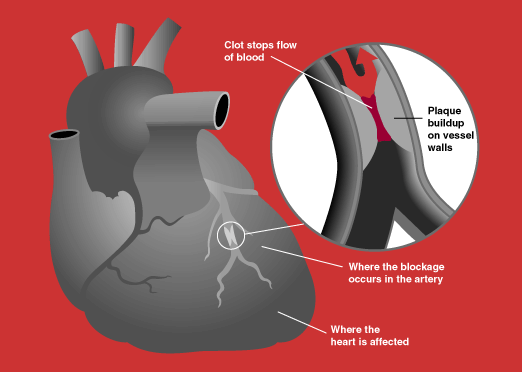
When a vulnerable plaque ruptures or undergoes erosion, exposure of thrombogenic material can initiate platelet activation, coagulation, and intraluminal thrombus formation; progressive thrombotic obstruction may produce myocardial infarction. The clinical importance of this mechanism is demonstrated by registry data identifying 100% acute stenosis as acute coronary occlusion (ACO), including in patients classified as NSTEMI. [387] ACO may occur without diagnostic ST-segment elevation, indicating that the electrocardiographic STEMI/NSTEMI framework does not capture every biologic occlusion event. [377][387]
The OMI/NOMI framework is therefore mechanistically relevant: it focuses on acute coronary occlusion or nonocclusion rather than relying exclusively on diagnostic ST-segment elevation. [377] Invasive assessment may additionally be complicated by uncertainty about the culprit lesion, particularly in patients with multiple stenoses; a prospective registry specifically evaluated fractional-flow-reserve (FFR) adherence in patients with clear versus ambiguous culprit lesions. [392] FFR-guided decision-making in ACS remains an area of uncertainty because the acute ischemic and inflammatory milieu may alter lesion physiology; an updated Bayesian meta-analysis compared FFR-guided strategies in ACS with chronic coronary disease and with angiography-guided management. [397]
Ischemia, microvascular dysfunction, and myocardial injury
Epicardial obstruction is only one component of ischemic injury. Coronary microvascular dysfunction can limit tissue perfusion despite restoration of epicardial flow, and angiography-derived index of microcirculatory resistance (IMR) has been studied after PCI in older patients with NSTE-ACS. [388] This supports a pathophysiologic continuum in which distal embolization, endothelial dysfunction, microvascular obstruction, and impaired myocardial reperfusion may sustain ischemia after treatment of the culprit lesion. [388][398]
Intracoronary imaging provides mechanistic information beyond angiography. The SPECTRUM study used high-definition intravascular ultrasound before PCI, after PCI, and after optimization in STEMI, reflecting the importance of plaque morphology, lesion expansion, apposition, and residual procedural disease in determining post-intervention vessel behavior. [398] Conversely, the COMBI-LLT-ACS trial directly compared ezetimibe with alirocumab in patients who remained above the LDL-cholesterol target despite intensive statin therapy, testing whether more intensive lipid lowering could modify vulnerable plaque. [395]
Cellular stress and systemic modifiers
Mitochondrial dysfunction may contribute to ACS through impaired cellular energy handling and redox homeostasis. An observational study comparing ACS, stable angina, and non-obstructive coronary arteries assessed mitochondrial DNA copy number and genes involved in mitochondrial biogenesis and mitophagy, including PGC-1α, TFAM, and PINK1. [399] These findings frame mitochondrial homeostasis as a potential link between systemic cellular stress and acute coronary presentation, although the observational design does not establish causality. [399]
Metabolic and vascular-cell mechanisms may also influence later coronary complications. In patients with ACS treated with drug-eluting stents, the triglyceride-glucose index and bilirubin were evaluated as predictors of in-stent restenosis; exploratory experiments examined high-glucose/high-triglyceride exposure in endothelial and vascular smooth-muscle cells and investigated bilirubin-related pathways. [400] These data connect insulin-resistance-related metabolic stress, endothelial dysfunction, smooth-muscle-cell behavior, and neointimal disease, while remaining primarily prognostic and exploratory evidence. [400]
Electrical, structural, and systemic consequences
Ischemia and infarction alter myocardial electrical stability, atrial and ventricular mechanics, and autonomic balance. Atrial fibrillation is common in ACS and is associated with increased morbidity and mortality; a contemporary cohort evaluated its relationship with hospitalization after ACS. [402] After STEMI, left-atrial volumetric/mechanical coupling, incorporating left-atrial volume and mitral-annular tissue velocity, was studied as a marker of susceptibility to new atrial fibrillation. [401] Early rhythm control improved cardiovascular outcomes in patients with AF in the EAST-AFNET 4 population, including patients with cancer history, although this evidence concerns management of a complication rather than the initiating coronary mechanism. [379] Integrated ABC-pathway management delivered through digital or telehealth-supported care reduced adverse outcomes in pooled AF trial data, further illustrating how comorbid rhythm and vascular risk interact after ACS. [396]
Systemic vulnerability modifies recovery and prognosis. Sarcopenia was prospectively evaluated as a predictor of mortality and recurrent coronary events after ACS, linking reduced muscle strength and mass with adverse outcomes. [405] Smoking cessation during cardiac rehabilitation was associated with a substantial reduction in smoking prevalence over one year and was accompanied by clinical, laboratory, and instrumental follow-up. [406] In patients with heart failure with preserved ejection fraction and obstructive sleep apnea, a multivariable model was developed to predict long-term ACS risk, highlighting the contribution of sleep-disordered breathing and cardiometabolic comorbidity to coronary risk. [389] Non-invasive myocardial-work indices—including global work index, constructive work, wasted work, and work efficiency—have been synthesized as markers of myocardial performance and outcome across cardiac diseases, including ACS. [407]C
Mechanistic synthesis
ACS is therefore best understood as the convergence of vulnerable plaque biology, acute thrombosis or occlusion, impaired microvascular reperfusion, myocardial energy and redox stress, and systemic inflammatory, metabolic, rhythm, and functional modifiers. [395][377][387][388][399][403][404] These mechanisms explain why a patient may have severe ischemia with limited visible stenosis, why occlusion may occur without diagnostic ST elevation, and why outcomes remain dependent on both culprit-lesion treatment and the residual vascular and systemic disease substrate. [377][387][395][398]
| Domain | Mechanism or evidence | References |
|---|---|---|
| Plaque vulnerability | Lipid-related plaque instability, inflammation, oxidative stress, and matrix remodeling | [395][403][408] |
| Occlusion and thrombosis | Acute 100% stenosis may occur with or without diagnostic ST elevation | [377][387] |
| Microvascular injury | Persistent microvascular dysfunction may limit reperfusion after PCI | [388][398] |
| Cellular stress | Altered mitochondrial DNA copy number and mitochondrial biogenesis/mitophagy pathways | [399] |
| Systemic modifiers | Metabolic dysfunction, inflammation, AF, sarcopenia, smoking, and sleep apnea influence risk or prognosis | [389][400][402][404][405][406] |
Clinical Presentation
- ▸A substantial minority of patients with NSTE-ACS have an angiographically documented culprit occlusion, estimated at **25%–34%** in the cited cohort. [411]
- ▸Absence of diagnostic ST-segment elevation does not exclude acute coronary occlusion or clinically important ischemia. [377][387]
- ▸Angiographic OMI has been defined as **>90% culprit-vessel stenosis** with TIMI flow **0–2**, whereas registry-defined ACO used **100% acute stenosis**. [387][411]
- ▸Serial troponin kinetics may have limited ability to distinguish angiographic OMI from nonocclusive disease. [411]
- ▸Food-associated Kounis syndrome and cardiac myxoma–related coronary embolization are important contextual causes of ACS presentations. [382][410]
- ▸High-sensitivity point-of-care troponin devices may return results in **<20 minutes**, but performance differs between assays and requires clinical interpretation. [386]
Overview
Acute coronary syndrome (ACS) is a clinical spectrum that includes unstable angina, non-ST-segment-elevation myocardial infarction (NSTEMI), and ST-segment-elevation myocardial infarction (STEMI). Contemporary evidence indicates that the conventional STEMI/NSTEMI classification does not identify every patient with an acute coronary occlusion (ACO), because some patients with angiographically documented occlusion present without diagnostic ST-segment elevation (STE). [377][387] In catheterized patients with non-ST-segment-elevation ACS (NSTE-ACS), angiographically defined occlusion has been reported in approximately 25%–34% of cases. [411]C
Symptoms and associated features
Acute chest pain remains a common emergency-department presentation requiring rapid assessment for ACS. [409]C Clinical evaluation should integrate the presenting history with electrocardiography, age, cardiovascular risk factors, and cardiac troponin, which are the components of the HEART risk score used for structured assessment of suspected ACS. [409]C The available evidence does not support relying on the absence of diagnostic STE alone to exclude clinically important coronary occlusion. [377][387]
ACS may also occur in less typical clinical contexts. Food-associated Kounis syndrome is a hypersensitivity-related ACS in which cardiovascular symptoms and objective coronary involvement occur temporally after exposure to a food or food-derived trigger; the presentation may be confused with nonimmune toxic food reactions. [382] Cardiac myxoma can produce embolic complications that include ACS, as well as stroke, limb ischemia, and visceral infarction. [410] These mechanisms should be considered when the presentation is temporally related to an allergic or food exposure or when ACS occurs with features suggesting systemic or peripheral embolization. [382][410]
Electrocardiographic and occlusion-focused presentation
The absence of diagnostic STE does not reliably distinguish nonocclusive myocardial infarction from acute coronary occlusion. [377][387] An occlusion-focused approach, including the broader occlusive myocardial infarction (OMI)/nonocclusive myocardial infarction (NOMI) framework, has been proposed because guideline-defined very-high-risk NSTEMI criteria may be inconsistently applied and may not capture all patients requiring immediate invasive management. [377] In the CathPCI Registry, NSTEMI with ACO was defined as 100% acute stenosis, allowing comparison with STEMI and NSTEMI without occlusion. [387]
Angiographic OMI has also been defined using a stricter combined criterion of more than 90% culprit-vessel stenosis with Thrombolysis in Myocardial Infarction flow grade 0, 1, or 2. [411]C This distinction is clinically important because early serial troponin measurements may have limited ability to discriminate angiographically defined OMI among patients with NSTE-ACS. [411]C Thus, evolving symptoms, ischemic ECG abnormalities that do not meet STEMI criteria, and overall clinical instability should not be discounted solely because initial or serial troponin findings are nondiagnostic. [377][411]C
Biomarker and inflammatory context
High-sensitivity cardiac troponin remains central to emergency evaluation of suspected ACS, while high-sensitivity point-of-care assays may provide results in less than 20 minutes. [386] However, diagnostic performance varies among currently available point-of-care devices, and test results must be interpreted within the clinical and ECG context. [386] Heart-type fatty acid-binding protein is released rapidly after myocardial injury and has been evaluated as a prognostic biomarker in confirmed or suspected ACS, although its precise role is not established by the available evidence. [385]
Inflammatory or hematologic changes may accompany ACS. In patients with rheumatoid arthritis, acute-phase complete blood counts were obtained within 24 hours after symptom onset to evaluate changes in CBC-derived inflammatory indices relative to prior measurements; this reflects the potential for acute inflammatory changes to coexist with ACS in a high-risk inflammatory disease population. [384] Environmental and metabolic factors may also characterize the presenting patient: higher plasma arsenic and lead exposure was associated with ACS risk, whereas zinc and selenium showed inverse associations in a matched case-control study. [412]
Unstable angina and clinical heterogeneity
Unstable angina remains a clinically relevant ACS presentation despite generally being regarded as less severe than myocardial infarction. A ten-year observational comparison specifically evaluated unstable angina, NSTEMI, and STEMI, demonstrating that long-term prognosis is an important consideration even when presentation does not include biomarker-defined infarction. [415] Overall, ACS presentation is heterogeneous and may include conventional chest pain, atypical or trigger-associated syndromes, embolic coronary events, and myocardial infarction without diagnostic STE. [377][382][387][410][415]
| Presentation or context | Clinical implication |
|---|---|
| NSTE-ACS without diagnostic STE | Does not exclude ACO or OMI. [377][387] |
| Angiographic OMI | >90% culprit stenosis with TIMI flow 0–2. [411]C |
| Registry-defined NSTEMI-ACO | 100% acute stenosis. [387] |
| Food-associated symptoms or allergic context | Consider hypersensitivity-associated Kounis syndrome. [382] |
| Embolic or multisystem features | Consider cardiac myxoma–related coronary embolization. [410] |
| Suspected ACS requiring rapid triage | Combine history, ECG, age, risk factors, and troponin; HEART score uses these domains. [409]C |
Diagnosis and Workup
- ▸High-sensitivity cardiac troponin with sex-specific 99th percentile thresholds is the preferred biomarker; a single value below the limit of detection at presentation rules out MI with >99% NPV.
- ▸The ESC 0-hour/1-hour algorithm using absolute troponin changes provides rapid triage into rule-out, observe, or rule-in zones with high sensitivity and specificity.
- ▸Coronary angiography remains the gold standard for confirming obstructive coronary thrombosis, but initial diagnosis relies on ECG and serial hs-cTn measurements.
The diagnosis of acute coronary syndrome rests on a triad: ischemic symptoms, electrocardiographic changes, and cardiac troponin elevation. No single element is sufficient; the combination, interpreted in clinical context, drives the diagnosis [2]A1c[7]A1c.
History and Physical
Chest pain characteristics remain the starting point. The classic description is substernal pressure, squeezing, or heaviness radiating to the left arm, neck, or jaw, often provoked by exertion and relieved by rest or nitroglycerin [32]B2a. However, atypical presentations, epigastric discomfort, dyspnea, nausea, or fatigue, are common, especially in women, older adults, and patients with diabetes [98]D5[223]D5. The physical examination focuses on signs of hemodynamic instability (hypotension, tachycardia, cool extremities), heart failure (jugular venous distention, crackles, S3 gallop), and mechanical complications (new murmur). The clinical examination alone has limited diagnostic accuracy: the pooled likelihood ratio for a "typical" history is only 2.0 (95% CI 1.6-2.5) [32]B2a. Thus, objective testing is mandatory.
Gold-Standard Test
Coronary angiography with possible (intravascular ultrasound or optical coherence tomography) is the gold standard for confirming the presence of obstructive coronary thrombosis and identifying the culprit lesion [2]A1c[49]D5. Angiography defines the coronary anatomy and guides revascularization. However, the initial diagnosis is made noninvasively using the ECG and high-sensitivity cardiac troponin (hs-cTn) assays.
Laboratory Studies
High-sensitivity cardiac troponin I or T is the preferred biomarker [2]A1c[35]D5. The 2021 AHA/ACC chest pain guideline and the 2025 ACC/AHA ACS guideline endorse the use of hs-cTn with sex-specific 99th percentile upper reference limits (URL) to define myocardial injury [4]A1c[9]A1c[220]D5. A single hs-cTn concentration below the limit of detection (e.g., <5 ng/L for hs-cTnI) at presentation has a negative predictive value (NPV) >99% for 30-day major adverse cardiac events, allowing immediate rule-out in low-risk patients [33]A1a[228]B2b. Serial measurements are required when the initial value is elevated or indeterminate. The ESC 0-hour/1-hour algorithm uses absolute changes (Δ) from 0 to 1 hour to triage patients into rule-out, observe, or rule-in zones [34]D5[221]D5.
| ESC 0h/1h Algorithm | hs-cTnT (ng/L) | hs-cTnI (ng/L) |
|---|---|---|
| Rule-out | 0h <12 AND Δ <3 | 0h <5 AND Δ <2 |
| Rule-in | 0h ≥52 OR Δ ≥5 | 0h ≥64 OR Δ ≥6 |
| Observe | All others | All others |
This algorithm achieves a sensitivity of 96-99% and NPV of 99-100% for acute myocardial infarction [221]D5[230]B2b. In patients with known coronary artery disease, the rule-out performance remains high (NPV 99.2%) [230]B2b. For patients with renal impairment, eGFR-specific thresholds may improve diagnostic accuracy; a single hs-cTnI <9 ng/L in patients with eGFR <60 mL/min/1.73 m² has an NPV of 98.5% [240]B2b.
Other biomarkers, such as copeptin, have been studied but are not routinely recommended [35]D5. Lipoprotein(a) and inflammatory markers (e.g., hs-CRP) provide prognostic information but are not diagnostic [194]B2b[235]B2b.
Imaging
Electrocardiography is the first-line imaging test and must be obtained within 10 minutes of first medical contact [2]A1c. ST-segment elevation ≥1 mm in two contiguous limb leads or ≥2 mm in two contiguous precordial leads defines STEMI. New left bundle branch block is also considered a STEMI equivalent. ST depression or T-wave inversion suggests NSTEMI or unstable angina. A normal ECG does not exclude ACS; up to 5% of patients with a normal ECG have an acute MI [32]B2a.
Coronary computed tomographic angiography (CCTA) is an alternative for low-to-intermediate-risk patients in the emergency department. In the ROMICAT II trial, CCTA reduced length of stay and increased direct discharge from the ED compared with standard care [18]A1b. CCTA has a NPV of 99% for ACS when no coronary stenosis ≥50% is found [18]A1b[224]D5.
Echocardiography is useful to assess regional wall motion abnormalities, left ventricular function, and mechanical complications. It can also help differentiate (apical ballooning) from anterior STEMI [225]B3b.
Invasive imaging (intravascular ultrasound, optical coherence tomography) is reserved for ambiguous angiographic findings or to characterize plaque morphology (e.g., plaque erosion vs. rupture) [49]D5[222]C4.
Diagnostic Algorithm
Step 1: Obtain a 12-lead ECG within 10 minutes of presentation. If ST-segment elevation or new LBBB is present, activate the catheterization laboratory for primary PCI [2]A1c. Step 2: Measure hs-cTn at presentation (0 hour). If the patient is low-risk (HEART score ≤3, no ischemic ECG changes) and hs-cTn is below the limit of detection, consider immediate discharge with outpatient follow-up [13]A1b[33]A1a. Step 3: If the initial hs-cTn is elevated or the patient is intermediate/high-risk, repeat hs-cTn at 1 hour (or 2-3 hours if using a 0/2- or 0/3-hour protocol). Apply the ESC 0/1-hour algorithm or a validated accelerated diagnostic protocol (e.g., ADAPT, HEART pathway) [45]B2b[221]D5. Step 4: If the algorithm indicates "rule-in," proceed to coronary angiography. If "observe," continue serial troponin measurements and consider stress testing or CCTA [4]A1c. Step 5: In patients with a confirmed diagnosis of NSTEMI or unstable angina, risk stratify using the 2.0 score to guide the timing of invasive strategy (early <24 hours vs. delayed) [2]A1c[96]A1a.
Differential Diagnosis
The differential for suspected ACS includes conditions that cause chest pain and troponin elevation without obstructive coronary thrombosis:
- Takotsubo (stress) cardiomyopathy: Presents with acute chest pain, ST-segment elevation, and troponin elevation, but coronary angiography shows no obstructive disease. The InterTAK Diagnostic Score (female sex, emotional trigger, physical trigger, absence of ST depression, etc.) helps differentiate [29]B3b[59]B2b. Machine learning applied to echocardiography also shows promise [225]B3b.
- : Often preceded by a viral prodrome; diffuse ST elevation, elevated troponin, and normal coronary arteries. Cardiac MRI with late gadolinium enhancement is diagnostic.
- Pulmonary embolism: Can cause chest pain, dyspnea, and troponin elevation due to right ventricular strain. ECG may show S1Q3T3 pattern; D-dimer and CT are key.
- Type 2 myocardial infarction: Myocardial injury due to supply-demand mismatch (e.g., sepsis, tachyarrhythmia, severe ) without acute atherothrombosis. The distinction from type 1 MI requires clinical judgment [38]D5[62]D5.
- Kounis syndrome: Allergic acute coronary syndrome triggered by hypersensitivity reactions (e.g., drugs, food, insect stings). Presents with chest pain, ST changes, and troponin elevation in the setting of an allergic reaction [231]C4.
- (SCAD): More common in young women; angiography shows a characteristic intramural hematoma or intimal flap without atherosclerosis [5]D5.
- Aortic dissection: Severe tearing chest pain radiating to the back, often with pulse deficits or . ECG may show nonspecific changes; CT angiography is diagnostic.
Pearl: The combination of a normal or non-ischemic ECG and a single hs-cTn below the limit of detection (e.g., <5 ng/L) at presentation identifies a very-low-risk group with an NPV >99% for 30-day MACE, enabling safe early discharge without serial testing [33]A1a[228]B2b.
Severity Staging and Risk Stratification
- ▸NSTEMI without diagnostic ST elevation can conceal acute coronary occlusion; OMI/NOMI assessment and very-high-risk NSTEMI criteria address complementary aspects of urgent triage. [377][387]
- ▸GRACE 2.0 remains a core NSTE-ACS risk framework, while CT-derived plaque burden may provide incremental intermediate-term prognostic information. [416]
- ▸Risk enrichment can include H-FABP, SII, CTI, lipoprotein(a), renal-function estimates, atrial fibrillation, and established clinical risk scores, but newer biomarkers should not replace validated emergency assessment. [385][418][414][423][420][402]
- ▸Older age, post-PCI microvascular dysfunction, heart failure with preserved ejection fraction with obstructive sleep apnea, and multidomain phenotypes identify populations requiring closer follow-up. [388][389][425]
- ▸After PCI, **≤1-month DAPT** is the ultrashort strategy evaluated against standard-duration DAPT; treatment decisions must balance MACCE, bleeding, and net clinical outcomes. [376]
- ▸Risk stratification should continue after discharge through secondary prevention and cardiac rehabilitation, which has been evaluated against mortality, cardiovascular events, and readmissions. [417]
Scope of severity assessment
Acute coronary syndrome (ACS) severity should be assessed across several domains rather than by the presenting electrocardiographic label alone: ischemic risk, likelihood of acute coronary occlusion, myocardial injury, hemodynamic or ventricular compromise, comorbidity burden, bleeding risk, and anticipated benefit from invasive treatment. Contemporary evidence indicates that patients classified as non-ST-segment elevation myocardial infarction (NSTEMI) may still have an acute coronary occlusion (ACO), making risk assessment clinically distinct from simple STEMI versus NSTEMI categorization. [377][387]
Initial ischemic and occlusion risk
Patients with diagnostic ST-segment elevation remain in the highest-priority reperfusion pathway, but absence of diagnostic ST elevation does not exclude an occluded infarct-related artery. In the DIFOCCULT-3 substudy, an occlusion-focused myocardial infarction/nonocclusion myocardial infarction (OMI/NOMI) framework was directly compared with guideline-defined very-high-risk NSTEMI criteria for identifying ACO in patients without diagnostic ST elevation. [377] CathPCI Registry data likewise specifically identified NSTEMI patients undergoing PCI with ACO despite the absence of conventional STEMI criteria and compared them with STEMI and NSTEMI without ACO, using in-hospital stroke, myocardial infarction, or cardiovascular death as the composite outcome. [387] These findings support urgent expert review of ischemic symptoms, dynamic ECG changes, biomarker evolution, ventricular function, and clinical instability even when the initial ECG does not meet STEMI criteria. [377][387]
For NSTE-ACS, GRACE 2.0 remains a guideline-supported framework for orienting therapeutic strategy and prognostic assessment. [416] A prospective cohort study evaluated whether coronary atherosclerotic plaque burden on computed tomography (CT) adds prognostic information to GRACE 2.0 for intermediate-term outcomes, with separate development and validation cohorts. [416] CT-enhanced assessment may therefore be useful when the clinical presentation remains intermediate risk, although the evidence described is prognostic rather than a replacement for emergency assessment of suspected occlusion. [416]
Biomarker and clinical risk enrichment
Risk stratification should incorporate the magnitude and context of myocardial injury rather than relying on a single biomarker result. Heart-type fatty acid-binding protein (H-FABP) is released rapidly after myocardial injury; a systematic review and meta-analysis evaluated its prognostic associations with all-cause mortality, major adverse cardiovascular events (MACE), heart-failure hospitalization, and recurrent myocardial infarction in confirmed or suspected ACS. [385] Admission systemic immune-inflammation index (SII), calculated from the complete blood count, was prospectively evaluated for 30-day MACE in patients with ACS or acute decompensated heart failure and for incremental value beyond established biomarkers and clinical risk scores. [418]
Additional risk enrichment may be obtained from metabolic, inflammatory, renal, and lipid variables. In patients with ACS and type 2 diabetes, the C-reactive protein-triglyceride-glucose index (CTI) integrates inflammation, lipid metabolism, and glucose metabolism and was evaluated for MACCE beyond conventional variables and its component measures. [414] Lipoprotein(a) was assessed in a 300-patient ACS cohort for association with 1-year MACE, predictive performance, incremental prognostic value, and clinical utility. [423] In a case-control study, plasma zinc and selenium were inversely associated with ACS risk, whereas arsenic and lead showed positive associations; ordinal logistic regression also evaluated associations with ACS severity. [412] These environmental-metal findings are hypothesis-generating for clinical stratification and should not supersede validated bedside scores. [412]
Renal dysfunction is an important determinant of prognosis after PCI for ACS. A retrospective PCI cohort compared creatinine-based and cystatin-C-based estimated glomerular filtration rate equations for prediction of 1-year MACE, highlighting that the selected equation may influence risk classification. [420] Atrial fibrillation was associated with increased cardiovascular hospitalization in a contemporary ACS cohort followed for at least 1 year, supporting its inclusion among clinically relevant comorbidities. [402] In Japanese real-world data, recurrent cardiovascular risk was quantified across ACS and chronic coronary syndrome phenotypes using composites including death, myocardial infarction, stroke, unstable-angina hospitalization, heart-failure hospitalization, and emergent or repeat coronary intervention. [422]
Procedural, structural, and long-term risk
Among adults aged ≥75 years with NSTE-ACS undergoing PCI, angiography-derived index of microcirculatory resistance was examined in relation to a composite of death, myocardial infarction, revascularization, hospital readmission, or heart-failure events, emphasizing the prognostic relevance of post-PCI microvascular dysfunction in older patients. [388] Heart failure with preserved ejection fraction complicated by obstructive sleep apnea represents another high-risk phenotype for which a multivariate machine-learning model was developed and externally validated for long-term ACS prediction. [389] In a large emergency-department chest-pain cohort, increasingly flexible models using the same five HEART components—History, ECG, Age, Risk factors, and Troponin—were compared with the conventional fixed-point HEART score in development and geographically held-out validation data. [421]
Long-term mortality after ACS may reflect multidomain phenotypes. A single-center cohort used mixed-data phenomapping and compared additive frameworks, including AAR-3, CARE-4, and ACEF, in a common complete-case cohort. [425] These exploratory models may help identify risk-enriched phenotypes, but their single-center observational basis limits immediate generalization. [425]
Treatment-related risk balance
Bleeding and ischemic risks must be assessed together when determining antiplatelet duration after PCI. A 2026 meta-analysis of randomized trials compared ultrashort DAPT (≤1 month) followed by antiplatelet monotherapy with standard-duration DAPT in ACS patients undergoing PCI; prespecified analyses examined ethnicity and intensive versus moderate abbreviation strategies, with MACCE, major bleeding, and net adverse clinical events as primary outcomes. [376] The evidence is therefore directly relevant to selecting therapy according to competing ischemic and bleeding risk, but duration should remain individualized rather than inferred from ischemic severity alone. [376]
Cardiac rehabilitation is a post-ACS risk-modifying component: the CROS-III update synthesized randomized and controlled cohort evidence, with total mortality as the main endpoint and cardiovascular mortality, nonfatal cardiovascular events, and readmissions as additional outcomes. [417]C Taken together, staging should be dynamic, reassessed after angiography and PCI, and extended beyond discharge to secondary prevention and rehabilitation. [376][388][417]C
| Domain | Evidence-informed considerations |
|---|---|
| Occlusion/ischemia | OMI/NOMI classification, very-high-risk NSTEMI criteria, ECG and clinical instability; NSTEMI may include ACO. [377][387] |
| Validated clinical risk | GRACE 2.0 for NSTE-ACS; HEART-based assessment for emergency chest pain. [416][421] |
| Imaging/anatomy | CT plaque burden may add prognostic information to GRACE 2.0; angiography-derived microcirculatory resistance is relevant after PCI in older patients. [416][388] |
| Injury/inflammation/metabolism | H-FABP, SII, CTI, lipoprotein(a), and renal-function estimates were evaluated as prognostic or risk-enrichment measures. [385][418][414][423][420] |
| Comorbidity/phenotype | Atrial fibrillation, HFpEF with obstructive sleep apnea, and multidomain phenotypes may identify higher-risk groups. [402][389][425] |
| Treatment balance | DAPT duration should consider ischemic, bleeding, and net clinical outcomes; ultrashort DAPT is defined as ≤1 month in the cited meta-analysis. [376] |
Acute and Initial Management
- ▸Use ECG and serial high-sensitivity troponin testing as the supported diagnostic foundation; tongue perfusion measures are not validated replacements. [430]
- ▸An AI ECG decision tree for post-arrest patients without ST elevation remains investigational and should not independently defer coronary evaluation. [429]
- ▸After ACS, the evidence compares standard **12-month** potent P2Y12-inhibitor DAPT, de-escalation to clopidogrel, and abbreviated DAPT followed by potent P2Y12 monotherapy; the supplied abstract does not establish universal superiority. [375]
- ▸Statin therapy reduces atherogenic lipids and inflammatory markers; the supplied evidence does not establish atorvastatin or rosuvastatin as universally superior. [431]
- ▸Consider early SGLT2 inhibitor initiation in appropriate patients with type 2 diabetes after ACS, recognizing that the evidence is observational. [434]
- ▸Arrange cardiac rehabilitation after ACS whenever clinically feasible. [417]
Scope of the available evidence
The supplied 2026 evidence supports updating antiplatelet strategy, lipid management, post-discharge prevention, cardiac rehabilitation, and selected diagnostic pathways, but it does not provide a complete protocol for emergency ACS care. In particular, the supplied abstracts do not report comparative outcome estimates for immediate aspirin, anticoagulation, oxygen, nitrates, analgesia, beta-blockers, fibrinolysis, or emergency coronary angiography; these interventions therefore cannot be specified or ranked from the permitted references.
Immediate assessment and diagnostic triage
Patients with suspected ACS should undergo structured clinical assessment with electrocardiography and serial high-sensitivity troponin testing; the diagnostic study supplied here used blinded adjudication incorporating serial high-sensitivity troponin measurements and ECG, but it does not establish a replacement for these modalities. [430]
For patients with out-of-hospital cardiac arrest who achieve return of spontaneous circulation, deciding whether to proceed to emergency coronary angiography is particularly difficult when ST-segment elevation is absent. A single-center retrospective study developed an artificial-intelligence-assisted, sequential ECG rule-based decision tree to identify patients in whom ACS was unlikely to be the arrest etiology; it included 329 patients in the development cohort and 71 in temporal validation. [429] Because the abstract supplied does not report discrimination, calibration, or clinical-outcome results, this tool should be regarded as investigational and should not independently defer angiography or other post-arrest evaluation. [429]
Tongue capillary-refill time and tongue imaging were evaluated as possible adjunctive markers in 208 emergency-department patients presenting with chest pain, with a separate 20-patient pilot assessing interobserver reliability. [430] The supplied evidence does not provide sufficient diagnostic-performance results to support their use for ACS rule-in or rule-out, and they should not replace ECG, serial troponin testing, or clinician assessment. [430]
Antiplatelet strategy after ACS
Potent P2Y12-inhibitor-based dual antiplatelet therapy remains the comparator or default strategy evaluated in a 2026 network meta-analysis of randomized trials. [375] The analysis compared three guideline-endorsed approaches: 12 months of potent P2Y12-inhibitor DAPT; short-term potent P2Y12-inhibitor DAPT followed by de-escalation to clopidogrel-based DAPT; and abbreviated DAPT followed by potent P2Y12-inhibitor monotherapy. [375] These strategies reflect the clinical trade-off between prevention of recurrent ischemic events and reduction of bleeding exposure. [375] The supplied abstract does not include the network estimates, confidence intervals, or subgroup results; therefore, it does not justify declaring one strategy universally superior. [375] Selection should be individualized according to ischemic risk, bleeding risk, procedural factors, treatment tolerance, and the timing of coronary intervention, while recognizing that abbreviated or de-escalated regimens require deliberate follow-up. [375]
Lipid-lowering treatment
A systematic review and meta-analysis of 15 studies, including 13 randomized trials and 2 observational studies, compared atorvastatin with rosuvastatin in ACS. [431] Outcomes were assessed at short-term follow-up (≤1 month) and long-term follow-up (>3 months) and included lipid parameters, inflammatory biomarkers, and clinical outcomes such as stroke, reinfarction, and death. [431] The supplied abstract indicates that statin therapy produces substantial reductions in total cholesterol, LDL cholesterol, and C-reactive protein, but it does not provide enough comparative data to establish atorvastatin or rosuvastatin as universally preferable. [431] High-intensity statin treatment should therefore be initiated or continued during the ACS episode unless contraindicated, with the specific agent selected according to the patient’s prior therapy, interactions, organ function, and formulary; the comparative superiority of either agent cannot be inferred from this abstract. [431]
Early secondary prevention and rehabilitation
In patients with type 2 diabetes and ACS, early sodium-glucose cotransporter-2 inhibitor initiation at hospital discharge was associated with improved cardiovascular outcomes in a single-center retrospective cohort study; the study compared initiation at discharge with later initiation or no initiation. [434] Because this was observational evidence and the supplied abstract does not provide adjusted effect estimates, treatment should be considered according to established diabetes, renal, heart-failure, volume-status, and safety indications rather than prescribed solely because of ACS. [434]
Cardiac rehabilitation is an important post-ACS intervention. The CROS-III update included 40 studies, with 29 studies and 308,514 patients eligible for meta-analysis; total mortality was the principal endpoint, with cardiovascular mortality, nonfatal cardiovascular events, and readmissions as additional outcomes. [417]C Referral should be arranged before discharge when feasible, with participation adapted to clinical stability, revascularization status, ventricular function, comorbidity, and access. [417]C
Prognostic markers and non-actionable findings
Admission hepatic-fibrosis indices were studied as predictors of in-hospital mortality and cardiogenic shock across STEMI, NSTEMI, and unstable angina, but they are prognostic markers rather than validated triggers for acute treatment. [438] Similarly, the C-reactive-protein–triglyceride–glucose index was associated with adverse outcomes in patients with ACS and type 2 diabetes in a single-center observational cohort of 5,472 patients, but it should not replace established risk assessment. [414] Other supplied studies address AF integrated care, hip-fracture anesthesia, ANOCA microvascular resistance, cardiac myxoma embolization, childhood-cancer-related ischemic disease, vasculitis, COPD/OSA, mitochondrial biology, romosozumab safety, leukotriene genetics, and left-main PCI outside ACS; they do not establish acute ACS management recommendations. [426][427][428][410][419][432][435][399][436][437][433]C
| Domain | Evidence-informed action | Important limitation |
|---|---|---|
| Diagnosis | ECG and serial high-sensitivity troponin; clinical assessment | Novel tongue measures lack sufficient validation [430] |
| Post-arrest triage | AI-assisted ECG tools may support research evaluation | Do not use alone to defer angiography; single-center retrospective evidence [429] |
| DAPT | Individualize among standard, de-escalated, and abbreviated strategies | Comparative network estimates were not supplied [375] |
| Lipid lowering | Initiate or continue high-intensity statin therapy unless contraindicated | No universal atorvastatin-versus-rosuvastatin winner established [431] |
| Secondary prevention | Consider SGLT2 inhibitor at discharge when otherwise indicated; refer to cardiac rehabilitation | SGLT2 evidence is observational; rehabilitation evidence is heterogeneous [434][417]C |
Long-term Guideline-Directed Therapy
- ▸Contemporary evidence compares standard **12-month** potent P2Y12 inhibitor-based DAPT with clopidogrel de-escalation and abbreviated DAPT followed by potent P2Y12 inhibitor monotherapy [375].
- ▸In ACS patients undergoing drug-coated-balloon-only treatment, one studied stepwise regimen was **1 month** of aspirin plus ticagrelor, **5 months** of ticagrelor monotherapy, and **6 months** of aspirin monotherapy [378].
- ▸High-intensity statin therapy remains the cornerstone of post-ACS lipid management; studied doses were atorvastatin **80 mg daily** or rosuvastatin **40 mg daily** [393].
- ▸Perioperative DAPT decisions after PCI require balancing thrombotic events against major bleeding, including BARC type **≥3** bleeding [443].
- ▸Early follow-up should include lipid reassessment and attention to psychosocial distress, socioeconomic determinants, and metabolic risk [394][446][449].
Antiplatelet strategy after ACS
Potent P2Y12 inhibitor-based dual antiplatelet therapy (DAPT) remains the comparator strategy in contemporary randomized evidence, with 12 months of aspirin plus a potent P2Y12 inhibitor used as the standard regimen in the network meta-analysis by Wu et al. [375]. The same analysis evaluated two alternative, guideline-endorsed approaches: short-term potent P2Y12 inhibitor-based DAPT followed by de-escalation to clopidogrel-based DAPT, and abbreviated DAPT followed by potent P2Y12 inhibitor monotherapy [375]. Because the supplied abstract does not report the comparative effect estimates, these strategies should be presented as evidence-based options rather than ranked as universally superior. Selection should be individualized according to ischaemic risk, bleeding risk, procedural anatomy, treatment tolerance, and adherence [375].
A prespecified subgroup analysis of the REC-CAGEFREE II trial specifically examined patients with ACS and bifurcation lesions treated with drug-coated-balloon-only angioplasty [378]. The trial included 1,948 patients and compared stepwise de-escalation—1 month of aspirin plus ticagrelor, 5 months of ticagrelor monotherapy, and 6 months of aspirin monotherapy—with standard 12-month aspirin plus ticagrelor therapy [378]. Bifurcation and non-bifurcation groups were analysed separately, with inverse-probability-of-treatment weighting used to adjust for baseline imbalances [378]. This evidence is particularly relevant when no stent has been implanted, but the supplied abstract does not provide the subgroup outcome estimates; therefore, it should not be extrapolated automatically to conventional stent PCI or to patients with substantially different anatomical or clinical risk [378].
Long-term antiplatelet management must also account for planned or urgent surgery. The MARS registry evaluated perioperative outcomes in post-PCI patients receiving DAPT who underwent moderate- to high-risk surgery within 2 years of PCI [443]C. Its net adverse cardiovascular event endpoint included cardiovascular death, non-fatal myocardial infarction, ischaemic stroke, urgent coronary revascularization, or Bleeding Academic Research Consortium type ≥3 bleeding [443]C. The registry enrolled 132 consecutive patients and illustrates that perioperative decisions involve competing thrombotic and bleeding hazards; the available abstract does not establish a single interruption or continuation policy [443]C.
Lipid-lowering therapy and LDL-cholesterol follow-up
High-intensity statin therapy is identified as the cornerstone of post-ACS lipid management in contemporary observational evidence [393]. A prospective real-world study enrolled 511 statin-naive patients after ACS and initiated atorvastatin 80 mg daily or rosuvastatin 40 mg daily as high-intensity monotherapy [393]. Lipid profiles were assessed at baseline and on days 7, 14, and 28, enabling early assessment of LDL-cholesterol response and target attainment [393]. The abstract provided does not report the final target-attainment results, so treatment intensification should not be inferred from this study alone.
A separate real-world cohort examined early attainment of the guideline-recommended LDL-cholesterol target after a first ACS in adults undergoing PCI between January 2025 and April 2026, with particular attention to baseline lipoprotein(a) [394]C. These data support early lipid reassessment and recognition that baseline Lp(a) may be clinically relevant when interpreting residual risk or incomplete LDL-cholesterol target attainment; however, the supplied abstract does not provide the cohort’s effect estimates or a validated Lp(a)-guided treatment algorithm [394]C.
Integrated secondary prevention and follow-up
The evidence supplied does not provide outcome-tested ACS-specific protocols for exercise, smoking cessation, diabetes management, blood-pressure treatment, cardiac rehabilitation, or routine psychosocial intervention. Cardiovascular disease-related distress has been prospectively assessed in patients with ACS and is influenced by psychosocial and socioeconomic determinants, supporting assessment of these factors during longitudinal care [446]. Acute-phase insulin resistance has also been studied in patients with ACS without known diabetes, but the available evidence concerns in-hospital cardiovascular complications rather than a validated long-term treatment pathway [449].
Accordingly, follow-up should verify antiplatelet adherence and bleeding, review the need for procedural or perioperative modification, repeat lipid testing early after discharge, and address psychosocial and metabolic risk factors. The cited evidence supports structured reassessment, but the supplied abstracts do not justify a single universal duration of DAPT or a specific non-statin escalation sequence for every patient [375][378][393][394]C[443]C[446][449].
| Clinical context | Regimen or follow-up evaluated | Evidence limitations |
|---|---|---|
| General ACS | Standard 12-month aspirin plus potent P2Y12 inhibitor; clopidogrel de-escalation; or abbreviated DAPT followed by potent P2Y12 monotherapy | Supplied abstract does not report comparative effect estimates [375] |
| ACS with bifurcation lesion and drug-coated-balloon-only angioplasty | 1 month aspirin plus ticagrelor, 5 months ticagrelor monotherapy, then 6 months aspirin monotherapy versus 12 months aspirin plus ticagrelor | Subgroup evidence; outcome estimates not supplied [378] |
| Post-ACS lipid management | Atorvastatin 80 mg daily or rosuvastatin 40 mg daily, with lipid testing through day 28 | Observational evidence; reported target-attainment results not supplied [393] |
| Post-PCI patient requiring surgery | Individualized perioperative assessment of ischemic and bleeding risk | Registry evidence; no universal interruption policy established [443]C |
Interventional and Device Therapy
- ▸Complete revascularization, rather than culprit-only PCI, reduces cardiovascular death and MI in ACS patients with multivessel disease (NNT = 38).
- ▸Intravascular ultrasound (IVUS) guidance during PCI reduces target-vessel failure compared to angiography alone (NNT = 42).
- ▸Antiplatelet de-escalation to P2Y12 inhibitor monotherapy after short-term DAPT (1-3 months) reduces bleeding without increasing ischemic events in high-bleeding-risk patients.
Revascularization decisions in ACS are guided by the electrocardiographic presentation, the presence of multivessel disease, lesion complexity, and the patient's bleeding and ischemic risk. The 2025 ACC/AHA guideline provides the contemporary framework for these decisions [2]A1c[7]A1c.
Step 1: Determine the Timing and Strategy of Coronary Angiography
STEMI: Primary percutaneous coronary intervention (PCI) is the default reperfusion strategy for patients presenting within 12 hours of symptom onset and should be performed with a door-to-balloon time ≤90 minutes (Class I) [2]A1c[7]A1c. For patients presenting >12 hours with ongoing symptoms or hemodynamic instability, urgent angiography remains indicated. For NSTEMI, an early invasive strategy (within 24 hours) is recommended for high-risk patients (e.g., dynamic ECG changes, elevated troponin, >140) (Class I) [2]A1c. A meta-analysis of 7 RCTs confirmed that an early invasive strategy in NSTE-ACS reduced recurrent ischemia (RR 0.72, 95% CI 0.62-0.84; NNT = 20) compared to a delayed approach, with no difference in all-cause mortality [315]A1a (1a).
Step 2: Complete Revascularization in Multivessel Disease
In patients with ACS and multivessel coronary artery disease, a strategy of complete revascularization is superior to culprit-only PCI. This is based on a network meta-analysis of 8 RCTs (N=7,807) showing that complete revascularization reduces cardiovascular death and MI (HR 0.74, 95% CI 0.61-0.89; NNT = 38) [73]A1a (1a). The timing, either during the index procedure (immediate) or as a staged procedure within 45 days, appears equally effective for hard endpoints (BIOVASC trial) [275]A1b (1b). For left main disease, PCI is a class IIa alternative to in patients with SYNTAX score ≤22, but the 5-year pooled analysis of 4 RCTs showed no significant interaction with ACS presentation (P-interaction = 0.39) [337]A1a (1a).
Step 3: Guidance Modalities During PCI
Intravascular imaging (IVUS or OCT) reduces target-vessel failure in complex PCI. The IVUS-ACS trial (N=2,452) showed that IVUS-guided PCI in ACS patients reduced the composite of cardiac death, target-vessel MI, or ischemia-driven revascularization at 1 year compared to angiography alone (4.7% vs 7.1%; HR 0.65, 95% CI 0.47-0.91; NNT = 42) [23]A1b (1b). A network meta-analysis of 23 RCTs confirmed that both IVUS and OCT-guided PCI were associated with lower MACE than angiography guidance alone [177]A1a (1a). When is not available, quantitative flow ratio (QFR) is a wire-free alternative to fractional flow reserve (FFR) for assessing intermediate lesions, with non-inferior clinical outcomes (FAVOR III Europe) [24]A1b (1b).
Step 4: Drug-Eluting Stent Selection
Contemporary drug-eluting stents (DES) remain the standard of care. A dedicated ACS trial (TIDES-ACS) reported similar 5-year outcomes between titanium-nitride-oxide-coated stents and everolimus-eluting stents (9.9% vs 10.3% composite endpoint; P=0.79) [123]A1b (1b). Drug-coated balloons (DCB) are an emerging alternative for in-stent restenosis and de novo small-vessel disease, offering the advantage of avoiding permanent metallic implantation [181]D5 (level 5).
Step 5: Post-Procedural Monitoring and Disposition
Same-day discharge after PCI is safe in select low-risk patients undergoing transradial access with uncomplicated procedures. A meta-analysis of 37 studies (N=12,803) found no difference in death, MI, or TLR between same-day discharge and overnight observation (OR 0.79, 95% CI 0.54-1.14) [316]A1a (1a). However, most ACS patients warrant at least 24 hours of telemetry monitoring for arrhythmia or recurrent ischemia.
Step 6: Staged Revascularization for Vulnerable Plaques
The PREVENT trial (N=1,606) demonstrated that preventive PCI of non-flow-limiting vulnerable plaques identified by intracoronary imaging reduces the composite of cardiac death, target-vessel MI, and unstable angina compared to optimal medical therapy alone (HR 0.56, 95% CI 0.35-0.90; NNT = 34) [104]A1b (1b). This strategy is currently evolving and is not yet guideline-embedded for routine use.
What NOT to Do
- Routine stress testing at 12 months post-PCI, The POST-PCI trial showed that routine functional testing does not reduce cardiac events compared to clinically-driven testing alone (HR 1.12, 95% CI 0.82-1.52) [324]A1b (1b).
- Routine use of loading dose before PCI, The SECURE-PCI trial found no reduction in 30-day MACE with periprocedural atorvastatin loading in the overall ACS population; only a benefit in the subgroup actually undergoing PCI was suggested (P-interaction = 0.01) [325]A1b (1b). A 12-month follow-up confirmed no difference [339]B2b (2b).
| Drug | Dose | Indication | Key Trial | Outcome | Evidence Level |
|---|---|---|---|---|---|
| 180 mg load, then 90 mg BID | Potent P2Y12 inhibitor | ISAR-REACT 5 [40]A1b | Non-inferior to for MACE | 1b | |
| Prasugrel | 60 mg load, then 10 mg daily | Potent P2Y12 inhibitor | TRITON- 38 | Reduced ischemic events vs | 1b |
| Clopidogrel | 300-600 mg load, then 75 mg daily | Prodrug P2Y12 inhibitor | CURE | Superior to alone | 1b |
Pearl: Complete revascularization with IVUS-guided PCI reduces cardiovascular death and MI in ACS with multivessel disease; antiplatelet de-escalation to a P2Y12 inhibitor monotherapy after short-term DAPT balances bleeding and ischemic risks, particularly in patients at high bleeding risk [73]A1a[23]A1b[318]A1a[333]A1a.
| Drug | Starting dose | Target / max dose | Renal adjustment | Hepatic adjustment | Key monitoring |
|---|---|---|---|---|---|
| Ticagrelor | 180 mg loading dose, then 90 mg BID | 90 mg BID | No adjustment | Avoid in severe hepatic impairment | Dyspnea, bleeding, bradycardia |
| Prasugrel | 60 mg loading dose, then 10 mg daily | 10 mg daily | No adjustment | Avoid in severe hepatic impairment | Bleeding, anemia |
| Clopidogrel | 300-600 mg loading dose, then 75 mg daily | 75 mg daily | No adjustment | No adjustment | CYP2C19 genotype (if high risk) |
| Bivalirudin | 0.75 mg/kg IV bolus, then 1.75 mg/kg/hr | Per protocol during PCI | eGFR <30: reduce infusion to 1 mg/kg/hr | No adjustment | ACT, bleeding |
Complications
- ▸Major ACS complications include recurrent MI, stent thrombosis, stroke or transient ischaemic attack, heart failure, arrhythmia, bleeding, and death. [379][385][418][440][456]
- ▸Antithrombotic complications require balancing ischaemic protection against bleeding, particularly when DAPT is combined with a DOAC. [375][450][454]
- ▸Heart failure, inflammation, blood pressure, metabolic syndrome, AF, diabetes, and comorbidity burden influence post-ACS risk and outcomes. [379][418][452][455][456]
- ▸Kounis syndrome should be considered when ACS follows a suspected allergic or food-related exposure. [382]
- ▸Elevated lipoprotein(a) and failure to achieve intensive LDL-cholesterol reduction identify potentially higher-risk secondary-prevention populations. [457][459]
Overview
Acute coronary syndrome (ACS) may be complicated by recurrent myocardial infarction (MI), stent thrombosis, stroke or transient ischaemic attack, heart failure, arrhythmia, bleeding related to antithrombotic treatment, and death. These outcomes are commonly combined as major adverse cardiovascular events (MACE), although definitions vary between studies. [379][385][418][440][456]
Recurrent ischaemia, MI and stent thrombosis
Recurrent MI and stent thrombosis remain important early and late complications after ACS and percutaneous coronary intervention (PCI). Comparative evidence supports guideline-endorsed strategies that balance prevention of ischaemic events against bleeding: de-escalation from potent P2Y12-inhibitor-based dual antiplatelet therapy (DAPT) to clopidogrel-based DAPT, abbreviated DAPT followed by potent P2Y12-inhibitor monotherapy, and standard 12-month potent P2Y12-inhibitor-based DAPT have all been evaluated in randomized-trial network meta-analysis. [375]
In patients undergoing PCI for ACS or high-risk coronary disease, randomized-trial evidence directly comparing ticagrelor- and prasugrel-based DAPT assessed MACE, mortality, cardiovascular death, MI, stroke, stent thrombosis, and major bleeding; the available evidence does not establish a universal preference for one potent P2Y12 inhibitor in every clinical setting. [453] In ACS patients treated with drug-coated-balloon-only angioplasty, a stepwise regimen consisting of 1 month of aspirin plus ticagrelor, 5 months of ticagrelor monotherapy, and 6 months of aspirin monotherapy was compared with aspirin plus ticagrelor for 12 months, including prespecified assessment of bifurcation lesions. [378]
Early aspirin discontinuation after PCI for ACS has also been examined in reconstructed individual-patient-data meta-analysis. Trials comparing standard 12-month DAPT with aspirin withdrawal at 1–2 months—while excluding immediate aspirin withdrawal—were evaluated for preservation of ischaemic protection and reduction of bleeding. [454] These strategies should therefore be individualized according to thrombotic complexity, bleeding risk, lesion characteristics, and the need for oral anticoagulation. [375][378][454]
Bleeding and anticoagulant-related complications
Bleeding is a major treatment-related complication after ACS, particularly when antiplatelet therapy is combined with oral anticoagulation. A registry-based randomized trial evaluated direct oral anticoagulant (DOAC) plus ticagrelor versus DOAC plus clopidogrel after PCI in patients requiring DOAC therapy, using any bleeding defined as BARC grade ≥2 at 1 year as the primary endpoint. [450] The choice of P2Y12 inhibitor in this setting should therefore account for both bleeding and thrombotic risk rather than being extrapolated from patients who do not require anticoagulation. [450]
A meta-analysis of bivalirudin versus heparin during PCI for ACS evaluated major bleeding, MACE, net adverse clinical events, MI, stent thrombosis, stroke, and mortality. [440] These findings underscore that procedural anticoagulant selection affects both haemorrhagic and ischaemic complications, although treatment decisions remain dependent on the PCI context and concomitant antithrombotic regimen. [440]
Heart failure, shock and adverse prognosis
Heart failure and acute decompensated heart failure are clinically important complications of ACS and are included among short-term adverse cardiovascular outcomes in contemporary studies. [418][452] In a prospective study of patients with ACS or acute decompensated heart failure, the admission systemic immune-inflammation index was investigated as a predictor of 30-day MACE, reflecting the association between inflammatory or thrombotic activity and early adverse outcomes. [418] Heart-type fatty acid-binding protein has also been evaluated prognostically in suspected or confirmed ACS for all-cause mortality, MACE, heart-failure hospitalization, and recurrent MI. [385]
After the acute episode, systolic blood pressure remains relevant to prognosis. In a prospective Swiss ACS cohort, SBP measured at 1 year was evaluated against subsequent cardiovascular death, non-fatal stroke or transient ischaemic attack, and non-fatal MI. [456] Intensive blood-pressure lowering has additionally been studied in relation to a composite including stroke, ACS, acute decompensated heart failure, coronary revascularization, atrial fibrillation, and cardiovascular death, with treatment effects assessed across metabolic-syndrome severity. [452]
Arrhythmias and thromboembolic complications
Atrial fibrillation (AF) may complicate the post-ACS course and creates competing risks of thromboembolism and bleeding. Early rhythm-control therapy in AF has been evaluated using a composite of cardiovascular death, stroke, hospitalization for worsening heart failure, or ACS, with a separate safety composite including death, stroke, and serious rhythm-control-related adverse events; a subgroup analysis examined whether cancer history modified these outcomes. [379] In patients with AF, clinically distinct comorbidity patterns have also been associated with different risks of death, thromboembolic events, and ACS. [455]
Hypersensitivity-associated ACS
Kounis syndrome is a hypersensitivity-associated ACS caused by an allergic or immune-mediated coronary event. Food-associated cases may present across different coronary phenotypes and can be mimicked by non-immune toxic food reactions; diagnostic assessment therefore requires correlation of the exposure, allergic features, objective coronary involvement, and clinical course. [382]
Comorbidity-related complications and risk markers
Rheumatoid arthritis is associated with excess cardiovascular risk, and paired within-patient data demonstrate that CBC-derived inflammatory indices may change from the pre-event state to the acute phase of ACS. [384] Elevated lipoprotein(a) is a causal atherosclerotic risk factor; contemporary PCI cohorts have assessed the prevalence of markedly elevated levels, including thresholds of ≥150, ≥175, and ≥200 nmol/L, and the prognostic implications of increased concentrations after ACS. [457] Complement levels have also been studied in relation to failure to attain an LDL-cholesterol target of <55 mg/dL and a reduction of >50% after ACS despite high-intensity rosuvastatin therapy, with follow-up at 6 weeks, 6 months, and 12 months. [459]
Type 2 diabetes, chronic obstructive pulmonary disease, obstructive sleep apnoea, and their overlap are relevant comorbid conditions because observational studies have examined their association with cardiovascular mortality, incident ACS, stroke, and heart failure. [434][435] Early initiation of a sodium-glucose cotransporter-2 inhibitor at hospital discharge has also been studied against delayed or absent treatment in people with type 2 diabetes after ACS, although the observational design limits causal inference. [434]
Prehospital and diagnostic safety
Undifferentiated chest pain may result in missed ACS or unnecessary conveyance. A randomized trial evaluated emergency-medical-services triage guided by the PreHEART score against usual care, using unexpected serious adverse events as the principal safety outcome. [451] This emphasizes that safe ACS pathways must address both under-triage and over-triage before hospital diagnosis is established. [451]
Prognosis and Natural History
- ▸ACS prognosis is heterogeneous and includes early death, recurrent MI, heart failure, stroke, readmission, and repeat revascularisation; population-based data show declining ACS hospitalisation rates in contemporary care. [463]
- ▸Acute coronary occlusion may occur without diagnostic ST-segment elevation, creating a risk of under-recognised high-risk NSTEMI. [377][387]
- ▸In patients aged ≥75 years with NSTEMI, SENIOR-RITA found no reduction in cardiovascular death or non-fatal MI with an invasive strategy over a median 4.1-year follow-up. [462]
- ▸Inflammatory and myocardial-injury biomarkers, including systemic immune-inflammation index and heart-type fatty acid-binding protein, are being evaluated for short- and long-term risk prediction. [418][385]
- ▸Post-PCI microvascular dysfunction is associated with a prognostic composite including death, MI, revascularisation, readmission, and heart-failure events in older NSTE-ACS patients. [388]
- ▸Cardiac rehabilitation, including structured telerehabilitation, targets mortality, recurrent cardiovascular events, risk-factor control, and lifestyle adherence after ACS. [417][461]
Overview
Acute coronary syndrome (ACS) remains a time-dependent condition with substantial early and late risk of death, recurrent myocardial infarction (MI), heart failure, hospital readmission, stroke, and repeat revascularisation, although contemporary treatment has been associated with declining ACS hospitalisation rates in population-based data. [463] Prognosis is heterogeneous and depends on the initial syndrome, coronary anatomy, myocardial and microvascular injury, comorbidity burden, age, diabetes, inflammatory status, and the timeliness and quality of treatment. [387][388][418][455]
Early presentation and short-term risk
Acute coronary occlusion can occur without diagnostic ST-segment elevation. In the CathPCI Registry, patients with NSTEMI and acute coronary occlusion were evaluated separately from STEMI and NSTEMI without occlusion because their in-hospital risks and clinical characteristics may differ. [387] The DIFOCCULT-3 substudy similarly examined whether an occlusion-focused myocardial infarction/nonocclusion myocardial infarction framework identifies acute coronary occlusion more effectively than guideline-defined very-high-risk NSTEMI criteria in patients without diagnostic ST-segment elevation. [377] These studies support a prognostic concern that an apparently non-ST-elevation presentation may conceal an occluded infarct-related artery. [377][387]
Risk stratification begins before hospital arrival and continues in the emergency department. The PreHEART 3 randomised trial evaluated whether emergency-medical-service conveyance decisions guided by the PreHEART score were non-inferior to usual care for unexpected serious adverse events in adults with undifferentiated chest pain. [451] In the ICare-FASTER stepped-wedge trial, point-of-care high-sensitivity cardiac troponin was assessed within an accelerated diagnostic pathway to determine whether rapid, consistently available results could shorten emergency-department stay while maintaining safety. [460] These investigations address diagnostic efficiency and triage safety, which influence the time to definitive treatment and therefore the potential for preventable myocardial injury. [451][460]
Systemic inflammation and myocardial injury markers may provide additional prognostic information. In a prospective cohort of adults with ACS or acute decompensated heart failure, admission systemic immune-inflammation index was evaluated as a predictor of 30-day major adverse cardiovascular events and for incremental value beyond established biomarkers and clinical risk scores. [418] A systematic review and meta-analysis assessed heart-type fatty acid-binding protein in confirmed or suspected ACS in relation to all-cause mortality, major adverse cardiovascular events, heart-failure hospitalisation, and recurrent MI. [385]
Long-term prognosis and high-risk phenotypes
Older adults with NSTEMI require individualised prognostic assessment. The SENIOR-RITA trial enrolled patients aged ≥75 years and found, over a median follow-up of 4.1 years, that an invasive strategy did not reduce the composite of cardiovascular death or non-fatal MI compared with a conservative strategy; a prespecified analysis described the angiographic characteristics of patients managed invasively. [462] This result indicates that the potential benefits of invasive management in older patients must be weighed against frailty, comorbidity, procedural risk, competing mortality, and patient preferences. [462]
Diabetes identifies a clinically important post-ACS risk group. In a population-based cohort of 5,361 patients with first ACS between 2016 and 2024, diabetes was present in 36.9% of patients; ACS hospitalisation rates declined by 8.3% annually, with no reported diabetes-by-time interaction, while long-term mortality and LDL-cholesterol target attainment were specifically examined. [463] Early initiation of a sodium-glucose cotransporter-2 inhibitor at discharge was studied in a retrospective cohort of patients with type 2 diabetes and ACS to assess whether timing of initiation was associated with subsequent major adverse cardiovascular outcomes. [434]
Microvascular dysfunction may explain adverse outcomes despite successful epicardial revascularisation. Among patients aged ≥75 years with NSTE-ACS undergoing PCI, post-PCI angiography-derived index of microcirculatory resistance was evaluated in relation to a composite of all-cause death, MI, revascularisation, hospital readmission, and heart-failure events. [388] In patients with angina and nonobstructive coronary arteries, continuous-thermodilution-derived microvascular resistance reserve was studied as a prognostic marker for long-term clinical outcomes and symptom burden. [428]
Comorbidity and special populations
Comorbidity clustering substantially modifies cardiovascular prognosis. In a prospective cohort of patients with atrial fibrillation, latent classes based on 11 cardiovascular and non-cardiovascular conditions were associated with differing long-term patterns of all-cause death, thromboembolism, and ACS; adherence to integrated care was evaluated across these phenotypes. [455] In older patients with atrial fibrillation, causal-machine-learning models from the mAFA-II trial were externally validated in MIRACLE-AF to assess heterogeneity of ABC-pathway treatment effects on a composite including all-cause mortality, stroke, intracranial haemorrhage, heart failure, and ACS. [426] A secondary MIRACLE-AF analysis in 1,039 rural patients aged ≥65 years examined recurrent nonfatal cardiovascular events under telemedicine-based, village-doctor-led integrated care. [439] These studies are not ACS-treatment trials, but they demonstrate how comorbidity management and care integration may influence future ACS risk in older populations. [426][439][455]
Chronic pulmonary disease and sleep-disordered breathing are also relevant prognostic contexts. A matched English electronic-health-record cohort compared cardiovascular mortality, all-cause mortality, incident ACS, stroke, and heart failure among patients with COPD, obstructive sleep apnoea, or their overlap syndrome. [435] Childhood cancer survivors who later developed ischaemic heart disease were compared with matched controls regarding angiographic findings, revascularisation, and mortality, highlighting a distinct population with potentially different coronary anatomy and long-term risk. [419]
Secondary prevention and recovery
Cardiac rehabilitation is an important component of the post-ACS natural history. The CROS-III review included 40 studies, with 29 studies and 308,514 patients eligible for meta-analysis, evaluating total mortality, cardiovascular mortality, non-fatal cardiovascular events, and hospital readmissions after ACS, coronary artery bypass grafting, or mixed contemporary treatment. [417]C The pragmatic TELECOR randomised trial compared an 8-week structured telerehabilitation programme with centre-based rehabilitation after ACS, focusing on cardiovascular risk-factor control and lifestyle adherence. [461] Together, these studies address whether accessible rehabilitation can improve recovery and reduce the modifiable risk factors that drive recurrent events. [417]C[461]
Antithrombotic selection also affects the balance between ischaemic and bleeding outcomes. A meta-analysis of 11 randomised trials and 17 cohort studies compared bivalirudin with heparin in ACS patients undergoing PCI, examining mortality, major bleeding, major adverse cardiovascular events, MI, stent thrombosis, stroke, and net adverse clinical events. [440]
Prognostic summary
The post-ACS course is best understood as a continuum from occult or delayed occlusion, through early recurrent ischaemic and heart-failure risk, to long-term mortality and rehospitalisation. [377][387][388] Prognosis is improved by rapid recognition, appropriate invasive or conservative selection, evidence-based antithrombotic and secondary-prevention treatment, management of diabetes and comorbidities, assessment of microvascular injury, and participation in cardiac rehabilitation. [417]C[440][434][462]
| Domain | Evidence addressed |
|---|---|
| Early diagnosis and occlusion | Prehospital risk stratification, point-of-care troponin, and identification of occlusion without diagnostic ST elevation. [451][460][377][387] |
| Early adverse events | 30-day major adverse cardiovascular events and biomarker-based risk prediction. [418][385] |
| Long-term outcomes | Cardiovascular death, recurrent MI, heart failure, readmission, stroke, and revascularisation. [462][388][417]C[440] |
| High-risk populations | Older adults, diabetes, atrial fibrillation, pulmonary disease, sleep apnoea, and childhood cancer survivors. [462][463][426][439][435][419] |
| Recovery and prevention | Cardiac rehabilitation, telerehabilitation, antithrombotic selection, and early post-discharge cardiometabolic treatment. [417]C[461][440][434] |
Special Populations and Prevention
- ▸In elderly NSTE-ACS patients (≥70 years), clopidogrel is preferred over ticagrelor/prasugrel based on POPular AGE trial (NNT = 20 for net benefit) [105].
- ▸Drug-eluting stents with 1-month DAPT are safe and reduce revascularization in elderly patients (SENIOR trial) [196].
- ▸Influenza vaccination reduces major CV events by ~35% in patients with established CVD; it should be part of standard secondary prevention (NNT = 50) [113, 135].
of ACS diverges from standard protocols in several high-risk groups, where altered pharmacokinetics, competing comorbidities, or unique pathobiology require tailored antithrombotic, revascularization, and secondary prevention strategies [36]D5[153]D5[199]D5.
Pediatrics
ACS is extraordinarily rare in children; the differential includes , anomalous coronary origins, and (SCAD) [5]D5[374]D5. Diagnostic thresholds for high-sensitivity troponin in pediatric populations are not established, and management is extrapolated from adult guidelines using weight-adjusted dosing (e.g., 3-5 mg/kg/day, 1 mg/kg/day). An early invasive strategy is reserved for STEMI or high-risk NSTEMI. No pediatric-specific antiplatelet trials exist; outcomes are driven by the underlying etiology rather than ACS severity.
Pregnancy
Pregnancy increases ACS risk 3- to 4-fold, with SCAD accounting for up to 25% of cases in this group [5]D5[199]D5[374]D5. Diagnosis is challenging because chest pain, dyspnea, and troponin elevation may be attributed to or preeclampsia. Prompt coronary angiography with radial access and minimal radiation is recommended when ACS is suspected [199]D5. Low-dose aspirin (81 mg) is safe; P2Y12 inhibitors other than clopidogrel lack sufficient safety data during pregnancy and . Unfractionated is preferred over to allow rapid reversal during delivery [199]D5. Beta-blockers ( , labetalol) and nitrates are first-line for symptom control; ACE inhibitors and are contraindicated due to teratogenicity. Delivery planning should involve a multidisciplinary cardio-obstetric team, with vaginal delivery preferred if hemodynamically stable [199]D5[371]B3b. Breastfeeding is compatible with aspirin, clopidogrel, and beta-blockers [199]D5.
Elderly
Age ≥75 years represents the fastest-growing ACS demographic, yet this group remains underrepresented in trials [36]D5[105]A1b. The POPular AGE trial demonstrated that clopidogrel (300-600 mg load, then 75 mg daily) yields a net clinical benefit over or in NSTE-ACS patients ≥70 years (HR 0.80, 95% CI 0.64-0.99; NNT = 20 for net benefit), primarily by reducing major bleeding (4.6% vs 9.8%; HR 0.46, 95% CI 0.30-0.71; NNT = 19) [105]A1b. The SENIOR trial randomized patients ≥75 years to drug-eluting stents (DES) plus 1-month DAPT versus bare-metal stents plus 1-month DAPT; target lesion revascularization was halved at 1 year (6% vs 12%; NNT = 17) without increased bleeding [196]A1b. In the IMPROVE-IT trial, adding to in patients ≥75 years reduced the composite of CV death, MI, or stroke over 6 years (29.8% vs 33.1%; HR 0.83, 95% CI 0.70-0.99; NNT = 30) [343]B2b. Intensive systolic BP lowering to <130 mm Hg in elderly hypertensive patients is supported by the STEP trial, which showed reduced major adverse cardiovascular events (HR 0.74; 95% CI 0.60-0.92; NNT = 36) [80]A1b. Frailty assessment (e.g., Clinical Frailty Scale) improves risk prediction beyond traditional scores [268]A1a.
Immunocompromised
Patients with HIV, solid-organ transplant, or chronic immunosuppression have heightened atherothrombotic risk and higher in-hospital mortality from ACS [360]D5. Inflammatory pathways are accelerated by chronic viral infections and immunosuppressive drugs (e.g., calcineurin inhibitors). Statin use is recommended at standard doses, though drug-drug interactions (especially with protease inhibitors and ) require dose adjustment (e.g., max 20 mg/day with cyclosporine). Influenza vaccination is strongly indicated: meta-analyses show influenza vaccine reduces major CV events by about 35% (RR 0.65, 95% CI 0.53-0.79; NNT = 50) in patients with established CVD [113]A1a[135]A1a[354]A1b. The VIP-ACS trial confirmed that in-hospital double-dose influenza vaccination is feasible and safe after ACS [354]A1b. In -associated ACS, the antithrombotic and anti-inflammatory regimen should follow standard protocols, but careful monitoring for coagulation abnormalities is warranted [360]D5.
Pearl: In elderly patients with ACS, clopidogrel offers a favorable bleeding-ischemia balance compared with potent P2Y12 inhibitors; routine frailty screening and short-duration DAPT after DES should be considered to optimize outcomes [36]D5[105]A1b[196]A1b[268]A1a. Influenza vaccination should be prescribed as a core secondary prevention measure in all patients, with particular urgency in immunocompromised populations [113]A1a[135]A1a[354]A1b.
| Population | Antithrombotic Regimen | Revascularization Strategy | Additional Considerations |
|---|---|---|---|
| Pediatrics (rare) | Weight-based aspirin (3-5 mg/kg/day), clopidogrel (1 mg/kg/day) | Invasive for STEMI/high-risk NSTEMI | Exclude Kawasaki disease, anomalous coronaries; limited evidence |
| Pregnancy | Aspirin 81 mg, clopidogrel if needed; UFH preferred over LMWH | Radial access, minimize radiation; DES controversial | Avoid ACEi/statins; plan delivery with cardio-obstetric team [199]D5 |
| Elderly (≥75 years) | Clopidogrel 75 mg (preferred over ticagrelor/prasugrel) [105]A1b | DES with 1-month DAPT (SENIOR) [196]A1b | Screen for frailty; add ezetimibe for LDL lowering [343]B2b; SBP target <130 mmHg [80]A1b |
| Immunocompromised | Standard DAPT; monitor for drug interactions (e.g., statins with cyclosporine) | Standard PCI | Influenza vaccination is mandatory [113]A1a[354]A1b; watch for sepsis-driven troponin elevation [38]D5 |
References
- [1]
Joglar JA, Chung MK, Armbruster AL et al.. “2023 ACC/AHA/ACCP/HRS Guideline for the Diagnosis and Management of Atrial Fibrillation: A Report of the American College of Cardiology/American Heart Association Joint Committee on Clinical Practice Guidelines.” Circulation (2023). PMID: 38033089 ↗
L1GUIDELINECited in: Definition, Classification and Nomenclature, Epidemiology and Risk Factors, Clinical Presentation, Diagnosis and Workup, Acute and Initial Management, Long-term Guideline-Directed Therapy, Interventional and Device Therapy - [2]
Rao SV, O'Donoghue ML, Ruel M et al.. “2025 ACC/AHA/ACEP/NAEMSP/SCAI Guideline for the Management of Patients With Acute Coronary Syndromes: A Report of the American College of Cardiology/American Heart Association Joint Committee on Clinical Practice Guidelines.” Circulation (2025). PMID: 40014670 ↗
L1GUIDELINECited in: Definition, Classification and Nomenclature, Clinical Presentation, Diagnosis and Workup, Acute and Initial Management, Long-term Guideline-Directed Therapy, Interventional and Device Therapy, Complications, Prognosis and Natural History - [3]
Virani SS, Newby LK, Arnold SV et al.. “2023 AHA/ACC/ACCP/ASPC/NLA/PCNA Guideline for the Management of Patients With Chronic Coronary Disease: A Report of the American Heart Association/American College of Cardiology Joint Committee on Clinical Practice Guidelines.” Circulation (2023). PMID: 37471501 ↗
L1GUIDELINECited in: Definition, Classification and Nomenclature, Clinical Presentation, Diagnosis and Workup, Acute and Initial Management, Long-term Guideline-Directed Therapy, Prognosis and Natural History, Special Populations and Prevention - [4]
Gulati M, Levy PD, Mukherjee D et al.. “2021 AHA/ACC/ASE/CHEST/SAEM/SCCT/SCMR Guideline for the Evaluation and Diagnosis of Chest Pain: A Report of the American College of Cardiology/American Heart Association Joint Committee on Clinical Practice Guidelines.” Circulation (2021). PMID: 34709879 ↗
L1GUIDELINECited in: Definition, Classification and Nomenclature, Pathophysiology and Mechanism, Clinical Presentation, Diagnosis and Workup, Acute and Initial Management, Long-term Guideline-Directed Therapy - [5]
Hayes SN, Kim ESH, Saw J et al.. “Spontaneous Coronary Artery Dissection: Current State of the Science: A Scientific Statement From the American Heart Association.” Circulation (2018). PMID: 29472380 ↗
L5GUIDELINECited in: Definition, Classification and Nomenclature, Epidemiology and Risk Factors, Clinical Presentation, Diagnosis and Workup, Severity Staging and Risk Stratification, Acute and Initial Management, Long-term Guideline-Directed Therapy, Interventional and Device Therapy, Prognosis and Natural History, Special Populations and Prevention - [6]
Gulati M, Levy PD, Mukherjee D et al.. “2021 AHA/ACC/ASE/CHEST/SAEM/SCCT/SCMR Guideline for the Evaluation and Diagnosis of Chest Pain: Executive Summary: A Report of the American College of Cardiology/American Heart Association Joint Committee on Clinical Practice Guidelines.” Circulation (2021). PMID: 34709928 ↗
L1GUIDELINECited in: Definition, Classification and Nomenclature, Pathophysiology and Mechanism - [7]
Rao SV, O'Donoghue ML, Ruel M et al.. “2025 ACC/AHA/ACEP/NAEMSP/SCAI Guideline for the Management of Patients With Acute Coronary Syndromes: A Report of the American College of Cardiology/American Heart Association Joint Committee on Clinical Practice Guidelines.” Journal of the American College of Cardiology (2025). PMID: 40013746 ↗
L1GUIDELINECited in: Definition, Classification and Nomenclature, Clinical Presentation, Diagnosis and Workup, Acute and Initial Management, Long-term Guideline-Directed Therapy, Interventional and Device Therapy, Complications, Prognosis and Natural History - [8]
Joglar JA, Chung MK, Armbruster AL et al.. “2023 ACC/AHA/ACCP/HRS Guideline for the Diagnosis and Management of Atrial Fibrillation: A Report of the American College of Cardiology/American Heart Association Joint Committee on Clinical Practice Guidelines.” Journal of the American College of Cardiology (2023). PMID: 38043043 ↗
L1GUIDELINECited in: Definition, Classification and Nomenclature, Epidemiology and Risk Factors, Clinical Presentation, Diagnosis and Workup, Acute and Initial Management, Long-term Guideline-Directed Therapy, Interventional and Device Therapy - [9]
Gulati M, Levy PD, Mukherjee D et al.. “2021 AHA/ACC/ASE/CHEST/SAEM/SCCT/SCMR Guideline for the Evaluation and Diagnosis of Chest Pain: A Report of the American College of Cardiology/American Heart Association Joint Committee on Clinical Practice Guidelines.” Journal of the American College of Cardiology (2021). PMID: 34756653 ↗
L1GUIDELINECited in: Definition, Classification and Nomenclature, Clinical Presentation, Diagnosis and Workup, Acute and Initial Management, Long-term Guideline-Directed Therapy - [10]
Virani SS, Newby LK, Arnold SV et al.. “2023 AHA/ACC/ACCP/ASPC/NLA/PCNA Guideline for the Management of Patients With Chronic Coronary Disease: A Report of the American Heart Association/American College of Cardiology Joint Committee on Clinical Practice Guidelines.” Journal of the American College of Cardiology (2023). PMID: 37480922 ↗
L1GUIDELINECited in: Definition, Classification and Nomenclature, Acute and Initial Management, Long-term Guideline-Directed Therapy, Prognosis and Natural History, Special Populations and Prevention - [11]
Tong DC, Quinn S, Nasis A et al.. “Colchicine in Patients With Acute Coronary Syndrome: The Australian COPS Randomized Clinical Trial.” Circulation (2020). PMID: 32862667 ↗
L1RCTCited in: Definition, Classification and Nomenclature, Clinical Presentation, Diagnosis and Workup, Acute and Initial Management, Interventional and Device Therapy, Complications, Prognosis and Natural History - [12]
Yu M, Yang Y, Dong SL et al.. “Effect of Colchicine on Coronary Plaque Stability in Acute Coronary Syndrome as Assessed by Optical Coherence Tomography: The COLOCT Randomized Clinical Trial.” Circulation (2024). PMID: 39166327 ↗
L1RCTCited in: Definition, Classification and Nomenclature, Clinical Presentation, Diagnosis and Workup, Acute and Initial Management, Long-term Guideline-Directed Therapy - [13]
Camaro C, Aarts GWA, Adang EMM et al.. “Rule-out of non-ST-segment elevation acute coronary syndrome by a single, pre-hospital troponin measurement: a randomized trial.” European heart journal (2023). PMID: 36755110 ↗
L1RCTCited in: Definition, Classification and Nomenclature, Epidemiology and Risk Factors, Clinical Presentation, Diagnosis and Workup, Severity Staging and Risk Stratification, Acute and Initial Management, Complications, Prognosis and Natural History - [14]
Willems S, Borof K, Brandes A et al.. “Systematic, early rhythm control strategy for atrial fibrillation in patients with or without symptoms: the EAST-AFNET 4 trial.” European heart journal (2022). PMID: 34447995 ↗
L1RCTCited in: Definition, Classification and Nomenclature, Clinical Presentation, Diagnosis and Workup, Acute and Initial Management, Long-term Guideline-Directed Therapy, Interventional and Device Therapy, Prognosis and Natural History, Special Populations and Prevention - [15]
Gencer B, Marston NA, Im K et al.. “Efficacy and safety of lowering LDL cholesterol in older patients: a systematic review and meta-analysis of randomised controlled trials.” Lancet (London, England) (2020). PMID: 33186535 ↗
L1SR_MA_RCTCited in: Definition, Classification and Nomenclature, Epidemiology and Risk Factors, Acute and Initial Management, Long-term Guideline-Directed Therapy - [16]
Diletti R, Daemen J, Faurie B et al.. “Intravascular Ultrasound-Guided or Angiography-Guided Complex High-Risk PCI.” The New England journal of medicine (2026). PMID: 41911016 ↗
L1RCTCited in: Definition, Classification and Nomenclature, Clinical Presentation, Diagnosis and Workup, Interventional and Device Therapy, Complications - [17]
Götberg M, Christiansen EH, Gudmundsdottir IJ et al.. “Instantaneous Wave-free Ratio versus Fractional Flow Reserve to Guide PCI.” The New England journal of medicine (2017). PMID: 28317438 ↗
L1RCTCited in: Definition, Classification and Nomenclature, Pathophysiology and Mechanism, Clinical Presentation, Diagnosis and Workup, Severity Staging and Risk Stratification, Interventional and Device Therapy - [18]
Litt HI, Gatsonis C, Snyder B et al.. “CT angiography for safe discharge of patients with possible acute coronary syndromes.” The New England journal of medicine (2012). PMID: 22449295 ↗
L1RCTCited in: Definition, Classification and Nomenclature, Clinical Presentation, Diagnosis and Workup, Severity Staging and Risk Stratification - [19]
Diaz-Arocutipa C, Hernandez AV, Benites-Moya CJ et al.. “Diagnostic models to differentiate Takotsubo syndrome from acute coronary syndrome: A systematic review and meta-analysis.” European journal of heart failure (2025). PMID: 39809594 ↗
L2SR_OBSCited in: Definition, Classification and Nomenclature, Clinical Presentation, Diagnosis and Workup, Acute and Initial Management - [20]
Newburger JW, Takahashi M, Burns JC. “Kawasaki Disease.” Journal of the American College of Cardiology (2016). PMID: 27056781 ↗
L5REVIEW_NARRATIVECited in: Definition, Classification and Nomenclature, Epidemiology and Risk Factors, Clinical Presentation, Diagnosis and Workup, Acute and Initial Management, Complications - [21]
Sachdev PS, Bentvelzen AC, Gustafson D et al.. “Vascular Cognitive Impairment and Dementia: Clinical Features, Neuropathology, and Biomarkers.” Journal of the American College of Cardiology (2026). PMID: 41498479 ↗
L5REVIEW_NARRATIVECited in: Definition, Classification and Nomenclature, Epidemiology and Risk Factors, Pathophysiology and Mechanism, Clinical Presentation, Diagnosis and Workup, Acute and Initial Management, Long-term Guideline-Directed Therapy - [22]
Katritsis DG, Zareba W, Camm AJ. “Nonsustained ventricular tachycardia.” Journal of the American College of Cardiology (2012). PMID: 23083773 ↗
L5REVIEW_NARRATIVECited in: Definition, Classification and Nomenclature, Epidemiology and Risk Factors, Clinical Presentation, Diagnosis and Workup, Long-term Guideline-Directed Therapy, Special Populations and Prevention - [23]
Li X, Ge Z, Kan J et al.. “Intravascular ultrasound-guided versus angiography-guided percutaneous coronary intervention in acute coronary syndromes (IVUS-ACS): a two-stage, multicentre, randomised trial.” Lancet (London, England) (2024). PMID: 38604212 ↗
L1RCTCited in: Definition, Classification and Nomenclature, Clinical Presentation, Diagnosis and Workup, Acute and Initial Management, Interventional and Device Therapy, Prognosis and Natural History - [24]
Andersen BK, Sejr-Hansen M, Maillard L et al.. “Quantitative flow ratio versus fractional flow reserve for coronary revascularisation guidance (FAVOR III Europe): a multicentre, randomised, non-inferiority trial.” Lancet (London, England) (2024). PMID: 39488224 ↗
L1RCTCited in: Definition, Classification and Nomenclature, Pathophysiology and Mechanism, Clinical Presentation, Diagnosis and Workup, Interventional and Device Therapy, Complications, Prognosis and Natural History - [25]
Foley MJ, Rajkumar CA, Ahmed-Jushuf F et al.. “Coronary sinus reducer for the treatment of refractory angina (ORBITA-COSMIC): a randomised, placebo-controlled trial.” Lancet (London, England) (2024). PMID: 38604209 ↗
L1RCTCited in: Definition, Classification and Nomenclature, Clinical Presentation, Diagnosis and Workup, Long-term Guideline-Directed Therapy, Interventional and Device Therapy - [26]
Shah ASV, Anand A, Strachan FE et al.. “High-sensitivity troponin in the evaluation of patients with suspected acute coronary syndrome: a stepped-wedge, cluster-randomised controlled trial.” Lancet (London, England) (2018). PMID: 30170853 ↗
L1RCTCited in: Definition, Classification and Nomenclature, Clinical Presentation, Diagnosis and Workup - [27]
Valgimigli M, Frigoli E, Leonardi S et al.. “Radial versus femoral access and bivalirudin versus unfractionated heparin in invasively managed patients with acute coronary syndrome (MATRIX): final 1-year results of a multicentre, randomised controlled trial.” Lancet (London, England) (2018). PMID: 30153988 ↗
L1RCTCited in: Definition, Classification and Nomenclature, Clinical Presentation, Diagnosis and Workup - [28]
Hirsch A, Windhausen F, Tijssen JG et al.. “Long-term outcome after an early invasive versus selective invasive treatment strategy in patients with non-ST-elevation acute coronary syndrome and elevated cardiac troponin T (the ICTUS trial): a follow-up study.” Lancet (London, England) (2007). PMID: 17350451 ↗
L1RCTCited in: Definition, Classification and Nomenclature, Diagnosis and Workup - [29]
Ghadri JR, Cammann VL, Jurisic S et al.. “A novel clinical score (InterTAK Diagnostic Score) to differentiate takotsubo syndrome from acute coronary syndrome: results from the International Takotsubo Registry.” European journal of heart failure (2016). PMID: 27928880 ↗
L3RCTCited in: Definition, Classification and Nomenclature, Epidemiology and Risk Factors, Clinical Presentation, Diagnosis and Workup, Acute and Initial Management - [30]
Luoma LM, Westerhout CM, Granger CB et al.. “Influence of Clinical Trials of Acute Coronary Syndrome Beyond the Primary Hypothesis: A Systematic Review.” JAMA cardiology (2020). PMID: 32745162 ↗
L1TRIAL_NONRANDOMCited in: Definition, Classification and Nomenclature, Acute and Initial Management, Long-term Guideline-Directed Therapy, Prognosis and Natural History - [31]
Stone GW, Maehara A, Lansky AJ et al.. “A prospective natural-history study of coronary atherosclerosis.” The New England journal of medicine (2011). PMID: 21247313 ↗
L2TRIAL_NONRANDOMCited in: Definition, Classification and Nomenclature, Clinical Presentation, Diagnosis and Workup, Long-term Guideline-Directed Therapy, Interventional and Device Therapy - [32]
Fanaroff AC, Rymer JA, Goldstein SA et al.. “Does This Patient With Chest Pain Have Acute Coronary Syndrome?: The Rational Clinical Examination Systematic Review.” JAMA (2015). PMID: 26547467 ↗
L2SR_OBSCited in: Definition, Classification and Nomenclature, Epidemiology and Risk Factors, Clinical Presentation, Diagnosis and Workup, Acute and Initial Management, Complications - [33]
Chapman AR, Lee KK, McAllister DA et al.. “Association of High-Sensitivity Cardiac Troponin I Concentration With Cardiac Outcomes in Patients With Suspected Acute Coronary Syndrome.” JAMA (2017). PMID: 29127948 ↗
L1SR_OBSCited in: Definition, Classification and Nomenclature, Epidemiology and Risk Factors, Clinical Presentation, Diagnosis and Workup, Severity Staging and Risk Stratification, Acute and Initial Management, Prognosis and Natural History - [34]
Savonitto S, Alpert JS, Thiele H et al.. “Non-ST-segment elevation acute coronary syndrome: understanding the full spectrum to guide management.” European heart journal (2026). PMID: 41358986 ↗
L5REVIEW_NARRATIVECited in: Definition, Classification and Nomenclature, Epidemiology and Risk Factors, Clinical Presentation, Diagnosis and Workup, Severity Staging and Risk Stratification, Acute and Initial Management, Long-term Guideline-Directed Therapy, Interventional and Device Therapy, Prognosis and Natural History, Special Populations and Prevention - [35]
Mueller C. “Biomarkers and acute coronary syndromes: an update.” European heart journal (2013). PMID: 24357507 ↗
L5REVIEW_NARRATIVECited in: Definition, Classification and Nomenclature, Epidemiology and Risk Factors, Pathophysiology and Mechanism, Clinical Presentation, Diagnosis and Workup, Long-term Guideline-Directed Therapy - [36]
Morici N, De Servi S, De Luca L et al.. “Management of acute coronary syndromes in older adults.” European heart journal (2022). PMID: 34347065 ↗
L5REVIEW_NARRATIVECited in: Definition, Classification and Nomenclature, Severity Staging and Risk Stratification, Long-term Guideline-Directed Therapy, Special Populations and Prevention - [37]
Manfrini O, Tousoulis D, Antoniades C et al.. “Sex and gender differences in coronary pathophysiology and ischaemic heart disease.” European heart journal (2026). PMID: 41571335 ↗
L5REVIEW_NARRATIVECited in: Definition, Classification and Nomenclature, Pathophysiology and Mechanism, Prognosis and Natural History, Special Populations and Prevention - [38]
Agewall S, Giannitsis E, Jernberg T et al.. “Troponin elevation in coronary vs. non-coronary disease.” European heart journal (2010). PMID: 21169615 ↗
L5REVIEW_NARRATIVECited in: Definition, Classification and Nomenclature, Diagnosis and Workup, Special Populations and Prevention - [39]
Lee PH, Hong SJ, Kim HS et al.. “Quantitative Coronary Angiography vs Intravascular Ultrasonography to Guide Drug-Eluting Stent Implantation: A Randomized Clinical Trial.” JAMA cardiology (2024). PMID: 38477913 ↗
L1RCTCited in: Definition, Classification and Nomenclature, Clinical Presentation, Diagnosis and Workup, Acute and Initial Management, Interventional and Device Therapy, Prognosis and Natural History - [40]
Coughlan JJ, Aytekin A, Lahu S et al.. “Ticagrelor or Prasugrel for Patients With Acute Coronary Syndrome Treated With Percutaneous Coronary Intervention: A Prespecified Subgroup Analysis of a Randomized Clinical Trial.” JAMA cardiology (2021). PMID: 34190967 ↗
L1RCTCited in: Definition, Classification and Nomenclature, Clinical Presentation, Diagnosis and Workup, Interventional and Device Therapy - [41]
Chew DP, Hyun K, Morton E et al.. “Objective Risk Assessment vs Standard Care for Acute Coronary Syndromes: A Randomized Clinical Trial.” JAMA cardiology (2021). PMID: 33295965 ↗
L1RCTCited in: Definition, Classification and Nomenclature, Epidemiology and Risk Factors, Severity Staging and Risk Stratification, Prognosis and Natural History - [42]
Mueller S, Winzer EB, Duvinage A et al.. “Effect of High-Intensity Interval Training, Moderate Continuous Training, or Guideline-Based Physical Activity Advice on Peak Oxygen Consumption in Patients With Heart Failure With Preserved Ejection Fraction: A Randomized Clinical Trial.” JAMA (2021). PMID: 33560320 ↗
L1RCTCited in: Definition, Classification and Nomenclature, Pathophysiology and Mechanism, Acute and Initial Management, Long-term Guideline-Directed Therapy - [43]
O'Donoghue ML, Braunwald E, White HD et al.. “Effect of darapladib on major coronary events after an acute coronary syndrome: the SOLID-TIMI 52 randomized clinical trial.” JAMA (2014). PMID: 25173516 ↗
L1RCTCited in: Definition, Classification and Nomenclature, Special Populations and Prevention - [44]
Freund Y, Cachanado M, Delannoy Q et al.. “Effect of an Emergency Department Care Bundle on 30-Day Hospital Discharge and Survival Among Elderly Patients With Acute Heart Failure: The ELISABETH Randomized Clinical Trial.” JAMA (2020). PMID: 33201202 ↗
L1RCTCited in: Definition, Classification and Nomenclature, Severity Staging and Risk Stratification, Prognosis and Natural History, Special Populations and Prevention - [45]
Than M, Cullen L, Reid CM et al.. “A 2-h diagnostic protocol to assess patients with chest pain symptoms in the Asia-Pacific region (ASPECT): a prospective observational validation study.” Lancet (London, England) (2011). PMID: 21435709 ↗
L2TRIAL_NONRANDOMCited in: Definition, Classification and Nomenclature, Diagnosis and Workup, Severity Staging and Risk Stratification - [46]
Parwani AS, Kääb S, Friede T et al.. “Catheter-based ablation to improve outcomes in patients with atrial fibrillation and heart failure with preserved ejection fraction: Rationale and design of the CABA-HFPEF-DZHK27 trial.” European journal of heart failure (2024). PMID: 39023141 ↗
L5TRIAL_NONRANDOMCited in: Definition, Classification and Nomenclature, Pathophysiology and Mechanism, Acute and Initial Management, Long-term Guideline-Directed Therapy, Interventional and Device Therapy, Complications, Prognosis and Natural History - [47]
Mega JL, Simon T, Collet JP et al.. “Reduced-function CYP2C19 genotype and risk of adverse clinical outcomes among patients treated with clopidogrel predominantly for PCI: a meta-analysis.” JAMA (2010). PMID: 20978260 ↗
L1SR_OBSCited in: Definition, Classification and Nomenclature, Epidemiology and Risk Factors, Long-term Guideline-Directed Therapy, Interventional and Device Therapy - [48]
Jentzer JC, van Diepen S, Barsness GW et al.. “Cardiogenic Shock Classification to Predict Mortality in the Cardiac Intensive Care Unit.” Journal of the American College of Cardiology (2019). PMID: 31548097 ↗
L3OTHERCited in: Definition, Classification and Nomenclature, Clinical Presentation, Diagnosis and Workup, Severity Staging and Risk Stratification, Acute and Initial Management, Long-term Guideline-Directed Therapy - [49]
Johnson TW, Räber L, di Mario C et al.. “Clinical use of intracoronary imaging. Part 2: acute coronary syndromes, ambiguous coronary angiography findings, and guiding interventional decision-making: an expert consensus document of the European Association of Percutaneous Cardiovascular Interventions.” European heart journal (2019). PMID: 31112213 ↗
L5OTHERCited in: Definition, Classification and Nomenclature, Pathophysiology and Mechanism, Clinical Presentation, Diagnosis and Workup, Acute and Initial Management, Interventional and Device Therapy - [50]
Yin X, Du S. “Pan-immune-inflammation value for risk stratification of adverse cardiovascular outcomes in acute coronary syndrome undergoing percutaneous coronary intervention: a systematic review and meta-analysis.” Frontiers in immunology (2026). PMID: 42305537 ↗
L1SR_OBSCited in: Definition, Classification and Nomenclature, Epidemiology and Risk Factors, Clinical Presentation, Diagnosis and Workup, Severity Staging and Risk Stratification, Interventional and Device Therapy, Complications, Prognosis and Natural History - [51]
Tambunan JSM, Wungu CDK, Susilo H et al.. “The Prognostic Value of Pre-Procedural and Post-Procedural Inflammatory-Oxidative Stress Biomarkers in Acute Coronary Patients Undergoing Percutaneous Coronary Intervention: A Systematic Review and Meta-Analysis.” International journal of molecular sciences (2026). PMID: 42074033 ↗
L1SR_OBSCited in: Definition, Classification and Nomenclature, Severity Staging and Risk Stratification, Interventional and Device Therapy - [52]
Eisen A, Giugliano RP, Braunwald E. “Updates on Acute Coronary Syndrome: A Review.” JAMA cardiology (2016). PMID: 27438381 ↗
L5REVIEW_NARRATIVECited in: Definition, Classification and Nomenclature, Pathophysiology and Mechanism, Clinical Presentation, Diagnosis and Workup, Severity Staging and Risk Stratification, Acute and Initial Management, Long-term Guideline-Directed Therapy, Prognosis and Natural History - [53]
Harrington J, Jones WS, Udell JA et al.. “Acute Decompensated Heart Failure in the Setting of Acute Coronary Syndrome.” JACC. Heart failure (2022). PMID: 35654525 ↗
L5REVIEW_NARRATIVECited in: Definition, Classification and Nomenclature, Epidemiology and Risk Factors, Pathophysiology and Mechanism, Acute and Initial Management, Long-term Guideline-Directed Therapy, Complications - [54]
Knowlton KU, Navar AM, Anderson JL et al.. “Low-Density Lipoprotein Cholesterol Lowering With Inclisiran Plus Usual Care in Recent Acute Coronary Syndrome: VICTORION-INCEPTION, a Randomized, Controlled, Open-Label Trial.” Journal of the American Heart Association (2026). PMID: 42132192 ↗
L1RCTCited in: Definition, Classification and Nomenclature, Clinical Presentation - [55]
Bonacchi M, Maiani M, Harmelin G et al.. “Intractable cardiogenic shock in stress cardiomyopathy with left ventricular outflow tract obstruction: is extra-corporeal life support the best treatment?” European journal of heart failure (2009). PMID: 19468019 ↗
L4CASE_REPORTCited in: Definition, Classification and Nomenclature, Pathophysiology and Mechanism, Clinical Presentation, Diagnosis and Workup, Long-term Guideline-Directed Therapy, Complications - [56]
Mirhosseini SA, Sadrzadeh SA, Semirani-Nezhad D et al.. “Baseline Ejection Fraction as a Modifier of Beta-Blocker Therapeutic Effects in Post-Acute Coronary Syndrome Patients With Non-Reduced Ejection Fraction: A Systematic Review and Meta-Analysis.” Cardiovascular therapeutics (2026). PMID: 42311050 ↗
L1SR_OBSCited in: Definition, Classification and Nomenclature, Epidemiology and Risk Factors, Pathophysiology and Mechanism, Clinical Presentation, Diagnosis and Workup, Long-term Guideline-Directed Therapy, Complications, Prognosis and Natural History - [57]
Xing Y, Bai C, Chen S et al.. “Antiplatelet therapy in acute coronary syndrome: a systematic critical appraisal of current guidelines.” BMC cardiovascular disorders (2026). PMID: 42067803 ↗
L1SR_OBSCited in: Definition, Classification and Nomenclature, Epidemiology and Risk Factors - [58]
Chen M, Zhang L, Lai J et al.. “Impact of cardiac rehabilitation on cardiovascular outcomes in patients with coronary artery disease following percutaneous coronary intervention: a meta-analysis.” BMC cardiovascular disorders (2026). PMID: 42050442 ↗
L1SR_OBSCited in: Definition, Classification and Nomenclature, Pathophysiology and Mechanism, Interventional and Device Therapy - [59]
Templin C, Ghadri JR, Diekmann J et al.. “Clinical Features and Outcomes of Takotsubo (Stress) Cardiomyopathy.” The New England journal of medicine (2015). PMID: 26332547 ↗
L2OTHERCited in: Definition, Classification and Nomenclature, Pathophysiology and Mechanism, Clinical Presentation, Diagnosis and Workup, Long-term Guideline-Directed Therapy - [60]
Harjola VP, Lassus J, Sionis A et al.. “Clinical picture and risk prediction of short-term mortality in cardiogenic shock.” European journal of heart failure (2015). PMID: 25820680 ↗
L2OTHERCited in: Definition, Classification and Nomenclature, Epidemiology and Risk Factors, Clinical Presentation, Diagnosis and Workup, Severity Staging and Risk Stratification, Acute and Initial Management, Long-term Guideline-Directed Therapy, Complications, Prognosis and Natural History - [61]
AlFaleh H, Elasfar AA, Ullah A et al.. “Worsening heart failure in 'real-world' clinical practice: predictors and prognostic impact.” European journal of heart failure (2016). PMID: 27071748 ↗
L2OTHERCited in: Definition, Classification and Nomenclature, Epidemiology and Risk Factors, Pathophysiology and Mechanism, Clinical Presentation, Diagnosis and Workup, Acute and Initial Management, Long-term Guideline-Directed Therapy, Complications, Prognosis and Natural History - [62]
Harjola VP, Parissis J, Bauersachs J et al.. “Acute coronary syndromes and acute heart failure: a diagnostic dilemma and high-risk combination. A statement from the Acute Heart Failure Committee of the Heart Failure Association of the European Society of Cardiology.” European journal of heart failure (2020). PMID: 32347648 ↗
L5OTHERCited in: Definition, Classification and Nomenclature, Clinical Presentation, Diagnosis and Workup, Acute and Initial Management, Long-term Guideline-Directed Therapy, Complications - [63]
De Luca L, Olivari Z, Farina A et al.. “Temporal trends in the epidemiology, management, and outcome of patients with cardiogenic shock complicating acute coronary syndromes.” European journal of heart failure (2015). PMID: 26339723 ↗
L2OTHERCited in: Definition, Classification and Nomenclature, Clinical Presentation, Diagnosis and Workup, Long-term Guideline-Directed Therapy, Interventional and Device Therapy - [64]
Hayashi M, Fujimoto K, Endo J et al.. “Association of coronary calcification or vascular inflammation and cardiovascular events and prognosis in non-small cell lung cancer: A retrospective study.” Respiratory medicine (2026). PMID: 42092596 ↗
L3COHORTCited in: Definition, Classification and Nomenclature, Severity Staging and Risk Stratification - [65]
Zhao SX, Xu W, Jaradeh M et al.. “Methamphetamine Use Among Adult Patients Presenting With Acute Coronary Syndrome: A Single-Center Retrospective Cohort Study.” Journal of the American Heart Association (2026). PMID: 42052814 ↗
L3COHORTCited in: Definition, Classification and Nomenclature, Severity Staging and Risk Stratification - [66]
Kim S, Nam HS, Kang DO et al.. “Intracoronary Structural-Molecular Imaging for Multitargeted Characterization of High-Risk Plaque: First-in-Human OCT-FLIm.” JAMA cardiology (2025). PMID: 40332864 ↗
L4OTHERCited in: Definition, Classification and Nomenclature, Clinical Presentation, Diagnosis and Workup, Complications - [67]
van Rosendael AR, Narula J, Lin FY et al.. “Association of High-Density Calcified 1K Plaque With Risk of Acute Coronary Syndrome.” JAMA cardiology (2020). PMID: 31968065 ↗
L3OTHERCited in: Definition, Classification and Nomenclature, Clinical Presentation, Diagnosis and Workup, Severity Staging and Risk Stratification - [68]
Turley TN, O'Byrne MM, Kosel ML et al.. “Identification of Susceptibility Loci for Spontaneous Coronary Artery Dissection.” JAMA cardiology (2020). PMID: 32374345 ↗
L3OTHERCited in: Definition, Classification and Nomenclature, Clinical Presentation, Diagnosis and Workup - [69]
Peterson ED, Roe MT, Mulgund J et al.. “Association between hospital process performance and outcomes among patients with acute coronary syndromes.” JAMA (2006). PMID: 16639050 ↗
L2OTHERCited in: Definition, Classification and Nomenclature, Diagnosis and Workup, Severity Staging and Risk Stratification, Long-term Guideline-Directed Therapy - [70]
Mills NL, Churchhouse AM, Lee KK et al.. “Implementation of a sensitive troponin I assay and risk of recurrent myocardial infarction and death in patients with suspected acute coronary syndrome.” JAMA (2011). PMID: 21427373 ↗
L2OTHERCited in: Definition, Classification and Nomenclature, Clinical Presentation, Diagnosis and Workup, Severity Staging and Risk Stratification - [71]
Shah M, Patil S, Patel B et al.. “Causes and Predictors of 30-Day Readmission in Patients With Acute Myocardial Infarction and Cardiogenic Shock.” Circulation. Heart failure (2018). PMID: 29618581 ↗
L2OTHERCited in: Definition, Classification and Nomenclature, Epidemiology and Risk Factors, Clinical Presentation, Diagnosis and Workup, Acute and Initial Management, Long-term Guideline-Directed Therapy, Prognosis and Natural History - [72]
Collins SP, Jenkins CA, Harrell FE et al.. “Identification of Emergency Department Patients With Acute Heart Failure at Low Risk for 30-Day Adverse Events: The STRATIFY Decision Tool.” JACC. Heart failure (2015). PMID: 26449993 ↗
L2OTHERCited in: Definition, Classification and Nomenclature, Epidemiology and Risk Factors, Clinical Presentation, Diagnosis and Workup, Severity Staging and Risk Stratification, Acute and Initial Management, Long-term Guideline-Directed Therapy, Complications, Prognosis and Natural History - [73]
Reddy RK, Howard JP, Jamil Y et al.. “Percutaneous Coronary Revascularization Strategies After Myocardial Infarction: A Systematic Review and Network Meta-Analysis.” Journal of the American College of Cardiology (2024). PMID: 38986670 ↗
L1SR_OBSCited in: Epidemiology and Risk Factors, Acute and Initial Management, Interventional and Device Therapy, Complications, Prognosis and Natural History - [74]
Natsuaki M, Watanabe H, Morimoto T et al.. “An Aspirin-Free Versus Dual Antiplatelet Strategy for Coronary Stenting: STOPDAPT-3 Randomized Trial.” Circulation (2023). PMID: 37994553 ↗
L1RCTCited in: Epidemiology and Risk Factors, Long-term Guideline-Directed Therapy, Interventional and Device Therapy, Complications - [75]
Kang J, Park KW, Lee H et al.. “Aspirin Versus Clopidogrel for Long-Term Maintenance Monotherapy After Percutaneous Coronary Intervention: The HOST-EXAM Extended Study.” Circulation (2022). PMID: 36342475 ↗
L1RCTCited in: Epidemiology and Risk Factors, Interventional and Device Therapy, Prognosis and Natural History - [76]
Hagström E, Steg PG, Szarek M et al.. “Apolipoprotein B, Residual Cardiovascular Risk After Acute Coronary Syndrome, and Effects of Alirocumab.” Circulation (2022). PMID: 35770629 ↗
L1RCTCited in: Epidemiology and Risk Factors, Complications, Prognosis and Natural History - [77]
Nidorf SM, Eikelboom JW, Budgeon CA et al.. “Low-dose colchicine for secondary prevention of cardiovascular disease.” Journal of the American College of Cardiology (2012). PMID: 23265346 ↗
L1RCTCited in: Epidemiology and Risk Factors, Pathophysiology and Mechanism, Severity Staging and Risk Stratification, Acute and Initial Management, Long-term Guideline-Directed Therapy, Complications, Prognosis and Natural History, Special Populations and Prevention - [78]
Bittner VA, Szarek M, Aylward PE et al.. “Effect of Alirocumab on Lipoprotein(a) and Cardiovascular Risk After Acute Coronary Syndrome.” Journal of the American College of Cardiology (2020). PMID: 31948641 ↗
L1RCTCited in: Epidemiology and Risk Factors, Acute and Initial Management, Long-term Guideline-Directed Therapy, Complications, Prognosis and Natural History - [79]
Zahger D, Schwartz GG, Du W et al.. “Triglyceride Levels, Alirocumab Treatment, and Cardiovascular Outcomes After an Acute Coronary Syndrome.” Journal of the American College of Cardiology (2024). PMID: 39232634 ↗
L1RCTCited in: Epidemiology and Risk Factors, Complications - [80]
Song Q, Peng X, Bai J et al.. “Intensive Blood Pressure Control in Older Patients With Hypertension: 6-Year Results of the STEP Trial.” Journal of the American College of Cardiology (2025). PMID: 41105077 ↗
L1RCTCited in: Epidemiology and Risk Factors, Pathophysiology and Mechanism, Clinical Presentation, Prognosis and Natural History, Special Populations and Prevention - [81]
Wereski R, Kimenai DM, Bularga A et al.. “Risk factors for type 1 and type 2 myocardial infarction.” European heart journal (2022). PMID: 34431993 ↗
L2RCTCited in: Epidemiology and Risk Factors, Clinical Presentation, Severity Staging and Risk Stratification, Acute and Initial Management, Complications - [82]
Azarbarzin A, Vena D, Esmaeili N et al.. “Cardiovascular benefit of continuous positive airway pressure according to high-risk obstructive sleep apnoea: a multi-trial analysis.” European heart journal (2026). PMID: 40794640 ↗
L2RCTCited in: Epidemiology and Risk Factors, Pathophysiology and Mechanism, Clinical Presentation, Acute and Initial Management, Long-term Guideline-Directed Therapy, Complications, Prognosis and Natural History - [83]
Watanabe H, Natsuaki M, Morimoto T et al.. “Aspirin vs. clopidogrel monotherapy after percutaneous coronary intervention: 1-year follow-up of the STOPDAPT-3 trial.” European heart journal (2024). PMID: 39215959 ↗
L2RCTCited in: Epidemiology and Risk Factors, Interventional and Device Therapy - [84]
Rossignol P, Zannad F, Massy Z et al.. “Spironolactone in patients on chronic haemodialysis at high risk of adverse cardiovascular outcomes (ALCHEMIST): a multicentre, double-blind, randomised, placebo-controlled trial and updated meta-analysis.” Lancet (London, England) (2025). PMID: 40818851 ↗
L1SR_MA_RCTCited in: Epidemiology and Risk Factors, Severity Staging and Risk Stratification, Long-term Guideline-Directed Therapy, Complications, Prognosis and Natural History, Special Populations and Prevention - [85]
Wang Z, Du X, Hua C et al.. “The Effect of Frailty on the Efficacy and Safety of Intensive Blood Pressure Control: A Post Hoc Analysis of the SPRINT Trial.” Circulation (2023). PMID: 37401465 ↗
L2TRIAL_NONRANDOMCited in: Epidemiology and Risk Factors, Pathophysiology and Mechanism, Complications, Prognosis and Natural History - [86]
Schwartz GG, Steg PG, Szarek M et al.. “Alirocumab and Cardiovascular Outcomes after Acute Coronary Syndrome.” The New England journal of medicine (2018). PMID: 30403574 ↗
L1RCTCited in: Epidemiology and Risk Factors, Acute and Initial Management, Long-term Guideline-Directed Therapy, Complications - [87]
Cannon CP, Blazing MA, Giugliano RP et al.. “Ezetimibe Added to Statin Therapy after Acute Coronary Syndromes.” The New England journal of medicine (2015). PMID: 26039521 ↗
L1RCTCited in: Epidemiology and Risk Factors, Acute and Initial Management, Long-term Guideline-Directed Therapy, Complications, Prognosis and Natural History - [88]
Wallentin L, Becker RC, Budaj A et al.. “Ticagrelor versus clopidogrel in patients with acute coronary syndromes.” The New England journal of medicine (2009). PMID: 19717846 ↗
L1RCTCited in: Epidemiology and Risk Factors, Acute and Initial Management, Long-term Guideline-Directed Therapy, Prognosis and Natural History - [89]
Kirchhof P, Camm AJ, Goette A et al.. “Early Rhythm-Control Therapy in Patients with Atrial Fibrillation.” The New England journal of medicine (2020). PMID: 32865375 ↗
L1RCTCited in: Epidemiology and Risk Factors, Acute and Initial Management, Long-term Guideline-Directed Therapy, Interventional and Device Therapy, Complications, Prognosis and Natural History, Special Populations and Prevention - [90]
Zhang W, Zhang S, Deng Y et al.. “Trial of Intensive Blood-Pressure Control in Older Patients with Hypertension.” The New England journal of medicine (2021). PMID: 34491661 ↗
L1RCTCited in: Epidemiology and Risk Factors, Pathophysiology and Mechanism, Clinical Presentation, Acute and Initial Management, Long-term Guideline-Directed Therapy, Complications, Prognosis and Natural History - [91]
Jeppsson A, James S, Moller CH et al.. “Ticagrelor and Aspirin or Aspirin Alone after Coronary Surgery for Acute Coronary Syndrome.” The New England journal of medicine (2025). PMID: 40888737 ↗
L1RCTCited in: Epidemiology and Risk Factors, Acute and Initial Management, Long-term Guideline-Directed Therapy, Complications, Prognosis and Natural History - [92]
Holman RR, Bethel MA, Mentz RJ et al.. “Effects of Once-Weekly Exenatide on Cardiovascular Outcomes in Type 2 Diabetes.” The New England journal of medicine (2017). PMID: 28910237 ↗
L1RCTCited in: Epidemiology and Risk Factors, Acute and Initial Management, Long-term Guideline-Directed Therapy, Complications, Prognosis and Natural History - [93]
Lopes RD, Heizer G, Aronson R et al.. “Antithrombotic Therapy after Acute Coronary Syndrome or PCI in Atrial Fibrillation.” The New England journal of medicine (2019). PMID: 30883055 ↗
L1RCTCited in: Epidemiology and Risk Factors, Acute and Initial Management, Long-term Guideline-Directed Therapy, Interventional and Device Therapy, Complications, Prognosis and Natural History - [94]
Pfeffer MA, Claggett B, Diaz R et al.. “Lixisenatide in Patients with Type 2 Diabetes and Acute Coronary Syndrome.” The New England journal of medicine (2015). PMID: 26630143 ↗
L1RCTCited in: Epidemiology and Risk Factors, Acute and Initial Management, Long-term Guideline-Directed Therapy, Complications, Prognosis and Natural History - [95]
Bonaca MP, Bhatt DL, Cohen M et al.. “Long-term use of ticagrelor in patients with prior myocardial infarction.” The New England journal of medicine (2015). PMID: 25773268 ↗
L1RCTCited in: Epidemiology and Risk Factors, Acute and Initial Management, Long-term Guideline-Directed Therapy, Prognosis and Natural History, Special Populations and Prevention - [96]
Jobs A, Mehta SR, Montalescot G et al.. “Optimal timing of an invasive strategy in patients with non-ST-elevation acute coronary syndrome: a meta-analysis of randomised trials.” Lancet (London, England) (2017). PMID: 28778541 ↗
L1SR_OBSCited in: Epidemiology and Risk Factors, Diagnosis and Workup, Severity Staging and Risk Stratification - [97]
Modin D, Lassen MCH, Claggett B et al.. “Influenza vaccination and cardiovascular events in patients with ischaemic heart disease and heart failure: A meta-analysis.” European journal of heart failure (2023). PMID: 37370193 ↗
L1SR_OBSCited in: Epidemiology and Risk Factors, Acute and Initial Management, Long-term Guideline-Directed Therapy, Complications, Special Populations and Prevention - [98]
Damluji AA, Forman DE, Wang TY et al.. “Management of Acute Coronary Syndrome in the Older Adult Population: A Scientific Statement From the American Heart Association.” Circulation (2022). PMID: 36503287 ↗
L5REVIEW_NARRATIVECited in: Epidemiology and Risk Factors, Clinical Presentation, Diagnosis and Workup, Severity Staging and Risk Stratification, Acute and Initial Management, Long-term Guideline-Directed Therapy, Prognosis and Natural History - [99]
Bairey Merz CN, Pepine CJ, Walsh MN et al.. “Ischemia and No Obstructive Coronary Artery Disease (INOCA): Developing Evidence-Based Therapies and Research Agenda for the Next Decade.” Circulation (2017). PMID: 28289007 ↗
L5REVIEW_NARRATIVECited in: Epidemiology and Risk Factors, Pathophysiology and Mechanism, Diagnosis and Workup - [100]
Kaski JC, Crea F, Gersh BJ et al.. “Reappraisal of Ischemic Heart Disease.” Circulation (2018). PMID: 30354347 ↗
L5REVIEW_NARRATIVECited in: Epidemiology and Risk Factors, Pathophysiology and Mechanism, Severity Staging and Risk Stratification, Interventional and Device Therapy - [101]
Ivey KS, Edwards KM, Talbot HK. “Respiratory Syncytial Virus and Associations With Cardiovascular Disease in Adults.” Journal of the American College of Cardiology (2018). PMID: 29622165 ↗
L5REVIEW_NARRATIVECited in: Epidemiology and Risk Factors, Acute and Initial Management, Complications - [102]
Mackenzie IS, Ford I, Nuki G et al.. “Long-term cardiovascular safety of febuxostat compared with allopurinol in patients with gout (FAST): a multicentre, prospective, randomised, open-label, non-inferiority trial.” Lancet (London, England) (2020). PMID: 33181081 ↗
L1RCTCited in: Epidemiology and Risk Factors, Acute and Initial Management, Long-term Guideline-Directed Therapy, Complications, Prognosis and Natural History - [103]
Ge Z, Kan J, Gao X et al.. “Ticagrelor alone versus ticagrelor plus aspirin from month 1 to month 12 after percutaneous coronary intervention in patients with acute coronary syndromes (ULTIMATE-DAPT): a randomised, placebo-controlled, double-blind clinical trial.” Lancet (London, England) (2024). PMID: 38599220 ↗
L1RCTCited in: Epidemiology and Risk Factors, Acute and Initial Management, Long-term Guideline-Directed Therapy, Interventional and Device Therapy, Complications, Prognosis and Natural History - [104]
Park SJ, Ahn JM, Kang DY et al.. “Preventive percutaneous coronary intervention versus optimal medical therapy alone for the treatment of vulnerable atherosclerotic coronary plaques (PREVENT): a multicentre, open-label, randomised controlled trial.” Lancet (London, England) (2024). PMID: 38604213 ↗
L1RCTCited in: Epidemiology and Risk Factors, Acute and Initial Management, Interventional and Device Therapy, Complications, Prognosis and Natural History - [105]
Gimbel M, Qaderdan K, Willemsen L et al.. “Clopidogrel versus ticagrelor or prasugrel in patients aged 70 years or older with non-ST-elevation acute coronary syndrome (POPular AGE): the randomised, open-label, non-inferiority trial.” Lancet (London, England) (2020). PMID: 32334703 ↗
L1RCTCited in: Epidemiology and Risk Factors, Acute and Initial Management, Long-term Guideline-Directed Therapy, Prognosis and Natural History, Special Populations and Prevention - [106]
Langley RE, Gilbert DC, Duong T et al.. “Transdermal oestradiol for androgen suppression in prostate cancer: long-term cardiovascular outcomes from the randomised Prostate Adenocarcinoma Transcutaneous Hormone (PATCH) trial programme.” Lancet (London, England) (2021). PMID: 33581820 ↗
L1RCTCited in: Epidemiology and Risk Factors, Long-term Guideline-Directed Therapy - [107]
Holck EN, Holm NR, Hildick-Smith D et al.. “Percutaneous coronary intervention versus coronary artery bypass grafting for unprotected left main stenosis: 10-year final results from the randomised, open-label, non-inferiority NOBLE trial.” Lancet (London, England) (2026). PMID: 41936368 ↗
L1RCTCited in: Epidemiology and Risk Factors, Interventional and Device Therapy - [108]
Erlinge D, Andersson J, Fröbert O et al.. “Bioadaptor implant versus contemporary drug-eluting stent in percutaneous coronary interventions in Sweden (INFINITY-SWEDEHEART): a single-blind, non-inferiority, registry-based, randomised controlled trial.” Lancet (London, England) (2024). PMID: 39481425 ↗
L1RCTCited in: Epidemiology and Risk Factors, Interventional and Device Therapy - [109]
Felker GM, Hasselblad V, Tang WH et al.. “Troponin I in acute decompensated heart failure: insights from the ASCEND-HF study.” European journal of heart failure (2012). PMID: 22764184 ↗
L2RCTCited in: Epidemiology and Risk Factors, Diagnosis and Workup, Prognosis and Natural History - [110]
Tahhan AS, Vaduganathan M, Greene SJ et al.. “Enrollment of Older Patients, Women, and Racial/Ethnic Minority Groups in Contemporary Acute Coronary Syndrome Clinical Trials: A Systematic Review.” JAMA cardiology (2020). PMID: 32211813 ↗
L1TRIAL_NONRANDOMCited in: Epidemiology and Risk Factors, Acute and Initial Management - [111]
Lin AY, Dinatolo E, Metra M et al.. “Thromboembolism in Heart Failure Patients in Sinus Rhythm: Epidemiology, Pathophysiology, Clinical Trials, and Future Direction.” JACC. Heart failure (2021). PMID: 33714744 ↗
L5TRIAL_NONRANDOMCited in: Epidemiology and Risk Factors, Pathophysiology and Mechanism, Acute and Initial Management, Long-term Guideline-Directed Therapy, Complications - [112]
Dahabreh IJ, Paulus JK. “Association of episodic physical and sexual activity with triggering of acute cardiac events: systematic review and meta-analysis.” JAMA (2011). PMID: 21427375 ↗
L3SR_OBSCited in: Epidemiology and Risk Factors - [113]
Udell JA, Zawi R, Bhatt DL et al.. “Association between influenza vaccination and cardiovascular outcomes in high-risk patients: a meta-analysis.” JAMA (2013). PMID: 24150467 ↗
L1SR_OBSCited in: Epidemiology and Risk Factors, Long-term Guideline-Directed Therapy, Complications, Special Populations and Prevention - [114]
Mustafic H, Jabre P, Caussin C et al.. “Main air pollutants and myocardial infarction: a systematic review and meta-analysis.” JAMA (2012). PMID: 22337682 ↗
L3SR_OBSCited in: Epidemiology and Risk Factors, Prognosis and Natural History - [115]
Yu J, Zhou Z, McEvoy RD et al.. “Association of Positive Airway Pressure With Cardiovascular Events and Death in Adults With Sleep Apnea: A Systematic Review and Meta-analysis.” JAMA (2017). PMID: 28697252 ↗
L2SR_OBSCited in: Epidemiology and Risk Factors, Long-term Guideline-Directed Therapy, Complications, Prognosis and Natural History - [116]
Meteva D, Pedicino D, Abdelwahed YS et al.. “Acute coronary syndrome with plaque erosion: clinical characteristics, mechanisms, and unmet needs.” European heart journal (2026). PMID: 41384362 ↗
L5REVIEW_NARRATIVECited in: Epidemiology and Risk Factors, Pathophysiology and Mechanism, Complications - [117]
Watanabe H, Morimoto T, Natsuaki M et al.. “Comparison of Clopidogrel Monotherapy After 1 to 2 Months of Dual Antiplatelet Therapy With 12 Months of Dual Antiplatelet Therapy in Patients With Acute Coronary Syndrome: The STOPDAPT-2 ACS Randomized Clinical Trial.” JAMA cardiology (2022). PMID: 35234821 ↗
L1RCTCited in: Epidemiology and Risk Factors, Acute and Initial Management, Long-term Guideline-Directed Therapy, Interventional and Device Therapy - [118]
Kang J, Chung J, Park KW et al.. “Long-Term Aspirin vs Clopidogrel After Coronary Stenting by Bleeding Risk and Procedural Complexity.” JAMA cardiology (2025). PMID: 39602157 ↗
L2RCTCited in: Epidemiology and Risk Factors, Acute and Initial Management, Interventional and Device Therapy - [119]
Snoek JA, Prescott EI, van der Velde AE et al.. “Effectiveness of Home-Based Mobile Guided Cardiac Rehabilitation as Alternative Strategy for Nonparticipation in Clinic-Based Cardiac Rehabilitation Among Elderly Patients in Europe: A Randomized Clinical Trial.” JAMA cardiology (2021). PMID: 33112363 ↗
L1RCTCited in: Epidemiology and Risk Factors, Acute and Initial Management, Long-term Guideline-Directed Therapy, Complications, Prognosis and Natural History, Special Populations and Prevention - [120]
Hure A, Peel R, D'Este C et al.. “Prevention of Adverse Cardiovascular Events Using the 23-Valent Pneumococcal Polysaccharide Vaccine: A Randomized Clinical Trial.” JAMA cardiology (2025). PMID: 40960793 ↗
L1RCTCited in: Epidemiology and Risk Factors, Acute and Initial Management, Complications, Prognosis and Natural History - [121]
Landi A, Alasnag M, Heg D et al.. “Abbreviated or Standard Dual Antiplatelet Therapy by Sex in Patients at High Bleeding Risk: A Prespecified Secondary Analysis of a Randomized Clinical Trial.” JAMA cardiology (2024). PMID: 37991745 ↗
L2RCTCited in: Epidemiology and Risk Factors, Acute and Initial Management, Long-term Guideline-Directed Therapy, Interventional and Device Therapy, Complications - [122]
Metzner A, Willems S, Borof K et al.. “Diabetes and Obesity and Treatment Effect of Early Rhythm Control vs Usual Care in Patients With Atrial Fibrillation: A Secondary Analysis of the EAST-AFNET 4 Randomized Clinical Trial.” JAMA cardiology (2025). PMID: 40737012 ↗
L2RCTCited in: Epidemiology and Risk Factors, Clinical Presentation, Acute and Initial Management, Long-term Guideline-Directed Therapy, Complications, Prognosis and Natural History - [123]
Bouisset F, Sia J, Mizukami T et al.. “Titanium-Nitride-Oxide-Coated vs Everolimus-Eluting Stents in Acute Coronary Syndrome: 5-Year Clinical Outcomes of the TIDES-ACS Randomized Clinical Trial.” JAMA cardiology (2023). PMID: 37203243 ↗
L1RCTCited in: Epidemiology and Risk Factors, Long-term Guideline-Directed Therapy, Interventional and Device Therapy, Prognosis and Natural History - [124]
Bahit MC, Vora AN, Li Z et al.. “Apixaban or Warfarin and Aspirin or Placebo After Acute Coronary Syndrome or Percutaneous Coronary Intervention in Patients With Atrial Fibrillation and Prior Stroke: A Post Hoc Analysis From the AUGUSTUS Trial.” JAMA cardiology (2022). PMID: 35612866 ↗
L2RCTCited in: Epidemiology and Risk Factors, Long-term Guideline-Directed Therapy, Interventional and Device Therapy, Complications - [125]
Garrison SR, Bakal JA, Kolber MR et al.. “Antihypertensive Medication Timing and Cardiovascular Events and Death: The BedMed Randomized Clinical Trial.” JAMA (2025). PMID: 40354045 ↗
L1RCTCited in: Epidemiology and Risk Factors, Acute and Initial Management, Long-term Guideline-Directed Therapy, Complications, Prognosis and Natural History - [126]
Kim BK, Hong SJ, Cho YH et al.. “Effect of Ticagrelor Monotherapy vs Ticagrelor With Aspirin on Major Bleeding and Cardiovascular Events in Patients With Acute Coronary Syndrome: The TICO Randomized Clinical Trial.” JAMA (2020). PMID: 32543684 ↗
L1RCTCited in: Epidemiology and Risk Factors, Acute and Initial Management, Long-term Guideline-Directed Therapy, Interventional and Device Therapy, Complications, Prognosis and Natural History - [127]
Williamson JD, Supiano MA, Applegate WB et al.. “Intensive vs Standard Blood Pressure Control and Cardiovascular Disease Outcomes in Adults Aged ≥75 Years: A Randomized Clinical Trial.” JAMA (2016). PMID: 27195814 ↗
L1RCTCited in: Epidemiology and Risk Factors, Pathophysiology and Mechanism, Clinical Presentation, Acute and Initial Management, Long-term Guideline-Directed Therapy, Complications, Prognosis and Natural History - [128]
Szarek M, Reijnders E, Jukema JW et al.. “Relating Lipoprotein(a) Concentrations to Cardiovascular Event Risk After Acute Coronary Syndrome: A Comparison of 3 Tests.” Circulation (2023). PMID: 37632469 ↗
L2OTHERCited in: Epidemiology and Risk Factors - [129]
Vedin O, Lam CSP, Koh AS et al.. “Significance of Ischemic Heart Disease in Patients With Heart Failure and Preserved, Midrange, and Reduced Ejection Fraction: A Nationwide Cohort Study.” Circulation. Heart failure (2017). PMID: 28615366 ↗
L2COHORTCited in: Epidemiology and Risk Factors, Pathophysiology and Mechanism, Acute and Initial Management, Complications, Prognosis and Natural History - [130]
Biancucci M, Barbiero R, Pennella B et al.. “Hypoalbuminaemia and heart failure: A practical review of current evidence.” European journal of heart failure (2024). PMID: 38962822 ↗
L5REVIEW_NARRATIVECited in: Epidemiology and Risk Factors, Pathophysiology and Mechanism, Severity Staging and Risk Stratification, Acute and Initial Management, Complications, Prognosis and Natural History, Special Populations and Prevention - [131]
Gravely-Witte S, Jurgens CY, Tamim H et al.. “Length of delay in seeking medical care by patients with heart failure symptoms and the role of symptom-related factors: a narrative review.” European journal of heart failure (2010). PMID: 20685686 ↗
L5REVIEW_NARRATIVECited in: Epidemiology and Risk Factors, Pathophysiology and Mechanism, Acute and Initial Management, Long-term Guideline-Directed Therapy, Complications - [132]
Lee MS, Shin TG, Lee Y et al.. “Artificial intelligence applied to electrocardiogram to rule out acute myocardial infarction: the ROMIAE multicentre study.” European heart journal (2025). PMID: 39992309 ↗
L2OTHERCited in: Epidemiology and Risk Factors, Clinical Presentation, Diagnosis and Workup, Acute and Initial Management, Complications - [133]
Hageman SHJ, McKay AJ, Ueda P et al.. “Estimation of recurrent atherosclerotic cardiovascular event risk in patients with established cardiovascular disease: the updated SMART2 algorithm.” European heart journal (2022). PMID: 35165703 ↗
L2OTHERCited in: Epidemiology and Risk Factors, Diagnosis and Workup, Severity Staging and Risk Stratification, Acute and Initial Management, Long-term Guideline-Directed Therapy - [134]
Laaksonen R, Ekroos K, Sysi-Aho M et al.. “Plasma ceramides predict cardiovascular death in patients with stable coronary artery disease and acute coronary syndromes beyond LDL-cholesterol.” European heart journal (2016). PMID: 27125947 ↗
L2OTHERCited in: Epidemiology and Risk Factors, Diagnosis and Workup, Severity Staging and Risk Stratification, Acute and Initial Management - [135]
Jin C, Zhang Y, Wang B et al.. “Influenza vaccination and cardiovascular and respiratory outcomes in high-risk populations: an umbrella review of systematic reviews and meta-analyzes.” Frontiers in immunology (2026). PMID: 42273673 ↗
L1SR_OBSCited in: Epidemiology and Risk Factors, Long-term Guideline-Directed Therapy, Complications, Prognosis and Natural History, Special Populations and Prevention - [136]
Wölbert S, Escrihuela-Branz PFF, Kühne SG et al.. “Magmaris bioresorbable magnesium scaffold in acute coronary syndromes: a systematic review and meta-analysis.” Frontiers in cardiovascular medicine (2026). PMID: 42244793 ↗
L1SR_OBSCited in: Epidemiology and Risk Factors, Prognosis and Natural History - [137]
Dao TP, Lung WC, Yang YZ et al.. “Cardiovascular outcomes of novel SGLT2 inhibitors in patients with type 2 diabetes: a network meta-analysis of bexagliflozin, ertugliflozin and sotagliflozin.” Diabetes research and clinical practice (2026). PMID: 42086086 ↗
L1SR_OBSCited in: Epidemiology and Risk Factors - [138]
Jiang Q, Zhang T, Geng H et al.. “Post-PCI outcomes in women with acute coronary syndrome: a systematic review and meta-analysis of risk factors.” BMC cardiovascular disorders (2026). PMID: 42204466 ↗
L1SR_OBSCited in: Epidemiology and Risk Factors, Complications - [139]
Valeriani E, Marcucci R, Di Nisio M et al.. “Age-related efficacy of aspirin in secondary prevention of coronary artery disease: START-ANTIPLATELET registry and meta-analysis of randomized trials.” The American journal of medicine (2026). PMID: 42167570 ↗
L2SR_OBSCited in: Epidemiology and Risk Factors, Complications, Special Populations and Prevention - [140]
Tromp J, Beusekamp JC, Ouwerkerk W et al.. “Regional differences in precipitating factors of hospitalization for acute heart failure: insights from the REPORT-HF registry.” European journal of heart failure (2022). PMID: 35064730 ↗
L2OTHERCited in: Epidemiology and Risk Factors, Pathophysiology and Mechanism, Clinical Presentation, Acute and Initial Management, Long-term Guideline-Directed Therapy - [141]
Ranasinghe I, Naoum C, Aliprandi-Costa B et al.. “Management and outcomes following an acute coronary event in patients with chronic heart failure 1999-2007.” European journal of heart failure (2012). PMID: 22499543 ↗
L2OTHERCited in: Epidemiology and Risk Factors, Acute and Initial Management, Long-term Guideline-Directed Therapy, Complications, Prognosis and Natural History - [142]
Arrigo M, Gayat E, Parenica J et al.. “Precipitating factors and 90-day outcome of acute heart failure: a report from the intercontinental GREAT registry.” European journal of heart failure (2016). PMID: 27790819 ↗
L2OTHERCited in: Epidemiology and Risk Factors, Acute and Initial Management, Prognosis and Natural History - [143]
Fu T, Yao S, Zhang S et al.. “Association of achieved LDL-C levels with global coagulability and clinical outcomes in patients with acute coronary syndrome receiving PCSK9 inhibitors: a prospective cohort study.” Frontiers in cardiovascular medicine (2026). PMID: 42358643 ↗
L2COHORTCited in: Epidemiology and Risk Factors, Acute and Initial Management - [144]
Filimon S, Ghamari A, Vakilpour A et al.. “Cardiovascular Events in Patients With Acute Myeloid Leukemia Treated With Venetoclax: A Multicenter Cohort Study.” JACC. Advances (2026). PMID: 42312783 ↗
L3COHORTCited in: Epidemiology and Risk Factors, Prognosis and Natural History - [145]
Jentzer JC, Burstein B, Van Diepen S et al.. “Defining Shock and Preshock for Mortality Risk Stratification in Cardiac Intensive Care Unit Patients.” Circulation. Heart failure (2021). PMID: 33464952 ↗
L2OTHERCited in: Epidemiology and Risk Factors, Pathophysiology and Mechanism, Clinical Presentation, Severity Staging and Risk Stratification, Acute and Initial Management - [146]
Greene SJ, Triana TS, Ionescu-Ittu R et al.. “In-Hospital Therapy for Heart Failure With Reduced Ejection Fraction in the United States.” JACC. Heart failure (2020). PMID: 32800512 ↗
L2OTHERCited in: Epidemiology and Risk Factors, Pathophysiology and Mechanism, Acute and Initial Management, Long-term Guideline-Directed Therapy, Prognosis and Natural History - [147]
Shuvy M, Atar D, Gabriel Steg P et al.. “Oxygen therapy in acute coronary syndrome: are the benefits worth the risk?” European heart journal (2013). PMID: 23554440 ↗
L1SR_OBSCited in: Pathophysiology and Mechanism - [148]
Nazer B, Ray KK, Sloan S et al.. “Prognostic utility of neopterin and risk of heart failure hospitalization after an acute coronary syndrome.” European heart journal (2011). PMID: 21345849 ↗
L1RCTCited in: Pathophysiology and Mechanism - [149]
Rothenbühler M, Valgimigli M, Odutayo A et al.. “Association of acute kidney injury and bleeding events with mortality after radial or femoral access in patients with acute coronary syndrome undergoing invasive management: secondary analysis of a randomized clinical trial.” European heart journal (2019). PMID: 30689825 ↗
L1RCTCited in: Pathophysiology and Mechanism - [150]
Schwartz GG, Olsson AG, Abt M et al.. “Effects of dalcetrapib in patients with a recent acute coronary syndrome.” The New England journal of medicine (2012). PMID: 23126252 ↗
L1RCTCited in: Pathophysiology and Mechanism, Clinical Presentation, Special Populations and Prevention - [151]
Singh T, Khan H, Gamble DT et al.. “Takotsubo Syndrome: Pathophysiology, Emerging Concepts, and Clinical Implications.” Circulation (2022). PMID: 35344411 ↗
L5REVIEW_NARRATIVECited in: Pathophysiology and Mechanism, Clinical Presentation, Diagnosis and Workup, Acute and Initial Management, Long-term Guideline-Directed Therapy, Complications - [152]
Pelliccia F, Kaski JC, Crea F et al.. “Pathophysiology of Takotsubo Syndrome.” Circulation (2017). PMID: 28606950 ↗
L5REVIEW_NARRATIVECited in: Pathophysiology and Mechanism, Severity Staging and Risk Stratification - [153]
Bonello L, Angiolillo DJ, Aradi D et al.. “P2Y12-ADP Receptor Blockade in Chronic Kidney Disease Patients With Acute Coronary Syndromes.” Circulation (2018). PMID: 30354508 ↗
L5REVIEW_NARRATIVECited in: Pathophysiology and Mechanism, Severity Staging and Risk Stratification, Special Populations and Prevention - [154]
Xenogiannis I, Zenati M, Bhatt DL et al.. “Saphenous Vein Graft Failure: From Pathophysiology to Prevention and Treatment Strategies.” Circulation (2021). PMID: 34460327 ↗
L5REVIEW_NARRATIVECited in: Pathophysiology and Mechanism - [155]
Kovacic JC, Reynolds HR, Alasnag M et al.. “Acute Coronary Syndromes in Premenopausal Women: A Scientific Statement From the American Heart Association.” Circulation (2026). PMID: 41631393 ↗
L1REVIEW_NARRATIVECited in: Pathophysiology and Mechanism - [156]
Spiel AO, Gilbert JC, Jilma B. “von Willebrand factor in cardiovascular disease: focus on acute coronary syndromes.” Circulation (2008). PMID: 18347221 ↗
L5REVIEW_NARRATIVECited in: Pathophysiology and Mechanism - [157]
Ahmadi A, Argulian E, Leipsic J et al.. “From Subclinical Atherosclerosis to Plaque Progression and Acute Coronary Events: JACC State-of-the-Art Review.” Journal of the American College of Cardiology (2019). PMID: 31537271 ↗
L5REVIEW_NARRATIVECited in: Pathophysiology and Mechanism, Acute and Initial Management, Complications - [158]
Michelis KC, Olin JW, Kadian-Dodov D et al.. “Coronary artery manifestations of fibromuscular dysplasia.” Journal of the American College of Cardiology (2014). PMID: 25190240 ↗
L5REVIEW_NARRATIVECited in: Pathophysiology and Mechanism, Prognosis and Natural History - [159]
Ghattas A, Griffiths HR, Devitt A et al.. “Monocytes in coronary artery disease and atherosclerosis: where are we now?” Journal of the American College of Cardiology (2013). PMID: 23973684 ↗
L5REVIEW_NARRATIVECited in: Pathophysiology and Mechanism - [160]
Flego D, Liuzzo G, Weyand CM et al.. “Adaptive Immunity Dysregulation in Acute Coronary Syndromes: From Cellular and Molecular Basis to Clinical Implications.” Journal of the American College of Cardiology (2016). PMID: 27810051 ↗
L5REVIEW_NARRATIVECited in: Pathophysiology and Mechanism - [161]
Adriaenssens T, Allard-Ratick MP, Thondapu V et al.. “Optical Coherence Tomography of Coronary Plaque Progression and Destabilization: JACC Focus Seminar Part 3/3.” Journal of the American College of Cardiology (2021). PMID: 34531029 ↗
L5REVIEW_NARRATIVECited in: Pathophysiology and Mechanism - [162]
Barseghian A, Gawande D, Bajaj M. “Adiponectin and vulnerable atherosclerotic plaques.” Journal of the American College of Cardiology (2011). PMID: 21310310 ↗
L5REVIEW_NARRATIVECited in: Pathophysiology and Mechanism - [163]
Gallone G, Baldetti L, Pagnesi M et al.. “Medical Therapy for Long-Term Prevention of Atherothrombosis Following an Acute Coronary Syndrome: JACC State-of-the-Art Review.” Journal of the American College of Cardiology (2018). PMID: 30522652 ↗
L5REVIEW_NARRATIVECited in: Pathophysiology and Mechanism, Special Populations and Prevention - [164]
Joseph P, Swedberg K, Leong DP et al.. “The Evolution of β-Blockers in Coronary Artery Disease and Heart Failure (Part 1/5).” Journal of the American College of Cardiology (2019). PMID: 31370960 ↗
L5REVIEW_NARRATIVECited in: Pathophysiology and Mechanism - [165]
Xu B, Tu S, Song L et al.. “Angiographic quantitative flow ratio-guided coronary intervention (FAVOR III China): a multicentre, randomised, sham-controlled trial.” Lancet (London, England) (2021). PMID: 34742368 ↗
L1RCTCited in: Pathophysiology and Mechanism, Acute and Initial Management, Interventional and Device Therapy, Complications - [166]
Tardif JC, McMurray JJ, Klug E et al.. “Effects of succinobucol (AGI-1067) after an acute coronary syndrome: a randomised, double-blind, placebo-controlled trial.” Lancet (London, England) (2008). PMID: 18502300 ↗
L1RCTCited in: Pathophysiology and Mechanism - [167]
Wallentin L, Lindhagen L, Ärnström E et al.. “Early invasive versus non-invasive treatment in patients with non-ST-elevation acute coronary syndrome (FRISC-II): 15 year follow-up of a prospective, randomised, multicentre study.” Lancet (London, England) (2016). PMID: 27585757 ↗
L1RCTCited in: Pathophysiology and Mechanism, Special Populations and Prevention - [168]
Roshandel G, Khoshnia M, Poustchi H et al.. “Effectiveness of polypill for primary and secondary prevention of cardiovascular diseases (PolyIran): a pragmatic, cluster-randomised trial.” Lancet (London, England) (2019). PMID: 31448738 ↗
L1RCTCited in: Pathophysiology and Mechanism, Special Populations and Prevention - [169]
Montalescot G, Zeymer U, Silvain J et al.. “Intravenous enoxaparin or unfractionated heparin in primary percutaneous coronary intervention for ST-elevation myocardial infarction: the international randomised open-label ATOLL trial.” Lancet (London, England) (2011). PMID: 21856483 ↗
L1RCTCited in: Pathophysiology and Mechanism - [170]
Sekimoto T, Grogan A, Kawakami R et al.. “Plaque fissure and calcified nodule: histopathological findings.” European heart journal (2026). PMID: 40971984 ↗
L5REVIEW_NARRATIVECited in: Pathophysiology and Mechanism - [171]
Thondapu V, Bourantas CV, Foin N et al.. “Biomechanical stress in coronary atherosclerosis: emerging insights from computational modelling.” European heart journal (2017). PMID: 28158723 ↗
L5REVIEW_NARRATIVECited in: Pathophysiology and Mechanism - [172]
Mueller C, White HD, Lopez-Ayala P et al.. “Great debate: the universal definition of myocardial infarction is flawed and should be put to rest.” European heart journal (2026). PMID: 40923895 ↗
L5REVIEW_NARRATIVECited in: Pathophysiology and Mechanism - [173]
Lerman A, Holmes DR, Herrmann J et al.. “Microcirculatory dysfunction in ST-elevation myocardial infarction: cause, consequence, or both?” European heart journal (2007). PMID: 17347176 ↗
L5REVIEW_NARRATIVECited in: Pathophysiology and Mechanism - [174]
Lincoff AM, Tardif JC, Schwartz GG et al.. “Effect of aleglitazar on cardiovascular outcomes after acute coronary syndrome in patients with type 2 diabetes mellitus: the AleCardio randomized clinical trial.” JAMA (2014). PMID: 24682069 ↗
L1RCTCited in: Pathophysiology and Mechanism - [175]
Hao Y, Liu J, Liu J et al.. “Sex Differences in In-Hospital Management and Outcomes of Patients With Acute Coronary Syndrome.” Circulation (2019). PMID: 30667281 ↗
L2OTHERCited in: Pathophysiology and Mechanism, Special Populations and Prevention - [176]
Chang HJ, Lin FY, Lee SE et al.. “Coronary Atherosclerotic Precursors of Acute Coronary Syndromes.” Journal of the American College of Cardiology (2018). PMID: 29852975 ↗
L3OTHERCited in: Pathophysiology and Mechanism - [177]
Saito T, Aikawa T, Kiyohara Y et al.. “Comparison of Intravascular Imaging-, Physiology-, or Angiography-Guided Approaches for Percutaneous Coronary Intervention: A Systematic Review and Network Meta-Analysis.” Journal of the American Heart Association (2026). PMID: 41904803 ↗
L1SR_OBSCited in: Pathophysiology and Mechanism, Interventional and Device Therapy - [178]
Gallinoro E, De Bruyne B, Pijls N et al.. “Prognostic Value of Microvascular Resistance Reserve in Coronary Artery Disease: A Systematic Review and Meta-Analysis.” JACC. Cardiovascular interventions (2026). PMID: 41881651 ↗
L2SR_OBSCited in: Pathophysiology and Mechanism - [179]
Saji AM, Chandarana R, Pana TA et al.. “Heritability and Cardiovascular Disease in Adult Offspring of Hypertensive Disorder of Pregnancy: A Systematic Review and Meta-Analysis.” Hypertension (Dallas, Tex. : 1979) (2026). PMID: 41878817 ↗
L2SR_OBSCited in: Pathophysiology and Mechanism, Special Populations and Prevention - [180]
Radaelli D, Alshaeb A, Al-Habash I et al.. “Reading the Signature of Autophagy in the Ischemic and Infarcted Heart: A Systematic Review of Circulating Biomarkers.” International journal of molecular sciences (2026). PMID: 41828345 ↗
L2SR_OBSCited in: Pathophysiology and Mechanism - [181]
Camaj A, Leone PP, Colombo A et al.. “Drug-Coated Balloons for the Treatment of Coronary Artery Disease: A Review.” JAMA cardiology (2025). PMID: 39714903 ↗
L5REVIEW_NARRATIVECited in: Pathophysiology and Mechanism, Acute and Initial Management, Long-term Guideline-Directed Therapy, Interventional and Device Therapy - [182]
Shen X, Zhang H, Li Z et al.. “Post-PCI Global QFR and Long-Term Outcomes in ACS: Findings From the FAVOR III China Trial.” JACC. Cardiovascular interventions (2026). PMID: 41986039 ↗
L2RCTCited in: Pathophysiology and Mechanism, Severity Staging and Risk Stratification, Interventional and Device Therapy - [183]
Mishra SR, Marschner S, Min H et al.. “Sex differences in risk factor control and medication adherence post-ACS: insights from the TEXTMEDS randomised clinical trial.” Open heart (2026). PMID: 41956558 ↗
L2RCTCited in: Pathophysiology and Mechanism, Severity Staging and Risk Stratification, Special Populations and Prevention - [184]
Shin SH, Claggett B, Pfeffer MA et al.. “Hyperglycaemia, ejection fraction and the risk of heart failure or cardiovascular death in patients with type 2 diabetes and a recent acute coronary syndrome.” European journal of heart failure (2020). PMID: 32212368 ↗
L2OTHERCited in: Pathophysiology and Mechanism, Long-term Guideline-Directed Therapy, Complications, Prognosis and Natural History - [185]
Patel PJ, Khera AV, Wilensky RL et al.. “Anti-oxidative and cholesterol efflux capacities of high-density lipoprotein are reduced in ischaemic cardiomyopathy.” European journal of heart failure (2013). PMID: 23709232 ↗
L3OTHERCited in: Pathophysiology and Mechanism - [186]
de Peuter OR, Souverein PC, Klungel OH et al.. “Non-selective vs. selective beta-blocker treatment and the risk of thrombo-embolic events in patients with heart failure.” European journal of heart failure (2010). PMID: 20947572 ↗
L2OTHERCited in: Pathophysiology and Mechanism, Clinical Presentation, Diagnosis and Workup, Severity Staging and Risk Stratification, Long-term Guideline-Directed Therapy - [187]
Yao S, Liu J. “Electrocardiographic features of Takotsubo syndrome with right ventricular pacing.” Journal of electrocardiology (2026). PMID: 41921374 ↗
L2SR_OBSCited in: Pathophysiology and Mechanism - [188]
Hochberg CH, Yan L, Card ME et al.. “Outcomes of patients with hypertensive emergency managed in intensive vs intermediate care settings: a multihospital retrospective cohort study.” Annals of the American Thoracic Society (2026). PMID: 41915559 ↗
L2COHORTCited in: Pathophysiology and Mechanism - [189]
Schubert J, Svensson MK, Leosdottir M et al.. “Poor long-term cardiovascular risk factor management after acute coronary syndrome: An observational cohort study.” Journal of internal medicine (2026). PMID: 41860129 ↗
L2COHORTCited in: Pathophysiology and Mechanism - [190]
Majunke N, Desch S, Kister T et al.. “Non-invasive vessel fractional flow reserve versus fractional flow reserve guidance to revascularize intermediate coronary stenosis (LIPSIA-STRATEGY) trial: study protocol for a randomized controlled trial.” Trials (2026). PMID: 41923139 ↗
L5TRIAL_NONRANDOMCited in: Pathophysiology and Mechanism - [191]
Hess PL, Wojdyla DM, Al-Khatib SM et al.. “Sudden Cardiac Death After Non-ST-Segment Elevation Acute Coronary Syndrome.” JAMA cardiology (2016). PMID: 27437658 ↗
L2OTHERCited in: Pathophysiology and Mechanism, Clinical Presentation, Severity Staging and Risk Stratification - [192]
Clark D, Nicholls SJ, St John J et al.. “Visit-to-Visit Blood Pressure Variability, Coronary Atheroma Progression, and Clinical Outcomes.” JAMA cardiology (2019). PMID: 30969323 ↗
L2OTHERCited in: Pathophysiology and Mechanism, Diagnosis and Workup, Complications - [193]
Konerman MC, Lazarus JJ, Weinberg RL et al.. “Reduced Myocardial Flow Reserve by Positron Emission Tomography Predicts Cardiovascular Events After Cardiac Transplantation.” Circulation. Heart failure (2018). PMID: 29891737 ↗
L2OTHERCited in: Pathophysiology and Mechanism, Acute and Initial Management, Interventional and Device Therapy, Prognosis and Natural History - [194]
Tsimikas S, Szarek M, Cobbaert CM et al.. “Oxidized Phospholipids, Lipoprotein(a), and Cardiovascular Outcomes After Acute Coronary Syndrome.” Circulation (2025). PMID: 41321238 ↗
L2RCTCited in: Clinical Presentation, Diagnosis and Workup, Complications - [195]
Valgimigli M, Hong SJ, Gragnano F et al.. “De-escalation to ticagrelor monotherapy versus 12 months of dual antiplatelet therapy in patients with and without acute coronary syndromes: a systematic review and individual patient-level meta-analysis of randomised trials.” Lancet (London, England) (2024). PMID: 39226909 ↗
L1SR_OBSCited in: Clinical Presentation, Acute and Initial Management, Long-term Guideline-Directed Therapy, Interventional and Device Therapy, Complications - [196]
Varenne O, Cook S, Sideris G et al.. “Drug-eluting stents in elderly patients with coronary artery disease (SENIOR): a randomised single-blind trial.” Lancet (London, England) (2017). PMID: 29102362 ↗
L1RCTCited in: Clinical Presentation, Special Populations and Prevention - [197]
Hahn JY, Song YB, Oh JH et al.. “6-month versus 12-month or longer dual antiplatelet therapy after percutaneous coronary intervention in patients with acute coronary syndrome (SMART-DATE): a randomised, open-label, non-inferiority trial.” Lancet (London, England) (2018). PMID: 29544699 ↗
L1RCTCited in: Clinical Presentation - [198]
Chiarito M, Cao D, Cannata F et al.. “Direct Oral Anticoagulants in Addition to Antiplatelet Therapy for Secondary Prevention After Acute Coronary Syndromes: A Systematic Review and Meta-analysis.” JAMA cardiology (2018). PMID: 29417147 ↗
L1SR_OBSCited in: Clinical Presentation, Acute and Initial Management, Long-term Guideline-Directed Therapy, Special Populations and Prevention - [199]
Egidy Assenza G, Dimopoulos K, Budts W et al.. “Management of acute cardiovascular complications in pregnancy.” European heart journal (2021). PMID: 34405872 ↗
L5REVIEW_NARRATIVECited in: Clinical Presentation, Long-term Guideline-Directed Therapy, Complications, Special Populations and Prevention - [200]
Haider A, Bengs S, Luu J et al.. “Sex and gender in cardiovascular medicine: presentation and outcomes of acute coronary syndrome.” European heart journal (2020). PMID: 31876924 ↗
L5REVIEW_NARRATIVECited in: Clinical Presentation, Severity Staging and Risk Stratification, Prognosis and Natural History - [201]
Nicholls SJ, Kastelein JJ, Schwartz GG et al.. “Varespladib and cardiovascular events in patients with an acute coronary syndrome: the VISTA-16 randomized clinical trial.” JAMA (2014). PMID: 24247616 ↗
L1RCTCited in: Clinical Presentation, Complications, Prognosis and Natural History - [202]
Daemen J, Wenaweser P, Tsuchida K et al.. “Early and late coronary stent thrombosis of sirolimus-eluting and paclitaxel-eluting stents in routine clinical practice: data from a large two-institutional cohort study.” Lancet (London, England) (2007). PMID: 17321312 ↗
L3COHORTCited in: Clinical Presentation - [203]
Shah AS, Anand A, Sandoval Y et al.. “High-sensitivity cardiac troponin I at presentation in patients with suspected acute coronary syndrome: a cohort study.” Lancet (London, England) (2015). PMID: 26454362 ↗
L2COHORTCited in: Clinical Presentation, Diagnosis and Workup - [204]
Covani M, Niccoli G, Fujimoto D et al.. “Plaque Vulnerability and Cardiovascular Risk Factor Burden in Acute Coronary Syndrome: An Optical Coherence Tomography Analysis.” Journal of the American College of Cardiology (2025). PMID: 40634017 ↗
L3OTHERCited in: Clinical Presentation, Diagnosis and Workup - [205]
Gong W, Yan Y, Wang X et al.. “Risk Factors for In-Hospital Cardiac Arrest in Patients With ST-Segment Elevation Myocardial Infarction.” Journal of the American College of Cardiology (2022). PMID: 36328690 ↗
L3OTHERCited in: Clinical Presentation, Diagnosis and Workup, Severity Staging and Risk Stratification, Interventional and Device Therapy - [206]
Ranard LS, Fried JA, Abdalla M et al.. “Approach to Acute Cardiovascular Complications in COVID-19 Infection.” Circulation. Heart failure (2020). PMID: 32500721 ↗
L5REVIEW_NARRATIVECited in: Clinical Presentation, Acute and Initial Management, Long-term Guideline-Directed Therapy, Interventional and Device Therapy, Complications - [207]
Metra M, Nodari S, Parrinello G et al.. “The role of plasma biomarkers in acute heart failure. Serial changes and independent prognostic value of NT-proBNP and cardiac troponin-T.” European journal of heart failure (2007). PMID: 17573240 ↗
L2OTHERCited in: Clinical Presentation, Diagnosis and Workup, Severity Staging and Risk Stratification, Long-term Guideline-Directed Therapy - [208]
Han D, Lin A, Kuronuma K et al.. “Association of Plaque Location and Vessel Geometry Determined by Coronary Computed Tomographic Angiography With Future Acute Coronary Syndrome-Causing Culprit Lesions.” JAMA cardiology (2022). PMID: 35080587 ↗
L3OTHERCited in: Clinical Presentation, Diagnosis and Workup - [209]
Keller T, Zeller T, Ojeda F et al.. “Serial changes in highly sensitive troponin I assay and early diagnosis of myocardial infarction.” JAMA (2011). PMID: 22203537 ↗
L2OTHERCited in: Clinical Presentation, Diagnosis and Workup - [210]
Bahit MC, Lopes RD, Clare RM et al.. “Heart failure complicating non-ST-segment elevation acute coronary syndrome: timing, predictors, and clinical outcomes.” JACC. Heart failure (2013). PMID: 24621874 ↗
L2OTHERCited in: Clinical Presentation, Acute and Initial Management, Long-term Guideline-Directed Therapy, Complications - [211]
Mair J. “Clinical Gray Zones of Cardiac Troponin Interpretation in the Emergency Department: When Increased Concentrations Do Not Equal Acute Coronary Syndrome.” Journal of clinical medicine (2026). PMID: 42355612 ↗
L5REVIEW_NARRATIVECited in: Clinical Presentation - [212]
Leivaditis V, Chatzigrigoriadis C, Koletsis E et al.. “Kounis Syndrome in Cardiac Surgery: Pathophysiology, Antimicrobial Triggers, and Perioperative Recognition and Management.” Medical sciences (Basel, Switzerland) (2026). PMID: 42201001 ↗
L5REVIEW_NARRATIVECited in: Clinical Presentation - [213]
Gibson W, Al Kindi D, Brouillette F et al.. “Impact of a Cloud-Based Care Coordination Platform on False Cardiac Catheterization Laboratory Activations and Unnecessary Team Mobilization: Retrospective Cohort Study.” JMIR cardio (2026). PMID: 42320015 ↗
L3COHORTCited in: Clinical Presentation, Diagnosis and Workup, Acute and Initial Management, Long-term Guideline-Directed Therapy - [214]
Saputra PBT, Kurniawan RB, Purwati DD et al.. “The role of shock index in acute coronary syndrome mortality prediction: a systematic review and meta-analysis.” Postgraduate medicine (2026). PMID: 42183638 ↗
L1SR_OBSCited in: Clinical Presentation, Diagnosis and Workup - [215]
Karaolia M, Bezati S, Papasolomou K et al.. “Can FoCUS Speed Up the Management of Acute Coronary Syndrome in the Emergency Department?” Medicina (Kaunas, Lithuania) (2026). PMID: 42356026 ↗
L5REVIEW_NARRATIVECited in: Clinical Presentation - [216]
Simioni L, Bennar W, Beretta GS et al.. “The Obesity Paradox in Major Adverse Cardiovascular Events After PCI for Acute Coronary Syndrome: A Narrative Review.” Journal of cardiovascular development and disease (2026). PMID: 42346471 ↗
L5REVIEW_NARRATIVECited in: Clinical Presentation - [217]
Jiménez-Marrero S, Morillas H, Pons-Riverola A et al.. “Ischemic heart disease and cardio-onco-hematology: a comprehensive review.” Cardio-oncology (London, England) (2026). PMID: 42337775 ↗
L5REVIEW_NARRATIVECited in: Clinical Presentation - [218]
Lincoff AM, Nicholls SJ, Riesmeyer JS et al.. “Evacetrapib and Cardiovascular Outcomes in High-Risk Vascular Disease.” The New England journal of medicine (2017). PMID: 28514624 ↗
L1RCTCited in: Diagnosis and Workup, Complications - [219]
Sreejit G, Abdel-Latif A, Athmanathan B et al.. “Neutrophil-Derived S100A8/A9 Amplify Granulopoiesis After Myocardial Infarction.” Circulation (2020). PMID: 31941367 ↗
L5OTHERCited in: Diagnosis and Workup, Acute and Initial Management - [220]
Sandoval Y, Apple FS, Mahler SA et al.. “High-Sensitivity Cardiac Troponin and the 2021 AHA/ACC/ASE/CHEST/SAEM/SCCT/SCMR Guidelines for the Evaluation and Diagnosis of Acute Chest Pain.” Circulation (2022). PMID: 35775423 ↗
L5REVIEW_NARRATIVECited in: Diagnosis and Workup - [221]
Katus H, Ziegler A, Ekinci O et al.. “Early diagnosis of acute coronary syndrome.” European heart journal (2017). PMID: 29029109 ↗
L5OTHERCited in: Diagnosis and Workup, Severity Staging and Risk Stratification - [222]
Jia H, Dai J, Hou J et al.. “Effective anti-thrombotic therapy without stenting: intravascular optical coherence tomography-based management in plaque erosion (the EROSION study).” European heart journal (2017). PMID: 27578806 ↗
L4OTHERCited in: Diagnosis and Workup - [223]
Bergmark BA, Mathenge N, Merlini PA et al.. “Acute coronary syndromes.” Lancet (London, England) (2022). PMID: 35367005 ↗
L5REVIEW_NARRATIVECited in: Diagnosis and Workup, Long-term Guideline-Directed Therapy, Special Populations and Prevention - [224]
van der Bijl P, Gulati M, Saraste A et al.. “Contemporary, non-invasive imaging diagnosis of chronic coronary artery disease.” Lancet (London, England) (2025). PMID: 41318214 ↗
L5REVIEW_NARRATIVECited in: Diagnosis and Workup - [225]
Laumer F, Di Vece D, Cammann VL et al.. “Assessment of Artificial Intelligence in Echocardiography Diagnostics in Differentiating Takotsubo Syndrome From Myocardial Infarction.” JAMA cardiology (2022). PMID: 35353118 ↗
L3OTHERCited in: Diagnosis and Workup - [226]
Boeddinghaus J, Li Z, Bularga A et al.. “Clinical Decisions and Outcomes After Switching High-Sensitivity Cardiac Troponin Assays in Suspected ACS: An Interrupted Time-Series Study.” JAMA cardiology (2026). PMID: 41405901 ↗
L2OTHERCited in: Diagnosis and Workup - [227]
Peacock WF, Baumann BM, Bruton D et al.. “Efficacy of High-Sensitivity Troponin T in Identifying Very-Low-Risk Patients With Possible Acute Coronary Syndrome.” JAMA cardiology (2018). PMID: 29238804 ↗
L2OTHERCited in: Diagnosis and Workup - [228]
Carlton E, Greenslade J, Cullen L et al.. “Evaluation of High-Sensitivity Cardiac Troponin I Levels in Patients With Suspected Acute Coronary Syndrome.” JAMA cardiology (2016). PMID: 27438316 ↗
L2OTHERCited in: Diagnosis and Workup - [229]
Sugiyama T, Yamamoto E, Bryniarski K et al.. “Nonculprit Plaque Characteristics in Patients With Acute Coronary Syndrome Caused by Plaque Erosion vs Plaque Rupture: A 3-Vessel Optical Coherence Tomography Study.” JAMA cardiology (2018). PMID: 29417141 ↗
L2OTHERCited in: Diagnosis and Workup - [230]
Ashburn NP, Snavely AC, O'Neill JC et al.. “Performance of the European Society of Cardiology 0/1-Hour Algorithm With High-Sensitivity Cardiac Troponin T Among Patients With Known Coronary Artery Disease.” JAMA cardiology (2023). PMID: 36857071 ↗
L2OTHERCited in: Diagnosis and Workup - [231]
Wei H, Wu L, Ni B et al.. “Relapsing allergic bronchopulmonary aspergillosis as a trigger for Kounis syndrome: a case report.” Frontiers in cardiovascular medicine (2026). PMID: 42344355 ↗
L4CASE_REPORTCited in: Diagnosis and Workup, Acute and Initial Management - [232]
Strohhofer C, Aziz F, Kainz A et al.. “Erythrocyte and Platelet Indices at Admission and Discharge Stratify Long-Term Cardiovascular Risk After Invasive Treatment of Myocardial Infarction.” Journal of clinical medicine (2026). PMID: 42355623 ↗
L2OTHERCited in: Diagnosis and Workup - [233]
Al-Taie C, Obergassel J, Borof K et al.. “Interactions of blood biomolecules with early rhythm control in atrial fibrillation patients: Exploratory analysis of the EAST-AFNET 4 Biomolecule Study.” Europace : European pacing, arrhythmias, and cardiac electrophysiology : journal of the working groups on cardiac pacing, arrhythmias, and cardiac cellular electrophysiology of the European Society of Cardiology (2026). PMID: 42334441 ↗
L2OTHERCited in: Diagnosis and Workup - [234]
Xu J, Syan J, Alhakem H et al.. “Equitable lipid optimisation through a data-driven, pharmacist-led secondary prevention pathway.” Open heart (2026). PMID: 42331567 ↗
L2OTHERCited in: Diagnosis and Workup, Long-term Guideline-Directed Therapy - [235]
Li T, Cong H, Wang L et al.. “Combined prognostic value of lipoprotein(a) and an integrated inflammatory-lipid index in patients with acute coronary syndrome and type 2 diabetes mellitus.” Frontiers in cardiovascular medicine (2026). PMID: 42311762 ↗
L2OTHERCited in: Diagnosis and Workup - [236]
Cenko E, Yoon J, Bergami M et al.. “Standard modifiable cardiovascular risk factors and acute coronary syndrome free survival.” Atherosclerosis (2026). PMID: 42297539 ↗
L2OTHERCited in: Diagnosis and Workup - [237]
Biccirè FG, Arbustini E, Ozaki Y et al.. “Long-term prognostic impact of optical coherence tomography detected plaque rupture in nonculprit coronary segments.” Atherosclerosis (2026). PMID: 42297530 ↗
L2OTHERCited in: Diagnosis and Workup - [238]
Phonphet C, Ninla-Aesong P, Sanakus S et al.. “Early Identification of ST-Segment Elevation Myocardial Infarction (STEMI) at Presentation: Comparative Diagnostic Performance of CBC-Derived Inflammatory Indices and High-Sensitivity Troponin T.” Journal of clinical medicine (2026). PMID: 42278859 ↗
L2OTHERCited in: Diagnosis and Workup - [239]
Samah N, Mohd Nor F, Wan Razali WMH et al.. “Expression Profiles of α1nAChR, ERK1/2, c-FOS and Matrix Metalloproteinases Among Male Smokers with Acute Coronary Syndrome.” International journal of molecular sciences (2026). PMID: 42278289 ↗
L3OTHERCited in: Diagnosis and Workup - [240]
Collard D, Chen Y, Kaura A et al.. “Improving the diagnostic performance of troponin assays for acute myocardial infarction in renal impairment.” Heart (British Cardiac Society) (2026). PMID: 42264918 ↗
L2OTHERCited in: Diagnosis and Workup - [241]
Wilson PWF, Polonsky TS, Miedema MD et al.. “Systematic Review for the 2018 AHA/ACC/AACVPR/AAPA/ABC/ACPM/ADA/AGS/APhA/ASPC/NLA/PCNA Guideline on the Management of Blood Cholesterol: A Report of the American College of Cardiology/American Heart Association Task Force on Clinical Practice Guidelines.” Circulation (2018). PMID: 30586775 ↗
L1GUIDELINECited in: Severity Staging and Risk Stratification, Prognosis and Natural History - [242]
Chapman AR, Adamson PD, Shah ASV et al.. “High-Sensitivity Cardiac Troponin and the Universal Definition of Myocardial Infarction.” Circulation (2019). PMID: 31587565 ↗
L1RCTCited in: Severity Staging and Risk Stratification - [243]
Rillig A, Borof K, Breithardt G et al.. “Early Rhythm Control in Patients With Atrial Fibrillation and High Comorbidity Burden.” Circulation (2022). PMID: 35968706 ↗
L1RCTCited in: Severity Staging and Risk Stratification - [244]
Yang S, Kang J, Park KW et al.. “Comparison of Antiplatelet Monotherapies After Percutaneous Coronary Intervention According to Clinical, Ischemic, and Bleeding Risks.” Journal of the American College of Cardiology (2023). PMID: 37821166 ↗
L2RCTCited in: Severity Staging and Risk Stratification, Interventional and Device Therapy - [245]
Batra G, Lindbäck J, Becker RC et al.. “Biomarker-Based Prediction of Recurrent Ischemic Events in Patients With Acute Coronary Syndromes.” Journal of the American College of Cardiology (2022). PMID: 36302586 ↗
L2TRIAL_NONRANDOMCited in: Severity Staging and Risk Stratification - [246]
Marston NA, Gurmu Y, Melloni GEM et al.. “The Effect of PCSK9 (Proprotein Convertase Subtilisin/Kexin Type 9) Inhibition on the Risk of Venous Thromboembolism.” Circulation (2020). PMID: 32223429 ↗
L2SR_OBSCited in: Severity Staging and Risk Stratification - [247]
Lichtman JH, Froelicher ES, Blumenthal JA et al.. “Depression as a risk factor for poor prognosis among patients with acute coronary syndrome: systematic review and recommendations: a scientific statement from the American Heart Association.” Circulation (2014). PMID: 24566200 ↗
L5SR_OBSCited in: Severity Staging and Risk Stratification - [248]
Boeddinghaus J, Lopez-Ayala P, Thurston AJF et al.. “Cardiovascular Risk Across Myocardial Injury and Infarction Categories Using the Universal Definition: An Individual Patient-Level Data Meta-Analysis.” Journal of the American College of Cardiology (2025). PMID: 41553312 ↗
L1SR_OBSCited in: Severity Staging and Risk Stratification - [249]
Cayla G, Cuisset T, Silvain J et al.. “Platelet function monitoring to adjust antiplatelet therapy in elderly patients stented for an acute coronary syndrome (ANTARCTIC): an open-label, blinded-endpoint, randomised controlled superiority trial.” Lancet (London, England) (2016). PMID: 27581531 ↗
L1RCTCited in: Severity Staging and Risk Stratification, Special Populations and Prevention - [250]
Lagerqvist B, Husted S, Kontny F et al.. “5-year outcomes in the FRISC-II randomised trial of an invasive versus a non-invasive strategy in non-ST-elevation acute coronary syndrome: a follow-up study.” Lancet (London, England) (2006). PMID: 16980115 ↗
L1RCTCited in: Severity Staging and Risk Stratification - [251]
Weisz G, Généreux P, Iñiguez A et al.. “Ranolazine in patients with incomplete revascularisation after percutaneous coronary intervention (RIVER-PCI): a multicentre, randomised, double-blind, placebo-controlled trial.” Lancet (London, England) (2015). PMID: 26474810 ↗
L1RCTCited in: Severity Staging and Risk Stratification - [252]
Lindholm D, James SK, Gabrysch K et al.. “Association of Multiple Biomarkers With Risk of All-Cause and Cause-Specific Mortality After Acute Coronary Syndromes: A Secondary Analysis of the PLATO Biomarker Study.” JAMA cardiology (2018). PMID: 30427997 ↗
L2RCTCited in: Severity Staging and Risk Stratification - [253]
Kim JM, Stewart R, Lee YS et al.. “Effect of Escitalopram vs Placebo Treatment for Depression on Long-term Cardiac Outcomes in Patients With Acute Coronary Syndrome: A Randomized Clinical Trial.” JAMA (2018). PMID: 30043065 ↗
L1RCTCited in: Severity Staging and Risk Stratification, Interventional and Device Therapy - [254]
Bohula EA, Katz JN, van Diepen S et al.. “Demographics, Care Patterns, and Outcomes of Patients Admitted to Cardiac Intensive Care Units: The Critical Care Cardiology Trials Network Prospective North American Multicenter Registry of Cardiac Critical Illness.” JAMA cardiology (2019). PMID: 31339509 ↗
L2TRIAL_NONRANDOMCited in: Severity Staging and Risk Stratification - [255]
Ghadri JR, Kato K, Cammann VL et al.. “Long-Term Prognosis of Patients With Takotsubo Syndrome.” Journal of the American College of Cardiology (2018). PMID: 30115226 ↗
L3OTHERCited in: Severity Staging and Risk Stratification - [256]
Scirica BM. “Acute coronary syndrome: emerging tools for diagnosis and risk assessment.” Journal of the American College of Cardiology (2010). PMID: 20359589 ↗
L5REVIEW_NARRATIVECited in: Severity Staging and Risk Stratification, Prognosis and Natural History - [257]
Anwaruddin S, Askari AT, Topol EJ. “Redefining risk in acute coronary syndromes using molecular medicine.” Journal of the American College of Cardiology (2007). PMID: 17239708 ↗
L5REVIEW_NARRATIVECited in: Severity Staging and Risk Stratification - [258]
Spirito A, Sartori S, Koshy AN et al.. “Mortality After Procedural or Spontaneous Myocardial Infarction.” Journal of the American College of Cardiology (2024). PMID: 39048279 ↗
L3OTHERCited in: Severity Staging and Risk Stratification - [259]
Samani NJ, Beeston E, Greengrass C et al.. “Polygenic risk score adds to a clinical risk score in the prediction of cardiovascular disease in a clinical setting.” European heart journal (2024). PMID: 38848106 ↗
L2OTHERCited in: Severity Staging and Risk Stratification - [260]
Gerhardt T, Seppelt C, Abdelwahed YS et al.. “Culprit plaque morphology determines inflammatory risk and clinical outcomes in acute coronary syndrome.” European heart journal (2023). PMID: 37381774 ↗
L3OTHERCited in: Severity Staging and Risk Stratification - [261]
Manten A, Melessen IMB, Himmelreich JCL et al.. “Marburg Heart Score and INTERCHEST score for telephone triage of acute chest pain: a prospective, diagnostic accuracy study in out-of-hours primary care.” BMJ open (2026). PMID: 41946552 ↗
L2TRIAL_NONRANDOMCited in: Severity Staging and Risk Stratification - [262]
Wenzl FA, Ow KW, Velders MA et al.. “Prediction of mortality, bleeding, and ischaemic events in patients with cancer and acute coronary syndrome: a model development and validation study.” Lancet (London, England) (2026). PMID: 41620233 ↗
L2OTHERCited in: Severity Staging and Risk Stratification - [263]
Hackam DG, Mamdani M, Li P et al.. “Statins and sepsis in patients with cardiovascular disease: a population-based cohort analysis.” Lancet (London, England) (2006). PMID: 16458766 ↗
L2OTHERCited in: Severity Staging and Risk Stratification - [264]
Sun J, Qi S, Yu M et al.. “Clinical significance and prognostic value of high-density lipoprotein cholesterol-based markers in very young patients with coronary artery disease: a retrospective study.” Lipids in health and disease (2026). PMID: 41998626 ↗
L3COHORTCited in: Severity Staging and Risk Stratification - [265]
Yeo D, Kim J, Kim K et al.. “Residential Greenness and Risk of Coronary Artery Disease Following COVID-19: A Nationwide Cohort Study in South Korea.” Journal of the American Heart Association (2026). PMID: 41944181 ↗
L2COHORTCited in: Severity Staging and Risk Stratification - [266]
Tarr I, Hesselson S, Troup M et al.. “Polygenic Risk in Families With Spontaneous Coronary Artery Dissection.” JAMA cardiology (2024). PMID: 38265806 ↗
L3OTHERCited in: Severity Staging and Risk Stratification - [267]
Carr JJ, Jacobs DR, Terry JG et al.. “Association of Coronary Artery Calcium in Adults Aged 32 to 46 Years With Incident Coronary Heart Disease and Death.” JAMA cardiology (2017). PMID: 28196265 ↗
L2OTHERCited in: Severity Staging and Risk Stratification - [268]
Cunha LNP, de Oliveira SV, Lazzarin T et al.. “Frailty scale with the best prediction of mortality in individuals diagnosed with acute coronary syndrome: systematic review and meta-analysis.” Journal of geriatric cardiology : JGC (2026). PMID: 42109757 ↗
L1SR_OBSCited in: Severity Staging and Risk Stratification, Special Populations and Prevention - [269]
Raposeiras-Roubín S, Abu Assi E, Jiménez Méndez C et al.. “Triple Versus Dual Lipid-Lowering Therapy in Acute Coronary Syndrome: The ES-BempedACS Randomized Clinical Trial.” Circulation (2025). PMID: 41200807 ↗
L1RCTCited in: Acute and Initial Management, Long-term Guideline-Directed Therapy, Complications - [270]
Carson JL, Guyatt G, Heddle NM et al.. “Clinical Practice Guidelines From the AABB: Red Blood Cell Transfusion Thresholds and Storage.” JAMA (2016). PMID: 27732721 ↗
L1GUIDELINECited in: Acute and Initial Management, Long-term Guideline-Directed Therapy, Complications - [271]
Boden WE, O'Rourke RA, Teo KK et al.. “Optimal medical therapy with or without PCI for stable coronary disease.” The New England journal of medicine (2007). PMID: 17387127 ↗
L1RCTCited in: Acute and Initial Management, Long-term Guideline-Directed Therapy, Interventional and Device Therapy, Prognosis and Natural History - [272]
Rajkumar CA, Foley MJ, Ahmed-Jushuf F et al.. “A Placebo-Controlled Trial of Percutaneous Coronary Intervention for Stable Angina.” The New England journal of medicine (2023). PMID: 38015442 ↗
L1RCTCited in: Acute and Initial Management, Long-term Guideline-Directed Therapy, Interventional and Device Therapy - [273]
Valgimigli M, Choi KH, Giacoppo D et al.. “Clopidogrel versus aspirin for secondary prevention of coronary artery disease: a systematic review and individual patient data meta-analysis.” Lancet (London, England) (2025). PMID: 40902613 ↗
L1SR_OBSCited in: Acute and Initial Management, Long-term Guideline-Directed Therapy, Complications, Special Populations and Prevention - [274]
Koo BK, Kang J, Park KW et al.. “Aspirin versus clopidogrel for chronic maintenance monotherapy after percutaneous coronary intervention (HOST-EXAM): an investigator-initiated, prospective, randomised, open-label, multicentre trial.” Lancet (London, England) (2021). PMID: 34010616 ↗
L1RCTCited in: Acute and Initial Management, Long-term Guideline-Directed Therapy, Interventional and Device Therapy, Complications, Prognosis and Natural History - [275]
Diletti R, den Dekker WK, Bennett J et al.. “Immediate versus staged complete revascularisation in patients presenting with acute coronary syndrome and multivessel coronary disease (BIOVASC): a prospective, open-label, non-inferiority, randomised trial.” Lancet (London, England) (2023). PMID: 36889333 ↗
L1RCTCited in: Acute and Initial Management, Interventional and Device Therapy, Prognosis and Natural History - [276]
Vranckx P, Valgimigli M, Eckardt L et al.. “Edoxaban-based versus vitamin K antagonist-based antithrombotic regimen after successful coronary stenting in patients with atrial fibrillation (ENTRUST-AF PCI): a randomised, open-label, phase 3b trial.” Lancet (London, England) (2019). PMID: 31492505 ↗
L1RCTCited in: Acute and Initial Management, Long-term Guideline-Directed Therapy, Interventional and Device Therapy, Complications, Prognosis and Natural History - [277]
Silverman MG, Ference BA, Im K et al.. “Association Between Lowering LDL-C and Cardiovascular Risk Reduction Among Different Therapeutic Interventions: A Systematic Review and Meta-analysis.” JAMA (2016). PMID: 27673306 ↗
L1SR_OBSCited in: Acute and Initial Management - [278]
Angiolillo DJ, Firstenberg MS, Price MJ et al.. “Bridging antiplatelet therapy with cangrelor in patients undergoing cardiac surgery: a randomized controlled trial.” JAMA (2012). PMID: 22253393 ↗
L1RCTCited in: Acute and Initial Management, Prognosis and Natural History - [279]
Valgimigli M, Landi A, Angiolillo DJ et al.. “Demystifying the Contemporary Role of 12-Month Dual Antiplatelet Therapy After Acute Coronary Syndrome.” Circulation (2024). PMID: 39038086 ↗
L5REVIEW_NARRATIVECited in: Acute and Initial Management, Long-term Guideline-Directed Therapy, Interventional and Device Therapy - [280]
Lawler PR, Bhatt DL, Godoy LC et al.. “Targeting cardiovascular inflammation: next steps in clinical translation.” European heart journal (2021). PMID: 32176778 ↗
L5REVIEW_NARRATIVECited in: Acute and Initial Management, Long-term Guideline-Directed Therapy, Complications - [281]
Imazio M, Nidorf M. “Colchicine and the heart.” European heart journal (2021). PMID: 33961006 ↗
L5REVIEW_NARRATIVECited in: Acute and Initial Management, Long-term Guideline-Directed Therapy - [282]
Ma M, Zhang Y, Gao L et al.. “Atherosclerotic progression at sites of low shear stress is attenuated by myeloid-PlexinD1 deficiency through suppression of classical macrophage polarization.” European heart journal (2026). PMID: 41405851 ↗
L3OTHERCited in: Acute and Initial Management, Complications - [283]
Bujak K, Laudani C, Rinaldi R et al.. “Optimal timing of aspirin discontinuation after acute coronary syndrome treated with percutaneous coronary intervention: a systematic review and meta-analysis.” Heart (British Cardiac Society) (2026). PMID: 42362365 ↗
L1SR_OBSCited in: Acute and Initial Management, Complications - [284]
Kamran H, Jneid H, Kayani WT et al.. “Oral Antiplatelet Therapy After Acute Coronary Syndrome: A Review.” JAMA (2021). PMID: 33877270 ↗
L5REVIEW_NARRATIVECited in: Acute and Initial Management, Long-term Guideline-Directed Therapy - [285]
Morgan TM, Krumholz HM, Lifton RP et al.. “Nonvalidation of reported genetic risk factors for acute coronary syndrome in a large-scale replication study.” JAMA (2007). PMID: 17426274 ↗
L3REVIEW_NARRATIVECited in: Acute and Initial Management - [286]
Kang HJ, Kim JW, Kim SW et al.. “Educational Disparities in the Impact of Suicidal Ideation on Long-Term Cardio-Cerebrovascular Outcomes: A Prospective Cohort Study.” Psychiatry investigation (2026). PMID: 42316459 ↗
L2COHORTCited in: Acute and Initial Management - [287]
Shafiq SB, Razzak MJ, Ahmed M et al.. “Comparative Efficacy and Safety of Ticagrelor and Prasugrel in Acute Coronary Syndrome: A Systematic Review and Meta-Analysis of Clinical Trials.” Cardiology in review (2026). PMID: 42332387 ↗
L1TRIAL_NONRANDOMCited in: Acute and Initial Management - [288]
Dahil A, Hill C, Pinn C et al.. “Frequency, Clinical Characteristics, Anatomical Distribution, and Outcomes of Embolic Complications of Cardiac Myxoma in Contemporary Cohorts: Protocol for a Systematic Review and Meta-Analysis.” JMIR research protocols (2026). PMID: 42341283 ↗
L5SR_OBSCited in: Acute and Initial Management, Long-term Guideline-Directed Therapy - [289]
Mirzapour M, Shahriari M, Babaei S. “A roy adaptation model-based care program and its impact on quality of life in patients with acute coronary syndrome: A randomized controlled trial.” ARYA atherosclerosis (2026). PMID: 42338896 ↗
L1RCTCited in: Acute and Initial Management - [290]
Dong H, Hao X, Zheng Y et al.. “Case Report: A case of acute anterior wall myocardial infarction caused by stent fracture in the left anterior descending artery.” Frontiers in cardiovascular medicine (2026). PMID: 42338724 ↗
L4CASE_REPORTCited in: Acute and Initial Management, Long-term Guideline-Directed Therapy - [291]
Ochola A, Shah J, Jeilan M et al.. “Utilization of evidence-based secondary preventive therapies post-acute coronary syndrome: a heart registry cohort study in Kenya.” The Pan African medical journal (2026). PMID: 42328038 ↗
L2COHORTCited in: Acute and Initial Management, Long-term Guideline-Directed Therapy - [292]
Simioni L, Loureiro T, Faucherre Y et al.. “Impact of obesity on 1-year major adverse cardiac events after primary PCI for STEMI.” International journal of cardiology (2026). PMID: 42361987 ↗
L2OTHERCited in: Acute and Initial Management - [293]
Sams LE, Bachinger L, Maul M et al.. “Sex-specific differences in the prognostic value of ischemic pre-hospital ECGs.” Frontiers in cardiovascular medicine (2026). PMID: 42358644 ↗
L2OTHERCited in: Acute and Initial Management - [294]
Watanabe H, Morimoto T, Natsuaki M et al.. “Clopidogrel vs Aspirin Monotherapy Beyond 1 Year After Percutaneous Coronary Intervention.” Journal of the American College of Cardiology (2023). PMID: 37879491 ↗
L1RCTCited in: Long-term Guideline-Directed Therapy, Interventional and Device Therapy - [295]
Koskinas KC, Windecker S, Pedrazzini G et al.. “Evolocumab for Early Reduction of LDL Cholesterol Levels in Patients With Acute Coronary Syndromes (EVOPACS).” Journal of the American College of Cardiology (2019). PMID: 31479722 ↗
L1RCTCited in: Long-term Guideline-Directed Therapy, Complications - [296]
Boden WE, Probstfield JL, Anderson T et al.. “Niacin in patients with low HDL cholesterol levels receiving intensive statin therapy.” The New England journal of medicine (2011). PMID: 22085343 ↗
L1RCTCited in: Long-term Guideline-Directed Therapy - [297]
Hwang D, Lim YH, Park KW et al.. “Prasugrel Dose De-escalation Therapy After Complex Percutaneous Coronary Intervention in Patients With Acute Coronary Syndrome: A Post Hoc Analysis From the HOST-REDUCE-POLYTECH-ACS Trial.” JAMA cardiology (2022). PMID: 35262625 ↗
L2RCTCited in: Long-term Guideline-Directed Therapy, Interventional and Device Therapy, Complications - [298]
Patel SM, Qamar A, Giugliano RP et al.. “Association of Serial High-Sensitivity Cardiac Troponin T With Subsequent Cardiovascular Events in Patients Stabilized After Acute Coronary Syndrome: A Secondary Analysis From IMPROVE-IT.” JAMA cardiology (2022). PMID: 36260325 ↗
L2RCTCited in: Long-term Guideline-Directed Therapy, Prognosis and Natural History - [299]
Ray KK, Nicholls SJ, Buhr KA et al.. “Effect of Apabetalone Added to Standard Therapy on Major Adverse Cardiovascular Events in Patients With Recent Acute Coronary Syndrome and Type 2 Diabetes: A Randomized Clinical Trial.” JAMA (2020). PMID: 32219359 ↗
L1RCTCited in: Long-term Guideline-Directed Therapy, Complications, Prognosis and Natural History - [300]
van der Sangen NMR, Rozemeijer R, Chan Pin Yin DRPP et al.. “Patient-tailored antithrombotic therapy following percutaneous coronary intervention.” European heart journal (2021). PMID: 33515031 ↗
L5REVIEW_NARRATIVECited in: Long-term Guideline-Directed Therapy, Interventional and Device Therapy - [301]
Sajid EU, Azeem MH, Fatima A et al.. “Moderate Intensity Statins Plus Ezetimibe Combination Therapy Versus High Intensity Statins Monotherapy After Percutaneous Coronary Intervention: A Systematic Review and Meta-Analysis.” Clinical cardiology (2026). PMID: 42296115 ↗
L1SR_OBSCited in: Long-term Guideline-Directed Therapy, Interventional and Device Therapy, Complications, Prognosis and Natural History - [302]
Vranckx P, Valgimigli M, Jüni P et al.. “Ticagrelor plus aspirin for 1 month, followed by ticagrelor monotherapy for 23 months vs aspirin plus clopidogrel or ticagrelor for 12 months, followed by aspirin monotherapy for 12 months after implantation of a drug-eluting stent: a multicentre, open-label, randomised superiority trial.” Lancet (London, England) (2018). PMID: 30166073 ↗
L1OTHERCited in: Long-term Guideline-Directed Therapy - [303]
O'Donoghue ML, Braunwald E, Antman EM et al.. “Pharmacodynamic effect and clinical efficacy of clopidogrel and prasugrel with or without a proton-pump inhibitor: an analysis of two randomised trials.” Lancet (London, England) (2009). PMID: 19726078 ↗
L1REVIEW_NARRATIVECited in: Long-term Guideline-Directed Therapy - [304]
Yilmaz MB, Gayat E, Salem R et al.. “Impact of diuretic dosing on mortality in acute heart failure using a propensity-matched analysis.” European journal of heart failure (2011). PMID: 22024466 ↗
L2OTHERCited in: Long-term Guideline-Directed Therapy, Prognosis and Natural History - [305]
Hao Y, Zhao D, Liu J et al.. “Performance of Management Strategies With Class I Recommendations Among Patients Hospitalized With ST-Segment Elevation Myocardial Infarction in China.” JAMA cardiology (2022). PMID: 35293976 ↗
L2OTHERCited in: Long-term Guideline-Directed Therapy - [306]
Ho PM, Peterson ED, Wang L et al.. “Incidence of death and acute myocardial infarction associated with stopping clopidogrel after acute coronary syndrome.” JAMA (2008). PMID: 18252883 ↗
L3OTHERCited in: Long-term Guideline-Directed Therapy, Interventional and Device Therapy - [307]
Kovatsenko E, Battisha A. “Multivessel Spontaneous Coronary Artery Dissection With Cardiogenic Shock: A Systematic Review.” Cardiology in review (2026). PMID: 42269022 ↗
L4SR_OBSCited in: Long-term Guideline-Directed Therapy - [308]
Castiello DS, Rocca C, Romano LR et al.. “Strategies and Timing of Complete Revascularization in STEMI Patients with Multivessel Coronary Artery Disease.” Journal of clinical medicine (2026). PMID: 42355835 ↗
L5REVIEW_NARRATIVECited in: Long-term Guideline-Directed Therapy, Prognosis and Natural History - [309]
Cinezan C, Rus CB, Ghitea TC. “Sex Differences in Clinical Profile, Revascularization and In-Hospital Outcomes in Patients with ST-Elevation Myocardial Infarction Undergoing Primary Percutaneous Coronary Intervention.” Journal of clinical medicine (2026). PMID: 42355772 ↗
L3OTHERCited in: Long-term Guideline-Directed Therapy - [310]
Muste SR, Babes EE, Bustea C et al.. “Non-ST-Elevation Myocardial Infarction: A Heterogeneous Syndrome with Evolving Management-A Narrative Review.” Biomedicines (2026). PMID: 42351807 ↗
L5REVIEW_NARRATIVECited in: Long-term Guideline-Directed Therapy, Prognosis and Natural History, Special Populations and Prevention - [311]
Hung J, Fudge A, Lopez D et al.. “Long-term cardiovascular outcomes in patients hospitalised with acute coronary syndrome subtypes in Western Australia, 2002-2019.” Heart (British Cardiac Society) (2026). PMID: 42349938 ↗
L2OTHERCited in: Long-term Guideline-Directed Therapy - [312]
Birkun AA, Douma MJ. “Non-Resuscitative Telecommunicator-Assisted First Aid: A Scoping Review.” Prehospital and disaster medicine (2026). PMID: 42343669 ↗
L2REVIEW_NARRATIVECited in: Long-term Guideline-Directed Therapy - [313]
Malik F, Shah M, Chang Y et al.. “Semaglutide for Primary Prevention of Major Adverse Cardiac and Cerebrovascular Events in Patients with Type 2 Diabetes and Comorbid Rheumatoid Arthritis: A Target-Trial Emulation.” European heart journal. Cardiovascular pharmacotherapy (2026). PMID: 42334436 ↗
L2OTHERCited in: Long-term Guideline-Directed Therapy - [314]
Schäfer A, Großhennig A, Theis L et al.. “Early escalation of oral lipid-lowering therapy to achieve LDL-cholesterol targets in patients after myocardial infarction: study protocol for the prospective, open-label HAnnover ChOlesterol Lowering in Acute Coronary Syndrome trial.” Frontiers in cardiovascular medicine (2026). PMID: 42318142 ↗
L1OTHERCited in: Long-term Guideline-Directed Therapy - [315]
Kite TA, Kurmani SA, Bountziouka V et al.. “Timing of invasive strategy in non-ST-elevation acute coronary syndrome: a meta-analysis of randomized controlled trials.” European heart journal (2022). PMID: 35514079 ↗
L1SR_MA_RCTCited in: Interventional and Device Therapy, Prognosis and Natural History - [316]
Brayton KM, Patel VG, Stave C et al.. “Same-day discharge after percutaneous coronary intervention: a meta-analysis.” Journal of the American College of Cardiology (2013). PMID: 23623905 ↗
L1SR_OBSCited in: Interventional and Device Therapy - [317]
Hong SJ, Lee SJ, Suh Y et al.. “Stopping Aspirin Within 1 Month After Stenting for Ticagrelor Monotherapy in Acute Coronary Syndrome: The T-PASS Randomized Noninferiority Trial.” Circulation (2023). PMID: 37878786 ↗
L1RCTCited in: Interventional and Device Therapy, Complications, Prognosis and Natural History - [318]
Kang J, Rizas KD, Park KW et al.. “Dual antiplatelet therapy de-escalation in acute coronary syndrome: an individual patient meta-analysis.” European heart journal (2023). PMID: 36883613 ↗
L1SR_OBSCited in: Interventional and Device Therapy, Prognosis and Natural History - [319]
Lee YJ, Shin S, Kwon SW et al.. “Ticagrelor monotherapy for acute coronary syndrome: an individual patient data meta-analysis of TICO and T-PASS trials.” European heart journal (2024). PMID: 38750627 ↗
L1SR_OBSCited in: Interventional and Device Therapy - [320]
Kelham M, Vyas R, Ramaseshan R et al.. “Non-ST-elevation acute coronary syndromes with previous coronary artery bypass grafting: a meta-analysis of invasive vs. conservative management.” European heart journal (2024). PMID: 38805681 ↗
L1SR_OBSCited in: Interventional and Device Therapy - [321]
Lopes RD, Hong H, Harskamp RE et al.. “Safety and Efficacy of Antithrombotic Strategies in Patients With Atrial Fibrillation Undergoing Percutaneous Coronary Intervention: A Network Meta-analysis of Randomized Controlled Trials.” JAMA cardiology (2019). PMID: 31215979 ↗
L1SR_MA_RCTCited in: Interventional and Device Therapy - [322]
Valgimigli M, Frigoli E, Leonardi S et al.. “Bivalirudin or Unfractionated Heparin in Acute Coronary Syndromes.” The New England journal of medicine (2015). PMID: 26324049 ↗
L1RCTCited in: Interventional and Device Therapy - [323]
Mehta SR, Bassand JP, Chrolavicius S et al.. “Dose comparisons of clopidogrel and aspirin in acute coronary syndromes.” The New England journal of medicine (2010). PMID: 20818903 ↗
L1RCTCited in: Interventional and Device Therapy - [324]
Lee J, Kang DY, Kim H et al.. “Routine Stress Testing After PCI in Patients With and Without Acute Coronary Syndrome: A Secondary Analysis of the POST-PCI Randomized Clinical Trial.” JAMA cardiology (2024). PMID: 38922632 ↗
L1RCTCited in: Interventional and Device Therapy, Complications, Prognosis and Natural History - [325]
Berwanger O, Santucci EV, de Barros E Silva PGM et al.. “Effect of Loading Dose of Atorvastatin Prior to Planned Percutaneous Coronary Intervention on Major Adverse Cardiovascular Events in Acute Coronary Syndrome: The SECURE-PCI Randomized Clinical Trial.” JAMA (2018). PMID: 29525821 ↗
L1RCTCited in: Interventional and Device Therapy, Complications - [326]
Capodanno D, Mehran R, Krucoff MW et al.. “Defining Strategies of Modulation of Antiplatelet Therapy in Patients With Coronary Artery Disease: A Consensus Document from the Academic Research Consortium.” Circulation (2023). PMID: 37335828 ↗
L5REVIEW_NARRATIVECited in: Interventional and Device Therapy, Complications - [327]
Gurbel PA, Fox KAA, Tantry US et al.. “Combination Antiplatelet and Oral Anticoagulant Therapy in Patients With Coronary and Peripheral Artery Disease.” Circulation (2019). PMID: 31034291 ↗
L5REVIEW_NARRATIVECited in: Interventional and Device Therapy - [328]
Katritsis DG, Meier B. “Percutaneous coronary intervention for stable coronary artery disease.” Journal of the American College of Cardiology (2008). PMID: 18772057 ↗
L5REVIEW_NARRATIVECited in: Interventional and Device Therapy - [329]
Parikh PB, Bhatt DL, Bhasin V et al.. “Impact of Percutaneous Coronary Intervention on Outcomes in Patients With Heart Failure: JACC State-of-the-Art Review.” Journal of the American College of Cardiology (2021). PMID: 33985688 ↗
L5REVIEW_NARRATIVECited in: Interventional and Device Therapy - [330]
Montone RA, Niccoli G, Crea F et al.. “Management of non-culprit coronary plaques in patients with acute coronary syndrome.” European heart journal (2020). PMID: 32676644 ↗
L5REVIEW_NARRATIVECited in: Interventional and Device Therapy, Prognosis and Natural History - [331]
Capodanno D, Angiolillo DJ. “Personalised antiplatelet therapies for coronary artery disease: what the future holds.” European heart journal (2023). PMID: 37345589 ↗
L5REVIEW_NARRATIVECited in: Interventional and Device Therapy - [332]
Erbel R, Wijns W. “The Year in Cardiology 2013: coronary intervention.” European heart journal (2014). PMID: 24385373 ↗
L5REVIEW_NARRATIVECited in: Interventional and Device Therapy - [333]
Shubietah A, Elgendy MS, Rakab MS et al.. “Optimal time for aspirin withdrawal after PCI in ACS: a pairwise and network meta-analysis with time to event data of randomized trials.” Cardiovascular intervention and therapeutics (2026). PMID: 42192090 ↗
L1SR_OBSCited in: Interventional and Device Therapy, Complications - [334]
Navarese EP, Gurbel P, Tantry U et al.. “Early aspirin withdrawal versus dual antiplatelet therapy in high-risk patients after percutaneous coronary intervention: Meta-analysis of randomized trials.” PLoS medicine (2026). PMID: 41886437 ↗
L1SR_OBSCited in: Interventional and Device Therapy - [335]
Kang J, Park S, Yang HM et al.. “Aspirin versus clopidogrel for chronic maintenance monotherapy after percutaneous coronary intervention: 10-year follow-up of the HOST-EXAM trial.” Lancet (London, England) (2026). PMID: 41921522 ↗
L1RCTCited in: Interventional and Device Therapy - [336]
Watanabe H, Morimoto T, Natsuaki M et al.. “Clopidogrel Versus Aspirin Monotherapy Beyond 1 Year After PCI: The Final 5-Year Results of the STOPDAPT-2 ACS and STOPDAPT-2 Total Cohort.” Circulation. Cardiovascular interventions (2026). PMID: 41847750 ↗
L1RCTCited in: Interventional and Device Therapy - [337]
Gaba P, Christiansen EH, Nielsen PH et al.. “Percutaneous Coronary Intervention vs Coronary Artery Bypass Graft Surgery for Left Main Disease in Patients With and Without Acute Coronary Syndromes: A Pooled Analysis of 4 Randomized Clinical Trials.” JAMA cardiology (2023). PMID: 37256598 ↗
L1OTHERCited in: Interventional and Device Therapy - [338]
You SC, Rho Y, Bikdeli B et al.. “Association of Ticagrelor vs Clopidogrel With Net Adverse Clinical Events in Patients With Acute Coronary Syndrome Undergoing Percutaneous Coronary Intervention.” JAMA (2020). PMID: 33107944 ↗
L2OTHERCited in: Interventional and Device Therapy - [339]
Lopes RD, de Barros E Silva PGM, Damiani LP et al.. “Major Adverse Cardiovascular Events After 12 Months Among Patients With Acute Coronary Syndrome Receiving Loading Doses of Atorvastatin Prior to Planned PCI.” JAMA (2020). PMID: 32096839 ↗
L2OTHERCited in: Interventional and Device Therapy - [340]
Schwartz GG, Szarek M, Bittner VA et al.. “Lipoprotein(a) and Benefit of PCSK9 Inhibition in Patients With Nominally Controlled LDL Cholesterol.” Journal of the American College of Cardiology (2021). PMID: 34325831 ↗
L2RCTCited in: Complications - [341]
Jones DA, Beirne AM, Kelham M et al.. “Inorganic nitrate benefits contrast-induced nephropathy after coronary angiography for acute coronary syndromes: the NITRATE-CIN trial.” European heart journal (2024). PMID: 38513060 ↗
L1RCTCited in: Complications, Special Populations and Prevention - [342]
Dillinger JG, Pezel T, Batias L et al.. “Aspirin dosing after acute coronary syndrome with suspected aspirin resistance: the ANDAMAN trial.” European heart journal (2026). PMID: 40884757 ↗
L1RCTCited in: Complications, Prognosis and Natural History - [343]
Bach RG, Cannon CP, Giugliano RP et al.. “Effect of Simvastatin-Ezetimibe Compared With Simvastatin Monotherapy After Acute Coronary Syndrome Among Patients 75 Years or Older: A Secondary Analysis of a Randomized Clinical Trial.” JAMA cardiology (2019). PMID: 31314050 ↗
L2RCTCited in: Complications, Special Populations and Prevention - [344]
Essel NOM, Nathoo H, Lesyk N et al.. “Sex-based and gender-based details in accelerated diagnostic protocol implementation among emergency department patients presenting with chest pain: a systematic review.” Emergency medicine journal : EMJ (2026). PMID: 42309779 ↗
L1SR_OBSCited in: Complications, Prognosis and Natural History - [345]
Basit J, Ahmed M, Burhan M et al.. “Efficacy and safety of intralesional versus intracoronary administration of glycoprotein IIb/IIIa inhibitors during percutaneous coronary intervention for acute coronary syndromes: a meta-analysis of randomized controlled trials.” Coronary artery disease (2026). PMID: 42198991 ↗
L1SR_MA_RCTCited in: Complications - [346]
Berwanger O, Wojdyla DM, Fanaroff AC et al.. “Antithrombotic Strategies in Atrial Fibrillation After ACS and/or PCI: A 4-Way Comparison From AUGUSTUS.” Journal of the American College of Cardiology (2024). PMID: 39197976 ↗
L1RCTCited in: Prognosis and Natural History - [347]
Krantz MJ, Palmer RB, Haigney MCP. “Cardiovascular Complications of Opioid Use: JACC State-of-the-Art Review.” Journal of the American College of Cardiology (2021). PMID: 33446314 ↗
L5REVIEW_NARRATIVECited in: Prognosis and Natural History - [348]
Tong BK, Stewart GM, Dissanayake H et al.. “Feasibility and impact of personalized therapy for obstructive sleep apnea in patients with acute coronary syndrome: a pilot randomized controlled trial.” Pilot and feasibility studies (2026). PMID: 42243889 ↗
L1RCTCited in: Prognosis and Natural History - [349]
Najafi F, Dobson AJ, Hobbs M et al.. “Late-onset heart failure after myocardial infarction: trends in incidence and survival.” European journal of heart failure (2008). PMID: 18585088 ↗
L2OTHERCited in: Prognosis and Natural History - [350]
Trifan G, Gorelick PB, Testai FD. “Efficacy and Safety of Using Dual Versus Monotherapy Antiplatelet Agents in Secondary Stroke Prevention: Systematic Review and Meta-Analysis of Randomized Controlled Clinical Trials.” Circulation (2021). PMID: 33926204 ↗
L1SR_OBSCited in: Special Populations and Prevention - [351]
Arora S, Shemisa K, Vaduganathan M et al.. “Premature Ticagrelor Discontinuation in Secondary Prevention of Atherosclerotic CVD: JACC Review Topic of the Week.” Journal of the American College of Cardiology (2019). PMID: 31097167 ↗
L1SR_OBSCited in: Special Populations and Prevention - [352]
Chow CK, Klimis H, Thiagalingam A et al.. “Text Messages to Improve Medication Adherence and Secondary Prevention After Acute Coronary Syndrome: The TEXTMEDS Randomized Clinical Trial.” Circulation (2022). PMID: 35533220 ↗
L1RCTCited in: Special Populations and Prevention - [353]
Murphy SA, Gibson CM, Morrow DA et al.. “Efficacy and safety of the low-molecular weight heparin enoxaparin compared with unfractionated heparin across the acute coronary syndrome spectrum: a meta-analysis.” European heart journal (2007). PMID: 17600038 ↗
L1SR_OBSCited in: Special Populations and Prevention - [354]
Fonseca HAR, Furtado RHM, Zimerman A et al.. “Influenza vaccination strategy in acute coronary syndromes: the VIP-ACS trial.” European heart journal (2022). PMID: 36030400 ↗
L1RCTCited in: Special Populations and Prevention - [355]
Phrommintikul A, Kuanprasert S, Wongcharoen W et al.. “Influenza vaccination reduces cardiovascular events in patients with acute coronary syndrome.” European heart journal (2011). PMID: 21289042 ↗
L1RCTCited in: Special Populations and Prevention - [356]
Mega JL, Braunwald E, Wiviott SD et al.. “Rivaroxaban in patients with a recent acute coronary syndrome.” The New England journal of medicine (2011). PMID: 22077192 ↗
L1RCTCited in: Special Populations and Prevention - [357]
Carson JL, Terrin ML, Noveck H et al.. “Liberal or restrictive transfusion in high-risk patients after hip surgery.” The New England journal of medicine (2011). PMID: 22168590 ↗
L1RCTCited in: Special Populations and Prevention - [358]
Erbel R, Budoff M. “Improvement of cardiovascular risk prediction using coronary imaging: subclinical atherosclerosis: the memory of lifetime risk factor exposure.” European heart journal (2012). PMID: 22547221 ↗
L5REVIEW_NARRATIVECited in: Special Populations and Prevention - [359]
Lowry MTH, Doudesis D, Wereski R et al.. “Influence of Age on the Diagnosis of Myocardial Infarction.” Circulation (2022). PMID: 36106552 ↗
L4OTHERCited in: Special Populations and Prevention - [360]
Liu PP, Blet A, Smyth D et al.. “The Science Underlying COVID-19: Implications for the Cardiovascular System.” Circulation (2020). PMID: 32293910 ↗
L5OTHERCited in: Special Populations and Prevention - [361]
Szummer K, Montez-Rath ME, Alfredsson J et al.. “Comparison Between Ticagrelor and Clopidogrel in Elderly Patients With an Acute Coronary Syndrome: Insights From the SWEDEHEART Registry.” Circulation (2020). PMID: 32867508 ↗
L3OTHERCited in: Special Populations and Prevention - [362]
Rillig A, Magnussen C, Ozga AK et al.. “Early Rhythm Control Therapy in Patients With Atrial Fibrillation and Heart Failure.” Circulation (2021). PMID: 34328366 ↗
L1OTHERCited in: Special Populations and Prevention - [363]
Bohula EA, Morrow DA, Giugliano RP et al.. “Atherothrombotic Risk Stratification and Ezetimibe for Secondary Prevention.” Journal of the American College of Cardiology (2017). PMID: 28231942 ↗
L1OTHERCited in: Special Populations and Prevention - [364]
Hussain J, Imsirovic H, Canney M et al.. “Impaired Renal Function and Major Cardiovascular Events in Young Adults.” Journal of the American College of Cardiology (2023). PMID: 37730288 ↗
L3OTHERCited in: Special Populations and Prevention - [365]
Goette A, Borof K, Breithardt G et al.. “Presenting Pattern of Atrial Fibrillation and Outcomes of Early Rhythm Control Therapy.” Journal of the American College of Cardiology (2022). PMID: 35863844 ↗
L1OTHERCited in: Special Populations and Prevention - [366]
Wenzl FA, Wang P, Arrigo M et al.. “Proenkephalin improves cardio-renal risk prediction in acute coronary syndromes: the KID-ACS score.” European heart journal (2025). PMID: 39215600 ↗
L2OTHERCited in: Special Populations and Prevention - [367]
Franci A, Giraldez R, Barbosa C et al.. “Influence of Chronic Kidney Disease on Platelet Reactivity Response to Clopidogrel and Ticagrelor.” International journal of molecular sciences (2026). PMID: 41683783 ↗
L1RCTCited in: Special Populations and Prevention - [368]
Yang W, Song TJ, Koh SH et al.. “SVO70 (Optimal Target Low-Density Lipoprotein Cholesterol Level for Small Vessel Occlusion Stroke): Rationale and Study Design.” Journal of the American Heart Association (2026). PMID: 42047198 ↗
L5TRIAL_NONRANDOMCited in: Special Populations and Prevention - [369]
Alfehaid L, Alzahrani E, Alsubaie A et al.. “Real-World Antiplatelet Use and Clinical Outcomes in Patients with Advanced Chronic Kidney Disease Following Acute Coronary Syndrome: A Descriptive Cohort Study.” Journal of clinical medicine (2026). PMID: 42074969 ↗
L3COHORTCited in: Special Populations and Prevention - [370]
Dorlohtahe S, Kedthongma W, Phakdeekul W. “Toxic effects of herbal supplements on endothelial and vascular system among rural Thai patients: A multicenter cohort study.” Journal of stroke and cerebrovascular diseases : the official journal of National Stroke Association (2026). PMID: 41839245 ↗
L3COHORTCited in: Special Populations and Prevention - [371]
Stoll VM, Drury NE, Thorne S et al.. “Pregnancy Outcomes in Women With Transposition of the Great Arteries After an Arterial Switch Operation.” JAMA cardiology (2018). PMID: 30193342 ↗
L3OTHERCited in: Special Populations and Prevention - [372]
Ho PM, Maddox TM, Wang L et al.. “Risk of adverse outcomes associated with concomitant use of clopidogrel and proton pump inhibitors following acute coronary syndrome.” JAMA (2009). PMID: 19258584 ↗
L3OTHERCited in: Special Populations and Prevention - [373]
Gorog DA, Ten Berg JM, Campo G et al.. “Antithrombotic therapy for secondary prevention in patients with acute coronary syndromes treated with percutaneous coronary intervention: options for personalization to reduce bleeding or ischaemic risks. A Clinical Consensus Statement of the ESC Working Group on Thrombosis, the Association for Acute CardioVascular Care of the ESC, the European Association of Percutaneous Cardiovascular Interventions of the ESC, and the ESC Working Group on Cardiovascular Pharmacology A Clinical Consensus Statement of the ESC Working Group on Thrombosis, the Association for Acute CardioVascular Care of the ESC, the European Association of Percutaneous Cardiovascular Interventions of the ESC, and the ESC Working Group on Cardiovascular Pharmacology.” EuroIntervention : journal of EuroPCR in collaboration with the Working Group on Interventional Cardiology of the European Society of Cardiology (2026). PMID: 42290315 ↗
L5REVIEW_NARRATIVECited in: Special Populations and Prevention - [374]
Graham RM, Hayes SN, McGrath-Cadell L et al.. “On the provenance of spontaneous coronary artery dissection.” European heart journal open (2026). PMID: 42027788 ↗
L5REVIEW_NARRATIVECited in: Special Populations and Prevention - [375]
Wu YJ, Lin HJ, Chou YC et al.. “Comparative efficacy and safety of de-escalation, abbreviation, and standard potent P2Y12 inhibitor-based dual antiplatelet therapy strategies after acute coronary syndrome: a network meta-analysis.” European heart journal open (2026). PMID: 42948678 ↗
L1aCited in: Definition, Classification and Nomenclature - [376]
Hendrianus H, Gorog DA, Tantry US et al.. “Ultrashort vs Standard-Duration Dual Antiplatelet Therapy in Acute Coronary Syndrome Patients Undergoing PCI: A Meta-Analysis.” JACC. Cardiovascular interventions (2026). PMID: 42735966 ↗
L1aCited in: Definition, Classification and Nomenclature - [377]
Aslanger EK, Aggül B, Yıldırımtürk Ö et al.. “Occlusion-Focused Triage vs Very-High-Risk NSTEMI Criteria: A DIFOCCULT-3 Substudy.” JACC. Cardiovascular interventions (2026). PMID: 42863867 ↗
L1bCited in: Definition, Classification and Nomenclature - [378]
Yan Y, Wang Q, Liu Y et al.. “Stepwise dual antiplatelet therapy de-escalation versus standard therapy for 12 months in patients with bifurcation lesions undergoing drug-coated balloon angioplasty: Insights from the REC-CAGEFREE II trial.” International journal of cardiology (2026). PMID: 42830132 ↗
L1bCited in: Definition, Classification and Nomenclature - [379]
Ismaili D, Suling A, Borof K et al.. “Early rhythm control in patients with atrial fibrillation and cancer: a subgroup analysis of the EAST-AFNET 4 trial.” Europace : European pacing, arrhythmias, and cardiac electrophysiology : journal of the working groups on cardiac pacing, arrhythmias, and cardiac cellular electrophysiology of the European Society of Cardiology (2026). PMID: 42758310 ↗
L1bCited in: Definition, Classification and Nomenclature - [380]
Serikawa N, Yoshikawa M, Arashi H et al.. “Estimated cumulative LDL-C exposure and risk of recurrent cardiovascular events after acute coronary syndrome.” International journal of cardiology (2026). PMID: 42744018 ↗
L1bCited in: Definition, Classification and Nomenclature - [381]
Yang SQ, Zhang YH, Cao TQ et al.. “One-time versus staged multivessel percutaneous coronary intervention in patients with non-ST-segment elevation acute coronary syndrome: a systematic review and meta-analysis.” Cardiology journal (2026). PMID: 42841854 ↗
L1aCited in: Definition, Classification and Nomenclature - [382]
Sanchez-Fernandez S, Lasarte GG, Garófalo CD et al.. “Food-Associated Kounis Syndrome: Clinical Spectrum and Diagnostic Considerations from a Case Report and Systematic Qualitative Synthesis of Published Cases.” Clinical reviews in allergy & immunology (2026). PMID: 42859290 ↗
L2aCited in: Definition, Classification and Nomenclature - [383]
Lishkova G, Schweizerhof O, Großmann J et al.. “Meal-induced changes in cardiometabolic peptides in the context of acute cardiovascular diseases and glucose metabolism.” Cardiovascular diabetology (2026). PMID: 42947108 ↗
L2bCited in: Definition, Classification and Nomenclature - [384]
Wang Y, Zhang Y, Zhang J et al.. “Dynamic changes in CBC-derived inflammatory indices before and during acute coronary syndrome in patients with rheumatoid arthritis: a within-patient paired study.” Frontiers in immunology (2026). PMID: 42877167 ↗
L2bCited in: Definition, Classification and Nomenclature - [385]
Elmewafy A, Jamileh E, Hussain A et al.. “Prognostic Value of Heart-Type Fatty Acid-Binding Protein in Patients With Acute Coronary Syndrome: A Systematic Review and Meta-Analysis.” Cardiovascular therapeutics (2026). PMID: 42899423 ↗
L2aCited in: Definition, Classification and Nomenclature - [386]
Daalen LEV, Schueler BLF, Collinson PO et al.. “Diagnostic accuracy of high-sensitivity point-of-care troponin assays in emergency department for patients presenting with chest pain: a systematic review.” European journal of emergency medicine : official journal of the European Society for Emergency Medicine (2026). PMID: 42894477 ↗
L2aCited in: Definition, Classification and Nomenclature - [387]
Kherallah RY, Zaid S, Assaf Y et al.. “Acute Coronary Occlusions in NSTEMI Undergoing Percutaneous Coronary Intervention: Insights From the CathPCI Registry.” JACC. Cardiovascular interventions (2026). PMID: 42863865 ↗
L3bCited in: Definition, Classification and Nomenclature - [388]
Magistri M, Collet C, Ribichini FL et al.. “Angiography-derived index of microcirculatory resistance in older patients with acute coronary syndrome undergoing percutaneous coronary intervention.” International journal of cardiology (2026). PMID: 42790753 ↗
L3bCited in: Definition, Classification and Nomenclature - [389]
Wang Y, Xu Y, Peng J et al.. “Multivariate Machine Learning Model for Long-Term Risk Prediction of Acute Coronary Syndrome in Patients With Heart Failure With Preserved Ejection Fraction and Obstructive Sleep Apnea.” Journal of the American Heart Association (2026). PMID: 42757923 ↗
L3bCited in: Definition, Classification and Nomenclature - [390]
Zhao Z, Liu P. “Predictive value of heart rate variability for major adverse cardiovascular events after percutaneous coronary intervention in patients with acute coronary syndrome: a retrospective cohort study.” Frontiers in cardiovascular medicine (2026). PMID: 42755817 ↗
L3bCited in: Definition, Classification and Nomenclature - [391]
Hesse K, Stephens J, Batty JA et al.. “P2Y12 inhibitor pre-treatment in NSTE-ACS: translating trial evidence into UK clinical practice.” Open heart (2026). PMID: 42731862 ↗
L3bCited in: Definition, Classification and Nomenclature - [392]
Choo EH, Choi IJ, Lim S et al.. “Clinical Impact of Adherence to Fractional Flow Reserve Guidance in Acute Coronary Syndrome.” Catheterization and cardiovascular interventions : official journal of the Society for Cardiac Angiography & Interventions (2026). PMID: 42723507 ↗
L3bCited in: Definition, Classification and Nomenclature - [393]
Gautam AK, Prajapathi S, Singh A et al.. “Early efficacy of oral lipid lowering therapy in achieving LDL-C targets following acute coronary syndrome: A real-world observational study.” American heart journal plus : cardiology research and practice (2026). PMID: 42898193 ↗
L2bCited in: Definition, Classification and Nomenclature - [394]
Riera-Molist N, Puigoriol Juvanteny E, Swedzky F et al.. “Lipoprotein(a) and early LDL-cholesterol target attainment after a first acute coronary syndrome: a real-world cohort study.” Atherosclerosis plus (2026). PMID: 42876442 ↗
L4Cited in: Definition, Classification and Nomenclature - [395]
Kovalskaya A, Bikbaeva G, Duplyakov D et al.. “Ezetimibe Versus Alirocumab and Plaque Vulnerability in Patients with Acute Coronary Syndrome Not Achieving LDL-Cholesterol Target with Statin Therapy: The COMBI-LLT-ACS Randomized Trial.” Journal of clinical medicine (2026). PMID: 42882025 ↗
L1bCited in: Pathophysiology and Mechanism - [396]
Lip GYH, Chen Y, Li M et al.. “Integrated management of atrial fibrillation with digital health support: a pooled analysis of individual participant data from the mAFA-II and MIRACLE-AF trials.” Cardiovascular research (2026). PMID: 42669093 ↗
L1bCited in: Pathophysiology and Mechanism - [397]
Ha ET, Shah H, Zhang C et al.. “Fractional Flow Reserve in Acute Coronary Syndrome: An Updated Systematic Review and Bayesian Meta-Analysis.” Journal of the American Heart Association (2026). PMID: 42714407 ↗
L2aCited in: Pathophysiology and Mechanism - [398]
Groenland FTW, Plantes ACZD, Neleman T et al.. “Primary Percutaneous Coronary Intervention Guided by High-Definition Intravascular Ultrasound (The SPECTRUM Study).” Catheterization and cardiovascular interventions : official journal of the Society for Cardiac Angiography & Interventions (2026). PMID: 42671067 ↗
L2bCited in: Pathophysiology and Mechanism - [399]
Canale P, Campolo J, Parolini M et al.. “Mitochondrial DNA Copy Number and Mitochondrial Homeostasis Genes in Acute and Stable Coronary Artery Disease.” European journal of clinical investigation (2026). PMID: 42921659 ↗
L3bCited in: Pathophysiology and Mechanism - [400]
Wu Y, Qu X, Han Y et al.. “Combined Prognostic Value of Triglyceride-Glucose Index and Bilirubin in Drug-Eluting Stent Restenosis: From Clinical Risk Stratification to Exploratory Vascular-Cell Findings.” Cardiovascular drugs and therapy (2026). PMID: 42825863 ↗
L3bCited in: Pathophysiology and Mechanism - [401]
Avidan Y, Weizman B, Jonas M et al.. “Echocardiographic Left Atrial Volumetric/Mechanical Coupling Index for Prediction of Atrial Fibrillation after STEMI.” Journal of the American Society of Echocardiography : official publication of the American Society of Echocardiography (2026). PMID: 42810553 ↗
L3bCited in: Pathophysiology and Mechanism - [402]
Gencaslan M, Yucel C, Ardıc ML et al.. “Increased Cardiovascular Hospitalizations Associated With Presence of Atrial Fibrillation in Acute Coronary Syndrome Patients: A Double Trouble Situation.” Catheterization and cardiovascular interventions : official journal of the Society for Cardiac Angiography & Interventions (2026). PMID: 42713888 ↗
L3bCited in: Pathophysiology and Mechanism - [403]
Düz R, Kayan F, Çibuk S et al.. “Redox Imbalance and Coronary Complexity Linking Oxidative Stress Biomarkers to SYNTAX II Score in Acute Coronary Syndrome.” Biomedicines (2026). PMID: 42511964 ↗
L3bCited in: Pathophysiology and Mechanism - [404]
Yiğit Y, Afşin A, Sarioğlu G et al.. “Prognostic Value of the Cumulative Inflammatory Index (IIC) in Patients with Non-ST-Segment Elevation Myocardial Infarction.” Biomedicines (2026). PMID: 42511890 ↗
L3bCited in: Pathophysiology and Mechanism - [405]
Fortunato WSL, Silva-Filho JZ, Costa Alves YL et al.. “Sarcopenia as a predictor of adverse outcomes in patients with acute coronary syndrome: A prospective cohort study.” Clinical nutrition ESPEN (2026). PMID: 42660496 ↗
L2bCited in: Pathophysiology and Mechanism - [406]
Tereshchenko NM, Kovalchuk YY, Shumakov VO et al.. “Smoking Cessation as an Effective Component of Secondary Prevention in Patients at Very High Cardiovascular Risk After Acute Coronary Syndrome.” Current cardiology reviews (2026). PMID: 42565429 ↗
L2bCited in: Pathophysiology and Mechanism - [407]
Thirumalai J, Sahal M, Bai P. “Non-Invasive Myocardial Work Indices (GWI, GCW, GWW, and GWE) as Predictors of Clinical Outcomes Across Cardiac Diseases: A Systematic Review and Meta-Analysis.” Echocardiography (Mount Kisco, N.Y.) (2026). PMID: 42518045 ↗
L4Cited in: Pathophysiology and Mechanism - [408]
Zabun E, Sayhan MB, Çeliktürk E et al.. “Serum YKL-40 in Non-ST-Segment Elevation Acute Coronary Syndrome: A Prospective Exploratory Emergency Department Study.” Medicina (Kaunas, Lithuania) (2026). PMID: 42654379 ↗
L3bCited in: Pathophysiology and Mechanism - [409]
Buleu T, Iurciuc M, Mederle OA et al.. “HEART Score Distribution and Association with In-Hospital Management and Outcomes in COVID-19 Survivors Presenting with Acute Chest Pain.” Journal of clinical medicine (2026). PMID: 42795882 ↗
L4Cited in: Clinical Presentation - [410]
Dahil A, Hill C, Pinn C et al.. “Embolic complications of cardiac myxoma: A systematic review and meta-analysis of frequency, clinical characteristics, anatomical distribution and outcomes in contemporary cohorts.” Interdisciplinary cardiovascular and thoracic surgery (2026). PMID: 42921881 ↗
L2aCited in: Clinical Presentation - [411]
Kadir S, Sasidharan S, Shringi S et al.. “Angiographic prevalence of occlusion myocardial infarction and the limited value of serial troponin in patients with non-ST-segment elevation acute coronary syndrome.” Frontiers in cardiovascular medicine (2026). PMID: 42898203 ↗
L4Cited in: Clinical Presentation - [412]
Fu Z, Hua Z, Huang Z et al.. “Associations of Plasma Metal Exposure With the Risk and Severity of Acute Coronary Syndrome: Evidence From Epidemiological and Adverse Outcome Pathway Analyses.” Journal of the American Heart Association (2026). PMID: 42786621 ↗
L3bCited in: Clinical Presentation - [413]
Chen X, Wang M, Wu B et al.. “Reciprocal mediation of immuno-inflammation and insulin resistance in the risk of chronic kidney disease among patients with coronary artery disease: insights from neutrophil-to-lymphocyte ratio and triglyceride-glucose index.” Frontiers in immunology (2026). PMID: 42780108 ↗
L3bCited in: Clinical Presentation - [414]
He X, Wang M, Wang P et al.. “Association of the C-reactive protein-triglyceride-glucose index with adverse cardiovascular outcomes in patients with acute coronary syndrome and type 2 diabetes: findings from an observational cohort study in China.” BMC cardiovascular disorders (2026). PMID: 42946995 ↗
L3bCited in: Clinical Presentation - [415]
Romojaro-López R, Gordo-Claros J, Bardají A et al.. “Long-Term Prognosis of Unstable Angina: A Ten-Year Follow-Up Study Comparing Clinical Outcomes with Myocardial Infarction.” Medicina (Kaunas, Lithuania) (2026). PMID: 42942388 ↗
L3bCited in: Clinical Presentation - [416]
Ma JW, Muhammad S, Schoepf UJ et al.. “Redefining NSTE-ACS risk assessment: The synergistic power of CT-enhanced GRACE 2.0 score for advanced prognosis.” The international journal of cardiovascular imaging (2026). PMID: 42701926 ↗
L1bCited in: Severity Staging and Risk Stratification - [417]
Salzwedel A, Vey JA, Bjarnason-Wehrens B et al.. “Beneficial effects of cardiac rehabilitation after acute coronary syndrome and coronary artery bypass grafting: Real-world evidence from the Cardiac Rehabilitation Outcome Study update (CROS-III).” European heart journal open (2026). PMID: 42953095 ↗
L4Cited in: Severity Staging and Risk Stratification - [418]
Khan Y, Prajapathi S, Meena M et al.. “Systemic Immune-Inflammation Index Predicting Acute Cardiovascular Outcomes.” Journal of clinical medicine (2026). PMID: 42882066 ↗
L2bCited in: Severity Staging and Risk Stratification - [419]
Södling J, Hytting J, Mallios P et al.. “Angiographic findings, revascularisations and mortality in childhood cancer survivors with ischaemic heart disease.” JNCI cancer spectrum (2026). PMID: 42960909 ↗
L3bCited in: Severity Staging and Risk Stratification - [420]
Wang Y, Liu F, Qi R et al.. “Comparative predictive performance of different eGFR equations for 1-year major adverse cardiovascular events after percutaneous coronary intervention in patients with acute coronary syndrome.” Frontiers in cardiovascular medicine (2026). PMID: 42780455 ↗
L3bCited in: Severity Staging and Risk Stratification - [421]
Wang H, Williamson JR, Scarborough H et al.. “Does increasing model complexity improve HEART-based chest pain risk stratification? A multicentre development and held-out emergency department validation study.” Open heart (2026). PMID: 42716566 ↗
L3bCited in: Severity Staging and Risk Stratification - [422]
Osada N, Sheng F, Chang CH et al.. “Major cardiovascular events in Japanese patients with acute and chronic coronary syndrome.” Open heart (2026). PMID: 42601169 ↗
L3bCited in: Severity Staging and Risk Stratification - [423]
Li X, Zhang H, Bai J et al.. “Lipoprotein(a) as a Predictor of Major Adverse Cardiovascular Events in Patients with Acute Coronary Syndrome.” Journal of clinical medicine (2026). PMID: 42590187 ↗
L3bCited in: Severity Staging and Risk Stratification - [424]
Wattanasiriporn W, Rattanasidha P, Munirwan H et al.. “Impact of colchicine on hs-CRP, neutrophil levels, neutrophil-to-lymphocyte ratio and major adverse cardiac events (MACEs) in Thai patients with acute coronary syndrome undergoing percutaneous coronary intervention.” Narra J (2026). PMID: 42724342 ↗
L2bCited in: Severity Staging and Risk Stratification - [425]
Çelik A, Kocabaş U, Kırış T et al.. “Exploratory Mixed-Data Phenomapping and Risk-Enrichment Frameworks for Long-Term Mortality After Acute Coronary Syndrome: A Single-Center Cohort Study.” Medicina (Kaunas, Lithuania) (2026). PMID: 42654483 ↗
L2bCited in: Severity Staging and Risk Stratification - [426]
Chen Y, Yu Q, Gue Y et al.. “Heterogeneity of Treatment Effect of ABC Pathway-Based Care in Older Atrial Fibrillation: Insights from the mAFA-II and MIRACLE-AF Trials Using a Causal Machine Learning Approach.” Heart rhythm (2026). PMID: 42963029 ↗
L1bCited in: Acute and Initial Management - [427]
Low A, Jeffries S, Sinha A et al.. “Comparing perioperative complications and recovery outcomes of neuraxial versus general anesthesia in hip fracture surgery: A systematic review and meta-analysis.” Saudi journal of anaesthesia (2026). PMID: 42960016 ↗
L1aCited in: Acute and Initial Management - [428]
Yosofi B, Mechroubi A, de Vos A et al.. “Microvascular Resistance Reserve and Outcomes in Angina and Nonobstructive Coronary Artery Disease.” JAMA cardiology (2026). PMID: 42967827 ↗
L2bCited in: Acute and Initial Management - [429]
Choi A, Yoon H, Won Lee SG et al.. “Artificial Intelligence-Assisted, Electrocardiogram-Derived, Sequential Rule-Based Decision Tree for Exclusion of Acute Coronary Syndrome as the Etiology of Out-of-Hospital Cardiac Arrest: A Single-Center Retrospective Cohort Study.” Resuscitation (2026). PMID: 42956925 ↗
L2bCited in: Acute and Initial Management - [430]
Yorgun M, Taş O. “Tongue capillary refill time and imaging parameters for acute coronary syndrome identification: A prospective ED study.” The American journal of emergency medicine (2026). PMID: 42956441 ↗
L2bCited in: Acute and Initial Management - [431]
Sohail A, Khurshid M, Khurshid A et al.. “Effect of Atorvastatin and Rosuvastatin on Lipid Parameters and Inflammatory Biomarkers in Patients with Acute Coronary Syndrome: A Systematic Review and Meta-Analysis.” Cardiology in review (2026). PMID: 42957597 ↗
L1aCited in: Acute and Initial Management - [432]
Kwon OC, Park YB, Lee SW. “Exploratory Risk Assessment of Cardiovascular Diseases Using Antiphospholipid Antibody-Related Scores in Patients with ANCA-Associated Vasculitis.” Journal of clinical medicine (2026). PMID: 42941442 ↗
L3bCited in: Acute and Initial Management - [433]
Guven Z, Arabaci HO, Yalman H et al.. “Long-Term Outcomes According to the Initially Intended Stenting Strategy for Unprotected Distal Left Main Bifurcation PCI: A Single-Centre Retrospective Cohort Study.” Journal of clinical medicine (2026). PMID: 42941335 ↗
L4Cited in: Acute and Initial Management - [434]
Shah MU, Ward JK, Roebuck A et al.. “Early sodium-glucose co-transporter 2 inhibitor initiation is associated with improved cardiovascular outcomes in type 2 diabetes and acute coronary syndrome.” Diabetic medicine : a journal of the British Diabetic Association (2026). PMID: 42936919 ↗
L3bCited in: Acute and Initial Management - [435]
Shah AJ, Qummer Ul Arfeen M, Denaxas S et al.. “Cardiovascular outcomes in COPD, obstructive sleep apnoea and the overlap syndrome.” ERJ open research (2026). PMID: 42936569 ↗
L3bCited in: Acute and Initial Management - [436]
Teker G, Ramadan S, Bardak AE et al.. “Cardiovascular safety of romosozumab versus alendronate in postmenopausal women with severe osteoporosis: a propensity-matched real-world study.” Journal of bone and mineral metabolism (2026). PMID: 42961462 ↗
L2bCited in: Acute and Initial Management - [437]
St-Laurent T, St-Pierre J, Le Van JQ et al.. “Revisiting the genetic support of leukotriene pathway drug targets in atherosclerotic cardiovascular disease.” Frontiers in genetics (2026). PMID: 42948828 ↗
L2bCited in: Acute and Initial Management - [438]
Kaya AF, Polat F, Ayhan G et al.. “Prognostic Value of Non-Invasive Hepatic Fibrosis Scores Across Acute Coronary Syndrome Subtypes.” Journal of cardiovascular pharmacology (2026). PMID: 42949435 ↗
L3bCited in: Acute and Initial Management - [439]
Liu W, Li M, Di X et al.. “Effect of telemedicine-based integrated management of atrial fibrillation in village clinics on recurrent nonfatal cardiovascular events: a secondary analysis of the MIRACLE-AF trial.” Heart rhythm (2026). PMID: 42913979 ↗
L1bCited in: Long-term Guideline-Directed Therapy - [440]
Yang C, Ning Z, Liang W et al.. “Comparison of bivalirudin versus heparin in percutaneous coronary intervention for patients with acute coronary syndrome: A meta-analysis.” Medicine (2026). PMID: 42798052 ↗
L1aCited in: Long-term Guideline-Directed Therapy - [441]
Lankaputhra M, Bishop A, Wijaya J et al.. “Final Diagnoses and Outcomes After Paramedic-Suspected ST-Segment Elevation Myocardial Infarction.” Annals of emergency medicine (2026). PMID: 42841835 ↗
L3bCited in: Long-term Guideline-Directed Therapy - [442]
Holley N, Ahmad S, Monroe G et al.. “Cardiotoxicity of Immune Checkpoint Inhibitors with Anthracycline Chemotherapy in Triple-Negative Breast Cancer.” Current oncology (Toronto, Ont.) (2026). PMID: 42930141 ↗
L3bCited in: Long-term Guideline-Directed Therapy - [443]
Vazquez DF, Akram T, Bruneman B et al.. “Management of Antiplatelet Regimen During Surgical Procedures: a Report from the MARS Registry.” The American journal of cardiology (2026). PMID: 42914043 ↗
L4Cited in: Long-term Guideline-Directed Therapy - [444]
Izumida T, Imamura T, Nakamura M et al.. “Physiological Effects and Clinical Limitations of Impella-Bridge Strategy for Post-Infarction Ventricular Septal Rupture.” Artificial organs (2026). PMID: 42875663 ↗
L4Cited in: Long-term Guideline-Directed Therapy - [445]
Bhaskararayuni J, Kumar A, Gopinath B et al.. “Clinical Outcomes of High-dose Intravenous Nitroglycerin in Sympathetic Crashing Acute Pulmonary Edema.” Journal of emergencies, trauma, and shock (2026). PMID: 42852431 ↗
L4Cited in: Long-term Guideline-Directed Therapy - [446]
Desai HP, Kapadia ST, Bhatt DP et al.. “Assessment of Cardiovascular Disease-Related Distress and Psychosocial Determinants: A Prospective Observational Study.” BMC cardiovascular disorders (2026). PMID: 42806313 ↗
L3bCited in: Long-term Guideline-Directed Therapy - [447]
Huang A, Li S, Sattar H et al.. “Pantoprazole-induced anaphylactic asthma and Type I Kounis syndrome: a case report and literature review.” Frontiers in cardiovascular medicine (2026). PMID: 42871088 ↗
L4Cited in: Long-term Guideline-Directed Therapy - [448]
Liu Y, Yang X, Zhang Y et al.. “Case Report: Spontaneous coronary artery dissection with intramural hematoma involving the LCX and the left main segment between the bifurcation and the ostium.” Frontiers in cardiovascular medicine (2026). PMID: 42856817 ↗
L4Cited in: Long-term Guideline-Directed Therapy - [449]
Ngoc Minh Thu N, The Dung B, Vinh Nien L et al.. “Acute-phase HOMA2-IR and in-hospital cardiovascular complications in patients with acute coronary syndrome without known diabetes.” La Clinica terapeutica (2026). PMID: 42922233 ↗
L2bCited in: Long-term Guideline-Directed Therapy - [450]
Janssen S, Winkler PJC, Luijkx JJP et al.. “Dual antithrombic therapy with DOAC plus ticagrelor versus DOAC plus clopidogrel after PCI: results from the ReDUAL PCI real life registry-based randomized controlled trial.” International journal of cardiology (2026). PMID: 42906822 ↗
L1bCited in: Complications - [451]
Sagel DC, Vlaar PJ, Wang D et al.. “PreHEART score for emergency medical services triage of chest pain: a randomised trial.” Heart (British Cardiac Society) (2026). PMID: 42810856 ↗
L1bCited in: Complications - [452]
Zhao J, Dong X, Song Q et al.. “Metabolic syndrome severity and the effects of intensive blood pressure lowering: Results from the STEP randomized trial.” Hypertension research : official journal of the Japanese Society of Hypertension (2026). PMID: 42749883 ↗
L1bCited in: Complications - [453]
Gbreel MI, Badran AS, Robinson D et al.. “Ticagrelor versus prasugrel following PCI in acute coronary syndromes and high-risk coronary artery disease: A meta-analysis of one-year randomized trial outcomes.” American heart journal plus : cardiology research and practice (2026). PMID: 42892998 ↗
L1aCited in: Complications - [454]
Oliveira VMR, Barbosa LM, Tartuce LP et al.. “Early Aspirin Discontinuation Following PCI for Acute Coronary Syndromes: A Systematic Review and Meta-Analysis of Reconstructed Individual Patient Data.” Journal of the Society for Cardiovascular Angiography & Interventions (2026). PMID: 42769537 ↗
L1aCited in: Complications - [455]
Mantovani M, Vitolo M, Mei DA et al.. “Latent class analysis-derived patterns of comorbidities in patients with atrial fibrillation, adherence to integrated care and impact on long-term outcomes: an analysis from a prospective cohort.” Heart rhythm (2026). PMID: 42887625 ↗
L2bCited in: Complications - [456]
Lu H, Follonier C, Artels L et al.. “One-Year Systolic Blood Pressure and Subsequent Cardiovascular Outcomes After Acute Coronary Syndrome: Insights from a Swiss Prospective Cohort.” European journal of preventive cardiology (2026). PMID: 42858957 ↗
L2bCited in: Complications - [457]
Steinacher E, Bernhard J, Wollmann F et al.. “Real-world threshold-based eligibility for emerging lipoprotein(a)-targeted therapies in chronic and acute coronary syndrome.” Journal of clinical lipidology (2026). PMID: 42869704 ↗
L2bCited in: Complications - [458]
Boneva B, Dimova M, Ilchev B. “Is chronic venous disease a marker of systemic cardiovascular risk? A systematic review.” American heart journal plus : cardiology research and practice (2026). PMID: 42756502 ↗
L2aCited in: Complications - [459]
Gogolas V, Kyriazopoulou E, Dagre A et al.. “Association of serum complement levels with failure of low-density-lipoprotein-cholesterol target attainment in patients after acute coronary syndrome: A prospective, observational study.” Journal of clinical lipidology (2026). PMID: 42907272 ↗
L3bCited in: Complications - [460]
Than M, Pickering JW, Joyce LR et al.. “ICare-FASTER (Improving Care by Faster Risk Stratification Through Use of High-Sensitivity Point-of-Care Troponin in Patients Presenting With Possible Acute Coronary Syndrome in the Emergency Department): A Stepped-Wedge Cluster-Randomized Trial.” Circulation (2026). PMID: 42895015 ↗
L1bCited in: Prognosis and Natural History - [461]
Boldó Alcaine M, Durà Mata MJ, Sandoval Ruíz GF et al.. “Telerehabilitation vs. centre-based cardiac rehabilitation after acute coronary syndrome: results of the pragmatic TELECOR randomized trial.” European heart journal open (2026). PMID: 42892836 ↗
L1bCited in: Prognosis and Natural History - [462]
Pompei G, Rubino F, Jenkins K et al.. “Angiographic characteristics of older patients with non-ST elevation myocardial infarction undergoing invasive strategy: A pre-specified analysis from the SENIOR-RITA trial.” European heart journal open (2026). PMID: 42756795 ↗
L1bCited in: Prognosis and Natural History - [463]
Cascales Guerrero G, Chicharro-Luna E, Cordero A et al.. “Diabetes, Long-term mortality, and LDL-C target attainment after an acute coronary syndrome: A population-based cohort study (2016-2024).” Diabetes research and clinical practice (2026). PMID: 42880667 ↗
L3bCited in: Prognosis and Natural History